Recommended reading / viewing / listening

This week: A Civil War quiz / Google’s underwater Street View / The man who saved Paris from the Nazis / Slave ship discovered / Hepburn the fashion icon

img_0350

This week: A Civil War quiz / Google’s underwater Street View / The man who saved Paris from the Nazis / Slave ship discovered / Hepburn the fashion icon

Most of these great items come from my social media networks. Follow me on Twitter, Tumblr, LinkedIn, MySpace, and Facebook for more fascinating videos, photos, articles, essays, and criticism.

1. What Do You Know? A Civil War Pop Quiz.
By Megan Kate Nelson | Disunion :: The New York Times | June 4
“Where was the westernmost battle of the Civil War fought? Who issued the first Emancipation Proclamation? Who burned Atlanta?”

2. Three Steps on Perry’s Comeback Trail
By Ross Ramsey | The Texas Tribune | June 4
“The road ahead of Rick Perry is a difficult one, but it’s not that complicated. And the number of candidates running for the Republican presidential nomination helps him more than it hurts. If he can take care of three things, the former Texas governor will still be a presidential candidate at the start of 2016.”

3. Don’t Overthink It, Less Is More When It Comes to Creativity
By Jessica Schmerler | Scientific American | May 2015
“If the cerebellum plays a role in creativity, it could alter our understanding of how the brain functions.”

4. Google Street View goes underwater
Ny Nick Lavars | Gizmag | June 5
“In an effort to raise awareness ahead of World Oceans Day on June 8, Google has expanded its Street View service to let users explore a range of stunning coastal and underwater scenes.”

5. Paris Saved by a Bullitt
By Sam Roberts | Snapshot :: Foreign Affairs | June 2
“[O]n this 75th anniversary of the Fall of Paris, a close reading of [U.S. Ambassador William Bullitt’s] private papers, many of which have never been available to biographers before, and the personal accounts of several of his most intimate confidants, demonstrate conclusively that the characteristics that grated most on his critics — his cavalier cocksureness, his ambition, his relentless fraternizing with the French, and his unflagging faith in America’s global obligations — were exactly what the moment demanded.”

6. Grim History Traced in Sunken Slave Ship Found Off South Africa
By Helene Cooper | The New York Times | May 31
“The story of the São José, like the slave trade itself, spanned continents and oceans, from fishing villages in Africa to sheikhdoms where powerful chiefs plotted with European traders to traffic in human beings to work on plantations in the New World.”

7. Turkey’s Erdogan challenges opposition to find his golden toilet seat
By Humeyra Pamuk and Nick Tattersall | Oddly Enough :: Reuters | June 1
“Irritated by accusations of lavishness, Turkish President Tayyip Erdogan has vowed to resign if the leader of the main opposition can find a single golden toilet seat in his vast new palace.”

8. The Wife Bonus Is Imperfect, But It’s Not Prostitution
By Phoebe Maltz Bovy | New Republic | May 31
“It doesn’t suddenly become a form of prostitution if, temporarily or even permanently, the female partner in an opposite-sex relationship is the substantially lower earner, or is not working outside the home.”

9. How Katharine Hepburn Became a Fashion Icon
By Amy Henderson | Smithsonian.com | May 2015
“Hepburn was part of the post-suffrage generation of women, and her screen persona resonated with that generation’s modern spirit of independence. Despite RKO’s determination to brand her otherwise, Hepburn succeeded in inventing herself.”

10. For Incarcerated Japanese-Americans, Baseball Was ‘Wearing the American Flag’
By Michael Beschloss | HistorySource :: The New York Times | June 2014
“By 1943, when some of those in the relocation camps were allowed to volunteer for war service, some of the ballplayers joined the Army’s almost all-Japanese-American 442nd Regimental Combat Team, which suffered grievous casualties in Europe and came to be called the most decorated military unit in American history.”

Recommended reading / viewing / listening

This week: FIFA president re-elected / Pregnancy and depression / Orson Welles memoir discovered / Uber in Mexico / Hastert scandal

IMG_0431

This week: FIFA president re-elected / Pregnancy and depression / Orson Welles memoir discovered / Uber in Mexico / Hastert scandal

Most of these great items come from my social media networks. Follow me on Twitter, Tumblr, LinkedIn, MySpace, and Facebook for more fascinating videos, photos, articles, essays, and criticism.

1. Blatter Control: FIFA Head Wins New Term Despite Corruption Probe
By David Francis | Passport :: Foreign Policy | May 29
“The Justice Department appears to be building a mob-style case against him, flipping low-level officials in hopes of then using their testimony to snag higher-ups. Whether they’ll ever get to Blatter remains to be seen.”

2. CBS’ Bob Schieffer Retires Sunday As Last Of The Old-School TV Anchors
By Eric Deggans | The Two-Way :: NPR News | May 29
“Schieffer leaves CBS with impressive stats. He’s one of the few reporters to have covered the White House, Congress, the State Department and the Pentagon. He’s interviewed every president since Richard Nixon and moderated three presidential debates.”

3. The characters in the new ‘Star Wars’ movie have pretty weird names
By Reed Tucker | New York Post | May 29
“From Sio Bibble to Grand Moff Muzzer, names in the world of Star Wars have always had their own special charm.”

4. Shields and Brooks on Dennis Hastert charges, Ashton Carter Iraq comments
Shields & Brooks :: PBS Newshour | May 29
“[T]he indictment and allegations of misconduct against former Speaker of the House Dennis Hastert, Defense Secretary Ashton Carter’s comments about the Iraqi army’s defeat at Ramadi, 2016 campaign announcements from Rick Santorum and George Pataki.”

5. Mexico taxi drivers threaten to ‘hunt down’ Uber cars
By Camilo Smith | La Voz de Houston :: Houston Chronicle| May 29
“Earlier this week taxi drivers blocked traffic to protest the arrival of the ride share service and according to reports the head of a taxi organization told the press the hunt is on for Uber drivers.”

6. Fact-Checking San Andreas With a Seismologist
By Alissa Walker | Gizmodo | May 29
“Among the many luminaries invited to preview the film was Dr. Lucy Jones, the USGS seismologist who recently took me on a walk along the Hollywood Fault, which runs just a block from the theater where San Andreas premiered.”

7. How Do You Define a Gang Member?
By Daniel Alarcon | The New York Times Magazine | May 27
“Laws acros the country are being used to target young men who fit the description for gang affiliation. But what if they aren’t what they seem?”

8. Hastert hometown rocked by scandal
By Jake Sherman and Hillary Flynn | Politico | May 29
“In Yorkville, Ill., shock and disbelief over allegations against a beloved teacher and coach.”

9. Archivists Uncover an Unfinished Memoir By Orson Welles
By Erin Blakemore | Smithsonian.com | May 29
“Fragments of ‘Confessions of a One-Man Band’ discovered in a newly-acquired trove of documents”

10. The Secret Sadness of Pregnancy With Depression
By Andrew Solomon | The New York Times Magazine | May 28
“Pregnant women often fear taking the antidepressants they rely on. But not treating their mental illness can be just as dangerous.”

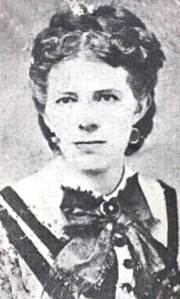
Kate Stone’s Civil War: Our soldiers were powerless

Foreign recognition, a cease-fire, slave emancipation: Stone captures the desperate rumors in the air as the Confederacy falls to its knees.

KS10

From 2012 to 2015, Stillness of Heart will share interesting excerpts from the extraordinary diary of Kate Stone, who chronicled her Louisiana family’s turbulent experiences throughout the Civil War era.

Learn more about Stone’s amazing life in 1861, 1862, 1863, 1864, 1865 and beyond. Click on each year to read more about her experiences. You can read the entire journal online here.

(Photo edited by Bob Rowen)

Foreign recognition, a cease-fire, slave emancipation: Stone captures the desperate rumors in the air as the Confederacy falls to its knees.

Feb. 1, 1865

Tyler, Texas

An occasional letter from Jimmy. He had just returned from our old home near the river. How strange it seems for the boys to be going home and wandering at will over the whole country, not a Yankee to be seen. The army worms were our best allies. They made the enemy abandon the country when our soldiers were powerless to drive them off. There are rumors of an armistice, recognition by the powers, and emancipation of the slaves.

Raining today. Could not start Jimmy’s boy back. Jimmy must think Henry is never coming. Have nearly finished Jimmy Carson’s gloves. His hands are none of the smallest and knitting the gloves has been a task.

Have been reading the life of Stonewall Jackson. He was worthy to be idolized by all classes as he is. Have just finished The Hour and the Man by Miss Martineau, purporting to be a historical novel with Toussaint L’Overture, the leader of the insurrection in San Domingo, as the hero. He is represented as superhumanly good and great beyond all heroes of ancient or modern times. He and Napoleon were contemporaries and comparisons are constantly drawn between them, all in favor of this darkie saint. Napoleon is completely overshadowed by Toussaint. It is a disgusting book. The Negroes are all represented as angelic beings, pure and good, while the whites are the fiends who entered in and took possession of their Eden, Haiti.

Anna Meagher returned recently and sent for me to come and see her. She saw Jimmy several times. He is quite well. Her only news was about the Terrapin Neck cutoff which, if true, will place all our plantations above possible overflow. The Yankees are all gone and some of the old planters still at home. Jimmy sent by Anna the box of papers left concealed and all are in good order. We have written him to bring out the silver if possible. It is buried there. The old Negroes are still on the place, and Uncle Hoccles and Aunt Liza want to come out to Texas. Mrs. Newman was about to give a Yankee party. Both girls are at home and reported engaged to Yankee officers. One cannot believe that news. Nous verrons. We hear that Annie Newman is a beauty and a belle. Surely the age of miracles has not passed.

The pouring rains continue, and the house leaks dreadfully. We rather wade than walk.

Recommended reading / viewing / listening

This week: CSS H.L. Hunley emerges / Writing: A job or a calling? / Solving a math mystery / Gaza children with PTSD / What caused her cancer?

KS33

This week: CSS H.L. Hunley emerges / Writing: A job or a calling? / Solving a math mystery / Gaza children with PTSD / What caused her cancer?

Most of these great items come from my social media networks. Follow me on Twitter, Tumblr, LinkedIn, MySpace, and Facebook for more fascinating videos, photos, articles, essays, and criticism.

1. After 150 years, Confederate submarine’s hull again revealed
By Bruce Smith | Associated Press | Jan. 30
“What [scientists] find may finally solve the mystery of why the hand-cranked submarine sank during the Civil War.”

2. Facebook needs a ‘Sympathy’ button
By Amy-Mae Elliott | Mashable | Jan. 25
” It can mean a feeling of pity or sorrow for someone else’s misfortune, and also an understanding between people — a common feeling.”

3. Is Being a Writer a Job or a Calling?
By Benjamin Moser and Dana Stevens | Bookends :: Sunday Book Review | Jan. 27
Moser: “Even the best writing won’t have the immediate, measurable impact of a doctor’s work, or a plumber’s.”
Stevens: “Of course a writer is going to lean toward saying writing is a calling — that’s our job.”

4. The Pursuit of Beauty
By Alec Wilkinson | The New Yorker | Feb. 2
“Yitang Zhang solves a pure-math mystery.”

5. Hundreds of thousands of children shell-shocked after the war in Gaza
By Robert Tait | The Telegraph | Jan. 29
“Children who saw their siblings or parents killed, often gruesomely, have been left stricken, and around 35 per cent to 40 per cent of Gaza’s million children are suffering from shell-shock according to Hasan Zeyada, a psychologist with the Gaza Community Mental Health Programme.”

6. What Caused My Cancer?
By Shana Bernstein | Pacific Standard | Jan. 29
“Was it bad genes? Bad luck? Or was it the toxins I eat, drink, breathe, and touch on a regular basis because the United States has a policy of putting the burden of proof for product safety on the consumer?”

7. The Fire of 1910 — Why It Still Matters
By Timothy Egan | Inside American Experience | Jan. 29
“Never in recorded United States history has there been anything to match the fire of 1910. For its size, its ferocity, its impact, nothing comes close.”

8. 50 years after funeral, Churchill towers over UK politicians
By Jill Lawless | Associated Press | Jan. 30
“Modern politicians know better than to invite comparisons to the larger-than-life Churchill — a noted ‘bon vivant’ … who kept 10 Downing St. stocked with Pol Roger Champagne.”

9. Seven questions every editor should ask the writer
By Roy Peter Clark | Poynter | Jan. 30
“After asking these questions to hundreds of writers, I have confidence that the answers provided by the writer can guide a coaching editor on how best to help the writer over time.”

10. For Incarcerated Japanese-Americans, Baseball Was ‘Wearing the American Flag’
By Michael Beschloss | HistorySource :: The New York Times | June 2014
“By 1943, when some of those in the relocation camps were allowed to volunteer for war service, some of the ballplayers joined the Army’s almost all-Japanese-American 442nd Regimental Combat Team, which suffered grievous casualties in Europe and came to be called the most decorated military unit in American history.”

2014 in review

Thank you for making 2014 the best year ever. Read the year-end WordPress graphical roundup.

Thank you so much for making 2014 Stillness of Heart‘s best year ever.

Here’s an excerpt:

The concert hall at the Sydney Opera House holds 2,700 people. This blog was viewed about 12,000 times in 2014. If it were a concert at Sydney Opera House, it would take about 4 sold-out performances for that many people to see it.

Click here to see the complete report.

Recommended reading / viewing / listening

This week: The best pieces on Cuba, the United States, the Castros, and what the future holds.

IMG_2095

This week: The best pieces on Cuba, the United States, the Castros, and what the future holds.

Most of these great items come from my social media networks. Follow me on Twitter, Tumblr, LinkedIn, MySpace, and Facebook for more fascinating videos, photos, articles, essays, and criticism.

1. No word yet from Fidel amid historic US-Cuba shift
By Anne-Marie Garcia | Associated Press | Dec. 19
“Everyone in Cuba is talking about the startling turn in relations with the United States, with one notable exception: Fidel Castro.”

2. Without Washington as its enemy, what will define Cuba?
By Tom Gjeten | The Washington Post | Dec. 19
“Both governments are gambling that this new world will suit their respective political interests. In this negotiation, however, there is no win-win: One government or the other is likely to lose.”

3. Cuba’s cash boon for GOP
By Kenneth P. Vogel and Tarini Parti | Politico | Dec. 19
“[W]hile polls show that most Americans favor normalization, wealthy donors for whom the issue is a top priority overwhelmingly oppose engaging with the Castro regime. …”

4. Why Congress Hates Your Cuban Rum
By Tim Mack | The Daily Beast | Dec. 19
“Havana Club or ‘American’ Havana Club? How untangling decades of Washington’s embargo politics could start a rum war among the world’s most powerful alcohol companies.”

5. The Revolution Fidel Castro Began Evolves Under His Brother
By Damien Cave | The New York Times | Dec. 18
“At a moment described by many as an equivalent to the collapse of the Berlin Wall, the absence of Fidel Castro … spoke volumes. For many Cubans, it confirmed that Fidel, perhaps by his own design, is slipping further into the past, into history, at a time when his approach to the United States seems to be fading as well.”

6. A Historical Perspective on the Cuba-U.S. Relationship
By Jason Steinhauer | Insights :: The Library of Congress | Dec. 19
“Let’s start with this: soon after Fidel Castro’s rise to power, the U.S. viewed Cuba as a security threat. What was the basis for that viewpoint?”

7. Detente Scrambles Political Calculus in Latin America
By Reed Johnson, Ezequiel Minaya, and Kejal Vyas | The Wall Street Journal | Dec. 18
“The Detente Between the U.S. and Cuba Has the Potential to Redraw Political and Economic Alliances Across the Hemisphere”

8. Cha-Cha-Cha: Obama’s On a Roll
By John Cassidy | The New Yorker | Dec. 19
“If you doubted that President Obama’s decision to normalize relations with Cuba was a political and strategic masterstroke, you only have to look at the reaction it has engendered to see otherwise.”

9. A Cuban who sold his beachfront home says he might regret that move
By Marco Werman | The World :: PRI | Dec. 19
“Yuro is part of the generation of Cubans known as the ‘lost generation.’ The ones who came of age after the fall of the Soviet Union — and the loss of all those Russian oil for sugar subsidies.”

10. The US Breaks Ties with Cuba
Witness :: BBC | Dec. 18
“It was in January 1961 that the USA first broke off diplomatic relations with Cuba. Wayne Smith was one of the last diplomats to leave the US embassy in Havana.”

11. Cuba: A Reading List
By John Williams | ArtsBeat :: The New York Times | Dec. 18
“[W]e asked editors at The Times to suggest books that offer the best looks at Cuba’s history and its relationship to the United States. Here are a few of their recommendations:”

12. Americans, here’s what you’ve been missing in Cuba all this time
GlobalPost | Dec. 19
“A new era in US-Cuba relations could see a travel ban lifted. Here are some of the sights US citizens could be visiting soon.”

13. U.S.–Cuba Agreement: Diplomacy At Its Best
By. John Parisella | Americas Quarterly | Dec. 18
“Just as Nixon went to China and Truman set up the Marshall Plan for Europe in the post-World War II era, Obama knew that he had to do something different with a nation just 90 miles off the U.S. shore.”

14. Pope Francis bridged gap between U.S. and Cuba during secret talks
By Paul Richter and Tom Kington | The Los Angeles Times | Dec. 18
“The pope’s secret role in the back-channel talks was crucial because, as a religious leader with the confidence of both sides, he was able to convince the Obama and Castro administrations that the other side would live up to the deal. …”

15. Topic: Cuba
By Ted Piccone and Richard Feinberg | The Brookings Institution | Dec. 2014
“See what they and other Brookings experts have to say about the measures and their impact on the two countries moving forward.”

16. Baseball in Cuba: A looming brain drain
By D.R. | The Economist | Dec. 18
“Cuban veterans represent the last remaining loophole in MLB’s regulation of players’ entry to the league, which helps to maintain competitive balance between rich and poor clubs.”

17. Opening Cuba and Closing Gitmo?
By James Stavridis | Foreign Policy | Dec. 19
“Havana will be pushing hard to shut the naval station at Guantanamo Bay — but Washington shouldn’t give in.”

18. Cuba’s Christmas Surprise for Caracas
By Daniel Lansberg-Rodriguez | Foreign Policy | Dec. 18
“Despite Maduro’s self-serving rhetoric, future U.S. tourism dollars, increased remittances, and access to foreign markets could easily replace the resale value of Venezuelan oil. Cuba’s wily leaders have made it clear that they’re more willing to offend Maduro than to risk being left standing when the salsa stops.”

19. The Democrats’ risky Cuba bet
By James Hohmann and Kyle Cheney | Politico | Dec. 17
“Will Florida’s changing demographics offset a backlash among older Cuban-Americans?”

20. As Obama opens to Cuba, China experts remember benefits from U.S. engagement
By Simon Denyer | The Washington Post | Dec. 19
“China has become a partner with the United States in some ways but also a powerful rival, geo-strategically and economically. Its leadership remains deeply suspicious of Western values, even as it pursues a deeper relationship with the United States.”

Recommended reading / viewing / listening

This week: Enduring sexism / LBJ and the Secret Service / Exercise and depression / The Roman Empire / The political Eva Longoria

IMG_1475

This week: Enduring sexism / LBJ and the Secret Service / Exercise and depression / The Roman Empire / The political Eva Longoria

Most of these great items come from my social media networks. Follow me on Twitter, Tumblr, LinkedIn, MySpace, and Facebook for more fascinating videos, photos, articles, essays, and criticism.

1. Jessica’s Feminized Atmosphere
By Jessica Williams | The Daily Show | Oct. 2
“Also, that’s redundant.”

2. L.B.J.’s Bravado and a Secret Service Under Scrutiny
By Michael Beschloss | The Upshot :: The New York Times | Oct. 2
“Not long after President Kennedy’s assassination, President Johnson chafed under his Secret Service protection.”

3. What made Japan’s deadly volcanic eruption so unpredictable?
By Judy Woodruff and Miles O’Brien | PBS NewsHour | Sept. 30
“More than 250 people were out hiking and enjoying a nice fall day, when a surprise eruption littered the mountain with falling boulders, thick smoke and piles of ash. At least 36 people were killed.”

4. This Is How Eva Longoria Is Trying to Win the Midterms
By Asawin Suebsaeng | The Daily Beast | Oct. 1
“From working behind the scenes in the midterms to making a new farm labor documentary, the former Desperate Housewife has emerged as a force to be reckoned with in liberal politics.”

5. How Exercise May Protect Against Depression
By Gretchen Reynolds | Well :: The New York Times | Oct. 1
“Exercise may help to safeguard the mind against depression through previously unknown effects on working muscles.”

6. The Elements of Style
By Sasha Weiss | The Sunday Book Review :: The New York Times | Oct. 3
“Watching other women, seeing how they’re dressed and how they pull it off, is the way most of us learn to become ourselves.”

7. Former Haiti president Duvalier dies
By Mike Wooldridge | BBC News | Oct. 4
“Duvalier was just 19 when in 1971 he inherited the title of “president-for-life” from his father, the notorious Francois ‘Papa Doc’ Duvalier. He was accused of corruption, human rights abuses and repression in his rule, which ended in a 1986 uprising.”

8. Catastrophic Coltrane
By Geoff Dyer | NYR Gallery :: New York Review of Books | Oct. 4
“The interest of recordings from this final phase — in which Coltrane’s playing became increasingly frenzied and the accompaniment more abstracted — lies partly in what they preserve and partly in any hints they contain as to where Trane might have headed next.”

9. The Aral Sea’s Disappearing Act
By Anna Nemtsova | The Daily Beast | Oct. 4
“Satellite photos show how the depredations of dictators have turned the world’s fourth largest inland sea into a poisonous desert.”

10. 40 maps that explain the Roman Empire
By Timothy B. Lee | Vox | Aug. 19
“Two thousand years ago, on August 19, 14 AD, Caesar Augustus died. … Under Augustus and his successors, the empire experienced 200 years of relative peace and prosperity. Here are 40 maps that explain the Roman Empire — its rise and fall, its culture and economy, and how it laid the foundations of the modern world.”

Recommended reading / viewing / listening

This week: Holder’s exit / Earth’s magnetic flip / Cusack’s Hollywood / The Kennedy Style / Anti-psychopaths

IMG_2126

This week: Holder’s exit / Earth’s magnetic flip / Cusack’s Hollywood / The Kennedy Style / Anti-psychopaths

Most of these great items come from my social media networks. Follow me on Twitter, Tumblr, LinkedIn, MySpace, and Facebook for more fascinating videos, photos, articles, essays, and criticism.

1. America’s New War President
By Michael Hirsh | Politico Magazine | Sept. 23
“With a broad campaign against the Islamic State in Syria and Iraq, Obama has a chance to remake his legacy.”

2. What to expect from the Earth’s impending magnetic flip
By Annie Sneed | Scientific American and Salon | Spet. 26
“New data suggest the poles could be reversing for the first time in 780,000 years. Here’s how it affects you.”

3. Why Holder Quit
By Glenn Thrush | Politico Magazine | Sept. 25
“The backstory of how Obama lost his ‘heat shield.’”

4. The 8 Best Pocket Parks In Manhattan
By Rebecca Fishbein | The Gothamist | Sept. 25
“[S]mall, public-accessible pocket parks that dot the city are an oft-overlooked joy, a temporary respite from the hustle and bustle of the urban artery.”

5. The Barbarians Within Our Gates
By Hisham Melhem | Politico Magazine | Sept. 18
“Arab civilization has collapsed. It won’t recover in my lifetime”

6. Bad Moon Rising
By David J. Rothkopf | Voice :: Foreign Policy | Sept. 24
“Behind the scenes at the U.N., a more unsettling story emerges of Syria, Iraq, and fighting the Islamic State.”

7. John Cusack: ‘Hollywood is a whorehouse and people go mad’
By Henry Barnes | The Guardian | Sept. 25
“After 25 years as a star, John Cusack has seen the movie industry’s dark side close up — from its misogyny to its treatment of young actors.”

8. Who Would Donate a Kidney to a Stranger? An ‘Anti-Psychopath’
By Melissa Dahl | Science of Us :: New York Magazine | Sept. 25
“If the dark, scary end of the caring continuum is inhabited by psychopaths, way down at the other end [are] ultra-do-gooders who are extraordinarily compassionate, prosocial, and empathetic.”

9. Evolution: Why don’t we have hairier faces?
By Jason G. Goldman | BBC Future | Sept. 26
“Mark Changizi … has an intriguing alternative explanation. … It’s because we’re walking, talking, breathing ‘mood rings’”

10. Nixon and Age: The Kennedy Style
American Experience :: PBS | November 2011
“The Nixon-Kennedy debates would forever change the way Americans chose their presidents.”

From a flame into a firestorm

Why the French Revolution devoured its own people.

IMG_1464

Why the French Revolution devoured its own people
An essay by Fernando Ortiz Jr.

Hope inspires nations to improve their societies, challenge their citizens’ capabilities, and face down seemingly invincible enemies. In revolutionary France, citizens and their leaders tasted the sweet fresh air of liberty, equality, and nationalist unity. They sensed their hopes for a brighter national and social future might be realized, and they determined that nothing would interfere with that grand realization. But how did those hopes lead France into the horrific era of the Terror? The tragic evolution from revolution to republic to Terror was not a linear nor an inevitable process. Challenges to the Revolution mounted, as did the Revolution’s responses to them. The key elements of the Revolution – the people who embraced that revolution, their political leadership, and the counterrevolutionary threats that haunted all of them – ground against each other, setting off sparks that ignited the rise of a new form of government and an era of bloodshed that still stains the shadowed passages of tormented human memory.

The French Revolution reordered the political mindsets of many eighteenth-century French people. The preceding era of the Enlightenment and the Republic of Letters nurtured not only an intellectual renaissance but also demanded and inspired challenges to the way the French regarded the Catholic Church, their places in a monarchy, and their social, economic, and creative potential as liberated people.1 That intimate revolution in self-image was furthered in 1763 and 1764 when the Parlement of Paris argued that “the king held his throne and legitimacy” from “fundamental” French laws, deflating the inherently supreme majesty of monarchy and subordinating it to the French polity’s larger legal authority.2

As economic crisis paralyzed France, the Old Regime’s political leadership failed to live up to the people’s “almost-millenarian hope” that those leaders could improve commoners’ impoverished lives, convincing many of those commoners that they had to take control of their own existence.3 The privileges the upper classes enjoyed angered the middle classes, already irritated with “paternalism of government” and dismissive of the Church as a “corporation which had ceased to perform its functions efficiently.”4 A new era was about to dawn over France.

The Revolution retained the king but stripped privileges from the Church and demanded from the clergy oaths of loyalty to the new Civil Constitution. The new national representatives asked the people to share their concerns and ideas. It was intimately revolutionary. The people were asked to review their lives and look at elements of their government and society that they themselves deemed could “be changed or improved or abolished.”5 The new Declaration of the Rights of Man and Citizens promised a better future for an “imagined community” of equal citizens. The new October constitution formalized ideals of liberty and equality under a representative government, spiritually freed from Catholic doctrine, and under the paternalistic gaze of a weak and devoted monarch. While the reforms seemed to favor oppressed and voiceless lower classes, the Revolution did not have “a natural constituency.”6 Each citizen had their own self-interested reason for support or opposing the new era of liberty and equality.

By the early 1790s, the empowered and self-confident French people, no longer “docile followers” of the Old Regime’s well-trod paths through life, stood on the threshold of an undiscovered country, determined to face down the empires and kingdoms that besieged them, the political and economic differences that divided them, and, most importantly, the internal forces that conspired to undermine their Revolution’s promise of a new and better world.7

Revolutionary changes did not unfold without resistance, particularly from French sectors directly diminished by progressive policies, and the manner with which some changes were enacted inspired counterrevolutionary sentiments, conspiracies, and actions. Other counterrevolutionary actors feared further social disorder, insolvency, and unemployment, disagreed over food distribution policies, or simply suffered from bruised egos.8 Economic equality for the lower classes meant nothing if standards of living steadily fell.9

The nobles saw their privileges, including light tax burdens or exemptions from an incomprehensible financial system, stripped away “by violence and chicanery,” inspiring even elites who disliked each other to temporarily unite, thereby “creating one of the strands of the counterrevolution.”10 Some elites found a promising alliance with the other major French sector the Revolution diminished: the Catholic Church. Revolution policies expropriated church property, determined that embrace of a “Supreme Being” instead of God “eliminated the Church’s monopoly of public worship as well as its claim to special status,” issued a Civil Constitution of the Clergy in July 1790, and required the clergy to swear their allegiance to that constitution or resign their posts.11 The oath was meant to assert the people’s sovereignty over the church just as the Revolution asserted popular sovereignty over the government, class hierarchies, and the monarchy. The revolutionary government expected the Church to “proselytize for it and to keep order for it” among the masses.12

But that oath also became a rallying point for the Revolution’s leading enemies, who used it to break off sections of popular sentiment bristling over the Revolution’s treatment of their sacred religious institutions or feeling discontent over a multitude of other consequences of revolutionary policies. Counterrevolutionary elites focused disruptive energies on Catholic-rich regions of France and manipulated Catholic-Protestant divisions. The oath provided the counterrevolution a group from which to draw support that might have otherwise embraced the new era. Resistance to the Civil Constitution “took on the characteristics of a mass movement.”13

The oath also stressed the fragile loyalties of clerical deputies participating in revolutionary government. The faith they shared with most other deputies in the unifying symbol of the King Louis XVI bolstered the Revolution’s fragile coalition. His attempt to escape the Revolution sent devastating shockwaves through the delicate political networks and contributed to the people’s eventual capacity to wage the Terror against the threats he represented.14

The king publicly swore loyalty and support for the new constitution. But he secretly despised everything it represented. The Civil Constitution of Clergy disgusted him. In letters he raged against his loss of traditional monarchical authority.15 His escape in June 1791, his capture, and his discovered letters – including one he left behind explaining his reasons for his flight — exposed to his subjects what he truly felt about their aspirations and ambitions.

Louis warped the monarchy’s moral authority and stained any politician subsequently willing to deal with it or defend it. Opinion and justification over his actions split the political accord in the Assembly.16 The flight shattered for provincial citizens and officials any belief in the revolutionary government’s credibility, effectiveness, and stability. Who would help them? A government that accomplished nothing? A divided church only half-heartedly embracing a new era of social justice? A king that lied to their faces? The king’s flight and his sentiments convinced “the urban masses and the national guards” that they had to deal with incidents of counterrevolutionary unrest with degrees of force that they themselves deemed appropriate — with “their own solutions” — and Paris could do little to stop them.17 Perhaps, a few thought, France did not need a king. It was a key moment “in the emergence of French nationalism.” Some letter-writers even referred to the deputies as the new fathers of a new country.18

The king’s actions sharpened in the politicians and citizens’ minds their suspicions and fears of looming counterrevolutionary forces conspiring to destroy the Revolution. Priests refused to take their oaths of loyalty. Provincials fought amongst themselves. Émigré armies massed in the borderlands. And the king confessed his disgust for his own subjects’ hopes and attempted to leave them to the mercy of what might have been a foreign invasion — that might still take place.19 Even the most paranoid revolutionaries eventually appeared prescient to commoners who had no idea what the next day might bring. That fear justified the new forms of justice, suspension of personal liberties, lethal brutality, and outright murder throughout France.

To deal with perceived threats, in August 1792, the Paris government authorized the disarming of any suspected counterrevolutionaries and searches of any suspected counterrevolutionary homes. Betraying the Revolution was something bad but taking oppositional action against it was even worse. Arresting people for throwing stones or shouting at guards, shutting down political clubs and newspapers, listening to private conversations, or simply looking for anything or anyone that seemed suspicious – these were the actions of a terrified government willing to fight imagined terrorism with repression of almost any degree.20 In September, rumors of prisoners planning to revolt when foreign armies invaded France inspired revolutionaries to massacre them, leaving up to 1,400 dead. On Sept. 21 “the [national] Convention abolished the monarchy and proclaimed the Republic.”21

Recent battlefield victories against foreign counterrevolutionary forces and the war’s expanded scope inspired the republic to call up 300,000 men, which sparked “an unprecedented wave of riots.” More importantly, the riots – and fresh battlefield defeats — sparked an official response: the centralization of national authority, new judicial tribunals to persecute suspected treason, and state-directed repression of domestic unrest and disloyalty with a “supreme police”22 The Revolution was threatened, and the government took the repressive torches from the people and transformed them into fireballs with which to incinerate the elites, the price-gougers, and traitors of any section of the endangered French Republic. Terror was not a new horror — what was new was that the Terror was systemic, “a deliberate policy of government,” so it was wide-reaching, simultaneous, and steady in its murderous hunger for victims.23

The war machine was a ravenous hurricane at the Terror’s core, hungry for materiel from churches, loyalty from the populace, and legions of soldiers to be thrown against foreign armies. Churches became “barracks, arsenals, or stables,” and anything of value was put to military use. But the mobilization campaign quickly became a dechristianization campaign, in which signs of any kind containing Christian references were torn down. The new man of the Republic would be spared the old superstitions of the failed Church. Church defenders were killed. Nothing better symbolized the Terror for many citizens than the dechristianization efforts.24

The campaign drew deep divisions between commoners who believed they commanded the government and the political leadership, some in power without popular mandates, which was prepared to brutally suppress any resistance or wavering acquiescence to their absolute wartime authority. These two elements, increasingly at odds with each other, intensified the Terror’s murderous chaos.25 Real and imagined fears inspired both the French people and their provisional government — particularly members of the Committee of Public Safety like Robespierre — to use fear to repress it. Fighting fire with fire simply intensified the fire.26

Robespierre’s campaign to purify the Revolution, first by invalidating any sense of guilt or culpability for the atrocities he felt were necessary, was aimed at the building the new society the Revolution’s earliest aspirations aspired to achieve. The Terror’s own monstrous judicial liberties were realized on local levels as committees expressed the persecutorial zealotry required to achieve the sanctioned purifications.27 The Terror was sustained by “a strange compound of reason, desperation, and fear,” and it redefined what was revolutionary – not ideology, not a new vision, not a new government. The Terror’s revolution was one of efficient execution of “effective measures” — slicing through opposition and bringing centralized order to counterrevolutionary chaos in order to ensure the Revolution’s permanence.28

The Revolution’s supporters at first marched proudly into a new era, their self-image evolving from royal subjects to free citizens and optimistic that they would find a balance between better lives and the embrace of a king’s paternalistic gaze. But the Revolution’s real and imagined enemies inspired powerful figures who cared less about revolutionary aspirations than the measures necessary to defeat those enemies. French leaders became the bloodstained dictatorial oppressors from which they desperately fought to save their countrymen. Step by step, revolutionaries and their leaders became the firestorm they tried to extinguish.


1. Dena Goodman, The Republic of Letters: A Cultural History of the French Enlightenment (Ithaca, N.Y.: Cornell University Press, 1994); D.M.G. Sutherland, France 1789-1815: Revolution and Counterrevolution (New York: Oxford University Press, 1986), 37.
2. Sutherland, France 1789-1815, 22.
3. Sutherland, France 1789-1815, 59.
4. R.R. Palmer, Twelve Who Ruled: The Year of Terror in the French Revolution (Princeton, N.J.: Princeton University Press, 1989), 18-19.
5. Timothy Tackett, When the King Took Flight (Cambridge, MA: Harvard University Press, 2013), 10.
6. Sutherland, France 1789-1815, 80, 114.
7. Sutherland, France 1789-1815, 49; Tackett, When the King Took Flight, 87.
8. Sutherland, France 1789-1815, 112.
9. Sutherland, France 1789-1815, 159-160.
10. Sutherland, France 1789-1815, 19-22.
11. Sutherland, France 1789-1815, 21, 80-81, 95, 97.
12. Sutherland, France 1789-1815, 99.
13. Sutherland, France 1789-1815, 97, 116; Tackett, When the King Took Flight, 13.
14. Sutherland, France 1789-1815, 122; Tackett, When the King Took Flight, 184.
15. Sutherland, France 1789-1815, 124; Tackett, When the King Took Flight, 183, 189.
16. Sutherland, France 1789-1815, 124.
17. Sutherland, France 1789-1815, 124-125; Tackett, When the King Took Flight, 168.
18. Tackett, When the King Took Flight, 157-158, 189-190.
19. Sutherland, France 1789-1815, 127; Tackett, When the King Took Flight, 166, 167.
20. Tackett, When the King Took Flight, 203.
21. Sutherland, France 1789-1815, 154-155.
22. Sutherland, France 1789-1815, 167, 170.
23. Palmer, Twelve Who Ruled, 56.
24. Sutherland, France 1789-1815, 208-210, 212, 217.
25. Sutherland, France 1789-1815, 192, 202, 208.
26. Palmer, Twelve Who Ruled, 39. 74-77.
27. Sutherland, France 1789-1815, 224, 226, 228.
28. Palmer, Twelve Who Ruled, 28, 39. 58.


BOOKS CONSULTED FOR THIS ESSAY

Goodman, Dena. The Republic of Letters: A Cultural History of the French Enlightenment. Ithaca, N.Y.: Cornell University Press, 1994.

Palmer, R.R. Twelve Who Ruled: The Year of the Terror in the French Revolution. Princeton, N.J.: Princeton University Press, 1989.

Sutherland, D.M.G. France 1789-1815: Revolution and Counterrevolution. New York: Oxford University Press, 1986.

Tackett, Timothy. When the King Took Flight. Cambridge, MA: Harvard University Press, 2003.

Dealing with the real America

Dealing with Puerto Rico means dealing with the key issues of the 21st century. Few in the U.S. government may have the stomach for that rollercoaster.

IMG_0237

Dealing with Puerto Rico means dealing with the key issues of the 21st century. Few in the U.S. government may have the stomach for that rollercoaster.
A review essay by Fernando Ortiz Jr.

Discussed in this essay:
Puerto Rican Citizen: History and Political Identity in Twentieth-Century New York City. By Lorrin Thomas. Chicago: University of Chicago Press, 2010. Pp. 354, $35.00

*****

Throughout the twentieth century, Puerto Ricans yearned for political respect from the United States. In Puerto Rican Citizen: History and Political Identity in Twentieth-Century New York City, Lorrin Thomas explores how the demand for equal citizenship evolved into a larger, more noble demand for political recognition when Puerto Ricans realized the mere status of citizen would never sufficiently fulfill their political, social, and economic expectations as conquered members of the American republic.1

The U.S., Thomas explains, conquered Puerto Rico as part of its victorious 1898 war against the remnants of the Spanish Empire. Civilian island government was restored in 1900, and in 1917 the Jones Act declared Puerto Ricans were U.S. citizens. Few were happy with the arrangement. The American political elite didn’t want a whole new set of minorities integrated into the U.S. social and political calculus, and islander nationalists wanted independence from their conqueror. Some moderates looked forward to what membership among the U.S. states might offer, but those first rays of hope were quickly clouded. Puerto Ricans were marginalized as colonial Caribbean illiterates who could not rise to the level of political involvement equaling their mainland step-siblings. They were dismissed as one more set of brown or black people who needed “guidance” from experienced Anglo Americans in order to build a proper democratic community. Thomas persuasively argues that Puerto Ricans “wanted recognition beyond citizenship, a recognition that promises not just formal equality within the state but also the respect and dignity that come from real equality.” She uses Puerto Ricans living in New York as a core sample of the overall relationship between the U.S. and Puerto Rico, in all its torment, tragedy, and unrest.2

Thomas uses an interesting variety of primary and secondary sources, including oral histories, news articles, memoirs, and personal interviews, to illustrate the evolution of Puerto Rican political sensibilities throughout the twentieth century. In the two decades before World War II, Puerto Ricans migrated to the U.S., especially New York, and built new communities from which they hoped to participate fully in the citizenship Congress unilaterally granted them. Instead, Puerto Ricans engaged in choques — clashes with other minority groups who saw them as a threat. Some Puerto Ricans embraced the concept of latinidad, a working-class identity that elevated their self-perception from U.S. citizen to citizen of the U.S. and Latin America, a politically transcendent entity equipped to move easily across ethnic, racial, and political barriers. Some Puerto Rican leftists even reached out to support allies in the Spanish Civil War. As the Great Depression ravaged U.S. communities, Puerto Ricans demanded equal access to jobs and government assistance. They also plugged their political discourse into national debates and concerns over European fascism and Asian imperialism, pointing to themselves as the discrepancy in the U.S. view of itself as the glowing torch of morality, idealism, and freedom guiding the world out of its darkest age. “Discourses of human rights and recognition,” Thomas deftly highlights, “shared a sometimes paradoxical balance of demands: both called for universal equality as well as the acknowledgement of particular group difference … both sought to elevate the idea of the category of ‘citizen’ in a flawed, liberal democracy.” The Puerto Rican debates anticipated by a decade the nationalist, imperialist, and human rights debates that animated the bloodied ash heaps of Europe, Africa, and South and Southeast Asia.3

By the 1950s, Puerto Rican hopes for independence faded. The Cold War began, Thomas explains, and Puerto Rico needed to be a showcase of what the U.S. could do for Latin American societies tempted to ally themselves with the Soviet Union. The dominant Puerto Rican discourses looked beyond the empty promise of citizenship to political and social recognition as new liberalist activism aimed to “save” Puerto Rican through economic and social development.4

The failure of American democracy to fulfill New York Puerto Ricans’ expectations of equal access to decent housing, failure to provide bilingual education, failure to provide jobs, and failure to live up to the tenets of its most attractive idealism all combined to convince Puerto Rican political leaders that even with the guarantee of citizenship, even with the opportunity to serve in the military, and even with the option of building a new life on the mainland, Puerto Ricans would never been seen as a part of the U.S. except on a map. Puerto Ricans, Thomas explains, supported politicians who fought for them within the government, like New York legislator Oscar Garcia Rivera, U.S. Rep. Vito Marcantonio, and Puerto Rico Gov. Jesus Pinero. They also supported advocates who took their voices to the streets, like the Young Lords, and labor leaders who staged strikes. In the ivory towers, academics tried to formulate curricula to properly teach Puerto Rico-specific issues of empty citizenship, imperialism, economic development, migration, and Caribbean racism. Puerto Ricans, Thomas argues, hoped to fully enjoy the benefits of “inclusion, belonging, and rights,” especially after World War II, when the U.S. pledged to support freedom and nationalism for all nations, but Puerto Ricans could never escape the realities that proved far more potent and damaging than the dreaminess of liberal American promises.5

Thomas deftly points out that Puerto Ricans “challenged the United States’ liberal democracy to acknowledge the reasons that their group experienced such persistent failures of justice.” Puerto Ricans remain the ultimate reminder to liberal idealists of the failure of a “democratic liberal society” that cannot fully acknowledge the “injustices of recognition.”6

By the 1970s, the energy coursing through Puerto Rican activism came from the grassroots, as “garbage strikes, rent strikes, [and] university takeovers” replaced measured political and academic debates as Puerto Rican expressions of frustration. Thomas paints a vibrant portrait of the blossoming Nuyorican cultural movements, dominated by playwrights and poets, though it’s also an example of the fragmentation of the overall fight for Puerto Rican recognition. Thomas explains that the old sense of multiple groups working together had generally faded, necessitating the renewal spearheaded by the arts. By the 1980s, Thomas explains, academics trying to establish Puerto Rican studies as a necessary field for U.S. history, government, and politics found themselves isolated or shuffled away under dismissive ethnic studies categories, their arguments thrown into a heap of identity politics with all the intellectual dignity of a demolition derby.7

By the end of the twentieth century, the academic world still struggled for a dignified place for Puerto Rico at the U.S. table. The Latino Cultural Studies Working Group embraced the concept of “cultural citizenship,” arguing that anyone who contributed to the “economic and cultural wealth of the country” should be recognized as citizens. It was a political view embracing Puerto Ricans, undocumented immigrants, and other marginalized groups whose treatment in the U.S. set aflame the very banner of ideals the U.S. officially waved to the world’s tired masses.8

The root of the resistance to granting what Puerto Ricans demanded and deserved, Thomas argues throughout, is the cost of recognition. Would recognition merely acknowledge a differentiating quality of the Puerto Rican entity, or would that simply be the key unlocking a necessary “redistribution of economic resources and social and political power”? Would the elevating recognition change the U.S. more than it would Puerto Rico? Do citizens now recognized with full equality have the right to demand more from not just their government, but also from their fellow mainland citizens? Does their recognition also require that the U.S. admit its own culpability in the mistreatment of Puerto Ricans and the contradictions inherent in its own internationally advertised moral superiority?9

Thomas hints that the U.S.-Puerto Rican relationship is so weighed down by history, economic scaffolding, a nascent political discrimination that Puerto Ricans have little hope of achieving their goal of recognition. It is a sad tribute to the power of the Puerto Rican argument. Whatever aspect of political debate it touches, it promises (some would say threatens) to redefine the stakes, to demand a realistic recognition of the limits of a democratic republic and its failings, and to unveil a properly complex calculation of what it means to be a citizen in a globalized society. Dealing with Puerto Rico means dealing with the key issues of the 21st century. Few in the U.S. government may have the stomach for that rollercoaster.


1. Lorrin Thomas, Puerto Rican Citizen: History and Political Identity in Twentieth-Century New York City (Chicago: University of Chicago Press, 2010).
2. Thomas, Puerto Rican Citizen, 250.
3. Thomas, Puerto Rican Citizen, 8, 53, 129, 5.
4. Laura Briggs, Reproducing Empire: Race, Empire, and U.S. Imperialism in Puerto Rico (Berkeley: University of California Press, 2002). Her online book is an excellent illustration of medical and social development projects in postwar Puerto Rico.
5. Thomas, Puerto Rican Citizen, 12-13, 21.
6. Thomas, Puerto Rican Citizen, 21.
7. Thomas, Puerto Rican Citizen, 251.
8. Thomas, Puerto Rican Citizen, 17.
9. Thomas, Puerto Rican Citizen, 16.
Thinking As Leverage

Developing deep and critical thinking.

Behind The Wall

Tabletop Games

Rebecca Aguilar

#CallingAllJournalists Initiative | Reporter | Media Watchdog | Mentor | Latinas in Journalism

Anna Fonte's Paper Planes

Words, images & collages tossed from a window.

Postcards from Barton Springs

Gayle Brennan Spencer - sending random thoughts to and from South Austin

The Flask Half Full

Travel stories and culture, with a twist.

Government Book Talk

Talking about some of the best publications from the Federal Government, past and present.

Cadillac Society

Cadillac News, Forums, Rumors, Reviews

Ob360media

Real News That Matters

Mealtime Joy

bringing joy to family meals

Øl, Mad og Folk

Bloggen Øl, Mad og Folk

a joyous kitchen

fun, delicious food for everyone

A Perfect Feast

Modern Comfort Food

donnablackwrites

Art is a gift we give ourselves

Fridgelore

low waste living drawn from food lore through the ages

BeckiesKitchen.com

MUSINGS : CRITICISM : HISTORY : NEWS