Kate Stone’s Civil War: Living so delightfully

Back in Texas from her sojourn to Oak Ridge, La., Stone finds her Tyler home as raucous as ever.

KS3

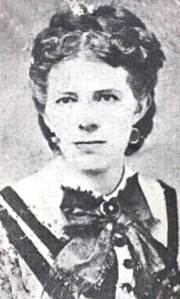
From 2012 to 2015, Stillness of Heart will share interesting excerpts from the extraordinary diary of Kate Stone, who chronicled her Louisiana family’s turbulent experiences throughout the Civil War era.

Learn more about Stone’s amazing life in 1861, 1862, 1863, 1864, 1865 and beyond. Click on each year to read more about her experiences. You can read the entire journal online here.

(Photo edited by Bob Rowen)

Back in Texas from her sojourn to Oak Ridge, La., Stone finds her Tyler home as raucous as ever.

Dec. 4, 1864

Tyler, Texas

We are just back from church, and it was a delightful walk there. Mamma, thinking the church would be too cold, deserted us at Mrs. Savage’s and Mrs. Newton joined us. An excellent sermon from the new Baptist minister. There were many gentlemen but few ladies and quite a number of new officers, but Dr. McGregor, my only acquaintance. All the officers we knew here in June have gone. Dr. McGregor and Joe Carson, who is home on furlough, are our only visitors at present. Did not see Maj. Buckner in church. Suppose he has gone back to Louisiana. We have seen him frequently lately and he is a most agreeable, entertaining visitor. I wish they would station him here. …

The house does not seem as comfortable as formerly. Living so delightfully for the last six months and being so waited on and petted have spoiled me I am afraid. Unfortunately Johnny and Uncle John are not on speaking terms. There was a general quarrel while Mamma was away, and Uncle John will not make it up. As Johnny is but a boy, it seems very unreasonable. As we are so crowded in the house, it makes it doubly disagreeable. Then Kate has added a new baby to the general confusion. Fortunately it is a good little mite, but we cannot say the same of Sally. She is a little trial but is getting to be quite pretty. Johnny makes a pet of her, since he is very fond of little children. If we only could have the house to ourselves, but there is no hope of that. Poor Uncle Johnny is so helpless. …

Kate Stone’s Civil War: I suffered intensely

As Stone works her way back to Texas, a toothache adds to her discomfort and fear throughout a journey through wild and war-torn swampland.

KS2

From 2012 to 2015, Stillness of Heart will share interesting excerpts from the extraordinary diary of Kate Stone, who chronicled her Louisiana family’s turbulent experiences throughout the Civil War era.

Learn more about Stone’s amazing life in 1861, 1862, 1863, 1864, 1865 and beyond. Click on each year to read more about her experiences. You can read the entire journal online here.

(Photo edited by Bob Rowen)

As Stone works her way back to Texas, a toothache adds to her discomfort and fear throughout a journey through wild and war-torn swampland.

November 1864

On the road to Texas

We got off from Col. Templeton’s Monday morning, all sorry to part after a delightful summer and fall with not a disagreeable incident to mar our intercourse. They have been the soul of kindness to me, one and all. The direct road through the swamp is impassable, and so Capt. Wylie piloted us a new route. Capt. Wylie, Johnny, and I were on horseback, and about 2 o’clock we reached the hill road without getting bogged down as Johnny had in coming through the old road. We dismounted, entered the carriage, and bade Capt. Wylie a warm farewell, thanking him for his many courtesies. …

It was a rainy day and we did not reach Monroe until about sunset. Capt. Brigham met us, and we waved him adieu as we crossed the Ouachita on a flat. We passed the night at Mrs. Scale’s at Trenton, much to Johnny’s disgust as he does not like them. Some gentlemen called, and we had cards. After they left, Lucy and I tried our fortunes in divers ways as it was “All Hallow’e’en.” We tried all magic arts and had a merry frolic, but no future lord and master came to turn our wet garments hanging before the fire. There were no ghostly footprints in the meal sprinkled behind the door. No bearded face looked over our shoulders as we ate the apples before the glass. No knightly forms of soldiers brave disturbed our dreams after eating the white of an egg half-filled with salt. …

The third morning we left in a cold drizzling rain with a splendid lunch and a jar of pickles, and with kisses and good wishes of the family. I had a raging toothache, because of sitting all day in wet shoes after passing the swamp. Capt. Wylie’s solicitude on the subject of my thin, wet shoes was not uncalled for at last.

Our trip to Vienna was disagreeable. We stopped at twelve, built a fire, enjoyed our dinner, and then smoked leaf cigarettes. They relieved my tooth for a time, but the pain returned. For several days I suffered intensely, nearly ruining all my teeth I fear by using creosote, caustic, and any strong thing people recommended. Our supper at the hotel at Vienna consisted of cold stewed pumpkins, cold greens, and cold white cornbread. Nothing else but cold well water. The breakfast was nearly as unpalatable, but it was warm. We had nothing to eat all day except the pickles, which Johnny first ate and then drank the vinegar. …

Kate Stone’s Civil War: Fairy castles in the air

Stone offers a slice of life in Oak Ridge, La., as her caretakers search for a window of safety to escort her back to Texas.

1863

From 2012 to 2015, Stillness of Heart will share interesting excerpts from the extraordinary diary of Kate Stone, who chronicled her Louisiana family’s turbulent experiences throughout the Civil War era.

Learn more about Stone’s amazing life in 1861, 1862, 1863, 1864, 1865 and beyond. Click on each year to read more about her experiences. You can read the entire journal online here.

(Photo edited by Bob Rowen)

Stone offers a slice of life in Oak Ridge, La., as her caretakers search for a window of safety to escort her back to Texas.

Oct. 15, 1864

Near Oak Ridge, La.

We have kept on the even tenor of our ways with no hairbreadth escapes by land or sea to ruffle the calm. There are still occasional reports of advancing Yankee raids, but all blow over and no Yankees yet, though this country is still defenseless. …

We have little company and pay few visits, but we enjoy the days, and the weeks fly by like magic — no startling events to mark them off. Capt. Wylie and Dr. Wylie are here. They amuse themselves during the day, but in the evening we all assemble, play chess or cards, and carry on long and animated discussions on all topics under the sun. All the older members of the family are very fond of argument and discussion and are thoughtful talkers and well educated, though one must know them some time before finding that last out.

We made a rule fining everyone for each lapse in grammar, which worked famously for awhile, until we found we would soon all be bankrupt in both purse and temper, and by tacit consent it was dropped and grammar is no more alluded to. Mrs. Templeton said she knew she would never be fined. She knew every rule in the book, but she was the first and most grievous offender and hated worst to be reported. … We lounge in rocking chairs building fairy castles in the air, mapping out lives of goodness and noble endeavor, until Mrs. Templeton rouses from her half-doze on the bed and sends us all to rest. …

Our pleasant days are drawing to a close as Mamma writes she will send Johnny at once for me, and we are looking for him every day. Capt. Brigham rode in from Monroe to tell us that the long expected tableau would come off the next evening and that he had come in to escort us out. Early the next morning we three girls and Sally McGraw with Jimmy, Capt. Wylie, and Capt. Brigham as outriders and the maid Henrietta bringing up the rear, made our way to Monroe under many difficulties. We had a most trying time after reaching there, owing to Capt. Brigham’s blundering. We did not enjoy the tableau as we were too worried and were thankful to be all safe at Mrs. Templeton’s next evening.

Oct. 30

The last time I shall write here. Johnny arrived with the carriage two days ago, and we start home tomorrow. This will end a most pleasant visit, or rather visitation, for I have been here more than three months. All the family have been unfailingly kind and have done all in their power to make me enjoy the time. I certainly have had a most charming visit and grieve to leave them. Then I shall have to break off two most promising flirtations. My only comfort is in thinking of the lovely trip Johnny and I are going to have a comfortable carriage well stocked with lunches, a good driver, strong mules, no hurry, and a lodging every night with friends, good roads, and fair October weather.

Recommended reading / viewing / listening

This week: Enduring sexism / LBJ and the Secret Service / Exercise and depression / The Roman Empire / The political Eva Longoria

IMG_1475

This week: Enduring sexism / LBJ and the Secret Service / Exercise and depression / The Roman Empire / The political Eva Longoria

Most of these great items come from my social media networks. Follow me on Twitter, Tumblr, LinkedIn, MySpace, and Facebook for more fascinating videos, photos, articles, essays, and criticism.

1. Jessica’s Feminized Atmosphere
By Jessica Williams | The Daily Show | Oct. 2
“Also, that’s redundant.”

2. L.B.J.’s Bravado and a Secret Service Under Scrutiny
By Michael Beschloss | The Upshot :: The New York Times | Oct. 2
“Not long after President Kennedy’s assassination, President Johnson chafed under his Secret Service protection.”

3. What made Japan’s deadly volcanic eruption so unpredictable?
By Judy Woodruff and Miles O’Brien | PBS NewsHour | Sept. 30
“More than 250 people were out hiking and enjoying a nice fall day, when a surprise eruption littered the mountain with falling boulders, thick smoke and piles of ash. At least 36 people were killed.”

4. This Is How Eva Longoria Is Trying to Win the Midterms
By Asawin Suebsaeng | The Daily Beast | Oct. 1
“From working behind the scenes in the midterms to making a new farm labor documentary, the former Desperate Housewife has emerged as a force to be reckoned with in liberal politics.”

5. How Exercise May Protect Against Depression
By Gretchen Reynolds | Well :: The New York Times | Oct. 1
“Exercise may help to safeguard the mind against depression through previously unknown effects on working muscles.”

6. The Elements of Style
By Sasha Weiss | The Sunday Book Review :: The New York Times | Oct. 3
“Watching other women, seeing how they’re dressed and how they pull it off, is the way most of us learn to become ourselves.”

7. Former Haiti president Duvalier dies
By Mike Wooldridge | BBC News | Oct. 4
“Duvalier was just 19 when in 1971 he inherited the title of “president-for-life” from his father, the notorious Francois ‘Papa Doc’ Duvalier. He was accused of corruption, human rights abuses and repression in his rule, which ended in a 1986 uprising.”

8. Catastrophic Coltrane
By Geoff Dyer | NYR Gallery :: New York Review of Books | Oct. 4
“The interest of recordings from this final phase — in which Coltrane’s playing became increasingly frenzied and the accompaniment more abstracted — lies partly in what they preserve and partly in any hints they contain as to where Trane might have headed next.”

9. The Aral Sea’s Disappearing Act
By Anna Nemtsova | The Daily Beast | Oct. 4
“Satellite photos show how the depredations of dictators have turned the world’s fourth largest inland sea into a poisonous desert.”

10. 40 maps that explain the Roman Empire
By Timothy B. Lee | Vox | Aug. 19
“Two thousand years ago, on August 19, 14 AD, Caesar Augustus died. … Under Augustus and his successors, the empire experienced 200 years of relative peace and prosperity. Here are 40 maps that explain the Roman Empire — its rise and fall, its culture and economy, and how it laid the foundations of the modern world.”

Recommended reading / viewing / listening

This week: Holder’s exit / Earth’s magnetic flip / Cusack’s Hollywood / The Kennedy Style / Anti-psychopaths

IMG_2126

This week: Holder’s exit / Earth’s magnetic flip / Cusack’s Hollywood / The Kennedy Style / Anti-psychopaths

Most of these great items come from my social media networks. Follow me on Twitter, Tumblr, LinkedIn, MySpace, and Facebook for more fascinating videos, photos, articles, essays, and criticism.

1. America’s New War President
By Michael Hirsh | Politico Magazine | Sept. 23
“With a broad campaign against the Islamic State in Syria and Iraq, Obama has a chance to remake his legacy.”

2. What to expect from the Earth’s impending magnetic flip
By Annie Sneed | Scientific American and Salon | Spet. 26
“New data suggest the poles could be reversing for the first time in 780,000 years. Here’s how it affects you.”

3. Why Holder Quit
By Glenn Thrush | Politico Magazine | Sept. 25
“The backstory of how Obama lost his ‘heat shield.’”

4. The 8 Best Pocket Parks In Manhattan
By Rebecca Fishbein | The Gothamist | Sept. 25
“[S]mall, public-accessible pocket parks that dot the city are an oft-overlooked joy, a temporary respite from the hustle and bustle of the urban artery.”

5. The Barbarians Within Our Gates
By Hisham Melhem | Politico Magazine | Sept. 18
“Arab civilization has collapsed. It won’t recover in my lifetime”

6. Bad Moon Rising
By David J. Rothkopf | Voice :: Foreign Policy | Sept. 24
“Behind the scenes at the U.N., a more unsettling story emerges of Syria, Iraq, and fighting the Islamic State.”

7. John Cusack: ‘Hollywood is a whorehouse and people go mad’
By Henry Barnes | The Guardian | Sept. 25
“After 25 years as a star, John Cusack has seen the movie industry’s dark side close up — from its misogyny to its treatment of young actors.”

8. Who Would Donate a Kidney to a Stranger? An ‘Anti-Psychopath’
By Melissa Dahl | Science of Us :: New York Magazine | Sept. 25
“If the dark, scary end of the caring continuum is inhabited by psychopaths, way down at the other end [are] ultra-do-gooders who are extraordinarily compassionate, prosocial, and empathetic.”

9. Evolution: Why don’t we have hairier faces?
By Jason G. Goldman | BBC Future | Sept. 26
“Mark Changizi … has an intriguing alternative explanation. … It’s because we’re walking, talking, breathing ‘mood rings’”

10. Nixon and Age: The Kennedy Style
American Experience :: PBS | November 2011
“The Nixon-Kennedy debates would forever change the way Americans chose their presidents.”

Kate Stone’s Civil War: One grand holocaust

A furious Stone employs amazing language to accuse the Federal government of using former slaves to wipe Southern civilization off the face of the earth.

KS62

From 2012 to 2015, Stillness of Heart will share interesting excerpts from the extraordinary diary of Kate Stone, who chronicled her Louisiana family’s turbulent experiences throughout the Civil War era.

Learn more about Stone’s amazing life in 1861, 1862, 1863, 1864, 1865 and beyond. Click on each year to read more about her experiences. You can read the entire journal online here.

(Photo edited by Bob Rowen)

After false rumors of a Union raid, a furious Stone employs amazing language to accuse the Federal government of using former slaves to wipe Southern civilization off the face of the earth.

Sept. 5, 1864

Near Oak Ridge, La.

Intense excitement in the neighborhood. Yankees reported advancing in large force destroying, burning, and murdering as they come!! Capt. Lea with his small band of guerrillas contesting every mile of the way but being steadily forced back by superior numbers! Praying Col. Parsons, who has the only troops near, for reinforcements, but who refuses to send them as he is under stringent orders and making forced marches! Blank consternation among the citizens who hear that the Federals have vowed vengeance against this section on account of Capt. Lea and his guerrillas. Everyone is preparing to flee the wrath to come.

Such were the startling reports brought to Col. Templeton by terrified Mr. Philips this morning, frightening us nearly to death, for great is our horror of the vandal hordes since their ruthless destruction of Floyd and Pin Hook and their outrageous conduct at those doomed places. Mrs. Templeton soon had everything arranged for our rapid flight through the swamp across the Ouachita to the safe haven of Col. Wadley’s home, should the reports prove true, leaving Mrs. Templeton and Mrs. Savage here to brave the storm, Col. Templeton going with us. We were on the qui vive all day looking for a mounted messenger galloping up through the wooded lawn shouting, “Flee, Flee.” But about sunset the tension relaxed. We heard that the Yankees came out only as far as Floyd on a reconnaissance and are retiring to the river, and so we breathe freely once more.

The Yankee raids are no joke, though we laugh at each other for being frightened. Last week 200 of the Corps D’Afrique, officered by six big white men (wretches they are), came out and laid the two little villages of Floyd and Pin Hook in ashes, not allowing the people to remove any of their possessions from their houses and thus leaving them utterly destitute. They were very rough and insulting in their language to the ladies, tore the pockets from their dresses and the rings from their fingers, cursing and swearing, and frightening the helpless folks nearly into fits.

This was done in revenge for a guerrilla raid a few days before, in which a good many government stores were destroyed and eighty or ninety Negroes brought out. The Yankees know they make it ten times worse for us by sending Negroes to commit these atrocities. The Paternal Government at Washington has done all in its power to incite a general insurrection throughout the South, in the hopes of thus getting rid of the women and children in one grand holocaust. We would be practically helpless should the Negroes rise, since there are so few men left at home. It is only because the Negroes do not want to kill us that we are still alive. The Negroes have behaved well, far better than anyone anticipated. They have not shown themselves revengeful, have been most biddable, and in many cases have been the only mainstay of their owners.

Five or six citizens, unarmed, were murdered by the Yankees in that Floyd raid. How thankful I am we left home when we did. To lose everything is bad, but constant terror and insult are worse.

The guerrillas report that the cotton crop on the river is a complete failure, entirely eaten up by the worms. The fields are swept of every vestige of green and there is hardly a matured boll to a stalk. This news rejoices our very hearts. Those are true “Confederate worms,” working for the good of the Cause. …

Kate Stone’s Civil War: Lazy and languid

As Stone continues her brief stay with friends in Louisiana, she savors the old sights and sounds of her beloved home state.

KS57

From 2012 to 2015, Stillness of Heart will share interesting excerpts from the extraordinary diary of Kate Stone, who chronicled her Louisiana family’s turbulent experiences throughout the Civil War era.

Learn more about Stone’s amazing life in 1861, 1862, 1863, 1864, 1865 and beyond. Click on each year to read more about her experiences. You can read the entire journal online here.

(Photo edited by Bob Rowen)

As Stone continues her brief stay with friends in Louisiana, she savors the old sights and sounds of her beloved home state.

Sept. 2, 1864

Near Oak Ridge, La.

Mrs. and Col. Templeton are entertaining a Mr. Massengale, just from Texas with news of Capt. Jack Wylie. We may look for him any day now. He will bring three beautiful horses, which we three girls have already appropriated in imagination and expect to race over the whole countryside.

I am too used up by my ride, or rather run, of yesterday to do anything. We have been very busy for the last ten days, riding, sewing, singing, receiving visitors, and playing, but now that the Brigade has gone out to Tensas Parish, we will be quiet for a time. Even Walker’s division is passing through en route to Arkansas, and so for the present we are left defenseless. …

Unfortunately for my pleasure, the report is abroad that I am engaged. There is no truth in it, and it deprives me of much fun. …

I have finished all of Jimmy’s clothes and two dresses for myself, and I feel a real Louisianian once more in the very heart of the swamp, suffocating with the heat, fighting mosquitoes, lazy and languid, little appetite, but luxuriating on fruit for breakfast, dinner, and supper and enjoying curds and cream. The swamp is my own dear land most natural, most restful.

Mamma’s trip to Yankeeland did much good to all of us. The carriage, and such a delightful one, is a great triumph. The dry goods are the greatest comfort, relieving our present necessities, and the books and papers are great entertainment. …

Kate Stone’s Civil War: Strangers in a strange land

Stone mourns a family friend’s death. She also notes ominously the growing epidemic of deadly disease at a nearby Confederate camp filled with Northern prisoners of war.

KS53

From 2012 to 2015, Stillness of Heart will share interesting excerpts from the extraordinary diary of Kate Stone, who chronicled her Louisiana family’s turbulent experiences throughout the Civil War era.

Learn more about Stone’s amazing life in 1861, 1862, 1863, 1864, 1865 and beyond. Click on each year to read more about her experiences. You can read the entire journal online here.

(Photo edited by Bob Rowen)

As another oppressive Texas summer begins, Stone mourns a family friend’s death. She also notes ominously the growing epidemic of deadly disease at a nearby Confederate camp filled with Northern prisoners of war.

June 14, 1864

Tyler, Texas

Comfortably seated by an open window in our lone rocking chair, I am munching Confederate cakes all alone with nothing to do. … Johnny is lying on his stomach with his heels in the air … Johnny has taken great delight in Shakespeare and reads and re-reads his favorite plays. He is already a good Shakespearean scholar. Sister is amusing herself with Sally, and the others are off spending this day with Mrs. Prentice. If there is one thing I most detest, it is spending a long summer day away from home. …

Jimmy received a letter from Mr. Hardison telling of Mrs. Hardison’s death in February. We are truly grieved to hear it. She was a high-minded good woman and one of our best friends. She died in Red River County, where they have been living since fall. Her life was a scene of trial from the time they fled from home. He writes most sadly. They have no books, no papers, hear no news, and have made no new friends and are alone on the bleak prairie, strangers in a strange land. We pity them all but most, her poor mother, Mrs. Alexander.

Anna and Dr. Meagher returned a few days ago. He is stationed here now in charge of the Yankee prisoners. The prisoners are in a most pitiable condition, perfectly destitute. Some have only a blanket to wear and others only one garment. There is much sickness and death among them and the authorities are powerless to get clothes for them. No clothes or blankets to be bought. …

Endless borderlands

Fifteen essays and books explore the borderlands field with passion and intelligence, daring their readers to leave behind their old worlds and follow them into new ones.

IMG_2335


Fifteen essays and books explore the borderlands field with passion and intelligence, daring their readers to leave behind their old worlds and follow them into new ones. A review essay by Fernando Ortiz Jr.

*****

Works reviewed in this essay

Adelman, Jeremy, and Stephen Aron. “From Borderlands to Borders: Empires, Nation-States, and the Peoples in Between in North American History.” American Historical Review 104, no. 3 (June 1999): 814-841.

Anzaldua, Gloria. Borderlands/La Frontera: The New Mestiza. San Francisco: Aunt Lute, 1987.

Barr, Juliana. Peace Came in the Form of a Woman: Indians and Spaniards in the Texas Borderlands. Chapel Hill: University of North Carolina Press, 2007.

Brown, Wendy. Walled States, Waning Sovereignty. New York: Zone Books, 2010.

Chang, Kornel. Pacific Connections: The Making of the U.S.-Canada Borderlands. Berkeley, CA: University of California Press, 2012.

Hämäläinen, Pekka. The Comanche Empire. New Haven, CT: Yale University Press, 2009.

—. and Samuel Truett. “On Borderlands.” The Journal of American History 98, no. 2 (2011): 338-361.

Hoffnung-Garskof, Jesse. A Tale of Two Cities: Santo Domingo and New York after 1950. Princeton, N.J.: Princeton University Press, 2010.

Johnson, Benjamin H., and Andre R. Graybill, eds. Bridging National Borders in North America: Transnational and Comparative Histories. Durham: Duke University Press, 2010.

Lytle-Hernandez, Kelly. Migra!: A History of the U.S. Border Patrol. Berkeley, CA: University of California Press, 2010.

McManus, Sheila. The Line Which Separates: Race, Gender, and the Making of the Alberta-Montana Borderlands. Lincoln, NE: University of Nebraska Press, 2005.

Mora, Anthony P. Border Dilemmas: Racial and National Uncertainties in New Mexico, 1848-1912. Durham, N.C.: Duke University Press, 2011.

Shah, Nayan. Stranger Intimacy: Contesting Race, Sexuality and the Law in the North American West. Berkeley, CA: University of California Press, 2011.

St. John, Rachel. Line in the Sand: A History of the Western U.S.-Mexico Border. Princeton, N.J.: Princeton University Press. 2011.

Weber, David. Bárbaros: Spaniards and their Savages in the Age of Enlightenment. New Haven, CT: Yale University Press, 2006.

*****

I. Introductions

The borderlands mark divisions of land on maps. They mark divisions of races, communities, economies, and families. But borderlands are also more than dividers. Borderlands are where culture and history collide, dance, and coalesce. They are where nation’s futures are conceived, where risks are taken, and where ideas are born. Borderlands cradle both conflict and peace, friction and abrasion, the past and future. Borderlands are gateways through which to view national, cultural, racial, and imperial histories with fresh and sharper eyes. Fifteen essays and books explore the borderlands field with passion and intelligence, daring their readers to leave behind their old worlds and follow them into new ones.

For the uninitiated, borderlands are dark landscapes. But lighting the way are Jeremy Adelman, Stephen Anon, Benjamin Johnson, Andrew Graybill, Samuel Truett, and the wonderfully-named Pekka Hamalanien. By combining three essays from 1999, 2010, and 2011, their analyses form a grand introduction to the field.

Graybill and Johnson ask why historians take the borders for granted. They worry that that the lines on maps imply inevitability. They fret that the borders do not evoke or inspire historical curiosity into the regions they cut through. They hold up borderlands studies as the antidote to that narrow vision and lack of curiosity.

Adelman and Anon explain that the borderlands approach was meant to challenge Frederick Jackson Turner’s Frontier Thesis, which looked east to west, by turning the axis north to south. Rather than considering unilateral European conquest, the field considered how indigenous and European civilizations met and mixed, bilaterally conquering each other. It implied that nation-building did not end once the necessary territory was declared conquered. The borderlands approach, which inherently challenged historians’ traditional reliance on a nation-state perspective on the world, also embraced border zones once imperial lands became modern nation-states.

In 2011, Hamalanien and Truett critically noted that Adelman and Anon ignored other processes that affect borderlands — cultural shifts, warfare, malleable concepts of nation (like indigenous territories), and natural pressures on societies, like landscape changes and epidemics. They pointed out that borderlands inherently challenge master historical narratives anchored to centers of political and cultural power. Ascribing importance to borderlands questioned the supreme importance of those centers, and of nation-states as a whole. Borderlands historians were willing to consider that perhaps non-state actors made equally significant contributions to the overall political or social entity.

Perhaps historians, borderlands proponents argued, needed to listen with equal care to voices from both the centers and the margins. Power and national identity when viewed through that prism becomes ambiguous and historically revitalized. Borderlands become the alternative centers of nation and empire. The borderlands approach also acts as a spotlight to capture movements between political entities, societies, and cultures that were previously unknown or understudied. It spotlights the violence of that friction and abrasion that takes place between competing peoples desperate for food, water, legitimacy, or shelter. This array of introductory essays urged historians to challenge themselves to find these perspectives.

II. Imperial borderlands

Borderlands are born when two or more powers encounter each other. The Spanish New World burned with borderland dynamics. David J. Weber’s Barbaros explores the Indian-Spanish contact zones, details how Spain attempted to administer them, and concludes that even when the Bourbons reformed Spanish America, the region was never completely conquered. Reforms to the military and church networks were not fully implemented, control and structure never consolidated. Consequently, the borderlands region remained violent, dynamic, and, most importantly, influential to the entire bureaucracy. Indian action dictated imperial reaction.

Beyond the warmth of steady and strong Spanish control, colonists lived difficult lives. Dominant Indian powers manipulated colonial communities, turning them into supply depots or shelters, or forced them to pay tribute, while others simply ravaged poorly protected colonies. Reformers wanted the frontier turned into a borderlands region, where commerce, Christianity, and peace reigned, all on Bourbon Spanish terms, which were never achieved except on paper.

But Bourbons focused on building relationships with Indians, reforming them from barbarians into Christian men, thereby building cultural and economic bridges into stronger indigenous networks. As the Spanish elements grew stronger, enlightened attitudes reverted to racism, rejecting the gradual incorporation of Indians.

Pekka Hamalainen’s The Comanche Empire argues that the Comanches were “an indigenous empire.” They were an association of tribes, he claims, that gradually built themselves into a force that dominated what today is the Southwestern United States and northern Mexico, a force so powerful that it effectively obstructed the expansion of French, Spanish, Mexican, and U.S. power for almost two centuries.

The Comanche Empire, he explains, did not simply exist in an Adelman/Anon borderland of negated imperial power and enhanced indigenous influence — they created a new space where the indigenous Comanches dominated, embraced, and transformed the isolated colonialists.

Key to their steady growth and dominance was the willingness to open their culture to new ideas, languages, and religions, which provided them with new domestic strategies, intelligence on distant neighbors, and conduits into useful economic networks.

Acknowledging Comanche power and its crippling influence on Spanish and Mexican control, he asserts, explains how the young U.S. consumed half of Mexico in the late 1840s. The tragic irony is that the U.S. quickly turned its guns on the Comanches to consume their land and cleanse the landscape of non-whites and non-Christians. Comanche greatness required extreme measures to defeat it.

Juliana Barr examines in Peace Came in the Form of a Woman the gender and kinship expectations Europeans and indigenous faced when interacting with each other in colonial Texas dominated by Indian standards.

Women played central roles in virtually every equation. Spaniards scratching out communities in Indian-controlled territory initially refused to marry Indian women, losing out on the economic advantages Indians placed on kinship connections. Without kinship connections, Indians viewed Spaniards as outsiders. Only by marrying women from competitor French families did they finally tap into those economic networks. Spaniards captured Apache women when Apaches attacked them. When Apaches and Spaniards allied against common enemies, Apache women became the connections between both groups. Women from all indigenous groups symbolized peace offerings, peace emblems, and peace envoys.

Spaniards and Indians also communicated with displays of gender. Martial displays signaled masculinity. They shared masculine codes of honor. A military assembly signaled trouble, but when masculinity was paired with femininity, the assembly signaled peace.

III. Northern perspective

The Line Which Separates and Pacific Connections, respectively authored by Sheila McManus and Kornel Chang, highlight how the Canadian and U.S. power centers struggled to control their borderlands and underestimated the effect the borderlands had on those power centers. Both warn that in the historical search for the source of national character, the borderlands and the methods used to control those borderlands cannot be ignored.

Many excellent books in the historical borderlands field typically focus with a racial lens on the U.S. borders with Latin America. McManus and Chang make invaluable contributions to the U.S. borderlands field simply by focusing instead on the U.S-Canada border and the unique contests for its future. They construct their histories from opposite directions — McManus looking west from U.S. and Canadian capitals and Chang looking east from the Pacific region.

McManus argues that Canada and the U.S. post-structurally reimagined their respective western societies as proving grounds where potential national values were conceived, tested, and sharpened against unwelcome cultures and races, and held up for all citizens to adopt. Their border along the 49th parallel was key to those “nation-making efforts” because it politically delineated where one nation-state ended and the other began. It symbolized their capacity to control who crossed that border, who lived in those critical regions, and what values governed their lives.

Chang argues that the regions along the 49th parallel should not be seen as border zones but as transnational and transpacific crossroads. Chang expands the north south/east-axis of the McManus book to include multiple continents, empires, and commodity chains. Instead of Ottawa and Washington, D.C., or Alberta and Montana, Chang examines Seattle and Vancouver, recasting the Pacific Northwest and the Pacific coast as buzzing economic and imperial hubs. The nation-states’ challenge was to control that chaos to their advantage by employing institutions governing immigration, monitoring borders, and manipulating migration.

One of many rivers of migrants into Canada and the U.S. streamed from South Asia. An examination of cultural influences they brought with them would be fascinating enough. But Nayan Shah takes several steps beyond that in Stranger Intimacy to examine erotic, social, and economic relationships between the immigrants and a variety of other groups throughout Western communities of workers.

His South Asians brought with them into western U.S. and Canadian regions borderlands sensitivities as colonized members of the British Empire, as English speakers amid Mexican and Chinese workers, and as men who moved across racial boundaries put in place by the societies their labor was meant to expand. Using legal and police records produced by the clash of immigrant actions and their societies’ reactions — arrests for sexual activities, questions over immigration status, concerns over white public safety — Shah produces a network of racial and legal borderlands the immigrants overcame or failed to overcome.

Domestic racial attitudes against South Asians’ supposed demoralizing effects on white families tolerated white violence. That violence, coupled with legal surveillance and oppression drove immigrants’ contacts with each other into secret places, turning their stranger interactions into stranger intimacies with glances, movements, and other secret signals. The homosocial regions the legal system identified became border zones of state surveillance, racial oppression, and assumption of criminal activity between legitimate and illegitimate societies. The intensity of sexual oppression bolstered normative white identities and further emphasized the deviancy of foreign entities.

IV. Special cases

Euro-American control over the sections of former Mexico is a vital topic in borderlands studies. In Border Dilemmas, Anthony Mora focused on how Euro-Americans used literature and letters to steadily undermine their cultural, political, and economic control of New Mexico.

They portrayed New Mexican women as sensual beasts, businesswomen as prostitutes, and men as savages who could not control their society. Euro-American colonists, Mora explains, saw themselves as the ones to bring civilized order to this chaos. By sensualizing and dehumanizing the men and women, Euro-Americans justified their invasions of Mexican territory, their racist attitudes toward the Mexican inhabitants, and their attempts to dominate and transform the societies upon which they would build a virtuous American Eden.

By labeling Mexican businesswomen as prostitutes and ignoring the economic agency they enjoyed in Mexican society, Euro-Americans could strip from them any semblance of economic legitimacy or social value, permanently damage their community standing, and generally enhance the threatened patriarchy. By characterizing Mexican men as weak or corrupt, Euro-Americans could portray themselves as saviors of Mexican womanhood, now recast as victims of male Mexican vices. Charitable and heroic white men would save these women with marriage, absorb their Mexican blood (descended from quality European blood, surely) into their white bloodlines and families, thereby improving the overall New Mexican community while conveniently ignoring the insecurities in the white U.S. South over racial mixing with black slaves. Mora captures with subtle humor the ridiculous ironies and hypocrisies at work.

Euro-American attempts to enforce “gendered divisions of space,” Mora explains, were key to their control. Women belonged in the privacy and purity of the home. Mexican women also belonged in the home, but in the homes of white women, where they would learn under white tutelage how to become proper American housewives.

They would share the gendered space and occupy appropriate racial roles within domestic walls. Mora connects this racism to U.S. devotion to domestic power and, by extension, to civilizing power. As white women domesticated the home, they also domesticated (tamed) the white men taming the borderlands. They symbolized the white race reaching into the frontiers of their new empire, bringing domestic stability and the values of a proper white home to savages.

The values of white patriarchy only intensified the existing Mexican patriarchy. Mexican elites saw self-serving opportunities to play the Euro-American game over the New Mexican chessboard. New Mexican women were marginalized socially, sexually, and economically, with little or no role in society except as emblems and tools of the patriarchal nation-building enterprise their men purported to lead. Even the oppressed did their own heinous oppressing.

Gloria Anzaldua’s Borderlands/La Frontera sees the borderlands marking divisions in the hearts and minds of the people who populate them. The men and women who exist on the fringes of nation, religion, and race live with divisions within themselves. Anzaldua urges these borderland citizens to be proud: The Chicano borderlands are where national and racial futures are born. They are special places for homosexual men and women, Indians, the socially and intellectually liberated. It’s a place of many tongues, religions, and talents. Any minority will find a home there because they are borderlands themselves — they exist in multiple worlds simultaneously, always adjusting their gradients to blend in with the larger, more dominant colors. They are the future race of a better nation and society, without constructs, limitations, discriminations, or oppression.

Anzaldua holds herself as the example. She is a gay mestiza who speaks not just English and Spanish but variations of both. She refuses to adhere to expectations of how a mestiza should behave, think, or live. She erases the borderlands within her by embracing what they are expected to keep separate.

Perhaps securing political legitimacy for the borderlands citizens begins there. Borderlands citizens must connect themselves somehow with the political cores of their societies, through moderate allies, social upheavals, or war. Only then can they change their nation from within. Society eventually changes to accept gay men and women, and to view men and women and all races equally. Those who refuse to change are the ones marginalized, dismissed, and rejected. An equitable and just society – perhaps that is the ultimate goal for all borderlands citizens. Buried in the ashes of their anguish are the elements of eventual social greatness.

Jesse Hoffnung-Garskof’s A Tale of Two Cities follows Dominican people as they moved from the countryside to capital city Santo Domingo to the New York neighborhood of Washington Heights and back to Santo Domingo. Within these transnational currents he finds Dominicans navigating the fault-lines of culture, race, and economics in both the United States and the Dominican Republic. Dominicans in both cities were elements of the same transnational entity, confronting different manifestations of the same imperialist power, racially differentiating themselves from other minorities, and struggling to live up to their ideals of progress and culture.

Working-class Dominicans struggled to find and then improve their place in the Dominican Republic or the U.S. The book’s bottom-up approach is structured along two ideals: progress (certain actions would improve one’s life, social standing, and national well-being) and culture (perceived values and the standard that decided who belonged and who did not).

The author gives tremendous agency to Dominicans but also points out the irony in their outlooks. When modernization projects stripped economic opportunities from sugar plantations and ranches, rural people flooded Dominican cities to find new economic opportunities. They embraced the progreso/cultura ideals and demanded paved roads and sanitation in their barrios. Men condemned gangs and women condemned prostitution, but gangs were also seen as a potential defensive force against U.S. incursions and women asked prostitutes for sex advice.

In the U.S., Dominicans combined progreso/cultura virtues — improving their economic lives while also protecting their Dominican national values — by extending their sense of home northward to encompass New York. Dominicans saw little need to assimilate because in their minds they had never left the Dominican Republic. Dark-skinned Dominicans faced racial/ethnic discrimination from Puerto Ricans, African Americans, and Anglos as they made their own distinctions between themselves and Haitians. Dominicans embraced the U.S. consumerism as they blamed the U.S. for the materialism and delinquency they saw in Dominican society.

V. The meaning of borders

Borderlands don’t exist without borders. Rachel St. John’s Line in the Sand offers a multifaceted biography of the western U.S.-Mexico border, from El Paso to the Pacific Ocean. The line is a consequence of military conquest, local warfare, political and economic ambitions, and state-sanctioned policing, much more than the natural divider of the Rio Grande.

The line changed in significance over time. For criminals it was the doorway to freedom. For lovers of vice, it was the gateway to illegality. For U.S. politicians, it was a triumph of a superior society over its inferior neighbor. Indian raids necessitated borderland security forces. Borderland commerce and railroads created twin cities. Nation-state efforts to define and enforce it symbolized the inherent weakness of centered-power perspectives ignoring the significance of borderland entities.

As for the force deployed to regulate who moves across that line and who doesn’t, in Migra! Kelly Lytle Hernandez considers the U.S. Border Patrol as part of state-sanctioned violence against Mexican communities naturally flowing through the artificially imposed borderlands between the U.S. and Mexico. Bi-national economic and political demands coupled with the individual demands of its personnel guided the evolution of the Border Patrol as a predatory borderlands entity. Examining this aspect of borderlands existence further illuminates how borderlands and their inhabitants are perceived and rejected or accepted by their nation-states, and the role of violence in attempting to assert the nation-state’s sovereignty over its territory and society. It also highlights Mexico’s postwar partnership with a foreign security force in an effort to control their northward flow of its own people.

The Border Patrol historically worked with borderlands businesses to ensure a steady supply of cheap Mexican labor while enforcing white standards of behavior among races and genders. Officers shaped official U.S. immigration policies to suit local situations and their own interests, interweaving border control objectives with community and economic life. The focus on Mexican rather than Canadian criminality has more to do with the communities dark-skinned people entered than with the actual act of undocumented crossing.

Wendy Brown examines physical borders and the borderlands they mean to enforce in Walled States, Waning Sovereignty. Wall-building projects throughout the globalized, Internet-dominated world, she argues, is a symptom of a larger insecurity over the loss of nation-state control over territory, people, resources, and security. The concept of sovereignty — of control — and its separation from what it means to be a nation-state is what drives pathetic construction work on the U.S.-Mexico border, and throughout the U.S.

What is to be contained is held up as pure, and then the potential foreign threats are identified, and then the wall is promoted as the solution. Even within the beacon of Western democracy, the rich seal themselves off from the poor, businesses wrap themselves in porous digital security blankets, and religious sects build compounds — retreats — in which to properly indoctrinate their flocks. The psychological comfort of walls, borders, lines, and zones infers a stable order is in place. Control is recovered.

Hamalanien and Truett encourage borderlands historians to embrace the inherent chaos in borderlands. That instability had unintended consequences and created unexpected opportunities. Indigenous groups play roles in creating empires or use their own to control their regions. Marginal groups influence the core. Ignored voices participate in the national discussion. New historical roots are discovered. These fifteen works demonstrate the value borderlands studies bring to the historical field. What may appear to be chaos to outdated historical views is beautiful intellectual symphonies to the cutting-edge borderlands lovers.

Kate Stone’s Civil War: The breath of flowers

Stone’s seamstress slave returns, which Stone notes with sarcasm. Later, she and a friend spend a day lounging and criticizing Texas.

KS45

From 2012 to 2015, Stillness of Heart will share interesting excerpts from the extraordinary diary of Kate Stone, who chronicled her Louisiana family’s turbulent experiences throughout the Civil War era.

Learn more about Stone’s amazing life in 1861, 1862, 1863, 1864, 1865 and beyond. Click on each year to read more about her experiences. You can read the entire journal online here.

(Photo edited by Bob Rowen)

Stone’s seamstress slave returns, which Stone notes with sarcasm. Later, she and a friend spend a day lounging and criticizing Texas.

June 1, 1864

Tyler, Texas

Adeline got back today from her “rustication” so we turn the sewing over to her. …

Made Lela Lawrence a pretty fan today, but Jimmy has not the handle ready yet. Jimmy Carson and I have been having some charming rides over the steep hills and through the deep valleys, all fragrant with the breath of flowers.

June 6

Nearly a week of rain. … No visitors, no books, no letters, no anything. …

Emily and I spent Saturday alone at Judge Richardson’s and had a lovely time. The Judge and Mrs. Prentice went off on business, and Emily and I took possession of comfortable rocking chairs on a low shady gallery with plenty of books and a basket of green apples. Just as we were tiring of these luxuries, a gentleman, a refugee as we discovered, came to call on the Judge and made himself very entertaining for the rest of the morning. We compared notes on Texas, and I fear we rendered harsh judgment.

The Richardsons live in a secluded spot five miles from Henderson but have more comforts than anyone we know. With few neighbors, it must be awfully lonely with only her little girl and Judge Richardson. …

Thinking As Leverage

Developing deep and critical thinking.

Behind The Wall

Tabletop Games

Rebecca Aguilar

#CallingAllJournalists Initiative | Reporter | Media Watchdog | Mentor | Latinas in Journalism

Anna Fonte's Paper Planes

Words, images & collages tossed from a window.

Postcards from Barton Springs

Gayle Brennan Spencer - sending random thoughts to and from South Austin

The Flask Half Full

Irreverent travelogues, good drinks, and the cultural stories they tell.

Government Book Talk

Talking about some of the best publications from the Federal Government, past and present.

Cadillac Society

Cadillac News, Forums, Rumors, Reviews

Ob360media

Real News That Matters

Mealtime Joy

bringing joy to family meals

Øl, Mad og Folk

Bloggen Øl, Mad og Folk

a joyous kitchen

fun, delicious food for everyone

A Perfect Feast

Modern Comfort Food

donnablackwrites

Art is a gift we give ourselves

Fridgelore

low waste living drawn from food lore through the ages

BeckiesKitchen.com

MUSINGS : CRITICISM : HISTORY : NEWS