Recommended reading / viewing / listening

This week: Deadly Africa / Celebrating ‘Dr. Strangelove’ / Our nation of secrets / Touring the 9/11 museum / Attacking Obama’s drone war

Picture 151

This week: Deadly Africa / Celebrating ‘Dr. Strangelove’ / Our nation of secrets / Touring the 9/11 museum / Attacking Obama’s drone war

Most of these great items come from my social media networks. Follow me on Twitter, Tumblr, LinkedIn, MySpace, and Facebook for more fascinating videos, photos, articles, essays, and criticism.

1. Between Life and Death
Lifeline :: Al Jazeera English | May 15
“Why is Africa still the most dangerous place in the world for mothers and babies?”

2. Robert Capa’s Longest Day
By Marie Brenner | Vanity Fair | June 2014
“Seventy years ago, the great war photographer joined the first slaughterhouse wave of D-Day, recording WWII’s pivotal battle in 11 historic images of blur and grit. But that is only a fraction compared with what he shot — and lost.”

3. The half-century anniversary of ‘Dr. Strangelove’
By David Denby | Culture Desk :: The New Yorker | May 14
“It may be hard to believe now, but Kubrick’s original intention was to do a straight, serious movie. In the late fifties, he became obsessed with the possibility of an accidental nuclear war. …”

4. ‘So Jayson Blair Could Live, The Journalist Had to Die’
By Sridhar Pappu | New York Observer | May 2013
“Why had he done it? Why had a promising 27-year-old reporter with a career in high gear at the most respected news organization in the world thrown it all away in a pathological binge of dishonesty?”

5. A Grandson Traces His Grandfather’s Voyage to Auschwitz
The Takeaway :: WNYC | May 13
“The ship was the MS St. Louis. It departed from Hamburg, Germany on May 13th, 1939, with 937 Jewish refugees seeking asylum abroad. But the ship’s passengers were denied refuge by the United States, Canada, and Cuba. The ship returned back to Europe on June 20, sealing a tragic fate for many aboard.”

6. The United States of Secrets
Frontline | May 13
“How did the government come to spy on millions of Americans?”

7. 9/11 Memorial Museum: an emotional underworld beneath Ground Zero
By Oliver Wainwright | The Guardian | May 13
“Scorched car doors, salvaged firefighters’ uniforms, banners, toys and the hallowed ‘last column’ to be removed from the World Trade Center clearance … the relics of the twin towers have been elevated into art objects at the new museum. …”

8. Jeb 2016: The Bush battle within
By Maggie Haberman | Politico | May 13
“Jeb Bush’s decision whether to run for president in 2016 is being driven by competing impulses within his own family.”

9. #BringBackYourDrones drive launched against FLOTUS
Al Arabiya English | May 14
“A relatively small group of social media users said the first lady was overlooking the victims of the U.S.’s drone program which is operated mainly in Yemen and Afghanistan.”

10. This is the world’s oldest sperm
By Jamie Condliffe | Gizmodo | May 14
“The samples found themselves in the hands of John Neil, a specialist ostracod — that’s fancy for shrimp — researcher at La Trobe University, who realized they may contain something a little more… ballsy.”

Recommended reading / viewing / listening

Solar-powered White House / Interactive Afghan wars / 10 overlooked novels / Political apologies / The new Army

IMG_1429

This week: Solar-powered White House / Interactive Afghan wars / 10 overlooked novels / Political apologies / The new Army

Most of these great items come from my social media networks. Follow me on Twitter, Tumblr, LinkedIn, MySpace, and Facebook for more fascinating videos, photos, articles, essays, and criticism.

1. Solar panels return to the W.H.
By Alex Guillen | Politico | May 9
“Three decades after Ronald Reagan had Jimmy Carter’s solar panels tossed into the energy dustbin, the White House has finished putting sun-powered electricity back on top of the executive mansion in a small but symbolic gesture.”

2. Portait of the Army as a Work in Progress
By Rosa Brooks | Foreign Policy | May 2014
“The service’s plan to revamp itself for the post-post-9/11 world is ambiguous and rife with contradiction. That’s what makes it brilliant.”

3. How Russia arms America’s southern neighbors
By Ioan Grillo | GlobalPost | May 9
“Russia is now the largest weapons dealer to governments in Latin America”

4. 10 overlooked novels: how many have you read?
By John Sutherland | The Guardian | May 6
“A hilarious romance by a precocious nine-year-old. The fantasies of a septuagenarian foot fetishist. An aristocrat’s life spent doing nothing on a sofa. Just some of the riches contained in 10 little-known books that deserve to be treasured”

5. Interactive Timeline: War in Afghanistan
By Zack Stanton | The Wilson Quarterly | May 2014
“If you want to understand the U.S. War in Afghanistan, place it in a larger historical context: Afghanistan’s 35-year civil war.”

6. The Art of the Political Apology
By Edwin Battistella | Politico Magazine | May 7
“From Bill to Monica and everyone in between, a guide to saying sorry.”

7. America’s Purpose and Role in a Changed World
By Carl Gershman | World Affairs | May/June 2014
“One important question we face today, however, more than five years into the Obama presidency, is whether the current policy of retrenchment is a standard correction after a period of maximalism, or something else.”

8. John Oliver, Charming Schold
By Ian Crouch | Culture Desk :: The New Yorker | May 8
“Regarding the death penalty — which was in the news last week, after a botched lethal injection in Oklahoma — Oliver reached for simile: ‘The death penalty is like the McRib. When you can’t have it, it’s so tantalizing. But when they bring it back, you think, This is ethically wrong.’ ”

9. Onward to Europa
By Lee Billings | Aeon Magazine | May 2013
“The oceans of Jupiter’s ice worlds might be swimming with life — so why do we keep sending robots to Mars?”

10. All the World’s Glaciers, Mapped
By Megan Garber | The Atlantic | May 7
“The first statistical analysis of the world’s glacier distribution offers insight into melting ice. ”

Kate Stone’s Civil War: A besom of destruction

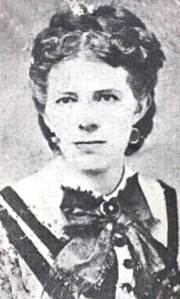
Stone glories over desperately-needed good news from the battlefield: the Confederate victory at Mansfield, La. But she also realizes that she doesn’t view death as she once did.

KS55

From 2012 to 2015, Stillness of Heart will share interesting excerpts from the extraordinary diary of Kate Stone, who chronicled her Louisiana family’s turbulent experiences throughout the Civil War era.

Learn more about Stone’s amazing life in 1861, 1862, 1863, 1864, 1865 and beyond. Click on each year to read more about her experiences. You can read the entire journal online here.

(Photo edited by Bob Rowen)

Stone glories over desperately-needed good news from the battlefield: the Confederate victory at Mansfield, La. But she also realizes that she doesn’t view death as she once did.

April 15, 1864

Tyler, Texas

Jimmy, Sister, and I are keeping house in lonely state. Mamma and Johnny are on a visit to the prairie. …

People do not mourn their dead as they used to. Everyone seems to live only in the present just from day to day otherwise I fancy many would go crazy.

Carrie Lowry was married last month to Col. Polk of Arkansas. Her family are all pleased at the match. It was a grand wedding, and Julia was first bridesmaid.

A letter from Aunt Sarah to Mamma enclosing one from My Brother. He was on the Rapidan when he wrote, on picket duty but was soon after detailed as brigade inspector and ordered to headquarters at Orange County Court House. He expected a nice time there, a tent, and little to do. He has lost hope of a transfer. They will not even give him a furlough. We still have strong hopes of his transfer through Gen. Kirby Smith’s application. As Mamma was away, I opened the letter with a sinking heart, sure that it contained bad news.

The papers are filled with news of our great victory at Mansfield, La., where the Yankees were so confident of success. They had boasted that in two weeks the last armed rebel would be driven from Louisiana, Shreveport would be taken without a struggle, and then they would sweep over Texas, a besom of destruction. Then they would leisurely march back, after establishing freedom, law, and order in this benighted country, to the river, going in time to join Grant in his “On to Richmond.”

But they find themselves mistaken. We did the gobbling act. We have taken over 5,000 soldiers and many stores. It is our first great success on this side of the river, and the effect will be magical, inspiring both citizens and soldiers. Our loss was heavy, especially in officers, Gens. Green and Mouton both killed and Gen. Polignac dangerously wounded. Our gallant Southern soldiers who can praise them enough? As much as they deserve? We will never laugh at our soldiers on this side of the Mississippi again. …

Capt. King has married recently a pretty little Creole refugee from New Orleans. It was a short acquaintance. We have exchanged calls and find her very pleasant, but I doubt she will have a happy life. We find Capt. King is quite a drinker.

Dr. McGregor from Arkansas in one of the Departments here is our most frequent visitor. Dr. Johnson, of laboratory fame/ has presented us with such a nice chessboard and backgammon box made by himself, and I have vanquished him in a game of chess much to my delight and his chagrin. It was his first game lost to a lady he says. He is something like Dr. Buckner in manner, and about his age. Dr. McGregor is a jolly, good-natured bachelor not overly refined. He is something like our New Orleans friend, Mr. McGregor. The same clan, I suppose.

Willy Carson is at home. He has not grown any but looks well. … He is awfully shy and ill at ease. As I succeeded in melting Jimmy Carson’s reserve, I do not despair of Willy. I am about the only young lady in the world that Jimmy is not afraid of. We are great chums. …

We have had several trashy novels, the best, The Dead Secret. The papers are most interesting and a great resource, particularly the Houston papers.

Recommended reading / viewing / listening

This week: Rumsfeld’s no McNamara / Search for the black box / Second novels / American dynasties / No more Turkish miracle

IMG_0611

This week: Rumsfeld’s no McNamara / The race to find the black box / Second novels / American dynasties / No more Turkish miracle

Most of these great items come from my social media networks. Follow me on Twitter, Tumblr, LinkedIn, MySpace, and Facebook for more fascinating videos, photos, articles, essays, and criticism.

1. Donald Rumsfeld Hasn’t Learned a Damn Thing
By James G. Blight and Janet M. Lang | Politico Magazine | April 4
“Bush’s unrepentant defense secretary and the dark art of B.S.”

2. Clock ticking on search to find Malaysia Airlines Flight MH370’s black box
By Swati Pandey | Thomseon Reuters | April 4
“On Monday, it will be 30 days since the jetliner lost communications and disappeared from civilian radar.”

3. Letterman Wasn’t That Funny, Which Is Exactly Why He Matters
By Isaac Chotiner | The New Republic | April 4
“I can’t think of a mass cultural figure of such large importance who was so committed to his own idea of artistic integrity.”

4. Are We Entering a Golden Age of the Second Novel?
By Bill Morris | The Millions | April 4
“Writers get only one shot at becoming The Next Big Thing, which, to too many publishers, is The Only Thing. Failure to do so can carry a wicked and long-lasting sting.”

5. The Work Hitler Despised and the One from Above His Fireplace
By R.C. Baker | The Village Voice | April 2
“The art of hate.”

6. Allegheny Arsenal Explosion
By Maggie MacLean | Civil War Women | April 3
“On September 17, 1862, seventy-eight girls and young women were killed in an explosion at the Allegheny Arsenal in the Lawrenceville section of Pittsburgh, Pennsylvania — the worst civilian disaster of the Civil War.”

7. Bush 41 Reunion Looks to Burnish His Legacy
By Peter Baker | The New York Times | April 3
“This seems to be a season for presidential rehabilitation, if not for the incumbent then for his predecessors.”

8. Karzai Is Trying to Keep His Sway After Term Ends
By Matthew Rosenberg | The New York Times | April 3
“American officials have ignored him, and Afghanistan’s presidential contenders have tried to persuade voters that they will be different from him. But those hoping to see President Hamid Karzai slip into a quiet retirement may be disappointed in the months to come.”

9. Dynasty Isn’t Just for Monarchies Anymore
By Larry J. Sabato | Politico Magazine | March 31
“A Bush-Clinton matchup in 2016 would hardly be unusual. American politics is more of a family affair than you think.”

10. Turkey Goes Out of Control
By Christopher de Bellaigue | The New York Review of Books | April 3
“Large parts of the civil service have been eviscerated, much of the media has been reduced to unthinking carriers of politically motivated revelation and innuendo, and the economy has slowed down after a decade of strong growth. The Turkish miracle is over.”

******************

TUNES

Tonight I’m spending some time with the blues, specifically with the Texas Blues Café. Check out the line-up and then listen here.

1. ZZ Top — Whats Up With That
2. Eddie Turner — I’m A Man
3. Carolyn Wonderland — Ain’t Nobody’s Business
4. Guitar Shorty — A Little Less Conversation
5. Jimi Hendrix — Electric Church Red House
6. Paul Rodgers — Walk In My Shadow
7. North Mississippi Allstars — Shake (Yo Mama)
8. Too Slim And The Taildraggers — Mexico
9. Walter Trout — May Be A Fool
10. The Black Keys — Hurt Like Mine
11. R.L Burnside — Goin Down South
12. Janiva Magness — Slipped,Tripped And Fell
13. Steve Miller — Driven Wheel
14. Bo Cox — Gone

Recommended reading / viewing / listening

This week: The French Revolution and the Terror / Cuba after Castro / The older genius / A new planet’s secrets / How Cheney remade the world

IMG_2238

This week: The French Revolution and the Terror / Cuba after Castro / The older genius / A new planet’s secrets / How Cheney remade the world

Most of these great items come from my social media networks. Follow me on Twitter, Tumblr, LinkedIn, MySpace, and Facebook for more fascinating videos, photos, articles, essays, and criticism.

1. The French Revolution’s reign of terror
By Melvyn Bragg | In Our Time :: BBC Radio 4 | May 2005
“How did the French Revolution descend into such extremes of violence? Who or what drove The Terror? And was it really an aberration of the revolutionary cause or the moment when it truly expressed itself?”

2. Why should female characters have to ‘behave’?
By Barbara Ellen | SheSaid :: The Guardian | March 27
“Did people demand that Travis Bickle shut up and get back in his cab in ‘Taxi Driver’? Did anyone tell Jack Nicholson that Jack Torrance made all men look bad in ‘The Shining’?”

3. The Dangers of a Cuban Collapse
By Daniel Serwer | Politico Magazine | March 26
“It could happen sooner than we think. Is Obama ready?”

4. Late Bloomers
By Malcolm Gladwell | The New Yorker | 2008
“Why do we equate genius with precocity?”

5. Mammy Revealed, and Not Just Her Red Petticoat
By Julie Bosman | The New York Times | March 26
“‘Gone With the Wind’ Prequel Coming in October”

6. Dwarf planet discovery hints at a hidden Super Earth in solar system
By Ian Sample | The Guardian | March 26
“Though exciting in its own right, the discovery raises a more tantalising prospect for many astronomers: that a ‘Super Earth’ up to 10 times the mass of our planet orbits the sun at such a great distance that it has never been seen.”

7. He Remade Our World
By Mark Danner | The New York Review of Books | April 3
“Cheney believed in a ‘unitary executive,’ believed quite literally that ‘the executive Power shall be vested in a President of the United States of America.’ ”

8. Could a tsunami such as the one that affected the Indian Ocean [in 2004] happen in the United States?
Can It Happen Here? :: U.S. Geological Survey | 2014
“We outline the sources of data that can help answer the question, and then indicate when and how large tsunamis have been for specific regions of the U.S.”

9. Unraveling the mystery of Vivian Maier, one of America’s great street photographers
By Kristin Hohenadel | The Eye :: Slate | March 24
“Maier was intensely private, socially awkward, estranged from family, a loner; even those who shared the same roof with her seemed merely to observe the eccentric woman who insisted on locking her bedroom door and fiercely guarding her boxes of worldly possessions, without ever knowing exactly who she was.”

10. Ankara: ‘Israel to compensate Turkey’ over flotilla raid
Al-Arabiya | March 25
“The May 2010 Israeli assault on the Turkish ship the Mavi Marmara while it was in international waters on its way to Gaza triggered a severe diplomatic crisis between the two countries.”

******************

TUNES

Tonight I’m spending some time with the blues, specifically with the Texas Blues Café. Check out the line-up and then listen here.

1. Band Of Heathens — Jenny Was A Keeper
2. Dr.Wu — Nothing Like Texas
3. The Arc Angles — Good Time
4. Albert Collins — Iceman
5. Rory Gallagher — Loanshark Blues
6. Red Hot Blues Sisters — Ocean Beach
7. The Fabulous Thunderbirds — Got To Get Out
8. Mick Hayes Band — Maria
9. Robin Trower — 21st Century Blues
10. Cross Canadian Ragweed — Boys From Oklahoma
11. Jimmy Thackery — Empty Arms Motel
12. The Blue Dogs — Make My Way
13. Devon Allman — Midnight Rider

Looking Back: Her honorable adventure

When the U.S. entered World War II, Bertha Flores faced down family tradition to serve in the Navy. It was an adventure she would never forget and an experience she would never regret.

KS25

Today in 1921, Guadalupe Berta Rodriguez Flores was born in San Antonio, Texas. When the U.S. entered World War II, Flores faced down family tradition to serve in the Navy. It was an adventure she would never forget and an experience she would never regret.

*************

LOOKING BACK
A special series

During my time as a contributing editor to the magnificent Voces Oral History Project at the University of Texas at Austin, I came across some amazing stories. The project, which I celebrated in 2011, collects the stories of Latino veterans and civilians who saw and felt the effects of war, from World War II to Vietnam. This occasional series will highlight a few of these fascinating lives.

Bertha Flores, born on March 16, 1921, was raised in a quiet San Antonio family. Her father believed women belonged at home and no where else. The U.S. entered World War II in 1941, and he was not happy when his daughter joined the Navy’s Women Accepted for Volunteer Emergency Service, or WAVES in 1943.

Her first big adventure came simply on the cross-country train trip from San Antonio to basic training in New York City. Flores marveled at every city and town she passed. She loved the hustle and bustle of the Big Apple and the variety of women she encountered as she prepared herself for wartime military service. Flores was one of only a handful of Latinas in her class. She made friends, danced, and trained to become a teletype operator.

She served at Naval Air Station Corpus Christi, and she never forgot what the experience taught her. Read her wonderful profile here.

Visit the Voces website. Like them on Facebook. Follow them on Twitter.

Podcast recommendations

A close friend recently asked to me to recommend some interesting podcasts. For regular readers of this blog, nothing on this list will surprise you.

IMG_2893

A close friend recently asked to me to recommend some interesting podcasts. Here is my list. It’s not comprehensive, and the categories are quite general. For regular readers of this blog, nothing on this list will surprise you.

Thankfully, most podcasts cover several subjects, and so they’re hard to classify as one thing. Generally, I like news programs, lectures to intelligent crowds (but not recorded classroom lectures), or one-on-one conversations. I mostly avoid call-in shows — I like to keep the public out of the equation whenever possible — but I make exceptions for exceptional programs.

As of Friday, Feb. 7, 2014, the iTunes library tells me I have 2,311 podcast episodes. It calculates that it will take me 66 days, nine hours, 23 minutes, and 46 seconds to listen to all of them.

NEWS
DocArchive — BBC World Service
Global News — BBC World Service
Newshour — BBC World Service
Best of Today — BBC Radio 4
Podcast of Week — CSPAN
New Yorker: Out Loud — The New Yorker
New Yorker: Comment — The New Yorker
Story of the Day — NPR
World Story of the Day — NPR
Hourly News Summary (central to my hourly existence in this life) — NPR
The World — PRI
The Takeaway — PRI and WNYC
TribCast — The Texas Tribune
Washington Week — PBS
PBS News Hour — PBS

NEWS :: DOCUMENTARIES
Documentary of the Week — BBC Radio 4
Outlook — BBC World Service
American RadioWorks — American Public Media
Longform Podcast
ProPublica Podcasts
DecodeDC
Radio 3 Essay — BBC Radio 3
The National Press Club podcast
Weekends on All Things Considered — NPR

NEWS :: FOREIGN AFFAIRS
The Economist podcast
Inside CFR Events — Council on Foreign Relations
Brookings Event podcast — The Brookings Institute
Prime Minister’s Questions — The Guardian
The Stream — Al Jazeera English
Worldview — WBEZ

NEWS :: SCIENCE / TECHNOLOGY
Marketplace Tech Report — American Public Media
New Tech City — WNYC
Quirks and Quarks — CBC
Science Weekly — The Guardian
Stardate podcasts — McDonald Observatory
Science Times — The New York Times
Environment podcast — NPR
Nature podcast — Nature

FILM / TV
Front Row Daily — BBC Radio 4
The Treatment with Elvis Mitchell — KCRW
Kevin Pollack’s Chat Show
The Q&A with Jeff Goldsmith — CBC

MUSIC
Legacy Podcasts: Rock — Legacy Recordings
Legacy Podcasts: Sarah McLachlan — Legacy Recordings
Other Directions — Steven Lee Moya
Soundcheck — WYNC
The Blues File — WXPN
Classical Performance — WGBH
25 Years of Chill Out Music — Roebeck
50 Great Voices — NPR
From the Top — NPR
Jazz Profiles — NPR
Chillsky
Properly Chilled
Escuela de Rumberos Salsa podcast

BOOKS
Book Review Podcast — The New York Times
Q and A — CSPAN
After Words — CSPAN
The Guardian Books Podcast
Writers and Company — CBC
Bookworm — KCRW
The New York Review of Books podcast
Between the Lines — WABE
Unfictional — KCRW
New Yorker: Fiction — The New Yorker
Selected Shorts — PRI
World Book Club — BBC World Service

GENERAL ARTS / LIFE
The Brian Lehrer Show — WNYC
The Leonard Lopate Show — WNYC
TED Talks — TED
The Best of YouTube
Arts and Ideas — BBC Radio 4
Radio Open Source with Christopher Lydon podcasts
Here’s the Thing with Alec Baldwin — WNYC
The Current — CBC Radio
Ideas — CBC Radio
The Forum — KQED
Fresh Air (as long as Terry Gross isn’t on) — NPR
RadioWest — PRI
Studio 360 — PRI and WYNC
To the Best of Our Knowledge — PRI
WGBH Forum
Radio Times — WHYY

HISTORY
Conversations with History — UC Berkeley
Free Library podcast — Free Library of Philadelphia
American History TV — CSPAN
Great Lives — BBC Radio 4
15 Minute History — University of Texas at Austin
BackStory — University of Virginia
The History of Byzantium — Robin Pierson
Walter Cronkite’s History Lessons — NPR
History: Days of Infamy, Daily Life
The Journal of American History Podcast
Lectures in History — CSPAN
Lincoln and the Civil War
Witness — BBC World Service
Los Angeles Public Library Podcast
Miller Center Forums — The University of Virginia Miller Center
New Books in History
Pritzker Military Library Podcasts
Virginia Historical Society Podcasts
We the People Stories — National Constitution Center

Looking Back: Shadows of war

Today in 1925, Andrew Aguirre was born in Vinton, Texas. The Marine served during World War II and the Korean War, facing challenges he never imagined.

7218-8

Today in 1925, Andrew Aguirre was born in Vinton, Texas. The Marine served during World War II and the Korean War, facing challenges he never imagined.

*************

The Looking Back series
During my time as a contributing editor to the magnificent Voces Oral History Project at the University of Texas at Austin, I came across some amazing stories. The project, which I celebrated in 2011, collects the stories of Latino veterans and civilians who saw and felt the effects of war, from World War II to Vietnam. This occasional series will highlight a few of these fascinating lives.

Andrew Aguirre, born on Jan. 4, 1925, joined the Marine Corps in 1944, delivered supplies to Marine units on Pacific islands, and helped move out the dead. He joined U.S. forces in China in November 1945, and was discharged in 1946.

Military life, he recalled, gave him a new lease on life and professional ambition.

But by 1950, he was back in uniform, this time in Korea. As he faced down battle-hardened North Korean soldiers, Aguirre had no idea what he was about to experience. Read his dramatic profile here.

Visit the Voces website. Like them on Facebook. Follow them on Twitter.

Kate Stone’s Civil War: A noted flirt

Stone distracts herself from the new year’s cold beginning with some wry observations of an attractive young woman who, she fears, will break many hearts.

KS50

From 2012 to 2015, Stillness of Heart will share interesting excerpts from the extraordinary diary of Kate Stone, who chronicled her Louisiana family’s turbulent experiences throughout the Civil War era.

Learn more about Stone’s amazing life in 1861, 1862, 1863, 1864, 1865 and beyond. Click on each year to read more about her experiences. You can read the entire journal online here.

(Photo edited by Bob Rowen)

Stone distracts herself from the new year’s cold beginning with some wry observations of an attractive young woman who, she fears, will break many hearts.

Jan. 4, 1864

Tyler, Texas

We were glad to see the Old Year go. It had been a year of trial to us, and we rejoiced when we caught the last glimpse of the sail bearing him on to the dim Ocean of Eternity. The New Year came wailing in, borne on the wings of a freezing norther. God grant it may bring peace to our war-worn land and those we love home again.

Mrs. Savage and her cortege, with Dr. Meagher in the train, arrived Tuesday and are busy settling in their new quarters. The little girls have been staying in here with us until today. We found five in the room with insufficient bedclothes rather too much for comfort in this freezing weather. I very foolishly allowed myself to be persuaded to spend the first night out in camp with them, and I have not recovered from it yet. I feel like blushing every time I think of it as we all practically slept together with only a curtain separating the tent into two rooms and the mattresses touching each other. I never felt so out of place.

Anna is the same as ever, but Emily Norris has outgrown the name of little girl. She has developed very rapidly and promises to be a noted flirt. She already has her “trot lines” out for all these boys. Think Jimmy Stone and Eddie will fall easy victims, but I doubt her ability to land such shy, wild specimens as Johnny and Jimmy Carson.

We are so glad to have Johnny and Jimmy start to school today. It worried us all the time seeing Jimmy losing his last year at home learning nothing. We did not mind so much about Johnny’s idleness. He is well advanced and the brightest child I ever saw. He takes the lead. Jimmy Carson and Eddie will follow him anywhere and applaud all he says or does.

Jimmy Carson has been away for a week on business connected with Anderson’s killing that Negro, a dreadful affair, and Mrs. Carson has fretted over his absence as she alone can fret. It is a terrible spell of weather to be traveling. The snow is several inches deep and frozen hard with the keenest wind howling around the house.

Capt. King, the exquisite, has paid us several visits and beaten me a game of chess by my connivance. He came by to tell us good-bye Tuesday on his way to Shreveport and Camden. Sent letters by him and one of introduction to Julia and Carrie Lowry.

1864: Day to Day

Exiled in Texas, Kate Stone refused to dwell on death. ‘People do not mourn their dead as they used to,’ she wrote. ‘Everyone seems to live only in the present — just from day to day — otherwise I fancy many would go crazy.’

This is Part 4 of a five-part essay series on Kate Stone and her Civil War which was modified from a paper I presented at the New York Military Affairs Symposium in October 2011.

Learn more about Stone’s amazing life in 1861, 1862, 1863, 1865 and beyond. Click on each year to read more about her experiences.

As the war ground on into 1864, the men and women around Stone made the most of their lives of exile in East Texas. Dances were held. Men and women married. new boys studied for classes.

In Tyler, Texas, Stone cleaned the house, played chess, and read. The wall Stone built in her mind to hold back the crush of mounting tragedies in the Eastern Theater became a permanent fixture. Not even the drama of death breached the barrier anymore.

(Photo edited by Bob Rowen)

“People do not mourn their dead as they used to,” she wrote. “Everyone seems to live only in the present — just from day to day — otherwise I fancy many would go crazy.”

In 1864, Confederate victories brightened the situation in the Trans-Mississippi Theater. In the spring of 1864, Federal forces under Maj. Gen. Nathaniel Banks began the Red River Campaign, in which Federal forces from Vicksburg, New Orleans and Arkansas were supposed to meet near Shreveport, seize Louisiana once and for all, amputate Texas from the Confederacy, and then abort any nascent relationship between the Confederacy and the French-controlled Mexican government.

But the plan failed to consider Confederate audacity. In early April 1864, Maj. Gen. Taylor beat back the Federal invasion at the Battles of Mansfield and Pleasant Hill.

Stone practically leapt for joy in her journal. “It is our first great success on this side of the river. … We will never laugh at our soldiers on this side of the Mississippi again. …”

The Confederate conscription act lowered the age range for enlistment to seventeen, and in August, Kate Stone lost a third brother to the Confederate Army. James Stone joined a unit named Harrison’s Brigade at Monroe, La.

She and her mother accompanied him to Louisiana, and Federal raids through the area frightened her, especially when conducted by black soldiers.

“The Paternal Government at Washington,” she wrote, “has done all in its power to incite a general insurrection throughout the South, in the hopes of thus getting rid of the women and children in one grand holocaust. We would be practically helpless should the Negroes rise, since there are so few men left at home.”

******

Works cited or consulted for this essay series:
Faust, Drew Gilpin. Mothers of Invention: Women of the Slaveholding South in the American Civil War. Chapel Hill: North Carolina UP, 1996. Print.
. Southern Stories: Slaveholders in Peace and War. Columbia, Mo.: University of Missouri, 1992. Print.
Foote, Shelby. The Civil War: A Narrative. New York: Vintage, 1986. Print.
Johnson, Ludwell H. Red River Campaign: Politics and Cotton in the Civil War. Baltimore: Johns Hopkins, 1958. Print.
Kronk, Gary W. “C/1861 J1 (Great Comet of 1861).” Cometography.com. n.d. Web. 11 Sept. 2011.
Long, E.B. and Barbara Long. The Civil War: Day by Day. Garden City, N.Y.: Doubleday, 1971. Print.
McPherson, James M., ed. The Atlas of the Civil War. New York: Macmillan, 1994. Print.
. Battle Cry of Freedom. New York: Oxford UP. 1988. Print.
Parrish, T. Michael. Richard Taylor: Soldier Prince of Dixie. Chapel Hill: North Carolina UP. 1992. Print.
Stone, Kate. Brokenburn: The Journal of Kate Stone, 1861-1868. Ed. John Q. Anderson. Baton Rouge: Louisiana UP. 1995. Print.
Sullivan, Walter. The War the Women Lived: Female Voices from the Confederate South. Nashville: J.S. Sanders & Company. 1995. Print.
Wilson, Edmund. Patriotic Gore: Studies in the Literature of the American Civil War. New York: W.W. Norton, 1962. Print.
Wooster, Ralph A. Civil War Texas. Texas State Historical Association. 199. Print.

Behind The Wall

Tabletop Games

Rebecca Aguilar

#CallingAllJournalists Initiative | Reporter | Media Watchdog | Mentor | Latinas in Journalism

Anna Fonte's Paper Planes

Words, images & collages tossed from a window.

Postcards from Barton Springs

Gayle Brennan Spencer - sending random thoughts to and from South Austin

The Flask Half Full

Irreverent travelogues, good drinks, and the cultural stories they tell.

Government Book Talk

Talking about some of the best publications from the Federal Government, past and present.

Cadillac Society

Cadillac News, Forums, Rumors, Reviews

Ob360media

Real News That Matters

Mealtime Joy

bringing joy to family meals

Øl, Mad og Folk

Bloggen Øl, Mad og Folk

a joyous kitchen

fun, delicious food for everyone

A Perfect Feast

Modern Comfort Food

donnablackwrites

Art is a gift we give ourselves

Fridgelore

low waste living drawn from food lore through the ages

BeckiesKitchen.com

MUSINGS : CRITICISM : HISTORY : NEWS

North River Notes

Observations on the Hudson River as it passes through New York City. The section of the Hudson which passes through New York is historically known as the North River, called this by the Dutch to distinguish it from the Delaware River, which they knew as the South River. This stretch of the Hudson is still often referred to as the North River by local mariners today. All photos copyright Daniel Katzive unless otherwise attributed. For more frequent updates, please follow northriverblog on Facebook or Instagram.