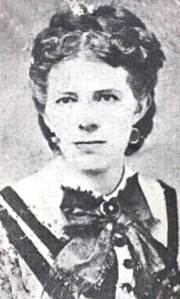
Kate Stone’s Civil War: I suffered intensely

As Stone works her way back to Texas, a toothache adds to her discomfort and fear throughout a journey through wild and war-torn swampland.

KS2

From 2012 to 2015, Stillness of Heart will share interesting excerpts from the extraordinary diary of Kate Stone, who chronicled her Louisiana family’s turbulent experiences throughout the Civil War era.

Learn more about Stone’s amazing life in 1861, 1862, 1863, 1864, 1865 and beyond. Click on each year to read more about her experiences. You can read the entire journal online here.

(Photo edited by Bob Rowen)

As Stone works her way back to Texas, a toothache adds to her discomfort and fear throughout a journey through wild and war-torn swampland.

November 1864

On the road to Texas

We got off from Col. Templeton’s Monday morning, all sorry to part after a delightful summer and fall with not a disagreeable incident to mar our intercourse. They have been the soul of kindness to me, one and all. The direct road through the swamp is impassable, and so Capt. Wylie piloted us a new route. Capt. Wylie, Johnny, and I were on horseback, and about 2 o’clock we reached the hill road without getting bogged down as Johnny had in coming through the old road. We dismounted, entered the carriage, and bade Capt. Wylie a warm farewell, thanking him for his many courtesies. …

It was a rainy day and we did not reach Monroe until about sunset. Capt. Brigham met us, and we waved him adieu as we crossed the Ouachita on a flat. We passed the night at Mrs. Scale’s at Trenton, much to Johnny’s disgust as he does not like them. Some gentlemen called, and we had cards. After they left, Lucy and I tried our fortunes in divers ways as it was “All Hallow’e’en.” We tried all magic arts and had a merry frolic, but no future lord and master came to turn our wet garments hanging before the fire. There were no ghostly footprints in the meal sprinkled behind the door. No bearded face looked over our shoulders as we ate the apples before the glass. No knightly forms of soldiers brave disturbed our dreams after eating the white of an egg half-filled with salt. …

The third morning we left in a cold drizzling rain with a splendid lunch and a jar of pickles, and with kisses and good wishes of the family. I had a raging toothache, because of sitting all day in wet shoes after passing the swamp. Capt. Wylie’s solicitude on the subject of my thin, wet shoes was not uncalled for at last.

Our trip to Vienna was disagreeable. We stopped at twelve, built a fire, enjoyed our dinner, and then smoked leaf cigarettes. They relieved my tooth for a time, but the pain returned. For several days I suffered intensely, nearly ruining all my teeth I fear by using creosote, caustic, and any strong thing people recommended. Our supper at the hotel at Vienna consisted of cold stewed pumpkins, cold greens, and cold white cornbread. Nothing else but cold well water. The breakfast was nearly as unpalatable, but it was warm. We had nothing to eat all day except the pickles, which Johnny first ate and then drank the vinegar. …

Kate Stone’s Civil War: Fairy castles in the air

Stone offers a slice of life in Oak Ridge, La., as her caretakers search for a window of safety to escort her back to Texas.

1863

From 2012 to 2015, Stillness of Heart will share interesting excerpts from the extraordinary diary of Kate Stone, who chronicled her Louisiana family’s turbulent experiences throughout the Civil War era.

Learn more about Stone’s amazing life in 1861, 1862, 1863, 1864, 1865 and beyond. Click on each year to read more about her experiences. You can read the entire journal online here.

(Photo edited by Bob Rowen)

Stone offers a slice of life in Oak Ridge, La., as her caretakers search for a window of safety to escort her back to Texas.

Oct. 15, 1864

Near Oak Ridge, La.

We have kept on the even tenor of our ways with no hairbreadth escapes by land or sea to ruffle the calm. There are still occasional reports of advancing Yankee raids, but all blow over and no Yankees yet, though this country is still defenseless. …

We have little company and pay few visits, but we enjoy the days, and the weeks fly by like magic — no startling events to mark them off. Capt. Wylie and Dr. Wylie are here. They amuse themselves during the day, but in the evening we all assemble, play chess or cards, and carry on long and animated discussions on all topics under the sun. All the older members of the family are very fond of argument and discussion and are thoughtful talkers and well educated, though one must know them some time before finding that last out.

We made a rule fining everyone for each lapse in grammar, which worked famously for awhile, until we found we would soon all be bankrupt in both purse and temper, and by tacit consent it was dropped and grammar is no more alluded to. Mrs. Templeton said she knew she would never be fined. She knew every rule in the book, but she was the first and most grievous offender and hated worst to be reported. … We lounge in rocking chairs building fairy castles in the air, mapping out lives of goodness and noble endeavor, until Mrs. Templeton rouses from her half-doze on the bed and sends us all to rest. …

Our pleasant days are drawing to a close as Mamma writes she will send Johnny at once for me, and we are looking for him every day. Capt. Brigham rode in from Monroe to tell us that the long expected tableau would come off the next evening and that he had come in to escort us out. Early the next morning we three girls and Sally McGraw with Jimmy, Capt. Wylie, and Capt. Brigham as outriders and the maid Henrietta bringing up the rear, made our way to Monroe under many difficulties. We had a most trying time after reaching there, owing to Capt. Brigham’s blundering. We did not enjoy the tableau as we were too worried and were thankful to be all safe at Mrs. Templeton’s next evening.

Oct. 30

The last time I shall write here. Johnny arrived with the carriage two days ago, and we start home tomorrow. This will end a most pleasant visit, or rather visitation, for I have been here more than three months. All the family have been unfailingly kind and have done all in their power to make me enjoy the time. I certainly have had a most charming visit and grieve to leave them. Then I shall have to break off two most promising flirtations. My only comfort is in thinking of the lovely trip Johnny and I are going to have a comfortable carriage well stocked with lunches, a good driver, strong mules, no hurry, and a lodging every night with friends, good roads, and fair October weather.

Recommended reading / viewing / listening

This week: Enduring sexism / LBJ and the Secret Service / Exercise and depression / The Roman Empire / The political Eva Longoria

IMG_1475

This week: Enduring sexism / LBJ and the Secret Service / Exercise and depression / The Roman Empire / The political Eva Longoria

Most of these great items come from my social media networks. Follow me on Twitter, Tumblr, LinkedIn, MySpace, and Facebook for more fascinating videos, photos, articles, essays, and criticism.

1. Jessica’s Feminized Atmosphere
By Jessica Williams | The Daily Show | Oct. 2
“Also, that’s redundant.”

2. L.B.J.’s Bravado and a Secret Service Under Scrutiny
By Michael Beschloss | The Upshot :: The New York Times | Oct. 2
“Not long after President Kennedy’s assassination, President Johnson chafed under his Secret Service protection.”

3. What made Japan’s deadly volcanic eruption so unpredictable?
By Judy Woodruff and Miles O’Brien | PBS NewsHour | Sept. 30
“More than 250 people were out hiking and enjoying a nice fall day, when a surprise eruption littered the mountain with falling boulders, thick smoke and piles of ash. At least 36 people were killed.”

4. This Is How Eva Longoria Is Trying to Win the Midterms
By Asawin Suebsaeng | The Daily Beast | Oct. 1
“From working behind the scenes in the midterms to making a new farm labor documentary, the former Desperate Housewife has emerged as a force to be reckoned with in liberal politics.”

5. How Exercise May Protect Against Depression
By Gretchen Reynolds | Well :: The New York Times | Oct. 1
“Exercise may help to safeguard the mind against depression through previously unknown effects on working muscles.”

6. The Elements of Style
By Sasha Weiss | The Sunday Book Review :: The New York Times | Oct. 3
“Watching other women, seeing how they’re dressed and how they pull it off, is the way most of us learn to become ourselves.”

7. Former Haiti president Duvalier dies
By Mike Wooldridge | BBC News | Oct. 4
“Duvalier was just 19 when in 1971 he inherited the title of “president-for-life” from his father, the notorious Francois ‘Papa Doc’ Duvalier. He was accused of corruption, human rights abuses and repression in his rule, which ended in a 1986 uprising.”

8. Catastrophic Coltrane
By Geoff Dyer | NYR Gallery :: New York Review of Books | Oct. 4
“The interest of recordings from this final phase — in which Coltrane’s playing became increasingly frenzied and the accompaniment more abstracted — lies partly in what they preserve and partly in any hints they contain as to where Trane might have headed next.”

9. The Aral Sea’s Disappearing Act
By Anna Nemtsova | The Daily Beast | Oct. 4
“Satellite photos show how the depredations of dictators have turned the world’s fourth largest inland sea into a poisonous desert.”

10. 40 maps that explain the Roman Empire
By Timothy B. Lee | Vox | Aug. 19
“Two thousand years ago, on August 19, 14 AD, Caesar Augustus died. … Under Augustus and his successors, the empire experienced 200 years of relative peace and prosperity. Here are 40 maps that explain the Roman Empire — its rise and fall, its culture and economy, and how it laid the foundations of the modern world.”

The Disco Pall

The mirage inspired the working class and their tenuous allies toward distant horizons of hope, unaware that only predators awaited them in the night.

IMG_1467

The mirage inspired the working class and their tenuous allies toward distant horizons of hope, unaware that only predators awaited them in the night.
A review essay by Fernando Ortiz Jr.

Discussed in this essay:

Stayin’ Alive: The 1970s and the Last Days of the Working Class. By Jefferson Cowie. New York: The New Press, 2010. Pp. 464. $19.58

*****

Jefferson Cowie illustrates in Stayin’ Alive a sad era of American labor’s political and economic strife. The book recounts 40 years of corporations, political figures, and labor’s own leaders undermining, defusing, or ravaging the postwar economic opportunities of working-class Americans, who gradually lost every ally gained during the New Deal era. The working-class identity at the beginning of his story captures their pride and belief in a better future. Their identity at the end is strangled, stabbed, and ground down into a pitiable symbol of social irrelevance, political isolation, and self-absorbed psychic catatonia.1

Cowie divides his story into two sections: “Hope in the Confusion, 1968-1974” and “Despair in the Order, 1974-1982.” He begins with vivid accounts of labor’s role as “junior partners” in a New Deal coalition to re-engineer American capitalism and of a younger generation’s struggles against calcified labor leaders in the 1960s to improve their economic standing. He then moves into the chaos of the 1968 presidential campaigns. Public uproar over the Vietnam War left President Lyndon B. Johnson exhausted. He refused to run for another term, leaving the desiccated corpse of the presidency for Democratic contenders to rip apart like starved hyenas. Vice President Hubert Humphrey emerged from the violent Democratic nominating convention as the last man standing, with only the labor machinery at his side, Cowie writes, making labor the “big boss in the Democratic Party.”2

Labor’s support of the Vietnam War, Cowie explains, meant no alliance with anti-war Democrats. Patriarchal labor leaders rejected civil rights and social movements, which poisoned any relationship with social liberals, women, and minorities. Humphrey’s nomination triumph and labor alliance amounted to little more than a Pyrrhic victory when Richard Nixon, leading a Republican resurgence against divided Democrats, won the election. The cracks in the Democratic lines would also lead to complete political failure in 1972 when Democrat George McGovern challenged then-President Nixon and was obliterated.3

The tragic and foreboding theme of division overshadows every working-class ambition, and Cowie highlights its importance at every turn. The compromised aspirations of the 1935 National Labor Relations Act and Title VII of the 1964 Civil Rights Act are two of his best examples. Both aimed for “occupational justice.” The former enabled union formation and opened economic opportunities to immigrants. The latter ensured non-white, non-male, and non-Christian workers would not face workplace discrimination. The former was rooted in the hopes for economic equality. The latter was rooted in the hopes for cultural and gender equality. Some victories required the exclusion of black rights.

Others required the exclusion of women’s rights. Inherent tensions between the governmental and political forces that achieved both victories doomed the unity needed to face foes in the 1970s and 1980s, who exploited “an unbridgeable chasm” between allies fighting over race or over class. Cowie is at his best when he explores these key flaws in the coalition the unions depended upon throughout the postwar decades.4

Nixon cynically targeted that central cultural-vs.-material dichotomy in the workers’ outlook. He lured them into his New Majority, his own coalition of Republicans, conservative Democrats, and white workers disgusted by the civil rights or other social movements. He emphasized his empathy with their frustrations, and he shared their disgust for “effete” Northern elitists and antiwar protesters. He anesthetized their doubts or shame over their support for a Republican with dazzling themes of shared patriotism. Once working-class Democrats were numbed to their own political transformation and suffocated by the rhetorical American flags in which he wrapped them, Nixon added their votes to his victorious totals, laughed at their seeming blindness to his manipulations, and then subsequently did little to justify their support.5

Cowie ends the book’s first half with the convincing contention that in 1973, after years of high earnings and low unemployment, labor’s prospect for further prosperity began to fade. That year was a turning point, he writes, when “a troika of disasters” began to unfold: an oil embargo, the spread of suffocating stagflation, and the Watergate scandal that led to Nixon’s resignation in 1974. Nixon, Cowie argues, “was the last [postwar president] to court labor seriously.” Instead of playing on the old New Deal chessboard, Nixon simply invented a new game with new rules. After 1974, labor faced threats it was no longer armed against, on battlefield on which it had no effective allies, and fought for a place in an economy that no longer valued its contribution or importance.6

If the book’s first half sees the working class feel the unstable shoreline crumble under their feet, the second half sees them slide helplessly into the shark-infested water. Nixon’s successor, Gerald Ford, defeated Ronald Reagan for the 1976 presidential nomination. Democrat Jimmy Carter then defeated Ford in the general election. Nixon’s and Ford’s defeats emboldened Democratic liberals, and their triumph blinded them to Carter’s limitations as a labor ally. At first, liberals and labor saw new hope in the new president, who could potentially fuse old George Wallace supporters, Southern Democrats, Northern workers, and minorities into a new coalition. Cowie points to hopes for new legislation that would generate more jobs, improve labor laws, and begin a national health insurance. But Carter had little regard for liberal dreams, and his career was not beholden to labor’s support. His narrow and principled vision focused only on particular priorities, and his stiff rudder rarely moved to accommodate labor’s needs.7

Labor needed help more than ever before. Companies laid off workers and moved production overseas. Plants closed. Industries gravitated to regions that rejected union activism, instituted right-to-work laws, and promised tax incentives and low regulation. The general economic malaise acted like a drought, drying up what little hope remained for labor to find economic or political rejuvenation in the Democratic Party’s empty and neglected fountains. By 1980, Cowie explains, “a unionized manufacturing job … had become a rare and coveted source of security” -– a stale scrap from the corporate table crowded with conservative allies.8

Cowie’s pursuit of working-class identity throughout the postwar decades is a powerful intellectual feature of the book. He also argues that working-class identity found itself reflected in TV shows like All in the Family, in ballads from Bruce Springsteen and Devo, and in films like Saturday Night Fever. But the musing quickly turns into bloviating and regrettable tedium. Much of what he wanted to say could have been condensed from two chapters into one, or incorporated into the photos section with enriched captions. The attempt to casually expound on entertainment diminishes the power of Cowie’s serious and informative history.9

Republican Ronald Reagan won the presidency in 1980. By then, Cowie laments, the “redefinition of the working class beyond its New Deal form” had failed. Postwar attempts to maintain workers in the middle class failed. Conservative enemies torpedoed their legislative and policy accomplishments. Carter and a new generation of liberal Democrats had no shared history with labor and little inspiration to court their rusted and scarred loyalties.10 The working classes had nowhere to go but inward in their search for a credible identity. Ironically, that desperation left them open to another round of Nixonian seduction. Reagan’s New Right vision promised a return to a revitalized America built on the rubble Carter and his Eastern elites had left behind, one nation under God, ruled by white Christian men just as they ruled in their own communities.

The potent, sickening sweetness of Reagan’s nostalgic platitudes — Cowie calls it “symbolic sanctuary” — mesmerized workers who hungered for a time when they mattered to American society. Reagan swung the final major blow to the remnants of the labor movement when he shattered the Professional Air Traffic Controllers (PATCO) union strike in 1981. Cowie calls Reagan’s decision “one of the boldest acts of his administration.” Cowie could have added details of the administration’s decision-making process, internal debates, or recollections from Reagan advisors. Instead, the incident, which signaled to the corporate world how weak and vulnerable the union community truly was, is barely explored in a rush to finish the second half of the book, which ends in 1982. By the 1990s, a globalized economy of union-free service workers emerges, ruled by a conservative coalition descended not solely from conservative victories, Cowie argues, but also from liberalism’s failures and shortsighted divisions.11

Cowie’s sad and fascinating story points to the “internal weaknesses” of the working class when explaining why labor movements failed to sustain cohesion and strength long enough after the New Deal to pose a significant challenge to “[m]arket orthodoxy.”12 Perhaps, he argues, their noble alliance was little more than a “conceptual unity” that never truly existed. The mirage inspired the working class – enthused by their New Deal identities — and their tenuous allies toward distant horizons of hope, unaware that only predators awaited them in the night.


1. Jefferson Cowie, Stayin’ Alive: The 1970s and the Last Days of the Working Class (New York: The New Press, 2010), 9-11.
2. Cowie, 9, 29, 83.
3. Cowie, 41, 84.
4. Cowie, 236-237.
5. Cowie, 122-124, 132-133.
6. Cowie, 12, 164.
7. Cowie, 14, 266.
8. Cowie, 15.
9. Cowie, 209-210, 357-369.
10. Cowie, 366.
11. Cowie, 362-364.
12. Cowie, 18.

Kate Stone’s Civil War: The flower-wreathed scepter

Stone records the fall of Atlanta along with pitiful rumors of its victorious Confederate recapture. By now the ripples of great battles hardly disturb her social shores.

1862

From 2012 to 2015, Stillness of Heart will share interesting excerpts from the extraordinary diary of Kate Stone, who chronicled her Louisiana family’s turbulent experiences throughout the Civil War era.

Learn more about Stone’s amazing life in 1861, 1862, 1863, 1864, 1865 and beyond. Click on each year to read more about her experiences. You can read the entire journal online here.

(Photo edited by Bob Rowen)

Stone records the fall of Atlanta along with pitiful rumors of its victorious Confederate recapture. By now the ripples of great battles hardly disturb her social shores.

Sept. 27, 1864

Near Oak Ridge, La.

We hear of the lamentable fall of Atlanta and rumors of its recapture, which we trust may be true. There is no further fear of a Yankee raid as there are very few troops left at Goodrich’s Landing, and everyone seems to look for peace in the spring. …

An amusing letter from Missie Morris in which she utterly repudiates the idea of our giving up as “Old Maids” for two years yet, when she will be willing to lay down the flower-wreathed scepter of girlhood and don the badge of spinsterhood.

Capt. Gillispie came in two days ago and has kept the house in an uproar ever since. He is overflowing with fun and frolic but is rather too familiar and something rude. He does not improve on acquaintance. I fear he is fast, a perfect opposite to tiny Mr. Kurrie, who came with him. We thought him at first about twelve years old, so quiet and solemn. He really is twenty. …

Recommended reading / viewing / listening

This week: Holder’s exit / Earth’s magnetic flip / Cusack’s Hollywood / The Kennedy Style / Anti-psychopaths

IMG_2126

This week: Holder’s exit / Earth’s magnetic flip / Cusack’s Hollywood / The Kennedy Style / Anti-psychopaths

Most of these great items come from my social media networks. Follow me on Twitter, Tumblr, LinkedIn, MySpace, and Facebook for more fascinating videos, photos, articles, essays, and criticism.

1. America’s New War President
By Michael Hirsh | Politico Magazine | Sept. 23
“With a broad campaign against the Islamic State in Syria and Iraq, Obama has a chance to remake his legacy.”

2. What to expect from the Earth’s impending magnetic flip
By Annie Sneed | Scientific American and Salon | Spet. 26
“New data suggest the poles could be reversing for the first time in 780,000 years. Here’s how it affects you.”

3. Why Holder Quit
By Glenn Thrush | Politico Magazine | Sept. 25
“The backstory of how Obama lost his ‘heat shield.’”

4. The 8 Best Pocket Parks In Manhattan
By Rebecca Fishbein | The Gothamist | Sept. 25
“[S]mall, public-accessible pocket parks that dot the city are an oft-overlooked joy, a temporary respite from the hustle and bustle of the urban artery.”

5. The Barbarians Within Our Gates
By Hisham Melhem | Politico Magazine | Sept. 18
“Arab civilization has collapsed. It won’t recover in my lifetime”

6. Bad Moon Rising
By David J. Rothkopf | Voice :: Foreign Policy | Sept. 24
“Behind the scenes at the U.N., a more unsettling story emerges of Syria, Iraq, and fighting the Islamic State.”

7. John Cusack: ‘Hollywood is a whorehouse and people go mad’
By Henry Barnes | The Guardian | Sept. 25
“After 25 years as a star, John Cusack has seen the movie industry’s dark side close up — from its misogyny to its treatment of young actors.”

8. Who Would Donate a Kidney to a Stranger? An ‘Anti-Psychopath’
By Melissa Dahl | Science of Us :: New York Magazine | Sept. 25
“If the dark, scary end of the caring continuum is inhabited by psychopaths, way down at the other end [are] ultra-do-gooders who are extraordinarily compassionate, prosocial, and empathetic.”

9. Evolution: Why don’t we have hairier faces?
By Jason G. Goldman | BBC Future | Sept. 26
“Mark Changizi … has an intriguing alternative explanation. … It’s because we’re walking, talking, breathing ‘mood rings’”

10. Nixon and Age: The Kennedy Style
American Experience :: PBS | November 2011
“The Nixon-Kennedy debates would forever change the way Americans chose their presidents.”

Videos I Love: Musical medicine

This music never failed to re-energize me.

img_2886

This music never failed to re-energize me.

I’m fighting off a cold. I haven’t been sick in more than year. I spent today pushing myself (and only occasionally succeeding) to compose a literature review so I’m not looking at an unfinished thesis in early November and wondering how I wasted six months.

I’ve dutifully taken medicine and had lots of juice and warm pho (noodle soup with chunks of eye round steak and brisket, lemon chunks, cilantro, basil leaves, and bean sprouts).

I’ve also enjoyed some oldies to keep me awake, just slightly dancing with my shoulders so no one notices. This music video has always been one of my favorites. I love how he drops in Tupac so perfectly.

Back to work.

A copyright issue required the creator of the video below to mute the sound. Fortunately, the remix survives here.

*****

I’m occasionally sharing some thoughts on a few videos that make me smile, make me think, or preferably do both. Read more from this special series here.

Kate Stone’s Civil War: One grand holocaust

A furious Stone employs amazing language to accuse the Federal government of using former slaves to wipe Southern civilization off the face of the earth.

KS62

From 2012 to 2015, Stillness of Heart will share interesting excerpts from the extraordinary diary of Kate Stone, who chronicled her Louisiana family’s turbulent experiences throughout the Civil War era.

Learn more about Stone’s amazing life in 1861, 1862, 1863, 1864, 1865 and beyond. Click on each year to read more about her experiences. You can read the entire journal online here.

(Photo edited by Bob Rowen)

After false rumors of a Union raid, a furious Stone employs amazing language to accuse the Federal government of using former slaves to wipe Southern civilization off the face of the earth.

Sept. 5, 1864

Near Oak Ridge, La.

Intense excitement in the neighborhood. Yankees reported advancing in large force destroying, burning, and murdering as they come!! Capt. Lea with his small band of guerrillas contesting every mile of the way but being steadily forced back by superior numbers! Praying Col. Parsons, who has the only troops near, for reinforcements, but who refuses to send them as he is under stringent orders and making forced marches! Blank consternation among the citizens who hear that the Federals have vowed vengeance against this section on account of Capt. Lea and his guerrillas. Everyone is preparing to flee the wrath to come.

Such were the startling reports brought to Col. Templeton by terrified Mr. Philips this morning, frightening us nearly to death, for great is our horror of the vandal hordes since their ruthless destruction of Floyd and Pin Hook and their outrageous conduct at those doomed places. Mrs. Templeton soon had everything arranged for our rapid flight through the swamp across the Ouachita to the safe haven of Col. Wadley’s home, should the reports prove true, leaving Mrs. Templeton and Mrs. Savage here to brave the storm, Col. Templeton going with us. We were on the qui vive all day looking for a mounted messenger galloping up through the wooded lawn shouting, “Flee, Flee.” But about sunset the tension relaxed. We heard that the Yankees came out only as far as Floyd on a reconnaissance and are retiring to the river, and so we breathe freely once more.

The Yankee raids are no joke, though we laugh at each other for being frightened. Last week 200 of the Corps D’Afrique, officered by six big white men (wretches they are), came out and laid the two little villages of Floyd and Pin Hook in ashes, not allowing the people to remove any of their possessions from their houses and thus leaving them utterly destitute. They were very rough and insulting in their language to the ladies, tore the pockets from their dresses and the rings from their fingers, cursing and swearing, and frightening the helpless folks nearly into fits.

This was done in revenge for a guerrilla raid a few days before, in which a good many government stores were destroyed and eighty or ninety Negroes brought out. The Yankees know they make it ten times worse for us by sending Negroes to commit these atrocities. The Paternal Government at Washington has done all in its power to incite a general insurrection throughout the South, in the hopes of thus getting rid of the women and children in one grand holocaust. We would be practically helpless should the Negroes rise, since there are so few men left at home. It is only because the Negroes do not want to kill us that we are still alive. The Negroes have behaved well, far better than anyone anticipated. They have not shown themselves revengeful, have been most biddable, and in many cases have been the only mainstay of their owners.

Five or six citizens, unarmed, were murdered by the Yankees in that Floyd raid. How thankful I am we left home when we did. To lose everything is bad, but constant terror and insult are worse.

The guerrillas report that the cotton crop on the river is a complete failure, entirely eaten up by the worms. The fields are swept of every vestige of green and there is hardly a matured boll to a stalk. This news rejoices our very hearts. Those are true “Confederate worms,” working for the good of the Cause. …

From a flame into a firestorm

Why the French Revolution devoured its own people.

IMG_1464

Why the French Revolution devoured its own people
An essay by Fernando Ortiz Jr.

Hope inspires nations to improve their societies, challenge their citizens’ capabilities, and face down seemingly invincible enemies. In revolutionary France, citizens and their leaders tasted the sweet fresh air of liberty, equality, and nationalist unity. They sensed their hopes for a brighter national and social future might be realized, and they determined that nothing would interfere with that grand realization. But how did those hopes lead France into the horrific era of the Terror? The tragic evolution from revolution to republic to Terror was not a linear nor an inevitable process. Challenges to the Revolution mounted, as did the Revolution’s responses to them. The key elements of the Revolution – the people who embraced that revolution, their political leadership, and the counterrevolutionary threats that haunted all of them – ground against each other, setting off sparks that ignited the rise of a new form of government and an era of bloodshed that still stains the shadowed passages of tormented human memory.

The French Revolution reordered the political mindsets of many eighteenth-century French people. The preceding era of the Enlightenment and the Republic of Letters nurtured not only an intellectual renaissance but also demanded and inspired challenges to the way the French regarded the Catholic Church, their places in a monarchy, and their social, economic, and creative potential as liberated people.1 That intimate revolution in self-image was furthered in 1763 and 1764 when the Parlement of Paris argued that “the king held his throne and legitimacy” from “fundamental” French laws, deflating the inherently supreme majesty of monarchy and subordinating it to the French polity’s larger legal authority.2

As economic crisis paralyzed France, the Old Regime’s political leadership failed to live up to the people’s “almost-millenarian hope” that those leaders could improve commoners’ impoverished lives, convincing many of those commoners that they had to take control of their own existence.3 The privileges the upper classes enjoyed angered the middle classes, already irritated with “paternalism of government” and dismissive of the Church as a “corporation which had ceased to perform its functions efficiently.”4 A new era was about to dawn over France.

The Revolution retained the king but stripped privileges from the Church and demanded from the clergy oaths of loyalty to the new Civil Constitution. The new national representatives asked the people to share their concerns and ideas. It was intimately revolutionary. The people were asked to review their lives and look at elements of their government and society that they themselves deemed could “be changed or improved or abolished.”5 The new Declaration of the Rights of Man and Citizens promised a better future for an “imagined community” of equal citizens. The new October constitution formalized ideals of liberty and equality under a representative government, spiritually freed from Catholic doctrine, and under the paternalistic gaze of a weak and devoted monarch. While the reforms seemed to favor oppressed and voiceless lower classes, the Revolution did not have “a natural constituency.”6 Each citizen had their own self-interested reason for support or opposing the new era of liberty and equality.

By the early 1790s, the empowered and self-confident French people, no longer “docile followers” of the Old Regime’s well-trod paths through life, stood on the threshold of an undiscovered country, determined to face down the empires and kingdoms that besieged them, the political and economic differences that divided them, and, most importantly, the internal forces that conspired to undermine their Revolution’s promise of a new and better world.7

Revolutionary changes did not unfold without resistance, particularly from French sectors directly diminished by progressive policies, and the manner with which some changes were enacted inspired counterrevolutionary sentiments, conspiracies, and actions. Other counterrevolutionary actors feared further social disorder, insolvency, and unemployment, disagreed over food distribution policies, or simply suffered from bruised egos.8 Economic equality for the lower classes meant nothing if standards of living steadily fell.9

The nobles saw their privileges, including light tax burdens or exemptions from an incomprehensible financial system, stripped away “by violence and chicanery,” inspiring even elites who disliked each other to temporarily unite, thereby “creating one of the strands of the counterrevolution.”10 Some elites found a promising alliance with the other major French sector the Revolution diminished: the Catholic Church. Revolution policies expropriated church property, determined that embrace of a “Supreme Being” instead of God “eliminated the Church’s monopoly of public worship as well as its claim to special status,” issued a Civil Constitution of the Clergy in July 1790, and required the clergy to swear their allegiance to that constitution or resign their posts.11 The oath was meant to assert the people’s sovereignty over the church just as the Revolution asserted popular sovereignty over the government, class hierarchies, and the monarchy. The revolutionary government expected the Church to “proselytize for it and to keep order for it” among the masses.12

But that oath also became a rallying point for the Revolution’s leading enemies, who used it to break off sections of popular sentiment bristling over the Revolution’s treatment of their sacred religious institutions or feeling discontent over a multitude of other consequences of revolutionary policies. Counterrevolutionary elites focused disruptive energies on Catholic-rich regions of France and manipulated Catholic-Protestant divisions. The oath provided the counterrevolution a group from which to draw support that might have otherwise embraced the new era. Resistance to the Civil Constitution “took on the characteristics of a mass movement.”13

The oath also stressed the fragile loyalties of clerical deputies participating in revolutionary government. The faith they shared with most other deputies in the unifying symbol of the King Louis XVI bolstered the Revolution’s fragile coalition. His attempt to escape the Revolution sent devastating shockwaves through the delicate political networks and contributed to the people’s eventual capacity to wage the Terror against the threats he represented.14

The king publicly swore loyalty and support for the new constitution. But he secretly despised everything it represented. The Civil Constitution of Clergy disgusted him. In letters he raged against his loss of traditional monarchical authority.15 His escape in June 1791, his capture, and his discovered letters – including one he left behind explaining his reasons for his flight — exposed to his subjects what he truly felt about their aspirations and ambitions.

Louis warped the monarchy’s moral authority and stained any politician subsequently willing to deal with it or defend it. Opinion and justification over his actions split the political accord in the Assembly.16 The flight shattered for provincial citizens and officials any belief in the revolutionary government’s credibility, effectiveness, and stability. Who would help them? A government that accomplished nothing? A divided church only half-heartedly embracing a new era of social justice? A king that lied to their faces? The king’s flight and his sentiments convinced “the urban masses and the national guards” that they had to deal with incidents of counterrevolutionary unrest with degrees of force that they themselves deemed appropriate — with “their own solutions” — and Paris could do little to stop them.17 Perhaps, a few thought, France did not need a king. It was a key moment “in the emergence of French nationalism.” Some letter-writers even referred to the deputies as the new fathers of a new country.18

The king’s actions sharpened in the politicians and citizens’ minds their suspicions and fears of looming counterrevolutionary forces conspiring to destroy the Revolution. Priests refused to take their oaths of loyalty. Provincials fought amongst themselves. Émigré armies massed in the borderlands. And the king confessed his disgust for his own subjects’ hopes and attempted to leave them to the mercy of what might have been a foreign invasion — that might still take place.19 Even the most paranoid revolutionaries eventually appeared prescient to commoners who had no idea what the next day might bring. That fear justified the new forms of justice, suspension of personal liberties, lethal brutality, and outright murder throughout France.

To deal with perceived threats, in August 1792, the Paris government authorized the disarming of any suspected counterrevolutionaries and searches of any suspected counterrevolutionary homes. Betraying the Revolution was something bad but taking oppositional action against it was even worse. Arresting people for throwing stones or shouting at guards, shutting down political clubs and newspapers, listening to private conversations, or simply looking for anything or anyone that seemed suspicious – these were the actions of a terrified government willing to fight imagined terrorism with repression of almost any degree.20 In September, rumors of prisoners planning to revolt when foreign armies invaded France inspired revolutionaries to massacre them, leaving up to 1,400 dead. On Sept. 21 “the [national] Convention abolished the monarchy and proclaimed the Republic.”21

Recent battlefield victories against foreign counterrevolutionary forces and the war’s expanded scope inspired the republic to call up 300,000 men, which sparked “an unprecedented wave of riots.” More importantly, the riots – and fresh battlefield defeats — sparked an official response: the centralization of national authority, new judicial tribunals to persecute suspected treason, and state-directed repression of domestic unrest and disloyalty with a “supreme police”22 The Revolution was threatened, and the government took the repressive torches from the people and transformed them into fireballs with which to incinerate the elites, the price-gougers, and traitors of any section of the endangered French Republic. Terror was not a new horror — what was new was that the Terror was systemic, “a deliberate policy of government,” so it was wide-reaching, simultaneous, and steady in its murderous hunger for victims.23

The war machine was a ravenous hurricane at the Terror’s core, hungry for materiel from churches, loyalty from the populace, and legions of soldiers to be thrown against foreign armies. Churches became “barracks, arsenals, or stables,” and anything of value was put to military use. But the mobilization campaign quickly became a dechristianization campaign, in which signs of any kind containing Christian references were torn down. The new man of the Republic would be spared the old superstitions of the failed Church. Church defenders were killed. Nothing better symbolized the Terror for many citizens than the dechristianization efforts.24

The campaign drew deep divisions between commoners who believed they commanded the government and the political leadership, some in power without popular mandates, which was prepared to brutally suppress any resistance or wavering acquiescence to their absolute wartime authority. These two elements, increasingly at odds with each other, intensified the Terror’s murderous chaos.25 Real and imagined fears inspired both the French people and their provisional government — particularly members of the Committee of Public Safety like Robespierre — to use fear to repress it. Fighting fire with fire simply intensified the fire.26

Robespierre’s campaign to purify the Revolution, first by invalidating any sense of guilt or culpability for the atrocities he felt were necessary, was aimed at the building the new society the Revolution’s earliest aspirations aspired to achieve. The Terror’s own monstrous judicial liberties were realized on local levels as committees expressed the persecutorial zealotry required to achieve the sanctioned purifications.27 The Terror was sustained by “a strange compound of reason, desperation, and fear,” and it redefined what was revolutionary – not ideology, not a new vision, not a new government. The Terror’s revolution was one of efficient execution of “effective measures” — slicing through opposition and bringing centralized order to counterrevolutionary chaos in order to ensure the Revolution’s permanence.28

The Revolution’s supporters at first marched proudly into a new era, their self-image evolving from royal subjects to free citizens and optimistic that they would find a balance between better lives and the embrace of a king’s paternalistic gaze. But the Revolution’s real and imagined enemies inspired powerful figures who cared less about revolutionary aspirations than the measures necessary to defeat those enemies. French leaders became the bloodstained dictatorial oppressors from which they desperately fought to save their countrymen. Step by step, revolutionaries and their leaders became the firestorm they tried to extinguish.


1. Dena Goodman, The Republic of Letters: A Cultural History of the French Enlightenment (Ithaca, N.Y.: Cornell University Press, 1994); D.M.G. Sutherland, France 1789-1815: Revolution and Counterrevolution (New York: Oxford University Press, 1986), 37.
2. Sutherland, France 1789-1815, 22.
3. Sutherland, France 1789-1815, 59.
4. R.R. Palmer, Twelve Who Ruled: The Year of Terror in the French Revolution (Princeton, N.J.: Princeton University Press, 1989), 18-19.
5. Timothy Tackett, When the King Took Flight (Cambridge, MA: Harvard University Press, 2013), 10.
6. Sutherland, France 1789-1815, 80, 114.
7. Sutherland, France 1789-1815, 49; Tackett, When the King Took Flight, 87.
8. Sutherland, France 1789-1815, 112.
9. Sutherland, France 1789-1815, 159-160.
10. Sutherland, France 1789-1815, 19-22.
11. Sutherland, France 1789-1815, 21, 80-81, 95, 97.
12. Sutherland, France 1789-1815, 99.
13. Sutherland, France 1789-1815, 97, 116; Tackett, When the King Took Flight, 13.
14. Sutherland, France 1789-1815, 122; Tackett, When the King Took Flight, 184.
15. Sutherland, France 1789-1815, 124; Tackett, When the King Took Flight, 183, 189.
16. Sutherland, France 1789-1815, 124.
17. Sutherland, France 1789-1815, 124-125; Tackett, When the King Took Flight, 168.
18. Tackett, When the King Took Flight, 157-158, 189-190.
19. Sutherland, France 1789-1815, 127; Tackett, When the King Took Flight, 166, 167.
20. Tackett, When the King Took Flight, 203.
21. Sutherland, France 1789-1815, 154-155.
22. Sutherland, France 1789-1815, 167, 170.
23. Palmer, Twelve Who Ruled, 56.
24. Sutherland, France 1789-1815, 208-210, 212, 217.
25. Sutherland, France 1789-1815, 192, 202, 208.
26. Palmer, Twelve Who Ruled, 39. 74-77.
27. Sutherland, France 1789-1815, 224, 226, 228.
28. Palmer, Twelve Who Ruled, 28, 39. 58.


BOOKS CONSULTED FOR THIS ESSAY

Goodman, Dena. The Republic of Letters: A Cultural History of the French Enlightenment. Ithaca, N.Y.: Cornell University Press, 1994.

Palmer, R.R. Twelve Who Ruled: The Year of the Terror in the French Revolution. Princeton, N.J.: Princeton University Press, 1989.

Sutherland, D.M.G. France 1789-1815: Revolution and Counterrevolution. New York: Oxford University Press, 1986.

Tackett, Timothy. When the King Took Flight. Cambridge, MA: Harvard University Press, 2003.

Dealing with the real America

Dealing with Puerto Rico means dealing with the key issues of the 21st century. Few in the U.S. government may have the stomach for that rollercoaster.

IMG_0237

Dealing with Puerto Rico means dealing with the key issues of the 21st century. Few in the U.S. government may have the stomach for that rollercoaster.
A review essay by Fernando Ortiz Jr.

Discussed in this essay:
Puerto Rican Citizen: History and Political Identity in Twentieth-Century New York City. By Lorrin Thomas. Chicago: University of Chicago Press, 2010. Pp. 354, $35.00

*****

Throughout the twentieth century, Puerto Ricans yearned for political respect from the United States. In Puerto Rican Citizen: History and Political Identity in Twentieth-Century New York City, Lorrin Thomas explores how the demand for equal citizenship evolved into a larger, more noble demand for political recognition when Puerto Ricans realized the mere status of citizen would never sufficiently fulfill their political, social, and economic expectations as conquered members of the American republic.1

The U.S., Thomas explains, conquered Puerto Rico as part of its victorious 1898 war against the remnants of the Spanish Empire. Civilian island government was restored in 1900, and in 1917 the Jones Act declared Puerto Ricans were U.S. citizens. Few were happy with the arrangement. The American political elite didn’t want a whole new set of minorities integrated into the U.S. social and political calculus, and islander nationalists wanted independence from their conqueror. Some moderates looked forward to what membership among the U.S. states might offer, but those first rays of hope were quickly clouded. Puerto Ricans were marginalized as colonial Caribbean illiterates who could not rise to the level of political involvement equaling their mainland step-siblings. They were dismissed as one more set of brown or black people who needed “guidance” from experienced Anglo Americans in order to build a proper democratic community. Thomas persuasively argues that Puerto Ricans “wanted recognition beyond citizenship, a recognition that promises not just formal equality within the state but also the respect and dignity that come from real equality.” She uses Puerto Ricans living in New York as a core sample of the overall relationship between the U.S. and Puerto Rico, in all its torment, tragedy, and unrest.2

Thomas uses an interesting variety of primary and secondary sources, including oral histories, news articles, memoirs, and personal interviews, to illustrate the evolution of Puerto Rican political sensibilities throughout the twentieth century. In the two decades before World War II, Puerto Ricans migrated to the U.S., especially New York, and built new communities from which they hoped to participate fully in the citizenship Congress unilaterally granted them. Instead, Puerto Ricans engaged in choques — clashes with other minority groups who saw them as a threat. Some Puerto Ricans embraced the concept of latinidad, a working-class identity that elevated their self-perception from U.S. citizen to citizen of the U.S. and Latin America, a politically transcendent entity equipped to move easily across ethnic, racial, and political barriers. Some Puerto Rican leftists even reached out to support allies in the Spanish Civil War. As the Great Depression ravaged U.S. communities, Puerto Ricans demanded equal access to jobs and government assistance. They also plugged their political discourse into national debates and concerns over European fascism and Asian imperialism, pointing to themselves as the discrepancy in the U.S. view of itself as the glowing torch of morality, idealism, and freedom guiding the world out of its darkest age. “Discourses of human rights and recognition,” Thomas deftly highlights, “shared a sometimes paradoxical balance of demands: both called for universal equality as well as the acknowledgement of particular group difference … both sought to elevate the idea of the category of ‘citizen’ in a flawed, liberal democracy.” The Puerto Rican debates anticipated by a decade the nationalist, imperialist, and human rights debates that animated the bloodied ash heaps of Europe, Africa, and South and Southeast Asia.3

By the 1950s, Puerto Rican hopes for independence faded. The Cold War began, Thomas explains, and Puerto Rico needed to be a showcase of what the U.S. could do for Latin American societies tempted to ally themselves with the Soviet Union. The dominant Puerto Rican discourses looked beyond the empty promise of citizenship to political and social recognition as new liberalist activism aimed to “save” Puerto Rican through economic and social development.4

The failure of American democracy to fulfill New York Puerto Ricans’ expectations of equal access to decent housing, failure to provide bilingual education, failure to provide jobs, and failure to live up to the tenets of its most attractive idealism all combined to convince Puerto Rican political leaders that even with the guarantee of citizenship, even with the opportunity to serve in the military, and even with the option of building a new life on the mainland, Puerto Ricans would never been seen as a part of the U.S. except on a map. Puerto Ricans, Thomas explains, supported politicians who fought for them within the government, like New York legislator Oscar Garcia Rivera, U.S. Rep. Vito Marcantonio, and Puerto Rico Gov. Jesus Pinero. They also supported advocates who took their voices to the streets, like the Young Lords, and labor leaders who staged strikes. In the ivory towers, academics tried to formulate curricula to properly teach Puerto Rico-specific issues of empty citizenship, imperialism, economic development, migration, and Caribbean racism. Puerto Ricans, Thomas argues, hoped to fully enjoy the benefits of “inclusion, belonging, and rights,” especially after World War II, when the U.S. pledged to support freedom and nationalism for all nations, but Puerto Ricans could never escape the realities that proved far more potent and damaging than the dreaminess of liberal American promises.5

Thomas deftly points out that Puerto Ricans “challenged the United States’ liberal democracy to acknowledge the reasons that their group experienced such persistent failures of justice.” Puerto Ricans remain the ultimate reminder to liberal idealists of the failure of a “democratic liberal society” that cannot fully acknowledge the “injustices of recognition.”6

By the 1970s, the energy coursing through Puerto Rican activism came from the grassroots, as “garbage strikes, rent strikes, [and] university takeovers” replaced measured political and academic debates as Puerto Rican expressions of frustration. Thomas paints a vibrant portrait of the blossoming Nuyorican cultural movements, dominated by playwrights and poets, though it’s also an example of the fragmentation of the overall fight for Puerto Rican recognition. Thomas explains that the old sense of multiple groups working together had generally faded, necessitating the renewal spearheaded by the arts. By the 1980s, Thomas explains, academics trying to establish Puerto Rican studies as a necessary field for U.S. history, government, and politics found themselves isolated or shuffled away under dismissive ethnic studies categories, their arguments thrown into a heap of identity politics with all the intellectual dignity of a demolition derby.7

By the end of the twentieth century, the academic world still struggled for a dignified place for Puerto Rico at the U.S. table. The Latino Cultural Studies Working Group embraced the concept of “cultural citizenship,” arguing that anyone who contributed to the “economic and cultural wealth of the country” should be recognized as citizens. It was a political view embracing Puerto Ricans, undocumented immigrants, and other marginalized groups whose treatment in the U.S. set aflame the very banner of ideals the U.S. officially waved to the world’s tired masses.8

The root of the resistance to granting what Puerto Ricans demanded and deserved, Thomas argues throughout, is the cost of recognition. Would recognition merely acknowledge a differentiating quality of the Puerto Rican entity, or would that simply be the key unlocking a necessary “redistribution of economic resources and social and political power”? Would the elevating recognition change the U.S. more than it would Puerto Rico? Do citizens now recognized with full equality have the right to demand more from not just their government, but also from their fellow mainland citizens? Does their recognition also require that the U.S. admit its own culpability in the mistreatment of Puerto Ricans and the contradictions inherent in its own internationally advertised moral superiority?9

Thomas hints that the U.S.-Puerto Rican relationship is so weighed down by history, economic scaffolding, a nascent political discrimination that Puerto Ricans have little hope of achieving their goal of recognition. It is a sad tribute to the power of the Puerto Rican argument. Whatever aspect of political debate it touches, it promises (some would say threatens) to redefine the stakes, to demand a realistic recognition of the limits of a democratic republic and its failings, and to unveil a properly complex calculation of what it means to be a citizen in a globalized society. Dealing with Puerto Rico means dealing with the key issues of the 21st century. Few in the U.S. government may have the stomach for that rollercoaster.


1. Lorrin Thomas, Puerto Rican Citizen: History and Political Identity in Twentieth-Century New York City (Chicago: University of Chicago Press, 2010).
2. Thomas, Puerto Rican Citizen, 250.
3. Thomas, Puerto Rican Citizen, 8, 53, 129, 5.
4. Laura Briggs, Reproducing Empire: Race, Empire, and U.S. Imperialism in Puerto Rico (Berkeley: University of California Press, 2002). Her online book is an excellent illustration of medical and social development projects in postwar Puerto Rico.
5. Thomas, Puerto Rican Citizen, 12-13, 21.
6. Thomas, Puerto Rican Citizen, 21.
7. Thomas, Puerto Rican Citizen, 251.
8. Thomas, Puerto Rican Citizen, 17.
9. Thomas, Puerto Rican Citizen, 16.
Thinking As Leverage

Developing deep and critical thinking.

Behind The Wall

Tabletop Games

Rebecca Aguilar

#CallingAllJournalists Initiative | Reporter | Media Watchdog | Mentor | Latinas in Journalism

Anna Fonte's Paper Planes

Words, images & collages tossed from a window.

Postcards from Barton Springs

Gayle Brennan Spencer - sending random thoughts to and from South Austin

The Flask Half Full

Irreverent travelogues, good drinks, and the cultural stories they tell.

Government Book Talk

Talking about some of the best publications from the Federal Government, past and present.

Cadillac Society

Cadillac News, Forums, Rumors, Reviews

Ob360media

Real News That Matters

Mealtime Joy

bringing joy to family meals

Øl, Mad og Folk

Bloggen Øl, Mad og Folk

a joyous kitchen

fun, delicious food for everyone

A Perfect Feast

Modern Comfort Food

donnablackwrites

Art is a gift we give ourselves

Fridgelore

low waste living drawn from food lore through the ages

BeckiesKitchen.com

MUSINGS : CRITICISM : HISTORY : NEWS