Book gems of 2016, Part 4

This week … a brief look at some of the best works on Latin America.

IMG_1470

Summer is upon us, and the season of leisure is the perfect time for new stories, characters, ideas, and adventures. Throughout the next few weeks, Stillness of Heart continues its occasional series of critical recommendations, from Civil War battle histories to memoirs, and from intellectual histories to photobooks almost as beautiful as the natural world they celebrate.

Read Part 1 of this 2016 series here and subsequent essays in this series here.

This week … a brief look at some of the best works on Latin America.

Emily Berquist Soule’s The Bishop’s Utopia: Envisioning Improvement in Colonial Peru (University of Pennsylvania Press, 320 pp., $36) tells the story of an incredible intellectual and scientific endeavor: the Spanish and Indian study of the cultures, botany, agricultural, and topography of northern Peru. Directing the project was Baltasar Jaime Martinez Companon, a Spanish bishop who also added to the collection of specimens a nine-volume series of books filled with images from throughout the region and painted by the Indians themselves. He intended to use the shipment of artwork and specimens to reassure Spanish officials that his part of Peru would be prosperous and peaceful. But for modern scholars, his efforts entrusted to us a snapshot of the era’s scientific understandings, Spanish cultural biases, and Indian artistic talents.

Karoline P. Cook’s Forbidden Passages: Muslims and Moriscos in Colonial Spanish America (University of Pennsylvania Press, 288 pp., $36) is a groundbreaking examination of the symbolic and religious significance of Moriscos — Muslims who converted to Christianity — in imperial Spain and in the Spanish New World. Spain would allow only Christians with long, verifiable Christian lineages to settle in the Spanish territories, but many moriscos secretly made the journey despite the mortal danger. Cook explores how these men and women, some still practicing Islam, introduced their faith to a new world, resisted Spanish persecution, and fought for their religious and political identities in hostile Spanish courtrooms. Cook’s work reminds today’s readers that personal struggles in this land over immigration, one’s place in society, religious freedom, and identity are nothing new, and neither are the moral determinations made to protect and defend those inherent human rights.

David F. Slade’s and Jerry W. Williams’s Lima fundada by Pedro de Peralta Barnuevo (University of North Carolina Press, 648 pp., $85) promises to be a magnificent achievement. In 1732, Peralta, a poet in Spanish Peru, wrote an epic poem that championed the notion that Peru belonged to the Peruvian descendants of Spanish conquerors. It criticized an imperial power structure that advanced the Spanish-born over the Peruvian-born. He considered it one of his greatest works. Since 1732, only fragments of his masterpiece have been republished, but the entire poem was never re-issued … until now, almost three centuries later.

Rafael Rojas’s Fighting over Fidel: The New York Intellectuals and the Cuban Revolution (Princeton University Press, 312 pp., $35, translated by Carl Good) is an incredible analysis of the searing currents of political thought coursing throughout New York City’s intellectual world and of the debate over the Cuban Revolution intensified that thinking. Rojas creates a vibrant swirling galaxy populated by brilliant writers, volatile artists, ambitious politicians, and fevered revolutionaries, all fighting over the ideals and consequences of Cold War ideologies, nationalist dreams, and personal affinities and hatreds.

Jonathan Colman’s The Cuban Missile Crisis: Origins, Course and Aftermath (Oxford University Press, 256 pp., $31.96) promises a definitive history of the Crisis, based on new primary sources and wide-ranging historical research and analysis. In the light of recent developments in U.S.-Cuban relations, Colman’s work arrives at the ideal time for readers and students seeking to understand the tumultuous Cold War and post-Cold War history that casts a long shadow over that relationship and still threatens the hope of so many Americans and Cubans for a brighter future.

Cruz Miguel Ortiz Cuadra’s Eating Puerto Rico: A History of Food, Culture, and Identity (University of North Carolina Press, 408 pp., $27.95) is a classic of Puerto Rican culinary literature. It’s a virtual tour of Puerto Rican history that jumps from one essential food item to another, essentially combining them like ingredients into a complete and savory cultural meal. The framework also enables him to anchor his larger analysis of change over time, specifically how U.S. control of the island transformed how Puerto Ricans gathered, processed, and related to those foods, and what that means to Puerto Rican identity, citizenry, racial status, and economics.

For May 2017
Paulo Drinot’s and Carlos Aguirre’s The Peculiar Revolution: Rethinking the Peruvian Experiment Under Military Rule (University of Texas Press, no other information available) should be an extraordinary analysis of an extraordinary time in Cold War-era Peru. More information to come.

******

Book gems of 2016
An occasional series
Jan. 3: Antiquity, Civil War, World War II, and space
June 22: Presidents and the political world
June 29: Texas and Texas history
July 6: Latin America
July 13: Slavery and the Civil War era
July 20: World War I and II, science, culture, and literature

Loreta’s Civil War: Winning the fame I coveted

Velazquez surprises her husband with her presence, her disguise, and her soldiers. The joy created by their reunion, however, does not last long.

KS18

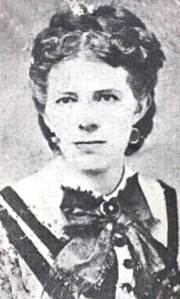
Throughout 2016 and 2017, Stillness of Heart will share edited excerpts from the extraordinary memoir of Loreta Janeta Velazquez, who chronicled her adventures throughout the Civil War — either as herself, as a Confederate spy, or in disguise as Confederate Lt. Harry T. Buford. She fought and led men in terrible battles, fell in love, bore and lost children, and traveled throughout the U.S. and Europe, ultimately fulfilling her childhood dream of a rich and adventurous life.

You can read the entire 1876 memoir online here. Learn more about Velazquez (and the incredible documentary film Maria Agui Carter made about her) here.

Part 9: Velazquez surprises her husband with her presence, her disguise, and her soldiers. The joy created by their reunion, however, does not last long.

******

I determined to march my men to the river, in order to break them in; but before we got to the landing, a good many of them were decidedly of the opinion that soldiering was much harder work than they had calculated upon. None of them showed any disposition to back out, however, and the majority, despite the fatigue of the march, were quite elated at the prospect before them of being able to see something of the world. I do not think any of them appreciated the real importance of what they were doing, and looked upon the whole affair much in the light of an excursion, which would be rather jolly than otherwise. Indeed, to tell the truth, I rather regarded the thing in that light myself, notwithstanding that I had seen enough of military life for me to understand something of its serious character.

At the landing I met my Memphis friend with my baggage and equipment and a tent, and with blankets and camp utensils for the use of the men. He also handed me a letter from my husband. This I eagerly read, and much to my disappointment, learned from it that he had gone to Pensacola. I determined, however, to push on and meet him there, for I was bent on carrying out my original idea of surprising him, and of offering him the command of my battalion. I accordingly embarked my men — two hundred and thirty-six in all — upon the steamer Ohio Belle, and issued to them blankets and other articles necessary for their comfort.

My plan now was to go down to New Orleans, where I should be able to procure such stores and equipment as were immediately needed and where I could perfect my disguise; for, not only did my padded coat not fit me as it ought, but it was almost unbearably warm, and I was anxious to substitute something more comfortable for the padding at the earliest possible moment. … On arriving at New Orleans, I landed my men a short distance above the city, and then, with as little delay as possible, purchased my quartermaster and commissary stores, and perfected my private outfit. … No finer body of men ever went out of New Orleans than the Arkansas Grays, as my battalion was called. As we passed through Mobile we were heartily cheered, the men waving their hats, and the women their handkerchiefs, and everybody commenting in the most laudatory terms upon our martial appearance, I cannot pretend to tell how proud I was, when I noted how much attention we were attracting; and if the shadow of a doubt as to the propriety of the course I was pursuing remained in any mind, it assuredly vanished as the cheers of the citizens of Mobile greeted my ears. I felt that, in spite of my being a woman, I was intended for a military leader, and I resolved, more firmly than ever, to let nothing stand in the way of my winning the fame I coveted.

At Pensacola we were received by my husband, who came to meet us in response to a telegraphic dispatch I had sent him, signed by my nom de guerre. He had not the slightest idea who I was, and would not have recognized me had I not revealed myself. So soon as I was able, however, after landing my men from the train, I took him aside where I could speak to him privately and disclosed my identity. He was intensely astonished and greatly grieved to see me come marching into Pensacola at the head of a body of men in such a guise, and said, that although I had done nobly, he would not for the world have had me attempt such a thing. I told him, however, that there was no use of discussing the matter, for was determined to be a soldier, and then placed in his hands the muster-rolls of my company to show him how well I could do what I undertook. He was proud of the ability I had displayed in carrying out my plans, and seeing the uselessness of further argument, took command of the men, and commenced putting them in training … while I was ordered back to New Orleans to purchase more stores and equipment.

I had scarcely arrived at my destination when I received a dispatch announcing the death of my husband and requesting my immediate return. Terribly shocked, and nearly wild with grief, I started for Pensacola again, and found, upon my arrival there, that, while drilling his men, my husband undertook to explain the use of the carbine to one of the sergeants, and the weapon exploded in his hands, killing him almost instantly.

I was now alone in the world, and more than ever disposed to take an active part in the war, if only for the purpose of revenging my husband’s death. Smothering my grief as much as possible, I turned over the command of my battalion to Lt. Thomas de Caulp, for the double reason that the men were only enlisted for three months and were to be stationed in Pensacola … and that I had resolved to go to the front in the character of an independent, with a view of leading a life of more stirring adventures than I probably should be able to do if permanently attached to a particular command.

During the brief time I had been in Pensacola I had formed the acquaintance of a number of officers who were going to the front, and, as they intended to leave for Richmond shortly, I concluded that it would be better to go in their company, especially as several of them were first-rate fellows, and one or two particular friends of my late husband. I also became acquainted with a good many ladies, one of whom, a dashing young widow, paid my masculine charms the compliment of falling desperately in love with them. This lady did not require any encouragement from me; but finding that, while polite to her, I was rather shy and reserved, and apparently insensible to her attractions, she made a dead set at me, and took pains to let me know, in terms that could not be misunderstood, the sentiments she felt for me.

I was really in no mood for nonsense of this kind, and, to tell the truth, I was not particularly pleased with the decidedly unfeminine advances that were made towards me. The necessity of playing the character I had assumed, however, in a successful manner, pressed upon me, and I felt that diversion of some kind was requisite to divert my mind from the sad and gloomy thoughts caused by my bereavement. I accordingly determined to meet my fair one half way, and paid her numerous attentions, such as taking her to the theater, and to drive upon the beach. I, however, resolutely refused to accept any of the numerous very broad hints she threw out, to the effect that a little more lovemaking would be more than agreeable, at which she seemed considerably surprised. Finding, at length, that I either could not or would not understand what she was driving at, she bluntly reproached me for not being more tender in my demonstrations towards her.

I put on the innocent air of a green schoolboy, perfectly non-plussed with the advances of a pretty woman, and assured her that I had never courted a lady in my life, and really did not know how to begin. The eagerness with which the widow undertook to instruct me was decidedly comical, and I learned more about some of the fine points of feminine human nature from her in a week than I had picked up for myself in twenty years. The courting was pretty much all on her side, and I really had not imagined before that it was possible for a lady to take such an important matter so entirely out of the gentleman’s hands. For the fun of the thing I pretended to soften to her, and by the time I was ready to start for Virginia, we were the best possible friends, and although I was careful to make no definite promises, the widow parted from me with the understanding that when the war was over we were to be something more than friends to each other. If I were a man, it would be absurd for me to tell all this, but being a woman, this and other of my love adventures have a comical interest for me, as I doubt not they will have for the reader. If they do not show some of the members of my own sex in the best possible light, it is their fault and not mine.

On the 16th of June I started for Virginia, in company with quite a jovial party of fellows. … They had a good deal of whiskey with them, and I was constantly importuned to drink, my declining to do so not having the best possible effect on some of them. The conversation became more and more profane and ribald, as the whiskey produced its natural effect; and being almost the only sober person in the party, I was not only intensely disgusted, but the warnings I had received from my husband came into my mind, and had a most depressing influence upon me. Much of the talk was mere meaningless blackguardism, and my ears were saluted for the first time with nastiness in the shape of language, such as it would have been impossible for me to have imagined the tongues of human beings to utter. It was an intense relief to me when, about four o’clock, the train arrived at Montgomery, [Alabama].

At the Exchange Hotel I met Mr. Leroy P. Walker, the secretary of war, with whom I had a very pleasant conversation about the prospects of the contest with the North, the political situation, and other matters of interest. The next day I bought a smart and mannerly negro boy, named Bob, of about eighteen years of age. I procured him a proper suit of clothes and a military cap, and then gave him charge of my baggage, with instructions to keep a sharp eye on my effects, to behave himself properly, and to come to me when he wanted spending money. Bob proved an excellent servant, taking care of my clothing in good style, and when we were in camp, attending to my two horses in a very satisfactory manner.

From Montgomery I went to Columbia, South Carolina, where I remained over for several days. During my stay in this place I formed the acquaintance of a very pleasant family, one of the young ladies of which. Miss Lou, seemed to be quite taken with me. I was invited to the house, and passed a number of agreeable hours there, and on parting, Miss Lou gave me her address, requesting me to write to her, and pinned a small C.S. flag on my coat.

On the train bound north, there was another quite jovial party, but, very much to my gratification, not so much addicted to whiskey-drinking, blasphemy, and obscenity, as that with which I had started out. A good deal of the conversation was about wives and sweethearts, and pictures of the loved ones at home were freely handed about. I was rallied rather severely because I could not show a photograph of my sweetheart, and some of the men intimated that I must be a poor kind of a man not to be able to find a girl to exchange photographs with me. I took the sharp things they thought fit to say of me in good part, and replied that I did not doubt of my ability to get a sweetheart soon enough when I wanted one.

Before the journey was ended, I had an opportunity to prove myself as good a lady’s man as the best of them, for at Lynchburg, where we were compelled to remain over all night, on taking the train for Richmond, an elderly gentleman stepped up, and after inquiring my destination, asked if 1 could take charge of some ladies. I replied that I would do so with pleasure; but was rather taken aback when I found myself placed in the position of escort to five women and two children. I could not imagine what induced the old gentleman to pick out a little fellow like me, when so many much larger, older, and more experienced officers were present, some of whom were greatly my superiors in rank. I was dreadfully embarrassed, but resolved to play the gallant to the best of my ability, although my heart was in my throat, and I could scarcely find voice to announce myself as Lieutenant Buford, when he inquired my name for the purpose of introducing me.

I was about to inquire whether the ladies had their tickets and checks, when the old gentleman presented them, very much to my satisfaction. Excusing myself for a few moments, I went to attend to checking my own baggage. …

We were soon under way, and had a pleasant enough ride, or at least it would have been pleasant enough had I not been tormented with the fear that they would penetrate my disguise, and discover that I was not what I pretended to be. No suspicions were excited, however, and we finally arrived at Richmond without anything having happened to mar the enjoyment of the journey. On alighting from the cars, I procured carriages to convey the several members of the party to their destination ; two of the ladies, however, accompanied me to the Ballard House, where I obtained rooms for them. The youngest of my newly-found female friends — a very pretty girl, who seemed to have taken quite a fancy to me — had the room adjoining mine, and I had scarcely established myself in my new quarters, when a waiter knocked at the door and handed me a card from her, asking me to escort her to supper. I laughed to myself at this, and fancying that I had succeeded in making another conquest, determined to get myself up in the best style I could, and to do credit to the uniform I wore by showing her that her appreciation was not misapplied. I dressed myself in my best apparel, and, after a visit to the barber’s, I was ready to play the gallant in the best possible manner.

It was all well enough while I was pacing the corridors of the hotel with mademoiselle on my arm, but I confess that my heart failed me when we entered the dining-room, and I fancied that everybody was looking at us. When the big steward, advancing towards us with his politest bow, said, “Lieutenant, step this way with your lady,” and then turning to one of the waiters, told him to attend to this gentleman and lady, it seemed to me as if every eye in the room was fixed on me. I was a rather conspicuous object, it is true, for my uniform, made of the best cloth, and trimmed with buttons and gold lace, was well calculated to attract attention, while the lady on my arm being rather taller than myself, made me even more an object for the curious to gaze at than if I had been alone. …

The young lady was nothing daunted by my silence and chattered away at a great rate on all imaginable subjects and finally succeeded in putting me somewhat at my ease. … My lady at length finished her supper, much to my relief, and I hurried her out of the room as fast as I could, and repaired to the drawing room, where I excused myself on the plea that I had urgent business to attend to, as I intended leaving the city on the first train. She seemed extremely reluctant to part company with me and would not let me go until I promised to see her again before I left the city. In bidding her good night, she extended her hand; and when I took it, she gave mine a squeeze, that indicated as plain as words that a trifle more forwardness on my part would not be disagreeable. I was a little bit disgusted with her very evident desire to capture me, and was very glad to get her off my hands, my determination on parting being not to see her again if I could avoid doing so.

Loreta’s Civil War: A mild flirtation with this fair flower

Velazquez completes her disguise, doesn’t hesitate from flirting with farm girls, and rounds up men to form her Confederate battalion.

KS17

Throughout 2016 and 2017, Stillness of Heart will share edited excerpts from the extraordinary memoir of Loreta Janeta Velazquez, who chronicled her adventures throughout the Civil War — either as herself, as a Confederate spy, or in disguise as Confederate Lt. Harry T. Buford. She fought and led men in terrible battles, fell in love, bore and lost children, and traveled throughout the U.S. and Europe, ultimately fulfilling her childhood dream of a rich and adventurous life.

You can read the entire 1876 memoir online here. Learn more about Velazquez (and the incredible documentary film Maria Agui Carter made about her) here.

Part 8: Velazquez completes her disguise, doesn’t hesitate from flirting with farm girls, and rounds up men to form her Confederate battalion.

******

I immediately proceeded to change my garments, and ere a great many minutes had elapsed, I was transformed into a man, so far as it was possible for clothing to transform me. When I was ready, I called my friend and asked his opinion of the figure I cut. He admitted that I was not a bad-looking specimen of a man, considering I had only been about five minutes, and thought that in time I should be able to do credit to the name I bore and the clothes I wore.

The only regret I had in making up my disguise was the necessity for parting with my long and luxuriant hair. This gave me a real pang but there was no help for it, and I submitted with as good a grace as I could muster, while my friend played the part of tonsorial artist with a pair of shears. He trimmed my hair tolerably close and said that it would answer until I could visit a barber’s shop with him and be initiated into some of the mysteries of such a peculiarly masculine place of resort. … [H]e made me promenade the room, practicing a masculine gait until I had acquired it tolerably well, and gave me a great number of very minute instructions about the proper manner of conducting myself so that my sex would not be suspected. He particularly enjoined me to watch his actions closely at the barber’s, in the drinking saloons, the billiard rooms, and the other places he intended conducting me to, for the purpose of informing me with regard to some masculine habits and ways of acting, talking, and thinking. …

Strolling down the street, we soon came to the hotel and entered the barroom, where my companion met a number of friends, to whom he introduced me as a young officer on his way to the seat of war. I was received with much cordiality, and the whole party speedily engaged in an animated conversation about the coming conflict. … The men all took whiskey straight but I did not venture on anything stronger than cider. Soon my companion managed to give me a quiet hint, and I treated the party to drinks and cigars. We then adjourned to the billiard-room, and my friend, taking off his coat, went at a game in good earnest with another member of the party. I had never seen the game of billiards played before, and I soon became intensely interested … pretending to smoke my cigar, the balls rolling over the table. As the weather was warm, I very soon, after entering the billiard-room, availed myself of what seemed to be the custom of the place, to take off my heavily padded coat, which began to be unbearable, and found myself much more at my ease sitting in my shirt sleeves. …

The next day I completed my outfit by purchasing a pair of field glasses, a pair of blankets, a rubber overcoat, and a rubber blanket. On returning to my room I made out a form of attorney in my friend’s name and authorized him to attend to all my business matters for me. I also prepared a lot of recruiting papers on the model of some genuine ones I succeeded in getting hold of, and some muster rolls, and procured a manual of tactics, and before the day was over was pretty nearly ready to commence active operations.

My friend, thinking that my disguise could be somewhat improved and a more manly air given to my countenance, obtained a false mustache and a solution with which to stain my face in order to make it look tanned. I rubbed on the solution until my skin was about the right tint, and then my friend carefully fastened the mustache on my upper lip with glue. This was a very great improvement, and I scarcely knew myself when I looked in the glass, and laughed at the thought of what my husband would say when he saw me in this disguise. …

Everything was now in proper trim for me to commence operations in earnest; so, packing my trunk, rolling up my blankets in army style, as I had often seen soldiers do, preparing my papers, and getting ready a change of underwear, and other matters for immediate use in a small satchel, I was ready to start on my campaign with as stout a heart as ever beat in the breast of a soldier.

The plan of action I had fixed upon, after mature reflection, was to raise and equip a battalion at my own expense, taking care to select good material for it, and then to appear at the head of my little army before my husband, and to offer him the command. I pictured to myself again and again the look of astonishment he would put on when he recognized his wife as the leader of a gallant band who were pledged to fight to the death for the cause of Southern independence, and flattered myself with the idea that, so far from being inclined to censure me for my obstinate persistence in carrying out my idea of becoming a soldier, he would be disposed to praise without reservation, and so far from being ashamed of my action, would be proud of it. Whatever view of the matter he might take, however, he would be compelled to yield to my wishes, whether he desired to do so or not, and I would consequently be free to follow the bent of my inclinations without fear of further opposition on his part. My desire was to serve with him, if possible; but if this could not be done, I intended to play my part in the war in my own way, without his assistance. I, however, did not contemplate any further difficulty in obtaining his consent, and even his assistance, in the execution of my plans, and so started out on the war path with a light heart and with brilliant anticipations for the future.

I crossed over to Hopefield, on the Arkansas side of the river, and took the five o’clock train, not knowing exactly where I proposed to bring up. For a time I busied myself with the study of my Manual of Tactics, with the intention of becoming sufficiently posted on certain points to get my recruits into something like military training immediately. Having been the wife of an army officer for a number of years, and having seen some hard service on the frontier, I was, in a measure, pretty well qualified for the work I had now undertaken, especially as I had paid a good deal of attention to the details of military organizations, and had seen soldiers drilled hundreds of times. I had not been in the train very long, before, finding the conductor at leisure, I entered into conversation with him with a view of obtaining information that might be useful in the furtherance of my designs.

Explaining to this individual, who appeared to take the liveliest interest in my affairs, that I was on a recruiting expedition, I asked him if he could not suggest a good neighborhood for me to commence operations in. He said that Hurlburt Station was as likely a place as I could find to pick up a company of strong, hearty fellows who would do some good fighting, and advised me to try my luck there. Hurlburt, he told me, was not much of a place — a saw-mill, a country store, in which the post office was located, a schoolhouse, which was also used as a church, being pretty much all there was of it. …

The train sped through the swamps, and it was not a great while before we reached Hurlburt Station, where, in accordance with the conductor’s suggestion, I alighted. With my satchel in my hand, I made for the nearest house, and inquired of a negro, who was chopping wood, whether his master was at home. The darkey stared at me a bit, evidently attracted by something in my appearance, and then, grinning until he showed all his ivories, said that the old boss was away, but that the young boss was about somewhere. I accordingly told him to call the young boss; and soon up came a well-built, good-looking young fellow, whom I fixed upon immediately as a suitable recruit. …

I told him that I had the army regulations with me and would take pleasure in explaining them to him in the morning. I then asked him to give me some water so that I could clean myself up a bit before supper, as I was pretty well covered with dust and cinders after my ride. He accordingly got me a basin of water and then left me to go off and hunt the old man, full of eagerness to tell him of the arrival of the recruiting officer, and of his own desire to go soldiering.

The sudden intrusion of a gallant young officer, in a gay uniform, plentifully decorated with buttons and lace … made an even greater impression on the female than upon the male part of the family. My arrival had clearly created an intense excitement, and I understood very well that I was the subject of the whispered conversation that I heard going on outside. From the manner in which the old woman and her son had addressed me, I knew that they had no suspicions of my being other than what I seemed, but I judged that it would be necessary to be pretty careful how I carried myself before the former, for she was clearly a sharp one and would be quick to take note of any peculiarly feminine traits of manner I might display. I therefore determined to play the man right manfully, whether I thought myself observed or not; and this I found to be a very good rule to go by throughout the entire period during which I wore my disguise. …

The eldest of the two daughters was about sixteen and was attired in a bright, flaring yellow calico; the youngest was about twelve years of age and was somewhat less unbecomingly dressed in pink. Both of the girls had put on the best they had to do honor to the occasion, and the eldest, especially, so soon as her first bashfulness wore off, seemed very much disposed to attract the particular attention of the visitor by various little feminine artifices, which I understood very well, and which amused me immensely.

On entering the room, the old woman said, awkwardly waving her hands towards her daughters, “These is my gals, sir.”

I bowed in the politest manner, and said, with what I intended to be a particularly fascinating smile, “Good evening, ladies,” laying a particular emphasis on the word “ladies,” which had the desired effect, for both of the girls blushed deeper than ever, and the eldest simpered as if she heartily enjoyed it. … I started a talk with the old woman by remarking that it had been an exceedingly pleasant day. … After a few commonplaces of this kind about the weather and other matters of no particular moment, I thought I might as well proceed to business at once, for I expected that I would have some opposition from the old woman in my effort to enlist [her son]. So I said, “Madam, I am trying to enlist your son for a soldier in my company; don’t you think you can spare him?” She burst out crying, and exclaimed, “Oh, sir, I can’t let my boy go for a soldier and get killed.” The youngest girl, seeing her mother in tears, began to blubber a little also; but the eldest not only did not cry, but she looked at me in such a peculiar way that I was convinced she wished I would take her instead of [her brother].

The idea of having a mild little flirtation with this fair flower of the Arkansas forest rather grew upon me as I noticed the impression I was making upon her susceptible imagination. I had some curiosity to know how lovemaking went from the masculine standpoint and thought that the present would be a good opportunity to gain some valuable experience in that line; for it occurred to me that if I was to figure successful in the role of a dashing young Confederate officer, it would be necessary for me to learn how to make myself immensely agreeable to the ladies. I knew how to make myself agreeable to the men, or thought I did, and I could, if I chose, be agreeable to women in a feminine sort of fashion; but I had never studied the masculine carriage towards my sex critically with a view of imitating it, and it was important, therefore, that I should begin at once to do so, in order that when compelled to associate with women, as I assuredly would be to a greater or less extent, I might not belie my outward appearances by my conduct. I flatter myself that during the time I passed for a man I was tolerably successful with the women, and I had not a few curious and most amusing adventures, which gave me an insight into some of the peculiarities of feminine human nature which had not impressed themselves on my mind before, perhaps because I was a woman.

My flirtation with Miss Sadie Giles was not a very savage one, and I hope that it did not inflict more damage on her heart than it did on mine. It was immensely amusing to me while it lasted, and I presume, if not exactly amusing, it might at least be deemed entertaining to her. At any rate, I succeeded not only in having a little sly fun at her expense, but I picked up an idea or two that I subsequently found useful. Noticing that Miss Sadie was developing a marked partiality for me, but was much too bashful to give me any encouragement, except some shy glances out of the corners of her eyes, I commenced to ogle her, and, whenever I had an opportunity, to pay her some delicate attentions, for the purpose of making her think I was just a bit fascinated with her. It soon became very evident that the heart which beat under that yellow calico dress was in a great state of excitement, and Miss Sadie, while not encouraging me by any direct advances, made it very plainly understood that my little attentions were appreciated.

Supper was now announced, and we all sat down to a tolerably plentiful repast, the principal features of which were bacon, cabbage, and fried chickens — the latter having been prepared in my honor. Miss Sadie managed to place herself by my side, by a dexterous little maneuver which escaped the attention of the family but which I understood perfectly. I, for my part, strove to play the gallant by helping her bountifully to the bacon, cabbage, and chicken, and by endeavoring to induce her to join in the conversation. She undoubtedly appreciated my attentions at their full value, but was not sufficiently self-possessed to do much talking; indeed, during the supper I could scarcely get anything out of her except a timid “yes” or “no.”

[Her father], on the contrary, was very talkative, and plied me with all kinds of questions about myself, my errand, the war, and the prospect of a speedy accomplishment of Southern independence. I told him that my name was Buford, that I was a lieutenant in the army, and that I had been sent down to Arkansas for the purpose of recruiting a company for service in Virginia. He said that I would have no difficulty in getting all the recruits I wanted, as the young fellows in those parts were every one eager to have a dash at the Yankees, and promised to aid me in every way possible. …

Before the supper was over I had a terrible fright. … While drinking a glass of buttermilk, which I greatly enjoyed, for it was the best thing on the table, and was most refreshing, my mustache got full of the fluid, and when I attempted to wipe this ornament, which my Memphis friend had so carefully glued upon my upper lip, and which added so much to the manliness of my countenance, I fancied that it was loose and was about to fall off. Here was a terrible situation, and I cannot undertake to describe what I felt. To say that I was frightened scarcely gives an idea of the cold chills that ran down my back. The ridicule of my entertainers, and especially of Miss Sadie, was the least thing that I feared, and I would rather brave any number of perils at the cannon’s mouth than to repeat the emotions of that dreadful moment. Such a situation as this is ludicrous enough, but it was not a bit funny for me at that time, and I was on pins and needles until I could get away and take means to secure the mustache firmly on again. I managed, however, to keep a straight countenance and to join in the conversation with a tolerable degree of equanimity, keeping my hand up to my mouth all the time though, and doing my best to hold the mustache on. My fright, after all, was causeless, for on examination I found that the hair was too firmly glued to my lip to be easily removed; indeed, I subsequently discovered that it was practically impossible to move it without the aid of alcohol.

After supper, the old man and Frank went off to finish up their work before going to bed, and the women folks busied themselves in clearing the dishes. … I glanced over my shoulder, and seeing that Miss Sadie had finished her work and was apparently anxious to be better acquainted with me, I politely arose and offered her my raw-hide chair. This she blushingly declined but took a wooden stool, upon which she seated herself quite close to me. I could think of nothing so likely to loosen her tongue and make her properly sociable as a reference to religious matters; so I asked her if there were any churches in the neighborhood. She said that there was no regular church, but that on Sundays a preacher held forth in the schoolhouse. … The old man, I presume, was rather tired, and so, taking advantage of this change of subject in our conversation, he went to bed, and soon was snoring lustily. Finally, Miss Sadie got back to what was the subject uppermost in her thoughts and began questioning me about my own affairs, by asking if I had any brothers.

“Yes,” I replied, “One, older than myself, who is more fortunate, for he is married,” giving a look at her out of the corner of my eye, which I intended her to understand as an intimation that, although not married, I had no objections to being so if I could find a girl to suit me.

“You ought to be married, too,” said Miss Sadie, with a simper, and apparently appreciating this kind of conversation much better than the war talk the old man and I had been indulging in.

“How can I get married when none of the girls will have me?” I retorted. … The old woman thinking, I suppose, to flatter me, said, “A handsome young fellow like you, with, I dare say, a pretty fair education, needn’t be afraid of the gals not having you.”

At this point of the conversation the old man awoke, and sang out, “Don’t you women talk that man to death. Why don’t you git out and let him go to bed?” and then, pointing to a bed in the corner, he told me to turn in there when I felt like it. …

Here I was at the end of my first day’s experience in playing the part of a soldier, with every reason to believe that I had thus far played it most successfully, and that I had really made quite a brilliant start. … the susceptible heart of Miss Sadie was apparently touched in a way that it could never have been had the faintest suspicion of my not being a man crossed her mind. The old woman, too, who, in a matter of this kind, would be quite certain to be a more critical observer than the rest of the family, had no hesitation in believing me to be a gallant young soldier; so that, taking all things into consideration, I had reason to congratulate myself upon a brilliant opening to my campaign. …

[The next day, when] breakfast was over … I crossed over to the schoolhouse, where I found half a dozen rather rough fellows waiting to see me, all of whom expressed themselves as extremely anxious to enlist. One very hard-looking specimen, who could not even write his name, wanted very badly to be captain; indeed, they all were quite ambitious to be officers, and I had some difficulty in explaining to them, that in the army, in time of war, where actual fighting was being done, it was a very different thing holding the position of an officer, from what it was in the militia. I, however, encouraged them to believe that they all might be lieutenants, captains, and even generals, some day, if they fought bravely, and succeeded in creating such an enthusiasm among them over the prospect of a brush with the Yankees, to be followed by rapid promotion, that the whole party were soon ready to enlist on any terms I chose to suggest.

After talking the matter over with these men for some time, and explaining the situation in the best style I was able, I wrote out some bills calling for volunteers, one of which I posted on the school-house door. … During the day I read the army regulations at least a dozen times, and tried to make the men understand what they meant. This was not a very easy matter, but I succeeded in enrolling thirty-six, whom I ordered to report for roll call the next morning. This they did not much fancy; but on my stating that they were under oath and bound to obey, they yielded without making any trouble about it, but apparently with no great admiration for military discipline.

My quota was easily filled in four days, and I then proceeded to get my battalion organization complete and to make preparations for departure. Two of the most intelligent of the men I appointed subordinate officers, one sergeant and the other corporal, and gave them instructions about drilling the battalion and maintaining discipline in my absence. Everything now being in proper trim, I sent a messenger ahead to the friend in Memphis who had so efficiently aided my plans with instructions for him to engage transportation, and then getting my troops into marching order, off we started. …


Loreta’s Civil War: Hard-drinking and blaspheming patriots

Velazquez follows her husband into a bar to learn what men are like when civilizing women are absent. He hopes to dissuade her from life among Confederate soldiers. But the experience makes her more determined than ever to join him the army and share his dangers and triumphs.

KS2

Throughout 2016 and 2017, Stillness of Heart will share edited excerpts from the extraordinary memoir of Loreta Janeta Velazquez, who chronicled her adventures throughout the Civil War — either as herself, as a Confederate spy, or in disguise as Confederate Lt. Harry T. Buford. She fought and led men in terrible battles, fell in love, bore and lost children, and traveled throughout the U.S. and Europe, ultimately fulfilling her childhood dream of a rich and adventurous life.

You can read the entire 1876 memoir online here. Learn more about Velazquez (and the incredible documentary film Maria Agui Carter made about her) here.

Part 5: Velazquez follows her husband into a bar to learn what men are like when civilizing women are absent. He hopes to dissuade her from life among Confederate soldiers. But the experience makes her more determined than ever to join him the army and share his dangers and triumphs.

******

Braiding my hair very close, I put on a man’s wig and a false mustache, and by tucking my pantaloons in my boots, as I had seen men do frequently, and otherwise arranging the garments, which were somewhat large for me, I managed to transform myself into a very presentable man. As I surveyed myself in the mirror I was immensely pleased with the figure I cut, and fancied that I made quite as good looking a man as my husband. My toilet once completed, it was not long before we were in the street, I doing my best to walk with a masculine gait, and to behave as if I had been accustomed to wear pantaloons all my life. I confess, that when it actually came to the point of appearing in public in this sort of attire, my heart began to fail me a little; but I was bent on going through with the thing, and so, plucking up courage, I strode along by the side of my husband with as unconcerned an air as it was possible for me to put on.

Presently we crossed over to a bar-room, which we found nearly filled with men smoking and drinking, and doing some pretty tall talking about the war, and the style in which the Yankees were going to be wiped out. … I was too frightened and bewildered by the novelty of my situation to pay very close attention to all I saw and heard, but it flashed upon me that some of these loud-talking, hard-drinking, and blaspheming patriots were not so valiant, after all, as they professed to be. My after experiences fully confirmed my first impressions, that the biggest talkers are not always the best fighters, and that a good many men will say things over a glass of whiskey in a bar-room, who won’t do a tenth part of what they say if they are once placed within smelling distance of gunpowder.

I had scarcely time to take a good look at the room and its occupants, when my husband caught sight of a couple of men who had belonged to his regiment, and who were very particular friends of mine. I was dreadfully afraid they would recognize me, but there was no escaping from them, as they came up so soon as they saw us, and I was introduced as a young fellow who was on a visit to Memphis to see the sights and to pick up war news.

My husband treated, he and his two comrades taking something strong, while I, in accordance with the instructions given me before starting out, called for a glass of cider, only a part of which I imbibed. After a little conversation, my husband whispered to me to call for the next treat. I was getting to be somewhat disgusted with the whole business, but was bound not to break down; so, stepping up to the bar, I invited the party, with as masculine a manner as I could put on, to drink with me. This time I took a glass of sarsaparilla, and when all had their drinks poured out, raising my tumbler, I cried out, “Gentlemen, here’s to the success of our young Confederacy.”

As I said this, my heart was almost ready to jump out of my throat. The men, however, gave a rousing cheer, and one of them yelled out, “We drink that toast every time, young fellow.” He then put his hand into his pocket, as if about to get his money to pay for the drinks, but I prevented him, saying, “Excuse me, sir, this is my treat,” and laid a twenty dollar gold piece on the counter. Each of us then took a cigar, I watching to see how they managed theirs before daring to put mine in my mouth. After I had gotten a light, I was not able to take more than three or four whiffs, for my head began to swim, and I knew if I kept on I should soon be deathly sick. As it was, I did not feel at all comfortable, but thought I could bear up, and said nothing for fear of being laughed at.

I was very glad to get out of the bar-room, and into the fresh air again; so, bidding our friends good night, we started off, I throwing my cigar away at the first opportunity I had of doing so without being observed. Eager to hear my husband’s opinion, I asked him if he did not think I played my part pretty well. He replied, “Oh, yes,” but I could see that he was very much dissatisfied with the whole performance. Before returning to the hotel we made a general tour of the city, visiting all the principal gambling-houses and saloons, my husband evidently hoping I should be so shocked with what I saw and heard that I should be ready to give up my wild scheme without farther talk about it.

When we were once more in our room he locked the door, and, throwing himself on the lounge, said, “Well, don’t you feel pretty much disgusted?”

To please him I said, “Yes,” adding, however, “but then I can stand anything to be with you, and to serve the sunny South.”

“Now, Loreta,” said he, “I have done this tonight for the purpose of showing you what men are like, and how they behave themselves when they are out of the sight and hearing of decent women, whom they are forced to respect. What you have seen and heard, however, is nothing to what you will be compelled to see and hear in camp, where men are entirely deprived of female society, and are under the most demoralizing influences. The language that will constantly greet your ears, and the sights that will meet your eye in camp, where thousands of men are congregated, are simply indescribable; and it is out of all reason that you should even think of associating in the manner you propose with soldiers engaged in warfare. …”

I pretended to be satisfied with his arguments, but was, nevertheless, resolved more firmly than ever, so soon as he took his departure, to put my plans into execution. …

Recommended reading / viewing / listening

This week: Bill Cosby / A historic mammoth / ISIS: The Magazine / Benefits of red wine / Cartels and Mexican politics

IMG_2392[1]

This week: Bill Cosby / A historic mammoth / ISIS: The Magazine / Benefits of red wine / Cartels and Mexican politics

Most of these great items come from my social media networks. Follow me on Twitter, Tumblr, LinkedIn, MySpace, and Facebook for more fascinating videos, photos, articles, essays, and criticism.

1. Bill Cosby and His Enablers
By Ta-Nehisi Coates | The Atlantic | Jan. 12
“Even victims of discrimination can look away from — and thereby enable — other forms of violence.”

2. Gingerly, Donald Trump Tries Out Some Campaign Conventions
By Maggie Haberman and Patrick Healy | The New York Times | Jan. 15
“The risk for Mr. Trump is that too much baby-kissing, people-pleasing, Mr. Nice Guy politicking will come across as inauthentic to voters who like that he is, in their view, a tough-talking realist about perceived threats from Muslims, illegal immigrants, and budget-busting Democratic and Republican leaders in Washington.”

3. FDR’s Nate Silver
By David Greenberg | Politico Magazine | Jan. 16
“How a self-taught data whiz from Michigan became the first person ever to poll for an American president — and turned into a national sensation.”

4. A Mysterious Mammoth Carcass Could Change Human History
By Maddie Stone | Gizmodo | Jan. 14
“Its discovery … might push back the timeline for when humans entered the northernmost reaches of the world — including the first entries into North America.”

5. Why Cartels Are Killing Mexico’s Mayors
By Ioan Grillo | Sunday Review :: The New York Times | Jan. 15
“These new cartels continue to traffic drugs. … But they have also used their armies of assassins to move into new endeavors: rackets, extortion, oil theft, even wildcat iron mining. And they are now muscling in on one of Mexico’s most lucrative businesses of all: local politics.”

6. Republican warnings about an electro-magnetic pulse (EMP) attack, explained
By Philip Bump | The Fix :: The Washington Post | Jan. 15
“An EMP requires a very specific combination of things coming together in order to be effective.”

7. Why the United States can’t make a magazine like ISIS
By William McCants and Clint Watts | Brookings and The Daily Beast | Jan. 13
“Can you name a single U.S. government publication or online platform devoted to the anti-ISIS fight that is as informative or as widely-read as Dabiq? … We couldn’t come up with one either.”

8. Moving beyond Obama: How a transformational president became an impediment to change
By Elia Isquith | Salon | Jan. 16
“His romantic vision of America was once his greatest asset. But now it’s holding Obama and his country back”

9. Health Benefits of Red Wine vs. Grape Juice
By Karen Weintraub | Ask Well :: The New York Times | Jan. 8
“We keep hearing about the benefits of drinking red wine. Why not grape juice instead? It has the same benefits, plus no alcohol.”

10. Why Ike Wouldn’t Celebrate the D-Day Anniversary
By Michael Beschloss | HistorySource :: The New York Times | May 2014
“Thus Ike spent the D-Day anniversary of Sunday, June 6, 1954, out of sight, with his family at Camp David.”

Kate Stone’s Civil War: The entire special series

Read Kate Stone’s amazing stories as she defiantly faces Union soldiers, escapes across a Louisiana swamp, falls in love with Texas, and watches the Civil War rip her country and her family apart.

1862

From May 2012 to November 2015, a special series from Stillness of Heart shared excerpts from the extraordinary diary of Kate Stone, who chronicled her Louisiana family’s turbulent experiences throughout the Civil War era.

She defiantly faced Union soldiers, escaped across a Louisiana swamp, fell in love with Texas, and watched the Civil War rip her country and her family apart.

The entire series of excerpts is collected here.

Learn more about Stone’s amazing life in 1861, 1862, 1863, 1864, 1865 and beyond. Click on each year to read more about her experiences. You can read the entire journal online here.

(Photo edited by Bob Rowen)

From 1861
May 15: Death in defense of the South
June 5: The stir and mob of angry life
June 18: Whipped unmercifully
July 1: They thought me so ugly
July 4: The blood of her children
July 26: Gallantly fought and won
Aug 24: The fevers
Sept. 27: The war inches closer
Oct. 19: Gladden our hearts
Nov. 27: The noble, gentle heart
Dec. 22: Rainy days

From 1862
Jan. 6: Sad Christmas
Jan. 8: Happy birthday
Jan. 16: They close in and kill
Feb. 1: The little creature
Feb. 20: Victory will be ours
March 1: A perfect love of a lieutenant
May 9: Burn our cities
May 22: Fashion is an obsolete word
May 23: The sleep that knows no waking
June 6: Trembling hearts
June 20-30: Capable of any horror
July 5: The fire of battle
Aug. 5: Beyond my strength
Sept. 23: Tragedy after tragedy
Oct. 1: His sins against the South
Nov. 7: A lady’s favors
Dec. 3: She was heartbroken

From 1863
Jan. 1: Preparing to run
March 2: Hoodoo woman
March 11: It made us tremble
March 22: The pistol pointed at my head
April 10: Tears on my cheek
April 15: A horrid flight
April 21: The greatest villian
April 26: Flaming cheeks and flashing eyes
April 27: The glory of the family
May 2: His father’s sins
May 3: Baffled beasts of prey
May 22: Useless to resist
May 23: Southern hearts
June 3: Like mad demons
June 15: On the road for Texas
July 7: The dark corner
July 12: The dirtiest people
July 16: Scowling, revengeful faces
July 26: Despondent and chicken-hearted
July 29: Makes us tremble for Texas
Aug. 3: Lose our scalps
Aug. 10: Conquer or die
Aug. 16: My pen is powerless
Aug. 30: They call us all renegades
Sept. 1: It makes us shiver
Sept. 14: Years of grinding toil
Sept. 20: Destroyed by the Yankees
Oct. 2: Two distressed damsels
Oct. 8: This is too disgraceful
Oct. 29: The heart of a boy
Nov. 1: Credulous mortals
Nov. 7: A fear of bad news
Nov. 13: Pride must have a fall
Nov. 15: So little to eat
Dec. 10: Nobly and fearlessly
Dec. 12: Alone in a strange land
Dec. 19: A charming little woman
Dec. 24: A sad 1863 ends

From 1864
Jan. 4: A noted flirt
Jan. 7: Trouble and distress
Jan. 13: The first desideratum
March 8: The mournful whistle
March 20: The petted darling
April 15: A besom of destruction
May 5: The easy conquest of Texas
May 7: To every young lady
May 18: To kill and destroy
May 25: Our best fancy yellow organdies
May 29: That land of desolation
June 1: The breath of flowers
June 14: Strangers in a strange land
June 19: Those terrible battles
June 26: Callous to suffering and death
Aug. 23: We enjoy our ease
Sept. 2: Lazy and languid
Sept. 5: One grand holocaust
Sept. 10: Too disgraceful if true
Sept. 27: The flower-wreathed scepter
Oct. 15: Fairy castles in the air

From 1865
Jan. 29: Kindly bestow them
Feb. 1: Our soldiers were powerless
Feb. 12: One of life’s greatest trials
Feb. 13: Peace blessed peace
Feb. 15: My escorts were disgusted
Feb. 21: Our only hope for peace
March 3: The most enjoyable life
March 9: Full of life and fun
March 24: Eager for a fight
March 30: Its spring decoration
April 1: Out of time
April 7: A blow on my heart
April 16: He would do anything
April 23: God spare us
May 7: Lounged and gossiped
May 9: We fear it cannot last
May 15: We will be slaves
May 17: Restless and wretched
May 20: A fever of apprehension
May 21: A piece of amusement
May 27: Only sadness and tears
May 31: The grand crash
June 12: Words are powerless
June 25: Civilization commences again
July 2: He deserves killing
July 13: It is unavoidable
July 18: A man-flirt is detestable
Aug. 14: No disorder
Aug. 26: Astonish the natives
Sept. 3: Our pleasant Tyler life
Sept. 11: The very poorest people
Sept. 21: A state of insubordination
Oct. 10: The bitterness of defeat
Nov. 16: At home again
Nov. 17: How many idle hours

Epilogue, from 1867 and 1868
I was young again

Kate Stone’s Civil War: I was young again

Stone’s last three entries in her diary are from September 1867 and 1868. They form a somber epilogue to her chaotic journey. They capture a bitter reflection of a shattered Southern slaveholding society, adrift, confused, and afraid of a world in which they no longer rule.

KS10

From 2012 to 2015, Stillness of Heart will share interesting excerpts from the extraordinary diary of Kate Stone, who chronicled her Louisiana family’s turbulent experiences throughout the Civil War era.

Learn more about Stone’s amazing life in 1861, 1862, 1863, 1864, 1865 and beyond. Click on each year to read more about her experiences. You can read the entire journal online here.

(Photo edited by Bob Rowen)

Stone’s last three entries in her diary are from September 1867 and 1868. They form a somber epilogue to her chaotic Civil War journey. They capture a bitter reflection of a shattered Southern slaveholding society, adrift, confused, and afraid of a world in which they no longer rule.

Read her first entry in this series here.

Sept. 22, 1867

Brokenburn

A long silence and a year of hard endeavor to raise a crop, reconstruct the place with the problem of hired labor, high water, and cotton worms. Mamma had little trouble in getting advances in New Orleans to plant. Cotton is so high that merchants are anxious to advance to put in a crop, and there is much Northern capital seeking investment in that field. … The Negroes demanded high wages, from $20 to $25 for men, in addition to the old rations of sugar, rice, tobacco, molasses, and sometimes hams. Many of the old hands left, and My Brother went to New Orleans and brought back a number of ex-Negro soldiers, who strutted around in their uniforms and were hard to control. I was deadly afraid of them.

During the spring while Mamma and I were in New Orleans (Mamma on business and she took me for my pleasure), and Uncle Bo and My Brother and Jimmy were away for a few hours, Johnny had a fight with a young Negro in the field, shot and came near killing him, and was mobbed in return. Johnny would have been killed but for the stand one of the Negroes made for him and Uncle Bo’s opportune arrival just as the Negroes brought him to the house a howling, cursing mob with the women shrieking, “Kill him!” and all brandishing pistols and guns. It came near breaking up the planting, and it is a pity it did not as it turned out. Johnny had to be sent away. He was at school near Clinton [Miss.] and the Negroes quieted down and after some weeks the wounded boy recovered, greatly to Johnny’s relief. He never speaks now of killing people as he formerly had a habit of doing. He came home when school closed and there was no further trouble.

Then the water came up and we were nearly overflowed. The cotton planted was very late, and when it was looking as luxuriant and promising as possible and we saw ease of mind before us, the worms came. In a few days the fields were blackened like fire had swept over them. We made about twenty bales and spent $25,000 doing it. What most distresses me is that none of that money went for our personal comfort. All of it went to the Negroes. Mamma would buy only bare necessaries for the table and plainest clothes for the family. Not a luxury, no furniture, carpets, or anything. We are worse off for those things than even in Texas and such a sum spent! But Mamma said it was not honest to spend the money on anything but making the crop. All in this section have suffered in the same way, and for awhile they seemed stunned by their misfortunes. But now the reaction has come, and all are taking what pleasure offers.

Old neighbors and new ones have come in and all seemed to be anxious to be together and talk over their trials and tribulations. There has been much visiting and various picnics and fish frys. I would not go at first. I felt like I did not want to see anybody or ever dance again. I felt fully forty years old, but Mamma made me go after a good cry. Once there, I was compelled to exert myself, and soon I was enjoying it all. The burden of some of the years slipped from my shoulders, and I was young again. It was pleasant to talk nonsense, to be flattered though one knew it was flattery, and to be complimented and fussed over. So since then, Mamma, the boys, and all of us have been going to everything and have found even poverty in company more bearable than when suffered alone. …

September 1868

Rose Hill

In January My Brother rented this place knowing that Brokenburn would be again overflowed, and we moved out the latter part of the month. My Brother lost money again last year planting, and this year he determined to farm, planting a little of everything.

Johnny and Jimmy are both at home, and having nothing to do pulled off their coats and rolled up their sleeves and went to work to raise a crop of corn and potatoes for themselves. They have succeeded well as they will clear several hundred dollars.

We all regret so much Jimmy’s refusal to go buck to the hospital. … We fear he is throwing away the best chance of his life. The boys are so hot and tired when they come in from the fields. …

Sept. 28, 1868

Rose Hill

Mother has been in Vicksburg for a month on a visit to Aunt Sarah. It is her first outing for eighteen months. We hope it will benefit her — her health has been bad for more than a year. She is seldom out of bed more than a week at a time. It took great persuasion and the pointed urging of the whole family to induce her to go on this visit that Aunt Sarah has been begging her to take for months.

Jimmy is now on the wharf boat, Johnny at Omega, and Sister, My Brother, and I have it all our own way with but little to do. My Brother is making an excellent crop and is much more cheerful. …

How we wish Sister could be sent off to school for two years, but it has been impossible. No money. … Let us hope that now the current will change and success will be our portion, as the outlook is brighter than for three years.

This is a pleasant neighborhood … and everybody has been kind and polite about calling and coming in at all times. [The other day we] had another of those inevitable dances that have been given so often this summer. Mary and Katie Byrnes, Louise Meagher, and the other girls never seem to tire of them, but they wear me out — such a sameness. I doubt not that I am getting too old for such gaieties. The men and boys about here are so silly and boyish in conversation. …

It has been an enjoyable life since we came here in January. It is a pleasant enough cottage house, after we got it thoroughly cleaned. There is a lovely little flower yard and a splendid orchard, and the kindest and most sociable neighbors with various little entertainments and dances. …We have new books and papers ad libitum, a luxury we missed for years.

My Brother has just sent Mamma money to buy our winter clothes, and Sister and I are jubilant at the prospect of new dresses and bonnets. We have lived on very little of late years, little bought that was not absolutely necessary. They have dressed me better than any of the others. I have not wanted for anything indispensable for a young lady, but the only money I have spent really as I wished was five dollars of the ten Uncle Bob gave me when Mamma and I went to New Orleans three winters ago. …

What splendid fellows my brothers are. They are all so good to us and such handsome boys. Sister looks almost the same, scarcely older than three years ago. We hope she can go to school this fall and make her debut next fall. If not, I shall beg Mamma to put long dresses … on her and bring her out this winter. She has a gay cheerful nature, and I hope will have a happy girlhood.

Mamma’s bright hopeful spirit never change. She is us always the ruling power with us all, the center and light of our home. How much she will have to tell us on her return, and maybe Aunt Sarah will come with her.

Well, this is the last page of the book that has gone with me through all our journeying. Looking back to the beginning so many years ago, I realize what an unthankful, wicked girl I was not to be supremely happy. With youth, health, and everything surrounding me for comfort and happiness. with unmistakable blessings, I was yet an unsatisfied, discontented girl. It has taken trouble to teach me my faults, and how earnestly I try now to enjoy instead of repine, to be thankful instead of fault-finding. I will try always to see the silver lining to the cloud. All my life I have been surrounded with love and care, far more than I deserved, and I will try in the future to be more worthy of the blessings that brighten my pathway.

So this is the end — shall I ever care to write again?

FINIS

Kate Stone’s Civil War: A state of insubordination

Stone has little sympathy or respect for former slaves, who she sees as “insolent” and insubordinate.

KS50

From 2012 to 2015, Stillness of Heart will share interesting excerpts from the extraordinary diary of Kate Stone, who chronicled her Louisiana family’s turbulent experiences throughout the Civil War era.

Learn more about Stone’s amazing life in 1861, 1862, 1863, 1864, 1865 and beyond. Click on each year to read more about her experiences. You can read the entire journal online here.

(Photo edited by Bob Rowen)

Stone has little sympathy or respect for former slaves, who she sees as “insolent” and insubordinate.

Sept. 21, 1865

Lamar County, Texas

We reached this haven a week ago. Shall we ever forget that forty-mile jolt in a four-mule wagon, the mules at full trot? We made it in a clay over a broken, sorry prairie with nothing to eat but dried peaches, uncooked, soggy biscuits, and warm, salty-tasting well water. We were bruised black and blue and were too tired to sleep or eat the first night. We did not find out until nearly night that the wagon floor was much easier than the chairs we were perched in, and we all crouched down in the straw, too worn out to hold up our heads.

The people who had sheltered us utterly refused all pay and were hurt at the idea — and they with absolutely nothing. Truly it is not the rich who are the most generous! Mamma will send them lots of things when she sends for the carriage.

We found nearly all the Negroes in a state of insubordination, insolent and refusing to work. Mamma had a good deal of trouble with them for a few days. Now they have quieted down and most of those who left have returned, and they are doing as well as “freedmen” ever will, I suppose. We were really afraid to stay on the place for the first two days. We are looking for the boys up from Tyler and for Jimmy and My Brother next week. Then, Ho, for Louisiana!

We have all the butter, milk, and curd that Mamma promised us with wild plums, maypops, and apples in abundance, and Mrs. Smith is a good housekeeper. But it is undeniably a dull spot. …

Johnny has taken Mr. Smith’s place as overseer. The Negroes mind him better.

Kate Stone’s Civil War: The very poorest people

A reluctant Stone leaves Tyler to return to Louisiana, but one minor disaster after another make it a bitter journey.

OLYMPUS DIGITAL CAMERA

From 2012 to 2015, Stillness of Heart will share interesting excerpts from the extraordinary diary of Kate Stone, who chronicled her Louisiana family’s turbulent experiences throughout the Civil War era.

Learn more about Stone’s amazing life in 1861, 1862, 1863, 1864, 1865 and beyond. Click on each year to read more about her experiences. You can read the entire journal online here.

(Photo edited by Bob Rowen)

A reluctant Stone leaves Tyler to return to Louisiana, but one minor disaster after another make it a bitter journey.


Sept. 11, 1865

Hopkins County, Texas

Here we are … wearing away the time as best we may for two days and nights in a real prairie hut awaiting relief from our place, thirty miles away. The carriage stands in the yard with a crushed wheel, and we are mired up in all sorts of dirt and discomfort in the middle of the wildest prairie with not a tree or a house in sight. We broke down two miles from here journeying on our way to Lamar County with nothing in sight but the broad sweep of the prairie and one lonely tree. We made our way to that. No gentleman with us, no money, no possible way of getting on, and in a great hurry. We were in despair. Richard mounted a mule and scoured the country to find a carriage, wagon, or wheel to take us on, while we with parasols, books, and cushions, betook ourselves to the grateful shade of the tree to await his return. I was fast asleep in the tall grass, and Mamma and Sister were dozing when Richard got back. He could not find any conveyance, but a lady two miles away would give us shelter. So there we were in for a two-mile walk under the burning sun and over the shadowiest prairie with a wind blowing hot as a sirocco of the desert. The prospect was appalling, and I foolishly burst into tears. Mamma scolded. I remonstrated. But soon we cooled down in temper., if not in person, and commenced our weary jaunt to shelter.

It is the roughest two-room affair with six or eight people living in it, and with nothing to eat this last day but bread and milk and butter. They killed their last chicken for us yesterday, an old, old hen, but the people are as kind as they can be, and as hospitable. They give us of their best and are really sorry for us. There are two women and a girl and not a scrap of ribbon or lace or any kind of adornment in the house. I never saw a woman before without a ribbon. They have not even a comb. They are the very poorest people I ever saw.

We — that is Mamma, Sister, Johnny, and I — broke up our establishment and started on short notice from Tyler on last Friday, and our entire trip has been a chapter of accidents since. A wheel crushed four miles from town, and after spending most of the day in the woods we returned very reluctantly to Tyler, We had gone the rounds the evening before making farewell calls and hated to return after so many solemn leavetakings, but go back we must.

The room is filling with the family so must close my book.

The bugs are awful, and so we three slept last night on the carriage cushions and a bolt of domestic out on the front gallery, much against the wishes of our hosts who seemed to think it inhospitable to allow it. But it is impossible to sleep in the rooms with four or five untidy folks, being bled from every pore by the voracious bugs. The natives do not even toss in their sleep from them. They do not know the bugs are there.

A glorious full moon, light enough to read by, and a pleasant breeze. We quite enjoyed our outdoor bunk, especially as we had not slept for two nights. Oh, the happy summer days of our life in Tyler. … And all this discomfort would have been spared us if My Brother had only come out when Joe did and made this trip to the farm in Mamma’s place. Poor Mamma, what a weight of responsibility and trouble she has had on her hands. …

Mollie Moore gave me a pretty copy of The Lady of the Lake as a souvenir of our happy friendship. Shall I ever see her cheerful face again? …


Illustrating the heart in a million different ways

Some friends have told me how much they love the photos I include with most of my posts.

Some friends have told me how much they love the photos that accompany most of my posts. Their compliments honor me.

I don’t consider myself a photographer, just someone who loves interesting patterns — the more abstract and colorful and contrasted the better. I tend to find beauty in everything I see.

My simple Tumblr blog collects and displays the best of the art I’ve used on Stillness of Heart, along with a variety of other odd photos, gifs, and videos.

Follow me on Tumblr, and enjoy.