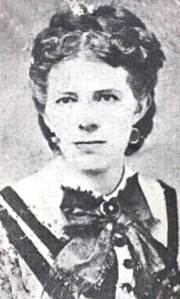
Kate Stone’s Civil War: Too disgraceful if true

An operation to capture a Union gunboat turns into a Confederate disaster.

KS63

From 2012 to 2015, Stillness of Heart will share interesting excerpts from the extraordinary diary of Kate Stone, who chronicled her Louisiana family’s turbulent experiences throughout the Civil War era.

Learn more about Stone’s amazing life in 1861, 1862, 1863, 1864, 1865 and beyond. Click on each year to read more about her experiences. You can read the entire journal online here.

(Photo edited by Bob Rowen)

An operation to capture a Union gunboat turns into a Confederate disaster.

Sept. 10, 1864

Near Oak Ridge, La.

The famed Brigade is back again after its hurried trip to Tensas, during which it managed to capture sixteen Yankees, kill three, and kill five of its own men by a badly placed ambuscade. The object of the march was to take possession of a gunboat that was to be given up by treachery, but it proved a fiasco.

Our opinion is that the officers all got on a grand spree and so failed at the critical time. Too disgraceful if true. Jimmy and Joe were two who volunteered to board the boat when volunteers were called for. I think there were eighty in all, but it proved they were not to board the gunboat but to form an ambuscade.

How near death they were when they stood firing within fifteen paces of each other. It makes one shudder to think of it. What unnecessary risk and such culpable ignorance in the man who placed the ambuscade.

From a flame into a firestorm

Why the French Revolution devoured its own people.

IMG_1464

Why the French Revolution devoured its own people
An essay by Fernando Ortiz Jr.

Hope inspires nations to improve their societies, challenge their citizens’ capabilities, and face down seemingly invincible enemies. In revolutionary France, citizens and their leaders tasted the sweet fresh air of liberty, equality, and nationalist unity. They sensed their hopes for a brighter national and social future might be realized, and they determined that nothing would interfere with that grand realization. But how did those hopes lead France into the horrific era of the Terror? The tragic evolution from revolution to republic to Terror was not a linear nor an inevitable process. Challenges to the Revolution mounted, as did the Revolution’s responses to them. The key elements of the Revolution – the people who embraced that revolution, their political leadership, and the counterrevolutionary threats that haunted all of them – ground against each other, setting off sparks that ignited the rise of a new form of government and an era of bloodshed that still stains the shadowed passages of tormented human memory.

The French Revolution reordered the political mindsets of many eighteenth-century French people. The preceding era of the Enlightenment and the Republic of Letters nurtured not only an intellectual renaissance but also demanded and inspired challenges to the way the French regarded the Catholic Church, their places in a monarchy, and their social, economic, and creative potential as liberated people.1 That intimate revolution in self-image was furthered in 1763 and 1764 when the Parlement of Paris argued that “the king held his throne and legitimacy” from “fundamental” French laws, deflating the inherently supreme majesty of monarchy and subordinating it to the French polity’s larger legal authority.2

As economic crisis paralyzed France, the Old Regime’s political leadership failed to live up to the people’s “almost-millenarian hope” that those leaders could improve commoners’ impoverished lives, convincing many of those commoners that they had to take control of their own existence.3 The privileges the upper classes enjoyed angered the middle classes, already irritated with “paternalism of government” and dismissive of the Church as a “corporation which had ceased to perform its functions efficiently.”4 A new era was about to dawn over France.

The Revolution retained the king but stripped privileges from the Church and demanded from the clergy oaths of loyalty to the new Civil Constitution. The new national representatives asked the people to share their concerns and ideas. It was intimately revolutionary. The people were asked to review their lives and look at elements of their government and society that they themselves deemed could “be changed or improved or abolished.”5 The new Declaration of the Rights of Man and Citizens promised a better future for an “imagined community” of equal citizens. The new October constitution formalized ideals of liberty and equality under a representative government, spiritually freed from Catholic doctrine, and under the paternalistic gaze of a weak and devoted monarch. While the reforms seemed to favor oppressed and voiceless lower classes, the Revolution did not have “a natural constituency.”6 Each citizen had their own self-interested reason for support or opposing the new era of liberty and equality.

By the early 1790s, the empowered and self-confident French people, no longer “docile followers” of the Old Regime’s well-trod paths through life, stood on the threshold of an undiscovered country, determined to face down the empires and kingdoms that besieged them, the political and economic differences that divided them, and, most importantly, the internal forces that conspired to undermine their Revolution’s promise of a new and better world.7

Revolutionary changes did not unfold without resistance, particularly from French sectors directly diminished by progressive policies, and the manner with which some changes were enacted inspired counterrevolutionary sentiments, conspiracies, and actions. Other counterrevolutionary actors feared further social disorder, insolvency, and unemployment, disagreed over food distribution policies, or simply suffered from bruised egos.8 Economic equality for the lower classes meant nothing if standards of living steadily fell.9

The nobles saw their privileges, including light tax burdens or exemptions from an incomprehensible financial system, stripped away “by violence and chicanery,” inspiring even elites who disliked each other to temporarily unite, thereby “creating one of the strands of the counterrevolution.”10 Some elites found a promising alliance with the other major French sector the Revolution diminished: the Catholic Church. Revolution policies expropriated church property, determined that embrace of a “Supreme Being” instead of God “eliminated the Church’s monopoly of public worship as well as its claim to special status,” issued a Civil Constitution of the Clergy in July 1790, and required the clergy to swear their allegiance to that constitution or resign their posts.11 The oath was meant to assert the people’s sovereignty over the church just as the Revolution asserted popular sovereignty over the government, class hierarchies, and the monarchy. The revolutionary government expected the Church to “proselytize for it and to keep order for it” among the masses.12

But that oath also became a rallying point for the Revolution’s leading enemies, who used it to break off sections of popular sentiment bristling over the Revolution’s treatment of their sacred religious institutions or feeling discontent over a multitude of other consequences of revolutionary policies. Counterrevolutionary elites focused disruptive energies on Catholic-rich regions of France and manipulated Catholic-Protestant divisions. The oath provided the counterrevolution a group from which to draw support that might have otherwise embraced the new era. Resistance to the Civil Constitution “took on the characteristics of a mass movement.”13

The oath also stressed the fragile loyalties of clerical deputies participating in revolutionary government. The faith they shared with most other deputies in the unifying symbol of the King Louis XVI bolstered the Revolution’s fragile coalition. His attempt to escape the Revolution sent devastating shockwaves through the delicate political networks and contributed to the people’s eventual capacity to wage the Terror against the threats he represented.14

The king publicly swore loyalty and support for the new constitution. But he secretly despised everything it represented. The Civil Constitution of Clergy disgusted him. In letters he raged against his loss of traditional monarchical authority.15 His escape in June 1791, his capture, and his discovered letters – including one he left behind explaining his reasons for his flight — exposed to his subjects what he truly felt about their aspirations and ambitions.

Louis warped the monarchy’s moral authority and stained any politician subsequently willing to deal with it or defend it. Opinion and justification over his actions split the political accord in the Assembly.16 The flight shattered for provincial citizens and officials any belief in the revolutionary government’s credibility, effectiveness, and stability. Who would help them? A government that accomplished nothing? A divided church only half-heartedly embracing a new era of social justice? A king that lied to their faces? The king’s flight and his sentiments convinced “the urban masses and the national guards” that they had to deal with incidents of counterrevolutionary unrest with degrees of force that they themselves deemed appropriate — with “their own solutions” — and Paris could do little to stop them.17 Perhaps, a few thought, France did not need a king. It was a key moment “in the emergence of French nationalism.” Some letter-writers even referred to the deputies as the new fathers of a new country.18

The king’s actions sharpened in the politicians and citizens’ minds their suspicions and fears of looming counterrevolutionary forces conspiring to destroy the Revolution. Priests refused to take their oaths of loyalty. Provincials fought amongst themselves. Émigré armies massed in the borderlands. And the king confessed his disgust for his own subjects’ hopes and attempted to leave them to the mercy of what might have been a foreign invasion — that might still take place.19 Even the most paranoid revolutionaries eventually appeared prescient to commoners who had no idea what the next day might bring. That fear justified the new forms of justice, suspension of personal liberties, lethal brutality, and outright murder throughout France.

To deal with perceived threats, in August 1792, the Paris government authorized the disarming of any suspected counterrevolutionaries and searches of any suspected counterrevolutionary homes. Betraying the Revolution was something bad but taking oppositional action against it was even worse. Arresting people for throwing stones or shouting at guards, shutting down political clubs and newspapers, listening to private conversations, or simply looking for anything or anyone that seemed suspicious – these were the actions of a terrified government willing to fight imagined terrorism with repression of almost any degree.20 In September, rumors of prisoners planning to revolt when foreign armies invaded France inspired revolutionaries to massacre them, leaving up to 1,400 dead. On Sept. 21 “the [national] Convention abolished the monarchy and proclaimed the Republic.”21

Recent battlefield victories against foreign counterrevolutionary forces and the war’s expanded scope inspired the republic to call up 300,000 men, which sparked “an unprecedented wave of riots.” More importantly, the riots – and fresh battlefield defeats — sparked an official response: the centralization of national authority, new judicial tribunals to persecute suspected treason, and state-directed repression of domestic unrest and disloyalty with a “supreme police”22 The Revolution was threatened, and the government took the repressive torches from the people and transformed them into fireballs with which to incinerate the elites, the price-gougers, and traitors of any section of the endangered French Republic. Terror was not a new horror — what was new was that the Terror was systemic, “a deliberate policy of government,” so it was wide-reaching, simultaneous, and steady in its murderous hunger for victims.23

The war machine was a ravenous hurricane at the Terror’s core, hungry for materiel from churches, loyalty from the populace, and legions of soldiers to be thrown against foreign armies. Churches became “barracks, arsenals, or stables,” and anything of value was put to military use. But the mobilization campaign quickly became a dechristianization campaign, in which signs of any kind containing Christian references were torn down. The new man of the Republic would be spared the old superstitions of the failed Church. Church defenders were killed. Nothing better symbolized the Terror for many citizens than the dechristianization efforts.24

The campaign drew deep divisions between commoners who believed they commanded the government and the political leadership, some in power without popular mandates, which was prepared to brutally suppress any resistance or wavering acquiescence to their absolute wartime authority. These two elements, increasingly at odds with each other, intensified the Terror’s murderous chaos.25 Real and imagined fears inspired both the French people and their provisional government — particularly members of the Committee of Public Safety like Robespierre — to use fear to repress it. Fighting fire with fire simply intensified the fire.26

Robespierre’s campaign to purify the Revolution, first by invalidating any sense of guilt or culpability for the atrocities he felt were necessary, was aimed at the building the new society the Revolution’s earliest aspirations aspired to achieve. The Terror’s own monstrous judicial liberties were realized on local levels as committees expressed the persecutorial zealotry required to achieve the sanctioned purifications.27 The Terror was sustained by “a strange compound of reason, desperation, and fear,” and it redefined what was revolutionary – not ideology, not a new vision, not a new government. The Terror’s revolution was one of efficient execution of “effective measures” — slicing through opposition and bringing centralized order to counterrevolutionary chaos in order to ensure the Revolution’s permanence.28

The Revolution’s supporters at first marched proudly into a new era, their self-image evolving from royal subjects to free citizens and optimistic that they would find a balance between better lives and the embrace of a king’s paternalistic gaze. But the Revolution’s real and imagined enemies inspired powerful figures who cared less about revolutionary aspirations than the measures necessary to defeat those enemies. French leaders became the bloodstained dictatorial oppressors from which they desperately fought to save their countrymen. Step by step, revolutionaries and their leaders became the firestorm they tried to extinguish.


1. Dena Goodman, The Republic of Letters: A Cultural History of the French Enlightenment (Ithaca, N.Y.: Cornell University Press, 1994); D.M.G. Sutherland, France 1789-1815: Revolution and Counterrevolution (New York: Oxford University Press, 1986), 37.
2. Sutherland, France 1789-1815, 22.
3. Sutherland, France 1789-1815, 59.
4. R.R. Palmer, Twelve Who Ruled: The Year of Terror in the French Revolution (Princeton, N.J.: Princeton University Press, 1989), 18-19.
5. Timothy Tackett, When the King Took Flight (Cambridge, MA: Harvard University Press, 2013), 10.
6. Sutherland, France 1789-1815, 80, 114.
7. Sutherland, France 1789-1815, 49; Tackett, When the King Took Flight, 87.
8. Sutherland, France 1789-1815, 112.
9. Sutherland, France 1789-1815, 159-160.
10. Sutherland, France 1789-1815, 19-22.
11. Sutherland, France 1789-1815, 21, 80-81, 95, 97.
12. Sutherland, France 1789-1815, 99.
13. Sutherland, France 1789-1815, 97, 116; Tackett, When the King Took Flight, 13.
14. Sutherland, France 1789-1815, 122; Tackett, When the King Took Flight, 184.
15. Sutherland, France 1789-1815, 124; Tackett, When the King Took Flight, 183, 189.
16. Sutherland, France 1789-1815, 124.
17. Sutherland, France 1789-1815, 124-125; Tackett, When the King Took Flight, 168.
18. Tackett, When the King Took Flight, 157-158, 189-190.
19. Sutherland, France 1789-1815, 127; Tackett, When the King Took Flight, 166, 167.
20. Tackett, When the King Took Flight, 203.
21. Sutherland, France 1789-1815, 154-155.
22. Sutherland, France 1789-1815, 167, 170.
23. Palmer, Twelve Who Ruled, 56.
24. Sutherland, France 1789-1815, 208-210, 212, 217.
25. Sutherland, France 1789-1815, 192, 202, 208.
26. Palmer, Twelve Who Ruled, 39. 74-77.
27. Sutherland, France 1789-1815, 224, 226, 228.
28. Palmer, Twelve Who Ruled, 28, 39. 58.


BOOKS CONSULTED FOR THIS ESSAY

Goodman, Dena. The Republic of Letters: A Cultural History of the French Enlightenment. Ithaca, N.Y.: Cornell University Press, 1994.

Palmer, R.R. Twelve Who Ruled: The Year of the Terror in the French Revolution. Princeton, N.J.: Princeton University Press, 1989.

Sutherland, D.M.G. France 1789-1815: Revolution and Counterrevolution. New York: Oxford University Press, 1986.

Tackett, Timothy. When the King Took Flight. Cambridge, MA: Harvard University Press, 2003.

Recommended reading / viewing / listening

This week: Deadly Africa / Celebrating ‘Dr. Strangelove’ / Our nation of secrets / Touring the 9/11 museum / Attacking Obama’s drone war

Picture 151

This week: Deadly Africa / Celebrating ‘Dr. Strangelove’ / Our nation of secrets / Touring the 9/11 museum / Attacking Obama’s drone war

Most of these great items come from my social media networks. Follow me on Twitter, Tumblr, LinkedIn, MySpace, and Facebook for more fascinating videos, photos, articles, essays, and criticism.

1. Between Life and Death
Lifeline :: Al Jazeera English | May 15
“Why is Africa still the most dangerous place in the world for mothers and babies?”

2. Robert Capa’s Longest Day
By Marie Brenner | Vanity Fair | June 2014
“Seventy years ago, the great war photographer joined the first slaughterhouse wave of D-Day, recording WWII’s pivotal battle in 11 historic images of blur and grit. But that is only a fraction compared with what he shot — and lost.”

3. The half-century anniversary of ‘Dr. Strangelove’
By David Denby | Culture Desk :: The New Yorker | May 14
“It may be hard to believe now, but Kubrick’s original intention was to do a straight, serious movie. In the late fifties, he became obsessed with the possibility of an accidental nuclear war. …”

4. ‘So Jayson Blair Could Live, The Journalist Had to Die’
By Sridhar Pappu | New York Observer | May 2013
“Why had he done it? Why had a promising 27-year-old reporter with a career in high gear at the most respected news organization in the world thrown it all away in a pathological binge of dishonesty?”

5. A Grandson Traces His Grandfather’s Voyage to Auschwitz
The Takeaway :: WNYC | May 13
“The ship was the MS St. Louis. It departed from Hamburg, Germany on May 13th, 1939, with 937 Jewish refugees seeking asylum abroad. But the ship’s passengers were denied refuge by the United States, Canada, and Cuba. The ship returned back to Europe on June 20, sealing a tragic fate for many aboard.”

6. The United States of Secrets
Frontline | May 13
“How did the government come to spy on millions of Americans?”

7. 9/11 Memorial Museum: an emotional underworld beneath Ground Zero
By Oliver Wainwright | The Guardian | May 13
“Scorched car doors, salvaged firefighters’ uniforms, banners, toys and the hallowed ‘last column’ to be removed from the World Trade Center clearance … the relics of the twin towers have been elevated into art objects at the new museum. …”

8. Jeb 2016: The Bush battle within
By Maggie Haberman | Politico | May 13
“Jeb Bush’s decision whether to run for president in 2016 is being driven by competing impulses within his own family.”

9. #BringBackYourDrones drive launched against FLOTUS
Al Arabiya English | May 14
“A relatively small group of social media users said the first lady was overlooking the victims of the U.S.’s drone program which is operated mainly in Yemen and Afghanistan.”

10. This is the world’s oldest sperm
By Jamie Condliffe | Gizmodo | May 14
“The samples found themselves in the hands of John Neil, a specialist ostracod — that’s fancy for shrimp — researcher at La Trobe University, who realized they may contain something a little more… ballsy.”

Kate Stone’s Civil War: The easy conquest of Texas

As the beauty of Texas spring blossoms all around Stone’s home, so too does her optimism for eventual victory.

KS56

From 2012 to 2015, Stillness of Heart will share interesting excerpts from the extraordinary diary of Kate Stone, who chronicled her Louisiana family’s turbulent experiences throughout the Civil War era.

Learn more about Stone’s amazing life in 1861, 1862, 1863, 1864, 1865 and beyond. Click on each year to read more about her experiences. You can read the entire journal online here.

(Photo edited by Bob Rowen)

As the beauty of Texas spring blossoms all around Stone’s home, so too does her optimism for eventual victory.

May 5, 1864

Tyler, Texas

What glorious news we have tonight and have been having for a month! First, [Union Gen. Nathaniel P.] Banks with his insolent boasts and vainglorious columns, waving banners and beating drums to the easy conquest of Texas, is met at glorious Mansfield and Pleasant Hill [La.] by our brave soldiers and meets only defeat and disgrace.

[Banks] has been flying ever since with our victorious troops, who in hot pursuit press on, striking blow after blow on his disorganized forces and capturing men, wagons, and stores left behind in the hasty retreat. He is in Alexandria now, in the shadow of his gunboats for a little breathing space. Many of his invincible fleet have been destroyed. Then in Arkansas we have had a succession of victories, and now Gen. [Frederick] Steele is trying to cut his way through the fiery circle of rebels who surround him. And what quantities of stores of all kinds we have captured! Banks and Steele are our commissary and quartermaster now. All ours can go to fighting. The battle of Mansfield was fought on the day appointed for National fasting and prayer.

What a cry of gratitude has gone up to God for our victories. This whole country is in a state of delighted surprise, and as telegram after telegram comes announcing some new success, we can hardly believe our good fortune. Every face is bright with the good tidings. How splendidly our men have fought and how many gallant spirits have fallen. Four generals have fallen in the last month and hosts of lesser officers, greater in proportion than the loss of privates. God bless them all. They are an army of heroes. And from the other side of the river, victory answers to victory. Gen. Forrest is doing noble work in Tennessee and Kentucky. We hear tonight he has recaptured Memphis. … Everywhere Victory is perching on our banners and Peace, an honorable Peace, must be near. …

I have taken up the trade of glovemaking from buckskins. Have made a pair for Jimmy and have several others on hand. I make them with large gauntlets and embroidered backs for my favorites. …

The wild flowers are in profusion on every hillside and lovely blue wild violets in the hollows.

Recommended reading / viewing / listening

This week: Rumsfeld’s no McNamara / Search for the black box / Second novels / American dynasties / No more Turkish miracle

IMG_0611

This week: Rumsfeld’s no McNamara / The race to find the black box / Second novels / American dynasties / No more Turkish miracle

Most of these great items come from my social media networks. Follow me on Twitter, Tumblr, LinkedIn, MySpace, and Facebook for more fascinating videos, photos, articles, essays, and criticism.

1. Donald Rumsfeld Hasn’t Learned a Damn Thing
By James G. Blight and Janet M. Lang | Politico Magazine | April 4
“Bush’s unrepentant defense secretary and the dark art of B.S.”

2. Clock ticking on search to find Malaysia Airlines Flight MH370’s black box
By Swati Pandey | Thomseon Reuters | April 4
“On Monday, it will be 30 days since the jetliner lost communications and disappeared from civilian radar.”

3. Letterman Wasn’t That Funny, Which Is Exactly Why He Matters
By Isaac Chotiner | The New Republic | April 4
“I can’t think of a mass cultural figure of such large importance who was so committed to his own idea of artistic integrity.”

4. Are We Entering a Golden Age of the Second Novel?
By Bill Morris | The Millions | April 4
“Writers get only one shot at becoming The Next Big Thing, which, to too many publishers, is The Only Thing. Failure to do so can carry a wicked and long-lasting sting.”

5. The Work Hitler Despised and the One from Above His Fireplace
By R.C. Baker | The Village Voice | April 2
“The art of hate.”

6. Allegheny Arsenal Explosion
By Maggie MacLean | Civil War Women | April 3
“On September 17, 1862, seventy-eight girls and young women were killed in an explosion at the Allegheny Arsenal in the Lawrenceville section of Pittsburgh, Pennsylvania — the worst civilian disaster of the Civil War.”

7. Bush 41 Reunion Looks to Burnish His Legacy
By Peter Baker | The New York Times | April 3
“This seems to be a season for presidential rehabilitation, if not for the incumbent then for his predecessors.”

8. Karzai Is Trying to Keep His Sway After Term Ends
By Matthew Rosenberg | The New York Times | April 3
“American officials have ignored him, and Afghanistan’s presidential contenders have tried to persuade voters that they will be different from him. But those hoping to see President Hamid Karzai slip into a quiet retirement may be disappointed in the months to come.”

9. Dynasty Isn’t Just for Monarchies Anymore
By Larry J. Sabato | Politico Magazine | March 31
“A Bush-Clinton matchup in 2016 would hardly be unusual. American politics is more of a family affair than you think.”

10. Turkey Goes Out of Control
By Christopher de Bellaigue | The New York Review of Books | April 3
“Large parts of the civil service have been eviscerated, much of the media has been reduced to unthinking carriers of politically motivated revelation and innuendo, and the economy has slowed down after a decade of strong growth. The Turkish miracle is over.”

******************

TUNES

Tonight I’m spending some time with the blues, specifically with the Texas Blues Café. Check out the line-up and then listen here.

1. ZZ Top — Whats Up With That
2. Eddie Turner — I’m A Man
3. Carolyn Wonderland — Ain’t Nobody’s Business
4. Guitar Shorty — A Little Less Conversation
5. Jimi Hendrix — Electric Church Red House
6. Paul Rodgers — Walk In My Shadow
7. North Mississippi Allstars — Shake (Yo Mama)
8. Too Slim And The Taildraggers — Mexico
9. Walter Trout — May Be A Fool
10. The Black Keys — Hurt Like Mine
11. R.L Burnside — Goin Down South
12. Janiva Magness — Slipped,Tripped And Fell
13. Steve Miller — Driven Wheel
14. Bo Cox — Gone

Recommended reading / viewing / listening

This week: The French Revolution and the Terror / Cuba after Castro / The older genius / A new planet’s secrets / How Cheney remade the world

IMG_2238

This week: The French Revolution and the Terror / Cuba after Castro / The older genius / A new planet’s secrets / How Cheney remade the world

Most of these great items come from my social media networks. Follow me on Twitter, Tumblr, LinkedIn, MySpace, and Facebook for more fascinating videos, photos, articles, essays, and criticism.

1. The French Revolution’s reign of terror
By Melvyn Bragg | In Our Time :: BBC Radio 4 | May 2005
“How did the French Revolution descend into such extremes of violence? Who or what drove The Terror? And was it really an aberration of the revolutionary cause or the moment when it truly expressed itself?”

2. Why should female characters have to ‘behave’?
By Barbara Ellen | SheSaid :: The Guardian | March 27
“Did people demand that Travis Bickle shut up and get back in his cab in ‘Taxi Driver’? Did anyone tell Jack Nicholson that Jack Torrance made all men look bad in ‘The Shining’?”

3. The Dangers of a Cuban Collapse
By Daniel Serwer | Politico Magazine | March 26
“It could happen sooner than we think. Is Obama ready?”

4. Late Bloomers
By Malcolm Gladwell | The New Yorker | 2008
“Why do we equate genius with precocity?”

5. Mammy Revealed, and Not Just Her Red Petticoat
By Julie Bosman | The New York Times | March 26
“‘Gone With the Wind’ Prequel Coming in October”

6. Dwarf planet discovery hints at a hidden Super Earth in solar system
By Ian Sample | The Guardian | March 26
“Though exciting in its own right, the discovery raises a more tantalising prospect for many astronomers: that a ‘Super Earth’ up to 10 times the mass of our planet orbits the sun at such a great distance that it has never been seen.”

7. He Remade Our World
By Mark Danner | The New York Review of Books | April 3
“Cheney believed in a ‘unitary executive,’ believed quite literally that ‘the executive Power shall be vested in a President of the United States of America.’ ”

8. Could a tsunami such as the one that affected the Indian Ocean [in 2004] happen in the United States?
Can It Happen Here? :: U.S. Geological Survey | 2014
“We outline the sources of data that can help answer the question, and then indicate when and how large tsunamis have been for specific regions of the U.S.”

9. Unraveling the mystery of Vivian Maier, one of America’s great street photographers
By Kristin Hohenadel | The Eye :: Slate | March 24
“Maier was intensely private, socially awkward, estranged from family, a loner; even those who shared the same roof with her seemed merely to observe the eccentric woman who insisted on locking her bedroom door and fiercely guarding her boxes of worldly possessions, without ever knowing exactly who she was.”

10. Ankara: ‘Israel to compensate Turkey’ over flotilla raid
Al-Arabiya | March 25
“The May 2010 Israeli assault on the Turkish ship the Mavi Marmara while it was in international waters on its way to Gaza triggered a severe diplomatic crisis between the two countries.”

******************

TUNES

Tonight I’m spending some time with the blues, specifically with the Texas Blues Café. Check out the line-up and then listen here.

1. Band Of Heathens — Jenny Was A Keeper
2. Dr.Wu — Nothing Like Texas
3. The Arc Angles — Good Time
4. Albert Collins — Iceman
5. Rory Gallagher — Loanshark Blues
6. Red Hot Blues Sisters — Ocean Beach
7. The Fabulous Thunderbirds — Got To Get Out
8. Mick Hayes Band — Maria
9. Robin Trower — 21st Century Blues
10. Cross Canadian Ragweed — Boys From Oklahoma
11. Jimmy Thackery — Empty Arms Motel
12. The Blue Dogs — Make My Way
13. Devon Allman — Midnight Rider

Kate Stone’s Civil War: The petted darling

Stone endures some new Arkansas friends as she chokes back tears over the loss of one from Louisiana.

KS54

From 2012 to 2015, Stillness of Heart will share interesting excerpts from the extraordinary diary of Kate Stone, who chronicled her Louisiana family’s turbulent experiences throughout the Civil War era.

Learn more about Stone’s amazing life in 1861, 1862, 1863, 1864, 1865 and beyond. Click on each year to read more about her experiences. You can read the entire journal online here.

(Photo edited by Bob Rowen)

Stone endures some new Arkansas friends as she chokes back tears over the loss of one from Louisiana.

March 20, 1864

Tyler, Texas

I spent last week in the country, just the wildest most remote section of civilization, with the Goddards, who were complete strangers until then. They are from Arkansas and were recommended to us by Julia some time ago.

We had seen some nice-looking strangers at church in the morning. In the afternoon in the midst of our animated chat with Capts. Smithy and Empy, callers came. The young ladies were announced and introduced themselves. They were so cordial and said they had come the twenty miles to meet us and to carry me home with them and were so insistent that I could hardly refuse, particularly as Mamma urged me to go. So I accompanied them next morning just twenty miles from anywhere.

Mr. Goddard has a hat factory established there, and we spent the time as pleasantly as one could in a rough new house perched on a white sandbank in the midst of a limitless pine forest with rather silent strangers. No amusements except riding horseback on rough horses over roads of deep white sand studded with stumps. Only the necessaries, none of the luxuries of life. On the seventh day I was only too glad to come home, though I had to do what none of us had ever done before — drive home in a buggy driven by an old, old Negro man. Mr. Goddard had promised to bring me home at any time. He would not hear of Mamma’s sending for me, and so I was helpless to get away. I shall not forgive any of them for sending me back in that style, and I never want to see any of them again. I was scared all day long, coming so slowly through those lonely woods, few houses on the way. The old driver was as respectful as possible, but the idea of the trip was perfectly repugnant. Mamma did not like it one bit more than I.

Mamma returned Saturday. She succeeded in her mission and My Brother will be transferred to this department if he can get across the river, but that is very doubtful. …

Mamma heard that Kate Nailor is dead, leaving a little child. My darling girl, I can never love any other friend as I have loved her. She was all that was good and pure and most beautiful, and hers was a happy, lovely life but for My Brother whose hand alone had given her myrrh to drink. She was the petted darling of her entire household never refused any wish that could be gratified.

Happy New Year

May 2014 be one of the best years of our lives.

Happy New Year, my old and new friends. I wish you all well. May 2014 be one of the best years of our lives.

Write me and tell me more about yourselves.

2013 in review

The WordPress.com stats prepared a 2013 annual report for Stillness of Heart.

The WordPress.com stats prepared a 2013 annual report for Stillness of Heart.

Here’s an excerpt:

The concert hall at the Sydney Opera House holds 2,700 people. This blog was viewed about 11,000 times in 2013. If it were a concert at Sydney Opera House, it would take about 4 sold-out performances for that many people to see it.

Click here to see the complete report.

Recommended reading / viewing / listening

Obama’s 2014 / Why grandmothers exist / Atahualpa’s tomb finally found? / The future of news / Widowed without warning

IMG_2126

This week: Obama’s 2014 / Why grandmothers exist / Atahualpa’s tomb finally found? / The future of news / Widowed without warning

Most of these great items come from my social media networks. Follow me on Twitter, Tumblr, LinkedIn, MySpace, and Facebook for more fascinating videos, photos, articles, essays, and criticism.

1. 2013’s biggest media stories (and screw-ups)
By Dylan Byers and Hadas Gold | Politico | Dec. 22
“2013 was indeed exceptional: Edward Snowden released the biggest leak in U.S. history; President Barack Obama lost the goodwill of a press corps that not long ago had been accused of being in his pocket; and America’s most established news organizations came under new leadership, from Jeff Zucker at CNN to Jeff Bezos at The Washington Post, paving the way for a new and uncertain future.”

2. Official business behind him, Obama looks to 2014
By Josh Lederman | Associated Press | Dec. 27
“But as campaigning for House, Senate and governors’ mansions kicks into high gear in 2014, Obama may find his efforts to focus attention on his priorities drowned out by the political posturing that reaches a fever pitch in Washington every other year.”

3. How to Make Your Book a Bestseller
By Mary Kary Zuravleff | The Atlantic | Dec. 27
“An imagined guide to successful self-promotion”

4. Why Do Grandmothers Exist?
By Judith Shulevitz | The New Republic | January 2013
“[T]he grandmother hypothesis has gone from oddball conjecture to one of the dominant theories of why we live so long, breed so fast, and are so smart.”

5. I Find Myself in a Dark Wood
By Joseph Luzzi | Private Lives :: The New York Times | Dec. 18
“I had left the house that morning at 8:30 to teach a class; by noon, I was a father and a widower.”

6. The future of news is anticipation
By Amy Webb | Nieman Journalism Lab | December 2013
“One of the most important trends going into 2014 is the wave of sophisticated algorithms and processes that will forever change how journalism is both created and consumed.”

7. For Candidates, the End of the Year is a Deadline
By Ross Ramsey | The Texas Tribune | Dec. 23
“Political candidates are thinking they have a little over a week of fundraising left before an important deadline: Dec. 31 is the last day of contributions that can be reported on a required Jan. 15 campaign finance report.”

8. A toast to the bad old days
By Todd S. Purdum | Politico | Dec. 23
“If the past few weeks in the capital have shown anything, it is that the time-honored traits and tactics that modern politics loves to demonize in fact still have much to recommend them.”

9. Is this the lost tomb of the last Incan emperor?
The Daily Mail | Dec. 19
“The site, discovered by a multinational team of explorers, could be the tomb of Atahualpa, the last emperor of the Incas, who was executed by the Spanish after their conquest of South America.”

10. Doctor, Teacher, Soldier, Spy
By Melinda Miller and Rachel Smith Purvis | Discunion :: The New York Times | Dec. 18
“[Rufus Gillpatrick’s] curious career and violent death illustrates the porous line between civilian and soldier on the frontier.”

Rebecca Aguilar

#CallingAllJournalists Initiative | Reporter | Media Watchdog | Mentor | Latinas in Journalism

Anna Fonte's Paper Planes

Words, images & collages tossed from a window.

Postcards from Barton Springs

Gayle Brennan Spencer - sending random thoughts to and from South Austin

The Flask Half Full

Irreverent travelogues, good drinks, and the cultural stories they tell.

Government Book Talk

Talking about some of the best publications from the Federal Government, past and present.

Cadillac Society

Cadillac News, Forums, Rumors, Reviews

Ob360media

Real News That Matters

Mealtime Joy

bringing joy to family meals

Øl, Mad og Folk

Bloggen Øl, Mad og Folk

a joyous kitchen

fun, delicious food for everyone

A Perfect Feast

Modern Comfort Food

donnablackwrites

Art is a gift we give ourselves

Fridgelore

low waste living drawn from food lore through the ages

BeckiesKitchen.com

MUSINGS : CRITICISM : HISTORY : NEWS

North River Notes

Observations on the Hudson River as it passes through New York City. The section of the Hudson which passes through New York is historically known as the North River, called this by the Dutch to distinguish it from the Delaware River, which they knew as the South River. This stretch of the Hudson is still often referred to as the North River by local mariners today. All photos copyright Daniel Katzive unless otherwise attributed. For more frequent updates, please follow northriverblog on Facebook or Instagram.

Flavorite

Where your favorite flavors come together