Kate Stone’s Civil War: We will be slaves

Stone at last realizes the end of the Confederacy is near, and she writes her diary’s most beautiful and heart-breaking passage.

KS59

From 2012 to 2015, Stillness of Heart will share interesting excerpts from the extraordinary diary of Kate Stone, who chronicled her Louisiana family’s turbulent experiences throughout the Civil War era.

Learn more about Stone’s amazing life in 1861, 1862, 1863, 1864, 1865 and beyond. Click on each year to read more about her experiences. You can read the entire journal online here.
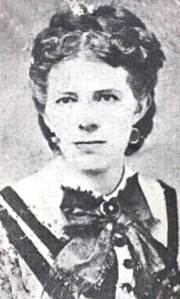
(Photo edited by Bob Rowen)

Stone at last realizes the end of the Confederacy is near, and she writes her diary’s most beautiful and heart-breaking passage.


May 15, 1865

Tyler, Texas

“Conquered,” “Submission,” “Subjugation” are words that burn into my heart, and yet I feel that we are doomed to know them in all their bitterness. The war is rushing rapidly to a disastrous close. Another month and our Confederacy will be a Nation no longer, but we will be slaves, yes slaves, of the Yankee Government.

The degradation seems more than we can bear. How can we bend our necks to the tyrants’ yoke? Our glorious struggle of the last four years, our hardships, our sacrifices, and worst of all, the torrents of noble blood that have been shed for our loved Country all, all in vain. The best and bravest of the South sacrificed and for nothing. Yes, worse than nothing. Only to rivet more firmly the chains that bind us. The bitterness of death is in the thought. We could bear the loss of my brave little brothers when we thought that they had fallen at the post of duty defending their Country, but now to know that those glad, bright spirits suffered and toiled in vain, that the end is overwhelming defeat, the thought is unendurable. And we may never be allowed to raise a monument where their graves sadden the hillside. There is a gloom over all like the shadow of Death. We have given up hope for our beloved Country and all are humiliated, crushed to the earth. A past of grief and hardship, a present of darkness and despair, and a future without hope. Truly our punishment is greater than we can bear.

Since Johnston’s surrender the people in this department are hopeless. If we make a stand, it would only delay the inevitable with the loss of many valuable lives. The leaders say the country is too much disheartened to withstand the power of a victorious Yankee army flushed with victory. Still, many hope there will be a rally and one more desperate struggle for freedom. If we cannot gain independence, we might compel better terms.

By the twenty-fourth we will know our fate — Submission to the Union (how we hate the word!), Confiscation, and Negro equality or a bloody unequal struggle to last we know not how long. God help us, for vain is the help of man.

We hope President Davis is really making his way to this department, as we hear. His presence would give new life to the people.

Poor Booth, to think that he fell at last. Many a true heart at the South weeps for his death. Caesar had his Brutus, Murat his Charlotte Corday, and Lincoln his Booth. Lincoln’s fate overtook him in the flush of his triumph on the pinnacle of his fame, or rather infamy. We are glad he is not alive to rejoice in our humiliation and insult us by his jokes. The circumstance of his death forms a most complete tragedy. Many think Andy Johnson worse than Lincoln, but that is simply impossible.

Added to our grief at the public calamity is our great anxiety about My Brother. He has had time to get here, if he was paroled, and we have not had a word from him. In the four-day fight before we gave up Petersburg, our army lost fifteen thousand men, and we tremble to think he may be among them. We hear that Tom Manlove is certainly dead, captured, and died of his wounds.

Mamma is sewing with a heavy heart on a jacket for Lt. Holmes. Last week we made a heavy white suit for Lt. Dupre. It was an undertaking. A letter from Mrs. Amis to Mamma. She writes most despondently. Sunday Lt. Dupre, Lt. Holmes, Capt. Buck, Col. and Mrs. Bradforte, and Capt. Birchett all came up to discuss the gloomy outlook. We all meet now just to condole with each other. A more doleful crowd I never saw. Capt. Birchett says he is going to South America rather than live under Yankee rule. His father was president of an indignation meeting held in Vicksburg to pass resolutions of sympathy and regret on the death of Lincoln. Capt. Birchett is too disgusted for expression.


Kate Stone’s Civil War: Torrents of blood

Stone learns of Abraham Lincoln’s assassination, and she is happy he is dead. Her grim satisfaction is little comfort as all around her are convinced that Lee has surrendered.

KS28

From 2012 to 2015, Stillness of Heart will share interesting excerpts from the extraordinary diary of Kate Stone, who chronicled her Louisiana family’s turbulent experiences throughout the Civil War era.

Learn more about Stone’s amazing life in 1861, 1862, 1863, 1864, 1865 and beyond. Click on each year to read more about her experiences. You can read the entire journal online here.

(Photo edited by Bob Rowen)

Stone learns of Abraham Lincoln’s assassination, and she is happy he is dead. Her grim satisfaction is little comfort as all around her are convinced that Lee has surrendered.

Note that she heard that John Surratt, one of Booth’s co-conspirators, attacked Secretary of State William Seward. Lewis Powell, another member of the Booth group, actually carried out the attack. He failed to kill Seward but badly injured him.


April 28, 1865

Tyler, Texas

We hear that Lincoln is dead. There can be no doubt, I suppose, that he has been killed by J. W. Booth. “Sic semper tyrannis” as his brave destroyer shouted as he sprang on his horse. All honor to J. Wilkes Booth, who has rid the world of a tyrant and made himself famous for generations. Surratt has also won the love and applause of all Southerners by his daring attack on Seward, whose life is trembling in the balance. How earnestly we hope our two avengers may escape to the South where they will meet with a warm welcome. It is a terrible tragedy, but what is war but one long tragedy? What torrents of blood Lincoln has caused to flow, and how Seward has aided him in his bloody work. I cannot be sorry for their fate. They deserve it. They have reaped their just reward.

There is great gloom over the town. All think that Lee and his army have surrendered. No one will take the Confederate money today, and as there is no gold in circulation there is no medium of exchange. Rumors, rumors, but nothing definite. Lee is certainly captured. Our strong arm of victory, the chief hope of our Country, is a prisoner with an army variously estimated at from 6,000 to 43,000 men captured on their retreat from Richmond. Dr. Kunckers told us as a secret that [Joseph E.] Johnston with his entire army has surrendered, but that news is suppressed through motives of policy. Our papers say Johnston’s army has been reinforced by the flower of Lee’s army, that he has a band of tried veterans and will make a determined stand. We know not what to believe. All are fearfully depressed. Lee’s defeat is a crushing blow hard to recover from. Maybe after a few days we can rally for another stand. Now, most seem to think it useless to struggle longer, now that we are subjugated. I say, “Never, never, though we perish in the track of their endeavor!” Words, idle words. What can poor weak women do?

I cannot bear to hear them talk of defeat. It seems a reproach to our gallant dead. If nothing else can force us to battle on for freedom, the thousands of grass-grown mounds heaped on mountainside and in every valley of our country should teach us to emulate the heroes who lie beneath and make us clasp closer to our hearts the determination to be free or die. “When the South is trampled from the earth / Her women can die and be free.”

I say with my whole soul:

Shame to the traitor-heart that springs
To the faint, soft arms of Peace,
Though the Roman eagle shook his wings
At the very gates of Greece.

Monday it was distressing to see the gloom on every face. We had an impromptu dining that day, and all seemed in the depths of despair, could think and talk of nothing but defeat and disaster. … The war was discussed in all its bearings. Seldom has there been a gloomier feast. Yesterday took dinner with Mrs. Prentice and returned in time to receive Mollie Sandford, Lt. Holmes, Lt. Martin, and Dr. Winn, a nice Texan and a friend of Dr. Buckner’s, whom he saw about six weeks ago. …

If My Brother and Uncle Bo are among the prisoners, it is probable they will soon be paroled and at home. But we know not what has been their fate.

When Johnny first heard the ill news, he was wild with excitement and insisted on joining the army at once. We were wretched about him, but today he has quieted down and is willing to await further developments.

We expected to move to our new house on Monday, and Mamma is worried about paying the rent. If the Negroes are freed, we will have no income whatever, and what will we do? As things have turned out, we wish we could stay here until we know what is to be our fate.


Kate Stone’s Civil War: God spare us

The rumors finally reach Tyler: Lee may have surrendered to Grant. The Stone family refuses to believe it.

KS33

From 2012 to 2015, Stillness of Heart will share interesting excerpts from the extraordinary diary of Kate Stone, who chronicled her Louisiana family’s turbulent experiences throughout the Civil War era.

Learn more about Stone’s amazing life in 1861, 1862, 1863, 1864, 1865 and beyond. Click on each year to read more about her experiences. You can read the entire journal online here.

(Photo edited by Bob Rowen)

The rumors finally reach Tyler: Lee may have surrendered to Grant. The Stone family refuses to believe it.

Stone is especially detailed in this entry, perhaps burying herself in mundane moments to drive back the looming and crushing reality of Confederate defeat.

April 23, 1865

Tyler, Texas

Such terrible news if true, but we cannot believe it. We know that we have met with fearful reverses this year. All our coast cities are conquered: gallant old Charleston has fallen, Wilmington and Mobile have passed out of our hands, and Richmond … has been taken. But all that is nothing compared to the awful report from the Yankee papers that Gen. Lee, our strong arm of defense, has capitulated with 40,000 men without firing a gun, that most of our best generals were taken at the same time, and that what remains of that noble army is only a disorganized mob of despairing men. All this is too dreadful to believe. God spare us from this crushing blow and save our dying country!

All refuse to believe such disaster, and the home life flows on as usual. Two dramatic performances by the natives, the amiable Capt. Johnson saying he did not wish the refugees even to attend. Mrs. Gary is vice-president, and I am secretary of the society. The gentlemen come in the evening and the ladies call in the day, but over every pleasure sweeps the shadow of the evil news. It may be true. It may be true. Mollie Moore, Lt, Holmes, and I rode out to the armory to see the soldiers drill. Met Col. and Mrs. Hill, all sympathizing with Capt. Polys, who fell down while pulling the bell rope and broke his leg in two places.

Just finished three embroidered cravats for Johnny. Friday Mamma and I finished a beautiful fawn-colored barege trimmed with black lace. It looks real stylish. My old white dress has been dyed by Lucy. She has become quite an adept at dyeing things.

The rain came down in torrents Thursday but in the afternoon ceased and I rode up to school for Sister. Came through boggy roads and rushing streams at sundown. Found Lt. Holmes waiting to go with me to Mrs. Carson’s to tea, to stay there until 8:30, and then to drive over to Dr. Moore’s, Mollie’s father’s, to attend a private rehearsal. We had a pleasant time there until twelve, then the drive home, adieux to Lt. Holmes, and then the blessed oblivion of sleep. Went up to return Eliza Roberts’ call late in the afternoon.

Lt. Holmes caught up with me and came home and spent the evening. Busy sewing Tuesday until Lt. Holmes was announced, then had to spend the balance of the day amusing him. After he bowed himself away, I went over to see Mollie Moore and chatter nonsense. …

Had delicious white cake at Mrs. Lawrence’s. All the members of the troupe wanted Mamma for president of the society, but she would not hear of it. Mrs. Swain, a perfect incapable, was called to the chair. Capt. Buck has brought me a book nicely commenced for my official records, and Lt. Holmes is to see they are kept according to rule. Must send it around for members to sign.

Mamma has been much disturbed on the subject of details for Mr. Smith, but Lt. Dupre arranged the detail as he passed through Marshall. She hopes to have no further trouble on that score. …

Kate Stone’s Civil War: Out of time

An early-spring Texas cold front has scattered Stone’s beloved flowers, and she sinks into a depression as friends suddenly turn their backs and her brother wants to fight his school nemesis again.

KS22

From 2012 to 2015, Stillness of Heart will share interesting excerpts from the extraordinary diary of Kate Stone, who chronicled her Louisiana family’s turbulent experiences throughout the Civil War era.

Learn more about Stone’s amazing life in 1861, 1862, 1863, 1864, 1865 and beyond. Click on each year to read more about her experiences. You can read the entire journal online here.

(Photo edited by Bob Rowen)

An early-spring Texas cold front has scattered Stone’s beloved flowers, and she sinks into a depression as friends suddenly turn their backs and her brother wants to fight his school nemesis again.

April 1, 1865

Tyler, Texas

A wild March wind is howling around the house, scattering the glory of the white and pink blossoms that have made the town so lovely for the last week. The white and purple lilacs yesterday were in full bloom, great plumes, redolent of perfume, but today the rude norther has drifted the fragrant petals far and wide. On the mantle is our first spring bouquet, wreathes of flowering almond, tufts of brilliant phlox, a handful of the coral honeysuckle loved by the boys, gold and purple pansies, as large as those in Louisiana, and sweetest of all, the cluster of purple and white lilac. Lilacs grow so much better in this red soil than in the swamp.

Though the buds and flowers of fair spring are with us, we are feeling the truth of the poet’s song, “What is friendship but a name?” Our refugee friends, Mrs. Carson and Mrs. Savage, have grown cold toward us, and we do not know what is wrong. It worries Mamma very much. Though we may pretend not to feel the wound, it is no less painful. As to Mrs. Carson, Mamma long ago realized that she had no conception of real friendship. Her nature is too shallow to be true to anyone. The last friend is always the best with her. But Mamma had a right to look for real friendship at Mrs. Savage’s hands, but she has not secured it. Her friendship is … worthless. … She showed plainly in the affair of the house that Mamma’s interest was as nothing to her compared to Mrs. Alexander’s, a friend of a few months. Mamma is disturbed by it, for she considered Mrs. Savage one of her very best friends.

Mrs. Alexander sent to ask Mamma to let her keep the house, but that would deprive us entirely of a home as Mamma had given up the one we are in and planted a garden at the Alexander house. It was impossible and we will move in May. We will be glad to move to the Brazos this fall and put the past and its false friends behind us. …

Beauregard is all right. We hear that Gen. Sherman is dead. …

Johnny is in a dreadful humor and makes us all feel it because Mamma will not allow him to have another fight with Charley Ligruski. Boys of Johnny’s age are generally self-willed and disobedient, Mamma can do but little with him, and now he is of no assistance to her. Everything seems to be going wrong, most probably because I myself am out of time, and so no more scribbling until I am myself again.

Recommended reading / viewing / listening

This week: CSS H.L. Hunley emerges / Writing: A job or a calling? / Solving a math mystery / Gaza children with PTSD / What caused her cancer?

KS33

This week: CSS H.L. Hunley emerges / Writing: A job or a calling? / Solving a math mystery / Gaza children with PTSD / What caused her cancer?

Most of these great items come from my social media networks. Follow me on Twitter, Tumblr, LinkedIn, MySpace, and Facebook for more fascinating videos, photos, articles, essays, and criticism.

1. After 150 years, Confederate submarine’s hull again revealed
By Bruce Smith | Associated Press | Jan. 30
“What [scientists] find may finally solve the mystery of why the hand-cranked submarine sank during the Civil War.”

2. Facebook needs a ‘Sympathy’ button
By Amy-Mae Elliott | Mashable | Jan. 25
” It can mean a feeling of pity or sorrow for someone else’s misfortune, and also an understanding between people — a common feeling.”

3. Is Being a Writer a Job or a Calling?
By Benjamin Moser and Dana Stevens | Bookends :: Sunday Book Review | Jan. 27
Moser: “Even the best writing won’t have the immediate, measurable impact of a doctor’s work, or a plumber’s.”
Stevens: “Of course a writer is going to lean toward saying writing is a calling — that’s our job.”

4. The Pursuit of Beauty
By Alec Wilkinson | The New Yorker | Feb. 2
“Yitang Zhang solves a pure-math mystery.”

5. Hundreds of thousands of children shell-shocked after the war in Gaza
By Robert Tait | The Telegraph | Jan. 29
“Children who saw their siblings or parents killed, often gruesomely, have been left stricken, and around 35 per cent to 40 per cent of Gaza’s million children are suffering from shell-shock according to Hasan Zeyada, a psychologist with the Gaza Community Mental Health Programme.”

6. What Caused My Cancer?
By Shana Bernstein | Pacific Standard | Jan. 29
“Was it bad genes? Bad luck? Or was it the toxins I eat, drink, breathe, and touch on a regular basis because the United States has a policy of putting the burden of proof for product safety on the consumer?”

7. The Fire of 1910 — Why It Still Matters
By Timothy Egan | Inside American Experience | Jan. 29
“Never in recorded United States history has there been anything to match the fire of 1910. For its size, its ferocity, its impact, nothing comes close.”

8. 50 years after funeral, Churchill towers over UK politicians
By Jill Lawless | Associated Press | Jan. 30
“Modern politicians know better than to invite comparisons to the larger-than-life Churchill — a noted ‘bon vivant’ … who kept 10 Downing St. stocked with Pol Roger Champagne.”

9. Seven questions every editor should ask the writer
By Roy Peter Clark | Poynter | Jan. 30
“After asking these questions to hundreds of writers, I have confidence that the answers provided by the writer can guide a coaching editor on how best to help the writer over time.”

10. For Incarcerated Japanese-Americans, Baseball Was ‘Wearing the American Flag’
By Michael Beschloss | HistorySource :: The New York Times | June 2014
“By 1943, when some of those in the relocation camps were allowed to volunteer for war service, some of the ballplayers joined the Army’s almost all-Japanese-American 442nd Regimental Combat Team, which suffered grievous casualties in Europe and came to be called the most decorated military unit in American history.”

2014 in review

Thank you for making 2014 the best year ever. Read the year-end WordPress graphical roundup.

Thank you so much for making 2014 Stillness of Heart‘s best year ever.

Here’s an excerpt:

The concert hall at the Sydney Opera House holds 2,700 people. This blog was viewed about 12,000 times in 2014. If it were a concert at Sydney Opera House, it would take about 4 sold-out performances for that many people to see it.

Click here to see the complete report.

Step by step

One step at a time. That’s all I have to believe in.

KS59

Slowly but surely, I’m building a full and rich life.

I have to believe that. Maybe happiness comes later.

Kate Stone’s Civil War: Season of general disaster

Sudden deaths shock Stone and break her heart. All optimism of the past year is shattered.

KS8

From 2012 to 2015, Stillness of Heart will share interesting excerpts from the extraordinary diary of Kate Stone, who chronicled her Louisiana family’s turbulent experiences throughout the Civil War era.

Learn more about Stone’s amazing life in 1861, 1862, 1863, 1864, 1865 and beyond. Click on each year to read more about her experiences. You can read the entire journal online here.

(Photo edited by Bob Rowen)

Sudden deaths shock Stone and break her heart. All optimism of the past year is shattered.

Dec. 10, 1864

Tyler, Texas

Dear little Beverly, that angel upon earth, has left us. The pure spirit has winged its way to its Heavenly home. Darling little Beverly. What a sad despairing letter her father wrote bearing the bitter news of her death. They are utterly heartbroken. She was the one great treasure of their lives. The pure little spirit is freed now, but all the sunshine of life to them lies buried in that tiny grave. She died October 2 of sore throat at Selma, Ala. She was the one perfect being I have ever known in face, in figure, in mind, in heart not one improvement could be suggested. We have several times heard people who were not related to her say, after playing with her, “That child will not live to grow up; she is too perfect.” That seemed to be the general feeling of all their friends in Vicksburg who had known her always. She was too fair and frail a flower to blossom in this time of death and destruction. … There was never a sweeter, lovelier little creature than our “Swamp Lily,” as she loved us to call her. May Our Father comfort and strengthen her poor mother, for her life is bound up in the child’s.

We were shocked and distressed to hear of Mary Gustine’s death. We were there on one Thursday and she died on Sunday. Her mother seemed a little anxious, but no one else thought her much ill. A noble, generous, and beautiful woman, she was one of our most valued friends. This is the first break in the circle of happy girls who erstwhile met at Brokenburn. Her mother, who is in wretched health, will continue to live with Capt. Buckner, and she and Ella will take charge of the baby. That family is utterly broken up — one brother in prison and another desperately wounded — and not a month ago they were congratulating themselves on how wonderfully they had escaped all sorrow in this season of general disaster and despair.

Truly, “We know not what a day may bring forth.”

Kate Stone’s Civil War: The flower-wreathed scepter

Stone records the fall of Atlanta along with pitiful rumors of its victorious Confederate recapture. By now the ripples of great battles hardly disturb her social shores.

1862

From 2012 to 2015, Stillness of Heart will share interesting excerpts from the extraordinary diary of Kate Stone, who chronicled her Louisiana family’s turbulent experiences throughout the Civil War era.

Learn more about Stone’s amazing life in 1861, 1862, 1863, 1864, 1865 and beyond. Click on each year to read more about her experiences. You can read the entire journal online here.

(Photo edited by Bob Rowen)

Stone records the fall of Atlanta along with pitiful rumors of its victorious Confederate recapture. By now the ripples of great battles hardly disturb her social shores.

Sept. 27, 1864

Near Oak Ridge, La.

We hear of the lamentable fall of Atlanta and rumors of its recapture, which we trust may be true. There is no further fear of a Yankee raid as there are very few troops left at Goodrich’s Landing, and everyone seems to look for peace in the spring. …

An amusing letter from Missie Morris in which she utterly repudiates the idea of our giving up as “Old Maids” for two years yet, when she will be willing to lay down the flower-wreathed scepter of girlhood and don the badge of spinsterhood.

Capt. Gillispie came in two days ago and has kept the house in an uproar ever since. He is overflowing with fun and frolic but is rather too familiar and something rude. He does not improve on acquaintance. I fear he is fast, a perfect opposite to tiny Mr. Kurrie, who came with him. We thought him at first about twelve years old, so quiet and solemn. He really is twenty. …

Hurricane Beulah and Dr. Mario E. Ramirez

As some of you may already know, I’m a graduate student in UTSA’s history department. I’m writing a masters thesis on 1967 Hurricane Beulah and Dr. Mario E. Ramirez. Please write me if you’d like to share memories/stories of the hurricane or of the fascinating physician from the Rio Grande Valley. I’d love to hear them.

Fernando Ortiz Jr.

Rebecca Aguilar

#CallingAllJournalists Initiative | Reporter | Media Watchdog | Mentor | Latinas in Journalism

Anna Fonte's Paper Planes

Words, images & collages tossed from a window.

Postcards from Barton Springs

Gayle Brennan Spencer - sending random thoughts to and from South Austin

The Flask Half Full

Irreverent travelogues, good drinks, and the cultural stories they tell.

Government Book Talk

Talking about some of the best publications from the Federal Government, past and present.

Cadillac Society

Cadillac News, Forums, Rumors, Reviews

Ob360media

Real News That Matters

Mealtime Joy

bringing joy to family meals

Øl, Mad og Folk

Bloggen Øl, Mad og Folk

a joyous kitchen

fun, delicious food for everyone

A Perfect Feast

Modern Comfort Food

donnablackwrites

Art is a gift we give ourselves

Fridgelore

low waste living drawn from food lore through the ages

BeckiesKitchen.com

MUSINGS : CRITICISM : HISTORY : NEWS

North River Notes

Observations on the Hudson River as it passes through New York City. The section of the Hudson which passes through New York is historically known as the North River, called this by the Dutch to distinguish it from the Delaware River, which they knew as the South River. This stretch of the Hudson is still often referred to as the North River by local mariners today. All photos copyright Daniel Katzive unless otherwise attributed. For more frequent updates, please follow northriverblog on Facebook or Instagram.

Flavorite

Where your favorite flavors come together