My grand strategy

Today I turned 43. In these later years, I perceive a small but steadily growing pool of wisdom fueling a clear philosophical perspective on the increasingly complex calculus of my life.

IMG_1445

Today I turned 43.

The number doesn’t bother me. When I look back on my past accomplishments, both professional and academic, both modest and respectable, I’m comfortably reminded that I’ve always been a late bloomer. The great triumphs — comparatively great — always came right the end of each chapter of my life, just when the time came for me to move on and start over somewhere else. Perhaps for someone like me, with my ambitions, that’s the way it’s supposed to be. Every day begins with two thoughts: “There’s still a little time left. Relax.” and “Pretend this is your last day on earth because one day it will be. Work faster.” I stagger through the days wavering between those two sentiments.

At the end of 2014, I completed a master’s degree in U.S. history at the University of Texas at San Antonio (UTSA), topped off with a 190-page thesis — the cherry on the sundae. I never had so much fun — ask the people who know me … “fun” is not a word they ever expect me to use. During that last half of 2014, I attracted the attention of UTSA’s Communications office, which sent a reporter to profile me, perhaps to hold me up as an example to others, perhaps to highlight the interesting and intelligent people enriching and enriched by the UTSA’s wonderful History Department. Perhaps it was just my turn. Nevertheless, I was flattered and honored. I shamelessly shared it throughout social media, as I am now. “We are all very proud of you,” one of my beloved professors wrote me. My heart burst with teary pride — the rarest of my few expressed emotions.

The best part of the article came right at the beginning. The first paragraph captured the grand strategy I set out for my life: “At an early age, [Ortiz] charted the life he wanted to lead: journalist, academic scholar and author.” At some point in my twenties — not sure when, exactly, but probably as I began to seriously study history and biography — I determined to approach life with a larger consideration: “How will I be remembered?” I knew enough to know that a great legacy was constructed with small pieces, carried one small step at a time, and sometimes at first only imperfectly constructed. I held close to my heart a few simple rules. Never turn away from a challenge. Never shrink away from leaping out of your comfort zone into unknown terrain. Never decline the opportunity to fail. Never fail to learn from those failures. All are easy to say and painfully difficult to follow.

In early 2015, I was honored when Dr. Catherine Clinton, a leading Civil War scholar, asked me to assist her with some special research for a few months. Just as that ended, I was honored yet again with an offer to actually teach U.S. history to college undergraduates at Northwest Vista College and then again at UTSA in 2016. Solitary research and writing — annotated bibliographies, briefing memos, etc. — is ideal for someone as shy as me. Teaching and discussing U.S. history with 70 to 80 young men and women is not. I stood in those classrooms and wondered how I could teach these young men and women. My comfort zone was nowhere in sight. Nevertheless, I knew when I accepted the challenge that I was undertaking the most difficult and the most important job of my life. Perhaps someday I might actually be good at it (though student applause is always reassuring). These are a few of those crucial pieces of the larger something I am trying to build, just as the men and women who came before me struggled to build their own lives, faced down their challenges and fears, and took one more step forward.

My Peruvian great-grandfather was prosperous fisherman who owned a fishing fleet. His son, my grandfather, was an Army general and special forces commander. His son, my father, is a physician. My father’s son — me — is … what? I was blessed with generous, loving, and supportive parents, who always pushed my brother and me to succeed. They trusted us to find our own way within their explicit expectations. It was assumed that we would become productive and honorable men as we kept in mind who built the comfortable world we inhabited. My interests guided me toward history, literature, and psychology. My mind naturally blossomed as historical concepts, literary theory, psychopathology, and the hourly drama of news cycles all caressed, molded, and ignited my growing intellect and imagination. But I realized that some kind of structure was needed. Simply wandering through my interests was not enough — it all had to amount to something in the end, something my descendants would look back on and admire … and perhaps emulate.

In some small way, this blog is an expression of that grand strategy. I’ve written about and shared with my readers my love of podcasts and photography, of the Civil War and fiction writing. I’ve shared with them a plethora of strange stories and documentaries, thoughts about Hemingway, rum cakes, books, and TR. They’ve experienced my passion for “Miami Vice”, Elvis, a Louisiana woman fleeing Union invasion during the Civil War, and a Cuban woman who disguised herself as a man and savored every moment of that same brutal war. Each piece fits into the larger plan.

In these later years, I perceive a small but steadily growing pool of wisdom fueling a clear philosophical perspective on the increasingly complex calculus of my life. Every failure becomes simply the moment when a fresh opportunity is revealed to me. Every hard-earned success merely offers a better vantage point on the harsh terrain ahead. As I move into this new year, from my new vantage point I can take in a horridly-jagged landscape stretching out before my eyes, seemingly endless, on into the horizon. But that far-off horizon is gleaming. The shimmering edges are only now in sight, the barely-perceptible glitter drawing me forward, igniting the ambition filling my heart, and steeling my spirit for the disappointments, setbacks, wrong turns, and frustrations darkening the journey.

My grand strategy, glowing in my soul, burned into my mind, never leaves me. The sweet promise of a final victory — a life well-lived — is my last thought as sleep and dreams wrap their arms around me and carry me away into the silent night.

Names and Places of UTSA: George W. Brackenridge

Such a fascinating and important individual …

Kristin Law's avatarThe Top Shelf

This month we continue “Names and Places of UTSA,” a blog series on university history, with a post by archives student assistant, Kira Sandoval.

Street sign at the corner of Brackenridge and Ximenes Avenues, UTSA Main Campus. Street sign at the corner of Brackenridge and Ximenes Avenues, UTSA Main Campus. Photo by Kira Sandoval.

On the south side of UTSA’s Main Campus, George Brackenridge Avenue connects Ximenes Avenue to the Child Development Center, University Oaks, and several parking lots. The street is named in honor of an important historical figure of San Antonio and UTSA’s history, George W. Brackenridge. He was a busy philanthropist and businessman who largely influenced the central Texas region. Though he lived and died before UTSA came into existence, he played an important role in shaping Texas education. Brackenridge Avenue was named after this figure because of his service as a San Antonian on the UT System Board of Regents for over 27 years. However, his legacy…

View original post 1,166 more words

FDR’s Four Historic Inaugurations

Fantastic package on FDR’s inaugurations.

usnationalarchives's avatarForward with Roosevelt

By Paul M. Sparrow, director Franklin D. Roosevelt Presidential Library and Museum

Franklin D. Roosevelt is the only person who will ever have FOUR presidential inaugurations (thanks to the 22nd Amendment.) And each and every one of his inaugurations was historic in its own way.  Every president from Washington to Roosevelt had been inaugurated in March. Why? Because the U.S. Constitution originally stipulated that the Federal Government would start on March 4th each year. FDR’s first inauguration in 1933 was the last inauguration held in March. The inauguration date was changed with the passage of the 20th Amendment, which moved the date up to January 20th.  During his first inauguration President Roosevelt delivered one of the most famous lines in American history – “The only thing we have to fear, is, fear itself.” But that line does not appear until the 7th draft of the…

View original post 565 more words

The Casablanca Conference – Unconditional Surrender

Such a great look at the Casablanca Conference.

usnationalarchives's avatarForward with Roosevelt

By Paul M. Sparrow, Director

In January, 1943, President Roosevelt embarked on a secret mission that would determine the course of World War Two, and ultimately the world we live in today. His destination – Casablanca, Morocco. His goal – to finalize Allied military plans with the British Prime Minister, Winston Churchill. It was a precedent shattering odyssey. No president had ever left the United States during wartime, or ever visited Africa, or even ever traveled in an airplane. No president since Lincoln had visited an active battlefield. And FDR did all of those things without the press finding out.

The Allies had landed in North Africa just two months earlier, and after a series of bloody setbacks had Germany’s Field Marshall Erwin Rommel – the Desert Fox – on the run. The looming question was – what to do next? The conference would force top military leaders of Great…

View original post 2,310 more words

Martin Luther King Jr. Day

Enjoy this very interesting and useful article on the eve of the MLK Day March.

Katie Rojas's avatarThe Top Shelf

This Monday, hundreds of thousands of San Antonians are participating in what has grown to be the nation’s largest Martin Luther King Jr. Day March. I have participated in the march in previous years, and I’m always impressed by the magnitude of it. Marching in solidarity for peace, equality, justice, and the remembrance of Dr. King with a quarter of a million people is a truly awesome experience.

Despite these previous experiences, nothing ever totally prepared me for the “real thing.” Participating in a present-day march is a very different experience from walking around the neighborhood where Dr. King lived and worked. This past August I traveled to Atlanta, GA, and had the opportunity to visit the Martin Luther King, Jr. Center for Nonviolent Social Change (“the King Center”). The King Center is a National Historic Site that includes a museum, archives, community/exhibition center, the childhood home of Dr…

View original post 427 more words

Glimpses of Texas in 1917

Incredible photos of 1917 Texas …

Tom Shelton's avatarThe Top Shelf

For our first photography blog in 2017, we look back 100 years through images in our General Photograph Collection. The photos give us an idea of how Texans lived in 1917. With horses and buggies visible on the streets and farms, it shows that the modern era had not completely arrived. Yet significant changes in the lives of many Texans would come that year with the United States entry into World War I on April 6th. Young men who had never ventured out from Texas would go far away to the battlefields in France.

McCulloch County draftees shortly before departing for military service, Brady. (Detail of 078-0438. Courtesy of Wayne Spiller) McCulloch County draftees shortly before departing for military service, Brady. (Detail of 078-0438. Courtesy of Wayne Spiller)

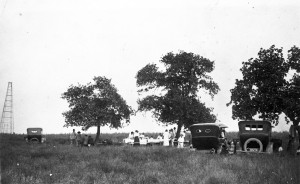
Picnic overlooking the Somerset Western No. 1 oil derrick near Lytle. (093-0029. Courtesy of Margaret Trouart) Picnic overlooking the Somerset Western No. 1 oil derrick near Lytle. (093-0029. Courtesy of Margaret Trouart)

Washing buggies in the San Antonio River near the Navarro Street Bridge in downtown San Antonio. Photograph by Ellen Schulz Quillin. (074-0142. Courtesy of Roy W. Quillin) Washing buggies in the San Antonio River near the Navarro Street Bridge in downtown San Antonio. Photograph by Ellen Schulz Quillin. (074-0142. Courtesy of…

View original post 168 more words

Recommended reading / viewing / listening

This week: The Associated Press and The New York Times offered special reports on Obama’s legacy. Here are a few selections from their analysis series.

img_0458

This week: The Associated Press and The New York Times offered special reports on Obama’s legacy. Here are a few selections from their analysis series.

Most of these great items come from my social media networks. Follow me on Twitter, Instagram, Tumblr, LinkedIn, and Facebook for more fascinating videos, photos, articles, essays, and criticism.

1. The Obama Era
The New York Times | 2016 and 2017
“The Obama Era [explores in six parts] the sweeping change that President Obama has brought to the nation, and how the presidency has changed him.”
Also see: Obama enters the final weeks of his presidency

2. Obama racial legacy: Pride, promise, regret — and deep rift
By Sharon Cohen and Deepti Hajela | Associated Press | Jan. 4
“[H]is presidency did not usher in racial harmony. Rather, both blacks and whites believe race relations have deteriorated, according to polls. Mounting tensions over police shootings of African-Americans prompted protests in several cities and the emergence of the Black Lives Matter movement.”
Also see: Some key moments related to race during Obama’s presidency

3. As Obama accomplished policy goals, his party floundered
By Lisa Lerer | Associated Press | Dec. 24
“The leadership of the one-time community organizer and champion of ground-up politics was rough on the grassroots of his own party. When Obama exits the White House, he’ll leave behind a Democratic Party that languished in his shadow for years and is searching for itself.”
Interactive: The Obamas’ legacy in race, civil rights, social media, and more

4. Michelle Obama: A first lady who charted her own course
By Darlene Superville | Associated Press | Dec. 26
“As she navigated her way through, the woman who grew up on the South Side of Chicago discovered a talent for television and a comfort with Hollywood A-listers, haute couture and social media. And she used all of those elements to promote her causes — childhood obesity, support for military families, girls’ education — with at least some success.”
Also see: For girls, Michelle Obama is an empowering example
Also see: Michelle Obama: Life’s ‘greatest honor’ was being first lady

5. Michelle Obama loved fashion and the fashion world loved her
By Jocelyn Noveck | Associated Press | Dec. 26
“[U]nlike some past first ladies who favored one or two big-name designers, Mrs. Obama has spread her fashion choices among a huge stable of them — often promoting lesser-known names, and taking care to promote American designers at such high-profile events as inaugurations, conventions and state dinners.”

6. Obama makes his mark as first ‘social media’ president
By Kevin Freking | Associated Press | Jan. 6
“Obama’s two terms in office played out like a running chronicle of the trends of our times.”
Also see: President ending reign as pop culture king

7. 8 ways the US job market has evolved over Obama’s 8 years
By Christopher S. Rugaber | Associated Press | Jan. 6
“The unemployment rate is 4.7 percent. Jobs have been added for 75 straight months, the longest such streak on record. But many other trends, not all of them positive, have reshaped the job market over the past eight years. …”

8. In realist foreign policy, Obama found limits
By Bradley Klapper | Associated Press | Dec. 24
“Over eight years, Obama ushered in a new era of diplomacy, re-establishing the United States as the driving force behind fighting climate change and reducing the threat of nuclear weapons.”

9. Handing Trump a broad view of war powers
By Josh Lederman | Associated Press | Dec. 5
“After eight years as a wartime president, Barack Obama is handing his successor an expansive interpretation of the commander in chief’s authority to wage war around the globe. And that reading has continued to grow even as Obama prepares to pass control to Donald Trump.”

10. A quiet mission to export gay rights oversea
By Josh Lederman | Associated Press | October 2016
“The U.S. has deployed its diplomats and spent tens of millions of dollars to try to block anti-gay laws, punish countries that enacted them, and tie financial assistance to respect for LGBT rights. … Yet the U.S. encountered occasional backlash, including from some rights groups that said public pressure by the West made things worse.”

Dec. 31, 1999: The last day of the past

IMG_0290

On Dec. 31, 1999, I was a junior news editor at the Corpus Christi Caller-Times, the newest member of a team of about a dozen editors and page designers. Reporters mostly worked during the day writing the stories. Editors like me worked at night editing the stories and assembling and designing the newspaper. So I was shocked and elated when my supervisor told me in late December that I wouldn’t have to work on New Year’s Eve. I was smart enough not to ask why. My then-girlfriend was coming to Corpus Christi to celebrate with me, and I was looking forward to a long, romantic night in a downtown hotel.

But on the morning of the 31st, my supervisor called and apologetically asked me to come in for a few hours that night to help edit the extra-big pile of stories for the first edition of the new year. He assured me that I could leave by 7 or 8 p.m. I agreed, trying to sound gracious and appreciative of his promise of an early release. The promise of extra overtime pay further softened the news. I informed my girlfriend of the minor change in plans, which wouldn’t drastically affect our evening.

I dutifully returned to my desk in the newsroom, and I explained to my puzzled (and relieved) colleagues why I was there. As I settled in, I gradually realized there was nowhere else I wanted to be that night (if only for a few hours).

There were great advantages to sitting in a newsroom that night, if only because of the tremendous access I had to countless news services from around the world. Every news service offers special packages every year that examine, analyze, celebrate, or condemn developments in politics, technology, science, sports, film, and music over the past twelve months, but this year was different. The millennial angle brought rich historical and cultural flavors to the coverage. That year, there were fascinating and thoughtful reflections on the evolution of democracy throughout human history, the torments and treasures technology brought to human civilization, and the great and terrible conflicts and comforts religion brought to every society.

That year’s year-end gaze focused as far on the future as it did on the past, predicting peace for most of the world, except for the inevitable tensions between a resurgent China and the post-Cold War United States. Analysts predicted that an economically healthy world would strengthen even the weakest societies in Africa and the Middle East. Terrorism was mentioned, but only in passing as one of a series of minor dangers the U.S. of the future might have to confront and snuff out. Foreign affairs experts predicted the imminent liberation of (and possible civil war in) Cuba once the Castro brothers died. Some political analysts wondered what an Al Gore presidency would look like.

That night I watched live news coverage of the (symbolic) new millennium dawning on the other side of the world. I cheerily chatted with my new co-workers. I munched on the growing buffet of sandwiches, fruits, and vegetables the newspaper ordered for the staff. I noticed a strange new sensation growing in my body, a warm happiness enveloping my heart and mind. Later I realized that warmth I felt was a deepening love for my new job, specifically for the particular intellectual role I played in the newsroom. There was an energy in the air that night, something I never felt before, and something I would feel for the next ten years, every time the newsroom mobilized to absorb and understand a big news event. I was part of something noble, challenging, and fulfilling. I was part of something that mattered.

There was another important reason why I wanted to be in the newsroom on that night, another important explanation for that tense excitement in the air. For months, the news wires were filled with stories about Y2K, the looming technological disaster everyone feared might take place at midnight. Technology experts, military officials, and others fretted about what might happen when the calendars in software programs and defense systems turned from 12-31-99 to 01-01-00, or some other variation of a date dominated by so many zeroes. Would there be power failures? Would computers everywhere melt down? Would planes fall out of the sky, hospital life-support machines shut down, or satellites spin out of control? Would defense systems accidentally launch missiles at Russia or at the U.S.? Would the symbolic end of the millennium inaugurate an actual Armageddon?

Despite these concerns, no one in the general populace seemed to be seriously concerned about Y2K. Government officials, scientists, and engineers were well aware of the potential problems, and the general consensus was that most of the spots in software, where there might be glitches over those zeros, were fixed. Russian and American military officials teamed up to monitor defense systems in an admirable display of transparency and professionalism. No one really knew what might happen. One of my favorite podcasts, “Witness” from the BBC World Service, recently examined the worries over the “Millennium Bug.”

Nevertheless, Times Square in New York City filled up with its usual crowds of bundled-up revelers with their strange eyeglasses, hats, and signs. Peter Jennings anchored ABC News coverage from New York, smiling to himself as he tried to speak to increasingly inebriated correspondents from Asian and European capitals, where the skies exploded with fireworks, church bells pealed, and the streets filled with millions of people, all dancing, kissing, and cheering. I imagined myself in Paris with my girlfriend, holding hands on the riverbank, sharing a deep kiss, the Eiffel Tower’s searchlight sweeping across the cloudy sky above us, the twinkle of distant fireworks sparkling in her dark eyes. Someday, I told myself, I’ll take her there.

Eventually, the newsroom’s clock struck 8 p.m., and my supervisor thanked me for helping edit the extra-big pile of stories for tomorrow’s edition. I smiled, shook his hand, and wished him and and my envious co-workers a happy New Year. I strolled out of the newsroom, glancing one last time at the TV. Peter Jennings smiled as he reviewed the growing crowd in Times Square. It was a smile I never forgot. I spent the rest of the night as I hoped I would. My girlfriend and I had a romantic and relaxing evening — the perfect end to the year, the century, and the millennium.

In the morning, we learned the world did not end. Instead, the first day of the new millennium was bright, breezy, and warm. We had breakfast and then drove to Padre Island. Amazingly, the beach was empty. She and I walked together through the frothy waves hissing across the yellow sand. I stared out across the water, shielding my tired eyes from the sunshine. A new year, I thought to myself. I felt a greater sense of hope, determination, and ambition at that moment than ever before. I felt fortunate, safe, and content. I asked myself, would I ever feel like this again?

I glanced at my girlfriend, radiant in the morning light, slowly dancing her way down the beach, watching the water flow around her legs, her gleaming black hair streaming down her shoulders, her arms outstretched to catch the breeze. She smiled at me. I took her hand in mine. It was time to move on. The future awaited.

Recommended reading / viewing / listening

This week: Trump’s inaugural lineup / Familiar faces in ‘Rogue One’ / How to cover a terrorist attack / David Bowie’s final year / Christmas and Confederate widows

img_0476

This week: Trump’s inaugural lineup / Familiar faces in ‘Rogue One’ / How to cover a terrorist attack / David Bowie’s final year / Christmas and Confederate widows

Most of these great items come from my social media networks. Follow me on Twitter, Instagram, Tumblr, LinkedIn, and Facebook for more fascinating videos, photos, articles, essays, and criticism.

1. Trump’s inaugural parade lineup announced
By Nolan D. McCaskill | Forty Five :: Politico | Dec. 30
“The Jan. 20 parade will follow the swearing-in ceremony of [President-elect Donald] Trump and Vice President-elect Mike Pence. The committee characterized the list as an ‘initial’ version of groups that have accepted an invitation thus far.”

2. How ‘Rogue One’ Brought Back Familiar Faces
By David Itzkoff | The New York Times | Dec. 27
“Warning: This article contains spoilers about ‘Rogue One: A Star Wars Story.’ ”

3. DC restaurant won’t put Trump in presidential mural
By Nikita Vladimirov | The Briefing Room :: The Hill | Dec. 29
“The mural features the founder of the restaurant, ‘Mama’ Ayesha Abraham, standing alongside 11 presidents, from Dwight D. Eisenhower to Barack Obama.”

4. Covering a potential terrorist attack? Keep these things in mind
By Nausicaa Renner | Columbia Journalism Report | September 2016
“Terrorism relies on the spread of fear, so any publicity — from journalists or otherwise — threatens to play into its aims. The ability of terrorists to disseminate information and recruit has only gotten more powerful with the rise of social media. [T]he Tow Center for Digital Journalism [recently] published three reports on how journalism should cover terrorism.”

5. 5 ways to make the populist-Republican coalition government work
By Richard V. Reeves | The Brookings Institution :: Forbes | Dec. 19
“Trump does not have the same political agenda as the Republican Party in Congress, to the extent, that is, that he has an agenda at all. He won the party’s nomination, but is almost entirely independent of the party’s machine, history and personal networks. Trump didn’t climb up the party floor by floor. He simply took the penthouse suite.”

6. David Bowie’s Final, Imaginative, Awesome Year
By Bruce Handy | The Hollywood Reporter | Dec. 20
“As the anniversary of his death approaches, collaborators on the music icon’s off-Broadway show ‘Lazarus’ share accounts of a cancer-stricken artist productive and engaged until the end.”

7. Syria Will Stain Obama’s Legacy Forever
By David Greenberg | Foreign Policy | Dec. 29
“The arc of history is long, but it won’t ever judge the president’s Syria policy kindly.”

8. A reflection on Barack Obama’s presidency
The Economist | Dec. 24
“From the ruins of Syria to the barricades in Congress and America’s oldest wounds, sometimes nothing has been the best he could do. Sometimes it was all he could do. The possibilities seem shrunken. After its collision with history, so might hope itself.”

9. Christmas Mourning, Confederate Widows, and the Aftermath of the Civil War
By Angela Esco | Muster :: Journal of the Civil War Era | Dec. 20
“Approximately 750,000 men died in the war. We know this number, know that it earns the distinction of being the bloodiest American war, but often we do not think about what this number meant, in terms of families changed, sons killed, women wearing black, buildings draped in crepe.”

10. Harry Truman, Five-Card Stud and the Cold War
By Michael Beschloss | HistorySource :: The New York Times | September 2014
“Harry Truman was the president most publicly identified with poker, which seemed natural for a product of the Kansas City political machine led by the back-room Democratic boss Tom Pendergast.”

Confluence of Culture: Documenting the 1960s and 70s Chicano Art Movement

Such beautiful artwork

Kristin Law's avatarThe Top Shelf

This post covers a recent addition to the Jacinto Quirarte Papers and is written by former archives student assistant, Marissa Del Toro.

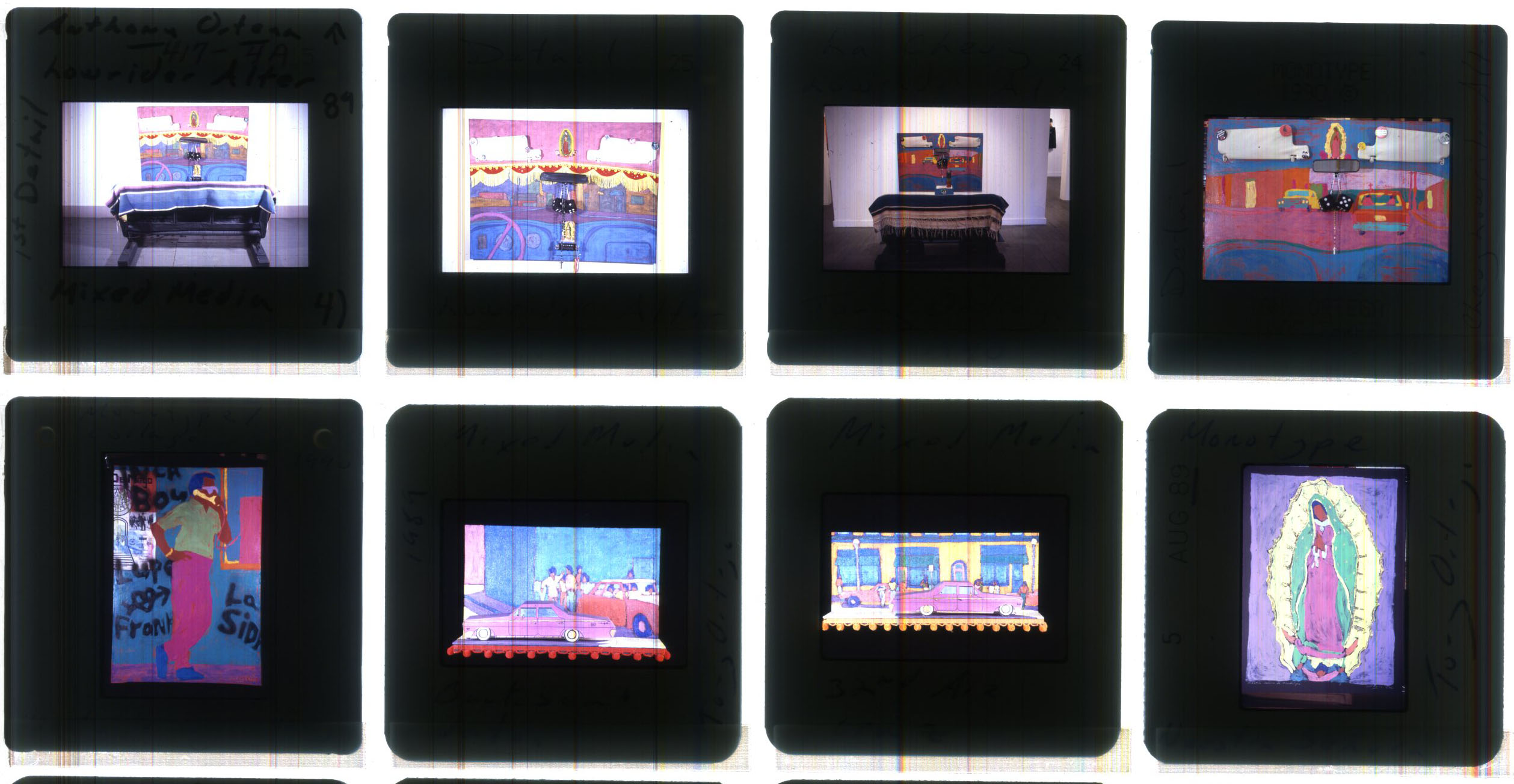
Slides of artwork by Tony Ortega Slides of artwork by Tony Ortega, 1989-1990.

Did you ever have that moment when everything you have been working on comes full circle? I had one of those moments earlier in May, when I serendipitously met Mrs. Sara Quirarte. She is the wife of the late Dr. Jacinto Quirarte, who was professor emeritus of Art History. While working in Special Collections this past year, I have helped process additions to the Jacinto Quirarte Papers. As a student who studies Latino and Latin American Art, and after becoming immersed in Quirarte’s collection, I have grown fond of the acclaimed art historian.

Dr. Jacinto Quirarte was a leading expert of pre-Columbian, Latin American, and Chicano art history. Born in 1931 in the small mining town of Jerome, Arizona, Quirarte lived…

View original post 953 more words

Behind The Wall

Tabletop Games

Rebecca Aguilar

#CallingAllJournalists Initiative | Reporter | Media Watchdog | Mentor | Latinas in Journalism

Anna Fonte's Paper Planes

Words, images & collages tossed from a window.

Postcards from Barton Springs

Gayle Brennan Spencer - sending random thoughts to and from South Austin

The Flask Half Full

Irreverent travelogues, good drinks, and the cultural stories they tell.

Government Book Talk

Talking about some of the best publications from the Federal Government, past and present.

Cadillac Society

Cadillac News, Forums, Rumors, Reviews

Ob360media

Real News That Matters

Mealtime Joy

bringing joy to family meals

Øl, Mad og Folk

Bloggen Øl, Mad og Folk

a joyous kitchen

fun, delicious food for everyone

A Perfect Feast

Modern Comfort Food

donnablackwrites

Art is a gift we give ourselves

Fridgelore

low waste living drawn from food lore through the ages

BeckiesKitchen.com

MUSINGS : CRITICISM : HISTORY : NEWS

North River Notes

Observations on the Hudson River as it passes through New York City. The section of the Hudson which passes through New York is historically known as the North River, called this by the Dutch to distinguish it from the Delaware River, which they knew as the South River. This stretch of the Hudson is still often referred to as the North River by local mariners today. All photos copyright Daniel Katzive unless otherwise attributed. For more frequent updates, please follow northriverblog on Facebook or Instagram.