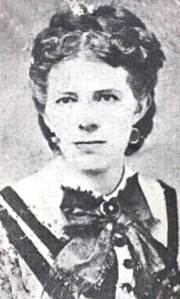
Loreta’s Civil War: A mild flirtation with this fair flower

Velazquez completes her disguise, doesn’t hesitate from flirting with farm girls, and rounds up men to form her Confederate battalion.

KS17

Throughout 2016 and 2017, Stillness of Heart will share edited excerpts from the extraordinary memoir of Loreta Janeta Velazquez, who chronicled her adventures throughout the Civil War — either as herself, as a Confederate spy, or in disguise as Confederate Lt. Harry T. Buford. She fought and led men in terrible battles, fell in love, bore and lost children, and traveled throughout the U.S. and Europe, ultimately fulfilling her childhood dream of a rich and adventurous life.

You can read the entire 1876 memoir online here. Learn more about Velazquez (and the incredible documentary film Maria Agui Carter made about her) here.

Part 8: Velazquez completes her disguise, doesn’t hesitate from flirting with farm girls, and rounds up men to form her Confederate battalion.

******

I immediately proceeded to change my garments, and ere a great many minutes had elapsed, I was transformed into a man, so far as it was possible for clothing to transform me. When I was ready, I called my friend and asked his opinion of the figure I cut. He admitted that I was not a bad-looking specimen of a man, considering I had only been about five minutes, and thought that in time I should be able to do credit to the name I bore and the clothes I wore.

The only regret I had in making up my disguise was the necessity for parting with my long and luxuriant hair. This gave me a real pang but there was no help for it, and I submitted with as good a grace as I could muster, while my friend played the part of tonsorial artist with a pair of shears. He trimmed my hair tolerably close and said that it would answer until I could visit a barber’s shop with him and be initiated into some of the mysteries of such a peculiarly masculine place of resort. … [H]e made me promenade the room, practicing a masculine gait until I had acquired it tolerably well, and gave me a great number of very minute instructions about the proper manner of conducting myself so that my sex would not be suspected. He particularly enjoined me to watch his actions closely at the barber’s, in the drinking saloons, the billiard rooms, and the other places he intended conducting me to, for the purpose of informing me with regard to some masculine habits and ways of acting, talking, and thinking. …

Strolling down the street, we soon came to the hotel and entered the barroom, where my companion met a number of friends, to whom he introduced me as a young officer on his way to the seat of war. I was received with much cordiality, and the whole party speedily engaged in an animated conversation about the coming conflict. … The men all took whiskey straight but I did not venture on anything stronger than cider. Soon my companion managed to give me a quiet hint, and I treated the party to drinks and cigars. We then adjourned to the billiard-room, and my friend, taking off his coat, went at a game in good earnest with another member of the party. I had never seen the game of billiards played before, and I soon became intensely interested … pretending to smoke my cigar, the balls rolling over the table. As the weather was warm, I very soon, after entering the billiard-room, availed myself of what seemed to be the custom of the place, to take off my heavily padded coat, which began to be unbearable, and found myself much more at my ease sitting in my shirt sleeves. …

The next day I completed my outfit by purchasing a pair of field glasses, a pair of blankets, a rubber overcoat, and a rubber blanket. On returning to my room I made out a form of attorney in my friend’s name and authorized him to attend to all my business matters for me. I also prepared a lot of recruiting papers on the model of some genuine ones I succeeded in getting hold of, and some muster rolls, and procured a manual of tactics, and before the day was over was pretty nearly ready to commence active operations.

My friend, thinking that my disguise could be somewhat improved and a more manly air given to my countenance, obtained a false mustache and a solution with which to stain my face in order to make it look tanned. I rubbed on the solution until my skin was about the right tint, and then my friend carefully fastened the mustache on my upper lip with glue. This was a very great improvement, and I scarcely knew myself when I looked in the glass, and laughed at the thought of what my husband would say when he saw me in this disguise. …

Everything was now in proper trim for me to commence operations in earnest; so, packing my trunk, rolling up my blankets in army style, as I had often seen soldiers do, preparing my papers, and getting ready a change of underwear, and other matters for immediate use in a small satchel, I was ready to start on my campaign with as stout a heart as ever beat in the breast of a soldier.

The plan of action I had fixed upon, after mature reflection, was to raise and equip a battalion at my own expense, taking care to select good material for it, and then to appear at the head of my little army before my husband, and to offer him the command. I pictured to myself again and again the look of astonishment he would put on when he recognized his wife as the leader of a gallant band who were pledged to fight to the death for the cause of Southern independence, and flattered myself with the idea that, so far from being inclined to censure me for my obstinate persistence in carrying out my idea of becoming a soldier, he would be disposed to praise without reservation, and so far from being ashamed of my action, would be proud of it. Whatever view of the matter he might take, however, he would be compelled to yield to my wishes, whether he desired to do so or not, and I would consequently be free to follow the bent of my inclinations without fear of further opposition on his part. My desire was to serve with him, if possible; but if this could not be done, I intended to play my part in the war in my own way, without his assistance. I, however, did not contemplate any further difficulty in obtaining his consent, and even his assistance, in the execution of my plans, and so started out on the war path with a light heart and with brilliant anticipations for the future.

I crossed over to Hopefield, on the Arkansas side of the river, and took the five o’clock train, not knowing exactly where I proposed to bring up. For a time I busied myself with the study of my Manual of Tactics, with the intention of becoming sufficiently posted on certain points to get my recruits into something like military training immediately. Having been the wife of an army officer for a number of years, and having seen some hard service on the frontier, I was, in a measure, pretty well qualified for the work I had now undertaken, especially as I had paid a good deal of attention to the details of military organizations, and had seen soldiers drilled hundreds of times. I had not been in the train very long, before, finding the conductor at leisure, I entered into conversation with him with a view of obtaining information that might be useful in the furtherance of my designs.

Explaining to this individual, who appeared to take the liveliest interest in my affairs, that I was on a recruiting expedition, I asked him if he could not suggest a good neighborhood for me to commence operations in. He said that Hurlburt Station was as likely a place as I could find to pick up a company of strong, hearty fellows who would do some good fighting, and advised me to try my luck there. Hurlburt, he told me, was not much of a place — a saw-mill, a country store, in which the post office was located, a schoolhouse, which was also used as a church, being pretty much all there was of it. …

The train sped through the swamps, and it was not a great while before we reached Hurlburt Station, where, in accordance with the conductor’s suggestion, I alighted. With my satchel in my hand, I made for the nearest house, and inquired of a negro, who was chopping wood, whether his master was at home. The darkey stared at me a bit, evidently attracted by something in my appearance, and then, grinning until he showed all his ivories, said that the old boss was away, but that the young boss was about somewhere. I accordingly told him to call the young boss; and soon up came a well-built, good-looking young fellow, whom I fixed upon immediately as a suitable recruit. …

I told him that I had the army regulations with me and would take pleasure in explaining them to him in the morning. I then asked him to give me some water so that I could clean myself up a bit before supper, as I was pretty well covered with dust and cinders after my ride. He accordingly got me a basin of water and then left me to go off and hunt the old man, full of eagerness to tell him of the arrival of the recruiting officer, and of his own desire to go soldiering.

The sudden intrusion of a gallant young officer, in a gay uniform, plentifully decorated with buttons and lace … made an even greater impression on the female than upon the male part of the family. My arrival had clearly created an intense excitement, and I understood very well that I was the subject of the whispered conversation that I heard going on outside. From the manner in which the old woman and her son had addressed me, I knew that they had no suspicions of my being other than what I seemed, but I judged that it would be necessary to be pretty careful how I carried myself before the former, for she was clearly a sharp one and would be quick to take note of any peculiarly feminine traits of manner I might display. I therefore determined to play the man right manfully, whether I thought myself observed or not; and this I found to be a very good rule to go by throughout the entire period during which I wore my disguise. …

The eldest of the two daughters was about sixteen and was attired in a bright, flaring yellow calico; the youngest was about twelve years of age and was somewhat less unbecomingly dressed in pink. Both of the girls had put on the best they had to do honor to the occasion, and the eldest, especially, so soon as her first bashfulness wore off, seemed very much disposed to attract the particular attention of the visitor by various little feminine artifices, which I understood very well, and which amused me immensely.

On entering the room, the old woman said, awkwardly waving her hands towards her daughters, “These is my gals, sir.”

I bowed in the politest manner, and said, with what I intended to be a particularly fascinating smile, “Good evening, ladies,” laying a particular emphasis on the word “ladies,” which had the desired effect, for both of the girls blushed deeper than ever, and the eldest simpered as if she heartily enjoyed it. … I started a talk with the old woman by remarking that it had been an exceedingly pleasant day. … After a few commonplaces of this kind about the weather and other matters of no particular moment, I thought I might as well proceed to business at once, for I expected that I would have some opposition from the old woman in my effort to enlist [her son]. So I said, “Madam, I am trying to enlist your son for a soldier in my company; don’t you think you can spare him?” She burst out crying, and exclaimed, “Oh, sir, I can’t let my boy go for a soldier and get killed.” The youngest girl, seeing her mother in tears, began to blubber a little also; but the eldest not only did not cry, but she looked at me in such a peculiar way that I was convinced she wished I would take her instead of [her brother].

The idea of having a mild little flirtation with this fair flower of the Arkansas forest rather grew upon me as I noticed the impression I was making upon her susceptible imagination. I had some curiosity to know how lovemaking went from the masculine standpoint and thought that the present would be a good opportunity to gain some valuable experience in that line; for it occurred to me that if I was to figure successful in the role of a dashing young Confederate officer, it would be necessary for me to learn how to make myself immensely agreeable to the ladies. I knew how to make myself agreeable to the men, or thought I did, and I could, if I chose, be agreeable to women in a feminine sort of fashion; but I had never studied the masculine carriage towards my sex critically with a view of imitating it, and it was important, therefore, that I should begin at once to do so, in order that when compelled to associate with women, as I assuredly would be to a greater or less extent, I might not belie my outward appearances by my conduct. I flatter myself that during the time I passed for a man I was tolerably successful with the women, and I had not a few curious and most amusing adventures, which gave me an insight into some of the peculiarities of feminine human nature which had not impressed themselves on my mind before, perhaps because I was a woman.

My flirtation with Miss Sadie Giles was not a very savage one, and I hope that it did not inflict more damage on her heart than it did on mine. It was immensely amusing to me while it lasted, and I presume, if not exactly amusing, it might at least be deemed entertaining to her. At any rate, I succeeded not only in having a little sly fun at her expense, but I picked up an idea or two that I subsequently found useful. Noticing that Miss Sadie was developing a marked partiality for me, but was much too bashful to give me any encouragement, except some shy glances out of the corners of her eyes, I commenced to ogle her, and, whenever I had an opportunity, to pay her some delicate attentions, for the purpose of making her think I was just a bit fascinated with her. It soon became very evident that the heart which beat under that yellow calico dress was in a great state of excitement, and Miss Sadie, while not encouraging me by any direct advances, made it very plainly understood that my little attentions were appreciated.

Supper was now announced, and we all sat down to a tolerably plentiful repast, the principal features of which were bacon, cabbage, and fried chickens — the latter having been prepared in my honor. Miss Sadie managed to place herself by my side, by a dexterous little maneuver which escaped the attention of the family but which I understood perfectly. I, for my part, strove to play the gallant by helping her bountifully to the bacon, cabbage, and chicken, and by endeavoring to induce her to join in the conversation. She undoubtedly appreciated my attentions at their full value, but was not sufficiently self-possessed to do much talking; indeed, during the supper I could scarcely get anything out of her except a timid “yes” or “no.”

[Her father], on the contrary, was very talkative, and plied me with all kinds of questions about myself, my errand, the war, and the prospect of a speedy accomplishment of Southern independence. I told him that my name was Buford, that I was a lieutenant in the army, and that I had been sent down to Arkansas for the purpose of recruiting a company for service in Virginia. He said that I would have no difficulty in getting all the recruits I wanted, as the young fellows in those parts were every one eager to have a dash at the Yankees, and promised to aid me in every way possible. …

Before the supper was over I had a terrible fright. … While drinking a glass of buttermilk, which I greatly enjoyed, for it was the best thing on the table, and was most refreshing, my mustache got full of the fluid, and when I attempted to wipe this ornament, which my Memphis friend had so carefully glued upon my upper lip, and which added so much to the manliness of my countenance, I fancied that it was loose and was about to fall off. Here was a terrible situation, and I cannot undertake to describe what I felt. To say that I was frightened scarcely gives an idea of the cold chills that ran down my back. The ridicule of my entertainers, and especially of Miss Sadie, was the least thing that I feared, and I would rather brave any number of perils at the cannon’s mouth than to repeat the emotions of that dreadful moment. Such a situation as this is ludicrous enough, but it was not a bit funny for me at that time, and I was on pins and needles until I could get away and take means to secure the mustache firmly on again. I managed, however, to keep a straight countenance and to join in the conversation with a tolerable degree of equanimity, keeping my hand up to my mouth all the time though, and doing my best to hold the mustache on. My fright, after all, was causeless, for on examination I found that the hair was too firmly glued to my lip to be easily removed; indeed, I subsequently discovered that it was practically impossible to move it without the aid of alcohol.

After supper, the old man and Frank went off to finish up their work before going to bed, and the women folks busied themselves in clearing the dishes. … I glanced over my shoulder, and seeing that Miss Sadie had finished her work and was apparently anxious to be better acquainted with me, I politely arose and offered her my raw-hide chair. This she blushingly declined but took a wooden stool, upon which she seated herself quite close to me. I could think of nothing so likely to loosen her tongue and make her properly sociable as a reference to religious matters; so I asked her if there were any churches in the neighborhood. She said that there was no regular church, but that on Sundays a preacher held forth in the schoolhouse. … The old man, I presume, was rather tired, and so, taking advantage of this change of subject in our conversation, he went to bed, and soon was snoring lustily. Finally, Miss Sadie got back to what was the subject uppermost in her thoughts and began questioning me about my own affairs, by asking if I had any brothers.

“Yes,” I replied, “One, older than myself, who is more fortunate, for he is married,” giving a look at her out of the corner of my eye, which I intended her to understand as an intimation that, although not married, I had no objections to being so if I could find a girl to suit me.

“You ought to be married, too,” said Miss Sadie, with a simper, and apparently appreciating this kind of conversation much better than the war talk the old man and I had been indulging in.

“How can I get married when none of the girls will have me?” I retorted. … The old woman thinking, I suppose, to flatter me, said, “A handsome young fellow like you, with, I dare say, a pretty fair education, needn’t be afraid of the gals not having you.”

At this point of the conversation the old man awoke, and sang out, “Don’t you women talk that man to death. Why don’t you git out and let him go to bed?” and then, pointing to a bed in the corner, he told me to turn in there when I felt like it. …

Here I was at the end of my first day’s experience in playing the part of a soldier, with every reason to believe that I had thus far played it most successfully, and that I had really made quite a brilliant start. … the susceptible heart of Miss Sadie was apparently touched in a way that it could never have been had the faintest suspicion of my not being a man crossed her mind. The old woman, too, who, in a matter of this kind, would be quite certain to be a more critical observer than the rest of the family, had no hesitation in believing me to be a gallant young soldier; so that, taking all things into consideration, I had reason to congratulate myself upon a brilliant opening to my campaign. …

[The next day, when] breakfast was over … I crossed over to the schoolhouse, where I found half a dozen rather rough fellows waiting to see me, all of whom expressed themselves as extremely anxious to enlist. One very hard-looking specimen, who could not even write his name, wanted very badly to be captain; indeed, they all were quite ambitious to be officers, and I had some difficulty in explaining to them, that in the army, in time of war, where actual fighting was being done, it was a very different thing holding the position of an officer, from what it was in the militia. I, however, encouraged them to believe that they all might be lieutenants, captains, and even generals, some day, if they fought bravely, and succeeded in creating such an enthusiasm among them over the prospect of a brush with the Yankees, to be followed by rapid promotion, that the whole party were soon ready to enlist on any terms I chose to suggest.

After talking the matter over with these men for some time, and explaining the situation in the best style I was able, I wrote out some bills calling for volunteers, one of which I posted on the school-house door. … During the day I read the army regulations at least a dozen times, and tried to make the men understand what they meant. This was not a very easy matter, but I succeeded in enrolling thirty-six, whom I ordered to report for roll call the next morning. This they did not much fancy; but on my stating that they were under oath and bound to obey, they yielded without making any trouble about it, but apparently with no great admiration for military discipline.

My quota was easily filled in four days, and I then proceeded to get my battalion organization complete and to make preparations for departure. Two of the most intelligent of the men I appointed subordinate officers, one sergeant and the other corporal, and gave them instructions about drilling the battalion and maintaining discipline in my absence. Everything now being in proper trim, I sent a messenger ahead to the friend in Memphis who had so efficiently aided my plans with instructions for him to engage transportation, and then getting my troops into marching order, off we started. …

Loreta’s Civil War: Victims of masculine viciousness

Velazquez manages to slip into a Confederate encampment, and the soldiers’ language and behavior offend and outrage her. She is particularly disgusted with how supposed gentlemen speak about women.

KS15

Throughout 2016 and 2017, Stillness of Heart will share edited excerpts from the extraordinary memoir of Loreta Janeta Velazquez, who chronicled her adventures throughout the Civil War — either as herself, as a Confederate spy, or in disguise as Confederate Lt. Harry T. Buford. She fought and led men in terrible battles, fell in love, bore and lost children, and traveled throughout the U.S. and Europe, ultimately fulfilling her childhood dream of a rich and adventurous life.

You can read the entire 1876 memoir online here. Learn more about Velazquez (and the incredible documentary film Maria Agui Carter made about her) here.

Part 7: Velazquez manages to slip into a Confederate encampment, and the soldiers’ language and behavior offend and outrage her. She is particularly disgusted with how supposed gentlemen speak about women.

******

The style of conversation that was common in camp, and the kind of stories told around our fires at night, I will leave to the reader’s imagination, hoping, however, that he or she has not imagination enough to compass anything so utterly vile. My favorite amusement was a game of cards, and I preferred this way of entertaining myself, and of beguiling the weary hours, to listening to anecdotes which could only debase my mind. Anything relating to military affairs, to social science, to the deeds of great men or women, or whatever else I could improve myself by listening to, I took great delight in. From my earliest recollection, however, I have had a thorough distaste for vulgarity of language and profanity. … The manner in which too many men are in the habit of referring to the other sex in conversation among themselves is, in my opinion, thoroughly despicable; and I really think that it would be morally and intellectually beneficial to many of my sex, especially those who are the victims of masculine viciousness, if they could only listen to some such conversations as I have been compelled to listen to, and learn how little respect or real regard of any kind men have for them.

I would that God would put it into my power to utter such a warning as would be heeded, to the weak and erring of my sex, and which would enable them to fortify themselves against the temptations constantly assailing them. But I suppose no warning would prevent those who are disposed to sin from doing so, although I well know that women, and men too, can resist temptation, and can avoid vileness in living and in language if they will only choose to do so. I do not pretend to say that I am possessed of firmer nerves, or am less under the influence of the natural emotions of my sex, than many others; but my strong constitution, and the perfect health I enjoyed, enabled me to endure more fatigue and hardship than most women, while my firm-mindedness, and resolute determination to carry my point, enabled me to avoid anything like laxity of conduct. I was compelled to sink my sex entirely, for the least inadvertence would have thwarted my plans, and prevented the realization of all I aimed at.

Many and many a time has the subject of women serving in the army as soldiers been discussed at the mess-tables and around the campfires; and officers, who have been in my company for days, and weeks, and months, have boasted, with very masculine positiveness, that no woman could deceive them, little suspecting that one was even then listening to them. I have sometimes been asked my opinion on the subject; but have generally answered evasively, without expressing, in very decided terms, my ideas one way or the other. Some of the men with whom I have been associated have spoken in respectful and even commendatory terms concerning women serving as soldiers; but too many have had nothing but vileness to utter on the subject. I can never forget, although I may forgive, the disgraceful language which some of these individuals have used with regard to this matter; and my experiences in the army will not have been in vain, even if they have taught me nothing more than the utter contemptibleness of some individuals, whom it would be a stretch of courtesy to call gentlemen.

Within three days I managed to provide myself with a very complete military outfit, quite sufficient to enable me to commence operations without delay, which was the main thing I was after, for I was exceedingly anxious to carry out a magnificent idea I had in my mind, and to present myself before my husband, under such auspices that he could no longer find an excuse for refusing his consent to my joining the Southern army as a soldier. My uniform suit having been arranged for, it was an easy matter for me to procure the rest of my outfit without unduly attracting attention, and I soon had in my room a trunk well packed with the wearing apparel of an army officer, and neatly marked upon the outside with the name I had concluded to adopt. …

Loreta’s Civil War: Concealing my true form

Velazquez offers a detailed explanation of how she transformed her appearance from a Southern lady into a Confederate officer.

KS14

Throughout 2016 and 2017, Stillness of Heart will share edited excerpts from the extraordinary memoir of Loreta Janeta Velazquez, who chronicled her adventures throughout the Civil War — either as herself, as a Confederate spy, or in disguise as Confederate Lt. Harry T. Buford. She fought and led men in terrible battles, fell in love, bore and lost children, and traveled throughout the U.S. and Europe, ultimately fulfilling her childhood dream of a rich and adventurous life.

You can read the entire 1876 memoir online here. Learn more about Velazquez (and the incredible documentary film Maria Agui Carter made about her) here.

Part 6: Velazquez offers a detailed explanation of how she transformed her appearance from a Southern lady into a Confederate officer.

******

On the 8th of April my husband started for Richmond, apparently under the impression that, as I had said nothing for several days about accompanying him, I had abandoned all notion of doing so. He ought to have known me better, and to have been assured that a woman of my obstinate temper was not to be prevented by mere argument from carrying out a pet scheme which promised such glorious results as the one we had been discussing.

My husband’s farewell kisses were scarcely dry upon my lips, when I made haste to attire myself in one of his suits, and to otherwise disguise myself as a man. … The first thing to be done before I made any attempt to play a masculine role at all prominently in public was, of course, to get some properly fitting clothing. … I had, however, some time before taken notice of a small tailor’s shop on a retired street not very far from the hotel, the presiding genius of which was a not very brilliant-looking German, and I thought perhaps I might run the gantlet of his scrutiny without much fear of detection. … I accordingly went to this German tailor, and ordered two uniform suits, for which I agreed to pay him eighty-five dollars each. As he took my measure he eyed me pretty close, and seemed to imagine that something was not quite right. I was dreadfully afraid he would discover me to be a woman, but resolved, if he did, that I would endeavor to silence him with a handsome bribe for a few days, until he got my suits done and I could leave the city. …

“Ah,” said the tailor, looking at me rather sharply, “what you want to go to war for? You is too young for the fightin,’ isn’t you? What your mammy say to that, eh?”

I replied, with as careless an air as I could possibly assume, that I was twenty-two years of age, and was a graduate of West Point, following up this information with other fictitious statements which it somewhat staggered me to utter, and which, if he had been a trifle sharper, he would have had some difficulty in crediting. …

My coats were heavily padded in the back and under the arms to the hips, until I reached New Orleans. This served to disguise my shape; but the padding was very uncomfortable, and I soon made up my mind that it would never do for a permanent arrangement. So soon as I got to New Orleans, I went to an old French army tailor in Barrack Street, who I knew was very skillful, and who understood how to mind his own business by not bothering himself too much about other people’s affairs, and had him make for me half a dozen fine wire net shields. These I wore next to my skin, and they proved very satisfactory in concealing my true form, and in giving me something of the shape of a man, while they were by no means uncomfortable. Over the shields I wore an undershirt of silk or lisle thread, which fitted close, and which was held in place by straps across the chest and shoulders, similar to the shoulder-braces sometimes worn by men. A great many officers in the Confederate army have seen the impressions of these straps through my shirt when I have had my coat off, and have supposed them to be shoulder-braces. These undershirts could be rolled up into the small compass of a collar-box.

Around the waist of each of the undershirts was a band, with eyelet-holes arranged for the purpose of making the waistbands of my pantaloons stand out to the proper number of inches. A woman’s waist, as a general thing, is tapering, and her hips very large in comparison with those of a man, so that if I had undertaken to wear pantaloons without some such contrivance, they would have drawn in at the waist and revealed my true form. With such underwear as I used, any woman who can disguise her features can readily pass for a man and deceive the closest observers. So many men have weak and feminine voices that, provided the clothing is properly constructed and put on right, and the disguise in other respects is well arranged, a woman with even a very high-pitched voice need have very little to fear on that score. …

There were several points about my disguise which were strictly my own invention, and which, for certain good and sufficient reasons, I do not care to give to the public. These added greatly to its efficiency. Indeed, after I had once become accustomed to male attire, and to appearing before anybody and everybody in it, I lost all fear of being found out, and learned to act, talk, and almost to think as a man. Many a time, when in camp, I have gone to sleep when from fifty to sixty officers have been lying close together, wrapped in their blankets, and have had no more fear of detection than I had of drinking a glass of water.

Recommended reading / viewing / listening

This week: Emilia Clarke as 007 / Honoring Confederate veterans / Trump and Roy Cohn / Tanning addictions / Celebrating the film ‘Heat’

IMG_2870

This week: Emilia Clarke as 007 / Honoring Confederate veterans / Trump and Roy Cohn / Tanning addictions / Celebrating the film ‘Heat’

Most of these great items come from my social media networks. Follow me on Twitter, Tumblr, LinkedIn, and Facebook for more fascinating videos, photos, articles, essays, and criticism.

1. How many Americans have died in U.S. wars?
By Megan Crigger and Laura Santhanam | PBS NewsHour | May 24
“This Memorial Day, we decided to take a close look at the number of American service members who lost their lives during wartime in an effort to put their sacrifices into a broader perspective.”

2. ‘17,000 islands of imagination’: discovering Indonesian literature
By Louise Doughty | The Guardian | May 28
“Indonesia is home to hundreds of different ethnicities speaking as many languages, and, along with Hindus, Christians and Buddhists, has a majority Muslim population that is the largest in the world. But, as yet, little of its literature has been translated into English.”

3. Forgetting Why We Remember
By David W. Blight | The New York Times | May 29
“The Lost Cause tradition thrived in Confederate Memorial Day rhetoric; the Southern dead were honored as the true ‘patriots,’ defenders of their homeland, sovereign rights, a natural racial order and a ’cause’ that had been overwhelmed by ‘numbers and resources’ but never defeated on battlefields.”

4. LBJ’s Ad Men: Here’s How Clinton Can Beat Trump
By Robert Mann and Zack Stanton | Politico | May 29
“We talked to two of the geniuses behind the greatest ad campaign in political history. Here’s what they’d do in 2016.”

5. Yes, You Can Become Addicted to Tanning
By Esther Hsieh | Scientific American | November 2014
“UV light may trigger the same reward pathway in the brain as drugs such as heroin”

6. Latin America’s Fatal Gun Addiction
By Robert Muggah | Foreign Affairs | May 27
“Thanks to legal sales and illicit trafficking, the region’s criminal organizations, street gangs, private security firms, and vigilantes have access to a steady supply of weapons. In turn, Latin American countries and cities are the world’s most exposed to gun-related violence. The regional homicide rate hovers above 28 per 100,000 people, compared to a global average of closer to seven per 100,000.”

7. Emilia Clarke reveals her wishes to become the first female James Bond
By James Ingham | The Daily Star | May 29
The Game of Thrones star said, “I would love to play Jane Bond. My ultimate leading man would be Leonardo DiCaprio. No doubt about it.”

8. ‘He Brutalized For You’
By Michael Kruse | Politico | April 8
“How Joseph McCarthy henchman Roy Cohn became Donald Trump’s mentor.”

9. Why Heat Is Still an Action Masterpiece 20 Years Later
By Matt Patches | Esquire | September 2015
“Michael Mann was at an anniversary screening to reveal what makes the De Niro-Pacino heist movie a classic.”

10. Nixon and Pelé: No Meeting of the Minds
By Michael Beschloss | HistorySource :: The New York Times | June 2014
“Nixon kept his encounter with Pelé brief, perhaps because, by his political calculus, there were so few votes in soccer, and he was also busy trying to cope with a fast-escalating Watergate scandal.”

Loreta’s Civil War: The woman in battle

Throughout 2016, “Stillness of Heart” will share edited excerpts from the extraordinary memoir of Loreta Janeta Velazquez, who chronicled her adventures throughout the U.S. Civil War — either as herself, as a Confederate spy, or in disguise as Confederate Lt. Harry T. Buford.

KS59

Throughout 2016, Stillness of Heart will share edited excerpts from the extraordinary memoir of Loreta Janeta Velazquez, who chronicled her adventures throughout the U.S. Civil War — either as herself, as a Confederate spy, or in disguise as Confederate Lt. Harry T. Buford. She fought and led men in terrible battles, fell in love, bore and lost children, and traveled throughout the U.S. and Europe, ultimately fulfilling her childhood dream of an adventurous life.

You can read the entire 1876 memoir online here. Learn more about Velazquez (and the incredible documentary film Maria Agui Carter made about her) here.

Part 1: Velazquez introduces us to her life, her heroes, and her aspirations. She is ambitious, confident, romantic, and determined to live life on her terms.

******

The woman in battle is an infrequent figure on the pages of history, and yet, what would not history lose were the glorious records of the heroines — the great-souled women, who have stood in the front rank where the battle was hottest and the fray most deadly — to be obliterated? When women have rushed to the battlefield they have invariably distinguished themselves; and their courage, their enthusiasm, and their devotion to the cause espoused, have excited the brave among the men around them to do and to dare to the utmost, and have shamed the cowards into believing that it was worthwhile to peril life itself in a noble cause, and that honor to a soldier ought to be more valuable than even life.

The records of the women who have taken up arms in the cause of home and country; who have braved the scandals of the camp; who have hazarded reputation — reputation dearer than life — and who have stood in the imminent deadly breach, defying the enemy … are glorious nevertheless; and if steadfast courage, true-hearted loyalty, and fiery enthusiasm go for anything, women have nothing to blush for in the martial deeds of those of their sex who have stood upon the battlefield. …

Catalina de Eranso, the Monja Alferez, or the nun-lieutenant, who was born in the city of Sebastian, Spain, in 1585, was one of the most remarkable of the heroines who have distinguished themselves by playing the masculine role, and venturing into positions of deadly peril. This woman, becoming disgusted with the monotony of convent life, made her escape, and in male garb joined one of the numerous expeditions then fitting out for the New World. Her intelligence and undaunted valor soon attracted the notice of her superior officers, and she was rapidly promoted. Participating in a number of hard-fought battles, she won the reputation of being an unusually skillful and daring soldier, and would have achieved both fame and fortune, were it not that her fiery temper embroiled her in frequent quarrels with her associates. …

After traversing a large portion of the New World, and encountering innumerable perils, she returned to Europe, where she found that the trumpet of fame was already heralding her name, and that there was the greatest curiosity to see her. Traveling through Spain and Italy, she had numerous exceedingly romantic adventures, and while in the last named country she managed to obtain an interview with Pope Urban VIII., who was so pleased with her appearance and her conversation that he granted her permission to wear male attire during the balance of her life. …

From my early childhood Joan of Arc was my favorite heroine; and many a time has my soul burned with an overwhelming desire to emulate her deeds of valor, and to make for myself a name which, like hers, would be enrolled in letters of gold among the women who had the courage to fight like men — ay, better than most men — for a great cause, for friends, and for fatherland.

At length an opportunity offered, in the breaking out of the conflict between the North and the South in 1861, for me to carry out my long-cherished ideas; and it was embraced with impetuous eagerness, combined with a calm determination to see the thing through, and to shrink from nothing that such a step would involve. …

So many persons have assured me that my story is full of romance, and that it cannot fail to interest readers both South and North. … they will find in these pages an unaffected and unpretending but truthful and I hope interesting narrative of what befell me while attached to the army of the Confederate States of America, and while performing services other than those of a strictly military character under the pseudonym of Lieutenant Harry T. Buford. …

[I]t is probable that a vast number of my late associates will now for the first time learn that the handsome young officer — I was accounted an uncommonly good-looking fellow, when dressed in my best uniform, in those days — was a woman, and a woman who was mentally making some very uncomplimentary notes with regard to much of their very naughty conversation. My experience is that the language used by the very best men in masculine society is too often not such as pure-minded women would like to listen to, while that of the worst is so utterly revolting, that it is a pity some men cannot always have decent women at their elbows to keep their tongues from being fouled with blasphemy and obscenity. …

Kate Stone’s Civil War: The entire special series

Read Kate Stone’s amazing stories as she defiantly faces Union soldiers, escapes across a Louisiana swamp, falls in love with Texas, and watches the Civil War rip her country and her family apart.

1862

From May 2012 to November 2015, a special series from Stillness of Heart shared excerpts from the extraordinary diary of Kate Stone, who chronicled her Louisiana family’s turbulent experiences throughout the Civil War era.

She defiantly faced Union soldiers, escaped across a Louisiana swamp, fell in love with Texas, and watched the Civil War rip her country and her family apart.

The entire series of excerpts is collected here.

Learn more about Stone’s amazing life in 1861, 1862, 1863, 1864, 1865 and beyond. Click on each year to read more about her experiences. You can read the entire journal online here.

(Photo edited by Bob Rowen)

From 1861
May 15: Death in defense of the South
June 5: The stir and mob of angry life
June 18: Whipped unmercifully
July 1: They thought me so ugly
July 4: The blood of her children
July 26: Gallantly fought and won
Aug 24: The fevers
Sept. 27: The war inches closer
Oct. 19: Gladden our hearts
Nov. 27: The noble, gentle heart
Dec. 22: Rainy days

From 1862
Jan. 6: Sad Christmas
Jan. 8: Happy birthday
Jan. 16: They close in and kill
Feb. 1: The little creature
Feb. 20: Victory will be ours
March 1: A perfect love of a lieutenant
May 9: Burn our cities
May 22: Fashion is an obsolete word
May 23: The sleep that knows no waking
June 6: Trembling hearts
June 20-30: Capable of any horror
July 5: The fire of battle
Aug. 5: Beyond my strength
Sept. 23: Tragedy after tragedy
Oct. 1: His sins against the South
Nov. 7: A lady’s favors
Dec. 3: She was heartbroken

From 1863
Jan. 1: Preparing to run
March 2: Hoodoo woman
March 11: It made us tremble
March 22: The pistol pointed at my head
April 10: Tears on my cheek
April 15: A horrid flight
April 21: The greatest villian
April 26: Flaming cheeks and flashing eyes
April 27: The glory of the family
May 2: His father’s sins
May 3: Baffled beasts of prey
May 22: Useless to resist
May 23: Southern hearts
June 3: Like mad demons
June 15: On the road for Texas
July 7: The dark corner
July 12: The dirtiest people
July 16: Scowling, revengeful faces
July 26: Despondent and chicken-hearted
July 29: Makes us tremble for Texas
Aug. 3: Lose our scalps
Aug. 10: Conquer or die
Aug. 16: My pen is powerless
Aug. 30: They call us all renegades
Sept. 1: It makes us shiver
Sept. 14: Years of grinding toil
Sept. 20: Destroyed by the Yankees
Oct. 2: Two distressed damsels
Oct. 8: This is too disgraceful
Oct. 29: The heart of a boy
Nov. 1: Credulous mortals
Nov. 7: A fear of bad news
Nov. 13: Pride must have a fall
Nov. 15: So little to eat
Dec. 10: Nobly and fearlessly
Dec. 12: Alone in a strange land
Dec. 19: A charming little woman
Dec. 24: A sad 1863 ends

From 1864
Jan. 4: A noted flirt
Jan. 7: Trouble and distress
Jan. 13: The first desideratum
March 8: The mournful whistle
March 20: The petted darling
April 15: A besom of destruction
May 5: The easy conquest of Texas
May 7: To every young lady
May 18: To kill and destroy
May 25: Our best fancy yellow organdies
May 29: That land of desolation
June 1: The breath of flowers
June 14: Strangers in a strange land
June 19: Those terrible battles
June 26: Callous to suffering and death
Aug. 23: We enjoy our ease
Sept. 2: Lazy and languid
Sept. 5: One grand holocaust
Sept. 10: Too disgraceful if true
Sept. 27: The flower-wreathed scepter
Oct. 15: Fairy castles in the air

From 1865
Jan. 29: Kindly bestow them
Feb. 1: Our soldiers were powerless
Feb. 12: One of life’s greatest trials
Feb. 13: Peace blessed peace
Feb. 15: My escorts were disgusted
Feb. 21: Our only hope for peace
March 3: The most enjoyable life
March 9: Full of life and fun
March 24: Eager for a fight
March 30: Its spring decoration
April 1: Out of time
April 7: A blow on my heart
April 16: He would do anything
April 23: God spare us
May 7: Lounged and gossiped
May 9: We fear it cannot last
May 15: We will be slaves
May 17: Restless and wretched
May 20: A fever of apprehension
May 21: A piece of amusement
May 27: Only sadness and tears
May 31: The grand crash
June 12: Words are powerless
June 25: Civilization commences again
July 2: He deserves killing
July 13: It is unavoidable
July 18: A man-flirt is detestable
Aug. 14: No disorder
Aug. 26: Astonish the natives
Sept. 3: Our pleasant Tyler life
Sept. 11: The very poorest people
Sept. 21: A state of insubordination
Oct. 10: The bitterness of defeat
Nov. 16: At home again
Nov. 17: How many idle hours

Epilogue, from 1867 and 1868
I was young again

Some of 2015’s best Civil War books … so far

Publishers in 2015 offer excellent work that both casual and serious readers of the Civil War should know about.

KS27

Biographies, campaign studies, general histories, and analyses form the core of any season’s mountain of Civil War scholarship, but publishers in 2015 offer excellent work that both casual and serious readers of the Civil War should know about. The rich bounty is likely — in part, at least — a result of the sesquicentennial sunshine that bathed the Civil War academic field for the last five years. Here are a few highlights.

No publishing season is stronger than when Gary W. Gallagher contributes one of his essay anthologies on a military campaign. Late September will see Cold Harbor to the Crater: The End of the Overland Campaign (University of North Carolina Press, 360 pp., $35), edited by Gallagher and Caroline E. Janney. The title suggests their overall argument, which marks the end of the pointless Battle of the Crater as the true conclusion of the brutal three-month-long confrontation between Lee and Grant in 1864. Only then, the historians argue, did siege warfare become the Union’s primary tool for the final strangulation of the Confederacy’s most important army and capital city. As with each of the entries in the Military Campaigns of the Civil War series, contributors examine military strategies and tactics, focus on particular participants, and consider how home-front politics and civilian expectations affected and were affected by Confederate military strategy.

J. Matthew Gallman offers a fascinating intellectual and cultural history with Defining Duty in the Civil War: Personal Choice, Popular Culture, and the Union Home Front (University of North Carolina Press, 336 pp., $45), in which he considers how Northerners perceived their obligations of duty and citizenship as their nation endured civil war. He explores how novels and songs, poems and news stories, editorials and cartoons all contributed citizens’ understanding of where they fit in the home-front tapestry and how they could each contribute to the war effort. Race, class, and gender all played key roles in that psychological and political dynamic, and Gallman’s work skillfully weaves together those elements into a fresh historical analysis.

Bradley R. Clampitt’s The Civil War and Reconstruction in Indian Territory (University of Nebraska Press, 200 pp., $25) promises a fascinating examination of the dynamics of war, political power, the collapse of slavery, and racial re-ordering within the context of Native America. Clampitt assembles a bouquet of essays by stellar scholars to explore the antebellum, wartime, and postwar tensions between tribes and nations, their calculated loyalties to North or South, and questions over the future of former slaves and indigenous participants in the war. Any understanding of the historical scope and effect of the Civil War’s overall political and social consequences is incomplete without an intelligent incorporation of Indian experiences and memories. Clampitt’s collection, scheduled for a December release, is certainly a work to anticipate and savor.

Pair that perspective with The World the Civil War Made (University of North Carolina Press, 392 pp. $29.95), an essay anthology edited by Gregory P. Downs and Kate Masur. More than a dozen stellar historians consider how postwar policies and consequences rippled throughout specific political and social dynamics in U.S. territories, in the U.S. Southwest, and across the world. The work’s great strength is its embrace of multiple national and international stories unfolding simultaneously, affecting and affected by each other, all contributing to a vibrant array of societies grappling with new notions of liberty and republicanism in a post-slavery world.

Terry Alford contributes a long-overdue re-assessment of John Wilkes Booth with Fortune’s Fool: The Life of John Wilkes Booth (Oxford University Press, 416 pp., $29.95). Alford’s Booth carried multiple psychological burdens throughout his life. He endured the pressure of measuring up to his successful thespian father and brothers. His inherent gifts as an actor/performer quickly shoved his life under a burning and blinding spotlight of celebrity. His fury over the Confederacy’s defeat warped his identity from an actor into a self-proclaimed citizen-soldier defending Southern honor and survival, with a deadly determination to seize a starring role on the Civil War’s bloodstained stage. These pressures combined to turn Booth into the madman who concocted multiple harebrained plots to destabilize the Lincoln administration. Booth doomed the post-war prospects of racial peace and progress with a single gunshot, and he catapulted Andrew Johnson, one of the worst presidents in U.S. history, into the center of political power just when Lincoln’s political genius was most needed.

Mark Smith presents a fascinating examination of the sights, sounds, and scents of war with The Smell of Battle, the Taste of Siege: A Sensory History of the Civil War (Oxford University Press, 216 pp., $22.36). Basing his exploration on descriptions he found in letters and other primary sources, he attempts to reconstruct what it felt like to be submerged in a Confederate submarine, what it tasted like to live in a city under Union siege, and what it sounded like to hear Confederate shells pound Fort Sumter into submission. Too few historical works explore their subjects from such an elemental and creative perspective. Smith offers details that belong in every lecture, speech, and conversation about the Civil War.

James M. McPherson offers a book-length response to the deceptively simple question, “why does the Civil War matter?” His recent work, The War That Forged a Nation: Why the Civil War Still Matters (Oxford University Press, 224 pp., $27.95), is more relevant than ever. If nothing else, the violent first half of 2015 offered stark and violent case studies to bolster his arguments. There was certainly no better example than recent debates over the Confederate flag, its multifaceted significance throughout the U.S., and the reasons for and against its presence amidst the everyday imagery of American life and culture.

Public and political bitterness over the intractability and enduring power of institutional racism, the historical understanding and explanation of the reasons for the Civil War, the long journey of civil rights through the nineteenth, twentieth, and now twenty-first centuries, debates over the power of federal and state governments — all are titanic, central, and deeply painful issues that the Civil War confronted like no other event in U.S. history. Every citizen’s pursuit of happiness intersects with or passes over or under each of these issues, among many others, and a better understanding of the war affords all of us better maneuverability past the heated rhetoric, better capacity to comprehend how those issues shape our societies, and better appreciation of our history’s overall vital importance to our American life.

Also:

I recently received wonderful news from the Society of Civil War Historians. According to their press release, the Society and the Watson-Brown Foundation honored Shauna Devine, assistant history professor at the University of Western Ontario, with the Tom Watson Brown Book Award for 2015 for her excellent 2014 book Learning from the Wounded: The Civil War and the Rise of American Medical Science (University of North Carolina Press, 2014, 384 pp., $39.95). The book explored how the war enabled U.S. physicians to improve their medical expertise, share their hard-won knowledge in new ways, and link their experiences with the larger international medical community. It was crucial to my recent work as a research assistant as I broadened and deepened my understanding of Civil War medical history. Highly recommended.

Read more about Devine’s honor here.

Undiscovered countries: The books we need

Insightful celebrations of worthy works, considerations of upcoming titles, and general musings on great writing will all meet here on a regular basis.

image1

Stillness of Heart‘s range of popular and academic book criticism widened and deepened in recent years, and many more reviews are on the way. Insightful celebrations of worthy works, considerations of upcoming titles, and general musings on great writing will all meet here on a regular basis.

As always, the Stillness of Heart community of writers, readers, intellectuals, historians, journalists, and artists welcomes your ideas and recommendations. Tell us what we should be reading.

*****

Some of 2015’s best Civil War books … so far
Cold Harbor to the Crater: The End of the Overland Campaign, edited by Gary W. Gallagher and Caroline E. Janney
Defining Duty in the Civil War: Personal Choice, Popular Culture, and the Union Home Front, by J. Matthew Gallman
The Civil War and Reconstruction in Indian Territory, by Bradley R. Clampitt
The World the Civil War Made, edited by Gregory P. Downs and Kate Masur
Fortune’s Fool: The Life of John Wilkes Booth, by Terry Allford
The Smell of Battle, the Taste of Siege: A Sensory History of the Civil War, by Mark Smith
The War That Forged a Nation: Why the Civil War Still Matters, by James M. McPherson
Learning from the Wounded: The Civil War and the Rise of American Medical Science, by Shauna Devine
Originally published in July 2015
“Publishers in 2015 offer excellent work that both casual and serious readers of the Civil War should know about.”

The Silent Enemy
Polio: An American Story, by David M. Oshinsky
Originally published in December 2014

“The United States battled polio long before it ever faced the Soviet hegemonic threat, but only during the Cold War did the U.S. achieve significant victories in the battle against the virus.”

From a flame into a firestorm
A consideration of the French Revolution and its unexpected consequences.
Originally published in September 2014
“Why the French Revolution devoured its own people”

Dealing with the real America
Puerto Rican Citizen: History and Political Identity in Twentieth-Century New York City, by Lorrin Thomas
Originally published in August 2014
“Dealing with Puerto Rico means dealing with the key issues of the 21st century. Few in the U.S. government may have the stomach for that rollercoaster.”

The wars over the war
Hospital Sketches, by Louisa May Alcott
Apostles of Disunion: Southern Secession Commissioners and the Causes of the Civil War, by Charles B. Dew
The Revolution of 1861: The American Civil War in the Age of Nationalist Conflict, by Andre Fleche
The Union War, by Gary W. Gallagher
The Hard Hand of War: Union Military Policy Toward Southern Civilians 1861-1865, by Mark Grimsley
Incidents in the Life of a Slave Girl, by Harriet Jacobs
“The North American Crisis of the 1860s,” by Patrick J. Kelly, in The Journal of the Civil War Era
“Who Freed the Slaves?” by James M. McPherson, in Proceedings of the American Philosophical Society
“Who Freed the Slaves? Emancipation and Its Meaning,” by Ira Berlin, in Union & Emancipation: Essays on Politics and Race in the Civil War Era
Originally published in July 2014

“Nine key books and articles taken together can explain what led to the first sparks of civil violence and how those sparks ignited what evolved into the bloodiest and most important war in U.S. history.”

Endless Borderlands
Borderlands/La Frontera: The New Mestiza, by Gloria Anzaldua
Peace Came in the Form of a Woman: Indians and Spaniards in the Texas Borderlands, by Juliana Barr
Walled States, Waning Sovereignty, by Wendy Brown
Pacific Connections: The Making of the U.S.-Canada Borderlands, by Kornel Chang
The Comanche Empire, by Pekka Hämäläinen
A Tale of Two Cities: Santo Domingo and New York after 1950, by Jesse Hoffnung-Garskof
Bridging National Borders in North America: Transnational and Comparative Histories, edited by Benjamin H. Johnson and Andre R. Graybill
Migra!: A History of the U.S. Border Patrol, by Kelly Lytle-Hernandez
The Line Which Separates: Race, Gender, and the Making of the Alberta-Montana Borderlands, by Sheila McManus
Border Dilemmas: Racial and National Uncertainties in New Mexico, 1848-1912, by Anthony P. Mora
Stranger Intimacy: Contesting Race, Sexuality and the Law in the North American West, by Nayan Shah
Line in the Sand: A History of the Western U.S.-Mexico Border, by Rachel St. John
Bárbaros: Spaniards and their Savages in the Age of Enlightenment, by David Weber
“On Borderlands,” by Hämäläinen and Samuel Truett, in the Journal of American History
“From Borderlands to Borders: Empires, Nation-States, and the Peoples in Between in North American History,” by Jeremy Adelman and Stephen Aron, in American Historical Review
Originally published in June 2014
“Fifteen essays and books explore the borderlands field with passion and intelligence, daring their readers to leave behind their old worlds and follow them into new ones.”

The Battle for Boricua
Reproducing Empire: Race, Empire, and U.S. Imperialism in Puerto Rico, by Laura Briggs
Originally published in January 2014
“Is Puerto Rico the battleground for America’s intellectual future?”

Torn in the USA
Polio: An American Story, by David M. Oshinsky
Make Love, Not War: The Sexual Revolution: An Unfettered History, by David Allyn
Making a New Deal: Industrial Workers in Chicago, 1919-1939, by Lizabeth Cohen
Stayin’ Alive: The 1970s and the Last Days of the Working Class, by Jefferson Cowie
In Search of the Black Panther Party: New Perspectives on a Revolutionary Movement, edited by Jama Lazerow and Yohuru Williams
Quixote’s Soldiers: A Local History of the Chicano Movement, 1966-1981, by David Montejano
“Resistance in the Urban North: Trumbull Park, Chicago, 1953-1966,” by Arnold R. Hirsch, in the Journal of American History
“Crabgrass-Roots Politics: Race, Rights, and the Reaction against Liberalism in the Urban North, 1940-1964,” by Thomas J. Sugrue, in the Journal of American History
Originally published in September 2013
“Life, liberty, and the doomed pursuit of happiness.”

Nixon lurking in the shadows
Richard M. Nixon in books, in the news, on TV, and in my dreams
Originally published in December 2011

“Richard Nixon was in my dream last night. The post-presidency Nixon. The bitter, self-pitying, damned Nixon, coiled in the shadows of La Casa Pacifica in San Clemente, dark eyes glaring at the world as it spun on without him.”

Homo universalis
A reflection on my intellectual ambitions.
Originally published in July 2011
“I’ve always been blessed with a hunger for knowledge, a curiosity that often flares into full-blown passion for new arenas of experience, a curiosity perhaps sparked by a bittersweet frustration that I don’t know as much about literature, science, mathematics, history and culture as I think I should.”

Kate Stone’s Civil War: He deserves killing

Stone reports an astonishing rumor: Maj. Gen. William T. Sherman has killed President Andrew Johnson.

KS8

From 2012 to 2015, Stillness of Heart will share interesting excerpts from the extraordinary diary of Kate Stone, who chronicled her Louisiana family’s turbulent experiences throughout the Civil War era.

Learn more about Stone’s amazing life in 1861, 1862, 1863, 1864, 1865 and beyond. Click on each year to read more about her experiences. You can read the entire journal online here.

(Photo edited by Bob Rowen)

Stone reports an astonishing rumor: Maj. Gen. William T. Sherman has killed President Andrew Johnson.

July 2, 1865

Tyler, Texas

We all joined forces and quilted a silk comfort yesterday, and my fingers are sore from it today. Quilting is my pet aversion, though Mamma says I am a most rapid hand. I hurry up to get through a disagreeable job.

Capt. Smith is making himself very pleasant and we see him frequently. There are compensations in our lot as one goes, another comes. We have known him from our first residence, but he has not been a regular attache until recently. The Irvine girls brought their brother, Lt. Irvine, a handsome gentlemanly fellow but inclined to corpulancy much to his distaste, to call. Capt. Smith is shorn of half of his hirsute glories, and, while he looks more civilized, it is not an improvement. …

My Brother should be at Brokenburn today and Uncle Bo I suppose in Vicksburg. We heard from the boys. They will not get back for two weeks.

Andy Johnson, the detested, is reported killed by Sherman. Since his amnesty proclamation, what a mockery on a name — he deserves killing.

Kate Stone’s Civil War: Civilization commences again

Stone’s brother heads back to Brokenburn to reclaim the ravaged plantation. Stone keeps a wary eye on the Union soldiers stationed nearby and on the former slaves for any change in their behavior.

KS4

From 2012 to 2015, Stillness of Heart will share interesting excerpts from the extraordinary diary of Kate Stone, who chronicled her Louisiana family’s turbulent experiences throughout the Civil War era.

Learn more about Stone’s amazing life in 1861, 1862, 1863, 1864, 1865 and beyond. Click on each year to read more about her experiences. You can read the entire journal online here.

(Photo edited by Bob Rowen)

Stone’s brother heads back to Brokenburn to reclaim the ravaged plantation. Stone keeps a wary eye on the Union soldiers stationed nearby and on the former slaves for any change in their behavior.

June 25, 1865

Tyler, Texas

The house is very quiet now that the boys are all away again. The two weeks they were here, they kept us in a constant turmoil. Joe was here only a week. He succeeded in getting his mother off, and in her train Mrs. Savage’s and Mrs. Prentice’s families, just a week after he came. All have gone home. Willy and Jimmy Carson remained to help bring out the Negroes later. We saw them constantly and, as all four of the boys are wild about girls, they kept me busy introducing them around, looking over their notes, and making bouquets for them to present to anybody, just so it was a girl. Mamma did not get home from the prairie until Saturday night, and she was almost ill from distress and fatigue. But My Brother’s presence was her best restorative. He went some distance on the road to meet her.

My Brother left last Wednesday for Louisiana. He was going by way of Spring Bank and only gave himself time scant time to reach Brokenburn by the Fourth of July, when all abandoned places will be confiscated to the Government if the owners or agents are not on them. We hated so to see him go, but the business was imperative. He will probably not return before September. We gave him quite a list of articles to bring out, if he returns in the ambulance. Now that civilization commences again, we need so many things we have done without and hardly missed in the excitement of living.

My Brother is looking well, much more cheerful and happier than when he came. The last four years has changed him little in looks. He told me all about his love for Kate. They were engaged for several years and were devoted to each other yet let a trifle part them, a caprice they both bitterly repented but too late. But I suppose it was best for him, as he does not mourn for her dead in her young beauty, wife of another, as he would had she been his bride. But oh, my dear little friend, Kate, the suffering was hers. She suffered, suffered, and I know was glad to answer the call for rest. He says he cannot understand the fascination Eugenia exerted over him when in her presence, that he never loved her, and that he rejoiced when he heard of her marriage. But when with her, he could not resist her wiles. …

Jimmy and Johnny started Thursday for Lamar County on a grand beef-driving and sugar expedition. They will be absent some time. Willy and Jimmy Carson are living now out on the place and are only in occasionally.

The Yankee company are in town but keep so quiet we forget their presence. We have not seen them though they came a week ago. There was no demonstration of any kind, and the Negroes for the present are going on just as usual. No proclamation issued. Would not know there was an enemy in the Department. We all went to church today expecting to be outraged by a sight of the whole Yankee detachment but not a blue coat was in sight. There are only twenty men here, but the regiment is looked for this afternoon. Then I suppose we shall feel the heavy hand. Capt. St. Clair has completed his disgrace by being the only man in town who will entertain a Yankee and the first to take office under the new rulers. The general feeling of contempt for him is too deep for words.

We were overwhelmingly busy for some time making clothes for the boys. Now we have little to do, and I am at my old trade, plaiting straw for Mamma to make into hats. … Our friends among the townspeople are very sociable. Nearly all our refugee friends have gone.

Rebecca Aguilar

#CallingAllJournalists Initiative | Reporter | Media Watchdog | Mentor | Latinas in Journalism

Anna Fonte's Paper Planes

Words, images & collages tossed from a window.

Postcards from Barton Springs

Gayle Brennan Spencer - sending random thoughts to and from South Austin

The Flask Half Full

Irreverent travelogues, good drinks, and the cultural stories they tell.

Government Book Talk

Talking about some of the best publications from the Federal Government, past and present.

Cadillac Society

Cadillac News, Forums, Rumors, Reviews

Ob360media

Real News That Matters

Mealtime Joy

bringing joy to family meals

Øl, Mad og Folk

Bloggen Øl, Mad og Folk

a joyous kitchen

fun, delicious food for everyone

A Perfect Feast

Modern Comfort Food

donnablackwrites

Art is a gift we give ourselves

Fridgelore

low waste living drawn from food lore through the ages

BeckiesKitchen.com

MUSINGS : CRITICISM : HISTORY : NEWS

North River Notes

Observations on the Hudson River as it passes through New York City. The section of the Hudson which passes through New York is historically known as the North River, called this by the Dutch to distinguish it from the Delaware River, which they knew as the South River. This stretch of the Hudson is still often referred to as the North River by local mariners today. All photos copyright Daniel Katzive unless otherwise attributed. For more frequent updates, please follow northriverblog on Facebook or Instagram.

Flavorite

Where your favorite flavors come together