Longreads: Robert B. Silvers, 1929-2017

“I believe in the writer—the writer, above all.”

via Robert B. Silvers, Editor of The New York Review of Books: 1929-2017 — Longreads

Recommended reading / viewing / listening

This week: Sinking Mexico City / The brief Trump presidency? / A lurking Hitler double / Michael Flynn’s symbolism / Big Mama Thornton’s soaring blues

img_0452

This week: Sinking Mexico City / The brief Trump presidency? / A lurking Hitler double / Michael Flynn’s symbolism / Big Mama Thornton’s soaring blues

Most of these great items come from my social media networks. Follow me on Twitter, Instagram, Tumblr, LinkedIn, and Facebook for more fascinating videos, photos, articles, essays, and criticism.

1. Mexico City, Parched and Sinking, Faces a Water Crisis
By Michael Kimmelman | The New York Times | Feb. 17
“Unlike traffic jams or crime, climate change isn’t something most people easily feel or see. It is certainly not what residents in Mexico City talk about every day. But it is like an approaching storm, straining an already precarious social fabric and threatening to push a great city toward a breaking point.”

2. The Thinning of Big Mama
By Cynthia Shearer | Oxford American | Feb. 15
“She seems to have dwelt by necessity in the margins of prosperity and material success. Considering the successes of her many contemporaries and collaborators, as we listen to her music today … Big Mama’s story raises a persistent question: How could she flourish this way (however briefly) but ultimately fail to thrive?”

3. Michael Flynn, General Chaos
By Nicholas Schmidle | The New Yorker | Feb. 18
“What the removal of Flynn as the national-security adviser reveals about Donald Trump’s White House. ”

4. Austrian authorities seeking Hitler double seen around birthplace
By Michael Shields | Reuters | Feb. 11
“The man, estimated to be 25 to 30 years old, was last seen in a local bookstore browsing through magazines about World War Two, adding he had identified himself in a local bar as ‘Harald Hitler.’ ”

5. These books were beloved. But what happens after their owner dies?
By Laura Krantz | The Boston Globe | Feb. 17
“In this region of intellectuals, used bookstores find themselves inundated with calls as more baby boomers die and others downsize. At the same time, many libraries have faced budget cuts that make them unable to accept the extra stock, and the Internet has rendered many reference books useless.”

6. An essential reading list for understanding Donald Trump
By Pete Vernon | Columbia Journalism Review | Feb. 14
“[T]he profiles and investigative pieces on the list range from skeptical to outright hostile. But despite being burned time and again, Trump seems addicted to the limelight that comes with attention from the media. From Wayne Barrett’s early investigations into a little-known, Queens-born developer to Maggie Haberman’s look at Trump’s life in the White House, the president has welcomed journalists into his life in ways few politicians ever have.”

7. The Talk
Austin American-Statesman | February 2017
“For generations, black parents have had The Talk with their children about how to survive interactions with police: Don’t argue. Don’t get shot. Don’t give them a reason. Come home.”

8. Donald Trump is on his Way to the Second or Third Shortest Presidency in American History
By Ronald L. Feinman | History News Network | Feb. 15
“[Vice President Mike] Pence could … invoke the 25th Amendment, Section 4, with the approval of a majority of the cabinet, which would make Pence ‘Acting President.’ Some might call it a ‘palace coup’ but Pence could make a convincing case that it is too risky to leave Trump in power.”

9. The fire this time — the legacy of James Baldwin
By Lanre Bakare | The Guardian | Feb. 15
“His work fell foul of civil-rights-era binary racial and sexual politics but, as a new film shows, now Baldwin’s ideas are used to explain everything from Trump to Black Lives Matter”

10. The President Who Never Earned His Varsity Letter
By Michael Beschloss | HistorySource :: The New York Times | November 2014
“When Nixon ran for president a second time, in 1968, he quietly pondered recruiting the Green Bay Packers’ Vince Lombardi for his ticket — until his campaign manager (and later attorney general) John Mitchell discovered that Lombardi was a Democrat.”

Book gems of 2016, Part 2

This week … a brief look at some of the best works on presidents and the political world.

IMG_1778

Summer is upon us, and the season of leisure is the perfect time for new stories, characters, ideas, and adventures. Throughout the next few weeks, Stillness of Heart continues its occasional series of critical recommendations, from Civil War battle histories to memoirs, and from intellectual histories to photobooks almost as beautiful as the natural world they celebrate.

Read Part 1 of this 2016 series here and subsequent essays in this series here.

This week … a brief look at some of the best works on presidents and the political world.

Editor Edith Gelles presents Abigail Adams: Letters (Library of America, 1180 pp., $40), a stellar collection of correspondence capturing the complexity, nuances, and uncertainties of the American Republic’s earliest era and of its first generation of political and intellectual leaders. It is a tribute to her intelligence, insight, bravery, and patriotic devotion. It is best read alongside John Adams: Writings from the New Nation, 1784-1826, edited by Gordon S. Wood (Library of America, 905 pp., $40). Taken together, the books illustrate a decades-long romance between a brilliant man and woman, the intellectual and cultural forces that shaped their lives, and an inspirational example for all Americans who should be just as devoted to the enrichment of their democracy as the Adamses.

Ronald L. Feinman’s Assassinations, Threats, and the American Presidency: From Andrew Jackson to Barack Obama (Rowman & Littlefield, 274 pp., $38) grimly examines the consistent danger faced by presidential candidates when the harsh public spotlight is perverted into a bullseye on their lives. Feinman turns the historic attempts and successful murders into case studies analyzing the government’s and public’s reactions to the crimes, providing fascinating and important perspectives on a too-often understudied aspect of presidential and political history. Mel Ayton’s Plotting to Kill the President: Assassination Attempts from Washington to Hoover (University of Nebraska Press, 376 pp., $32.95) takes a broader and more casual approach to the same issues, but from a different time frame and with many more details and anecdotes. They should complement each other quite well.

Seymour Morris Jr.’s Fit for the Presidency? Winners, Losers, What-Ifs, and Also-Rans (Potomac Books, an imprint of University of Nebraska Press, 462 pp., $32.95) arrives at the perfect time, just when Americans are overwhelmed from the campaign season’s speeches, news coverage, political ads, and scandals. If it makes us feel any better, previous generations of Americans did not have it much better. Morris unfurls an amazing and very colorful tapestry of personalities, ambitions, bizarre surprises, and the raw emotions of victory and defeat. Nothing better complements or enriches presidential history than the shadow history of the people those presidents defeated.

Jefferson Cowie’s The Great Exception: The New Deal and the Limits of American Politics (Princeton University Press, 288 pp., $27.95) promises to be a fascinating and sobering reminder that any progress toward economic equality in American society is essentially paddling against the stream of traditional social and economic inequality. A strong, centralized, pro-active federal government forcibly reordered the democratic system to better benefit the lower-class citizens, from the early 1930s to the early 1960s, and that may be what is required for today’s America. Cowie’s book is not just a smart history but a call to action for today’s citizens and political leaders, along with a warning from the past of what resulted from inaction.

Marne L. Campbell’s Making Black Los Angeles: Class, Gender, and Community, 1850-1917 (University of North Carolina Press, 246 pp., $29.95) paints an extraordinary portrait of black families from the post-Mexican War era to World War I, illustrating how they grew, endured countless forms of discrimination, and struggled to build and sustain a viable community as the town steadily grew into an important city. Women, she discovered, were key to strengthening the relationships between different classes of black communities, thereby enabling their entire community to fight for economic independence, racial expression, and, ultimately, political power.

LBJ’s Neglected Legacy: How Lyndon Johnson Reshaped Domestic Policy and Government, edited by Robert H. Wilson, Norman J. Glickman, and Laurence E. Lynn, Jr. (University of Texas Press, 493 pp., $29.95), is an excellent essay anthology examining the lasting effects of Great Society legislation on modern American society, government, and economics. As the title suggests, the contributors argue that Johnson receives too-little credit for how his ambitions and political skills built the governmental and ideological architecture shaping today’s American society and the issues over which today’s loudest debates take place.

Doreen Mattingly’s A Feminist in the White House: Midge Costanza, the Carter Years, and America’s Culture Wars (Oxford University Press, 304 pp., $23.96) reminds us that the fight for feminism and equal rights could be difficult even under Democratic presidents. Costanza challenged President Jimmy Carter to support women’s right to choose, LGBTQ rights, and gender equality. She was a bright light in a dark America desperate for an undeniable and intelligent voice in the halls of power. Mattingly’s portrait challenges today’s generations to remember the heroic efforts that lead the initial assaults in the civil rights struggles still waged today.

******

Book gems of 2016
An occasional series
Jan. 3: Antiquity, Civil War, World War II, and space
June 22: Presidents and the political world
June 29: Texas and Texas history
July 6: Latin America
July 13: Slavery and the Civil War era
July 20: World War I and II, science, culture, and literature

Book gems of 2016: Part 1

IMG_1977

As you plan your reading for 2016, consider these eight recently published or forthcoming titles. Watch for more recommendations and book reviews in the coming weeks.

ANTIQUITY
Mary Beard, classicist and author of the blog A Don’s Life, offers SPQR: A History of Ancient Rome (Liveright, 608 pp., $35), a perceptive tour of the birth of Rome, the political entity, from the shadows of obscurity and its circuitous evolution into the Roman Republic. Step by step, she interrogates the traditional academic assumptions of its leaders, origin myths, and governing structures and analyzes them, often through the prisms of recent archaeological and historical discoveries, and presents a fresh and comprehensive history of Rome before its imperial era.

Richard Alston’s Rome’s Revolution: Death of the Republic and Birth of the Empire (Oxford University Press, 408 pp., $29.95) examines the chaotic and blood-soaked transition of the Roman Republic to Roman Empire. Another civil war erupted in 44 BC following the senatorial assassination of Julius Caesar, and in the end three men were left standing — Octavian, Mark Antony, and Lepidus. They agreed to share power and administer separate parts of the Roman world. Octavian governed Rome and the west. Antony took the eastern territories (basing himself in Alexandria, where he met Cleopatra), and Lepidus took the rest of Africa west of Egypt. Ultimately, however, Roman rule could not be shared, and Octavian eventually eliminated his partners, terminated the 500-year-old republic, and assumed supreme power as emperor of a new Roman Empire. Alston’s story effortlessly swings back and forth between experiences of Romans on the street and Romans in the halls (and bedrooms) of power as they all experienced, whether they realized it or not, one of the most significant political revolutions in human history.

CIVIL WAR
Simon Cameron, Abraham Lincoln’s first secretary of war, is remembered for little more than his departure under the shadow of corruption, incompetence, or intransigence. Paul Kahan’s Amiable Scoundrel: Simon Cameron, Lincoln’s Scandalous Secretary of War (University of Nebraska Press, 408 pp. $36.95) confronts the fog of historical negativity swirling around Cameron and argues that not only was Cameron a product of his time, his time was partly a product of him. Before joining Lincoln’s Cabinet — an intelligent political move on Lincoln’s part — Cameron was a political powerhouse in Pennsylvania, chairman of the Senate Foreign Relations Committee, present at the birth of the Republican Party, a key voice in formulating Northern military strategy, and an early supporter for inclusion of black Americans in the ranks of the Union forces. He witnessed, was a part of, or a target of the most important political and military debates before and during the early months of the Civil War. Kahan’s portrait of Cameron and his times reminds us to not overlook Cameron’s crucial influence and historical importance and to remember the larger political forces Lincoln needed to succeed.

As powerful men influenced historical events, even more powerful women influenced the men. Candice Shy Hooper focuses on four of these women in Lincoln’s Generals’ Wives: Four Women Who Influenced the Civil War — for Better and for Worse (Kent State University Press, 440 pp., $39.95). Jessie Fremont (wife of John C. Fremont), Nelly McClellan (wife of George B. McClellan), Ellen Sherman (wife of William T. Sherman), and Julia Grant (wife of Ulysses S. Grant) watched their husbands rise up the ranks of Union command, worried for their safety as they fought the biggest and bloodiest battles in the history of the Western Hemisphere, traveled around the war-torn country, and offered their opinions and guidance as politics and war coalesced into the same battlefield over supreme power. Hooper deftly (and amusingly) explores how the wives’ personalities and outlooks resembled those of their spouses. They viewed Lincoln either with contempt or respect. They encouraged their husbands to either undermine or support him, ultimately intensifying either their husbands’ intransigence, and thereby dooming them to removal from command, or challenging them to do better, thereby securing their husbands’ places in the pantheon of U.S. military history.

Kelly D. Mezurek’s For Their Own Cause: The 27th United States Colored Troops (Kent State University Press, 344 pp., $37.95) promises to go beyond the traditional unit history to illustrate why black Americans volunteered to fight in the Union Army, how they endured racism and unfair treatment and assignments, and what they expected from the democratic republic they had bled for and died to save. The free Ohio men that comprised the 27th USCT fought in North Carolina and Virginia, serving from April 1864 to September 1865, months after the Confederacy collapsed. They returned to Ohio determined to build better and stronger communities for their children, linked to the promises of the the Thirteenth, Fourteenth and Fifteenth Amendments. Their story further brightens the scholarly illumination of black veterans’ excruciating struggle to secure equal rights for all Americans and ultimately realize the promise of American democracy.

Richard M. Reid’s African Canadians in Union Blue: Volunteering for the Cause in the Civil War (Kent State University Press, 308 pp., $28.95) offers an exciting and fresh perspective on black Union soldiers who joined their American counterparts in the fight for freedom in North America. The transnational perspective sparks new considerations of the nature of black Northern societies that stretched far beyond international borders and cultures. It also contributes to the larger conversation about why men and women fought on either side in the Civil War. Reid’s Canadian soldiers join the array of other foreign soldiers — including Latinos from Mexico, Cuba, and the Caribbean — who fought their own larger world war for freedom and democracy.

WORLD WAR II
The process of intellectual preparation for the wars of the future is a complicated landscape for any historian to analyze and illustrate. But John M. Lillard’s Playing War: Wargaming and U.S. Navy Preparations for World War II (University of Nebraska Press, 224 pp., $39.95) offers the ideal vantage point for both scholars, students, and enthusiasts of military history. While other studies might underestimate the Naval War College’s interwar contribution to the U.S. Navy’s eventual strategies and tactics, Lillard argues that the College’s multi-level war games, experiments with new technologies, and perceptive simulations of the future wars all lay at the heart of U.S. victory in 1945.

SPACE
Astronauts inspire us like none others. Their scientific, technological, and intellectual achievements are unrivaled, their bravery in the face of certain death is unforgettable, and their patriotism is unassailable. They are the first to admit that what they achieved was the result of their participation in efforts that involved thousands of men and women around the world. They are also the first to remind their admirers that not everyone survived the journeys into history. Colin Burgess, Kate Doolan and Bert Vis collected the stories of sixteen Americans and Russians who died during their nations’ efforts to reach the moon in a new edition of Fallen Astronauts: Heroes Who Died Reaching for the Moon (University of Nebraska Press, 448 pp., $36.95). Some died in training accidents, others on the launch pad, and one died in an automobile accident. Fallen Astronauts promises to deepen the reverence for those who lost their lives, for those who dared to move forward, and for those who made it to the summit, never forgetting those they lost. Heroism transcended nationality, ideology, or culture.

******

Book gems of 2016
An occasional series
Jan. 3: Antiquity, Civil War, World War II, and space
June 22: Presidents and the political world
June 29: Texas and Texas history
July 6: Latin America
July 13: Slavery and the Civil War era
July 20: World War I and II, science, culture, and literature

Undiscovered countries: The books we need

Insightful celebrations of worthy works, considerations of upcoming titles, and general musings on great writing will all meet here on a regular basis.

image1

Stillness of Heart‘s range of popular and academic book criticism widened and deepened in recent years, and many more reviews are on the way. Insightful celebrations of worthy works, considerations of upcoming titles, and general musings on great writing will all meet here on a regular basis.

As always, the Stillness of Heart community of writers, readers, intellectuals, historians, journalists, and artists welcomes your ideas and recommendations. Tell us what we should be reading.

*****

Some of 2015’s best Civil War books … so far
Cold Harbor to the Crater: The End of the Overland Campaign, edited by Gary W. Gallagher and Caroline E. Janney
Defining Duty in the Civil War: Personal Choice, Popular Culture, and the Union Home Front, by J. Matthew Gallman
The Civil War and Reconstruction in Indian Territory, by Bradley R. Clampitt
The World the Civil War Made, edited by Gregory P. Downs and Kate Masur
Fortune’s Fool: The Life of John Wilkes Booth, by Terry Allford
The Smell of Battle, the Taste of Siege: A Sensory History of the Civil War, by Mark Smith
The War That Forged a Nation: Why the Civil War Still Matters, by James M. McPherson
Learning from the Wounded: The Civil War and the Rise of American Medical Science, by Shauna Devine
Originally published in July 2015
“Publishers in 2015 offer excellent work that both casual and serious readers of the Civil War should know about.”

The Silent Enemy
Polio: An American Story, by David M. Oshinsky
Originally published in December 2014

“The United States battled polio long before it ever faced the Soviet hegemonic threat, but only during the Cold War did the U.S. achieve significant victories in the battle against the virus.”

From a flame into a firestorm
A consideration of the French Revolution and its unexpected consequences.
Originally published in September 2014
“Why the French Revolution devoured its own people”

Dealing with the real America
Puerto Rican Citizen: History and Political Identity in Twentieth-Century New York City, by Lorrin Thomas
Originally published in August 2014
“Dealing with Puerto Rico means dealing with the key issues of the 21st century. Few in the U.S. government may have the stomach for that rollercoaster.”

The wars over the war
Hospital Sketches, by Louisa May Alcott
Apostles of Disunion: Southern Secession Commissioners and the Causes of the Civil War, by Charles B. Dew
The Revolution of 1861: The American Civil War in the Age of Nationalist Conflict, by Andre Fleche
The Union War, by Gary W. Gallagher
The Hard Hand of War: Union Military Policy Toward Southern Civilians 1861-1865, by Mark Grimsley
Incidents in the Life of a Slave Girl, by Harriet Jacobs
“The North American Crisis of the 1860s,” by Patrick J. Kelly, in The Journal of the Civil War Era
“Who Freed the Slaves?” by James M. McPherson, in Proceedings of the American Philosophical Society
“Who Freed the Slaves? Emancipation and Its Meaning,” by Ira Berlin, in Union & Emancipation: Essays on Politics and Race in the Civil War Era
Originally published in July 2014

“Nine key books and articles taken together can explain what led to the first sparks of civil violence and how those sparks ignited what evolved into the bloodiest and most important war in U.S. history.”

Endless Borderlands
Borderlands/La Frontera: The New Mestiza, by Gloria Anzaldua
Peace Came in the Form of a Woman: Indians and Spaniards in the Texas Borderlands, by Juliana Barr
Walled States, Waning Sovereignty, by Wendy Brown
Pacific Connections: The Making of the U.S.-Canada Borderlands, by Kornel Chang
The Comanche Empire, by Pekka Hämäläinen
A Tale of Two Cities: Santo Domingo and New York after 1950, by Jesse Hoffnung-Garskof
Bridging National Borders in North America: Transnational and Comparative Histories, edited by Benjamin H. Johnson and Andre R. Graybill
Migra!: A History of the U.S. Border Patrol, by Kelly Lytle-Hernandez
The Line Which Separates: Race, Gender, and the Making of the Alberta-Montana Borderlands, by Sheila McManus
Border Dilemmas: Racial and National Uncertainties in New Mexico, 1848-1912, by Anthony P. Mora
Stranger Intimacy: Contesting Race, Sexuality and the Law in the North American West, by Nayan Shah
Line in the Sand: A History of the Western U.S.-Mexico Border, by Rachel St. John
Bárbaros: Spaniards and their Savages in the Age of Enlightenment, by David Weber
“On Borderlands,” by Hämäläinen and Samuel Truett, in the Journal of American History
“From Borderlands to Borders: Empires, Nation-States, and the Peoples in Between in North American History,” by Jeremy Adelman and Stephen Aron, in American Historical Review
Originally published in June 2014
“Fifteen essays and books explore the borderlands field with passion and intelligence, daring their readers to leave behind their old worlds and follow them into new ones.”

The Battle for Boricua
Reproducing Empire: Race, Empire, and U.S. Imperialism in Puerto Rico, by Laura Briggs
Originally published in January 2014
“Is Puerto Rico the battleground for America’s intellectual future?”

Torn in the USA
Polio: An American Story, by David M. Oshinsky
Make Love, Not War: The Sexual Revolution: An Unfettered History, by David Allyn
Making a New Deal: Industrial Workers in Chicago, 1919-1939, by Lizabeth Cohen
Stayin’ Alive: The 1970s and the Last Days of the Working Class, by Jefferson Cowie
In Search of the Black Panther Party: New Perspectives on a Revolutionary Movement, edited by Jama Lazerow and Yohuru Williams
Quixote’s Soldiers: A Local History of the Chicano Movement, 1966-1981, by David Montejano
“Resistance in the Urban North: Trumbull Park, Chicago, 1953-1966,” by Arnold R. Hirsch, in the Journal of American History
“Crabgrass-Roots Politics: Race, Rights, and the Reaction against Liberalism in the Urban North, 1940-1964,” by Thomas J. Sugrue, in the Journal of American History
Originally published in September 2013
“Life, liberty, and the doomed pursuit of happiness.”

Nixon lurking in the shadows
Richard M. Nixon in books, in the news, on TV, and in my dreams
Originally published in December 2011

“Richard Nixon was in my dream last night. The post-presidency Nixon. The bitter, self-pitying, damned Nixon, coiled in the shadows of La Casa Pacifica in San Clemente, dark eyes glaring at the world as it spun on without him.”

Homo universalis
A reflection on my intellectual ambitions.
Originally published in July 2011
“I’ve always been blessed with a hunger for knowledge, a curiosity that often flares into full-blown passion for new arenas of experience, a curiosity perhaps sparked by a bittersweet frustration that I don’t know as much about literature, science, mathematics, history and culture as I think I should.”

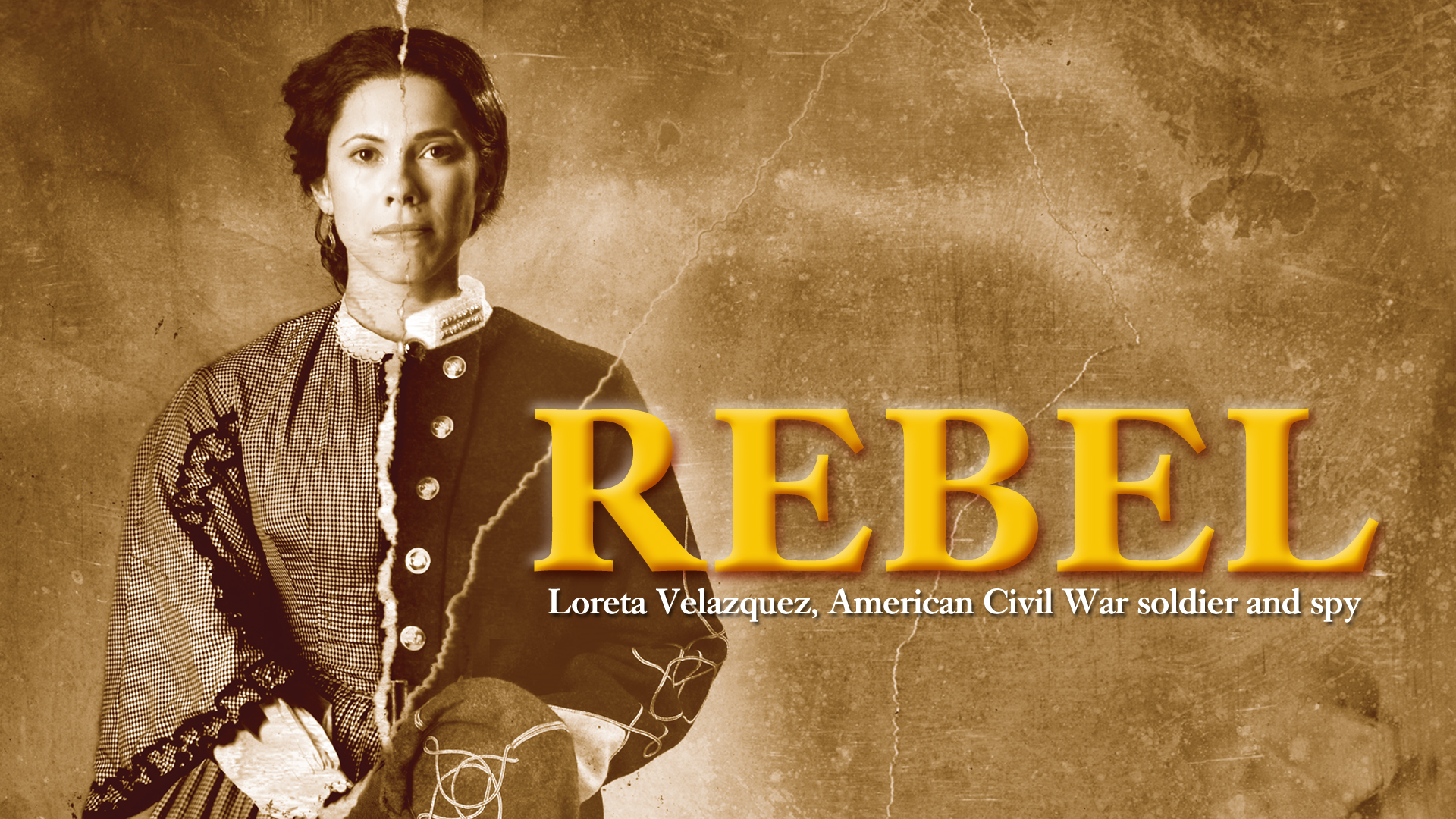
Loreta Velazquez: The Civil War spy emerges from history’s shadows

lv

For my readers in San Antonio — if you’re as fascinated with Loreta Velazquez as I am, this presentation and discussion of her life on Thursday at UTSA should be a treasure trove of information.

I’ve included a PDF with more information:
Maria Agui Carter Flyer

The Battle for Boricua

Is Puerto Rico the battleground for America’s intellectual future?
A review by Fernando Ortiz Jr.

IMG_0237

Is Puerto Rico the battleground for America’s intellectual future?
A review by Fernando Ortiz Jr.

******

Discussed in this essay:

Laura Briggs. Reproducing Empire: Race, Empire, and U.S. Imperialism in Puerto Rico. Berkeley: University of California Press, 2002. Pp. 304. $29.95.

I.

Puerto Rico was one of the prizes the U.S. won in its 1898 victory over the Spanish Empire. The U.S. made Puerto Ricans citizens in 1917 and granted the territory an upgrade to commonwealth status in 1952. Debate has raged ever since over how, when, or if Puerto Rico should attempt to move in a new political direction, and over how it should cope with the degree of control the U.S. still wields over its economic and political systems. Like a moon trapped in planetary orbit, bathed only in the solar light reflected from that planet’s surface, struggles for self-definition and conflicting political visions dominate the island’s history.1

Laura Briggs extravagantly explores key components of Puerto Rico’s lurching political evolution in Reproducing Empire, a 2002 book based on her 1998 doctoral thesis composed at Brown University. Her book, standing tall among the work uniting colonial control and gender roles, illustrates Anglo American rulers at first disgusted with Puerto Rico, viewing the island territory as a cesspool of tropical subhumans blinded by rampant sexual desires and staggered by venereal disease, overpopulation endangering their natural and imported resources, and desperate, whether they knew it or not, for American guidance.

Puerto Rico’s social and economic problems were both caused and worsened, Briggs argues, by colonizing Americans who only saw themselves as solutions to those problems. She creatively examines the grinding conflict between the colonizer and the colonized through the prism of Puerto Rican sexuality, particularly the symbolically sexual body of the working-class Puerto Rican woman, whose propensity for sexual “deviancy” was blamed for spreading disease, for having too many children, and for essentially standing in the way of Puerto Rico’s proper Americanization. The fights waged over her sexual body became, Briggs argues, fights over Puerto Rican identity, political autonomy, ethnic equality, forced modernization, and Puerto Rican resistance. The Puerto Rican woman was the greatest battlefield in the titanic struggle over the island, which Briggs calls “the most important place in the world,” where she believes today’s essential debates over globalization issues are rooted in U.S. colonial attitudes.2

Americans saw prostitutes swarming over the men training to fight in World War I, posing their own venereal threat not just to the men but also to the women and children on the mainland, who would eventually be infected by the hapless victims of female Puerto Rican sexuality. U.S. incarceration policies on prostitution, Briggs argues, were one more supplement to colonial control and one more way Americans saw Puerto Ricans as foreigners, as people of lesser value to be kept apart from Americans, and as primitives who needed benevolent guidance. Puerto Rican women were either threats or weaklings needing protection. Islanders protested these prostitution policies, and Briggs sees in the rhetoric islander resistance not simply to the policies but also to the overall colonial project and later over their muddled citizenship.3

Americans saw overpopulation as also caused by these naturally promiscuous and illiterate women, prone to disease, doomed to poverty, and overly attached to the ideal of large hungry families. So, Briggs explains, American scientists developed new sterilization and birth control methods – diaphragms, contraceptive foams and jellies, and eventually the pill – and tested their effectiveness on Puerto Rican women, turning the island into “a social science laboratory.”4

II.

Throughout the Cold War, Briggs argues that Puerto Rico became a “political showcase,” advertising to Latin American nations vulnerable to Soviet seduction the beauty of a society that could result from an alliance (re: economic and military control) with the U.S. Puerto Rico was subjected to development projects — population control, industrialization, export control — again serving as a laboratory where models were analyzed before being sold to Third World nations.5

But the islanders had direct effects on the mainland too. Most importantly, Americans saw a huge post-World War II movement of Puerto Ricans into mainland cities, particularly into New York. The arrival of so many people in only a few decades permanently changed the racial and ethnic makeup of countless neighborhoods, sparked ethnic and political tensions, and re-engineered political activism. New arguments and alliances were born as these citizens struggled to live alongside Americans who saw them as anything but citizens and anything but white.

Overall, despite its strengths and creativity — particularly her intriguing view that the tentacles of colonization in Puerto Rico were only shorter and younger versions of the long American tentacles of globalization now strangling the globe — Briggs could have used a better editor to tighten a muddled narrative that often seems off balance and that could have been much shorter. Briggs often repeats the same points again and again, as if chapters were written months apart and she had to remind herself of the main thesis the latest chapter was supposed to be supporting. Also, the narrative needed more biographical sketches to bring alive the issues of sexuality, gender, and colonial victimization. Her ideas would have been so much more effective if the consequences of colonial decisions were shown in the wreckage of Puerto Rican lives, identities, and outlooks. Briggs bases her arguments on an impressive mountain of essays, books, and governmental studies. She complements a generally solid book with thirty-one pages of entertaining and informative notes and a 23-page bibliography.

One of the book’s best moments comes at the end, when Briggs argues that Puerto Rico illustrates “the explicit disalignment of the components of a nation.” The multidimensional identity of the Puerto Rican man and woman, Briggs seems to say, transcends maps, definitions of nationality, and concepts of national and international place. Imagine a map of the world laid out on a picnic table next to neatly typed definitions of every aspect of foreign affairs, U.S. government, and Latino identity. And then imagine the aurora borealis glowing in the night sky above. Puerto Rico, Briggs essentially argues, is the aurora. The rest of the world is the boring, ordered, defined arrangement on the table far below that celestial beauty.

Alternatively, the unique people of Puerto Ricans must find a unique solution to their unique “ethno-nation” quandary, effectively placing them on the cutting edge in terms of designing effective political entities for the twenty-first century. In that sense, at least, Briggs is absolutely right: Puerto Rico truly is the most important place in the world.6


1. Juan Gonzalez, Harvest of Empire: A History of Latinos in America (New York: Penguin, 2000), 62-63. The Jones-Shafroth Act of 1917 granted citizenship to all Puerto Ricans and established a three-branch government system. An online image of the bill is accessible here: http://tinyurl.com/93rbfx4. A PDF of the commonwealth constitution is accessible here: http://tinyurl.com/yjvo25z.
2. Laura Briggs, Reproducing Empire: Race, Empire, and U.S. Imperialism in Puerto Rico (Berkeley: University of California Press, 2002), 194.
3. Briggs, 17.
4. Briggs, 9.
5. Briggs, 2.
6. Briggs, 195-196.

Torn in the USA

Life, liberty, and the doomed pursuit of happiness. A review essay by Fernando Ortiz Jr.

IMG_1470

Life, liberty, and the doomed pursuit of happiness.
A review essay by Fernando Ortiz Jr.

******

Discussed in this essay:

Make Love, Not War: The Sexual Revolution: An Unfettered History. By David Allyn. (New York: Routledge, 2001. 400 pp. $26.96).

Making a New Deal: Industrial Workers in Chicago, 1919-1939. 2nd ed. By Lizabeth Cohen. (Cambridge, MA: Cambridge University Press, 2008. 568 pp. $25.99).

Stayin’ Alive: The 1970s and the Last Days of the Working Class. By Jefferson Cowie. (New York: The New Press, 2010. 488 pp. $15.98).

“Resistance in the Urban North: Trumbull Park, Chicago, 1953-1966.” By Arnold R. Hirsch. The Journal of American History. (82, no. 2 [September, 1995]: 522-550. JSTOR [accessed Feb. 1, 2013] ).

In Search of the Black Panther Party: New Perspectives on a Revolutionary Movement. Edited by Jama Lazerow and Yohuru Williams. (Durham, N.C.: Duke University Press, 2006. 408 pp. $24.01).

Quixote’s Soldiers: A Local History of the Chicano Movement, 1966-1981. By David Montejano. (Austin, TX: University of Texas Press, 2010. 360 pp. $23.70).

Polio: An American Story. By David M. Oshinsky. (New York: Oxford University Press, 2005. 368 pp. $16.95).

“Crabgrass-Roots Politics: Race, Rights, and the Reaction against Liberalism in the Urban North, 1940-1964.” By Thomas J. Sugrue. The Journal of American History. 82, no. 2 [September, 1995]: 551-578. JSTOR [accessed Feb. 1, 2013] ).

I.

The New Deal caressed with warm rays of hope the hearts and minds of millions of Americans grappling with the Great Depression. Shimmering ideals carved into the pillars of 1930s bureaucratic power re-invented the relationship between government and the people it represented. The New Deal also served for subsequent generations as a gateway opening onto a glowing era without racism, illness, or injustice. Citizens only needed to step towards the entrance to realize the core tenets – and challenges — of their American democracy: life, liberty, and the pursuit of happiness. Select academic and popular works from the past two decades beautifully illustrate how Americans dared to aspire for better lives, to reach out for democracy’s sweetest fruits, and to confront adversaries unwilling to share the treasures of freedom.

The aspiration for a better life often began with fair employment. Lizabeth Cohen’s Making a New Deal and Jefferson Cowie’s Stayin’ Alive both focus on the journey the working-class endured throughout six decades of economic turbulence and doomed political alliances. Cohen sets the stage by exploring Chicago’s ethnic working-class communities from about 1920 to 1940. Before the Great Depression, companies corralled their workers into paternalistic corporate societies. Workers enjoyed picnics, medical care, education, and other key aspects of a full life, yet all existed in the company’s shadow, without leverage to demand higher wages or a significant voice to improve worker conditions. Corporate authority framed workers’ identities. Cohen’s tapestry of Chicago communities gradually changed their understanding of who they were – from automatons governed by heartless corporate machinery to autonomous citizens who could no longer look to their employers for economic protection. Just as they changed their outlook, the liberal Democratic Roosevelt administration grew in political power and effectiveness. They reached out for each other. Energized unions offered workers a new avenue towards their goals of economic security, social legitimacy, and a viable political voice. The Democratic Party valued union support, listened to workers’ needs, and institutionalized the view that government could protect workers from corporate manipulation and financial unrest.

But the freedom from corporate autocracy, Cohen explains, added to workers’ lives a new vulnerability to “new tyrannies.” Chicago workers, along with workers throughout the U.S., became so closely bound to Democratic policy that when the Roosevelt administration, faced with entry into World War II, moved closer to companies needed to make war materiel, workers had no choice but to endure the consequences of corporate-friendly agreements. Alliances with political groups, Cohen also points out, meant workers swam in deeper political waters, filled with large allies but even larger enemies. Workers savored their new political value, but their leaders also did whatever was necessary to hold on to that influence on parties, administrations, and elections. Political enemies like Richard Nixon targeted that desire and the frustration workers felt over advantages the civil rights movements afforded to minorities.

Cowie’s Stayin’ Alive examines labor after the New Deal’s light faded beyond history’s horizons. He focuses on the years between 1968 and 1982. The working-class identity in the midst of that postwar political dusk was still proud and hopeful, hand-in-hand with liberal determination to transform the working-class into a new segment of the middle class. Three decades later, the working-class identity was a mutilated and incinerated political corpse quietly spat upon and dumped into Ronald Reagan’s ashbin of history.

The 1968 presidential election opened amid the cacophony of riots over the Vietnam War and years of unrest over the Great Society’s promised solutions to workplace, school, and social inequalities. Vice President Hubert Humphrey emerged from Democrats’ circular firefight as the presidential nominee, with only the labor machinery at his side, Cowie writes, making labor the “big boss in the Democratic Party.” Richard Nixon, leading a united Republican Party, raced into the gaps in the Democratic ranks, slicing off white working-class workers with manufactured sympathy over their growing hostility to effete Northern “elitists,” the anti-war movement, women who refused to recognize traditional patriarchal authority, and empowered minorities disrupting workplaces and intensifying corporate hostility to labor’s aspirations for better wages and improved worker rights. Workers in 1968 and 1972 slipped into a warm electoral spa with Nixon, a python sympathetically caressing their dreams as his coils squeezed them to death. Nixon, Cowie deftly points out, was the last president to view the working class in the context of their New Deal legacy of political empowerment. He invented a new chess board on which workers were neutralized as electoral threats and absorbed into the net Nixon cast over the landscape of American voters. He lured them into his New Majority by targeting the cultural-vs.-material dichotomy in the workers’ outlook, appealing to their sentimental ideal of New Deal America and blurring the financial danger his party posed to workers’ dreams for better lives.

The danger Nixon directly posed to labor’s aspirations ended with his 1974 resignation. But Ronald Reagan’s 1980 victory – secured in part with his own Nixonian seduction of working-class patriotic sentiments — worsened what Nixon began. His election followed four years of Democrat Jimmy Carter, who was never a stalwart labor ally and was hardly the mortar needed to rebuild the old alliances the civil rights and antiwar movements fractured. Economic problems sparked in the late 1960s intensified in the 1970s. Industries moved to regions that fought union organization and offered corporate-friendly employment laws. By 1980, Cowie wrote, “a unionized manufacturing job” was a precious drink of water for workers crawling across a blasted economic wasteland. The dire predicament worsened when the Reagan administration shattered the Professional Air Traffic Controllers (PATCO) strike in 1981, legitimating conservative disregard for labor as a viable element of the political calculus and exposing workers, stripped of government allies, to corporate manipulation. Cohen’s workers embarked on a journey to build new and better lives. Cowie’s workers continued the journey but failed to overcome the obstacles that moved into their path. The menagerie of groups gathered under the New Deal canopy may have simulated solidarity but they also stimulated real (if not lasting) determination among labor, even if bitter divisions negated their triumphs.

II.

One of the New Deal’s sparks ignited the civil rights movement in the 1960s and 1970s. As the working class pursued better economic lives, blacks and Latinos throughout the United States pursued liberty. David Montejano’s Quixote’s Soldiers and Jama Lazerow’s and Yohuru Williams’ In Search of the Black Panther Party both portray inspired individuals striving for the dignity of equal treatment, but the authors also refuse to portray equally inspirational coalitions that overcame every level of institutional opposition. Internal divisions, as Cohen and Cowie illustrate with their labor histories, threatened the civil rights movements at every turn.

Montejano’s three-part local history explores the multifaceted Chicano civil rights fight in San Antonio from 1966 to 1981. Chicanos targeted the “gringo supremacy” that governed the city and region. They saw Anglos dominating the social scenes and annual Fiesta events. They blamed Anglos for limiting Latino economic mobility and quality of education. The Latino movement descended from World War II and Korean War Latino veterans who returned home with legitimate expectations, particularly “first-class citizenship,” from the society they fought to defend. Social activists tried to ease the ravaging effects of gang violence and drug use on youth culture by encouraging Chicanismo or “carnalismo” — a sense of Chicano brotherhood that appreciated Latino history and aimed to improve a Latino identity unfairly associated with poverty, ignorance, and violence. Latinos demanded better schools and textbooks, and they conducted school walkouts to drive home their displeasure. They marched in the streets to protest police brutality and housing discrimination. They formed organizations like the Mexican American Youth Organization to coordinate messages, register voters, and gather participants.

Montejano considers much of San Antonio’s Chicano movement a success. But with progress came resistance. Montejano points to U.S. Rep. Henry B. Gonzalez, who saw the new fiery Chicano voices as a threat to his institutionalized power base. Like patriarchal labor leaders willing to deal with any political power that preserved their status, Gonzalez perceived Chicano protestors’ “aggressive nationalism” as disruptive to fragile local understandings and arrangements with the “gringo supremacy” and to his own ambitions. Chicanas demanded equality from the paternalistic community that expected them to remain subordinate to Chicano goals, tactics, and directions, and resistance to their demands also caused internal rifts. Women, Montejano writes, challenged male activists to extend the equality principle to their own households and “machismo” attitudes that oppressed Chicana expression and progress. The struggle echoes Cohen, who wrote that female members of the Congress of Industrial Organizations were not allowed in positions of union leadership because “the male breadwinner would represent the family’s interests in policy making.”

Lazerow and Williams take a dispersed approach to the Black Panther Party’s accomplishments and contributions. In Search of the Black Panther Party uses fourteen essays to connect their battles to a wide array of revolutionary movements within and beyond U.S. borders. Contributor Jeffrey Ogbar’s piece on Black Panther connections to Latino nationalists best illustrates their struggle in a larger racial context. The Black Panthers inspired the Chicano Brown Berets and the Puerto Rican Young Lords and Latin Kings. The aggressively vocal “black demand for equality,” embodied by Malcolm X and Stokely Carmichael, also energized Latino youths who realized their demands could be heard by institutions that could address them. Black nationalist themes of “multinational alliances and cooperation” resonated with Chicanos who saw paralyzing U.S. colonialism in Central America and with Puerto Ricans in the U.S. who saw pervasive Caribbean poverty. The Black Panthers also played a uniting factor among strivers for liberty. In 1970, Ogbar explains, the Party “became the first major black organization to align itself with a women’s liberation movement,” which was seen as an Anglo cause. They later embraced the gay rights movement. The Panthers linked Latinas to bolder visions of social equality their patriarchal Chicano partners could not stomach, and they injected Black Power’s pride and dignity into the Latino movements, enriching the struggles as well as the rewards.

Social divisions often crippled the civil rights struggles. Arnold R. Hirsch’s study of white resistance to community change in Chicago from 1953 to 1966 and Thomas J. Sugrue’s study of similar disdain in Detroit from 1940 to 1964 both brutally underline the tragic consequences of unresolved racial differences among the New Deal’s descendants. Hirsch’s microstudy of a plan to move black families into Chicago’s Trumbull Park Homes and Sugrue’s local history of Detroit’s white working class illustrate how some Americans reached their economic goals and left other similar groups behind. In Chicago, whites refused to live with blacks in the same neighborhood. In Detroit, whites worried that rights for minorities threatened their workplaces, wages, schools, and communities. Social, personal, and material concerns, Hirsch and Sugrue demonstrate, mattered more than the moral struggle for equality and justice.

Americans pursued better lives and secure liberties. They also pursued happiness – fuller lives, longer lives, and healthier lives. The New Deal’s defeat of poverty and the World War II defeat of fascism primed Americans for victory in an old war at home: the fight for freedom from disease and, decades later, the fight for freedom from sexual oppression.

III.

David Oshinsky’s Polio: An American Story explores the national endeavor to eradicate the polio virus with a safe vaccine. Millions of dollars were raised. Franklin Delano Roosevelt, also a polio victim, encouraged the multi-city celebration of his birthday to raise funds for the National Foundation for Infantile Paralysis. He inspired women canvassing their communities for donations. Citizens and politicians worked together for the common good. A vaccine would help young and poor, of any race or religion, and prove the benefits of a democratic society free to fulfill its potential. It also showcased U.S. scientific abilities as the postwar era darkened into the Cold War era. Experts like Jonas Salk became the public face of American ingenuity. The 1954 vaccination trials offered tangible hope and a sense of progress towards an ultimate cure.

The polio story touches on race, ethnicity, and class. Before the vaccine’s development, Americans blamed immigrants for bringing disease and viewed lower-class slums as cesspools of infection. But rich and poor were struck equally. Scientists thought black Americans were less susceptible to polio, so they received less attention during outbreaks. By the mid-1950s, polio ravaged the lower classes who could not afford the three-shot-plus-booster combination.

Freedom from oppression is just as important as freedom from disease. David Allyn’s Make Love, Not War tenderly explores a sexual renaissance that ebbed and flowed from the 1960s to the 1980s, opening new social spaces for expressions of gay sexuality, experiments with group sex, sophisticated sexual education, the birth control pill, and an open sexual life.

Allyn argues that the sexual revolution changed the most important element of any sex life: the mind. Every phase of the revolution, from acceptance of sexual literature at bookstores to a woman deciding to have an abortion or control her fertility, prepared for the ground for more changes in Americans’ outlook on their times. Swinger parties were incorporated into normal suburban lives. Couples consulted illustrated sex manuals to improve their nocturnal time together. Gay Americans celebrated their desires in clubs that were no longer hidden away in shameful corners of the urban landscape. The revolution introduced to Americans a new freedom from fear, and that freedom still flourishes — and must still be defended — today.

The pursuits of life, liberty, and happiness eventually end for some as others begin the journey anew. Superior forces obstructed the revolutions’ progress. Tragic internal weaknesses, inherent or introduced at a later point, ripped apart movements’ ideological cohesion and lasting power. These works offer larger lessons and warnings to future revolutionaries and idealists: know where you want to arrive before beginning the journey, and bind yourselves tightly to your most unlikely of allies. These works silently demand perseverance, patience, and belief that the American Dream belongs to everyone. One must only fight for it, even if it means fighting other marginalized Americans. There may never be enough of the Dream for everyone.

Kate Stone’s Civil War: Conquer or die

As a Texas summer storm approaches, Stone angrily vows that the Confederacy will never surrender to the Union forces that shattered her family.

OLYMPUS DIGITAL CAMERA

From 2012 to 2015, Stillness of Heart will share interesting excerpts from the extraordinary diary of Kate Stone, who chronicled her Louisiana family’s turbulent experiences throughout the Civil War era.

Learn more about Stone’s amazing life in 1861, 1862, 1863, 1864, 1865 and beyond. Click on each year to read more about her experiences. You can read the entire journal online here.

(Photo edited by Bob Rowen)

As a Texas summer storm approaches, Stone angrily vows that the Confederacy will never surrender to the Union forces that shattered her family.

Aug. 10, 1863

Lamar County, Texas

Nearly the close of summer and we are still in our first Texas retreat. We have dubbed it “Elysian Fields.” Mr. Smith has been away nearly a week looking for another location. No matter where we may go, we are almost sure to meet some of our old friends or acquaintances, for everybody about Monroe is moving out this way, we hear, scattering over Texas. How good the sight of a familiar face will be. I would feel like kissing nearly anybody I had ever seen before. …

Our list of victories last month were all a mistake. Gen. Lee has recrossed into Virginia, and our march into Pennsylvania seems to have been barren of results. We do not hold nor have we destroyed a single Northern city, as we so much hoped. A dark hour for the Confederacy. The loss of Vicksburg has stunned the whole country. It is a grievous blow, and there is great discouragement at least on this side of the Mississippi River. But the reaction will come. The people will rally to strike a more deadly blow, to fight till the last armed foe expires, to conquer or die.

Mamma, Sister, and Johnny are just in from their round of investigation. Instead of renting Mrs. White’s house they rented a book. The house was already taken, but she had quite a library of books that she would hire out for fifty cents a week. She would not think of lending them. The book Mamma brought was a most worthless thing, but the engravings in it are fine. Mrs. White is an educated woman, lives in a nice house, and is well to do, but a regular skinflint. She is living from day to day on the verge of the grave, suffering from some incurable complaint, and is still very eager to make money, extorting the last cent. She has one of our women hired to wait on her. She is a Yankee. That explains all. …

We look out tonight on a windy, stormy sky. Dark clouds go scudding by, and the wind whistles through our frail tenement. The boards have shrunken until daylight shines through. Lightning flashes continuously, thunder is rolling overhead, and the whole prairie is ablaze with the fireflies, weaving in and out like fairy shuttles.

A fascinating fall season approaches

The University of North Carolina Press just unveiled its lineup of Fall 2012 Civil War books.

The University of North Carolina Press just unveiled its lineup of Fall 2012 Civil War books. There are five titles, three new and two now available in paperback.

1. “War on the Waters: The Union and Confederate Navies, 1861-1865,” by James M. McPherson
2. “Two Captains from Carolina: Moses Grandy, John Newland Maffitt, and the Coming of the Civil War,” by Bland Simpson
3. “The Fire of Freedom: Abraham Galloway and the Slaves’ Civil War,” by David S. Cecelski
4. “Fredericksburg! Fredericksburg!” by George C. Rable (paperback)
5. “Army at Home: Women and the Civil War on the Northern Home Front,” by Judith Giesberg (paperback)

Read more about the books here.

They’ll make for a fascinating fall season.

Rebecca Aguilar

#CallingAllJournalists Initiative | Reporter | Media Watchdog | Mentor | Latinas in Journalism

Anna Fonte's Paper Planes

Words, images & collages tossed from a window.

Postcards from Barton Springs

Gayle Brennan Spencer - sending random thoughts to and from South Austin

The Flask Half Full

Irreverent travelogues, good drinks, and the cultural stories they tell.

Government Book Talk

Talking about some of the best publications from the Federal Government, past and present.

Cadillac Society

Cadillac News, Forums, Rumors, Reviews

Ob360media

Real News That Matters

Mealtime Joy

bringing joy to family meals

Øl, Mad og Folk

Bloggen Øl, Mad og Folk

a joyous kitchen

fun, delicious food for everyone

A Perfect Feast

Modern Comfort Food

donnablackwrites

Art is a gift we give ourselves

Fridgelore

low waste living drawn from food lore through the ages

BeckiesKitchen.com

MUSINGS : CRITICISM : HISTORY : NEWS

North River Notes

Observations on the Hudson River as it passes through New York City. The section of the Hudson which passes through New York is historically known as the North River, called this by the Dutch to distinguish it from the Delaware River, which they knew as the South River. This stretch of the Hudson is still often referred to as the North River by local mariners today. All photos copyright Daniel Katzive unless otherwise attributed. For more frequent updates, please follow northriverblog on Facebook or Instagram.

Flavorite

Where your favorite flavors come together