
Kate Stone’s Civil War: I was young again

Stone’s last three entries in her diary are from September 1867 and 1868. They form a somber epilogue to her chaotic journey. They capture a bitter reflection of a shattered Southern slaveholding society, adrift, confused, and afraid of a world in which they no longer rule.

KS10

From 2012 to 2015, Stillness of Heart will share interesting excerpts from the extraordinary diary of Kate Stone, who chronicled her Louisiana family’s turbulent experiences throughout the Civil War era.

Learn more about Stone’s amazing life in 1861, 1862, 1863, 1864, 1865 and beyond. Click on each year to read more about her experiences. You can read the entire journal online here.
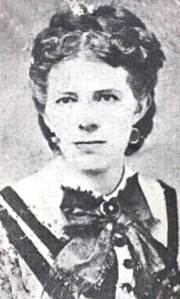
(Photo edited by Bob Rowen)

Stone’s last three entries in her diary are from September 1867 and 1868. They form a somber epilogue to her chaotic Civil War journey. They capture a bitter reflection of a shattered Southern slaveholding society, adrift, confused, and afraid of a world in which they no longer rule.

Read her first entry in this series here.

Sept. 22, 1867

Brokenburn

A long silence and a year of hard endeavor to raise a crop, reconstruct the place with the problem of hired labor, high water, and cotton worms. Mamma had little trouble in getting advances in New Orleans to plant. Cotton is so high that merchants are anxious to advance to put in a crop, and there is much Northern capital seeking investment in that field. … The Negroes demanded high wages, from $20 to $25 for men, in addition to the old rations of sugar, rice, tobacco, molasses, and sometimes hams. Many of the old hands left, and My Brother went to New Orleans and brought back a number of ex-Negro soldiers, who strutted around in their uniforms and were hard to control. I was deadly afraid of them.

During the spring while Mamma and I were in New Orleans (Mamma on business and she took me for my pleasure), and Uncle Bo and My Brother and Jimmy were away for a few hours, Johnny had a fight with a young Negro in the field, shot and came near killing him, and was mobbed in return. Johnny would have been killed but for the stand one of the Negroes made for him and Uncle Bo’s opportune arrival just as the Negroes brought him to the house a howling, cursing mob with the women shrieking, “Kill him!” and all brandishing pistols and guns. It came near breaking up the planting, and it is a pity it did not as it turned out. Johnny had to be sent away. He was at school near Clinton [Miss.] and the Negroes quieted down and after some weeks the wounded boy recovered, greatly to Johnny’s relief. He never speaks now of killing people as he formerly had a habit of doing. He came home when school closed and there was no further trouble.

Then the water came up and we were nearly overflowed. The cotton planted was very late, and when it was looking as luxuriant and promising as possible and we saw ease of mind before us, the worms came. In a few days the fields were blackened like fire had swept over them. We made about twenty bales and spent $25,000 doing it. What most distresses me is that none of that money went for our personal comfort. All of it went to the Negroes. Mamma would buy only bare necessaries for the table and plainest clothes for the family. Not a luxury, no furniture, carpets, or anything. We are worse off for those things than even in Texas and such a sum spent! But Mamma said it was not honest to spend the money on anything but making the crop. All in this section have suffered in the same way, and for awhile they seemed stunned by their misfortunes. But now the reaction has come, and all are taking what pleasure offers.

Old neighbors and new ones have come in and all seemed to be anxious to be together and talk over their trials and tribulations. There has been much visiting and various picnics and fish frys. I would not go at first. I felt like I did not want to see anybody or ever dance again. I felt fully forty years old, but Mamma made me go after a good cry. Once there, I was compelled to exert myself, and soon I was enjoying it all. The burden of some of the years slipped from my shoulders, and I was young again. It was pleasant to talk nonsense, to be flattered though one knew it was flattery, and to be complimented and fussed over. So since then, Mamma, the boys, and all of us have been going to everything and have found even poverty in company more bearable than when suffered alone. …

September 1868

Rose Hill

In January My Brother rented this place knowing that Brokenburn would be again overflowed, and we moved out the latter part of the month. My Brother lost money again last year planting, and this year he determined to farm, planting a little of everything.

Johnny and Jimmy are both at home, and having nothing to do pulled off their coats and rolled up their sleeves and went to work to raise a crop of corn and potatoes for themselves. They have succeeded well as they will clear several hundred dollars.

We all regret so much Jimmy’s refusal to go buck to the hospital. … We fear he is throwing away the best chance of his life. The boys are so hot and tired when they come in from the fields. …

Sept. 28, 1868

Rose Hill

Mother has been in Vicksburg for a month on a visit to Aunt Sarah. It is her first outing for eighteen months. We hope it will benefit her — her health has been bad for more than a year. She is seldom out of bed more than a week at a time. It took great persuasion and the pointed urging of the whole family to induce her to go on this visit that Aunt Sarah has been begging her to take for months.

Jimmy is now on the wharf boat, Johnny at Omega, and Sister, My Brother, and I have it all our own way with but little to do. My Brother is making an excellent crop and is much more cheerful. …

How we wish Sister could be sent off to school for two years, but it has been impossible. No money. … Let us hope that now the current will change and success will be our portion, as the outlook is brighter than for three years.

This is a pleasant neighborhood … and everybody has been kind and polite about calling and coming in at all times. [The other day we] had another of those inevitable dances that have been given so often this summer. Mary and Katie Byrnes, Louise Meagher, and the other girls never seem to tire of them, but they wear me out — such a sameness. I doubt not that I am getting too old for such gaieties. The men and boys about here are so silly and boyish in conversation. …

It has been an enjoyable life since we came here in January. It is a pleasant enough cottage house, after we got it thoroughly cleaned. There is a lovely little flower yard and a splendid orchard, and the kindest and most sociable neighbors with various little entertainments and dances. …We have new books and papers ad libitum, a luxury we missed for years.

My Brother has just sent Mamma money to buy our winter clothes, and Sister and I are jubilant at the prospect of new dresses and bonnets. We have lived on very little of late years, little bought that was not absolutely necessary. They have dressed me better than any of the others. I have not wanted for anything indispensable for a young lady, but the only money I have spent really as I wished was five dollars of the ten Uncle Bob gave me when Mamma and I went to New Orleans three winters ago. …

What splendid fellows my brothers are. They are all so good to us and such handsome boys. Sister looks almost the same, scarcely older than three years ago. We hope she can go to school this fall and make her debut next fall. If not, I shall beg Mamma to put long dresses … on her and bring her out this winter. She has a gay cheerful nature, and I hope will have a happy girlhood.

Mamma’s bright hopeful spirit never change. She is us always the ruling power with us all, the center and light of our home. How much she will have to tell us on her return, and maybe Aunt Sarah will come with her.

Well, this is the last page of the book that has gone with me through all our journeying. Looking back to the beginning so many years ago, I realize what an unthankful, wicked girl I was not to be supremely happy. With youth, health, and everything surrounding me for comfort and happiness. with unmistakable blessings, I was yet an unsatisfied, discontented girl. It has taken trouble to teach me my faults, and how earnestly I try now to enjoy instead of repine, to be thankful instead of fault-finding. I will try always to see the silver lining to the cloud. All my life I have been surrounded with love and care, far more than I deserved, and I will try in the future to be more worthy of the blessings that brighten my pathway.

So this is the end — shall I ever care to write again?

FINIS

Kate Stone’s Civil War: How many idle hours

Stone’s last entry of 1865 is filled with sadness and gives hints of what a grim future holds. But amid those dark hints, a small flame of romance stirs.

KS43

From 2012 to 2015, Stillness of Heart will share interesting excerpts from the extraordinary diary of Kate Stone, who chronicled her Louisiana family’s turbulent experiences throughout the Civil War era.

Learn more about Stone’s amazing life in 1861, 1862, 1863, 1864, 1865 and beyond. Click on each year to read more about her experiences. You can read the entire journal online here.

(Photo edited by Bob Rowen)

Stone’s last entry of 1865 is filled with sadness and gives hints of what a grim future holds. But amid those dark hints, a small flame of romance stirs.

Nov. 17, 1865

Brokenburn

My Brother amd Jimmy are off hunting, fishing, and spying on the land. Little Sister is absorbed in papers a month old, and I, having made my afternoon toilet — a habit of old that I may as well forget now that evening visiting is a thing of the past — have literally nothing to do and nothing to read except Shakespeare, and one cannot read him all the time. We certainly conned that book in Texas and on our various carriage trips. Mamma and Johnny should nearly know it by heart. There is no resort but scribbling. How many idle hours this book has filled.

Uncle Bob is the best old darkie. He has done the best he could to care for things and is as humble and respectful as ever. Every now and then he brings up presents of candy, raisins, and nuts. Aunt Laura’s silver service was buried in the yard, and Uncle Bob in walking one day stepped into a hole. He investigated and found the barrel head had decayed and sunken in. He did not say anything as the Yankees were on the place at the time. He quickly covered it up and that night slipped out and took it to his house, carefully hiding it, but it became noised about among the Negroes and a few spoons were stolen. I suppose his wife, Mary Ann, told as she is the real typical free darkie. The next day he packed the silver all up and took it down to Mrs. Graves to keep. He said he could no longer care for it, and now we have it all. He is the only Negro we know that would not at once on finding it have given or sold it to the darkies. He wants to rent some of the land and plant for himself next year. Mamma will let him have the land rent free. He sold his last cotton for $1 a pound. I wish we had a thousand bales.

Mamma should be back today. I wonder what she will bring us. We bought our first piece of Yankee finery in Shreveport, a broad black belt with an immense buckle for me.

In camping out this trip, we had every appliance for camping, and people who like camping would have found it pleasant. …

Shreveport seemed nearly as busy a place as New Orleans in the old times. … From there to Judge N. Richardson’s, the prettiest place on Bayou DeSaird. How more than comfortably they live in that stately comfortable home with the beautiful yard with its trees and shrubbery, splendid orchard, and well-worked garden, and with all the old servants and the most lavish table. … Lt., or Mr. Holmes now, came out twice to see us while we were there. He is looking handsome and was beautifully dressed. But alas, he has been spending a wild summer and fall, and though he assured me marrying would reform him, I believe not, A dreadful risk for any woman. I fear there is little hope for him. Ho expects to go to Maryland soon on a visit to his mother. That may save him. …

Illustrating the heart in a million different ways

Some friends have told me how much they love the photos I include with most of my posts.

Some friends have told me how much they love the photos that accompany most of my posts. Their compliments honor me.

I don’t consider myself a photographer, just someone who loves interesting patterns — the more abstract and colorful and contrasted the better. I tend to find beauty in everything I see.

My simple Tumblr blog collects and displays the best of the art I’ve used on Stillness of Heart, along with a variety of other odd photos, gifs, and videos.

Follow me on Tumblr, and enjoy.

Some of 2015’s best Civil War books … so far

Publishers in 2015 offer excellent work that both casual and serious readers of the Civil War should know about.

KS27

Biographies, campaign studies, general histories, and analyses form the core of any season’s mountain of Civil War scholarship, but publishers in 2015 offer excellent work that both casual and serious readers of the Civil War should know about. The rich bounty is likely — in part, at least — a result of the sesquicentennial sunshine that bathed the Civil War academic field for the last five years. Here are a few highlights.

No publishing season is stronger than when Gary W. Gallagher contributes one of his essay anthologies on a military campaign. Late September will see Cold Harbor to the Crater: The End of the Overland Campaign (University of North Carolina Press, 360 pp., $35), edited by Gallagher and Caroline E. Janney. The title suggests their overall argument, which marks the end of the pointless Battle of the Crater as the true conclusion of the brutal three-month-long confrontation between Lee and Grant in 1864. Only then, the historians argue, did siege warfare become the Union’s primary tool for the final strangulation of the Confederacy’s most important army and capital city. As with each of the entries in the Military Campaigns of the Civil War series, contributors examine military strategies and tactics, focus on particular participants, and consider how home-front politics and civilian expectations affected and were affected by Confederate military strategy.

J. Matthew Gallman offers a fascinating intellectual and cultural history with Defining Duty in the Civil War: Personal Choice, Popular Culture, and the Union Home Front (University of North Carolina Press, 336 pp., $45), in which he considers how Northerners perceived their obligations of duty and citizenship as their nation endured civil war. He explores how novels and songs, poems and news stories, editorials and cartoons all contributed citizens’ understanding of where they fit in the home-front tapestry and how they could each contribute to the war effort. Race, class, and gender all played key roles in that psychological and political dynamic, and Gallman’s work skillfully weaves together those elements into a fresh historical analysis.

Bradley R. Clampitt’s The Civil War and Reconstruction in Indian Territory (University of Nebraska Press, 200 pp., $25) promises a fascinating examination of the dynamics of war, political power, the collapse of slavery, and racial re-ordering within the context of Native America. Clampitt assembles a bouquet of essays by stellar scholars to explore the antebellum, wartime, and postwar tensions between tribes and nations, their calculated loyalties to North or South, and questions over the future of former slaves and indigenous participants in the war. Any understanding of the historical scope and effect of the Civil War’s overall political and social consequences is incomplete without an intelligent incorporation of Indian experiences and memories. Clampitt’s collection, scheduled for a December release, is certainly a work to anticipate and savor.

Pair that perspective with The World the Civil War Made (University of North Carolina Press, 392 pp. $29.95), an essay anthology edited by Gregory P. Downs and Kate Masur. More than a dozen stellar historians consider how postwar policies and consequences rippled throughout specific political and social dynamics in U.S. territories, in the U.S. Southwest, and across the world. The work’s great strength is its embrace of multiple national and international stories unfolding simultaneously, affecting and affected by each other, all contributing to a vibrant array of societies grappling with new notions of liberty and republicanism in a post-slavery world.

Terry Alford contributes a long-overdue re-assessment of John Wilkes Booth with Fortune’s Fool: The Life of John Wilkes Booth (Oxford University Press, 416 pp., $29.95). Alford’s Booth carried multiple psychological burdens throughout his life. He endured the pressure of measuring up to his successful thespian father and brothers. His inherent gifts as an actor/performer quickly shoved his life under a burning and blinding spotlight of celebrity. His fury over the Confederacy’s defeat warped his identity from an actor into a self-proclaimed citizen-soldier defending Southern honor and survival, with a deadly determination to seize a starring role on the Civil War’s bloodstained stage. These pressures combined to turn Booth into the madman who concocted multiple harebrained plots to destabilize the Lincoln administration. Booth doomed the post-war prospects of racial peace and progress with a single gunshot, and he catapulted Andrew Johnson, one of the worst presidents in U.S. history, into the center of political power just when Lincoln’s political genius was most needed.

Mark Smith presents a fascinating examination of the sights, sounds, and scents of war with The Smell of Battle, the Taste of Siege: A Sensory History of the Civil War (Oxford University Press, 216 pp., $22.36). Basing his exploration on descriptions he found in letters and other primary sources, he attempts to reconstruct what it felt like to be submerged in a Confederate submarine, what it tasted like to live in a city under Union siege, and what it sounded like to hear Confederate shells pound Fort Sumter into submission. Too few historical works explore their subjects from such an elemental and creative perspective. Smith offers details that belong in every lecture, speech, and conversation about the Civil War.

James M. McPherson offers a book-length response to the deceptively simple question, “why does the Civil War matter?” His recent work, The War That Forged a Nation: Why the Civil War Still Matters (Oxford University Press, 224 pp., $27.95), is more relevant than ever. If nothing else, the violent first half of 2015 offered stark and violent case studies to bolster his arguments. There was certainly no better example than recent debates over the Confederate flag, its multifaceted significance throughout the U.S., and the reasons for and against its presence amidst the everyday imagery of American life and culture.

Public and political bitterness over the intractability and enduring power of institutional racism, the historical understanding and explanation of the reasons for the Civil War, the long journey of civil rights through the nineteenth, twentieth, and now twenty-first centuries, debates over the power of federal and state governments — all are titanic, central, and deeply painful issues that the Civil War confronted like no other event in U.S. history. Every citizen’s pursuit of happiness intersects with or passes over or under each of these issues, among many others, and a better understanding of the war affords all of us better maneuverability past the heated rhetoric, better capacity to comprehend how those issues shape our societies, and better appreciation of our history’s overall vital importance to our American life.

Also:

I recently received wonderful news from the Society of Civil War Historians. According to their press release, the Society and the Watson-Brown Foundation honored Shauna Devine, assistant history professor at the University of Western Ontario, with the Tom Watson Brown Book Award for 2015 for her excellent 2014 book Learning from the Wounded: The Civil War and the Rise of American Medical Science (University of North Carolina Press, 2014, 384 pp., $39.95). The book explored how the war enabled U.S. physicians to improve their medical expertise, share their hard-won knowledge in new ways, and link their experiences with the larger international medical community. It was crucial to my recent work as a research assistant as I broadened and deepened my understanding of Civil War medical history. Highly recommended.

Read more about Devine’s honor here.

Kate Stone’s Civil War: A man-flirt is detestable

Stone, riding her horse with a pistol in her belt, decides that the antebellum age of young love, innocent flirting, and romantic dreams is over.

1864

From 2012 to 2015, Stillness of Heart will share interesting excerpts from the extraordinary diary of Kate Stone, who chronicled her Louisiana family’s turbulent experiences throughout the Civil War era.

Learn more about Stone’s amazing life in 1861, 1862, 1863, 1864, 1865 and beyond. Click on each year to read more about her experiences. You can read the entire journal online here.

(Photo edited by Bob Rowen)

Stone, riding her horse with a pistol in her belt, decides that the antebellum age of young love, innocent flirting, and romantic dreams is over.

July 18, 1865

Tyler, Texas

Only the quiet routine of home duties. Nothing from the outside world. Oh, for letters from [those] who have bidden us adieu to know what is going on and how they arc faring in their new life.

Mrs. St. Clair and Neta Irvine came in and I tried to be unusually polite and non-committal to Mrs. St-Olair. She is such a dangerous woman that, I am afraid of her. She will start any report, and now she is most intimate with the Yankees. … Mr. Moore dined with us. Mr. Moore is the most belligerent minister I ever saw and the hottest Southerner. He cannot reconcile himself to defeat. There are two Yankee cotton-buyers in town. They are very conciliating in manner, we hear, and dumb as to the war.

Mollie Moore and I took a lovely ride this afternoon entirely alone but with pistols gleaming at our side. I fancy the good people of Tyler, the conservative, will be horrified if they saw them, but we will hope for the best and trust they did not spy our weapons. We took them more for a frolic than anything else, but the roads are said not to be entirely safe with so many hard cases roving around. Mollie and I were longing for a ride and good long gossip together, and all our cavaliers have left us. Mollie told me all about “Adonis” and confesses to a partial engagement, but she evidently does not expect to keep it. We decided that the girls would all have to change their war customs, stop flirting, and only engage themselves when they really meant something. The days of lightly-won and lightly-held hearts should be over.

Mr. Moore’s accounts of the frolics of Willy and Jimmy Carson on their bachelor ranch worry me considerably. I am afraid they will get into serious trouble carrying on so with those country girls and will carry their flirtations too far, and they are but boys turned loose with no one out there to restrain them. Hope they will soon come in, and I will talk to them. Might do some good. A man-flirt is detestable, and I do not want those boys to degenerate into that.

We are living now on the fat of the land, plenty of milk, cream, butter, and gumbo, vegetables of all kinds, melons, and chickens. I am only sorry Mamma and the boys cannot be with us to enjoy it. The outer world is still a sealed book to us. Few mails.

Recommended reading / viewing / listening

This week: Reviews of ‘True Detective’ and ‘OITNB’ / Tracking the Islamic State in the U.S. / Happy birthday to George H.W. Bush / Women try to understand ‘Goodfellas’ / New b/w photos of Paris

IMG_2126

This week: Reviews of ‘True Detective’ and ‘OITNB’ / Tracking the Islamic State in the U.S. / Happy birthday to George H.W. Bush / Women try to understand ‘Goodfellas’ / New b/w photos of Paris

Most of these great items come from my social media networks. Follow me on Twitter, Tumblr, LinkedIn, MySpace, and Facebook for more fascinating videos, photos, articles, essays, and criticism.

1. ‘True Detective’ Season 2: TV Review
By Tim Goodman | The Hollywood Reporter | June 11
“Let’s just say it’s no season 1.”

2. ‘Orange Is the New Black’ Is Somehow Funnier and Sadder Than It’s Ever Been
By Richard Lawsom | Vanity Fair | June 11
“This season, bawdy pubic-hair gags bump up against jokes about economics and spiritualism, the grime of prison life allowing for visceral, intimate revulsion, but also serving as a kind of blank canvas for larger metaphor.”

3. ‘George H.W. Bush’
American Experience :: PBS | 2008
“The life and career of our 41st president, from his service in World War II and his early career in Texas to his days in the Oval Office, first as vice president to Ronald Reagan, then as the leader who presided over the first Gulf War. Drawing upon Bush’s personal diaries and interviews with his closest advisors and most prominent critics, the film also explores Bush’s role as the patriarch of a political family whose influence is unequaled in modern American life.”

4. Climate Hope City: how Minecraft can tell the story of climate change
By Keith Stuart | The Guardian | June 12
“As part of our Keep it in the Ground campaign, the Guardian has commissioned a Minecraft map exhibiting a city filled with real-world climate initiative”

5. Two Women Try Their Hardest To Understand ‘Goodfellas’
By Lauren Duca and Eric Whitney | The Huffington Post | June 11
“I immediately threw my Godfather Blu-ray box set in the trash of overflowing tissues; I clearly just watched those to fuel the anti-violence protest rallies I go to after Wednesday book club. What do we do? Do you want to bring over a couple pints and consult Carrie Bradshaw for advice? My whole world is changing.”

6. Serge Ramelli captures Paris in black and white
Architectural Digest | June 2015
“Serge Ramelli’s striking black-and-white photography of Paris is the subject of a forthcoming book from teNeues. Through Ramelli’s lens, the City of Light and its notable landmarks are rendered dark and moody.”

7. Visiting Presidential Libraries
By Nina Kendall | On the Road with the Histocrats | February 2015
“Are you looking to connect more with history? Are you planning a trip with friends or family who isn’t as excited about history as you? Consider adding a Presidential Library visit to your calendar.”

8. Busted
By Grace Na | Slate | June 11
“Why the women on Orange Is the New Black are serving time, one by one.”

9. Map: Is Islamic State in a neighborhood near you?
By Adam Goldman | WorldViews :: The Washington Post | June 11
“U.S. authorities have charged more than three dozen men and women around the country in connection with the Islamic State. Men outnumber women in those cases by a margin of nearly 5 to 1. The average age of the individuals — some have merely been charged, others have been convicted — is 26. One is a minor.”

10. D-Day Wasn’t the First Time Eisenhower Felt as if He Had Lost a Son
By Michael Beschloss | HistorySource :: The New York Times | Jun 2014
“Almost a half-century later, Eisenhower called this ‘the greatest disappointment and disaster in my life, the one I have never been able to forget completely.’ “

Kate Stone’s Civil War: Words are powerless

An era that began on May 15, 1861, ends in early June 1865 when William, Stone’s oldest brother, returns from his shattered army. He returns not only bearing wartime defeat but also more bad family news.

1863

From 2012 to 2015, Stillness of Heart will share interesting excerpts from the extraordinary diary of Kate Stone, who chronicled her Louisiana family’s turbulent experiences throughout the Civil War era.

Learn more about Stone’s amazing life in 1861, 1862, 1863, 1864, 1865 and beyond. Click on each year to read more about her experiences. You can read the entire journal online here.

(Photo edited by Bob Rowen)

An era that began on May 15, 1861, ends in early June 1865 when William, Stone’s oldest brother, returns from his shattered army. He returns not only bearing wartime defeat but also more bad family news.

June 12, 1865

Tyler, Texas

My Brother is with us at last, safe and well, and words are powerless to tell how thankful we are. He came last Thursday evening with Jimmy and Johnny, whom he met at Homer and turned back, as he had come by home and accomplished all that they could do.

He came by way of Cincinnati and was one month reaching Vicksburg from Lynchburg. He brings the sad news of Aunt Laura’s death in February. She died of grief at Beverly’s loss. She never left her bed after the little darling’s death. She just lost her interest in life and faded away. The doctors attending said she had no disease, only heartbreak and no desire to live, and they could not rouse her nor give her a hold on life. Hers was a sensitive, fine, high-strung soul that could not brave disaster.

Dr. Buckner is in Vicksburg utterly desolate. How kind he was to My Brother, giving him a horse, clothes, and all that he needed. Dr. Buckner is well-fixed financially as his clerk, Mr, Peters, kept his drugstore going on and made a lot of money. The first time Dr. Buckner came home on furlough, some friends told him Mr. Peters was robbing him right and left. Dr. Buckner went right on to his store, caught Mr. Peters by the collar, gave him a good shaking and cursing, and told him, “If, when I come back again, I find that you have cheated me, I shall kill you.” Ever since, they say, Mr. Peters has been scrupulously honest, straight as a siring, and has turned over a lot of money to Dr. Buckner. Mr. Peters is a Vermonter, six feet one, and Dr. Buckner is five feet five but a fighter all over.

Aunt Laura died while at Bladen Springs, Ala., with Aunt Sarah, and Dr. Buckner was with her at the last.

My Brother’s parole gave permission for him and his servant with two horses and his sidearms to return home free of charge, hut he arrived at Vicksburg without a thing. Wesley was forced away at the point of the bayonet when he insisted on following Marse William on the boat. Then My Brother was attacked by a mob and broke his sword over his knee and threw it in the Ohio River rather than give it up to the haughty Federal soldiers. They would not furnish transportation unless he would take the oath of allegiance, and so he sold his horses to get money to get to Vicksburg, where he fortunately met Dr. Buckner.

Mamma is up on the prairie and does not yet know of My Brother’s return. Johnny has gone for her, and we expect her on Thursday. What an immense relief it will be to her.

Recommended reading / viewing / listening

This week: A Civil War quiz / Google’s underwater Street View / The man who saved Paris from the Nazis / Slave ship discovered / Hepburn the fashion icon

img_0350

This week: A Civil War quiz / Google’s underwater Street View / The man who saved Paris from the Nazis / Slave ship discovered / Hepburn the fashion icon

Most of these great items come from my social media networks. Follow me on Twitter, Tumblr, LinkedIn, MySpace, and Facebook for more fascinating videos, photos, articles, essays, and criticism.

1. What Do You Know? A Civil War Pop Quiz.
By Megan Kate Nelson | Disunion :: The New York Times | June 4
“Where was the westernmost battle of the Civil War fought? Who issued the first Emancipation Proclamation? Who burned Atlanta?”

2. Three Steps on Perry’s Comeback Trail
By Ross Ramsey | The Texas Tribune | June 4
“The road ahead of Rick Perry is a difficult one, but it’s not that complicated. And the number of candidates running for the Republican presidential nomination helps him more than it hurts. If he can take care of three things, the former Texas governor will still be a presidential candidate at the start of 2016.”

3. Don’t Overthink It, Less Is More When It Comes to Creativity
By Jessica Schmerler | Scientific American | May 2015
“If the cerebellum plays a role in creativity, it could alter our understanding of how the brain functions.”

4. Google Street View goes underwater
Ny Nick Lavars | Gizmag | June 5
“In an effort to raise awareness ahead of World Oceans Day on June 8, Google has expanded its Street View service to let users explore a range of stunning coastal and underwater scenes.”

5. Paris Saved by a Bullitt
By Sam Roberts | Snapshot :: Foreign Affairs | June 2
“[O]n this 75th anniversary of the Fall of Paris, a close reading of [U.S. Ambassador William Bullitt’s] private papers, many of which have never been available to biographers before, and the personal accounts of several of his most intimate confidants, demonstrate conclusively that the characteristics that grated most on his critics — his cavalier cocksureness, his ambition, his relentless fraternizing with the French, and his unflagging faith in America’s global obligations — were exactly what the moment demanded.”

6. Grim History Traced in Sunken Slave Ship Found Off South Africa
By Helene Cooper | The New York Times | May 31
“The story of the São José, like the slave trade itself, spanned continents and oceans, from fishing villages in Africa to sheikhdoms where powerful chiefs plotted with European traders to traffic in human beings to work on plantations in the New World.”

7. Turkey’s Erdogan challenges opposition to find his golden toilet seat
By Humeyra Pamuk and Nick Tattersall | Oddly Enough :: Reuters | June 1
“Irritated by accusations of lavishness, Turkish President Tayyip Erdogan has vowed to resign if the leader of the main opposition can find a single golden toilet seat in his vast new palace.”

8. The Wife Bonus Is Imperfect, But It’s Not Prostitution
By Phoebe Maltz Bovy | New Republic | May 31
“It doesn’t suddenly become a form of prostitution if, temporarily or even permanently, the female partner in an opposite-sex relationship is the substantially lower earner, or is not working outside the home.”

9. How Katharine Hepburn Became a Fashion Icon
By Amy Henderson | Smithsonian.com | May 2015
“Hepburn was part of the post-suffrage generation of women, and her screen persona resonated with that generation’s modern spirit of independence. Despite RKO’s determination to brand her otherwise, Hepburn succeeded in inventing herself.”

10. For Incarcerated Japanese-Americans, Baseball Was ‘Wearing the American Flag’
By Michael Beschloss | HistorySource :: The New York Times | June 2014
“By 1943, when some of those in the relocation camps were allowed to volunteer for war service, some of the ballplayers joined the Army’s almost all-Japanese-American 442nd Regimental Combat Team, which suffered grievous casualties in Europe and came to be called the most decorated military unit in American history.”

Recommended reading / viewing / listening

This week: FIFA president re-elected / Pregnancy and depression / Orson Welles memoir discovered / Uber in Mexico / Hastert scandal

IMG_0431

This week: FIFA president re-elected / Pregnancy and depression / Orson Welles memoir discovered / Uber in Mexico / Hastert scandal

Most of these great items come from my social media networks. Follow me on Twitter, Tumblr, LinkedIn, MySpace, and Facebook for more fascinating videos, photos, articles, essays, and criticism.

1. Blatter Control: FIFA Head Wins New Term Despite Corruption Probe
By David Francis | Passport :: Foreign Policy | May 29
“The Justice Department appears to be building a mob-style case against him, flipping low-level officials in hopes of then using their testimony to snag higher-ups. Whether they’ll ever get to Blatter remains to be seen.”

2. CBS’ Bob Schieffer Retires Sunday As Last Of The Old-School TV Anchors
By Eric Deggans | The Two-Way :: NPR News | May 29
“Schieffer leaves CBS with impressive stats. He’s one of the few reporters to have covered the White House, Congress, the State Department and the Pentagon. He’s interviewed every president since Richard Nixon and moderated three presidential debates.”

3. The characters in the new ‘Star Wars’ movie have pretty weird names
By Reed Tucker | New York Post | May 29
“From Sio Bibble to Grand Moff Muzzer, names in the world of Star Wars have always had their own special charm.”

4. Shields and Brooks on Dennis Hastert charges, Ashton Carter Iraq comments
Shields & Brooks :: PBS Newshour | May 29
“[T]he indictment and allegations of misconduct against former Speaker of the House Dennis Hastert, Defense Secretary Ashton Carter’s comments about the Iraqi army’s defeat at Ramadi, 2016 campaign announcements from Rick Santorum and George Pataki.”

5. Mexico taxi drivers threaten to ‘hunt down’ Uber cars
By Camilo Smith | La Voz de Houston :: Houston Chronicle| May 29
“Earlier this week taxi drivers blocked traffic to protest the arrival of the ride share service and according to reports the head of a taxi organization told the press the hunt is on for Uber drivers.”

6. Fact-Checking San Andreas With a Seismologist
By Alissa Walker | Gizmodo | May 29
“Among the many luminaries invited to preview the film was Dr. Lucy Jones, the USGS seismologist who recently took me on a walk along the Hollywood Fault, which runs just a block from the theater where San Andreas premiered.”

7. How Do You Define a Gang Member?
By Daniel Alarcon | The New York Times Magazine | May 27
“Laws acros the country are being used to target young men who fit the description for gang affiliation. But what if they aren’t what they seem?”

8. Hastert hometown rocked by scandal
By Jake Sherman and Hillary Flynn | Politico | May 29
“In Yorkville, Ill., shock and disbelief over allegations against a beloved teacher and coach.”

9. Archivists Uncover an Unfinished Memoir By Orson Welles
By Erin Blakemore | Smithsonian.com | May 29
“Fragments of ‘Confessions of a One-Man Band’ discovered in a newly-acquired trove of documents”

10. The Secret Sadness of Pregnancy With Depression
By Andrew Solomon | The New York Times Magazine | May 28
“Pregnant women often fear taking the antidepressants they rely on. But not treating their mental illness can be just as dangerous.”

Kate Stone’s Civil War: Only sadness and tears

The Confederacy has collapsed, and Stone watches in horror as postwar chaos sweeps over East Texas.

KS49

From 2012 to 2015, Stillness of Heart will share interesting excerpts from the extraordinary diary of Kate Stone, who chronicled her Louisiana family’s turbulent experiences throughout the Civil War era.

Learn more about Stone’s amazing life in 1861, 1862, 1863, 1864, 1865 and beyond. Click on each year to read more about her experiences. You can read the entire journal online here.

(Photo edited by Bob Rowen)

The Confederacy has collapsed, and Stone watches in horror as postwar chaos sweeps over East Texas.

May 27, 1865

Tyler, Texas

Anarchy and confusion reign over all. Jayhawking is the order of the day. The soldiers are disbanding throughout the Department and seizing Government property wherever they can find it. The Government offices here have been sacked. All work is over and all who can are going home. At Shreveport the demoralization is worse even than here. The officers are scattering to the four winds, and Jayhawkers and private soldiers are stopping and robbing them whenever found. Col. Bradforte was the first here to desert his post. We hear that the mules were taken from his ambulance and wagon. Maj. Rhett, Gen. Hayes, and indeed everyone we hear of has suffered the same fate while fleeing to the interior of the state or to Mexico. Gen. Kirby Smith has also been robbed. We do not know but suppose this Department has surrendered as the soldiers have disbanded and are making their way home. We are still in ignorance of what disposal is to be made of us by our conquerors. The excitement in the town is so great we can think and live only in the present. Everything is in a turmoil. … We are all glad to see the soldiers divide what Government property they can find, if they will only stop there and not let the desperadoes rob the citizens as they may do. Some of the people deserve robbing, for they joined with the soldiers in sacking the Departments.

Jimmy came home Thursday no longer a soldier but a poor discouraged boy. All his regiment went home but twenty and the colonel disbanded them. Jimmy and the three Carson boys were of the twenty who stood to their guns. Will Carson came back with him. Jimmy and Joe Carson went out to the river to see the prospect there. We are so glad to have Jimmy safe at home, but oh, what a different homecoming from what we anticipated when he enlisted. No feasting. No rejoicing. Only sadness and tears.

Johnny starts for Brokenburn tomorrow to get Uncle Bob to plant some corn if possible so that there will be something when we move back in the fall. Of course we cannot go now and leave the crop on the prairie. It is our only hope for a cent of money. Johnny will also go on to Vicksburg and try to get news of My Brother and Uncle Bo. The long suspense is very trying and Mamma longs so for My Brother io get back to help her. She feels so at sea in these new conditions of life. … Jimmy goes to the prairie in a few days to see what money can be raised there. I took him yesterday to see half of the girls in town. Determined to lose no time, he and Johnny are escorting two of them to church this morning. Jimmy got back nearly out of clothes of course, and Johnny, after his last trip, is nearly as badly off, having swapped off about every respectable article he had. We had to go to work at once. Fortunately Mamma has secured some blue linen from the department stores and had plenty of homespun. Shirts are the most difficult to get.

Mamma keeps us in terror threatening to move to the farm until fall. It is about like being in jail with the privilege of looking through the window, but she can decide nothing until she sees or hears from My Brother.

Lt. Holmes’ mess is broken up, and he is staying with us until he and Lt. Dupre can get off together. Traveling is so unsafe just now for officers. But Lt. Dupre is so anxious to get back to his wife, they will leave in a day or so. Their part of the spoils in lieu of pay is an ambulance and pair of mules with which they will journey to Monroe together. The officials have burned all their papers. …

Behind The Wall

Tabletop Games

Rebecca Aguilar

#CallingAllJournalists Initiative | Reporter | Media Watchdog | Mentor | Latinas in Journalism

Anna Fonte's Paper Planes

Words, images & collages tossed from a window.

Postcards from Barton Springs

Gayle Brennan Spencer - sending random thoughts to and from South Austin

The Flask Half Full

Irreverent travelogues, good drinks, and the cultural stories they tell.

Government Book Talk

Talking about some of the best publications from the Federal Government, past and present.

Cadillac Society

Cadillac News, Forums, Rumors, Reviews

Ob360media

Real News That Matters

Mealtime Joy

bringing joy to family meals

Øl, Mad og Folk

Bloggen Øl, Mad og Folk

a joyous kitchen

fun, delicious food for everyone

A Perfect Feast

Modern Comfort Food

donnablackwrites

Art is a gift we give ourselves

Fridgelore

low waste living drawn from food lore through the ages

BeckiesKitchen.com

MUSINGS : CRITICISM : HISTORY : NEWS

North River Notes

Observations on the Hudson River as it passes through New York City. The section of the Hudson which passes through New York is historically known as the North River, called this by the Dutch to distinguish it from the Delaware River, which they knew as the South River. This stretch of the Hudson is still often referred to as the North River by local mariners today. All photos copyright Daniel Katzive unless otherwise attributed. For more frequent updates, please follow northriverblog on Facebook or Instagram.