Stone at last confirms the Confederate defeat at Vicksburg, three weeks later. In her mind, Robert E. Lee is the only Confederate commander that still holds the torch of hope for final victory.
From 2012 to 2015, Stillness of Heart will share interesting excerpts from the extraordinary diary of Kate Stone, who chronicled her Louisiana family’s turbulent experiences throughout the Civil War era.
Learn more about Stone’s amazing life in 1861, 1862, 1863, 1864, 1865 and beyond. Click on each year to read more about her experiences. You can read the entire journal online here.
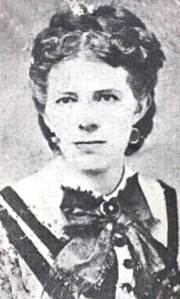
(Photo edited by Bob Rowen)
Stone at last confirms the Confederate defeat at Vicksburg, three weeks later. She and her mother worry about the vulnerability of Texas to Union forces. More immediately, they’re worried for their family. If Texas is invaded, how much farther west should they go to escape emancipating Union forces? In Stone’s mind, Robert E. Lee is the only Confederate commander that still holds the torch of hope for final victory.
As Stone bemoans the lack of decent shoes, she gets in one more dig at barefooted Texan women.
July 29, 1863
Lamar County, Texas
Vicksburg is taken without a doubt. If our men had held out only one day longer, they might have been relieved, as Gen. Johnston fought the enemy the following day, in ignorance of the fall of the city, taking 5,000 prisoners and winning a decided victory. But that is not an offset to the 20,000 of our men said to have been captured at Vicksburg. How has the mighty fallen, and to give up on the Fourth of July to make it even worse. We wish they could have held on at least one day longer, but we know nothing of the hardships our soldiers have endured there in the last eight months. We are satisfied, however, that the Confederate soldiers held on as long as possible. The fall of Vicksburg makes us tremble for Texas. She can be invaded from so many points that Mamma knows not where to look for a place of greater safety.
Our only hope is in Lee the Invincible. If he has only taken Washington or Philadelphia as we hear he has, we can stand the loss of our Gibraltar, but to lose it and gain nothing in return is insupportable. We will hope for the best. May God defend the right. …
July 31
Mamma has been sick since her return. … Tomorrow we are going up to Paris with Mr. Smith to see if Mamma can get him off from militia duty. He is drafted to go off on Wednesday for six month’s service. We do not see how Mamma can get on without him, and so she is anxious to get him detailed. Mrs. Smith is also anxious to get him off, but their eagerness is as nothing to Mr. Smith’s. I never saw a man with such a dread of the army.
The fruit that Mamma and Mr. Smith collected on their journey and they were most thoughtful is just out. We did so enjoy it. Our fare is not of the best. Mamma bought me a pair of $25 shoes, but unfortunately I cannot wear them. Not anything of a fit, and I must still cling to my calfskin chaussures, homeknit stockings, and brogans, something different from the lace-like clock stockings and French slippers of the olden times. I miss nice things for my feet now more than anything. I feel so slovenly with these horrors on exhibition. But a truce to complaints. I might be dight out in a large hoop and bare feet.
Stone is wary of “chicken-hearted” rumors of a defeat at Vicksburg. She also receives her first “Texas beau.”
From 2012 to 2015, Stillness of Heart will share interesting excerpts from the extraordinary diary of Kate Stone, who chronicled her Louisiana family’s turbulent experiences throughout the Civil War era.
Learn more about Stone’s amazing life in 1861, 1862, 1863, 1864, 1865 and beyond. Click on each year to read more about her experiences. You can read the entire journal online here.
(Photo edited by Bob Rowen)
Stone is wary of “chicken-hearted” rumors of a defeat at Vicksburg. She also receives her first “Texas beau.”
July 26, 1863
Lamar County, Texas
I had my first call from a Texas beau yesterday evening.
A smooth-faced, rosy-cheeked, young dandy, dressed in the height of Paris fashion and dotingly proud of his jet-black imperial. Several of the elite of Blue’s Prairie have called on us. I wonder, shall we look as old-fashioned as they after a year or two of prairie life? Even Blue’s Prairie is looking lovely now. It is covered with a flower, looking like feathery, white plumes laced and tangled together with a yellow love vine and purple maypop vines.
There are some most disquieting rumors believed by the despondent and chicken-hearted, but we do not give them credence. It is said both Vicksburg and Port Hudson have been taken, with a number of prisoners. We have heard it affirmed and contradicted half a dozen times. We will wait to see Gen. Johnston’s official report of such disaster before believing it.
Unionism is rampant about here. There was a company of Jayhawkers for the Federal side raised in this county. Half of the militia have been drafted for six months, and oh, the moaning and bewailing of the feminine population. But I cannot be sorry for the militia. My sympathies are all with the soldiers in the field.
One minor but interesting element of Stone’s diary is how long it took for her to learn of developments on the battlefield.
From 2012 to 2015, Stillness of Heart will share interesting excerpts from the extraordinary diary of Kate Stone, who chronicled her Louisiana family’s turbulent experiences throughout the Civil War era.
Learn more about Stone’s amazing life in 1861, 1862, 1863, 1864, 1865 and beyond. Click on each year to read more about her experiences. You can read the entire journal online here.
(Photo edited by Bob Rowen)
One minor but interesting element of Stone’s diary is how long it took for her to learn of developments on the battlefield. As her old world crumbled, as she was cut off from traditional letters and newspapers, and as she moved farther and farther away from Brokenburn, it took longer for her to learn about rumors of defeats and victories and even longer to gain accurate information about such events.
For example, the Battle of Gettysburg ended on July 3, 1863, and Vicksburg surrendered to Grant’s siege on July 4. Note what Stone says of Lee in Pennsylvania and of Vicksburg’s defenders, almost two weeks after both Confederate defeats.
July 16, 1863
Lamar County, Texas
The atmosphere has been most peculiar for several days. The air is cool and damp. The earth, the air, the sky — all are a dull dead grey. The sun seems to emit neither heat nor light, gleaming with a dim red glare like a blood-red moon. We thought at first it was one phase of the Texas climate, but the natives are as much puzzled by it as the strangers in the land. Some think it portentous, a sign of great victories or defeats. Others think it the smoke from burning grain in Mississippi. No one really knows anything about it.
We hear that we have won a glorious victory back of Vicksburg, repulsing one wing of Grant’s army and opening communication with Vicksburg and replenishing her supplies. Also we hear of surprising the enemy in south Louisiana and capturing many men and stores. We also hear that Gen. Lee’s army is laying waste [to] Pennsylvania. If only the Pennsylvanians may feel some of the horrors of war and know the bitterness of defeat. We live in hopes that our day of triumph may come but we fear not in the near future. …
Texas seems a hard land for women and children. They fly around and work like troopers while the men loll on the galleries and seemingly have nothing to do. Mamma cannot start on her search for a new home for a week yet, and it is disagreeable living here … their ways are not our ways.
As we sat on the gallery tonight, gazing across the darkening prairie into the gleaming west, the very air was brilliant with fireflies. The fancy came that they were the eyes of the departed Indians, come to look again on their old hunting grounds, flashing through the night, looking with scowling, revengeful faces on the changes wrought by their old enemies, the palefaces. I fancy I can see the ghostly shapes one minute taking the form of an Indian brave with bended bow and flying arrow, the next fading into thin air leaving only the fiery eyes. …
After two weeks, Stone decided that Texas was home only to deadly snakes, fleas “by the millions,” ignorant children, and ugly women.
From 2012 to 2015, Stillness of Heart will share interesting excerpts from the extraordinary diary of Kate Stone, who chronicled her Louisiana family’s turbulent experiences throughout the Civil War era.
Learn more about Stone’s amazing life in 1861, 1862, 1863, 1864, 1865 and beyond. Click on each year to read more about her experiences. You can read the entire journal online here.
(Photo edited by Bob Rowen)
Kate Stone despised her new wartime home. After two weeks, she decided that Texas was home only to deadly snakes, fleas “by the millions,” ignorant children, and ugly women. “There must be something in the air of Texas,” she wrote, “fatal to beauty.”
July 7, 1863
Lamar County, Texas
While camping out we were generally too tired at our noonday rest to do anything but throw ourselves down on the cushions and sleep until dinner. And at night when we stopped, I had only spirit to lean lazily back in one of our two rocking chairs and watch Annie get supper or to look up at the stars and think of all the dear friends that the waves of Fate are sweeping farther and farther away from us every day. I had such a longing for home and the dear life of the past that my very soul would grow sick. I know Mamma felt it far more than I did, but she would not complain.
I will copy a letter I wrote to Anna Dobbs which tells all there is to tell of our late journeyings:
“Here we are safely hidden in a dark corner of the far off County of Lamar after a tiresome, monotonous trip of little less than three weeks, and I am already as disgusted as I expected to be.
“This part of the land abounds in white-headed children and buttermilk, my two pet aversions. It is a place where the people are just learning that there is a war going on, where Union feeling is rife, and where the principal amusement of loyal citizens is hanging suspected Jayhawkers. Hoops are just coming in with full fashion. This is indeed the place where hoops ‘most do flourish and abide. Have not seen a hoopless lady since entering the state. Shoes are considered rather luxuries than necessaries and are carefully kept for state occasions. … One tin pan or a frying pan answers every purpose. Wash tubs seem obsolete and not to be bought at any price.
“The only way of killing time and one never feels more like killing him than on this desolate wind-swept prairie is to attend some of the protracted meetings that are being carried on all around us. And oh, the swarms of ugly, rough people, different only in degrees of ugliness. There must be something in the air of Texas fatal to beauty. We have not seen a good-looking or educated person since we entered the state. We are in the dark corner. We could not stand it here for a permanent stay, but Mamma has only stopped here for a breathing spell and to see how the Negroes are getting on. She will start out soon in search of a home until the war is over.
“We camped out except when it rained, which it did most of the last week, thereby ruining most of the clothes we had so laboriously amassed after fleeing from the Yankees. We would be so tired by night we welcomed the rudest shelter. The longer we traveled the more wearisome it grew, and I never turned over at night without expecting to feel the sting of a tarantula or centipede. But we really saw very few and reached here without an accident. I wrote to Sarah Wadley never to come to Texas for pleasure, but if forced to come to cover herself with a thin coat of tar to protect herself from the myriads of insects along the road. And here, we have settled at their headquarters ticks, redbugs, fleas by the millions, and snakes gliding through the grass by hundreds. But we rarely hear of anyone being snake-bitten. Game, deer and turkeys are abundant about here but not eatable on account of the insects tormenting them until they are too tough to eat. …
“We are staying right out on the bare prairie in a rough two-room shanty with the overseer and his family. With only the bare necessaries of life, we think it will be at least two months before we can make any change, and so we must needs make the best of it.”
At last, the Stones moved for Texas. Along the way, Kate Stone enjoyed wild fruits, natural beauty, and the occasional generosity of strangers.
From 2012 to 2015, Stillness of Heart will share interesting excerpts from the extraordinary diary of Kate Stone, who chronicled her Louisiana family’s turbulent experiences throughout the Civil War era.
Learn more about Stone’s amazing life in 1861, 1862, 1863, 1864, 1865 and beyond. Click on each year to read more about her experiences. You can read the entire journal online here.
(Photo edited by Bob Rowen)
At last, the Stones moved for Texas. Along the way, Kate Stone enjoyed wild fruits, natural beauty, and the occasional generosity of strangers.
June 15, 1863
Near Monroe, La.
Visiting and visitors, blackberry parties, and long walks over the hills have occupied the time since Wednesday. Julia Barr and I took tea with Mrs. Dortch and were agreeably entertained. We have been since to see Mrs. Waddell, who is a charming pretty lady.
Mamma and Johnny are busy making arrangements for us to get off. Will start on Wednesday. All busy this afternoon making a tent of some carpeting, the only thing to be bought in Monroe and it was $4 a yard. From Jimmy’s letter, received today from Titus [Texas], think we will be on the road two weeks. He does not write encouragingly. The country is not more abundant than this, and Billy, another Negro man, is almost dead. But Mamma hopes to find it better than Jimmy paints it.
Our delightful sojourn at this place is nearly over, and it will be many a weary day before we are so comfortable again. They are the very kindest people we ever met, and Mr. Wadley, who returned a few days ago, is just as generous and kind as all the others. To crown all her good deeds Mrs. Wadley this morning refused to take a cent for our board all these seven weeks. Mamma insisted on it, but both Mr. and Mrs. Wadley declared they could not think of such a thing, saying Mamma would need every cent she had before she got settled again. Our own relations could not have been kinder, and we were total strangers to them when they took us in out of the goodness of their hearts. May God reward them, we never can.
Tomorrow is our last day here and we will go around and say good-bye to the neighbors. This lovely family and Julia Barr I shall be sorry to leave.
June 19
Between Monroe and Minden, La.
Half past twelve this sultry June 19 we are sitting under the shade of a spreading oak about halfway between Monroe and Minden eating rosy June apples. …
We are on the road for Texas at last, and I imagine no party of emigrants ever started with sadder hearts or less pleasure in anticipation. If we had gone on at once when coming to Monroe, we would have liked the idea, but we stayed just long enough at Mrs. Wadley’s to spoil us for a trip like this. We find it very lonely, only we four and the servants. If we could have joined another party, it would be so much more enjoyable. … A passing soldier tells us that a Federal force is advancing on Monroe. … We all left home without a tear, the dread of staying there was so great, but we and all the family were in tears when we told them good-bye at Mrs. Wadley’s. Shall we ever meet such kind friends again?
The first long hill halted us. We tried for an hour to get the mules on the wagon to pull up it, but they would not or could not. Mamma had part of the baggage unloaded and sent back to the Wadley’s, and at last we got underway. It was such a dark, rainy afternoon that we thought we would not commence camping that evening but would stay at some house on the road. So we went ahead of the wagon, and before sunset commenced enquiring for lodging. At house after house, dark and uninviting with a host of little towheads and a forelorn-looking woman, generally spinning, amid the barking of a pack of dogs, would come the response, “Naw, we don’t take in travelers,” in a tone of contempt, as though the very name of traveler was a disgrace. We kept this up, the poor tired mules dragging on from place to place, until 10 o’clock at night. Being refused at the last house, Mamma declared we could go no farther. … But [of] three swampers staying there … one of them heard our distressed voices, came to our relief, and induced the owner to allow us to stay. We were glad enough of the shelter, for that was about all it was. Chunks of fat meat and cold, white-looking cornbread with very good water were all the refreshments. This night’s experience satisfied us, and we have determined to camp out for the rest of the way.
The next day we went on as far as Mrs. Bedford’s, about twenty-five miles from Monroe. They gave us a nice dinner, and we had a pleasant little stay there. We went on in the afternoon with a supply of pretty June apples from their orchard, camped out that night for the first time, and found it far better than asking for shelter and getting nothing, nothing but snubs and coarse fare at exorbitant prices. It looked like it would rain every minute. It seemed nothing new to be lying out under the shadow of a tree with the stars looking dimly down through the branches, with the lightning flashing in the North, the sultry night breeze swaying the wildwoods grass in my face, and a nondescript bug attempting to creep into my ear. We have read so many stories of camping it seems like an old song. Shall we have any of the startling adventures that travelers usually have to relate?
June 22
Near Bellevue, La.
We are resting for dinner in a thicket of blackjack and towering pines after a wearisome ride over the worst roads. Now we find we branched off in the wrong direction and are only four miles farther on our way than when we left camp this morning.
We passed through Minden — such a pretty little town with the deepest white sand in the streets, about the size of Monroe. I wish we could have located there. It looked very inviting, but we must go on where [our] Negroes are. We camped near a nice-looking house, and the people were kind in sending us out milk and butter, the first time we have been able to get anything of the kind. We also bought some chickens, a relief after a steady diet of ham and bacon. We get a lot of fruit, apples, plums, and huckleberries, the large low-bush variety — also, the blackberries are ripening. We stop several times a day or whenever we see a tempting thicket and enjoy the fruit. We so often have to wait for the wagon. We need never hurry. No flour yet, but we hear it is plentiful farther on. Some tea bought in Monroe is evidently made of blackberry leaves. Dampened and untwisted they are identical, absolutely without flavor.
Stone’s bitter sense of humor flashed for a moment as she dryly observed the effects of marriage on a young woman’s beauty.
From 2012 to 2015, Stillness of Heart will share interesting excerpts from the extraordinary diary of Kate Stone, who chronicled her Louisiana family’s turbulent experiences throughout the Civil War era.
Learn more about Stone’s amazing life in 1861, 1862, 1863, 1864, 1865 and beyond. Click on each year to read more about her experiences. You can read the entire journal online here.
(Photo edited by Bob Rowen)
As Stone and her family regained their bearings in their temporary home before making the final push for Texas, Stone’s bitter sense of humor flashed for a moment as she dryly observed the effects of marriage on a young woman’s beauty.
May 3, 1863
Near Monroe, La.
We went to a real country church this morning, saw a country congregation, and heard a sermon to match. Loring Wadley made several trips with the buggy to get us all there, but two of the party rode back in Dr. Young’s $3,000 carriage. We had a pleasure today in a visit of several hours from Julia Street. She came down from Bastrop just for the day. She is more nearly depressed than I ever saw her.
Annie and Peggy got here from the salt works today, and we are glad to have somebody to wait on us again. I expect we will keep them busy. …
May 5
Near Monroe, La.
The gunboats are unable to pass Grand Gulf and are lying idle between Vicksburg and Grand Gulf, like baffled beasts of prey. There is a great scarcity of provisions all through Mississippi. It is difficult to provision Vicksburg for a long siege. …
We went yesterday to see Florence Pugh (now Mrs. Morrison), an old schoolmate. The family are near here now on their way to Texas. She is a dear, sweet girl but looks dreadful. How marrying does change a body for the worse. She was a pretty girl a year ago, fresh and dainty. Now she is married and almost ugly.
I am busy every day trying to make up the cloth Mamma bought, but it is slow, tiresome work for one person with no sewing machine. The only things Mamma could find to buy belonged to the Lowrys, and they sold them at awful prices: $60 for a pair of common blankets, $50 for a pair of linen sheets, and everything else in proportion. They have sold much of their own clothing. Mamma bought some of Olivia’s things for Sister. … It seems funny to be wearing other people’s half-worn clothing, but it is all we can get. Mamma bought some Turkey-red calico at $3 a yard for a dress for Sister.
May 10
Near Monroe, La.
Mamma returned from the salt works on Friday, riding the whole distance on horseback. It was dreadfully fatiguing for one who rides so little. She has gone this evening to Delhi to make another attempt to have the Negroes brought out, if she can get soldiers to go with Jimmy. Quite a number of Negroes have been brought out in that way recently, some from within the lines.
The news from the salt works is bad. Frank, my maid, and Dan both died of pneumonia and neglect, and three others are very ill. Poor Frank, I am sorry for her to go. She has been raised in the house with us. With so much sickness among the Negroes, Mr. Smith has been unable to start to Texas. …
Several thousand of our soldiers are now at Monroe under Maj. Gen. Walker. Two of the officers spent yesterday evening here and told us the whole command would get off this morning and that there were some splendid bands with the regiments. So this morning we rode out to the river opposite Monroe to see them off, starting before sunrise. We saw crowds of soldiers, talked to a number of them, and heard inspiring music. The ride all the way through the spring woods was delightful. I sat up until twelve the night before fixing a sort of riding habit. … The troops after embarking received counterorders and are again in Monroe, expecting to march at any minute. There is another panic in Monroe. The Yankees are looked for at any time. They could not make anything out of this poor family. We have been too thoroughly plucked by the river Feds. …
Aunt Laura is not very well. We would dread to see her get sick.
Youth, family, happiness, and hope all seemed to be mere memories of an antebellum existence lost forever.
From 2012 to 2015, Stillness of Heart will share interesting excerpts from the extraordinary diary of Kate Stone, who chronicled her Louisiana family’s turbulent experiences throughout the Civil War era.
Learn more about Stone’s amazing life in 1861, 1862, 1863, 1864, 1865 and beyond. Click on each year to read more about her experiences. You can read the entire journal online here.
(Photo edited by Bob Rowen)
Kate Stone’s rage over Northern victories burned bright over the general landscape of depression she inhabited. Youth, family, happiness, and hope all seemed to be mere memories of an antebellum existence lost forever.
May 2, 1863
Near Monroe, La.
We have been comfortably domiciled here since Tuesday. It is indeed a delightful change from Mr. Deane’s, that musty room and uneatable fare. This is a large roomy but unfurnished house, a kind, pleasant family, and excellent fare — an oasis in the desert. The mother, Mrs. Wadley, two grown daughters, a grown son, and two or three younger children make up the family at home. Col. Wadley is on the other side of the river. They are railroad people. Aunt Laura is boarding just across the road from us, and there is a young lady, Carrie Young, and a grown son in that house. Then, there are quite a number of young people in walking distance. There is no dearth of company, but I cannot enjoy it. I feel out of place with a party of gay young people. Their mirth jars my heart. Life seems too sad a thing to spend in talking nonsense. I feel fifty years old.
The two Miss Dawsons from Madison Parish seem to be the belles of the country. They refugeed out here some time ago and are enjoying themselves exceedingly. Their house is a favorite resort for the officers, and the girls are out riding and walking with some of them every day. Fannie Dawson is beautiful, accomplished, and fascinating, we hear.
Bad news from the Negroes at the salt works. Jeffrey is dead and several others are very sick. The three whose wives are on the river ran away but were caught. Mamma and Johnny with a new overseer and his wife started to the salt works yesterday. She will start all the Negroes who are able to travel at once to Texas. We will perhaps go to Homer [La.].
The news from Mississippi is bad. The Yankees are making raids through the state, cutting off supplies from Vicksburg. … The panic here has subsided though the authorities are still moving government stores from Monroe. …
I have been hard at work ever since coming here slewing on the goods Mamma bought from Mrs. Lowry. We need so many things that it is hard to decide what to make first. Mamma bought a lot of linen sheets from Mrs. Lowry, and I am making them into underclothes, thick and strong. They should last until the war is over. …
[New York Tribune editor] Horace Greeley’s son was out at Mr. Curry’s place on a stealing expedition last week. When reading the Tribune two years ago and abusing Greeley for his vile slanders of the South, we never thought any of his kith or kin would ever be that near Brokenburn. Such are the chances of war. We did not think any of Mr. Greeley’s relations would be in the war. “He doth protest too much,” though he does write of it as a Holy Crusade. Do you think it wicked to wish that one of our enemies may be killed as a punishment for his father’s sins?
Kate Stone at last recounts why she and her family fled from Brokenburn.
From 2012 to 2015, Stillness of Heart will share interesting excerpts from the extraordinary diary of Kate Stone, who chronicled her Louisiana family’s turbulent experiences throughout the Civil War era.
Learn more about Stone’s amazing life in 1861, 1862, 1863, 1864, 1865 and beyond. Click on each year to read more about her experiences. You can read the entire journal online here.
(Photo edited by Bob Rowen)
Kate Stone at last recounts why she and her family fled from Brokenburn.
April 25
Near Trenton, La.
Affairs look dark for our Confederacy just now. … This country is filled with refugees. Nearly all our friends are back here or on their way to Texas, where we hope to be before long.
Out here the prices asked for everything are enormous. The people of Monroe seem determined to fleece the refugees. It cost us $3,000 to get a four-horse hack to bring us from Monroe here four miles.
Having no other way of amusing myself, I may as well write the account of our flight from home [Brokenburn] and our subsequent adventures.
On Thursday, March 26, hearing that Mr. Hardison had returned from Monroe, Sister and I walked up in the afternoon to hear what news he had brought. As we approached the house, it struck me that something was wrong. As we were going through the garden George Richards came out and told us a party of Yankees and armed Negroes had just left, carrying with them every Negro on the place, most of Mrs. Hardison’s and the children’s clothes, and all the provisions they could manage. They were led by Charles, Mr. Hardison’s most trusted servant, and they were all vowing vengeance against Mr. Hardison. They said they would shoot him on sight for moving two of his Negroes a few days before. Mr. Hardison had fortunately seen them coming and, knowing he would be arrested or perhaps killed as a conscript officer, had escaped to the woods.
We walked in and found Mrs. Hardison and the children all much excited and very angry, with flaming cheeks and flashing eyes. The Negroes had been very impertinent. The first armed Negroes they had ever seen. Just as we were seated someone called out the Yankees were coming again. It was too late to run. All we could do was to shut ourselves up together in one room, hoping they would not come in. George Richards was on the gallery. In a minute we heard the gate open and shut, rough hoarse voices, a volley of oaths, and then a cry, “Shoot him, curse him! Shoot him! Get out of the way so I can get him.” Looking out of the window, we saw three fiendish-looking, black Negroes standing around George Richards, two with their guns leveled and almost touching his breast. He was deathly pale but did not move. We thought he would be killed instantly, and I shut my eyes that I might not see it. But after a few words from George, which we could not hear, and another volley of curses, they lowered their guns and rushed into the house “to look for guns” they said, but only to rob and terrorize us. The Negroes were completely armed and there was no white man with them. We heard them ranging all through the house, cursing and laughing, and breaking things open.
Directly one came bursting into our room, a big black wretch, with the most insolent swagger, talking all the time in a most insulting manner. He went through all the drawers and wardrobe taking anything he fancied, all the time with a cocked pistol in his hand. Cursing and making the most awful threats against Mr. Hardison if they ever caught him, he [walked] up to the bed where the baby was sleeping. Raiding the bar, he started to take the child, saying as he waved the pistol, “I ought to kill him. He may grow up to be a [guerrilla]. Kill him.” Mrs. Hardison sprang to his side, snatched the baby up, and shrieked, “Don’t kill my baby. Don’t kill him.”
The Negro turned away with a laugh and came over where I was sitting with Little Sister crouched close to me holding my hand. He came right up to us, standing on the hem of my dress while he looked me slowly over, gesticulating and snapping his pistol. He stood there about a minute, I suppose. It seemed to me an age. I felt like I would die should he touch me. I did not look up or move, and Little Sister was as still as if petrified. In an instant more he turned away with a most diabolical laugh, gathered up his plunder, and went out. I was never so frightened in my life. Mrs. Hardison said we were both as white as marble, and she was sure I would faint. What a wave of thankfulness swept over us when he went out and slammed the door. In the meanwhile, the other Negroes were rummaging the house, ransacking it from top to bottom, destroying all the provisions they could not carry away, and sprinkling a white powder into the cisterns and over everything they left. We never knew whether it was poison or not.
The Negroes called and stormed and cursed through the house, calling each other “Captain” and “Lieutenant” until it nearly froze the blood in our veins, and every minute we expected them to break into our room again. I was completely unnerved. I did not think I could feel so frightened. …
After carrying on this way about two hours they lit matches, stuck them about the hall, and then leisurely took themselves off, loaded down with booty. We rushed around, put out all the matches, gathered up the few little articles left, and started at once for home. Since the Negroes declared as they moved off that they were coming back in a little while and burn every house on the place, I took the baby and Mrs. Hardison, Mrs. Alexander, and the children with George and Mr. McPherson gathered up everything of any value left, and we hurried home, reaching there spent with excitement. Mrs. Hardison was almost crazy. …
We made preparations that night to move at daybreak, but something deterred us. Mamma thought she would go out and get letters of protection but later abandoned the idea. It was then too late for us to get off, and we spent a night and day of terror. The next evening the Negroes from all the inhabited places around commenced flocking to Mr. Hardison’s, and they completely sacked the place in broad daylight, passing our gate loaded down with plunder until twelve at night. That more than anything else frightened Mamma and determined her to leave, though at the sacrifice of everything we owned.
We made arrangements to get Dr. Carson’s skiffs and sent Webster around collecting saddles and bridles. On account of the water we could go only on horseback to take the skiffs.
With much difficulty we got everything ready for the start at midnight. Aunt Laura was the only one who did not want to go. She begged Mamma to let her and Beverly stay, saying that she would get old Mr. Valentine to stay with her, but of course Mamma could not allow that. The boys brought in everything we had buried out, except Aunt Laura’s silver. That had to be left packed in a barrel and buried in the yard. The boys had done it one very dark night, when they hoped all the Negroes were in their cabins as it was raining. All the servants behaved well enough except Webster, but you could see it was only because they knew we would soon be gone. We were only on sufferance.
Two days longer and we think they would all have gone to the Yankees, most probably robbing and insulting us before they left. About eleven of the boys went off with their guns to have the horses saddled and brought up. After a good deal of trouble, they came. The boys carried their guns all the time. Without them I think we would never have gotten off. Webster tried every artifice to get hold of one of them, but the boys never relaxed their watch. The night was cloudy and dark with occasional claps of thunder, but we had to go then or never. We knew the news would be carried to camp, and the Yankees had forbidden citizens to leave their places. …
It was too dark to see the road but Johnny led off, and each one followed the shadow in front. … As we opened gates and rode through place after place in perfect silence, not a light was visible anywhere. After passing Out Post, the road was so bad and it was so dark that we were forced to wait for daylight. We dismounted in the middle of the road, and to Aunt Laura’s surprise and amazement Mamma lay her head down in Johnny’s lap and went sound asleep. Riding in the dark made her sick, and she was worn out with excitement and loss of sleep. …
When we reached within a mile of our place of debarkation, the road became impassable, and we struck off into the woods. The cart had to be left there and the baggage carried on by mules. After much trouble, getting lost and riding through water up to our saddle skirts I actually swam a bayou with Beverly in my arms we succeeded in getting all of our party and a little of our baggage to the landing place below Mrs. Stevens’. We sent Webster back to the cart for the baggage, and no sooner was he out of sight than he mounted a horse and set off for home. … Thus by his treachery we lost almost everything we brought away with us, for when we heard it, it was already too late to send back for the things. …
Nothing disgusted Kate Stone more than her family’s slaves taking control of Brokenburn, the family plantation.
From 2012 to 2015, Stillness of Heart will share interesting excerpts from the extraordinary diary of Kate Stone, who chronicled her Louisiana family’s turbulent experiences throughout the Civil War era.
Learn more about Stone’s amazing life in 1861, 1862, 1863, 1864, 1865 and beyond. Click on each year to read more about her experiences. You can read the entire journal online here.
(Photo edited by Bob Rowen)
By late April 1863, Kate Stone, still too weary to explain how or why her family evacuated their Louisiana plantation, grappled with the harsh realities of her new existence. She marveled at fellow Southern refugees’ desperate attempts to retain their small comforts of life in the midst of war. She viewed slaves — freed, armed, and empowered — as a far greater threat than the Union troops that swarmed over the flooded region. Nothing disgusted her more than her family’s slaves taking control of Brokenburn, the family plantation.
April 21
Near Monroe, La.
We have reached this place of refuge three weeks after deserting our home. We have come by short but not easy stages. Wednesday we left Dr. Carson’s Anchorage place at sunrise, going in skiffs to Mr. Templeton’s only a few miles and hoping to catch Mr. Gaddis’ boat. The boat had gone on, and Mr. and Mrs. Templeton begged us to stay with them until Friday, when the boat would make another trip. We were only too glad to do so. There was absolutely nothing else we could do. The whole country is a sheet of water from the levees being down in every direction. There is not a skiff to be borrowed or bought at any price.
The whole family, consisting of Col. and Mrs. Templeton and their two half-grown daughters, Mary and Emma, were as kind as possible to us. They did all they could to help us on. We were sorry to tell the Carsons good-bye. They were so kind, but we hope to meet them very soon. Col. Templeton’s is a pleasant home. It is a long, low house with a large yard, shaded with forest trees, cool, green and homelike. It is comfortable within but with no pretensions. They set an excellent table and have a well-filled larder. Most pleasant of all to storm-tossed wanderers was a warm welcome. The only thing I did not like: My bedfellow was a “Yankee school marm.” She professed to be a true Southerner in feeling, but when she knelt to pray I could not help speculating whether her petitions were for our success or the success of our enemies.
Emma Templeton is a little beauty, a dimpled blonde. Mary is a tall, pale, dark-eyed girl. Both of them are idolized by their parents. Mr. Hornwasher is their music and drawing teacher. He did not join the army. He had enough of war in his own country, no doubt.
Friday we came down to Delhi in an immense dugout, a trip of six hours. All seven of us — Mamma, Aunt Laura, Sister, Beverly, I, and the two boys — with an assorted cargo of corn, bacon, hams, Negroes, their baggage, dogs and cats, two or three men, and our scant baggage. It was a dreadful trip. We were very crowded, the hot sun beaming on us as we were creeping down the bayou, hungry and tired. There was a very strong reflection from the water, and one of our poor Negroes was sick, groaning most of the way, and could not be made comfortable. We were glad enough to get out at the railroad bridge and walk the mile to reach Delhi.
The scene there beggars description: such crowds of Negroes of all ages and sizes, wagons, mules, horses, dogs, baggage, and furniture of every description, very little of it packed. It was just thrown in promiscuous heaps, pianos, tables, chairs, rosewood sofas, wardrobes, parlor sets, with pots, kettles, stoves, beds and bedding, bowls and pitchers, and everything of the kind just thrown pell-mell here and there, with soldiers, drunk and sober, combing over it all, shouting and laughing. While thronging everywhere were refugees — men, women, and children, everybody and everything — trying to get on the cars, all fleeing from the Yankees or worse still, the Negroes.
All have lost heavily, some with princely estates and hundreds of Negroes, escaping with ten or twenty of their hands and only the clothes they have on. Others brought out clothes and household effects but no Negroes, and still others sacrificed everything to run their Negroes to a place of safety.
Everybody was animated and excited. All had their own tales to tell of the Yankee insolence and oppression and their hairbreadth escapes. All were eager to tell their own stories of hardship and contrivance, and everybody sympathized with everybody else. All were willing to lend a helping hand and to give advice to anybody on any subject. Nearly everybody took his trials cheerfully, making a joke of them, and nearly all are bound for Texas. Nobody “crying over spilled milk.” Not a tear all day, though one knows there were heavy hearts bravely borne.
We got off from Delhi about sunset and reached Monroe after twelve. Nearly all remained on the cars until daylight … it was impossible to get accommodations in town. It was amusing to watch the people wake up in the morning, wash their faces, smooth at their hair, and go to eating breakfast — leisurely and with as much sangfroid as though in their breakfast rooms at home. Everyone traveling on the cars now carries his own provisions, as you can get nothing if you do not, and no room if you get off. …
We drove through Monroe, which seems to be a beautiful little town, but I was suffering with fever too much to like anything. The road up the Ouachita was lovely. It is a clear bright stream with forest-shaded banks. The hard dry road was appreciated after the mud and water of the last months. The profusion of catalpa trees, all in full bloom, lining the streets of Monroe was indescribably fair in the early morning light. The deep green leaves seemed heaped with pyramids of snow. …
We crossed the river at Trenton on a flat and came out two miles in the hills to this place, Mr. Deane’s, but we hope to be here only a few days. The woods around here are beautiful with quantities of wild flowers and fruits. I have been sick in bed until today.
Yesterday Mamma and Jimmy went back to Delhi to get a party of soldiers to go back home with Jimmy and bring out the Negroes left there. All our and Aunt Laura’s house servants, the most valuable we own, were left. … We hear that the Negroes are still on the place, but the furniture and all movables have been carried out to camp by the Yankees. The Negroes quarreled over the division of our clothes. … Webster, our most trusted servant, claims the plantation as his own and is renowned as the greatest villain in the country. If we succeed in getting the Negroes we may say farewell to the buildings as no doubt they will be burned, but that may happen at any time.
Kate Stone and her family are afraid and adrift, now Confederate refugees from Northern soldiers tightening their grip on Vicksburg. But there is hope for safety … in Texas.
From 2012 to 2015, Stillness of Heart will share interesting excerpts from the extraordinary diary of Kate Stone, who chronicled her Louisiana family’s turbulent experiences throughout the Civil War era.
Learn more about Stone’s amazing life in 1861, 1862, 1863, 1864, 1865 and beyond. Click on each year to read more about her experiences. You can read the entire journal online here.
(Photo edited by Bob Rowen)
Something has happened. Stone refers to a “horrid flight from home” but the memory is still too raw for her to discuss. All she can admit to is shame and shock over where her family has found themselves: afraid, adrift, refugees in their own country, and reliant on the kindness of friends and strangers for clothing, shelter, and food.
Note Stone’s mention of “skiffs.” The region’s levees were breached or damaged, and floodwaters were everywhere.
April 15, 1863
Anchorage, La.
Tomorrow at daybreak we leave here on our way to Monroe [La.]. This has been but a resting place on our journey to the unknown. At Mr. Templeton’s on Bayou Macon, we will take a flat for Delhi where we will take the cars for Monroe. We hope to reach there sometime during the night. Jimmy has secured two rooms for us at a Mr. Deane’s in the hills four miles from Monroe, across the Ouachita. These are Mamma’s plans if she can carry them through, but everything is uncertain from the getting of the flat to the rent of the rooms. No plans are fixed in these troublesome times. “First come, first served” is the motto. Engagements stand for nothing.
But we must certainly leave here, as we have trespassed on these kind friends for two weeks. Now, they are preparing to move on themselves, and we would surely be in the way. They have been exceedingly kind. No relatives could have been kinder, and Dr. Carson even wants to send us down to Delhi in one of his skiffs, a trip of two days. He is in all the hurry and bustle of moving not only his own family but several hundred Negroes, his own and those belonging to the large Bailey estate, for which he is executor. The more I see of Dr. Carson the more I am impressed with the beauty and nobility of his character. He has a tremendous undertaking before him, so many women and children to be moved and sheltered, and he feels deeply the responsibility.
Mamma will not take advantage of his kindness about the skiff. We will get down the Macon from Col. Templeton’s someway. Mrs. Carson has given Sister a complete suit of Katie’s clothes, as Sister, in our escape from home, got off with only the clothes she had on. She and Katie are the same size, and the clothes fit nicely. She has also given me a pair of nice gaiters such as it would be impossible to buy in the Confederacy. As I have only a pair of old half-worn shoes and can get no more, they are most acceptable. Mamma will get mourning for Sister in Monroe, if possible. We feel that black should be our only wear.
Mrs. Carson and the children will follow us to Monroe in a few days, and we have all planned to go out to Texas together, camping out. “Times change and men change with them” — trite but true. A year ago would we have thought of receiving, or of a friend offering, clothes as a present? Now we are as pleased to receive a half-worn garment from a friend as the veriest beggar that goes from door to door. How else shall we cover our nakedness? We have lost all and as yet can buy nothing. A year ago would we have thought of going even to the house of a friend to spend some time without an invitation? And tomorrow we are all going seven of us with bag and baggage (very little of that, though) to stay an indefinite time with a lady we have seen only once, and without any invitation, trusting only that, as she is a lady, she will be kind to us in our distress. We are going to Col. Templeton’s to wait there until we can get transportation down the Macon. …
Before leaving here, we wrote to our two boys and Uncle Bo. My heart was too full for a careless letter. I could only think of Brother Walter. But we know how anxious they are about us all, and writing is all we can do for them. So we wrote as cheerfully as we could. We would not add to their hardships. Brother Coley wrote that they were doing as hard service as was possible for men. And my heart aches for the delicate young fellow, trying his strength to the utmost. He seems almost as far from us as Brother Walter, and I have almost as little hope of seeing him again. Not a word from My Brother since he left.
I have had no heart to write of our horrid flight from home but will someday when anchored somewhere.











 Stillness of Heart
You must be logged in to post a comment.