Illustrating the heart in a million different ways

Some friends have told me how much they love the photos I include with most of my posts.

Some friends have told me how much they love the photos that accompany most of my posts. Their compliments honor me.

I don’t consider myself a photographer, just someone who loves interesting patterns — the more abstract and colorful and contrasted the better. I tend to find beauty in everything I see.

My simple Tumblr blog collects and displays the best of the art I’ve used on Stillness of Heart, along with a variety of other odd photos, gifs, and videos.

Follow me on Tumblr, and enjoy.

Recommended reading / viewing / listening

This week: ‘Force Awakens’ trailer sets record / Obama and the Charleston shooting / What ‘Back to the Future II’ correctly anticipated / Rachel Dolezal’s hair / Drunk Nixon during a Mideast crisis

IMG_1470

This week: ‘Force Awakens’ trailer sets record / Obama and the Charleston shooting / What ‘Back to the Future II’ correctly anticipated / Rachel Dolezal’s hair / Drunk Nixon during a Mideast crisis

Most of these great items come from my social media networks. Follow me on Twitter, Tumblr, LinkedIn, MySpace, and Facebook for more fascinating videos, photos, articles, essays, and criticism.

1. After Charleston Shooting, a Sense at the White House of Horror, Loss and Resolve
By Peter Baker | The New York Times | June 18
“After a series of police shootings, protests and riots, this latest eruption of violence reflected a country on edge and a president struggling to pull the American people together. Any hopes of what supporters once called a ‘postracial’ era now seem fanciful as Mr. Obama’s second term increasingly focuses on what he termed ‘a dark part of our history.’ ”

2. ‘Star Wars: The Force Awakens’ second trailer sets YouTube world record
NewsBeat :: BBC News | June 18
“Guinness World Records says the clip, released in April, was watched more than 30 million views in a day.”

3. How ‘Back to the Future II’ Got 2015 Surprisingly Right
By Caseen Gaines | Vanity Fair | June 18
“In Hill Valley’s future, cosmetic surgery has become easy and commonplace. Doc Brown’s face is made more youthful by visiting a ‘rejuvenation clinic,’ and careful observers will notice the presence of Bottoms Up, a breast-enhancement company, which advertises on the McFly television and can be seen in the background of some future scenes.”

4. Crash Course Astronomy: Comets
By Phil Plait | Bad Astronomy :: Slate | June 19
“They used to be considered omens, but when you cast aside superstition what you find are endlessly amazing and fascinating examples of nature at its best.”

5. Engineering Map of America
American Experience :: PBS | June 2015
“Dozens of museums, institutions and PBS stations have partnered with American Experience to bring you archival images, documents and videos related to America’s engineering history.”

6. The blackest thing about Rachel Dolezal is her thousand-dollar hair
By Tashara Jones | New York Post | June 16
“How on Earth does she get her white hair to behave like black hair? And, perhaps more importantly, how much does it cost?”

7. That Time the Middle East Exploded — and Nixon Was Drunk
By Tim Weiner | Politico Magazine | June 15
“All agreed that what the Soviets proposed in the Middle East was a potential disaster. If U.S. and Soviet soldiers started landing in the middle of the battle, each side standing with its allies, it could look like the opening day of World War III.”

8. Hillary’s Sixties Surge
By Gail Sheehy | Politico Magazine | June 14
“It’s take a career in the spotlight, but Hillary Clinton finally seems to be comfortable with her age and her gender.”

9. Beyond Caitlyn Jenner Lies a Long Struggle by Transgender People
By Clyde Haberman | Retro Report :: The New York Times | June 14
“A survey of 4,509 Americans adults conducted in late 2013 by the Public Religion Research Institute found that 65 percent had close friends or relatives who were gay or lesbian. Transgender? Only 9 percent. Even so, awareness of transgender people and their issues is clearly growing, and not just because of Ms. Jenner.”

10. After Pearl Harbor, F.D.R. Showed Confidence That U.S. Would Exist in 1956
By Michael Beschloss | HistorySource :: The New York Times | May 2014
“This letter was Roosevelt’s testament that 15 years hence, there would be a United States, and it would have a president, not some Japanese or Nazi viceroy.”

Recommended reading / viewing / listening

This week: Reviews of ‘True Detective’ and ‘OITNB’ / Tracking the Islamic State in the U.S. / Happy birthday to George H.W. Bush / Women try to understand ‘Goodfellas’ / New b/w photos of Paris

IMG_2126

This week: Reviews of ‘True Detective’ and ‘OITNB’ / Tracking the Islamic State in the U.S. / Happy birthday to George H.W. Bush / Women try to understand ‘Goodfellas’ / New b/w photos of Paris

Most of these great items come from my social media networks. Follow me on Twitter, Tumblr, LinkedIn, MySpace, and Facebook for more fascinating videos, photos, articles, essays, and criticism.

1. ‘True Detective’ Season 2: TV Review
By Tim Goodman | The Hollywood Reporter | June 11
“Let’s just say it’s no season 1.”

2. ‘Orange Is the New Black’ Is Somehow Funnier and Sadder Than It’s Ever Been
By Richard Lawsom | Vanity Fair | June 11
“This season, bawdy pubic-hair gags bump up against jokes about economics and spiritualism, the grime of prison life allowing for visceral, intimate revulsion, but also serving as a kind of blank canvas for larger metaphor.”

3. ‘George H.W. Bush’
American Experience :: PBS | 2008
“The life and career of our 41st president, from his service in World War II and his early career in Texas to his days in the Oval Office, first as vice president to Ronald Reagan, then as the leader who presided over the first Gulf War. Drawing upon Bush’s personal diaries and interviews with his closest advisors and most prominent critics, the film also explores Bush’s role as the patriarch of a political family whose influence is unequaled in modern American life.”

4. Climate Hope City: how Minecraft can tell the story of climate change
By Keith Stuart | The Guardian | June 12
“As part of our Keep it in the Ground campaign, the Guardian has commissioned a Minecraft map exhibiting a city filled with real-world climate initiative”

5. Two Women Try Their Hardest To Understand ‘Goodfellas’
By Lauren Duca and Eric Whitney | The Huffington Post | June 11
“I immediately threw my Godfather Blu-ray box set in the trash of overflowing tissues; I clearly just watched those to fuel the anti-violence protest rallies I go to after Wednesday book club. What do we do? Do you want to bring over a couple pints and consult Carrie Bradshaw for advice? My whole world is changing.”

6. Serge Ramelli captures Paris in black and white
Architectural Digest | June 2015
“Serge Ramelli’s striking black-and-white photography of Paris is the subject of a forthcoming book from teNeues. Through Ramelli’s lens, the City of Light and its notable landmarks are rendered dark and moody.”

7. Visiting Presidential Libraries
By Nina Kendall | On the Road with the Histocrats | February 2015
“Are you looking to connect more with history? Are you planning a trip with friends or family who isn’t as excited about history as you? Consider adding a Presidential Library visit to your calendar.”

8. Busted
By Grace Na | Slate | June 11
“Why the women on Orange Is the New Black are serving time, one by one.”

9. Map: Is Islamic State in a neighborhood near you?
By Adam Goldman | WorldViews :: The Washington Post | June 11
“U.S. authorities have charged more than three dozen men and women around the country in connection with the Islamic State. Men outnumber women in those cases by a margin of nearly 5 to 1. The average age of the individuals — some have merely been charged, others have been convicted — is 26. One is a minor.”

10. D-Day Wasn’t the First Time Eisenhower Felt as if He Had Lost a Son
By Michael Beschloss | HistorySource :: The New York Times | Jun 2014
“Almost a half-century later, Eisenhower called this ‘the greatest disappointment and disaster in my life, the one I have never been able to forget completely.’ “

Recommended reading / viewing / listening

This week: A Civil War quiz / Google’s underwater Street View / The man who saved Paris from the Nazis / Slave ship discovered / Hepburn the fashion icon

img_0350

This week: A Civil War quiz / Google’s underwater Street View / The man who saved Paris from the Nazis / Slave ship discovered / Hepburn the fashion icon

Most of these great items come from my social media networks. Follow me on Twitter, Tumblr, LinkedIn, MySpace, and Facebook for more fascinating videos, photos, articles, essays, and criticism.

1. What Do You Know? A Civil War Pop Quiz.
By Megan Kate Nelson | Disunion :: The New York Times | June 4
“Where was the westernmost battle of the Civil War fought? Who issued the first Emancipation Proclamation? Who burned Atlanta?”

2. Three Steps on Perry’s Comeback Trail
By Ross Ramsey | The Texas Tribune | June 4
“The road ahead of Rick Perry is a difficult one, but it’s not that complicated. And the number of candidates running for the Republican presidential nomination helps him more than it hurts. If he can take care of three things, the former Texas governor will still be a presidential candidate at the start of 2016.”

3. Don’t Overthink It, Less Is More When It Comes to Creativity
By Jessica Schmerler | Scientific American | May 2015
“If the cerebellum plays a role in creativity, it could alter our understanding of how the brain functions.”

4. Google Street View goes underwater
Ny Nick Lavars | Gizmag | June 5
“In an effort to raise awareness ahead of World Oceans Day on June 8, Google has expanded its Street View service to let users explore a range of stunning coastal and underwater scenes.”

5. Paris Saved by a Bullitt
By Sam Roberts | Snapshot :: Foreign Affairs | June 2
“[O]n this 75th anniversary of the Fall of Paris, a close reading of [U.S. Ambassador William Bullitt’s] private papers, many of which have never been available to biographers before, and the personal accounts of several of his most intimate confidants, demonstrate conclusively that the characteristics that grated most on his critics — his cavalier cocksureness, his ambition, his relentless fraternizing with the French, and his unflagging faith in America’s global obligations — were exactly what the moment demanded.”

6. Grim History Traced in Sunken Slave Ship Found Off South Africa
By Helene Cooper | The New York Times | May 31
“The story of the São José, like the slave trade itself, spanned continents and oceans, from fishing villages in Africa to sheikhdoms where powerful chiefs plotted with European traders to traffic in human beings to work on plantations in the New World.”

7. Turkey’s Erdogan challenges opposition to find his golden toilet seat
By Humeyra Pamuk and Nick Tattersall | Oddly Enough :: Reuters | June 1
“Irritated by accusations of lavishness, Turkish President Tayyip Erdogan has vowed to resign if the leader of the main opposition can find a single golden toilet seat in his vast new palace.”

8. The Wife Bonus Is Imperfect, But It’s Not Prostitution
By Phoebe Maltz Bovy | New Republic | May 31
“It doesn’t suddenly become a form of prostitution if, temporarily or even permanently, the female partner in an opposite-sex relationship is the substantially lower earner, or is not working outside the home.”

9. How Katharine Hepburn Became a Fashion Icon
By Amy Henderson | Smithsonian.com | May 2015
“Hepburn was part of the post-suffrage generation of women, and her screen persona resonated with that generation’s modern spirit of independence. Despite RKO’s determination to brand her otherwise, Hepburn succeeded in inventing herself.”

10. For Incarcerated Japanese-Americans, Baseball Was ‘Wearing the American Flag’
By Michael Beschloss | HistorySource :: The New York Times | June 2014
“By 1943, when some of those in the relocation camps were allowed to volunteer for war service, some of the ballplayers joined the Army’s almost all-Japanese-American 442nd Regimental Combat Team, which suffered grievous casualties in Europe and came to be called the most decorated military unit in American history.”

Recommended reading / viewing / listening

This week: FIFA president re-elected / Pregnancy and depression / Orson Welles memoir discovered / Uber in Mexico / Hastert scandal

IMG_0431

This week: FIFA president re-elected / Pregnancy and depression / Orson Welles memoir discovered / Uber in Mexico / Hastert scandal

Most of these great items come from my social media networks. Follow me on Twitter, Tumblr, LinkedIn, MySpace, and Facebook for more fascinating videos, photos, articles, essays, and criticism.

1. Blatter Control: FIFA Head Wins New Term Despite Corruption Probe
By David Francis | Passport :: Foreign Policy | May 29
“The Justice Department appears to be building a mob-style case against him, flipping low-level officials in hopes of then using their testimony to snag higher-ups. Whether they’ll ever get to Blatter remains to be seen.”

2. CBS’ Bob Schieffer Retires Sunday As Last Of The Old-School TV Anchors
By Eric Deggans | The Two-Way :: NPR News | May 29
“Schieffer leaves CBS with impressive stats. He’s one of the few reporters to have covered the White House, Congress, the State Department and the Pentagon. He’s interviewed every president since Richard Nixon and moderated three presidential debates.”

3. The characters in the new ‘Star Wars’ movie have pretty weird names
By Reed Tucker | New York Post | May 29
“From Sio Bibble to Grand Moff Muzzer, names in the world of Star Wars have always had their own special charm.”

4. Shields and Brooks on Dennis Hastert charges, Ashton Carter Iraq comments
Shields & Brooks :: PBS Newshour | May 29
“[T]he indictment and allegations of misconduct against former Speaker of the House Dennis Hastert, Defense Secretary Ashton Carter’s comments about the Iraqi army’s defeat at Ramadi, 2016 campaign announcements from Rick Santorum and George Pataki.”

5. Mexico taxi drivers threaten to ‘hunt down’ Uber cars
By Camilo Smith | La Voz de Houston :: Houston Chronicle| May 29
“Earlier this week taxi drivers blocked traffic to protest the arrival of the ride share service and according to reports the head of a taxi organization told the press the hunt is on for Uber drivers.”

6. Fact-Checking San Andreas With a Seismologist
By Alissa Walker | Gizmodo | May 29
“Among the many luminaries invited to preview the film was Dr. Lucy Jones, the USGS seismologist who recently took me on a walk along the Hollywood Fault, which runs just a block from the theater where San Andreas premiered.”

7. How Do You Define a Gang Member?
By Daniel Alarcon | The New York Times Magazine | May 27
“Laws acros the country are being used to target young men who fit the description for gang affiliation. But what if they aren’t what they seem?”

8. Hastert hometown rocked by scandal
By Jake Sherman and Hillary Flynn | Politico | May 29
“In Yorkville, Ill., shock and disbelief over allegations against a beloved teacher and coach.”

9. Archivists Uncover an Unfinished Memoir By Orson Welles
By Erin Blakemore | Smithsonian.com | May 29
“Fragments of ‘Confessions of a One-Man Band’ discovered in a newly-acquired trove of documents”

10. The Secret Sadness of Pregnancy With Depression
By Andrew Solomon | The New York Times Magazine | May 28
“Pregnant women often fear taking the antidepressants they rely on. But not treating their mental illness can be just as dangerous.”

Recommended reading / viewing / listening

This week: CSS H.L. Hunley emerges / Writing: A job or a calling? / Solving a math mystery / Gaza children with PTSD / What caused her cancer?

KS33

This week: CSS H.L. Hunley emerges / Writing: A job or a calling? / Solving a math mystery / Gaza children with PTSD / What caused her cancer?

Most of these great items come from my social media networks. Follow me on Twitter, Tumblr, LinkedIn, MySpace, and Facebook for more fascinating videos, photos, articles, essays, and criticism.

1. After 150 years, Confederate submarine’s hull again revealed
By Bruce Smith | Associated Press | Jan. 30
“What [scientists] find may finally solve the mystery of why the hand-cranked submarine sank during the Civil War.”

2. Facebook needs a ‘Sympathy’ button
By Amy-Mae Elliott | Mashable | Jan. 25
” It can mean a feeling of pity or sorrow for someone else’s misfortune, and also an understanding between people — a common feeling.”

3. Is Being a Writer a Job or a Calling?
By Benjamin Moser and Dana Stevens | Bookends :: Sunday Book Review | Jan. 27
Moser: “Even the best writing won’t have the immediate, measurable impact of a doctor’s work, or a plumber’s.”
Stevens: “Of course a writer is going to lean toward saying writing is a calling — that’s our job.”

4. The Pursuit of Beauty
By Alec Wilkinson | The New Yorker | Feb. 2
“Yitang Zhang solves a pure-math mystery.”

5. Hundreds of thousands of children shell-shocked after the war in Gaza
By Robert Tait | The Telegraph | Jan. 29
“Children who saw their siblings or parents killed, often gruesomely, have been left stricken, and around 35 per cent to 40 per cent of Gaza’s million children are suffering from shell-shock according to Hasan Zeyada, a psychologist with the Gaza Community Mental Health Programme.”

6. What Caused My Cancer?
By Shana Bernstein | Pacific Standard | Jan. 29
“Was it bad genes? Bad luck? Or was it the toxins I eat, drink, breathe, and touch on a regular basis because the United States has a policy of putting the burden of proof for product safety on the consumer?”

7. The Fire of 1910 — Why It Still Matters
By Timothy Egan | Inside American Experience | Jan. 29
“Never in recorded United States history has there been anything to match the fire of 1910. For its size, its ferocity, its impact, nothing comes close.”

8. 50 years after funeral, Churchill towers over UK politicians
By Jill Lawless | Associated Press | Jan. 30
“Modern politicians know better than to invite comparisons to the larger-than-life Churchill — a noted ‘bon vivant’ … who kept 10 Downing St. stocked with Pol Roger Champagne.”

9. Seven questions every editor should ask the writer
By Roy Peter Clark | Poynter | Jan. 30
“After asking these questions to hundreds of writers, I have confidence that the answers provided by the writer can guide a coaching editor on how best to help the writer over time.”

10. For Incarcerated Japanese-Americans, Baseball Was ‘Wearing the American Flag’
By Michael Beschloss | HistorySource :: The New York Times | June 2014
“By 1943, when some of those in the relocation camps were allowed to volunteer for war service, some of the ballplayers joined the Army’s almost all-Japanese-American 442nd Regimental Combat Team, which suffered grievous casualties in Europe and came to be called the most decorated military unit in American history.”

2014 in review

Thank you for making 2014 the best year ever. Read the year-end WordPress graphical roundup.

Thank you so much for making 2014 Stillness of Heart‘s best year ever.

Here’s an excerpt:

The concert hall at the Sydney Opera House holds 2,700 people. This blog was viewed about 12,000 times in 2014. If it were a concert at Sydney Opera House, it would take about 4 sold-out performances for that many people to see it.

Click here to see the complete report.

Recommended reading / viewing / listening

This week: The best pieces on Cuba, the United States, the Castros, and what the future holds.

IMG_2095

This week: The best pieces on Cuba, the United States, the Castros, and what the future holds.

Most of these great items come from my social media networks. Follow me on Twitter, Tumblr, LinkedIn, MySpace, and Facebook for more fascinating videos, photos, articles, essays, and criticism.

1. No word yet from Fidel amid historic US-Cuba shift
By Anne-Marie Garcia | Associated Press | Dec. 19
“Everyone in Cuba is talking about the startling turn in relations with the United States, with one notable exception: Fidel Castro.”

2. Without Washington as its enemy, what will define Cuba?
By Tom Gjeten | The Washington Post | Dec. 19
“Both governments are gambling that this new world will suit their respective political interests. In this negotiation, however, there is no win-win: One government or the other is likely to lose.”

3. Cuba’s cash boon for GOP
By Kenneth P. Vogel and Tarini Parti | Politico | Dec. 19
“[W]hile polls show that most Americans favor normalization, wealthy donors for whom the issue is a top priority overwhelmingly oppose engaging with the Castro regime. …”

4. Why Congress Hates Your Cuban Rum
By Tim Mack | The Daily Beast | Dec. 19
“Havana Club or ‘American’ Havana Club? How untangling decades of Washington’s embargo politics could start a rum war among the world’s most powerful alcohol companies.”

5. The Revolution Fidel Castro Began Evolves Under His Brother
By Damien Cave | The New York Times | Dec. 18
“At a moment described by many as an equivalent to the collapse of the Berlin Wall, the absence of Fidel Castro … spoke volumes. For many Cubans, it confirmed that Fidel, perhaps by his own design, is slipping further into the past, into history, at a time when his approach to the United States seems to be fading as well.”

6. A Historical Perspective on the Cuba-U.S. Relationship
By Jason Steinhauer | Insights :: The Library of Congress | Dec. 19
“Let’s start with this: soon after Fidel Castro’s rise to power, the U.S. viewed Cuba as a security threat. What was the basis for that viewpoint?”

7. Detente Scrambles Political Calculus in Latin America
By Reed Johnson, Ezequiel Minaya, and Kejal Vyas | The Wall Street Journal | Dec. 18
“The Detente Between the U.S. and Cuba Has the Potential to Redraw Political and Economic Alliances Across the Hemisphere”

8. Cha-Cha-Cha: Obama’s On a Roll
By John Cassidy | The New Yorker | Dec. 19
“If you doubted that President Obama’s decision to normalize relations with Cuba was a political and strategic masterstroke, you only have to look at the reaction it has engendered to see otherwise.”

9. A Cuban who sold his beachfront home says he might regret that move
By Marco Werman | The World :: PRI | Dec. 19
“Yuro is part of the generation of Cubans known as the ‘lost generation.’ The ones who came of age after the fall of the Soviet Union — and the loss of all those Russian oil for sugar subsidies.”

10. The US Breaks Ties with Cuba
Witness :: BBC | Dec. 18
“It was in January 1961 that the USA first broke off diplomatic relations with Cuba. Wayne Smith was one of the last diplomats to leave the US embassy in Havana.”

11. Cuba: A Reading List
By John Williams | ArtsBeat :: The New York Times | Dec. 18
“[W]e asked editors at The Times to suggest books that offer the best looks at Cuba’s history and its relationship to the United States. Here are a few of their recommendations:”

12. Americans, here’s what you’ve been missing in Cuba all this time
GlobalPost | Dec. 19
“A new era in US-Cuba relations could see a travel ban lifted. Here are some of the sights US citizens could be visiting soon.”

13. U.S.–Cuba Agreement: Diplomacy At Its Best
By. John Parisella | Americas Quarterly | Dec. 18
“Just as Nixon went to China and Truman set up the Marshall Plan for Europe in the post-World War II era, Obama knew that he had to do something different with a nation just 90 miles off the U.S. shore.”

14. Pope Francis bridged gap between U.S. and Cuba during secret talks
By Paul Richter and Tom Kington | The Los Angeles Times | Dec. 18
“The pope’s secret role in the back-channel talks was crucial because, as a religious leader with the confidence of both sides, he was able to convince the Obama and Castro administrations that the other side would live up to the deal. …”

15. Topic: Cuba
By Ted Piccone and Richard Feinberg | The Brookings Institution | Dec. 2014
“See what they and other Brookings experts have to say about the measures and their impact on the two countries moving forward.”

16. Baseball in Cuba: A looming brain drain
By D.R. | The Economist | Dec. 18
“Cuban veterans represent the last remaining loophole in MLB’s regulation of players’ entry to the league, which helps to maintain competitive balance between rich and poor clubs.”

17. Opening Cuba and Closing Gitmo?
By James Stavridis | Foreign Policy | Dec. 19
“Havana will be pushing hard to shut the naval station at Guantanamo Bay — but Washington shouldn’t give in.”

18. Cuba’s Christmas Surprise for Caracas
By Daniel Lansberg-Rodriguez | Foreign Policy | Dec. 18
“Despite Maduro’s self-serving rhetoric, future U.S. tourism dollars, increased remittances, and access to foreign markets could easily replace the resale value of Venezuelan oil. Cuba’s wily leaders have made it clear that they’re more willing to offend Maduro than to risk being left standing when the salsa stops.”

19. The Democrats’ risky Cuba bet
By James Hohmann and Kyle Cheney | Politico | Dec. 17
“Will Florida’s changing demographics offset a backlash among older Cuban-Americans?”

20. As Obama opens to Cuba, China experts remember benefits from U.S. engagement
By Simon Denyer | The Washington Post | Dec. 19
“China has become a partner with the United States in some ways but also a powerful rival, geo-strategically and economically. Its leadership remains deeply suspicious of Western values, even as it pursues a deeper relationship with the United States.”

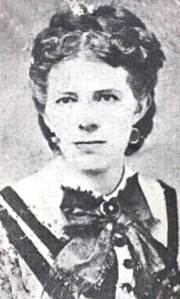
Kate Stone’s Civil War: I suffered intensely

As Stone works her way back to Texas, a toothache adds to her discomfort and fear throughout a journey through wild and war-torn swampland.

KS2

From 2012 to 2015, Stillness of Heart will share interesting excerpts from the extraordinary diary of Kate Stone, who chronicled her Louisiana family’s turbulent experiences throughout the Civil War era.

Learn more about Stone’s amazing life in 1861, 1862, 1863, 1864, 1865 and beyond. Click on each year to read more about her experiences. You can read the entire journal online here.

(Photo edited by Bob Rowen)

As Stone works her way back to Texas, a toothache adds to her discomfort and fear throughout a journey through wild and war-torn swampland.

November 1864

On the road to Texas

We got off from Col. Templeton’s Monday morning, all sorry to part after a delightful summer and fall with not a disagreeable incident to mar our intercourse. They have been the soul of kindness to me, one and all. The direct road through the swamp is impassable, and so Capt. Wylie piloted us a new route. Capt. Wylie, Johnny, and I were on horseback, and about 2 o’clock we reached the hill road without getting bogged down as Johnny had in coming through the old road. We dismounted, entered the carriage, and bade Capt. Wylie a warm farewell, thanking him for his many courtesies. …

It was a rainy day and we did not reach Monroe until about sunset. Capt. Brigham met us, and we waved him adieu as we crossed the Ouachita on a flat. We passed the night at Mrs. Scale’s at Trenton, much to Johnny’s disgust as he does not like them. Some gentlemen called, and we had cards. After they left, Lucy and I tried our fortunes in divers ways as it was “All Hallow’e’en.” We tried all magic arts and had a merry frolic, but no future lord and master came to turn our wet garments hanging before the fire. There were no ghostly footprints in the meal sprinkled behind the door. No bearded face looked over our shoulders as we ate the apples before the glass. No knightly forms of soldiers brave disturbed our dreams after eating the white of an egg half-filled with salt. …

The third morning we left in a cold drizzling rain with a splendid lunch and a jar of pickles, and with kisses and good wishes of the family. I had a raging toothache, because of sitting all day in wet shoes after passing the swamp. Capt. Wylie’s solicitude on the subject of my thin, wet shoes was not uncalled for at last.

Our trip to Vienna was disagreeable. We stopped at twelve, built a fire, enjoyed our dinner, and then smoked leaf cigarettes. They relieved my tooth for a time, but the pain returned. For several days I suffered intensely, nearly ruining all my teeth I fear by using creosote, caustic, and any strong thing people recommended. Our supper at the hotel at Vienna consisted of cold stewed pumpkins, cold greens, and cold white cornbread. Nothing else but cold well water. The breakfast was nearly as unpalatable, but it was warm. We had nothing to eat all day except the pickles, which Johnny first ate and then drank the vinegar. …

The Disco Pall

The mirage inspired the working class and their tenuous allies toward distant horizons of hope, unaware that only predators awaited them in the night.

IMG_1467

The mirage inspired the working class and their tenuous allies toward distant horizons of hope, unaware that only predators awaited them in the night.
A review essay by Fernando Ortiz Jr.

Discussed in this essay:

Stayin’ Alive: The 1970s and the Last Days of the Working Class. By Jefferson Cowie. New York: The New Press, 2010. Pp. 464. $19.58

*****

Jefferson Cowie illustrates in Stayin’ Alive a sad era of American labor’s political and economic strife. The book recounts 40 years of corporations, political figures, and labor’s own leaders undermining, defusing, or ravaging the postwar economic opportunities of working-class Americans, who gradually lost every ally gained during the New Deal era. The working-class identity at the beginning of his story captures their pride and belief in a better future. Their identity at the end is strangled, stabbed, and ground down into a pitiable symbol of social irrelevance, political isolation, and self-absorbed psychic catatonia.1

Cowie divides his story into two sections: “Hope in the Confusion, 1968-1974” and “Despair in the Order, 1974-1982.” He begins with vivid accounts of labor’s role as “junior partners” in a New Deal coalition to re-engineer American capitalism and of a younger generation’s struggles against calcified labor leaders in the 1960s to improve their economic standing. He then moves into the chaos of the 1968 presidential campaigns. Public uproar over the Vietnam War left President Lyndon B. Johnson exhausted. He refused to run for another term, leaving the desiccated corpse of the presidency for Democratic contenders to rip apart like starved hyenas. Vice President Hubert Humphrey emerged from the violent Democratic nominating convention as the last man standing, with only the labor machinery at his side, Cowie writes, making labor the “big boss in the Democratic Party.”2

Labor’s support of the Vietnam War, Cowie explains, meant no alliance with anti-war Democrats. Patriarchal labor leaders rejected civil rights and social movements, which poisoned any relationship with social liberals, women, and minorities. Humphrey’s nomination triumph and labor alliance amounted to little more than a Pyrrhic victory when Richard Nixon, leading a Republican resurgence against divided Democrats, won the election. The cracks in the Democratic lines would also lead to complete political failure in 1972 when Democrat George McGovern challenged then-President Nixon and was obliterated.3

The tragic and foreboding theme of division overshadows every working-class ambition, and Cowie highlights its importance at every turn. The compromised aspirations of the 1935 National Labor Relations Act and Title VII of the 1964 Civil Rights Act are two of his best examples. Both aimed for “occupational justice.” The former enabled union formation and opened economic opportunities to immigrants. The latter ensured non-white, non-male, and non-Christian workers would not face workplace discrimination. The former was rooted in the hopes for economic equality. The latter was rooted in the hopes for cultural and gender equality. Some victories required the exclusion of black rights.

Others required the exclusion of women’s rights. Inherent tensions between the governmental and political forces that achieved both victories doomed the unity needed to face foes in the 1970s and 1980s, who exploited “an unbridgeable chasm” between allies fighting over race or over class. Cowie is at his best when he explores these key flaws in the coalition the unions depended upon throughout the postwar decades.4

Nixon cynically targeted that central cultural-vs.-material dichotomy in the workers’ outlook. He lured them into his New Majority, his own coalition of Republicans, conservative Democrats, and white workers disgusted by the civil rights or other social movements. He emphasized his empathy with their frustrations, and he shared their disgust for “effete” Northern elitists and antiwar protesters. He anesthetized their doubts or shame over their support for a Republican with dazzling themes of shared patriotism. Once working-class Democrats were numbed to their own political transformation and suffocated by the rhetorical American flags in which he wrapped them, Nixon added their votes to his victorious totals, laughed at their seeming blindness to his manipulations, and then subsequently did little to justify their support.5

Cowie ends the book’s first half with the convincing contention that in 1973, after years of high earnings and low unemployment, labor’s prospect for further prosperity began to fade. That year was a turning point, he writes, when “a troika of disasters” began to unfold: an oil embargo, the spread of suffocating stagflation, and the Watergate scandal that led to Nixon’s resignation in 1974. Nixon, Cowie argues, “was the last [postwar president] to court labor seriously.” Instead of playing on the old New Deal chessboard, Nixon simply invented a new game with new rules. After 1974, labor faced threats it was no longer armed against, on battlefield on which it had no effective allies, and fought for a place in an economy that no longer valued its contribution or importance.6

If the book’s first half sees the working class feel the unstable shoreline crumble under their feet, the second half sees them slide helplessly into the shark-infested water. Nixon’s successor, Gerald Ford, defeated Ronald Reagan for the 1976 presidential nomination. Democrat Jimmy Carter then defeated Ford in the general election. Nixon’s and Ford’s defeats emboldened Democratic liberals, and their triumph blinded them to Carter’s limitations as a labor ally. At first, liberals and labor saw new hope in the new president, who could potentially fuse old George Wallace supporters, Southern Democrats, Northern workers, and minorities into a new coalition. Cowie points to hopes for new legislation that would generate more jobs, improve labor laws, and begin a national health insurance. But Carter had little regard for liberal dreams, and his career was not beholden to labor’s support. His narrow and principled vision focused only on particular priorities, and his stiff rudder rarely moved to accommodate labor’s needs.7

Labor needed help more than ever before. Companies laid off workers and moved production overseas. Plants closed. Industries gravitated to regions that rejected union activism, instituted right-to-work laws, and promised tax incentives and low regulation. The general economic malaise acted like a drought, drying up what little hope remained for labor to find economic or political rejuvenation in the Democratic Party’s empty and neglected fountains. By 1980, Cowie explains, “a unionized manufacturing job … had become a rare and coveted source of security” -– a stale scrap from the corporate table crowded with conservative allies.8

Cowie’s pursuit of working-class identity throughout the postwar decades is a powerful intellectual feature of the book. He also argues that working-class identity found itself reflected in TV shows like All in the Family, in ballads from Bruce Springsteen and Devo, and in films like Saturday Night Fever. But the musing quickly turns into bloviating and regrettable tedium. Much of what he wanted to say could have been condensed from two chapters into one, or incorporated into the photos section with enriched captions. The attempt to casually expound on entertainment diminishes the power of Cowie’s serious and informative history.9

Republican Ronald Reagan won the presidency in 1980. By then, Cowie laments, the “redefinition of the working class beyond its New Deal form” had failed. Postwar attempts to maintain workers in the middle class failed. Conservative enemies torpedoed their legislative and policy accomplishments. Carter and a new generation of liberal Democrats had no shared history with labor and little inspiration to court their rusted and scarred loyalties.10 The working classes had nowhere to go but inward in their search for a credible identity. Ironically, that desperation left them open to another round of Nixonian seduction. Reagan’s New Right vision promised a return to a revitalized America built on the rubble Carter and his Eastern elites had left behind, one nation under God, ruled by white Christian men just as they ruled in their own communities.

The potent, sickening sweetness of Reagan’s nostalgic platitudes — Cowie calls it “symbolic sanctuary” — mesmerized workers who hungered for a time when they mattered to American society. Reagan swung the final major blow to the remnants of the labor movement when he shattered the Professional Air Traffic Controllers (PATCO) union strike in 1981. Cowie calls Reagan’s decision “one of the boldest acts of his administration.” Cowie could have added details of the administration’s decision-making process, internal debates, or recollections from Reagan advisors. Instead, the incident, which signaled to the corporate world how weak and vulnerable the union community truly was, is barely explored in a rush to finish the second half of the book, which ends in 1982. By the 1990s, a globalized economy of union-free service workers emerges, ruled by a conservative coalition descended not solely from conservative victories, Cowie argues, but also from liberalism’s failures and shortsighted divisions.11

Cowie’s sad and fascinating story points to the “internal weaknesses” of the working class when explaining why labor movements failed to sustain cohesion and strength long enough after the New Deal to pose a significant challenge to “[m]arket orthodoxy.”12 Perhaps, he argues, their noble alliance was little more than a “conceptual unity” that never truly existed. The mirage inspired the working class – enthused by their New Deal identities — and their tenuous allies toward distant horizons of hope, unaware that only predators awaited them in the night.


1. Jefferson Cowie, Stayin’ Alive: The 1970s and the Last Days of the Working Class (New York: The New Press, 2010), 9-11.
2. Cowie, 9, 29, 83.
3. Cowie, 41, 84.
4. Cowie, 236-237.
5. Cowie, 122-124, 132-133.
6. Cowie, 12, 164.
7. Cowie, 14, 266.
8. Cowie, 15.
9. Cowie, 209-210, 357-369.
10. Cowie, 366.
11. Cowie, 362-364.
12. Cowie, 18.
Thinking As Leverage

Developing deep and critical thinking.

Behind The Wall

Tabletop Games

Rebecca Aguilar

#CallingAllJournalists Initiative | Reporter | Media Watchdog | Mentor | Latinas in Journalism

Anna Fonte's Paper Planes

Words, images & collages tossed from a window.

Postcards from Barton Springs

Gayle Brennan Spencer - sending random thoughts to and from South Austin

The Flask Half Full

Travel stories and culture, with a twist.

Government Book Talk

Talking about some of the best publications from the Federal Government, past and present.

Cadillac Society

Cadillac News, Forums, Rumors, Reviews

Ob360media

Real News That Matters

Mealtime Joy

bringing joy to family meals

Øl, Mad og Folk

Bloggen Øl, Mad og Folk

a joyous kitchen

fun, delicious food for everyone

A Perfect Feast

Modern Comfort Food

donnablackwrites

Art is a gift we give ourselves

Fridgelore

low waste living drawn from food lore through the ages

BeckiesKitchen.com

MUSINGS : CRITICISM : HISTORY : NEWS