Recommended reading / viewing / listening

This week: A Civil War quiz / Google’s underwater Street View / The man who saved Paris from the Nazis / Slave ship discovered / Hepburn the fashion icon

img_0350

This week: A Civil War quiz / Google’s underwater Street View / The man who saved Paris from the Nazis / Slave ship discovered / Hepburn the fashion icon

Most of these great items come from my social media networks. Follow me on Twitter, Tumblr, LinkedIn, MySpace, and Facebook for more fascinating videos, photos, articles, essays, and criticism.

1. What Do You Know? A Civil War Pop Quiz.
By Megan Kate Nelson | Disunion :: The New York Times | June 4
“Where was the westernmost battle of the Civil War fought? Who issued the first Emancipation Proclamation? Who burned Atlanta?”

2. Three Steps on Perry’s Comeback Trail
By Ross Ramsey | The Texas Tribune | June 4
“The road ahead of Rick Perry is a difficult one, but it’s not that complicated. And the number of candidates running for the Republican presidential nomination helps him more than it hurts. If he can take care of three things, the former Texas governor will still be a presidential candidate at the start of 2016.”

3. Don’t Overthink It, Less Is More When It Comes to Creativity
By Jessica Schmerler | Scientific American | May 2015
“If the cerebellum plays a role in creativity, it could alter our understanding of how the brain functions.”

4. Google Street View goes underwater
Ny Nick Lavars | Gizmag | June 5
“In an effort to raise awareness ahead of World Oceans Day on June 8, Google has expanded its Street View service to let users explore a range of stunning coastal and underwater scenes.”

5. Paris Saved by a Bullitt
By Sam Roberts | Snapshot :: Foreign Affairs | June 2
“[O]n this 75th anniversary of the Fall of Paris, a close reading of [U.S. Ambassador William Bullitt’s] private papers, many of which have never been available to biographers before, and the personal accounts of several of his most intimate confidants, demonstrate conclusively that the characteristics that grated most on his critics — his cavalier cocksureness, his ambition, his relentless fraternizing with the French, and his unflagging faith in America’s global obligations — were exactly what the moment demanded.”

6. Grim History Traced in Sunken Slave Ship Found Off South Africa
By Helene Cooper | The New York Times | May 31
“The story of the São José, like the slave trade itself, spanned continents and oceans, from fishing villages in Africa to sheikhdoms where powerful chiefs plotted with European traders to traffic in human beings to work on plantations in the New World.”

7. Turkey’s Erdogan challenges opposition to find his golden toilet seat
By Humeyra Pamuk and Nick Tattersall | Oddly Enough :: Reuters | June 1
“Irritated by accusations of lavishness, Turkish President Tayyip Erdogan has vowed to resign if the leader of the main opposition can find a single golden toilet seat in his vast new palace.”

8. The Wife Bonus Is Imperfect, But It’s Not Prostitution
By Phoebe Maltz Bovy | New Republic | May 31
“It doesn’t suddenly become a form of prostitution if, temporarily or even permanently, the female partner in an opposite-sex relationship is the substantially lower earner, or is not working outside the home.”

9. How Katharine Hepburn Became a Fashion Icon
By Amy Henderson | Smithsonian.com | May 2015
“Hepburn was part of the post-suffrage generation of women, and her screen persona resonated with that generation’s modern spirit of independence. Despite RKO’s determination to brand her otherwise, Hepburn succeeded in inventing herself.”

10. For Incarcerated Japanese-Americans, Baseball Was ‘Wearing the American Flag’
By Michael Beschloss | HistorySource :: The New York Times | June 2014
“By 1943, when some of those in the relocation camps were allowed to volunteer for war service, some of the ballplayers joined the Army’s almost all-Japanese-American 442nd Regimental Combat Team, which suffered grievous casualties in Europe and came to be called the most decorated military unit in American history.”

Recommended reading / viewing / listening

This week: FIFA president re-elected / Pregnancy and depression / Orson Welles memoir discovered / Uber in Mexico / Hastert scandal

IMG_0431

This week: FIFA president re-elected / Pregnancy and depression / Orson Welles memoir discovered / Uber in Mexico / Hastert scandal

Most of these great items come from my social media networks. Follow me on Twitter, Tumblr, LinkedIn, MySpace, and Facebook for more fascinating videos, photos, articles, essays, and criticism.

1. Blatter Control: FIFA Head Wins New Term Despite Corruption Probe
By David Francis | Passport :: Foreign Policy | May 29
“The Justice Department appears to be building a mob-style case against him, flipping low-level officials in hopes of then using their testimony to snag higher-ups. Whether they’ll ever get to Blatter remains to be seen.”

2. CBS’ Bob Schieffer Retires Sunday As Last Of The Old-School TV Anchors
By Eric Deggans | The Two-Way :: NPR News | May 29
“Schieffer leaves CBS with impressive stats. He’s one of the few reporters to have covered the White House, Congress, the State Department and the Pentagon. He’s interviewed every president since Richard Nixon and moderated three presidential debates.”

3. The characters in the new ‘Star Wars’ movie have pretty weird names
By Reed Tucker | New York Post | May 29
“From Sio Bibble to Grand Moff Muzzer, names in the world of Star Wars have always had their own special charm.”

4. Shields and Brooks on Dennis Hastert charges, Ashton Carter Iraq comments
Shields & Brooks :: PBS Newshour | May 29
“[T]he indictment and allegations of misconduct against former Speaker of the House Dennis Hastert, Defense Secretary Ashton Carter’s comments about the Iraqi army’s defeat at Ramadi, 2016 campaign announcements from Rick Santorum and George Pataki.”

5. Mexico taxi drivers threaten to ‘hunt down’ Uber cars
By Camilo Smith | La Voz de Houston :: Houston Chronicle| May 29
“Earlier this week taxi drivers blocked traffic to protest the arrival of the ride share service and according to reports the head of a taxi organization told the press the hunt is on for Uber drivers.”

6. Fact-Checking San Andreas With a Seismologist
By Alissa Walker | Gizmodo | May 29
“Among the many luminaries invited to preview the film was Dr. Lucy Jones, the USGS seismologist who recently took me on a walk along the Hollywood Fault, which runs just a block from the theater where San Andreas premiered.”

7. How Do You Define a Gang Member?
By Daniel Alarcon | The New York Times Magazine | May 27
“Laws acros the country are being used to target young men who fit the description for gang affiliation. But what if they aren’t what they seem?”

8. Hastert hometown rocked by scandal
By Jake Sherman and Hillary Flynn | Politico | May 29
“In Yorkville, Ill., shock and disbelief over allegations against a beloved teacher and coach.”

9. Archivists Uncover an Unfinished Memoir By Orson Welles
By Erin Blakemore | Smithsonian.com | May 29
“Fragments of ‘Confessions of a One-Man Band’ discovered in a newly-acquired trove of documents”

10. The Secret Sadness of Pregnancy With Depression
By Andrew Solomon | The New York Times Magazine | May 28
“Pregnant women often fear taking the antidepressants they rely on. But not treating their mental illness can be just as dangerous.”

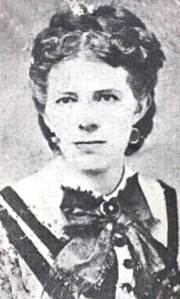
Kate Stone’s Civil War: One of life’s greatest trials

With Mamma away, Stone remains in command of the Tyler home, and with that duty comes caring for sick friends.

KS11

From 2012 to 2015, Stillness of Heart will share interesting excerpts from the extraordinary diary of Kate Stone, who chronicled her Louisiana family’s turbulent experiences throughout the Civil War era.

Learn more about Stone’s amazing life in 1861, 1862, 1863, 1864, 1865 and beyond. Click on each year to read more about her experiences. You can read the entire journal online here.

(Photo edited by Bob Rowen)

With Mamma away, Stone remains in command of the Tyler home, and with that duty comes caring for sick friends.

Feb. 12, 1865

Tyler, Texas

Mamma is still away, and from the condition of the roads we know not when to expect her. We miss her dreadfully, but we have had much company. Mrs. Carson has been sick, and we walk over there nearly every evening. Poor Mr. Alexander died recently, and Mrs. Hull, who had been sitting up all night, sent for me early one rainy morning to come and relieve her. I remained until dark, a most dreary day, for though Mr. Alexander was the merest acquaintance, we felt for his wife and children. The duty of visiting the sick and afflicted is one of life’s greatest trials.

Met a delightful gentleman when I spent the day at Mrs. Savage’s. He is Dr. Boone, a Missourian, handsome, elegant, the Medical Director for the Northern District, and is stationed at Bonham. He is trying to get Dr. McGregor to exchange with him. I only wish they will. He would be a social acquisition. He called with Dr. Weir yesterday morning and soon challenged me to a game of chess. I won the first and he the second and so the championship is undecided. He is to come as soon as he returns to play the decisive game. …

We hear today the enemy are advancing on Monroe. If so, we do not know when Henry will find Harrison’s brigade. Reports of a great battle between Lee and Grant. Our forces victorious.

There is no sewing hurrying us now. Sister gets off early to school after our usual breakfast, beef and biscuit, syrup, and homemade coffee monotonous, but the best we can do. …

Recommended reading / viewing / listening

This week: CSS H.L. Hunley emerges / Writing: A job or a calling? / Solving a math mystery / Gaza children with PTSD / What caused her cancer?

KS33

This week: CSS H.L. Hunley emerges / Writing: A job or a calling? / Solving a math mystery / Gaza children with PTSD / What caused her cancer?

Most of these great items come from my social media networks. Follow me on Twitter, Tumblr, LinkedIn, MySpace, and Facebook for more fascinating videos, photos, articles, essays, and criticism.

1. After 150 years, Confederate submarine’s hull again revealed
By Bruce Smith | Associated Press | Jan. 30
“What [scientists] find may finally solve the mystery of why the hand-cranked submarine sank during the Civil War.”

2. Facebook needs a ‘Sympathy’ button
By Amy-Mae Elliott | Mashable | Jan. 25
” It can mean a feeling of pity or sorrow for someone else’s misfortune, and also an understanding between people — a common feeling.”

3. Is Being a Writer a Job or a Calling?
By Benjamin Moser and Dana Stevens | Bookends :: Sunday Book Review | Jan. 27
Moser: “Even the best writing won’t have the immediate, measurable impact of a doctor’s work, or a plumber’s.”
Stevens: “Of course a writer is going to lean toward saying writing is a calling — that’s our job.”

4. The Pursuit of Beauty
By Alec Wilkinson | The New Yorker | Feb. 2
“Yitang Zhang solves a pure-math mystery.”

5. Hundreds of thousands of children shell-shocked after the war in Gaza
By Robert Tait | The Telegraph | Jan. 29
“Children who saw their siblings or parents killed, often gruesomely, have been left stricken, and around 35 per cent to 40 per cent of Gaza’s million children are suffering from shell-shock according to Hasan Zeyada, a psychologist with the Gaza Community Mental Health Programme.”

6. What Caused My Cancer?
By Shana Bernstein | Pacific Standard | Jan. 29
“Was it bad genes? Bad luck? Or was it the toxins I eat, drink, breathe, and touch on a regular basis because the United States has a policy of putting the burden of proof for product safety on the consumer?”

7. The Fire of 1910 — Why It Still Matters
By Timothy Egan | Inside American Experience | Jan. 29
“Never in recorded United States history has there been anything to match the fire of 1910. For its size, its ferocity, its impact, nothing comes close.”

8. 50 years after funeral, Churchill towers over UK politicians
By Jill Lawless | Associated Press | Jan. 30
“Modern politicians know better than to invite comparisons to the larger-than-life Churchill — a noted ‘bon vivant’ … who kept 10 Downing St. stocked with Pol Roger Champagne.”

9. Seven questions every editor should ask the writer
By Roy Peter Clark | Poynter | Jan. 30
“After asking these questions to hundreds of writers, I have confidence that the answers provided by the writer can guide a coaching editor on how best to help the writer over time.”

10. For Incarcerated Japanese-Americans, Baseball Was ‘Wearing the American Flag’
By Michael Beschloss | HistorySource :: The New York Times | June 2014
“By 1943, when some of those in the relocation camps were allowed to volunteer for war service, some of the ballplayers joined the Army’s almost all-Japanese-American 442nd Regimental Combat Team, which suffered grievous casualties in Europe and came to be called the most decorated military unit in American history.”

5 (more) facts about orgasm

2014 in review

Thank you for making 2014 the best year ever. Read the year-end WordPress graphical roundup.

Thank you so much for making 2014 Stillness of Heart‘s best year ever.

Here’s an excerpt:

The concert hall at the Sydney Opera House holds 2,700 people. This blog was viewed about 12,000 times in 2014. If it were a concert at Sydney Opera House, it would take about 4 sold-out performances for that many people to see it.

Click here to see the complete report.

Step by step

One step at a time. That’s all I have to believe in.

KS59

Slowly but surely, I’m building a full and rich life.

I have to believe that. Maybe happiness comes later.

Recommended reading / viewing / listening

This week: The best pieces on Cuba, the United States, the Castros, and what the future holds.

IMG_2095

This week: The best pieces on Cuba, the United States, the Castros, and what the future holds.

Most of these great items come from my social media networks. Follow me on Twitter, Tumblr, LinkedIn, MySpace, and Facebook for more fascinating videos, photos, articles, essays, and criticism.

1. No word yet from Fidel amid historic US-Cuba shift
By Anne-Marie Garcia | Associated Press | Dec. 19
“Everyone in Cuba is talking about the startling turn in relations with the United States, with one notable exception: Fidel Castro.”

2. Without Washington as its enemy, what will define Cuba?
By Tom Gjeten | The Washington Post | Dec. 19
“Both governments are gambling that this new world will suit their respective political interests. In this negotiation, however, there is no win-win: One government or the other is likely to lose.”

3. Cuba’s cash boon for GOP
By Kenneth P. Vogel and Tarini Parti | Politico | Dec. 19
“[W]hile polls show that most Americans favor normalization, wealthy donors for whom the issue is a top priority overwhelmingly oppose engaging with the Castro regime. …”

4. Why Congress Hates Your Cuban Rum
By Tim Mack | The Daily Beast | Dec. 19
“Havana Club or ‘American’ Havana Club? How untangling decades of Washington’s embargo politics could start a rum war among the world’s most powerful alcohol companies.”

5. The Revolution Fidel Castro Began Evolves Under His Brother
By Damien Cave | The New York Times | Dec. 18
“At a moment described by many as an equivalent to the collapse of the Berlin Wall, the absence of Fidel Castro … spoke volumes. For many Cubans, it confirmed that Fidel, perhaps by his own design, is slipping further into the past, into history, at a time when his approach to the United States seems to be fading as well.”

6. A Historical Perspective on the Cuba-U.S. Relationship
By Jason Steinhauer | Insights :: The Library of Congress | Dec. 19
“Let’s start with this: soon after Fidel Castro’s rise to power, the U.S. viewed Cuba as a security threat. What was the basis for that viewpoint?”

7. Detente Scrambles Political Calculus in Latin America
By Reed Johnson, Ezequiel Minaya, and Kejal Vyas | The Wall Street Journal | Dec. 18
“The Detente Between the U.S. and Cuba Has the Potential to Redraw Political and Economic Alliances Across the Hemisphere”

8. Cha-Cha-Cha: Obama’s On a Roll
By John Cassidy | The New Yorker | Dec. 19
“If you doubted that President Obama’s decision to normalize relations with Cuba was a political and strategic masterstroke, you only have to look at the reaction it has engendered to see otherwise.”

9. A Cuban who sold his beachfront home says he might regret that move
By Marco Werman | The World :: PRI | Dec. 19
“Yuro is part of the generation of Cubans known as the ‘lost generation.’ The ones who came of age after the fall of the Soviet Union — and the loss of all those Russian oil for sugar subsidies.”

10. The US Breaks Ties with Cuba
Witness :: BBC | Dec. 18
“It was in January 1961 that the USA first broke off diplomatic relations with Cuba. Wayne Smith was one of the last diplomats to leave the US embassy in Havana.”

11. Cuba: A Reading List
By John Williams | ArtsBeat :: The New York Times | Dec. 18
“[W]e asked editors at The Times to suggest books that offer the best looks at Cuba’s history and its relationship to the United States. Here are a few of their recommendations:”

12. Americans, here’s what you’ve been missing in Cuba all this time
GlobalPost | Dec. 19
“A new era in US-Cuba relations could see a travel ban lifted. Here are some of the sights US citizens could be visiting soon.”

13. U.S.–Cuba Agreement: Diplomacy At Its Best
By. John Parisella | Americas Quarterly | Dec. 18
“Just as Nixon went to China and Truman set up the Marshall Plan for Europe in the post-World War II era, Obama knew that he had to do something different with a nation just 90 miles off the U.S. shore.”

14. Pope Francis bridged gap between U.S. and Cuba during secret talks
By Paul Richter and Tom Kington | The Los Angeles Times | Dec. 18
“The pope’s secret role in the back-channel talks was crucial because, as a religious leader with the confidence of both sides, he was able to convince the Obama and Castro administrations that the other side would live up to the deal. …”

15. Topic: Cuba
By Ted Piccone and Richard Feinberg | The Brookings Institution | Dec. 2014
“See what they and other Brookings experts have to say about the measures and their impact on the two countries moving forward.”

16. Baseball in Cuba: A looming brain drain
By D.R. | The Economist | Dec. 18
“Cuban veterans represent the last remaining loophole in MLB’s regulation of players’ entry to the league, which helps to maintain competitive balance between rich and poor clubs.”

17. Opening Cuba and Closing Gitmo?
By James Stavridis | Foreign Policy | Dec. 19
“Havana will be pushing hard to shut the naval station at Guantanamo Bay — but Washington shouldn’t give in.”

18. Cuba’s Christmas Surprise for Caracas
By Daniel Lansberg-Rodriguez | Foreign Policy | Dec. 18
“Despite Maduro’s self-serving rhetoric, future U.S. tourism dollars, increased remittances, and access to foreign markets could easily replace the resale value of Venezuelan oil. Cuba’s wily leaders have made it clear that they’re more willing to offend Maduro than to risk being left standing when the salsa stops.”

19. The Democrats’ risky Cuba bet
By James Hohmann and Kyle Cheney | Politico | Dec. 17
“Will Florida’s changing demographics offset a backlash among older Cuban-Americans?”

20. As Obama opens to Cuba, China experts remember benefits from U.S. engagement
By Simon Denyer | The Washington Post | Dec. 19
“China has become a partner with the United States in some ways but also a powerful rival, geo-strategically and economically. Its leadership remains deeply suspicious of Western values, even as it pursues a deeper relationship with the United States.”

The Silent Enemy

The United States battled polio long before it ever faced the Soviet hegemonic threat, but only during the Cold War did the U.S. achieve significant victories in the battle against the virus.

IMG_1346[1]

The United States battled polio long before it ever faced the Soviet hegemonic threat, but only during the Cold War did the U.S. achieve significant victories in the battle against the virus.

A review by Fernando Ortiz Jr.

******

Discussed in this essay:

Polio: An American Story. By David M. Oshinsky. New York: Oxford University Press, 2005. Pp. 342. $20.45

The United States battled polio long before it ever faced the Soviet hegemonic threat, but only during the Cold War did the U.S. achieve significant victories in the battle against the virus. The struggle, as David M. Oshinsky beautifully explains in Polio: An American Story, contributed to middle-class insecurities over real and perceived communist, nuclear, and social threats throughout the era, and it made superstars out of squabbling scientists determined to find a safe vaccine. But the story he tells also serves as a prism through which to view other aspects of U.S. history: the old racial and ethnic fault lines scarring twentieth-century America, the evolution of nationwide fundraising efforts, the heartstring-tugging advertisements needed to inspire donations, and the political maneuvering vital to ensure any historic scientific victory would be seen as a victory only a Western democratic and capitalism system was capable of bestowing to a war-torn world. Oshinsky’s book intertwines each thread to create a vibrant tapestry of tragedy and triumph, groundbreaking science and fleeting fame, and flawed and brittle greatness.1

Franklin Delano Roosevelt and Jonas Salk are the two great mountains dominating the landscape Oshinsky paints for his readers. His narrative talents beautifully trace efforts predating the Cold War that marshaled the American people on a national scale to fight an illness from which no one, not even New York patricians, were safe. Roosevelt’s struggle and determination energized at-first modest efforts to help polio victims, like the Warm Springs rehabilitation center. He then inspired national efforts, like the multi-city celebration of his birthday to raise funds for the National Foundation for Infantile Paralysis, one dime at a time, and like mothers marching through neighborhoods to collect donations. The March of Dimes demonstrated how to creatively organize a public grassroots fundraising movement. Advertisers conceived the poster child to promise what a thousand words could not. The “concept of philanthropy as consumerism” offered hope to Americans “investing” in their nation’s scientific talent, its ingenuity, and its predestined victory. They were funding their own protection.2

Politicians like Roosevelt pointed to the problem. Scientists like Jonas Salk worked on the solution. Oshinsky’s antiheroes are Salk, who focused on a killed-virus vaccine, and his arch-rival Albert Sabin, who worked on a live-virus vaccine. Oshinsky first celebrates their intellectual achievements and then darkens his portraits with their less-than-admirable qualities, like pettiness, selfishness, jealousy, and hypocrisy. Salk and Sabin are both diminished but also become fuller characters, and Oshinsky’s masterful management of this character development is one of the book’s great strengths. People build their lives with mistakes, aspirations, romantic decisions, and insecurities. Oshinsky argues that history is the result of that grinding process. By humanizing Salk, Sabin, and Roosevelt, the three most recognizable figures in the polio history, he makes their scientific and political achievements all the more extraordinary.

Salk’s emergence as the public face of the scientific effort to conquer polio, beginning with his face on the cover of Time magazine and interviews with leading journalist Edward R. Murrow, embodied the Cold War trend of Americans primed to accept expert advice and direction, and certainly expertise was desperately needed during such a health crisis. But Salk, Oshinsky explains, was more than an expert. He appeared to the public as the vanguard of America’s progress. He wasn’t the faceless, all-knowing narrator of films explaining how to get a date or how to endure a nuclear shockwave. Salk was seen, interviewed, trusted, and believed. He was a husband and a father willing to demonstrate his killed-virus vaccines on his own sons before he tried it on anyone else’s. He characterized the polio vaccine as “the people’s vaccine.”3

The massive 1954 vaccination trials signaled that the war on polio was progressing and demonstrated again how polio could marshal Americans on a national scale. Oshinsky notes that the trials shared front-page coverage with the French defeat at Dien Bien Phu in Vietnam, the Army-McCarthy hearings, and the Brown v. Board of Education court decision – each a key piece of the Cold War struggle with communism at home and abroad, each echoing the vague promises of American democracy. When the Francis Report declared that the Salk vaccine worked, “April 12 resembled another V-J Day.” Sadly, the 1955 Cutter incident shattered the euphoria over and public trust in the vaccine. Critics of the National Foundation’s private efforts to develop and distribute Salk’s vaccine felt vindicated, and they warned of the emergence of socialized medicine. But the Cutter incident’s consequences also included improved polio production, highlighted the effectiveness of the forerunner of today’s Centers for Disease Control, and moved more control over and responsibility for public health into federal hands.4

Oshinsky argues that Salk and Albert Sabin both had Cold War-era political value. Their vaccines symbolized American ingenuity and optimism. The Eisenhower administration sensed Salk’s political value to Republicans angling to not only appear Rooseveltian in their support of the polio war but also to diminish Democratic association with the polio war’s victories. The Sabin vaccine, first administered to millions of Soviet children in 1959, had value to both the U.S. and the Soviets. Sabin found himself angling to ensure news of the successful vaccination program — which he feared could be seen as “typical Soviet propaganda” — was shared with the world. As Soviets asserted that their approach nearly wiped out polio, Americans worried about not just a missile gap, but also a vaccine gap. Americans wanted their Sabin vaccine too.5

Oshinsky subtly weaves ethnicity, class, and race into his polio story. Before the vaccine’s development, Americans blamed immigrants for bringing disease to America (Irish and cholera, Jews and TB) and viewed lower-class slums as cesspools of infection. And yet the poor and rich were struck equally. The wealthy blamed their immigrant servants for bringing infection into their sanitized homes. Polio defied the assumption that disease was found only in the slums. It also shattered the hope that leaving the slum life behind – ascending the class ladder — also meant leaving any risk of crippling disease behind. Scientists thought black Americans were less susceptible to polio, so they received less attention during outbreaks. During the 1954 trials, black Alabama children took their shots outside the white school, where they were banned from the restrooms. And by the mid-1950s, polio, once the scourge of suburban middle class, now ravaged the lower classes who could not afford the three-shot-plus-booster vaccination. Oshinsky also offers a detailed examination of women in this story, particularly killed-virus scientist Isabel Morgan. But there are too few of their stories, which leave the reader yearning for a better gender balance throughout the narrative. Surely, more could have been said about how mothers endured the anguish of crippled or dying children, how wives feared or embraced the sudden publicity burning onto their scientist husbands, or what motivated women to volunteer for fundraisers and vaccination efforts.6

Stylistically, Oshinsky’s decision to explore in narrative form the complex history of the polio struggle is a daring one. He manages a raucous crowd of fascinating and controversial characters with Dickensian elegance, moving them forward in compelling ways through scientific developments that would easily put most readers and historians to sleep, and punctuating his smooth writing style with moments of drama, foreboding, and the ragged endings every life experiences. His devotion to personal details sometimes goes too far, particularly with minor characters, but overall, his focus on the people guiding, experiencing, and enduring the polio struggle humanizes the entire era for readers who may never experience a similar epidemic.

His notes are a mixed bag of secondary and primary sources. Scientific histories and biographies complement letters, diaries, news reports, web links, official reports, and a few interviews, including Salk’s sons, journalist John Troan, and Salk’s embittered underling Julius Youngner. These are the doors Oshinsky leaves open for any curious readers yearning to learn more and for critics who challenge his approach to this history.

Oshinsky’s work is a lavish and intelligent introduction to America’s struggle with the polio virus. Academic readers may sniff over his narrative talents, scoff at his characterizations, and stomp over his less-than-intense analysis of the era’s social and economic themes, but to do so misses the point of his book. Oshinsky’s work is meant to invite readers unfamiliar with the story, to explain the otherwise-intimidating scientific detail, and to celebrate the men and women who achieved great things for mankind. Oshinsky’s overall message to his readers is hopeful and trusting. Americans can make the world a better place. They have done it before, he says, pointing at his book, and they will do it again and again and again.


1. David M. Oshinsky, Polio: An American Story (New York: Oxford University Press, 2005).
2. Oshinsky, Polio, 5, 40-55, 72. Warm Springs, a 2005 HBO movie, illustrated Roosevelt’s struggle with polio, his efforts to establish the Georgia facilities, and his cinematic journey from aristocratic politician to a man of the people ready to assume a role of national leadership.
3. Oshinsky, Polio, 205-211.
4. Oshinsky, Polio, 188-199, 203, 238.
5. Oshinsky, Polio, 215-216, 253, 266.
6. Oshinsky, Polio, 20-23, 65-67, 256.

Kate Stone’s Civil War: I suffered intensely

As Stone works her way back to Texas, a toothache adds to her discomfort and fear throughout a journey through wild and war-torn swampland.

KS2

From 2012 to 2015, Stillness of Heart will share interesting excerpts from the extraordinary diary of Kate Stone, who chronicled her Louisiana family’s turbulent experiences throughout the Civil War era.

Learn more about Stone’s amazing life in 1861, 1862, 1863, 1864, 1865 and beyond. Click on each year to read more about her experiences. You can read the entire journal online here.

(Photo edited by Bob Rowen)

As Stone works her way back to Texas, a toothache adds to her discomfort and fear throughout a journey through wild and war-torn swampland.

November 1864

On the road to Texas

We got off from Col. Templeton’s Monday morning, all sorry to part after a delightful summer and fall with not a disagreeable incident to mar our intercourse. They have been the soul of kindness to me, one and all. The direct road through the swamp is impassable, and so Capt. Wylie piloted us a new route. Capt. Wylie, Johnny, and I were on horseback, and about 2 o’clock we reached the hill road without getting bogged down as Johnny had in coming through the old road. We dismounted, entered the carriage, and bade Capt. Wylie a warm farewell, thanking him for his many courtesies. …

It was a rainy day and we did not reach Monroe until about sunset. Capt. Brigham met us, and we waved him adieu as we crossed the Ouachita on a flat. We passed the night at Mrs. Scale’s at Trenton, much to Johnny’s disgust as he does not like them. Some gentlemen called, and we had cards. After they left, Lucy and I tried our fortunes in divers ways as it was “All Hallow’e’en.” We tried all magic arts and had a merry frolic, but no future lord and master came to turn our wet garments hanging before the fire. There were no ghostly footprints in the meal sprinkled behind the door. No bearded face looked over our shoulders as we ate the apples before the glass. No knightly forms of soldiers brave disturbed our dreams after eating the white of an egg half-filled with salt. …

The third morning we left in a cold drizzling rain with a splendid lunch and a jar of pickles, and with kisses and good wishes of the family. I had a raging toothache, because of sitting all day in wet shoes after passing the swamp. Capt. Wylie’s solicitude on the subject of my thin, wet shoes was not uncalled for at last.

Our trip to Vienna was disagreeable. We stopped at twelve, built a fire, enjoyed our dinner, and then smoked leaf cigarettes. They relieved my tooth for a time, but the pain returned. For several days I suffered intensely, nearly ruining all my teeth I fear by using creosote, caustic, and any strong thing people recommended. Our supper at the hotel at Vienna consisted of cold stewed pumpkins, cold greens, and cold white cornbread. Nothing else but cold well water. The breakfast was nearly as unpalatable, but it was warm. We had nothing to eat all day except the pickles, which Johnny first ate and then drank the vinegar. …

Behind The Wall

Tabletop Games

Rebecca Aguilar

#CallingAllJournalists Initiative | Reporter | Media Watchdog | Mentor | Latinas in Journalism

Anna Fonte's Paper Planes

Words, images & collages tossed from a window.

Postcards from Barton Springs

Gayle Brennan Spencer - sending random thoughts to and from South Austin

The Flask Half Full

Irreverent travelogues, good drinks, and the cultural stories they tell.

Government Book Talk

Talking about some of the best publications from the Federal Government, past and present.

Cadillac Society

Cadillac News, Forums, Rumors, Reviews

Ob360media

Real News That Matters

Mealtime Joy

bringing joy to family meals

Øl, Mad og Folk

Bloggen Øl, Mad og Folk

a joyous kitchen

fun, delicious food for everyone

A Perfect Feast

Modern Comfort Food

donnablackwrites

Art is a gift we give ourselves

Fridgelore

low waste living drawn from food lore through the ages

BeckiesKitchen.com

MUSINGS : CRITICISM : HISTORY : NEWS

North River Notes

Observations on the Hudson River as it passes through New York City. The section of the Hudson which passes through New York is historically known as the North River, called this by the Dutch to distinguish it from the Delaware River, which they knew as the South River. This stretch of the Hudson is still often referred to as the North River by local mariners today. All photos copyright Daniel Katzive unless otherwise attributed. For more frequent updates, please follow northriverblog on Facebook or Instagram.