As Stone continues her brief stay with friends in Louisiana, she savors the old sights and sounds of her beloved home state.
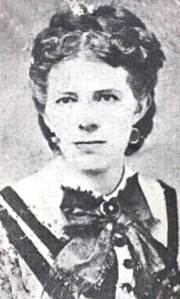
From 2012 to 2015, Stillness of Heart will share interesting excerpts from the extraordinary diary of Kate Stone, who chronicled her Louisiana family’s turbulent experiences throughout the Civil War era.
Learn more about Stone’s amazing life in 1861, 1862, 1863, 1864, 1865 and beyond. Click on each year to read more about her experiences. You can read the entire journal online here.
(Photo edited by Bob Rowen)
As Stone continues her brief stay with friends in Louisiana, she savors the old sights and sounds of her beloved home state.
Sept. 2, 1864
Near Oak Ridge, La.
Mrs. and Col. Templeton are entertaining a Mr. Massengale, just from Texas with news of Capt. Jack Wylie. We may look for him any day now. He will bring three beautiful horses, which we three girls have already appropriated in imagination and expect to race over the whole countryside.
I am too used up by my ride, or rather run, of yesterday to do anything. We have been very busy for the last ten days, riding, sewing, singing, receiving visitors, and playing, but now that the Brigade has gone out to Tensas Parish, we will be quiet for a time. Even Walker’s division is passing through en route to Arkansas, and so for the present we are left defenseless. …
Unfortunately for my pleasure, the report is abroad that I am engaged. There is no truth in it, and it deprives me of much fun. …
I have finished all of Jimmy’s clothes and two dresses for myself, and I feel a real Louisianian once more in the very heart of the swamp, suffocating with the heat, fighting mosquitoes, lazy and languid, little appetite, but luxuriating on fruit for breakfast, dinner, and supper and enjoying curds and cream. The swamp is my own dear land most natural, most restful.
Mamma’s trip to Yankeeland did much good to all of us. The carriage, and such a delightful one, is a great triumph. The dry goods are the greatest comfort, relieving our present necessities, and the books and papers are great entertainment. …
As Stone loses another brother to the Confederate Army, she also records the hanging of two Missouri spies.
From 2012 to 2015, Stillness of Heart will share interesting excerpts from the extraordinary diary of Kate Stone, who chronicled her Louisiana family’s turbulent experiences throughout the Civil War era.
Learn more about Stone’s amazing life in 1861, 1862, 1863, 1864, 1865 and beyond. Click on each year to read more about her experiences. You can read the entire journal online here.
(Photo edited by Bob Rowen)
As Stone loses another brother to the Confederate Army, she also records the hanging of two Missouri spies.
Aug. 23, 1864
Near Oak Ridge, La.
Mamma and I came out to Monroe [La.] and Jimmy joined the army. Mamma and I stopped here at Col. Templeton’s, and then Mamma went on to the river and stayed with Mrs. Newman. She went in the old Jersey but came back in the pretty carriage that we have been wanting ever since we left home. She brought out a carriage load of dry goods that were most welcome.
After staying here a few days, she returned to Monroe for a little stay with Mrs. Wadley and then on home by way of Homer where so many of our friends are established. We stopped there coming out, and they greeted us most cordially. We could not make much of a visit as Jimmy and Mamma were anxious to get on. Mrs. Templeton’s family all insisted on my remaining with them until fall, and then I could go back to Texas with Col. Templeton, who will go out to where the Negroes are beyond Tyler.
Jimmy’s command was camped near here and I could see much of him. Mamma and I knew it would be a delightful visit, and as she unselfishly and I selfishly wanted to stay, I did so and am having a most lovely time. All the family are so kind. …
What a horrible tragedy, the death of Mrs. Hull’s two brothers, hanged as spies in Missouri where they had gone in disguise to recruit for Col. Hull’s regiment. They were with him but he escaped and had the hardihood to go and see them hanged with the faint hope that he might effect their escape. But of course that was hopeless. He made his way out of the state with some men and met a number who knew him but was not betrayed. The men hanged were two gallant young officers of excellent family. I cannot recall their names just now, but their father was the editor and proprietor of one of the leading St. Louis papers and left a large fortune. Poor Mrs. Hull is heartbroken.
It is very warm but we enjoy our ease with open doors and windows, undressed and lounging around. No gentlemen staying in the house to molest or make us afraid. Emmie is busy on a dress that she has had on hand for two weeks. Mary is practicing a delightful concord of sweet sounds, and I have been working on a flannel shirt for Jimmy. …
Nine key books and articles taken together can explain what led to the first sparks of civil violence and how those sparks ignited what evolved into the bloodiest and most important war in U.S. history.
Courtesy of David D. Robbins Jr.
Nine key books and articles taken together can explain what led to the first sparks of civil violence and how those sparks ignited what evolved into the bloodiest and most important war in U.S. history. A review essay by Fernando Ortiz Jr.
Berlin, Ira. “Who Freed the Slaves? Emancipation and Its Meaning.” Union & Emancipation: Essays on Politics and Race in the Civil War Era. Kent, OH: Kent State University Press, 1997.
Dew, Charles B. Apostles of Disunion: Southern Secession Commissioners and the Causes of the Civil War. Charlottesville, VA: University of Virginia Press, 2001.
Fleche, Andre. The Revolution of 1861: The American Civil War in the Age of Nationalist Conflict. Chapel Hill, N.C.: University of North Carolina Press, 2012.
Gallagher, Gary W. The Union War. Cambridge: Harvard University Press, 2011.
Grimsley, Mark. The Hard Hand of War: Union Military Policy Toward Southern Civilians 1861-1865. New York: Cambridge University Press.
Jacobs, Harriet. Incidents in the Life of a Slave Girl. Boston: Bedford/St. Martins, 2009.
Kelly, Patrick J. “The North American Crisis of the 1860s.” The Journal of the Civil War Era 2, no. 3, (September 2012): 337-361.
McPherson, James. “Who Freed the Slaves?” Proceedings of the American Philosophical Society 139, no. 1 (March 1995): 1-10.
*****
The crucial story of U.S. history is the Civil War. But too often readers skip right over the significance of the “Civil” and go right to the “War.” When the spotlight shines only on the armies and the navies, glorious battles and inglorious retreats, and the admirals and generals who won and lost, one can lose sight of why hundreds of thousands of Americans slaughtered each other for years.
Readers forget why and how fundamental cultural and political differences swirled like a hurricane into a galaxy of large and small battles, and how such violence was hardly new in a war-torn nineteenth century world. Scholars forget the transnational democratic movements wafting in the political breezes that inspired or terrified citizens desperately committed to their own visions of American freedom. Students forget why the war was key to measuring the republic’s commitment to preserve the wilting blossoms of international democracy. Everyone forgets that slavery – not states’ rights, not economic domination, not debates over big government — is what steadily fractured every element of antebellum American society, government, economy, and future aspirations.
Fortunately, less than a dozen key books and articles taken together can explain what led to the first sparks of civil violence and how those sparks ignited what evolved into the bloodiest and most important war in U.S. history.
I. The sparks and the fire
White Americans owned black Americans. Slavery as an institution predated the Revolutionary War. Moral debates over its place in the new republic were muted throughout the independence era. The U.S. Constitution legalized the institution of slavery and considered blacks only 60 percent human. Slaves were a massive labor force upon which Southerners built their aristocratic society and King Cotton and sugar industries. Slaves were a highly lucrative commodity that Southern states hoped to sell to new farmers in Western states. Worst of all, slaveholders enjoyed and protected their violent sexual control of the women they owned.
No book better illustrates that horror than Harriet Jacobs’ harrowing account of her life as a slave in Incidents in the Life of a Slave Girl. Her owner, Dr. Flint, sexually harassed her. Her sexual affair with another white man, which produced two slave children, was a desperate attempt to get Flint to sell her off to her lover. She gave up an opportunity to escape to the North to remain near her family. As Flint hunted for her, she hid in an attic for seven years and watched her community, including her children, from a hole in the wall. Her experiences demonstrated how slave women had no control over their sexual lives, their families, or their futures. Their only weapons were their sexuality, their intelligence, and their will to survive. They were trapped in a slaveholding system upheld by national laws, protected by national political leaders, and perpetuated by economic and racial imperatives. Her book, aimed at Northern women, demonstrated the strong and humanizing commitment of black men and women to their families, illustrated the constant sexual threat slavery posed to black women, and explained to her white readers how slavery also destroyed white families by their action and inaction in service of the slaveholding system.
When a new national party, the Republican Party, challenged in the late 1850s the future of slavery in the United States, some Southern leaders raised the old cry for secession from the Union. Since the 1820s, competing economic interests struggled for control over the direction of the quickly growing country. With every era of expansion came carefully-crafted congressional deals delineating into which areas slavery could expand. Some succeeded and some did not. The Louisiana Purchase saw the Missouri Compromise. Territorial gains from the Mexican War saw the doomed Wilmot Proviso. Illinois Sen. Stephen Douglas offered the Kansas-Nebraska Act. With each political generation, the polarization intensified. Southerners were convinced the North sought to contain slavery. Northerners perceived a Slave Power conspiracy that controlled one president after another, dominated both houses of Congress, and infected the Supreme Court’s objective judgment.
Charles B. Dew argues in his slender but powerful Apostles of Disunion that slavery was at the heart of secession. He follows Southern slaveholding speakers as they traveled throughout the South during the presidential election year of 1860, arguing to anyone who would listen that Abraham Lincoln’s election guaranteed the emancipation of the slaves. Emancipation, they insisted, guaranteed race war, racial marriage, and racial equality. Slaves would kill their masters, rape their wives and daughters, and help conceive a nation that held whites equal to blacks. Lincoln’s election marked the end of both Southern civilization and legal subjugation of non-white people, they argued. The only option was Southern separation from a poisoned, doomed republic and the formation of a new one.
After Lincoln’s election, Southern states steadily seceded, and Confederates fired on Fort Sumter in Charleston Harbor. Thousands of Northern citizen-soldiers donned the blue Federal Army uniform and prepared to defend their Union. Looking backwards in history with sympathetic eyes, it is too easy to assume they fought to break the chains of slavery restraining their fellow black citizens. Gary W. Gallagher disagrees. He argues in The Union War that Northern soldiers fought not for slavery but for Union. They fought against a slaveholding aristocracy to preserve their republican government for themselves and for the world, brightening the beacon of democracy sweeping across a dark world of empires and kingdoms. Slavery was ended, yes, but only as a result of the Northern will to strip the South of anything that sustained its resistance to moral and military realities.
II. The reasons
The war ended slavery, but where should history lay the credit for emancipation? James M. McPherson argues in a 1995 essay that Lincoln deserved credit for ultimately freeing the slaves because he directed the war that ensured personally self-emancipated slaves would remain free in a society cleansed of the legalized slave system. Without the Union War, McPherson writes, “there would have been no confiscation act, no Emancipation Proclamation, no Thirteenth Amendment (not to mention the Fourteenth or Fifteenth), certainly no self-emancipation, and almost certainly no end of slavery for several more decades. …” Lincoln was the “political denominator in all the steps” that defeated the Southern slave system.
In 1997 Ira Berlin disagreed with McPherson. His essays insists that grassroots social forces freed the slaves. Union forces would move through Southern communities, and slaves would abandon their homes to join them. When soldiers refused to send the runaways back because they found them useful, the slave system was weakened. When soldiers wrote to their families, and those families as voters helped change congressional and presidential opinion, slavery was weakened. If Lincoln led the way nationally, Berlin argues, it was only because people in immediate contact with the slave system cleared a path for him. If Lincoln had not led, someone else would have.
Lincoln was desperate to bring back the seceded states into the South by any political means necessary. One brilliant historian summarized Lincoln’s thinking with brutal simplicity: If the South came back, Lincoln promised to be the greatest fugitive slave-catcher in history. Even when war began, Mark Grimsley explains in The Hard Hand of War, Lincoln took a conciliatory approach. When armies moved through Southern regions, soldiers would not harm civilians, and they would respect all forms of personal property, particularly slaves.
Lincoln gradually realized that nothing he could do would bring the seceded states back. That crushing realization, coupled with the North’s growing list of defeats in the Eastern Theater, particularly throughout the 1862 Peninsula Campaign, hardened Lincoln’s belief in final victory. He aimed for the Confederacy’s jugular — the slaves — with the ultimate war measure. The Emancipation Proclamation was a clarion call to slaves to abandon their masters and let the entire slaveholding system collapse in on itself.
The conciliatory war gradually became a hard war. As Berlin stresses, soldiers did not return escaped slaves. They took pigs. They took chickens. They ripped down fences for fires. They threw railroad tracks — key for moving Confederate men and material — into those fires. The friction and abrasion of Union forces in Southern territory transformed the way the war was fought. In Georgia, Maj. Gen. William T. Sherman led the transformation from the top with the policy of directed severity. Barns were incinerated. Homes were destroyed. But civilians were not directly harmed. It was violence against property and not people.
III. The women
The war killed and injured hundreds of thousands of soldiers. Northern women cared for Union soldiers with tireless devotion. Louisa May Alcott joined them, and she collected her memories of the experience in Hospital Sketches. The memoir made Alcott famous throughout the North. The book captures the opportunities the war offered to many Northern women, who were expected under normal circumstances to remain in their patriarchal society’s private and domestic sphere. The public sphere was reserved for men. The war was not revolutionary in terms of gender roles, but the extraordinary circumstances made allowances for women willing to walk through the new social cracks. Alcott did exactly that as she joined a Washington D.C. hospital staff. She entered the public sphere as a nurturer — as a nurse. She infantilized her male patients, calling them her boys, and in this temporary wartime sphere she touched their bodies, cleaned their wounds, and guided them from life to death.
Hospital Sketches contributed to the Northern war effort in unique ways. It illustrated for Northern readers the gruesome suffering their soldiers endured in defense of their democratic republic. It celebrated the material, physical, and psychological sacrifices of citizen-soldiers, ennobling them and the nation for which they fought. Alcott portrays one patient as a Christ-like figure — his death for his countrymen makes it possible for a new nation to arise from the ash and blood of a righteous war.
IV. The world
Northerners and Southerners both saw the Civil War as a struggle for the future of freedom in the world, not simply in the United States. Europe’s nationalist revolts in 1848 — and the subsequent monarchical counterrevolutions that crushed them — burned in their memories as North America’s domestic unrest intensified. Andre Fleche’s The Revolution of 1861 and Patrick Kelly’s 2012 article “The North American Crisis of the 1860s” both demonstrate how political leaders and citizens on both sides, standing at the threshold of the revolution of 1861, attempted to align themselves not only with the U.S. revolutionary legacy of the 1770s but also with the revolution of 1848. An era of nationalist revolutionary spirit that streaked around the world — from the mid-1770s to the late-1860s — began and would end in North America.
Both sides, Fleche notes, perceived the Civil War as North America’s opportunity to fulfill the revolution that Europe began. Northerners wanted to destroy New World slaveholding aristocracy. Southerners wanted to escape Northern radicals ready to shatter their racial order. Northerners, as Gallagher emphasizes, viewed their democratic republic as an island of freedom in a treacherous ocean of imperial oppression. Southerners attempted to portray themselves as the freedom fighters, as Dew implies, struggling to uphold the legacy of the Founding Fathers and rebuild anew a self-governing republic.
Sprinkled among the Americans were refugees of the 1848 revolts, particularly Germans, who understood the difficulty of asserting a democratic nation in the shadow of aristocratic oppression. Their enthusiastic participation in the Union war effort, Kelly notes, essentially amounted to a freedom-fighting army at the center of the blue-coated Federal force and a viable political and moral force in Northern cities that supported Republican goals. Unfortunately, Gallagher spends little to no time exploring the 1848 Germans’ contribution to the Union war effort, despite the supreme importance Lincoln placed on the community as a potent source of political and military support.
The war began with both sides seemingly misaligned, with the North defending the status quo and the South fighting for the freedom to break away. But once Lincoln issued the Emancipation Proclamation — temporarily in 1862 and then officially in 1863 — the North leapt past the South on the moral spectrum. The North became the revolutionary force, and the South instantly became the archaic aristocracy, defending the past instead of fighting for the future.
Secession was a dynamiting of the linkages Northerners made to the transnational and transatlantic struggles for nationalism and freedom. When imperial France invaded Mexico and placed a French emperor in charge, Kelly explains, the Confederacy allied itself with the new French rulers. Southerners were desperate for foreign recognition, and not even moral hypocrisy was too high of a price to pay for it. The supposed Southern freedom-fighters promised to support the French government in Mexico — the first crashing counterrevolutionary wave in the New World — if France recognized the Confederacy. Lt. Gen. U.S. Grant’s determination to support Mexican revolutionaries highlights the dual advantage of final Union victory: once the New World aristocratic threat was defeated, the United States would join the fight in driving out Old World aristocratic threat and fulfill the goals of the 1848 struggles for freedom.
The Civil War changed the United States in ways historians are still discovering, if only because it occurred in a world as complex if not more so than today’s. War empowered women as it freed slaves. It illuminated sexual abuse, personal bravery, and inextinguishable devotion. It linked desperate defeats in distant foreign lands to the victories of Northern men marching through Southern valleys. It demanded that Americans view war, race, class, and freedom in new ways. The Civil War was the test every citizen had to pass, and its lessons dare every subsequent generation to fulfill the liberties the war was waged to protect.
Stone feels adrift throughout an era where the past is too painful to remember and the future is too horrific to imagine.
From 2012 to 2015, Stillness of Heart will share interesting excerpts from the extraordinary diary of Kate Stone, who chronicled her Louisiana family’s turbulent experiences throughout the Civil War era.
Learn more about Stone’s amazing life in 1861, 1862, 1863, 1864, 1865 and beyond. Click on each year to read more about her experiences. You can read the entire journal online here.
(Photo edited by Bob Rowen)
Hidden beneath her upper-class sneering at a Texas barbecue, Stone grimly illustrates the wartime reality of senseless death and the emotional and psychological numbing required to endure it from one day to the next. She feels adrift throughout an era where the past is too painful to remember and the future is too horrific to imagine.
June 26, 1864
Tyler, Texas
This has been a busy week, clouded by the thought of Jimmy’s departure. We are finishing off his clothes and renovating ours, for we will go with him as far as Monroe [La.]. …
We have had our own trials patching up our clothes. We had no idea we were so near being ragamuffins until we took an exhaustive survey of our underclothes. Oh, for bolts and bolts and more bolts of white domestic. If Mamma’s trip proves successful, we will be able to better our condition as regards habiliments. Mamma is having quite a store of Texas goodies made up … to solace the inner man while on the road. …
Friday there was a grand Masonic celebration that we, in common with all the town and county, turned out to see. Mr. Michele took possession of our party and Sally Grissman and established us in the most pleasant and also most conspicuous seats and then devoted himself to our entertainment. Lt. Alexander and Dr. McGregor took possession of a nearby window, and we all had a merry morning but did not profit by the speeches. A large crowd and barbecue dinner that Mr. Michele insisted was not clean enough for us to eat. “Why,” said he, “should we dine with plebians?” I hope no native heard him. We went out, as Mamma said, “to see the animals feed.” Then we (the select few) returned home to dinner …
That night there was a party given at the hotel by Col. Anderson. He is in command, I think, of the Ordnance Department here and is an old army officer. His wife is charming. Emily and I went, to our surprise, and spent a charming evening. It was a most mixed and odd-looking crowd. Neither Emily nor I possessed a party dress, but we did not bring discredit on the swamp and looked well enough.
I did not think two months ago I would ever dance or care to talk nonsense again. But one grows callous to suffering and death. We can live only in the present, only from day to day. We cannot bear to think of the past and so dread the future. The refugees remind me of the description of the life of the nobility of France lived during the days of the French Revolution thrusting all the cares and tragedies of life aside and drinking deep of life’s joys while it lasted. This was our debut in Tyler society, and without self-flattery I may say we were quite a success.
I took a buggy ride yesterday with Dr. McGregor, who has a fine span of horses, and we just flew up and down (especially down) the hills. Enjoyed it highly, though I did think we would capsize on every hill we rushed down. On our return all the boys met us at the gate and could scarcely contain themselves at such a splendid opportunity for teasing, but the dread of future punishment at my hands kept them fairly in bounds. …
The horror of the Overland Campaign hangs over the Stone household but she holds out hope Lee will outsmart Grant in the end.
From 2012 to 2015, Stillness of Heart will share interesting excerpts from the extraordinary diary of Kate Stone, who chronicled her Louisiana family’s turbulent experiences throughout the Civil War era.
Learn more about Stone’s amazing life in 1861, 1862, 1863, 1864, 1865 and beyond. Click on each year to read more about her experiences. You can read the entire journal online here.
(Photo edited by Bob Rowen)
The horror of the Overland Campaign hangs over the Stone household but she holds out hope Lee will outsmart Grant in the end.
Again Stone impresses with her ability to illustrate everyday life and mores in so few detailed sentences. Note how the Stones and their friends are now regularly visiting Union prisoners at the nearby Confederate camp.
June 19, 1864
Tyler, Texas
A letter from My Brother but dated three months ago. He writes very sadly and thinks he will not see us again until the war is over. He was safe on the fourth of May, but it was on the fifth that those terrible battles commenced. We see from the papers that his corps was engaged every day. The fate of Richmond still trembles in the balance. Lee’s army has fallen back within the fortifications, and Grant is beginning to burrow as they did at Vicksburg. The most thrilling report is that Beauregard has captured Butler and 9,000 men. May it only be true. …
We have quite a trip in contemplation. Mamma is thinking of going to Monroe [La.] on business and taking me and one of the boys on for a pleasure jaunt. Which one of the boys depends on Mrs. Savage, who thinks of joining us with Emily. In that event Mamma will leave Jimmy at home as affairs are getting too interesting with Jimmy and Emily. He is too susceptible, and Mrs. Savage is too much of a matchmaker for Jimmy to be hourly exposed to such fascination for the next two weeks. Emily is a designing, forward girl, exceedingly so for her age. Jimmy is making every preparation to go with us and join the army at Monroe and will be horribly disappointed if Mamma refuses her consent.
Our usual refugee visitors. Yesterday evening returning from a ride, Jimmy and I were called in by Mrs. Carson, who begged us to stay to supper, at which we enjoyed delightful venison, killed by Jimmy Carson, and some of Mrs. Carson’s new style marmalade excellent. Read the papers to Mrs. Carson and rode home in the most glorious moonlight.
Mamma is very sad since receiving My Brother’s letter. She is very anxious about him. We have a nice set of real chessmen, made by one of the prisoners. We loaned them some days ago to the hospital in response to a polite note asking for them. The boys often go there. They have taken a great fancy to Mr. Griffin, a wounded boy. He must be a nice young fellow. Mamma and Mrs. Carson and some of the other ladies go quite frequently.
Reading about Theodore Roosevelt’s love for his family proudly reminded me of my father’s love for his own family.
A Father’s Day post from a few years ago …
I spent Father’s Day with my parents in Fredericksburg, Texas. We had a wonderful time.
When I returned home, I reviewed my email, skimmed the latest headlines from the Associated Press (old habit), scrolled for a few moments through Twitter, and numbly drifted through my Facebook newsfeed. A post from the Theodore Roosevelt Association revived me to full attention. They too celebrated Father’s Day. They posted a few touching thoughts on Roosevelt’s love for his family:
Roosevelt always saw his family as the needle of his life’s compass. … The study of Teddy Roosevelt as a father is a testament to his priorities. He did not live to see his face on Mount Rushmore or to appreciate just how much he captured the imagination of the country. But he did live to see the children he loved grow to adulthood and develop into honest, hardworking citizens who built families of their own.
I can think of another loving father who put his family above and beyond anything else he accomplished or experienced in life, who taught me how a man becomes and remains a true father to his children. I’m sure you’ll understand my fervent belief that his face should be on a mountain too.
Happy Father’s Day to all fathers — and to my own.
Stone mourns a family friend’s death. She also notes ominously the growing epidemic of deadly disease at a nearby Confederate camp filled with Northern prisoners of war.
From 2012 to 2015, Stillness of Heart will share interesting excerpts from the extraordinary diary of Kate Stone, who chronicled her Louisiana family’s turbulent experiences throughout the Civil War era.
Learn more about Stone’s amazing life in 1861, 1862, 1863, 1864, 1865 and beyond. Click on each year to read more about her experiences. You can read the entire journal online here.
(Photo edited by Bob Rowen)
As another oppressive Texas summer begins, Stone mourns a family friend’s death. She also notes ominously the growing epidemic of deadly disease at a nearby Confederate camp filled with Northern prisoners of war.
June 14, 1864
Tyler, Texas
Comfortably seated by an open window in our lone rocking chair, I am munching Confederate cakes all alone with nothing to do. … Johnny is lying on his stomach with his heels in the air … Johnny has taken great delight in Shakespeare and reads and re-reads his favorite plays. He is already a good Shakespearean scholar. Sister is amusing herself with Sally, and the others are off spending this day with Mrs. Prentice. If there is one thing I most detest, it is spending a long summer day away from home. …
Jimmy received a letter from Mr. Hardison telling of Mrs. Hardison’s death in February. We are truly grieved to hear it. She was a high-minded good woman and one of our best friends. She died in Red River County, where they have been living since fall. Her life was a scene of trial from the time they fled from home. He writes most sadly. They have no books, no papers, hear no news, and have made no new friends and are alone on the bleak prairie, strangers in a strange land. We pity them all but most, her poor mother, Mrs. Alexander.
Anna and Dr. Meagher returned a few days ago. He is stationed here now in charge of the Yankee prisoners. The prisoners are in a most pitiable condition, perfectly destitute. Some have only a blanket to wear and others only one garment. There is much sickness and death among them and the authorities are powerless to get clothes for them. No clothes or blankets to be bought. …
Stone’s seamstress slave returns, which Stone notes with sarcasm. Later, she and a friend spend a day lounging and criticizing Texas.
From 2012 to 2015, Stillness of Heart will share interesting excerpts from the extraordinary diary of Kate Stone, who chronicled her Louisiana family’s turbulent experiences throughout the Civil War era.
Learn more about Stone’s amazing life in 1861, 1862, 1863, 1864, 1865 and beyond. Click on each year to read more about her experiences. You can read the entire journal online here.
(Photo edited by Bob Rowen)
Stone’s seamstress slave returns, which Stone notes with sarcasm. Later, she and a friend spend a day lounging and criticizing Texas.
June 1, 1864
Tyler, Texas
Adeline got back today from her “rustication” so we turn the sewing over to her. …
Made Lela Lawrence a pretty fan today, but Jimmy has not the handle ready yet. Jimmy Carson and I have been having some charming rides over the steep hills and through the deep valleys, all fragrant with the breath of flowers.
June 6
Nearly a week of rain. … No visitors, no books, no letters, no anything. …
Emily and I spent Saturday alone at Judge Richardson’s and had a lovely time. The Judge and Mrs. Prentice went off on business, and Emily and I took possession of comfortable rocking chairs on a low shady gallery with plenty of books and a basket of green apples. Just as we were tiring of these luxuries, a gentleman, a refugee as we discovered, came to call on the Judge and made himself very entertaining for the rest of the morning. We compared notes on Texas, and I fear we rendered harsh judgment.
The Richardsons live in a secluded spot five miles from Henderson but have more comforts than anyone we know. With few neighbors, it must be awfully lonely with only her little girl and Judge Richardson. …
Martial optimism mixes with frustration as Stone sits down to sew, only because her seamstress slave has escaped.
From 2012 to 2015, Stillness of Heart will share interesting excerpts from the extraordinary diary of Kate Stone, who chronicled her Louisiana family’s turbulent experiences throughout the Civil War era.
Learn more about Stone’s amazing life in 1861, 1862, 1863, 1864, 1865 and beyond. Click on each year to read more about her experiences. You can read the entire journal online here.
(Photo edited by Bob Rowen)
Martial optimism mixes with frustration as Stone sits down to sew, only because her seamstress slave has escaped.
May 29, 1864
Tyler, Texas
The news this morning is enough to make one hurrah. Grant is repulsed with a loss of 45,000 and Johnston is victorious at Dalton with 10,000 prisoners captured. Providence is smiling on our arms this year. Not a defeat. Peace, glorious Peace, will gladden our hearts before the spring flowers bloom again.
It is the fairest of May days and Mamma has gone to church. I stayed with Johnny, who is feeling unwell and is in bed. Mamma will find it unpleasantly warm walking that mile from church. Oh, for a carriage! My ambition reaches out only for a carriage and a riding horse for Johnny, then I shall be satisfied for a little while. I doubt that I was ever intended for a poor girl. Deprivations go hard with me. Mamma has more strength of mind than to worry about it.
A wagon just arrived from the prairie loaded with eatables. … Not a cent of money in the house for a week and only hard fare. As the wagon has come, Jimmy’s trip was useless. All the Negroes are well and affairs are flourishing in that land of desolation. The last few days have been as dismal as a rainy Sunday. We miss Julia. No letters, no visitors, and even the boys have half-way deserted us. … Mrs. Savage grows ruder every day. She is so often rough and unkind in her speech that the boys all stand in terror of her tongue and will hardly venture to go there.
May 30
Our first busy day this spring, sewing on the cloth from the prairie. We are at last using homespun. Hemmed a dozen towels today, looking much like the dish towels of old. Little Sister is to have an outfit from the same piece, but she quite glories in the idea of wearing homespun and coming out a regular Texan. The house servants are charmed to see the cloth. They have been fit suspects for the ragman for weeks. Mamma is readying up Charles, who has been a regular ragamuffin.
We are sorry Adeline, the seamstress, selected this as a fit time to run away. It keeps our hands full. Mamma sent Felix back to Mr. Smith and has Thomas in his place. We think he will be an improvement. …
Stone offers a slice of springtime social life in East Texas as friends and neighbors come and go.
From 2012 to 2015, Stillness of Heart will share interesting excerpts from the extraordinary diary of Kate Stone, who chronicled her Louisiana family’s turbulent experiences throughout the Civil War era.
Learn more about Stone’s amazing life in 1861, 1862, 1863, 1864, 1865 and beyond. Click on each year to read more about her experiences. You can read the entire journal online here.
(Photo edited by Bob Rowen)
Stone offers a slice of springtime social life in East Texas as friends and neighbors come and go.
May 25, 1864
Tyler, Texas
We have bidden Julia and Mrs. Payne farewell this evening. “It may be for years and it may be forever,” as they return to Camden the entire cortege, Negroes and all. Maj. Street sent an ambulance for them and they secured a wagon here. Julia is perfectly delighted to go back, but Mrs. Payne is not so pleased. I surely would let that strong, healthy Major come for me. I would not travel 200 miles over rough jolting roads to meet him. But then I am not in love with him and she is. That makes a vast difference, I suppose. I spent the night with her, and we sat up nearly all night having our last confidential chat together.
Thursday Julia and I, dressed in our best fancy yellow organdies, went calling with Mamma. Found nearly everyone out. Julia and I deserted Mamma and perambulated around town looking for flowers, stealing them through the palings and decorating our heads with them. At Mrs. Wells’, we were regaled on huge slices of poundcake and fine music. Jimmy Stone and I rode out to see Mrs. Prentice. She likes Jimmy very much and says he reminds her so of her young son Horace, who died at about his age. The ride was delightful through the woods, sweet with the wild grape fragrance.
Jimmy Stone has gone to the prairie [Lamar County], and Johnny is lost without him. Our usual succession of visitors — boys, officers, doctors, and ladies.
















 Stillness of Heart
You must be logged in to post a comment.