Recommended reading / viewing / listening

This week: Jeb Bush’s failure / Bloomberg’s hinted candidacy / Obama and Cuba / The accomplishments of novelists Eco, Lee, and Spiotta

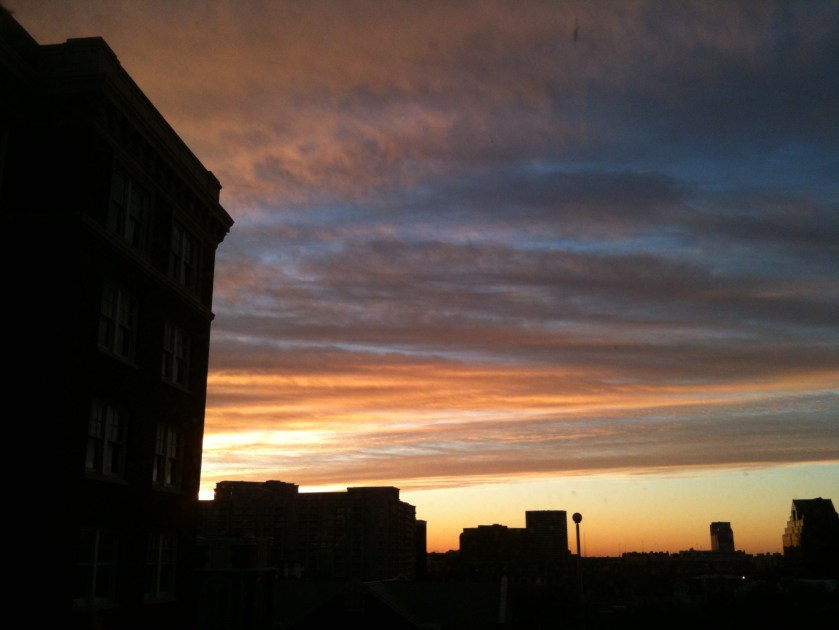
IMG_0445

This week: Jeb Bush’s failure / Bloomberg’s hinted candidacy / Obama and Cuba / The accomplishments of novelists Eco, Lee, and Spiotta

Most of these great items come from my social media networks. Follow me on Twitter, Tumblr, LinkedIn, MySpace, and Facebook for more fascinating videos, photos, articles, essays, and criticism.

1. Inside Jeb Bush’s $150 Million Failure
By Eli Stokols | Politico Magazine | Feb. 20
“His closest aides failed to predict Trump and never changed course, guiding a flawed candidate into a corner he couldn’t escape.”

2. Harper Lee, Author of ‘To Kill a Mockingbird,’ Dies at 89
By William Grimes | The New York Times | Feb. 19
“Lee, like her alter ego Scout, was a tough little tomboy who enjoyed beating up the local boys, climbing trees and rolling in the dirt.”

3. Michael Bloomberg Hints at Reasons for Candidacy, but Doesn’t Announce It
By Maggie Haberman and Alexander Burns | First Draft :: The New York Times | Feb. 18
“The most pressing problems in the country, he said, were ‘wage stagnation at home, American retreat around the world’ and a ‘corrupt gridlock and two-party system that answers to lobbyists and special interests instead of the American people.’ ”

4. Obama to Cuba: A gamble to end the embargo
By Ted Piccone | Order from Chaos :: The Brookings Institution | Feb. 18
“It is a big prize for the Castros, but in exchange for what? Why now? What can we expect to see happen on the island before and after he visits? How will the visit impact the relationship?”

5. An Interview with Dr. William Blair, Founding Editor of the Journal of the Civil War Era
Muster :: The Journal of the Civil War Era | Feb. 15
“You were the editor of Civil War History for ten years before founding and editing The Journal of the Civil War Era. Did you have a vision for JCWE that differed from CWH?”

6. The Nation He Built
By Michael Grunwald | Politico Magazine | January/February 2016
“Over the past seven years, Americans have heard an awful lot about Barack Obama and his presidency, but the actual substance of his domestic policies and their impact on the country remain poorly understood.”

7. The Quietly Subversive Fictions of Dana Spiotta
By Susan Burton | The New York Times Magazine | Feb. 19
“Over the course of her career, the author has created a new kind of great American novel.”

8. Umberto Eco, Italian novelist and intellectual, dies aged 84
By Kevin Rawlinson | The Guardian | Feb. 20
“The revered literary critic, author and essayist — most famous for 1980 novel The Name of the Rose — had been suffering from cancer.”

9. Why I love… Winona Ryder
By Bim Adewunmi | The Guardian | Feb. 20
“It’s very difficult to look away when she’s on screen. She looks like a woodland creature, a startled deer — plus, she can act”

10. Historical Lessons for a President Forced to Deal With a Hostile Congress
By Michael Beschloss | HistorySource :: The New York Times | November 2014
“The Democratic nominee of 2016, whoever she or he is, might want President Obama to adopt the [Gerald] Ford veto strategy. … It would give the party’s nominee the opportunity to argue that in 2017, only a Democratic president can hold back the excesses of a Republican-controlled House and Senate.”

Recommended reading / viewing / listening

This week: Henry Kissinger / George Washington and whiskey / Scorsese’s love for the Rolling Stones / Beyonce’s hot sauce / The drama of gravitational wave detection

IMG_1535

This week: Henry Kissinger / George Washington and whiskey / Scorsese’s love for the Rolling Stones / Beyonce’s hot sauce / The drama of gravitational wave detection

Most of these great items come from my social media networks. Follow me on Twitter, Tumblr, LinkedIn, MySpace, and Facebook for more fascinating videos, photos, articles, essays, and criticism.

1. The Dawn of a New Era in Science
By Matthew Francis | The Atlantic | Feb. 11
“By announcing the first detection of gravitational waves, scientists have vindicated Einstein and given humans a new way to look at the universe.”

2. Shut Up and Press Play
By Mary-Louise Parker | Esquire Classic | September 2006
“If you want to rock this girl (or yours), these are the songs you need to know”

3. William Shatner Opens Up About Deathbed Rift With Leonard Nimoy and Their Long Friendship
By Katie Wilson Berg | The Hollywood Reporter | Feb. 12
“Shatner spoke … about his respect for Nimoy as an artist and the mystery of why the man he calls ‘the only friend I ever had’ shut him out in the last years of his life.”

4. A History of Martin Scorsese’s Love Affair with the Rolling Stones
By Dan Reilly | Vulture | Feb. 12
“‘My films,’ the man himself once said, ‘would be unthinkable without them.’ ”

5. We All Need Beyonce’s Hot Sauce
By Goldie Taylor | The Daily Beast | Feb. 8
“It’s a flavorful essence — proud, black, and full of social justice.”

6. InstaTexas: The Stars At Night…
By Jordan Breal | Texas Monthly | Feb. 11
“Are big and bright — and ready for their close-up.”

7. George Washington, the Whiskey Baron of Mount Vernon
By Michael Beschloss | The Upshot :: The New York Times | Feb. 12
“It was not exactly in keeping with Washington’s public image to enter the whiskey trade.”

8. Gravitational Waves Exist: The Inside Story of How Scientists Finally Found Them
By Nicola Twilley | Elements :: The New Yorker | Feb. 11
“It took years to make the most sensitive instrument in history insensitive to everything that is not a gravitational wave. Emptying the tubes of air demanded forty days of pumping. The result was one of the purest vacuums ever created on Earth, a trillionth as dense as the atmosphere at sea level.”

9. Henry Kissinger: Good or Evil?
Politico Magazine | October 2015
“10 historians assess the controversial statesman’s legacy”

10. T.R.’s Son Inspired Him to Help Rescue Football
By Michael Beschloss | HistorySource :: The New York Times | August 2014
“T.R.’s intervention … helped lead to … the enforcement of new rules, which included the forward pass, a neutral zone at the line of scrimmage, another referee on the field and later prohibitions against brutal maneuvers like kneeing and punching opponents by using locked hands.”

“The depths of human turbulence”

Muster, the excellent blog for the Journal of the Civil War Era, recently interviewed the historical adviser to the new Civil War drama Mercy Street

IMG_1499

Muster, the excellent blog for the Journal of the Civil War Era, recently interviewed Dr. Jane E. Schultz, professor of English at Indiana University-Purdue University Indianapolis and historical adviser to Mercy Street, the PBS drama about women in Civil War hospitals. She perceptively argues that the series “is trying to show the depths of human turbulence that lay beneath the surface of military etiquette.”

Read the entire interview here. It offers intellectual depth and understanding to the process of shaping the drama’s narrative, location, characters, and era.

Recommended reading / viewing / listening

This week: Bill Cosby / A historic mammoth / ISIS: The Magazine / Benefits of red wine / Cartels and Mexican politics

IMG_2392[1]

This week: Bill Cosby / A historic mammoth / ISIS: The Magazine / Benefits of red wine / Cartels and Mexican politics

Most of these great items come from my social media networks. Follow me on Twitter, Tumblr, LinkedIn, MySpace, and Facebook for more fascinating videos, photos, articles, essays, and criticism.

1. Bill Cosby and His Enablers
By Ta-Nehisi Coates | The Atlantic | Jan. 12
“Even victims of discrimination can look away from — and thereby enable — other forms of violence.”

2. Gingerly, Donald Trump Tries Out Some Campaign Conventions
By Maggie Haberman and Patrick Healy | The New York Times | Jan. 15
“The risk for Mr. Trump is that too much baby-kissing, people-pleasing, Mr. Nice Guy politicking will come across as inauthentic to voters who like that he is, in their view, a tough-talking realist about perceived threats from Muslims, illegal immigrants, and budget-busting Democratic and Republican leaders in Washington.”

3. FDR’s Nate Silver
By David Greenberg | Politico Magazine | Jan. 16
“How a self-taught data whiz from Michigan became the first person ever to poll for an American president — and turned into a national sensation.”

4. A Mysterious Mammoth Carcass Could Change Human History
By Maddie Stone | Gizmodo | Jan. 14
“Its discovery … might push back the timeline for when humans entered the northernmost reaches of the world — including the first entries into North America.”

5. Why Cartels Are Killing Mexico’s Mayors
By Ioan Grillo | Sunday Review :: The New York Times | Jan. 15
“These new cartels continue to traffic drugs. … But they have also used their armies of assassins to move into new endeavors: rackets, extortion, oil theft, even wildcat iron mining. And they are now muscling in on one of Mexico’s most lucrative businesses of all: local politics.”

6. Republican warnings about an electro-magnetic pulse (EMP) attack, explained
By Philip Bump | The Fix :: The Washington Post | Jan. 15
“An EMP requires a very specific combination of things coming together in order to be effective.”

7. Why the United States can’t make a magazine like ISIS
By William McCants and Clint Watts | Brookings and The Daily Beast | Jan. 13
“Can you name a single U.S. government publication or online platform devoted to the anti-ISIS fight that is as informative or as widely-read as Dabiq? … We couldn’t come up with one either.”

8. Moving beyond Obama: How a transformational president became an impediment to change
By Elia Isquith | Salon | Jan. 16
“His romantic vision of America was once his greatest asset. But now it’s holding Obama and his country back”

9. Health Benefits of Red Wine vs. Grape Juice
By Karen Weintraub | Ask Well :: The New York Times | Jan. 8
“We keep hearing about the benefits of drinking red wine. Why not grape juice instead? It has the same benefits, plus no alcohol.”

10. Why Ike Wouldn’t Celebrate the D-Day Anniversary
By Michael Beschloss | HistorySource :: The New York Times | May 2014
“Thus Ike spent the D-Day anniversary of Sunday, June 6, 1954, out of sight, with his family at Camp David.”

Recommended reading / viewing / listening

‘The Force Awakens’ (of course) / A highway marriage proposal / ‘Thriller’ makes history / Confessions of a cartel killer / Trump’s unpleasant talents

IMG_1938

This week: ‘The Force Awakens’ (of course) / A highway marriage proposal / ‘Thriller’ makes history / Confessions of a cartel killer / Trump’s unpleasant talents

Most of these great items come from my social media networks. Follow me on Twitter, Tumblr, LinkedIn, MySpace, and Facebook for more fascinating videos, photos, articles, essays, and criticism.

1. Trump, Master of the Seven Deadly Sins
By Michael D’Antonio | Politico Magazine | Dec. 16
“How the GOP leader has succeeded for 40 years by bringing out the worst in people.”

2. Libya’s cultural heritage ‘being destroyed and plundered by Isis’
Associated Press :: The Guardian | Dec. 15
“Museums and UN say ancient artefacts and artwork are in danger of obliteration or being looted and sold illegally”

3. A Houston Marriage Proposal Stops Traffic
By Katie Rogers | The New York Times | Dec. 16
“Drivers did not give them more than a few seconds to celebrate. As the ecstatic couple hugged, the blare of car horns could be heard as people in trucks and S.U.V.s began to drive around the couple and their entourage, who were also recording.”

4. Alter Your Reading… Alternate History Picks Sure to Make You Wonder
By Billy Gschlecht | Bibliofile :: New York Public Library | Nov. 5
“Alternate history is an interesting and imaginative look at what might have been, sometimes for the better or worse, but certainly always different.”

5. Michael Jackson’s ‘Thriller’ sets new sales record
By Anthony McCartney | Associated Press | Dec. 16
“The album has sold 30 million copies in the United States, making Jackson the first artist to attain 30-time multiplatinum status …”

6. ‘Ghostbusters,’ ‘Top Gun,’ ‘L.A. Confidential’ Among 2015 National Film Registry Selections
Variety | Dec. 16
“Each year, the Library of Congress adds 25 notable films to its permanent collection, ensuring that the titles will be preserved for generations to come.”

7. 30 lives extinguished, but no regrets: A killer’s story
By E. Eduardo Castillo | Associated Press | Dec. 15
“This is a story from the other side, the tale of a man who kidnaps, tortures and kills for a drug cartel. His story is the mirror image of those recounted by survivors and victims’ families, and seems to confirm their worst fears: Many, if not most, of the disappeared likely are never coming home.”

8. ‘Star Wars: The Force Awakens’: The fanboy dissection of a film that restores faith
By Michael Cavna and David Betancourt | Comic Riffs :: The Washington Post | Dec. 16
“With John Williams’s soaring score still ringing in our ears, and the uplift of this soon-to-be globally embraced film still dizzying our senses, here is Comic Riffs’ fanboy dissection of the Star Wars franchise reawakened …”

9. Revisiting ‘Star Wars’ Before ‘The Force Awakens’
Here & Now :: NPR | Dec. 14
“That was back in the day when the first Apple II computers went on sale and Space Mountain was opening at Disneyland.”

10. When T.R. Saw Lincoln
By Michael Beschloss | HistorySource :: The New York Times | May 2014
“For Theodore Roosevelt’s family, Lincoln’s cortege was no abstract public ceremony. “

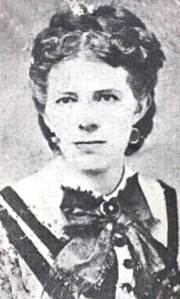
Kate Stone’s Civil War: The entire special series

Read Kate Stone’s amazing stories as she defiantly faces Union soldiers, escapes across a Louisiana swamp, falls in love with Texas, and watches the Civil War rip her country and her family apart.

1862

From May 2012 to November 2015, a special series from Stillness of Heart shared excerpts from the extraordinary diary of Kate Stone, who chronicled her Louisiana family’s turbulent experiences throughout the Civil War era.

She defiantly faced Union soldiers, escaped across a Louisiana swamp, fell in love with Texas, and watched the Civil War rip her country and her family apart.

The entire series of excerpts is collected here.

Learn more about Stone’s amazing life in 1861, 1862, 1863, 1864, 1865 and beyond. Click on each year to read more about her experiences. You can read the entire journal online here.

(Photo edited by Bob Rowen)

From 1861
May 15: Death in defense of the South
June 5: The stir and mob of angry life
June 18: Whipped unmercifully
July 1: They thought me so ugly
July 4: The blood of her children
July 26: Gallantly fought and won
Aug 24: The fevers
Sept. 27: The war inches closer
Oct. 19: Gladden our hearts
Nov. 27: The noble, gentle heart
Dec. 22: Rainy days

From 1862
Jan. 6: Sad Christmas
Jan. 8: Happy birthday
Jan. 16: They close in and kill
Feb. 1: The little creature
Feb. 20: Victory will be ours
March 1: A perfect love of a lieutenant
May 9: Burn our cities
May 22: Fashion is an obsolete word
May 23: The sleep that knows no waking
June 6: Trembling hearts
June 20-30: Capable of any horror
July 5: The fire of battle
Aug. 5: Beyond my strength
Sept. 23: Tragedy after tragedy
Oct. 1: His sins against the South
Nov. 7: A lady’s favors
Dec. 3: She was heartbroken

From 1863
Jan. 1: Preparing to run
March 2: Hoodoo woman
March 11: It made us tremble
March 22: The pistol pointed at my head
April 10: Tears on my cheek
April 15: A horrid flight
April 21: The greatest villian
April 26: Flaming cheeks and flashing eyes
April 27: The glory of the family
May 2: His father’s sins
May 3: Baffled beasts of prey
May 22: Useless to resist
May 23: Southern hearts
June 3: Like mad demons
June 15: On the road for Texas
July 7: The dark corner
July 12: The dirtiest people
July 16: Scowling, revengeful faces
July 26: Despondent and chicken-hearted
July 29: Makes us tremble for Texas
Aug. 3: Lose our scalps
Aug. 10: Conquer or die
Aug. 16: My pen is powerless
Aug. 30: They call us all renegades
Sept. 1: It makes us shiver
Sept. 14: Years of grinding toil
Sept. 20: Destroyed by the Yankees
Oct. 2: Two distressed damsels
Oct. 8: This is too disgraceful
Oct. 29: The heart of a boy
Nov. 1: Credulous mortals
Nov. 7: A fear of bad news
Nov. 13: Pride must have a fall
Nov. 15: So little to eat
Dec. 10: Nobly and fearlessly
Dec. 12: Alone in a strange land
Dec. 19: A charming little woman
Dec. 24: A sad 1863 ends

From 1864
Jan. 4: A noted flirt
Jan. 7: Trouble and distress
Jan. 13: The first desideratum
March 8: The mournful whistle
March 20: The petted darling
April 15: A besom of destruction
May 5: The easy conquest of Texas
May 7: To every young lady
May 18: To kill and destroy
May 25: Our best fancy yellow organdies
May 29: That land of desolation
June 1: The breath of flowers
June 14: Strangers in a strange land
June 19: Those terrible battles
June 26: Callous to suffering and death
Aug. 23: We enjoy our ease
Sept. 2: Lazy and languid
Sept. 5: One grand holocaust
Sept. 10: Too disgraceful if true
Sept. 27: The flower-wreathed scepter
Oct. 15: Fairy castles in the air

From 1865
Jan. 29: Kindly bestow them
Feb. 1: Our soldiers were powerless
Feb. 12: One of life’s greatest trials
Feb. 13: Peace blessed peace
Feb. 15: My escorts were disgusted
Feb. 21: Our only hope for peace
March 3: The most enjoyable life
March 9: Full of life and fun
March 24: Eager for a fight
March 30: Its spring decoration
April 1: Out of time
April 7: A blow on my heart
April 16: He would do anything
April 23: God spare us
May 7: Lounged and gossiped
May 9: We fear it cannot last
May 15: We will be slaves
May 17: Restless and wretched
May 20: A fever of apprehension
May 21: A piece of amusement
May 27: Only sadness and tears
May 31: The grand crash
June 12: Words are powerless
June 25: Civilization commences again
July 2: He deserves killing
July 13: It is unavoidable
July 18: A man-flirt is detestable
Aug. 14: No disorder
Aug. 26: Astonish the natives
Sept. 3: Our pleasant Tyler life
Sept. 11: The very poorest people
Sept. 21: A state of insubordination
Oct. 10: The bitterness of defeat
Nov. 16: At home again
Nov. 17: How many idle hours

Epilogue, from 1867 and 1868
I was young again

Illustrating the heart in a million different ways

Some friends have told me how much they love the photos I include with most of my posts.

Some friends have told me how much they love the photos that accompany most of my posts. Their compliments honor me.

I don’t consider myself a photographer, just someone who loves interesting patterns — the more abstract and colorful and contrasted the better. I tend to find beauty in everything I see.

My simple Tumblr blog collects and displays the best of the art I’ve used on Stillness of Heart, along with a variety of other odd photos, gifs, and videos.

Follow me on Tumblr, and enjoy.

Some of 2015’s best Civil War books … so far

Publishers in 2015 offer excellent work that both casual and serious readers of the Civil War should know about.

KS27

Biographies, campaign studies, general histories, and analyses form the core of any season’s mountain of Civil War scholarship, but publishers in 2015 offer excellent work that both casual and serious readers of the Civil War should know about. The rich bounty is likely — in part, at least — a result of the sesquicentennial sunshine that bathed the Civil War academic field for the last five years. Here are a few highlights.

No publishing season is stronger than when Gary W. Gallagher contributes one of his essay anthologies on a military campaign. Late September will see Cold Harbor to the Crater: The End of the Overland Campaign (University of North Carolina Press, 360 pp., $35), edited by Gallagher and Caroline E. Janney. The title suggests their overall argument, which marks the end of the pointless Battle of the Crater as the true conclusion of the brutal three-month-long confrontation between Lee and Grant in 1864. Only then, the historians argue, did siege warfare become the Union’s primary tool for the final strangulation of the Confederacy’s most important army and capital city. As with each of the entries in the Military Campaigns of the Civil War series, contributors examine military strategies and tactics, focus on particular participants, and consider how home-front politics and civilian expectations affected and were affected by Confederate military strategy.

J. Matthew Gallman offers a fascinating intellectual and cultural history with Defining Duty in the Civil War: Personal Choice, Popular Culture, and the Union Home Front (University of North Carolina Press, 336 pp., $45), in which he considers how Northerners perceived their obligations of duty and citizenship as their nation endured civil war. He explores how novels and songs, poems and news stories, editorials and cartoons all contributed citizens’ understanding of where they fit in the home-front tapestry and how they could each contribute to the war effort. Race, class, and gender all played key roles in that psychological and political dynamic, and Gallman’s work skillfully weaves together those elements into a fresh historical analysis.

Bradley R. Clampitt’s The Civil War and Reconstruction in Indian Territory (University of Nebraska Press, 200 pp., $25) promises a fascinating examination of the dynamics of war, political power, the collapse of slavery, and racial re-ordering within the context of Native America. Clampitt assembles a bouquet of essays by stellar scholars to explore the antebellum, wartime, and postwar tensions between tribes and nations, their calculated loyalties to North or South, and questions over the future of former slaves and indigenous participants in the war. Any understanding of the historical scope and effect of the Civil War’s overall political and social consequences is incomplete without an intelligent incorporation of Indian experiences and memories. Clampitt’s collection, scheduled for a December release, is certainly a work to anticipate and savor.

Pair that perspective with The World the Civil War Made (University of North Carolina Press, 392 pp. $29.95), an essay anthology edited by Gregory P. Downs and Kate Masur. More than a dozen stellar historians consider how postwar policies and consequences rippled throughout specific political and social dynamics in U.S. territories, in the U.S. Southwest, and across the world. The work’s great strength is its embrace of multiple national and international stories unfolding simultaneously, affecting and affected by each other, all contributing to a vibrant array of societies grappling with new notions of liberty and republicanism in a post-slavery world.

Terry Alford contributes a long-overdue re-assessment of John Wilkes Booth with Fortune’s Fool: The Life of John Wilkes Booth (Oxford University Press, 416 pp., $29.95). Alford’s Booth carried multiple psychological burdens throughout his life. He endured the pressure of measuring up to his successful thespian father and brothers. His inherent gifts as an actor/performer quickly shoved his life under a burning and blinding spotlight of celebrity. His fury over the Confederacy’s defeat warped his identity from an actor into a self-proclaimed citizen-soldier defending Southern honor and survival, with a deadly determination to seize a starring role on the Civil War’s bloodstained stage. These pressures combined to turn Booth into the madman who concocted multiple harebrained plots to destabilize the Lincoln administration. Booth doomed the post-war prospects of racial peace and progress with a single gunshot, and he catapulted Andrew Johnson, one of the worst presidents in U.S. history, into the center of political power just when Lincoln’s political genius was most needed.

Mark Smith presents a fascinating examination of the sights, sounds, and scents of war with The Smell of Battle, the Taste of Siege: A Sensory History of the Civil War (Oxford University Press, 216 pp., $22.36). Basing his exploration on descriptions he found in letters and other primary sources, he attempts to reconstruct what it felt like to be submerged in a Confederate submarine, what it tasted like to live in a city under Union siege, and what it sounded like to hear Confederate shells pound Fort Sumter into submission. Too few historical works explore their subjects from such an elemental and creative perspective. Smith offers details that belong in every lecture, speech, and conversation about the Civil War.

James M. McPherson offers a book-length response to the deceptively simple question, “why does the Civil War matter?” His recent work, The War That Forged a Nation: Why the Civil War Still Matters (Oxford University Press, 224 pp., $27.95), is more relevant than ever. If nothing else, the violent first half of 2015 offered stark and violent case studies to bolster his arguments. There was certainly no better example than recent debates over the Confederate flag, its multifaceted significance throughout the U.S., and the reasons for and against its presence amidst the everyday imagery of American life and culture.

Public and political bitterness over the intractability and enduring power of institutional racism, the historical understanding and explanation of the reasons for the Civil War, the long journey of civil rights through the nineteenth, twentieth, and now twenty-first centuries, debates over the power of federal and state governments — all are titanic, central, and deeply painful issues that the Civil War confronted like no other event in U.S. history. Every citizen’s pursuit of happiness intersects with or passes over or under each of these issues, among many others, and a better understanding of the war affords all of us better maneuverability past the heated rhetoric, better capacity to comprehend how those issues shape our societies, and better appreciation of our history’s overall vital importance to our American life.

Also:

I recently received wonderful news from the Society of Civil War Historians. According to their press release, the Society and the Watson-Brown Foundation honored Shauna Devine, assistant history professor at the University of Western Ontario, with the Tom Watson Brown Book Award for 2015 for her excellent 2014 book Learning from the Wounded: The Civil War and the Rise of American Medical Science (University of North Carolina Press, 2014, 384 pp., $39.95). The book explored how the war enabled U.S. physicians to improve their medical expertise, share their hard-won knowledge in new ways, and link their experiences with the larger international medical community. It was crucial to my recent work as a research assistant as I broadened and deepened my understanding of Civil War medical history. Highly recommended.

Read more about Devine’s honor here.

Undiscovered countries: The books we need

Insightful celebrations of worthy works, considerations of upcoming titles, and general musings on great writing will all meet here on a regular basis.

image1

Stillness of Heart‘s range of popular and academic book criticism widened and deepened in recent years, and many more reviews are on the way. Insightful celebrations of worthy works, considerations of upcoming titles, and general musings on great writing will all meet here on a regular basis.

As always, the Stillness of Heart community of writers, readers, intellectuals, historians, journalists, and artists welcomes your ideas and recommendations. Tell us what we should be reading.

*****

Some of 2015’s best Civil War books … so far
Cold Harbor to the Crater: The End of the Overland Campaign, edited by Gary W. Gallagher and Caroline E. Janney
Defining Duty in the Civil War: Personal Choice, Popular Culture, and the Union Home Front, by J. Matthew Gallman
The Civil War and Reconstruction in Indian Territory, by Bradley R. Clampitt
The World the Civil War Made, edited by Gregory P. Downs and Kate Masur
Fortune’s Fool: The Life of John Wilkes Booth, by Terry Allford
The Smell of Battle, the Taste of Siege: A Sensory History of the Civil War, by Mark Smith
The War That Forged a Nation: Why the Civil War Still Matters, by James M. McPherson
Learning from the Wounded: The Civil War and the Rise of American Medical Science, by Shauna Devine
Originally published in July 2015
“Publishers in 2015 offer excellent work that both casual and serious readers of the Civil War should know about.”

The Silent Enemy
Polio: An American Story, by David M. Oshinsky
Originally published in December 2014

“The United States battled polio long before it ever faced the Soviet hegemonic threat, but only during the Cold War did the U.S. achieve significant victories in the battle against the virus.”

From a flame into a firestorm
A consideration of the French Revolution and its unexpected consequences.
Originally published in September 2014
“Why the French Revolution devoured its own people”

Dealing with the real America
Puerto Rican Citizen: History and Political Identity in Twentieth-Century New York City, by Lorrin Thomas
Originally published in August 2014
“Dealing with Puerto Rico means dealing with the key issues of the 21st century. Few in the U.S. government may have the stomach for that rollercoaster.”

The wars over the war
Hospital Sketches, by Louisa May Alcott
Apostles of Disunion: Southern Secession Commissioners and the Causes of the Civil War, by Charles B. Dew
The Revolution of 1861: The American Civil War in the Age of Nationalist Conflict, by Andre Fleche
The Union War, by Gary W. Gallagher
The Hard Hand of War: Union Military Policy Toward Southern Civilians 1861-1865, by Mark Grimsley
Incidents in the Life of a Slave Girl, by Harriet Jacobs
“The North American Crisis of the 1860s,” by Patrick J. Kelly, in The Journal of the Civil War Era
“Who Freed the Slaves?” by James M. McPherson, in Proceedings of the American Philosophical Society
“Who Freed the Slaves? Emancipation and Its Meaning,” by Ira Berlin, in Union & Emancipation: Essays on Politics and Race in the Civil War Era
Originally published in July 2014

“Nine key books and articles taken together can explain what led to the first sparks of civil violence and how those sparks ignited what evolved into the bloodiest and most important war in U.S. history.”

Endless Borderlands
Borderlands/La Frontera: The New Mestiza, by Gloria Anzaldua
Peace Came in the Form of a Woman: Indians and Spaniards in the Texas Borderlands, by Juliana Barr
Walled States, Waning Sovereignty, by Wendy Brown
Pacific Connections: The Making of the U.S.-Canada Borderlands, by Kornel Chang
The Comanche Empire, by Pekka Hämäläinen
A Tale of Two Cities: Santo Domingo and New York after 1950, by Jesse Hoffnung-Garskof
Bridging National Borders in North America: Transnational and Comparative Histories, edited by Benjamin H. Johnson and Andre R. Graybill
Migra!: A History of the U.S. Border Patrol, by Kelly Lytle-Hernandez
The Line Which Separates: Race, Gender, and the Making of the Alberta-Montana Borderlands, by Sheila McManus
Border Dilemmas: Racial and National Uncertainties in New Mexico, 1848-1912, by Anthony P. Mora
Stranger Intimacy: Contesting Race, Sexuality and the Law in the North American West, by Nayan Shah
Line in the Sand: A History of the Western U.S.-Mexico Border, by Rachel St. John
Bárbaros: Spaniards and their Savages in the Age of Enlightenment, by David Weber
“On Borderlands,” by Hämäläinen and Samuel Truett, in the Journal of American History
“From Borderlands to Borders: Empires, Nation-States, and the Peoples in Between in North American History,” by Jeremy Adelman and Stephen Aron, in American Historical Review
Originally published in June 2014
“Fifteen essays and books explore the borderlands field with passion and intelligence, daring their readers to leave behind their old worlds and follow them into new ones.”

The Battle for Boricua
Reproducing Empire: Race, Empire, and U.S. Imperialism in Puerto Rico, by Laura Briggs
Originally published in January 2014
“Is Puerto Rico the battleground for America’s intellectual future?”

Torn in the USA
Polio: An American Story, by David M. Oshinsky
Make Love, Not War: The Sexual Revolution: An Unfettered History, by David Allyn
Making a New Deal: Industrial Workers in Chicago, 1919-1939, by Lizabeth Cohen
Stayin’ Alive: The 1970s and the Last Days of the Working Class, by Jefferson Cowie
In Search of the Black Panther Party: New Perspectives on a Revolutionary Movement, edited by Jama Lazerow and Yohuru Williams
Quixote’s Soldiers: A Local History of the Chicano Movement, 1966-1981, by David Montejano
“Resistance in the Urban North: Trumbull Park, Chicago, 1953-1966,” by Arnold R. Hirsch, in the Journal of American History
“Crabgrass-Roots Politics: Race, Rights, and the Reaction against Liberalism in the Urban North, 1940-1964,” by Thomas J. Sugrue, in the Journal of American History
Originally published in September 2013
“Life, liberty, and the doomed pursuit of happiness.”

Nixon lurking in the shadows
Richard M. Nixon in books, in the news, on TV, and in my dreams
Originally published in December 2011

“Richard Nixon was in my dream last night. The post-presidency Nixon. The bitter, self-pitying, damned Nixon, coiled in the shadows of La Casa Pacifica in San Clemente, dark eyes glaring at the world as it spun on without him.”

Homo universalis
A reflection on my intellectual ambitions.
Originally published in July 2011
“I’ve always been blessed with a hunger for knowledge, a curiosity that often flares into full-blown passion for new arenas of experience, a curiosity perhaps sparked by a bittersweet frustration that I don’t know as much about literature, science, mathematics, history and culture as I think I should.”


Recommended reading / viewing / listening

This week: ‘Force Awakens’ trailer sets record / Obama and the Charleston shooting / What ‘Back to the Future II’ correctly anticipated / Rachel Dolezal’s hair / Drunk Nixon during a Mideast crisis

IMG_1470

This week: ‘Force Awakens’ trailer sets record / Obama and the Charleston shooting / What ‘Back to the Future II’ correctly anticipated / Rachel Dolezal’s hair / Drunk Nixon during a Mideast crisis

Most of these great items come from my social media networks. Follow me on Twitter, Tumblr, LinkedIn, MySpace, and Facebook for more fascinating videos, photos, articles, essays, and criticism.

1. After Charleston Shooting, a Sense at the White House of Horror, Loss and Resolve
By Peter Baker | The New York Times | June 18
“After a series of police shootings, protests and riots, this latest eruption of violence reflected a country on edge and a president struggling to pull the American people together. Any hopes of what supporters once called a ‘postracial’ era now seem fanciful as Mr. Obama’s second term increasingly focuses on what he termed ‘a dark part of our history.’ ”

2. ‘Star Wars: The Force Awakens’ second trailer sets YouTube world record
NewsBeat :: BBC News | June 18
“Guinness World Records says the clip, released in April, was watched more than 30 million views in a day.”

3. How ‘Back to the Future II’ Got 2015 Surprisingly Right
By Caseen Gaines | Vanity Fair | June 18
“In Hill Valley’s future, cosmetic surgery has become easy and commonplace. Doc Brown’s face is made more youthful by visiting a ‘rejuvenation clinic,’ and careful observers will notice the presence of Bottoms Up, a breast-enhancement company, which advertises on the McFly television and can be seen in the background of some future scenes.”

4. Crash Course Astronomy: Comets
By Phil Plait | Bad Astronomy :: Slate | June 19
“They used to be considered omens, but when you cast aside superstition what you find are endlessly amazing and fascinating examples of nature at its best.”

5. Engineering Map of America
American Experience :: PBS | June 2015
“Dozens of museums, institutions and PBS stations have partnered with American Experience to bring you archival images, documents and videos related to America’s engineering history.”

6. The blackest thing about Rachel Dolezal is her thousand-dollar hair
By Tashara Jones | New York Post | June 16
“How on Earth does she get her white hair to behave like black hair? And, perhaps more importantly, how much does it cost?”

7. That Time the Middle East Exploded — and Nixon Was Drunk
By Tim Weiner | Politico Magazine | June 15
“All agreed that what the Soviets proposed in the Middle East was a potential disaster. If U.S. and Soviet soldiers started landing in the middle of the battle, each side standing with its allies, it could look like the opening day of World War III.”

8. Hillary’s Sixties Surge
By Gail Sheehy | Politico Magazine | June 14
“It’s take a career in the spotlight, but Hillary Clinton finally seems to be comfortable with her age and her gender.”

9. Beyond Caitlyn Jenner Lies a Long Struggle by Transgender People
By Clyde Haberman | Retro Report :: The New York Times | June 14
“A survey of 4,509 Americans adults conducted in late 2013 by the Public Religion Research Institute found that 65 percent had close friends or relatives who were gay or lesbian. Transgender? Only 9 percent. Even so, awareness of transgender people and their issues is clearly growing, and not just because of Ms. Jenner.”

10. After Pearl Harbor, F.D.R. Showed Confidence That U.S. Would Exist in 1956
By Michael Beschloss | HistorySource :: The New York Times | May 2014
“This letter was Roosevelt’s testament that 15 years hence, there would be a United States, and it would have a president, not some Japanese or Nazi viceroy.”

Behind The Wall

Tabletop Games

Rebecca Aguilar

#CallingAllJournalists Initiative | Reporter | Media Watchdog | Mentor | Latinas in Journalism

Anna Fonte's Paper Planes

Words, images & collages tossed from a window.

Postcards from Barton Springs

Gayle Brennan Spencer - sending random thoughts to and from South Austin

The Flask Half Full

Irreverent travelogues, good drinks, and the cultural stories they tell.

Government Book Talk

Talking about some of the best publications from the Federal Government, past and present.

Cadillac Society

Cadillac News, Forums, Rumors, Reviews

Ob360media

Real News That Matters

Mealtime Joy

bringing joy to family meals

Øl, Mad og Folk

Bloggen Øl, Mad og Folk

a joyous kitchen

fun, delicious food for everyone

A Perfect Feast

Modern Comfort Food

donnablackwrites

Art is a gift we give ourselves

Fridgelore

low waste living drawn from food lore through the ages

BeckiesKitchen.com

MUSINGS : CRITICISM : HISTORY : NEWS

North River Notes

Observations on the Hudson River as it passes through New York City. The section of the Hudson which passes through New York is historically known as the North River, called this by the Dutch to distinguish it from the Delaware River, which they knew as the South River. This stretch of the Hudson is still often referred to as the North River by local mariners today. All photos copyright Daniel Katzive unless otherwise attributed. For more frequent updates, please follow northriverblog on Facebook or Instagram.