Stone at last confirms the Confederate defeat at Vicksburg, three weeks later. In her mind, Robert E. Lee is the only Confederate commander that still holds the torch of hope for final victory.
From 2012 to 2015, Stillness of Heart will share interesting excerpts from the extraordinary diary of Kate Stone, who chronicled her Louisiana family’s turbulent experiences throughout the Civil War era.
Learn more about Stone’s amazing life in 1861, 1862, 1863, 1864, 1865 and beyond. Click on each year to read more about her experiences. You can read the entire journal online here.
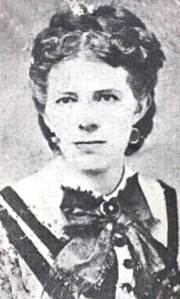
(Photo edited by Bob Rowen)
Stone at last confirms the Confederate defeat at Vicksburg, three weeks later. She and her mother worry about the vulnerability of Texas to Union forces. More immediately, they’re worried for their family. If Texas is invaded, how much farther west should they go to escape emancipating Union forces? In Stone’s mind, Robert E. Lee is the only Confederate commander that still holds the torch of hope for final victory.
As Stone bemoans the lack of decent shoes, she gets in one more dig at barefooted Texan women.
July 29, 1863
Lamar County, Texas
Vicksburg is taken without a doubt. If our men had held out only one day longer, they might have been relieved, as Gen. Johnston fought the enemy the following day, in ignorance of the fall of the city, taking 5,000 prisoners and winning a decided victory. But that is not an offset to the 20,000 of our men said to have been captured at Vicksburg. How has the mighty fallen, and to give up on the Fourth of July to make it even worse. We wish they could have held on at least one day longer, but we know nothing of the hardships our soldiers have endured there in the last eight months. We are satisfied, however, that the Confederate soldiers held on as long as possible. The fall of Vicksburg makes us tremble for Texas. She can be invaded from so many points that Mamma knows not where to look for a place of greater safety.
Our only hope is in Lee the Invincible. If he has only taken Washington or Philadelphia as we hear he has, we can stand the loss of our Gibraltar, but to lose it and gain nothing in return is insupportable. We will hope for the best. May God defend the right. …
July 31
Mamma has been sick since her return. … Tomorrow we are going up to Paris with Mr. Smith to see if Mamma can get him off from militia duty. He is drafted to go off on Wednesday for six month’s service. We do not see how Mamma can get on without him, and so she is anxious to get him detailed. Mrs. Smith is also anxious to get him off, but their eagerness is as nothing to Mr. Smith’s. I never saw a man with such a dread of the army.
The fruit that Mamma and Mr. Smith collected on their journey and they were most thoughtful is just out. We did so enjoy it. Our fare is not of the best. Mamma bought me a pair of $25 shoes, but unfortunately I cannot wear them. Not anything of a fit, and I must still cling to my calfskin chaussures, homeknit stockings, and brogans, something different from the lace-like clock stockings and French slippers of the olden times. I miss nice things for my feet now more than anything. I feel so slovenly with these horrors on exhibition. But a truce to complaints. I might be dight out in a large hoop and bare feet.
One minor but interesting element of Stone’s diary is how long it took for her to learn of developments on the battlefield.
From 2012 to 2015, Stillness of Heart will share interesting excerpts from the extraordinary diary of Kate Stone, who chronicled her Louisiana family’s turbulent experiences throughout the Civil War era.
Learn more about Stone’s amazing life in 1861, 1862, 1863, 1864, 1865 and beyond. Click on each year to read more about her experiences. You can read the entire journal online here.
(Photo edited by Bob Rowen)
One minor but interesting element of Stone’s diary is how long it took for her to learn of developments on the battlefield. As her old world crumbled, as she was cut off from traditional letters and newspapers, and as she moved farther and farther away from Brokenburn, it took longer for her to learn about rumors of defeats and victories and even longer to gain accurate information about such events.
For example, the Battle of Gettysburg ended on July 3, 1863, and Vicksburg surrendered to Grant’s siege on July 4. Note what Stone says of Lee in Pennsylvania and of Vicksburg’s defenders, almost two weeks after both Confederate defeats.
July 16, 1863
Lamar County, Texas
The atmosphere has been most peculiar for several days. The air is cool and damp. The earth, the air, the sky — all are a dull dead grey. The sun seems to emit neither heat nor light, gleaming with a dim red glare like a blood-red moon. We thought at first it was one phase of the Texas climate, but the natives are as much puzzled by it as the strangers in the land. Some think it portentous, a sign of great victories or defeats. Others think it the smoke from burning grain in Mississippi. No one really knows anything about it.
We hear that we have won a glorious victory back of Vicksburg, repulsing one wing of Grant’s army and opening communication with Vicksburg and replenishing her supplies. Also we hear of surprising the enemy in south Louisiana and capturing many men and stores. We also hear that Gen. Lee’s army is laying waste [to] Pennsylvania. If only the Pennsylvanians may feel some of the horrors of war and know the bitterness of defeat. We live in hopes that our day of triumph may come but we fear not in the near future. …
Texas seems a hard land for women and children. They fly around and work like troopers while the men loll on the galleries and seemingly have nothing to do. Mamma cannot start on her search for a new home for a week yet, and it is disagreeable living here … their ways are not our ways.
As we sat on the gallery tonight, gazing across the darkening prairie into the gleaming west, the very air was brilliant with fireflies. The fancy came that they were the eyes of the departed Indians, come to look again on their old hunting grounds, flashing through the night, looking with scowling, revengeful faces on the changes wrought by their old enemies, the palefaces. I fancy I can see the ghostly shapes one minute taking the form of an Indian brave with bended bow and flying arrow, the next fading into thin air leaving only the fiery eyes. …
Stone hated and pitied the people of Texas. She gagged at the sight of unshaven men sitting at her dinner table. The seeming normality of violence horrified her. But the natural beauty of Texas gradually entranced her.
From 2012 to 2015, Stillness of Heart will share interesting excerpts from the extraordinary diary of Kate Stone, who chronicled her Louisiana family’s turbulent experiences throughout the Civil War era.
Learn more about Stone’s amazing life in 1861, 1862, 1863, 1864, 1865 and beyond. Click on each year to read more about her experiences. You can read the entire journal online here.
(Photo edited by Bob Rowen)
Stone hated and pitied the people of Texas. Barefooted women, evidently ignorant of the latest Southern fashions, still wore outdated “hoops.” The roads all the looked the same. She gagged at the sight of unshaven men sitting at her dinner table. She lost her appetite when she witnessed dusty slaves washing dishes “in the duck pond” before dinner. The Texas heat was punishing. The seeming normality of violence horrified her.
But the natural beauty of Texas gradually entranced her.
July 12, 1863
Lamar County, Texas
We made our first visit in Texas yesterday. We went to a protracted meeting being carried on nine miles from here at an old schoolhouse called — it must be in mockery — “Paradise.” After the meeting we went by invitation to spend the evening and night with some real nice people, settlers from Virginia, the McGleasons. They are a pleasant family and exceedingly hospitable. We came back this morning after a ride of nearly eighteen miles, having missed our road three times. The prairie roads are so much alike it is impossible for strangers to distinguish the right from the wrong.
The congregation was much more presentable than the Gray Rock crowd. We saw several nice-looking families, but all were in the fashions of three years ago. If they would only leave off their tremendous hoops, but hoops seem in the very zenith of their popularity. Mamma and I were the only women folks without the awkward, ungraceful cages. No doubt the people thought us hopelessly out of date. We have not worn them for a long time. Nothing looks funnier than a woman walking around with an immense hoop barefooted.
Mamma and I went several days ago to Tarrant in Hopkins County. The road ran part of the way over a lovely rolling prairie, dotted with clumps of trees and covered with the brilliant, yellow coreopsis in full bloom and gemmed with countless little mounds of bright green, like emeralds set in gold. Tarrant is the hottest looking, new little town right out in the prairie not a tree.
We tried to eat dinner at the roughest house and with the dirtiest people we have met yet. The table was set on a low, sunny gallery and half a dozen dirty, unshaven men took their seats in their shirt sleeves at the dirtiest tablecloth and coarsest ware. We saw the Negro girl wash the dishes at the duck pond right out in the yard. That was too much for me, but Mamma and Mr. Smith managed to swallow down something. …
The prairie we are living on is called a thicket prairie. There are clumps of dwarf dogwood, spice trees, and plums, tangled together with wild grape and other vines and alive with snakes. The plums are just in season, a sour, red variety just like the swamp wild plums, and are nice for jelly. The prairie is a mass of flowers, one variety covering it at a time. Before you realize it, that color has faded away and another has taken its place, and this succession of flowers and colors goes on until frost comes and spreads a brown sheet over all. There are many familiar garden flowers: blue salvia, coreopsis, verbenas, larkspur, standing cypress, and now as far as the eye can reach the prairie is a mass of waving purple plumes, “French pinks,” the natives call them. …
We hear no news now but accounts of murders done and suffered by the natives. Nothing seems more common or less condemned than assassination. There have been four or five men shot or hanged within a few miles of us within a week. No one that we have seen seems surprised or shocked, but take it as a matter of course that an obnoxious person should be put to death by some offended neighbor. A few evenings ago a captain in the army had just reached home on a furlough three hours before when he was shot at through his window. He was killed and his wife dangerously wounded. The authorities are trying to find the men who did it. It is supposed to be one of his company who had vowed vengeance against him. The other miscreants go unwhipped of justice.
Stone mourns what has been lost as she finishes her tale of escape. “So passes the glory of the family.”
From 2012 to 2015, Stillness of Heart will share interesting excerpts from the extraordinary diary of Kate Stone, who chronicled her Louisiana family’s turbulent experiences throughout the Civil War era.
Learn more about Stone’s amazing life in 1861, 1862, 1863, 1864, 1865 and beyond. Click on each year to read more about her experiences. You can read the entire journal online here.
(Photo edited by Bob Rowen)
Stone mourns what has been lost as she finishes her tale of escape. “So passes the glory of the family.”
April 27
Near Trenton, La.
Mamma and Johnny are out hunting up bed clothes and anything else buyable since we need everything, and Sister and I are left to ourselves this rainy day. So I may as well finish the recital of our woes.
We left our clothes in care of Uncle Bob who has been as faithful as any white man could be. He is Mamma’s driver on the plantation. And we piled ourselves and our scanty luggage into two rocking, leaky dugouts and pushed off, Jimmy paddling one and Coffee, one of Dr. Carson’s hands, the other. The sight of a body of horsemen in the distance coming our way lent strength to their arms, and as fast as they could ply the paddles we glided through the water. The men came on down the road, and we saw they were Yankee soldiers. But the water was so deep that they could not ride fast and we kept ahead. At last after nearly a mile of this race, the boats shot out into deep water, and we were safe from pursuit. Then what a shout rang out for Jeff Davis and the Confederacy. The men could see and hear us distinctly, and we half expected a volley to come whizzing over the waters. But the boys would not be restrained, and their “Farewell to the Feds!” “Hurrah for Jeff Davis!” and “Ho for Texas!” floated over the waters ’til we were out of sight. The Yankees followed us until their horses were nearly swimming.
After rowing a few miles, we joined Mr. Hardison and his family at the Jones place in the middle of Tensas swamp. They were in a skiff and had been waiting for us for some time. All his family and all his worldly possessions were in that skiff and it was not loaded, so quickly had he been reduced from affluence to poverty. We went on in company and were in the boats for seven hours in the beating rain and the sickening sun, sitting with our feet in the water. Not an inch of land was to be seen during the journey through the dense swamp and over the swift curling currents. The water was sometimes twenty feet deep, rushing and gurgling around the logs and trees. We all stood it very well except Aunt Laura. She was terrified nearly to death and was alternately laughing and crying. She insisted on giving the rower directions and, as he was a slow African, confused him so that he forgot how to pull and ran us into brush piles innumerable. At last he said, “Now, Mistress, you just tell me how to pull and I’ll do it.” So Aunt Laura and Mamma steered the boat viva voce, and he did the hard pulling. I thought they surely would make him turn us over, since a dugout goes over with such ease. At last we came to a clearing, and the boats had to be pulled over the land. We walked a path lined with brambles, and our dresses were nearly torn off. Johnny suffered with fever nearly all day.
As we were passing Mr. Anderson’s, heavy clouds rolled up, and it looked like a coming storm. Aunt Laura and Mrs. Hardison declared they would not go on but would stop right there, and so our boats were headed for the gallery.
They were all under water since it was a little bit of a house, but we carried it by storm without a remonstrance from the owners, who were as kind as could be. Mamma and I were wet nearly to our waists, and the floor looked like it had been scoured when we passed over it. But the dear little lady did not seem to mind it a bit. I had a great bag of Aunt Laura’s gold around my waist. It was very heavy, and just as I stepped on the gallery the belt gave way and it came down with a crash. A foot nearer and it would have fallen in the water, and I suppose we never would have found it. That evening Dr. Carson came to take us to his house but Aunt Laura felt too worn out to go. Mamma stayed with her, and Sister, the boys, and I went on with Dr. Carson. The next day the others joined us there. The whole family received us most kindly, and oh what a relief it was to get to a place of rest and to feel safe once more.
That night there was a most terrific storm which did not even waken me. I slept like the dead. I was completely exhausted by fatigue, excitement, and loss of sleep. … Aunt Laura and Mamma said they were worse frightened by the storm than they had been by anything else. They had not had a brutal Negro man standing on their dress and fingering a pistol a few inches from their heads. I can stand anything but Negro and Yankee raiders. They terrify me out of my wits. …
We spent nearly three weeks at Dr. Carson’s most delightfully. Books, music, rest, and pleasant company charmed the hours away until came news of our great bereavement.
The Negroes at Dr. Carson’s were almost as much demoralized as those on the river. The night after we reached there, a skiff load attempted to escape but were followed and captured after being fired on several times by Jimmy. Fortunately he did not hit any of them.
Now for a list of our losses. All the clothes left in the cart were taken by Mr. Catlin’s Negroes, Uncle Bob being unable to protect them. They comprised most of our underclothes and dresses, all my fine and pretty things, laces, etc., except one silk dress, all our likenesses, and all the little family treasures that we valued greatly. Little Sister did not get off with a change. Mrs. Carson kindly had a suit made for her. Mamma and I have barely a change and the boys have only what they have on. They lost theirs after getting them out here.
Aunt Laura has lost everything except barely enough to do with for a time. Beverly’s things were mostly saved. Aunt Laura’s trunk, packed with a quantity of beautiful clothes, laces, silks, velvets, and so on, was sent to Mr. Anthony’s in the vain hope that it would be safe. We hear, however, that the Yankees, informed by Webster, went there, demanded Mrs. Buckner’s trunk, took it to Grant’s headquarters, and that is the last of it. Some say they just broke it open and divided up the spoils. Both Mamma and Aunt Laura have lost all their bedding, table linen, etc. Our house is stripped of furniture, carpets, books, piano, and everything else, the carriage, buggy, harness, and everything of that kind. Also they have thirty Negroes still on the place we shall probably never see again.
Mamma regrets coming away as she did, but what else could she do? We could not stand more than anyone else, and nearly everyone left before we did. Our mistake was in not moving everything in the fall. Charles and Annie were the only two Negroes who would come with us, and they are only half-grown. So passes the glory of the family.
Kate Stone at last recounts why she and her family fled from Brokenburn.
From 2012 to 2015, Stillness of Heart will share interesting excerpts from the extraordinary diary of Kate Stone, who chronicled her Louisiana family’s turbulent experiences throughout the Civil War era.
Learn more about Stone’s amazing life in 1861, 1862, 1863, 1864, 1865 and beyond. Click on each year to read more about her experiences. You can read the entire journal online here.
(Photo edited by Bob Rowen)
Kate Stone at last recounts why she and her family fled from Brokenburn.
April 25
Near Trenton, La.
Affairs look dark for our Confederacy just now. … This country is filled with refugees. Nearly all our friends are back here or on their way to Texas, where we hope to be before long.
Out here the prices asked for everything are enormous. The people of Monroe seem determined to fleece the refugees. It cost us $3,000 to get a four-horse hack to bring us from Monroe here four miles.
Having no other way of amusing myself, I may as well write the account of our flight from home [Brokenburn] and our subsequent adventures.
On Thursday, March 26, hearing that Mr. Hardison had returned from Monroe, Sister and I walked up in the afternoon to hear what news he had brought. As we approached the house, it struck me that something was wrong. As we were going through the garden George Richards came out and told us a party of Yankees and armed Negroes had just left, carrying with them every Negro on the place, most of Mrs. Hardison’s and the children’s clothes, and all the provisions they could manage. They were led by Charles, Mr. Hardison’s most trusted servant, and they were all vowing vengeance against Mr. Hardison. They said they would shoot him on sight for moving two of his Negroes a few days before. Mr. Hardison had fortunately seen them coming and, knowing he would be arrested or perhaps killed as a conscript officer, had escaped to the woods.
We walked in and found Mrs. Hardison and the children all much excited and very angry, with flaming cheeks and flashing eyes. The Negroes had been very impertinent. The first armed Negroes they had ever seen. Just as we were seated someone called out the Yankees were coming again. It was too late to run. All we could do was to shut ourselves up together in one room, hoping they would not come in. George Richards was on the gallery. In a minute we heard the gate open and shut, rough hoarse voices, a volley of oaths, and then a cry, “Shoot him, curse him! Shoot him! Get out of the way so I can get him.” Looking out of the window, we saw three fiendish-looking, black Negroes standing around George Richards, two with their guns leveled and almost touching his breast. He was deathly pale but did not move. We thought he would be killed instantly, and I shut my eyes that I might not see it. But after a few words from George, which we could not hear, and another volley of curses, they lowered their guns and rushed into the house “to look for guns” they said, but only to rob and terrorize us. The Negroes were completely armed and there was no white man with them. We heard them ranging all through the house, cursing and laughing, and breaking things open.
Directly one came bursting into our room, a big black wretch, with the most insolent swagger, talking all the time in a most insulting manner. He went through all the drawers and wardrobe taking anything he fancied, all the time with a cocked pistol in his hand. Cursing and making the most awful threats against Mr. Hardison if they ever caught him, he [walked] up to the bed where the baby was sleeping. Raiding the bar, he started to take the child, saying as he waved the pistol, “I ought to kill him. He may grow up to be a [guerrilla]. Kill him.” Mrs. Hardison sprang to his side, snatched the baby up, and shrieked, “Don’t kill my baby. Don’t kill him.”
The Negro turned away with a laugh and came over where I was sitting with Little Sister crouched close to me holding my hand. He came right up to us, standing on the hem of my dress while he looked me slowly over, gesticulating and snapping his pistol. He stood there about a minute, I suppose. It seemed to me an age. I felt like I would die should he touch me. I did not look up or move, and Little Sister was as still as if petrified. In an instant more he turned away with a most diabolical laugh, gathered up his plunder, and went out. I was never so frightened in my life. Mrs. Hardison said we were both as white as marble, and she was sure I would faint. What a wave of thankfulness swept over us when he went out and slammed the door. In the meanwhile, the other Negroes were rummaging the house, ransacking it from top to bottom, destroying all the provisions they could not carry away, and sprinkling a white powder into the cisterns and over everything they left. We never knew whether it was poison or not.
The Negroes called and stormed and cursed through the house, calling each other “Captain” and “Lieutenant” until it nearly froze the blood in our veins, and every minute we expected them to break into our room again. I was completely unnerved. I did not think I could feel so frightened. …
After carrying on this way about two hours they lit matches, stuck them about the hall, and then leisurely took themselves off, loaded down with booty. We rushed around, put out all the matches, gathered up the few little articles left, and started at once for home. Since the Negroes declared as they moved off that they were coming back in a little while and burn every house on the place, I took the baby and Mrs. Hardison, Mrs. Alexander, and the children with George and Mr. McPherson gathered up everything of any value left, and we hurried home, reaching there spent with excitement. Mrs. Hardison was almost crazy. …
We made preparations that night to move at daybreak, but something deterred us. Mamma thought she would go out and get letters of protection but later abandoned the idea. It was then too late for us to get off, and we spent a night and day of terror. The next evening the Negroes from all the inhabited places around commenced flocking to Mr. Hardison’s, and they completely sacked the place in broad daylight, passing our gate loaded down with plunder until twelve at night. That more than anything else frightened Mamma and determined her to leave, though at the sacrifice of everything we owned.
We made arrangements to get Dr. Carson’s skiffs and sent Webster around collecting saddles and bridles. On account of the water we could go only on horseback to take the skiffs.
With much difficulty we got everything ready for the start at midnight. Aunt Laura was the only one who did not want to go. She begged Mamma to let her and Beverly stay, saying that she would get old Mr. Valentine to stay with her, but of course Mamma could not allow that. The boys brought in everything we had buried out, except Aunt Laura’s silver. That had to be left packed in a barrel and buried in the yard. The boys had done it one very dark night, when they hoped all the Negroes were in their cabins as it was raining. All the servants behaved well enough except Webster, but you could see it was only because they knew we would soon be gone. We were only on sufferance.
Two days longer and we think they would all have gone to the Yankees, most probably robbing and insulting us before they left. About eleven of the boys went off with their guns to have the horses saddled and brought up. After a good deal of trouble, they came. The boys carried their guns all the time. Without them I think we would never have gotten off. Webster tried every artifice to get hold of one of them, but the boys never relaxed their watch. The night was cloudy and dark with occasional claps of thunder, but we had to go then or never. We knew the news would be carried to camp, and the Yankees had forbidden citizens to leave their places. …
It was too dark to see the road but Johnny led off, and each one followed the shadow in front. … As we opened gates and rode through place after place in perfect silence, not a light was visible anywhere. After passing Out Post, the road was so bad and it was so dark that we were forced to wait for daylight. We dismounted in the middle of the road, and to Aunt Laura’s surprise and amazement Mamma lay her head down in Johnny’s lap and went sound asleep. Riding in the dark made her sick, and she was worn out with excitement and loss of sleep. …
When we reached within a mile of our place of debarkation, the road became impassable, and we struck off into the woods. The cart had to be left there and the baggage carried on by mules. After much trouble, getting lost and riding through water up to our saddle skirts I actually swam a bayou with Beverly in my arms we succeeded in getting all of our party and a little of our baggage to the landing place below Mrs. Stevens’. We sent Webster back to the cart for the baggage, and no sooner was he out of sight than he mounted a horse and set off for home. … Thus by his treachery we lost almost everything we brought away with us, for when we heard it, it was already too late to send back for the things. …
The value of apostrophes / Obama and Nixon / Cicada secrets / Boston Marathon bombing PTSD / A long-lost WWII Marine’s diary
Most of these great items come from my Twitter or Facebook feeds. Follow me on Twitter, Tumblr, LinkedIn, and Facebook for more fascinating videos, photos, articles, essays, and criticism.
1.WW2 Marine’s diary: A brief look at a brief life By Janet McConnaughey | Associated Press | May 27
“Before Cpl. Thomas ‘Cotton’ Jones was killed by a Japanese sniper in the Central Pacific in 1944, he wrote what he called his ‘last life request’ to anyone who might find his diary: Please give it to Laura Mae Davis, the girl he loved. Davis did get to read the diary — but not until nearly 70 years later. …”
2.How Timbuktu’s manuscripts were saved from jihadists By Sudarsan Raghavan | The Washington Post | May 26
“The scholarly documents depicted Islam as a historically moderate and intellectual religion and were considered cultural treasures by Western institutions — reasons enough for the ultraconservative jihadists to destroy them.”
6.Obama’s speechwriter: from intern to top wordsmith By Darlene Superville | Associated Press | May 25
“Current and former White House colleagues, all Obama campaign veterans, praise [Cody] Keenan’s writing skills and work ethic and what they describe as his sense of fairness, modesty and willingness to help.”
7.The Man Who Knew Too Much By Marie Brenner | Vanity Fair | May 1996
“Angrily, painfully, Jeffrey Wigand emerged from the sealed world of Big Tobacco to confront the nation’s third-largest cigarette company, Brown & Williamson. Hailed as a hero by anti-smoking forces and vilified by the tobacco industry, Wigand is at the center of an epic multibillion-dollar struggle that reaches from Capitol Hill to the hallowed journalistic halls of CBS’s 60 Minutes.”
8.The secrets of cicada survival By John Matson | Salon | May 24
“A new brood is set to emerge this summer for the first time in 17 years. What’s taken them so long?”
9.Why Obama Is Not Nixon By Elizabeth Drew | NYR Blog :: The New York Review of Books | May 18
“Compared to Watergate, on the basis of everything we know about what are the current ‘scandals’ amount to a piffle. Watergate was a Constitutional crisis.”
The return of ‘Arrested Development’ / The drone wars / Revitalizing sexual desire / A writer’s dreams / Don’t bring the baby to the bar
Most of these great items come from my Twitter or Facebook feeds. Follow me on Twitter, Tumblr, LinkedIn, and Facebook for more fascinating videos, photos, articles, essays, and criticism.
1.Medea Benjamin, the Woman Who Heckled Obama, Is Not Sorry By Caroline Linton | The Daily Beast | May 24
“Medea Benjamin has spent a lifetime confronting powerful people, so she was a bit baffled when Obama called her a ‘young lady.’ ”
3.‘Arrested Development,’ Season 4 By David Haglund and Emma Roller | Slate | May 24
“Panic attack! What if the new episodes aren’t very good?”
4.Jon Huntsman’s Real Challenge By Scott Conroy | Real Clear Politics | May 24
“To hear Jon Huntsman tell it, his hopes of succeeding in a potential second presidential bid depend largely on one thing: whether enough voters come around to his views on the major issues of the day.”
5.Unexcited? There May Be a Pill for That By Daniel Bergner | The New York Times Magazine | May 22
“The promise of Lybrido and of a similar medication called Lybridos … is that it will be possible to take a next step, to give women the power to switch on lust, to free desire from the obstacles that get in its way.”
6.China Has Drones. Now What? By Andrew Erickson and Austin Strange | Foreign Affairs | May 23
“When Beijing will — and won’t — use its UAVs”
8.My Psychic Garburator By Margaret Atwood | NYR Blog :: The New York Review of Books | May 6
“Should you, as a fiction writer, permit your characters to have dreams?”
9.How Do I Tell a Friend to Stop Bringing Her Cockblocking Baby to Bars? By Sara Benincasa | Jezebel | May 24
“Our lives and friendships change as we get older, and it’s unfair and also creepy to expect your gaggle of single girlfriends to accommodate your kid at a boozy pre-fuckfest.”
10.Remote Control By Steve Coll | The New Yorker | May 6
“Our drone delusion”
******************
TUNES
Tonight I’m spending some time with the blues, specifically with the Texas Blues Café. Check out the line-up and then listen here.
1. Bob Segar — Come to Papa 2. Rick Fowler — Walk Softly 3. Mike Zito — Natural Born Lover 4. Larry Tillery Band — Natches River 5. Micheal K’s Rumble Pack — Another Kind of Love 6. Pat Green — Let Me 7. Paul Thorn — Crutches 8. Paul Thorn — Will the Circle Be Unbroken 9. Z-Tribe — Since the Blues Began 10. Tony Caggiano — Trouble 11. Zed Head — Till I Lost You 12. Wiser Time — Had Enough 13. The Fabulous Thunderbirds — Wrap It Up
Springtime fights over skin / Tax myths / Near-death experiences / Le Carre’s doubts / Anthony Weiner is back
Most of these great items come from my Twitter feed or Facebook news feed. Follow me on Twitter, Tumblr, and Facebook for more fascinating videos, photos, articles, essays and criticism.
1.The 5 Kinds of Flesh-Obsessed Articles You Read in the Spring By Katie J.M. Baker | Jezebel | April 11
“Every spring, concerned citizens spring up like so many tulips (or boners) to share their opinions on how women should and shouldn’t dress when it’s warm outside. Unfortunately, unlike pollen allergies, there’s no known antidote for these five most obnoxious types of seasonal ‘Ladies! Put your clothes on/take them off, plz!’ articles.”
2.Five myths about taxes By Steven R. Weisman | Five Myths :: The Washington Post | April 11
“Whether tax cuts generally spur economic growth and tax increases generally dampen it is debatable …”
3.Why a Near-Death Experience Isn’t Proof of Heaven By Michael Shermer | Scientific American | April 13
“The fact that mind and consciousness are not fully explained by natural forces, however, is not proof of the supernatural. In any case, there is a reason they are called near-death experiences: the people who have them are not actually dead.”
5.Army’s Disaster Prep Now Includes Tips From the Zombie Apocalypse By Spencer Ackerman | Danger Room :: Wired | April 12
“[W]hether you’re confronting extreme weather that shorts out a power grid or running from a marauding horde of the undead, preparation is the key to survival.”
6.Resort Of Last Resort By Aubrey Belford | The Global Mail | April 5
“Fear, corruption, boredom, smugglers, extortionists, Saudi sex tourists and temporary wives: such is life in the Indonesian resort town that has become limbo for asylum seekers.”
7.John le Carré: ‘I was a secret even to myself’ By John le Carre | The Guardian | April 12
“After a decade in the intelligence service, John le Carré’s political disgust and personal confusion ‘exploded’ in The Spy Who Came in from the Cold. Fifty years later he asks how much has changed”
8.Roman ruins found in the heart of London By Erin McLaughlin | CNN International | April 10
“Archeologists uncover thousands of ancient Roman artifacts in London.”
9.Anthony Weiner and Huma Abedin’s Post-Scandal Playbook By Jonathan Van Meter | New York Times Magazine | April 10
“They seem to be functioning again as a couple, even unselfconsciously bickering in front of the waiter. But what they do not yet have a handle on is their public life.”
10.Obama’s former speechwriter on the secrets he learned from his boss By Sarah Muller | MSNBC | April 12
“Jon Favreau told MSNBC.com he misses his former job as President Obama’s chief speechwriter, though not the late hours. He began the job in 2005, becoming the second youngest head speechwriter in the White House’s history.”
Two excerpts from Stone’s November 1862 diary illustrate her views on love, flirtation, and relationships, each vibrant and beautiful even in the shadow of a growing war.
From 2012 to 2015, Stillness of Heart will share interesting excerpts from the extraordinary diary of Kate Stone, who chronicled her Louisiana family’s turbulent experiences throughout the Civil War era.
Learn more about Stone’s amazing life in 1861, 1862, 1863, 1864, 1865 and beyond. Click on each year to read more about her experiences. You can read the entire journal online here.
(Photo edited by Bob Rowen)
Two excerpts from Stone’s November 1862 diary illustrate her views on love, flirtation, and relationships, each vibrant and beautiful even in the shadow of a growing war.
Nov. 7, 1862
How quickly this week has slipped away. Company and busy hands make the time fly. Anna came out in the middle of the week, sent the little girls and remained until Mrs. Savage came, spent the day and carried her home. After they left, Johnny and I were sitting cosily by the parlor fire. I had been practicing and he was knitting on a glove when in came Mary Richards and Mollie Hunt, an old schoolmate. I was so surprised I hardly knew her at first, but the sound of her voice recalled old school times.
Mollie and her father are on their way from Arkansas to Vicksburg. They had supper at Mrs. Curry’s and came out to get me to spend the night with Mollie. Mamma approved of the plan, and I was glad of a chance for a good chat with Mollie. I went back with them and had a pleasant visit in spite of that hateful Mr. Smith. “Don’t be bashful, Kate. Do play. I ain’t a going to court ye” was one of his trying speeches, with a grin and a leer that made me really wish him dumb. What a true Yankee he is in everything, even the set of his coat.
Mollie gave me a full and particular account of her various love affairs, about like the play of Hamlet with Hamlet left out. She would not tell me the names of any of her lovers. She must have had scores. She says she has four on hand now, all waiting in trembling apprehension of yes or no. She thinks she will say no to all. What a garment of comfort self-satisfaction is. Oh, for a nice large cloak of self-appreciation. …
Galveston has fallen, a disgrace to us for fortifying it so badly. The enemy are redoubling their exertions at every point and are awaiting a rise in the river to make an overwhelming attack on Vicksburg. In God alone is our trust.
Nov. 10
Mamma went to Vicksburg today, and I am left at home as commander-in-chief with Little Sister and the two boys, Johnny and Jimmy, as aides. We are getting on bravely today, pickle making, weaving, etc., etc. I think I should like keeping house if I were forty years old and had no one to interfere, but now it is horrid work, vanity and vexation of spirits. …
Ah, the lovely autumn weather. One should be out in it riding or walking most of the day. …
Mamma and I went out to Mrs. Henderson’s Saturday morning to see Mrs. Gustine, who is staying there now. She has been very ill and is still unable to be up. Mary and I had a gay talk discussing Col. Pargoud. We have all our traps set and baited should he venture out here again. We made an agreement so that no feeling of jealousy should mar our friendship. Should I trap the irresistible Colonel, she is to be invited to spend a month at his “palace.” Should she be the successful trapper, I am to have a standing invitation to “his marble halls.” Poor Colonel. His cheeks must burn the way the girls are discussing his fancied perfections, for not a girl of us has ever seen him. He is our standing joke.
We also agreed on Mr. Valentine’s cool assurance in sending word to all the girls he knows to knit him everything they can think of. He wants a complete outfit from each one. He did have the grace to ask Mary to make the things, and she has started on the article the easiest to make, a needle book. But if he does not soon repeat his call, Mary will donate that to some more deserving youth. None of us will do anything for him just now. He needs a little judicious snubbing. He holds a lady’s favors too lightly. In the early days I used to think he would make quite an ideal lover, but no indeed, not now that I know him better. He would run me crazy and ruin my temper in a week. He is very argumentative and I feel like contradicting him always. We do not think alike on any subject. Neither Anna nor Julia like him at all, and Mary knows him only slightly.
Mr. McRae was nursing Ashburn on his death bed a year ago tonight, and now he too is sinking into the cold arms of Death. In the presence of Death, we feel at its fullest God’s terrible power. …
Follow the inauguration / Feminist critics of Michelle Obama / Looking beyond the password / Who protects Bo? / The greatest inaugural speeches
Most of these great items come from my Twitter feed or Facebook news feed. Follow me on Twitter and on Facebook for more fascinating videos, articles, essays and criticism.
1.Inauguration 2013: A Social Media Guide By Elana Zak | Washington Wire :: The Washington Post | Jan. 18
“Here are ways to follow and participate in President Barack Obama‘s second inauguration.”
2.Feminists split by Michelle Obama’s ‘work’ as first lady By Lonnae O’Neal Parker | The Washington Post | Jan. 18
“In 2008, when Obama announced her intention to be ‘mom-in-chief,’ many feminists decried her decision to give up her career and said she had been victimized by her husband’s choices.”
3.Google Declares War on the Password By Robert McMillan | Wired | Jan. 18
“Google is running a pilot project to see if these USB-based Yubico log-on devices might help it solve the password problem.”
4.Inside Obama’s Presidency Frontline :: PBS | Jan. 15
“A probing look at the first four years of Barack Obama’s presidency.”
5.Muhammad Ali, still the greatest at 71 By Matthew Kitchen | The Culture :: Esquire | Jan. 17
“[F]ew are aware that in 1990, just six weeks ahead of Desert Storm, Ali flew to Iraq to broker the release of fifteen hostages being held as human shields by Saddam Hussein. …”
6.Guard Dog By Brian Palmer | Slate | Jan. 16
“Does the Secret Service protect Bo Obama?”
7.Getting Around the WWW By J.D. Biersdorfer | Gadgetwise :: The New York Times | September 2012
“Why do some Web addresses begin with “http://www” while others omit the “www” altogether?”
8.From Death Star to Disney, exploring the ‘Star Wars’ franchise By Daniel Terdiman | CNET | Jan. 15
“[N]o one has ever really told the complete story tying together how the ‘Star Wars’ universe fits into popular culture, how it impacts the economy, and how it inspired so many fans to create their own fiction.”
10.Sandy lesson: Don’t mess with Jersey By David Rogers | Politico | Jan. 16
“A chippy Chris Christie set the tone early when the New Jersey governor warned fellow Republicans … that they’d picked ‘the wrong state’ to begin changing the rules for disaster aid.”
******************
TUNES
Tonight I’m spending some time with the blues, specifically with the Texas Blues Café. Check out the line-up and then listen here.
1. Smokin Joe Kubek — Never Enough 2. Bluessmyth — Rollin’ Penny 3. Todd Sharpville — Picture Of You 4. Rob Allen — Rainbow Blues 5. Too Slim & the Taildraggers — The Fortune Teller 6. Kelly Richey — No More Lies 7. Smokin Hogs — Outa My Head 8. Pride and Joy Band — Evil Thoughts 9. Dean Haitani — Dissin’ Me 10. Brett Hinders — Buddy Holly Memoriam 11. Chris Duarte — Mr. Neighbor 12. Grace Potter — Go Down Low 13. Grace Porter — Nothing But the Water 14. Van Wilks — Sometimes You Run












 Stillness of Heart
You must be logged in to post a comment.