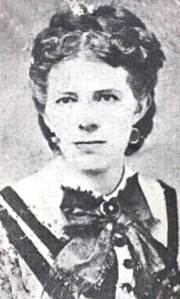
Kate Stone’s Civil War: Our soldiers were powerless

Foreign recognition, a cease-fire, slave emancipation: Stone captures the desperate rumors in the air as the Confederacy falls to its knees.

KS10

From 2012 to 2015, Stillness of Heart will share interesting excerpts from the extraordinary diary of Kate Stone, who chronicled her Louisiana family’s turbulent experiences throughout the Civil War era.

Learn more about Stone’s amazing life in 1861, 1862, 1863, 1864, 1865 and beyond. Click on each year to read more about her experiences. You can read the entire journal online here.

(Photo edited by Bob Rowen)

Foreign recognition, a cease-fire, slave emancipation: Stone captures the desperate rumors in the air as the Confederacy falls to its knees.

Feb. 1, 1865

Tyler, Texas

An occasional letter from Jimmy. He had just returned from our old home near the river. How strange it seems for the boys to be going home and wandering at will over the whole country, not a Yankee to be seen. The army worms were our best allies. They made the enemy abandon the country when our soldiers were powerless to drive them off. There are rumors of an armistice, recognition by the powers, and emancipation of the slaves.

Raining today. Could not start Jimmy’s boy back. Jimmy must think Henry is never coming. Have nearly finished Jimmy Carson’s gloves. His hands are none of the smallest and knitting the gloves has been a task.

Have been reading the life of Stonewall Jackson. He was worthy to be idolized by all classes as he is. Have just finished The Hour and the Man by Miss Martineau, purporting to be a historical novel with Toussaint L’Overture, the leader of the insurrection in San Domingo, as the hero. He is represented as superhumanly good and great beyond all heroes of ancient or modern times. He and Napoleon were contemporaries and comparisons are constantly drawn between them, all in favor of this darkie saint. Napoleon is completely overshadowed by Toussaint. It is a disgusting book. The Negroes are all represented as angelic beings, pure and good, while the whites are the fiends who entered in and took possession of their Eden, Haiti.

Anna Meagher returned recently and sent for me to come and see her. She saw Jimmy several times. He is quite well. Her only news was about the Terrapin Neck cutoff which, if true, will place all our plantations above possible overflow. The Yankees are all gone and some of the old planters still at home. Jimmy sent by Anna the box of papers left concealed and all are in good order. We have written him to bring out the silver if possible. It is buried there. The old Negroes are still on the place, and Uncle Hoccles and Aunt Liza want to come out to Texas. Mrs. Newman was about to give a Yankee party. Both girls are at home and reported engaged to Yankee officers. One cannot believe that news. Nous verrons. We hear that Annie Newman is a beauty and a belle. Surely the age of miracles has not passed.

The pouring rains continue, and the house leaks dreadfully. We rather wade than walk.

Recommended reading / viewing / listening

This week: CSS H.L. Hunley emerges / Writing: A job or a calling? / Solving a math mystery / Gaza children with PTSD / What caused her cancer?

KS33

This week: CSS H.L. Hunley emerges / Writing: A job or a calling? / Solving a math mystery / Gaza children with PTSD / What caused her cancer?

Most of these great items come from my social media networks. Follow me on Twitter, Tumblr, LinkedIn, MySpace, and Facebook for more fascinating videos, photos, articles, essays, and criticism.

1. After 150 years, Confederate submarine’s hull again revealed
By Bruce Smith | Associated Press | Jan. 30
“What [scientists] find may finally solve the mystery of why the hand-cranked submarine sank during the Civil War.”

2. Facebook needs a ‘Sympathy’ button
By Amy-Mae Elliott | Mashable | Jan. 25
” It can mean a feeling of pity or sorrow for someone else’s misfortune, and also an understanding between people — a common feeling.”

3. Is Being a Writer a Job or a Calling?
By Benjamin Moser and Dana Stevens | Bookends :: Sunday Book Review | Jan. 27
Moser: “Even the best writing won’t have the immediate, measurable impact of a doctor’s work, or a plumber’s.”
Stevens: “Of course a writer is going to lean toward saying writing is a calling — that’s our job.”

4. The Pursuit of Beauty
By Alec Wilkinson | The New Yorker | Feb. 2
“Yitang Zhang solves a pure-math mystery.”

5. Hundreds of thousands of children shell-shocked after the war in Gaza
By Robert Tait | The Telegraph | Jan. 29
“Children who saw their siblings or parents killed, often gruesomely, have been left stricken, and around 35 per cent to 40 per cent of Gaza’s million children are suffering from shell-shock according to Hasan Zeyada, a psychologist with the Gaza Community Mental Health Programme.”

6. What Caused My Cancer?
By Shana Bernstein | Pacific Standard | Jan. 29
“Was it bad genes? Bad luck? Or was it the toxins I eat, drink, breathe, and touch on a regular basis because the United States has a policy of putting the burden of proof for product safety on the consumer?”

7. The Fire of 1910 — Why It Still Matters
By Timothy Egan | Inside American Experience | Jan. 29
“Never in recorded United States history has there been anything to match the fire of 1910. For its size, its ferocity, its impact, nothing comes close.”

8. 50 years after funeral, Churchill towers over UK politicians
By Jill Lawless | Associated Press | Jan. 30
“Modern politicians know better than to invite comparisons to the larger-than-life Churchill — a noted ‘bon vivant’ … who kept 10 Downing St. stocked with Pol Roger Champagne.”

9. Seven questions every editor should ask the writer
By Roy Peter Clark | Poynter | Jan. 30
“After asking these questions to hundreds of writers, I have confidence that the answers provided by the writer can guide a coaching editor on how best to help the writer over time.”

10. For Incarcerated Japanese-Americans, Baseball Was ‘Wearing the American Flag’
By Michael Beschloss | HistorySource :: The New York Times | June 2014
“By 1943, when some of those in the relocation camps were allowed to volunteer for war service, some of the ballplayers joined the Army’s almost all-Japanese-American 442nd Regimental Combat Team, which suffered grievous casualties in Europe and came to be called the most decorated military unit in American history.”

Kate Stone’s Civil War: Kindly bestow them

Stone begins the new year with a diary entry — one of her longest — filled with details, cautious hope, and determination to hold out for ultimate Confederate victory.

KS9

From 2012 to 2015, Stillness of Heart will share interesting excerpts from the extraordinary diary of Kate Stone, who chronicled her Louisiana family’s turbulent experiences throughout the Civil War era.

Learn more about Stone’s amazing life in 1861, 1862, 1863, 1864, 1865 and beyond. Click on each year to read more about her experiences. You can read the entire journal online here.

(Photo edited by Bob Rowen)

Stone begins the new year with a diary entry — one of her longest — filled with details, cautious hope, and determination to hold out for ultimate Confederate victory.

Jan. 29, 1865

Tyler, Texas

Uncle Johnny and Kate have just gone to their room after a lengthy discussion of the comparative merits of modern poets and novelists. Johnny has kissed me goodnight, Sister is wandering in dreamland, I am alone with a cheerful fire and a wakeful spirit, and so I may as well resume my neglected diary.

Mamma, with Sarah as her maid, started on Wednesday for the prairie to be absent two weeks, and I am left to administer affairs during her absence. The office of housekeeper is not entirely a sinecure now that there are so many to be provided for our family, Uncle John’s, and Mr. Gary’s. We tease Mamma and Mrs. Savage by telling them they are keeping boarding houses, a fact they indignantly deny. But it looks that way to an outsider. We hoped to get Mr. Smith’s house and live to ourselves, but he now declines to rent. But for the hall, we are as much crowded here as at the Ranch, which we had to give up to the owner as he wished to move back. This is a pretty-looking place if the house was painted but new and unfinished, a large yard with the native trees left. Mr. and Mrs. Gary, from whom Mamma rented it, are quite nice people. They have one little girl and they give very little trouble. We rarely see them except at meals, which is a relief, for we did so dread her living in our room. Even Kate leaves us to ourselves sometimes, and so we find it much easier to live together. Though both Uncle Johnny and Kate utterly ignore Johnny’s existence, it is wonderful that they will behave so.

Jimmy and Joe Carson have rejoined their command. It is Jimmy’s first trial as a soldier. I am trying to finish a pair of the prettiest riding gloves to send him by Jimmy Stone’s boy, who will get off Wednesday. I am sending Jimmy Stone a famous pair. Dr. Weir would feel himself awfully slighted and retire in disgust could he peep behind the scenes and see what becomes of the precious gauntlets he forced on my acceptance. He flattered himself I would knit a pair of gloves to them and kindly bestow them on him. But oh no, they go with the best I can make to Jimmy. I have knitted so many gloves, and Mamma knits socks in all her spare time. I wish I had kept account of the numbers of pairs. We froth up old black or blue silk, mix it with wool, and have it spun into a pretty silky thread that makes nice-looking gloves or stockings. …

So slowly news comes in that we have heard nothing since Sherman’s occupation of Savannah more than a month ago and Gen. Hood‘s retreat across the Tennessee River. … Hood is relieved from command and Gen. Johnston reinstated, a rumor that gives general satisfaction. The very air is rife with rumors but nothing reliable. The favorite is that the Confederacy will certainly be recognized by all foreign powers immediately after the fourth of March, and we may look for a speedy peace with much more to the same. But we have been exalted and depressed by these rumors too often to let them weigh with us now. Another topic of general interest is the subject of gradual emancipation said to be under discussion in the lower house [of the Confederate Congress]. …

5 (more) facts about orgasm

2014 in review

Thank you for making 2014 the best year ever. Read the year-end WordPress graphical roundup.

Thank you so much for making 2014 Stillness of Heart‘s best year ever.

Here’s an excerpt:

The concert hall at the Sydney Opera House holds 2,700 people. This blog was viewed about 12,000 times in 2014. If it were a concert at Sydney Opera House, it would take about 4 sold-out performances for that many people to see it.

Click here to see the complete report.

Step by step

One step at a time. That’s all I have to believe in.

KS59

Slowly but surely, I’m building a full and rich life.

I have to believe that. Maybe happiness comes later.

Recommended reading / viewing / listening

This week: The best pieces on Cuba, the United States, the Castros, and what the future holds.

IMG_2095

This week: The best pieces on Cuba, the United States, the Castros, and what the future holds.

Most of these great items come from my social media networks. Follow me on Twitter, Tumblr, LinkedIn, MySpace, and Facebook for more fascinating videos, photos, articles, essays, and criticism.

1. No word yet from Fidel amid historic US-Cuba shift
By Anne-Marie Garcia | Associated Press | Dec. 19
“Everyone in Cuba is talking about the startling turn in relations with the United States, with one notable exception: Fidel Castro.”

2. Without Washington as its enemy, what will define Cuba?
By Tom Gjeten | The Washington Post | Dec. 19
“Both governments are gambling that this new world will suit their respective political interests. In this negotiation, however, there is no win-win: One government or the other is likely to lose.”

3. Cuba’s cash boon for GOP
By Kenneth P. Vogel and Tarini Parti | Politico | Dec. 19
“[W]hile polls show that most Americans favor normalization, wealthy donors for whom the issue is a top priority overwhelmingly oppose engaging with the Castro regime. …”

4. Why Congress Hates Your Cuban Rum
By Tim Mack | The Daily Beast | Dec. 19
“Havana Club or ‘American’ Havana Club? How untangling decades of Washington’s embargo politics could start a rum war among the world’s most powerful alcohol companies.”

5. The Revolution Fidel Castro Began Evolves Under His Brother
By Damien Cave | The New York Times | Dec. 18
“At a moment described by many as an equivalent to the collapse of the Berlin Wall, the absence of Fidel Castro … spoke volumes. For many Cubans, it confirmed that Fidel, perhaps by his own design, is slipping further into the past, into history, at a time when his approach to the United States seems to be fading as well.”

6. A Historical Perspective on the Cuba-U.S. Relationship
By Jason Steinhauer | Insights :: The Library of Congress | Dec. 19
“Let’s start with this: soon after Fidel Castro’s rise to power, the U.S. viewed Cuba as a security threat. What was the basis for that viewpoint?”

7. Detente Scrambles Political Calculus in Latin America
By Reed Johnson, Ezequiel Minaya, and Kejal Vyas | The Wall Street Journal | Dec. 18
“The Detente Between the U.S. and Cuba Has the Potential to Redraw Political and Economic Alliances Across the Hemisphere”

8. Cha-Cha-Cha: Obama’s On a Roll
By John Cassidy | The New Yorker | Dec. 19
“If you doubted that President Obama’s decision to normalize relations with Cuba was a political and strategic masterstroke, you only have to look at the reaction it has engendered to see otherwise.”

9. A Cuban who sold his beachfront home says he might regret that move
By Marco Werman | The World :: PRI | Dec. 19
“Yuro is part of the generation of Cubans known as the ‘lost generation.’ The ones who came of age after the fall of the Soviet Union — and the loss of all those Russian oil for sugar subsidies.”

10. The US Breaks Ties with Cuba
Witness :: BBC | Dec. 18
“It was in January 1961 that the USA first broke off diplomatic relations with Cuba. Wayne Smith was one of the last diplomats to leave the US embassy in Havana.”

11. Cuba: A Reading List
By John Williams | ArtsBeat :: The New York Times | Dec. 18
“[W]e asked editors at The Times to suggest books that offer the best looks at Cuba’s history and its relationship to the United States. Here are a few of their recommendations:”

12. Americans, here’s what you’ve been missing in Cuba all this time
GlobalPost | Dec. 19
“A new era in US-Cuba relations could see a travel ban lifted. Here are some of the sights US citizens could be visiting soon.”

13. U.S.–Cuba Agreement: Diplomacy At Its Best
By. John Parisella | Americas Quarterly | Dec. 18
“Just as Nixon went to China and Truman set up the Marshall Plan for Europe in the post-World War II era, Obama knew that he had to do something different with a nation just 90 miles off the U.S. shore.”

14. Pope Francis bridged gap between U.S. and Cuba during secret talks
By Paul Richter and Tom Kington | The Los Angeles Times | Dec. 18
“The pope’s secret role in the back-channel talks was crucial because, as a religious leader with the confidence of both sides, he was able to convince the Obama and Castro administrations that the other side would live up to the deal. …”

15. Topic: Cuba
By Ted Piccone and Richard Feinberg | The Brookings Institution | Dec. 2014
“See what they and other Brookings experts have to say about the measures and their impact on the two countries moving forward.”

16. Baseball in Cuba: A looming brain drain
By D.R. | The Economist | Dec. 18
“Cuban veterans represent the last remaining loophole in MLB’s regulation of players’ entry to the league, which helps to maintain competitive balance between rich and poor clubs.”

17. Opening Cuba and Closing Gitmo?
By James Stavridis | Foreign Policy | Dec. 19
“Havana will be pushing hard to shut the naval station at Guantanamo Bay — but Washington shouldn’t give in.”

18. Cuba’s Christmas Surprise for Caracas
By Daniel Lansberg-Rodriguez | Foreign Policy | Dec. 18
“Despite Maduro’s self-serving rhetoric, future U.S. tourism dollars, increased remittances, and access to foreign markets could easily replace the resale value of Venezuelan oil. Cuba’s wily leaders have made it clear that they’re more willing to offend Maduro than to risk being left standing when the salsa stops.”

19. The Democrats’ risky Cuba bet
By James Hohmann and Kyle Cheney | Politico | Dec. 17
“Will Florida’s changing demographics offset a backlash among older Cuban-Americans?”

20. As Obama opens to Cuba, China experts remember benefits from U.S. engagement
By Simon Denyer | The Washington Post | Dec. 19
“China has become a partner with the United States in some ways but also a powerful rival, geo-strategically and economically. Its leadership remains deeply suspicious of Western values, even as it pursues a deeper relationship with the United States.”

Kate Stone’s Civil War: Season of general disaster

Sudden deaths shock Stone and break her heart. All optimism of the past year is shattered.

KS8

From 2012 to 2015, Stillness of Heart will share interesting excerpts from the extraordinary diary of Kate Stone, who chronicled her Louisiana family’s turbulent experiences throughout the Civil War era.

Learn more about Stone’s amazing life in 1861, 1862, 1863, 1864, 1865 and beyond. Click on each year to read more about her experiences. You can read the entire journal online here.

(Photo edited by Bob Rowen)

Sudden deaths shock Stone and break her heart. All optimism of the past year is shattered.

Dec. 10, 1864

Tyler, Texas

Dear little Beverly, that angel upon earth, has left us. The pure spirit has winged its way to its Heavenly home. Darling little Beverly. What a sad despairing letter her father wrote bearing the bitter news of her death. They are utterly heartbroken. She was the one great treasure of their lives. The pure little spirit is freed now, but all the sunshine of life to them lies buried in that tiny grave. She died October 2 of sore throat at Selma, Ala. She was the one perfect being I have ever known in face, in figure, in mind, in heart not one improvement could be suggested. We have several times heard people who were not related to her say, after playing with her, “That child will not live to grow up; she is too perfect.” That seemed to be the general feeling of all their friends in Vicksburg who had known her always. She was too fair and frail a flower to blossom in this time of death and destruction. … There was never a sweeter, lovelier little creature than our “Swamp Lily,” as she loved us to call her. May Our Father comfort and strengthen her poor mother, for her life is bound up in the child’s.

We were shocked and distressed to hear of Mary Gustine’s death. We were there on one Thursday and she died on Sunday. Her mother seemed a little anxious, but no one else thought her much ill. A noble, generous, and beautiful woman, she was one of our most valued friends. This is the first break in the circle of happy girls who erstwhile met at Brokenburn. Her mother, who is in wretched health, will continue to live with Capt. Buckner, and she and Ella will take charge of the baby. That family is utterly broken up — one brother in prison and another desperately wounded — and not a month ago they were congratulating themselves on how wonderfully they had escaped all sorrow in this season of general disaster and despair.

Truly, “We know not what a day may bring forth.”

Brontë and her diary

“The haughty sadness of grandeur beamed out of her intent fixed hazel eye, & though so young, I always felt as if I dared not have spoken to her for my life, how lovely were the lines of her small & rosy mouth, but how very proud her white brow, spacious & wreathed with ringlets, & her neck, which, though so slender, had the superb curve of a queen’s about the snowy throat.”

On Jan. 21, 2011, the Morgan Library & Museum in New York City opened a fascinating exhibit, “The Diary: Three Centuries of Private Lives.” Introducing the exhibit were these thoughts:

“For centuries, people have turned to private journals to document their days, sort out creative problems, help them through crises, comfort them in solitude or pain, or preserve their stories for the future. As more and more diarists turn away from the traditional notebook and seek a broader audience through web journals, blogs, and social media, this exhibition explores how and why we document our everyday lives. With over seventy items on view, the exhibition raises questions about this pervasive practice: what is a diary? Must it be a private document? Who is the audience for the unfolding stories of our lives — ourselves alone, our families, or a wider group?”

Timeless questions … certainly legitimate ones for 21st century bloggers and tweeters. The exhibit, which unfortunately I wasn’t able to visit before its conclusion on May 21, featured work from the brightest stars of the literary galaxy. As quoted in the introductory essay, Henry David Thoreau aspired for his diary “to meet the facts of life — the vital facts — face to face.” Nathaniel Hawthorne and his wife co-authored their diary to celebrate their new married life together. “I do verily believe there is no sunshine in this world, except what beams from my wife’s eyes,” he wrote. “I feel new as the earth which is just born again,” his wife later wrote in response.

St. Augustine and Anais Nin … Walter Scott and Tennessee Williams … William S. Burroughs and Charlotte Brontë … A prisoner from World War II and a police rescue worker from the 2001 World Trade Center attack — the range of work and creativity and purpose is just as astounding as the authors and the beautiful words this exhibit so elegantly celebrated.

The exhibit lives on online. In addition to the introductory essay, the website offers images of diary pages, diary excerpts, and essays on the authors.

Also included are audio readings of selected diaries by actors Paul Hecht and Barbara Feldon. Reading the diaries is, for me, a joy, but hearing them read to me is a special — and often quite romantic — experience.

This special series begins with Charlotte Brontë: “The haughty sadness of grandeur beamed out of her intent fixed hazel eye, & though so young, I always felt as if I dared not have spoken to her for my life, how lovely were the lines of her small & rosy mouth, but how very proud her white brow, spacious & wreathed with ringlets, & her neck, which, though so slender, had the superb curve of a queen’s about the snowy throat.”

Entries in this series:
Part 1: Introduction to the exhibit and Charlotte Brontë
Part 2: Frances Eliza Grenfell
Part 3: Sophia and Nathaniel Hawthorne
Part 4: Paul Horgan
Part 5: John Newton
Part 6: Mary Ann and Septimus Palairet
Part 7: Walter Scott
Part 8: Bartholomew Sharpe
Part 9: Tennessee Williams
Part 10: John Ruskin

Free Love Freefall

The revolutionaries were determined to make lasting changes to the various forms of sexual oppression they perceived. It remains to the current generation to ensure their still-blossoming accomplishments do not wither under cold conservative shadows.

IMG_1475

Allyn’s revolutionaries were determined to make lasting changes to the various forms of sexual oppression they perceived. It remains to the current generation to ensure their still-blossoming accomplishments do not wither under cold conservative shadows.
A review by Fernando Ortiz Jr.

*****

Discussed in the essay:

Make Love, Not War: The Sexual Revolution: An Unfettered History. By David Allyn. New York: Routledge, 2001. Pp. 381. $30.95

David Allyn’s Make Love, Not War intelligently and creatively tours a sexual renaissance that ebbed and flowed throughout the 1960s and 1970s, sparking changes of varying longevity throughout society. Latino and black Americans fought throughout this era for equal rights as citizens and for the freedom to pursue and fully embrace the American Dream. The general public’s gradual tolerance of public gay culture, the rise of swingers movements, the gaveling of obscenity trials, the publication of sex studies, and the embrace of the birth control pill all comprise for Allyn a sexual rights movement, a “revolution” that silenced some prudes, raised legal eyebrows, and brought America a few sultry steps closer to the fulfillment of “life, liberty, and the pursuit of happiness.”1

Allyn designates the early sixties to the late seventies as the era of the sexual revolution, and he links its progression to general economic health in the United States. They rise and fall together. He utilizes dozens of interviews with men and women — some identified and some under pseudonyms — thirty years after their revolution takes place. Sexual histories, sociological studies, essays, novels, and academic reports supplement his study of the birth control pill, lesbian empowerment, gay rights, fights over literary censorship, public excitement over sexually-charged theater and film works, nudist colonies, swinger parties, and the general struggle to strip shame away from anyone’s sexual life.

The revolution was a multi-pronged and disjointed effort that lurched toward sometimes unclear objectives. Critics may condemn Allyn’s book for its seemingly disorganized structure, but it actually properly reflects the messiness of a series of efforts to change social mores and personal prejudices. Allyn’s great strength as a writer is his ability to gracefully transition from one theme of the era to another.

If anyone wanted to read a new sex manual to improve their sex life, Allyn argues that the sexual revolution made that possible. If a gay man or woman wanted to add legal sexual escapades at a sex party into their urban lifestyle, the sexual revolution made that available. If upper and middle-class women wanted to control their fertility, swap their spouses with other couples, or find and buy a book filled with sexual imagery, the sexual revolution eased strictures, opened doors, and soothed public outrage. Americans could fully and freely explore their identities, fulfill their aspirations, find their limits, and live their lives. For almost everyone, Allyn explores, the sexual revolution provided the freedom from fear.2

Allyn is enamored with the term “revolution,” which is his theme as his historical tour widens its scope over American society. From the very beginning, Allyn credibly admits the duality of his terrain, of which some aspects “were not revolutionary at all but evolutionary.” The era’s development of the pill, the rise of the sexual book publishing industry, the debates over obscene literature, the stronger roles women secured for themselves in American society — all were inherited from earlier eras in American history, all far from original movements. He admits this duality and does nothing to compensate for its contradictory influence on his narrative structure except pair stories of triumph with stories of eventual defeat or threat.

The era’s legacy is a mixed success of progression and regression, like all revolutions in American history. American society generally accepts the use of birth control and the popularity of premarital sex, though religious leaders and worried parents still frown on the still-expensive pill. Uncensored pornography — from hard-core videos to the soft sensuality of Anais Nin — is ubiquitous in the online world and easily found in the most popular bookstores, though erotica still faces many “family-oriented” enemies. Celebrities, news organizations, the military, scientific organizations, national leaders, and students across the United States embrace homosexuality as a normal sexual orientation, gay rights for citizens and servicemen, gay adoptions, and gay unions. But legal recognition of gay marriages retains its legal and political polarizing effect.3

Not everything can change all at once. Not everyone is won over when new ideas, new bathing suits, new aspirations, and new freedoms dawn over the raucous American society. When it comes to sex, each citizen had to make his or her own personal journey. People change as they grow older. Love and desire bring their own contradictory and revolutionary effects on one’s understanding and acceptance of the world around them. Jealousy, lust, insecurity, and fear can easily disrupt carefully constructed arrangements among sexual partners.

His interviews with the revolution’s participants best capture these intimate journeys. However biased or self-conscious they may be three decades later, Allyn’s interviewees echo the bittersweet afterglow the revolution’s sunset left in their lives. One father remembered his son loudly declaring in an airport terminal that his mother took a shower with a male sexual friend. One humiliated teenager remembers when her sexually supportive father left condoms on every bed in case she wanted to have sex with her male guest. Allyn deserves credit for including the long, dark slopes of the era’s gleaming aspirations for sexual liberation. He mostly maintained his balance between giddy celebration of short-term sexual bliss and grim acknowledgement of the long-term emotional consequences.4

His book’s duality also demands answers to eternal historical questions: Do changes deserve to be considered revolutionary if they are not all long-lasting? Was the sexual blossoming in the sixties an aberration in social values, enough to be considered revolutionary, or was the real revolution comprised of religious attitudes and social frigidity that put in place decency laws, targeted erotic literature, oppressed gay communities, marginalized women, and put shame into the hearts and minds of millions of sexual beings? Perhaps Allyn’s era was simply a counter-revolution, an attempt to take further the romantic aspirations of early twentieth century struggles for gender equality, sexual freedom, a more-just democracy, and fulfilled personal desires. Perhaps Allyn’s era consisted of a series of moments when Americans again grappled with and consummated fundamental American ideals that the original revolutionary generation left their descendants in a different and better America to achieve.

The book’s focus is mostly on urban upper and middle-class Anglo citizens. Blacks, Latinos, and lower-class citizens are not part of this study, which leaves readers hungering for a greater variety of voices and experiences. However, his study is linked to the economic health of the U.S. When the economy worsened in the seventies, the sexual revolution sputtered, which suggests the sexual revolution belonged only to those who could afford its luxurious promise. Impoverished minorities had larger and more immediate problems to worry about — how to feed their children and themselves, where to find work, how to avoid or at least endure an oppressive and heartless society — that they could not be concerned about swinger parties, literary censorship, or lesbian rights.

Overall, Allyn’s conflicted book is a valuable contribution to the study of postwar America. He brings together a detailed examination of various aspects of a sexual renaissance that benefited and benefited from other struggles for other freedoms. The arguments from this era came down — and still do — to eternal American issues: How much equality is necessary to fulfill our founding principles? How much are Americans entitled to? Where does private control — over our bodies, our gender, our children’s education, our moral principles — end and a democratic society’s standards begin? Allyn’s revolutionaries were determined to make lasting changes to the various forms of sexual oppression they perceived. It remains to the current generation to ensure their still-blossoming accomplishments do not wither under cold conservative shadows.


1. David Allyn, Make Love, Not War: The Sexual Revolution: An Unfettered History (New York: Routledge, 2001), 3-4. Allyn asserts that the every aspect of the sexual revolution “had an impact on how we as a nation have come to think of life, liberty, and the pursuit of happiness.”
2. Allyn, 4-5.
3. Allyn, 8, 295-296.
4. Allyn, 217, 297-299.
Thinking As Leverage

Developing deep and critical thinking.

Behind The Wall

Tabletop Games

Rebecca Aguilar

#CallingAllJournalists Initiative | Reporter | Media Watchdog | Mentor | Latinas in Journalism

Anna Fonte's Paper Planes

Words, images & collages tossed from a window.

Postcards from Barton Springs

Gayle Brennan Spencer - sending random thoughts to and from South Austin

The Flask Half Full

Irreverent travelogues, good drinks, and the cultural stories they tell.

Government Book Talk

Talking about some of the best publications from the Federal Government, past and present.

Cadillac Society

Cadillac News, Forums, Rumors, Reviews

Ob360media

Real News That Matters

Mealtime Joy

bringing joy to family meals

Øl, Mad og Folk

Bloggen Øl, Mad og Folk

a joyous kitchen

fun, delicious food for everyone

A Perfect Feast

Modern Comfort Food

donnablackwrites

Art is a gift we give ourselves

Fridgelore

low waste living drawn from food lore through the ages

BeckiesKitchen.com

MUSINGS : CRITICISM : HISTORY : NEWS