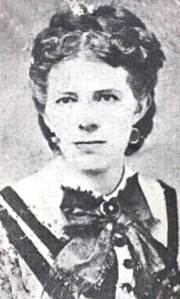
Kate Stone’s Civil War: Our soldiers were powerless

Foreign recognition, a cease-fire, slave emancipation: Stone captures the desperate rumors in the air as the Confederacy falls to its knees.

KS10

From 2012 to 2015, Stillness of Heart will share interesting excerpts from the extraordinary diary of Kate Stone, who chronicled her Louisiana family’s turbulent experiences throughout the Civil War era.

Learn more about Stone’s amazing life in 1861, 1862, 1863, 1864, 1865 and beyond. Click on each year to read more about her experiences. You can read the entire journal online here.

(Photo edited by Bob Rowen)

Foreign recognition, a cease-fire, slave emancipation: Stone captures the desperate rumors in the air as the Confederacy falls to its knees.

Feb. 1, 1865

Tyler, Texas

An occasional letter from Jimmy. He had just returned from our old home near the river. How strange it seems for the boys to be going home and wandering at will over the whole country, not a Yankee to be seen. The army worms were our best allies. They made the enemy abandon the country when our soldiers were powerless to drive them off. There are rumors of an armistice, recognition by the powers, and emancipation of the slaves.

Raining today. Could not start Jimmy’s boy back. Jimmy must think Henry is never coming. Have nearly finished Jimmy Carson’s gloves. His hands are none of the smallest and knitting the gloves has been a task.

Have been reading the life of Stonewall Jackson. He was worthy to be idolized by all classes as he is. Have just finished The Hour and the Man by Miss Martineau, purporting to be a historical novel with Toussaint L’Overture, the leader of the insurrection in San Domingo, as the hero. He is represented as superhumanly good and great beyond all heroes of ancient or modern times. He and Napoleon were contemporaries and comparisons are constantly drawn between them, all in favor of this darkie saint. Napoleon is completely overshadowed by Toussaint. It is a disgusting book. The Negroes are all represented as angelic beings, pure and good, while the whites are the fiends who entered in and took possession of their Eden, Haiti.

Anna Meagher returned recently and sent for me to come and see her. She saw Jimmy several times. He is quite well. Her only news was about the Terrapin Neck cutoff which, if true, will place all our plantations above possible overflow. The Yankees are all gone and some of the old planters still at home. Jimmy sent by Anna the box of papers left concealed and all are in good order. We have written him to bring out the silver if possible. It is buried there. The old Negroes are still on the place, and Uncle Hoccles and Aunt Liza want to come out to Texas. Mrs. Newman was about to give a Yankee party. Both girls are at home and reported engaged to Yankee officers. One cannot believe that news. Nous verrons. We hear that Annie Newman is a beauty and a belle. Surely the age of miracles has not passed.

The pouring rains continue, and the house leaks dreadfully. We rather wade than walk.

Recommended reading / viewing / listening

This week: CSS H.L. Hunley emerges / Writing: A job or a calling? / Solving a math mystery / Gaza children with PTSD / What caused her cancer?

KS33

This week: CSS H.L. Hunley emerges / Writing: A job or a calling? / Solving a math mystery / Gaza children with PTSD / What caused her cancer?

Most of these great items come from my social media networks. Follow me on Twitter, Tumblr, LinkedIn, MySpace, and Facebook for more fascinating videos, photos, articles, essays, and criticism.

1. After 150 years, Confederate submarine’s hull again revealed
By Bruce Smith | Associated Press | Jan. 30
“What [scientists] find may finally solve the mystery of why the hand-cranked submarine sank during the Civil War.”

2. Facebook needs a ‘Sympathy’ button
By Amy-Mae Elliott | Mashable | Jan. 25
” It can mean a feeling of pity or sorrow for someone else’s misfortune, and also an understanding between people — a common feeling.”

3. Is Being a Writer a Job or a Calling?
By Benjamin Moser and Dana Stevens | Bookends :: Sunday Book Review | Jan. 27
Moser: “Even the best writing won’t have the immediate, measurable impact of a doctor’s work, or a plumber’s.”
Stevens: “Of course a writer is going to lean toward saying writing is a calling — that’s our job.”

4. The Pursuit of Beauty
By Alec Wilkinson | The New Yorker | Feb. 2
“Yitang Zhang solves a pure-math mystery.”

5. Hundreds of thousands of children shell-shocked after the war in Gaza
By Robert Tait | The Telegraph | Jan. 29
“Children who saw their siblings or parents killed, often gruesomely, have been left stricken, and around 35 per cent to 40 per cent of Gaza’s million children are suffering from shell-shock according to Hasan Zeyada, a psychologist with the Gaza Community Mental Health Programme.”

6. What Caused My Cancer?
By Shana Bernstein | Pacific Standard | Jan. 29
“Was it bad genes? Bad luck? Or was it the toxins I eat, drink, breathe, and touch on a regular basis because the United States has a policy of putting the burden of proof for product safety on the consumer?”

7. The Fire of 1910 — Why It Still Matters
By Timothy Egan | Inside American Experience | Jan. 29
“Never in recorded United States history has there been anything to match the fire of 1910. For its size, its ferocity, its impact, nothing comes close.”

8. 50 years after funeral, Churchill towers over UK politicians
By Jill Lawless | Associated Press | Jan. 30
“Modern politicians know better than to invite comparisons to the larger-than-life Churchill — a noted ‘bon vivant’ … who kept 10 Downing St. stocked with Pol Roger Champagne.”

9. Seven questions every editor should ask the writer
By Roy Peter Clark | Poynter | Jan. 30
“After asking these questions to hundreds of writers, I have confidence that the answers provided by the writer can guide a coaching editor on how best to help the writer over time.”

10. For Incarcerated Japanese-Americans, Baseball Was ‘Wearing the American Flag’
By Michael Beschloss | HistorySource :: The New York Times | June 2014
“By 1943, when some of those in the relocation camps were allowed to volunteer for war service, some of the ballplayers joined the Army’s almost all-Japanese-American 442nd Regimental Combat Team, which suffered grievous casualties in Europe and came to be called the most decorated military unit in American history.”

2014 in review

Thank you for making 2014 the best year ever. Read the year-end WordPress graphical roundup.

Thank you so much for making 2014 Stillness of Heart‘s best year ever.

Here’s an excerpt:

The concert hall at the Sydney Opera House holds 2,700 people. This blog was viewed about 12,000 times in 2014. If it were a concert at Sydney Opera House, it would take about 4 sold-out performances for that many people to see it.

Click here to see the complete report.

Step by step

One step at a time. That’s all I have to believe in.

KS59

Slowly but surely, I’m building a full and rich life.

I have to believe that. Maybe happiness comes later.

Recommended reading / viewing / listening

This week: The best pieces on Cuba, the United States, the Castros, and what the future holds.

IMG_2095

This week: The best pieces on Cuba, the United States, the Castros, and what the future holds.

Most of these great items come from my social media networks. Follow me on Twitter, Tumblr, LinkedIn, MySpace, and Facebook for more fascinating videos, photos, articles, essays, and criticism.

1. No word yet from Fidel amid historic US-Cuba shift
By Anne-Marie Garcia | Associated Press | Dec. 19
“Everyone in Cuba is talking about the startling turn in relations with the United States, with one notable exception: Fidel Castro.”

2. Without Washington as its enemy, what will define Cuba?
By Tom Gjeten | The Washington Post | Dec. 19
“Both governments are gambling that this new world will suit their respective political interests. In this negotiation, however, there is no win-win: One government or the other is likely to lose.”

3. Cuba’s cash boon for GOP
By Kenneth P. Vogel and Tarini Parti | Politico | Dec. 19
“[W]hile polls show that most Americans favor normalization, wealthy donors for whom the issue is a top priority overwhelmingly oppose engaging with the Castro regime. …”

4. Why Congress Hates Your Cuban Rum
By Tim Mack | The Daily Beast | Dec. 19
“Havana Club or ‘American’ Havana Club? How untangling decades of Washington’s embargo politics could start a rum war among the world’s most powerful alcohol companies.”

5. The Revolution Fidel Castro Began Evolves Under His Brother
By Damien Cave | The New York Times | Dec. 18
“At a moment described by many as an equivalent to the collapse of the Berlin Wall, the absence of Fidel Castro … spoke volumes. For many Cubans, it confirmed that Fidel, perhaps by his own design, is slipping further into the past, into history, at a time when his approach to the United States seems to be fading as well.”

6. A Historical Perspective on the Cuba-U.S. Relationship
By Jason Steinhauer | Insights :: The Library of Congress | Dec. 19
“Let’s start with this: soon after Fidel Castro’s rise to power, the U.S. viewed Cuba as a security threat. What was the basis for that viewpoint?”

7. Detente Scrambles Political Calculus in Latin America
By Reed Johnson, Ezequiel Minaya, and Kejal Vyas | The Wall Street Journal | Dec. 18
“The Detente Between the U.S. and Cuba Has the Potential to Redraw Political and Economic Alliances Across the Hemisphere”

8. Cha-Cha-Cha: Obama’s On a Roll
By John Cassidy | The New Yorker | Dec. 19
“If you doubted that President Obama’s decision to normalize relations with Cuba was a political and strategic masterstroke, you only have to look at the reaction it has engendered to see otherwise.”

9. A Cuban who sold his beachfront home says he might regret that move
By Marco Werman | The World :: PRI | Dec. 19
“Yuro is part of the generation of Cubans known as the ‘lost generation.’ The ones who came of age after the fall of the Soviet Union — and the loss of all those Russian oil for sugar subsidies.”

10. The US Breaks Ties with Cuba
Witness :: BBC | Dec. 18
“It was in January 1961 that the USA first broke off diplomatic relations with Cuba. Wayne Smith was one of the last diplomats to leave the US embassy in Havana.”

11. Cuba: A Reading List
By John Williams | ArtsBeat :: The New York Times | Dec. 18
“[W]e asked editors at The Times to suggest books that offer the best looks at Cuba’s history and its relationship to the United States. Here are a few of their recommendations:”

12. Americans, here’s what you’ve been missing in Cuba all this time
GlobalPost | Dec. 19
“A new era in US-Cuba relations could see a travel ban lifted. Here are some of the sights US citizens could be visiting soon.”

13. U.S.–Cuba Agreement: Diplomacy At Its Best
By. John Parisella | Americas Quarterly | Dec. 18
“Just as Nixon went to China and Truman set up the Marshall Plan for Europe in the post-World War II era, Obama knew that he had to do something different with a nation just 90 miles off the U.S. shore.”

14. Pope Francis bridged gap between U.S. and Cuba during secret talks
By Paul Richter and Tom Kington | The Los Angeles Times | Dec. 18
“The pope’s secret role in the back-channel talks was crucial because, as a religious leader with the confidence of both sides, he was able to convince the Obama and Castro administrations that the other side would live up to the deal. …”

15. Topic: Cuba
By Ted Piccone and Richard Feinberg | The Brookings Institution | Dec. 2014
“See what they and other Brookings experts have to say about the measures and their impact on the two countries moving forward.”

16. Baseball in Cuba: A looming brain drain
By D.R. | The Economist | Dec. 18
“Cuban veterans represent the last remaining loophole in MLB’s regulation of players’ entry to the league, which helps to maintain competitive balance between rich and poor clubs.”

17. Opening Cuba and Closing Gitmo?
By James Stavridis | Foreign Policy | Dec. 19
“Havana will be pushing hard to shut the naval station at Guantanamo Bay — but Washington shouldn’t give in.”

18. Cuba’s Christmas Surprise for Caracas
By Daniel Lansberg-Rodriguez | Foreign Policy | Dec. 18
“Despite Maduro’s self-serving rhetoric, future U.S. tourism dollars, increased remittances, and access to foreign markets could easily replace the resale value of Venezuelan oil. Cuba’s wily leaders have made it clear that they’re more willing to offend Maduro than to risk being left standing when the salsa stops.”

19. The Democrats’ risky Cuba bet
By James Hohmann and Kyle Cheney | Politico | Dec. 17
“Will Florida’s changing demographics offset a backlash among older Cuban-Americans?”

20. As Obama opens to Cuba, China experts remember benefits from U.S. engagement
By Simon Denyer | The Washington Post | Dec. 19
“China has become a partner with the United States in some ways but also a powerful rival, geo-strategically and economically. Its leadership remains deeply suspicious of Western values, even as it pursues a deeper relationship with the United States.”


Brontë and her diary

“The haughty sadness of grandeur beamed out of her intent fixed hazel eye, & though so young, I always felt as if I dared not have spoken to her for my life, how lovely were the lines of her small & rosy mouth, but how very proud her white brow, spacious & wreathed with ringlets, & her neck, which, though so slender, had the superb curve of a queen’s about the snowy throat.”

On Jan. 21, 2011, the Morgan Library & Museum in New York City opened a fascinating exhibit, “The Diary: Three Centuries of Private Lives.” Introducing the exhibit were these thoughts:

“For centuries, people have turned to private journals to document their days, sort out creative problems, help them through crises, comfort them in solitude or pain, or preserve their stories for the future. As more and more diarists turn away from the traditional notebook and seek a broader audience through web journals, blogs, and social media, this exhibition explores how and why we document our everyday lives. With over seventy items on view, the exhibition raises questions about this pervasive practice: what is a diary? Must it be a private document? Who is the audience for the unfolding stories of our lives — ourselves alone, our families, or a wider group?”

Timeless questions … certainly legitimate ones for 21st century bloggers and tweeters. The exhibit, which unfortunately I wasn’t able to visit before its conclusion on May 21, featured work from the brightest stars of the literary galaxy. As quoted in the introductory essay, Henry David Thoreau aspired for his diary “to meet the facts of life — the vital facts — face to face.” Nathaniel Hawthorne and his wife co-authored their diary to celebrate their new married life together. “I do verily believe there is no sunshine in this world, except what beams from my wife’s eyes,” he wrote. “I feel new as the earth which is just born again,” his wife later wrote in response.

St. Augustine and Anais Nin … Walter Scott and Tennessee Williams … William S. Burroughs and Charlotte Brontë … A prisoner from World War II and a police rescue worker from the 2001 World Trade Center attack — the range of work and creativity and purpose is just as astounding as the authors and the beautiful words this exhibit so elegantly celebrated.

The exhibit lives on online. In addition to the introductory essay, the website offers images of diary pages, diary excerpts, and essays on the authors.

Also included are audio readings of selected diaries by actors Paul Hecht and Barbara Feldon. Reading the diaries is, for me, a joy, but hearing them read to me is a special — and often quite romantic — experience.

This special series begins with Charlotte Brontë: “The haughty sadness of grandeur beamed out of her intent fixed hazel eye, & though so young, I always felt as if I dared not have spoken to her for my life, how lovely were the lines of her small & rosy mouth, but how very proud her white brow, spacious & wreathed with ringlets, & her neck, which, though so slender, had the superb curve of a queen’s about the snowy throat.”

Entries in this series:
Part 1: Introduction to the exhibit and Charlotte Brontë
Part 2: Frances Eliza Grenfell
Part 3: Sophia and Nathaniel Hawthorne
Part 4: Paul Horgan
Part 5: John Newton
Part 6: Mary Ann and Septimus Palairet
Part 7: Walter Scott
Part 8: Bartholomew Sharpe
Part 9: Tennessee Williams
Part 10: John Ruskin

Kate Stone’s Civil War: Strangers in a strange land

Stone mourns a family friend’s death. She also notes ominously the growing epidemic of deadly disease at a nearby Confederate camp filled with Northern prisoners of war.

KS53

From 2012 to 2015, Stillness of Heart will share interesting excerpts from the extraordinary diary of Kate Stone, who chronicled her Louisiana family’s turbulent experiences throughout the Civil War era.

Learn more about Stone’s amazing life in 1861, 1862, 1863, 1864, 1865 and beyond. Click on each year to read more about her experiences. You can read the entire journal online here.

(Photo edited by Bob Rowen)

As another oppressive Texas summer begins, Stone mourns a family friend’s death. She also notes ominously the growing epidemic of deadly disease at a nearby Confederate camp filled with Northern prisoners of war.

June 14, 1864

Tyler, Texas

Comfortably seated by an open window in our lone rocking chair, I am munching Confederate cakes all alone with nothing to do. … Johnny is lying on his stomach with his heels in the air … Johnny has taken great delight in Shakespeare and reads and re-reads his favorite plays. He is already a good Shakespearean scholar. Sister is amusing herself with Sally, and the others are off spending this day with Mrs. Prentice. If there is one thing I most detest, it is spending a long summer day away from home. …

Jimmy received a letter from Mr. Hardison telling of Mrs. Hardison’s death in February. We are truly grieved to hear it. She was a high-minded good woman and one of our best friends. She died in Red River County, where they have been living since fall. Her life was a scene of trial from the time they fled from home. He writes most sadly. They have no books, no papers, hear no news, and have made no new friends and are alone on the bleak prairie, strangers in a strange land. We pity them all but most, her poor mother, Mrs. Alexander.

Anna and Dr. Meagher returned a few days ago. He is stationed here now in charge of the Yankee prisoners. The prisoners are in a most pitiable condition, perfectly destitute. Some have only a blanket to wear and others only one garment. There is much sickness and death among them and the authorities are powerless to get clothes for them. No clothes or blankets to be bought. …

Recommended reading / viewing / listening

This week: Adm. McRaven speaks to UT’s Class of 2014 / Humans’ interest in animals / Key tech at Normandy / What the NYT innovation report means

IMG_1358

This week: Adm. McRaven speaks to UT’s Class of 2014 / Humans’ interest in animals / Key tech at Normandy / What the NYT innovation report means

Most of these great items come from my social media networks. Follow me on Twitter, Tumblr, LinkedIn, MySpace, and Facebook for more fascinating videos, photos, articles, essays, and criticism.

1. The Real Meaning of Julián Castro’s HUD Nomination
By Sara Ines Calderon | Todo Texas | May 19
“If the Castro brothers both go to Washington, Texas is gonna have to do some soul searching to find the next batch of rising stars.”

2. The leaked ‘New York Times’ innovation report is one of the key documents of this media age
By Joshua Benton | Nieman Journalism Lab | May 15
“It’s an astonishing look inside the cultural change still needed in the shift to digital — even in one of the world’s greatest newsrooms. Read it.”

3. The New York Times’ ‘Innovation Report’ Is a Disaster
By David Warsh | Politico Magazine | May 23
“Arthur O. Sulzberger Jr. would be a fool to follow his son’s advice.”

4. To Change the World, Start by Making Your Bed
By William McRaven | University of Texas 2014 Commencement | May 2014
“If you want to change the world, don’t back down from the sharks.”

5. Thug: A Life of Caravaggio in Sixty-Nine Paragraphs
By Stephen Akey | The Millions | May 16
“23. In Rome, being a lot better than everybody else (with the sole exception of Annibale Carracci) and loudly proclaiming it to the world wasn’t necessarily a wise career move. The long knives came out.”

6. Animal magnetism
By David P. Barash | Aeon Magazine | May 2014
“Humans are fascinated by our fellow animals — is that just an evolutionary hangover or something more profound?”

7. The Misery Of Air Travel And What We Can Do About It
By Laren Stiller Rikleen | Cognoscenti :: WBUR | May 20
“On a regular basis, air travelers face inexplicable delays, over-booked flights, lost luggage, long waits on the tarmac, cabins that are too hot in one half and too cold in the other and diminished service at every stage of the process. Pricing is incomprehensible.”

8. 12 Pieces of Tech That Turned the Tide At Normandy
By Martin K.A. Morgan | Gizmodo | May 20
“The Allied Invasion of Normandy was one of the single most logistically and strategically complex maneuvers ever concocted by the U.S. military. With a strike force numbering in the hundreds of thousands and the momentum of the entire counter-offensive hanging in the balance, there was simply no room for failure.”

9. Look Up In The Sky And Live Big
By Adam Frank | 13.7 Cosmos and Culture :: NPR | May 20
“If you can get far enough out into the country, the Milky Way can be be seen in all its glory.”

10. The Collective Intelligence of the Web
By James Surowiecki | Elements :: The New Yorker | May 19
“It’s easy to see how the Web has transformed the way we shop, the way we consume media, and the way we communicate with one another. But it’s also begun to change the way we make decisions and even forecast the future.”

Recommended reading / viewing / listening

This week: Rumsfeld’s no McNamara / Search for the black box / Second novels / American dynasties / No more Turkish miracle

IMG_0611

This week: Rumsfeld’s no McNamara / The race to find the black box / Second novels / American dynasties / No more Turkish miracle

Most of these great items come from my social media networks. Follow me on Twitter, Tumblr, LinkedIn, MySpace, and Facebook for more fascinating videos, photos, articles, essays, and criticism.

1. Donald Rumsfeld Hasn’t Learned a Damn Thing
By James G. Blight and Janet M. Lang | Politico Magazine | April 4
“Bush’s unrepentant defense secretary and the dark art of B.S.”

2. Clock ticking on search to find Malaysia Airlines Flight MH370’s black box
By Swati Pandey | Thomseon Reuters | April 4
“On Monday, it will be 30 days since the jetliner lost communications and disappeared from civilian radar.”

3. Letterman Wasn’t That Funny, Which Is Exactly Why He Matters
By Isaac Chotiner | The New Republic | April 4
“I can’t think of a mass cultural figure of such large importance who was so committed to his own idea of artistic integrity.”

4. Are We Entering a Golden Age of the Second Novel?
By Bill Morris | The Millions | April 4
“Writers get only one shot at becoming The Next Big Thing, which, to too many publishers, is The Only Thing. Failure to do so can carry a wicked and long-lasting sting.”

5. The Work Hitler Despised and the One from Above His Fireplace
By R.C. Baker | The Village Voice | April 2
“The art of hate.”

6. Allegheny Arsenal Explosion
By Maggie MacLean | Civil War Women | April 3
“On September 17, 1862, seventy-eight girls and young women were killed in an explosion at the Allegheny Arsenal in the Lawrenceville section of Pittsburgh, Pennsylvania — the worst civilian disaster of the Civil War.”

7. Bush 41 Reunion Looks to Burnish His Legacy
By Peter Baker | The New York Times | April 3
“This seems to be a season for presidential rehabilitation, if not for the incumbent then for his predecessors.”

8. Karzai Is Trying to Keep His Sway After Term Ends
By Matthew Rosenberg | The New York Times | April 3
“American officials have ignored him, and Afghanistan’s presidential contenders have tried to persuade voters that they will be different from him. But those hoping to see President Hamid Karzai slip into a quiet retirement may be disappointed in the months to come.”

9. Dynasty Isn’t Just for Monarchies Anymore
By Larry J. Sabato | Politico Magazine | March 31
“A Bush-Clinton matchup in 2016 would hardly be unusual. American politics is more of a family affair than you think.”

10. Turkey Goes Out of Control
By Christopher de Bellaigue | The New York Review of Books | April 3
“Large parts of the civil service have been eviscerated, much of the media has been reduced to unthinking carriers of politically motivated revelation and innuendo, and the economy has slowed down after a decade of strong growth. The Turkish miracle is over.”

******************

TUNES

Tonight I’m spending some time with the blues, specifically with the Texas Blues Café. Check out the line-up and then listen here.

1. ZZ Top — Whats Up With That
2. Eddie Turner — I’m A Man
3. Carolyn Wonderland — Ain’t Nobody’s Business
4. Guitar Shorty — A Little Less Conversation
5. Jimi Hendrix — Electric Church Red House
6. Paul Rodgers — Walk In My Shadow
7. North Mississippi Allstars — Shake (Yo Mama)
8. Too Slim And The Taildraggers — Mexico
9. Walter Trout — May Be A Fool
10. The Black Keys — Hurt Like Mine
11. R.L Burnside — Goin Down South
12. Janiva Magness — Slipped,Tripped And Fell
13. Steve Miller — Driven Wheel
14. Bo Cox — Gone

Recommended reading / viewing / listening

This week: The French Revolution and the Terror / Cuba after Castro / The older genius / A new planet’s secrets / How Cheney remade the world

IMG_2238

This week: The French Revolution and the Terror / Cuba after Castro / The older genius / A new planet’s secrets / How Cheney remade the world

Most of these great items come from my social media networks. Follow me on Twitter, Tumblr, LinkedIn, MySpace, and Facebook for more fascinating videos, photos, articles, essays, and criticism.

1. The French Revolution’s reign of terror
By Melvyn Bragg | In Our Time :: BBC Radio 4 | May 2005
“How did the French Revolution descend into such extremes of violence? Who or what drove The Terror? And was it really an aberration of the revolutionary cause or the moment when it truly expressed itself?”

2. Why should female characters have to ‘behave’?
By Barbara Ellen | SheSaid :: The Guardian | March 27
“Did people demand that Travis Bickle shut up and get back in his cab in ‘Taxi Driver’? Did anyone tell Jack Nicholson that Jack Torrance made all men look bad in ‘The Shining’?”

3. The Dangers of a Cuban Collapse
By Daniel Serwer | Politico Magazine | March 26
“It could happen sooner than we think. Is Obama ready?”

4. Late Bloomers
By Malcolm Gladwell | The New Yorker | 2008
“Why do we equate genius with precocity?”

5. Mammy Revealed, and Not Just Her Red Petticoat
By Julie Bosman | The New York Times | March 26
“‘Gone With the Wind’ Prequel Coming in October”

6. Dwarf planet discovery hints at a hidden Super Earth in solar system
By Ian Sample | The Guardian | March 26
“Though exciting in its own right, the discovery raises a more tantalising prospect for many astronomers: that a ‘Super Earth’ up to 10 times the mass of our planet orbits the sun at such a great distance that it has never been seen.”

7. He Remade Our World
By Mark Danner | The New York Review of Books | April 3
“Cheney believed in a ‘unitary executive,’ believed quite literally that ‘the executive Power shall be vested in a President of the United States of America.’ ”

8. Could a tsunami such as the one that affected the Indian Ocean [in 2004] happen in the United States?
Can It Happen Here? :: U.S. Geological Survey | 2014
“We outline the sources of data that can help answer the question, and then indicate when and how large tsunamis have been for specific regions of the U.S.”

9. Unraveling the mystery of Vivian Maier, one of America’s great street photographers
By Kristin Hohenadel | The Eye :: Slate | March 24
“Maier was intensely private, socially awkward, estranged from family, a loner; even those who shared the same roof with her seemed merely to observe the eccentric woman who insisted on locking her bedroom door and fiercely guarding her boxes of worldly possessions, without ever knowing exactly who she was.”

10. Ankara: ‘Israel to compensate Turkey’ over flotilla raid
Al-Arabiya | March 25
“The May 2010 Israeli assault on the Turkish ship the Mavi Marmara while it was in international waters on its way to Gaza triggered a severe diplomatic crisis between the two countries.”

******************

TUNES

Tonight I’m spending some time with the blues, specifically with the Texas Blues Café. Check out the line-up and then listen here.

1. Band Of Heathens — Jenny Was A Keeper
2. Dr.Wu — Nothing Like Texas
3. The Arc Angles — Good Time
4. Albert Collins — Iceman
5. Rory Gallagher — Loanshark Blues
6. Red Hot Blues Sisters — Ocean Beach
7. The Fabulous Thunderbirds — Got To Get Out
8. Mick Hayes Band — Maria
9. Robin Trower — 21st Century Blues
10. Cross Canadian Ragweed — Boys From Oklahoma
11. Jimmy Thackery — Empty Arms Motel
12. The Blue Dogs — Make My Way
13. Devon Allman — Midnight Rider

Thinking As Leverage

Developing deep and critical thinking.

Behind The Wall

Tabletop Games

Rebecca Aguilar

#CallingAllJournalists Initiative | Reporter | Media Watchdog | Mentor | Latinas in Journalism

Anna Fonte's Paper Planes

Words, images & collages tossed from a window.

Postcards from Barton Springs

Gayle Brennan Spencer - sending random thoughts to and from South Austin

The Flask Half Full

Travel stories and culture, with a twist.

Government Book Talk

Talking about some of the best publications from the Federal Government, past and present.

Cadillac Society

Cadillac News, Forums, Rumors, Reviews

Ob360media

Real News That Matters

Mealtime Joy

bringing joy to family meals

Øl, Mad og Folk

Bloggen Øl, Mad og Folk

a joyous kitchen

fun, delicious food for everyone

A Perfect Feast

Modern Comfort Food

donnablackwrites

Art is a gift we give ourselves

Fridgelore

low waste living drawn from food lore through the ages

BeckiesKitchen.com

MUSINGS : CRITICISM : HISTORY : NEWS