21st century civil rights movement / David McCullough and the Brooklyn Bridge / Rewriting original American history / Touring the vibrator exhibit / Visiting Peru
Most of these great items come from my Twitter feed or Facebook news feed. Follow me on Twitter and on Facebook for more fascinating videos, articles, essays and criticism.
2.Gays may have the fastest of all civil rights movements By Mark Z. Barabak | The Los Angeles Times | May 20
“Public attitudes have shifted sharply in the last 10 years. Chalk it up to familiarity — among family, friends, co-workers and prime-time TV characters.”
4.Walking the Brooklyn Bridge with David McCullough By Anna Sale | The Takeaway | May 21
“[His book] explored American history not through the eyes of a Founding Father or a President, but through one of the most important public works projects of all time: the Brooklyn Bridge.”
5.Finding the First Americans By Andrew Curry | The New York Times | May 19
“Over the years, hints surfaced that people might have been in the Americas earlier than the Clovis sites suggest, but the evidence was never solid enough to dislodge the consensus view.”
6.A night at the vibrator museum By Tracy Clark-Flory | Salon | May 19
“Early vibrators were hand-cranked, two-person jobs — and prescribed by doctors. How far we’ve come since then”
7.Obama stumbles out of the gate By Mike Allen and Jim Vandehei | Politico | May 25
“Nothing inspires Democrats like the Barack Obama swagger — the supreme self-confidence on stage, the self-certainty in private. So nothing inspires more angst than when that same Obama stumbles, as he has leaving the gate in 2012.”
8.Five Reasons To Visit Peru That Aren’t Machu Picchu By Lacy Morris | The Huffington Post | May 21
“Dine with the Peruvian elite, walk a manmade island, or raft a canyon that requires a mule to get to; but whatever you do, don’t beeline for the Andes then skip town.”
9.Rereading: The Sea of Fertility tetralogy by Yukio Mishima By Richard T. Kelly | The Guardian | June 3
“Mishima’s ritualistic suicide in 1970 will always overshadow his work, but his dark saga of 20th-century Japan is mesmerising …”
10.Memorial Day: Remembering fallen of decade at war By Allen G. Breed | Associated Press | May 25
“About 2.2 million U.S. service members have seen duty in the Middle Eastern war zones, many of them veterans of multiple tours. And more than 6,330 have died — nearly 4,500 in Iraq, and more than 1,840 in Afghanistan.”
******************
TUNES
Tonight I’m spending some time with the blues, specifically with the Texas Blues Café. Check out the line-up and then listen here.
1. Shane Dwight — Pretty, Young and Mean 2. Gary Moore — All Your Love 3. Blue Condition — Cheap Wine 4. Dr. Wu — I Don’t Care Blues 5. Los Lonely Boys — Outlaws 6. Diane Durrett — From The Heart Of The Soul 7. Commitments — Chain Of Fools 8. Ian Moore — Muddy Jesus 9. Johnny Winter — Come On In My Kitchen 10. Howlin Wolf — Smokestack Lightnin 11. The Geoff Everett Band — Hole In My Life 12. Beth Thornley — Birmingham 13. Big Head Todd & the Monsters — Boom, Boom 14. Tommy Castro — Me And My Guitar
John Updike fading? / The other marriage myth / The priceless database of Afghan war wounds / Salman Rushdie on censorship / Hillary Clinton’s legacy at State
Most of these great items come from my Twitter feed or Facebook news feed. Follow me on Twitter and on Facebook for more fascinating videos, articles, essays and criticism. Read past recommendations from this series here.
1.Q&A: Seeking Better-Sounding Skype Calls By J.D. Biersdorfer | Gadgetwise :: The New York Times | May 17
“Are there any ways to improve the audio quality of computer-to-computer Skype calls?”
3.Have we fallen out of love with John Updike? By Sarah Crown | Books Blog :: The Guardian | May 15
“Three years after John Updike’s death, his reputation appears to be on the wane. But who else can match his deftness and grace?”
4.The Myth About Marriage By Garry Wills | NYR Blog :: The New York Review of Books | May 9
“Why do some people who would recognize gay civil unions oppose gay marriage? Certain religious groups want to deny gays the sacredeness of what they take to be a sacrament. But marriage is no sacrament.”
5.Lessons in a Catalog of Afghan War Wounds May Be Lost By C.J. Chivers | The New York Times | May 17
“[The] database is one part of a vast store of information recorded about the experiences of American combatants. But there are concerns that the potential lessons from such data could be lost, because no one has yet brought the information together and made it fully cohere. ”
6.On Censorship By Salman Rushdie | Page-Tirner :: The New Yorker | May 15
“Censorship is the thing that stops you doing what you want to do, and what writers want to talk about is what they do, not what stops them doing it.”
7.What will Hillary Clinton’s diplomatic legacy be? By Richard Wolf | USA Today | May 17
“As she prepares to leave the national stage after a 20-year run, Clinton is winning bipartisan respect at home and admiration abroad for her role as the nation’s 67th secretary of State.”
8.Coffee linked to lower risk of death By Amina Khan | The Los Angeles Times | May 16
“Subjects who averaged four or five cups per day fared best, though it’s not clear why.”
9.Luxury Liner’s Removal to Begin Off Italian Coast By Gaia Pianigiani | The New York Times | May 18
“One of the most expensive and challenging salvage operations ever planned, the removal of the luxury liner Costa Concordia from granite rocks off the Tuscan coast, where it ran aground in January, will begin next week.”
10.Play Caesar: Travel Ancient Rome with Stanford’s Interactive Map Open Culture | May 18
“Users of the model can select a point of origin and destination for a trip and then choose from a number of options to determine either the cheapest, fastest or shortest route.”
**************
TUNES
Tonight I’m spending some time with the blues, specifically with the Texas Blues Café. Check out the line-up and then listen here.
1. Tom Petty — Lovers Touch 2. The Insomniacs — Maybe Sometime Later 3. Preacher Stone — Blood From A Stone 4. Ramblin Dawgs — You Let Me Down 5. Los Lonely Boys — Man To Beat 6. Ray Wylie Hubbard — Snake Farm 7. The Derek Trucks Band — Get What You Deserve 8. MonkeyJunk — Tiger In Your Tank 9. Jimmie Vaughan — Texas Flood 10. Paul Thorn — Long Way From Tupelo 11. Curtis Salgado — Wiggle Outa This 12. Pride & Joy Band — Texas Hoochie Coo 13. Polk Street Blues Band — 100 Pound Hammer 14. Tommy Castro — Ninety-Nine And One Half
Romney in Kennedy’s shadow / ‘Year of the Woman,’ 20 years later / The new slacker / The search for water in Texas / Writers’ bedrooms
Most of these great items come from my Twitter feed or Facebook news feed. Follow me on Twitter and on Facebook for more fascinating videos, articles, essays and criticism.
3.Twenty years on, ‘Year of the Woman’ fades By Karen Tumulty | The Washington Post | March 24
“At a moment when gender politics is thick in the air, it is a good time to reconsider another spring, exactly 20 years ago, when an unprecedented wave of women set their sights on Washington.”
4.The Voice That Gets You Where You Need To Go By Susan Stamberg | Weekend Edition Sunday :: NPR | March 25
“Carolyn Hopkins is the voice behind public service announcements at airports, subways and theme parks.”
5.The slacker is back — and this time she’s female By Hermione Hoby | The Observer :: The Guardian | March 24
“As a whole new generation of graduates fail to find jobs and return home to live with their parents, the new female slacker has inspired a rich new and very funny crop of books, films and TV by and about women.”
6.Do You Worry About Access to Water? By Saskia de Melker | The Rundown :: PBS Newshour | March 23
“All this week, PBS NewsHour has been reporting from Texas on the record high temperatures, depleted groundwater, vanishing lakes and how many are tapping into a wellspring of alternative approaches to adapt.”
7.Literary Style: 15 Writers’ Bedrooms Apartment Therapy | March 23
“Whatever it may be, often what it is most is a space that reminds us that, genius aside, writers are people … just like you and I.”
8.Life’s Messy. Train Your Brain to Adapt By Megan Erickson | Big Think | Feb. 19
“Those who have naturally strong self-regulation can handle the overload — and those who don’t are left feeling guilty and out of control.”
9.Rereading: Great food writers By Bee Wilson | The Guardian | April 30
“A series of 20 tiny volumes of text from the best culinary authors reminds us that food writing is not just about food”
10.Libya 1969 coup Witness :: BBC News | March 1
“When Colonel Muammar Gaddafi first took control in Libya in 1969 – few people had heard of him.”
A surprise oasis / Dustin Hoffman on ‘Luck’ / Old bitterness for Bill Clinton / Surviving Antarctica / How do you talk to an alien?
Most of these great items come from my Twitter feed or Facebook news feed. Follow me on Twitter and on Facebook for more fascinating videos, articles, essays and criticism. Read past recommendations from this series here.
1.Underground oasis found below Earth’s driest desert By Lisa Grossman | New Scientist | Feb. 18
“A thriving community of microorganisms nestles two metres below the surface of the ultra-arid Atacama desert in Chile.”
2.US intelligence officials offer grim words on Afghanistan By Ken Dilanian | Stars & Stripes | Feb. 17
“Senior U.S. intelligence officials offered a bleak view of the war in Afghanistan in testimony to Congress on Thursday, an assessment they acknowledged was more pessimistic than that of the military commanders in charge.”
3.The .0000063% Election By Ari Berman | Mother Jones | Feb. 16
“How American politics became the politics of the superrich.”
4.Big screen or small, Dustin Hoffman feels ‘Luck’-y By Scott Timberg | The Los Angeles Times | Feb. 17
“The Oscar-winning actor says at age 74, he is fortunate to have landed such a richly written part in HBO’s new horse-racing series.”
5.Some Arkansas Dems still waiting for Clinton’s ‘thank you’ By Suzi Parker | She the People :: The Washington Post | Feb. 16
“For many party activists in Clinton’s home state, the subject of his relationship with Monica Lewinsky evokes bitterness even after 14 years. Privately, some grumble even now about how Clinton betrayed them, too.”
6.Rereading: Seamus Heaney on Czeslaw Milosz’s centenary By Seamus Heaney | The Guardian | April 2011
“Czeslaw Milosz was a veteran of European turmoil. His fellow Nobel laureate Seamus Heaney pays tribute to a Polish poet poised between lyricism and witness”
7.A communist in the US Witness :: BBC News | February 2011
“On 9 February 1950 Senator Joseph McCarthy began his hunt for communists in the US. Throughout the Cold War, people on the left of politics came under attack in the US.”
8.Rereading: Rosemary Sutcliff’s The Eagle of the Ninth By Charlottle Higgins | The Guardian | April 2011
“Not just a rollicking adventure, Rosemary Sutcliff’s The Eagle of the Ninth, which has just been filmed, is a touching true story about love and loyalty. Charlotte Higgins looks back on a childhood favourite”
9.Crossing Antarctica Witness :: BBC News | Jan. 18
“The Norwegian polar explorer Borge Ousland spent more than two months skiing alone across the continent of Antarctica.”
10.What Do You Say to an Alien? By Sam Roberts | The New York Times | Feb. 12
“If we made contact, what would we say? And what answers would we anticipate?”
**************
TUNES
Tonight I’m spending some time with the blues, specifically with the Texas Blues Café. Check out the line-up and then listen here.
1. Bettye LaVette — I Still Want To Be Your Baby 2. Michael Holt & The Trophy 500’s — To The River 3. Daddy Long Legs — Use Me 4. Marc Broussard — Home 5. Jimmy Warren — It Aint Fair 6. Hill Country Review — Highway Blues 7. ZZ Top — Double Back 8. Jacks O’Diamonds — Dusty Man 9. Old Southern Moonshine Revival — New Pair of Boots 10. Chris Rea — Texas Blue 11. Otis Taylor — Rain So Hard 12. Derek Trucks Band — Get What You Deserve 13. Paul Rodgers and Garry Moore — Tribute To Muddy Waters 14. The Informants — Goodnight My Love
Not only had the Confederacy been defeated. Not only had Lee been defeated. Kate Stone had been defeated.
This five-part essay series on Kate Stone and her Civil War is modified from a paper I presented at the New York Military Affairs Symposium in October 2011.
Learn more about Stone’s amazing life in 1861, 1862, 1863, 1864, and beyond. Click on each year to read more about her experiences.
As the new year dawned, Kate Stone held out hope that Southern victory was inevitable, no matter how long the war went on, asserting that “the darkest hour is just before the dawning.” She despised anyone who failed to share her fiery determination to win the war.
The mesmerizing images of handsome young officers, gleaming scabbards, soaring songs and fluttering banners were long since scourged from her mind. What remained was bitter anger and a lust for revenge. For years, her faith had sustained her as she endured one emotional maelstrom after another. Her faith gave a meaning to the destruction, it explained why her family’s suffering had to happen, and it justified in some elemental way the deaths of her brothers, of Ashburn, and of so many young friends.
(Photo edited by Bob Rowen)
Her world was destroyed. Her faith explained why it had to be destroyed. Buried in those ashes were the seeds of a new future. Somehow, she must have repeated to herself, Lee would find a way to defeat the North. Somehow, the light would reach those seeds, and a strong new independent nation would grow and blossom.
It may be true
Kate Stone refused to listen to any dejected opinions. She clung to every rumor that proclaimed success, every prediction that meant one more day of Confederate survival. Rumors began to fly about a possible surrender to the North. Stone remembered how people tried to act normally, and yet “over every pleasure sweeps the shadow of the evil news. It may be true. It may be true.” By April 28, she received news she could easily believe: Lincoln was dead. “All honor to J. Wilkes Booth, who has rid the world of a tyrant and made himself famous for generations.”
By May, the brutal military reality could not be denied. Lee had surrendered to Grant at Appomattox Court House, Va., on April 9. Other Confederate units still limped through the smoldering landscape. Confederate warships still sailed the seas. President Davis and his officials were still unaccounted for. But for those who put their hopes in the Army of Northern Virginia, the war was over.
” ‘Conquered, submission, subjugation’ are words that burn into my heart,” she wrote in mid-May, “and yet I feel that we are doomed to know them in all their bitterness … [W]e will be slaves, yes slaves, of the Yankee Government. The degradation seems more than we can bear.” She may have asked herself what had been gained by the war? “The best and the bravest of the South sacrificed,” she wrote bitterly, “and for nothing.”
Not only had the Confederacy been defeated. Not only had Lee been defeated. Kate Stone had been defeated.
Out of time
Stone had struggled to build a life separate from the war. She was so successful, despite the losses and defeats, that she considered 1865 the “happiest year of my life.”
But her mother was anxious to return to Louisiana. By mid-June, her brother William rejoined the family in Texas. He then headed east to reclaim Brokenburn before the Federal government confiscated the estate.
Stone admitted both regret and dread over the prospect of leaving Texas. She had found a degree of serenity and happiness in Tyler. Perhaps, over time, she realized she had to leave the old Kate Stone behind, the defeated Kate Stone, and create a new woman in Texas. But now, it was time to go back to Brokenburn, and she could only imagine the ruins and memories that awaited her.
Also awaiting her was a new reality in which former slaves were now entitled to a fair wage for their labor. “Our future is appalling,” she wrote on Oct. 10. “[N]o money, no credit, heavily in debt, and an overflowed place.”
By Nov. 10, the Stone family had returned to Brokenburn. Stone was heartbroken over the neglected fields, the echo of empty rooms, the house stripped of furnishings. She admitted the estate was not as devastated as other plantations, and the towering trees and soft grass softened the starkness of a ravaged estate.
Nevertheless, she found herself looking back west with longing. “How I fear that the life at Tyler has spoiled us for plantation life. Everything seems sadly out of time.”
Beyond the war
Brokenburn ultimately failed as a plantation. Kate Stone married Henry Holmes on Dec. 8, 1869, a month before her 29th birthday, and they had four children. She died in 1907. Holmes died in 1912.
Stone’s daughter Amy lived long enough to see her mother’s journal admired as a gem of Southern literature. She was 77 when thousands gathered in Tallulah, La., on March 17, 1955, to celebrate “Kate Stone Day.”
In late 1900, a middle-aged Kate Stone revised her journal, and in November she wrote a sentimental introduction to the new edition. “Life seemed so easy and bright before us,” she mourned, before “the great events that swept away this joyous future and set our feet in new and rugged paths.” As Stone stood on the brink of a new century, she spoke for her generation when she wrote that “we are still walking the same rough path, laden with heavy burdens.”
The losses, tragedies and horrors she encountered and endured on those paths molded her into a strong woman who would withstand with silent defiance a life defined by Confederate defeat and the end of slavery.
Life goes on
John Q. Anderson, editor of Brokenburn, asserted that the journal “records the rosy optimism in the beginning; the dogged determination as war brought shortages, defeat and death; the hazardous flight of women and children before invading armies and their plight as refugees; the death struggle of the Confederacy; the bitter acknowledgement of defeat and the return to a devastated homeland; and finally the struggle against poverty after the war.”
Drew Gilpin Faust, Harvard professor and president who wrote her own introduction to Brokenburn, celebrated Stone’s journal as “an invaluable portrait of the Confederate home front, of the world of women war created, or war’s challenges to accustomed privileges of race and class as well as assumptions and delineations of gender … War forced Kate Stone to question much of what the first two decades of her life had led her to assume about who she was and what she might expect to become.” Faust added that the diary was Stone’s way of playing a role in the war, “to claim the experience as her own.”
Anderson pointed out the tremendous value of the journal as more than a war diary. It was a social history of the upper class Louisiana society, of the frontier life of Texas and its friction with war refugees from its neighbor states. It was a bittersweet illustration of the intricacies of plantation society and a snapshot of how slaves were managed before and after the war. It was a chronicle of an educated Southern woman’s literary history.
We gain from Stone’s book a better understanding of the lives of ordinary people in wartime, enduring war’s physical and psychological violence, tormented by hopeful rumors of military victories, or staring hard across dark frontiers of a looming, unimaginable future. And yet, somehow, life goes on.
Nosy matrons still try to match up single men and women. Tutors still try to teach boys and girls. Thunderstorms rage. Toothaches annoy. Crops are harvested. Fevers decimate families. Babies are born and babies die. Broken, sobbing, contented and loving people move on with the emotional remnants of their lives.
Whatever misery she endured, whatever property she lost, whatever horrors she witnessed, Stone seemed determined to stand her ground. Perhaps she decided that she would never surrender to the dark, silent, sinister enemy.
This five-part essay series on Kate Stone and her Civil War is modified from a paper I presented at the New York Military Affairs Symposium in October 2011.
Learn more about Stone’s amazing life in 1861, 1862, 1864, 1865 and beyond. Click on each year to read more about her experiences.
Kate Stone began 1863 with optimism. Her brother William was sent home to recuperate from his wounds. Federal moves on Vicksburg were all repulsed, and Lee’s victory over Burnside at Fredericksburg still warmed her spirits.
“Altogether,” she concluded, “we are getting the better of our foes.” Perversely, her renewed confidence in an inevitable Federal defeat at Vicksburg mutated into a new fear of what that defeat would inspire in the Federal troops. She worried they would “lay this whole country [to] waste, send out bands of Negroes and soldiers to burn and destroy.”
(Photo edited by Bob Rowen)
And then, on Jan. 26, Stone wrote, “Preparing to run from the Yankees, I commit my book to the bottom of a packing box with only a slight chance of seeing it again.” She would not write again for six weeks.
On March 2, Stone opened her journal and wrote in it for the first time since late January. She was disoriented. She didn’t know exactly what day of the week it was. She guessed it was Saturday.
When Federal troops flooded the neighborhood in late January, Stone’s mother prepared to evacuate the family. But she changed her mind when she learned the roads west were already impossibly clogged with frightened refugees.
When Stone learned they were not leaving Brokenburn after all, she was secretly relieved. She dreaded moving into “the back country … to leave our pleasant home most probably to be destroyed by the Yankees. …”
Whatever misery she endured, whatever property she lost, whatever horrors she witnessed, Stone seemed determined to stand her ground. Perhaps Brokenburn was her own line in the sand. Perhaps she had already seen too many retreats, too many defeats, too many surrenders. Perhaps Stone, fighting what she saw as her part of the war, decided that she would never surrender her ground to the dark, silent, sinister enemy. But it took another enemy, one she’d feared longer than any Yankee, to change her mind.
Utterly helpless
The close proximity of Federal troops inspired the slaves to leave their plantations for good, and Stone reported dozens of them regularly gathered on the riverbank, hoping to be ferried over to a new camp closer to the Federal lines. “All the Negroes are running away now,” she wrote. [P]oor creatures, I am sorry for them. How horrible it all is.” At the nearby Hardison home, Stone wrote, the slaves “walked off in broad daylight … other Negroes declare they are free and will leave as soon as they get ready.”
Some slaves, however, returned to their estates, guiding Union soldiers ready to strip the properties of any valuables. Some slaves returned not just with soldiers but also with weapons, a horrific new reality to plantation owners. “The country,” Stone wrote, “seems possessed by demons, black and white.”
On March 21, Stone and her family picked lilacs in the garden. Webster, a slave, appeared with Wonka, Stone’s beloved horse. She had kept the horse hidden for weeks to protect it from the eye of Federal raiding parties. Webster said mosquitoes tormented the horse, and it needed some exercise. Stone agreed that Wonka needed some activity, and the horse was set loose to run around the yard near the house.
After ten minutes, two Union soldiers on horseback appeared without warning, demanding to trade one of their old horses for young Wonka. Stone refused. Her mother offered to give the men money instead. The soldiers insisted on the trade. The first soldier galloped toward Wonka to catch it, and Stone ordered a slave nearby to open the gate. When the slave hesitated, Stone ran to open it herself.
The second soldier yelled and pointed his gun at her head. Stone ignored him and ran to open a second gate. Her mother screamed. Wonka was caught. The soldiers changed saddles and rode off, leaving their “pack of animated bones” behind.
Stone, utterly devastated, watched them ride away. The scent of lilacs filled the air, she remembered. “I will never see lilac blooms again without recalling this sad incident.”
“The life we are leading now,” she wrote dejectedly, “is a miserable, frightened one, living in constant dread of great danger, not knowing what form it may take, and utterly helpless to protect ourselves.”
Stone’s mother agreed completely. Her cotton crop was destroyed. Damaged levees flooded the region. Life’s daily necessities were impossibly overpriced. New Orleans was gone, and Vicksburg would not hold out forever. Relatives and friends dead. Home defense forces utterly impotent. Union soldiers taking what they wanted whenever they wanted it. Union gunboats defiling the Mississippi River. Slaves more a threat than ever before. Her mother came to a single solution.
At long last, she decided, it was time to lead her family west.
Cold and white
In late March, Stone reported that a childhood friend, Joe Wicks, was killed during a skirmish with Union troops in Mississippi. She wrote that he died “as a Southern boy should, leading his men in action.” Stone’s journal then fell silent.
Two weeks later, on April 10, she began to write again, this time from Anchorage, La., mourning an even more terrible loss. Her brother Walter became sick and died on Feb. 15 in Cotton Gin, Miss.
“For seven long weeks,” she wrote, “my dear little brother has been sleeping his lonely grave, far from all who loved him, and we knew it not until a few days ago.” She remembered hugging him goodbye, his tears on her face, how he reined his horse on a hilltop and turned to wave at her one last time.
And now, a final image haunted her mind: his dead body in a black coffin, a once sweet and handsome young man now “cold and white.”
Her heart shattered, she concluded: “He was but a boy and could not stand the hardships of soldier’s life. Four months of it killed him.”
Not even the hope of victory, that great fire burning in her heart, escaped the shadow of her sorrow. “Even peace,” she wrote, “will not restore him to us all.”
As her grief eased, she explained what convinced the family to leave Brokenburn once and for all.
On March 26, as Stone and her mother visited a neighbor, an armed slave captured them and contained them in one room as other slaves ransacked the house. After fleeing the house, she saw more slaves descend on the home and walk off with all the possessions. The horror of this incident finally convinced Stone’s mother that it was time to move.
In the middle of the night, defying Federal orders that civilians could not leave their homes, the Stones left Brokenburn. They navigated flooded fields, endured broken roads and swam in the bayous when necessary. Slaves betrayed them at points, riding off with their clothes and other possessions.
Stone agreed with her mother, who “regrets coming away as she did, but what could she do? We could not stand more than anyone else, and nearly everyone left before we did. … So passes the glory of the family.”
From Anchorage, they moved on to a chaotic scene at the train station at Dehli and managed to secure some space on the westbound train to Monroe. From Monroe, they settled temporarily in Trenton. Stone’s mother and brother went back to Dehli, gathered some soldiers and returned to Brokenburn to gather the remaining slaves and bring them west. Stone spat with contempt at the reports of the house stripped of all valuables and of Webster, “our most trusted servant,” who proclaimed himself the new owner of Brokenburn. He is, she wrote, “the greatest villain in the country.”
The dark corner of the Confederacy
In July, they crossed into Texas, where it seemed they were met with one tragic blow after another. A starved, ravaged Vicksburg finally surrendered to Grant’s siege on July 4. In September, word arrived that Stone’s brother Coleman died from injuries sustained in fighting near Clinton, Miss. “Again we are called on to mourn one of our dearest and best,” she wrote.
The tragedy was no less painful, but her heart, she found, seemed stronger, more able to endure. “Death does not seem half so terrible as it did long ago,” she sighed with sad serenity. “We have grown used to it.”
When she heard of the death of Confederate Lt. Gen. Thomas “Stonewall” Jackson after the Battle of Chancellorsville, she mourned him deeply. “We have lost the conqueror on a dozen fields, the greatest general on our side. … As long as there is a Southern heart, it should thrill at the name of Stonewall Jackson. …”
Stone despised Texas, calling it “the dark corner of the Confederacy.” She concluded that “there must be something in the air of Texas fatal to beauty.”
As her family moved from one rented room to another, from town to town, the former plantation princess detested the people she encountered: “We have not seen a good looking or educated person since we entered the state.” She ridiculed their clothes: “Nothing looks funnier than a woman walking around with an immense hoop [skirt] — barefooted.” Their causal approach to hygiene sickened her. Before one meal “with the dirtiest people we have met yet,” she lost her appetite when she saw the servants washing the plates “at the duck pond right out in the yard.” She hated the fleas, the ticks, the huge snakes.
Texans hated her right back, her and people like her. They made no sympathetic effort to call people from Louisiana refugees. They called them renegades. Texan boys bullied her younger brothers. Sometimes their requests to spend the night in someone’s home were denied. The hostility left Stone mystified. “It is strange the prejudice that exists all through the state against refugees,” she sniffed, seemingly blind to her own condescending attitudes. “We think it is envy, just pure envy. The refugees are nicer and more refined people.”
The violence in the communities shocked her. “Nothing seems more common or less condemned than assassination,” she wrote
Despite all the complaining over fleas, hoop skirts, and duck ponds, Stone made the most of the journey through East Texas as her mother tried to find the family a quiet home. Louisianans had flooded the region since the Vicksburg campaign began, and as the weeks passed the Stones found friends more often, even people from the old Brokenburn neighborhood. Stone found herself admiring the wide open skies, the endless prairies, fields filled with wildflowers of every color. She munched on ripened berries and fruit. At night she watched fireflies dance around her, listened to the crickets sing, and stared into the huge, star-filled sky.
Love lost
Near the end of 1863, the family arrived in Tyler, Texas, to live with old friends already there, and there they tried to make a new, long-term home. Stone became less haughty and more sociable. A big step in her acceptance of her new home came when she finally came across a volume of Shakespeare. Her belief in final Confederate victory remained strong — “Our only hope is in Lee the Invincible” — but the war itself, once again, was far away.
Even letters reminding her of its terrible cost simply became part of normal life. “Nearly every household mourns some love lost.” Joe Wicks. William. Coleman. Perhaps Stone saw her pain reflected in the eyes of so many others. She saw how they endured despite losing as much she had, if not very much more. Perhaps her new life finally began once she sensed a shared sorrow binding her to her new Texas community.
She allowed herself to appreciate natural beauty in the Confederate’s dark corner, found old and new friends amid an air of hostility, and found a degree of peace as the war raged on.
Stone ended 1863 quietly, reviewing her family’s still-not-settled situation in Tyler, and writing at last, “Our old neighborhood is scattered to the four winds.” Facing an enormous opportunity to restart her life, perhaps she thought that wasn’t such a bad thing.
Despite her vow to be optimistic as 1862 began, Stone fretted that Louisiana ‘lies powerless at the feet of the enemy.’ And so does Brokenburn, she may have thought to herself. And so do I.
This five-part essay series on Kate Stone and her Civil War is modified from a paper I presented at the New York Military Affairs Symposium in October 2011.
Learn more about Stone’s amazing life in 1861, 1863, 1864, 1865 and beyond. Click on each year to read more about her experiences.
On her birthday, Jan. 8, 1862, Stone swore herself to a new motto: “Live for today. Tomorrow’s night, tomorrow’s cares shall bring to light.”
(Photo edited by Bob Rowen)
By the end of January, the newspapers confirmed a Confederate defeat in the Battle of Logan’s Cross Roads, in Kentucky, and Stone felt under siege. “The whole Northern Army is now on the move preparing to attack us at all points” she wrote. “The manner in which the North is moving her forces, now that she thinks us surrounded and can give us the annihilating blow, reminds me of a party of hunters crowded around the covert of a deer, and when the lines are drawn and there is no escape, they close in and kill.”
By early February, word came that Fort Henry, a Confederate installation on the Tennessee River, had surrendered to Union Brig. Gen. U.S. Grant. Stone despaired: “The war news is very bad, only defeats — Roanoke Island, the fall of Fort Henry … and shelling of Florence, Ala. We still hold Fort Donelson, though it has been under fire for two days.” But she had little sympathy for the Kentucky region falling under Union domination. “We do not care for those Kentucky towns; they deserve their fate. But Nashville, so true to the South, is a different matter.”
She was even gloomier a day later: “The general impression is that both Nashville and Memphis are doomed. …” But that discouragement was only temporary, and it only served to strengthen her resolve as she accepted the fact that the war would be longer and harder than she originally expected.
Irresistable
A key to Federal strategy was control of the Mississippi River. The struggle became one of the great sagas of the Civil War, and Kate Stone found herself in a front-row seat to that drama. On Feb. 22, 1862, Gen. P.G.T. Beauregard — deputy to Gen. Albert Sidney Johnston, the commander of the Department of Kentucky and Tennessee — asked the governors of Alabama, Louisiana, Mississippi and Tennessee to contribute 5,000 to 10,000 men to supplement the defense of the Mississippi River above Memphis. “There have been calls from the governors of all the river states for all the able-bodied men to come forward,” Stone reported.
“Every man is speaking of joining the army, and we fear within a week Brother Coley will away.” By March, Coleman Stone was serving with a cavalry company.
As she watched her brothers, relatives and friends don uniforms and voluntarily ride off to the front, Stone was deeply offended by men who refused to serve in the military. She saw military service as a solution to her own anxiety: “How can a man rest quietly at home when battles are being fought and fields lost and won every day? I would eat my heart away were I a man at home [during] these troubled times.” She saw service as a cornerstone of a man’s character: “I would not trust any man now who stays at home instead of going out to fight for his country.” She saw service in terms of fairness: “With all our relations going out to fight, I am not apt to think other men should sit comfortably at home.”
Stone found uniformed officers enchanting. She once encountered three Confederate officers at a Sunday church service, including “a perfect love of a lieutenant in blue uniform and brass buttons galore. Six feet of soldier with brass buttons is irresistible, and all the girls capitulated at once.” But war’s reality soon stripped the romance from her memory. Two months later, she reported the beautiful lieutenant was dead.
Powerless
Stone always tried to do her part to help the war effort. Emulating her mother, Stone learned how to sew gloves for the soldiers. She hemmed towels. She made hats from palmetto, grass and straw. She sewed pillow cases, underwear, and blankets, and she helped others make uniforms for local units. She never figured out how to make socks, though. “It is too complicated for my head.” Her younger brothers also tried to help with knitting.
Stone wrote that at first she sewed and knitted items that could be shipped to Confederate soldiers. As the war progressed, she limited her efforts to the needs of her relatives on the front. As the home front situation grew more desperate, the fruits of her labor went exclusively to her family. “No one’s dresses are ever considered worn out these days — as long as they can be held together.” In late 1862, she learned how to weave. “It is like going back to the days of the Revolution,” she joked. Later in the war, she resorted to buying linen sheets just to make fresh underwear. “Clothes have been a secondary consideration,” she concluded glumly. “Fashion is an obsolete word, and just to be decently clad is all we expect.”
Union naval blockades grew more effective as the war progressed, choking off or at least delaying vital Confederate imports and exports. Army movements left regional textile economies paralyzed. Prices for daily necessities skyrocketed. Flour grew scarce, and by 1862 Stone reported that it sold for $50 a barrel. She called cake “a most rare occurrence.” A pair of shoes cost $15 to make, and as Brokenburn editor John Q. Anderson noted in a footnote, civilians tried to make their own shoes “out of leather furniture, saddles, belts and trunks.” A pair of boots cost $50. A gallon of brandy cost $40 to $60. Later in the war a knife cost $25. A deck of playing cards cost $5.
Coffee was scarce. People tried to replicate it with parched potatoes, roasted acorns and okra seeds. Quinine, used to treat malaria, was no longer available. As 1863 neared, Stone ominously predicted that “there will soon be no dry goods in the Confederacy.”
Despite her vow to be optimistic as 1862 began, Stone was disgusted with the poor defense of New Orleans, which she called the “greatest City of the South,” and the subsequent collapse of any network to defend Louisiana. The state, she wrote, “lies powerless at the feet of the enemy.” And so does Brokenburn, she may have thought to herself. And so do I.
Dark, silent and sinister
And then the skies over Brokenburn darkened, literally.
As Federal forces closed in, in early May Gen. Beauregard urged Louisiana’s plantations to destroy their cotton to keep it out of Federal hands. Soon, Stone wrote, “as far as we can see are the ascending wreaths of smoke … we hear that all the cotton of the Mississippi Valley … is going up in smoke.” At Brokenburn, Stone’s mother ordered $20,000 worth of cotton to be incinerated. Stone reported that the bales burned for two days. “The planters look upon the burning of the cotton as almost ruin to their fortunes,” she wrote, “but all realize its stern necessity. …”
As a long summer loomed, Stone felt the coils of the Union anaconda tighten around her. Union victories at Fort Donelson and New Orleans brought her closer to the war than ever before. Her aloof observations of what were once far-off battles now turned into bitter rage and iron determination, compounded by the frustration that Union forces cut her off from regular contact with her relatives.
From the conquered Mississippi delta the Federal naval forces moved north. From Memphis, a Union army marched south. Their supreme objective was the conquest of Vicksburg, a target only 30 miles away from the pen with which she recorded her predicament, was their supreme objective. By mid-May, a new, horrifying sound echoed throughout Brokenburn’s tense, humid air: the booming of cannon fire focused on Vicksburg. By late June she saw the enemy for the first time with her own eyes. Union gunboats, “dark, silent and sinister,” sailed past as she watched from a friend’s riverside home.
As she imagined the sacrifices the future may demand, Stone radiated if not confidence then apocalyptic defiance. “How much better to burn one’s cities than to let them fall into the enemy’s hands.”
Capable of any horror
Once Federal commanders decided new canals were needed to bypass the strong Vicksburg batteries, soldiers swept the region’s plantations to find the black workers they needed to do the digging. Stone wrote that her mother instructed all the Brokenburn slaves to immediately hide if Union soldiers entered the property.
The slaves, however, had other intentions. Stone reported that some planters marched their slaves westward, and her mother planned to do the same. Stone worried what the consequences would be when Federal troops arrived, looked for slave workers and found none. “Our fear is when the Yankees come and find them gone they will burn the buildings in revenge. They are capable of any horror. We look forward to their raid with great dread.”
In April, Union Maj. Gen. George B. McClellan decided he would assault Richmond, Va., and he glacially moved his army up the peninsula between the York and James rivers. On May 31, after contesting the Union advance, Confederate commander Joseph E. Johnston was injured at the Battle of Seven Pines, and field command passed to Robert E. Lee. As McClellan timidly waited for almost a month, Lee, a former military adviser to Confederate President Jefferson Davis, reorganized his new army, strengthened the Richmond defenses, and gathered intelligence. Lee united with forces under Maj. Gen. Thomas “Stonewall” Jackson, and on June 26 he launched a massive, week-long, blood-soaked counterattack that hammered the Union army away from Richmond.
News of the Seven Days fighting reached Brokenburn in early July with a list of the units engaged in combat. Stone’s Uncle Bo survived the battles, but her brother’s unit had also been involved. She silently grew frantic as she awaited word of his survival and none came. “Oh, this long, cruel suspense. … Every day adds to my conviction that My Brother is desperately hurt.” In desperation, she studied the faces of any visitors to the house, searching for any shade of sadness a bearer of the worst news would express. By July 24, her anguish evaporated as word finally arrived that William had also survived the Seven Days.
The recent conscription law passed by the Confederate Congress called for all suitable men between ages 18 and 25 to sign up for military service, and Stone reported that Mr. Hazelitt, who taught her brothers, had to close his school and enroll in a military unit. “One of the worst features of the war,” she wrote, “is that is deprives all the boys of an education.”
A bloody death
Federal determination to conquer Vicksburg intensified, and more and more blue-coated troops poured down the Mississippi and raided the area around Brokenburn. By mid-August, Stone illustrated the first wave of refugees moving west. “The planters,” Stone wrote with frustration, “generally are moving back to the hills as fast as possible. There are two families refugeeing in our neighborhood.” As cold winter rain drenched Brokenburn, Stone, emotionally exhausted, wondered what lay ahead for her family and her plantation.
Depression and hopelessness consumed her, “Could I only be content to watch the Future as it unfolds instead of trying to pierce its mystery and mold it to my will, how much happier I would be.”
Adding to the grim feeling in the air was the departure of her brother Walter, who joined their brother Coleman in ranks of the 28th Mississippi.
After Lee’s victory over McClellan on the Peninsula and over John Pope at Manassas, he turned his armies north and invaded Maryland. McClellan, armed with a copy of Lee’s deployment orders, pursued him with uncharacteristic speed. Lee confronted him at Sharpsburg, and their armies fought the Battle of Antietam on Sept. 17. After a day of unprecedented bloodshed, Lee was the first to withdraw his stunned army from the area, and Lincoln took the Union non-defeat as an opportunity to announce the Preliminary Emancipation Proclamation on Sept. 22.
The executive action, theoretically freeing all slaves held in areas still controlled by Confederate forces, would become official on Jan. 1, 1863. By Oct. 1, word of the proclamation reached Brokenburn. Stone was outraged by what she called Lincoln’s “diabolical move. … How can he ever sleep with the shades of the thousands he has consigned to a bloody death darkening his soul?”
Lincoln replaced a recalcitrant McClellan with Maj. Gen. Ambrose Burnside, who foolishly attacked Lee’s impregnable defenses at Fredericksburg, Va., in mid-December. Union forces were massacred. On Christmas Day, an old neighbor came to Brokenburn to report that Stone’s brother William was killed in the battle. “Mamma was at once in despair,” Stone recalled, “and gave way to the wildest grief.”. But the neighbor’s information was wrong. Later the Stone family learned William was only injured. Nevertheless, Stone complained, “our Christmas was ruined.”
Adding to their misery, Union Maj. Gen. William T. Sherman landed 30,000 troops at Milliken’s Bend, just a few miles from Brokenburn, and a brigade was sent south to destroy the Vicksburg, Shreveport, and Texas Railroad on the eve of his attack on Chickasaw Bluffs, just north of Vicksburg. But brigade’s soldiers did not molest the Stone family, and Stone’s second year of war, later brightened by news of Sherman’s bloody defeat, ended quietly.
In 1861, Kate Stone watched from Louisiana as the firestorm of civil war spread from state to state. She had no idea that the fire would soon consume her life. As she started her diary, she had no idea that nothing would ever be the same again.
This five-part essay series on Kate Stone and her Civil War is modified from a paper I presented at the New York Military Affairs Symposium in October 2011.
Learn more about Stone’s amazing life in 1862, 1863, 1864, 1865 and beyond. Click on each year to read more about her experiences.
It’s easy for a casual enthusiast of the Civil War to be seduced by the arrows and lines on battlefield maps and to forget the rich lives those engagements destroyed. It’s easy to skim past the details when armies ravage entire regions, easy to blink past sterile, blurred photos of the scorched buildings in Richmond, the rows of corpses at Atlanta, or the terrified refugees from all parts of the collapsing Confederacy.
But the Civil War can never be completely understood without a closer look at the men and women who endured this cataclysm, those who endured the brutal strangling of conquered cities, those who fought on the front lines, and those who littered the blasted landscapes.
For twenty-year-old Kate Stone, her story began in Brokenburn, the chronicle she began in 1861 to record the momentous era dawning over her life.
The diary was named after her family’s cotton plantation in northeastern Louisiana, near the Mississippi River, about 30 miles northwest of Vicksburg. Stone shared the mansion with her widowed 37-year-old mother, two uncles, five brothers and a younger sister. Her father died in 1855, and three other siblings died before 1861. About 150 slaves served in the house or tended the estate, which stretched over more than 1,200 acres of bayous, forests and cleared fields.
(Photo edited by Bob Rowen)
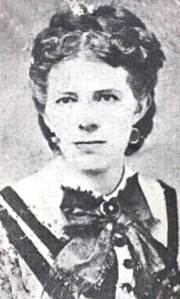
Stone was born in Mississippi Springs, Miss., on Jan. 8, 1841. She was educated at Nashville Female Academy in Tennessee. “I am tall,” she wrote in 1861, “Not quite five feet six, and thin, have an irregular face, a quantity of brown hair, a shy, quiet manner, and talk but little.” She was a rich girl, essentially, who generally enjoyed a life of leisure, and under normal circumstances she could expect much more of the same for the next several decades.
She spent her days playing chess and playing the piano, attending Sunday church and reading the Bible, picking berries, embroidering, entertaining visitors, and visiting friends and family. She loved riding her horse, Wonka. She was intelligent, well-educated and well-read. She loved literature, particularly the works of Victor Hugo, Alfred Tennyson, Edgar Allen Poe, Walter Scott, and William Shakespeare.
She was a romantic who admired her mother’s “great power of attracting love, the first and greatest gift that can be bestowed on anyone.”
Stone viewed her world with affection and optimism, and she strolled through it armed with a sharp wit, a smart self-deprecating sense of humor, and acidic sarcasm — qualities that glitter throughout her diary.
Stone never thought she was beautiful, even when her mother insisted she was. “I was the ugly duckling of the whole family,” she recalled. Her grim self-image, she wrote, “has been the shadow on my life.” In 1861, Stone’s mother explained why her father doted on her so often. Stone had always thought that her father praised her mind because he found so little to praise in her appearance. Her mother assured her that he had considered Stone wholly “perfect.”
Stone confessed to her diary that she was surprised but tremendously relieved: “The knowledge of this will change my life from this night.” She promised herself that would “try to put away the morbid thoughts … [including] … the fear that, being ugly and unattractive, no one could ever really care for me, and that I was doomed to a life of loneliness and despair.”
The trumpet of war
As the spring days of 1861 warmed, Stone and her family, at first, saw a bright future ahead. She recalled that the latest cotton crop had at last made a profit for the family, “and hereafter we would have nothing to do but enjoy ourselves.” She looked forward to long months of leisure through the rest of the year, and 1862 promised a family vacation in Europe.
But in the months after the 1860 presidential election, dark political clouds quickly building in the East cast long, chilling shadows over Brokenburn’s blossoming gardens. Spring 1861 brought a virulent war fever to the region, especially after the Confederate bombardment of Fort Sumter in April. Stone and her relatives regularly read Northern newspapers, and the publications’ “horrible stories” about the South infuriated her.
Stone felt herself swept away by the waves of aggressive emotion swirling through Southern society. “Throughout the length and breadth of the land,” she wrote in May 1861, “the trumpet of war is sounding … men are hurrying by thousands, eager to be led to battle against [President Abraham] Lincoln’s hordes … willing to meet death in defense of the South. … Never again can we join hands with the North, the people who hate us so.” A few days later she added, “We should make a stand for our rights — and a nation fighting for its own homes and liberty cannot be overwhelmed. Our Cause is just and must prevail.”
She was deeply offended whenever she encountered someone who failed to share her depth of passion for the Confederate cause. When a dinner companion, an immigrant from Hungary, regarded the South’s motivations as “a grand humbug … something to be mocked and sneered at,” she seethed with contempt. “I could shake him,” she wrote. Stone and her neighbors also kept a bitter eye on a handful of known Unionists living in a hamlet nearby. “[W]e think they should be sent North to a more congenial people,” she grumbled.
The prospect of glory and honor gained from a victorious struggle for independence electrified Southern imaginations, and Stone was no exception. John Q. Anderson, the editor of Stone’s journal, wrote in his introduction that “Kate shared the widespread belief of Southerners that the war would be an outing for dashing young officers in splendid uniforms, inspired to deeds of valor by patriotic maidens.”
Stone’s very first entry in her new journal focused on one such man hoping to be a dashing young officer: her brother William. On May 15, she wrote the journal’s first lines: “My Brother started at daybreak for New Orleans. He goes as far as Vicksburg on horseback. He is wild to be off to Virginia.”
Slaves
Kate Stone’s brother William, whose departure she mentioned in her first diary entry, arrived at the assembly area too late to join his preferred infantry company, so he returned to Brokenburn. By May 25 he was on the road again, this time with their Uncle Bo, intent on joining the Jeff Davis Guards. Mourning his departure for a second time, Stone admitted feeling more than a twinge of guilt. “They go to bear all hardships,” she wrote, “while we whom they go to protect are lapped safe in luxurious ease.” The Jeff Davis Guards were sent to fight in Virginia.
Stone’s mother sent the new soldiers on their journey with three well-supplied horses and Wesley, a slave. Stone said Wesley “was very proud of the honor of being selected” to accompany “Marse Will” into the war. Uncle Bo, Stone reported, expected to be a private in a unit named the Volunteer Southerns, and he elected not to take a “body servant” because he didn’t think an enlisted soldier should have one. “[B]ut if he changes his mind,” Stone added confidently, “a boy can be sent to him at any time.”
A few weeks later, on June 19, Stone reported seeing a fugitive slave run across the grounds. Men were sent to catch him, but he escaped. “I was glad he escaped,” she wrote. “I hate to think how he will be punished.” She imagined the slave, if caught, would be “whipped unmercifully.” On June 29, she complained that the “house servants have been giving a lot of trouble lately — lazy and disobedient.” She warned that they may have to be sent out to work in the fields. “I suppose the excitement in the air has infected them.”
Stone’s view of slavery, as reflected in her journal, was typical of her time and class. The slaves were described warily, from a distance, with amusement and with pity. From her perspective, the slaves were shadowy, abstract beings, occupying their natural, proper and deserved place in her Southern civilization, forming the foundation of the life she and her family enjoyed. But she also saw the slaves as a threat — a potential threat before the war, and a real, looming threat during the war.
Stone and her neighbors were tormented by rumors of a general slave uprising scheduled for sometime in July 1861. She added that the slaves were “well watched in every section where there are any suspects,” sounding like a prison guard who wondered if she was the real prisoner.
Brillancy and beauty
As spring turned to summer, domestic worries darkened the thoughts Stone poured into her journal. She reminded herself to save seeds from the family’s flourishing garden, “as we will get no more from the North.” Her mother ordered as much planted as possible because she anticipated the plantation would have to become as self-sufficient as possible. “Strict economy,” Stone sternly determined, “is to be the order of the day.” She anxiously looked forward to the arrival of mail and newspapers, improved her sewing, studied French, critiqued the books she read, and savored the ripening fruit on the trees, vines and bushes around the plantation.
It was as if, despite her attempts to lose herself in her pre-war hobbies, Stone felt the power of distant events and marching armies move the ground beneath her feet. “Oh! to see and be in it all,” she wrote with anxious frustration. “I hate weary days of inaction. Yet what can women do but wait and suffer?”
As she made the best of the imperfect serenity around her, Stone was pleasantly and briefly distracted by a celestial gem soaring across the summer sky. On the last day of June she wrote, “There is a comet visible tonight. … It is not very bright but has the appearance of a large star … with a long train of light seen dimly as through a mist.”
It was the Great Comet of 1861, officially named C/1861 J1. It passed closest to Earth on June 30, the day Stone first noted its appearance. By July 4, as more and more volunteers rushed to form new military units under consecrated flags, Stone reported that the “comet increases in brilliancy and beauty every night.” Astronomers around the world studied the object for months before it faded away in May 1862. They calculated that Earth would not see it again for more than 400 years.
Never to return
By the end of July, Stone calmly rejoiced when news arrived of a great battle at Manassas Junction in Virginia. “[O]ur side victorious, of course,” she wrote. Her optimism was eclipsed, however, by journal entries reporting severe fevers, chills, and coughs among her relatives, her neighbors and the slaves. Incessant rain drenched the region for weeks, and malarial fever spread. As summer gave way to fall, wave after wave of sickness swept through Brokenburn.
On Nov. 11, Stone reported that Ashburn, her young maternal uncle, was terribly ill. Her next entry came 16 days later, and the first few lines said it all: “How can I write the record of the last two weeks? … Ashburn, our darling, has gone, never to return.” Stone could write little more than that. Two days later, she officially reported that Ashburn died at 11 p.m. on Nov. 12; the cause was “swamp fever,” most likely malaria.
On Nov. 29, Stone recorded that “[h]ere at home all seems strangely dull and sad.” She wrote most beautifully during great tragedy, and Ashburn’s death inspired grievous words: “[O]ne of our dearest and best has bidden farewell to Earth and floated out on the dark river.”
Stone’s 1861 ended quietly, the household still mourning Ashburn’s death. “This is the first Christmastime in our recollection that was not a time of fun and feasting.”
Understanding SOPA / The 5-Second Rule / Looking back at Election 2012 / MLK papers now online / Romney’s faith issue
Most of these great items come from my Twitter feed or Facebook news feed. Follow me on Twitter and on Facebook for more fascinating videos, articles, essays and criticism.
1.Concerns about Romney’s faith quieter but not gone By Rachel Zoll | Associated Press | Jan. 16
“The second time around, the shock has worn off. The prospect of a Mormon president appears to be less alien to South Carolina Republicans who are giving Mitt Romney a second look after his failed White House bid in 2008.”
3.200,000 Martin Luther King Papers Go Online Open Culture | Jan. 16
“The documents give you a good glimpse of Dr. King’s role as a scholar, father, pastor and catalyst for change.”
4.10 Important Life Lessons You Learn From Living Abroad By Whitney Cox | BootsNAll | Jan 16
“It’s a world of implicit triumphs and it’ll-be-funny-later humiliations. Unpack your bags and look forward to these life lessons”
7.What Is SOPA? By Brian Barrett | Gizmodo | Jan. 17
“SOPA is an anti-piracy bill working its way through Congress…”
8.This much I know: Tim Robbins By Emma John | The Observer | September 2010
“The actor and musician, 51, on hatred, ice hockey, and winning an Oscar”
9.The 5-Second Rule By C. Claiborne Ray | Q&A :: The New York Times | February 2011
“You know the five-second rule for dropped food? Is it really safe if you pick it up in time?”
10.The Krakow Ghetto Witness :: BBC News | March 2011
“The city of Krakow in Poland was home to a large Jewish community before World War II. But with the arrival of the Nazis many of its Jews were deported, or fled. Then in 1941 a Jewish ghetto was built.”
Vets cope with injuries / Bachmann’s implosion / Daily health care deals / The narcissist / Don’t mention George W. Bush
Most of these great items come from my Twitter feed or Facebook news feed. Follow me on Twitter and on Facebook for more fascinating videos, articles, essays and criticism. Read past recommendations from this series here.
1.Acting Out War’s Inner Wounds By James Dao | The New York Times | Jan. 1
“The roadside bomb that separated Sgt. Matthew Pennington from his left leg in 2006 also shattered his right leg and scorched his lungs. Those injuries he understood. But then came the ones he did not, the ones inside his head.”
3.Uninsured turn to daily deal sites for health care By Joseph Pisani | Associated Press | Jan. 1
“Merchants like the deals because it gives them exposure and a pop in business. Customers use them to try something new, to save money on something they already use, or both.”
4.The Dreamers Activate :: Al Jazeera | October 2011
“Viridiana Martinez only found out that she is considered ‘illegal’ upon graduating from high school and discovering that she could not work or apply to colleges. … But now Viridiana is fighting back — openly declaring her ‘illegal’ status. …”
6.For the Depressed, Mothers Matter More Big Think | December 2011
“Depressed people react more strongly to photos of their mother than healthy individuals, according to new research.”
7.Keeping Greens Green By C. Claiborne Ray | Q&A :: The New York Times | November 2011
“When greengrocers drench vegetables with water every few minutes, does it keep them fresh or hasten spoilage?”
8.Carter’s advice to Obama: Don’t alienate voters By Greg Bluestein | Associated Press | Jan. 3
“Carter said: ‘If your main goal is to get re-elected, avoid a controversial subject as much as you can in the first term.’ ”
9.George W. Bush barely mentioned in GOP campaign By Beth Fouhy | Associated Press | Jan. 3
“While the candidates routinely lionize Ronald Reagan and blame President Barack Obama for the nation’s economic woes, none has been eager to embrace the Bush legacy of gaping budget deficits, two wars and record low approval ratings — or blame him for the country’s troubles either.”
10.Civil War women: Laura Towne Civil War Women Blog | November 2011
“Begun in 1862, the Port Royal Experiment, the first large-scale government effort to help the newly freed slaves. Northern women like Laura Towne and Charlotte Forten volunteered, and made it their mission to educate the freedmen and prepare them for economic independence.”












 Stillness of Heart
You must be logged in to post a comment.