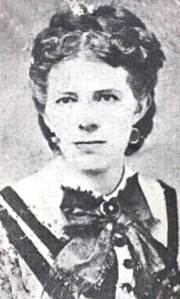
Two magnificent fathers

Reading about Theodore Roosevelt’s love for his family proudly reminded me of my father’s love for his own family.

A Father’s Day post from a few years ago …

I spent Father’s Day with my parents in Fredericksburg, Texas. We had a wonderful time.

When I returned home, I reviewed my email, skimmed the latest headlines from the Associated Press (old habit), scrolled for a few moments through Twitter, and numbly drifted through my Facebook newsfeed. A post from the Theodore Roosevelt Association revived me to full attention. They too celebrated Father’s Day. They posted a few touching thoughts on Roosevelt’s love for his family:

Roosevelt always saw his family as the needle of his life’s compass. … The study of Teddy Roosevelt as a father is a testament to his priorities. He did not live to see his face on Mount Rushmore or to appreciate just how much he captured the imagination of the country. But he did live to see the children he loved grow to adulthood and develop into honest, hardworking citizens who built families of their own.

I can think of another loving father who put his family above and beyond anything else he accomplished or experienced in life, who taught me how a man becomes and remains a true father to his children. I’m sure you’ll understand my fervent belief that his face should be on a mountain too.

Happy Father’s Day to all fathers — and to my own.

Kate Stone’s Civil War: Strangers in a strange land

Stone mourns a family friend’s death. She also notes ominously the growing epidemic of deadly disease at a nearby Confederate camp filled with Northern prisoners of war.

KS53

From 2012 to 2015, Stillness of Heart will share interesting excerpts from the extraordinary diary of Kate Stone, who chronicled her Louisiana family’s turbulent experiences throughout the Civil War era.

Learn more about Stone’s amazing life in 1861, 1862, 1863, 1864, 1865 and beyond. Click on each year to read more about her experiences. You can read the entire journal online here.

(Photo edited by Bob Rowen)

As another oppressive Texas summer begins, Stone mourns a family friend’s death. She also notes ominously the growing epidemic of deadly disease at a nearby Confederate camp filled with Northern prisoners of war.

June 14, 1864

Tyler, Texas

Comfortably seated by an open window in our lone rocking chair, I am munching Confederate cakes all alone with nothing to do. … Johnny is lying on his stomach with his heels in the air … Johnny has taken great delight in Shakespeare and reads and re-reads his favorite plays. He is already a good Shakespearean scholar. Sister is amusing herself with Sally, and the others are off spending this day with Mrs. Prentice. If there is one thing I most detest, it is spending a long summer day away from home. …

Jimmy received a letter from Mr. Hardison telling of Mrs. Hardison’s death in February. We are truly grieved to hear it. She was a high-minded good woman and one of our best friends. She died in Red River County, where they have been living since fall. Her life was a scene of trial from the time they fled from home. He writes most sadly. They have no books, no papers, hear no news, and have made no new friends and are alone on the bleak prairie, strangers in a strange land. We pity them all but most, her poor mother, Mrs. Alexander.

Anna and Dr. Meagher returned a few days ago. He is stationed here now in charge of the Yankee prisoners. The prisoners are in a most pitiable condition, perfectly destitute. Some have only a blanket to wear and others only one garment. There is much sickness and death among them and the authorities are powerless to get clothes for them. No clothes or blankets to be bought. …

Kate Stone’s Civil War: The breath of flowers

Stone’s seamstress slave returns, which Stone notes with sarcasm. Later, she and a friend spend a day lounging and criticizing Texas.

KS45

From 2012 to 2015, Stillness of Heart will share interesting excerpts from the extraordinary diary of Kate Stone, who chronicled her Louisiana family’s turbulent experiences throughout the Civil War era.

Learn more about Stone’s amazing life in 1861, 1862, 1863, 1864, 1865 and beyond. Click on each year to read more about her experiences. You can read the entire journal online here.

(Photo edited by Bob Rowen)

Stone’s seamstress slave returns, which Stone notes with sarcasm. Later, she and a friend spend a day lounging and criticizing Texas.

June 1, 1864

Tyler, Texas

Adeline got back today from her “rustication” so we turn the sewing over to her. …

Made Lela Lawrence a pretty fan today, but Jimmy has not the handle ready yet. Jimmy Carson and I have been having some charming rides over the steep hills and through the deep valleys, all fragrant with the breath of flowers.

June 6

Nearly a week of rain. … No visitors, no books, no letters, no anything. …

Emily and I spent Saturday alone at Judge Richardson’s and had a lovely time. The Judge and Mrs. Prentice went off on business, and Emily and I took possession of comfortable rocking chairs on a low shady gallery with plenty of books and a basket of green apples. Just as we were tiring of these luxuries, a gentleman, a refugee as we discovered, came to call on the Judge and made himself very entertaining for the rest of the morning. We compared notes on Texas, and I fear we rendered harsh judgment.

The Richardsons live in a secluded spot five miles from Henderson but have more comforts than anyone we know. With few neighbors, it must be awfully lonely with only her little girl and Judge Richardson. …

Kate Stone’s Civil War: Our best fancy yellow organdies

Stone offers a slice of springtime social life in East Texas as friends and neighbors come and go.

KS63

From 2012 to 2015, Stillness of Heart will share interesting excerpts from the extraordinary diary of Kate Stone, who chronicled her Louisiana family’s turbulent experiences throughout the Civil War era.

Learn more about Stone’s amazing life in 1861, 1862, 1863, 1864, 1865 and beyond. Click on each year to read more about her experiences. You can read the entire journal online here.

(Photo edited by Bob Rowen)

Stone offers a slice of springtime social life in East Texas as friends and neighbors come and go.

May 25, 1864

Tyler, Texas

We have bidden Julia and Mrs. Payne farewell this evening. “It may be for years and it may be forever,” as they return to Camden the entire cortege, Negroes and all. Maj. Street sent an ambulance for them and they secured a wagon here. Julia is perfectly delighted to go back, but Mrs. Payne is not so pleased. I surely would let that strong, healthy Major come for me. I would not travel 200 miles over rough jolting roads to meet him. But then I am not in love with him and she is. That makes a vast difference, I suppose. I spent the night with her, and we sat up nearly all night having our last confidential chat together.

Thursday Julia and I, dressed in our best fancy yellow organdies, went calling with Mamma. Found nearly everyone out. Julia and I deserted Mamma and perambulated around town looking for flowers, stealing them through the palings and decorating our heads with them. At Mrs. Wells’, we were regaled on huge slices of poundcake and fine music. Jimmy Stone and I rode out to see Mrs. Prentice. She likes Jimmy very much and says he reminds her so of her young son Horace, who died at about his age. The ride was delightful through the woods, sweet with the wild grape fragrance.

Jimmy Stone has gone to the prairie [Lamar County], and Johnny is lost without him. Our usual succession of visitors — boys, officers, doctors, and ladies.

Recommended reading / viewing / listening

This week: Adm. McRaven speaks to UT’s Class of 2014 / Humans’ interest in animals / Key tech at Normandy / What the NYT innovation report means

IMG_1358

This week: Adm. McRaven speaks to UT’s Class of 2014 / Humans’ interest in animals / Key tech at Normandy / What the NYT innovation report means

Most of these great items come from my social media networks. Follow me on Twitter, Tumblr, LinkedIn, MySpace, and Facebook for more fascinating videos, photos, articles, essays, and criticism.

1. The Real Meaning of Julián Castro’s HUD Nomination
By Sara Ines Calderon | Todo Texas | May 19
“If the Castro brothers both go to Washington, Texas is gonna have to do some soul searching to find the next batch of rising stars.”

2. The leaked ‘New York Times’ innovation report is one of the key documents of this media age
By Joshua Benton | Nieman Journalism Lab | May 15
“It’s an astonishing look inside the cultural change still needed in the shift to digital — even in one of the world’s greatest newsrooms. Read it.”

3. The New York Times’ ‘Innovation Report’ Is a Disaster
By David Warsh | Politico Magazine | May 23
“Arthur O. Sulzberger Jr. would be a fool to follow his son’s advice.”

4. To Change the World, Start by Making Your Bed
By William McRaven | University of Texas 2014 Commencement | May 2014
“If you want to change the world, don’t back down from the sharks.”

5. Thug: A Life of Caravaggio in Sixty-Nine Paragraphs
By Stephen Akey | The Millions | May 16
“23. In Rome, being a lot better than everybody else (with the sole exception of Annibale Carracci) and loudly proclaiming it to the world wasn’t necessarily a wise career move. The long knives came out.”

6. Animal magnetism
By David P. Barash | Aeon Magazine | May 2014
“Humans are fascinated by our fellow animals — is that just an evolutionary hangover or something more profound?”

7. The Misery Of Air Travel And What We Can Do About It
By Laren Stiller Rikleen | Cognoscenti :: WBUR | May 20
“On a regular basis, air travelers face inexplicable delays, over-booked flights, lost luggage, long waits on the tarmac, cabins that are too hot in one half and too cold in the other and diminished service at every stage of the process. Pricing is incomprehensible.”

8. 12 Pieces of Tech That Turned the Tide At Normandy
By Martin K.A. Morgan | Gizmodo | May 20
“The Allied Invasion of Normandy was one of the single most logistically and strategically complex maneuvers ever concocted by the U.S. military. With a strike force numbering in the hundreds of thousands and the momentum of the entire counter-offensive hanging in the balance, there was simply no room for failure.”

9. Look Up In The Sky And Live Big
By Adam Frank | 13.7 Cosmos and Culture :: NPR | May 20
“If you can get far enough out into the country, the Milky Way can be be seen in all its glory.”

10. The Collective Intelligence of the Web
By James Surowiecki | Elements :: The New Yorker | May 19
“It’s easy to see how the Web has transformed the way we shop, the way we consume media, and the way we communicate with one another. But it’s also begun to change the way we make decisions and even forecast the future.”

Recommended reading / viewing / listening

This week: Deadly Africa / Celebrating ‘Dr. Strangelove’ / Our nation of secrets / Touring the 9/11 museum / Attacking Obama’s drone war

Picture 151

This week: Deadly Africa / Celebrating ‘Dr. Strangelove’ / Our nation of secrets / Touring the 9/11 museum / Attacking Obama’s drone war

Most of these great items come from my social media networks. Follow me on Twitter, Tumblr, LinkedIn, MySpace, and Facebook for more fascinating videos, photos, articles, essays, and criticism.

1. Between Life and Death
Lifeline :: Al Jazeera English | May 15
“Why is Africa still the most dangerous place in the world for mothers and babies?”

2. Robert Capa’s Longest Day
By Marie Brenner | Vanity Fair | June 2014
“Seventy years ago, the great war photographer joined the first slaughterhouse wave of D-Day, recording WWII’s pivotal battle in 11 historic images of blur and grit. But that is only a fraction compared with what he shot — and lost.”

3. The half-century anniversary of ‘Dr. Strangelove’
By David Denby | Culture Desk :: The New Yorker | May 14
“It may be hard to believe now, but Kubrick’s original intention was to do a straight, serious movie. In the late fifties, he became obsessed with the possibility of an accidental nuclear war. …”

4. ‘So Jayson Blair Could Live, The Journalist Had to Die’
By Sridhar Pappu | New York Observer | May 2013
“Why had he done it? Why had a promising 27-year-old reporter with a career in high gear at the most respected news organization in the world thrown it all away in a pathological binge of dishonesty?”

5. A Grandson Traces His Grandfather’s Voyage to Auschwitz
The Takeaway :: WNYC | May 13
“The ship was the MS St. Louis. It departed from Hamburg, Germany on May 13th, 1939, with 937 Jewish refugees seeking asylum abroad. But the ship’s passengers were denied refuge by the United States, Canada, and Cuba. The ship returned back to Europe on June 20, sealing a tragic fate for many aboard.”

6. The United States of Secrets
Frontline | May 13
“How did the government come to spy on millions of Americans?”

7. 9/11 Memorial Museum: an emotional underworld beneath Ground Zero
By Oliver Wainwright | The Guardian | May 13
“Scorched car doors, salvaged firefighters’ uniforms, banners, toys and the hallowed ‘last column’ to be removed from the World Trade Center clearance … the relics of the twin towers have been elevated into art objects at the new museum. …”

8. Jeb 2016: The Bush battle within
By Maggie Haberman | Politico | May 13
“Jeb Bush’s decision whether to run for president in 2016 is being driven by competing impulses within his own family.”

9. #BringBackYourDrones drive launched against FLOTUS
Al Arabiya English | May 14
“A relatively small group of social media users said the first lady was overlooking the victims of the U.S.’s drone program which is operated mainly in Yemen and Afghanistan.”

10. This is the world’s oldest sperm
By Jamie Condliffe | Gizmodo | May 14
“The samples found themselves in the hands of John Neil, a specialist ostracod — that’s fancy for shrimp — researcher at La Trobe University, who realized they may contain something a little more… ballsy.”

Recommended reading / viewing / listening

Solar-powered White House / Interactive Afghan wars / 10 overlooked novels / Political apologies / The new Army

IMG_1429

This week: Solar-powered White House / Interactive Afghan wars / 10 overlooked novels / Political apologies / The new Army

Most of these great items come from my social media networks. Follow me on Twitter, Tumblr, LinkedIn, MySpace, and Facebook for more fascinating videos, photos, articles, essays, and criticism.

1. Solar panels return to the W.H.
By Alex Guillen | Politico | May 9
“Three decades after Ronald Reagan had Jimmy Carter’s solar panels tossed into the energy dustbin, the White House has finished putting sun-powered electricity back on top of the executive mansion in a small but symbolic gesture.”

2. Portait of the Army as a Work in Progress
By Rosa Brooks | Foreign Policy | May 2014
“The service’s plan to revamp itself for the post-post-9/11 world is ambiguous and rife with contradiction. That’s what makes it brilliant.”

3. How Russia arms America’s southern neighbors
By Ioan Grillo | GlobalPost | May 9
“Russia is now the largest weapons dealer to governments in Latin America”

4. 10 overlooked novels: how many have you read?
By John Sutherland | The Guardian | May 6
“A hilarious romance by a precocious nine-year-old. The fantasies of a septuagenarian foot fetishist. An aristocrat’s life spent doing nothing on a sofa. Just some of the riches contained in 10 little-known books that deserve to be treasured”

5. Interactive Timeline: War in Afghanistan
By Zack Stanton | The Wilson Quarterly | May 2014
“If you want to understand the U.S. War in Afghanistan, place it in a larger historical context: Afghanistan’s 35-year civil war.”

6. The Art of the Political Apology
By Edwin Battistella | Politico Magazine | May 7
“From Bill to Monica and everyone in between, a guide to saying sorry.”

7. America’s Purpose and Role in a Changed World
By Carl Gershman | World Affairs | May/June 2014
“One important question we face today, however, more than five years into the Obama presidency, is whether the current policy of retrenchment is a standard correction after a period of maximalism, or something else.”

8. John Oliver, Charming Schold
By Ian Crouch | Culture Desk :: The New Yorker | May 8
“Regarding the death penalty — which was in the news last week, after a botched lethal injection in Oklahoma — Oliver reached for simile: ‘The death penalty is like the McRib. When you can’t have it, it’s so tantalizing. But when they bring it back, you think, This is ethically wrong.’ ”

9. Onward to Europa
By Lee Billings | Aeon Magazine | May 2013
“The oceans of Jupiter’s ice worlds might be swimming with life — so why do we keep sending robots to Mars?”

10. All the World’s Glaciers, Mapped
By Megan Garber | The Atlantic | May 7
“The first statistical analysis of the world’s glacier distribution offers insight into melting ice. ”

Kate Stone’s Civil War: To every young lady

Recent Confederate victories still warm Stone’s heart, and neighboring Louisiana refugees are optimistic they will be home soon. But Stone thinks otherwise even as she rides past a prison camp filled with thousands of Union prisoners.

KS57

From 2012 to 2015, Stillness of Heart will share interesting excerpts from the extraordinary diary of Kate Stone, who chronicled her Louisiana family’s turbulent experiences throughout the Civil War era.

Learn more about Stone’s amazing life in 1861, 1862, 1863, 1864, 1865 and beyond. Click on each year to read more about her experiences. You can read the entire journal online here.

(Photo edited by Bob Rowen)

Recent Confederate victories still warm Stone’s heart, and neighboring Louisiana refugees are optimistic they will be home soon. But Stone thinks otherwise even as she rides past a prison camp filled with thousands of Union prisoners.

May 7, 1864

Tyler, Texas

Uncle Johnny and family are living with us now. They are all in bad health, but Tyler will build them up. …

Jimmy and Eddie have just left. Both the Jimmies are in a high state of indignation and contempt at an order signed by Gen. [Edmund] Kirby Smith just received from Shreveport detailing them as overseers. So Mrs. Carson was successful and sent it on. The boys consider it a perfect outrage and say they will not submit to such a thing.

Jimmy and I went out to see Mrs. Levy and found them most sanguine as to the speedy close of the war. They think we will be traveling homeward by fall, but I think not before next spring. …

We have company nearly all the time now. It makes it seem something like the old home days, a crowded house. Mrs. Gen. Roane and Capts. Smith and Empy were out recently. She is very pleasant, though Julia has taken a prejudice against her. Julia has liked only one person she has met Capt. Empy. He is a great flatterer with a stock of ready-made compliments that he weighs out to every young lady as a grocer weighs out sugar. He is persuaded that he is irresistible. Capt. Smith has long hair and is a rollicking, jolly young fellow overflowing with fun.

Dr. McGregor says there is much sickness in town, and he is too busy for much calling. Jimmy Carson and I rode out beyond the Yankee camp yesterday. The blue-coated prisoners are swarming within the stockade, several thousand of them, and those captured in Arkansas are expected every day. I rode Gold Dust. He is so well-gaited. Joe begs me to keep him and to ride him to death if I wish, but to let no one else ride him.

Kate Stone’s Civil War: The easy conquest of Texas

As the beauty of Texas spring blossoms all around Stone’s home, so too does her optimism for eventual victory.

KS56

From 2012 to 2015, Stillness of Heart will share interesting excerpts from the extraordinary diary of Kate Stone, who chronicled her Louisiana family’s turbulent experiences throughout the Civil War era.

Learn more about Stone’s amazing life in 1861, 1862, 1863, 1864, 1865 and beyond. Click on each year to read more about her experiences. You can read the entire journal online here.

(Photo edited by Bob Rowen)

As the beauty of Texas spring blossoms all around Stone’s home, so too does her optimism for eventual victory.

May 5, 1864

Tyler, Texas

What glorious news we have tonight and have been having for a month! First, [Union Gen. Nathaniel P.] Banks with his insolent boasts and vainglorious columns, waving banners and beating drums to the easy conquest of Texas, is met at glorious Mansfield and Pleasant Hill [La.] by our brave soldiers and meets only defeat and disgrace.

[Banks] has been flying ever since with our victorious troops, who in hot pursuit press on, striking blow after blow on his disorganized forces and capturing men, wagons, and stores left behind in the hasty retreat. He is in Alexandria now, in the shadow of his gunboats for a little breathing space. Many of his invincible fleet have been destroyed. Then in Arkansas we have had a succession of victories, and now Gen. [Frederick] Steele is trying to cut his way through the fiery circle of rebels who surround him. And what quantities of stores of all kinds we have captured! Banks and Steele are our commissary and quartermaster now. All ours can go to fighting. The battle of Mansfield was fought on the day appointed for National fasting and prayer.

What a cry of gratitude has gone up to God for our victories. This whole country is in a state of delighted surprise, and as telegram after telegram comes announcing some new success, we can hardly believe our good fortune. Every face is bright with the good tidings. How splendidly our men have fought and how many gallant spirits have fallen. Four generals have fallen in the last month and hosts of lesser officers, greater in proportion than the loss of privates. God bless them all. They are an army of heroes. And from the other side of the river, victory answers to victory. Gen. Forrest is doing noble work in Tennessee and Kentucky. We hear tonight he has recaptured Memphis. … Everywhere Victory is perching on our banners and Peace, an honorable Peace, must be near. …

I have taken up the trade of glovemaking from buckskins. Have made a pair for Jimmy and have several others on hand. I make them with large gauntlets and embroidered backs for my favorites. …

The wild flowers are in profusion on every hillside and lovely blue wild violets in the hollows.

Recommended reading / viewing / listening

This week: Rumsfeld’s no McNamara / Search for the black box / Second novels / American dynasties / No more Turkish miracle

IMG_0611

This week: Rumsfeld’s no McNamara / The race to find the black box / Second novels / American dynasties / No more Turkish miracle

Most of these great items come from my social media networks. Follow me on Twitter, Tumblr, LinkedIn, MySpace, and Facebook for more fascinating videos, photos, articles, essays, and criticism.

1. Donald Rumsfeld Hasn’t Learned a Damn Thing
By James G. Blight and Janet M. Lang | Politico Magazine | April 4
“Bush’s unrepentant defense secretary and the dark art of B.S.”

2. Clock ticking on search to find Malaysia Airlines Flight MH370’s black box
By Swati Pandey | Thomseon Reuters | April 4
“On Monday, it will be 30 days since the jetliner lost communications and disappeared from civilian radar.”

3. Letterman Wasn’t That Funny, Which Is Exactly Why He Matters
By Isaac Chotiner | The New Republic | April 4
“I can’t think of a mass cultural figure of such large importance who was so committed to his own idea of artistic integrity.”

4. Are We Entering a Golden Age of the Second Novel?
By Bill Morris | The Millions | April 4
“Writers get only one shot at becoming The Next Big Thing, which, to too many publishers, is The Only Thing. Failure to do so can carry a wicked and long-lasting sting.”

5. The Work Hitler Despised and the One from Above His Fireplace
By R.C. Baker | The Village Voice | April 2
“The art of hate.”

6. Allegheny Arsenal Explosion
By Maggie MacLean | Civil War Women | April 3
“On September 17, 1862, seventy-eight girls and young women were killed in an explosion at the Allegheny Arsenal in the Lawrenceville section of Pittsburgh, Pennsylvania — the worst civilian disaster of the Civil War.”

7. Bush 41 Reunion Looks to Burnish His Legacy
By Peter Baker | The New York Times | April 3
“This seems to be a season for presidential rehabilitation, if not for the incumbent then for his predecessors.”

8. Karzai Is Trying to Keep His Sway After Term Ends
By Matthew Rosenberg | The New York Times | April 3
“American officials have ignored him, and Afghanistan’s presidential contenders have tried to persuade voters that they will be different from him. But those hoping to see President Hamid Karzai slip into a quiet retirement may be disappointed in the months to come.”

9. Dynasty Isn’t Just for Monarchies Anymore
By Larry J. Sabato | Politico Magazine | March 31
“A Bush-Clinton matchup in 2016 would hardly be unusual. American politics is more of a family affair than you think.”

10. Turkey Goes Out of Control
By Christopher de Bellaigue | The New York Review of Books | April 3
“Large parts of the civil service have been eviscerated, much of the media has been reduced to unthinking carriers of politically motivated revelation and innuendo, and the economy has slowed down after a decade of strong growth. The Turkish miracle is over.”

******************

TUNES

Tonight I’m spending some time with the blues, specifically with the Texas Blues Café. Check out the line-up and then listen here.

1. ZZ Top — Whats Up With That
2. Eddie Turner — I’m A Man
3. Carolyn Wonderland — Ain’t Nobody’s Business
4. Guitar Shorty — A Little Less Conversation
5. Jimi Hendrix — Electric Church Red House
6. Paul Rodgers — Walk In My Shadow
7. North Mississippi Allstars — Shake (Yo Mama)
8. Too Slim And The Taildraggers — Mexico
9. Walter Trout — May Be A Fool
10. The Black Keys — Hurt Like Mine
11. R.L Burnside — Goin Down South
12. Janiva Magness — Slipped,Tripped And Fell
13. Steve Miller — Driven Wheel
14. Bo Cox — Gone

Behind The Wall

Tabletop Games

Rebecca Aguilar

#CallingAllJournalists Initiative | Reporter | Media Watchdog | Mentor | Latinas in Journalism

Anna Fonte's Paper Planes

Words, images & collages tossed from a window.

Postcards from Barton Springs

Gayle Brennan Spencer - sending random thoughts to and from South Austin

The Flask Half Full

Irreverent travelogues, good drinks, and the cultural stories they tell.

Government Book Talk

Talking about some of the best publications from the Federal Government, past and present.

Cadillac Society

Cadillac News, Forums, Rumors, Reviews

Ob360media

Real News That Matters

Mealtime Joy

bringing joy to family meals

Øl, Mad og Folk

Bloggen Øl, Mad og Folk

a joyous kitchen

fun, delicious food for everyone

A Perfect Feast

Modern Comfort Food

donnablackwrites

Art is a gift we give ourselves

Fridgelore

low waste living drawn from food lore through the ages

BeckiesKitchen.com

MUSINGS : CRITICISM : HISTORY : NEWS

North River Notes

Observations on the Hudson River as it passes through New York City. The section of the Hudson which passes through New York is historically known as the North River, called this by the Dutch to distinguish it from the Delaware River, which they knew as the South River. This stretch of the Hudson is still often referred to as the North River by local mariners today. All photos copyright Daniel Katzive unless otherwise attributed. For more frequent updates, please follow northriverblog on Facebook or Instagram.