As Stone continues her brief stay with friends in Louisiana, she savors the old sights and sounds of her beloved home state.
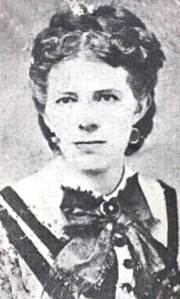
From 2012 to 2015, Stillness of Heart will share interesting excerpts from the extraordinary diary of Kate Stone, who chronicled her Louisiana family’s turbulent experiences throughout the Civil War era.
Learn more about Stone’s amazing life in 1861, 1862, 1863, 1864, 1865 and beyond. Click on each year to read more about her experiences. You can read the entire journal online here.
(Photo edited by Bob Rowen)
As Stone continues her brief stay with friends in Louisiana, she savors the old sights and sounds of her beloved home state.
Sept. 2, 1864
Near Oak Ridge, La.
Mrs. and Col. Templeton are entertaining a Mr. Massengale, just from Texas with news of Capt. Jack Wylie. We may look for him any day now. He will bring three beautiful horses, which we three girls have already appropriated in imagination and expect to race over the whole countryside.
I am too used up by my ride, or rather run, of yesterday to do anything. We have been very busy for the last ten days, riding, sewing, singing, receiving visitors, and playing, but now that the Brigade has gone out to Tensas Parish, we will be quiet for a time. Even Walker’s division is passing through en route to Arkansas, and so for the present we are left defenseless. …
Unfortunately for my pleasure, the report is abroad that I am engaged. There is no truth in it, and it deprives me of much fun. …
I have finished all of Jimmy’s clothes and two dresses for myself, and I feel a real Louisianian once more in the very heart of the swamp, suffocating with the heat, fighting mosquitoes, lazy and languid, little appetite, but luxuriating on fruit for breakfast, dinner, and supper and enjoying curds and cream. The swamp is my own dear land most natural, most restful.
Mamma’s trip to Yankeeland did much good to all of us. The carriage, and such a delightful one, is a great triumph. The dry goods are the greatest comfort, relieving our present necessities, and the books and papers are great entertainment. …
Stone mourns a family friend’s death. She also notes ominously the growing epidemic of deadly disease at a nearby Confederate camp filled with Northern prisoners of war.
From 2012 to 2015, Stillness of Heart will share interesting excerpts from the extraordinary diary of Kate Stone, who chronicled her Louisiana family’s turbulent experiences throughout the Civil War era.
Learn more about Stone’s amazing life in 1861, 1862, 1863, 1864, 1865 and beyond. Click on each year to read more about her experiences. You can read the entire journal online here.
(Photo edited by Bob Rowen)
As another oppressive Texas summer begins, Stone mourns a family friend’s death. She also notes ominously the growing epidemic of deadly disease at a nearby Confederate camp filled with Northern prisoners of war.
June 14, 1864
Tyler, Texas
Comfortably seated by an open window in our lone rocking chair, I am munching Confederate cakes all alone with nothing to do. … Johnny is lying on his stomach with his heels in the air … Johnny has taken great delight in Shakespeare and reads and re-reads his favorite plays. He is already a good Shakespearean scholar. Sister is amusing herself with Sally, and the others are off spending this day with Mrs. Prentice. If there is one thing I most detest, it is spending a long summer day away from home. …
Jimmy received a letter from Mr. Hardison telling of Mrs. Hardison’s death in February. We are truly grieved to hear it. She was a high-minded good woman and one of our best friends. She died in Red River County, where they have been living since fall. Her life was a scene of trial from the time they fled from home. He writes most sadly. They have no books, no papers, hear no news, and have made no new friends and are alone on the bleak prairie, strangers in a strange land. We pity them all but most, her poor mother, Mrs. Alexander.
Anna and Dr. Meagher returned a few days ago. He is stationed here now in charge of the Yankee prisoners. The prisoners are in a most pitiable condition, perfectly destitute. Some have only a blanket to wear and others only one garment. There is much sickness and death among them and the authorities are powerless to get clothes for them. No clothes or blankets to be bought. …
Stone offers a slice of springtime social life in East Texas as friends and neighbors come and go.
From 2012 to 2015, Stillness of Heart will share interesting excerpts from the extraordinary diary of Kate Stone, who chronicled her Louisiana family’s turbulent experiences throughout the Civil War era.
Learn more about Stone’s amazing life in 1861, 1862, 1863, 1864, 1865 and beyond. Click on each year to read more about her experiences. You can read the entire journal online here.
(Photo edited by Bob Rowen)
Stone offers a slice of springtime social life in East Texas as friends and neighbors come and go.
May 25, 1864
Tyler, Texas
We have bidden Julia and Mrs. Payne farewell this evening. “It may be for years and it may be forever,” as they return to Camden the entire cortege, Negroes and all. Maj. Street sent an ambulance for them and they secured a wagon here. Julia is perfectly delighted to go back, but Mrs. Payne is not so pleased. I surely would let that strong, healthy Major come for me. I would not travel 200 miles over rough jolting roads to meet him. But then I am not in love with him and she is. That makes a vast difference, I suppose. I spent the night with her, and we sat up nearly all night having our last confidential chat together.
Thursday Julia and I, dressed in our best fancy yellow organdies, went calling with Mamma. Found nearly everyone out. Julia and I deserted Mamma and perambulated around town looking for flowers, stealing them through the palings and decorating our heads with them. At Mrs. Wells’, we were regaled on huge slices of poundcake and fine music. Jimmy Stone and I rode out to see Mrs. Prentice. She likes Jimmy very much and says he reminds her so of her young son Horace, who died at about his age. The ride was delightful through the woods, sweet with the wild grape fragrance.
Jimmy Stone has gone to the prairie [Lamar County], and Johnny is lost without him. Our usual succession of visitors — boys, officers, doctors, and ladies.
The WordPress.com stats prepared a 2013 annual report for Stillness of Heart.
The WordPress.com stats prepared a 2013 annual report for Stillness of Heart.
Here’s an excerpt:
The concert hall at the Sydney Opera House holds 2,700 people. This blog was viewed about 11,000 times in 2013. If it were a concert at Sydney Opera House, it would take about 4 sold-out performances for that many people to see it.
As 1863 came to a quiet close, Kate Stone — bathed in early evening firelight and unnerved by the brutal gales of a Texas winter — recorded some final thoughts on her grim situation.
From 2012 to 2015, Stillness of Heart will share interesting excerpts from the extraordinary diary of Kate Stone, who chronicled her Louisiana family’s turbulent experiences throughout the Civil War era.
Learn more about Stone’s amazing life in 1861, 1862, 1863, 1864, 1865 and beyond. Click on each year to read more about her experiences. You can read the entire journal online here.
(Photo edited by Bob Rowen)
As 1863 came to a quiet close, Kate Stone — bathed in early evening firelight and unnerved by the brutal gales of a Texas winter — recorded some final thoughts on her grim situation, made less uncomfortable by determined effort and endurance. The sense of loss weighed heavier than ever on her heart and mind. She missed her brothers, her friends, and her Brokenburn neighbors. Her community, she mourned, was “scattered to the four winds.”
Christmas Night
Tyler, Texas
The day has passed most quietly, not a cake, not a visitor. We did have an eggnog but only the servants enjoyed it. Made of mean whiskey, it smacked of Texas. We missed our regular Christmas visitor, Mr. Valentine. He has been with us for the last three years. I wonder where he is now. Only one present on the place, a fine turkey from Mrs. Lawrence. Last Christmas morning when dear little Beverly raised up in bed, and looking at her stockings saw only some homemade toys, bedstead and chairs made of white pine by the plantation carpenter, hid her head, sobbing that she “would not have the ugly common things.”
Aunt Laura told her how bad that was and that poor Santa Claus had done his best but he could not get through the Yankee lines. Presently the little, flushed face was raised and an apologetic little voice faltered out, “Table, I begs your pardon. Bedstead, I begs your pardon. I will keep you and play with you. You is nice.” What a dear little heart she is. …
A cold, moonshiny night, a warm room, and Mamma dozing at ease in our only rocking chair before a bright fire. The chair has accompanied us in all our journeyings since leaving Monroe and, though not a thing of beauty, it is a joy forever and seldom without an occupant. Sad to say, it is showing signs of wear, but it has acted the part of comforter in our weary pilgrimage. …
Mrs. Lawrence has been kind about lending us her books, but we have about finished her library. Have read history until I feel as dry as those old times. Have nearly memorized Tennyson and read and reread our favorite plays in Shakespeare. Fortunately he never grows old. We hope Mr. McGee will be able to get “Harper’s” to us. We wrote to him for it. That would keep us stirred up for awhile at least. The literature of the North is to us what the “flesh pots of Egypt” were to the wandering Israelites — we long for it.
Never a letter but brings news of death. Mr. Catlin is gone. And when we saw him last spring, what a picture of vigorous health he was. I wish we could hear from Lt. Valentine. Our old neighborhood is scattered to the four winds.
Stone’s family struggled to maintain their upper-class lifestyle. But as refugees from Union-dominated Louisiana, their actual affluence was gone, and food was in short supply.
From 2012 to 2015, Stillness of Heart will share interesting excerpts from the extraordinary diary of Kate Stone, who chronicled her Louisiana family’s turbulent experiences throughout the Civil War era.
Learn more about Stone’s amazing life in 1861, 1862, 1863, 1864, 1865 and beyond. Click on each year to read more about her experiences. You can read the entire journal online here.
(Photo edited by Bob Rowen)
Stone bemoaned the strange situation her slaveholding family now faced: plenty of slave servants but little food for them to prepare. Despite the deprivations her family endured, they determined to maintain their upper-class lifestyle, as she wrote before, with “two fine cooks and two dining-room servants.”
She didn’t mention what, if anything, the slaves managed to eat.
Nov. 15, 1863
Tyler, Texas
I have been promoted to Mamma’s post as listener-in-chief to Mrs. Carson. She cannot bear to be alone and must have someone to talk to. Mrs. Carson does not enjoy talking to me as much as she does Mamma, but I am better than nobody.
Col. Buckner took tea the other evening. He is a tall, handsome, blond man with engaging manners and does not seem heartbroken over the death of his wife and children. People live so fast now. We have no time to mourn.
We certainly have plenty of servants to do our bidding, most of Mamma’s house servants and all Mrs. Carson’s, and that is about all we do have. So little to eat: biscuit for we can get plenty of flour; syrup made of sugar, for we have a hogshead of sugar; and rusty, rancid bacon, absolutely all the meat we have been able to buy, no eggs, chickens, milk, butter, or fresh meat, and not a vegetable. Nothing more to be bought.
It seems absurd to have two fine cooks and two dining-room servants and such fare. The Negroes never had so little to do in their lives. We will surely do better in the spring if we can get seed, a cow, and some hens. No fruit but black haws. They are fine, much better than the red haw of the swamp.
The Union candidates at the North are elected — and peace, blessed peace, [is] as far away as ever.
Stone at last received news of the rest of her family and was left despondent. War scattered her relatives, destroyed their communities, and turned them into disgraced refugees.
From 2012 to 2015, Stillness of Heart will share interesting excerpts from the extraordinary diary of Kate Stone, who chronicled her Louisiana family’s turbulent experiences throughout the Civil War era.
Learn more about Stone’s amazing life in 1861, 1862, 1863, 1864, 1865 and beyond. Click on each year to read more about her experiences. You can read the entire journal online here.
(Photo edited by Bob Rowen)
Stone at last received news of the rest of her family and was left despondent. War scattered her relatives, destroyed their communities, and turned them into disgraced refugees.
Note how Stone almost admired how she managed to get on with her life with “almost nothing but servants, and yet we are comfortable.”
Sept. 20, 1863
“Elysian Fields,” Lamar County, Texas
Uncle Johnny was at Richmond, Va., a month ago and heard from nearly every member of the family. How thankful we are to know that they are all alive, though perhaps in distress. My Brother was neither killed nor hurt in the Pennsylvania campaign. Uncle Bo is as usual in fine health and spirits and is under [Confederate commander Braxton] Bragg. Dr. Buckner and Brother Coley are also with Gen. Bragg, and Aunt Laura is at Chattanooga within reach of Dr. Buckner. How glad we are that she is comfortably settled and not suffering all the discomforts of life in Texas. …
Aunt Sarah is at Bladen Springs, Ala. Poor little Horace is dead, a most bitter blow to his mother. He was her favorite. She was keeping house at Cooper’s Well when the Yankees marched on Jackson. She just escaped on the last train with only their wearing clothes. Everything else was destroyed by the Yankees, house and furniture burned, piano hacked to pieces, and the portraits torn to shreds. … It looks like the whole family is to be ruined, root and branch. Every member of it is broken up and all the women and children fleeing from the Yankees, while all the men and half-grown boys are in the army.
We are thankful Mamma has saved most of Uncle Bo’s Negroes, and if we can keep what we have now we can help the others. But I have a strong presentment that we shall yet lose all that we have and be compelled to labor with our hands for our daily bread.
Mrs. Smith had moved up to Mr. Vaughn’s just in time to give room for Uncle Johnny. How glad we are to have a house to ourselves once more. Mrs. Smith was very kind in leaving everything we needed for housekeeping. It is surprising how little one can get on with. We seem to have almost nothing but servants, and yet we are comfortable, comparatively so.
I have finished knitting those tiresome gloves and can read with a clear conscience. Fingered and gauntlet gloves are a trouble to knit.
Sept. 22
The news today is discouraging. Charleston [S.C.] has fallen, Louisiana and Arkansas are to be entirely deserted by our troops, and all the available forces of the Trans-Mississippi Department are to be concentrated at Tyler, Texas. If Charleston has fallen, it is because it was not in the power of man to hold it. Everything possible had been done, and it had made a most gallant defense. No disgrace can sully the name of its Gen. Beauregard, as the name of Lovell and Pemberton have been darkened. …
How I long for a glimpse at Brokenburn these pleasant autumn days radiant in flowers and crowned with fruit, the grassy yard and tall oaks, the clump of sassafras changing now to bright crimson, and the fragrant sweet gum showering down its leaves of gold, the flower garden sparkling across the grass, its many kinds of fall flowers gay in the mellow September sun, and the wide fields stretching away, white with cotton and vocal with the songs of the busy pickers. Shall we ever see it so again?
Two carriage accidents, a large rattlesnake, and a dirty house all inspire Stone to call Texas “the dark corner of the Confederacy.”
From 2012 to 2015, Stillness of Heart will share interesting excerpts from the extraordinary diary of Kate Stone, who chronicled her Louisiana family’s turbulent experiences throughout the Civil War era.
Learn more about Stone’s amazing life in 1861, 1862, 1863, 1864, 1865 and beyond. Click on each year to read more about her experiences. You can read the entire journal online here.
(Photo edited by Bob Rowen)
Two carriage accidents, a large rattlesnake, and a dirty house all inspire Stone to call Texas “the dark corner of the Confederacy.”
Aug. 30, 1863
“Elysian Fields,” Lamar County, Texas
I must record the first instance of liberality that has come under our notice since entering the state. The first night after leaving Tyler we stayed at a Mr. Fowler’s, a very nice place, and they did not charge us a cent. But we were picked up the next night. We lost our way and traveled until 8 o’clock when we asked to stay at a pretty, large, white house, white only on the outside. I despair of giving any idea of the dirt. We tried to eat without seeing or tasting and to sleep without touching the bed. They gave us coffee, a horrid decoction of burnt wheat and milk without sugar, in saucers and water in the halves of broken bottles. The table was set in the dirtiest of kitchens with a dirt floor and half a dozen half-naked little Negroes and numberless cats and dogs scampering through the room and under the table. The rafters were festooned with old hoop skirts and worn-out, rough boots. It surpassed any place we have been in yet. We certainly had found the dark corner of the Confederacy.
We lost our way again one evening and traveled until way in the night, through a wild woods road dotted with stumps. But it was cool and bright moonlight and really more pleasant than a stuffy dirty room, but the mules and Hoccles did not enjoy it.
Our next adventure was not so pleasant. The mules were rushing down a long, rocky, red hill. Hoccles is a wretched driver and lets them do pretty much as they please when crash! over went the Jersey, and we rolled out on the ground, along with a confused medley of baskets, bundles, palmetto, corn, bonnets, and boxes. Fortunately no serious damage was done, and after a few repairs to the Jersey we journeyed on. Hoccles is a right good tinker for wagons.
But our troubles were not yet over. The mules were trotting briskly along through the white sand, Mamma was asleep sitting in the foot of the Jersey, and I was knitting away, when there was a sudden cluck and tearing sound. I looked up to see the whole top of our devoted Jersey folding back like a fan. While Hoccles was nodding in the sultry heat, we had run into a tree and broken the top nearly entirely off. Mamma gave a groan and exclaimed, “Now Hoccles, just run us over a stump and break the wheels and maybe you will be satisfied. You have broken the bottom racing down the hill. But that would not do you. You had to go and break the top. Now run over a rock and break the wheels and you will be fixed!”
I could not help laughing. It was funny in spite of our bad plight, and poor Hoccles looked so humble and apologetic. We thought he would be forced to take the entire top off, but he was equal to the emergency. With hammer, nail, and strings, he patched it up so it lasted until we reached home. But it is a most forlorn, lopsided affair. If we just had our own good carriage, but we hear it is a smallpox ambulance now.
Our last day we just missed driving over the largest rattlesnake, stretched across the road basking in the sun. It was larger than my arm and had twelve rattles. That frightened us most of all. It might have glided into the carriage as we drove over it. …
A long letter from Julia Street was awaiting me. … She says she hates Arkansas and wants to come to Texas. I am sure she will hate this state ten times more. If she is a wise girl, she will stay where she is as long as possible. The more we see of the people, the less we like them, and every refugee we have seen feels the same way. They call us all renegades in Tyler. It is strange the prejudice that exists all through the state against refugees. We think it is envy, just pure envy. The refugees are a nicer and more refined people than most of those they meet, and they see and resent the difference. That is the way we flatter ourselves. …
Stone hated and pitied the people of Texas. She gagged at the sight of unshaven men sitting at her dinner table. The seeming normality of violence horrified her. But the natural beauty of Texas gradually entranced her.
From 2012 to 2015, Stillness of Heart will share interesting excerpts from the extraordinary diary of Kate Stone, who chronicled her Louisiana family’s turbulent experiences throughout the Civil War era.
Learn more about Stone’s amazing life in 1861, 1862, 1863, 1864, 1865 and beyond. Click on each year to read more about her experiences. You can read the entire journal online here.
(Photo edited by Bob Rowen)
Stone hated and pitied the people of Texas. Barefooted women, evidently ignorant of the latest Southern fashions, still wore outdated “hoops.” The roads all the looked the same. She gagged at the sight of unshaven men sitting at her dinner table. She lost her appetite when she witnessed dusty slaves washing dishes “in the duck pond” before dinner. The Texas heat was punishing. The seeming normality of violence horrified her.
But the natural beauty of Texas gradually entranced her.
July 12, 1863
Lamar County, Texas
We made our first visit in Texas yesterday. We went to a protracted meeting being carried on nine miles from here at an old schoolhouse called — it must be in mockery — “Paradise.” After the meeting we went by invitation to spend the evening and night with some real nice people, settlers from Virginia, the McGleasons. They are a pleasant family and exceedingly hospitable. We came back this morning after a ride of nearly eighteen miles, having missed our road three times. The prairie roads are so much alike it is impossible for strangers to distinguish the right from the wrong.
The congregation was much more presentable than the Gray Rock crowd. We saw several nice-looking families, but all were in the fashions of three years ago. If they would only leave off their tremendous hoops, but hoops seem in the very zenith of their popularity. Mamma and I were the only women folks without the awkward, ungraceful cages. No doubt the people thought us hopelessly out of date. We have not worn them for a long time. Nothing looks funnier than a woman walking around with an immense hoop barefooted.
Mamma and I went several days ago to Tarrant in Hopkins County. The road ran part of the way over a lovely rolling prairie, dotted with clumps of trees and covered with the brilliant, yellow coreopsis in full bloom and gemmed with countless little mounds of bright green, like emeralds set in gold. Tarrant is the hottest looking, new little town right out in the prairie not a tree.
We tried to eat dinner at the roughest house and with the dirtiest people we have met yet. The table was set on a low, sunny gallery and half a dozen dirty, unshaven men took their seats in their shirt sleeves at the dirtiest tablecloth and coarsest ware. We saw the Negro girl wash the dishes at the duck pond right out in the yard. That was too much for me, but Mamma and Mr. Smith managed to swallow down something. …
The prairie we are living on is called a thicket prairie. There are clumps of dwarf dogwood, spice trees, and plums, tangled together with wild grape and other vines and alive with snakes. The plums are just in season, a sour, red variety just like the swamp wild plums, and are nice for jelly. The prairie is a mass of flowers, one variety covering it at a time. Before you realize it, that color has faded away and another has taken its place, and this succession of flowers and colors goes on until frost comes and spreads a brown sheet over all. There are many familiar garden flowers: blue salvia, coreopsis, verbenas, larkspur, standing cypress, and now as far as the eye can reach the prairie is a mass of waving purple plumes, “French pinks,” the natives call them. …
We hear no news now but accounts of murders done and suffered by the natives. Nothing seems more common or less condemned than assassination. There have been four or five men shot or hanged within a few miles of us within a week. No one that we have seen seems surprised or shocked, but take it as a matter of course that an obnoxious person should be put to death by some offended neighbor. A few evenings ago a captain in the army had just reached home on a furlough three hours before when he was shot at through his window. He was killed and his wife dangerously wounded. The authorities are trying to find the men who did it. It is supposed to be one of his company who had vowed vengeance against him. The other miscreants go unwhipped of justice.












 Stillness of Heart
You must be logged in to post a comment.