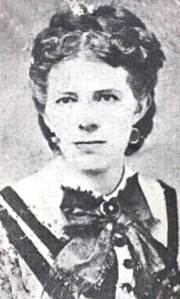
Loreta’s Civil War: Concealing my true form

Velazquez offers a detailed explanation of how she transformed her appearance from a Southern lady into a Confederate officer.

KS14

Throughout 2016 and 2017, Stillness of Heart will share edited excerpts from the extraordinary memoir of Loreta Janeta Velazquez, who chronicled her adventures throughout the Civil War — either as herself, as a Confederate spy, or in disguise as Confederate Lt. Harry T. Buford. She fought and led men in terrible battles, fell in love, bore and lost children, and traveled throughout the U.S. and Europe, ultimately fulfilling her childhood dream of a rich and adventurous life.

You can read the entire 1876 memoir online here. Learn more about Velazquez (and the incredible documentary film Maria Agui Carter made about her) here.

Part 6: Velazquez offers a detailed explanation of how she transformed her appearance from a Southern lady into a Confederate officer.

******

On the 8th of April my husband started for Richmond, apparently under the impression that, as I had said nothing for several days about accompanying him, I had abandoned all notion of doing so. He ought to have known me better, and to have been assured that a woman of my obstinate temper was not to be prevented by mere argument from carrying out a pet scheme which promised such glorious results as the one we had been discussing.

My husband’s farewell kisses were scarcely dry upon my lips, when I made haste to attire myself in one of his suits, and to otherwise disguise myself as a man. … The first thing to be done before I made any attempt to play a masculine role at all prominently in public was, of course, to get some properly fitting clothing. … I had, however, some time before taken notice of a small tailor’s shop on a retired street not very far from the hotel, the presiding genius of which was a not very brilliant-looking German, and I thought perhaps I might run the gantlet of his scrutiny without much fear of detection. … I accordingly went to this German tailor, and ordered two uniform suits, for which I agreed to pay him eighty-five dollars each. As he took my measure he eyed me pretty close, and seemed to imagine that something was not quite right. I was dreadfully afraid he would discover me to be a woman, but resolved, if he did, that I would endeavor to silence him with a handsome bribe for a few days, until he got my suits done and I could leave the city. …

“Ah,” said the tailor, looking at me rather sharply, “what you want to go to war for? You is too young for the fightin,’ isn’t you? What your mammy say to that, eh?”

I replied, with as careless an air as I could possibly assume, that I was twenty-two years of age, and was a graduate of West Point, following up this information with other fictitious statements which it somewhat staggered me to utter, and which, if he had been a trifle sharper, he would have had some difficulty in crediting. …

My coats were heavily padded in the back and under the arms to the hips, until I reached New Orleans. This served to disguise my shape; but the padding was very uncomfortable, and I soon made up my mind that it would never do for a permanent arrangement. So soon as I got to New Orleans, I went to an old French army tailor in Barrack Street, who I knew was very skillful, and who understood how to mind his own business by not bothering himself too much about other people’s affairs, and had him make for me half a dozen fine wire net shields. These I wore next to my skin, and they proved very satisfactory in concealing my true form, and in giving me something of the shape of a man, while they were by no means uncomfortable. Over the shields I wore an undershirt of silk or lisle thread, which fitted close, and which was held in place by straps across the chest and shoulders, similar to the shoulder-braces sometimes worn by men. A great many officers in the Confederate army have seen the impressions of these straps through my shirt when I have had my coat off, and have supposed them to be shoulder-braces. These undershirts could be rolled up into the small compass of a collar-box.

Around the waist of each of the undershirts was a band, with eyelet-holes arranged for the purpose of making the waistbands of my pantaloons stand out to the proper number of inches. A woman’s waist, as a general thing, is tapering, and her hips very large in comparison with those of a man, so that if I had undertaken to wear pantaloons without some such contrivance, they would have drawn in at the waist and revealed my true form. With such underwear as I used, any woman who can disguise her features can readily pass for a man and deceive the closest observers. So many men have weak and feminine voices that, provided the clothing is properly constructed and put on right, and the disguise in other respects is well arranged, a woman with even a very high-pitched voice need have very little to fear on that score. …

There were several points about my disguise which were strictly my own invention, and which, for certain good and sufficient reasons, I do not care to give to the public. These added greatly to its efficiency. Indeed, after I had once become accustomed to male attire, and to appearing before anybody and everybody in it, I lost all fear of being found out, and learned to act, talk, and almost to think as a man. Many a time, when in camp, I have gone to sleep when from fifty to sixty officers have been lying close together, wrapped in their blankets, and have had no more fear of detection than I had of drinking a glass of water.


Loreta’s Civil War: Hard-drinking and blaspheming patriots

Velazquez follows her husband into a bar to learn what men are like when civilizing women are absent. He hopes to dissuade her from life among Confederate soldiers. But the experience makes her more determined than ever to join him the army and share his dangers and triumphs.

KS2

Throughout 2016 and 2017, Stillness of Heart will share edited excerpts from the extraordinary memoir of Loreta Janeta Velazquez, who chronicled her adventures throughout the Civil War — either as herself, as a Confederate spy, or in disguise as Confederate Lt. Harry T. Buford. She fought and led men in terrible battles, fell in love, bore and lost children, and traveled throughout the U.S. and Europe, ultimately fulfilling her childhood dream of a rich and adventurous life.

You can read the entire 1876 memoir online here. Learn more about Velazquez (and the incredible documentary film Maria Agui Carter made about her) here.

Part 5: Velazquez follows her husband into a bar to learn what men are like when civilizing women are absent. He hopes to dissuade her from life among Confederate soldiers. But the experience makes her more determined than ever to join him the army and share his dangers and triumphs.

******

Braiding my hair very close, I put on a man’s wig and a false mustache, and by tucking my pantaloons in my boots, as I had seen men do frequently, and otherwise arranging the garments, which were somewhat large for me, I managed to transform myself into a very presentable man. As I surveyed myself in the mirror I was immensely pleased with the figure I cut, and fancied that I made quite as good looking a man as my husband. My toilet once completed, it was not long before we were in the street, I doing my best to walk with a masculine gait, and to behave as if I had been accustomed to wear pantaloons all my life. I confess, that when it actually came to the point of appearing in public in this sort of attire, my heart began to fail me a little; but I was bent on going through with the thing, and so, plucking up courage, I strode along by the side of my husband with as unconcerned an air as it was possible for me to put on.

Presently we crossed over to a bar-room, which we found nearly filled with men smoking and drinking, and doing some pretty tall talking about the war, and the style in which the Yankees were going to be wiped out. … I was too frightened and bewildered by the novelty of my situation to pay very close attention to all I saw and heard, but it flashed upon me that some of these loud-talking, hard-drinking, and blaspheming patriots were not so valiant, after all, as they professed to be. My after experiences fully confirmed my first impressions, that the biggest talkers are not always the best fighters, and that a good many men will say things over a glass of whiskey in a bar-room, who won’t do a tenth part of what they say if they are once placed within smelling distance of gunpowder.

I had scarcely time to take a good look at the room and its occupants, when my husband caught sight of a couple of men who had belonged to his regiment, and who were very particular friends of mine. I was dreadfully afraid they would recognize me, but there was no escaping from them, as they came up so soon as they saw us, and I was introduced as a young fellow who was on a visit to Memphis to see the sights and to pick up war news.

My husband treated, he and his two comrades taking something strong, while I, in accordance with the instructions given me before starting out, called for a glass of cider, only a part of which I imbibed. After a little conversation, my husband whispered to me to call for the next treat. I was getting to be somewhat disgusted with the whole business, but was bound not to break down; so, stepping up to the bar, I invited the party, with as masculine a manner as I could put on, to drink with me. This time I took a glass of sarsaparilla, and when all had their drinks poured out, raising my tumbler, I cried out, “Gentlemen, here’s to the success of our young Confederacy.”

As I said this, my heart was almost ready to jump out of my throat. The men, however, gave a rousing cheer, and one of them yelled out, “We drink that toast every time, young fellow.” He then put his hand into his pocket, as if about to get his money to pay for the drinks, but I prevented him, saying, “Excuse me, sir, this is my treat,” and laid a twenty dollar gold piece on the counter. Each of us then took a cigar, I watching to see how they managed theirs before daring to put mine in my mouth. After I had gotten a light, I was not able to take more than three or four whiffs, for my head began to swim, and I knew if I kept on I should soon be deathly sick. As it was, I did not feel at all comfortable, but thought I could bear up, and said nothing for fear of being laughed at.

I was very glad to get out of the bar-room, and into the fresh air again; so, bidding our friends good night, we started off, I throwing my cigar away at the first opportunity I had of doing so without being observed. Eager to hear my husband’s opinion, I asked him if he did not think I played my part pretty well. He replied, “Oh, yes,” but I could see that he was very much dissatisfied with the whole performance. Before returning to the hotel we made a general tour of the city, visiting all the principal gambling-houses and saloons, my husband evidently hoping I should be so shocked with what I saw and heard that I should be ready to give up my wild scheme without farther talk about it.

When we were once more in our room he locked the door, and, throwing himself on the lounge, said, “Well, don’t you feel pretty much disgusted?”

To please him I said, “Yes,” adding, however, “but then I can stand anything to be with you, and to serve the sunny South.”

“Now, Loreta,” said he, “I have done this tonight for the purpose of showing you what men are like, and how they behave themselves when they are out of the sight and hearing of decent women, whom they are forced to respect. What you have seen and heard, however, is nothing to what you will be compelled to see and hear in camp, where men are entirely deprived of female society, and are under the most demoralizing influences. The language that will constantly greet your ears, and the sights that will meet your eye in camp, where thousands of men are congregated, are simply indescribable; and it is out of all reason that you should even think of associating in the manner you propose with soldiers engaged in warfare. …”

I pretended to be satisfied with his arguments, but was, nevertheless, resolved more firmly than ever, so soon as he took his departure, to put my plans into execution. …

Loreta’s Civil War: The dream of my life

The war begins, and Velazquez is ready to disguise herself as a man and join the fight. Her husband objects, and he decides to give her a preview of ‘masculine life.’

KS56

Throughout 2016 and 2017, Stillness of Heart will share edited excerpts from the extraordinary memoir of Loreta Janeta Velazquez, who chronicled her adventures throughout the Civil War — either as herself, as a Confederate spy, or in disguise as Confederate Lt. Harry T. Buford. She fought and led men in terrible battles, fell in love, bore and lost children, and traveled throughout the U.S. and Europe, ultimately fulfilling her childhood dream of a rich and adventurous life.

You can read the entire 1876 memoir online here. Learn more about Velazquez (and the incredible documentary film Maria Agui Carter made about her) here.

Part 4: The war begins, and Velazquez is ready to disguise herself as a man and join the fight. Her husband objects, and he decides to give her a preview of ‘masculine life.’

******

In the spring of 1860 I returned to St. Louis, while my husband went to Fort Arbuckle. During his separation from me, our third babe was born and died. In October of the same year he returned, having received a summons from his father — a resident of Texas — to the effect that there was reason to believe a war was about to break out between the North and the South, and desiring him to resign.

About this time my two remaining children died of fever, and my grief at their loss probably had a great influence in reviving my old notions about military glory, and of exciting anew my desires to win fame on the battlefield. I was dreadfully afraid that there would be no war, and my spirits rose and sank as the prospects of a conflict brightened or faded. When my husband’s State determined to secede, I brought all my influence to bear to induce him to resign his commission in the United States army, and my persuasions, added to those of his father, finally induced him, very reluctantly, to yield. It was a great grief for him to forsake the uniform he had worn so long with honor, and to sever the bonds which existed between him and his comrades. He much doubted, too, the wisdom of the Southern States in taking the action they did, and wished most sincerely that the political difficulties which caused their secession could be settled in some other manner than by an armed conflict.

As for me, I was perfectly wild on the subject of war; and although I did not tell my husband so, I was resolved to forsake him if he raised his sword against the South. I felt that now the great opportunity of my life had arrived, and my mind was busy night and day in planning schemes for making my name famous above that of any of the great heroines of history, not even excepting my favorite, Joan of Arc. having decided to enter the Confederate service as a soldier, I desired, if possible, to obtain my husband’s consent, but he would not listen to anything I had to say on the subject; and all I could do was to wait his departure for the seat of war, in order to put my plans into execution without his knowledge, as I felt that it would be useless to argue with him, although I was obstinately bent upon realizing the dream of my life, whether he approved of my course or not. …

While preparing for his departure, on the anniversary of our wedding, we talked over the whole situation; and I cannot tell how proud and delighted I felt when he attired himself in his elegant new gray uniform. He never looked handsomer in his life, and I not only gave full vent to my admiration, but insisted upon broaching my favorite scheme again. … He used every possible argument to dissuade me from my purpose, representing the difficulties and dangers in the darkest colors, and contending that it would be impossible for him to permit his wife to follow an undisciplined army of volunteers. The situation, he told me, was entirely different from anything I had ever been accustomed to, and that the hordes of rude, coarse men collected together in a camp in an emergency like this, would have but little resemblance to the regular troops in garrison with whom I had been familiar; and that a delicately nurtured and refined woman would find camp life, during such a war as that just commencing, simply intolerable. He was not to be persuaded, while I turned a deaf ear to all his remonstrances, and persisted in arguing the point with him to the last.

Finally, my husband, finding that his words made no impression, thought he would be able to cure me of my erratic fancies by giving me an insight into some of the least pleasing features of masculine life. The night before his departure, therefore, he permitted me to dress myself in one of his suits, and said he would take me to the bar-rooms and other places of male resort, and show me something of what I would be compelled to go through with if I persisted in unsexing myself. …

Recommended reading / viewing / listening

This week: Tragedy in Roma, Texas / Less NYC gay clubs / Letters of John Adams / Bernie Sanders and Eugene McCarthy / Google doodles

IMG_2126

This week: Tragedy in Roma, Texas / Less NYC gay clubs / Letters of John Adams / Bernie Sanders and Eugene McCarthy / Google doodles

Most of these great items come from my social media networks. Follow me on Twitter, Tumblr, LinkedIn, and Facebook for more fascinating videos, photos, articles, essays, and criticism.

1. Gay Dance Clubs on the Wane in the Age of Grindr
By Michael Musto | The New York Times | April 26
“Night life veterans point to a variety of reasons, including cultural shifts, real estate pressures and technology.”

2. Prince’s Paisley Park Home to Become a Museum
By Sebastian Modak | Conde Nast Traveler | April 26
“Sheila E., Prince’s longtime musical collaborator, revealed plans to memorialize His Royal Badness within the walls of his estate on the outskirts of Minneapolis.”

3. ‘West Wing’ Meets White House: Allison Janney Greets Reporters in Press Room
Associated Press :: The Hollywood Reporter | April 29
“She took the podium normally reserved for spokesman Josh Earnest and told reporters she hoped to bring attention to the nation’s opioid epidemic.”

4. Roma, Texas: A Smuggler’s Paradise
By Jay Root | The Texas Tribune | April 21
“Multiple inflatable rafts on the water. Emotionally shaken kids in the back of Border Patrol vans. Dope worth a quarter-million dollars on the street, dumped on the river’s edge. Roadside apprehensions. People running, swimming and shouting obscenities in and alongside a river shared by two countries.”

5. Meet the man behind Google’s doodles
By Elizabeth Garone | BBC Capital | April 26
“His job and others like it says a lot about why art matters more than ever to the binary world of technology”

6. Against American exceptionalism: Gordon S. Wood on John Adams
Library of America | April 19
“Library of America sat down with editor Gordon Wood, Alva O. Way Professor of History Emeritus at Brown University and the Pulitzer Prize?winning author of The Radicalism of the American Revolution, to discuss Adams’s complicated legacy, and the enduring appeal of his writings.”

7. The Hitchhiker’s Guide to the Islamic State
By Marwan Hisham | Dispatch :: Foreign Policy | April 20
“An accidental tour into the heart of the caliphate’s oil smuggling economy.”

8. NASA has mapped every eclipse that will occur for the next 1,000 years
By Brian Resnick | Vox | April 29
“They even know the exact time, down to the fraction of a second, that the eclipses will occur.”

9. What Bernie Sanders Should Learn From Eugene McCarthy
By Julian E. Zelizer | Politico Magazine | April 21
“In 1968, the Democratic insurgent refused to support the establishment nominee — and it was disastrous”

10. A Style-Setting J.F.K. Appears With a 2014 Congressional Candidate
By Michael Beschloss | HistorySource :: The New York Times | July 2014
“Recoiling from a famous photograph of President Calvin Coolidge in a Sioux headdress, which he considered comical, Kennedy almost always refused to wear unusual hats in public — including on the last morning of his life, when hosts at a Fort Worth breakfast pressed him, without success, to don a Stetson.”

Recommended reading / viewing / listening

This week: Prince and Beyonce / Tubman on the $20 / QEII turns 90 / Abigail Adams / Shakespeare, the American

IMG_1379

Most of these great items come from my social media networks. Follow me on Twitter, Tumblr, LinkedIn, MySpace, and Facebook for more fascinating videos, photos, articles, essays, and criticism.

1. Boston cheers Tubman going on the $20 bill
By Eric Moskowitz | The Boston Globe | April 21
“Although Tubman was born into slavery in Maryland and spent most of her free life in upstate New York, she has deep ties to Massachusetts, the center of the abolitionist movement.”

2. Tubman’s In. Jackson’s Out. What’s It Mean?
By Jennifer Schuessler, Binyamin Appelbaum, and Wesley Morris | The New York Times | April 20
“Does having her on the bill make a real difference — either to how we think about our history, or how we think about our money?”

3. What Prince Taught Me About Love. And Sex. And Time.
By Dave Holmes | Esquire | April 21
“Thirty-five years ago, I heard Prince’s voice. Eighteen years later, I was in his presence.”

4. The Best Tweets By People Losing Their Sh*t Thinking Beyoncé’s ‘Lemonade’ Was a Divorce Announcement
Cosmopolitan and Esquire | April 24
“Some people think she’s writing about her dad’s infidelity, not Jay Z’s, but it seems unlikely he is totally innocent here.”

5. Veep’s most profane, brutal and brilliant burns
By Janet Upadhye | Salon | April 24
“The result is 160 seconds of hilarity. Enjoy.”

6. Trump terrifies world leaders
By Edward-Isaac Dovere and Bryan Bender | Politico | April 21
“And Obama’s reassurances aren’t calming them down.”

7. William Shakespeare: a quintessentially American author
By Robert McCrum | The Guardian | April 9
“From Abraham Lincoln’s White House readings to Hollywood westerns and West Side Story, Shakespeare’s plays are an integral part of the American dream. So how did this icon of Englishness become a U.S. phenomenon?”

8. ‘Remember the Ladies’: Edith Gelles on the incomparable letters of Abigail Adams
Library of America | April 18
“Abigail Adams’s letters are the best record we have of the American Revolution from a woman’s point of view. No other Founding family has left such a trove of family letters as the Adamses.”

9. A Busy Queen Elizabeth II Pencils In a 90th Birthday
By Dan Bilefsky | The New York Times | April 20
“Through seven decades, she has remained gloriously and relentlessly enigmatic in one of her signature pastel outfits and colorful hats, chosen, royal experts say, so onlookers can spot her in a crowd.”

10. Kennedy, L.B.J. and a Disputed Deer Hunt
By Michael Beschloss | HistorySource :: The New York Times | August 2014
“Someone present thought the president-elect looked ‘like a football fan.’ Another felt that in the rural Texas setting, Kennedy looked as if he were ‘on Mars.’ ”

Recommended reading / viewing / listening

This week: Henry Kissinger / George Washington and whiskey / Scorsese’s love for the Rolling Stones / Beyonce’s hot sauce / The drama of gravitational wave detection

IMG_1535

This week: Henry Kissinger / George Washington and whiskey / Scorsese’s love for the Rolling Stones / Beyonce’s hot sauce / The drama of gravitational wave detection

Most of these great items come from my social media networks. Follow me on Twitter, Tumblr, LinkedIn, MySpace, and Facebook for more fascinating videos, photos, articles, essays, and criticism.

1. The Dawn of a New Era in Science
By Matthew Francis | The Atlantic | Feb. 11
“By announcing the first detection of gravitational waves, scientists have vindicated Einstein and given humans a new way to look at the universe.”

2. Shut Up and Press Play
By Mary-Louise Parker | Esquire Classic | September 2006
“If you want to rock this girl (or yours), these are the songs you need to know”

3. William Shatner Opens Up About Deathbed Rift With Leonard Nimoy and Their Long Friendship
By Katie Wilson Berg | The Hollywood Reporter | Feb. 12
“Shatner spoke … about his respect for Nimoy as an artist and the mystery of why the man he calls ‘the only friend I ever had’ shut him out in the last years of his life.”

4. A History of Martin Scorsese’s Love Affair with the Rolling Stones
By Dan Reilly | Vulture | Feb. 12
“‘My films,’ the man himself once said, ‘would be unthinkable without them.’ ”

5. We All Need Beyonce’s Hot Sauce
By Goldie Taylor | The Daily Beast | Feb. 8
“It’s a flavorful essence — proud, black, and full of social justice.”

6. InstaTexas: The Stars At Night…
By Jordan Breal | Texas Monthly | Feb. 11
“Are big and bright — and ready for their close-up.”

7. George Washington, the Whiskey Baron of Mount Vernon
By Michael Beschloss | The Upshot :: The New York Times | Feb. 12
“It was not exactly in keeping with Washington’s public image to enter the whiskey trade.”

8. Gravitational Waves Exist: The Inside Story of How Scientists Finally Found Them
By Nicola Twilley | Elements :: The New Yorker | Feb. 11
“It took years to make the most sensitive instrument in history insensitive to everything that is not a gravitational wave. Emptying the tubes of air demanded forty days of pumping. The result was one of the purest vacuums ever created on Earth, a trillionth as dense as the atmosphere at sea level.”

9. Henry Kissinger: Good or Evil?
Politico Magazine | October 2015
“10 historians assess the controversial statesman’s legacy”

10. T.R.’s Son Inspired Him to Help Rescue Football
By Michael Beschloss | HistorySource :: The New York Times | August 2014
“T.R.’s intervention … helped lead to … the enforcement of new rules, which included the forward pass, a neutral zone at the line of scrimmage, another referee on the field and later prohibitions against brutal maneuvers like kneeing and punching opponents by using locked hands.”

“The depths of human turbulence”

Muster, the excellent blog for the Journal of the Civil War Era, recently interviewed the historical adviser to the new Civil War drama Mercy Street

IMG_1499

Muster, the excellent blog for the Journal of the Civil War Era, recently interviewed Dr. Jane E. Schultz, professor of English at Indiana University-Purdue University Indianapolis and historical adviser to Mercy Street, the PBS drama about women in Civil War hospitals. She perceptively argues that the series “is trying to show the depths of human turbulence that lay beneath the surface of military etiquette.”

Read the entire interview here. It offers intellectual depth and understanding to the process of shaping the drama’s narrative, location, characters, and era.

Kate Stone’s Civil War: The entire special series

Read Kate Stone’s amazing stories as she defiantly faces Union soldiers, escapes across a Louisiana swamp, falls in love with Texas, and watches the Civil War rip her country and her family apart.

1862

From May 2012 to November 2015, a special series from Stillness of Heart shared excerpts from the extraordinary diary of Kate Stone, who chronicled her Louisiana family’s turbulent experiences throughout the Civil War era.

She defiantly faced Union soldiers, escaped across a Louisiana swamp, fell in love with Texas, and watched the Civil War rip her country and her family apart.

The entire series of excerpts is collected here.

Learn more about Stone’s amazing life in 1861, 1862, 1863, 1864, 1865 and beyond. Click on each year to read more about her experiences. You can read the entire journal online here.

(Photo edited by Bob Rowen)

From 1861
May 15: Death in defense of the South
June 5: The stir and mob of angry life
June 18: Whipped unmercifully
July 1: They thought me so ugly
July 4: The blood of her children
July 26: Gallantly fought and won
Aug 24: The fevers
Sept. 27: The war inches closer
Oct. 19: Gladden our hearts
Nov. 27: The noble, gentle heart
Dec. 22: Rainy days

From 1862
Jan. 6: Sad Christmas
Jan. 8: Happy birthday
Jan. 16: They close in and kill
Feb. 1: The little creature
Feb. 20: Victory will be ours
March 1: A perfect love of a lieutenant
May 9: Burn our cities
May 22: Fashion is an obsolete word
May 23: The sleep that knows no waking
June 6: Trembling hearts
June 20-30: Capable of any horror
July 5: The fire of battle
Aug. 5: Beyond my strength
Sept. 23: Tragedy after tragedy
Oct. 1: His sins against the South
Nov. 7: A lady’s favors
Dec. 3: She was heartbroken

From 1863
Jan. 1: Preparing to run
March 2: Hoodoo woman
March 11: It made us tremble
March 22: The pistol pointed at my head
April 10: Tears on my cheek
April 15: A horrid flight
April 21: The greatest villian
April 26: Flaming cheeks and flashing eyes
April 27: The glory of the family
May 2: His father’s sins
May 3: Baffled beasts of prey
May 22: Useless to resist
May 23: Southern hearts
June 3: Like mad demons
June 15: On the road for Texas
July 7: The dark corner
July 12: The dirtiest people
July 16: Scowling, revengeful faces
July 26: Despondent and chicken-hearted
July 29: Makes us tremble for Texas
Aug. 3: Lose our scalps
Aug. 10: Conquer or die
Aug. 16: My pen is powerless
Aug. 30: They call us all renegades
Sept. 1: It makes us shiver
Sept. 14: Years of grinding toil
Sept. 20: Destroyed by the Yankees
Oct. 2: Two distressed damsels
Oct. 8: This is too disgraceful
Oct. 29: The heart of a boy
Nov. 1: Credulous mortals
Nov. 7: A fear of bad news
Nov. 13: Pride must have a fall
Nov. 15: So little to eat
Dec. 10: Nobly and fearlessly
Dec. 12: Alone in a strange land
Dec. 19: A charming little woman
Dec. 24: A sad 1863 ends

From 1864
Jan. 4: A noted flirt
Jan. 7: Trouble and distress
Jan. 13: The first desideratum
March 8: The mournful whistle
March 20: The petted darling
April 15: A besom of destruction
May 5: The easy conquest of Texas
May 7: To every young lady
May 18: To kill and destroy
May 25: Our best fancy yellow organdies
May 29: That land of desolation
June 1: The breath of flowers
June 14: Strangers in a strange land
June 19: Those terrible battles
June 26: Callous to suffering and death
Aug. 23: We enjoy our ease
Sept. 2: Lazy and languid
Sept. 5: One grand holocaust
Sept. 10: Too disgraceful if true
Sept. 27: The flower-wreathed scepter
Oct. 15: Fairy castles in the air

From 1865
Jan. 29: Kindly bestow them
Feb. 1: Our soldiers were powerless
Feb. 12: One of life’s greatest trials
Feb. 13: Peace blessed peace
Feb. 15: My escorts were disgusted
Feb. 21: Our only hope for peace
March 3: The most enjoyable life
March 9: Full of life and fun
March 24: Eager for a fight
March 30: Its spring decoration
April 1: Out of time
April 7: A blow on my heart
April 16: He would do anything
April 23: God spare us
May 7: Lounged and gossiped
May 9: We fear it cannot last
May 15: We will be slaves
May 17: Restless and wretched
May 20: A fever of apprehension
May 21: A piece of amusement
May 27: Only sadness and tears
May 31: The grand crash
June 12: Words are powerless
June 25: Civilization commences again
July 2: He deserves killing
July 13: It is unavoidable
July 18: A man-flirt is detestable
Aug. 14: No disorder
Aug. 26: Astonish the natives
Sept. 3: Our pleasant Tyler life
Sept. 11: The very poorest people
Sept. 21: A state of insubordination
Oct. 10: The bitterness of defeat
Nov. 16: At home again
Nov. 17: How many idle hours

Epilogue, from 1867 and 1868
I was young again

Kate Stone’s Civil War: A state of insubordination

Stone has little sympathy or respect for former slaves, who she sees as “insolent” and insubordinate.

KS50

From 2012 to 2015, Stillness of Heart will share interesting excerpts from the extraordinary diary of Kate Stone, who chronicled her Louisiana family’s turbulent experiences throughout the Civil War era.

Learn more about Stone’s amazing life in 1861, 1862, 1863, 1864, 1865 and beyond. Click on each year to read more about her experiences. You can read the entire journal online here.

(Photo edited by Bob Rowen)

Stone has little sympathy or respect for former slaves, who she sees as “insolent” and insubordinate.

Sept. 21, 1865

Lamar County, Texas

We reached this haven a week ago. Shall we ever forget that forty-mile jolt in a four-mule wagon, the mules at full trot? We made it in a clay over a broken, sorry prairie with nothing to eat but dried peaches, uncooked, soggy biscuits, and warm, salty-tasting well water. We were bruised black and blue and were too tired to sleep or eat the first night. We did not find out until nearly night that the wagon floor was much easier than the chairs we were perched in, and we all crouched down in the straw, too worn out to hold up our heads.

The people who had sheltered us utterly refused all pay and were hurt at the idea — and they with absolutely nothing. Truly it is not the rich who are the most generous! Mamma will send them lots of things when she sends for the carriage.

We found nearly all the Negroes in a state of insubordination, insolent and refusing to work. Mamma had a good deal of trouble with them for a few days. Now they have quieted down and most of those who left have returned, and they are doing as well as “freedmen” ever will, I suppose. We were really afraid to stay on the place for the first two days. We are looking for the boys up from Tyler and for Jimmy and My Brother next week. Then, Ho, for Louisiana!

We have all the butter, milk, and curd that Mamma promised us with wild plums, maypops, and apples in abundance, and Mrs. Smith is a good housekeeper. But it is undeniably a dull spot. …

Johnny has taken Mr. Smith’s place as overseer. The Negroes mind him better.

Kate Stone’s Civil War: The very poorest people

A reluctant Stone leaves Tyler to return to Louisiana, but one minor disaster after another make it a bitter journey.

OLYMPUS DIGITAL CAMERA

From 2012 to 2015, Stillness of Heart will share interesting excerpts from the extraordinary diary of Kate Stone, who chronicled her Louisiana family’s turbulent experiences throughout the Civil War era.

Learn more about Stone’s amazing life in 1861, 1862, 1863, 1864, 1865 and beyond. Click on each year to read more about her experiences. You can read the entire journal online here.

(Photo edited by Bob Rowen)

A reluctant Stone leaves Tyler to return to Louisiana, but one minor disaster after another make it a bitter journey.


Sept. 11, 1865

Hopkins County, Texas

Here we are … wearing away the time as best we may for two days and nights in a real prairie hut awaiting relief from our place, thirty miles away. The carriage stands in the yard with a crushed wheel, and we are mired up in all sorts of dirt and discomfort in the middle of the wildest prairie with not a tree or a house in sight. We broke down two miles from here journeying on our way to Lamar County with nothing in sight but the broad sweep of the prairie and one lonely tree. We made our way to that. No gentleman with us, no money, no possible way of getting on, and in a great hurry. We were in despair. Richard mounted a mule and scoured the country to find a carriage, wagon, or wheel to take us on, while we with parasols, books, and cushions, betook ourselves to the grateful shade of the tree to await his return. I was fast asleep in the tall grass, and Mamma and Sister were dozing when Richard got back. He could not find any conveyance, but a lady two miles away would give us shelter. So there we were in for a two-mile walk under the burning sun and over the shadowiest prairie with a wind blowing hot as a sirocco of the desert. The prospect was appalling, and I foolishly burst into tears. Mamma scolded. I remonstrated. But soon we cooled down in temper., if not in person, and commenced our weary jaunt to shelter.

It is the roughest two-room affair with six or eight people living in it, and with nothing to eat this last day but bread and milk and butter. They killed their last chicken for us yesterday, an old, old hen, but the people are as kind as they can be, and as hospitable. They give us of their best and are really sorry for us. There are two women and a girl and not a scrap of ribbon or lace or any kind of adornment in the house. I never saw a woman before without a ribbon. They have not even a comb. They are the very poorest people I ever saw.

We — that is Mamma, Sister, Johnny, and I — broke up our establishment and started on short notice from Tyler on last Friday, and our entire trip has been a chapter of accidents since. A wheel crushed four miles from town, and after spending most of the day in the woods we returned very reluctantly to Tyler, We had gone the rounds the evening before making farewell calls and hated to return after so many solemn leavetakings, but go back we must.

The room is filling with the family so must close my book.

The bugs are awful, and so we three slept last night on the carriage cushions and a bolt of domestic out on the front gallery, much against the wishes of our hosts who seemed to think it inhospitable to allow it. But it is impossible to sleep in the rooms with four or five untidy folks, being bled from every pore by the voracious bugs. The natives do not even toss in their sleep from them. They do not know the bugs are there.

A glorious full moon, light enough to read by, and a pleasant breeze. We quite enjoyed our outdoor bunk, especially as we had not slept for two nights. Oh, the happy summer days of our life in Tyler. … And all this discomfort would have been spared us if My Brother had only come out when Joe did and made this trip to the farm in Mamma’s place. Poor Mamma, what a weight of responsibility and trouble she has had on her hands. …

Mollie Moore gave me a pretty copy of The Lady of the Lake as a souvenir of our happy friendship. Shall I ever see her cheerful face again? …


Behind The Wall

Tabletop Games

Rebecca Aguilar

#CallingAllJournalists Initiative | Reporter | Media Watchdog | Mentor | Latinas in Journalism

Anna Fonte's Paper Planes

Words, images & collages tossed from a window.

Postcards from Barton Springs

Gayle Brennan Spencer - sending random thoughts to and from South Austin

The Flask Half Full

Irreverent travelogues, good drinks, and the cultural stories they tell.

Government Book Talk

Talking about some of the best publications from the Federal Government, past and present.

Cadillac Society

Cadillac News, Forums, Rumors, Reviews

Ob360media

Real News That Matters

Mealtime Joy

bringing joy to family meals

Øl, Mad og Folk

Bloggen Øl, Mad og Folk

a joyous kitchen

fun, delicious food for everyone

A Perfect Feast

Modern Comfort Food

donnablackwrites

Art is a gift we give ourselves

Fridgelore

low waste living drawn from food lore through the ages

BeckiesKitchen.com

MUSINGS : CRITICISM : HISTORY : NEWS

North River Notes

Observations on the Hudson River as it passes through New York City. The section of the Hudson which passes through New York is historically known as the North River, called this by the Dutch to distinguish it from the Delaware River, which they knew as the South River. This stretch of the Hudson is still often referred to as the North River by local mariners today. All photos copyright Daniel Katzive unless otherwise attributed. For more frequent updates, please follow northriverblog on Facebook or Instagram.