
Kate Stone’s Civil War: His sins against the South

Stone began October 1862 with seething bitterness.

KS6

From 2012 to 2015, Stillness of Heart will share interesting excerpts from the extraordinary diary of Kate Stone, who chronicled her Louisiana family’s turbulent experiences throughout the Civil War era.

Learn more about Stone’s amazing life in 1861, 1862, 1863, 1864, 1865 and beyond. Click on each year to read more about her experiences. You can read the entire journal online here.
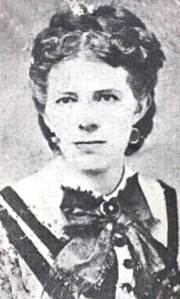
(Photo edited by Bob Rowen)

Stone began October 1862 with seething bitterness. Lee’s invasion of Maryland failed to rouse Southern sentiment, and his fruitless face-off with Federal forces under George McClellan produced one of the bloodiest days in U.S. history. It also inspired President Abraham Lincoln to issue his preliminary Emancipation Proclamation (Lincoln had been advised to unveil it only after a Union victory, though Antietam was closer to a horrific non-defeat).

The demands of a wartime economy quickly stripped the rudimentary Southern economic infrastructure of textiles, and Stone’s journal reflected her growing concerns over the lack of proper clothes, though her concerns should be kept in perspective. She was part of the South’s upper class and probably more sensitive to the lack of luxurious items than regular farmers or Southern citydwellers, particularly when she found herself having to sew fundamental garments for herself and her family, as opposed to casually knitting a fanciful scarf or plaiting a hat for a handsome beau. Nevertheless, her fretting and complaining offers an interesting and at least well-written perspective on the fundamental social and economic changes felt on the Southern home front. The intensity of those changes would quickly intensify in the coming months.

Oct. 1, 1862

The most important fact is Lincoln’s proclamation freeing all slaves held by rebel masters after January 1. I wonder what will be the result of this diabolical move. Surely not as bad for us as they intend it to be. I think there is little chance of a happy hereafter for President Lincoln. A thousand years of repentance would be but brief time to wipe out his sins against the South. How can he ever sleep with the shades of the thousands he has consigned to a bloody death darkening his soul?

Oct. 2

We see … that Lt. Floyd was killed at Sharpsburg. My Brother, I know, is sorry. I saw him last spring in Vicksburg. My good wishes for his safe return were fruitless. He was desperately wounded in the battles before Richmond, but recovered only in time to march to meet his death in Maryland. In Kentucky some hearts are aching for him. He was a frank, pleasant comrade and friend.

There is great disappointment over Maryland. It was thought there would be a great uprising of the people as soon as the Stars and Bars should wave across the Potomac, but nothing of the kind. There has been but little enthusiasm and few recruits. Well, let the Old Bay State go, if her people had rather be slaves in the Union than masters in the Confederacy. They must abide by their choice.

The gunboats are expected down now any day to renew the attack on Vicksburg, but if we get Cincinnati and Louisville as we are threatening to do now, the gunboats will be needed in other waters. …

Oct. 3

My fingers have been busy with unaccustomed work today, the work of olden times, learning to weave. Mamma is having a loom made to weave cloth for the Negroes, and Jimmy and I are to make the “harness.” Mr. Curry came over early this morning on purpose to teach us. He said he knew I could soon learn it. To keep my reputation for aptness, I commenced work at once under his tutelage, and as it takes two to work it Jimmy learned also. Now we progress swimmingly, though it will take several days to finish it. It is like going back to the days of the Revolution to see the planters all setting up their looms and the ladies discussing the making of homespun dresses, the best dyes, and “cuts” of thread, though yet awhile I think a homespun dress would be more difficult to get than a silk. …

We expect to suffer for clothes this winter. … Unless we capture some Northern city well stocked, there will soon be no dry goods in the Confederacy. The ladies are raising a cry for calicoes and silks that echoes from the Potomac to the Gulf. …

Oct. 6

We were out to see Mrs. Carson and Mrs. Savage. They are expecting the Yankees all the time. Mrs. Carson feels that they are being imposed on by soldiers and travelers. She says they are nearly eaten out of house and home, and she gave us her bill of fare. It certainly is a great falling off from the past abundance. There are always five or six soldiers there. She still has flour for lightbread, but it is saved for the sick soldiers. They are exceedingly kind and helpful to all wearing the uniform.

Mrs. Carson is going into raptures over Col. Pargoud. He has large plantations near Monroe, is young and splendid looking, was educated in France, has elegant manners, and is a Colonel in full cavalry uniform, the finest to be had ivory stirrups, silver trappings, and superb horses. What more could one have? May it be given to me to meet this paragon before some other girl snatches him up. Capt. Harper’s company is in his regiment.

We saw the paper of the fourth. It advocates raising the Black Flag in retaliation for Lincoln’s emancipation proclamation. Such a war is too horrible to think of.

Oct. 10

A letter from Uncle Bo dated a month back just as his division was crossing into Maryland. He writes jubilantly, so glad to be advancing into the enemy’s country. The letter is filled with praise of My Brother. … How dreadfully disappointed the army and officials are that Maryland did not rally to their support when once they were on her soil.

Now after all those bloody battles with no good result to follow, our whole army has recrossed the Potomac. Our defeat at Corinth is rumored. We are anxious for full particulars. Reinforcements from Vicksburg have been sent on. …

Oct. 24

Mamma and I went down to Vicksburg ten days ago with Brother Walter to see him that far on his way to the war. We hoped also to see Brother Coley, having heard his regiment had been ordered to Vicksburg, but we were disappointed. The regiment marched through the county to Panola County. We do not know their destination. …

Mrs. Amis’ place is the frontier now, with no one between her and DeSoto. The entire country from Omega to Vicksburg is deserted and many of the back places also. There is a constant stream of men passing, and Mrs. Amis is dreadfully worried by men begging to stay all night and for meals. It is a charming place to visit. Annie has changed less in growing up than any girl I ever saw. She is the same girl she was ten years ago, only grown up and not the least affected, and as a child she was a bundle of it. She was at school in Philadelphia for several years and last in New Orleans for a few months. She plays beautifully on the piano, with such ease I can listen by the hour. She plays on the harp, speaks French well, knows some Latin and Spanish, and is fond of reading, though there was little reading she would allow either of us while together. And they have a good library which was very tempting. She is a pronounced blonde. We were both glad to be together again as we were when little children, after our long separation at different schools.

Oct. 29

Saturday was a day of general upheaval having the carpets put down and general renovating. A cold raw day. When in the height of the discomfort, Mrs. Payne, Julia, and Miss Carrie Lowry were announced. … Carrie is a very talkative, nice girl with only one good feature in her face, splendid grey eyes. She escapes being ugly. She has pretty teeth and glossy black hair but a most unbecoming mouth and nose. Am sure we would like her much on closer acquaintance. She is a most industrious, capable girl.

Jimmy went to Mississippi today to get leather to make shoes for the Negroes. Should he fail to get it, the Negroes will certainly suffer in the cold. Mamma has discharged Mr. McRae, and a Mr. Blakely is overseeing. Mr. McRae proved to be utterly destitute of principle. The Negroes are busy housing the potatoes and goober peas [peanuts] and priming the sugar cane. We shall have some cane should My Brother come now. …

Recommended reading / viewing / listening

Follow the inauguration / Feminist critics of Michelle Obama / Looking beyond the password / Who protects Bo? / The greatest inaugural speeches

IMG_1778

Most of these great items come from my Twitter feed or Facebook news feed. Follow me on Twitter and on Facebook for more fascinating videos, articles, essays and criticism.

1. Inauguration 2013: A Social Media Guide
By Elana Zak | Washington Wire :: The Washington Post | Jan. 18
“Here are ways to follow and participate in President Barack Obama‘s second inauguration.”

2. Feminists split by Michelle Obama’s ‘work’ as first lady
By Lonnae O’Neal Parker | The Washington Post | Jan. 18
“In 2008, when Obama announced her intention to be ‘mom-in-chief,’ many feminists decried her decision to give up her career and said she had been victimized by her husband’s choices.”

3. Google Declares War on the Password
By Robert McMillan | Wired | Jan. 18
“Google is running a pilot project to see if these USB-based Yubico log-on devices might help it solve the password problem.”

4. Inside Obama’s Presidency
Frontline :: PBS | Jan. 15
“A probing look at the first four years of Barack Obama’s presidency.”

5. Muhammad Ali, still the greatest at 71
By Matthew Kitchen | The Culture :: Esquire | Jan. 17
“[F]ew are aware that in 1990, just six weeks ahead of Desert Storm, Ali flew to Iraq to broker the release of fifteen hostages being held as human shields by Saddam Hussein. …”

6. Guard Dog
By Brian Palmer | Slate | Jan. 16
“Does the Secret Service protect Bo Obama?”

7. Getting Around the WWW
By J.D. Biersdorfer | Gadgetwise :: The New York Times | September 2012
“Why do some Web addresses begin with “http://www” while others omit the “www” altogether?”

8. From Death Star to Disney, exploring the ‘Star Wars’ franchise
By Daniel Terdiman | CNET | Jan. 15
“[N]o one has ever really told the complete story tying together how the ‘Star Wars’ universe fits into popular culture, how it impacts the economy, and how it inspired so many fans to create their own fiction.”

9. Inaugural speeches through history
The Washington Post | Jan. 16
Kennedy, LBJ, Obama, and more.

10. Sandy lesson: Don’t mess with Jersey
By David Rogers | Politico | Jan. 16
“A chippy Chris Christie set the tone early when the New Jersey governor warned fellow Republicans … that they’d picked ‘the wrong state’ to begin changing the rules for disaster aid.”

******************

TUNES

Tonight I’m spending some time with the blues, specifically with the Texas Blues Café. Check out the line-up and then listen here.

1. Smokin Joe Kubek — Never Enough
2. Bluessmyth — Rollin’ Penny
3. Todd Sharpville — Picture Of You
4. Rob Allen — Rainbow Blues
5. Too Slim & the Taildraggers — The Fortune Teller
6. Kelly Richey — No More Lies
7. Smokin Hogs — Outa My Head
8. Pride and Joy Band — Evil Thoughts
9. Dean Haitani — Dissin’ Me
10. Brett Hinders — Buddy Holly Memoriam
11. Chris Duarte — Mr. Neighbor
12. Grace Potter — Go Down Low
13. Grace Porter — Nothing But the Water
14. Van Wilks — Sometimes You Run

Recommended reading / viewing / listening

Fashion at the Golden Globes / Breaking down the drone war / The Army’s brain drain / Why do wet fingers wrinkle? / Cities preparing for climate change

IMG_1629

Most of these great items come from my Twitter feed or Facebook news feed. Follow me on Twitter and on Facebook for more fascinating videos, articles, essays and criticism.

1. The Golden Globes: The Good, the Bad, and the Ugly
TMZ | Jan. 13
“The 70th Annual Golden Globes are in full swing and as usual there’s sure to be some fashion fiascoes showing up and showing off.”

2. Texas Has Created a Costly Roadmap for Defunding Planned Parenthood
By Molly Redden | The New Republic | Jan. 11
“Since fading from our national memory as the presidential candidate who couldn’t remember the Department of Energy, Perry has gone home to oversee the dissolution of what was once a decent health-care partnership with the federal government, the Women’s Health Program.”

3. Everything We Know So Far About Drone Strikes
By Cora Currier | Pro Publica | Jan. 11
“You’ve certainly heard about drones. But the details of the U.S. campaign against militants in Pakistan, Yemen, and Somalia — a centerpiece of the Obama administration’s national security approach — remain shrouded in secrecy.”

4. Gwen’s Take: Why Do People Want to Be President?
By Gewn Ifill | The Rundown :: PBS NewsHour | Jan. 11
“Why do they turn over their lives to years of grueling fundraising, speech-making, handshaking, second guessing, bad foods, bad hotels and life inside the bubble?”

5. Funding for Human Expeditions in the Ocean May Have Run Aground
By Tony Dokoupil | Newsweek | Jan. 14
“Legendary explorer Sylvia Earle is saying goodbye to the ocean floor, but are machines good enough to take her place? Tony Dokoupil reports in Newsweek on the robot takeover of ocean science.”

6. Mashable’s Favorite Tech From CES 2013
By Lance Ulanoff | Mashable | Jan. 10
“We saw smartphones, humongous Ultra HDTVs, smartphone cases, Bluetooth speaker systems, advanced gaming systems and accessories, 3D sensors and more.”

7. An Army of None
By Tim Kane | Foreign Policy | Jan. 10
“Why the Pentagon is failing to keep its best and brightest.”

8. How American Cities Are Adapting To Climate Change
By Jeff Spross | ThinkProgress | Jan. 11
“Almost two-thirds are pursuing adaptation planning for climate change, compared to 68 percent globally, and virtually all U.S. cities report difficulties acquiring funding for adaptation efforts.”

9. Seeing Time Machine Let Go of the Past
By J.D. Biersdorfer | Gadgetwise :: The New York Times | September 2012
“My Time Machine program keeps alerting me that it is deleting old backups. Should I be worried about this message?”

10. To Grip Wet Objects, Wrinkle Your Fingers
By Sindya N. Bhanoo | The New York Times | Jan. 10
“[S]cientists report that wrinkled fingers and toes allow a better grip on wet objects — so they may have evolved to give early humans an advantage in wet conditions.”

Kate Stone’s Civil War: Fashion is an obsolete word

Stone offers a fascinating portrait of how war changed even the smallest elements of daily life.

tree

From 2012 to 2015, Stillness of Heart will share interesting excerpts from the extraordinary diary of Kate Stone, who chronicled her Louisiana family’s turbulent experiences throughout the Civil War era.

Learn more about Stone’s amazing life in 1861, 1862, 1863, 1864, 1865 and beyond. Click on each year to read more about her experiences. You can read the entire journal online here.

(Photo edited by Bob Rowen)

Stone offers a fascinating portrait of how war changed even the smallest elements of daily life.

May 22

All yesterday and today we have heard cannonading at Vicksburg, sometimes so faint that it is more a vibration than a noise and again quite a loud, clear report. Oh, if we could only know just what is going on there. But it may be days before we get any authentic accounts. We do not know the importance of holding Vicksburg. We know nothing of the plans. Some say the resistance there is only a feint to give Beauregard more time at Corinth, Miss., but we hope it is a desperate attempt to hold the city against all odds. We are sick of hearing of these prudent, cautious retreats without firing a gun. Our only hope is in desperate fighting. We are so outnumbered. We think Dr. Buckner’s company is in Vicksburg, but being cavalry they may not be engaged.

Evening. Brother Walter rode out on the dangerous levee and he thinks it will hold. Heard that the attack on Vicksburg will be made this evening at 3 o’clock, the enemy landing at Warrenton and coming in the rear of the city. Brother Walter is almost wild to take part in the battle there. He has been in tears about it for the last week. … He says he must and will be in that fight, but we are not very anxious about him. We are sure all skiffs leaving Pecan Grove will have gotten away long before he reaches there, as it was two when he left. Mamma gave him some money but he took no clothes. He will be compelled to return soon. But Mamma feels that before many days she will be called on to give up this her third son to fight for his country. …

All the boats stopped running three weeks ago on the fall of New Orleans and we have not had a mail since. There is no communication with anywhere except by skiff as the levees are broken between here and Vicksburg.

All the boys are out on the river, and we expect them to bring Anna Dobbs back with them to stay a few days. It seems odd to be expecting company and no flour or any “boughten” delicacy to regale them on, but we have been on a strict “war footing” for some time cornbread and home-raised meal, milk and butter, tea once a day, and coffee never. A year ago we would have considered it impossible to get on for a day without the things that we have been doing without for months. Fortunately we have sugar and molasses, and after all it is not such hard living. Common cornbread admits of many variations in the hands of a good cook eggbread (we have lots of eggs), muffins, cakes, and so on. Fat meat will be unmitigated fat meat, but one need not eat it. And there are chickens, occasional partridges, and other birds, and often venison, vegetables of all kinds minus potatoes; and last but not least, knowing there is no help for it makes one content. …

Clothes have become a secondary consideration. Fashion is an obsolete word and just to be decently clad is all we expect. The change in dress, habits, and customs is nowhere more striking than in the towns. A year ago a gentleman never thought of carrying a bundle, even a small one, through the streets. Broadcloth was de rigueur. Ceremony and fashion ruled in the land. Presto-change. Now the highest in rank may be seen doing any kind of work that their hands find to do. The men have become “hewers of wood and drawers of water” and pack bundles of all sorts and sizes. It may be a pile of blankets, a stack of buckets, or a dozen bundles. One gentleman I saw walking down the street in Jackson, and a splendid-looking fellow he was, had a piece of fish in one hand, a cavalry saddle on his back, bridle, blankets, newspapers, and a small parcel in the other hand; and over his shoulder swung an immense pair of cavalry boots. And nobody thought he looked odd. Their willingness to fetch and carry is only limited by their strength. All the soldiers one sees when traveling are loaded down with canteen, knapsack, haversack, and blankets.

Broadcloth is worn only by the drones and fireside braves. Dyed linsey is now the fashionable material for coats and pants. Vests are done away with, colored flannel, merino, or silk overshirts taking the place. A gentleman thinks nothing of calling on half a dozen young ladies dressed in home-dyed Negro cloth and blue checked shirt. If there is a button or stripe to show that he is one of his country’s defenders, he is sure of warmest welcome. Another stops to talk to a bevy of ladies. He is laden down with a package of socks and tin plates that he is carrying out to camp, and he shifts the bundles from side to side as he grows interested and his arms get tired. In proportion as we have been a race of haughty, indolent, and waited-on people, so now are we ready to do away with all forms and work and wait on ourselves.

The Southerners are a noble race, let them be reviled as they may, and I thank God that He has given my birthplace in this fair land among these gallant people and in a time when I can show my devotion to my Country.

Kate Stone’s Civil War: Burn our cities

Stone understood what was happening … something terrible was coming, and she would stand up to meet it.

IMG_1535

From 2012 to 2015, Stillness of Heart will share interesting excerpts from the extraordinary diary of Kate Stone, who chronicled her Louisiana family’s turbulent experiences throughout the Civil War era.

Learn more about Stone’s amazing life in 1861, 1862, 1863, 1864, 1865 and beyond. Click on each year to read more about her experiences. You can read the entire journal online here.

(Photo edited by Bob Rowen)

The spring of 1862 brought to Stone the first tangible costs of war. The two-month silence in her diary ended sadly in May as she mourned the “perfect love of a lieutenant” she had swooned over. He died not after a glorious charge, not after a gallant pursuit of the Yankees, but merely of sickness, as so many Civil War soldiers did throughout the war. Reflections on her “nonsense” musings from March 1862 made her feel guilty and petty.

The spring attacks and counterattacks between Union and Confederate forces in the Western Theater — coupled with the fear over failing levees threatening to further flood the area — resounded with tectonic force throughout Stone’s diary, and she sensed that Southern defeats, including the catastrophic fall of New Orleans, exposed her beloved Louisiana to further Union atrocities. Stone, her writing always at its most beautiful when anguished, powerfully evoked her beloved Louisiana, “with her fertile fields of cane and cotton, her many bayous and dark old forests, [which] lies powerless at the feet of the enemy.”

The Civil War was no longer a far-off cyclone of glorious drama, draining her society of young men and precious resources. Its violent power now shook Brokenburn’s foundations. Day by day, the trembles grew stronger. Stone understood what was happening … something terrible was coming, and she would stand up to meet it.

May 9

After two months of silence I will resume my homely chronicles. Reading over the nonsense of the last page, how sad it seems now, for the Lt. Davis mentioned with such jesting is dead far away from his mother “an only son and she a widow.” He escaped at the siege of Donelson only to come home with Capt. Buckner to fall a prey to a long, lingering illness and die at last among strangers.

Two days after my last date [March 9], Mamma, Brother Coley, Brother Walter, and I went down by land to Vicksburg. Brother Coley joined his company as a private with Capt. C. B. Buckner as captain. In a few days they left for Jackson, Miss., where they still are, and Mamma and Brother Walter returned home. I remained with Aunt Laura until last week when Brother Walter came down in the carriage for me, and, after moving adventures by field and flood, we reached home safely.

How many stirring events are crowded into the last sixty days: Our victory in Hampton Roads; the two-day battle and victory at Shiloh; the fall of several of our small towns on the coast; the long bombardment, heroic defense, and final surrender of Island No. 10; the attack on and successful defense of Fort Pillow; and last and most important of all the long and terrible bombardment of Fort Jackson with the passing of the gunboats under heaviest fire and then the investure and fall of the greatest City of the South, New Orleans. And not a blow struck in its defense. Such was not its fate in the days of Jackson.

As a natural consequence of her surrender, the forts also gave up, and fair Louisiana with her fertile fields of cane and cotton, her many bayous and dark old forests, lies powerless at the feet of the enemy. Though the Yankees have gained the land, the people are determined they shall not have its wealth, and from every plantation rises the smoke of burning cotton. The order from Beauregard advising the destruction of the cotton met with a ready response from the people, most of them agreeing that it is the only thing to do. As far as we can see are the ascending wreaths of smoke, and we hear that all the cotton of the Mississippi Valley from Memphis to New Orleans is going up in smoke. We have found it is hard to bum bales of cotton. They will smoulder for days. So the huge bales are cut open before they are lighted and the old cottons burns slowly. It has to be stirred and turned over but the light cotton from the lint room goes like a flash. …

Though agreeing on the necessity of destroying the cotton, all regret it. And it has thrown a gloom over the country that nothing but news of a great victory could lighten. We are watching and praying for that. The planters look upon the burning of the cotton as almost ruin to their fortunes, but all realize its stern necessity, and we have not heard of one trying to evade it.

The Yankee gunboats are expected to appear before Vicksburg today. … It seems hopeless to make a stand at Vicksburg. We only hope they may burn the city if they meet with any resistance. How much better to burn our cities than let them fall into the enemy’s hands.

To resume the earlier record: Two weeks after Dr. Buckner’s company left Vicksburg, Aunt Laura, Beverly, and I went to Jackson to pay them a visit and spent a week at the Bowman House, a comfortable hotel for these times. I enjoyed the stay greatly. Saw so many soldiers and other nice people. And it was such a time of excitement, just after the battle of Shiloh, and we met so many men and officers who were in the fight: Maj. McCardle, whom we heard acted gallantly, Col. Ferguson, aide to Beauregard and lieutenant colonel of Stark’s regiment (the one Dr. Buckner’s company is in) , also mentioned with great praise. He is almost my beau ideal in looks and manner, a West Pointer. I came near losing my heart to him. Just hadn’t time. He was ordered off so soon.

The cars were crowded for days with wounded soldiers going home and relatives going on to see their wounded friends. … The troops at Yorktown have undergone great hardships, particularly the Leesburg Brigade, The flower of both armies with the best generals are stationed within a few miles of each other and the great battle of the war is soon to be fought. And our hearts are heavy with anxiety for our two soldiers who will be in it. …

The conscription has caused a great commotion and great consternation among the shirking stay-at-homes. Around here, many are deluding themselves with the belief that the call will not be enforced in Louisiana now that New Orleans has fallen and Vicksburg is threatened. We are to make a stand there. A weak one, I fear.

We earnestly hope these coward souls will be made to go. They are not joining volunteer companies as most of the conscripts are. They will not even raise a guerrilla troop for home defense. Not a single man has joined for the last two months. I forgot George Hardison, who is under age, and several men from the Bend.

May 10

The smoke of the burning cotton is still rising as far as we can see. For the last five days the air has been heavy with the smoke and odor of burned cloth. There is still a day’s work here before the last bale is ashes. Mamma has reserved about eight bales for spinning and making cloth for the hands.

I must tell an adventure returning ten days ago from Vicksburg.

Brother Walter came for me, with Webster driving, when I had about given up hope of seeing Brokenburn again for many months as the Yankees were hourly expected in Vicksburg. Numbers of people were leaving the city and Aunt Laura was preparing to go on the next train to Jackson to be with Dr. Buckner. I would have been forced to go with her. I could not remain in Vicksburg or with the Nailors in the country, perhaps for months, and so I was relieved when Brother Walter walked in. The next morning we crossed the ferry and were just driving up the road when we were stopped by the news that the Vicksburg levee had broken. Already the river road was impassable and in the course of two hours the water would be over DeSoto. We were horrified but told Webster to turn around and rush as fast as he could to the depot at Mr. Burney’s. Fortunately, we reached there just in time to catch the train and the last one it proved to be for many a day. There was a great crowd of parish people and people going on to Monroe and Texas. Such excitement!

First it was said that the train would be cut off by the water, and then that we would be fired on or captured by a Yankee gunboat. They were momentarily expected and there were many false alarms of their being in sight. We shipped everything on a flat car mules, carriage, Webster and about two or three the train pulled out. We reached Tallulah station rather late. Met several friends on the train who begged us to get off and spend the night the Dancys, Colemans, etc. But I thought in these troublous times home was the best place. So we drove on as far as Mrs. Gustine’s above the Bend, and as it was then quite dark we stayed with them all night, Brother Walter going on home to relieve Mamma’s anxiety. …

It was the last trip the cars can make until the river falls. We came through water so deep that it nearly came in the coaches. They were crowded. In the car with us was a guerrilla captain going to Texas to raise a company. He had just escaped from New Orleans with several men of his command. He said they burned several thousand bales of cotton and other supplies. He was so excited and eager and talked so well of everything he had seen or heard in New Orleans. He is from New Orleans, and his heart and soul are with the Cause.

Mamma was charmed to get us home again when we arrived next day. The day before Mr. Catlin had ridden by to tell her that we were cut off by the break in the levee and that the Yankees were in Vicksburg. She was wretched not knowing what we would do. …

Kate Nailor spent several days with us at Aunt Laura’s. She is looking dreadful but is as lovely as ever. She is soon to be married to Wilkins Roach and much I fear her heart is not in it. He is very wealthy and her family are urging it on, but her heart is in Virginia with My Brother. But they have had a quarrel and now it can never be set right, because in a fit of jealousy and pique she is throwing herself away on a man she barely likes. Poor Kate! And poor absent lover! They have been sweethearts for years.

May 11

The news of the day is a rumored skirmish and evacuation of Yorktown, an advance of Morgan and Forrest with their cavalry troops on Nashville and Paducah to destroy government stores, and the falling back of the Yankee gunboats to New Orleans instead of attacking Vicksburg. That will give time to finish the fortifications at Vicksburg, which are going up rapidly.

We have seen Butler’s Proclamation on taking possession of New Orleans and as he has the cool impudence to say “of the State of Louisiana.” It is a most tyrannical and insulting document and shows what mercy we may expect if subjugated. It made my blood boil to read it, and I could cry when I think of New Orleans completely in his power. Let us hope this will rouse the spirit of the people who still linger at home and send them to the battlefield. How can anyone in the South ever fall so low as to take such an oath of allegiance?

May 17

Norfolk has been abandoned and in consequence the Merrimac had to be burned to prevent its falling into the hands of the enemy.

May 19

Natchez has surrendered and the gunboats are now above Rodney. We listen hourly for the cannonading to begin at Vicksburg. Surely the gallant Mississippians will not give up their chief city without a struggle. … Better one desperate battle and the city in flames than tame submission. … We heard the barking of cannon today and thought at first the fight was on at Vicksburg, but the firing was so slow we think now they were only getting the range of the guns.

May 20

The flower garden is one mass of blooms now, and the fragrance on the front gallery is delicious. Uncle Hoccles is very proud of his promising vegetables. But we hear there is great danger of the levee giving away just in front of us, and in that case farewell to gardens, orchards, crops, and everything. The levee for two miles is in a wretched state, but the planters have put all the available men on it and are working hard. They may save the day.

2012 in review

It’s been my best year ever. Thank you all for your interest.

WordPress.com prepared a 2012 annual report for Stillness of Heart.

Here’s an excerpt:

600 people reached the top of Mt. Everest in 2012. This blog got about 7,900 views in 2012. If every person who reached the top of Mt. Everest viewed this blog, it would have taken 13 years to get that many views.

It’s been my best year ever. Thank you all for your interest. Click here to see the complete report.

Kate Stone’s Civil War: A perfect love of a lieutenant

Stone’s diary recorded a fascinating variety of situations that governed which men went off to war and which ones stayed home.

From 2012 to 2015, Stillness of Heart will share interesting excerpts from the extraordinary diary of Kate Stone, who chronicled her Louisiana family’s turbulent experiences throughout the Civil War era.

Learn more about Stone’s amazing life in 1861, 1862, 1863, 1864, 1865 and beyond. Click on each year to read more about her experiences. You can read the entire journal online here.

(Photo edited by Bob Rowen)

A fresh March 1862 fever for war spread throughout the community surrounding Brokenburn, and Stone’s diary recorded a fascinating variety of situations that governed which men went off to war and which ones stayed home.

March 1

February has been a month of defeats — Roanoke Island, Forts Henry and Donelson, and now proud old Nashville. All have fallen. A bitter month for us. A grand battle is looked for today or tomorrow at Columbus [Ky.].

Another soldier is leaving our fireside. Brother Coley has joined Dr. Buckner’s cavalry company, and long before the month is over he will be on the field fighting to repel the invader. The first March winds find him safe in the haven of home. April will find him marching and counter-marching, weary and worn, and perhaps dead on the field of battle. He is full of life and hope, so interested in his company, and eager to be off. He says chains could not hold him at home. He has been riding ever since his return Wednesday trying to get the horses, subscriptions, and recruits for his company. Robert Norris goes with a sad foreboding heart to perform a dreaded duty. Brother Coley goes as a bridegroom to his wedding with high hopes and gay anticipations. Robert’s is really the highest type of courage. He sees the danger but presses on. Brother Coley does not even think of it — just a glorious fight for fame and honor.

Wonder of wonders. Mr. Valentine is at last alive to the issue. He is much excited and interested and is getting up a subscription of corn for the families of men who are volunteering back on the Macon. He is trying to raise a company and is getting an office in it. He will go as soon as possible. He and Mr. Catlin were here yesterday. Mamma subscribed 100 barrels of corn. When the two Mr. Valentines become enthusiastic warriors, times are growing warm. I did not see them — it was a business visit, and I had a rising on my face. Nothing but war talked of and companies are forming all through the country.

Mr. Davies, L’adorable, who is on a visit to Dr. Carson, and Mr. NcNeely spent the morning with us … Mr. Davies looks just as he did a year ago, except for his ravishing black mustache, and is as delightful as ever. He is wild to join the army but has his mother and four grown sisters absolutely dependent on him, and it seems impossible for him to get off. He says it is much harder to stay at home than to go.

Joe Carson is crazy to join the army. He cannot study, cannot think of anything else, but his parents will not consent. He is most wretched. The overseers and that class of men are abusing him roundly among themselves — a rich man’s son too good to fight the battles of the rich. Let the rich men go who are most interested. [The overseers] will stay at home. Such craven spirits. So few overseers have gone. …

Thursday we made two blue shirts for Brother Coley. Nearly all we can do for him. Made a comfort bag for him, one for Mr. Valentine, and will now make one for Robert.

March 2

Mr. Stenckrath is making himself wretched these last few days. He feels that he should join the army and he has not the requisite courage. He says, “It is a dreadful thing, Mees Kate, to go and be shoot at.” He is always harping on the dangers and trials of a soldier’s life, and his funny ways amuse us all. He says ill health will keep him here, and he is the picture of manly strength but is imagining himself into becoming a confirmed invalid. He says,”Mees Kate is driving me to the war. She talk so much about men going, and I so sensitive it move me silent for half an hour.” He says, ” I brave man but I no want to be shoot.” To look at it dispassionately, there does seem to be no reason why a foreigner, only here to teach and most probably opposed to all our institutions, should be expected to fight for our independence. And I really do not think it Mr. Stenckrath’s duty to go, but he will take all we say about other men who are shirking their duty as personal to him. And when we are all on fire with the subject, we cannot bridle our tongues all the time.

Well, Columbus [Ky.] is abandoned and with it Tennessee. Our Columbus army, without a shot or shell on either side, has retired to Island No. 10, and the Nashville army has fallen back to Decatur, Ala. They say the Island is much better adapted for defense than Columbus. Then how much time and money has been wasted at Columbus? How we would like to have a letter from Cousin Titia. I suppose she leads the retreat.

Robert came home with Brother Coley tonight. They must go to Vicksburg tomorrow. Robert is in much better spirits, and Brother Coley is jubliant.

March 8

Brother Coley and Robert got off just at sunrise. It was cold but they were well wrapped up. Robert returned the next day but Brother Coley is still there expecting to leave every day. Dr. Carson gave five bales of cotton to Dr. Buckner’s company and a horse, which Robert rode down, but he will not allow Joe to join, and the boy is nearly distracted with mortification and chagrin.

Mamma finished her silk quilt, I helped three days and then begged off. Quilting is a fearsome job. Have finished making the three “friends.”

Mr. Valentine failed to get an office in the company, and we fear he will not go, and that will make him fearfully unpopular with all classes. If we could see him, I am sure we could influence him. For his own sake he must join. Mr. Catlin’s last feint is that he will join a gunboat now in the docks. Robert has joined Sweet’s Artillery of Vicksburg and will get off Thursday.

Mamma and I went out by special invitation merely to call on the bride and Miss Lily and then to dine at Mrs. Carson’s, but Mrs. Savage would not hear of our leaving. She made us spend the day and a long, dull day it was, and so cold. We were the only invited guests for the day, but there are still sixteen grown people and numbers of children staying in the house. The dinner table was set on the back gallery. The bride had on a lovely dress of light blue silk with a silvery sheen, trimmed with dark blue velvet, black lace, and steel buckles. She looked as usual, sour and disagreeable, and was very silent, as was the groom. His powers of interrogation have not failed him. Talking alone with him, his first query was did I think his wife was handsome? With my opinion of Mrs. Lily’s looks it was “rather a staggerer” as I have a due regard for truth. I evaded the question, and he then wanted to know did I think her as good looking as he is? I could truthfully answer yes as Dr. Lily is not to say pretty. Still he was not satisfied but I cut the conversation short, tired of such a personal catechism.

Miss Lily is distinctly commonplace, rather a “muggins” and wears the oddest hairdress. Miss Bettie’s coiffure is mild compared to it. Rose attacked me for having said I thought Dr. Lily should go to the army. No doubt I have said so, for I certainly think it and am still of the same opinion, but I had not been rude enough to tell him so. With all of our relations going out to fight, I am not apt to think other men should sit comfortably at home.

Dr. Meagher was on hand, the handsomest, nicest looking of the lot. I told Anna I approved of her taste and if I had the opportunity might set my cap for him, a rival of hers. She declared there is nothing between them but there surely will be if they see much more of each other. All Mrs. Savage’s visitors leave today. The bride and groom go to Baton Rouge to visit his people. …

Mr. Stenckrath does not improve on acquaintance. He is very high tempered and irritable and so sensitive on the subject of the war. He says he cannot bear to hear us talk of it, which is too absurd, as if we could help talking in our own home circle of the most important and stirring facts in the world to us. He wants us to ignore the existence of any war and prattle on of the commonplaces of life as though victory and defeat, suffering and death, had never been heard of. He came back from Goodrich’s this evening wrought up to the highest pitch of rage and excitement. He had to drill with the militia and came back anathematizing on the militia, the officers, and everything connected with it. The greatest egotist applies everything said to himself — a hypochondriac. He complains all the time, often of an agonizing pain in his toe. But enough of this tiresome man!

We hear of a victory for us at Boston Mountain, Ark. No particulars. No news for days. The boats are all detained at Columbus removing government stores. The papers are making most stirring appeals to the people to give and to enlist. The Whig is most eloquent. A busy week for all of us. With morn comes toil but night brings rest.

March 9

Brother Coley came this evening. He will join his company Tuesday and they will leave for Jackson, Miss., Thursday and shortly after go to Jackson, Tenn. …

All of us but Mamma went out to the Lodge to hear Mr. Rutherford preach. He is a pleasant talker, and there was a large congregation. Better than all there were three soldiers in their uniforms, the two Mr. Buckners, one a captain and the other some officer, and a perfect love of a lieutenant in blue uniform and brass buttons galore. Six feet of soldier with brass buttons is irresistible, and all the girls capitulated at once. Did not hear his name, and my prophetic soul tells me he is married. Oh me!. He is one of the escaped heroes of Fort Donelson. He aroused my liveliest sympathy by being compelled to balance himself on a backless bench during the entire service. Is that the way to make our heroes love church?

Recommended reading / viewing / listening

Turkish soap operas / King’s ‘Whorehouse’ story / No (world’s) end in sight / Clinton’s legacy / 2012 fashion

IMG_1505

Most of these great items come from my Twitter feed or Facebook news feed. Follow me on Twitter and on Facebook for more fascinating videos, articles, essays and criticism.

1. Dec. 21: The Winter Solstice Explained
By Joe Rao and Space.com | Scientific American | Dec. 21
“For northern latitudes, the solstice marks the beginning of winter, but ancient skywatchers didn’t understand the sun’s migration, fearing it could disappear forever as it dipped below the horizon.”

2. End of the world: Not this year
By William Booth | The Washington Post | Dec. 21
“The U.S. Missile Defense Agency reported no incoming meteorites capable of extinction events. In France, at a mountaintop popular with UFO enthusiasts, there was no sign of little green men seeking cavity probes. In China, where an apocalyptic Christian sect was predicting doomsday, the Shanghai stock market dipped slightly.”

3. 2012 styles that made our heads turn
By Samantha Critchell | Associated Press | Dec. 21
“Every year fashion offers up the good, the bad and the ugly. But what the industry is really built on — and consumers respond to — is buzz.”

4. Hillary Clinton: Unemployed
By Jean Mackenzie | GlobalPost :: Salon | Dec. 21
“Her widely heralded term as secretary of state has ended in turmoil. Could it affect her presidential prospects?”

5. The Best Little Whorehouse in Texas
By Larry L. King | Playboy | April 1974
“When a true son of Texas discovers they’ve closed down “the chicken farm” he takes his business to the free-lancers. Man’s got to do what a man’s got to do.”

6. Wayne LaPierre’s bizarre pop culture references
By Jamelle Bouie | The American Prospect :: Salon | Dec. 21
“‘Natural Born Killers?’ ‘Mortal Kombat?’ You wonder why the NRA is so feared when its leader is this addled”

7. 151 Victims of Mass Shootings in 2012: Here Are Their Stories
Mother Jones | Dec. 21
“Bearing witness to the worst year of gun rampages in modern US history.”

8. A Problem of Churchillian Proportions
By James Andrew Miller | The New York Times Magazine | Nov. 1
“After one of the longest waits in publishing history … the third and final volume of William Manchester’s biography of Winston Churchill, ‘The Last Lion,’ is finally about to arrive. …”
Also, read the book review: ‘We Shall Go On to the End’

9. Turkish soaps: threat to Pakistan’s culture or entertainment market?
By Mansoor Jafar | Al Arabiya | Dec. 21
“[T]he talk of the town in Pakistan these days is a flamboyant Turkish soap opera having a theme that revolves around a taboo subject like incest, besides over exposure, and other moral problems associated with the super rich class.”

10. Crazy Far
By Tim Folger | National Geographic | January 2013
“To the stars, that is. Will we ever get crazy enough to go?”

Recommended reading / viewing / listening

Afghan and U.S. soldiers / Penis sizes / ‘Downton’ prequel planned / Designer John Hockenberry / Moneymaking brains

Most of these great items come from my Twitter feed or Facebook news feed. Follow me on Twitter and on Facebook for more fascinating videos, articles, essays and criticism.

1. Afghan troops get a lesson in American cultural ignorance
By Kevin Sieff and Richard Lieby | The Washington Post | Sept. 28
“Eleven years into the war in Afghanistan, NATO troops and Afghan soldiers are still beset by a dangerous lack of cultural understanding, officials say. …”

2. No, really: Penises are not shrinking
By Debby Herbenick | Salon | Sept. 27
“Rush Limbaugh is wrong about that. But here’s the long (and short) of what science really does tell us about size.”

3. Report Examines How Budget Cuts Affected Texas Schools
By Morgan Smith | The Texas Tribune | Sept. 27
“There are two immediate take-aways. First, districts absorbed the cuts in diverse ways. Second, many of them were unable to do that without laying off teachers.”

4. Julian Fellowes Plans ‘Downton Abbey’ Prequel
By Stuart Kemp | The Hollywood Reporter | Sept. 28
“The Oscar winning scribe says he wants to look at the early relationship between the characters currently played by Hugh Bonneville and Elizabeth McGovern in the new show.”

5. The Election Isn’t Over
By Pete Du Pont | The Wall Street Journal | Sept. 27
“Only fools and partisans think Obama has it locked up.”

6. If America had compulsory voting, would Democrats win every election?
Lexington’s Notebook :: The Economist | Sept. 28
“Democrats are pretty convinced that voter suppression is precisely what their Republican foes are up to, via a new law … that requires voters to show an up-to-date identity card with a photograph and expiry date, issued by one of a list of official authorities.”

7. John Hockenberry: We are all designers
TED | March 2012
“Journalist John Hockenberry tells a personal story inspired by a pair of flashy wheels in a wheelchair-parts catalogue — and how they showed him the value of designing a life of intent.”

8. The Right Drink for Every Situation
By Nicole McDermott | Healthland :: Time | Sept. 28
“From pickle juice to whiskey to cherry juice, these drinks can boost endurance, ease colds and even help beat upset stomachs.”

9. How Species Save Our Lives
By Richard Conniff | Specimens :: The New York Times | February 27
“We still scoff at naturalists today. We also tend to forget how much we benefit from their work.”

10. How Brains Make Money
Innovations :: Smithsonian.com | Sept. 28
“Meet the neuroeconomists, pioneers of sorts in an emerging field based on the notion that financial decisions have their roots in neuron connections.”

Recommended reading / viewing / listening

What not to wear on a plane / Navy adviser torpedoed / Heading into the Republican National Convention

Most of these great items come from my Twitter feed or Facebook news feed. Follow me on Twitter and on Facebook for more fascinating videos, articles, essays and criticism.

1. Airlines can say: You can’t wear that
By David Koenig | Associated Press | Aug, 25
“Airlines give many reasons for refusing to let you board, but none stir as much debate as this: How you’re dressed.”
Also see: Airline rules on clothing are usually vague

2. Sunk
By Jeff Stein | The Washington Post Magazine | Aug. 21
“Why was a Navy adviser stripped of her career?”

3. A Media Personality, Suffering a Blow to His Image, Ponders a Lesson
By Christine Haughney | The New York Times | Aug. 19
“Just as quickly as his employers had questioned his credibility, they rallied around him.”

4. How Long Do You Want to Live?
By David Ewing Duncan | The New York Times | Aug. 25
“How many years might be added to a life? A few longevity enthusiasts suggest a possible increase of decades. Most others believe in more modest gains. And when will they come? Are we a decade away? Twenty years? Fifty years?”

5. Hubble Captures a Collection of Ancient Stars
ScienceDaily | Aug. 25
“Hubble Space Telescope has produced a beautiful image of the globular cluster Messier 56 (also known as M 56 or NGC 6779), which is located about 33,000 light years away from Earth in the constellation of Lyra (The Lyre).”

6. For some Republicans, convention could be springboard to future
By Peter Schroeder | The Hill | Aug. 26
“Sen. Marco Rubio (Fla.) will introduce Romney before he officially accepts the party’s nomination, while Gov. Chris Christie (N.J.) is delivering the convention’s keynote address.”

7. Daniel Ogilvie: Why children believe they have souls
TED New York | July 2012
“Rutgers University Professor of Psychology Daniel Ogilvie is researching what causes people to believe in souls and the afterlife.”

8. A short history of the phony political convention
By Andrew O’Hehir | Salon | Aug. 25
“The GOP’s phony living-room stage is the latest twist in a history of carefully crafted, content-free spectacle”

9. The Author of the Civil War
By Cynthia Wachtell | Disunion :: The New York Times | July 6
“Sir Walter Scott not only dominated gift book lists on the eve of the Civil War but also dominated Southern literary taste throughout the conflict.”

10. The Mike Todd Party: Cronkite Recalls a TV Low
By Walter Cronkite | NPR | November 2004
“[W]hen the crowd got out of control, a bland publicity stunt turned into a giant food fight. Cronkite recalls the disastrous night.”

******************

TUNES

This weekend, I’m spending some time with the blues, specifically with the wonderful Texas Blues Café. Check out the line-up and then listen here.

1. Zed Head — Nice To Love You
2. Zed Head — Kick Start
3. Hill Country Review — Let Me Love You
4. Marc Brousard — Home
5. Bleu Edmondson — Southland
6. Popa Chubby — Fire
7. Rocky Athas Group — Tearin’ Me Up
8. Keb Mo — Shave Yo Legs
9. Kenny Wayne Shepherd — Blue On Black
10. Ian Moore — Nothing
11. Clay McClinton — One Of Those Guys
12. Anna Popovic — How’d You Learn To Shake It Like That
13. ZZ Top — Nasty Dogs And Funky Kings

Behind The Wall

Tabletop Games

Rebecca Aguilar

#CallingAllJournalists Initiative | Reporter | Media Watchdog | Mentor | Latinas in Journalism

Anna Fonte's Paper Planes

Words, images & collages tossed from a window.

Postcards from Barton Springs

Gayle Brennan Spencer - sending random thoughts to and from South Austin

The Flask Half Full

Irreverent travelogues, good drinks, and the cultural stories they tell.

Government Book Talk

Talking about some of the best publications from the Federal Government, past and present.

Cadillac Society

Cadillac News, Forums, Rumors, Reviews

Ob360media

Real News That Matters

Mealtime Joy

bringing joy to family meals

Øl, Mad og Folk

Bloggen Øl, Mad og Folk

a joyous kitchen

fun, delicious food for everyone

A Perfect Feast

Modern Comfort Food

donnablackwrites

Art is a gift we give ourselves

Fridgelore

low waste living drawn from food lore through the ages

BeckiesKitchen.com

MUSINGS : CRITICISM : HISTORY : NEWS

North River Notes

Observations on the Hudson River as it passes through New York City. The section of the Hudson which passes through New York is historically known as the North River, called this by the Dutch to distinguish it from the Delaware River, which they knew as the South River. This stretch of the Hudson is still often referred to as the North River by local mariners today. All photos copyright Daniel Katzive unless otherwise attributed. For more frequent updates, please follow northriverblog on Facebook or Instagram.