
Kate Stone’s Civil War: Capable of any horror

Stone had no idea that someday soon she also would be swept away into the growing river of refugees flowing into a new home: unconquered Confederate Texas.

KS2

From 2012 to 2015, Stillness of Heart will share interesting excerpts from the extraordinary diary of Kate Stone, who chronicled her Louisiana family’s turbulent experiences throughout the Civil War era.

Learn more about Stone’s amazing life in 1861, 1862, 1863, 1864, 1865 and beyond. Click on each year to read more about her experiences. You can read the entire journal online here.
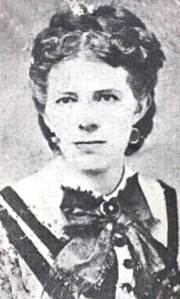
(Photo edited by Bob Rowen)

Union forces under U.S. Grant moved southward to take Vicksburg, Miss., the key to control of the Mississippi River and the last major link between the eastern and western Confederate regions. Stone watched with absolute contempt as Union gunboats floated into view. As word spread of blue armies marching closer, Stone’s mother ordered Brokenburn’s slaves were to run away if Northern troops entered the plantation. Stone noted with disgust as slaves from other communities and estates snuck away to the Union lines or were simply gathered up by Union soldiers like provisions and sent to work on Union military fortifications.

Stone also made a prescient observation on what some families did with their threatened labor force — they sent them “to the back country” farther west. Forthcoming entries in this series will illustrate how, as the Union forces poured into the area around Brokenburn to prepare for the Vicksburg assaults, the “back country” would not offer sufficient protection. Slaves were only the first wave of people from Louisiana to move westward. Slaveowners, frightened of marauding Union soldiers, would soon follow them. Stone had no idea that someday soon she also would be swept away into the growing river of refugees flowing into a new home: unconquered Confederate Texas.

June 20

Good news from My Brother … he is now Adjutant of the 2nd Miss. Battalion. I am so glad. He ranks now as Captain. He is not ambitious for himself, but I am very ambitious for him. All my dreams of future glory for our name center in My Brother. God bless him.

June 25

Well, we have at last seen what we have been looking for for weeks: the Yankee gunboats descending the river. The Lancaster No. 3 led the way, followed by the ram Monarch .We hope they will be the first to be sunk at Vicksburg. We shall watch for their names. They are polluting the waters of the grand old Mississippi. Monday when Mamma and I went out to Mr. Newman’s to spend the day and stopped at Mrs. Savage’s to get Anna, Mr. McGee came down and told us the gunboats were in sight at Goodrich’s, and about 4 o’clock, while at dinner, one of the servants said they were coming around the bend. We all ran out on the gallery for our first sight of the enemy, and soon we saw one craft bearing rapidly down the river, dark, silent, and sinister. Very few men were in sight, and no colors were flying. There were no demonstrations on either side, but oh, how we hated her deep down in our hearts, not the less that we were powerless to do any harm. Soon three others came gliding noiselessly by, and we could have seen every boat and all the men sunk to the bottom of the river without a pang of regret. One transport was crowded with men. It looked black with them, and they had the impudence to wave at us. We would have been glad to return the compliment with a shot from a battery crashing right into the boat. One passed, then turned, and rounded into the hole just in front of the house, blowing the whistle.

We were certain she was going to land, and since the house is just at the river, a scene of excitement ensued. The gentlemen insisted we should leave the house and hide somewhere until the carriage could be hitched up for us to flee to the back country. We rushed around the house, each person picking up any valuable in the way of silver, jewelry, or fancy things he could find, and away we ran through the hot, dusty quarter lot, making for the only refuge we could see, the tall, thick cornfield just beyond the fence. Two soldiers who were taking dinner with us were hurried ahead, as we knew they would be captured if recognized. Just as we were in full retreat, a motley crew soldiers, women, children, and all the servants, in full view of the boat we could see the spyglasses levelled at us. Some one called for us to come back. It was a feint. The gunboat was not landing. So we turned back to the house, a hot excited lot of people, and the dinner cold on the table.

The boats ran up and down for awhile and then anchored for the night at the foot of the Island. A boat came ashore with three men, and they had quite a conversation with some of our fireside braves assembled to see the sights. The Yankees, one a Col. Elliott, were in full uniform and armed cap-a-pie. Some of the men, notably Mr. Newman and Mr. Hannah, answered all their questions, told them all they knew, and then tried to buy provisions from the boats, telling the officers they were nearly starving. It was an awful story, for the country is filled with every eatable that could be raised. Mr. Cox acted like a man of proper spirit and denied what the other men had said about starvation. …

June 26

Mrs. Savage and Emily came out this morning to breakfast, and as she thought there was no further danger, she took Robert home with her. The Yankee officers said they came ashore to “assure the inhabitants that they meditated no injury.” They had seen some ladies very much frightened, and they regretted it, as the ladies were in no danger and would not be molested in any way. …

June 27

Brother Walter is safe at home again. He got back last night looking as brown and weather-beaten as any soldier of them all and so tired and stiff that he can hardly walk. He crossed the river in a skiff and walked all the way from Vicksburg to Willow Bayou in one day, following the railroad track. Mrs. Morris sent him on the next day on horseback, and we were delighted when he rode up. Brother Coley is well and in high spirits. Aunt Laura and Beverly are in Jackson. Brother Walter would have remained over for the fight at Vicksburg, but the battle on land is not expected to come off for some weeks yet. So he very wisely came home. …

June 29

We hear today that the Yankees are impressing all the Negro men on the river places and putting them to work on a ditch which they are cutting across the point opposite Vicksburg above DeSoto. They hope to turn the river through there and to leave Vicksburg high and dry, ruining that town and enabling the gunboats to pass down the river without running the gauntlet of the batteries at Vicksburg. They have lately come up as far as Omega, four miles from us, taking the men from Mr. Noland’s place down. We hear several have been shot attempting to escape. We were satisfied there would soon be outrages committed on private property. Mamma had all the men on the place called up, and she told them if the Yankees came on the place each Negro must take care of himself and run away and hide. We think they will.

From a late paper we see that Butler is putting his foot down more firmly every day. A late proclamation orders every man in the city to take the oath of allegiance. There will be the most severe penalties in case of refusal. Butler had Mr. Mumford, a gentleman of New Orleans, shot for tearing down the first flag hoisted in New Orleans over the mint. The most infamous order and murder of which only Butler is capable. Is the soul of Nero reincarnated in the form of Butler? Why can he not fall of the scourge of New Orleans, yellow fever?

The drought was broken last night by a good rain and the planters are feeling better. This insures a good corn crop, and it was beginning to suffer. It is so essential to make good food crops this year. When we heard the cool drops splashing on the roof. … Such a lovely morning. It is a pleasure to breathe the soft, cool air and look out over the glad, green fields, flashing and waving in the early sunlight. …

June 30

The excitement is very great. The Yankees have taken the Negroes off all the places below Omega, the Negroes generally going most willingly, being promised their freedom by the vandals. The officers coolly go on the places, take the plantation books, and call off the names of all the men they want, carrying them off from their masters without a word of apology. They laugh at the idea of payment and say of course they will never send them back. A good many planters are leaving the river and many are sending their Negroes to the back country. We hope to have ours in a place of greater safety by tomorrow.

Dr. Nutt and Mr. Mallett are said to be already on their way to Texas with the best of their hands. Jimmy and Joe went to the Bend and Richmond today. They saw Julia and Mary Gustine, who sent me word that I was a great coward to run away. Mary had talked to a squad of Yankee soldiers for awhile and found them anything but agreeable.

All on this place, Negroes and whites, are much wrought up. Of course the Negroes do not want to go, and our fear is when the Yankees come and find them gone they will burn the buildings in revenge. They are capable of any horror. We look forward to their raid with great dread. Mrs. Savage sent for her silver today. We have been keeping it since the gunboats came. They will all leave in two days for Bayou Macon. Would like to see them before they get off. …


Recommended reading / viewing / listening

Fashion at the Golden Globes / Breaking down the drone war / The Army’s brain drain / Why do wet fingers wrinkle? / Cities preparing for climate change

IMG_1629

Most of these great items come from my Twitter feed or Facebook news feed. Follow me on Twitter and on Facebook for more fascinating videos, articles, essays and criticism.

1. The Golden Globes: The Good, the Bad, and the Ugly
TMZ | Jan. 13
“The 70th Annual Golden Globes are in full swing and as usual there’s sure to be some fashion fiascoes showing up and showing off.”

2. Texas Has Created a Costly Roadmap for Defunding Planned Parenthood
By Molly Redden | The New Republic | Jan. 11
“Since fading from our national memory as the presidential candidate who couldn’t remember the Department of Energy, Perry has gone home to oversee the dissolution of what was once a decent health-care partnership with the federal government, the Women’s Health Program.”

3. Everything We Know So Far About Drone Strikes
By Cora Currier | Pro Publica | Jan. 11
“You’ve certainly heard about drones. But the details of the U.S. campaign against militants in Pakistan, Yemen, and Somalia — a centerpiece of the Obama administration’s national security approach — remain shrouded in secrecy.”

4. Gwen’s Take: Why Do People Want to Be President?
By Gewn Ifill | The Rundown :: PBS NewsHour | Jan. 11
“Why do they turn over their lives to years of grueling fundraising, speech-making, handshaking, second guessing, bad foods, bad hotels and life inside the bubble?”

5. Funding for Human Expeditions in the Ocean May Have Run Aground
By Tony Dokoupil | Newsweek | Jan. 14
“Legendary explorer Sylvia Earle is saying goodbye to the ocean floor, but are machines good enough to take her place? Tony Dokoupil reports in Newsweek on the robot takeover of ocean science.”

6. Mashable’s Favorite Tech From CES 2013
By Lance Ulanoff | Mashable | Jan. 10
“We saw smartphones, humongous Ultra HDTVs, smartphone cases, Bluetooth speaker systems, advanced gaming systems and accessories, 3D sensors and more.”

7. An Army of None
By Tim Kane | Foreign Policy | Jan. 10
“Why the Pentagon is failing to keep its best and brightest.”

8. How American Cities Are Adapting To Climate Change
By Jeff Spross | ThinkProgress | Jan. 11
“Almost two-thirds are pursuing adaptation planning for climate change, compared to 68 percent globally, and virtually all U.S. cities report difficulties acquiring funding for adaptation efforts.”

9. Seeing Time Machine Let Go of the Past
By J.D. Biersdorfer | Gadgetwise :: The New York Times | September 2012
“My Time Machine program keeps alerting me that it is deleting old backups. Should I be worried about this message?”

10. To Grip Wet Objects, Wrinkle Your Fingers
By Sindya N. Bhanoo | The New York Times | Jan. 10
“[S]cientists report that wrinkled fingers and toes allow a better grip on wet objects — so they may have evolved to give early humans an advantage in wet conditions.”

Recommended reading / viewing / listening

Goals of the Texas legislative session / Q&A on Obama’s fight with GOP / Appreciating Al Jazeera / Happy birthday, Tricky Dick / Why do animals play?

IMG_1587

Most of these great items come from my Twitter feed or Facebook news feed. Follow me on Twitter and on Facebook for more fascinating videos, articles, essays and criticism.

1. Lawmakers Want Big, Bold Measures This Session
By Aman Batheja | The Texas Tribune | Jan. 11
“[T]here is widespread interest among state leaders to make large investments in Texas’ future this session, specifically billion-dollar commitments to water and transportation projects that prepare Texas for a population boom demographers warn is on the way.”

2. Q&A: Obama lacks clear edge in next fight with GOP
By Alan Fram | Associated Press | Jan. 11
“The government will run out of cash in about two months. The Obama administration will need congressional approval to borrow more money or face a first-ever federal default, threatening global, economy-rattling consequences.”

3. Banks seek NSA help amid attacks on their computer systems
By Ellen Nakashima | The New York Times | Jan. 11
“The cooperation between the NSA and banks … underscores the government’s fears about the unprecedented assault against the financial sector and is part of a broader effort by the government to work with U.S. firms on cybersecurity.”

4. Happy 100th, Nixon: You’re still tricky to critics
By James Hohmann | Politico | Jan. 9
“Richard Nixon would have turned 100 Wednesday, but about the only people marking the occasion are historians, family members and loyalists from the disgraced 37th president’s administration. And even they’re slowly dying off.”

5. Turn the channel to Al Jazeera
By Daoud Kuttab | The Los Angeles Times | Jan. 8
“The Arab network should be a welcome source for U.S. news junkies.”

6. Japan Explores War Scenarios with China
By J. Michael Cole | Flashpoints :: The Diplomat | Jan. 9
“There has been much speculation over the years about whether Tokyo would intervene if the PLA ever invaded Taiwan.”

7. Why do animals like to play?
By Jason G. Goldman | BBC Future | Jan. 9
“Recreation may look like it serves no obvious purpose, but when dogs and other animals are having fun they are learning some valuable lessons.”

8. How Much Alcohol Is Safe for Expectant Mothers?
By Melinda Wenner Moyer | Scientific American | Jan. 4
“An occasional drink during pregnancy is unlikely to harm most children, but we lack the tools to fully measure alcohol’s effects on the developing brain”

9. Kisses and Hugs in the Office
By Jessica Bennett and Rachel Simmons | The Atlantic | December 2012
“How a once-intimate sign-off is feminizing the workplace, for better or worse”

10. Converting Paper to Digital Files
By J.D. Biersdorfer | Gadgetwise :: The New York Times | Sept. 21
“What’s the best way to convert a box of old newspaper and magazine clippings to digital files, doing it myself and without spending a lot of money?”

Recommended reading / viewing / listening

The consequences of LiLo / Celebrating Richard Ben Cramer / Lima’s ugly side / Unborn babies can learn language / Public sees harm from U.S. politics

IMG_1540

Most of these great items come from my Twitter feed or Facebook news feed. Follow me on Twitter and on Facebook for more fascinating videos, articles, essays and criticism.

1. Here Is What Happens When You Cast Lindsay Lohan in Your Movie
By Stephen Rodrick | The New York Times Magazine | Jan. 10
“[Director Paul] Schrader thinks she’s perfect for the role. Not everyone agrees. Schrader wrote ‘Raging Bull’ and ‘Taxi Driver’ and has directed 17 films. Still, some fear Lohan will end him.”

2. Hagel pick: Final snub of George W. Bush
By Alexandra Burns | Politico | Jan. 9
“[T]he most vehement objections have come from the conservative, interventionist foreign policy community — the so-called neoconservatives who created the ideological architecture for the wars Bush launched in Afghanistan and Iraq.”

3. What do think of Richard Ben Cramer now?
By Tom Junod | Esquire | Jan. 8
“Richard Ben Cramer is the only one I still read for that holy, misguided, and somewhat dangerous purpose — the only one whose blood I still welcome for the purposes of transfusion. The others carry the risk of infection, which is to say the risk of mannerism.”

4. Hiding From People-Search Sites
By J.D. Biersdorfer | Gadgetwise :: The New York Times | Aug. 29
“I recently found my name, address and other personal information listed on this Web site called Spokeo.com. How do they get this information and can I delete it?”

5. Wodehouse and Fitzgerald — emblems of a lost age
By Robert McCrum | The Guardian | Jan. 7
“The two authors incarnated very different visions of England and the US between the wars”

6. From the Slums of Lima to the Peaks of the Andes
By Alastair Bland | Off the Road :: Smithsonian | Jan. 7
“That there could be anything in the world but dust, rubble, traffic, burning trash heaps, mangy dogs and slums seemed impossible as we rolled northward through Lima.”

7. Babies Seem to Pick Up Language in Utero
By Nicholas Bakalar | Well :: The New York Times | Jan. 7
“A baby develops the ability to hear by about 30 weeks’ gestation, so he can make out his mother’s voice for the last two months of pregnancy.”

8. Rebooting Republican Foreign Policy
By Daniel W. Drezner | Foreign Affairs | January/February 2013
“Needed: Less Fox, More Foxes”

9. Most in U.S. Say Politics in Washington Cause Serious Harm
By Frank Newport | Gallup | Jan. 7
“More than three-quarters of Americans (77%) say the way politics works in Washington these days is causing serious harm to the United States, providing still another indicator of the low esteem in which Americans hold their elected officials. …”

10. Creative Aging: The Emergence of Artistic Talents
By Richard Senelick | The Atlantic | Jan. 4
“Depending which part of the brain is affected, different skills will be preserved or impaired in various types of cognitive decline and dementia. This gradual reformation is what may allow the emergence of new artistic abilities.”

*****************

TUNES

Tonight I’m spending some time with the blues, specifically with the Texas Blues Café. Check out the line-up and then listen here.

1. J.J. Grey & Mofro — Country Ghetto
2. Dr. Wu — I Don’t Need No Woman Like You
3. Delta Moon — Ghost In My Guitar
4. ZZ Top — Nasty Dogs And Funky Kings
5. Stoney Curtis Band — That’s Right
6. Kelleys Lot — Drive
7. The Fabulous Thunderbirds — Stand Back
8. Jeff Powers & Dead Guys Blues Band — Bad Luck Boogie
9. Ian Moore — Pay No Mind
10. Ray Wylie Hubbard — Down Home Country Blues
11. The Stone Coyotes — Trouble Down In Texas
12. Lost Immigrants — Dixie Queen
13. Band Of Heathens — Hallelujah

Kate Stone’s Civil War: The sleep that knows no waking

It’s been a year since her beloved brother and uncle left for the front, and her sadness casts a shadow over Brokenburn’s springtime blooms.

sunlight

From 2012 to 2015, Stillness of Heart will share interesting excerpts from the extraordinary diary of Kate Stone, who chronicled her Louisiana family’s turbulent experiences throughout the Civil War era.

Learn more about Stone’s amazing life in 1861, 1862, 1863, 1864, 1865 and beyond. Click on each year to read more about her experiences. You can read the entire journal online here.

(Photo edited by Bob Rowen)

Stone mourns the loss of a dear friend to marriage, “Beast” Butler’s proclamations from conquered New Orleans outrage her, the weakened levee nearby worries her, and a bear frightens and exhilarates everyone. It’s been a year since her beloved brother and uncle left for the front, and her sadness casts a shadow over Brokenburn’s springtime blooms.


May 23

Have heard of my darling Katie’s marriage. Who would have thought after our long close intimacy that I would hear of her wedding only by accident. I know she has written me everything but no letters come now. So have passed our dreams of sisterhood. I hope, oh how I hope, she has been able to forget the old love and is content with the new. May my dear girl be happy. God bless her and hers. I shall miss her out of my life, my dearest girl friend. How it will affect My Brother I can hardly say, but I have thought of late he had given up his love dream and was willing to take the dismissal he forced upon her. …

The gunboats have been at Vicksburg for a week and have secured their answer to the demand to surrender some days ago, but there has been no bombardment. What we heard was the artillery men trying their guns.

In the Whig is Butler’s last infamous proclamation. It seems that the openly expressed scorn and hatred of the New Orleans women for Butler’s vandal hordes has so exasperated him that he issues this proclamation: That henceforth if any female by word, look, or gesture, shall insult any of his soldiers, the soldier shall have perfect liberty to do with her as he pleases. Could any order be more infamous? It is but carrying out the battle cry ‘Bounty and Beauty’ with which they started for New Orleans. May he not long pollute the soil of Louisiana.

The levee is still very insecure with the river rising and the rains bad on it. Many plantation hands are at work on it all the time, and the owners [are] watching it anxiously. We are almost overflowed from rain water as the ditches had to be stopped to keep out backwater. …

May 25

Everything shines out bright and fair in the spring sunshine after the gloom of the last few days. The flowers wave and glisten most invitingly across the grass beyond the shadows of the great oaks, but it is too wet to venture over Nature’s carpeting of soft, green grass. This evening we may plan what we please. The levees having stood so far we think will stand faithfully to the end. They have certainly been found faithful among few. …

May 26

Old Mr. Valentine is very despondent, foretelling the most abject poverty and starvation for the whole country. He came over to try and induce Mamma to have all the cotton plowed up in order to plant corn and to beg her not to let Brother Walter go to Vicksburg. … He has made himself very unpopular by his bitter opposition to the cotton burning and by not allowing his son to join the army. There is no doubt he should go at once. Some actually think Mr. Valentine is in favor of our enemies and advocate hanging him by mob law. A most unjust report and utterly without foundation. I suppose his being of Northern birth increases the prejudice. …

In the afternoon there was a cry raised that there was a bear in the cane. The boys with their dogs and guns turned out in force, assisted by Mr. McRae, Ben Clarkson, as did all the Negroes who could get mules, while the others armed themselves with axes and sticks and cautiously approached the outskirts. The excitement ran high and we at the house had full benefit as it was in the canebrake just back of the yard. We could hear the barking of the dogs, the reports of the guns, and the cries and shouts of the whole party. It was very exhilirating. They returned in the highest state of excitement but without the bear. They went out next morning but with no better success. …

May 28

Yesterday evening and far into the night we heard the roar of cannonading more distinct and rapid than ever heard before. It must be at Vicksburg. Today all is quiet. One understands after hearing the long rolling booms how deafening it must be on a battlefield. …

The river is falling all the way down.nd we are saved from overflow this year.

Papers and letters this evening, a month old.

May 30

We have a paper of the twenty-seventh. It brings the good news of a battle or surprise by Stonewall Jackson at Winchester and Front Royal and the capture of all the stores at the former place and many prisoners. All the news is rather encouraging. We are holding our own at Fort Pillow. At Corinth the enemy are reported in retreat to their gunboats which, now that the Tennessee River is falling, they are compelled to get out at once. All is well in Virginia. And nearer home at Vicksburg there is nothing to discourage us. The slight shelling did no harm, and the soldiers are full of hope and anxious for the Yankees to land to give them the “worst beating they ever had in their lives. …”

My Brother and Uncle Bo have been gone just a year and what a year of changes. Nature smiles as bright and fair now as under the May sun of a year ago, but where are all “the loved ones who filled our home with glee?” Four of the dear familiar faces are absent. One sleeps the sleep that knows no waking. For him we have no more fear or trouble, for we know he has passed from Death into Life that. … But oh, the weary days of waiting and watching for the other three.

Jimmy brought us two recent letters from My Brother. He encloses some violets gathered from the old trenches around Yorktown, dug there by Washington’s army. His tent stands just where Cornwallis gave up his sword. What supreme satisfaction if McClellan could be induced to do the same thing at the same place. They say history repeats itself. My Brother takes a most elderly brother tone regarding Tom Manlove’s love affairs. Four months ago Tom was desperate about Miss Eva, and now Miss Flora reigns sole empress of his heart for the next month. But My Brother need not be critical, as he is not so constant himself. He so regrets leaving Uncle Bo. They are now in different commands. He is anxious to get his clothes and speaks confidently of coming home. …

Kate Stone’s Civil War: Fashion is an obsolete word

Stone offers a fascinating portrait of how war changed even the smallest elements of daily life.

tree

From 2012 to 2015, Stillness of Heart will share interesting excerpts from the extraordinary diary of Kate Stone, who chronicled her Louisiana family’s turbulent experiences throughout the Civil War era.

Learn more about Stone’s amazing life in 1861, 1862, 1863, 1864, 1865 and beyond. Click on each year to read more about her experiences. You can read the entire journal online here.

(Photo edited by Bob Rowen)

Stone offers a fascinating portrait of how war changed even the smallest elements of daily life.

May 22

All yesterday and today we have heard cannonading at Vicksburg, sometimes so faint that it is more a vibration than a noise and again quite a loud, clear report. Oh, if we could only know just what is going on there. But it may be days before we get any authentic accounts. We do not know the importance of holding Vicksburg. We know nothing of the plans. Some say the resistance there is only a feint to give Beauregard more time at Corinth, Miss., but we hope it is a desperate attempt to hold the city against all odds. We are sick of hearing of these prudent, cautious retreats without firing a gun. Our only hope is in desperate fighting. We are so outnumbered. We think Dr. Buckner’s company is in Vicksburg, but being cavalry they may not be engaged.

Evening. Brother Walter rode out on the dangerous levee and he thinks it will hold. Heard that the attack on Vicksburg will be made this evening at 3 o’clock, the enemy landing at Warrenton and coming in the rear of the city. Brother Walter is almost wild to take part in the battle there. He has been in tears about it for the last week. … He says he must and will be in that fight, but we are not very anxious about him. We are sure all skiffs leaving Pecan Grove will have gotten away long before he reaches there, as it was two when he left. Mamma gave him some money but he took no clothes. He will be compelled to return soon. But Mamma feels that before many days she will be called on to give up this her third son to fight for his country. …

All the boats stopped running three weeks ago on the fall of New Orleans and we have not had a mail since. There is no communication with anywhere except by skiff as the levees are broken between here and Vicksburg.

All the boys are out on the river, and we expect them to bring Anna Dobbs back with them to stay a few days. It seems odd to be expecting company and no flour or any “boughten” delicacy to regale them on, but we have been on a strict “war footing” for some time cornbread and home-raised meal, milk and butter, tea once a day, and coffee never. A year ago we would have considered it impossible to get on for a day without the things that we have been doing without for months. Fortunately we have sugar and molasses, and after all it is not such hard living. Common cornbread admits of many variations in the hands of a good cook eggbread (we have lots of eggs), muffins, cakes, and so on. Fat meat will be unmitigated fat meat, but one need not eat it. And there are chickens, occasional partridges, and other birds, and often venison, vegetables of all kinds minus potatoes; and last but not least, knowing there is no help for it makes one content. …

Clothes have become a secondary consideration. Fashion is an obsolete word and just to be decently clad is all we expect. The change in dress, habits, and customs is nowhere more striking than in the towns. A year ago a gentleman never thought of carrying a bundle, even a small one, through the streets. Broadcloth was de rigueur. Ceremony and fashion ruled in the land. Presto-change. Now the highest in rank may be seen doing any kind of work that their hands find to do. The men have become “hewers of wood and drawers of water” and pack bundles of all sorts and sizes. It may be a pile of blankets, a stack of buckets, or a dozen bundles. One gentleman I saw walking down the street in Jackson, and a splendid-looking fellow he was, had a piece of fish in one hand, a cavalry saddle on his back, bridle, blankets, newspapers, and a small parcel in the other hand; and over his shoulder swung an immense pair of cavalry boots. And nobody thought he looked odd. Their willingness to fetch and carry is only limited by their strength. All the soldiers one sees when traveling are loaded down with canteen, knapsack, haversack, and blankets.

Broadcloth is worn only by the drones and fireside braves. Dyed linsey is now the fashionable material for coats and pants. Vests are done away with, colored flannel, merino, or silk overshirts taking the place. A gentleman thinks nothing of calling on half a dozen young ladies dressed in home-dyed Negro cloth and blue checked shirt. If there is a button or stripe to show that he is one of his country’s defenders, he is sure of warmest welcome. Another stops to talk to a bevy of ladies. He is laden down with a package of socks and tin plates that he is carrying out to camp, and he shifts the bundles from side to side as he grows interested and his arms get tired. In proportion as we have been a race of haughty, indolent, and waited-on people, so now are we ready to do away with all forms and work and wait on ourselves.

The Southerners are a noble race, let them be reviled as they may, and I thank God that He has given my birthplace in this fair land among these gallant people and in a time when I can show my devotion to my Country.

Recommended reading / viewing / listening

Today’s slaves / Wireless printers / Rediscovering a lost Byzantine city / Conservative defeat in culture war / Naming winter storms

IMG_1539

Most of these great items come from my Twitter feed or Facebook news feed. Follow me on Twitter and on Facebook for more fascinating videos, articles, essays and criticism.

1. America’s Post-2014 Afghanistan Game Plan
By Daniel R. DePetris | The Editor :: The Diplomat | Jan. 5
“The war in Afghanistan has become a sore point for the Obama administration, punctuated by the enormous rise in insider attacks on coalition forces and the persistent tenacity and lethality of the Taliban insurgency.”

2. The Weather Channel Is Now Branding Winter
By James Poniewozik | Tuned In :: Time | Jan. 4
“Even assuming the most selfless intentions, there’s the obvious chance for TWC to benefit. Storms that people ‘follow’ and ‘pay attention to’ are storms that people turn on The Weather Channel for.”

3. The culture war is over, and conservatives lost
By Matt K. Lewis | The Week | Jan. 3
“It’s time we conservatives accepted an alarming truth: Americans no longer agree with us”

4. Ruins of Forgotten Byzantine Port Yield Some Answers, Yet Mysteries Remain
By Jennifer Pinkowski | Scientific American | Jan. 2
“After a drought revealed the seawall of a Byzantine Empire harbor town near Istanbul, archeologists excavated what was a thriving ancient center. But how does it fit into the city’s 1,600-year history?”

5. David Attenborough: A life measured in heartbeats
By Brian Cox and Robin Ince | New Statesman | December 2012
“In an exclusive interview with Brian Cox and Robin Ince, he talks about the BBC, Darwin and what keeps him moving.”

6. James Stavridis: How NATO’s Supreme Commander thinks about global security
TED | July 2012
“Imagine a global security driven by collaboration — among agencies, government, the private sector and the public.”

7. Setting Up A Wireless Printer
By J.D. Biersdorfer | Gadgetwise :: The New York Times | September 2012
“What’s involved in setting up a new wireless printer in Windows 7 on my home network?”

8. Turkey’s Moment
By Jonathan Tepperman | Foreign Affairs | January/February 2013
“A Conversation With Abdullah Gul”

9. Introducing the First Search Engine for Math And Science Equations
Smithsonian Magazine | December 2012
“Symbolab allows users to search for equations using both numbers and symbols as well as text. The engine returns results based upon their relatedness to theory and semantics rather than visuals.”

10. Slavery’s Global Comeback
By J.J. Gould | The Atlantic | December 2012
“150 years after the Emancipation Proclamation, buying and selling people into forced labor is bigger than ever. What ‘human trafficking’ really means.”

Recommended reading / viewing / listening

Hauling a rock into orbit / A comatose Senate / Fiction to understand Iraq War / Navy SEALS fighting Jabba the Hutt / John Kerry and Cuba

IMG_1538

Most of these great items come from my Twitter feed or Facebook news feed. Follow me on Twitter and on Facebook for more fascinating videos, articles, essays and criticism.

1. Senatus Decadens
By George Packer | The Daily Comment :: The New Yorker | Jan. 4
“The Senate is in a prolonged, self-induced coma. It does not produce creative legislation. It does not inspire important debate. It is not responsive to key national problems. Its pretense of institutional dignity is so battered that junior senators openly mock it.”

2. Emerging wave of Iraq fiction examines America’s role in ‘bullshit war’
By Paul Harris | The Guardian | Jan. 3
“Flood of books with ‘elegiac feel running through them’ tackle eight-year conflict and help US to understand the folly of war”

3. Be Cautious With Free Software
By J.D. Biersdorfer | Gadgetwise :: The New York Times | August 2012
“Is it safe to install freeware and shareware on my computer?”

4. Can Kerry make friends with Cuba?
By Nick Miroff | GlobalPost :: Salon | Jan. 2
“While the ex-senator’s been a harsh critic of U.S. policy toward Havana, he’ll have a hard time changing anything”

5. Louis C. K.’s Symphony Of Comedy
By Chris Duffy | WBUR | Jan. 3
“In a field notorious for compromise, where comedians routinely change personas and water down material to get sitcom deals, C.K. has managed to maintain his voice.”

6. High schooler suspended for poem on understanding Adam Lanza
By Natasha Lennard | Salon | Jan. 2
“A 17-year-old high school student in San Francisco has been suspended indefinitely after she wrote a poem in her personal notebook which included the lines, ‘I understand the killings in Connecticut; I understand why he pulled the trigger.’ ”

7. Good and Bad, the Little Things Add Up in Fitness
By Gretchen Reynolds | Well :: The New York Times | Jan. 2
“I was delighted to report … that the ‘sweet sport’ for health benefits seems to come from jogging or moderately working out for only a brief period a few times a week.”

8. How Real Navy SEALs Would Handle Famous Movie Missions
By Shane Snow | Underwire :: Wired | December 2012
“[W]e asked 17-year SEAL veteran Don Mann … how the SEALs would handle a few epic missions of our own devising. And by ‘our,’ we mean Hollywood’s.”

9. Dissatisfaction City
By Jesse Elias Spafford | The New Inquiry | Jan. 2
“The Las Vegas casino is a machine for social control that works not through repression, but disinhibition”

10. NASA mulls plan to drag asteroid into moon’s orbit
By Jeff Hecht | New Scientist | Jan. 2
“The mission would cost about $2.6 billion — slightly more than NASA’s Curiosity Mars rover — and could be completed by the 2020s.”

Recommended reading / viewing / listening

Puerto Rico’s new governor / Our lifelong dreams / Cannibal insect sex / The Soviet’s Afghan lessons / Savoring Texas blues

IMG_1506

Most of these great items come from my Twitter feed or Facebook news feed. Follow me on Twitter and on Facebook for more fascinating videos, articles, essays and criticism.

1. Gerda Lerner, a Feminist and Historian, Dies at 92
By William Grimes | The New York Times | Jan. 3
“[The] scholar and author … helped make the study of women and their lives a legitimate subject for historians and spearheaded the creation of the first graduate program in women’s history in the United States. …”

2. Why You Won’t Be the Person You Expect to Be
By John Tierney | The New York Times | Jan. 3
“[W]hen asked to predict what their personalities and tastes would be like in 10 years, people of all ages consistently played down the potential changes ahead.”

3. What We Can Learn from the Soviet Withdrawal from Afghanistan
The Takeaway | Jan. 3
“Americans should take note of the Soviets’ success in funding the Afghan government, and that the Soviet-supported Afghan government did not fall to the Mujahedeen until 1992, when the Soviet Union collapsed and Boris Yeltsin cut off aid to the country.”

4. Cannibal insect sex caught on video
By Joanna Carver | New Scientist | Jan. 3
“This video shows a female insect feasting on her partner’s hind wings then drinking the blood from his wound, apparently with little interest in procreation.”

5. How Obama Decides Your Fate If He Thinks You’re a Terrorist
By Daniel Byman and Benjamin Wittes | The Atlantic | Jan. 3
“A look inside the ‘disposition matrix’ that determines when — or if — the administration will pursue a suspected militant.”

6. Puerto Rico charts new course with new governor
By Danica Coto | Associated Press | Jan. 2
“Alejandro Garcia Padilla was sworn in on a stage overlooking the Atlantic Ocean outside the Capitol building in San Juan amid the cheers of thousands of supporters from his party, which opposes statehood.”

7. Beate Gordon, Unsung Heroine of Japanese Women’s Rights, Dies at 89
By Margalit Fox | The New York Times | Jan. 1
“A civilian attached to Gen. Douglas MacArthur’s army of occupation after World War II, Gordon was the last living member of the American team that wrote Japan’s postwar Constitution.”

8. Is America Still the Land of Opportunity?
By Marcus Mabry | IHT Rendezvous :: International Herald Tribune | Jan. 1
“Over the last decade or two, the American middle has been hollowed out, with an affluent, well-educated class growing on one side of the divide and a poor and working-class majority on the other, faced with limited opportunities to change their circumstances.”

9. European disunion done right
The Economist | December 2012
“The [Holy Roman Empire] offers surprising lessons for the European Union today”

10. Adding Missing Titles to iTunes Tracks
By J.D. Biersdorfer | Gadgetwise :: The New York Times | September 2012
“I have some old CDs that I want to convert to MP3 with iTunes. When I put the discs in the computer’s CD drive, iTunes lists the songs as Track 01, Track 02 and so on, instead of the titles. Where does this information come from and how do I get the song names on the files?”

**************

TUNES

Tonight I’m spending some time with the blues, specifically with the Texas Blues Café. Check out the line-up and then listen here.

1. Preacher Stone — Come Together
2. Hamilton Loomis — Bow Wow
3. Rocky Jackson — Shoulda Never Left Texas
4. Wynonna — Freebird
5. Lynyrd Skynyrd — T For Texas
6. Oreo Blues — Nobody Knows
7. Bluessmyth — Bluessmyth
8. Tommy Crain — Why I Sing The Blues

Kate Stone’s Civil War: Burn our cities

Stone understood what was happening … something terrible was coming, and she would stand up to meet it.

IMG_1535

From 2012 to 2015, Stillness of Heart will share interesting excerpts from the extraordinary diary of Kate Stone, who chronicled her Louisiana family’s turbulent experiences throughout the Civil War era.

Learn more about Stone’s amazing life in 1861, 1862, 1863, 1864, 1865 and beyond. Click on each year to read more about her experiences. You can read the entire journal online here.

(Photo edited by Bob Rowen)

The spring of 1862 brought to Stone the first tangible costs of war. The two-month silence in her diary ended sadly in May as she mourned the “perfect love of a lieutenant” she had swooned over. He died not after a glorious charge, not after a gallant pursuit of the Yankees, but merely of sickness, as so many Civil War soldiers did throughout the war. Reflections on her “nonsense” musings from March 1862 made her feel guilty and petty.

The spring attacks and counterattacks between Union and Confederate forces in the Western Theater — coupled with the fear over failing levees threatening to further flood the area — resounded with tectonic force throughout Stone’s diary, and she sensed that Southern defeats, including the catastrophic fall of New Orleans, exposed her beloved Louisiana to further Union atrocities. Stone, her writing always at its most beautiful when anguished, powerfully evoked her beloved Louisiana, “with her fertile fields of cane and cotton, her many bayous and dark old forests, [which] lies powerless at the feet of the enemy.”

The Civil War was no longer a far-off cyclone of glorious drama, draining her society of young men and precious resources. Its violent power now shook Brokenburn’s foundations. Day by day, the trembles grew stronger. Stone understood what was happening … something terrible was coming, and she would stand up to meet it.

May 9

After two months of silence I will resume my homely chronicles. Reading over the nonsense of the last page, how sad it seems now, for the Lt. Davis mentioned with such jesting is dead far away from his mother “an only son and she a widow.” He escaped at the siege of Donelson only to come home with Capt. Buckner to fall a prey to a long, lingering illness and die at last among strangers.

Two days after my last date [March 9], Mamma, Brother Coley, Brother Walter, and I went down by land to Vicksburg. Brother Coley joined his company as a private with Capt. C. B. Buckner as captain. In a few days they left for Jackson, Miss., where they still are, and Mamma and Brother Walter returned home. I remained with Aunt Laura until last week when Brother Walter came down in the carriage for me, and, after moving adventures by field and flood, we reached home safely.

How many stirring events are crowded into the last sixty days: Our victory in Hampton Roads; the two-day battle and victory at Shiloh; the fall of several of our small towns on the coast; the long bombardment, heroic defense, and final surrender of Island No. 10; the attack on and successful defense of Fort Pillow; and last and most important of all the long and terrible bombardment of Fort Jackson with the passing of the gunboats under heaviest fire and then the investure and fall of the greatest City of the South, New Orleans. And not a blow struck in its defense. Such was not its fate in the days of Jackson.

As a natural consequence of her surrender, the forts also gave up, and fair Louisiana with her fertile fields of cane and cotton, her many bayous and dark old forests, lies powerless at the feet of the enemy. Though the Yankees have gained the land, the people are determined they shall not have its wealth, and from every plantation rises the smoke of burning cotton. The order from Beauregard advising the destruction of the cotton met with a ready response from the people, most of them agreeing that it is the only thing to do. As far as we can see are the ascending wreaths of smoke, and we hear that all the cotton of the Mississippi Valley from Memphis to New Orleans is going up in smoke. We have found it is hard to bum bales of cotton. They will smoulder for days. So the huge bales are cut open before they are lighted and the old cottons burns slowly. It has to be stirred and turned over but the light cotton from the lint room goes like a flash. …

Though agreeing on the necessity of destroying the cotton, all regret it. And it has thrown a gloom over the country that nothing but news of a great victory could lighten. We are watching and praying for that. The planters look upon the burning of the cotton as almost ruin to their fortunes, but all realize its stern necessity, and we have not heard of one trying to evade it.

The Yankee gunboats are expected to appear before Vicksburg today. … It seems hopeless to make a stand at Vicksburg. We only hope they may burn the city if they meet with any resistance. How much better to burn our cities than let them fall into the enemy’s hands.

To resume the earlier record: Two weeks after Dr. Buckner’s company left Vicksburg, Aunt Laura, Beverly, and I went to Jackson to pay them a visit and spent a week at the Bowman House, a comfortable hotel for these times. I enjoyed the stay greatly. Saw so many soldiers and other nice people. And it was such a time of excitement, just after the battle of Shiloh, and we met so many men and officers who were in the fight: Maj. McCardle, whom we heard acted gallantly, Col. Ferguson, aide to Beauregard and lieutenant colonel of Stark’s regiment (the one Dr. Buckner’s company is in) , also mentioned with great praise. He is almost my beau ideal in looks and manner, a West Pointer. I came near losing my heart to him. Just hadn’t time. He was ordered off so soon.

The cars were crowded for days with wounded soldiers going home and relatives going on to see their wounded friends. … The troops at Yorktown have undergone great hardships, particularly the Leesburg Brigade, The flower of both armies with the best generals are stationed within a few miles of each other and the great battle of the war is soon to be fought. And our hearts are heavy with anxiety for our two soldiers who will be in it. …

The conscription has caused a great commotion and great consternation among the shirking stay-at-homes. Around here, many are deluding themselves with the belief that the call will not be enforced in Louisiana now that New Orleans has fallen and Vicksburg is threatened. We are to make a stand there. A weak one, I fear.

We earnestly hope these coward souls will be made to go. They are not joining volunteer companies as most of the conscripts are. They will not even raise a guerrilla troop for home defense. Not a single man has joined for the last two months. I forgot George Hardison, who is under age, and several men from the Bend.

May 10

The smoke of the burning cotton is still rising as far as we can see. For the last five days the air has been heavy with the smoke and odor of burned cloth. There is still a day’s work here before the last bale is ashes. Mamma has reserved about eight bales for spinning and making cloth for the hands.

I must tell an adventure returning ten days ago from Vicksburg.

Brother Walter came for me, with Webster driving, when I had about given up hope of seeing Brokenburn again for many months as the Yankees were hourly expected in Vicksburg. Numbers of people were leaving the city and Aunt Laura was preparing to go on the next train to Jackson to be with Dr. Buckner. I would have been forced to go with her. I could not remain in Vicksburg or with the Nailors in the country, perhaps for months, and so I was relieved when Brother Walter walked in. The next morning we crossed the ferry and were just driving up the road when we were stopped by the news that the Vicksburg levee had broken. Already the river road was impassable and in the course of two hours the water would be over DeSoto. We were horrified but told Webster to turn around and rush as fast as he could to the depot at Mr. Burney’s. Fortunately, we reached there just in time to catch the train and the last one it proved to be for many a day. There was a great crowd of parish people and people going on to Monroe and Texas. Such excitement!

First it was said that the train would be cut off by the water, and then that we would be fired on or captured by a Yankee gunboat. They were momentarily expected and there were many false alarms of their being in sight. We shipped everything on a flat car mules, carriage, Webster and about two or three the train pulled out. We reached Tallulah station rather late. Met several friends on the train who begged us to get off and spend the night the Dancys, Colemans, etc. But I thought in these troublous times home was the best place. So we drove on as far as Mrs. Gustine’s above the Bend, and as it was then quite dark we stayed with them all night, Brother Walter going on home to relieve Mamma’s anxiety. …

It was the last trip the cars can make until the river falls. We came through water so deep that it nearly came in the coaches. They were crowded. In the car with us was a guerrilla captain going to Texas to raise a company. He had just escaped from New Orleans with several men of his command. He said they burned several thousand bales of cotton and other supplies. He was so excited and eager and talked so well of everything he had seen or heard in New Orleans. He is from New Orleans, and his heart and soul are with the Cause.

Mamma was charmed to get us home again when we arrived next day. The day before Mr. Catlin had ridden by to tell her that we were cut off by the break in the levee and that the Yankees were in Vicksburg. She was wretched not knowing what we would do. …

Kate Nailor spent several days with us at Aunt Laura’s. She is looking dreadful but is as lovely as ever. She is soon to be married to Wilkins Roach and much I fear her heart is not in it. He is very wealthy and her family are urging it on, but her heart is in Virginia with My Brother. But they have had a quarrel and now it can never be set right, because in a fit of jealousy and pique she is throwing herself away on a man she barely likes. Poor Kate! And poor absent lover! They have been sweethearts for years.

May 11

The news of the day is a rumored skirmish and evacuation of Yorktown, an advance of Morgan and Forrest with their cavalry troops on Nashville and Paducah to destroy government stores, and the falling back of the Yankee gunboats to New Orleans instead of attacking Vicksburg. That will give time to finish the fortifications at Vicksburg, which are going up rapidly.

We have seen Butler’s Proclamation on taking possession of New Orleans and as he has the cool impudence to say “of the State of Louisiana.” It is a most tyrannical and insulting document and shows what mercy we may expect if subjugated. It made my blood boil to read it, and I could cry when I think of New Orleans completely in his power. Let us hope this will rouse the spirit of the people who still linger at home and send them to the battlefield. How can anyone in the South ever fall so low as to take such an oath of allegiance?

May 17

Norfolk has been abandoned and in consequence the Merrimac had to be burned to prevent its falling into the hands of the enemy.

May 19

Natchez has surrendered and the gunboats are now above Rodney. We listen hourly for the cannonading to begin at Vicksburg. Surely the gallant Mississippians will not give up their chief city without a struggle. … Better one desperate battle and the city in flames than tame submission. … We heard the barking of cannon today and thought at first the fight was on at Vicksburg, but the firing was so slow we think now they were only getting the range of the guns.

May 20

The flower garden is one mass of blooms now, and the fragrance on the front gallery is delicious. Uncle Hoccles is very proud of his promising vegetables. But we hear there is great danger of the levee giving away just in front of us, and in that case farewell to gardens, orchards, crops, and everything. The levee for two miles is in a wretched state, but the planters have put all the available men on it and are working hard. They may save the day.

Behind The Wall

Tabletop Games

Rebecca Aguilar

#CallingAllJournalists Initiative | Reporter | Media Watchdog | Mentor | Latinas in Journalism

Anna Fonte's Paper Planes

Words, images & collages tossed from a window.

Postcards from Barton Springs

Gayle Brennan Spencer - sending random thoughts to and from South Austin

The Flask Half Full

Irreverent travelogues, good drinks, and the cultural stories they tell.

Government Book Talk

Talking about some of the best publications from the Federal Government, past and present.

Cadillac Society

Cadillac News, Forums, Rumors, Reviews

Ob360media

Real News That Matters

Mealtime Joy

bringing joy to family meals

Øl, Mad og Folk

Bloggen Øl, Mad og Folk

a joyous kitchen

fun, delicious food for everyone

A Perfect Feast

Modern Comfort Food

donnablackwrites

Art is a gift we give ourselves

Fridgelore

low waste living drawn from food lore through the ages

BeckiesKitchen.com

MUSINGS : CRITICISM : HISTORY : NEWS

North River Notes

Observations on the Hudson River as it passes through New York City. The section of the Hudson which passes through New York is historically known as the North River, called this by the Dutch to distinguish it from the Delaware River, which they knew as the South River. This stretch of the Hudson is still often referred to as the North River by local mariners today. All photos copyright Daniel Katzive unless otherwise attributed. For more frequent updates, please follow northriverblog on Facebook or Instagram.