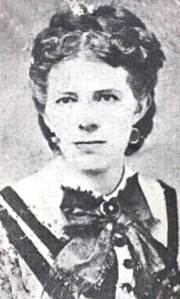
Brontë and her diary

“The haughty sadness of grandeur beamed out of her intent fixed hazel eye, & though so young, I always felt as if I dared not have spoken to her for my life, how lovely were the lines of her small & rosy mouth, but how very proud her white brow, spacious & wreathed with ringlets, & her neck, which, though so slender, had the superb curve of a queen’s about the snowy throat.”

On Jan. 21, 2011, the Morgan Library & Museum in New York City opened a fascinating exhibit, “The Diary: Three Centuries of Private Lives.” Introducing the exhibit were these thoughts:

“For centuries, people have turned to private journals to document their days, sort out creative problems, help them through crises, comfort them in solitude or pain, or preserve their stories for the future. As more and more diarists turn away from the traditional notebook and seek a broader audience through web journals, blogs, and social media, this exhibition explores how and why we document our everyday lives. With over seventy items on view, the exhibition raises questions about this pervasive practice: what is a diary? Must it be a private document? Who is the audience for the unfolding stories of our lives — ourselves alone, our families, or a wider group?”

Timeless questions … certainly legitimate ones for 21st century bloggers and tweeters. The exhibit, which unfortunately I wasn’t able to visit before its conclusion on May 21, featured work from the brightest stars of the literary galaxy. As quoted in the introductory essay, Henry David Thoreau aspired for his diary “to meet the facts of life — the vital facts — face to face.” Nathaniel Hawthorne and his wife co-authored their diary to celebrate their new married life together. “I do verily believe there is no sunshine in this world, except what beams from my wife’s eyes,” he wrote. “I feel new as the earth which is just born again,” his wife later wrote in response.

St. Augustine and Anais Nin … Walter Scott and Tennessee Williams … William S. Burroughs and Charlotte Brontë … A prisoner from World War II and a police rescue worker from the 2001 World Trade Center attack — the range of work and creativity and purpose is just as astounding as the authors and the beautiful words this exhibit so elegantly celebrated.

The exhibit lives on online. In addition to the introductory essay, the website offers images of diary pages, diary excerpts, and essays on the authors.

Also included are audio readings of selected diaries by actors Paul Hecht and Barbara Feldon. Reading the diaries is, for me, a joy, but hearing them read to me is a special — and often quite romantic — experience.

This special series begins with Charlotte Brontë: “The haughty sadness of grandeur beamed out of her intent fixed hazel eye, & though so young, I always felt as if I dared not have spoken to her for my life, how lovely were the lines of her small & rosy mouth, but how very proud her white brow, spacious & wreathed with ringlets, & her neck, which, though so slender, had the superb curve of a queen’s about the snowy throat.”

Entries in this series:
Part 1: Introduction to the exhibit and Charlotte Brontë
Part 2: Frances Eliza Grenfell
Part 3: Sophia and Nathaniel Hawthorne
Part 4: Paul Horgan
Part 5: John Newton
Part 6: Mary Ann and Septimus Palairet
Part 7: Walter Scott
Part 8: Bartholomew Sharpe
Part 9: Tennessee Williams
Part 10: John Ruskin

Niche boutique’s grand opening

We’re excited to launch our men’s collection at Niche boutique’s grand opening party this Thursday at San Antonio’s Historic Pearl. It begins at 5:30 p.m.

10686629_10152587735128791_3911463796170606432_n

My wife and I are excited to launch our men’s collection alongside already amazing women’s collections at Niche boutique’s grand opening party at San Antonio’s Historic Pearl. The party is this Thursday and begins at 5:30 p.m.

I’m so proud of her.

Sophia Loren admits she was afraid Jayne Mansfield’s dress was ‘going to blow’ in infamous photo

IMG_2335

Joe Shere/mptvimages.com

Free Love Freefall

The revolutionaries were determined to make lasting changes to the various forms of sexual oppression they perceived. It remains to the current generation to ensure their still-blossoming accomplishments do not wither under cold conservative shadows.

IMG_1475

Allyn’s revolutionaries were determined to make lasting changes to the various forms of sexual oppression they perceived. It remains to the current generation to ensure their still-blossoming accomplishments do not wither under cold conservative shadows.
A review by Fernando Ortiz Jr.

*****

Discussed in the essay:

Make Love, Not War: The Sexual Revolution: An Unfettered History. By David Allyn. New York: Routledge, 2001. Pp. 381. $30.95

David Allyn’s Make Love, Not War intelligently and creatively tours a sexual renaissance that ebbed and flowed throughout the 1960s and 1970s, sparking changes of varying longevity throughout society. Latino and black Americans fought throughout this era for equal rights as citizens and for the freedom to pursue and fully embrace the American Dream. The general public’s gradual tolerance of public gay culture, the rise of swingers movements, the gaveling of obscenity trials, the publication of sex studies, and the embrace of the birth control pill all comprise for Allyn a sexual rights movement, a “revolution” that silenced some prudes, raised legal eyebrows, and brought America a few sultry steps closer to the fulfillment of “life, liberty, and the pursuit of happiness.”1

Allyn designates the early sixties to the late seventies as the era of the sexual revolution, and he links its progression to general economic health in the United States. They rise and fall together. He utilizes dozens of interviews with men and women — some identified and some under pseudonyms — thirty years after their revolution takes place. Sexual histories, sociological studies, essays, novels, and academic reports supplement his study of the birth control pill, lesbian empowerment, gay rights, fights over literary censorship, public excitement over sexually-charged theater and film works, nudist colonies, swinger parties, and the general struggle to strip shame away from anyone’s sexual life.

The revolution was a multi-pronged and disjointed effort that lurched toward sometimes unclear objectives. Critics may condemn Allyn’s book for its seemingly disorganized structure, but it actually properly reflects the messiness of a series of efforts to change social mores and personal prejudices. Allyn’s great strength as a writer is his ability to gracefully transition from one theme of the era to another.

If anyone wanted to read a new sex manual to improve their sex life, Allyn argues that the sexual revolution made that possible. If a gay man or woman wanted to add legal sexual escapades at a sex party into their urban lifestyle, the sexual revolution made that available. If upper and middle-class women wanted to control their fertility, swap their spouses with other couples, or find and buy a book filled with sexual imagery, the sexual revolution eased strictures, opened doors, and soothed public outrage. Americans could fully and freely explore their identities, fulfill their aspirations, find their limits, and live their lives. For almost everyone, Allyn explores, the sexual revolution provided the freedom from fear.2

Allyn is enamored with the term “revolution,” which is his theme as his historical tour widens its scope over American society. From the very beginning, Allyn credibly admits the duality of his terrain, of which some aspects “were not revolutionary at all but evolutionary.” The era’s development of the pill, the rise of the sexual book publishing industry, the debates over obscene literature, the stronger roles women secured for themselves in American society — all were inherited from earlier eras in American history, all far from original movements. He admits this duality and does nothing to compensate for its contradictory influence on his narrative structure except pair stories of triumph with stories of eventual defeat or threat.

The era’s legacy is a mixed success of progression and regression, like all revolutions in American history. American society generally accepts the use of birth control and the popularity of premarital sex, though religious leaders and worried parents still frown on the still-expensive pill. Uncensored pornography — from hard-core videos to the soft sensuality of Anais Nin — is ubiquitous in the online world and easily found in the most popular bookstores, though erotica still faces many “family-oriented” enemies. Celebrities, news organizations, the military, scientific organizations, national leaders, and students across the United States embrace homosexuality as a normal sexual orientation, gay rights for citizens and servicemen, gay adoptions, and gay unions. But legal recognition of gay marriages retains its legal and political polarizing effect.3

Not everything can change all at once. Not everyone is won over when new ideas, new bathing suits, new aspirations, and new freedoms dawn over the raucous American society. When it comes to sex, each citizen had to make his or her own personal journey. People change as they grow older. Love and desire bring their own contradictory and revolutionary effects on one’s understanding and acceptance of the world around them. Jealousy, lust, insecurity, and fear can easily disrupt carefully constructed arrangements among sexual partners.

His interviews with the revolution’s participants best capture these intimate journeys. However biased or self-conscious they may be three decades later, Allyn’s interviewees echo the bittersweet afterglow the revolution’s sunset left in their lives. One father remembered his son loudly declaring in an airport terminal that his mother took a shower with a male sexual friend. One humiliated teenager remembers when her sexually supportive father left condoms on every bed in case she wanted to have sex with her male guest. Allyn deserves credit for including the long, dark slopes of the era’s gleaming aspirations for sexual liberation. He mostly maintained his balance between giddy celebration of short-term sexual bliss and grim acknowledgement of the long-term emotional consequences.4

His book’s duality also demands answers to eternal historical questions: Do changes deserve to be considered revolutionary if they are not all long-lasting? Was the sexual blossoming in the sixties an aberration in social values, enough to be considered revolutionary, or was the real revolution comprised of religious attitudes and social frigidity that put in place decency laws, targeted erotic literature, oppressed gay communities, marginalized women, and put shame into the hearts and minds of millions of sexual beings? Perhaps Allyn’s era was simply a counter-revolution, an attempt to take further the romantic aspirations of early twentieth century struggles for gender equality, sexual freedom, a more-just democracy, and fulfilled personal desires. Perhaps Allyn’s era consisted of a series of moments when Americans again grappled with and consummated fundamental American ideals that the original revolutionary generation left their descendants in a different and better America to achieve.

The book’s focus is mostly on urban upper and middle-class Anglo citizens. Blacks, Latinos, and lower-class citizens are not part of this study, which leaves readers hungering for a greater variety of voices and experiences. However, his study is linked to the economic health of the U.S. When the economy worsened in the seventies, the sexual revolution sputtered, which suggests the sexual revolution belonged only to those who could afford its luxurious promise. Impoverished minorities had larger and more immediate problems to worry about — how to feed their children and themselves, where to find work, how to avoid or at least endure an oppressive and heartless society — that they could not be concerned about swinger parties, literary censorship, or lesbian rights.

Overall, Allyn’s conflicted book is a valuable contribution to the study of postwar America. He brings together a detailed examination of various aspects of a sexual renaissance that benefited and benefited from other struggles for other freedoms. The arguments from this era came down — and still do — to eternal American issues: How much equality is necessary to fulfill our founding principles? How much are Americans entitled to? Where does private control — over our bodies, our gender, our children’s education, our moral principles — end and a democratic society’s standards begin? Allyn’s revolutionaries were determined to make lasting changes to the various forms of sexual oppression they perceived. It remains to the current generation to ensure their still-blossoming accomplishments do not wither under cold conservative shadows.


1. David Allyn, Make Love, Not War: The Sexual Revolution: An Unfettered History (New York: Routledge, 2001), 3-4. Allyn asserts that the every aspect of the sexual revolution “had an impact on how we as a nation have come to think of life, liberty, and the pursuit of happiness.”
2. Allyn, 4-5.
3. Allyn, 8, 295-296.
4. Allyn, 217, 297-299.

Kate Stone’s Civil War: Fairy castles in the air

Stone offers a slice of life in Oak Ridge, La., as her caretakers search for a window of safety to escort her back to Texas.

1863

From 2012 to 2015, Stillness of Heart will share interesting excerpts from the extraordinary diary of Kate Stone, who chronicled her Louisiana family’s turbulent experiences throughout the Civil War era.

Learn more about Stone’s amazing life in 1861, 1862, 1863, 1864, 1865 and beyond. Click on each year to read more about her experiences. You can read the entire journal online here.

(Photo edited by Bob Rowen)

Stone offers a slice of life in Oak Ridge, La., as her caretakers search for a window of safety to escort her back to Texas.

Oct. 15, 1864

Near Oak Ridge, La.

We have kept on the even tenor of our ways with no hairbreadth escapes by land or sea to ruffle the calm. There are still occasional reports of advancing Yankee raids, but all blow over and no Yankees yet, though this country is still defenseless. …

We have little company and pay few visits, but we enjoy the days, and the weeks fly by like magic — no startling events to mark them off. Capt. Wylie and Dr. Wylie are here. They amuse themselves during the day, but in the evening we all assemble, play chess or cards, and carry on long and animated discussions on all topics under the sun. All the older members of the family are very fond of argument and discussion and are thoughtful talkers and well educated, though one must know them some time before finding that last out.

We made a rule fining everyone for each lapse in grammar, which worked famously for awhile, until we found we would soon all be bankrupt in both purse and temper, and by tacit consent it was dropped and grammar is no more alluded to. Mrs. Templeton said she knew she would never be fined. She knew every rule in the book, but she was the first and most grievous offender and hated worst to be reported. … We lounge in rocking chairs building fairy castles in the air, mapping out lives of goodness and noble endeavor, until Mrs. Templeton rouses from her half-doze on the bed and sends us all to rest. …

Our pleasant days are drawing to a close as Mamma writes she will send Johnny at once for me, and we are looking for him every day. Capt. Brigham rode in from Monroe to tell us that the long expected tableau would come off the next evening and that he had come in to escort us out. Early the next morning we three girls and Sally McGraw with Jimmy, Capt. Wylie, and Capt. Brigham as outriders and the maid Henrietta bringing up the rear, made our way to Monroe under many difficulties. We had a most trying time after reaching there, owing to Capt. Brigham’s blundering. We did not enjoy the tableau as we were too worried and were thankful to be all safe at Mrs. Templeton’s next evening.

Oct. 30

The last time I shall write here. Johnny arrived with the carriage two days ago, and we start home tomorrow. This will end a most pleasant visit, or rather visitation, for I have been here more than three months. All the family have been unfailingly kind and have done all in their power to make me enjoy the time. I certainly have had a most charming visit and grieve to leave them. Then I shall have to break off two most promising flirtations. My only comfort is in thinking of the lovely trip Johnny and I are going to have a comfortable carriage well stocked with lunches, a good driver, strong mules, no hurry, and a lodging every night with friends, good roads, and fair October weather.

Recommended reading / viewing / listening

This week: Enduring sexism / LBJ and the Secret Service / Exercise and depression / The Roman Empire / The political Eva Longoria

IMG_1475

This week: Enduring sexism / LBJ and the Secret Service / Exercise and depression / The Roman Empire / The political Eva Longoria

Most of these great items come from my social media networks. Follow me on Twitter, Tumblr, LinkedIn, MySpace, and Facebook for more fascinating videos, photos, articles, essays, and criticism.

1. Jessica’s Feminized Atmosphere
By Jessica Williams | The Daily Show | Oct. 2
“Also, that’s redundant.”

2. L.B.J.’s Bravado and a Secret Service Under Scrutiny
By Michael Beschloss | The Upshot :: The New York Times | Oct. 2
“Not long after President Kennedy’s assassination, President Johnson chafed under his Secret Service protection.”

3. What made Japan’s deadly volcanic eruption so unpredictable?
By Judy Woodruff and Miles O’Brien | PBS NewsHour | Sept. 30
“More than 250 people were out hiking and enjoying a nice fall day, when a surprise eruption littered the mountain with falling boulders, thick smoke and piles of ash. At least 36 people were killed.”

4. This Is How Eva Longoria Is Trying to Win the Midterms
By Asawin Suebsaeng | The Daily Beast | Oct. 1
“From working behind the scenes in the midterms to making a new farm labor documentary, the former Desperate Housewife has emerged as a force to be reckoned with in liberal politics.”

5. How Exercise May Protect Against Depression
By Gretchen Reynolds | Well :: The New York Times | Oct. 1
“Exercise may help to safeguard the mind against depression through previously unknown effects on working muscles.”

6. The Elements of Style
By Sasha Weiss | The Sunday Book Review :: The New York Times | Oct. 3
“Watching other women, seeing how they’re dressed and how they pull it off, is the way most of us learn to become ourselves.”

7. Former Haiti president Duvalier dies
By Mike Wooldridge | BBC News | Oct. 4
“Duvalier was just 19 when in 1971 he inherited the title of “president-for-life” from his father, the notorious Francois ‘Papa Doc’ Duvalier. He was accused of corruption, human rights abuses and repression in his rule, which ended in a 1986 uprising.”

8. Catastrophic Coltrane
By Geoff Dyer | NYR Gallery :: New York Review of Books | Oct. 4
“The interest of recordings from this final phase — in which Coltrane’s playing became increasingly frenzied and the accompaniment more abstracted — lies partly in what they preserve and partly in any hints they contain as to where Trane might have headed next.”

9. The Aral Sea’s Disappearing Act
By Anna Nemtsova | The Daily Beast | Oct. 4
“Satellite photos show how the depredations of dictators have turned the world’s fourth largest inland sea into a poisonous desert.”

10. 40 maps that explain the Roman Empire
By Timothy B. Lee | Vox | Aug. 19
“Two thousand years ago, on August 19, 14 AD, Caesar Augustus died. … Under Augustus and his successors, the empire experienced 200 years of relative peace and prosperity. Here are 40 maps that explain the Roman Empire — its rise and fall, its culture and economy, and how it laid the foundations of the modern world.”

Kate Stone’s Civil War: The flower-wreathed scepter

Stone records the fall of Atlanta along with pitiful rumors of its victorious Confederate recapture. By now the ripples of great battles hardly disturb her social shores.

1862

From 2012 to 2015, Stillness of Heart will share interesting excerpts from the extraordinary diary of Kate Stone, who chronicled her Louisiana family’s turbulent experiences throughout the Civil War era.

Learn more about Stone’s amazing life in 1861, 1862, 1863, 1864, 1865 and beyond. Click on each year to read more about her experiences. You can read the entire journal online here.

(Photo edited by Bob Rowen)

Stone records the fall of Atlanta along with pitiful rumors of its victorious Confederate recapture. By now the ripples of great battles hardly disturb her social shores.

Sept. 27, 1864

Near Oak Ridge, La.

We hear of the lamentable fall of Atlanta and rumors of its recapture, which we trust may be true. There is no further fear of a Yankee raid as there are very few troops left at Goodrich’s Landing, and everyone seems to look for peace in the spring. …

An amusing letter from Missie Morris in which she utterly repudiates the idea of our giving up as “Old Maids” for two years yet, when she will be willing to lay down the flower-wreathed scepter of girlhood and don the badge of spinsterhood.

Capt. Gillispie came in two days ago and has kept the house in an uproar ever since. He is overflowing with fun and frolic but is rather too familiar and something rude. He does not improve on acquaintance. I fear he is fast, a perfect opposite to tiny Mr. Kurrie, who came with him. We thought him at first about twelve years old, so quiet and solemn. He really is twenty. …

Recommended reading / viewing / listening

This week: Holder’s exit / Earth’s magnetic flip / Cusack’s Hollywood / The Kennedy Style / Anti-psychopaths

IMG_2126

This week: Holder’s exit / Earth’s magnetic flip / Cusack’s Hollywood / The Kennedy Style / Anti-psychopaths

Most of these great items come from my social media networks. Follow me on Twitter, Tumblr, LinkedIn, MySpace, and Facebook for more fascinating videos, photos, articles, essays, and criticism.

1. America’s New War President
By Michael Hirsh | Politico Magazine | Sept. 23
“With a broad campaign against the Islamic State in Syria and Iraq, Obama has a chance to remake his legacy.”

2. What to expect from the Earth’s impending magnetic flip
By Annie Sneed | Scientific American and Salon | Spet. 26
“New data suggest the poles could be reversing for the first time in 780,000 years. Here’s how it affects you.”

3. Why Holder Quit
By Glenn Thrush | Politico Magazine | Sept. 25
“The backstory of how Obama lost his ‘heat shield.’”

4. The 8 Best Pocket Parks In Manhattan
By Rebecca Fishbein | The Gothamist | Sept. 25
“[S]mall, public-accessible pocket parks that dot the city are an oft-overlooked joy, a temporary respite from the hustle and bustle of the urban artery.”

5. The Barbarians Within Our Gates
By Hisham Melhem | Politico Magazine | Sept. 18
“Arab civilization has collapsed. It won’t recover in my lifetime”

6. Bad Moon Rising
By David J. Rothkopf | Voice :: Foreign Policy | Sept. 24
“Behind the scenes at the U.N., a more unsettling story emerges of Syria, Iraq, and fighting the Islamic State.”

7. John Cusack: ‘Hollywood is a whorehouse and people go mad’
By Henry Barnes | The Guardian | Sept. 25
“After 25 years as a star, John Cusack has seen the movie industry’s dark side close up — from its misogyny to its treatment of young actors.”

8. Who Would Donate a Kidney to a Stranger? An ‘Anti-Psychopath’
By Melissa Dahl | Science of Us :: New York Magazine | Sept. 25
“If the dark, scary end of the caring continuum is inhabited by psychopaths, way down at the other end [are] ultra-do-gooders who are extraordinarily compassionate, prosocial, and empathetic.”

9. Evolution: Why don’t we have hairier faces?
By Jason G. Goldman | BBC Future | Sept. 26
“Mark Changizi … has an intriguing alternative explanation. … It’s because we’re walking, talking, breathing ‘mood rings’”

10. Nixon and Age: The Kennedy Style
American Experience :: PBS | November 2011
“The Nixon-Kennedy debates would forever change the way Americans chose their presidents.”

Videos I Love: Musical medicine

This music never failed to re-energize me.

img_2886

This music never failed to re-energize me.

I’m fighting off a cold. I haven’t been sick in more than year. I spent today pushing myself (and only occasionally succeeding) to compose a literature review so I’m not looking at an unfinished thesis in early November and wondering how I wasted six months.

I’ve dutifully taken medicine and had lots of juice and warm pho (noodle soup with chunks of eye round steak and brisket, lemon chunks, cilantro, basil leaves, and bean sprouts).

I’ve also enjoyed some oldies to keep me awake, just slightly dancing with my shoulders so no one notices. This music video has always been one of my favorites. I love how he drops in Tupac so perfectly.

Back to work.

A copyright issue required the creator of the video below to mute the sound. Fortunately, the remix survives here.

*****

I’m occasionally sharing some thoughts on a few videos that make me smile, make me think, or preferably do both. Read more from this special series here.

Kate Stone’s Civil War: Callous to suffering and death

Stone feels adrift throughout an era where the past is too painful to remember and the future is too horrific to imagine.

KS55

From 2012 to 2015, Stillness of Heart will share interesting excerpts from the extraordinary diary of Kate Stone, who chronicled her Louisiana family’s turbulent experiences throughout the Civil War era.

Learn more about Stone’s amazing life in 1861, 1862, 1863, 1864, 1865 and beyond. Click on each year to read more about her experiences. You can read the entire journal online here.

(Photo edited by Bob Rowen)

Hidden beneath her upper-class sneering at a Texas barbecue, Stone grimly illustrates the wartime reality of senseless death and the emotional and psychological numbing required to endure it from one day to the next. She feels adrift throughout an era where the past is too painful to remember and the future is too horrific to imagine.

June 26, 1864

Tyler, Texas

This has been a busy week, clouded by the thought of Jimmy’s departure. We are finishing off his clothes and renovating ours, for we will go with him as far as Monroe [La.]. …

We have had our own trials patching up our clothes. We had no idea we were so near being ragamuffins until we took an exhaustive survey of our underclothes. Oh, for bolts and bolts and more bolts of white domestic. If Mamma’s trip proves successful, we will be able to better our condition as regards habiliments. Mamma is having quite a store of Texas goodies made up … to solace the inner man while on the road. …

Friday there was a grand Masonic celebration that we, in common with all the town and county, turned out to see. Mr. Michele took possession of our party and Sally Grissman and established us in the most pleasant and also most conspicuous seats and then devoted himself to our entertainment. Lt. Alexander and Dr. McGregor took possession of a nearby window, and we all had a merry morning but did not profit by the speeches. A large crowd and barbecue dinner that Mr. Michele insisted was not clean enough for us to eat. “Why,” said he, “should we dine with plebians?” I hope no native heard him. We went out, as Mamma said, “to see the animals feed.” Then we (the select few) returned home to dinner …

That night there was a party given at the hotel by Col. Anderson. He is in command, I think, of the Ordnance Department here and is an old army officer. His wife is charming. Emily and I went, to our surprise, and spent a charming evening. It was a most mixed and odd-looking crowd. Neither Emily nor I possessed a party dress, but we did not bring discredit on the swamp and looked well enough.

I did not think two months ago I would ever dance or care to talk nonsense again. But one grows callous to suffering and death. We can live only in the present, only from day to day. We cannot bear to think of the past and so dread the future. The refugees remind me of the description of the life of the nobility of France lived during the days of the French Revolution thrusting all the cares and tragedies of life aside and drinking deep of life’s joys while it lasted. This was our debut in Tyler society, and without self-flattery I may say we were quite a success.

I took a buggy ride yesterday with Dr. McGregor, who has a fine span of horses, and we just flew up and down (especially down) the hills. Enjoyed it highly, though I did think we would capsize on every hill we rushed down. On our return all the boys met us at the gate and could scarcely contain themselves at such a splendid opportunity for teasing, but the dread of future punishment at my hands kept them fairly in bounds. …

Behind The Wall

Tabletop Games

Rebecca Aguilar

#CallingAllJournalists Initiative | Reporter | Media Watchdog | Mentor | Latinas in Journalism

Anna Fonte's Paper Planes

Words, images & collages tossed from a window.

Postcards from Barton Springs

Gayle Brennan Spencer - sending random thoughts to and from South Austin

The Flask Half Full

Irreverent travelogues, good drinks, and the cultural stories they tell.

Government Book Talk

Talking about some of the best publications from the Federal Government, past and present.

Cadillac Society

Cadillac News, Forums, Rumors, Reviews

Ob360media

Real News That Matters

Mealtime Joy

bringing joy to family meals

Øl, Mad og Folk

Bloggen Øl, Mad og Folk

a joyous kitchen

fun, delicious food for everyone

A Perfect Feast

Modern Comfort Food

donnablackwrites

Art is a gift we give ourselves

Fridgelore

low waste living drawn from food lore through the ages

BeckiesKitchen.com

MUSINGS : CRITICISM : HISTORY : NEWS

North River Notes

Observations on the Hudson River as it passes through New York City. The section of the Hudson which passes through New York is historically known as the North River, called this by the Dutch to distinguish it from the Delaware River, which they knew as the South River. This stretch of the Hudson is still often referred to as the North River by local mariners today. All photos copyright Daniel Katzive unless otherwise attributed. For more frequent updates, please follow northriverblog on Facebook or Instagram.