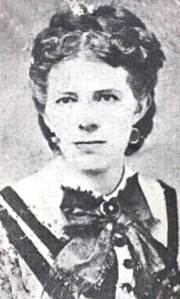
Loreta’s Civil War: Swaggered about in fine style

Velazquez participates in the Civil War’s first major battle, the Battle of Bull Run. In retrospect, she admits that the Confederate victory was an empty one.

KS20

Throughout 2016 and 2017, Stillness of Heart will share edited excerpts from the extraordinary memoir of Loreta Janeta Velazquez, who chronicled her adventures throughout the Civil War — either as herself, as a Confederate spy, or in disguise as Confederate Lt. Harry T. Buford. She fought and led men in terrible battles, fell in love, bore and lost children, and traveled throughout the U.S. and Europe, ultimately fulfilling her childhood dream of a rich and adventurous life.

You can read the entire 1876 memoir online here. Learn more about Velazquez (and the incredible documentary film Maria Agui Carter made about her) here.

Part 11: Velazquez participates in the Civil War’s first major battle, the Battle of Bull Run. In retrospect, she admits that the Confederate victory was an empty one.

******

As the hot July sun mounted upwards through the almost-cloudless sky, and the mists of the morning disappeared before His ardent beams, the approach of the enemy could be distinctly traced by the clouds of dust raised by the tramping of thousands of feet, and, once in a great while, the gleam of the bayonets was discerned among the heavy clumps of timber that covered the undulating plain which the commanders of the armies of the South and the North had selected for their first trial of strategy and of strength. The desultory firing with which the battle opened soon was followed by rapid volleys, and ere the morning was far advanced, the sharp rattling of the musketry, the roar of the artillery, and the yelling of the soldiers, developed into an incessant tumult; while along the entire line, for miles, arose clouds of yellow dust and blue smoke, as the desperateness of the conflict increased, and the men on either side became excited with the work they had in hand.

It soon became apparent that the position in which fortune had placed me was to be the chief point of the Federal attack, and that my immediate comrades would be compelled to bear the brunt of the battle. … The Federal artillery, which sent its shell showering over us, and bursting in our ranks, creating terrible slaughter, was commanded by an acquaintance of mine, Ricketts. I did the best I could to give him as good as he sent, for the sake of old times when we were friends, and when neither of us imagined that we would some day be opposed to each other on the battlefield. The Confederates, although greatly outnumbered, succeeded for a long time in maintaining their ground, in spite of the odds against them, and again and again pierced through the enemy’s lines. Our men suffered terribly … Bee was compelled to give the order for us to fall back, the enemy having been heavily reinforced by the commands of Sherman and Keyes.

The Federals, doubtless, thought that the victory was theirs when they saw us in retreat. It was a terrible moment, and my heart failed me when I heard Bee’s order. I was wrought up to such a pitch of excitement while the fight was going on that I had no comprehension whatever of the value of the movements being made by the different commanders. I only saw the enemy before me and was inspired by an eager desire to conquer him. I forgot that I was but a single figure in a great military scheme; and as, while we stood face to face with the foe, every man on the other side became for the moment my personal enemy, whom I was furious to overcome, so, when by the general’s command, we were compelled to fail back, I was overcome with rage and indignation, and felt all the shame and mortification of a personal defeat.

I soon, however, saw the object Bee had in view in his momentary retreat, when he rallied his men in the rear of a house, and gave them a breathing spell. … This movement on the part of Bee afforded me an opportunity to cool off a little, and to observe the ebb and flow of the tide of battle more critically. I ere long was able to understand the general plan upon which the action was being conducted, and to view the combatants as masses to be wielded in a certain way for the accomplishment of definite objects, and not as a mere howling mob, bent only on a momentary success. From this point, therefore, the battle became more interesting than ever, and while nonetheless exciting, simply as a personal adventure — for my spirit rose and sank as victory or defeat seemed likely to rest upon our banners — I was more under the dominion of my reason, and less of my passions, than I had been when the fight commenced.

Bee rallied his men, with a voice of thunder, saying, “My boys, at them again! Victory or death! See how Jackson stands there like a stone wall!” This last expression seemed to please the men mightily, for they took it up immediately; and with a cheer for “Stonewall” Jackson, they made another dash at the enemy.

At noon the battle was at its fiercest, and the scene was grand beyond description. The simile that came into my mind was the great Desert of Sahara, with a broiling sun overhead, and immense whirlwinds of sand rolling along over the plain between heaven and earth. The red dust from the parched and sun-dried roads arose in clouds in every direction, while the smoke from the artillery and musketry slowly floated aloft in huge, fantastic columns, marking the places where the battle was being fought with most bitterness. The dry and motionless air was choking, to the nostrils, from the dust and smoke which filled it, while the pitiless July sun poured its hottest rays upon the parched and weary combatants. It was a sight never to be forgotten — one of those magnificent spectacles that cannot be imagined, and that no description, no matter how eloquent, can do justice to. I would not have missed it for the wealth of the world and was more than repaid for all that I had undergone, and all the risks to my person and my womanly reputation that I incurred, in being not only a spectator, but an actor, in such a sublime, living drama.

At the moment when Bee rallied his men for another grapple with the enemy, I would have given anything could I but have had the strength to make a clean sweep of our opponents, and, by a single blow, end the great struggle. Looking towards the hill which, in the morning, had been occupied by three of our bravest and best generals — Beauregard, Johnston, and Bonham — and their staffs, I saw it covered with men fighting with desperation; all along the valley were dense clouds of dust and smoke, while the yells of the excited soldiery, and the roar of the guns, were almost deafening. … The fiercer the conflict grew the more my courage rose. The example of my commanders, the desire to avenge my slaughtered comrades, the salvation of the cause which I had espoused, all inspired me to do my utmost; and no man on the field that day fought with more energy or determination than the woman who figured as Lt. Harry T. Buford. …

The expression constantly heard, that one Southerner could whip five Yankees, was not mere bounce, but it really represented what nearly everybody thought; and very few had any doubt as to the speedy end of the conflict that had been begun, or that it would end in the recognition of Southern independence. It took time to convince our people that they had no holiday task to perform; but the difficulty of effectively forcing the Federal lines, in spite of victories won by Confederate arms in the field, combined with the privations caused by the constantly increasing efficiency of the blockade, at length compelled all classes of people at the South to realize the fact that they had a tough job on their hands, and that if they expected to obtain their independence it would be necessary for them to work, and to work hard for it.

In many respects, the [Confederate] victory at Bull Run was anything but a benefit to the South. The panic which overtook the Federal soldiers, so far from communicating itself to the people of the North, only inspired them with a determination to wipe out the disgrace, and they hurried men to the front with such rapidity and in such numbers, that they soon had a force in the field which compelled the Confederates to act upon the defensive, and to think about the means of resisting invasion instead of attempting to assume the aggressive. On the other hand, not only the men who fought at Bull Run, but the whole South, were greatly elated at having won the first great battle; and, overestimating the importance of their victory, they were more than ever impressed with the idea that whipping the Yankees was a remarkable easy thing to do.

The victory at Bull Run, while it elated the whole Southern people, and very greatly excited their hopes and expectations, was most demoralizing to Richmond, to which city the capital of the Confederacy had been removed a short time before the battle came off. Crowds of soldiers, officers, and privates thronged the streets, when they ought to have been on duty in the field; while innumerable adventurers, male and female, were attracted to the seat of government in the hope of making something out of the war, careless of what happened so long as they were able to fill their pockets. Money was plenty, entirely too plenty, and the drinking-saloons, gambling-houses, and worse resorts, reaped a rich harvest. For a time all went merrily; but after a while, as month after month wore away, and no substantial fruits of our brilliant victory were reaped, and the prospect of a severe contest became every day more decided, those who, like myself, had their hearts in the cause, began to be impatient and disgusted at the inactivity that prevailed, and were disposed to do a good deal of growling. I confess that I enjoyed the excitement of life in Richmond at this period hugely for a time, but I soon had enough of it, and was glad to get away.

After the battle of Bull Run I did as much tall talking as anybody, and swaggered about in fine style, sporting my uniform for the admiration of the ladies, and making myself agreeable to them in a manner that excited the envy of the men, and raised me immensely in my own esteem; for I began to pride myself as much upon being a successful lady’s man as upon being a valiant soldier. …

Not being successful in getting the kind of appointment I desired at Richmond, I concluded to try my luck elsewhere. I went to Danville, and remained a couple of days, and on my return to Richmond obtained a pass and transportation for the West. When I got as far as Lynchburg, however, I changed my mind, owing to meeting some of the boys from Leesburg, who persuaded me to go there with them, as there was every prospect of another fight coming off soon. This suited me exactly, and to Leesburg I accordingly went, with a full determination to take a hand in a battle if one did come off. The fight did occur, although not so soon as I expected or wished, and I played my part in it as successfully as I had done at Bull Run, In the mean time, however, I splurged around Leesburg in fine style, and enjoyed myself immensely, being quite as successful as I had been in other places in winning the regards of the members of my own sex, not one of whom appeared to have the slightest suspicion that I was other than I pretended to be.

One young lady in particular, Miss E., showed a marked regard for me; and as she was a very charming girl, our acquaintance would probably have developed into a decided attachment, had I not been sailing under false colors. I was sorry that I could not reciprocate, in a proper manner, the very evident partiality she displayed towards me; and I more than half regretted that I permitted matters to go as far as I did, when I found what an impression I was making on her susceptible heart. It was necessary for me to sustain the character I had assumed, of a dashing young officer; and, situated as I was, it was important that I should make myself as agreeable as possible to the members of my own sex. Apart from this, however, much of the male society into which I was thrown was so very disagreeable to me, that I was glad to escape from it by seeking that of lady friends. It afforded me some amusement, too, to carry on a bit of a flirtation with a nice girl; and was very much tempted to entertain myself in this manner, without reflecting very deeply as to the consequences. I am very willing to admit that I ought not to have acted as I did in this, and some other similar cases; and if anything should occur to induce me to assume male attire again, I should carefully avoid making love to young ladies, unless I had occasion to do so for the immediate furtherance of my plans. My error in allowing myself to indulge in flirtations with my own sex, arose from thoughtlessness, and from a desire to play my part to the best advantage; and I am sure my readers will forgive me, as I hope the young ladies, whom I induced to indulge false expectations, will, when the publication of this narrative makes known to the world the whole truth about the identity of Lt. Harry T. Buford, C.S.A.

I met Miss E., by accident, in a store, and she was introduced to me by a young dry goods clerk, with whom I had struck up an acquaintance. After a little conversation on indifferent subjects, she gave me a very pressing invitation to call on her. I said that I would do myself the honor, and accordingly put in an appearance, dressed in my best, at her residence. She received me with many smiles and with great cordiality, and introduced me to her father and mother. As I noticed that the old people were rather inclined to be a little cool, and evidently did not regard me with overmuch favor, I cut short my visit, and, politely bowing myself out, determined, in my own mind, never to enter the house again. Had I been a man, the conduct of the parents would probably have spurred me to court the favor of the daughter with more pertinacity than ever. I have noticed that parental opposition to a young man generally has this sort of stimulating effect upon him; but, being a woman, I did not look at the thing exactly from a masculine point of view, and, as the French say, Lejeuri’en valait jxis la chandelle. I was sufficiently piqued, however, to accept any advances the young lady might make with some degree of favor, and to revenge myself upon the old people, by making myself intensely agreeable to the daughter, in spite of them. When Miss E., therefore, showed a very marked disposition to continue our acquaintance. …She then informed me that, if I wished, I could see her at her cousin’s, and as she seemed to be exceedingly anxious to have me call upon her again, I consented to do so. As we walked up the street together she pointed out her cousin’s house, and I made an appointment to meet her there the next day, at five o’clock. …

I was punctual in keeping my appointment with Miss E. … she was even more cordial in her manner towards me than on the previous occasions when we had met. She asked me innumerable questions about myself, where I was from, who were my parents, and seemed to be particularly anxious to find out all about me. I made up a story that I thought was suited to the occasion and the auditor; and, among other things, told her that I was the son of a millionaire, that I had joined the army for the fun of the thing, and that I was paying my own expenses. This seemed to make a great impression, on her; and, with a very significant smile, she said she wished that the war would soon end, and that I would settle permanently in Leesburg.

This was a rather broad hint, and I could scarcely refrain from laughing at it; but restraining myself, and keeping my countenance straight, I asked, “Why do you take such a fancy to me, Miss E., when there are so many elegant, accomplished, and wealthy young men in Leesburg, with whom you have been acquainted for along time? You know nothing whatever of me.”

“It won’t be hard for us to become better acquainted,” she replied.

‘”Well,” said I, “I don’t want to deceive you; but the fact is, I am as good as married already,” and producing a young lady’s photograph, which I had in my pocket, added, “I expect to be married to this lady as soon as the war is over.”

She turned pale at this, and the tears sprang to her eyes, while I could not but feel regret at having permitted the matter to go thus far. For a time neither of us spoke; and at length, to put an end to a scene that was becoming embarrassing to both of us, I arose, and, extending my hand, said that I must bid her good evening. She looked at me in a pitiable sort of way, and said, “Will I never see you again?” I answered that she might, if I was not killed, but a battle was expected shortly, and it was my intention to take part in it. I then said adieu, and precipitately left her, not feeling altogether comfortable about the affair; but judging, as a woman, that the young lady would, before a great while, find herself heart-whole, and be none the worse for having permitted herself to become unduly interested in Lt. Harry T. Buford.

So ended my Leesburg flirtation; and a desire to avoid meeting Miss E. again, at least until she had had time to recover her equanimity, as well as my eager wish to see some more fighting, induced me to leave the town as soon as possible.


Recommended reading / viewing / listening

This week: Trump’s first 100 days? / Trump’s battle against Clinton / Freak kangaroo / Boots on the ground / Does Texas still matter in politics?

IMG_2092

This week: Trump’s first 100 days? / Trump’s battle against Clinton / Freak kangaroo / Boots on the ground / Does Texas still matter in politics?

Most of these great items come from my social media networks. Follow me on Twitter, Tumblr, LinkedIn, and Facebook for more fascinating videos, photos, articles, essays, and criticism.

1. Trump: The First 100 Days
By Matt Latimer | Politico Magazine | February 2016
“It’s time to start thinking about his — gulp — presidency.”

2. The Republican Horse Race Is Over, and Journalism Lost
By Jim Rutenberg | Mediator :: The New York Times | May 5
“[Y]ou have to point the finger at national political journalism, which has too often lost sight of its primary directives in this election season: to help readers and viewers make sense of the presidential chaos; to reduce the confusion, not add to it; to resist the urge to put ratings, clicks and ad sales above the imperative of getting it right.”

3. Trump’s deportation plan could slice 2 percent off U.S. GDP: study
By Luciana Lopez | Reuters | May 5
“About 6.8 million of the more than 11 million immigrants living in the United States illegally are employed, according to government statistics. Removing them would cause a slump of $381.5 billion to $623.2 billion in private sector output. …”

4. Yes, It’s Early, but Donald Trump Would Have Uphill Battle Against Hillary Clinton
By Nate Cohn | The Upshot :: The New York Times | May 3
“Trump’s biggest problem is that he would be the most unpopular major party nominee in the modern era, with nearly two-thirds saying they have an unfavorable opinion of him.”

5. Analysis: Texas Political Influence Nosedives in National Campaign
By Ross Ramsey | The Texas Tribune | May 3
“[I]t’s not only the state’s candidates who were getting knocked around in the race for president; the ideas that have propelled Texas Republicans for the past two decades — ideas like federalism and social conservatism — have taken a hit, too. Texas is getting clobbered this year.”

6. How Does Ted Cruz Return To The Senate?
By Abby Livingston | The Texas Tribune | May 3
“[W]hen he returns to the Senate with two and a half years left in his freshman term, he will enter hostile territory.”

7. Watch Kangaroo Crack Car Windshield In Terrifying Feet-First Leap
By Lee Moran | Huffington Post | May 3
“The driver unleashes a series of curse words as it hits the window.”

8. Q&A: When is a Boot on the Ground not a Boot on the Ground?
By Lolita C. Baldor | Associated Press | May 3
“The semantic arguments over whether there are American ‘boots on the ground’ muddy the view of a situation in which several thousand armed U.S. military personnel are in Iraq and Syria.”

9. Trump’s VP: Top 10 contenders
By Jonathan Easley | The Hill | May 5
“It could be a difficult undertaking, as some potential candidates might be hesitant to hitch their political future to a polarizing figure like Trump. But there will be plenty willing to roll the dice and join Trump’s historic outsider campaign.”

10. History’s Lessons in Crisis Management
By Michael Beschloss | HistorySource :: The New York Times | July 2014
“A student of history, as well as a sardonic, self-protective political operator, J.F.K. was always attuned to the possibility that some unforeseen event could quickly send history into an unwanted direction.”

Recommended reading / viewing / listening

This week: Henry Kissinger / George Washington and whiskey / Scorsese’s love for the Rolling Stones / Beyonce’s hot sauce / The drama of gravitational wave detection

IMG_1535

This week: Henry Kissinger / George Washington and whiskey / Scorsese’s love for the Rolling Stones / Beyonce’s hot sauce / The drama of gravitational wave detection

Most of these great items come from my social media networks. Follow me on Twitter, Tumblr, LinkedIn, MySpace, and Facebook for more fascinating videos, photos, articles, essays, and criticism.

1. The Dawn of a New Era in Science
By Matthew Francis | The Atlantic | Feb. 11
“By announcing the first detection of gravitational waves, scientists have vindicated Einstein and given humans a new way to look at the universe.”

2. Shut Up and Press Play
By Mary-Louise Parker | Esquire Classic | September 2006
“If you want to rock this girl (or yours), these are the songs you need to know”

3. William Shatner Opens Up About Deathbed Rift With Leonard Nimoy and Their Long Friendship
By Katie Wilson Berg | The Hollywood Reporter | Feb. 12
“Shatner spoke … about his respect for Nimoy as an artist and the mystery of why the man he calls ‘the only friend I ever had’ shut him out in the last years of his life.”

4. A History of Martin Scorsese’s Love Affair with the Rolling Stones
By Dan Reilly | Vulture | Feb. 12
“‘My films,’ the man himself once said, ‘would be unthinkable without them.’ ”

5. We All Need Beyonce’s Hot Sauce
By Goldie Taylor | The Daily Beast | Feb. 8
“It’s a flavorful essence — proud, black, and full of social justice.”

6. InstaTexas: The Stars At Night…
By Jordan Breal | Texas Monthly | Feb. 11
“Are big and bright — and ready for their close-up.”

7. George Washington, the Whiskey Baron of Mount Vernon
By Michael Beschloss | The Upshot :: The New York Times | Feb. 12
“It was not exactly in keeping with Washington’s public image to enter the whiskey trade.”

8. Gravitational Waves Exist: The Inside Story of How Scientists Finally Found Them
By Nicola Twilley | Elements :: The New Yorker | Feb. 11
“It took years to make the most sensitive instrument in history insensitive to everything that is not a gravitational wave. Emptying the tubes of air demanded forty days of pumping. The result was one of the purest vacuums ever created on Earth, a trillionth as dense as the atmosphere at sea level.”

9. Henry Kissinger: Good or Evil?
Politico Magazine | October 2015
“10 historians assess the controversial statesman’s legacy”

10. T.R.’s Son Inspired Him to Help Rescue Football
By Michael Beschloss | HistorySource :: The New York Times | August 2014
“T.R.’s intervention … helped lead to … the enforcement of new rules, which included the forward pass, a neutral zone at the line of scrimmage, another referee on the field and later prohibitions against brutal maneuvers like kneeing and punching opponents by using locked hands.”

Kate Stone’s Civil War: The entire special series

Read Kate Stone’s amazing stories as she defiantly faces Union soldiers, escapes across a Louisiana swamp, falls in love with Texas, and watches the Civil War rip her country and her family apart.

1862

From May 2012 to November 2015, a special series from Stillness of Heart shared excerpts from the extraordinary diary of Kate Stone, who chronicled her Louisiana family’s turbulent experiences throughout the Civil War era.

She defiantly faced Union soldiers, escaped across a Louisiana swamp, fell in love with Texas, and watched the Civil War rip her country and her family apart.

The entire series of excerpts is collected here.

Learn more about Stone’s amazing life in 1861, 1862, 1863, 1864, 1865 and beyond. Click on each year to read more about her experiences. You can read the entire journal online here.

(Photo edited by Bob Rowen)

From 1861
May 15: Death in defense of the South
June 5: The stir and mob of angry life
June 18: Whipped unmercifully
July 1: They thought me so ugly
July 4: The blood of her children
July 26: Gallantly fought and won
Aug 24: The fevers
Sept. 27: The war inches closer
Oct. 19: Gladden our hearts
Nov. 27: The noble, gentle heart
Dec. 22: Rainy days

From 1862
Jan. 6: Sad Christmas
Jan. 8: Happy birthday
Jan. 16: They close in and kill
Feb. 1: The little creature
Feb. 20: Victory will be ours
March 1: A perfect love of a lieutenant
May 9: Burn our cities
May 22: Fashion is an obsolete word
May 23: The sleep that knows no waking
June 6: Trembling hearts
June 20-30: Capable of any horror
July 5: The fire of battle
Aug. 5: Beyond my strength
Sept. 23: Tragedy after tragedy
Oct. 1: His sins against the South
Nov. 7: A lady’s favors
Dec. 3: She was heartbroken

From 1863
Jan. 1: Preparing to run
March 2: Hoodoo woman
March 11: It made us tremble
March 22: The pistol pointed at my head
April 10: Tears on my cheek
April 15: A horrid flight
April 21: The greatest villian
April 26: Flaming cheeks and flashing eyes
April 27: The glory of the family
May 2: His father’s sins
May 3: Baffled beasts of prey
May 22: Useless to resist
May 23: Southern hearts
June 3: Like mad demons
June 15: On the road for Texas
July 7: The dark corner
July 12: The dirtiest people
July 16: Scowling, revengeful faces
July 26: Despondent and chicken-hearted
July 29: Makes us tremble for Texas
Aug. 3: Lose our scalps
Aug. 10: Conquer or die
Aug. 16: My pen is powerless
Aug. 30: They call us all renegades
Sept. 1: It makes us shiver
Sept. 14: Years of grinding toil
Sept. 20: Destroyed by the Yankees
Oct. 2: Two distressed damsels
Oct. 8: This is too disgraceful
Oct. 29: The heart of a boy
Nov. 1: Credulous mortals
Nov. 7: A fear of bad news
Nov. 13: Pride must have a fall
Nov. 15: So little to eat
Dec. 10: Nobly and fearlessly
Dec. 12: Alone in a strange land
Dec. 19: A charming little woman
Dec. 24: A sad 1863 ends

From 1864
Jan. 4: A noted flirt
Jan. 7: Trouble and distress
Jan. 13: The first desideratum
March 8: The mournful whistle
March 20: The petted darling
April 15: A besom of destruction
May 5: The easy conquest of Texas
May 7: To every young lady
May 18: To kill and destroy
May 25: Our best fancy yellow organdies
May 29: That land of desolation
June 1: The breath of flowers
June 14: Strangers in a strange land
June 19: Those terrible battles
June 26: Callous to suffering and death
Aug. 23: We enjoy our ease
Sept. 2: Lazy and languid
Sept. 5: One grand holocaust
Sept. 10: Too disgraceful if true
Sept. 27: The flower-wreathed scepter
Oct. 15: Fairy castles in the air

From 1865
Jan. 29: Kindly bestow them
Feb. 1: Our soldiers were powerless
Feb. 12: One of life’s greatest trials
Feb. 13: Peace blessed peace
Feb. 15: My escorts were disgusted
Feb. 21: Our only hope for peace
March 3: The most enjoyable life
March 9: Full of life and fun
March 24: Eager for a fight
March 30: Its spring decoration
April 1: Out of time
April 7: A blow on my heart
April 16: He would do anything
April 23: God spare us
May 7: Lounged and gossiped
May 9: We fear it cannot last
May 15: We will be slaves
May 17: Restless and wretched
May 20: A fever of apprehension
May 21: A piece of amusement
May 27: Only sadness and tears
May 31: The grand crash
June 12: Words are powerless
June 25: Civilization commences again
July 2: He deserves killing
July 13: It is unavoidable
July 18: A man-flirt is detestable
Aug. 14: No disorder
Aug. 26: Astonish the natives
Sept. 3: Our pleasant Tyler life
Sept. 11: The very poorest people
Sept. 21: A state of insubordination
Oct. 10: The bitterness of defeat
Nov. 16: At home again
Nov. 17: How many idle hours

Epilogue, from 1867 and 1868
I was young again

Kate Stone’s Civil War: I was young again

Stone’s last three entries in her diary are from September 1867 and 1868. They form a somber epilogue to her chaotic journey. They capture a bitter reflection of a shattered Southern slaveholding society, adrift, confused, and afraid of a world in which they no longer rule.

KS10

From 2012 to 2015, Stillness of Heart will share interesting excerpts from the extraordinary diary of Kate Stone, who chronicled her Louisiana family’s turbulent experiences throughout the Civil War era.

Learn more about Stone’s amazing life in 1861, 1862, 1863, 1864, 1865 and beyond. Click on each year to read more about her experiences. You can read the entire journal online here.

(Photo edited by Bob Rowen)

Stone’s last three entries in her diary are from September 1867 and 1868. They form a somber epilogue to her chaotic Civil War journey. They capture a bitter reflection of a shattered Southern slaveholding society, adrift, confused, and afraid of a world in which they no longer rule.

Read her first entry in this series here.

Sept. 22, 1867

Brokenburn

A long silence and a year of hard endeavor to raise a crop, reconstruct the place with the problem of hired labor, high water, and cotton worms. Mamma had little trouble in getting advances in New Orleans to plant. Cotton is so high that merchants are anxious to advance to put in a crop, and there is much Northern capital seeking investment in that field. … The Negroes demanded high wages, from $20 to $25 for men, in addition to the old rations of sugar, rice, tobacco, molasses, and sometimes hams. Many of the old hands left, and My Brother went to New Orleans and brought back a number of ex-Negro soldiers, who strutted around in their uniforms and were hard to control. I was deadly afraid of them.

During the spring while Mamma and I were in New Orleans (Mamma on business and she took me for my pleasure), and Uncle Bo and My Brother and Jimmy were away for a few hours, Johnny had a fight with a young Negro in the field, shot and came near killing him, and was mobbed in return. Johnny would have been killed but for the stand one of the Negroes made for him and Uncle Bo’s opportune arrival just as the Negroes brought him to the house a howling, cursing mob with the women shrieking, “Kill him!” and all brandishing pistols and guns. It came near breaking up the planting, and it is a pity it did not as it turned out. Johnny had to be sent away. He was at school near Clinton [Miss.] and the Negroes quieted down and after some weeks the wounded boy recovered, greatly to Johnny’s relief. He never speaks now of killing people as he formerly had a habit of doing. He came home when school closed and there was no further trouble.

Then the water came up and we were nearly overflowed. The cotton planted was very late, and when it was looking as luxuriant and promising as possible and we saw ease of mind before us, the worms came. In a few days the fields were blackened like fire had swept over them. We made about twenty bales and spent $25,000 doing it. What most distresses me is that none of that money went for our personal comfort. All of it went to the Negroes. Mamma would buy only bare necessaries for the table and plainest clothes for the family. Not a luxury, no furniture, carpets, or anything. We are worse off for those things than even in Texas and such a sum spent! But Mamma said it was not honest to spend the money on anything but making the crop. All in this section have suffered in the same way, and for awhile they seemed stunned by their misfortunes. But now the reaction has come, and all are taking what pleasure offers.

Old neighbors and new ones have come in and all seemed to be anxious to be together and talk over their trials and tribulations. There has been much visiting and various picnics and fish frys. I would not go at first. I felt like I did not want to see anybody or ever dance again. I felt fully forty years old, but Mamma made me go after a good cry. Once there, I was compelled to exert myself, and soon I was enjoying it all. The burden of some of the years slipped from my shoulders, and I was young again. It was pleasant to talk nonsense, to be flattered though one knew it was flattery, and to be complimented and fussed over. So since then, Mamma, the boys, and all of us have been going to everything and have found even poverty in company more bearable than when suffered alone. …

September 1868

Rose Hill

In January My Brother rented this place knowing that Brokenburn would be again overflowed, and we moved out the latter part of the month. My Brother lost money again last year planting, and this year he determined to farm, planting a little of everything.

Johnny and Jimmy are both at home, and having nothing to do pulled off their coats and rolled up their sleeves and went to work to raise a crop of corn and potatoes for themselves. They have succeeded well as they will clear several hundred dollars.

We all regret so much Jimmy’s refusal to go buck to the hospital. … We fear he is throwing away the best chance of his life. The boys are so hot and tired when they come in from the fields. …

Sept. 28, 1868

Rose Hill

Mother has been in Vicksburg for a month on a visit to Aunt Sarah. It is her first outing for eighteen months. We hope it will benefit her — her health has been bad for more than a year. She is seldom out of bed more than a week at a time. It took great persuasion and the pointed urging of the whole family to induce her to go on this visit that Aunt Sarah has been begging her to take for months.

Jimmy is now on the wharf boat, Johnny at Omega, and Sister, My Brother, and I have it all our own way with but little to do. My Brother is making an excellent crop and is much more cheerful. …

How we wish Sister could be sent off to school for two years, but it has been impossible. No money. … Let us hope that now the current will change and success will be our portion, as the outlook is brighter than for three years.

This is a pleasant neighborhood … and everybody has been kind and polite about calling and coming in at all times. [The other day we] had another of those inevitable dances that have been given so often this summer. Mary and Katie Byrnes, Louise Meagher, and the other girls never seem to tire of them, but they wear me out — such a sameness. I doubt not that I am getting too old for such gaieties. The men and boys about here are so silly and boyish in conversation. …

It has been an enjoyable life since we came here in January. It is a pleasant enough cottage house, after we got it thoroughly cleaned. There is a lovely little flower yard and a splendid orchard, and the kindest and most sociable neighbors with various little entertainments and dances. …We have new books and papers ad libitum, a luxury we missed for years.

My Brother has just sent Mamma money to buy our winter clothes, and Sister and I are jubilant at the prospect of new dresses and bonnets. We have lived on very little of late years, little bought that was not absolutely necessary. They have dressed me better than any of the others. I have not wanted for anything indispensable for a young lady, but the only money I have spent really as I wished was five dollars of the ten Uncle Bob gave me when Mamma and I went to New Orleans three winters ago. …

What splendid fellows my brothers are. They are all so good to us and such handsome boys. Sister looks almost the same, scarcely older than three years ago. We hope she can go to school this fall and make her debut next fall. If not, I shall beg Mamma to put long dresses … on her and bring her out this winter. She has a gay cheerful nature, and I hope will have a happy girlhood.

Mamma’s bright hopeful spirit never change. She is us always the ruling power with us all, the center and light of our home. How much she will have to tell us on her return, and maybe Aunt Sarah will come with her.

Well, this is the last page of the book that has gone with me through all our journeying. Looking back to the beginning so many years ago, I realize what an unthankful, wicked girl I was not to be supremely happy. With youth, health, and everything surrounding me for comfort and happiness. with unmistakable blessings, I was yet an unsatisfied, discontented girl. It has taken trouble to teach me my faults, and how earnestly I try now to enjoy instead of repine, to be thankful instead of fault-finding. I will try always to see the silver lining to the cloud. All my life I have been surrounded with love and care, far more than I deserved, and I will try in the future to be more worthy of the blessings that brighten my pathway.

So this is the end — shall I ever care to write again?

FINIS

Kate Stone’s Civil War: How many idle hours

Stone’s last entry of 1865 is filled with sadness and gives hints of what a grim future holds. But amid those dark hints, a small flame of romance stirs.

KS43

From 2012 to 2015, Stillness of Heart will share interesting excerpts from the extraordinary diary of Kate Stone, who chronicled her Louisiana family’s turbulent experiences throughout the Civil War era.

Learn more about Stone’s amazing life in 1861, 1862, 1863, 1864, 1865 and beyond. Click on each year to read more about her experiences. You can read the entire journal online here.

(Photo edited by Bob Rowen)

Stone’s last entry of 1865 is filled with sadness and gives hints of what a grim future holds. But amid those dark hints, a small flame of romance stirs.

Nov. 17, 1865

Brokenburn

My Brother amd Jimmy are off hunting, fishing, and spying on the land. Little Sister is absorbed in papers a month old, and I, having made my afternoon toilet — a habit of old that I may as well forget now that evening visiting is a thing of the past — have literally nothing to do and nothing to read except Shakespeare, and one cannot read him all the time. We certainly conned that book in Texas and on our various carriage trips. Mamma and Johnny should nearly know it by heart. There is no resort but scribbling. How many idle hours this book has filled.

Uncle Bob is the best old darkie. He has done the best he could to care for things and is as humble and respectful as ever. Every now and then he brings up presents of candy, raisins, and nuts. Aunt Laura’s silver service was buried in the yard, and Uncle Bob in walking one day stepped into a hole. He investigated and found the barrel head had decayed and sunken in. He did not say anything as the Yankees were on the place at the time. He quickly covered it up and that night slipped out and took it to his house, carefully hiding it, but it became noised about among the Negroes and a few spoons were stolen. I suppose his wife, Mary Ann, told as she is the real typical free darkie. The next day he packed the silver all up and took it down to Mrs. Graves to keep. He said he could no longer care for it, and now we have it all. He is the only Negro we know that would not at once on finding it have given or sold it to the darkies. He wants to rent some of the land and plant for himself next year. Mamma will let him have the land rent free. He sold his last cotton for $1 a pound. I wish we had a thousand bales.

Mamma should be back today. I wonder what she will bring us. We bought our first piece of Yankee finery in Shreveport, a broad black belt with an immense buckle for me.

In camping out this trip, we had every appliance for camping, and people who like camping would have found it pleasant. …

Shreveport seemed nearly as busy a place as New Orleans in the old times. … From there to Judge N. Richardson’s, the prettiest place on Bayou DeSaird. How more than comfortably they live in that stately comfortable home with the beautiful yard with its trees and shrubbery, splendid orchard, and well-worked garden, and with all the old servants and the most lavish table. … Lt., or Mr. Holmes now, came out twice to see us while we were there. He is looking handsome and was beautifully dressed. But alas, he has been spending a wild summer and fall, and though he assured me marrying would reform him, I believe not, A dreadful risk for any woman. I fear there is little hope for him. Ho expects to go to Maryland soon on a visit to his mother. That may save him. …

Kate Stone’s Civil War: At home again

Stone finally achieves her dream of returning to Brokenburn. But what she tries to reclaim no longer exists. War remade her into a woman who can no longer exist in a plantation world.

KS28

From 2012 to 2015, Stillness of Heart will share interesting excerpts from the extraordinary diary of Kate Stone, who chronicled her Louisiana family’s turbulent experiences throughout the Civil War era.

Learn more about Stone’s amazing life in 1861, 1862, 1863, 1864, 1865 and beyond. Click on each year to read more about her experiences. You can read the entire journal online here.

(Photo edited by Bob Rowen)

Stone finally achieves her dream of returning to Brokenburn. But what she tries to reclaim no longer exists. War remade her into a woman who can no longer exist in a plantation world.

Nov. 16, 1865

Brokenburn

At home again but so many, many changes in two years. It does not seem the same place. The bare echoing rooms, the neglect and defacement of all — though the place is in better repair than most and the stately oaks and the green grass make it look pleasant and cheerful, though gardens, orchards, and fences are mostly swept away. But if the loved ones who passed through its doors could be with us again, we might be happy yet. But never, never, never more echoes back to our hearts like a funeral knell at every thought of the happy past. We must bear our losses as best we can. Nothing is left but to endure. …

Mamma and Johnny went yesterday to Vicksburg. Mamma hopes to make arrangements for planting next year and will buy indispensable housekeeping articles and replenish our wardrobes, now sadly in need, if she can get the money.

We have by dint of much scrubbing and little furniture made the east room habitable. Mamma, Sister, and I occupy that. So vividly it brings back the memory of dear Aunt Laura and little Beverly that I start at the slightest noise and almost fancy I can see them. Jimmy joined us at Shreveport and brought the intelligence of little Elise’s death, poor, frail little flower. No one could look at her tiny white face and fancy her long for the world. She was a dear good baby.

How still and lifeless everything seems. How I fear that the life at Tyler has spoiled us for plantation life. Everything seems sadly out of time. But no thoughts like these. We must be brave, and to give way to the “blues” now is cowardly. … We think we shall be able to pick up enough of our furniture scattered through the country to make two or three rooms habitable and that must suffice us until better. …

Kate Stone’s Civil War: The bitterness of defeat

Stone is reunited with her brothers, who were sent ahead to evaluate the condition of the Brokenburn plantation. They bring back disastrous news.

KS46

From 2012 to 2015, Stillness of Heart will share interesting excerpts from the extraordinary diary of Kate Stone, who chronicled her Louisiana family’s turbulent experiences throughout the Civil War era.

Learn more about Stone’s amazing life in 1861, 1862, 1863, 1864, 1865 and beyond. Click on each year to read more about her experiences. You can read the entire journal online here.

(Photo edited by Bob Rowen)

Stone is reunited with her brothers, who were sent ahead to evaluate the condition of the Brokenburn plantation. They bring back disastrous news.

Oct. 10, 1865

Lamar County, Texas

Jimmy and My Brother joined us about ten days ago, and we have never passed ten more unhappy days. Our future is appalling: no money, no credit, heavily in debt, and an overflowed place. No wonder Mamma is so discouraged. Since My Brother’s return, we have all had the blues and look forward with dread to our return to Louisiana. But there is nothing else to do. Nothing for us here. Mamma, Sister, and I, with Johnny or Jimmy, will get off early next week, going straight on, while My Brother will bring the Negroes back. The contrabands are all crazy to return to Louisiana, as soon as they realized that My Brother did not wish to take them, and are on their best behavior. What a treacherous race they are! I doubt whether one will remain with us a week after we return.

The name “Vexation” we have given this place is most appropriate. It has been a most trying job settling up the business, and My Brother and Mr. Smith say everyone they have had dealings with has not only tried but succeeded in cheating them. We are in all the stir and disagreeable confusion of moving, yet preparations to get off advance but slowly, though all four of the menfolks are doing their best to expedite our departure. We have to send such a distance for everything we need.

It seems an ill-advised move to take the Negroes back unless they could be bound by some contract to remain on the place, and that is impossible. It is so expensive and troublesome to move about eighty or ninety Negroes such a distance. …

Jimmy goes to Tyler this week and will join us somewhere on the road. We will camp out just as we did when we came to Texas but will have a more comfortable vehicle and a more careful driver. …

Mamma and Mrs. Smith are away today visiting the dentist at Ladonia, the boys are off on business, and so Sister and I have the house to ourselves. It is delightful to be alone sometimes, a pleasure we have rarely enjoyed since we left Brokenburn. We have lived in crowded quarters all the time. I shall be glad to get to the solitude of my own room at Brokenburn, even if it will be but sparsely furnished. My Brother says all our furniture has been divided out among the Negroes and Yankees.

How exceedingly quiet he is. Rarely talks at all. He was never very fluent and being in the army has intensified his silence and reserve, and he seems to take little interest in hearing others. We hope home life will brighten him up and make him more cheerful. He feels the bitterness of defeat more than anyone we have met. He cannot reconcile himself to give up everything but honor. …

Our trip will probably take a month. The weather is lovely, and we hope to get home over good roads and to arrive before the fall rains set in. A sad journey to the old scenes.

Kate Stone’s Civil War: A state of insubordination

Stone has little sympathy or respect for former slaves, who she sees as “insolent” and insubordinate.

KS50

From 2012 to 2015, Stillness of Heart will share interesting excerpts from the extraordinary diary of Kate Stone, who chronicled her Louisiana family’s turbulent experiences throughout the Civil War era.

Learn more about Stone’s amazing life in 1861, 1862, 1863, 1864, 1865 and beyond. Click on each year to read more about her experiences. You can read the entire journal online here.

(Photo edited by Bob Rowen)

Stone has little sympathy or respect for former slaves, who she sees as “insolent” and insubordinate.

Sept. 21, 1865

Lamar County, Texas

We reached this haven a week ago. Shall we ever forget that forty-mile jolt in a four-mule wagon, the mules at full trot? We made it in a clay over a broken, sorry prairie with nothing to eat but dried peaches, uncooked, soggy biscuits, and warm, salty-tasting well water. We were bruised black and blue and were too tired to sleep or eat the first night. We did not find out until nearly night that the wagon floor was much easier than the chairs we were perched in, and we all crouched down in the straw, too worn out to hold up our heads.

The people who had sheltered us utterly refused all pay and were hurt at the idea — and they with absolutely nothing. Truly it is not the rich who are the most generous! Mamma will send them lots of things when she sends for the carriage.

We found nearly all the Negroes in a state of insubordination, insolent and refusing to work. Mamma had a good deal of trouble with them for a few days. Now they have quieted down and most of those who left have returned, and they are doing as well as “freedmen” ever will, I suppose. We were really afraid to stay on the place for the first two days. We are looking for the boys up from Tyler and for Jimmy and My Brother next week. Then, Ho, for Louisiana!

We have all the butter, milk, and curd that Mamma promised us with wild plums, maypops, and apples in abundance, and Mrs. Smith is a good housekeeper. But it is undeniably a dull spot. …

Johnny has taken Mr. Smith’s place as overseer. The Negroes mind him better.

Kate Stone’s Civil War: The very poorest people

A reluctant Stone leaves Tyler to return to Louisiana, but one minor disaster after another make it a bitter journey.

OLYMPUS DIGITAL CAMERA

From 2012 to 2015, Stillness of Heart will share interesting excerpts from the extraordinary diary of Kate Stone, who chronicled her Louisiana family’s turbulent experiences throughout the Civil War era.

Learn more about Stone’s amazing life in 1861, 1862, 1863, 1864, 1865 and beyond. Click on each year to read more about her experiences. You can read the entire journal online here.

(Photo edited by Bob Rowen)

A reluctant Stone leaves Tyler to return to Louisiana, but one minor disaster after another make it a bitter journey.


Sept. 11, 1865

Hopkins County, Texas

Here we are … wearing away the time as best we may for two days and nights in a real prairie hut awaiting relief from our place, thirty miles away. The carriage stands in the yard with a crushed wheel, and we are mired up in all sorts of dirt and discomfort in the middle of the wildest prairie with not a tree or a house in sight. We broke down two miles from here journeying on our way to Lamar County with nothing in sight but the broad sweep of the prairie and one lonely tree. We made our way to that. No gentleman with us, no money, no possible way of getting on, and in a great hurry. We were in despair. Richard mounted a mule and scoured the country to find a carriage, wagon, or wheel to take us on, while we with parasols, books, and cushions, betook ourselves to the grateful shade of the tree to await his return. I was fast asleep in the tall grass, and Mamma and Sister were dozing when Richard got back. He could not find any conveyance, but a lady two miles away would give us shelter. So there we were in for a two-mile walk under the burning sun and over the shadowiest prairie with a wind blowing hot as a sirocco of the desert. The prospect was appalling, and I foolishly burst into tears. Mamma scolded. I remonstrated. But soon we cooled down in temper., if not in person, and commenced our weary jaunt to shelter.

It is the roughest two-room affair with six or eight people living in it, and with nothing to eat this last day but bread and milk and butter. They killed their last chicken for us yesterday, an old, old hen, but the people are as kind as they can be, and as hospitable. They give us of their best and are really sorry for us. There are two women and a girl and not a scrap of ribbon or lace or any kind of adornment in the house. I never saw a woman before without a ribbon. They have not even a comb. They are the very poorest people I ever saw.

We — that is Mamma, Sister, Johnny, and I — broke up our establishment and started on short notice from Tyler on last Friday, and our entire trip has been a chapter of accidents since. A wheel crushed four miles from town, and after spending most of the day in the woods we returned very reluctantly to Tyler, We had gone the rounds the evening before making farewell calls and hated to return after so many solemn leavetakings, but go back we must.

The room is filling with the family so must close my book.

The bugs are awful, and so we three slept last night on the carriage cushions and a bolt of domestic out on the front gallery, much against the wishes of our hosts who seemed to think it inhospitable to allow it. But it is impossible to sleep in the rooms with four or five untidy folks, being bled from every pore by the voracious bugs. The natives do not even toss in their sleep from them. They do not know the bugs are there.

A glorious full moon, light enough to read by, and a pleasant breeze. We quite enjoyed our outdoor bunk, especially as we had not slept for two nights. Oh, the happy summer days of our life in Tyler. … And all this discomfort would have been spared us if My Brother had only come out when Joe did and made this trip to the farm in Mamma’s place. Poor Mamma, what a weight of responsibility and trouble she has had on her hands. …

Mollie Moore gave me a pretty copy of The Lady of the Lake as a souvenir of our happy friendship. Shall I ever see her cheerful face again? …