
Kate Stone’s Civil War: A lady’s favors

Two excerpts from Stone’s November 1862 diary illustrate her views on love, flirtation, and relationships, each vibrant and beautiful even in the shadow of a growing war.

KS7

From 2012 to 2015, Stillness of Heart will share interesting excerpts from the extraordinary diary of Kate Stone, who chronicled her Louisiana family’s turbulent experiences throughout the Civil War era.

Learn more about Stone’s amazing life in 1861, 1862, 1863, 1864, 1865 and beyond. Click on each year to read more about her experiences. You can read the entire journal online here.
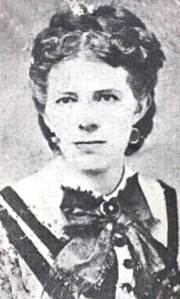
(Photo edited by Bob Rowen)

Two excerpts from Stone’s November 1862 diary illustrate her views on love, flirtation, and relationships, each vibrant and beautiful even in the shadow of a growing war.

Nov. 7, 1862

How quickly this week has slipped away. Company and busy hands make the time fly. Anna came out in the middle of the week, sent the little girls and remained until Mrs. Savage came, spent the day and carried her home. After they left, Johnny and I were sitting cosily by the parlor fire. I had been practicing and he was knitting on a glove when in came Mary Richards and Mollie Hunt, an old schoolmate. I was so surprised I hardly knew her at first, but the sound of her voice recalled old school times.

Mollie and her father are on their way from Arkansas to Vicksburg. They had supper at Mrs. Curry’s and came out to get me to spend the night with Mollie. Mamma approved of the plan, and I was glad of a chance for a good chat with Mollie. I went back with them and had a pleasant visit in spite of that hateful Mr. Smith. “Don’t be bashful, Kate. Do play. I ain’t a going to court ye” was one of his trying speeches, with a grin and a leer that made me really wish him dumb. What a true Yankee he is in everything, even the set of his coat.

Mollie gave me a full and particular account of her various love affairs, about like the play of Hamlet with Hamlet left out. She would not tell me the names of any of her lovers. She must have had scores. She says she has four on hand now, all waiting in trembling apprehension of yes or no. She thinks she will say no to all. What a garment of comfort self-satisfaction is. Oh, for a nice large cloak of self-appreciation. …

Galveston has fallen, a disgrace to us for fortifying it so badly. The enemy are redoubling their exertions at every point and are awaiting a rise in the river to make an overwhelming attack on Vicksburg. In God alone is our trust.

Nov. 10

Mamma went to Vicksburg today, and I am left at home as commander-in-chief with Little Sister and the two boys, Johnny and Jimmy, as aides. We are getting on bravely today, pickle making, weaving, etc., etc. I think I should like keeping house if I were forty years old and had no one to interfere, but now it is horrid work, vanity and vexation of spirits. …

Ah, the lovely autumn weather. One should be out in it riding or walking most of the day. …

Mamma and I went out to Mrs. Henderson’s Saturday morning to see Mrs. Gustine, who is staying there now. She has been very ill and is still unable to be up. Mary and I had a gay talk discussing Col. Pargoud. We have all our traps set and baited should he venture out here again. We made an agreement so that no feeling of jealousy should mar our friendship. Should I trap the irresistible Colonel, she is to be invited to spend a month at his “palace.” Should she be the successful trapper, I am to have a standing invitation to “his marble halls.” Poor Colonel. His cheeks must burn the way the girls are discussing his fancied perfections, for not a girl of us has ever seen him. He is our standing joke.

We also agreed on Mr. Valentine’s cool assurance in sending word to all the girls he knows to knit him everything they can think of. He wants a complete outfit from each one. He did have the grace to ask Mary to make the things, and she has started on the article the easiest to make, a needle book. But if he does not soon repeat his call, Mary will donate that to some more deserving youth. None of us will do anything for him just now. He needs a little judicious snubbing. He holds a lady’s favors too lightly. In the early days I used to think he would make quite an ideal lover, but no indeed, not now that I know him better. He would run me crazy and ruin my temper in a week. He is very argumentative and I feel like contradicting him always. We do not think alike on any subject. Neither Anna nor Julia like him at all, and Mary knows him only slightly.

Mr. McRae was nursing Ashburn on his death bed a year ago tonight, and now he too is sinking into the cold arms of Death. In the presence of Death, we feel at its fullest God’s terrible power. …


Kate Stone’s Civil War: His sins against the South

Stone began October 1862 with seething bitterness.

KS6

From 2012 to 2015, Stillness of Heart will share interesting excerpts from the extraordinary diary of Kate Stone, who chronicled her Louisiana family’s turbulent experiences throughout the Civil War era.

Learn more about Stone’s amazing life in 1861, 1862, 1863, 1864, 1865 and beyond. Click on each year to read more about her experiences. You can read the entire journal online here.

(Photo edited by Bob Rowen)

Stone began October 1862 with seething bitterness. Lee’s invasion of Maryland failed to rouse Southern sentiment, and his fruitless face-off with Federal forces under George McClellan produced one of the bloodiest days in U.S. history. It also inspired President Abraham Lincoln to issue his preliminary Emancipation Proclamation (Lincoln had been advised to unveil it only after a Union victory, though Antietam was closer to a horrific non-defeat).

The demands of a wartime economy quickly stripped the rudimentary Southern economic infrastructure of textiles, and Stone’s journal reflected her growing concerns over the lack of proper clothes, though her concerns should be kept in perspective. She was part of the South’s upper class and probably more sensitive to the lack of luxurious items than regular farmers or Southern citydwellers, particularly when she found herself having to sew fundamental garments for herself and her family, as opposed to casually knitting a fanciful scarf or plaiting a hat for a handsome beau. Nevertheless, her fretting and complaining offers an interesting and at least well-written perspective on the fundamental social and economic changes felt on the Southern home front. The intensity of those changes would quickly intensify in the coming months.

Oct. 1, 1862

The most important fact is Lincoln’s proclamation freeing all slaves held by rebel masters after January 1. I wonder what will be the result of this diabolical move. Surely not as bad for us as they intend it to be. I think there is little chance of a happy hereafter for President Lincoln. A thousand years of repentance would be but brief time to wipe out his sins against the South. How can he ever sleep with the shades of the thousands he has consigned to a bloody death darkening his soul?

Oct. 2

We see … that Lt. Floyd was killed at Sharpsburg. My Brother, I know, is sorry. I saw him last spring in Vicksburg. My good wishes for his safe return were fruitless. He was desperately wounded in the battles before Richmond, but recovered only in time to march to meet his death in Maryland. In Kentucky some hearts are aching for him. He was a frank, pleasant comrade and friend.

There is great disappointment over Maryland. It was thought there would be a great uprising of the people as soon as the Stars and Bars should wave across the Potomac, but nothing of the kind. There has been but little enthusiasm and few recruits. Well, let the Old Bay State go, if her people had rather be slaves in the Union than masters in the Confederacy. They must abide by their choice.

The gunboats are expected down now any day to renew the attack on Vicksburg, but if we get Cincinnati and Louisville as we are threatening to do now, the gunboats will be needed in other waters. …

Oct. 3

My fingers have been busy with unaccustomed work today, the work of olden times, learning to weave. Mamma is having a loom made to weave cloth for the Negroes, and Jimmy and I are to make the “harness.” Mr. Curry came over early this morning on purpose to teach us. He said he knew I could soon learn it. To keep my reputation for aptness, I commenced work at once under his tutelage, and as it takes two to work it Jimmy learned also. Now we progress swimmingly, though it will take several days to finish it. It is like going back to the days of the Revolution to see the planters all setting up their looms and the ladies discussing the making of homespun dresses, the best dyes, and “cuts” of thread, though yet awhile I think a homespun dress would be more difficult to get than a silk. …

We expect to suffer for clothes this winter. … Unless we capture some Northern city well stocked, there will soon be no dry goods in the Confederacy. The ladies are raising a cry for calicoes and silks that echoes from the Potomac to the Gulf. …

Oct. 6

We were out to see Mrs. Carson and Mrs. Savage. They are expecting the Yankees all the time. Mrs. Carson feels that they are being imposed on by soldiers and travelers. She says they are nearly eaten out of house and home, and she gave us her bill of fare. It certainly is a great falling off from the past abundance. There are always five or six soldiers there. She still has flour for lightbread, but it is saved for the sick soldiers. They are exceedingly kind and helpful to all wearing the uniform.

Mrs. Carson is going into raptures over Col. Pargoud. He has large plantations near Monroe, is young and splendid looking, was educated in France, has elegant manners, and is a Colonel in full cavalry uniform, the finest to be had ivory stirrups, silver trappings, and superb horses. What more could one have? May it be given to me to meet this paragon before some other girl snatches him up. Capt. Harper’s company is in his regiment.

We saw the paper of the fourth. It advocates raising the Black Flag in retaliation for Lincoln’s emancipation proclamation. Such a war is too horrible to think of.

Oct. 10

A letter from Uncle Bo dated a month back just as his division was crossing into Maryland. He writes jubilantly, so glad to be advancing into the enemy’s country. The letter is filled with praise of My Brother. … How dreadfully disappointed the army and officials are that Maryland did not rally to their support when once they were on her soil.

Now after all those bloody battles with no good result to follow, our whole army has recrossed the Potomac. Our defeat at Corinth is rumored. We are anxious for full particulars. Reinforcements from Vicksburg have been sent on. …

Oct. 24

Mamma and I went down to Vicksburg ten days ago with Brother Walter to see him that far on his way to the war. We hoped also to see Brother Coley, having heard his regiment had been ordered to Vicksburg, but we were disappointed. The regiment marched through the county to Panola County. We do not know their destination. …

Mrs. Amis’ place is the frontier now, with no one between her and DeSoto. The entire country from Omega to Vicksburg is deserted and many of the back places also. There is a constant stream of men passing, and Mrs. Amis is dreadfully worried by men begging to stay all night and for meals. It is a charming place to visit. Annie has changed less in growing up than any girl I ever saw. She is the same girl she was ten years ago, only grown up and not the least affected, and as a child she was a bundle of it. She was at school in Philadelphia for several years and last in New Orleans for a few months. She plays beautifully on the piano, with such ease I can listen by the hour. She plays on the harp, speaks French well, knows some Latin and Spanish, and is fond of reading, though there was little reading she would allow either of us while together. And they have a good library which was very tempting. She is a pronounced blonde. We were both glad to be together again as we were when little children, after our long separation at different schools.

Oct. 29

Saturday was a day of general upheaval having the carpets put down and general renovating. A cold raw day. When in the height of the discomfort, Mrs. Payne, Julia, and Miss Carrie Lowry were announced. … Carrie is a very talkative, nice girl with only one good feature in her face, splendid grey eyes. She escapes being ugly. She has pretty teeth and glossy black hair but a most unbecoming mouth and nose. Am sure we would like her much on closer acquaintance. She is a most industrious, capable girl.

Jimmy went to Mississippi today to get leather to make shoes for the Negroes. Should he fail to get it, the Negroes will certainly suffer in the cold. Mamma has discharged Mr. McRae, and a Mr. Blakely is overseeing. Mr. McRae proved to be utterly destitute of principle. The Negroes are busy housing the potatoes and goober peas [peanuts] and priming the sugar cane. We shall have some cane should My Brother come now. …

Kate Stone’s Civil War: Tragedy after tragedy

It’s interesting to trace Stone’s mention of certain now-historic events like Antietam, comparing when she records them to when the events actually took place.

KS5

From 2012 to 2015, Stillness of Heart will share interesting excerpts from the extraordinary diary of Kate Stone, who chronicled her Louisiana family’s turbulent experiences throughout the Civil War era.

Learn more about Stone’s amazing life in 1861, 1862, 1863, 1864, 1865 and beyond. Click on each year to read more about her experiences. You can read the entire journal online here.

(Photo edited by Bob Rowen)

Exchanged Confederate prisoners of war ready to fight again. A young recruit worried the war will be over before he can see combat. A barrel of flour priced at $50. These were some of the defining features of Stone’s wartime reality. The 1862 summer was washed away in a chilling, rainy introduction to fall, turning the roads into mud and darkening Stone’s mood. News of the Battle of Antietam, or Sharpsburg, in Maryland reached Brokenburn two weeks later, bringing relieving news that Stone’s brother had been only slightly wounded.

It’s interesting to trace Stone’s mention of certain now-historic events like Antietam, comparing when she records them to when the events actually took place. As the war moved into Louisiana — down from Memphis and up from New Orleans — news took longer and longer to reach Brokenburn. Access to magazines, fresh books, and newspapers was disrupted and then severed. Letters took longer to reach Stone’s family. Wild rumors from every direction swept across Stone’s imagination, testing her belief in the Cause and forming a bedrock of self-reliance that she would desperately need in the coming years.

Sept. 23, 1862

Three weeks of silence spent mostly in Vicksburg, a dull profitless visit. Nothing going on there and I was glad to get home as quiet as it now is and will be, I suppose, until the close of the war. So many friends are gone, but judging from our many recent victories the close may be near. We will conquer a peace.

The victories of Manassas and Richmond, Ky., were both won on the same day. Harper’s Ferry, Frederick [Md.], Kanawha Valley, and luka [Miss.], and various small successes, all within thirty days, make us very hopeful. … Most of our acquaintances are still out of town, and though the streets were crowded with soldiers I knew none of them. The old familiar faces are away fighting in Virginia and Tennessee and strangers are defending their city.

Our exchanged prisoners to the number of 1,500 arrived while I was there, and the place was crowded with them. There were no adequate preparations to provide for them, and many of them had to beg the citizens for something to eat. So happy as they all looked, as merry and free as uncaged birds, and all eager to begin the fight again. The ladies of Memphis gave them a heartfelt and enthusiastic welcome, kisses as plentiful as blackberries, but there was nothing of that kind in Vicksburg. Met a Lt. Polk of Tennessee, who gave an interesting and anecdotal account of his imprisonment. …

Sept. 24

The first of the fall rains. How I dread this winter. I shudder in anticipation: The long rains, the impassable roads, no books, no papers, few letters, our friends nearly all away, and most of our loved ones in the army. Awful prospect. But thinking of it will make it no better. …

Brother Walter goes on Monday to join Dr. Buckner’s company in Bolivar County [Miss.] and all are busy preparing him for the start. The house will be desolate indeed when he is really gone, following in the perilous paths his brothers are treading before him. … There are so many victories he fears even now peace may be proclaimed before he is enrolled as a soldier fighting with his brothers. …

Mamma is suffering much with her arm but is busy knitting socks for Brother Walter and Coley. I am knitting gloves as I can do it well and rapidly now. Nothing like sticking to a thing to learn it. We are again in suspense about My Brother. Had just had a letter written after Manassas just before they crossed the Potomac into Maryland. Now there is news of a hard-won victory at Frederick and his division hotly engaged, and that is all.

I heard while in Vicksburg of the death of a cousin, Ruby Davis. She died on the plantation on the Yazoo, leaving a baby a few days old. Only her mother was with her. Her husband, who is in the army, arrived just as they were lowering her body in the grave. They had been married only a year or so. Her people are in New Orleans. Another cousin too is dead. Elam Ragan is dead on the field of battle, falling shot through the heart just as he mounted one of the enemy’s batteries shouting, “Hurrah! Come on, boys, it is ours.” Peaceful be the rest of the gallant boyish heart that knew no fear. …

A letter from Mrs. Rossman tells of the death of her young brother, Eugene Selser, another boyish soldier offering up his life, a sacrifice to his country. Mrs. Rossman says she hears regularly from My Brother. I hope Eugenia does not.

Sept. 30

A telegram from My Brother to Mamma says he is slightly wounded in the leg, wounded in the battle of Sharpsburg, Md., one of the most hotly contested battles of the campaign. Tom Manlove was also slightly wounded in the arm in the same fight. If we do not hear soon again, Brother Walter will go to Vicksburg for further news. Maybe now My Brother can come home to recuperate for a little while. He has been marching and fighting almost constantly since the first of July. Letters from Uncle Bo. He is in excellent health and spirits, and his regiment has not been in any of the late battles. Brother Walter will not go to his company until we hear further from My Brother.

Sister has been quite sick for several days. Mrs. Carson, Anna, Miss Bettie, and the girls took dinner. Had a talkative, pleasant time. Mrs. Savage is back home again. She says now she will stay till driven off by Yankees or overflow.

Our usual round of visiting and visitors, now that Mrs. Carson and Mrs. Savage are back. We went to Mrs. Curry’s to call on Mrs. Frank Blunt from Hinds County. She told us Aunt Rebeckah Jones, Ruby’s mother, died on the plantation a few days after Ruby with only the servants and the doctor with her. All her life she had been so lapped around with love and care. Tragedy after tragedy.

Today we actually had cake, a most rare occurrence, due to Mrs. Hardison’s sending us a little homemade flour. But for them, we might forget the taste of wheaten bread, and Aunt Laura is using it lavishly at $50 a barrel.

Recommended reading / viewing / listening

Naked-image scanners out / Eva Longoria: Political leader / Nixon’s Checkers speech / The perfect vagina / Famous presidential words

IMG_1779

Most of these great items come from my Twitter feed or Facebook news feed. Follow me on Twitter and on Facebook for more fascinating videos, articles, essays and criticism.

1. Naked-Image Scanners to Be Removed From U.S. Airports
By Jeff Plungis | Bloomberg | Jan. 18
“The U.S. Transportation Security Administration will remove airport body scanners that privacy advocates likened to strip searches after OSI Systems Inc. (OSIS) couldn’t write software to make passenger images less revealing.”

2. How Coffee Drank Soda’s Milkshake
By Derek Thompson | The Atlantic | Jan. 18
“Soda is in a free fall, with domestic revenue down 40%. Coffee culture is ascendant, up 50% in ten years.”

3. Eva Longoria’s Next Role: Hispanic Activist in Washington
By Monica Langley | The Wall Street Journal | Jan. 18
“She helped urge Mr. Obama to make a key change in immigration policy last year, and she is teaming with business to explore investments in housing and retail developments in Hispanic communities.”

4. The secret story of Richard Nixon’s first scandal
By Jeffrey Frank | Salon | Jan. 19
“Long before Watergate, a secret fund almost ended his career — instead, the Checkers speech taught him everything.”

5. Just Say No To ‘Barbie’ Vagina
By Ami Angelowicz | The Frisky | Jan. 18
“[T]he myth of the ‘perfect vagina’ continues to thrive.”

6. Asking Siri — the Right Way
By J.D. Biersdorfer | Gadgetwise :: The New York Times | September 2012
“I just upgraded to iOS 6 on my iPad and am trying to get used to using the Siri assistant. Is there a correct way to ask for stuff?”

7. In four short years, how the world changed
By Marc Fisher | Post Politics :: The Washington Post | Jan. 14
“Whatever mandate they’ve been elected to fulfill, whatever sense of control they felt on that first January morning when the crowd’s hopes carried them down Pennsylvania Avenue, quickly runs up against a cold fact: The world stops for no president.”

8. A New GOP Begins, and Ends, With Immigration Reform
By Nate Cohn | The New Republic | Jan. 16
“Opposition to immigration reform has hurt Republicans among Latino voters, and although a 180-degree switch on the issue might not yield immediate gains among Hispanics, it’s an essential starting point.”

9. Meet the World’s Laziest Valentine’s Day Gift
By Kat Stoeffel | The Cut :: New York Magazine | Jan. 16
“E-card purveyor Datevitation wrote … to alert us to their love coupon books, which can be customized to include 20 of some 200 date options. …”

10. From Iffy to Mulligan: Words American Presidents Made Famous
By Katy Steinmetz | Time | Jan. 16
“We all remember George W. Bush’s verbal gems. Who could forget resignate, decider or misunderestimate?”

Recommended reading / viewing / listening

Follow the inauguration / Feminist critics of Michelle Obama / Looking beyond the password / Who protects Bo? / The greatest inaugural speeches

IMG_1778

Most of these great items come from my Twitter feed or Facebook news feed. Follow me on Twitter and on Facebook for more fascinating videos, articles, essays and criticism.

1. Inauguration 2013: A Social Media Guide
By Elana Zak | Washington Wire :: The Washington Post | Jan. 18
“Here are ways to follow and participate in President Barack Obama‘s second inauguration.”

2. Feminists split by Michelle Obama’s ‘work’ as first lady
By Lonnae O’Neal Parker | The Washington Post | Jan. 18
“In 2008, when Obama announced her intention to be ‘mom-in-chief,’ many feminists decried her decision to give up her career and said she had been victimized by her husband’s choices.”

3. Google Declares War on the Password
By Robert McMillan | Wired | Jan. 18
“Google is running a pilot project to see if these USB-based Yubico log-on devices might help it solve the password problem.”

4. Inside Obama’s Presidency
Frontline :: PBS | Jan. 15
“A probing look at the first four years of Barack Obama’s presidency.”

5. Muhammad Ali, still the greatest at 71
By Matthew Kitchen | The Culture :: Esquire | Jan. 17
“[F]ew are aware that in 1990, just six weeks ahead of Desert Storm, Ali flew to Iraq to broker the release of fifteen hostages being held as human shields by Saddam Hussein. …”

6. Guard Dog
By Brian Palmer | Slate | Jan. 16
“Does the Secret Service protect Bo Obama?”

7. Getting Around the WWW
By J.D. Biersdorfer | Gadgetwise :: The New York Times | September 2012
“Why do some Web addresses begin with “http://www” while others omit the “www” altogether?”

8. From Death Star to Disney, exploring the ‘Star Wars’ franchise
By Daniel Terdiman | CNET | Jan. 15
“[N]o one has ever really told the complete story tying together how the ‘Star Wars’ universe fits into popular culture, how it impacts the economy, and how it inspired so many fans to create their own fiction.”

9. Inaugural speeches through history
The Washington Post | Jan. 16
Kennedy, LBJ, Obama, and more.

10. Sandy lesson: Don’t mess with Jersey
By David Rogers | Politico | Jan. 16
“A chippy Chris Christie set the tone early when the New Jersey governor warned fellow Republicans … that they’d picked ‘the wrong state’ to begin changing the rules for disaster aid.”

******************

TUNES

Tonight I’m spending some time with the blues, specifically with the Texas Blues Café. Check out the line-up and then listen here.

1. Smokin Joe Kubek — Never Enough
2. Bluessmyth — Rollin’ Penny
3. Todd Sharpville — Picture Of You
4. Rob Allen — Rainbow Blues
5. Too Slim & the Taildraggers — The Fortune Teller
6. Kelly Richey — No More Lies
7. Smokin Hogs — Outa My Head
8. Pride and Joy Band — Evil Thoughts
9. Dean Haitani — Dissin’ Me
10. Brett Hinders — Buddy Holly Memoriam
11. Chris Duarte — Mr. Neighbor
12. Grace Potter — Go Down Low
13. Grace Porter — Nothing But the Water
14. Van Wilks — Sometimes You Run

Kate Stone’s Civil War: Beyond my strength

Confederate victories on far-off battlefields sustained her belief in eventual victory, even as the boom of Union cannons rattled the very journal she filled with her hopes.

KS4

From 2012 to 2015, Stillness of Heart will share interesting excerpts from the extraordinary diary of Kate Stone, who chronicled her Louisiana family’s turbulent experiences throughout the Civil War era.

Learn more about Stone’s amazing life in 1861, 1862, 1863, 1864, 1865 and beyond. Click on each year to read more about her experiences. You can read the entire journal online here.

(Photo edited by Bob Rowen)

Sadness and worry filled Stone’s pages throughout August 1862. Some of her neighbors quickly packed up their belongings as rumors of pillaging blue soldiers and unshackled and vengeful slaves ravaging the community blazed through every slaveholder’s imagination. Vicksburg, thought to be cleared of Union threat and protected by strong Confederate forces, again faced a Federal gunboat fleet that appeared without warning. Sickness tormented her mother and brother. Night brought feelings of fear, uncertainty over the future, and a sense of isolation.

Despite her misgivings, note Stone’s overall determined confidence, despite the dangerous proximity of Union soldiers to her home. Confederate victories on far-off battlefields sustained her belief in eventual victory, even as the boom of Union cannons rattled the very journal she filled with her hopes.

Aug. 5, 1862

I have had my bed moved to the window; and looking out tonight on the pale moonlight, the far off, misty stars, and the light, fleecy clouds scudding across the sky, the shadows of the tall trees, ghostlike on the grass, I am very happy for my darling Brother has been mentioned for distinguished gallantry in the late battles. We are not surprised for we know him, but it is grateful to have others appreciate him. My Brother in his last letter of July 2 says nothing of himself but that he was ill from fatigue but would rejoin his regiment and go into the fight the next day. The paper did not say, and we will never know, any particulars.

The Yankees have called off their gunboats and quit the river in disgust. Sometimes now we can get the papers.

Nearly everybody in the country sent us word of My Brother’s safety. So many papers and messages. All knew how anxious Mamma and all of us had been. Brother Walter did not learn much by his hard trip to Vicksburg, only a confirmation that all was well with them, and he got back safely from a perilous trip canoeing down the river. I wonder that we could have sent him on such a quest so dangerous.

The house has been full of company for ten days. At first only Mrs. Payne and Julia with transient visitors, but later Mary Gustine, Missie Morris, callers most of the time, and others to spend the night, the two Lowry boys among the others. … But taken altogether we had a pleasant time. Missie is looking better than I ever saw her but is discontented and unhappy. Alary is not as handsome as usual but is more talkative, and Julia is the same gay, carefree soul as ever. … We four had a lovely time at Mrs. Carson’s Saturday with chess, music, singing, gossip, and fruit. I can still beat Missie at chess. It is an effort but I can do it. …

The road to Vicksburg is open again. …

Aug. 19

The excitement of the last two days has been the entirely unexpected reappearance of the Yankees on the river. They came upon us like a thief in the night. The entire Yankee fleet was at Milliken’s Bend ready for a fight before anyone on the river knew they had left Memphis. It does not seem possible for thirty-nine boats to pass five hundred miles down the river without being discovered, but such was almost literally the case. The people of Lake Providence did not know until the next day that a fleet had passed by them. And at Vicksburg all were resting in perfect security, thinking the enemy far away, until Capt. White hurried into the city and told them the boats would soon be there. He put spurs to his horse as soon as the first boats reached the Bend and made all possible haste to reach Vicksburg. Fortunately, he roused them in time, and the little city will hold out as long as possible.

The surprise at the Bend was complete. The Fair Play was at the landing loaded with arms and passengers. All were captured. And the 31st La. Regt. was camped there and had only time to seize their arms and run away. The Yankees followed as far as Tallulah and there burned the depot and cars and tore up the track, returning to the Bend in time to steal anything they wanted. At dusk they went on board their boat and rejoined the fleet at Vicksburg. We heard such startling accounts that Mamma at once sent off the Negro men with Jimmy to take care of them to Bayou Macon, but tonight as all present fear is allayed, she sends for them again.

It was a time to be scared last night, and I, for one, did feel frightened. … We have heard such horrible stories of the outrages of the Yankees and Negroes that it is an anxious time for only women and children. …

We poor dwellers on this side of the river are not to be left entirely to the mercy of the enemy. The cry of distress from the river has roused the back country, and they report 3,000 men crossing the Macon today. So we will have a little army of our own something nearer than fifty miles. There are so many contradictory reports about the gunboats that we know not what to believe. There may be ten or forty before Vicksburg.

The Negroes enjoyed their hasty trip to Bayou Macon. It will give them something to talk of for a long time.

The last Yankee raid has quite decided Mrs. Savage, and they will go to the Macon Saturday, determined to remain until the war is over. They are awfully afraid of the Yankees. Four of her Negroes ran away today rather than be moved back. It is a plentiful, pleasant home to give up to destruction. I was out there a week recently nursing Anna and found it such a comfortable, abundant place. They had better hold it as long as possible. …

Aug. 25

The strife and din of war is coming fearfully near us now. Tonight just as we were sitting down to tea, we heard the boom of cannon with the rattling report of small arms. Seemed so near. It continued about fifteen minutes, and we think it must have been at Omega or the Bend. It excited and startled us, but now we are only anxious to know whether it was a skirmish.

There are now quite a number of troops on this side of the river, and in a few days there will be many more with Gen. Blanchard at their head. And the Yankees will not be so free to land and seize whatever they choose. We hear that Gen. Blanchard has ordered all the women and children living in his district to leave the river as it is no longer safe for them, and he will dispute the landing of the foe at every point. The planters generally are moving back to the hills as fast as possible. There are two families refugeeing in our neighborhood. …

We should not mind our individual reverses on this side of the river when we hear how gloriously our arms are triumphing everywhere else. Our entire line is said to be advancing, and we read of a succession of small victories.

Brother Walter returned Saturday. He had been gone more than a week. Brother Coley is well again and with his regiment. He had been very ill, and like a foolish boy he refused to go to any private home to be nursed or take medicine until Mrs. Blanton, hearing of his sickness, sent him word she was not a stranger but a friend of his mother’s and he must come to her home. He went and she soon nursed him back to health. He was quite sick when his regiment engaged the gunboats but insisted on going into action. Like the high spirited, reckless boy “spoiling for a fight” he is, he stood up in one of the rifle pits firing until he grew so ill he had to be carried out. He recovered a little and returned to his post, and when his company was ordered to march he had just strength enough to drag himself to a tree, where he was found nearly insensible by the men who had been sent out to seek him. He is of a nervous temperament and suffers so when he is sick that it required heroism to hold up his head and fight when suffering so much, as we know he was. He is a thin, delicate boy but with an indomitable spirit. He has never been strong since he was poisoned by his nurse when a little fellow. He was at Death’s door then for weeks. …

Aug. 29

The spirit of discontent is moving in my heart tonight. Gloomy thoughts will arise. Could I only be content to watch the Future as it unfolds instead of trying to pierce its mystery and mold it to my will, how much happier I would be. But as that is beyond my strength, I can only struggle against the evil spirit and exorcise it as best I may.

Mamma and I spent Wednesday with Mrs. Savage and Mrs. Carson. Both houses are in the greatest confusion, everything being pulled to pieces and packed up. Mrs. Savage and family left today. Mrs. Carson will go in a few days. It will be long, I fear, before we, all of us, spend another day together. …

The last gunboat went up the river today but may return at once.

Kate Stone’s Civil War: The fire of battle

News of major combat in Virginia between Robert E. Lee and George B. McClellan elated Stone.

KS3

From 2012 to 2015, Stillness of Heart will share interesting excerpts from the extraordinary diary of Kate Stone, who chronicled her Louisiana family’s turbulent experiences throughout the Civil War era.

Learn more about Stone’s amazing life in 1861, 1862, 1863, 1864, 1865 and beyond. Click on each year to read more about her experiences. You can read the entire journal online here.

(Photo edited by Bob Rowen)

News of major combat in Virginia between Robert E. Lee and George B. McClellan elated Stone. But she was tormented when for weeks she waited for any confirmation that her brother and uncle had survived the brutal fighting.

July 5, 1862

Another Fourth of July has gone by without any festivities, not even a dinner for the Negroes, but they have holiday. The Yankees told Mr. McRae, while they were holding him prisoner, that they would celebrate the day by a furious attack on Vicksburg. But we have heard few guns since the third. That day we heard them very distinctly, almost a continuous roar. It was said both mortar fleets were firing on Vicksburg. We have not heard the result.

The Yankees are gathering the Negroes on the river as fast as possible. They have taken all the men able to work from Lake Providence to Pecan Grove and from Omega to Baton Rouge. They are hourly expected at Pecan Grove. Robert is with us to be out of the way when they do come. He is nearly well. The Negroes are eager to go, leaving wife and children and all for freedom promised them, but we hear they are being worked to death on the canal with no shelter at night and not much to eat.

There has been no attempt at resistance. Some of the plantations have been deserted by the owners, some of them burned by the Yankee bands, and some of them not molested. It depends on the temper of the officer in charge. If he feels malicious, he burns the premises. If a good-natured enemy, he takes what he wants and leaves the buildings standing. Most of them are malicious. Mamma will have the Negro men taken to the back country tomorrow, if she can get them to go. Generally when told to run away from the soldiers, they go right to them, and I cannot say I blame them. …

The trading boats are coming down the river again with groceries at ridiculously low prices, but of course no patriot could think of buying from them. Mamma was able to sell her surplus corn, and that helped her on wonderfully. She had such quantities of it. And we certainly will have eatables this year, judging from the looks of the great fields of corn, peas, and potatoes. Not much cotton planted. Mamma so longed for ice while she was ill, but it was impossible to get it, while those wretches on the gunboats could even have ice cream if they wished it. …

We hear rumors of a great battle in Virginia and the utter discomfiture of McClellan with Gen. Lee attacking him in front and Stonewall Jackson with 2,800 men in the rear. That was a “stone wall” McClellan found hard to climb. My Brother and Uncle Bo must both have been in the fight, but we have had no news from them for such a long time. It is heart-sickening.

July 6

Johnny and Mr. Hardison, just from the Bend, say the victory over McClellan is assured. We attacked and after a three-day fight utterly routed them, capturing most of the force. It is such good news that we can hardly believe it is true.

We are so anxious about My Brother. Any disaster … would nearly kill Mamma in her weakened state. She loves him more than anything on earth, and he is to me the dearest person in the world, next to Mamma. Uncle Bo must have been in the battle, and we cannot hear how he has fared. Suspense is hard to bear. …

July 7

Sister and I went this morning to Judge Byrnes’ below the Bend to see Julia. Heard many rumors but nothing reliable and much about the Negroes and the Yankees. Saw several gunboats go by. The two-story house is just at the river, and they have an excellent view both up and down the river. By the way, it is named River View. As we passed Omega, a gunboat had landed and a number of soldiers in the hateful blue uniform with shining guns and bristling bayonets were lounging on the levee. We did not stop to look at them but drove by as rapidly as Webster could make the mules go. …

They say we are to have two Texas regiments over to protect us tomorrow. We certainly hope so, for we seem to be given up to the evil one now. The suspense about our loved ones is hard to bear, but then not so bad as the certainty of evil would be.

July 15

Continuous and heavy cannonading all day in the direction of Vicksburg ceased soon after dark.

We have the finest melons and in this excessively hot weather they are a luxury. Lou Whitmore brought down for me a beautiful guitar, given her by her father. She does not play and insists on my keeping it, but neither do I. She is the most generous girl. She wants to give away everything, even her clothes, and when do we know we are going to get any more?

Brother Walter and Jimmy have been riding for several days helping to raise partisan bands for home protection. …

July 21

Oh, this long, cruel suspense. No news yet. Surely, if they were both alive, they would have communicated with us by this time. Every day adds to my conviction that My Brother is desperately hurt. I cannot think of him as dead. We see in one of the last papers that his brigade suffered terribly nearly all of the field officers disabled, and My Brother’s colonel, John G. Taylor, whom he loved so much, among the killed. We are relieved about Uncle Bo. His regiment did not suffer greatly. We have seen the list of killed and wounded, and his name is not there. We are thankful for his escape. But my heart leaps to my lips and I turn sick with apprehension whenever I hear a quick step, see a stranger approaching, or note a grave look on the face of any of the boys coming in from a ride. And I must conceal it all for Mamma’s sake. She has been very ill since my last writing but is better tonight. We have been sitting up with her for two nights. She is in the east room, and I am occupying hers for the time. We did not let her see the report of My Brother’s brigade. If there is trouble, she can bear it better when she regains her strength. She noticed the torn place in the newspaper, and I had to tell a story to account for it. I pray the Recording Angel may mercifully blot it out.

Brother Coley’s company is now at Skipwith’s Landing with one other company to support a battery planted there. Wish the authorities would send them to this side of the river.

The man has just returned from Dr. Carson’s with a wagonload of fruit. Everybody in the house is asleep, but, oh, as it is, I shall eat some of those lovely blue figs shining up through the leaves covering the basket. How the boys would enjoy them if I would wake them up, but morning is a better time for them to devour them.

July 24

Good news! Good news! We thank God who has preserved our loved ones unhurt through the fire of battle after battle. The news came today in a letter from Mrs. Narcisse Johnson at Lake Washington to Mamma telling her that Brother Coley had passed there on his way to camp at Greenville [Miss.]. He asked her to write to Mamma and to say that he had heard of My Brother since the battles and he escaped unhurt. Truly God has been merciful to us all. It was kind of Mrs. Johnson to write. We know her very slightly.

Mamma had grown so anxious that Brother Walter started to Vicksburg at daybreak this morning to get news. He will go all the way in a canoe, paddling himself. Truly navigation on the Mississippi is returning to the customs of the aborigines. Mamma is still in bed and improves very slowly. …

A partisan band camped at the schoolhouse last evening and Lou and Sister, returning from Mrs. Curry’s, saw them. They said they would be back this evening. Johnny and I walked out to see, but ne’er a soldier was in sight, only several Negroes returning from their Yankee pleasure trip, weary and footsore and eager to get home. Numbers of them pass here going home, bending their necks to the yoke again, preferring the old allegiance to the new. But numbers are still running to the gunboats. I would not be surprised to hear that all of ours have left in a body any day. …

Kate Stone’s Civil War: Capable of any horror

Stone had no idea that someday soon she also would be swept away into the growing river of refugees flowing into a new home: unconquered Confederate Texas.

KS2

From 2012 to 2015, Stillness of Heart will share interesting excerpts from the extraordinary diary of Kate Stone, who chronicled her Louisiana family’s turbulent experiences throughout the Civil War era.

Learn more about Stone’s amazing life in 1861, 1862, 1863, 1864, 1865 and beyond. Click on each year to read more about her experiences. You can read the entire journal online here.

(Photo edited by Bob Rowen)

Union forces under U.S. Grant moved southward to take Vicksburg, Miss., the key to control of the Mississippi River and the last major link between the eastern and western Confederate regions. Stone watched with absolute contempt as Union gunboats floated into view. As word spread of blue armies marching closer, Stone’s mother ordered Brokenburn’s slaves were to run away if Northern troops entered the plantation. Stone noted with disgust as slaves from other communities and estates snuck away to the Union lines or were simply gathered up by Union soldiers like provisions and sent to work on Union military fortifications.

Stone also made a prescient observation on what some families did with their threatened labor force — they sent them “to the back country” farther west. Forthcoming entries in this series will illustrate how, as the Union forces poured into the area around Brokenburn to prepare for the Vicksburg assaults, the “back country” would not offer sufficient protection. Slaves were only the first wave of people from Louisiana to move westward. Slaveowners, frightened of marauding Union soldiers, would soon follow them. Stone had no idea that someday soon she also would be swept away into the growing river of refugees flowing into a new home: unconquered Confederate Texas.

June 20

Good news from My Brother … he is now Adjutant of the 2nd Miss. Battalion. I am so glad. He ranks now as Captain. He is not ambitious for himself, but I am very ambitious for him. All my dreams of future glory for our name center in My Brother. God bless him.

June 25

Well, we have at last seen what we have been looking for for weeks: the Yankee gunboats descending the river. The Lancaster No. 3 led the way, followed by the ram Monarch .We hope they will be the first to be sunk at Vicksburg. We shall watch for their names. They are polluting the waters of the grand old Mississippi. Monday when Mamma and I went out to Mr. Newman’s to spend the day and stopped at Mrs. Savage’s to get Anna, Mr. McGee came down and told us the gunboats were in sight at Goodrich’s, and about 4 o’clock, while at dinner, one of the servants said they were coming around the bend. We all ran out on the gallery for our first sight of the enemy, and soon we saw one craft bearing rapidly down the river, dark, silent, and sinister. Very few men were in sight, and no colors were flying. There were no demonstrations on either side, but oh, how we hated her deep down in our hearts, not the less that we were powerless to do any harm. Soon three others came gliding noiselessly by, and we could have seen every boat and all the men sunk to the bottom of the river without a pang of regret. One transport was crowded with men. It looked black with them, and they had the impudence to wave at us. We would have been glad to return the compliment with a shot from a battery crashing right into the boat. One passed, then turned, and rounded into the hole just in front of the house, blowing the whistle.

We were certain she was going to land, and since the house is just at the river, a scene of excitement ensued. The gentlemen insisted we should leave the house and hide somewhere until the carriage could be hitched up for us to flee to the back country. We rushed around the house, each person picking up any valuable in the way of silver, jewelry, or fancy things he could find, and away we ran through the hot, dusty quarter lot, making for the only refuge we could see, the tall, thick cornfield just beyond the fence. Two soldiers who were taking dinner with us were hurried ahead, as we knew they would be captured if recognized. Just as we were in full retreat, a motley crew soldiers, women, children, and all the servants, in full view of the boat we could see the spyglasses levelled at us. Some one called for us to come back. It was a feint. The gunboat was not landing. So we turned back to the house, a hot excited lot of people, and the dinner cold on the table.

The boats ran up and down for awhile and then anchored for the night at the foot of the Island. A boat came ashore with three men, and they had quite a conversation with some of our fireside braves assembled to see the sights. The Yankees, one a Col. Elliott, were in full uniform and armed cap-a-pie. Some of the men, notably Mr. Newman and Mr. Hannah, answered all their questions, told them all they knew, and then tried to buy provisions from the boats, telling the officers they were nearly starving. It was an awful story, for the country is filled with every eatable that could be raised. Mr. Cox acted like a man of proper spirit and denied what the other men had said about starvation. …

June 26

Mrs. Savage and Emily came out this morning to breakfast, and as she thought there was no further danger, she took Robert home with her. The Yankee officers said they came ashore to “assure the inhabitants that they meditated no injury.” They had seen some ladies very much frightened, and they regretted it, as the ladies were in no danger and would not be molested in any way. …

June 27

Brother Walter is safe at home again. He got back last night looking as brown and weather-beaten as any soldier of them all and so tired and stiff that he can hardly walk. He crossed the river in a skiff and walked all the way from Vicksburg to Willow Bayou in one day, following the railroad track. Mrs. Morris sent him on the next day on horseback, and we were delighted when he rode up. Brother Coley is well and in high spirits. Aunt Laura and Beverly are in Jackson. Brother Walter would have remained over for the fight at Vicksburg, but the battle on land is not expected to come off for some weeks yet. So he very wisely came home. …

June 29

We hear today that the Yankees are impressing all the Negro men on the river places and putting them to work on a ditch which they are cutting across the point opposite Vicksburg above DeSoto. They hope to turn the river through there and to leave Vicksburg high and dry, ruining that town and enabling the gunboats to pass down the river without running the gauntlet of the batteries at Vicksburg. They have lately come up as far as Omega, four miles from us, taking the men from Mr. Noland’s place down. We hear several have been shot attempting to escape. We were satisfied there would soon be outrages committed on private property. Mamma had all the men on the place called up, and she told them if the Yankees came on the place each Negro must take care of himself and run away and hide. We think they will.

From a late paper we see that Butler is putting his foot down more firmly every day. A late proclamation orders every man in the city to take the oath of allegiance. There will be the most severe penalties in case of refusal. Butler had Mr. Mumford, a gentleman of New Orleans, shot for tearing down the first flag hoisted in New Orleans over the mint. The most infamous order and murder of which only Butler is capable. Is the soul of Nero reincarnated in the form of Butler? Why can he not fall of the scourge of New Orleans, yellow fever?

The drought was broken last night by a good rain and the planters are feeling better. This insures a good corn crop, and it was beginning to suffer. It is so essential to make good food crops this year. When we heard the cool drops splashing on the roof. … Such a lovely morning. It is a pleasure to breathe the soft, cool air and look out over the glad, green fields, flashing and waving in the early sunlight. …

June 30

The excitement is very great. The Yankees have taken the Negroes off all the places below Omega, the Negroes generally going most willingly, being promised their freedom by the vandals. The officers coolly go on the places, take the plantation books, and call off the names of all the men they want, carrying them off from their masters without a word of apology. They laugh at the idea of payment and say of course they will never send them back. A good many planters are leaving the river and many are sending their Negroes to the back country. We hope to have ours in a place of greater safety by tomorrow.

Dr. Nutt and Mr. Mallett are said to be already on their way to Texas with the best of their hands. Jimmy and Joe went to the Bend and Richmond today. They saw Julia and Mary Gustine, who sent me word that I was a great coward to run away. Mary had talked to a squad of Yankee soldiers for awhile and found them anything but agreeable.

All on this place, Negroes and whites, are much wrought up. Of course the Negroes do not want to go, and our fear is when the Yankees come and find them gone they will burn the buildings in revenge. They are capable of any horror. We look forward to their raid with great dread. Mrs. Savage sent for her silver today. We have been keeping it since the gunboats came. They will all leave in two days for Bayou Macon. Would like to see them before they get off. …

Recommended reading / viewing / listening

Fashion at the Golden Globes / Breaking down the drone war / The Army’s brain drain / Why do wet fingers wrinkle? / Cities preparing for climate change

IMG_1629

Most of these great items come from my Twitter feed or Facebook news feed. Follow me on Twitter and on Facebook for more fascinating videos, articles, essays and criticism.

1. The Golden Globes: The Good, the Bad, and the Ugly
TMZ | Jan. 13
“The 70th Annual Golden Globes are in full swing and as usual there’s sure to be some fashion fiascoes showing up and showing off.”

2. Texas Has Created a Costly Roadmap for Defunding Planned Parenthood
By Molly Redden | The New Republic | Jan. 11
“Since fading from our national memory as the presidential candidate who couldn’t remember the Department of Energy, Perry has gone home to oversee the dissolution of what was once a decent health-care partnership with the federal government, the Women’s Health Program.”

3. Everything We Know So Far About Drone Strikes
By Cora Currier | Pro Publica | Jan. 11
“You’ve certainly heard about drones. But the details of the U.S. campaign against militants in Pakistan, Yemen, and Somalia — a centerpiece of the Obama administration’s national security approach — remain shrouded in secrecy.”

4. Gwen’s Take: Why Do People Want to Be President?
By Gewn Ifill | The Rundown :: PBS NewsHour | Jan. 11
“Why do they turn over their lives to years of grueling fundraising, speech-making, handshaking, second guessing, bad foods, bad hotels and life inside the bubble?”

5. Funding for Human Expeditions in the Ocean May Have Run Aground
By Tony Dokoupil | Newsweek | Jan. 14
“Legendary explorer Sylvia Earle is saying goodbye to the ocean floor, but are machines good enough to take her place? Tony Dokoupil reports in Newsweek on the robot takeover of ocean science.”

6. Mashable’s Favorite Tech From CES 2013
By Lance Ulanoff | Mashable | Jan. 10
“We saw smartphones, humongous Ultra HDTVs, smartphone cases, Bluetooth speaker systems, advanced gaming systems and accessories, 3D sensors and more.”

7. An Army of None
By Tim Kane | Foreign Policy | Jan. 10
“Why the Pentagon is failing to keep its best and brightest.”

8. How American Cities Are Adapting To Climate Change
By Jeff Spross | ThinkProgress | Jan. 11
“Almost two-thirds are pursuing adaptation planning for climate change, compared to 68 percent globally, and virtually all U.S. cities report difficulties acquiring funding for adaptation efforts.”

9. Seeing Time Machine Let Go of the Past
By J.D. Biersdorfer | Gadgetwise :: The New York Times | September 2012
“My Time Machine program keeps alerting me that it is deleting old backups. Should I be worried about this message?”

10. To Grip Wet Objects, Wrinkle Your Fingers
By Sindya N. Bhanoo | The New York Times | Jan. 10
“[S]cientists report that wrinkled fingers and toes allow a better grip on wet objects — so they may have evolved to give early humans an advantage in wet conditions.”

Recommended reading / viewing / listening

Goals of the Texas legislative session / Q&A on Obama’s fight with GOP / Appreciating Al Jazeera / Happy birthday, Tricky Dick / Why do animals play?

IMG_1587

Most of these great items come from my Twitter feed or Facebook news feed. Follow me on Twitter and on Facebook for more fascinating videos, articles, essays and criticism.

1. Lawmakers Want Big, Bold Measures This Session
By Aman Batheja | The Texas Tribune | Jan. 11
“[T]here is widespread interest among state leaders to make large investments in Texas’ future this session, specifically billion-dollar commitments to water and transportation projects that prepare Texas for a population boom demographers warn is on the way.”

2. Q&A: Obama lacks clear edge in next fight with GOP
By Alan Fram | Associated Press | Jan. 11
“The government will run out of cash in about two months. The Obama administration will need congressional approval to borrow more money or face a first-ever federal default, threatening global, economy-rattling consequences.”

3. Banks seek NSA help amid attacks on their computer systems
By Ellen Nakashima | The New York Times | Jan. 11
“The cooperation between the NSA and banks … underscores the government’s fears about the unprecedented assault against the financial sector and is part of a broader effort by the government to work with U.S. firms on cybersecurity.”

4. Happy 100th, Nixon: You’re still tricky to critics
By James Hohmann | Politico | Jan. 9
“Richard Nixon would have turned 100 Wednesday, but about the only people marking the occasion are historians, family members and loyalists from the disgraced 37th president’s administration. And even they’re slowly dying off.”

5. Turn the channel to Al Jazeera
By Daoud Kuttab | The Los Angeles Times | Jan. 8
“The Arab network should be a welcome source for U.S. news junkies.”

6. Japan Explores War Scenarios with China
By J. Michael Cole | Flashpoints :: The Diplomat | Jan. 9
“There has been much speculation over the years about whether Tokyo would intervene if the PLA ever invaded Taiwan.”

7. Why do animals like to play?
By Jason G. Goldman | BBC Future | Jan. 9
“Recreation may look like it serves no obvious purpose, but when dogs and other animals are having fun they are learning some valuable lessons.”

8. How Much Alcohol Is Safe for Expectant Mothers?
By Melinda Wenner Moyer | Scientific American | Jan. 4
“An occasional drink during pregnancy is unlikely to harm most children, but we lack the tools to fully measure alcohol’s effects on the developing brain”

9. Kisses and Hugs in the Office
By Jessica Bennett and Rachel Simmons | The Atlantic | December 2012
“How a once-intimate sign-off is feminizing the workplace, for better or worse”

10. Converting Paper to Digital Files
By J.D. Biersdorfer | Gadgetwise :: The New York Times | Sept. 21
“What’s the best way to convert a box of old newspaper and magazine clippings to digital files, doing it myself and without spending a lot of money?”

Behind The Wall

Tabletop Games

Rebecca Aguilar

#CallingAllJournalists Initiative | Reporter | Media Watchdog | Mentor | Latinas in Journalism

Anna Fonte's Paper Planes

Words, images & collages tossed from a window.

Postcards from Barton Springs

Gayle Brennan Spencer - sending random thoughts to and from South Austin

The Flask Half Full

Irreverent travelogues, good drinks, and the cultural stories they tell.

Government Book Talk

Talking about some of the best publications from the Federal Government, past and present.

Cadillac Society

Cadillac News, Forums, Rumors, Reviews

Ob360media

Real News That Matters

Mealtime Joy

bringing joy to family meals

Øl, Mad og Folk

Bloggen Øl, Mad og Folk

a joyous kitchen

fun, delicious food for everyone

A Perfect Feast

Modern Comfort Food

donnablackwrites

Art is a gift we give ourselves

Fridgelore

low waste living drawn from food lore through the ages

BeckiesKitchen.com

MUSINGS : CRITICISM : HISTORY : NEWS

North River Notes

Observations on the Hudson River as it passes through New York City. The section of the Hudson which passes through New York is historically known as the North River, called this by the Dutch to distinguish it from the Delaware River, which they knew as the South River. This stretch of the Hudson is still often referred to as the North River by local mariners today. All photos copyright Daniel Katzive unless otherwise attributed. For more frequent updates, please follow northriverblog on Facebook or Instagram.