This week: The myth of Robert E. Lee / The liberalism of Islam / Comey’s intellectual history / Trump’s credibility / Writing in a library
This week: The myth of Robert E. Lee / The liberalism of Islam / Comey’s intellectual history / Trump’s credibility / Writing in a library
Most of these great items come from my social media networks. Follow me on Twitter, Instagram, Tumblr, LinkedIn, and Facebook for more fascinating videos, photos, articles, essays, and criticism.
1.The Myth of the Kindly General Lee By Adam Serwer | The Atlantic | June 4
“Lee had beaten or ordered his own slaves to be beaten for the crime of wanting to be free, he fought for the preservation of slavery, his army kidnapped free blacks at gunpoint and made them unfree — but all of this, he insisted, had occurred only because of the great Christian love the South held for blacks.”
2.There Is No Better Place to Write than the Library By Joe Kanon | Atria :: LitHub | June 8
“For over twenty years I have been writing in the New York Public Library — eight novels and a ninth underway — and I can’t imagine working anywhere else.”
3.In defense of ‘The Skimm’ By Kaitlin Ugolik | Columbia Journalism Review | June 6
“Yes, the news is often complicated. Yes, we should encourage readers to pay attention for more than a few minutes each day. But when we imply that there is only one ‘right’ way to consume the news, or to be informed, we exclude people who don’t — or can’t — fit that mold.”
4.NASA Jobs: The Application, Selection Process For How To Become An Astronaut By Nina Godlewski | International Business Times | June 7
“There’s no set schedule for how frequently NASA puts out a call for applicants. Since 2000 it has announced classes in 2004, 2009, 2013 and now 2017. … So if you’ve been dreaming of space, you may have to wait a few more years to get your next shot at the stars.”
5.James Comey’s Intellectual History By Nicholas Schmidle | The New Yorker | June 7
“After graduating from the University of Chicago Law School, in 1985, Comey clerked for Judge John Walker, Jr., George H. W. Bush’s cousin, in the Southern District of New York. Comey became a Republican. In public, however, he portrayed himself as nonpartisan.”
6.‘The Leftovers,’ Life, Death, Einstein and Time Travel By Maureen Ryan | Variety | May 2017
“‘The Leftovers’ is about quantum mechanics. Don’t let the sex cults and post-death karaoke distract you. It is essentially a showcase for physics.”
7.The 35 words you’re (probably) getting wrong By Harold Evans | The Guardian | June 5
“Have you made a flagrant error, in confusing your alternative choices? The legendary Fleet Street editor Harold Evans proscribes this glossary to solve your language dilemmas”
8.AP FACT CHECK: Trump contradicts homeland security secretary By Calvin Woodward and Jim Drinkard | Associated Press | June 5
“President Donald Trump can’t be counted on to give accurate information to Americans when violent acts are unfolding abroad.”
9.Trump’s dangerous delusions about Islam By Christopher de Bellaigue | The Guardian | February 2017
“The president and his advisers paint Muslims as enemies of modernity. The neglected history of an age of Middle Eastern liberalism proves them wrong”
10.Governor Struggles to Lead as Texas Republicans Splinter Into Factions By Manny Fernandez and David Montgomery | The New York Times | June 5
“Mr. Abbott is facing a fundamental question: How conservative is conservative enough for the governor of a state that defines the right in America as much as California defines the left?”
Stone’s last three entries in her diary are from September 1867 and 1868. They form a somber epilogue to her chaotic journey. They capture a bitter reflection of a shattered Southern slaveholding society, adrift, confused, and afraid of a world in which they no longer rule.
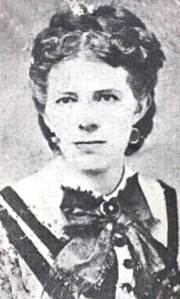
From 2012 to 2015, Stillness of Heart will share interesting excerpts from the extraordinary diary of Kate Stone, who chronicled her Louisiana family’s turbulent experiences throughout the Civil War era.
Learn more about Stone’s amazing life in 1861, 1862, 1863, 1864, 1865 and beyond. Click on each year to read more about her experiences. You can read the entire journal online here.
(Photo edited by Bob Rowen)
Stone’s last three entries in her diary are from September 1867 and 1868. They form a somber epilogue to her chaotic Civil War journey. They capture a bitter reflection of a shattered Southern slaveholding society, adrift, confused, and afraid of a world in which they no longer rule.
A long silence and a year of hard endeavor to raise a crop, reconstruct the place with the problem of hired labor, high water, and cotton worms. Mamma had little trouble in getting advances in New Orleans to plant. Cotton is so high that merchants are anxious to advance to put in a crop, and there is much Northern capital seeking investment in that field. … The Negroes demanded high wages, from $20 to $25 for men, in addition to the old rations of sugar, rice, tobacco, molasses, and sometimes hams. Many of the old hands left, and My Brother went to New Orleans and brought back a number of ex-Negro soldiers, who strutted around in their uniforms and were hard to control. I was deadly afraid of them.
During the spring while Mamma and I were in New Orleans (Mamma on business and she took me for my pleasure), and Uncle Bo and My Brother and Jimmy were away for a few hours, Johnny had a fight with a young Negro in the field, shot and came near killing him, and was mobbed in return. Johnny would have been killed but for the stand one of the Negroes made for him and Uncle Bo’s opportune arrival just as the Negroes brought him to the house a howling, cursing mob with the women shrieking, “Kill him!” and all brandishing pistols and guns. It came near breaking up the planting, and it is a pity it did not as it turned out. Johnny had to be sent away. He was at school near Clinton [Miss.] and the Negroes quieted down and after some weeks the wounded boy recovered, greatly to Johnny’s relief. He never speaks now of killing people as he formerly had a habit of doing. He came home when school closed and there was no further trouble.
Then the water came up and we were nearly overflowed. The cotton planted was very late, and when it was looking as luxuriant and promising as possible and we saw ease of mind before us, the worms came. In a few days the fields were blackened like fire had swept over them. We made about twenty bales and spent $25,000 doing it. What most distresses me is that none of that money went for our personal comfort. All of it went to the Negroes. Mamma would buy only bare necessaries for the table and plainest clothes for the family. Not a luxury, no furniture, carpets, or anything. We are worse off for those things than even in Texas and such a sum spent! But Mamma said it was not honest to spend the money on anything but making the crop. All in this section have suffered in the same way, and for awhile they seemed stunned by their misfortunes. But now the reaction has come, and all are taking what pleasure offers.
Old neighbors and new ones have come in and all seemed to be anxious to be together and talk over their trials and tribulations. There has been much visiting and various picnics and fish frys. I would not go at first. I felt like I did not want to see anybody or ever dance again. I felt fully forty years old, but Mamma made me go after a good cry. Once there, I was compelled to exert myself, and soon I was enjoying it all. The burden of some of the years slipped from my shoulders, and I was young again. It was pleasant to talk nonsense, to be flattered though one knew it was flattery, and to be complimented and fussed over. So since then, Mamma, the boys, and all of us have been going to everything and have found even poverty in company more bearable than when suffered alone. …
September 1868
Rose Hill
In January My Brother rented this place knowing that Brokenburn would be again overflowed, and we moved out the latter part of the month. My Brother lost money again last year planting, and this year he determined to farm, planting a little of everything.
Johnny and Jimmy are both at home, and having nothing to do pulled off their coats and rolled up their sleeves and went to work to raise a crop of corn and potatoes for themselves. They have succeeded well as they will clear several hundred dollars.
We all regret so much Jimmy’s refusal to go buck to the hospital. … We fear he is throwing away the best chance of his life. The boys are so hot and tired when they come in from the fields. …
Sept. 28, 1868
Rose Hill
Mother has been in Vicksburg for a month on a visit to Aunt Sarah. It is her first outing for eighteen months. We hope it will benefit her — her health has been bad for more than a year. She is seldom out of bed more than a week at a time. It took great persuasion and the pointed urging of the whole family to induce her to go on this visit that Aunt Sarah has been begging her to take for months.
Jimmy is now on the wharf boat, Johnny at Omega, and Sister, My Brother, and I have it all our own way with but little to do. My Brother is making an excellent crop and is much more cheerful. …
How we wish Sister could be sent off to school for two years, but it has been impossible. No money. … Let us hope that now the current will change and success will be our portion, as the outlook is brighter than for three years.
This is a pleasant neighborhood … and everybody has been kind and polite about calling and coming in at all times. [The other day we] had another of those inevitable dances that have been given so often this summer. Mary and Katie Byrnes, Louise Meagher, and the other girls never seem to tire of them, but they wear me out — such a sameness. I doubt not that I am getting too old for such gaieties. The men and boys about here are so silly and boyish in conversation. …
It has been an enjoyable life since we came here in January. It is a pleasant enough cottage house, after we got it thoroughly cleaned. There is a lovely little flower yard and a splendid orchard, and the kindest and most sociable neighbors with various little entertainments and dances. …We have new books and papers ad libitum, a luxury we missed for years.
My Brother has just sent Mamma money to buy our winter clothes, and Sister and I are jubilant at the prospect of new dresses and bonnets. We have lived on very little of late years, little bought that was not absolutely necessary. They have dressed me better than any of the others. I have not wanted for anything indispensable for a young lady, but the only money I have spent really as I wished was five dollars of the ten Uncle Bob gave me when Mamma and I went to New Orleans three winters ago. …
What splendid fellows my brothers are. They are all so good to us and such handsome boys. Sister looks almost the same, scarcely older than three years ago. We hope she can go to school this fall and make her debut next fall. If not, I shall beg Mamma to put long dresses … on her and bring her out this winter. She has a gay cheerful nature, and I hope will have a happy girlhood.
Mamma’s bright hopeful spirit never change. She is us always the ruling power with us all, the center and light of our home. How much she will have to tell us on her return, and maybe Aunt Sarah will come with her.
Well, this is the last page of the book that has gone with me through all our journeying. Looking back to the beginning so many years ago, I realize what an unthankful, wicked girl I was not to be supremely happy. With youth, health, and everything surrounding me for comfort and happiness. with unmistakable blessings, I was yet an unsatisfied, discontented girl. It has taken trouble to teach me my faults, and how earnestly I try now to enjoy instead of repine, to be thankful instead of fault-finding. I will try always to see the silver lining to the cloud. All my life I have been surrounded with love and care, far more than I deserved, and I will try in the future to be more worthy of the blessings that brighten my pathway.
So this is the end — shall I ever care to write again?
This week: CSS H.L. Hunley emerges / Writing: A job or a calling? / Solving a math mystery / Gaza children with PTSD / What caused her cancer?
This week: CSS H.L. Hunley emerges / Writing: A job or a calling? / Solving a math mystery / Gaza children with PTSD / What caused her cancer?
Most of these great items come from my social media networks. Follow me on Twitter, Tumblr, LinkedIn, MySpace, and Facebook for more fascinating videos, photos, articles, essays, and criticism.
2.Facebook needs a ‘Sympathy’ button By Amy-Mae Elliott | Mashable | Jan. 25
” It can mean a feeling of pity or sorrow for someone else’s misfortune, and also an understanding between people — a common feeling.”
3.Is Being a Writer a Job or a Calling? By Benjamin Moser and Dana Stevens | Bookends :: Sunday Book Review | Jan. 27 Moser: “Even the best writing won’t have the immediate, measurable impact of a doctor’s work, or a plumber’s.” Stevens: “Of course a writer is going to lean toward saying writing is a calling — that’s our job.”
4.The Pursuit of Beauty By Alec Wilkinson | The New Yorker | Feb. 2
“Yitang Zhang solves a pure-math mystery.”
5.Hundreds of thousands of children shell-shocked after the war in Gaza By Robert Tait | The Telegraph | Jan. 29
“Children who saw their siblings or parents killed, often gruesomely, have been left stricken, and around 35 per cent to 40 per cent of Gaza’s million children are suffering from shell-shock according to Hasan Zeyada, a psychologist with the Gaza Community Mental Health Programme.”
6.What Caused My Cancer? By Shana Bernstein | Pacific Standard | Jan. 29
“Was it bad genes? Bad luck? Or was it the toxins I eat, drink, breathe, and touch on a regular basis because the United States has a policy of putting the burden of proof for product safety on the consumer?”
7.The Fire of 1910 — Why It Still Matters By Timothy Egan | Inside American Experience | Jan. 29
“Never in recorded United States history has there been anything to match the fire of 1910. For its size, its ferocity, its impact, nothing comes close.”
8.50 years after funeral, Churchill towers over UK politicians By Jill Lawless | Associated Press | Jan. 30
“Modern politicians know better than to invite comparisons to the larger-than-life Churchill — a noted ‘bon vivant’ … who kept 10 Downing St. stocked with Pol Roger Champagne.”
9.Seven questions every editor should ask the writer By Roy Peter Clark | Poynter | Jan. 30
“After asking these questions to hundreds of writers, I have confidence that the answers provided by the writer can guide a coaching editor on how best to help the writer over time.”
10.For Incarcerated Japanese-Americans, Baseball Was ‘Wearing the American Flag’ By Michael Beschloss | HistorySource :: The New York Times | June 2014
“By 1943, when some of those in the relocation camps were allowed to volunteer for war service, some of the ballplayers joined the Army’s almost all-Japanese-American 442nd Regimental Combat Team, which suffered grievous casualties in Europe and came to be called the most decorated military unit in American history.”
The first rays of happiness in 1864 come in the form of a letter from Stone’s brother and the hope for a new carriage.
From 2012 to 2015, Stillness of Heart will share interesting excerpts from the extraordinary diary of Kate Stone, who chronicled her Louisiana family’s turbulent experiences throughout the Civil War era.
Learn more about Stone’s amazing life in 1861, 1862, 1863, 1864, 1865 and beyond. Click on each year to read more about her experiences. You can read the entire journal online here.
(Photo edited by Bob Rowen)
The first rays of happiness in 1864 come in the form of a letter from Stone’s brother and the hope for a new carriage.
Jan. 13, 1864
Tyler, Texas
Good news from My Dearest Brother today. He is almost well and has rejoined his regiment. We heard through a letter from Capt. Manlove December 8. Flora Manlove, Tom’s wife, sent a nice little note to me in the letter. How sweet of her to write. We have only a slight acquaintance, but she knows My Brother well and saw him, quite recently in Virginia. Capt. Manlove is so kind. He writes Mamma by every opportunity.
A letter from My Brother, written in March. Other letters for Mrs. Carson urging her to come North. Different Yankees at Monroe and Vicksburg will send her on, but she will not hear of it. It is a good thing. She is wise enough to see that such schemes for abandoning all that they have are foolish in the extreme.
Dr. Wylie is spending the evening and night. What a sordid soul that man has. Did he ever perform a generous action in his life of forty years? …
Mamma sent a letter to Mr. Smith yesterday, and if he can get what she writes for we shall feel quite independent. The first desideratum is a carriage.
Kate Stone’s brother returned with news of a beloved Louisiana crawling with Federal troops and Unionists. Stone was enraged, disgusted, and insulted.
From 2012 to 2015, Stillness of Heart will share interesting excerpts from the extraordinary diary of Kate Stone, who chronicled her Louisiana family’s turbulent experiences throughout the Civil War era.
Learn more about Stone’s amazing life in 1861, 1862, 1863, 1864, 1865 and beyond. Click on each year to read more about her experiences. You can read the entire journal online here.
(Photo edited by Bob Rowen)
Kate Stone’s brother returned with news of a beloved Louisiana crawling with Federal troops and Unionists. Stone was enraged, disgusted, and insulted.
Oct. 8, 1863
“Elysian Fields,” Lamar County, Texas
The last few days have been full of interest. First, Johnny returned only last night, and this opens the gates of release from this region of sin and woe. We think we can get off on Monday. Uncle Johnny has been awaiting only Johnny’s return to move on, and they will start on their long journey on Saturday over 300 miles. Thus Johnny’s arrival has been the signal trumpet calling us all to horse and away.
A letter from Julia in which she says My Brother was twice severely wounded in his right arm in the battle of Gettysburg. He has recovered and is with his command but has lost the use of his right hand. We are truly thankful it is no worse. If we could only hear all that has happened to him since seeing him last, but we know so little. Poor fellow, this is his fifth wound and the most severe of all. We so hope he can get a furlough this fall. It worries me to hear of Tom Manlove’s frolicking about, getting married and enjoying himself in every way, getting all the honor, while My Brother, who is worth ten of him, gets only the hard work of the camp and the wounds. … I can write and think myself into a fever about My Brother.
Julia is still at Camden. All wagons have been impressed to remove government stores, and so they cannot get away. She heard through Robert Norris, who wrote asking news of his aunt, that Uncle Bo is well and is now a 1st lieutenant. We are so glad of his promotion. Not a word of Brother Coley, and we are very anxious about him. Joe Carson is regimental colorbearer, a dangerous post. …
Johnny gives a dreadful account of affairs in and around Delhi and Monroe. Most of the citizens remaining boast of being Unionists and carry on a most profitable trade with Vicksburg. The Yankee cavalry came out to Monroe by invitation, and a number of citizens signed a petition asking them to come out and drive away our soldiers still there. This is too disgraceful to be true. Then, a great number of Louisianians have deserted. My cheek crimsons as I write this of our own beloved state, but I cannot believe that she has brought her name to be a disgrace and reproach to her loyal children. …
A simple carriage-ride day trip for Kate Stone and her friend Kate turned into a nightmare.
From 2012 to 2015, Stillness of Heart will share interesting excerpts from the extraordinary diary of Kate Stone, who chronicled her Louisiana family’s turbulent experiences throughout the Civil War era.
Learn more about Stone’s amazing life in 1861, 1862, 1863, 1864, 1865 and beyond. Click on each year to read more about her experiences. You can read the entire journal online here.
(Photo edited by Bob Rowen)
A simple carriage-ride day trip for Kate Stone and her friend Kate turned into a nightmare.
Oct. 2, 1863
“Elysian Fields,” Lamar County, Texas
We got a late start [on our shopping trip] … with a tired horse and in a drizzling rain, and we had not gone two miles before our bad luck caught up with us.
Uncle Johnny took the wrong road, and we soon found it out and urged him to turn around. He avowed his horror of anything like a backward movement and kept on his chosen way, thinking it would lead into the right road. We traveled on for several miles, leaving home farther and farther away, until at last our united persuasions induced him to turn and cut across the country instead of heading straight for Arkansas, as we were doing. After a wearisome ride thorough stubborn thickets and hogwallow prairie, we at last reached the Paris road and went on rejoicing, but our troubles were just beginning.
A slow pattering rain set in and the buckshot prairie soil grew heavy and more heavy, and our gallant grey was visibly tired. We got out of the Jersey in the pouring rain to cross Sulphur Creek, the bridge like most Texas bridges being only a trap for the unwary. With wet heads and muddy feet, we climbed in again, congratulating ourselves that we would soon be at home. Vain hope. Night came on apace, wrapped in her sable mantle and unbrightened by a star, and we were still four miles from our own hearthstone with a horse only able to drag on in a slow walk. Again we took the wrong road and wandered off on what looked in the uncertain light like a boundless prairie with not a house or road in sight. Again as in the morning we begged Uncle Johnny to turn back to the right road, but true to his expressed principles he refused. We journeyed on, leaving the horse to find his way and straining our eyes to discern a light, but the only lights were those shining up through the tangled grass, the countless glowworms with their gleaming crests. At last plodding along in the Egyptian darkness, the horse gave out entirely, and … we were forced to camp out.
We picketed out the poor horse and wrapped ourselves in bolts of calico and woolen, for we had not a wrap of any kind and it had grown very chilly. Crouching in the Jersey, we resigned ourselves to sweet slumber, but nature’s kind restorer, balmy sleep, was safely sheltered in warm homesteads and was not to be coaxed out on the bleak cold prairie. Twisting and turning we wore the hours away until we discovered that the horse was off picket, and such a chase as Uncle Johnny had to catch him, while we had visions of wandering lost on the prairie for days.
As soon as the first tints of day crimsoned the east, Uncle Johnny set off for home to bring relief to two distressed damsels. The horse was too spent to take us all home. How we laughed at the figure Uncle Johnny presented when he started off with a cushion for a saddle. Kate and I at once went to sleep. Jimmy found us cuddled down in the bottom of the Jersey fast asleep when several hours later he came to our relief with a fresh horse. We reached home at last just before dinner, two forlorn-looking wights and very hungry.
Stone mourns what has been lost as she finishes her tale of escape. “So passes the glory of the family.”
From 2012 to 2015, Stillness of Heart will share interesting excerpts from the extraordinary diary of Kate Stone, who chronicled her Louisiana family’s turbulent experiences throughout the Civil War era.
Learn more about Stone’s amazing life in 1861, 1862, 1863, 1864, 1865 and beyond. Click on each year to read more about her experiences. You can read the entire journal online here.
(Photo edited by Bob Rowen)
Stone mourns what has been lost as she finishes her tale of escape. “So passes the glory of the family.”
April 27
Near Trenton, La.
Mamma and Johnny are out hunting up bed clothes and anything else buyable since we need everything, and Sister and I are left to ourselves this rainy day. So I may as well finish the recital of our woes.
We left our clothes in care of Uncle Bob who has been as faithful as any white man could be. He is Mamma’s driver on the plantation. And we piled ourselves and our scanty luggage into two rocking, leaky dugouts and pushed off, Jimmy paddling one and Coffee, one of Dr. Carson’s hands, the other. The sight of a body of horsemen in the distance coming our way lent strength to their arms, and as fast as they could ply the paddles we glided through the water. The men came on down the road, and we saw they were Yankee soldiers. But the water was so deep that they could not ride fast and we kept ahead. At last after nearly a mile of this race, the boats shot out into deep water, and we were safe from pursuit. Then what a shout rang out for Jeff Davis and the Confederacy. The men could see and hear us distinctly, and we half expected a volley to come whizzing over the waters. But the boys would not be restrained, and their “Farewell to the Feds!” “Hurrah for Jeff Davis!” and “Ho for Texas!” floated over the waters ’til we were out of sight. The Yankees followed us until their horses were nearly swimming.
After rowing a few miles, we joined Mr. Hardison and his family at the Jones place in the middle of Tensas swamp. They were in a skiff and had been waiting for us for some time. All his family and all his worldly possessions were in that skiff and it was not loaded, so quickly had he been reduced from affluence to poverty. We went on in company and were in the boats for seven hours in the beating rain and the sickening sun, sitting with our feet in the water. Not an inch of land was to be seen during the journey through the dense swamp and over the swift curling currents. The water was sometimes twenty feet deep, rushing and gurgling around the logs and trees. We all stood it very well except Aunt Laura. She was terrified nearly to death and was alternately laughing and crying. She insisted on giving the rower directions and, as he was a slow African, confused him so that he forgot how to pull and ran us into brush piles innumerable. At last he said, “Now, Mistress, you just tell me how to pull and I’ll do it.” So Aunt Laura and Mamma steered the boat viva voce, and he did the hard pulling. I thought they surely would make him turn us over, since a dugout goes over with such ease. At last we came to a clearing, and the boats had to be pulled over the land. We walked a path lined with brambles, and our dresses were nearly torn off. Johnny suffered with fever nearly all day.
As we were passing Mr. Anderson’s, heavy clouds rolled up, and it looked like a coming storm. Aunt Laura and Mrs. Hardison declared they would not go on but would stop right there, and so our boats were headed for the gallery.
They were all under water since it was a little bit of a house, but we carried it by storm without a remonstrance from the owners, who were as kind as could be. Mamma and I were wet nearly to our waists, and the floor looked like it had been scoured when we passed over it. But the dear little lady did not seem to mind it a bit. I had a great bag of Aunt Laura’s gold around my waist. It was very heavy, and just as I stepped on the gallery the belt gave way and it came down with a crash. A foot nearer and it would have fallen in the water, and I suppose we never would have found it. That evening Dr. Carson came to take us to his house but Aunt Laura felt too worn out to go. Mamma stayed with her, and Sister, the boys, and I went on with Dr. Carson. The next day the others joined us there. The whole family received us most kindly, and oh what a relief it was to get to a place of rest and to feel safe once more.
That night there was a most terrific storm which did not even waken me. I slept like the dead. I was completely exhausted by fatigue, excitement, and loss of sleep. … Aunt Laura and Mamma said they were worse frightened by the storm than they had been by anything else. They had not had a brutal Negro man standing on their dress and fingering a pistol a few inches from their heads. I can stand anything but Negro and Yankee raiders. They terrify me out of my wits. …
We spent nearly three weeks at Dr. Carson’s most delightfully. Books, music, rest, and pleasant company charmed the hours away until came news of our great bereavement.
The Negroes at Dr. Carson’s were almost as much demoralized as those on the river. The night after we reached there, a skiff load attempted to escape but were followed and captured after being fired on several times by Jimmy. Fortunately he did not hit any of them.
Now for a list of our losses. All the clothes left in the cart were taken by Mr. Catlin’s Negroes, Uncle Bob being unable to protect them. They comprised most of our underclothes and dresses, all my fine and pretty things, laces, etc., except one silk dress, all our likenesses, and all the little family treasures that we valued greatly. Little Sister did not get off with a change. Mrs. Carson kindly had a suit made for her. Mamma and I have barely a change and the boys have only what they have on. They lost theirs after getting them out here.
Aunt Laura has lost everything except barely enough to do with for a time. Beverly’s things were mostly saved. Aunt Laura’s trunk, packed with a quantity of beautiful clothes, laces, silks, velvets, and so on, was sent to Mr. Anthony’s in the vain hope that it would be safe. We hear, however, that the Yankees, informed by Webster, went there, demanded Mrs. Buckner’s trunk, took it to Grant’s headquarters, and that is the last of it. Some say they just broke it open and divided up the spoils. Both Mamma and Aunt Laura have lost all their bedding, table linen, etc. Our house is stripped of furniture, carpets, books, piano, and everything else, the carriage, buggy, harness, and everything of that kind. Also they have thirty Negroes still on the place we shall probably never see again.
Mamma regrets coming away as she did, but what else could she do? We could not stand more than anyone else, and nearly everyone left before we did. Our mistake was in not moving everything in the fall. Charles and Annie were the only two Negroes who would come with us, and they are only half-grown. So passes the glory of the family.
Cold War myths / Classics’ future / Talking to yourself / Boozy writing / Gossipy grandma
Most of these great items come from my Twitter feed or Facebook news feed. Follow me on Twitter and on Facebook for more fascinating videos, articles, essays and criticism. Read past recommendations from this series here.
1.In 2012 race, both sides seek middle-class voters By Erica Werner | Associated Press | Dec. 24
“Fighting to win over unhappy American voters, President Barack Obama and his Republican challengers are seizing on one of the most potent issues this election season: the struggling middle class and the widening gap between rich and poor.”
2.The Forgotten Cold War: 20 Years Later, Myths About U.S. Victory Persist By Leslie H. Gelb | The Daily Beast | Dec. 23
“This month is the 20th anniversary of its end, but few remember how it dominated our lives. What does stick in people’s heads, writes Leslie H. Gelb, is wrong — that Reagan won the war with big military spending and toughness.”
3.Do the Classics Have a Future? By Mary Beard | The New York Review of Books | January 2012
“[H]ow do we make the ancient world make sense to us? How do we translate it?”
4.For Joplin, a Love Letter in Ruins By A.G. Sulzberger | The New York Times | Dec. 25
“The reason this house has so far survived the wrecking ball can be found scribbled on its walls, on its floorboards, in its closets and along virtually every other remaining surface. They are personal messages, thousands of them, handwritten by the volunteers who flooded the community to help sift through and cart out the debris.”
5.Thinking Out Loud By C. Claiborne Ray | Q&A :: The New York Times | September 2009
“Why do ‘normal’ people talk to themselves?”
6.Barcode Scanning Apps By J.D. Biersdorfer | Gadgetwise :: The New York Times | Nov. 16
“Once scanned, most apps present a list of places and prices the scanned item can be found, which makes comparison-shopping even easier on the go.”
7.The Dreamers By Amie Williams | Activate :: Al Jazeera | September 2011
“Roughly two million young people in the US are unaware that they are classified as illegal immigrants.”
9.I can’t get along with my grandma, who loves to gossip, criticize Troubleshooter :: The Yomiuri Shimbun | Dec. 16
“When we all sit down for dinner, she loves to gossip and speak ill of people, talking about how much money they have or their level of education.”
10.Isherwood in Berlin Witness :: BBC News | March 18
“The English author Christopher Isherwood lived in Berlin throughout the 1930s. His vision of the city has been linked with the German capital ever since.”
A new Canary island … Scorsese’s best … al-Qaida in Africa … Bachmann’s journey … Girl gangs
Most of these great items come from my Twitter feed or Facebook news feed. Follow me on Twitter and on Facebook for more fascinating videos, articles, essays and criticism. Read past recommendations from this series here.
1.Canary Island volcano: A new island in the making? By Rob Hugh-Jones | The World and BBC News | Dec. 3
“An undersea volcano erupting just south of Spain’s Canary Islands may be the beginnings of a new island, or an extension to an existing one. For some, it’s a colourful spectacle — for others a major blow to their livelihood.”
2.Martin Scorsese’s greatest movies By Matt Zoller Seitz | Salon | Dec. 3
“‘Raging Bull’s’ a contender, and ‘Taxi Driver.’ Which other films round out the iconic director’s best?”
3.Dreaming May Help Relieve a Bad Day My HealthNewsDaily | Nov. 23
“The results show that during nighttime dreaming, also known as REM sleep, the brain processes emotional experiences in a ‘safe’ environment, or one in which stress chemicals are low. This processing may take the emotional edge off of difficult memories, the researchers said.”
4.Candy, cash — al-Qaida implants itself in Africa By Rukmini Callimachi and Martin Vogl | Associated Press | Dec. 4
“The terrorist group has create a refuge in this remote land through a strategy of winning hearts and minds, described in rare detail by seven locals in regular contact with the cell.”
5.Bachmann, from Waterloo to White House contender By Adam Geller | Associated Press | Dec. 3
“The choreographed repetition of modern presidential campaigns can turn the most personable candidate into an endless loop of talking points. But any close observer of Bachmann’s political career would be hard-pressed to dismiss her as two-dimensional.”
6.Plastic Bag Bans Spreading Across The United States By Jordan Howard | The Huffington Post | Dec. 1
“Four cities in Oregon — Eugene, Corvallis, Newport and Ashland — are considering banning plastic bags at retail stores. The towns would join at least 10 other U.S. cities and counties that have prohibited plastic bags since 2008.”
8.Chelsea Clinton, Living Up to the Family Name By Amy Chozick | The New York Times | Dec. 3
“Her move to television was a career shift she initiated, having her close advisers arrange interviews with top network executives and at one point working with the powerful Creative Artists Agency.”
9.Which Faulkner Novels Should HBO Adapt? By David Haglund | Browbeat :: Slate | Dec. 2
“Clearly this is a question for true Faulkner aficionados, so I posed it to a handful of writers who know his work intimately—starting with a novelist who’s no slouch himself when it comes to literary adaptations.”
10.Rise of the girl gangs By Brad Hamilton | The New York Post | Dec. 3
“As ‘crews’ proliferate in New York’s housing projects, officials worry about the increasing brutality of all-female wolfpacks”












 Stillness of Heart
You must be logged in to post a comment.