Dec. 31, 1999: The last day of the past

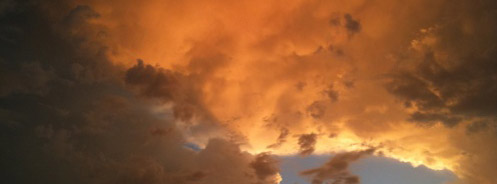
IMG_0290

On Dec. 31, 1999, I was a junior news editor at the Corpus Christi Caller-Times, the newest member of a team of about a dozen editors and page designers. Reporters mostly worked during the day writing the stories. Editors like me worked at night editing the stories and assembling and designing the newspaper. So I was shocked and elated when my supervisor told me in late December that I wouldn’t have to work on New Year’s Eve. I was smart enough not to ask why. My then-girlfriend was coming to Corpus Christi to celebrate with me, and I was looking forward to a long, romantic night in a downtown hotel.

But on the morning of the 31st, my supervisor called and apologetically asked me to come in for a few hours that night to help edit the extra-big pile of stories for the first edition of the new year. He assured me that I could leave by 7 or 8 p.m. I agreed, trying to sound gracious and appreciative of his promise of an early release. The promise of extra overtime pay further softened the news. I informed my girlfriend of the minor change in plans, which wouldn’t drastically affect our evening.

I dutifully returned to my desk in the newsroom, and I explained to my puzzled (and relieved) colleagues why I was there. As I settled in, I gradually realized there was nowhere else I wanted to be that night (if only for a few hours).

There were great advantages to sitting in a newsroom that night, if only because of the tremendous access I had to countless news services from around the world. Every news service offers special packages every year that examine, analyze, celebrate, or condemn developments in politics, technology, science, sports, film, and music over the past twelve months, but this year was different. The millennial angle brought rich historical and cultural flavors to the coverage. That year, there were fascinating and thoughtful reflections on the evolution of democracy throughout human history, the torments and treasures technology brought to human civilization, and the great and terrible conflicts and comforts religion brought to every society.

That year’s year-end gaze focused as far on the future as it did on the past, predicting peace for most of the world, except for the inevitable tensions between a resurgent China and the post-Cold War United States. Analysts predicted that an economically healthy world would strengthen even the weakest societies in Africa and the Middle East. Terrorism was mentioned, but only in passing as one of a series of minor dangers the U.S. of the future might have to confront and snuff out. Foreign affairs experts predicted the imminent liberation of (and possible civil war in) Cuba once the Castro brothers died. Some political analysts wondered what an Al Gore presidency would look like.

That night I watched live news coverage of the (symbolic) new millennium dawning on the other side of the world. I cheerily chatted with my new co-workers. I munched on the growing buffet of sandwiches, fruits, and vegetables the newspaper ordered for the staff. I noticed a strange new sensation growing in my body, a warm happiness enveloping my heart and mind. Later I realized that warmth I felt was a deepening love for my new job, specifically for the particular intellectual role I played in the newsroom. There was an energy in the air that night, something I never felt before, and something I would feel for the next ten years, every time the newsroom mobilized to absorb and understand a big news event. I was part of something noble, challenging, and fulfilling. I was part of something that mattered.

There was another important reason why I wanted to be in the newsroom on that night, another important explanation for that tense excitement in the air. For months, the news wires were filled with stories about Y2K, the looming technological disaster everyone feared might take place at midnight. Technology experts, military officials, and others fretted about what might happen when the calendars in software programs and defense systems turned from 12-31-99 to 01-01-00, or some other variation of a date dominated by so many zeroes. Would there be power failures? Would computers everywhere melt down? Would planes fall out of the sky, hospital life-support machines shut down, or satellites spin out of control? Would defense systems accidentally launch missiles at Russia or at the U.S.? Would the symbolic end of the millennium inaugurate an actual Armageddon?

Despite these concerns, no one in the general populace seemed to be seriously concerned about Y2K. Government officials, scientists, and engineers were well aware of the potential problems, and the general consensus was that most of the spots in software, where there might be glitches over those zeros, were fixed. Russian and American military officials teamed up to monitor defense systems in an admirable display of transparency and professionalism. No one really knew what might happen. One of my favorite podcasts, “Witness” from the BBC World Service, recently examined the worries over the “Millennium Bug.”

Nevertheless, Times Square in New York City filled up with its usual crowds of bundled-up revelers with their strange eyeglasses, hats, and signs. Peter Jennings anchored ABC News coverage from New York, smiling to himself as he tried to speak to increasingly inebriated correspondents from Asian and European capitals, where the skies exploded with fireworks, church bells pealed, and the streets filled with millions of people, all dancing, kissing, and cheering. I imagined myself in Paris with my girlfriend, holding hands on the riverbank, sharing a deep kiss, the Eiffel Tower’s searchlight sweeping across the cloudy sky above us, the twinkle of distant fireworks sparkling in her dark eyes. Someday, I told myself, I’ll take her there.

Eventually, the newsroom’s clock struck 8 p.m., and my supervisor thanked me for helping edit the extra-big pile of stories for tomorrow’s edition. I smiled, shook his hand, and wished him and and my envious co-workers a happy New Year. I strolled out of the newsroom, glancing one last time at the TV. Peter Jennings smiled as he reviewed the growing crowd in Times Square. It was a smile I never forgot. I spent the rest of the night as I hoped I would. My girlfriend and I had a romantic and relaxing evening — the perfect end to the year, the century, and the millennium.

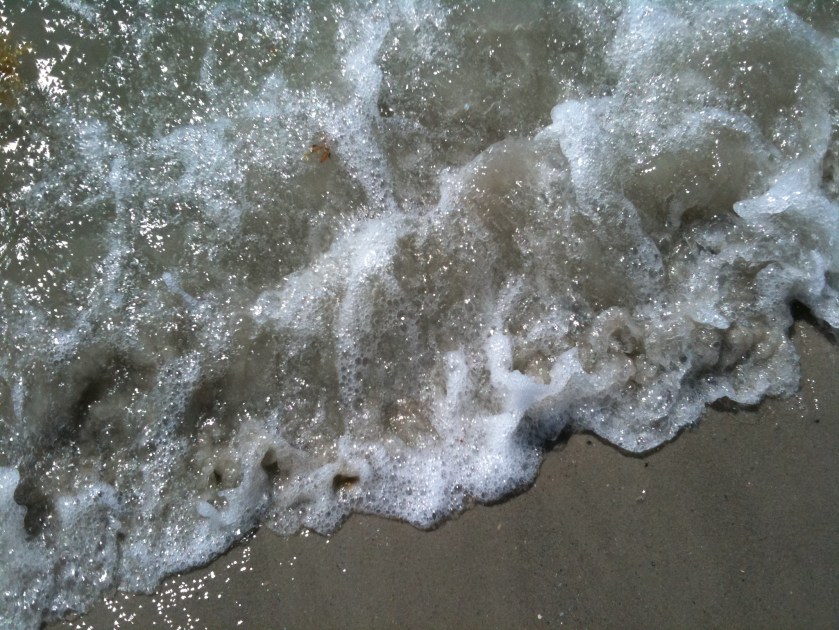
In the morning, we learned the world did not end. Instead, the first day of the new millennium was bright, breezy, and warm. We had breakfast and then drove to Padre Island. Amazingly, the beach was empty. She and I walked together through the frothy waves hissing across the yellow sand. I stared out across the water, shielding my tired eyes from the sunshine. A new year, I thought to myself. I felt a greater sense of hope, determination, and ambition at that moment than ever before. I felt fortunate, safe, and content. I asked myself, would I ever feel like this again?

I glanced at my girlfriend, radiant in the morning light, slowly dancing her way down the beach, watching the water flow around her legs, her gleaming black hair streaming down her shoulders, her arms outstretched to catch the breeze. She smiled at me. I took her hand in mine. It was time to move on. The future awaited.

Recommended reading / viewing / listening

This week: George Michael dies / 2016’s best science stories / Texas and Planned Parenthood / What men should know by 22 / Plantations and public history

img_3123

This week: George Michael dies / 2016’s best science stories / Texas and Planned Parenthood / What men should know by 22 / Plantations and public history

Most of these great items come from my social media networks. Follow me on Twitter, Instagram, Tumblr, LinkedIn, and Facebook for more fascinating videos, photos, articles, essays, and criticism.

1. Ex-Wham singer George Michael dies
BBC News | Dec. 25
“The star … is said to have ‘passed away peacefully at home.’ … Police say there were no suspicious circumstances.”

2. Ordered Deported, Berlin Suspect Slipped Through Germany’s Fingers
By Alison Smale, Carlotta Gall, and Gaia Pianigiani | The New York Times | Dec. 22
“Amri’s life and odyssey underscore a vexing problem, common in Europe: how to handle hundreds of thousands of virtually stateless wanderers who are either unwilling or unable to return home.”

3. ‘Life disappeared before my eyes’: photographer describes killing of Russian ambassador
By Burhan Ozbilici | The Guardian | Dec. 19
“Associated Press photographer Burhan Ozbilici went to view an exhibition in Ankara but instead witnessed the assassination of Andrei Karlov”
Also, from the Associated Press: A look at the most significant attacks in Turkey in 2016

4. The Most Popular Science Stories of 2016
By Andrea Gawrylewski | Scientific American | Dec. 19
“The presidential election took center stage, but our readers were also fascinated by everything from particle physics and rage disorder to autism in girls and the polar vortex”

5. The Best TV Performances of 2016
By Tim Goodman and Daniel Fienberg | The Hollywood Reporter | Dec. 20
Sadness, fear, strength, vulnerability — 2016 had an incredible array of acting achievements.

6. Texas officially kicking Planned Parenthood out of Medicaid
By Alexa Ura | The Texas Tribune | Dec. 20
“Planned Parenthood had previously received $3.1 million in Medicaid funding, but those dollars will be nixed in 30 days …”

7. 22 Things Men Should Know By Age 22
By Todd Brison | Medium | Dec. 15
“Most of the people in your life now will not be there in 5 years. Tell them how much they matter to you today.”

8. The Plantation Tour Disaster: Teaching Slavery, Memory, and Public History
By Niels Eichhorn | Muster :: Journal of the Civil War Era | Dec. 5
“Regardless whether a plantation does or does not cover slavery, they provide an interesting mechanism to teach about the institutions of the Old South, collective memory, and public history.”

9. Mexico: The Cauldron of Modernism
By J. Hoberman | NYR Daily :: The New York Review of Books | Dec. 12
“To a degree, ‘Paint the Revolution’ is the story of the three star muralists, Diego Rivera, David Siqueiros, and José Clemente Orozco, who along with the posthumously canonized Frida Kahlo, defined the new Mexican art.”

10. From White Knight to Thief
By Michael Beschloss | HistorySource :: The New York Times | September 2014
“At the start of the terrifying market plunge of October 1929, he had bravely helped shore up the market by parading around the exchange floor, placing bids for shares of U.S. Steel, as well as other blue-chip holdings.”

Recommended reading / viewing / listening

This week: The truth of ‘Westworld’ / U.S. interference with other democracies / Einstein’s first wife / A new era of Reconstruction / James Buchanan’s presidential transition

img_1997

This week: The truth of ‘Westworld’ / U.S. interference with other democracies / Einstein’s first wife / A new era of Reconstruction / James Buchanan’s presidential transition

Most of these great items come from my social media networks. Follow me on Twitter, Instagram, Tumblr, LinkedIn, and Facebook for more fascinating videos, photos, articles, essays, and criticism.

1. Trump names Conway counselor to president
By Brooke Seipel | The Hill | Dec. 22
“Conway will continue her role as a close adviser to Trump, working with senior leadership to further the his administration’s goals.”

2. Does ‘Westworld’ tell a truer story than a novel can?
By Stuart Kelly | The Guardian | Dec. 20
“The conventions of prose fiction are bound up with an understanding of life that feels more and more outdated — not so with this box-set drama”

3. The U.S. has a long history of hacking other democracies
By Mariya Y. Omelicheva, Ryan Beasley and Christian Crandall | Monkey Cage :: The Washington Post | Dec. 20
“We examined unclassified Central Intelligence Agency documents and historical academic research on U.S. interventions to identify 27 U.S. clandestine operations carried out between 1949 and 2000. Most U.S. ‘secret wars’ were against other democratic states.”

4. Russia Missing from Trump’s Top Defense Priorities, According to DoD Memo
By John Hudson, Paul McLeary, and Dan De Luce | Foreign Policy | Dec. 20
“Besides placing an emphasis on budgetary issues, ‘force strength,’ and counterterrorism in Iraq and Syria, the memo noted other briefings between the Defense Department and the Trump transition team on China and North Korea. But Russia was not mentioned.”

5. We are witnessing the birth pangs of a Third Reconstruction
By the Rev. William J. Barber II | ThinkProgress | Dec. 15
“We need a moral movement to revive the heart of American democracy and build a Third Reconstruction for our time. This work is not easy, and it will not be completed quickly. But we know what is required to move forward together.”

6. Harmony Amidst Division: The Cabinet of James Buchanan
By Rick Allen | Muster :: Journal of the Civil War Era | Dec. 17
“History never specifically repeats itself, but there are parallels between 1856, 1860, and 2016. As we, like Buchanan and Lincoln, transition from one era in our national history to another, let us remember the only way to achieve true success requires the inclusiveness of both people and ideas.”

7. Analysis: On transgender Texans and bathrooms, a call to stay calm
By Ross Ramsey | The Texas Tribune | Dec. 19
“Some Texas lawmakers were in a hurry to require transgender Texans to use the restrooms that match the genders listed on their birth certificates. But the policy and politics are complicated enough to prompt the governor to tap the brakes.”

8. The Making of an American Terrorist
By Amanda Robb | New Republic | Dec. 15
“Robert Dear shot up a Planned Parenthood clinic and killed three people. Did the right-wing media help turn a disturbed loner into a mass murderer?”

9. The Forgotten Life of Einstein’s First Wife
By Pauline Gagnon | Scientific American | Dec. 19
“She was a physicist, too — and there is evidence that she contributed significantly to his groundbreaking science”

10. The President Attends the World Series
By Michael Beschloss | HistorySource :: The New York Times | October 2014
“Herbert Hoover’s surprise appearance at Game 5 of the Philadelphia Athletics vs. the Cubs in Philadelphia, in October 1929, was one of the last happy moments of his presidency, occurring two weeks before the stock market collapse that ushered in the Great Depression.”

Book gems of 2016, Part 5

This week … a brief look at some of the best works on slavery and the U.S. Civil War era

IMG_1427

Summer is upon us, and the season of leisure is the perfect time for new stories, characters, ideas, and adventures. Throughout the next few weeks, Stillness of Heart continues its occasional series of critical recommendations, from Civil War battle histories to memoirs, and from intellectual histories to photobooks almost as beautiful as the natural world they celebrate.

Read Part 1 of this 2016 series here and subsequent essays in this series here.

This week … a brief look at some of the best works on slavery and the U.S. Civil War era

Emily West’s Enslaved Women in America: From Colonial Times to Emancipation (Rowman & Littlefield, 168 pp., $35) offers a stunning symphony of long-lost voices struggling to survive, caring for and protecting their children, and fighting to keep their communities intact. Few if any other scholars have studied slave women as deeply and broadly as West, and hopefully her work will become required reading in history and women’s studies courses throughout a nation and society that still owes them so much.

Patrick H. Breen’s The Land Shall Be Deluged in Blood: A New History of the Nat Turner Revolt (Oxford University Press, 304 pp., $23.96) recounts the fascinating story of the 1831 slave rebellion in Southhampton County, Virginia. He then analyzes whites’ reaction to the rebellion, which in some ways is even more complicated and unexpected. As mobs exacted brutal vengeance on the slave populations — guilty or not — slaveowners found themselves protecting their slaves from their own white neighbors. Breen examines the manufactured narratives the slaveholders provided to the lynch mobs and deepens our understanding of the precarious stability of the antebellum slaveholding societies.

Mark K. Christ’s Civil War Arkansas, 1863: The Battle for a State (University of Oklahoma Press, 336 pp., $19.95) offers a fascinating analysis of the campaigns for control of the strategically valuable Arkansas River Valley, which were (and still are) overshadowed by U.S. Grant’s brilliant Vicksburg operations unfolding at the same time. His work challenges scholars, students, and enthusiasts to look beyond traditional war histories and theaters and envision a far more complicated war and wartime era.

For a personal account of how the Civil War ripped apart Arkansas communities, spend some time with Torn by War: The Civil War Journal of Mary Adelia Byers, edited by Samuel R. Phillips (University of Oklahoma Press, 248 pp., $19.95). Union military forces occupied her hometown of Batesville. She witnessed unprecedented suffering. The war overturned her understanding of her place in her state and in her nation. Byers takes her place alongside Southern diarists like Mary Chesnut and Kate Stone as an important witness to the wrenching changes the war brought to the South.

Another fascinating primary source is Vicki Adams Tongate’s Another Year Finds Me in Texas: The Civil War Diary of Lucy Pier Stevens (University of Texas Press, 367 pp., $29.95). Stevens, from Ohio, found herself trapped in Texas when the war broke out. Fortunately, she channeled her concerns, observations, sense of humor, and wide-ranging interests into a diary, which is an incredible encapsulation of wartime Texas from an outsider’s perspective. It’s a Unionist memoir with an extra twist, touching on gender identities, social changes, and even political loyalties, specifically when, like Stone, Stevens grew fond of Texans.

Lone Star Unionism, Dissent, and Resistance: Other Sides of Civil War Tejas, edited by Jesus F. de la Teja (University of Oklahoma Press, 296 pp., $29.95), brings the necessary complexity to the story of Texas in the Civil War, shattering the assumption that the Confederate state was filled with Confederate loyalists. The essay anthology explores how Unionist Texans, slaves, German immigrants, Tejanos, women, and political leaders waged their own wars of independence or resistance throughout its societies and communities during and after the war.

John W. Robinson’s Los Angeles in Civil War Days, 1860-1865 (University of Oklahoma Press, 204 pp., $19.95) paints a portrait of a place starkly different from what we know today. The small California town stood in the long shadow of San Francisco, and war brought economic and social strife to the area. Robinson explores how it became a microcosm of the struggle between pro-Union and pro-secessionist forces, a battleground between different races and cultures fighting for dominance, and the site of sickness, drought, and riots.

Stephen D. Engle’s Gathering to Save a Nation: Lincoln and the Union’s War Governors (University of North Carolina Press, 624 pp., $49.95) highlights a rarely-explored perspective of the Civil War. Governors of the loyal states gathered troops for the Union armies, marshaled public support for the war effort, and calculated political support for the Lincoln administration. Engle’s work is part biography anthology, part political analysis, and part homefront history. Engle enriches all three aspects of Civil War literature and highlights relationships that were far more crucial to Union victory than historians previously understood.

Louise L. Stevenson’s Lincoln in the Atlantic World (Cambridge University Press, 283 pp., $79.99) is a valuable addition to the growing scholarship on the Civil War in a global context. Personally, it is one of the literature’s most exciting, challenging, and fascinating conversations. Stevenson considers the African and European influences on Lincoln’s growth into a “global republican,” a champion of democratic republics in a predatory world of empires and kingdoms, and the supreme warrior in that global struggle who faced the challenge of civil war and saved the future of democracy.

Laura F. Edwards’s A Legal History of the Civil War and Reconstruction: A Nation of Rights (Cambridge University Press, 226 pp., $64) reminds us that the Civil War’s greatest effect was on American law and on the redefinition of citizenship, with all the rights that came with it. But Edwards is also careful to remind us that initial improvements did not lead to ultimate success or justice. The incredible accomplishments of the war and the Reconstruction Era required sustained commitment from subsequent generations for the benefits of those triumphs to take hold. Her history is a cautionary tale for modern citizens who not only take for granted today’s freedoms but also forget how brittle those rights can be when not actively sustained and protected.

Life and Limb: Perspectives on the American Civil War, edited by David Seed, Stephen C. Kenny, and Chris Williams (Oxford University Press, 240 pp., $29.95), offers vital insight into medicine in the Civil War, one of the era’s saddest subjects. For the men and women who participated as doctors, nurses, and caretakers, the war’s truest victories were found in their patients’ and loved ones’ survival and recovery. The essays explore the evolution of medical knowledge, the way writers coped with their experiences, the way the war shaped fiction, and accounts from the patients themselves. Nothing should be more important than to highlight the primal and complete suffering any war of any era unleashes on the human experience.

******

Book gems of 2016
An occasional series
Jan. 3: Antiquity, Civil War, World War II, and space
June 22: Presidents and the political world
June 29: Texas and Texas history
July 6: Latin America
July 13: Slavery and the Civil War era
July 20: World War I and II, science, culture, and literature

Book gems of 2016, Part 3

This week … a brief look at some of the best works on Texas and Texas history.

IMG_0431

Summer is upon us, and the season of leisure is the perfect time for new stories, characters, ideas, and adventures. Throughout the next few weeks, Stillness of Heart continues its occasional series of critical recommendations, from Civil War battle histories to memoirs, and from intellectual histories to photobooks almost as beautiful as the natural world they celebrate.

Read Part 1 of this 2016 series here and subsequent essays in this series here.

This week … a brief look at some of the best works on Texas and Texas history.

Jesus F. de la Teja’s Faces of Bexar: Early San Antonio and Texas (Texas A&M University Press, 240 pp., $40) offers an anthology of essays that together form a biography of one of the most significant cities in North America. San Antonio’s historic importance as a military center, source of political power, international economic hub, and cultural crown jewel is expertly explored and analyzed in this work. The book also includes a vital bibliographic essay analyzing the latest developments in Tejano historiography.

Most history students know about the Texas Revolution, but they know next to nothing about the Revolution’s birthplace. Richard B. McCaslin’s Washington on the Brazos: Cradle of the Texas Republic (Texas State Historical Association Press, 100 pp., $15.95) should be the perfect remedy for that gap in historical knowledge. When the Republic of Texas joined the United States, power and administrative authority was centralized in Austin, and Washington faded into the social and commercial background. It briefly boomed as a port town, but its economic over-reliance on steamboats left it behind as the age of railroads dawned and rail tracks bypassed the town. The Revolution’s centennial in 1936 sparked fresh interest in Texas history, and the town basked in new appreciation from restoration experts and history-loving tourists. McCaslin’s book uses the history of the town to illustrate the larger historical eras of the Texas people, their evolving values, their conflicted identities, and their beautiful multifaceted culture.

Laura Lyons McLemore contributes Adele Briscoe Looscan: Daughter of the Republic (TCU Press, 320 pp, $29.95) to the Texas Biography Series. Looscan made history in 1915 when she became the first woman elected to the presidency of the Texas State Historical Association. The scholar of Texas history made history again when she stepped down in 1925, completing the longest presidency in the Association’s history. McLemore’s biography promises the story of an important intellectual and social leader who guided and enriched historical, political, and business conversations in early twentieth-century Texas.

Timothy Paul Bowman’s Blood Oranges: Colonialism and Agriculture in the South Texas Borderlands (Texas A&M University Press, 412 pp., $43) takes an important and complicated look at the social and economic tensions burning throughout Rio Grande Valley communities in the decades following the Mexican War. Bowman illustrates a brutal twentieth-century process of converting the region from Mexican culture to Anglo-American political and economic control, from a cattle-based economy to an agricultural economy. Racially-minded Anglos built or modified the region’s governmental and legal structures to contain and suppress Mexican-American populations, particularly laborers, who were exploited as they formed the foundation of a major U.S. agricultural industry.

Mark Allan Goldberg’s Conquering Sickness: Race, Health, and Colonization in the Texas Borderlands (University of Nebraska Press, 328 pp., $60) focuses on the same region but with an earlier timeframe and a different focus. Anglo and Spanish colonizers applied their standards of health to the Native Americans and Mexicans they found in the region and subsequently determined that because their European health standards practices were superior to indigenous standards and practices, the Europeans naturally deserved to control the region and its people. They used the network of religious missions or other controlled spaces to enforce European standards on the indigenous people, and they devalued the significance of indigenous understandings of health. For the colonizers, Goldberg’s important work explains, the issue of health became one more aspect of their larger ambitions for control and of the moral calculations made to justify that control.

David G. McComb’s The City in Texas: A History (University of Texas Press, 352 pp., $35) is an authoritative and much-needed analysis of the transformation of Texas from a land of rural and agricultural communities into a constellation of metro centers dominated by glittering skyscrapers, electrical wires, highways, and suburbs. Alan Lessoff’s newest work focuses on just one city with Where Texas Meets the Sea: Corpus Christi and Its History (University of Texas Press, 368 pp., $29.95). Full disclosure: I grew up in Corpus Christi, so I’ll consider pretty much any serious history about the Sparkling City by the Sea to be interesting, at least, but Lessoff’s history is exceptional — serious yet potentially appealing to both tourists and residents, brimming with fascinating stories, and built on solid and extensive research.

Jesse Cancelmo’s Glorious Gulf of Mexico: Life Below the Blue (Texas A&M University Press, 156 pp., $30) takes us below the waves to explore 600,000 square miles of incredible landscapes, vibrant coral reefs, and more than 15,000 different species. Cancelmo wants his readers to fully appreciate the complexity, beauty, and importance of the Gulf’s ecosystems, life cycles, and species. Readers should gain a more sophisticated understanding and appreciation of how the Gulf’s treasures enrich our world and our lives.

******

Book gems of 2016
An occasional series
Jan. 3: Antiquity, Civil War, World War II, and space
June 22: Presidents and the political world
June 29: Texas and Texas history
July 6: Latin America
July 13: Slavery and the Civil War era
July 20: World War I and II, science, culture, and literature

Recommended reading / viewing / listening

This week: Trump’s first 100 days? / Trump’s battle against Clinton / Freak kangaroo / Boots on the ground / Does Texas still matter in politics?

IMG_2092

This week: Trump’s first 100 days? / Trump’s battle against Clinton / Freak kangaroo / Boots on the ground / Does Texas still matter in politics?

Most of these great items come from my social media networks. Follow me on Twitter, Tumblr, LinkedIn, and Facebook for more fascinating videos, photos, articles, essays, and criticism.

1. Trump: The First 100 Days
By Matt Latimer | Politico Magazine | February 2016
“It’s time to start thinking about his — gulp — presidency.”

2. The Republican Horse Race Is Over, and Journalism Lost
By Jim Rutenberg | Mediator :: The New York Times | May 5
“[Y]ou have to point the finger at national political journalism, which has too often lost sight of its primary directives in this election season: to help readers and viewers make sense of the presidential chaos; to reduce the confusion, not add to it; to resist the urge to put ratings, clicks and ad sales above the imperative of getting it right.”

3. Trump’s deportation plan could slice 2 percent off U.S. GDP: study
By Luciana Lopez | Reuters | May 5
“About 6.8 million of the more than 11 million immigrants living in the United States illegally are employed, according to government statistics. Removing them would cause a slump of $381.5 billion to $623.2 billion in private sector output. …”

4. Yes, It’s Early, but Donald Trump Would Have Uphill Battle Against Hillary Clinton
By Nate Cohn | The Upshot :: The New York Times | May 3
“Trump’s biggest problem is that he would be the most unpopular major party nominee in the modern era, with nearly two-thirds saying they have an unfavorable opinion of him.”

5. Analysis: Texas Political Influence Nosedives in National Campaign
By Ross Ramsey | The Texas Tribune | May 3
“[I]t’s not only the state’s candidates who were getting knocked around in the race for president; the ideas that have propelled Texas Republicans for the past two decades — ideas like federalism and social conservatism — have taken a hit, too. Texas is getting clobbered this year.”

6. How Does Ted Cruz Return To The Senate?
By Abby Livingston | The Texas Tribune | May 3
“[W]hen he returns to the Senate with two and a half years left in his freshman term, he will enter hostile territory.”

7. Watch Kangaroo Crack Car Windshield In Terrifying Feet-First Leap
By Lee Moran | Huffington Post | May 3
“The driver unleashes a series of curse words as it hits the window.”

8. Q&A: When is a Boot on the Ground not a Boot on the Ground?
By Lolita C. Baldor | Associated Press | May 3
“The semantic arguments over whether there are American ‘boots on the ground’ muddy the view of a situation in which several thousand armed U.S. military personnel are in Iraq and Syria.”

9. Trump’s VP: Top 10 contenders
By Jonathan Easley | The Hill | May 5
“It could be a difficult undertaking, as some potential candidates might be hesitant to hitch their political future to a polarizing figure like Trump. But there will be plenty willing to roll the dice and join Trump’s historic outsider campaign.”

10. History’s Lessons in Crisis Management
By Michael Beschloss | HistorySource :: The New York Times | July 2014
“A student of history, as well as a sardonic, self-protective political operator, J.F.K. was always attuned to the possibility that some unforeseen event could quickly send history into an unwanted direction.”

Recommended reading / viewing / listening

This week: Tragedy in Roma, Texas / Less NYC gay clubs / Letters of John Adams / Bernie Sanders and Eugene McCarthy / Google doodles

IMG_2126

This week: Tragedy in Roma, Texas / Less NYC gay clubs / Letters of John Adams / Bernie Sanders and Eugene McCarthy / Google doodles

Most of these great items come from my social media networks. Follow me on Twitter, Tumblr, LinkedIn, and Facebook for more fascinating videos, photos, articles, essays, and criticism.

1. Gay Dance Clubs on the Wane in the Age of Grindr
By Michael Musto | The New York Times | April 26
“Night life veterans point to a variety of reasons, including cultural shifts, real estate pressures and technology.”

2. Prince’s Paisley Park Home to Become a Museum
By Sebastian Modak | Conde Nast Traveler | April 26
“Sheila E., Prince’s longtime musical collaborator, revealed plans to memorialize His Royal Badness within the walls of his estate on the outskirts of Minneapolis.”

3. ‘West Wing’ Meets White House: Allison Janney Greets Reporters in Press Room
Associated Press :: The Hollywood Reporter | April 29
“She took the podium normally reserved for spokesman Josh Earnest and told reporters she hoped to bring attention to the nation’s opioid epidemic.”

4. Roma, Texas: A Smuggler’s Paradise
By Jay Root | The Texas Tribune | April 21
“Multiple inflatable rafts on the water. Emotionally shaken kids in the back of Border Patrol vans. Dope worth a quarter-million dollars on the street, dumped on the river’s edge. Roadside apprehensions. People running, swimming and shouting obscenities in and alongside a river shared by two countries.”

5. Meet the man behind Google’s doodles
By Elizabeth Garone | BBC Capital | April 26
“His job and others like it says a lot about why art matters more than ever to the binary world of technology”

6. Against American exceptionalism: Gordon S. Wood on John Adams
Library of America | April 19
“Library of America sat down with editor Gordon Wood, Alva O. Way Professor of History Emeritus at Brown University and the Pulitzer Prize?winning author of The Radicalism of the American Revolution, to discuss Adams’s complicated legacy, and the enduring appeal of his writings.”

7. The Hitchhiker’s Guide to the Islamic State
By Marwan Hisham | Dispatch :: Foreign Policy | April 20
“An accidental tour into the heart of the caliphate’s oil smuggling economy.”

8. NASA has mapped every eclipse that will occur for the next 1,000 years
By Brian Resnick | Vox | April 29
“They even know the exact time, down to the fraction of a second, that the eclipses will occur.”

9. What Bernie Sanders Should Learn From Eugene McCarthy
By Julian E. Zelizer | Politico Magazine | April 21
“In 1968, the Democratic insurgent refused to support the establishment nominee — and it was disastrous”

10. A Style-Setting J.F.K. Appears With a 2014 Congressional Candidate
By Michael Beschloss | HistorySource :: The New York Times | July 2014
“Recoiling from a famous photograph of President Calvin Coolidge in a Sioux headdress, which he considered comical, Kennedy almost always refused to wear unusual hats in public — including on the last morning of his life, when hosts at a Fort Worth breakfast pressed him, without success, to don a Stetson.”

CV of Fernando Ortiz Jr.

So far, so good … but there’s so much more to do.

IMG_2893

So far, so good … but there’s so much more to do.

Kate Stone’s Civil War: The entire special series

Read Kate Stone’s amazing stories as she defiantly faces Union soldiers, escapes across a Louisiana swamp, falls in love with Texas, and watches the Civil War rip her country and her family apart.

1862

From May 2012 to November 2015, a special series from Stillness of Heart shared excerpts from the extraordinary diary of Kate Stone, who chronicled her Louisiana family’s turbulent experiences throughout the Civil War era.

She defiantly faced Union soldiers, escaped across a Louisiana swamp, fell in love with Texas, and watched the Civil War rip her country and her family apart.

The entire series of excerpts is collected here.

Learn more about Stone’s amazing life in 1861, 1862, 1863, 1864, 1865 and beyond. Click on each year to read more about her experiences. You can read the entire journal online here.

(Photo edited by Bob Rowen)

From 1861
May 15: Death in defense of the South
June 5: The stir and mob of angry life
June 18: Whipped unmercifully
July 1: They thought me so ugly
July 4: The blood of her children
July 26: Gallantly fought and won
Aug 24: The fevers
Sept. 27: The war inches closer
Oct. 19: Gladden our hearts
Nov. 27: The noble, gentle heart
Dec. 22: Rainy days

From 1862
Jan. 6: Sad Christmas
Jan. 8: Happy birthday
Jan. 16: They close in and kill
Feb. 1: The little creature
Feb. 20: Victory will be ours
March 1: A perfect love of a lieutenant
May 9: Burn our cities
May 22: Fashion is an obsolete word
May 23: The sleep that knows no waking
June 6: Trembling hearts
June 20-30: Capable of any horror
July 5: The fire of battle
Aug. 5: Beyond my strength
Sept. 23: Tragedy after tragedy
Oct. 1: His sins against the South
Nov. 7: A lady’s favors
Dec. 3: She was heartbroken

From 1863
Jan. 1: Preparing to run
March 2: Hoodoo woman
March 11: It made us tremble
March 22: The pistol pointed at my head
April 10: Tears on my cheek
April 15: A horrid flight
April 21: The greatest villian
April 26: Flaming cheeks and flashing eyes
April 27: The glory of the family
May 2: His father’s sins
May 3: Baffled beasts of prey
May 22: Useless to resist
May 23: Southern hearts
June 3: Like mad demons
June 15: On the road for Texas
July 7: The dark corner
July 12: The dirtiest people
July 16: Scowling, revengeful faces
July 26: Despondent and chicken-hearted
July 29: Makes us tremble for Texas
Aug. 3: Lose our scalps
Aug. 10: Conquer or die
Aug. 16: My pen is powerless
Aug. 30: They call us all renegades
Sept. 1: It makes us shiver
Sept. 14: Years of grinding toil
Sept. 20: Destroyed by the Yankees
Oct. 2: Two distressed damsels
Oct. 8: This is too disgraceful
Oct. 29: The heart of a boy
Nov. 1: Credulous mortals
Nov. 7: A fear of bad news
Nov. 13: Pride must have a fall
Nov. 15: So little to eat
Dec. 10: Nobly and fearlessly
Dec. 12: Alone in a strange land
Dec. 19: A charming little woman
Dec. 24: A sad 1863 ends

From 1864
Jan. 4: A noted flirt
Jan. 7: Trouble and distress
Jan. 13: The first desideratum
March 8: The mournful whistle
March 20: The petted darling
April 15: A besom of destruction
May 5: The easy conquest of Texas
May 7: To every young lady
May 18: To kill and destroy
May 25: Our best fancy yellow organdies
May 29: That land of desolation
June 1: The breath of flowers
June 14: Strangers in a strange land
June 19: Those terrible battles
June 26: Callous to suffering and death
Aug. 23: We enjoy our ease
Sept. 2: Lazy and languid
Sept. 5: One grand holocaust
Sept. 10: Too disgraceful if true
Sept. 27: The flower-wreathed scepter
Oct. 15: Fairy castles in the air

From 1865
Jan. 29: Kindly bestow them
Feb. 1: Our soldiers were powerless
Feb. 12: One of life’s greatest trials
Feb. 13: Peace blessed peace
Feb. 15: My escorts were disgusted
Feb. 21: Our only hope for peace
March 3: The most enjoyable life
March 9: Full of life and fun
March 24: Eager for a fight
March 30: Its spring decoration
April 1: Out of time
April 7: A blow on my heart
April 16: He would do anything
April 23: God spare us
May 7: Lounged and gossiped
May 9: We fear it cannot last
May 15: We will be slaves
May 17: Restless and wretched
May 20: A fever of apprehension
May 21: A piece of amusement
May 27: Only sadness and tears
May 31: The grand crash
June 12: Words are powerless
June 25: Civilization commences again
July 2: He deserves killing
July 13: It is unavoidable
July 18: A man-flirt is detestable
Aug. 14: No disorder
Aug. 26: Astonish the natives
Sept. 3: Our pleasant Tyler life
Sept. 11: The very poorest people
Sept. 21: A state of insubordination
Oct. 10: The bitterness of defeat
Nov. 16: At home again
Nov. 17: How many idle hours

Epilogue, from 1867 and 1868
I was young again

Kate Stone’s Civil War: I was young again

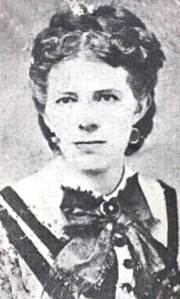
Stone’s last three entries in her diary are from September 1867 and 1868. They form a somber epilogue to her chaotic journey. They capture a bitter reflection of a shattered Southern slaveholding society, adrift, confused, and afraid of a world in which they no longer rule.

KS10

From 2012 to 2015, Stillness of Heart will share interesting excerpts from the extraordinary diary of Kate Stone, who chronicled her Louisiana family’s turbulent experiences throughout the Civil War era.

Learn more about Stone’s amazing life in 1861, 1862, 1863, 1864, 1865 and beyond. Click on each year to read more about her experiences. You can read the entire journal online here.

(Photo edited by Bob Rowen)

Stone’s last three entries in her diary are from September 1867 and 1868. They form a somber epilogue to her chaotic Civil War journey. They capture a bitter reflection of a shattered Southern slaveholding society, adrift, confused, and afraid of a world in which they no longer rule.

Read her first entry in this series here.

Sept. 22, 1867

Brokenburn

A long silence and a year of hard endeavor to raise a crop, reconstruct the place with the problem of hired labor, high water, and cotton worms. Mamma had little trouble in getting advances in New Orleans to plant. Cotton is so high that merchants are anxious to advance to put in a crop, and there is much Northern capital seeking investment in that field. … The Negroes demanded high wages, from $20 to $25 for men, in addition to the old rations of sugar, rice, tobacco, molasses, and sometimes hams. Many of the old hands left, and My Brother went to New Orleans and brought back a number of ex-Negro soldiers, who strutted around in their uniforms and were hard to control. I was deadly afraid of them.

During the spring while Mamma and I were in New Orleans (Mamma on business and she took me for my pleasure), and Uncle Bo and My Brother and Jimmy were away for a few hours, Johnny had a fight with a young Negro in the field, shot and came near killing him, and was mobbed in return. Johnny would have been killed but for the stand one of the Negroes made for him and Uncle Bo’s opportune arrival just as the Negroes brought him to the house a howling, cursing mob with the women shrieking, “Kill him!” and all brandishing pistols and guns. It came near breaking up the planting, and it is a pity it did not as it turned out. Johnny had to be sent away. He was at school near Clinton [Miss.] and the Negroes quieted down and after some weeks the wounded boy recovered, greatly to Johnny’s relief. He never speaks now of killing people as he formerly had a habit of doing. He came home when school closed and there was no further trouble.

Then the water came up and we were nearly overflowed. The cotton planted was very late, and when it was looking as luxuriant and promising as possible and we saw ease of mind before us, the worms came. In a few days the fields were blackened like fire had swept over them. We made about twenty bales and spent $25,000 doing it. What most distresses me is that none of that money went for our personal comfort. All of it went to the Negroes. Mamma would buy only bare necessaries for the table and plainest clothes for the family. Not a luxury, no furniture, carpets, or anything. We are worse off for those things than even in Texas and such a sum spent! But Mamma said it was not honest to spend the money on anything but making the crop. All in this section have suffered in the same way, and for awhile they seemed stunned by their misfortunes. But now the reaction has come, and all are taking what pleasure offers.

Old neighbors and new ones have come in and all seemed to be anxious to be together and talk over their trials and tribulations. There has been much visiting and various picnics and fish frys. I would not go at first. I felt like I did not want to see anybody or ever dance again. I felt fully forty years old, but Mamma made me go after a good cry. Once there, I was compelled to exert myself, and soon I was enjoying it all. The burden of some of the years slipped from my shoulders, and I was young again. It was pleasant to talk nonsense, to be flattered though one knew it was flattery, and to be complimented and fussed over. So since then, Mamma, the boys, and all of us have been going to everything and have found even poverty in company more bearable than when suffered alone. …

September 1868

Rose Hill

In January My Brother rented this place knowing that Brokenburn would be again overflowed, and we moved out the latter part of the month. My Brother lost money again last year planting, and this year he determined to farm, planting a little of everything.

Johnny and Jimmy are both at home, and having nothing to do pulled off their coats and rolled up their sleeves and went to work to raise a crop of corn and potatoes for themselves. They have succeeded well as they will clear several hundred dollars.

We all regret so much Jimmy’s refusal to go buck to the hospital. … We fear he is throwing away the best chance of his life. The boys are so hot and tired when they come in from the fields. …

Sept. 28, 1868

Rose Hill

Mother has been in Vicksburg for a month on a visit to Aunt Sarah. It is her first outing for eighteen months. We hope it will benefit her — her health has been bad for more than a year. She is seldom out of bed more than a week at a time. It took great persuasion and the pointed urging of the whole family to induce her to go on this visit that Aunt Sarah has been begging her to take for months.

Jimmy is now on the wharf boat, Johnny at Omega, and Sister, My Brother, and I have it all our own way with but little to do. My Brother is making an excellent crop and is much more cheerful. …

How we wish Sister could be sent off to school for two years, but it has been impossible. No money. … Let us hope that now the current will change and success will be our portion, as the outlook is brighter than for three years.

This is a pleasant neighborhood … and everybody has been kind and polite about calling and coming in at all times. [The other day we] had another of those inevitable dances that have been given so often this summer. Mary and Katie Byrnes, Louise Meagher, and the other girls never seem to tire of them, but they wear me out — such a sameness. I doubt not that I am getting too old for such gaieties. The men and boys about here are so silly and boyish in conversation. …

It has been an enjoyable life since we came here in January. It is a pleasant enough cottage house, after we got it thoroughly cleaned. There is a lovely little flower yard and a splendid orchard, and the kindest and most sociable neighbors with various little entertainments and dances. …We have new books and papers ad libitum, a luxury we missed for years.

My Brother has just sent Mamma money to buy our winter clothes, and Sister and I are jubilant at the prospect of new dresses and bonnets. We have lived on very little of late years, little bought that was not absolutely necessary. They have dressed me better than any of the others. I have not wanted for anything indispensable for a young lady, but the only money I have spent really as I wished was five dollars of the ten Uncle Bob gave me when Mamma and I went to New Orleans three winters ago. …

What splendid fellows my brothers are. They are all so good to us and such handsome boys. Sister looks almost the same, scarcely older than three years ago. We hope she can go to school this fall and make her debut next fall. If not, I shall beg Mamma to put long dresses … on her and bring her out this winter. She has a gay cheerful nature, and I hope will have a happy girlhood.

Mamma’s bright hopeful spirit never change. She is us always the ruling power with us all, the center and light of our home. How much she will have to tell us on her return, and maybe Aunt Sarah will come with her.

Well, this is the last page of the book that has gone with me through all our journeying. Looking back to the beginning so many years ago, I realize what an unthankful, wicked girl I was not to be supremely happy. With youth, health, and everything surrounding me for comfort and happiness. with unmistakable blessings, I was yet an unsatisfied, discontented girl. It has taken trouble to teach me my faults, and how earnestly I try now to enjoy instead of repine, to be thankful instead of fault-finding. I will try always to see the silver lining to the cloud. All my life I have been surrounded with love and care, far more than I deserved, and I will try in the future to be more worthy of the blessings that brighten my pathway.

So this is the end — shall I ever care to write again?

FINIS

Behind The Wall

Tabletop Games

Rebecca Aguilar

#CallingAllJournalists Initiative | Reporter | Media Watchdog | Mentor | Latinas in Journalism

Anna Fonte's Paper Planes

Words, images & collages tossed from a window.

Postcards from Barton Springs

Gayle Brennan Spencer - sending random thoughts to and from South Austin

The Flask Half Full

Irreverent travelogues, good drinks, and the cultural stories they tell.

Government Book Talk

Talking about some of the best publications from the Federal Government, past and present.

Cadillac Society

Cadillac News, Forums, Rumors, Reviews

Ob360media

Real News That Matters

Mealtime Joy

bringing joy to family meals

Øl, Mad og Folk

Bloggen Øl, Mad og Folk

a joyous kitchen

fun, delicious food for everyone

A Perfect Feast

Modern Comfort Food

donnablackwrites

Art is a gift we give ourselves

Fridgelore

low waste living drawn from food lore through the ages

BeckiesKitchen.com

MUSINGS : CRITICISM : HISTORY : NEWS

North River Notes

Observations on the Hudson River as it passes through New York City. The section of the Hudson which passes through New York is historically known as the North River, called this by the Dutch to distinguish it from the Delaware River, which they knew as the South River. This stretch of the Hudson is still often referred to as the North River by local mariners today. All photos copyright Daniel Katzive unless otherwise attributed. For more frequent updates, please follow northriverblog on Facebook or Instagram.