One minor but interesting element of Stone’s diary is how long it took for her to learn of developments on the battlefield.
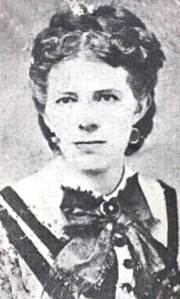
From 2012 to 2015, Stillness of Heart will share interesting excerpts from the extraordinary diary of Kate Stone, who chronicled her Louisiana family’s turbulent experiences throughout the Civil War era.
Learn more about Stone’s amazing life in 1861, 1862, 1863, 1864, 1865 and beyond. Click on each year to read more about her experiences. You can read the entire journal online here.
(Photo edited by Bob Rowen)
One minor but interesting element of Stone’s diary is how long it took for her to learn of developments on the battlefield. As her old world crumbled, as she was cut off from traditional letters and newspapers, and as she moved farther and farther away from Brokenburn, it took longer for her to learn about rumors of defeats and victories and even longer to gain accurate information about such events.
For example, the Battle of Gettysburg ended on July 3, 1863, and Vicksburg surrendered to Grant’s siege on July 4. Note what Stone says of Lee in Pennsylvania and of Vicksburg’s defenders, almost two weeks after both Confederate defeats.
July 16, 1863
Lamar County, Texas
The atmosphere has been most peculiar for several days. The air is cool and damp. The earth, the air, the sky — all are a dull dead grey. The sun seems to emit neither heat nor light, gleaming with a dim red glare like a blood-red moon. We thought at first it was one phase of the Texas climate, but the natives are as much puzzled by it as the strangers in the land. Some think it portentous, a sign of great victories or defeats. Others think it the smoke from burning grain in Mississippi. No one really knows anything about it.
We hear that we have won a glorious victory back of Vicksburg, repulsing one wing of Grant’s army and opening communication with Vicksburg and replenishing her supplies. Also we hear of surprising the enemy in south Louisiana and capturing many men and stores. We also hear that Gen. Lee’s army is laying waste [to] Pennsylvania. If only the Pennsylvanians may feel some of the horrors of war and know the bitterness of defeat. We live in hopes that our day of triumph may come but we fear not in the near future. …
Texas seems a hard land for women and children. They fly around and work like troopers while the men loll on the galleries and seemingly have nothing to do. Mamma cannot start on her search for a new home for a week yet, and it is disagreeable living here … their ways are not our ways.
As we sat on the gallery tonight, gazing across the darkening prairie into the gleaming west, the very air was brilliant with fireflies. The fancy came that they were the eyes of the departed Indians, come to look again on their old hunting grounds, flashing through the night, looking with scowling, revengeful faces on the changes wrought by their old enemies, the palefaces. I fancy I can see the ghostly shapes one minute taking the form of an Indian brave with bended bow and flying arrow, the next fading into thin air leaving only the fiery eyes. …
Stone hated and pitied the people of Texas. She gagged at the sight of unshaven men sitting at her dinner table. The seeming normality of violence horrified her. But the natural beauty of Texas gradually entranced her.
From 2012 to 2015, Stillness of Heart will share interesting excerpts from the extraordinary diary of Kate Stone, who chronicled her Louisiana family’s turbulent experiences throughout the Civil War era.
Learn more about Stone’s amazing life in 1861, 1862, 1863, 1864, 1865 and beyond. Click on each year to read more about her experiences. You can read the entire journal online here.
(Photo edited by Bob Rowen)
Stone hated and pitied the people of Texas. Barefooted women, evidently ignorant of the latest Southern fashions, still wore outdated “hoops.” The roads all the looked the same. She gagged at the sight of unshaven men sitting at her dinner table. She lost her appetite when she witnessed dusty slaves washing dishes “in the duck pond” before dinner. The Texas heat was punishing. The seeming normality of violence horrified her.
But the natural beauty of Texas gradually entranced her.
July 12, 1863
Lamar County, Texas
We made our first visit in Texas yesterday. We went to a protracted meeting being carried on nine miles from here at an old schoolhouse called — it must be in mockery — “Paradise.” After the meeting we went by invitation to spend the evening and night with some real nice people, settlers from Virginia, the McGleasons. They are a pleasant family and exceedingly hospitable. We came back this morning after a ride of nearly eighteen miles, having missed our road three times. The prairie roads are so much alike it is impossible for strangers to distinguish the right from the wrong.
The congregation was much more presentable than the Gray Rock crowd. We saw several nice-looking families, but all were in the fashions of three years ago. If they would only leave off their tremendous hoops, but hoops seem in the very zenith of their popularity. Mamma and I were the only women folks without the awkward, ungraceful cages. No doubt the people thought us hopelessly out of date. We have not worn them for a long time. Nothing looks funnier than a woman walking around with an immense hoop barefooted.
Mamma and I went several days ago to Tarrant in Hopkins County. The road ran part of the way over a lovely rolling prairie, dotted with clumps of trees and covered with the brilliant, yellow coreopsis in full bloom and gemmed with countless little mounds of bright green, like emeralds set in gold. Tarrant is the hottest looking, new little town right out in the prairie not a tree.
We tried to eat dinner at the roughest house and with the dirtiest people we have met yet. The table was set on a low, sunny gallery and half a dozen dirty, unshaven men took their seats in their shirt sleeves at the dirtiest tablecloth and coarsest ware. We saw the Negro girl wash the dishes at the duck pond right out in the yard. That was too much for me, but Mamma and Mr. Smith managed to swallow down something. …
The prairie we are living on is called a thicket prairie. There are clumps of dwarf dogwood, spice trees, and plums, tangled together with wild grape and other vines and alive with snakes. The plums are just in season, a sour, red variety just like the swamp wild plums, and are nice for jelly. The prairie is a mass of flowers, one variety covering it at a time. Before you realize it, that color has faded away and another has taken its place, and this succession of flowers and colors goes on until frost comes and spreads a brown sheet over all. There are many familiar garden flowers: blue salvia, coreopsis, verbenas, larkspur, standing cypress, and now as far as the eye can reach the prairie is a mass of waving purple plumes, “French pinks,” the natives call them. …
We hear no news now but accounts of murders done and suffered by the natives. Nothing seems more common or less condemned than assassination. There have been four or five men shot or hanged within a few miles of us within a week. No one that we have seen seems surprised or shocked, but take it as a matter of course that an obnoxious person should be put to death by some offended neighbor. A few evenings ago a captain in the army had just reached home on a furlough three hours before when he was shot at through his window. He was killed and his wife dangerously wounded. The authorities are trying to find the men who did it. It is supposed to be one of his company who had vowed vengeance against him. The other miscreants go unwhipped of justice.
After two weeks, Stone decided that Texas was home only to deadly snakes, fleas “by the millions,” ignorant children, and ugly women.
From 2012 to 2015, Stillness of Heart will share interesting excerpts from the extraordinary diary of Kate Stone, who chronicled her Louisiana family’s turbulent experiences throughout the Civil War era.
Learn more about Stone’s amazing life in 1861, 1862, 1863, 1864, 1865 and beyond. Click on each year to read more about her experiences. You can read the entire journal online here.
(Photo edited by Bob Rowen)
Kate Stone despised her new wartime home. After two weeks, she decided that Texas was home only to deadly snakes, fleas “by the millions,” ignorant children, and ugly women. “There must be something in the air of Texas,” she wrote, “fatal to beauty.”
July 7, 1863
Lamar County, Texas
While camping out we were generally too tired at our noonday rest to do anything but throw ourselves down on the cushions and sleep until dinner. And at night when we stopped, I had only spirit to lean lazily back in one of our two rocking chairs and watch Annie get supper or to look up at the stars and think of all the dear friends that the waves of Fate are sweeping farther and farther away from us every day. I had such a longing for home and the dear life of the past that my very soul would grow sick. I know Mamma felt it far more than I did, but she would not complain.
I will copy a letter I wrote to Anna Dobbs which tells all there is to tell of our late journeyings:
“Here we are safely hidden in a dark corner of the far off County of Lamar after a tiresome, monotonous trip of little less than three weeks, and I am already as disgusted as I expected to be.
“This part of the land abounds in white-headed children and buttermilk, my two pet aversions. It is a place where the people are just learning that there is a war going on, where Union feeling is rife, and where the principal amusement of loyal citizens is hanging suspected Jayhawkers. Hoops are just coming in with full fashion. This is indeed the place where hoops ‘most do flourish and abide. Have not seen a hoopless lady since entering the state. Shoes are considered rather luxuries than necessaries and are carefully kept for state occasions. … One tin pan or a frying pan answers every purpose. Wash tubs seem obsolete and not to be bought at any price.
“The only way of killing time and one never feels more like killing him than on this desolate wind-swept prairie is to attend some of the protracted meetings that are being carried on all around us. And oh, the swarms of ugly, rough people, different only in degrees of ugliness. There must be something in the air of Texas fatal to beauty. We have not seen a good-looking or educated person since we entered the state. We are in the dark corner. We could not stand it here for a permanent stay, but Mamma has only stopped here for a breathing spell and to see how the Negroes are getting on. She will start out soon in search of a home until the war is over.
“We camped out except when it rained, which it did most of the last week, thereby ruining most of the clothes we had so laboriously amassed after fleeing from the Yankees. We would be so tired by night we welcomed the rudest shelter. The longer we traveled the more wearisome it grew, and I never turned over at night without expecting to feel the sting of a tarantula or centipede. But we really saw very few and reached here without an accident. I wrote to Sarah Wadley never to come to Texas for pleasure, but if forced to come to cover herself with a thin coat of tar to protect herself from the myriads of insects along the road. And here, we have settled at their headquarters ticks, redbugs, fleas by the millions, and snakes gliding through the grass by hundreds. But we rarely hear of anyone being snake-bitten. Game, deer and turkeys are abundant about here but not eatable on account of the insects tormenting them until they are too tough to eat. …
“We are staying right out on the bare prairie in a rough two-room shanty with the overseer and his family. With only the bare necessaries of life, we think it will be at least two months before we can make any change, and so we must needs make the best of it.”
At last, the Stones moved for Texas. Along the way, Kate Stone enjoyed wild fruits, natural beauty, and the occasional generosity of strangers.
From 2012 to 2015, Stillness of Heart will share interesting excerpts from the extraordinary diary of Kate Stone, who chronicled her Louisiana family’s turbulent experiences throughout the Civil War era.
Learn more about Stone’s amazing life in 1861, 1862, 1863, 1864, 1865 and beyond. Click on each year to read more about her experiences. You can read the entire journal online here.
(Photo edited by Bob Rowen)
At last, the Stones moved for Texas. Along the way, Kate Stone enjoyed wild fruits, natural beauty, and the occasional generosity of strangers.
June 15, 1863
Near Monroe, La.
Visiting and visitors, blackberry parties, and long walks over the hills have occupied the time since Wednesday. Julia Barr and I took tea with Mrs. Dortch and were agreeably entertained. We have been since to see Mrs. Waddell, who is a charming pretty lady.
Mamma and Johnny are busy making arrangements for us to get off. Will start on Wednesday. All busy this afternoon making a tent of some carpeting, the only thing to be bought in Monroe and it was $4 a yard. From Jimmy’s letter, received today from Titus [Texas], think we will be on the road two weeks. He does not write encouragingly. The country is not more abundant than this, and Billy, another Negro man, is almost dead. But Mamma hopes to find it better than Jimmy paints it.
Our delightful sojourn at this place is nearly over, and it will be many a weary day before we are so comfortable again. They are the very kindest people we ever met, and Mr. Wadley, who returned a few days ago, is just as generous and kind as all the others. To crown all her good deeds Mrs. Wadley this morning refused to take a cent for our board all these seven weeks. Mamma insisted on it, but both Mr. and Mrs. Wadley declared they could not think of such a thing, saying Mamma would need every cent she had before she got settled again. Our own relations could not have been kinder, and we were total strangers to them when they took us in out of the goodness of their hearts. May God reward them, we never can.
Tomorrow is our last day here and we will go around and say good-bye to the neighbors. This lovely family and Julia Barr I shall be sorry to leave.
June 19
Between Monroe and Minden, La.
Half past twelve this sultry June 19 we are sitting under the shade of a spreading oak about halfway between Monroe and Minden eating rosy June apples. …
We are on the road for Texas at last, and I imagine no party of emigrants ever started with sadder hearts or less pleasure in anticipation. If we had gone on at once when coming to Monroe, we would have liked the idea, but we stayed just long enough at Mrs. Wadley’s to spoil us for a trip like this. We find it very lonely, only we four and the servants. If we could have joined another party, it would be so much more enjoyable. … A passing soldier tells us that a Federal force is advancing on Monroe. … We all left home without a tear, the dread of staying there was so great, but we and all the family were in tears when we told them good-bye at Mrs. Wadley’s. Shall we ever meet such kind friends again?
The first long hill halted us. We tried for an hour to get the mules on the wagon to pull up it, but they would not or could not. Mamma had part of the baggage unloaded and sent back to the Wadley’s, and at last we got underway. It was such a dark, rainy afternoon that we thought we would not commence camping that evening but would stay at some house on the road. So we went ahead of the wagon, and before sunset commenced enquiring for lodging. At house after house, dark and uninviting with a host of little towheads and a forelorn-looking woman, generally spinning, amid the barking of a pack of dogs, would come the response, “Naw, we don’t take in travelers,” in a tone of contempt, as though the very name of traveler was a disgrace. We kept this up, the poor tired mules dragging on from place to place, until 10 o’clock at night. Being refused at the last house, Mamma declared we could go no farther. … But [of] three swampers staying there … one of them heard our distressed voices, came to our relief, and induced the owner to allow us to stay. We were glad enough of the shelter, for that was about all it was. Chunks of fat meat and cold, white-looking cornbread with very good water were all the refreshments. This night’s experience satisfied us, and we have determined to camp out for the rest of the way.
The next day we went on as far as Mrs. Bedford’s, about twenty-five miles from Monroe. They gave us a nice dinner, and we had a pleasant little stay there. We went on in the afternoon with a supply of pretty June apples from their orchard, camped out that night for the first time, and found it far better than asking for shelter and getting nothing, nothing but snubs and coarse fare at exorbitant prices. It looked like it would rain every minute. It seemed nothing new to be lying out under the shadow of a tree with the stars looking dimly down through the branches, with the lightning flashing in the North, the sultry night breeze swaying the wildwoods grass in my face, and a nondescript bug attempting to creep into my ear. We have read so many stories of camping it seems like an old song. Shall we have any of the startling adventures that travelers usually have to relate?
June 22
Near Bellevue, La.
We are resting for dinner in a thicket of blackjack and towering pines after a wearisome ride over the worst roads. Now we find we branched off in the wrong direction and are only four miles farther on our way than when we left camp this morning.
We passed through Minden — such a pretty little town with the deepest white sand in the streets, about the size of Monroe. I wish we could have located there. It looked very inviting, but we must go on where [our] Negroes are. We camped near a nice-looking house, and the people were kind in sending us out milk and butter, the first time we have been able to get anything of the kind. We also bought some chickens, a relief after a steady diet of ham and bacon. We get a lot of fruit, apples, plums, and huckleberries, the large low-bush variety — also, the blackberries are ripening. We stop several times a day or whenever we see a tempting thicket and enjoy the fruit. We so often have to wait for the wagon. We need never hurry. No flour yet, but we hear it is plentiful farther on. Some tea bought in Monroe is evidently made of blackberry leaves. Dampened and untwisted they are identical, absolutely without flavor.
Stone mourned the loss of Stonewall Jackson at the May 1863 Battle of Chancellorsville, calling him a “peerless general and Christian soldier.”
From 2012 to 2015, Stillness of Heart will share interesting excerpts from the extraordinary diary of Kate Stone, who chronicled her Louisiana family’s turbulent experiences throughout the Civil War era.
Learn more about Stone’s amazing life in 1861, 1862, 1863, 1864, 1865 and beyond. Click on each year to read more about her experiences. You can read the entire journal online here.
(Photo edited by Bob Rowen)
Stone mourned the loss of Stonewall Jackson at the May 1863 Battle of Chancellorsville, calling him a “peerless general and Christian soldier.”
May 23, 1863
Near Monroe, La.
Aunt Laura was quite ill while Mamma was away, and I felt the responsibility of taking care of her. She is now much better. Mamma had two fevers, and we were very afraid it would go into a long low fever. She is quite prone to have that in the spring, but fortunately she has escaped a return of it. Sarah, Mary Wadley, and I went last afternoon to call on the Misses Compton and Stacey. We went in Mamma’s famous Jersey wagon, and it is a ramshackled affair with the seats and most of the bottom dropped down. We had a merry ride and concluded that a frame, a tongue, two mules, and a driver were the only essentials in a vehicle. … Walking through the pine woods, we saw wild flowers in such profusion. The air is so fragrant that it is a pleasure to breathe it. …
The news from Mississippi is bad. Gen. Grant with an army of 120,000 men is in the rear of Vicksburg. He has possession of Jackson, and much of the city has been burned. There has been a battle near Raymond in which we were said to have been routed because of Gen. [John C.] Pemberton’s disregard of orders. We drove them out of Jackson once, but we cannot hear whether they retook it after a battle or whether our forces withdrew. We will not be discouraged. …
In the death of Stonewall Jackson [at the Battle of Chancellorsville] we have lost more than many battles. We have lost the conqueror on a dozen fields, the greatest general on our side. His star has set in the meridian of its glory, and he is lost to his country at the time when she needs him most. As long as there is a Southern heart, it should thrill at the name of Stonewall Jackson, our peerless general and Christian soldier. His death has struck home to every heart. …
May 24
Mamma and I went over yesterday after tea to see Capt. and Mrs. Harper. They are also on their way to Texas. Capt. Harper was one of the party at home on Christmas Eve, and my last ride on Wonka was to invite the gentlemen in camp over to Brokenburn.
We were glad to meet his little daughter Sophie Harper, Mr. Valentine’s grandchild. Both of the Mr. Valentines talked so much about her. She is a bright, attractive child and bears a striking resemblance to her Uncle Mark in features, gesture, and expression. They say old Mr. Valentine is so overwrought by his losses … that it is feared he will lose his mind. He escaped from his place a few days after we left entirely alone in a boat with only a few clothes. The Negroes came and stripped the place of everything while he was on it and were exceedingly insolent to him, threatening all the time to kill him. He is quite an elderly man and cannot stand hardships like younger people. …
May 26
Mamma is staying tonight with Mrs. Young whose little girl Alice is sick unto death. Johnny, who by the way could not overtake Mr. Smith, and Mamma went into Monroe this morning trying to buy a wagon and carriage but failed to get either. So we must … wait here until we can get conveyances, and we could not ask for a more delightful stopping place or kinder hosts. Such a haven of rest after the trouble and anxiety of the last three months. We have put away troubles and distress for a time as a wayworn traveler lays down his burden when he stops to rest, enjoying the coolness and verdure, though he knows the burden must be lifted and he must journey on through toil and pain to the end.
How I dread being secluded on some remote farm in Texas, far away from all we know and love and unable to get news of any kind. It is a terrifying prospect.
I am busy sewing most of the time. We will soon be through all our clothes — just a white barege dress of Carrie’s to alter for myself and Mamma intends making a black velvet hat for me. Then, all our pressing needs will be gratified. …
Kate Stone’s brother led a group of men back to the Brokenburn estate to recapture the slaves the Stone family left behind as they fled Union troops.
From 2012 to 2015, Stillness of Heart will share interesting excerpts from the extraordinary diary of Kate Stone, who chronicled her Louisiana family’s turbulent experiences throughout the Civil War era.
Learn more about Stone’s amazing life in 1861, 1862, 1863, 1864, 1865 and beyond. Click on each year to read more about her experiences. You can read the entire journal online here.
(Photo edited by Bob Rowen)
Kate Stone’s brother led a group of men back to the Brokenburn estate to recapture the slaves the Stone family left behind as they fled Union troops. Stone recounts with chilling nonchalance what the men saw when they arrived at the springtime plantation. The slaves, exuberantly basking in seeming freedom, had tended the season’s load of vegetables, gathered fruit, stocked fresh meat, made cream and butter, and seemed to be on the verge of re-imagining their liberated community. Little did the slaves realize the fluidity of freedom of the home front.
May 22, 1863
Near Monroe, La.
In the last ten days I have been too busy to write. Mamma was away at Delhi waiting for Jimmy to return from his perilous trip to the river until last Monday, when they returned in triumph with all the Negroes except Webster, who had joined the Federal Army some time ago, and four old Negroes who were left on the place to protect it as far as possible.
Jimmy went in with a Capt. Smith and five other men, but it was owing entirely to Jimmy’s exertions that the Negroes were secured at last. They had captured the Negroes and were pushing on for the bayou when they were pursued by a body of forty Yankees. They came within hailing distance of Capt. Smith and his men and fired volley after volley at them, but fortunately none were struck. Capt. Smith ran as fast as possible to escape and to tell Jimmy to let the Negroes go and escape for his life, but when he came up with Jimmy at the Tensas Bayou, he found Jimmy swimming the stream and the Negroes and mules already across. Jimmy had heard the firing and rushed the Negroes over in dugouts, he swimming over with the mules. He swam over two or three times.
The Yankees, having no boats, did not attempt to follow any farther, and so Jimmy saved all of the Negroes at last. They are now on their way to Texas in Jimmy’s care, trying to overtake Mr. Smith’s train.
Jimmy and the men with him hid all day in the canebrake just back of the fence and in the fodder loft at Brokenburn and stole out at night to reconnoiter. They found what cabins the Negroes were in, and while hiding under Lucy’s house they saw her sitting there with Maria before a most comfortable fire drinking the most fragrant coffee. They were abusing Mamma, calling her “that Woman” and talking exultantly of capering around in her clothes and taking her place as mistress and heaping scorn on her. Capt. Smith says that he never heard a lady get such a tongue-lashing and that Lucy abused the whole family in round terms. At daylight they surrounded the cabins, calling the Negroes out and telling them it was useless to resist. They were captured. William made an effort to escape by jumping from a window, but at sight of a bowie knife he gave up. … As they passed Capt. Allen’s on Bear Lake, Capt. Smith and his men stopped to cook something to eat, and it was there that he came so near being caught. The penalty would have been hanging, and I suppose there would have been no mercy shown as this is his fourth trip into the swamp to bring out property left there. He is a marked man by the Federals.
Mamma heard only after Jimmy left that the penalty for removing anything from the property confiscated by the government was hanging, and she was utterly wretched until she welcomed Jimmy back, sunburnt and tired but triumphant.
Capt. Smith says Brokenburn is lovely, a place of abundance flowing with milk and honey. The tall oaks in their summer finery of deep green are throwing shadows on the soft deep grass creeping to their very trunks, the white house is set in a very bower of green, and the flower garden is shining off at one side, a mass of bloom. He said he did want to stay and take one good breakfast with the Negroes, since he never saw so many good things to eat: a barrel of milk, jars of delicious pinkish cream, roll after roll of creamy yellow butter, a yard alive with poultry, and hams and fresh meat just killed. The garden is stocked with vegetables, the strawberry bed red with fruit, and then a supply of coffee, tea, flour, and such things bought from the Yankees. He says they would have been foolish Negroes to run off from a place like that. William and his family were occupying Mamma’s room, completely furnished as we left it, and all our other possessions had been divided up among the Negroes.
Stone’s bitter sense of humor flashed for a moment as she dryly observed the effects of marriage on a young woman’s beauty.
From 2012 to 2015, Stillness of Heart will share interesting excerpts from the extraordinary diary of Kate Stone, who chronicled her Louisiana family’s turbulent experiences throughout the Civil War era.
Learn more about Stone’s amazing life in 1861, 1862, 1863, 1864, 1865 and beyond. Click on each year to read more about her experiences. You can read the entire journal online here.
(Photo edited by Bob Rowen)
As Stone and her family regained their bearings in their temporary home before making the final push for Texas, Stone’s bitter sense of humor flashed for a moment as she dryly observed the effects of marriage on a young woman’s beauty.
May 3, 1863
Near Monroe, La.
We went to a real country church this morning, saw a country congregation, and heard a sermon to match. Loring Wadley made several trips with the buggy to get us all there, but two of the party rode back in Dr. Young’s $3,000 carriage. We had a pleasure today in a visit of several hours from Julia Street. She came down from Bastrop just for the day. She is more nearly depressed than I ever saw her.
Annie and Peggy got here from the salt works today, and we are glad to have somebody to wait on us again. I expect we will keep them busy. …
May 5
Near Monroe, La.
The gunboats are unable to pass Grand Gulf and are lying idle between Vicksburg and Grand Gulf, like baffled beasts of prey. There is a great scarcity of provisions all through Mississippi. It is difficult to provision Vicksburg for a long siege. …
We went yesterday to see Florence Pugh (now Mrs. Morrison), an old schoolmate. The family are near here now on their way to Texas. She is a dear, sweet girl but looks dreadful. How marrying does change a body for the worse. She was a pretty girl a year ago, fresh and dainty. Now she is married and almost ugly.
I am busy every day trying to make up the cloth Mamma bought, but it is slow, tiresome work for one person with no sewing machine. The only things Mamma could find to buy belonged to the Lowrys, and they sold them at awful prices: $60 for a pair of common blankets, $50 for a pair of linen sheets, and everything else in proportion. They have sold much of their own clothing. Mamma bought some of Olivia’s things for Sister. … It seems funny to be wearing other people’s half-worn clothing, but it is all we can get. Mamma bought some Turkey-red calico at $3 a yard for a dress for Sister.
May 10
Near Monroe, La.
Mamma returned from the salt works on Friday, riding the whole distance on horseback. It was dreadfully fatiguing for one who rides so little. She has gone this evening to Delhi to make another attempt to have the Negroes brought out, if she can get soldiers to go with Jimmy. Quite a number of Negroes have been brought out in that way recently, some from within the lines.
The news from the salt works is bad. Frank, my maid, and Dan both died of pneumonia and neglect, and three others are very ill. Poor Frank, I am sorry for her to go. She has been raised in the house with us. With so much sickness among the Negroes, Mr. Smith has been unable to start to Texas. …
Several thousand of our soldiers are now at Monroe under Maj. Gen. Walker. Two of the officers spent yesterday evening here and told us the whole command would get off this morning and that there were some splendid bands with the regiments. So this morning we rode out to the river opposite Monroe to see them off, starting before sunrise. We saw crowds of soldiers, talked to a number of them, and heard inspiring music. The ride all the way through the spring woods was delightful. I sat up until twelve the night before fixing a sort of riding habit. … The troops after embarking received counterorders and are again in Monroe, expecting to march at any minute. There is another panic in Monroe. The Yankees are looked for at any time. They could not make anything out of this poor family. We have been too thoroughly plucked by the river Feds. …
Aunt Laura is not very well. We would dread to see her get sick.
Texas influence / Children of depressed parents / Illustrating gay rights / New Lincoln find / Women and ‘Alien’
Most of these great items come from my Twitter feed or Facebook news feed. Follow me on Twitter and on Facebook for more fascinating videos, articles, essays and criticism.
1.Gail Collins: Texas runs America By Kyrie O’Connor | Salon | June 9
“In a Salon interview, the New York Times writer who made Mitt’s dog famous takes dead aim at the Lone Star State”
2.Should Depressed People Avoid Having Children? By Maia Szalavitz | Healthland :: Time | June 5
“Do people with depression or other psychological problems have any moral obligation to forgo bearing children in order to avoid passing on their ‘bad’ genes?”
3.Gay rights in the US, state by state The Guardian | May 8
“Gay rights laws in America have evolved to allow — but in some cases ban — rights for gay, lesbian and transgender people on a range of issues, including marriage, hospital visitation, adoption, housing, employment and school bullying.”
4.‘O Doctor, do what you can,’ Lincoln’s wife pleaded, says new find By Richard Simon | The Chicago Tribune | June 5
“The 21-page handwritten copy of [Charles A.]Leale’s report was discovered about two weeks ago by researcher Helena Iles Papaioannou while she was poring through records at the National Archives in Washington.”
5.Woman: The Other Alien in ‘Alien’ By Tom Shone | Slate | June 6
“Why are academics so obsessed with Ridley Scott’s movie and its sequels? Plus: An ‘Alien’ bibliography.”
6.‘Mad Men’s’ Jared Harris on Lane’s Shocking [SPOILER ALERT] By Gwynne Watkins | The Stream :: GQ | June 4
“Lane Pryce was a tragic character from the beginning, a bumbling sadsack of an Englishman who desperately craved the respect he had never received from his employers, his father, his wife, or his coworkers.”
7.Team of Mascots By Todd S. Purdum | Vanity Fair | July 2012
“Four years ago, Barack Obama said he wanted a Lincoln-esque “team of rivals” in his Cabinet. Thanks to his own temperament, the modern White House, and the 24-hour news cycle, what the president has created is something that doesn’t look Lincoln-esque at all.”
8.Obama’s friend in Turkey By David Ignatius | The Washington Post | June 7
“Turkey’s ascendancy in the region may seem obvious now, but it was less so in 2009, when Obama began working to build a special relationship.”
9.10 Reasons Why Cormac McCarthy Is A Badass By David McMillan | Thought Catalog | June 5
“McCarthy is a poetic storyteller whose challenging novels explore themes of violence, good and evil, and human survival.”
Stay-at-home moms / Invisible octopuses / The rare transit of Venus / The damage from Texas textbooks / Departures of Kristen Wiig and Peggy Olson
Most of these great items come from my Twitter feed or Facebook news feed. Follow me on Twitter and on Facebook for more fascinating videos, articles, essays and criticism.
1.How Texas Inflicts Bad Textbooks on Us By Gail Collins | The New York Review of Books | June 2012
“Ever since the 1960s, the selection of schoolbooks in Texas has been a target for the religious right, which worried that schoolchildren were being indoctrinated in godless secularism, and political conservatives who felt that their kids were being given way too much propaganda about the positive aspects of the federal government.”
3.How Octopuses Make Themselves Invisible By Katherine Harmon | Octopus Chronicles :: Scientific American | June 1
“Do they survey the whole area in their proximity and incorporate the general hues and patterns into their skin display, or do they pick out just a few nearby landmarks for a more precise match?”
4.Tuesday is last chance to see transit of Venus By Elizabeth Weise | USA Today | May 31
“It happens only four times every 243 years. If you want to see the famed transit of Venus, next Tuesday is your last chance this century.”
5.A Study in Farewells: Kristen Wiig and Peggy Olson By Sasha Weiss | Culture Desk :: The New Yorker | June 1
“What a relief — and what a brilliant coincidence — that the gods of TV charted a course this week from Peggy’s quiet triumph to Wiig’s loud one, and one we can all share in.”
6.Christina Hendricks on Joan’s Epic Moral Moment By Gwynne Watkins | The Stream :: GQ | May 30
“The emotionally wrenching episode was the best so far this season, and a tour de force for actress Christina Hendricks (whose hourglass beauty gets more press than her considerable acting chops).”
7.Issues for His Prose Style By Andrew O’Hagan | London Review of Books | June 2012
“[Ernest Hemingway] never takes nouns for granted. He invests his whole personality in them, because nouns are the part of speech where a person gets to show off.”
9.Are literary classics obsolete? By Laura Miller | Salon | May 30
“A new study says today’s writers are influenced by authors of the present, not the past”
10.The ‘Muslim Schindler’ By Mehdi Hasan | The New Statesman | May 23
“A lawyer by training, he used his negotiating skills to try to persuade the Nazis’ experts on racial purity that the 150 or so Iranian Jews living in the city in 1940 were assimilated to non-Jewish — and ‘Aryan’ — Persians through history, culture and intermarriage.”
The ‘napalm girl’ photo / Exercise and get smarter / A looming galactic collision / Texas traffic / Living to 100
Most of these great items come from my Twitter feed or Facebook news feed. Follow me on Twitter and on Facebook for more fascinating videos, articles, essays and criticism.
1.Cheever’s Art of the Devastating Phrase By Brad Leithauser | Page-Turner :: The New Yorker | May 31
“The more you read Cheever, the more you feel his best work is often less about plot than about language — about poetry in the broadest sense.”
2.AP ‘napalm girl’ photo from Vietnam War turns 40 By Margie Mason | Associated Press | May 31
“‘I really wanted to escape from that little girl,’ says Kim Phuc, now 49. ‘But it seems to me that the picture didn’t let me go.’ ”
3.Exercise Makes You Smarter, Thanks To A Common Gene The Huffington Post | May 31
“It turns out that exercise does a lot more than get the blood pumping: in about 60 percent of the population, it may be responsible for the expression of a gene that floods your cells with … a protein that is thought to help with mental acuity, learning and memory.”
4.Mexico’s Drug Corruption Arrests: Why Soldiers Make Bad Narco Agents By Tim Padgett | Global Spin :: Time | May 31
“While putting soldiers on the streets might have provided some short-term relief, the fact remains that in the long run soldiers make lousy anti-drug agents … and the longer they’re kept in that role, the more problems you’re going to have.”
5.NASA Predicts Our Galaxy Will Collide With Another In 4 Billion Years By Carl Franzen | Talking Points Memo | May 31
“Andromeda, which is located 2.5 million light-years away, is moving rapidly towards the Milky Way at a rate of 250,000 milers-per-hour, a clip that will only increase as the galaxies approach.”
6.Are you feeling sleepy? Here’s why … By William Leith | The Daily Telegraph | May 31
“The pace of modern life forces us to ignore one of the most powerful parts of our brain — the body clock. But at what cost?”
7.Yes, Texas Traffic Really is That Bad By Jason Cohen | Texas Monthly | May 31
“INRIX, which released its numbers last week, also found that Austin was the eighth most congested city in America.”
8.Is the vice presidency worth having? By Chris Cillizza | The Fix :: The Washington Post | May 31
“[Here] are our most up-to-date rankings of the vice presidential field … . This month we decided to cut to the chase and give a single line about the good and the bad of each potential pick.”
10.The 1 Percent’s Problem By Joseph E. Stiglitz | Vanity Fair | May 31
“Why won’t America’s 1 percent — such as the six Walmart heirs, whose wealth equals that of the entire bottom 30 percent — be a bit more … selfish? As the widening financial divide cripples the U.S. economy, even those at the top will pay a steep price.”
******************
TUNES
Tonight I’m spending some time with the blues, specifically with the Texas Blues Café. Check out the line-up and then listen here.
1. Blake Havard — Love 2. Mark Guitar Miller — Tired 3. Rob Mcmahan — Trouble 4. Summer and the Sinners — Breakin’ Up 5. Kid Rock — Country Boy Can Survive 6. The Midnight Flyers — Down Low 7. Tommy Z — Can’t Hide My Feelings 8. Los Lonely Boys — Man to Beat 9. Bleu Edmondson — Dallas 10. Dana Fuchs — Lonely for a Life Time 11. Chris Aaron Band — Grain Of Salt 12. Voodoo Blu — Blues is my Business












 Stillness of Heart
You must be logged in to post a comment.