Kate Stone’s Civil War: The very poorest people

A reluctant Stone leaves Tyler to return to Louisiana, but one minor disaster after another make it a bitter journey.

OLYMPUS DIGITAL CAMERA

From 2012 to 2015, Stillness of Heart will share interesting excerpts from the extraordinary diary of Kate Stone, who chronicled her Louisiana family’s turbulent experiences throughout the Civil War era.

Learn more about Stone’s amazing life in 1861, 1862, 1863, 1864, 1865 and beyond. Click on each year to read more about her experiences. You can read the entire journal online here.
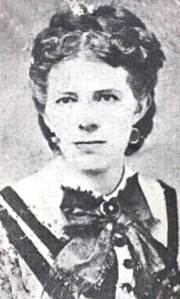
(Photo edited by Bob Rowen)

A reluctant Stone leaves Tyler to return to Louisiana, but one minor disaster after another make it a bitter journey.


Sept. 11, 1865

Hopkins County, Texas

Here we are … wearing away the time as best we may for two days and nights in a real prairie hut awaiting relief from our place, thirty miles away. The carriage stands in the yard with a crushed wheel, and we are mired up in all sorts of dirt and discomfort in the middle of the wildest prairie with not a tree or a house in sight. We broke down two miles from here journeying on our way to Lamar County with nothing in sight but the broad sweep of the prairie and one lonely tree. We made our way to that. No gentleman with us, no money, no possible way of getting on, and in a great hurry. We were in despair. Richard mounted a mule and scoured the country to find a carriage, wagon, or wheel to take us on, while we with parasols, books, and cushions, betook ourselves to the grateful shade of the tree to await his return. I was fast asleep in the tall grass, and Mamma and Sister were dozing when Richard got back. He could not find any conveyance, but a lady two miles away would give us shelter. So there we were in for a two-mile walk under the burning sun and over the shadowiest prairie with a wind blowing hot as a sirocco of the desert. The prospect was appalling, and I foolishly burst into tears. Mamma scolded. I remonstrated. But soon we cooled down in temper., if not in person, and commenced our weary jaunt to shelter.

It is the roughest two-room affair with six or eight people living in it, and with nothing to eat this last day but bread and milk and butter. They killed their last chicken for us yesterday, an old, old hen, but the people are as kind as they can be, and as hospitable. They give us of their best and are really sorry for us. There are two women and a girl and not a scrap of ribbon or lace or any kind of adornment in the house. I never saw a woman before without a ribbon. They have not even a comb. They are the very poorest people I ever saw.

We — that is Mamma, Sister, Johnny, and I — broke up our establishment and started on short notice from Tyler on last Friday, and our entire trip has been a chapter of accidents since. A wheel crushed four miles from town, and after spending most of the day in the woods we returned very reluctantly to Tyler, We had gone the rounds the evening before making farewell calls and hated to return after so many solemn leavetakings, but go back we must.

The room is filling with the family so must close my book.

The bugs are awful, and so we three slept last night on the carriage cushions and a bolt of domestic out on the front gallery, much against the wishes of our hosts who seemed to think it inhospitable to allow it. But it is impossible to sleep in the rooms with four or five untidy folks, being bled from every pore by the voracious bugs. The natives do not even toss in their sleep from them. They do not know the bugs are there.

A glorious full moon, light enough to read by, and a pleasant breeze. We quite enjoyed our outdoor bunk, especially as we had not slept for two nights. Oh, the happy summer days of our life in Tyler. … And all this discomfort would have been spared us if My Brother had only come out when Joe did and made this trip to the farm in Mamma’s place. Poor Mamma, what a weight of responsibility and trouble she has had on her hands. …

Mollie Moore gave me a pretty copy of The Lady of the Lake as a souvenir of our happy friendship. Shall I ever see her cheerful face again? …


Kate Stone’s Civil War: The petted darling

Stone endures some new Arkansas friends as she chokes back tears over the loss of one from Louisiana.

KS54

From 2012 to 2015, Stillness of Heart will share interesting excerpts from the extraordinary diary of Kate Stone, who chronicled her Louisiana family’s turbulent experiences throughout the Civil War era.

Learn more about Stone’s amazing life in 1861, 1862, 1863, 1864, 1865 and beyond. Click on each year to read more about her experiences. You can read the entire journal online here.

(Photo edited by Bob Rowen)

Stone endures some new Arkansas friends as she chokes back tears over the loss of one from Louisiana.

March 20, 1864

Tyler, Texas

I spent last week in the country, just the wildest most remote section of civilization, with the Goddards, who were complete strangers until then. They are from Arkansas and were recommended to us by Julia some time ago.

We had seen some nice-looking strangers at church in the morning. In the afternoon in the midst of our animated chat with Capts. Smithy and Empy, callers came. The young ladies were announced and introduced themselves. They were so cordial and said they had come the twenty miles to meet us and to carry me home with them and were so insistent that I could hardly refuse, particularly as Mamma urged me to go. So I accompanied them next morning just twenty miles from anywhere.

Mr. Goddard has a hat factory established there, and we spent the time as pleasantly as one could in a rough new house perched on a white sandbank in the midst of a limitless pine forest with rather silent strangers. No amusements except riding horseback on rough horses over roads of deep white sand studded with stumps. Only the necessaries, none of the luxuries of life. On the seventh day I was only too glad to come home, though I had to do what none of us had ever done before — drive home in a buggy driven by an old, old Negro man. Mr. Goddard had promised to bring me home at any time. He would not hear of Mamma’s sending for me, and so I was helpless to get away. I shall not forgive any of them for sending me back in that style, and I never want to see any of them again. I was scared all day long, coming so slowly through those lonely woods, few houses on the way. The old driver was as respectful as possible, but the idea of the trip was perfectly repugnant. Mamma did not like it one bit more than I.

Mamma returned Saturday. She succeeded in her mission and My Brother will be transferred to this department if he can get across the river, but that is very doubtful. …

Mamma heard that Kate Nailor is dead, leaving a little child. My darling girl, I can never love any other friend as I have loved her. She was all that was good and pure and most beautiful, and hers was a happy, lovely life but for My Brother whose hand alone had given her myrrh to drink. She was the petted darling of her entire household never refused any wish that could be gratified.

Rebecca Aguilar

#CallingAllJournalists Initiative | Reporter | Media Watchdog | Mentor | Latinas in Journalism

Anna Fonte's Paper Planes

Words, images & collages tossed from a window.

Postcards from Barton Springs

Gayle Brennan Spencer - sending random thoughts to and from South Austin

The Flask Half Full

Irreverent travelogues, good drinks, and the cultural stories they tell.

Government Book Talk

Talking about some of the best publications from the Federal Government, past and present.

Cadillac Society

Cadillac News, Forums, Rumors, Reviews

Ob360media

Real News That Matters

Mealtime Joy

bringing joy to family meals

Øl, Mad og Folk

Bloggen Øl, Mad og Folk

a joyous kitchen

fun, delicious food for everyone

A Perfect Feast

Modern Comfort Food

donnablackwrites

Art is a gift we give ourselves

Fridgelore

low waste living drawn from food lore through the ages

BeckiesKitchen.com

MUSINGS : CRITICISM : HISTORY : NEWS

North River Notes

Observations on the Hudson River as it passes through New York City. The section of the Hudson which passes through New York is historically known as the North River, called this by the Dutch to distinguish it from the Delaware River, which they knew as the South River. This stretch of the Hudson is still often referred to as the North River by local mariners today. All photos copyright Daniel Katzive unless otherwise attributed. For more frequent updates, please follow northriverblog on Facebook or Instagram.

Flavorite

Where your favorite flavors come together