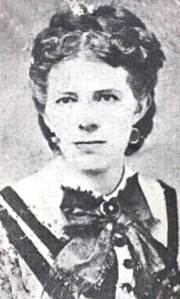
Loreta’s Civil War: Making myself liable to suspicion

Velazquez tours the enemy capital city and collects intelligence she deems valuable to the Confederate war effort.

KS28

Throughout 2016 and 2017, Stillness of Heart will share edited excerpts from the extraordinary memoir of Loreta Janeta Velazquez, who chronicled her adventures throughout the Civil War — either as herself, as a Confederate spy, or in disguise as Confederate Lt. Harry T. Buford. She fought and led men in terrible battles, fell in love, bore and lost children, and traveled throughout the U.S. and Europe, ultimately fulfilling her childhood dream of a rich and adventurous life.

You can read the entire 1876 memoir online here. Learn more about Velazquez (and the incredible documentary film Maria Agui Carter made about her) here.

Part 14: Velazquez tours the enemy capital city and collects intelligence she deems valuable to the Confederate war effort.

******

The information of most vital moment, however, that I succeeded in obtaining from him was that active preparations were being made to secure possession of the upper Mississippi, and that a very large fleet was being fitted out for the purpose of blockading the mouth of the river. I instantly surmised from this that an attack on New Orleans was in contemplation, and resolved to bend my energies, during my stay in Washington, to the task of finding out all I could with regard to the actual intentions of the Federal government. I did succeed in obtaining ample confirmation of all my friend told me, and to a limited extent of my guesses. Those, however, who really knew, were very close-mouthed about what particular work was being cut out for the fleet to perform, and the desire seemed to be to leave the impression that it was to undertake blockade duty simply, and to close the mouths of the river to the ingress and egress of vessels. There were some things which I heard, however, that did not exactly conform to this theory, and by the time I left Washington, I was tolerably well convinced that a grand blow was shortly to be struck, either at Mobile or New Orleans, but most likely at the latter city. I pumped, in a quiet way, everybody I met, who was at all likely to know anything; but I was really afraid to push my inquiries too far, or to seem too inquisitive, as I did not care to be suspected as a spy and put under surveillance, especially as I learned that the government was greatly annoyed by the presence of numbers of Confederate spies in Washington, and was disposed to deal vigorously with them if they were caught.

This, it must be remembered, was simply a reconnoitering expedition, undertaken entirely on my own account, without authority from anybody; and while I, of course, wanted to find out all I could, my real object was more to make an experiment than anything else, and I did not wish to spoil my chances for future operations — for I fully expected to visit Washington again on similar service to this — by getting into trouble just then, and consequently making myself liable to suspicion in the future.

After a somewhat prolonged and very pleasant conversation with my friend, he took his departure, promising, however, to call the next day, and as I was a stranger in Washington — having never visited the city before — to take me to the different places of interest. This was exactly what I wanted, for I was desirous of being informed, as soon as possible, exactly where the public offices were situated, and the best means of obtaining access to them, and I counted greatly upon this obliging and very gallant gentleman unsuspectingly starting me on the right road for the accomplishment of the ends I had in view.

He made his appearance promptly at the appointed hour the next morning, and took me to see the Patent Office, the Treasury Department, and the War Department. … I led him up to making a proposal that he should introduce me to the secretary of war. In a demure sort of way, I expressed myself as delighted at the honor of being able to meet so great a man, and so, in a few moments more, I was bowing, in my politest manner, to Secretary [Simon] Cameron. …

I cannot say that the secretary of war impressed me very favorably. He was abundantly courteous in his manners, but there was a crafty look in his eyes, and a peculiar expression about his mouth, that I thought indicated a treacherous disposition, and that I did not like. I concluded that Mr. Cameron would be a hard man to deal with, unless dealing were made well worth his while; but in spite of his evident knowingness, and his evident confidence in his own abilities, I left him, feeling tolerably sure that I could prove myself a fair match for him in case our wits were ever brought into conflict. …

From the War Department we went to the White House, where my friend said he would introduce me to the president. I really had some dread of this interview, although I experienced a great curiosity to see Mr. Lincoln … I considered him more than any one person responsible for the war. Mr. Lincoln, however, was an agreeable disappointment to me, as I have no doubt he was to many others. He was certainly a very homely man, but he was not what I should call an ugly man, for he had a pleasant, kindly face, and a pleasantly familiar manner, that put one at ease with him immediately. I did not have an opportunity to exchange a great many words with Mr. Lincoln, but my interview, brief as it was, induced me to believe, not only that he was not a bad man, but that he was an honest and well-meaning one, who thought that he was only doing his duty in attempting to conquer the South. … I left the White House, if not with a genuine liking for him, at least with many of my prejudices dispelled and different feelings towards him than I had when I entered.

My tour around Washington, and especially my visit to the War and Post Office Departments, convinced me, not only that Washington would be a first-rate place for me to operate in, if I could obtain a definite attachment to the detective corps, but that I had the abilities to become a good detective, and would, in a very short time, be able to put the Confederate authorities in possession of information of the first value with regard to the present and prospective movements of the enemy.

Having fulfilled my errand, and accomplished all that I had expected when starting out on this trip, I left Washington as suddenly as I had entered it, giving my friend to understand that I was going to New York. I had as little trouble in getting back to Leesburg as I had in getting away from it, and put in an appearance at the house of the old colored woman, who had my uniform hid away for me, within thirteen days from the time I left it.

Attiring myself once more in the garb of a Confederate officer, I returned the old woman her calico dress, shawl, sun-bonnet, and shoes. … My other suit of female clothing I took up to the hotel with me, and told my boy Bob, who seemed to be very curious about them, that I had bought them for my girl. Bob seemed to be delighted to see me again, as he had been apprehensive, from my long absence, that something had happened, and that I might never return. He was most anxious to know where I had been; but I put a short stop to his questionings on that topic, by giving him orders to have everything ready for an early start on a long journey in the morning. The next day we were en route for Columbus, Tennessee, where I expected to find Gen. Leonidas Polk, under whom I was now desirous of serving.

Loreta’s Civil War: The insatiate desire

Velazquez pauses her adventure as a Confederate soldier, for the moment, and heads for Washington, D.C., for a new challenge.

OLYMPUS DIGITAL CAMERA

Throughout 2016 and 2017, Stillness of Heart will share edited excerpts from the extraordinary memoir of Loreta Janeta Velazquez, who chronicled her adventures throughout the Civil War — either as herself, as a Confederate spy, or in disguise as Confederate Lt. Harry T. Buford. She fought and led men in terrible battles, fell in love, bore and lost children, and traveled throughout the U.S. and Europe, ultimately fulfilling her childhood dream of a rich and adventurous life.

You can read the entire 1876 memoir online here. Learn more about Velazquez (and the incredible documentary film Maria Agui Carter made about her) here.

Part 13: Velazquez pauses her adventure as a Confederate soldier, for the moment, and heads for Washington, D.C., for a new challenge.

******

We may regret that the dreams of our youth do not come true, just as we once loved to hope that they would, almost without endeavor on our part; but who shall say that our own life romances, woven out of the tissues of events from day to day, with much labor, doubt, and pain, are not fairer and brighter than any imagination could create? It is good to do one’s duty quietly amid the rush of great events, even when the path of duty lies in hidden places, where the gaze of the crowd penetrates not, where applause cannot follow; and one’s own satisfaction at duty well and nobly performed, is, after all, the best recompense that can be had.

To be a second Joan of Arc was a mere girlish fancy, which my very first experiences as a soldier dissipated forever; and it did not take me long to discover that I needed no model, but that, to win success in the career I had chosen, I must be simply myself, and not a copy, even in the remotest particular, of anybody else; and that the secret of success consisted in watching the current of events, and in taking advantage of circumstances as they arose. … The experiences of actual warfare, however, soon had the effect of convincing me that a woman like myself, who had a talent for assuming disguises, and who, like me, was possessed of courage, resolution, and energy, backed up by a ready wit, a plausible address, and attractive manners, had it in her power to perform many services of the most vital importance, which it would be impossible for a man to even attempt.

The difficulty which our commander experienced in gaining accurate and thoroughly reliable information with regard to the movements of the enemy, the rumors that prevailed of the enormous preparations being made by the Federal government to crush the South, an insatiable desire to see and to hear for myself what was going on within the enemy’s lines, all stimulated me to make an attempt, the hazardous character of which I well knew; but, trusting to my woman’s wit to see me safely through, I resolved that the attempt should be made.

My plans were tolerably well matured when the Battle of Ball’s Bluff took place, and I should probably have put them in execution before I did, had it not been for the insatiate desire I had to take part in another fight. After that battle, I more than ever felt the necessity for some constant, active employment, for I chafed under the ennui of the camp, and felt irresistibly impelled to be moving about and doing something. I accordingly was not long in resolving that the time had now arrived for me to attempt something more than I had yet done, and for me to effect a coup that might either make or mar my fortunes, but that, whatever its result might be, would give me the excitement I craved, and demonstrate my abilities, and my disposition to serve the Confederacy in such a signal manner that it would be impossible for those in authority any longer to ignore me.

A woman labors under some disadvantages in an attempt to fight her own way in the world, and at the same time, from the mere fact that she is a woman, she can often do things that a man cannot. I have no hesitation in saying that I wish I had been created a man instead of a woman. This … is the matter with nearly all the women who go about complaining of the wrongs of our sex. But, being a woman, I was bent on making the best of it; and having for some time now figured successfully in the garments of the other sex, I resolved upon resuming those of my own for a season, for the accomplishment of a purpose I had in my mind. This purpose I felt sure I could accomplish as a woman; and although I had a tolerably good appreciation of the perils I should run, I had confidence in my abilities to see myself through, and the perils attending my enterprise were incentives, rather than otherwise, for me to attempt it.

Having obtained a letter of introduction to Gen. Leonidas Polk, and my transportation papers — for it was my intention, after making the trip I had immediately in view, to visit the part of the country in which his army was operating, as it was more familiar to me, and I thought that I could perform more efficient service there than in Virginia — I turned in my camp equipage to the quartermaster, and bidding farewell to my friends, started off in search of new adventures. …

Going to an old negro woman who had washed for me, and who had shown considerable fondness for me, I told her that I intended visiting the Yankees for the purpose of seeing them about coming and freeing the colored folk, and asked her to let me have a suit of woman’s clothes, so that I could get through the lines without being stopped. I made up quite a long yarn about what I proposed to do, and the poor old soul, believing all I told her without a moment’s hesitation, consented to aid me in every way she could, her ardor being materially quickened by a twenty dollar Confederate note which I handed her.

She was not long in having me attired in the best she had — a calico dress, a woolen shawl, a sun-bonnet, and a pair of shoes much too large for me — and hiding away my uniform where it would be safe during my absence, she started me off with a full expectation that I would be back in a couple of weeks, with the whole Yankee army at my back, for the purpose of liberating all the slaves. The old woman put such implicit faith in me that I really felt sorry at deceiving her, but quieted my conscience with the thought that lying was as necessary as fighting in warfare, and that the prospects were that I would be compelled to do much more fibbing than this before the errand upon which I was about starting would be achieved.

Managing to make my way to the river without attracting any particular attention, I found an old negro who had a boat, and making up a story that I fancied would answer the purpose, I struck a bargain with him to take me across to the Maryland shore for twenty-five dollars. He was eager to get the money, probably never having handled so much before in his life at any one time, but warned me that it would be a risky piece of business, for the weather was very cold, the river broad and deep, and the current strong, and there was considerable danger of my being fired at by the pickets on either bank. I told him that I was not afraid to take all the risks, and that I thought I could stand the cold. I accordingly concealed myself in his cabin until the time for commencing the crossing arrived, neither of us deeming it prudent to start before midnight. …

At length we reached the Maryland side of the river, to my infinite satisfaction, for I was numb with the cold, and stiff in all my limbs, from the cramped position in which I had been obliged to sit in the boat, and was heartily glad of an opportunity to tread dry land once more. Dismissing the boatman, and enjoining him not to say anything, I made my way to a farm-house which I espied a short distance from the place of landing, and about four o’clock in the morning, finding no better place to rest my weary limbs, I crept into a wheat-stack, and slept there until daylight. …

[Once I] penetrated the lines of the enemy, there was, I knew, little to fear. As a Confederate soldier, I was figuring in a disguise which was likely, at any time, to get me into trouble of some sort, and not the least danger I saw was that of being arrested as a spy. When I first undertook to be a soldier, this was an idea that never occurred to me; but a very short experience in actual campaigning taught me that I would have to be careful to prevent the fact that I was disguised from being found out, if for no other reason than that my loyalty to the Southern cause might not be suspected. I relied, however, upon the good fighting I had done, and the other services I had rendered, which were proofs of the genuineness of my devotion, as well as the influence of my friends to get me out of any scrape into which I might fall through the discovery that I was not a man.

Here, in the enemy’s country, however, I passed for exactly what I was, with nobody nearer than Memphis who knew me, both as a man and as a woman, and I consequently felt perfectly secure in moving about pretty much as I chose, having a plausible story on the end of my tongue to tell anybody who might question me. I concluded that, as it was most likely I would meet in Washington people who knew me as a woman … that it would be safer, and in all respects better for me to attempt no disguise, but to figure as myself, and as nobody else. …

Between my starting-point on the Maryland side and Washington, I saw a good many soldiers, from which I judged that the approaches to the Federal capital were strongly guarded, and that very efficient means were being taken to prevent anything like a surprise on the part of the Confederates. This was the most important information I succeeded in obtaining; and except that I was enabled to form some estimates of the force that was guarding the Maryland side of the Potomac it was of no special value, as it was well understood among the Confederates that the enemy were well prepared to resist an attack upon Washington, and were concentrating a large army in and about the city. …

On arriving in Washington, I went to Brown’s Hotel, and having learned that an officer of the regular Federal army, with whom I was well acquainted, and who had been a warm personal friend of my late husband, was in the city, I sent him a note, asking him to call on me. He came to see me very promptly on receiving my message, and greeting me with a good deal of cordiality, expressed a desire to aid me in any manner that lay in his power. I told him that I was just from New York, and making up a plausible story to account for my being in Washington, began to question him about the progress of the war. He evidently had not the slightest idea that I was in Washington for any other purpose than what he would have considered a perfectly legitimate one, and consequently spoke without any reserve concerning a number of matters about which he would certainly have kept silent had he suspected that I had just come from the other side of the Potomac, and that my object was to pick up items of information that would be useful to the Confederacy.

Kate Stone’s Civil War: We enjoy our ease

As Stone loses another brother to the Confederate Army, she also records the hanging of two Missouri spies.

KS56

From 2012 to 2015, Stillness of Heart will share interesting excerpts from the extraordinary diary of Kate Stone, who chronicled her Louisiana family’s turbulent experiences throughout the Civil War era.

Learn more about Stone’s amazing life in 1861, 1862, 1863, 1864, 1865 and beyond. Click on each year to read more about her experiences. You can read the entire journal online here.

(Photo edited by Bob Rowen)

As Stone loses another brother to the Confederate Army, she also records the hanging of two Missouri spies.

Aug. 23, 1864

Near Oak Ridge, La.

Mamma and I came out to Monroe [La.] and Jimmy joined the army. Mamma and I stopped here at Col. Templeton’s, and then Mamma went on to the river and stayed with Mrs. Newman. She went in the old Jersey but came back in the pretty carriage that we have been wanting ever since we left home. She brought out a carriage load of dry goods that were most welcome.

After staying here a few days, she returned to Monroe for a little stay with Mrs. Wadley and then on home by way of Homer where so many of our friends are established. We stopped there coming out, and they greeted us most cordially. We could not make much of a visit as Jimmy and Mamma were anxious to get on. Mrs. Templeton’s family all insisted on my remaining with them until fall, and then I could go back to Texas with Col. Templeton, who will go out to where the Negroes are beyond Tyler.

Jimmy’s command was camped near here and I could see much of him. Mamma and I knew it would be a delightful visit, and as she unselfishly and I selfishly wanted to stay, I did so and am having a most lovely time. All the family are so kind. …

What a horrible tragedy, the death of Mrs. Hull’s two brothers, hanged as spies in Missouri where they had gone in disguise to recruit for Col. Hull’s regiment. They were with him but he escaped and had the hardihood to go and see them hanged with the faint hope that he might effect their escape. But of course that was hopeless. He made his way out of the state with some men and met a number who knew him but was not betrayed. The men hanged were two gallant young officers of excellent family. I cannot recall their names just now, but their father was the editor and proprietor of one of the leading St. Louis papers and left a large fortune. Poor Mrs. Hull is heartbroken.

It is very warm but we enjoy our ease with open doors and windows, undressed and lounging around. No gentlemen staying in the house to molest or make us afraid. Emmie is busy on a dress that she has had on hand for two weeks. Mary is practicing a delightful concord of sweet sounds, and I have been working on a flannel shirt for Jimmy. …

Rebecca Aguilar

#CallingAllJournalists Initiative | Reporter | Media Watchdog | Mentor | Latinas in Journalism

Anna Fonte's Paper Planes

Words, images & collages tossed from a window.

Postcards from Barton Springs

Gayle Brennan Spencer - sending random thoughts to and from South Austin

The Flask Half Full

Irreverent travelogues, good drinks, and the cultural stories they tell.

Government Book Talk

Talking about some of the best publications from the Federal Government, past and present.

Cadillac Society

Cadillac News, Forums, Rumors, Reviews

Ob360media

Real News That Matters

Mealtime Joy

bringing joy to family meals

Øl, Mad og Folk

Bloggen Øl, Mad og Folk

a joyous kitchen

fun, delicious food for everyone

A Perfect Feast

Modern Comfort Food

donnablackwrites

Art is a gift we give ourselves

Fridgelore

low waste living drawn from food lore through the ages

BeckiesKitchen.com

MUSINGS : CRITICISM : HISTORY : NEWS

North River Notes

Observations on the Hudson River as it passes through New York City. The section of the Hudson which passes through New York is historically known as the North River, called this by the Dutch to distinguish it from the Delaware River, which they knew as the South River. This stretch of the Hudson is still often referred to as the North River by local mariners today. All photos copyright Daniel Katzive unless otherwise attributed. For more frequent updates, please follow northriverblog on Facebook or Instagram.

Flavorite

Where your favorite flavors come together