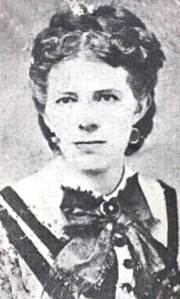
Loreta’s Civil War: I told him who I really was

In the aftermath of the Confederate defeat at Shiloh, Velazquez is wounded, and she decides the surgeon treating her should know that he is treating a woman disguised as a man.

KS62

Throughout 2016 and 2017, Stillness of Heart will share edited excerpts from the extraordinary memoir of Loreta Janeta Velazquez, who chronicled her adventures throughout the Civil War — either as herself, as a Confederate spy, or in disguise as Confederate Lt. Harry T. Buford. She fought and led men in terrible battles, fell in love, bore and lost children, and traveled throughout the U.S. and Europe, ultimately fulfilling her childhood dream of a rich and adventurous life.


You can read the entire 1876 memoir online here. Learn more about Velazquez (and the incredible documentary film Maria Agui Carter made about her) here.

Part 21: In the aftermath of the Confederate defeat at Shiloh, Velazquez is wounded, and she decides the surgeon treating her should know that he is treating a woman disguised as a man.

******

About five o’clock I found my boy near the hospital. He had my horse and another fine animal that he had picked up. In reply to my query, Bob said that he had found him in the woods without a rider. He was branded “U.S” and had an officer’s saddle on, and as he seemed, from outside appearances, to be superior to my own steed, I concluded to take possession of him. Mounting him, I tried him over a fence and a large log, which he cleared like an antelope, so deeming him a prize worth securing, I turned over my own horse to Bob and started him off on the road to Corinth. The boy, however, mistook the road, and went plump into the Federal camp at Purdy, thus depriving me of his valuable services.

As for me, I remained in the woods all night, the roads being perfectly blocked up with the retreating army, trying to shield myself as best I could from the furious storm of rain and hail that came on, as if to add to the miseries which the wretched soldiers of the Confederacy were compelled to endure on their weary march back to Corinth. Although I had escaped from the two days’ fighting unhurt, I was so utterly worn out and wretched that I really did not care a great deal what became of me, and was almost as willing to be taken prisoner by the Federals as to return to Corinth, with a view of again undertaking to exert myself in what was now beginning to appear the hopeless cause of Southern independence. I managed, however, after the worst of the storm was over to find a tolerably dry place, where, completely used up by the fatigues I had undergone, I fell into a sound sleep.

Rested but scarcely refreshed by a brief slumber on the damp ground, and with thoughts of the most gloomy description filling my mind, I mounted my horse at daybreak and started to ride back to Corinth. … I was so despondent over the way things seemed to be going that I had little heart to continue in the contest any longer. At the same time I was loath to give the thing up and could not help reflecting that the true spirit of heroism required me to bear adversity with fortitude and to seek to advance the interests of my cause, no matter how unpropitious the times might seem. …

On arriving at camp I found a mail awaiting me. Among my letters were some from my friends in the army of Virginia, and one from my little Memphis lady, which read as follows:

“Memphis, Tennessee, April 2. 1862.

“My Dear Harry: Yours was handed to me the next morning by our trusty and faithful old servant David, and I hastily opened it, knowing it to be from you by the handwriting. My dear, I am afraid that this will appear unintelligible, being wet with tears from beginning to end. When your letter was handed to me we were at breakfast, and grandpa was reading the “Appeal,” wherein it was stated that all officers and soldiers away from their commands should report for duty. I was afraid that you would have to go, but some hope remained until your fatal letter convinced me that my suspicions were too well founded. Alas, how vain are human expectations! In the morning we dream of happiness and before evening are really miserable. I was promising to myself that one month more would have joined our hands, and now we are to be separated — yes, perhaps for years, if not forever, for how do I know but that the next tidings may bring intelligence of your being killed in battle, and then, farewell to everything in this world, my prospects of a happy future will vanish, and although unmarried, I will ever remain the widow Buford until death.

And is it possible my dear Harry can doubt for one moment of my sincerity; or do you think that these affections can ever be placed on another, which were first fixed upon your dear self, from a convincing sense of your accomplishments and merit? No, dear Harry, my fidelity to you shall remain as unspotted as this paper was before it was blotted with ink and bedewed with tears. I know not how others love, but my engagements are for eternity. You desire me to remind you of your duty. My dear, I know not of any faults, nor am I disposed to look for any. I doubt not that the religious education you have received in your youth will enable you to resist the strongest temptations, and make that everlasting honor to the army, Lieutenant Buford, although not afraid to fight, yet afraid to sin. However terrifying it may be to meet death in the field, yet it is far more awful to appear before a just God, whom we have offended by our iniquities. There are no persons in the world accused more of irreligion than the military, while from the very nature of their employment none are more obliged to practice every Christian duty. They see thousands of their fellow-beings hurried into eternity without a moment’s warning, nor do they know but that the next day they may themselves meet the same fate. My dear Harry, never be ashamed of religion; a consciousness of your own integrity will inspire you with courage in the day of battle, and if you should at last die in defense of the right in your country’s cause, the Divine favor will be your comfort through eternity. In the meantime my prayers shall be constantly for your safety and your preservation in the day of battle, and my earnest hopes will be fixed upon your happy return. …

‘Farewell, dear Harry, and may the wisdom of God direct you, and His all-wise providence be your guard. This is the sincere prayer of one who prefers you before all the world. Grandpa and Auntie wish to be remembered to you kindly. I wrote to Brother that you would hand him a letter.

Your loving intended till death,

I give this as a favorable specimen of the love letters I was in the habit of receiving during my military career, and I have the less hesitation in doing so as it is one that no woman need be ashamed of having written. I could not help laughing a little as I read it, and yet I felt really sorry for the writer, and reproached myself for having permitted my flirtation with her to go to the length it did. The case was a particularly sad one, for the reason that the man who loved her devotedly, and who would doubtless in time have succeeded in curing her of her misplaced affections for the fictitious Lt. Buford, was among the slain at Shiloh. There was no braver soldier belonging to the Confederate army engaged in that bloody battle than Phil Hastings, and his death was doubly a source of regret to me, as by it I lost a warmhearted and sincere friend, and also an opportunity to undo the wrong I had unwittingly done him through capturing the affections of the girl he loved, by endeavoring to make matters right between him and her.

At the time of the receipt of this letter, however, I had something of more pressing importance to think of than explanations with Miss M. My boy had not put in an appearance, and suspecting that he must have lost himself, I started out to search for him; but, although I made diligent inquiry, I could not obtain any intelligence of him. This vexed me extremely, for Bob had become an invaluable servant, being very handy and entirely trustworthy, and I felt that he would be indispensable to me in the movement I now had more than half determined to make, with a view of trying to win the favors of Fortune in a somewhat new field of action.

To make matters worse, when about five miles from Corinth my horse broke from me, and stampeding out of sight, left me to get back the best way I could. I was now in a pretty fix, with scarcely any money about me, and with miles of terribly rough and muddy roads to traverse before I could regain my quarters. There was nothing, however, to do but to bear up under my misfortunes as bravely as possible, and so plunging through the mud, I tried to make my way back to Corinth with what rapidity I could. … Obtaining a horse from the quartermaster, I started back to the battlefield in company with Capt. G. Merrick Miller, who desired to bury the dead of his company.

The road was lined with stragglers, many of them suffering from severe wounds, who were slowly making their way back to their respective camps, and as we reached the scene of the late action the most ghastly sight met our eyes. The ground was thickly strewn with dead men and horses, arms and accoutrements were scattered about in every direction, wagons were stuck in the mud and abandoned, and other abundant evidences of the sanguinary nature of the conflict were perceptible to our eyes. I could face the deadliest fire without flinching, but I could not bear to look at these things, and so, after having made a number of vain inquiries for Bob, I rode back to camp, and said good-by to my Louisiana friends, leaving them under the impression that I intended to take the train.

This I probably might have done had I not fallen in with some cavalry who were about starting out on scouting duty, and been tempted to accompany them. This was the kind of work that I had a particular liking for, and as I had no definite plan for the immediate future arranged, and was desirous of finding Bob before leaving Corinth or its neighborhood, I concluded to try whether a little cavalry service would not be productive of some adventure worth participating in. An adventure of importance in its influence on my future career, sure enough, it did bring me, although it was not exactly what I anticipated or desired.

It was about dark when we set out, and we spent the night hovering about in the neighborhood of the enemy, but without anything noteworthy occurring. The next day we had a little brush with a party of Federals, and after the exchange of a few shots were compelled to retreat. After this, we came across some dead men belonging to the 10th Tennessee Regiment in the woods. Carefully removing the bodies to a field nearby, we put them in a potato bin, and with a hoe, which was the only implement we could find suited to our purpose, we covered them as well as we were able with earth.

While engaged in this melancholy duty, the enemy were occasionally firing shells in different directions, apparently feeling for us. We paid no special attention to them, as the Federals seemed to be firing at random, and, so far as we could judge, did not notice our party. Soon, however, [a shell] burst in our midst, killing a young fellow instantly, and wounding me severely in the arm and shoulder. I was thrown to the ground, and stunned with the suddenness of the thing. One of the soldiers picked me up, and stood me on my feet, saying, “Are you hurt?”

“No, not bad,” I replied, in a vague sort of way, but my whole system was terribly shocked, and I felt deathly sick. Before a great many moments, however, I perfectly recovered my consciousness, and by a resolute effort of will, endeavored to bear up bravely. I found, however, that I was unable to use my right arm, and soon the wound began to pain me terribly.

The soldier who had picked me up, seeing that I was too badly hurt to help myself, lifted me on my horse, and started back to camp with me. It was a long ride, of nearly fifteen miles, and I thought that it would never come to an end. Every moment the pain increased in intensity, and if my horse jolted or stumbled a little, I experienced the most excruciating agony. My fortitude began to give way before the terrible physical suffering I was compelled to endure; all my manliness oozed out long before I reached camp, and my woman’s nature asserted itself with irresistible force. … I longed to be where there would be no necessity for continuing my disguise and where I could obtain shelter, rest, and attention as a woman. My pride, however, and a fear of consequences, prevented me from revealing my sex, and I determined to preserve my secret as long as it was possible to do so, hoping soon to reach some place where I could be myself again with impunity.

By the time we reached camp my hand and arm were so much swollen, that my conductor found it necessary to rip the sleeve of my coat in order to get at the wound for the purpose of bathing it in cold water. The application of the water was a slight relief, but the hurt was too serious a one for such treatment to be of permanent service, so an ambulance was procured, and I was taken to the railroad and put on the train bound south, The cars stopped at Corinth for two hours, and, feeling the necessity for some medical attendance as soon as possible, I sent for a young surgeon whom I knew intimately, and telling him that I was wounded severely, asked him to try and do something to relieve my suffering.

He immediately examined my arm, and, as I perceived by the puzzled expression that passed over his face, he was beginning to suspect something, and guessing that further concealment would be useless, I told him who I really was. I never saw a more astonished man in my life. The idea of a woman engaging in such an adventure and receiving such an ugly hurt appeared to shock him extremely, and he declared that he would not take the responsibility of performing an operation, but would send for Dr. S. This frightened me, for I had witnessed some specimens of that surgeon’s method of dealing with wounded soldiers, and I insisted that he was too barbarous, and that he should not touch me. He then proposed to send for Dr. H., but I objected to this also, and finally, at my urgent solicitation, he consented to make a careful examination himself and try what he could do.

Loreta’s Civil War: Winning the fame I coveted

Velazquez surprises her husband with her presence, her disguise, and her soldiers. The joy created by their reunion, however, does not last long.

KS18

Throughout 2016 and 2017, Stillness of Heart will share edited excerpts from the extraordinary memoir of Loreta Janeta Velazquez, who chronicled her adventures throughout the Civil War — either as herself, as a Confederate spy, or in disguise as Confederate Lt. Harry T. Buford. She fought and led men in terrible battles, fell in love, bore and lost children, and traveled throughout the U.S. and Europe, ultimately fulfilling her childhood dream of a rich and adventurous life.

You can read the entire 1876 memoir online here. Learn more about Velazquez (and the incredible documentary film Maria Agui Carter made about her) here.

Part 9: Velazquez surprises her husband with her presence, her disguise, and her soldiers. The joy created by their reunion, however, does not last long.

******

I determined to march my men to the river, in order to break them in; but before we got to the landing, a good many of them were decidedly of the opinion that soldiering was much harder work than they had calculated upon. None of them showed any disposition to back out, however, and the majority, despite the fatigue of the march, were quite elated at the prospect before them of being able to see something of the world. I do not think any of them appreciated the real importance of what they were doing, and looked upon the whole affair much in the light of an excursion, which would be rather jolly than otherwise. Indeed, to tell the truth, I rather regarded the thing in that light myself, notwithstanding that I had seen enough of military life for me to understand something of its serious character.

At the landing I met my Memphis friend with my baggage and equipment and a tent, and with blankets and camp utensils for the use of the men. He also handed me a letter from my husband. This I eagerly read, and much to my disappointment, learned from it that he had gone to Pensacola. I determined, however, to push on and meet him there, for I was bent on carrying out my original idea of surprising him, and of offering him the command of my battalion. I accordingly embarked my men — two hundred and thirty-six in all — upon the steamer Ohio Belle, and issued to them blankets and other articles necessary for their comfort.

My plan now was to go down to New Orleans, where I should be able to procure such stores and equipment as were immediately needed and where I could perfect my disguise; for, not only did my padded coat not fit me as it ought, but it was almost unbearably warm, and I was anxious to substitute something more comfortable for the padding at the earliest possible moment. … On arriving at New Orleans, I landed my men a short distance above the city, and then, with as little delay as possible, purchased my quartermaster and commissary stores, and perfected my private outfit. … No finer body of men ever went out of New Orleans than the Arkansas Grays, as my battalion was called. As we passed through Mobile we were heartily cheered, the men waving their hats, and the women their handkerchiefs, and everybody commenting in the most laudatory terms upon our martial appearance, I cannot pretend to tell how proud I was, when I noted how much attention we were attracting; and if the shadow of a doubt as to the propriety of the course I was pursuing remained in any mind, it assuredly vanished as the cheers of the citizens of Mobile greeted my ears. I felt that, in spite of my being a woman, I was intended for a military leader, and I resolved, more firmly than ever, to let nothing stand in the way of my winning the fame I coveted.

At Pensacola we were received by my husband, who came to meet us in response to a telegraphic dispatch I had sent him, signed by my nom de guerre. He had not the slightest idea who I was, and would not have recognized me had I not revealed myself. So soon as I was able, however, after landing my men from the train, I took him aside where I could speak to him privately and disclosed my identity. He was intensely astonished and greatly grieved to see me come marching into Pensacola at the head of a body of men in such a guise, and said, that although I had done nobly, he would not for the world have had me attempt such a thing. I told him, however, that there was no use of discussing the matter, for was determined to be a soldier, and then placed in his hands the muster-rolls of my company to show him how well I could do what I undertook. He was proud of the ability I had displayed in carrying out my plans, and seeing the uselessness of further argument, took command of the men, and commenced putting them in training … while I was ordered back to New Orleans to purchase more stores and equipment.

I had scarcely arrived at my destination when I received a dispatch announcing the death of my husband and requesting my immediate return. Terribly shocked, and nearly wild with grief, I started for Pensacola again, and found, upon my arrival there, that, while drilling his men, my husband undertook to explain the use of the carbine to one of the sergeants, and the weapon exploded in his hands, killing him almost instantly.

I was now alone in the world, and more than ever disposed to take an active part in the war, if only for the purpose of revenging my husband’s death. Smothering my grief as much as possible, I turned over the command of my battalion to Lt. Thomas de Caulp, for the double reason that the men were only enlisted for three months and were to be stationed in Pensacola … and that I had resolved to go to the front in the character of an independent, with a view of leading a life of more stirring adventures than I probably should be able to do if permanently attached to a particular command.

During the brief time I had been in Pensacola I had formed the acquaintance of a number of officers who were going to the front, and, as they intended to leave for Richmond shortly, I concluded that it would be better to go in their company, especially as several of them were first-rate fellows, and one or two particular friends of my late husband. I also became acquainted with a good many ladies, one of whom, a dashing young widow, paid my masculine charms the compliment of falling desperately in love with them. This lady did not require any encouragement from me; but finding that, while polite to her, I was rather shy and reserved, and apparently insensible to her attractions, she made a dead set at me, and took pains to let me know, in terms that could not be misunderstood, the sentiments she felt for me.

I was really in no mood for nonsense of this kind, and, to tell the truth, I was not particularly pleased with the decidedly unfeminine advances that were made towards me. The necessity of playing the character I had assumed, however, in a successful manner, pressed upon me, and I felt that diversion of some kind was requisite to divert my mind from the sad and gloomy thoughts caused by my bereavement. I accordingly determined to meet my fair one half way, and paid her numerous attentions, such as taking her to the theater, and to drive upon the beach. I, however, resolutely refused to accept any of the numerous very broad hints she threw out, to the effect that a little more lovemaking would be more than agreeable, at which she seemed considerably surprised. Finding, at length, that I either could not or would not understand what she was driving at, she bluntly reproached me for not being more tender in my demonstrations towards her.

I put on the innocent air of a green schoolboy, perfectly non-plussed with the advances of a pretty woman, and assured her that I had never courted a lady in my life, and really did not know how to begin. The eagerness with which the widow undertook to instruct me was decidedly comical, and I learned more about some of the fine points of feminine human nature from her in a week than I had picked up for myself in twenty years. The courting was pretty much all on her side, and I really had not imagined before that it was possible for a lady to take such an important matter so entirely out of the gentleman’s hands. For the fun of the thing I pretended to soften to her, and by the time I was ready to start for Virginia, we were the best possible friends, and although I was careful to make no definite promises, the widow parted from me with the understanding that when the war was over we were to be something more than friends to each other. If I were a man, it would be absurd for me to tell all this, but being a woman, this and other of my love adventures have a comical interest for me, as I doubt not they will have for the reader. If they do not show some of the members of my own sex in the best possible light, it is their fault and not mine.

On the 16th of June I started for Virginia, in company with quite a jovial party of fellows. … They had a good deal of whiskey with them, and I was constantly importuned to drink, my declining to do so not having the best possible effect on some of them. The conversation became more and more profane and ribald, as the whiskey produced its natural effect; and being almost the only sober person in the party, I was not only intensely disgusted, but the warnings I had received from my husband came into my mind, and had a most depressing influence upon me. Much of the talk was mere meaningless blackguardism, and my ears were saluted for the first time with nastiness in the shape of language, such as it would have been impossible for me to have imagined the tongues of human beings to utter. It was an intense relief to me when, about four o’clock, the train arrived at Montgomery, [Alabama].

At the Exchange Hotel I met Mr. Leroy P. Walker, the secretary of war, with whom I had a very pleasant conversation about the prospects of the contest with the North, the political situation, and other matters of interest. The next day I bought a smart and mannerly negro boy, named Bob, of about eighteen years of age. I procured him a proper suit of clothes and a military cap, and then gave him charge of my baggage, with instructions to keep a sharp eye on my effects, to behave himself properly, and to come to me when he wanted spending money. Bob proved an excellent servant, taking care of my clothing in good style, and when we were in camp, attending to my two horses in a very satisfactory manner.

From Montgomery I went to Columbia, South Carolina, where I remained over for several days. During my stay in this place I formed the acquaintance of a very pleasant family, one of the young ladies of which. Miss Lou, seemed to be quite taken with me. I was invited to the house, and passed a number of agreeable hours there, and on parting, Miss Lou gave me her address, requesting me to write to her, and pinned a small C.S. flag on my coat.

On the train bound north, there was another quite jovial party, but, very much to my gratification, not so much addicted to whiskey-drinking, blasphemy, and obscenity, as that with which I had started out. A good deal of the conversation was about wives and sweethearts, and pictures of the loved ones at home were freely handed about. I was rallied rather severely because I could not show a photograph of my sweetheart, and some of the men intimated that I must be a poor kind of a man not to be able to find a girl to exchange photographs with me. I took the sharp things they thought fit to say of me in good part, and replied that I did not doubt of my ability to get a sweetheart soon enough when I wanted one.

Before the journey was ended, I had an opportunity to prove myself as good a lady’s man as the best of them, for at Lynchburg, where we were compelled to remain over all night, on taking the train for Richmond, an elderly gentleman stepped up, and after inquiring my destination, asked if 1 could take charge of some ladies. I replied that I would do so with pleasure; but was rather taken aback when I found myself placed in the position of escort to five women and two children. I could not imagine what induced the old gentleman to pick out a little fellow like me, when so many much larger, older, and more experienced officers were present, some of whom were greatly my superiors in rank. I was dreadfully embarrassed, but resolved to play the gallant to the best of my ability, although my heart was in my throat, and I could scarcely find voice to announce myself as Lieutenant Buford, when he inquired my name for the purpose of introducing me.

I was about to inquire whether the ladies had their tickets and checks, when the old gentleman presented them, very much to my satisfaction. Excusing myself for a few moments, I went to attend to checking my own baggage. …

We were soon under way, and had a pleasant enough ride, or at least it would have been pleasant enough had I not been tormented with the fear that they would penetrate my disguise, and discover that I was not what I pretended to be. No suspicions were excited, however, and we finally arrived at Richmond without anything having happened to mar the enjoyment of the journey. On alighting from the cars, I procured carriages to convey the several members of the party to their destination ; two of the ladies, however, accompanied me to the Ballard House, where I obtained rooms for them. The youngest of my newly-found female friends — a very pretty girl, who seemed to have taken quite a fancy to me — had the room adjoining mine, and I had scarcely established myself in my new quarters, when a waiter knocked at the door and handed me a card from her, asking me to escort her to supper. I laughed to myself at this, and fancying that I had succeeded in making another conquest, determined to get myself up in the best style I could, and to do credit to the uniform I wore by showing her that her appreciation was not misapplied. I dressed myself in my best apparel, and, after a visit to the barber’s, I was ready to play the gallant in the best possible manner.

It was all well enough while I was pacing the corridors of the hotel with mademoiselle on my arm, but I confess that my heart failed me when we entered the dining-room, and I fancied that everybody was looking at us. When the big steward, advancing towards us with his politest bow, said, “Lieutenant, step this way with your lady,” and then turning to one of the waiters, told him to attend to this gentleman and lady, it seemed to me as if every eye in the room was fixed on me. I was a rather conspicuous object, it is true, for my uniform, made of the best cloth, and trimmed with buttons and gold lace, was well calculated to attract attention, while the lady on my arm being rather taller than myself, made me even more an object for the curious to gaze at than if I had been alone. …

The young lady was nothing daunted by my silence and chattered away at a great rate on all imaginable subjects and finally succeeded in putting me somewhat at my ease. … My lady at length finished her supper, much to my relief, and I hurried her out of the room as fast as I could, and repaired to the drawing room, where I excused myself on the plea that I had urgent business to attend to, as I intended leaving the city on the first train. She seemed extremely reluctant to part company with me and would not let me go until I promised to see her again before I left the city. In bidding her good night, she extended her hand; and when I took it, she gave mine a squeeze, that indicated as plain as words that a trifle more forwardness on my part would not be disagreeable. I was a little bit disgusted with her very evident desire to capture me, and was very glad to get her off my hands, my determination on parting being not to see her again if I could avoid doing so.


Kate Stone’s Civil War: I was young again

Stone’s last three entries in her diary are from September 1867 and 1868. They form a somber epilogue to her chaotic journey. They capture a bitter reflection of a shattered Southern slaveholding society, adrift, confused, and afraid of a world in which they no longer rule.

KS10

From 2012 to 2015, Stillness of Heart will share interesting excerpts from the extraordinary diary of Kate Stone, who chronicled her Louisiana family’s turbulent experiences throughout the Civil War era.

Learn more about Stone’s amazing life in 1861, 1862, 1863, 1864, 1865 and beyond. Click on each year to read more about her experiences. You can read the entire journal online here.

(Photo edited by Bob Rowen)

Stone’s last three entries in her diary are from September 1867 and 1868. They form a somber epilogue to her chaotic Civil War journey. They capture a bitter reflection of a shattered Southern slaveholding society, adrift, confused, and afraid of a world in which they no longer rule.

Read her first entry in this series here.

Sept. 22, 1867

Brokenburn

A long silence and a year of hard endeavor to raise a crop, reconstruct the place with the problem of hired labor, high water, and cotton worms. Mamma had little trouble in getting advances in New Orleans to plant. Cotton is so high that merchants are anxious to advance to put in a crop, and there is much Northern capital seeking investment in that field. … The Negroes demanded high wages, from $20 to $25 for men, in addition to the old rations of sugar, rice, tobacco, molasses, and sometimes hams. Many of the old hands left, and My Brother went to New Orleans and brought back a number of ex-Negro soldiers, who strutted around in their uniforms and were hard to control. I was deadly afraid of them.

During the spring while Mamma and I were in New Orleans (Mamma on business and she took me for my pleasure), and Uncle Bo and My Brother and Jimmy were away for a few hours, Johnny had a fight with a young Negro in the field, shot and came near killing him, and was mobbed in return. Johnny would have been killed but for the stand one of the Negroes made for him and Uncle Bo’s opportune arrival just as the Negroes brought him to the house a howling, cursing mob with the women shrieking, “Kill him!” and all brandishing pistols and guns. It came near breaking up the planting, and it is a pity it did not as it turned out. Johnny had to be sent away. He was at school near Clinton [Miss.] and the Negroes quieted down and after some weeks the wounded boy recovered, greatly to Johnny’s relief. He never speaks now of killing people as he formerly had a habit of doing. He came home when school closed and there was no further trouble.

Then the water came up and we were nearly overflowed. The cotton planted was very late, and when it was looking as luxuriant and promising as possible and we saw ease of mind before us, the worms came. In a few days the fields were blackened like fire had swept over them. We made about twenty bales and spent $25,000 doing it. What most distresses me is that none of that money went for our personal comfort. All of it went to the Negroes. Mamma would buy only bare necessaries for the table and plainest clothes for the family. Not a luxury, no furniture, carpets, or anything. We are worse off for those things than even in Texas and such a sum spent! But Mamma said it was not honest to spend the money on anything but making the crop. All in this section have suffered in the same way, and for awhile they seemed stunned by their misfortunes. But now the reaction has come, and all are taking what pleasure offers.

Old neighbors and new ones have come in and all seemed to be anxious to be together and talk over their trials and tribulations. There has been much visiting and various picnics and fish frys. I would not go at first. I felt like I did not want to see anybody or ever dance again. I felt fully forty years old, but Mamma made me go after a good cry. Once there, I was compelled to exert myself, and soon I was enjoying it all. The burden of some of the years slipped from my shoulders, and I was young again. It was pleasant to talk nonsense, to be flattered though one knew it was flattery, and to be complimented and fussed over. So since then, Mamma, the boys, and all of us have been going to everything and have found even poverty in company more bearable than when suffered alone. …

September 1868

Rose Hill

In January My Brother rented this place knowing that Brokenburn would be again overflowed, and we moved out the latter part of the month. My Brother lost money again last year planting, and this year he determined to farm, planting a little of everything.

Johnny and Jimmy are both at home, and having nothing to do pulled off their coats and rolled up their sleeves and went to work to raise a crop of corn and potatoes for themselves. They have succeeded well as they will clear several hundred dollars.

We all regret so much Jimmy’s refusal to go buck to the hospital. … We fear he is throwing away the best chance of his life. The boys are so hot and tired when they come in from the fields. …

Sept. 28, 1868

Rose Hill

Mother has been in Vicksburg for a month on a visit to Aunt Sarah. It is her first outing for eighteen months. We hope it will benefit her — her health has been bad for more than a year. She is seldom out of bed more than a week at a time. It took great persuasion and the pointed urging of the whole family to induce her to go on this visit that Aunt Sarah has been begging her to take for months.

Jimmy is now on the wharf boat, Johnny at Omega, and Sister, My Brother, and I have it all our own way with but little to do. My Brother is making an excellent crop and is much more cheerful. …

How we wish Sister could be sent off to school for two years, but it has been impossible. No money. … Let us hope that now the current will change and success will be our portion, as the outlook is brighter than for three years.

This is a pleasant neighborhood … and everybody has been kind and polite about calling and coming in at all times. [The other day we] had another of those inevitable dances that have been given so often this summer. Mary and Katie Byrnes, Louise Meagher, and the other girls never seem to tire of them, but they wear me out — such a sameness. I doubt not that I am getting too old for such gaieties. The men and boys about here are so silly and boyish in conversation. …

It has been an enjoyable life since we came here in January. It is a pleasant enough cottage house, after we got it thoroughly cleaned. There is a lovely little flower yard and a splendid orchard, and the kindest and most sociable neighbors with various little entertainments and dances. …We have new books and papers ad libitum, a luxury we missed for years.

My Brother has just sent Mamma money to buy our winter clothes, and Sister and I are jubilant at the prospect of new dresses and bonnets. We have lived on very little of late years, little bought that was not absolutely necessary. They have dressed me better than any of the others. I have not wanted for anything indispensable for a young lady, but the only money I have spent really as I wished was five dollars of the ten Uncle Bob gave me when Mamma and I went to New Orleans three winters ago. …

What splendid fellows my brothers are. They are all so good to us and such handsome boys. Sister looks almost the same, scarcely older than three years ago. We hope she can go to school this fall and make her debut next fall. If not, I shall beg Mamma to put long dresses … on her and bring her out this winter. She has a gay cheerful nature, and I hope will have a happy girlhood.

Mamma’s bright hopeful spirit never change. She is us always the ruling power with us all, the center and light of our home. How much she will have to tell us on her return, and maybe Aunt Sarah will come with her.

Well, this is the last page of the book that has gone with me through all our journeying. Looking back to the beginning so many years ago, I realize what an unthankful, wicked girl I was not to be supremely happy. With youth, health, and everything surrounding me for comfort and happiness. with unmistakable blessings, I was yet an unsatisfied, discontented girl. It has taken trouble to teach me my faults, and how earnestly I try now to enjoy instead of repine, to be thankful instead of fault-finding. I will try always to see the silver lining to the cloud. All my life I have been surrounded with love and care, far more than I deserved, and I will try in the future to be more worthy of the blessings that brighten my pathway.

So this is the end — shall I ever care to write again?

FINIS

Kate Stone’s Civil War: A state of insubordination

Stone has little sympathy or respect for former slaves, who she sees as “insolent” and insubordinate.

KS50

From 2012 to 2015, Stillness of Heart will share interesting excerpts from the extraordinary diary of Kate Stone, who chronicled her Louisiana family’s turbulent experiences throughout the Civil War era.

Learn more about Stone’s amazing life in 1861, 1862, 1863, 1864, 1865 and beyond. Click on each year to read more about her experiences. You can read the entire journal online here.

(Photo edited by Bob Rowen)

Stone has little sympathy or respect for former slaves, who she sees as “insolent” and insubordinate.

Sept. 21, 1865

Lamar County, Texas

We reached this haven a week ago. Shall we ever forget that forty-mile jolt in a four-mule wagon, the mules at full trot? We made it in a clay over a broken, sorry prairie with nothing to eat but dried peaches, uncooked, soggy biscuits, and warm, salty-tasting well water. We were bruised black and blue and were too tired to sleep or eat the first night. We did not find out until nearly night that the wagon floor was much easier than the chairs we were perched in, and we all crouched down in the straw, too worn out to hold up our heads.

The people who had sheltered us utterly refused all pay and were hurt at the idea — and they with absolutely nothing. Truly it is not the rich who are the most generous! Mamma will send them lots of things when she sends for the carriage.

We found nearly all the Negroes in a state of insubordination, insolent and refusing to work. Mamma had a good deal of trouble with them for a few days. Now they have quieted down and most of those who left have returned, and they are doing as well as “freedmen” ever will, I suppose. We were really afraid to stay on the place for the first two days. We are looking for the boys up from Tyler and for Jimmy and My Brother next week. Then, Ho, for Louisiana!

We have all the butter, milk, and curd that Mamma promised us with wild plums, maypops, and apples in abundance, and Mrs. Smith is a good housekeeper. But it is undeniably a dull spot. …

Johnny has taken Mr. Smith’s place as overseer. The Negroes mind him better.

Kate Stone’s Civil War: No disorder

Stone makes a casual but chilling reference to enduring racial violence, a hint of what is to come in subsequent years.

KS39

From 2012 to 2015, Stillness of Heart will share interesting excerpts from the extraordinary diary of Kate Stone, who chronicled her Louisiana family’s turbulent experiences throughout the Civil War era.

Learn more about Stone’s amazing life in 1861, 1862, 1863, 1864, 1865 and beyond. Click on each year to read more about her experiences. You can read the entire journal online here.

(Photo edited by Bob Rowen)

Stone makes a casual but chilling reference to enduring racial violence, a hint of what is to come in subsequent years.

Aug. 14, 1865

Tyler, Texas

Mamma is out in the backyard directing the making of a barrel of wine from the native grapes which have ripened in the greatest profusion, hanging in great purple clusters over the blackjack oaks. They are brought into town by the wagonload. Both the boys and Sister are at the writing school where they stay all day, and I, being too lazy to sew … must scribble for amusement.

Mollie Moore sent us over a number of newspapers with full accounts of the imprisonment of our beloved President Jefferson Davis. He pines in his captivity like a caged eagle. Heard directly from My Brother through Hutch Bowman, who stayed with us several days on his way to Kaufman County. We may expect him about the last of the month. … There is a great rush for the river lands. All are anxious to secure a place above overflow. …

Jimmy and Willy Carson spent a pleasant week with us lately, and we gave them much good advice on the subject of flirting, which I hope they will lay to heart. Jimmy is an exceedingly handsome, attractive boy. Jimmy had made a pair of gloves of soft white buckskin and got me to embroider the gauntlets for him in gay colored silks. They were really pretty if not fashionable, a word the meaning of which we have almost forgotten. …

These grey August days we have little to do and little company. Mollie Moore and her two brothers will be over this evening to play cards. …

Our melon patch is exhausted but melons in town are selling for ten cents a dozen. None should go unfed at that rate. Mrs. Tooke kindly furnishes us with plenty of peaches.

Quite a number of Negroes are flocking into town, but there is no disorder. Occasionally we hear of a Negro shot down and lying unburied in the woods.

Kate Stone’s Civil War: He deserves killing

Stone reports an astonishing rumor: Maj. Gen. William T. Sherman has killed President Andrew Johnson.

KS8

From 2012 to 2015, Stillness of Heart will share interesting excerpts from the extraordinary diary of Kate Stone, who chronicled her Louisiana family’s turbulent experiences throughout the Civil War era.

Learn more about Stone’s amazing life in 1861, 1862, 1863, 1864, 1865 and beyond. Click on each year to read more about her experiences. You can read the entire journal online here.

(Photo edited by Bob Rowen)

Stone reports an astonishing rumor: Maj. Gen. William T. Sherman has killed President Andrew Johnson.

July 2, 1865

Tyler, Texas

We all joined forces and quilted a silk comfort yesterday, and my fingers are sore from it today. Quilting is my pet aversion, though Mamma says I am a most rapid hand. I hurry up to get through a disagreeable job.

Capt. Smith is making himself very pleasant and we see him frequently. There are compensations in our lot as one goes, another comes. We have known him from our first residence, but he has not been a regular attache until recently. The Irvine girls brought their brother, Lt. Irvine, a handsome gentlemanly fellow but inclined to corpulancy much to his distaste, to call. Capt. Smith is shorn of half of his hirsute glories, and, while he looks more civilized, it is not an improvement. …

My Brother should be at Brokenburn today and Uncle Bo I suppose in Vicksburg. We heard from the boys. They will not get back for two weeks.

Andy Johnson, the detested, is reported killed by Sherman. Since his amnesty proclamation, what a mockery on a name — he deserves killing.

Kate Stone’s Civil War: Civilization commences again

Stone’s brother heads back to Brokenburn to reclaim the ravaged plantation. Stone keeps a wary eye on the Union soldiers stationed nearby and on the former slaves for any change in their behavior.

KS4

From 2012 to 2015, Stillness of Heart will share interesting excerpts from the extraordinary diary of Kate Stone, who chronicled her Louisiana family’s turbulent experiences throughout the Civil War era.

Learn more about Stone’s amazing life in 1861, 1862, 1863, 1864, 1865 and beyond. Click on each year to read more about her experiences. You can read the entire journal online here.

(Photo edited by Bob Rowen)

Stone’s brother heads back to Brokenburn to reclaim the ravaged plantation. Stone keeps a wary eye on the Union soldiers stationed nearby and on the former slaves for any change in their behavior.

June 25, 1865

Tyler, Texas

The house is very quiet now that the boys are all away again. The two weeks they were here, they kept us in a constant turmoil. Joe was here only a week. He succeeded in getting his mother off, and in her train Mrs. Savage’s and Mrs. Prentice’s families, just a week after he came. All have gone home. Willy and Jimmy Carson remained to help bring out the Negroes later. We saw them constantly and, as all four of the boys are wild about girls, they kept me busy introducing them around, looking over their notes, and making bouquets for them to present to anybody, just so it was a girl. Mamma did not get home from the prairie until Saturday night, and she was almost ill from distress and fatigue. But My Brother’s presence was her best restorative. He went some distance on the road to meet her.

My Brother left last Wednesday for Louisiana. He was going by way of Spring Bank and only gave himself time scant time to reach Brokenburn by the Fourth of July, when all abandoned places will be confiscated to the Government if the owners or agents are not on them. We hated so to see him go, but the business was imperative. He will probably not return before September. We gave him quite a list of articles to bring out, if he returns in the ambulance. Now that civilization commences again, we need so many things we have done without and hardly missed in the excitement of living.

My Brother is looking well, much more cheerful and happier than when he came. The last four years has changed him little in looks. He told me all about his love for Kate. They were engaged for several years and were devoted to each other yet let a trifle part them, a caprice they both bitterly repented but too late. But I suppose it was best for him, as he does not mourn for her dead in her young beauty, wife of another, as he would had she been his bride. But oh, my dear little friend, Kate, the suffering was hers. She suffered, suffered, and I know was glad to answer the call for rest. He says he cannot understand the fascination Eugenia exerted over him when in her presence, that he never loved her, and that he rejoiced when he heard of her marriage. But when with her, he could not resist her wiles. …

Jimmy and Johnny started Thursday for Lamar County on a grand beef-driving and sugar expedition. They will be absent some time. Willy and Jimmy Carson are living now out on the place and are only in occasionally.

The Yankee company are in town but keep so quiet we forget their presence. We have not seen them though they came a week ago. There was no demonstration of any kind, and the Negroes for the present are going on just as usual. No proclamation issued. Would not know there was an enemy in the Department. We all went to church today expecting to be outraged by a sight of the whole Yankee detachment but not a blue coat was in sight. There are only twenty men here, but the regiment is looked for this afternoon. Then I suppose we shall feel the heavy hand. Capt. St. Clair has completed his disgrace by being the only man in town who will entertain a Yankee and the first to take office under the new rulers. The general feeling of contempt for him is too deep for words.

We were overwhelmingly busy for some time making clothes for the boys. Now we have little to do, and I am at my old trade, plaiting straw for Mamma to make into hats. … Our friends among the townspeople are very sociable. Nearly all our refugee friends have gone.

Kate Stone’s Civil War: Words are powerless

An era that began on May 15, 1861, ends in early June 1865 when William, Stone’s oldest brother, returns from his shattered army. He returns not only bearing wartime defeat but also more bad family news.

1863

From 2012 to 2015, Stillness of Heart will share interesting excerpts from the extraordinary diary of Kate Stone, who chronicled her Louisiana family’s turbulent experiences throughout the Civil War era.

Learn more about Stone’s amazing life in 1861, 1862, 1863, 1864, 1865 and beyond. Click on each year to read more about her experiences. You can read the entire journal online here.

(Photo edited by Bob Rowen)

An era that began on May 15, 1861, ends in early June 1865 when William, Stone’s oldest brother, returns from his shattered army. He returns not only bearing wartime defeat but also more bad family news.

June 12, 1865

Tyler, Texas

My Brother is with us at last, safe and well, and words are powerless to tell how thankful we are. He came last Thursday evening with Jimmy and Johnny, whom he met at Homer and turned back, as he had come by home and accomplished all that they could do.

He came by way of Cincinnati and was one month reaching Vicksburg from Lynchburg. He brings the sad news of Aunt Laura’s death in February. She died of grief at Beverly’s loss. She never left her bed after the little darling’s death. She just lost her interest in life and faded away. The doctors attending said she had no disease, only heartbreak and no desire to live, and they could not rouse her nor give her a hold on life. Hers was a sensitive, fine, high-strung soul that could not brave disaster.

Dr. Buckner is in Vicksburg utterly desolate. How kind he was to My Brother, giving him a horse, clothes, and all that he needed. Dr. Buckner is well-fixed financially as his clerk, Mr, Peters, kept his drugstore going on and made a lot of money. The first time Dr. Buckner came home on furlough, some friends told him Mr. Peters was robbing him right and left. Dr. Buckner went right on to his store, caught Mr. Peters by the collar, gave him a good shaking and cursing, and told him, “If, when I come back again, I find that you have cheated me, I shall kill you.” Ever since, they say, Mr. Peters has been scrupulously honest, straight as a siring, and has turned over a lot of money to Dr. Buckner. Mr. Peters is a Vermonter, six feet one, and Dr. Buckner is five feet five but a fighter all over.

Aunt Laura died while at Bladen Springs, Ala., with Aunt Sarah, and Dr. Buckner was with her at the last.

My Brother’s parole gave permission for him and his servant with two horses and his sidearms to return home free of charge, hut he arrived at Vicksburg without a thing. Wesley was forced away at the point of the bayonet when he insisted on following Marse William on the boat. Then My Brother was attacked by a mob and broke his sword over his knee and threw it in the Ohio River rather than give it up to the haughty Federal soldiers. They would not furnish transportation unless he would take the oath of allegiance, and so he sold his horses to get money to get to Vicksburg, where he fortunately met Dr. Buckner.

Mamma is up on the prairie and does not yet know of My Brother’s return. Johnny has gone for her, and we expect her on Thursday. What an immense relief it will be to her.

Recommended reading / viewing / listening

This week: A Civil War quiz / Google’s underwater Street View / The man who saved Paris from the Nazis / Slave ship discovered / Hepburn the fashion icon

img_0350

This week: A Civil War quiz / Google’s underwater Street View / The man who saved Paris from the Nazis / Slave ship discovered / Hepburn the fashion icon

Most of these great items come from my social media networks. Follow me on Twitter, Tumblr, LinkedIn, MySpace, and Facebook for more fascinating videos, photos, articles, essays, and criticism.

1. What Do You Know? A Civil War Pop Quiz.
By Megan Kate Nelson | Disunion :: The New York Times | June 4
“Where was the westernmost battle of the Civil War fought? Who issued the first Emancipation Proclamation? Who burned Atlanta?”

2. Three Steps on Perry’s Comeback Trail
By Ross Ramsey | The Texas Tribune | June 4
“The road ahead of Rick Perry is a difficult one, but it’s not that complicated. And the number of candidates running for the Republican presidential nomination helps him more than it hurts. If he can take care of three things, the former Texas governor will still be a presidential candidate at the start of 2016.”

3. Don’t Overthink It, Less Is More When It Comes to Creativity
By Jessica Schmerler | Scientific American | May 2015
“If the cerebellum plays a role in creativity, it could alter our understanding of how the brain functions.”

4. Google Street View goes underwater
Ny Nick Lavars | Gizmag | June 5
“In an effort to raise awareness ahead of World Oceans Day on June 8, Google has expanded its Street View service to let users explore a range of stunning coastal and underwater scenes.”

5. Paris Saved by a Bullitt
By Sam Roberts | Snapshot :: Foreign Affairs | June 2
“[O]n this 75th anniversary of the Fall of Paris, a close reading of [U.S. Ambassador William Bullitt’s] private papers, many of which have never been available to biographers before, and the personal accounts of several of his most intimate confidants, demonstrate conclusively that the characteristics that grated most on his critics — his cavalier cocksureness, his ambition, his relentless fraternizing with the French, and his unflagging faith in America’s global obligations — were exactly what the moment demanded.”

6. Grim History Traced in Sunken Slave Ship Found Off South Africa
By Helene Cooper | The New York Times | May 31
“The story of the São José, like the slave trade itself, spanned continents and oceans, from fishing villages in Africa to sheikhdoms where powerful chiefs plotted with European traders to traffic in human beings to work on plantations in the New World.”

7. Turkey’s Erdogan challenges opposition to find his golden toilet seat
By Humeyra Pamuk and Nick Tattersall | Oddly Enough :: Reuters | June 1
“Irritated by accusations of lavishness, Turkish President Tayyip Erdogan has vowed to resign if the leader of the main opposition can find a single golden toilet seat in his vast new palace.”

8. The Wife Bonus Is Imperfect, But It’s Not Prostitution
By Phoebe Maltz Bovy | New Republic | May 31
“It doesn’t suddenly become a form of prostitution if, temporarily or even permanently, the female partner in an opposite-sex relationship is the substantially lower earner, or is not working outside the home.”

9. How Katharine Hepburn Became a Fashion Icon
By Amy Henderson | Smithsonian.com | May 2015
“Hepburn was part of the post-suffrage generation of women, and her screen persona resonated with that generation’s modern spirit of independence. Despite RKO’s determination to brand her otherwise, Hepburn succeeded in inventing herself.”

10. For Incarcerated Japanese-Americans, Baseball Was ‘Wearing the American Flag’
By Michael Beschloss | HistorySource :: The New York Times | June 2014
“By 1943, when some of those in the relocation camps were allowed to volunteer for war service, some of the ballplayers joined the Army’s almost all-Japanese-American 442nd Regimental Combat Team, which suffered grievous casualties in Europe and came to be called the most decorated military unit in American history.”

Kate Stone’s Civil War: The grand crash

Stone writes indirectly of her heartbreak over losing Lt. Holmes, her pleasure over his new-found sobriety, and the special tokens of affection they exchanged.

KS53

From 2012 to 2015, Stillness of Heart will share interesting excerpts from the extraordinary diary of Kate Stone, who chronicled her Louisiana family’s turbulent experiences throughout the Civil War era.

Learn more about Stone’s amazing life in 1861, 1862, 1863, 1864, 1865 and beyond. Click on each year to read more about her experiences. You can read the entire journal online here.

(Photo edited by Bob Rowen)

Stone writes indirectly of her heartbreak over losing Lt. Holmes, her pleasure over his new-found sobriety, and the special tokens of affection they exchanged.

May 31, 1865

Tyler, Texas

How quiet and deserted the house is since they all left. Johnny and Jimmy started Monday for Louisiana to be absent five or six weeks. Yesterday Lt. Dupre and Lt. Holmes — plain “Mr.” after this — said good-bye to us. How much we miss them. I wonder will it be the same when we meet Lt. Holmes again after the five months of separation? He wishes to correspond but it is better not. The only tokens exchanged were geranium leaves. Which will be treasured longest? He has been perfectly sober for two months and has made many good resolutions which we trust he will keep, even though we never meet again. We have seen him every day but three for three months, and we miss him dreadfully now he has gone forever. …

Lt. Holmes and I went around to bid Sally Grissman and several of the girls good-bye. I know they all could have dispensed with my calls on the occasion, but I went just the same. We have no one “on guard” now for the first time in a year. …

Our friends in the Ordinance Department gave us so many little things during the grand crash that we feel quite rich and are delighted with our extra furnishings. All the ordinance stores were distributed or rather left open to all, and we have a quantity of ammunition. It remains to be seen whether the Yankees will allow us to keep it. It is reported that President Davis has not been captured and that the Federal authorities are most monstrously kind to the soldiers. …