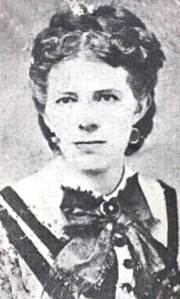
Loreta’s Civil War: The bitter struggle yet to come

Velazquez contends with her New Orleans interrogators, works her way back to the Confederate army, and takes a moment to reflect on romantic life, particularly hers.

KS34

Throughout 2016 and 2017, Stillness of Heart will share edited excerpts from the extraordinary memoir of Loreta Janeta Velazquez, who chronicled her adventures throughout the Civil War — either as herself, as a Confederate spy, or in disguise as Confederate Lt. Harry T. Buford. She fought and led men in terrible battles, fell in love, bore and lost children, and traveled throughout the U.S. and Europe, ultimately fulfilling her childhood dream of a rich and adventurous life.

You can read the entire 1876 memoir online here. Learn more about Velazquez (and the incredible documentary film Maria Agui Carter made about her) here.

Part 18: Velazquez contends with her New Orleans interrogators, works her way back to the Confederate army, and takes a moment to reflect on romantic life, particularly hers.

******

In spite of my bravado, however, this incident gave me a great deal of uneasiness, for I saw that I was in a dangerous predicament, and was liable at any moment to get into further trouble. I was not much surprised, therefore, although greatly disgusted, when the next evening I was again arrested, this time on suspicion of being a woman. Now what I had so long dreaded was come to pass, and there was nothing to do but to get out of the difficulties which environed me the best way I could.

Being taken before Mayor Monroe, I was interrogated by that individual in a style that I did not at all admire. It seemed to me that he was assuming a certain lordliness of manner that did not sit gracefully upon him, and that was entirely uncalled for by the exigencies of the occasion.

My replies to the queries of the mayor were not satisfactory to him, for his very imperious and pompous bearing made me angry, and rather put me on my mettle. He consequently chose to assume that I was a woman, and ordered me to change my apparel.

I, however, was resolved not to give up without a severe contest, having made up my mind, on assuming male attire, not to acknowledge my sex except in the last extremity, and for the sake of securing ends that could not otherwise be accomplished. So, turning to Mr. Monroe, I said, with a dignified severity quite equal to his own, “Sir, prove that I am a woman; it will be quite time, when you do that, for you to give me an order to change my dress.”

This rather disconcerted the mayor and his satellites, and, watching their countenances closely, I saw that they were nonplussed, and were doubtful how to proceed, being uncertain whether or not they had made a mistake. My hopes of a prompt discharge, however, were doomed to disappointment, for the mayor, after a brief consultation, decided to remand me to the calaboose, until it should be settled to his satisfaction who I was, and whether I was a man or a woman. To the calaboose I accordingly went, horrified at being subjected to such an indignity, and with anything but pleasant or friendly feelings towards the mayor, and the meddlesome, prying busybodies who had been instrumental in getting me into this trouble. …

I was visited the next morning by a local reporter, who showed a very eager desire to find out all he could about me, for the purpose of writing a sensational article for the paper with which he was connected. As may be imagined, this sort of thing did not increase my amiability, or tend to make me bear my misfortunes in a philosophical spirit. I gave Mr. Reporter very little satisfaction, shaping my conversation with him with a view of inducing him to believe that a great mistake had been committed, and that I was the victim of a very unjust persecution.

The reporter was troublesome, but I was not alarmed at him, as I was at my next visitor — Dr. Root, of the Charity Hospital. This gentleman, I knew, would be much more difficult to deal with; and before he got through with questioning me, I was convinced, from his manner, that his mind was made up with regard to me. I felt sure that the easiest and best method, indeed, the only method I could safely adopt, was to confess frankly to the mayor that I was really a woman, trusting that this fact being settled in a manner satisfying to his magisterial dignity, he would have no further pretext for keeping me in confinement, and would order my release.

I therefore wrote a note to his honor, requesting a private interview. This request he granted, and without any more equivocation I told him who I was and gave him what I hoped would be satisfactory reasons for assuming the garb I wore. My confession having been made, I next endeavored to treat with the mayor for an immediate release, promising to leave the city as soon as liberated, my idea being to return to military life forthwith, as I had had quite enough of New Orleans for the present.

Mr. Monroe, however, having gotten me in his clutches, was not disposed to let me go so easily, and he said that he would be compelled to fine me ten dollars, and to sentence me to ten days’ imprisonment — a decision that did not increase my good opinion of him. …

I thought that this was pretty rough treatment, considering all that I had done to serve the Confederacy. … I was resolved not to give the thing up. So I concluded that the best plan was to suffer in silence, and to allow the mayor to have what satisfaction he could get out of my ten dollars — I wonder if any of it went into the city treasury? — and out of keeping me incarcerated for ten days. …

I felt sure that once more with the army I would be safe, but, with so many suspicious people watching me, it would be, I knew, extremely difficult to get away as I had come, and to enter upon my old career as an independent, without questioning or hindrance. It was therefore necessary for me to smuggle myself, so to speak, among the soldiers again. … As soon as possible, therefore, after obtaining my release, I proceeded to the recruiting office at the corner of Jefferson and Chatham Streets, and enlisted in Captain B. Moses’ company, of the 21st Louisiana Regiment. The next day we started for Fort Pillow to join the balance of the regiment.

In this manner I contrived to get clear of New Orleans [and] my next thought was to resume my independent footing at the earliest moment. I therefore went privately to Gen. Villipigue, and, showing my commission, told a plausible story to account for my enlistment, and asked him to give me employment as an officer. … Gen. Villipigue was not able to do anything for me, as there were no vacancies, and I therefore applied for a transfer to the Army of East Tennessee and was very cheerfully granted it. … This was the first time I had ever been regularly mustered into the service, and the step was taken, not from choice, but for the purpose of escaping from the surveillance of Mayor Monroe. … I felt that my interests demanded a removal to another locality. Consequently, so soon as I received my papers, I said adieu to my new friends and was off with all possible speed. …

Having secured my transportation and transfer papers, I went to Memphis by the first boat, and was erelong once again at my original starting-point. … My confidence in the sacredness of the cause, in the ability of the Southern armies to sustain it, and its ultimate triumph, were, however, unbroken, notwithstanding that I believed precious time was being wasted, and that, through a mistaken policy, the Confederates were compelled to stand upon the defensive, when they ought to have assumed the aggressive and attacked the enemy on his own ground.

Now, however, things had changed. The terrible disaster at Fort Donelson had been a rude blow to my ideas of Southern invincibility in the field, and if it did not induce me to despair, it certainly opened my eyes to the magnitude of the task we had on hand, and compelled me to recognize the fact, that we were contending with a resolute and powerful enemy whose resources were enormously superior to ours and who was evidently bent upon crushing us to the earth and compelling us to submit to his dictation. All the fine dreams of the previous summer were dissipated into thin air, but there still remained the consolation, that during the bitter struggle yet to come, there would doubtless be plenty of opportunities for me to serve the cause with efficiency, and to win personal glory by my performances. …

So soon as I arrived at Memphis, I telegraphed to Grand Junction for my baggage and my servant, and then went to the tailor, and giving him an order for an officer’s uniform suit, with instructions to have it ready at the earliest possible moment, borrowed from him a coat to wear until my new clothing should be ready. I discarded my soldier’s jacket with quite as much satisfaction as had inspired me on assuming it, and prepared myself to wait, with what equanimity I could command, the moment when I might be able to figure once more in the eyes of both sexes as the dashing young independent, Lt. Harry T. Buford. … I was really not sorry for an opportunity to shut myself up for a day or two, so that I could take a thorough rest, and think, without being interrupted, what was the best plan of action for the immediate future. …

The next day I received two letters, one of which was from my future husband. for, gentle reader, all these months that, in a guise of a man, I had been breaking young ladies’ hearts by my fascinating figure and manner, my own woman’s heart had an object upon which its affections were bestowed, and I was engaged to be married to a truly noble officer of the Confederate army, who knew me, both as a man and as a woman, but who little suspected that Lt. Harry T. Buford, and his intended wife, were one and the same person. By this letter, I learned that my lover was then at Corinth, where I expected to meet him in a few days, and my heart jumped for joy at the idea of being able to fight by his side in the battle that was coming off. This I was determined to do, if the thing could be managed. …

In the relations of the sexes, there are many points which society insists upon for the sake of the proprieties, which are absolutely absurd when tested by any common-sense standard, While permitting a laxity of manners in others that is far from being conducive to good morals or to the general happiness. Many a woman has lost a good husband through a false modesty, which would not permit her to even give him a hint with regard to her real feelings, for some of the best and most whole-souled men are frequently as timid and bashful as the most timid and bashful women, and require some encouragement before they can be induced to speak, while others are strangely obtuse, and do not even think of being anything more than commonly polite to particular ladies, unless something is done to stimulate them. Such backward and thick- witted men are often the most ardent lovers and the fondest and best of husbands when they are once aroused. Many a woman, too, is fond of one man while she is being persistently courted by another; and if, as is apt to be the case, the object of her regards refuses to notice her in the manner she wishes — perhaps simply because he does not like to interfere with another man’s love affair — she has no resource, if she hopes for a happy future, but to declare herself. …


Loreta’s Civil War: The plucky little devil

Velazquez experiences combat for the first time, and she realizes that it is nothing compared to what is to come.

KS19

Throughout 2016 and 2017, Stillness of Heart will share edited excerpts from the extraordinary memoir of Loreta Janeta Velazquez, who chronicled her adventures throughout the Civil War — either as herself, as a Confederate spy, or in disguise as Confederate Lt. Harry T. Buford. She fought and led men in terrible battles, fell in love, bore and lost children, and traveled throughout the U.S. and Europe, ultimately fulfilling her childhood dream of a rich and adventurous life.

You can read the entire 1876 memoir online here. Learn more about Velazquez (and the incredible documentary film Maria Agui Carter made about her) here.

Part 10: Velazquez experiences combat for the first time, and she realizes that it is nothing compared to what is to come.

******

On going to my room, I found a note from my lady friend, requesting me to visit her in her chamber. This considerably astonished me, and assuredly did not increase my good opinion of her. I was almost tempted, however, to comply, just for the sake of hearing what she had to say to me, but wisely concluded that, situated as I was, it would be more prudent to avoid any further acquaintance with such a forward specimen of my sex.

I slept late the next morning, having forgotten to give directions for being called, and found, much to my satisfaction, on inquiring of the clerk, that my lady had left before I was out of bed. After breakfast, I ordered Bob to have everything ready for our departure by the six o’clock train. While strolling about the street, I was accosted by an officer, who asked me to show my papers. I told him that I had none, but that I was an independent, and had recruited, and put in the field, at my own expense, a battalion of two hundred and thirty-six men. This seemed to highly delight him, for he shook me warmly by the hand, asked me to step over to his office, where he could furnish me with transportation, and otherwise showed a desire to be of service to me. I thanked him, but declined the offer, on the plea that I proposed to pay my own way.

During the day I bought two horses and shipped them, and provided myself with a number of articles necessary for the campaign upon which I was about entering. Returning to the hotel, I paid my bill, had a lunch put up, and my baggage got ready, while Bob blacked my boots and brushed my coat. As ill luck would have it, however, I missed the six o’clock train, and was consequently compelled to remain another night in Richmond. … I was now about to enter upon the realization of all my dreams, to see some real warfare, to engage in real battles, to do some real fighting, and, as I fondly hoped, to have some opportunities of distinguishing myself in a signal manner. I was never in better health and spirit than on that bright summer morning, when I left Richmond for the purpose of joining the forces of the Confederacy in the face of the enemy ; and the nearer we approached our destination, the more elated did I become at the prospect before me of being able to prove myself as good a fighter as any of the gallant men who had taken up arms in behalf of the cause of Southern independence. I had only one fear, and that was, that I should be stopped on account of not having the proper papers; but my motto was, “Nothing venture, nothing have,” and I was bent on facing the thing through, and trusting to luck to bring me out all right. Fortunately I had no trouble of any kind, and arrived safely at Clifton — a supply-station about a dozen miles from the headquarters of the army in the field.

At Clifton I bought a couple of fine horses, and on the 15th of July set out for headquarters, with a view of being assigned to a command where I should have a chance to see some fighting. I sought an interview with a prominent general, but he was in rather a crusty humor; and as he did not seem inclined to talk with me, I concluded not to bother him, but to take my chances as matters might shape themselves for the accomplishment of my designs. His adjutant was more polite and desired to employ me as a courier; but this did not suit my notions, and I consequently declined. I told him that I was an independent, paying my own expenses, and that the only thing I wanted was an opportunity to take a hand in the coming fight. I suppose he thought that I was entirely too independent for him, for he said no more, but turned away, and went about other affairs.

Gen. [P.G.T.] Beauregard was in command of the entire army; but I felt a hesitation in approaching him, especially after the rebuff I had just received. Thinking that the shortest way to get what I wanted was to obtain a regular commission, I offered an officer, with whom I became acquainted, five hundred dollars for his. He would not sell, however; and I then went over to Brig. Gen. Bonham, who was holding Mitchell’s Ford, and introduced myself to him. Gen. Bonham looked at me sharply and asked what company I belonged to.

“To none,” I replied. “I belong wherever there is work to do.”

“Well,” said Bonham, “you are the right sort to have around when a fight is going on. If you stay here a little while, I reckon you will be able to find plenty of work.”

I took this as a hint that I might make myself at home, and, bowing myself out of the general’s presence, went to look after my boy Bob. The darkey was just beginning to have some appreciation of what fighting was really like and was badly scared. I told him that if he ran off and left me, I would kill him if I ever caught him again; which threat had its desired effect, for he stuck to me through thick and thin.

At half past twelve o’clock, on the 18th, the enemy made a sharp attack, but did not do any great damage. … As they broke and ran, I fired a last shot at them with a dead man’s musket, which I picked up. During the greater part of this fight, the men belonging to the two armies who engaged in it were often not more than a few feet from each other, and it seemed more like a series of duels than anything such as I had imagined a battle would be. …

This skirmish was but the prelude to the great battles of Manassas or Bull’s Run, which was fought on the 21st of July, 1861. It served, however, to initiate me, and to make me impatient to see an engagement of real importance, in which I should have an opportunity to make a first-rate display of my fighting qualities. I was the more anxious for a big fight soon, as I had been placed temporarily in command of a company, the senior officer of which had been killed, and I was afraid that if a fight was long delayed I should be superseded, and should be compelled to lose my best chance of distinguishing myself. I had no occasion, however, to be afraid of a fight not coming off, for we had ample information of all the movements of the enemy, and knew that he was about to advance upon us in full force, so that the conflict was likely to begin at almost any moment. I was able, therefore, to take part m the first great battle of the war, under the best possible auspices, and to thus accomplish what had been one of the great objects of my ambition from my earliest childhood. There may have been men who did harder fighting at Bull Run than myself, but no one went through the fight with a stouter heart, or with a greater determination to behave valiantly, and, if possible, to give the enemy a sound thrashing, if only for the sake of affording him an idea of the magnitude of the job he had undertaken in attempting to coerce the Southern people.

On the 18th I assisted, with the rest, to bury the dead, my boy, Bob, rendering us efficient service in the performance of this duty. When night came I was tired out, and, lying down on the bare ground, slept soundly until four o’clock the next morning. When I awoke, I was weary and sore in all my limbs through the unusual exertions I had been compelled to make, and the exposure to the hot sun in the day time, and the damp air and cold ground at night. I was not sick, however; and as I had no doubt that I should soon get used to this kind of rough life, I never thought of giving up, especially as a great battle was impending, upon taking part in which my heart was bent.

At daybreak, on the 19th, I was in my boots, and ready to march. Passing through Ashby’s Gap, we reached the little town of Piedmont, on the Manassas Gap Railroad, where we halted. On the 20th, Gen. [Joseph E.] Johnston arrived at Manassas about noon, and was followed by two Georgia regiments and [Thomas] Jackson’s brigade of gallant Virginians. Then came Bernard E. Bee, with the 4th Alabama Regiment and the 2n Regiment, and three companies of the 11th Regiment of Mississippians. On account of some delay, or detention on the railroad, it was now found necessary to hold a council of war, and to make some changes in the plans already arranged. …

On the morning of the day of the battle I was awake at dawn, and ready to play my part in the great drama which was about to begin; and although some of the men around me had been disposed to laugh at the efforts of the little dandified independent to get a chance to display his valor, not one of them was more eager for the fight than myself, or was more bent upon doing deeds of heroism. If I had allowed myself to be irritated by snubs from officers, who behaved as if they thought the results of the war depended upon them alone, I should have gone back to Richmond in disgust several days before the battle came off, and should have resumed the garb of my sex, with a determination never to figure as a man again. I was not to be bluffed by anybody, however; and having come thus far to see and to take a hand in a great battle, I had no thought of turning back for any cause, or under any circumstances, no matter what might be said or thought of me.

I labored under some disadvantages in not having a regular commission, and not being attached to a regular command. This exposed me to slights that would otherwise not have been put upon me, and prevented officers, who would, under some circumstances, have gladly taken advantage of my readiness to attend faithfully to any task assigned me, to avail themselves of my services. On the other hand, my being an independent, enabled me, to a great extent, to choose my own position in the battle, and I probably, therefore, had a better opportunity of distinguishing myself than I should have had otherwise. I was especially bent upon showing some of them, who were disposed to smile at me on account of my petite figure and jaunty air, that I was as good a man as any one of them, and was able to face the enemy as valiantly. This I did show them before the day was over, and I was highly elated at the commendations which some of the best soldiers bestowed upon the “plucky little devil,” as they called me.

By the time it was fairly daylight, the preparations for meeting the enemy were well advanced, and the sun rose in all his majesty upon a host of men drawn up in battle array — the brave among them anxious for the fray to begin, the cowards — and there were plenty of them in both armies — trembling in their boots, and eager for a pretext to sneak away, and hide themselves from the coming danger. The morning was a beautiful one, although it gave promise of a sweltering day; and the scene presented to my eyes, as I surveyed the field, was one of marvelous beauty and grandeur. I cannot pretend to express in words what I felt, as I found myself one among thousands of combatants who were about to engage in a deadly and desperate struggle. … Fear was a word I did not know the meaning of; and as I noted the ashy faces, and the trembling limbs of some of the men about me, I almost wished that I could feel a little fear, if only for the sake of sympathizing with the poor devils. I do not say this for brag, for I despise braggarts as much as I do cowards; but, in a narrative like this, the reader has a right to know what my feelings, as well as my impressions, were, upon so important an occasion as my appearance as a combatant upon the battlefield, where the Confederate troops first gave the enemy a taste of their genuine quality, and achieved their first great victory.

Loreta’s Civil War: Winning the fame I coveted

Velazquez surprises her husband with her presence, her disguise, and her soldiers. The joy created by their reunion, however, does not last long.

KS18

Throughout 2016 and 2017, Stillness of Heart will share edited excerpts from the extraordinary memoir of Loreta Janeta Velazquez, who chronicled her adventures throughout the Civil War — either as herself, as a Confederate spy, or in disguise as Confederate Lt. Harry T. Buford. She fought and led men in terrible battles, fell in love, bore and lost children, and traveled throughout the U.S. and Europe, ultimately fulfilling her childhood dream of a rich and adventurous life.

You can read the entire 1876 memoir online here. Learn more about Velazquez (and the incredible documentary film Maria Agui Carter made about her) here.

Part 9: Velazquez surprises her husband with her presence, her disguise, and her soldiers. The joy created by their reunion, however, does not last long.

******

I determined to march my men to the river, in order to break them in; but before we got to the landing, a good many of them were decidedly of the opinion that soldiering was much harder work than they had calculated upon. None of them showed any disposition to back out, however, and the majority, despite the fatigue of the march, were quite elated at the prospect before them of being able to see something of the world. I do not think any of them appreciated the real importance of what they were doing, and looked upon the whole affair much in the light of an excursion, which would be rather jolly than otherwise. Indeed, to tell the truth, I rather regarded the thing in that light myself, notwithstanding that I had seen enough of military life for me to understand something of its serious character.

At the landing I met my Memphis friend with my baggage and equipment and a tent, and with blankets and camp utensils for the use of the men. He also handed me a letter from my husband. This I eagerly read, and much to my disappointment, learned from it that he had gone to Pensacola. I determined, however, to push on and meet him there, for I was bent on carrying out my original idea of surprising him, and of offering him the command of my battalion. I accordingly embarked my men — two hundred and thirty-six in all — upon the steamer Ohio Belle, and issued to them blankets and other articles necessary for their comfort.

My plan now was to go down to New Orleans, where I should be able to procure such stores and equipment as were immediately needed and where I could perfect my disguise; for, not only did my padded coat not fit me as it ought, but it was almost unbearably warm, and I was anxious to substitute something more comfortable for the padding at the earliest possible moment. … On arriving at New Orleans, I landed my men a short distance above the city, and then, with as little delay as possible, purchased my quartermaster and commissary stores, and perfected my private outfit. … No finer body of men ever went out of New Orleans than the Arkansas Grays, as my battalion was called. As we passed through Mobile we were heartily cheered, the men waving their hats, and the women their handkerchiefs, and everybody commenting in the most laudatory terms upon our martial appearance, I cannot pretend to tell how proud I was, when I noted how much attention we were attracting; and if the shadow of a doubt as to the propriety of the course I was pursuing remained in any mind, it assuredly vanished as the cheers of the citizens of Mobile greeted my ears. I felt that, in spite of my being a woman, I was intended for a military leader, and I resolved, more firmly than ever, to let nothing stand in the way of my winning the fame I coveted.

At Pensacola we were received by my husband, who came to meet us in response to a telegraphic dispatch I had sent him, signed by my nom de guerre. He had not the slightest idea who I was, and would not have recognized me had I not revealed myself. So soon as I was able, however, after landing my men from the train, I took him aside where I could speak to him privately and disclosed my identity. He was intensely astonished and greatly grieved to see me come marching into Pensacola at the head of a body of men in such a guise, and said, that although I had done nobly, he would not for the world have had me attempt such a thing. I told him, however, that there was no use of discussing the matter, for was determined to be a soldier, and then placed in his hands the muster-rolls of my company to show him how well I could do what I undertook. He was proud of the ability I had displayed in carrying out my plans, and seeing the uselessness of further argument, took command of the men, and commenced putting them in training … while I was ordered back to New Orleans to purchase more stores and equipment.

I had scarcely arrived at my destination when I received a dispatch announcing the death of my husband and requesting my immediate return. Terribly shocked, and nearly wild with grief, I started for Pensacola again, and found, upon my arrival there, that, while drilling his men, my husband undertook to explain the use of the carbine to one of the sergeants, and the weapon exploded in his hands, killing him almost instantly.

I was now alone in the world, and more than ever disposed to take an active part in the war, if only for the purpose of revenging my husband’s death. Smothering my grief as much as possible, I turned over the command of my battalion to Lt. Thomas de Caulp, for the double reason that the men were only enlisted for three months and were to be stationed in Pensacola … and that I had resolved to go to the front in the character of an independent, with a view of leading a life of more stirring adventures than I probably should be able to do if permanently attached to a particular command.

During the brief time I had been in Pensacola I had formed the acquaintance of a number of officers who were going to the front, and, as they intended to leave for Richmond shortly, I concluded that it would be better to go in their company, especially as several of them were first-rate fellows, and one or two particular friends of my late husband. I also became acquainted with a good many ladies, one of whom, a dashing young widow, paid my masculine charms the compliment of falling desperately in love with them. This lady did not require any encouragement from me; but finding that, while polite to her, I was rather shy and reserved, and apparently insensible to her attractions, she made a dead set at me, and took pains to let me know, in terms that could not be misunderstood, the sentiments she felt for me.

I was really in no mood for nonsense of this kind, and, to tell the truth, I was not particularly pleased with the decidedly unfeminine advances that were made towards me. The necessity of playing the character I had assumed, however, in a successful manner, pressed upon me, and I felt that diversion of some kind was requisite to divert my mind from the sad and gloomy thoughts caused by my bereavement. I accordingly determined to meet my fair one half way, and paid her numerous attentions, such as taking her to the theater, and to drive upon the beach. I, however, resolutely refused to accept any of the numerous very broad hints she threw out, to the effect that a little more lovemaking would be more than agreeable, at which she seemed considerably surprised. Finding, at length, that I either could not or would not understand what she was driving at, she bluntly reproached me for not being more tender in my demonstrations towards her.

I put on the innocent air of a green schoolboy, perfectly non-plussed with the advances of a pretty woman, and assured her that I had never courted a lady in my life, and really did not know how to begin. The eagerness with which the widow undertook to instruct me was decidedly comical, and I learned more about some of the fine points of feminine human nature from her in a week than I had picked up for myself in twenty years. The courting was pretty much all on her side, and I really had not imagined before that it was possible for a lady to take such an important matter so entirely out of the gentleman’s hands. For the fun of the thing I pretended to soften to her, and by the time I was ready to start for Virginia, we were the best possible friends, and although I was careful to make no definite promises, the widow parted from me with the understanding that when the war was over we were to be something more than friends to each other. If I were a man, it would be absurd for me to tell all this, but being a woman, this and other of my love adventures have a comical interest for me, as I doubt not they will have for the reader. If they do not show some of the members of my own sex in the best possible light, it is their fault and not mine.

On the 16th of June I started for Virginia, in company with quite a jovial party of fellows. … They had a good deal of whiskey with them, and I was constantly importuned to drink, my declining to do so not having the best possible effect on some of them. The conversation became more and more profane and ribald, as the whiskey produced its natural effect; and being almost the only sober person in the party, I was not only intensely disgusted, but the warnings I had received from my husband came into my mind, and had a most depressing influence upon me. Much of the talk was mere meaningless blackguardism, and my ears were saluted for the first time with nastiness in the shape of language, such as it would have been impossible for me to have imagined the tongues of human beings to utter. It was an intense relief to me when, about four o’clock, the train arrived at Montgomery, [Alabama].

At the Exchange Hotel I met Mr. Leroy P. Walker, the secretary of war, with whom I had a very pleasant conversation about the prospects of the contest with the North, the political situation, and other matters of interest. The next day I bought a smart and mannerly negro boy, named Bob, of about eighteen years of age. I procured him a proper suit of clothes and a military cap, and then gave him charge of my baggage, with instructions to keep a sharp eye on my effects, to behave himself properly, and to come to me when he wanted spending money. Bob proved an excellent servant, taking care of my clothing in good style, and when we were in camp, attending to my two horses in a very satisfactory manner.

From Montgomery I went to Columbia, South Carolina, where I remained over for several days. During my stay in this place I formed the acquaintance of a very pleasant family, one of the young ladies of which. Miss Lou, seemed to be quite taken with me. I was invited to the house, and passed a number of agreeable hours there, and on parting, Miss Lou gave me her address, requesting me to write to her, and pinned a small C.S. flag on my coat.

On the train bound north, there was another quite jovial party, but, very much to my gratification, not so much addicted to whiskey-drinking, blasphemy, and obscenity, as that with which I had started out. A good deal of the conversation was about wives and sweethearts, and pictures of the loved ones at home were freely handed about. I was rallied rather severely because I could not show a photograph of my sweetheart, and some of the men intimated that I must be a poor kind of a man not to be able to find a girl to exchange photographs with me. I took the sharp things they thought fit to say of me in good part, and replied that I did not doubt of my ability to get a sweetheart soon enough when I wanted one.

Before the journey was ended, I had an opportunity to prove myself as good a lady’s man as the best of them, for at Lynchburg, where we were compelled to remain over all night, on taking the train for Richmond, an elderly gentleman stepped up, and after inquiring my destination, asked if 1 could take charge of some ladies. I replied that I would do so with pleasure; but was rather taken aback when I found myself placed in the position of escort to five women and two children. I could not imagine what induced the old gentleman to pick out a little fellow like me, when so many much larger, older, and more experienced officers were present, some of whom were greatly my superiors in rank. I was dreadfully embarrassed, but resolved to play the gallant to the best of my ability, although my heart was in my throat, and I could scarcely find voice to announce myself as Lieutenant Buford, when he inquired my name for the purpose of introducing me.

I was about to inquire whether the ladies had their tickets and checks, when the old gentleman presented them, very much to my satisfaction. Excusing myself for a few moments, I went to attend to checking my own baggage. …

We were soon under way, and had a pleasant enough ride, or at least it would have been pleasant enough had I not been tormented with the fear that they would penetrate my disguise, and discover that I was not what I pretended to be. No suspicions were excited, however, and we finally arrived at Richmond without anything having happened to mar the enjoyment of the journey. On alighting from the cars, I procured carriages to convey the several members of the party to their destination ; two of the ladies, however, accompanied me to the Ballard House, where I obtained rooms for them. The youngest of my newly-found female friends — a very pretty girl, who seemed to have taken quite a fancy to me — had the room adjoining mine, and I had scarcely established myself in my new quarters, when a waiter knocked at the door and handed me a card from her, asking me to escort her to supper. I laughed to myself at this, and fancying that I had succeeded in making another conquest, determined to get myself up in the best style I could, and to do credit to the uniform I wore by showing her that her appreciation was not misapplied. I dressed myself in my best apparel, and, after a visit to the barber’s, I was ready to play the gallant in the best possible manner.

It was all well enough while I was pacing the corridors of the hotel with mademoiselle on my arm, but I confess that my heart failed me when we entered the dining-room, and I fancied that everybody was looking at us. When the big steward, advancing towards us with his politest bow, said, “Lieutenant, step this way with your lady,” and then turning to one of the waiters, told him to attend to this gentleman and lady, it seemed to me as if every eye in the room was fixed on me. I was a rather conspicuous object, it is true, for my uniform, made of the best cloth, and trimmed with buttons and gold lace, was well calculated to attract attention, while the lady on my arm being rather taller than myself, made me even more an object for the curious to gaze at than if I had been alone. …

The young lady was nothing daunted by my silence and chattered away at a great rate on all imaginable subjects and finally succeeded in putting me somewhat at my ease. … My lady at length finished her supper, much to my relief, and I hurried her out of the room as fast as I could, and repaired to the drawing room, where I excused myself on the plea that I had urgent business to attend to, as I intended leaving the city on the first train. She seemed extremely reluctant to part company with me and would not let me go until I promised to see her again before I left the city. In bidding her good night, she extended her hand; and when I took it, she gave mine a squeeze, that indicated as plain as words that a trifle more forwardness on my part would not be disagreeable. I was a little bit disgusted with her very evident desire to capture me, and was very glad to get her off my hands, my determination on parting being not to see her again if I could avoid doing so.

Loreta’s Civil War: A mild flirtation with this fair flower

Velazquez completes her disguise, doesn’t hesitate from flirting with farm girls, and rounds up men to form her Confederate battalion.

KS17

Throughout 2016 and 2017, Stillness of Heart will share edited excerpts from the extraordinary memoir of Loreta Janeta Velazquez, who chronicled her adventures throughout the Civil War — either as herself, as a Confederate spy, or in disguise as Confederate Lt. Harry T. Buford. She fought and led men in terrible battles, fell in love, bore and lost children, and traveled throughout the U.S. and Europe, ultimately fulfilling her childhood dream of a rich and adventurous life.

You can read the entire 1876 memoir online here. Learn more about Velazquez (and the incredible documentary film Maria Agui Carter made about her) here.

Part 8: Velazquez completes her disguise, doesn’t hesitate from flirting with farm girls, and rounds up men to form her Confederate battalion.

******

I immediately proceeded to change my garments, and ere a great many minutes had elapsed, I was transformed into a man, so far as it was possible for clothing to transform me. When I was ready, I called my friend and asked his opinion of the figure I cut. He admitted that I was not a bad-looking specimen of a man, considering I had only been about five minutes, and thought that in time I should be able to do credit to the name I bore and the clothes I wore.

The only regret I had in making up my disguise was the necessity for parting with my long and luxuriant hair. This gave me a real pang but there was no help for it, and I submitted with as good a grace as I could muster, while my friend played the part of tonsorial artist with a pair of shears. He trimmed my hair tolerably close and said that it would answer until I could visit a barber’s shop with him and be initiated into some of the mysteries of such a peculiarly masculine place of resort. … [H]e made me promenade the room, practicing a masculine gait until I had acquired it tolerably well, and gave me a great number of very minute instructions about the proper manner of conducting myself so that my sex would not be suspected. He particularly enjoined me to watch his actions closely at the barber’s, in the drinking saloons, the billiard rooms, and the other places he intended conducting me to, for the purpose of informing me with regard to some masculine habits and ways of acting, talking, and thinking. …

Strolling down the street, we soon came to the hotel and entered the barroom, where my companion met a number of friends, to whom he introduced me as a young officer on his way to the seat of war. I was received with much cordiality, and the whole party speedily engaged in an animated conversation about the coming conflict. … The men all took whiskey straight but I did not venture on anything stronger than cider. Soon my companion managed to give me a quiet hint, and I treated the party to drinks and cigars. We then adjourned to the billiard-room, and my friend, taking off his coat, went at a game in good earnest with another member of the party. I had never seen the game of billiards played before, and I soon became intensely interested … pretending to smoke my cigar, the balls rolling over the table. As the weather was warm, I very soon, after entering the billiard-room, availed myself of what seemed to be the custom of the place, to take off my heavily padded coat, which began to be unbearable, and found myself much more at my ease sitting in my shirt sleeves. …

The next day I completed my outfit by purchasing a pair of field glasses, a pair of blankets, a rubber overcoat, and a rubber blanket. On returning to my room I made out a form of attorney in my friend’s name and authorized him to attend to all my business matters for me. I also prepared a lot of recruiting papers on the model of some genuine ones I succeeded in getting hold of, and some muster rolls, and procured a manual of tactics, and before the day was over was pretty nearly ready to commence active operations.

My friend, thinking that my disguise could be somewhat improved and a more manly air given to my countenance, obtained a false mustache and a solution with which to stain my face in order to make it look tanned. I rubbed on the solution until my skin was about the right tint, and then my friend carefully fastened the mustache on my upper lip with glue. This was a very great improvement, and I scarcely knew myself when I looked in the glass, and laughed at the thought of what my husband would say when he saw me in this disguise. …

Everything was now in proper trim for me to commence operations in earnest; so, packing my trunk, rolling up my blankets in army style, as I had often seen soldiers do, preparing my papers, and getting ready a change of underwear, and other matters for immediate use in a small satchel, I was ready to start on my campaign with as stout a heart as ever beat in the breast of a soldier.

The plan of action I had fixed upon, after mature reflection, was to raise and equip a battalion at my own expense, taking care to select good material for it, and then to appear at the head of my little army before my husband, and to offer him the command. I pictured to myself again and again the look of astonishment he would put on when he recognized his wife as the leader of a gallant band who were pledged to fight to the death for the cause of Southern independence, and flattered myself with the idea that, so far from being inclined to censure me for my obstinate persistence in carrying out my idea of becoming a soldier, he would be disposed to praise without reservation, and so far from being ashamed of my action, would be proud of it. Whatever view of the matter he might take, however, he would be compelled to yield to my wishes, whether he desired to do so or not, and I would consequently be free to follow the bent of my inclinations without fear of further opposition on his part. My desire was to serve with him, if possible; but if this could not be done, I intended to play my part in the war in my own way, without his assistance. I, however, did not contemplate any further difficulty in obtaining his consent, and even his assistance, in the execution of my plans, and so started out on the war path with a light heart and with brilliant anticipations for the future.

I crossed over to Hopefield, on the Arkansas side of the river, and took the five o’clock train, not knowing exactly where I proposed to bring up. For a time I busied myself with the study of my Manual of Tactics, with the intention of becoming sufficiently posted on certain points to get my recruits into something like military training immediately. Having been the wife of an army officer for a number of years, and having seen some hard service on the frontier, I was, in a measure, pretty well qualified for the work I had now undertaken, especially as I had paid a good deal of attention to the details of military organizations, and had seen soldiers drilled hundreds of times. I had not been in the train very long, before, finding the conductor at leisure, I entered into conversation with him with a view of obtaining information that might be useful in the furtherance of my designs.

Explaining to this individual, who appeared to take the liveliest interest in my affairs, that I was on a recruiting expedition, I asked him if he could not suggest a good neighborhood for me to commence operations in. He said that Hurlburt Station was as likely a place as I could find to pick up a company of strong, hearty fellows who would do some good fighting, and advised me to try my luck there. Hurlburt, he told me, was not much of a place — a saw-mill, a country store, in which the post office was located, a schoolhouse, which was also used as a church, being pretty much all there was of it. …

The train sped through the swamps, and it was not a great while before we reached Hurlburt Station, where, in accordance with the conductor’s suggestion, I alighted. With my satchel in my hand, I made for the nearest house, and inquired of a negro, who was chopping wood, whether his master was at home. The darkey stared at me a bit, evidently attracted by something in my appearance, and then, grinning until he showed all his ivories, said that the old boss was away, but that the young boss was about somewhere. I accordingly told him to call the young boss; and soon up came a well-built, good-looking young fellow, whom I fixed upon immediately as a suitable recruit. …

I told him that I had the army regulations with me and would take pleasure in explaining them to him in the morning. I then asked him to give me some water so that I could clean myself up a bit before supper, as I was pretty well covered with dust and cinders after my ride. He accordingly got me a basin of water and then left me to go off and hunt the old man, full of eagerness to tell him of the arrival of the recruiting officer, and of his own desire to go soldiering.

The sudden intrusion of a gallant young officer, in a gay uniform, plentifully decorated with buttons and lace … made an even greater impression on the female than upon the male part of the family. My arrival had clearly created an intense excitement, and I understood very well that I was the subject of the whispered conversation that I heard going on outside. From the manner in which the old woman and her son had addressed me, I knew that they had no suspicions of my being other than what I seemed, but I judged that it would be necessary to be pretty careful how I carried myself before the former, for she was clearly a sharp one and would be quick to take note of any peculiarly feminine traits of manner I might display. I therefore determined to play the man right manfully, whether I thought myself observed or not; and this I found to be a very good rule to go by throughout the entire period during which I wore my disguise. …

The eldest of the two daughters was about sixteen and was attired in a bright, flaring yellow calico; the youngest was about twelve years of age and was somewhat less unbecomingly dressed in pink. Both of the girls had put on the best they had to do honor to the occasion, and the eldest, especially, so soon as her first bashfulness wore off, seemed very much disposed to attract the particular attention of the visitor by various little feminine artifices, which I understood very well, and which amused me immensely.

On entering the room, the old woman said, awkwardly waving her hands towards her daughters, “These is my gals, sir.”

I bowed in the politest manner, and said, with what I intended to be a particularly fascinating smile, “Good evening, ladies,” laying a particular emphasis on the word “ladies,” which had the desired effect, for both of the girls blushed deeper than ever, and the eldest simpered as if she heartily enjoyed it. … I started a talk with the old woman by remarking that it had been an exceedingly pleasant day. … After a few commonplaces of this kind about the weather and other matters of no particular moment, I thought I might as well proceed to business at once, for I expected that I would have some opposition from the old woman in my effort to enlist [her son]. So I said, “Madam, I am trying to enlist your son for a soldier in my company; don’t you think you can spare him?” She burst out crying, and exclaimed, “Oh, sir, I can’t let my boy go for a soldier and get killed.” The youngest girl, seeing her mother in tears, began to blubber a little also; but the eldest not only did not cry, but she looked at me in such a peculiar way that I was convinced she wished I would take her instead of [her brother].

The idea of having a mild little flirtation with this fair flower of the Arkansas forest rather grew upon me as I noticed the impression I was making upon her susceptible imagination. I had some curiosity to know how lovemaking went from the masculine standpoint and thought that the present would be a good opportunity to gain some valuable experience in that line; for it occurred to me that if I was to figure successful in the role of a dashing young Confederate officer, it would be necessary for me to learn how to make myself immensely agreeable to the ladies. I knew how to make myself agreeable to the men, or thought I did, and I could, if I chose, be agreeable to women in a feminine sort of fashion; but I had never studied the masculine carriage towards my sex critically with a view of imitating it, and it was important, therefore, that I should begin at once to do so, in order that when compelled to associate with women, as I assuredly would be to a greater or less extent, I might not belie my outward appearances by my conduct. I flatter myself that during the time I passed for a man I was tolerably successful with the women, and I had not a few curious and most amusing adventures, which gave me an insight into some of the peculiarities of feminine human nature which had not impressed themselves on my mind before, perhaps because I was a woman.

My flirtation with Miss Sadie Giles was not a very savage one, and I hope that it did not inflict more damage on her heart than it did on mine. It was immensely amusing to me while it lasted, and I presume, if not exactly amusing, it might at least be deemed entertaining to her. At any rate, I succeeded not only in having a little sly fun at her expense, but I picked up an idea or two that I subsequently found useful. Noticing that Miss Sadie was developing a marked partiality for me, but was much too bashful to give me any encouragement, except some shy glances out of the corners of her eyes, I commenced to ogle her, and, whenever I had an opportunity, to pay her some delicate attentions, for the purpose of making her think I was just a bit fascinated with her. It soon became very evident that the heart which beat under that yellow calico dress was in a great state of excitement, and Miss Sadie, while not encouraging me by any direct advances, made it very plainly understood that my little attentions were appreciated.

Supper was now announced, and we all sat down to a tolerably plentiful repast, the principal features of which were bacon, cabbage, and fried chickens — the latter having been prepared in my honor. Miss Sadie managed to place herself by my side, by a dexterous little maneuver which escaped the attention of the family but which I understood perfectly. I, for my part, strove to play the gallant by helping her bountifully to the bacon, cabbage, and chicken, and by endeavoring to induce her to join in the conversation. She undoubtedly appreciated my attentions at their full value, but was not sufficiently self-possessed to do much talking; indeed, during the supper I could scarcely get anything out of her except a timid “yes” or “no.”

[Her father], on the contrary, was very talkative, and plied me with all kinds of questions about myself, my errand, the war, and the prospect of a speedy accomplishment of Southern independence. I told him that my name was Buford, that I was a lieutenant in the army, and that I had been sent down to Arkansas for the purpose of recruiting a company for service in Virginia. He said that I would have no difficulty in getting all the recruits I wanted, as the young fellows in those parts were every one eager to have a dash at the Yankees, and promised to aid me in every way possible. …

Before the supper was over I had a terrible fright. … While drinking a glass of buttermilk, which I greatly enjoyed, for it was the best thing on the table, and was most refreshing, my mustache got full of the fluid, and when I attempted to wipe this ornament, which my Memphis friend had so carefully glued upon my upper lip, and which added so much to the manliness of my countenance, I fancied that it was loose and was about to fall off. Here was a terrible situation, and I cannot undertake to describe what I felt. To say that I was frightened scarcely gives an idea of the cold chills that ran down my back. The ridicule of my entertainers, and especially of Miss Sadie, was the least thing that I feared, and I would rather brave any number of perils at the cannon’s mouth than to repeat the emotions of that dreadful moment. Such a situation as this is ludicrous enough, but it was not a bit funny for me at that time, and I was on pins and needles until I could get away and take means to secure the mustache firmly on again. I managed, however, to keep a straight countenance and to join in the conversation with a tolerable degree of equanimity, keeping my hand up to my mouth all the time though, and doing my best to hold the mustache on. My fright, after all, was causeless, for on examination I found that the hair was too firmly glued to my lip to be easily removed; indeed, I subsequently discovered that it was practically impossible to move it without the aid of alcohol.

After supper, the old man and Frank went off to finish up their work before going to bed, and the women folks busied themselves in clearing the dishes. … I glanced over my shoulder, and seeing that Miss Sadie had finished her work and was apparently anxious to be better acquainted with me, I politely arose and offered her my raw-hide chair. This she blushingly declined but took a wooden stool, upon which she seated herself quite close to me. I could think of nothing so likely to loosen her tongue and make her properly sociable as a reference to religious matters; so I asked her if there were any churches in the neighborhood. She said that there was no regular church, but that on Sundays a preacher held forth in the schoolhouse. … The old man, I presume, was rather tired, and so, taking advantage of this change of subject in our conversation, he went to bed, and soon was snoring lustily. Finally, Miss Sadie got back to what was the subject uppermost in her thoughts and began questioning me about my own affairs, by asking if I had any brothers.

“Yes,” I replied, “One, older than myself, who is more fortunate, for he is married,” giving a look at her out of the corner of my eye, which I intended her to understand as an intimation that, although not married, I had no objections to being so if I could find a girl to suit me.

“You ought to be married, too,” said Miss Sadie, with a simper, and apparently appreciating this kind of conversation much better than the war talk the old man and I had been indulging in.

“How can I get married when none of the girls will have me?” I retorted. … The old woman thinking, I suppose, to flatter me, said, “A handsome young fellow like you, with, I dare say, a pretty fair education, needn’t be afraid of the gals not having you.”

At this point of the conversation the old man awoke, and sang out, “Don’t you women talk that man to death. Why don’t you git out and let him go to bed?” and then, pointing to a bed in the corner, he told me to turn in there when I felt like it. …

Here I was at the end of my first day’s experience in playing the part of a soldier, with every reason to believe that I had thus far played it most successfully, and that I had really made quite a brilliant start. … the susceptible heart of Miss Sadie was apparently touched in a way that it could never have been had the faintest suspicion of my not being a man crossed her mind. The old woman, too, who, in a matter of this kind, would be quite certain to be a more critical observer than the rest of the family, had no hesitation in believing me to be a gallant young soldier; so that, taking all things into consideration, I had reason to congratulate myself upon a brilliant opening to my campaign. …

[The next day, when] breakfast was over … I crossed over to the schoolhouse, where I found half a dozen rather rough fellows waiting to see me, all of whom expressed themselves as extremely anxious to enlist. One very hard-looking specimen, who could not even write his name, wanted very badly to be captain; indeed, they all were quite ambitious to be officers, and I had some difficulty in explaining to them, that in the army, in time of war, where actual fighting was being done, it was a very different thing holding the position of an officer, from what it was in the militia. I, however, encouraged them to believe that they all might be lieutenants, captains, and even generals, some day, if they fought bravely, and succeeded in creating such an enthusiasm among them over the prospect of a brush with the Yankees, to be followed by rapid promotion, that the whole party were soon ready to enlist on any terms I chose to suggest.

After talking the matter over with these men for some time, and explaining the situation in the best style I was able, I wrote out some bills calling for volunteers, one of which I posted on the school-house door. … During the day I read the army regulations at least a dozen times, and tried to make the men understand what they meant. This was not a very easy matter, but I succeeded in enrolling thirty-six, whom I ordered to report for roll call the next morning. This they did not much fancy; but on my stating that they were under oath and bound to obey, they yielded without making any trouble about it, but apparently with no great admiration for military discipline.

My quota was easily filled in four days, and I then proceeded to get my battalion organization complete and to make preparations for departure. Two of the most intelligent of the men I appointed subordinate officers, one sergeant and the other corporal, and gave them instructions about drilling the battalion and maintaining discipline in my absence. Everything now being in proper trim, I sent a messenger ahead to the friend in Memphis who had so efficiently aided my plans with instructions for him to engage transportation, and then getting my troops into marching order, off we started. …

Loreta’s Civil War: Cry with rage and vexation

Loreta remembers her betrothal to a boy she did not love and her pursuit of the man with whom she wanted to spend the rest of her life.

KS16

Throughout 2016 and 2017, Stillness of Heart will share edited excerpts from the extraordinary memoir of Loreta Janeta Velazquez, who chronicled her adventures throughout the Civil War — either as herself, as a Confederate spy, or in disguise as Confederate Lt. Harry T. Buford. She fought and led men in terrible battles, fell in love, bore and lost children, and traveled throughout the U.S. and Europe, ultimately fulfilling her childhood dream of a rich and adventurous life.

You can read the entire 1876 memoir online here. Learn more about Velazquez (and the incredible documentary film Maria Agui Carter made about her) here.

Part 2: Loreta remembers her betrothal to a boy she did not love and her pursuit of the man with whom she wanted to spend the rest of her life.

******

How well I did play my part, happily, does not depend upon my own testimony alone, for some of the most distinguished officers of the Confederate Army, and many equally distinguished civilians, can and will testify to the truthfulness of the story I am about to relate, and to the unblemished character I bore while in the Confederate service. I not only assumed the garment of my sex once more with the credit of having done the state some important services, and of having labored with efficiency, courage, and energy to secure the independence of the Confederacy, but, with my womanly reputation unblemished by even a suspicion of impropriety. …

Both in Spain and in the Spanish dominions on this side of the Atlantic, is the name of Velazquez well known and highly honored. Don Diego Velazquez, the conqueror and the first governor of Cuba, under whose superintendence the expedition which discovered Mexico was sent out, was one of my ancestors, and Don Diego Rodriguez Velazquez, the greatest artist that Spain ever produced, was a member of my family. It will thus be seen that I came of excellent, although somewhat fiery and headstrong stock, and, if in assuming the garments of a man, and endeavoring to do a man’s work on the battlefield, I transgressed against the conventionalities of modern society … despite the fact of my being a woman, I might be able to enjoy the excitements of the battlefield, and win for myself a warrior’s fame. …

In 1840, my father was appointed to an official position in Cuba, and two years later I, his sixth and last child, came into the world in a house on the Calle Velaggas, near the walls in the city of Havana, on the 26th of June, 1842. I was christened Loreta Janeta. …

From my earliest recollections my mind has been filled with aspirations of the most ardent possible kind, to fill some great sphere. I expended all my pocket money … in the purchase of books which related the events of the lives of kings, princes, and soldiers. … I wished that I was a man, such a man as Columbus or Captain Cook, and could discover new worlds, or explore unknown regions of the earth. … While residing with my aunt, it was frequently my habit, after all in the house had retired to bed at night, to dress myself in my cousin’s clothes, and to promenade by the hour before the mirror, practicing the gait of a man, and admiring the figure I made in masculine raiment.

I was betrothed to a young Spaniard, Raphael R., in accordance with plans which my relatives had formed with regard to me, and without any action on my part. Indeed, my consent was not asked, my parents, thinking that they were much better qualified to arrange a suitable alliance than I was, and that, provided other things were satisfactory, love was something of minor importance, that could very well be left to take care of itself. They were mistaken, however … I had no difficulty in coming to the conclusion that the choice of a husband was something I ought to have a voice in. …

A marriage by parental arrangement was the last thing in the world to suit a scatter-brained, romantic girl like myself, whose head was filled with all sorts of wild notions, and it is not to be wondered at, therefore, that I rebelled. When I was betrothed to Raphael, however, I had not the slightest notion of objecting; and although I did not feel a particle of affection for him, I accepted him for my future husband, as a matter of course, and received his visits with a proper degree of complacency. … I consequently took no steps to get rid of Raphael until I chanced to make the acquaintance of a young American army officer who was paying particular attention to one of my schoolmates, Nellie V.

Nellie was a beautiful girl, of about sixteen years of age, and a very warm regard subsisted between us up to the time of her discovery that I was endeavoring to capture her lover. Her affection for me did not last long after that, and she said a great many disagreeable things about me, for which I have long since forgiven her, as I doubt not she has [forgiven] me for running away with her handsome young officer.

He was indeed a handsome young officer, and his manly and graceful appearance, especially when attired in his brilliant uniform, made such an impression on my heart, that I soon could think of nothing else. I found now that love was a reality, and my thoughts by day and my dreams by night had no other object than the gentleman who, while paying his assiduous attentions to Nellie, never imagined what ravages he was making in the heart of her schoolmate. I learned to hate Raphael, and his attempts to make himself agreeable to me only served to increase my dislike. Of Nellie I soon became savagely jealous, and was ready to cry with rage and vexation whenever I saw her lover paying her any delicate attentions. We, however, to all appearances, continued fast friends, and it was not for several months that she discovered I was her rival. The object of my devotion was also profoundly ignorant of my feelings towards him, and I had not the courage to tell him. At length I became desperate … to acquaint the young officer with the affection I entertained for him. …

One evening Nellie and I agreed to exchange partners, for the purpose of finding out how much they loved us. Raphael did not fancy this maneuver a bit, but submitted to it with as good a grace as possible. The officer and myself managed to get out of earshot of the other couple, but, now that the opportunity I had sighed for was mine, I was afraid to open my mouth on the subject nearest my heart. I trembled all over, but was determined before we separated to let him know the state of my heart. Finding that I had not courage to speak, I wrote a few words in his pocket diary, which told him everything.

He was intensely surprised but he declared, with much warmth, that he had long wished to speak with me on this very matter, and would have done so, were it not that he thought I was betrothed, and that under any circumstances there would be no chance for an American to win my affections. My new lover behaved in the most honorable manner, for, as soon as he obtained my consent for him to pay his addresses, he went to my aunt, and asked permission to visit at her house. She granted his request, with the condition that he was to understand that I was betrothed, and would demean himself towards me accordingly. This condition he listened to, but with a determination to pay little heed to it, his main object being accomplished in securing the right to see me without fear of being interfered with.

Kate Stone’s Civil War: How many idle hours

Stone’s last entry of 1865 is filled with sadness and gives hints of what a grim future holds. But amid those dark hints, a small flame of romance stirs.

KS43

From 2012 to 2015, Stillness of Heart will share interesting excerpts from the extraordinary diary of Kate Stone, who chronicled her Louisiana family’s turbulent experiences throughout the Civil War era.

Learn more about Stone’s amazing life in 1861, 1862, 1863, 1864, 1865 and beyond. Click on each year to read more about her experiences. You can read the entire journal online here.

(Photo edited by Bob Rowen)

Stone’s last entry of 1865 is filled with sadness and gives hints of what a grim future holds. But amid those dark hints, a small flame of romance stirs.

Nov. 17, 1865

Brokenburn

My Brother amd Jimmy are off hunting, fishing, and spying on the land. Little Sister is absorbed in papers a month old, and I, having made my afternoon toilet — a habit of old that I may as well forget now that evening visiting is a thing of the past — have literally nothing to do and nothing to read except Shakespeare, and one cannot read him all the time. We certainly conned that book in Texas and on our various carriage trips. Mamma and Johnny should nearly know it by heart. There is no resort but scribbling. How many idle hours this book has filled.

Uncle Bob is the best old darkie. He has done the best he could to care for things and is as humble and respectful as ever. Every now and then he brings up presents of candy, raisins, and nuts. Aunt Laura’s silver service was buried in the yard, and Uncle Bob in walking one day stepped into a hole. He investigated and found the barrel head had decayed and sunken in. He did not say anything as the Yankees were on the place at the time. He quickly covered it up and that night slipped out and took it to his house, carefully hiding it, but it became noised about among the Negroes and a few spoons were stolen. I suppose his wife, Mary Ann, told as she is the real typical free darkie. The next day he packed the silver all up and took it down to Mrs. Graves to keep. He said he could no longer care for it, and now we have it all. He is the only Negro we know that would not at once on finding it have given or sold it to the darkies. He wants to rent some of the land and plant for himself next year. Mamma will let him have the land rent free. He sold his last cotton for $1 a pound. I wish we had a thousand bales.

Mamma should be back today. I wonder what she will bring us. We bought our first piece of Yankee finery in Shreveport, a broad black belt with an immense buckle for me.

In camping out this trip, we had every appliance for camping, and people who like camping would have found it pleasant. …

Shreveport seemed nearly as busy a place as New Orleans in the old times. … From there to Judge N. Richardson’s, the prettiest place on Bayou DeSaird. How more than comfortably they live in that stately comfortable home with the beautiful yard with its trees and shrubbery, splendid orchard, and well-worked garden, and with all the old servants and the most lavish table. … Lt., or Mr. Holmes now, came out twice to see us while we were there. He is looking handsome and was beautifully dressed. But alas, he has been spending a wild summer and fall, and though he assured me marrying would reform him, I believe not, A dreadful risk for any woman. I fear there is little hope for him. Ho expects to go to Maryland soon on a visit to his mother. That may save him. …

Kate Stone’s Civil War: The grand crash

Stone writes indirectly of her heartbreak over losing Lt. Holmes, her pleasure over his new-found sobriety, and the special tokens of affection they exchanged.

KS53

From 2012 to 2015, Stillness of Heart will share interesting excerpts from the extraordinary diary of Kate Stone, who chronicled her Louisiana family’s turbulent experiences throughout the Civil War era.

Learn more about Stone’s amazing life in 1861, 1862, 1863, 1864, 1865 and beyond. Click on each year to read more about her experiences. You can read the entire journal online here.

(Photo edited by Bob Rowen)

Stone writes indirectly of her heartbreak over losing Lt. Holmes, her pleasure over his new-found sobriety, and the special tokens of affection they exchanged.

May 31, 1865

Tyler, Texas

How quiet and deserted the house is since they all left. Johnny and Jimmy started Monday for Louisiana to be absent five or six weeks. Yesterday Lt. Dupre and Lt. Holmes — plain “Mr.” after this — said good-bye to us. How much we miss them. I wonder will it be the same when we meet Lt. Holmes again after the five months of separation? He wishes to correspond but it is better not. The only tokens exchanged were geranium leaves. Which will be treasured longest? He has been perfectly sober for two months and has made many good resolutions which we trust he will keep, even though we never meet again. We have seen him every day but three for three months, and we miss him dreadfully now he has gone forever. …

Lt. Holmes and I went around to bid Sally Grissman and several of the girls good-bye. I know they all could have dispensed with my calls on the occasion, but I went just the same. We have no one “on guard” now for the first time in a year. …

Our friends in the Ordinance Department gave us so many little things during the grand crash that we feel quite rich and are delighted with our extra furnishings. All the ordinance stores were distributed or rather left open to all, and we have a quantity of ammunition. It remains to be seen whether the Yankees will allow us to keep it. It is reported that President Davis has not been captured and that the Federal authorities are most monstrously kind to the soldiers. …

Kate Stone’s Civil War: A piece of amusement

Stone’s mother wishes Stone would stop seeing Lt. Holmes. Stone, surprised, offers her view on how to handle soldiers who may be romantic partners.

KS38

From 2012 to 2015, Stillness of Heart will share interesting excerpts from the extraordinary diary of Kate Stone, who chronicled her Louisiana family’s turbulent experiences throughout the Civil War era.

Learn more about Stone’s amazing life in 1861, 1862, 1863, 1864, 1865 and beyond. Click on each year to read more about her experiences. You can read the entire journal online here.

(Photo edited by Bob Rowen)

Stone’s mother wishes Stone would stop seeing Lt. Holmes. Stone, surprised, offers her view on how to handle soldiers who may be romantic partners.

May 21, 1865

Tyler, Texas

Coming in yesterday evening from the gallery after Lt. Holmes left, Mamma told me that she wished I would send Lt. Holmes off, that she much preferred my marrying Joe to Lt. Holmes, though neither was a suitable match, as Joe is too young and Lt. Holmes too dissipated.

I was surprised. I did not know she was taking it seriously, and I could honestly assure her I had not an idea of marrying either of them. I could have told her the same of Dr. McGregor, Lt. Valentine, and the conceited Capt. Birchett, should he ever make up his mind to propose. She seemed much relieved.

I thought she understood the point of view of most of the girls. One must not distress a soldier by saying “No” when he is on furlough. They have enough to bear. They may be going back to sudden death. Then they will most probably forget you for a sweetheart at the next camp, or their love will grow cool by the time you meet again. So it is just a piece of amusement on both sides.

If Mrs. Carson and Mrs. Savage only knew that I am as determined not to marry Joe as they are determined to prevent it, how much trouble and maneuvering it would save them. But I cannot well explain it to them. Joe can when he gets home, and their minds will be at rest.

Lt. Holmes has stopped drinking for some weeks now, since I asked him to do so one day during rehearsals when I saw ho was going too far. He was very nice about it. His face flushed and he thanked me but did not get angry as I feared.

Kate Stone’s Civil War: We fear it cannot last

Stone savors her new house in Tyler and fears the day when she must leave it behind to return to a ravaged Brokenburn plantation in Louisiana.

KS34

From 2012 to 2015, Stillness of Heart will share interesting excerpts from the extraordinary diary of Kate Stone, who chronicled her Louisiana family’s turbulent experiences throughout the Civil War era.

Learn more about Stone’s amazing life in 1861, 1862, 1863, 1864, 1865 and beyond. Click on each year to read more about her experiences. You can read the entire journal online here.

(Photo edited by Bob Rowen)

Stone savors her new house in Tyler and fears the day when she must leave it behind to return to a ravaged Brokenburn plantation in Louisiana.

Despite Stone’s insistence that she and Holmes are only friends, she spends virtually every moment with him, sews for him, and now even fights off rumors of their engagement.

May 9, 1865

Tyler, Texas

How comfortably our move was accomplished. Mamma gave general orders to the Corps d’Afrique [the Stones’ black servants] to move all our “duds” to the new house. We have only the bare necessaries except servants. They are plentiful. Then Mamma seated herself to the perusal of Burns, Kate went to sewing, I went off calling, returned to dinner, and then went out again.

Late in the afternoon … I went up to meet Mamma and welcome her to her new home, which we have named “The Rest” and which we intend to enjoy to the fullest until stern Fate again casts us out on the world.

Lt. Holmes came to tea, though we had explained to him we would not be ready for visitors before Tuesday. He said he forgot our warning. He has a settled habit of coming every day. I suppose he could not break himself of it. Lt. Holmes and I went over to Mrs. Savage’s to tea the other day taking Sister with us. … Spent rather an uncomfortable evening. Mrs. Savage and Mrs. Carson amuse themselves spreading the news of my engagement to Lt. Holmes. But I cannot really blame them. When two people are as much together, such reports will arise, and it does no good to tell them, as we do, that there is no engagement. Have not an idea of marrying him or anyone else. We are friends, nothing more. Such reports die out after a time and meanwhile we see much pleasure and amusement together. …

We find ourselves so comfortable that we are frightened. We fear it cannot last — a pretty six-room house, nicely improved grounds and surroundings with the flowers in full bloom. We are thankful to be at rest once more. I am busy embroidering a black velvet tobacco bag with scarlet fuchsias for Lt. Holmes.

Kate Stone’s Civil War: They will never give up

As Stone awaits final word from the Virginia battlefield, she makes cravats and flirts with Lt. Holmes.

KS26

From 2012 to 2015, Stillness of Heart will share interesting excerpts from the extraordinary diary of Kate Stone, who chronicled her Louisiana family’s turbulent experiences throughout the Civil War era.

Learn more about Stone’s amazing life in 1861, 1862, 1863, 1864, 1865 and beyond. Click on each year to read more about her experiences. You can read the entire journal online here.

(Photo edited by Bob Rowen)

As Stone awaits final word from the Virginia battlefield, she makes cravats and flirts with Lt. Holmes.


April 30, 1865

Tyler, Texas

Lt. Dupre came back yesterday but without his wife who is still in the Federal lines after preparing for months to get out. She was on the boat with her baggage and children when she was ordered back home because the names of the little girls were not in the passport. It is a sore disappointment to the Lieutenant. He has been separated from them so long. But with the elastic Creole temperament, he is as gay as ever. He says he was homesick at Shreveport and was glad to see Tyler again.

He brings more encouraging news. Gen. Johnston is at Augusta, Ga., at the head of 125,000 of the best troops in the world, the veterans of the Confederacy, and will make a gallant fight. The Arkansas, Louisiana, and Missouri troops are passing resolutions declaring they will never give up this side of the river and are ready to enlist for ninety-nine years. And Lee surrendered only 6,000 fighting men. I hope My Brother was one of the band. Capt. Birchett sends us word Col. Tom Manlove was killed in the fight at Hatcher’s Inn, but we think that is a mistake. We have heard of them all since then.

Mrs. Wells and Lt. Holmes spent the day, but he has been here every day for a week. Mollie Moore, the Irvine girls, and I are much interested in the subject of cravats. They wish to make half a dozen for their different “heart’s delights,” and they come over and get Mamma and me to do the embroidery for them. I have just finished a very chaste and elegant affair for Lt. Holmes, payment of a gambling debt, and I am making one for Mollie Sandford to give to her best soldier, a small red-headed warrior. Lt. Holmes showed me this evening a letter from his mother in Maryland. It came out on a flag-of-truce boat, his first letter from her in three years. … I am sorry Lt. Holmes is such a dissipated man. He is gay and pleasant and a gentleman. Why will he drink? He says he intends giving it up forever.