Kate Stone’s Civil War: Like mad demons

U.S. Grant’s stranglehold on Vicksburg overshadows Stone’s hopes for victory.

KS22

From 2012 to 2015, Stillness of Heart will share interesting excerpts from the extraordinary diary of Kate Stone, who chronicled her Louisiana family’s turbulent experiences throughout the Civil War era.

Learn more about Stone’s amazing life in 1861, 1862, 1863, 1864, 1865 and beyond. Click on each year to read more about her experiences. You can read the entire journal online here.
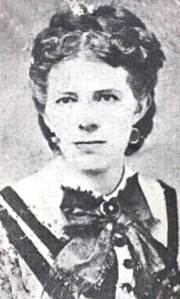
(Photo edited by Bob Rowen)

U.S. Grant’s stranglehold on Vicksburg overshadows Stone’s hopes for victory.

June 3, 1863

Near Monroe, La.

Lt. Valentine is back from his Northern prison and brings us blessed news of My Brother’s safety. He was wounded in the left arm above the elbow in the Battle at Chancellorsville but by this time has rejoined his regiment. … He could not tell us much that was interesting about the North. They were kept too close to see or hear anything. He represents prison life as most monotonous and wearisome, but they were not ill-treated.

He says My Brother is having a nice time in Richmond and regrets the hole in his coat more than the hole in his arm. The last Nature will heal, the first will take money. Lt. Valentine joined his regiment, which was under marching orders at once, and they are now somewhere in the swamp. We are massing quite a force there under Gen. Taylor. May we strike a telling blow.

The news from Vicksburg is very contradictory, but there seems to be constant fighting going on. We were repulsed in every engagement until the troops fell back behind our entrenchment, since then we have driven back every assault with heavy losses on their side. They have made desperate charges on the batteries only to fall back with great slaughter. Numbers of Negroes, placed by their friends in the forefront of the battles, have been slain. Poor things, I am sorry for them. Gen. Grant has surrounded Vicksburg with an immense army. The struggle has commenced, but the great battle is still to be fought. Our friends around Vicksburg must have lost everything before this.

June 5

Aunt Laura and Mrs. Young have had the long-expected falling out, and Aunt Laura has gone to board about three miles from here. We think that in a short time the fate of Vicksburg will be decided, and she will know whether to go on to Vicksburg or to Texas with us. Mamma is also waiting in the hope that our troops will drive the Yankees from the swamp and we can go back home until fall or at least get what is left of the furniture. …

I am trying to braid a pretty braid of rye straw, as I can get no palmetto here, and I have promised Lt. Valentine a hat. Plaited one for Johnny in less than a day. It is rough and ugly, but he likes it. It is so light. Hatmaking is as much the rage here now as it was last summer in the swamp. …

We had a charming ride the other evening. Went out huckleberrying but not a berry did we see. The ride part of the way was over high hills shaded by towering longleaf pines and carpeted with tall woods grass and wild flowers, and sloping in green waves from the hills lay deep ferny hollows. …

June 10

We have bidden Aunt Laura and Beverly a long adieu I fear. They started yesterday for Mississippi to join Dr. Buckner, if possible. They go to Harrisonburg on a boat and then through the country to the river, if possible. They are under the care of Mr. John Curry, and it is doubtful whether they can get on. But Aunt Laura, or rather Mamma, thought it better for her to attempt it than to go to Texas. Aunt Laura wished to go on with us, but Mamma feared she could not stand the hardships of the long trip camping out and the rough life with little hope of seeing or hearing from Dr. Buckner until the war is over. We hated so to see her go. We shall miss them for a long time. We went in to Monroe and saw them off. Sent numbers of letters by them.

The news of today is that our men were repulsed at Milliken’s Bend and are falling back to Delhi. A very different account from the first. It is hard to believe that Southern soldiers and Texans at that have been whipped by a mongrel crew of white and black Yankees. There must be some mistake. …

All of us were busy from 5 o’clock until dusk making mattresses for the wounded soldiers expected at Monroe from the fight at Milliken’s Bend. It is said the Negro regiments fought there like mad demons, but we cannot believe that. We know from long experience they are cowards. …

Aunt Laura spent Sunday with us, our last day together. She went off in fear and trembling but is determined to get through if possible. She is such a sensitive, nervous woman that it will be a great ordeal for her, but it could not be helped.

Julia Barr and I are quite friends. I like Miss Sarah very much, but she is so absorbed with Mrs. Morancy that we see little of her. We are staying so long I fear Mrs. Wadley will get tired of us, and so we are all reconciled to making an early start to Texas.


Kate Stone’s Civil War: Southern hearts

Stone mourned the loss of Stonewall Jackson at the May 1863 Battle of Chancellorsville, calling him a “peerless general and Christian soldier.”

KS21

From 2012 to 2015, Stillness of Heart will share interesting excerpts from the extraordinary diary of Kate Stone, who chronicled her Louisiana family’s turbulent experiences throughout the Civil War era.

Learn more about Stone’s amazing life in 1861, 1862, 1863, 1864, 1865 and beyond. Click on each year to read more about her experiences. You can read the entire journal online here.

(Photo edited by Bob Rowen)

Stone mourned the loss of Stonewall Jackson at the May 1863 Battle of Chancellorsville, calling him a “peerless general and Christian soldier.”

May 23, 1863

Near Monroe, La.

Aunt Laura was quite ill while Mamma was away, and I felt the responsibility of taking care of her. She is now much better. Mamma had two fevers, and we were very afraid it would go into a long low fever. She is quite prone to have that in the spring, but fortunately she has escaped a return of it. Sarah, Mary Wadley, and I went last afternoon to call on the Misses Compton and Stacey. We went in Mamma’s famous Jersey wagon, and it is a ramshackled affair with the seats and most of the bottom dropped down. We had a merry ride and concluded that a frame, a tongue, two mules, and a driver were the only essentials in a vehicle. … Walking through the pine woods, we saw wild flowers in such profusion. The air is so fragrant that it is a pleasure to breathe it. …

The news from Mississippi is bad. Gen. Grant with an army of 120,000 men is in the rear of Vicksburg. He has possession of Jackson, and much of the city has been burned. There has been a battle near Raymond in which we were said to have been routed because of Gen. [John C.] Pemberton’s disregard of orders. We drove them out of Jackson once, but we cannot hear whether they retook it after a battle or whether our forces withdrew. We will not be discouraged. …

In the death of Stonewall Jackson [at the Battle of Chancellorsville] we have lost more than many battles. We have lost the conqueror on a dozen fields, the greatest general on our side. His star has set in the meridian of its glory, and he is lost to his country at the time when she needs him most. As long as there is a Southern heart, it should thrill at the name of Stonewall Jackson, our peerless general and Christian soldier. His death has struck home to every heart. …

May 24

Mamma and I went over yesterday after tea to see Capt. and Mrs. Harper. They are also on their way to Texas. Capt. Harper was one of the party at home on Christmas Eve, and my last ride on Wonka was to invite the gentlemen in camp over to Brokenburn.

We were glad to meet his little daughter Sophie Harper, Mr. Valentine’s grandchild. Both of the Mr. Valentines talked so much about her. She is a bright, attractive child and bears a striking resemblance to her Uncle Mark in features, gesture, and expression. They say old Mr. Valentine is so overwrought by his losses … that it is feared he will lose his mind. He escaped from his place a few days after we left entirely alone in a boat with only a few clothes. The Negroes came and stripped the place of everything while he was on it and were exceedingly insolent to him, threatening all the time to kill him. He is quite an elderly man and cannot stand hardships like younger people. …

May 26

Mamma is staying tonight with Mrs. Young whose little girl Alice is sick unto death. Johnny, who by the way could not overtake Mr. Smith, and Mamma went into Monroe this morning trying to buy a wagon and carriage but failed to get either. So we must … wait here until we can get conveyances, and we could not ask for a more delightful stopping place or kinder hosts. Such a haven of rest after the trouble and anxiety of the last three months. We have put away troubles and distress for a time as a wayworn traveler lays down his burden when he stops to rest, enjoying the coolness and verdure, though he knows the burden must be lifted and he must journey on through toil and pain to the end.

How I dread being secluded on some remote farm in Texas, far away from all we know and love and unable to get news of any kind. It is a terrifying prospect.

I am busy sewing most of the time. We will soon be through all our clothes — just a white barege dress of Carrie’s to alter for myself and Mamma intends making a black velvet hat for me. Then, all our pressing needs will be gratified. …

Kate Stone’s Civil War: Baffled beasts of prey

Stone’s bitter sense of humor flashed for a moment as she dryly observed the effects of marriage on a young woman’s beauty.

KS19

From 2012 to 2015, Stillness of Heart will share interesting excerpts from the extraordinary diary of Kate Stone, who chronicled her Louisiana family’s turbulent experiences throughout the Civil War era.

Learn more about Stone’s amazing life in 1861, 1862, 1863, 1864, 1865 and beyond. Click on each year to read more about her experiences. You can read the entire journal online here.

(Photo edited by Bob Rowen)

As Stone and her family regained their bearings in their temporary home before making the final push for Texas, Stone’s bitter sense of humor flashed for a moment as she dryly observed the effects of marriage on a young woman’s beauty.

May 3, 1863

Near Monroe, La.

We went to a real country church this morning, saw a country congregation, and heard a sermon to match. Loring Wadley made several trips with the buggy to get us all there, but two of the party rode back in Dr. Young’s $3,000 carriage. We had a pleasure today in a visit of several hours from Julia Street. She came down from Bastrop just for the day. She is more nearly depressed than I ever saw her.

Annie and Peggy got here from the salt works today, and we are glad to have somebody to wait on us again. I expect we will keep them busy. …

May 5

Near Monroe, La.

The gunboats are unable to pass Grand Gulf and are lying idle between Vicksburg and Grand Gulf, like baffled beasts of prey. There is a great scarcity of provisions all through Mississippi. It is difficult to provision Vicksburg for a long siege. …

We went yesterday to see Florence Pugh (now Mrs. Morrison), an old schoolmate. The family are near here now on their way to Texas. She is a dear, sweet girl but looks dreadful. How marrying does change a body for the worse. She was a pretty girl a year ago, fresh and dainty. Now she is married and almost ugly.

I am busy every day trying to make up the cloth Mamma bought, but it is slow, tiresome work for one person with no sewing machine. The only things Mamma could find to buy belonged to the Lowrys, and they sold them at awful prices: $60 for a pair of common blankets, $50 for a pair of linen sheets, and everything else in proportion. They have sold much of their own clothing. Mamma bought some of Olivia’s things for Sister. … It seems funny to be wearing other people’s half-worn clothing, but it is all we can get. Mamma bought some Turkey-red calico at $3 a yard for a dress for Sister.

May 10

Near Monroe, La.

Mamma returned from the salt works on Friday, riding the whole distance on horseback. It was dreadfully fatiguing for one who rides so little. She has gone this evening to Delhi to make another attempt to have the Negroes brought out, if she can get soldiers to go with Jimmy. Quite a number of Negroes have been brought out in that way recently, some from within the lines.

The news from the salt works is bad. Frank, my maid, and Dan both died of pneumonia and neglect, and three others are very ill. Poor Frank, I am sorry for her to go. She has been raised in the house with us. With so much sickness among the Negroes, Mr. Smith has been unable to start to Texas. …

Several thousand of our soldiers are now at Monroe under Maj. Gen. Walker. Two of the officers spent yesterday evening here and told us the whole command would get off this morning and that there were some splendid bands with the regiments. So this morning we rode out to the river opposite Monroe to see them off, starting before sunrise. We saw crowds of soldiers, talked to a number of them, and heard inspiring music. The ride all the way through the spring woods was delightful. I sat up until twelve the night before fixing a sort of riding habit. … The troops after embarking received counterorders and are again in Monroe, expecting to march at any minute. There is another panic in Monroe. The Yankees are looked for at any time. They could not make anything out of this poor family. We have been too thoroughly plucked by the river Feds. …

Aunt Laura is not very well. We would dread to see her get sick.

Kate Stone’s Civil War: The glory of the family

Stone mourns what has been lost as she finishes her tale of escape. “So passes the glory of the family.”

KS17

From 2012 to 2015, Stillness of Heart will share interesting excerpts from the extraordinary diary of Kate Stone, who chronicled her Louisiana family’s turbulent experiences throughout the Civil War era.

Learn more about Stone’s amazing life in 1861, 1862, 1863, 1864, 1865 and beyond. Click on each year to read more about her experiences. You can read the entire journal online here.

(Photo edited by Bob Rowen)

Stone mourns what has been lost as she finishes her tale of escape. “So passes the glory of the family.”

April 27

Near Trenton, La.

Mamma and Johnny are out hunting up bed clothes and anything else buyable since we need everything, and Sister and I are left to ourselves this rainy day. So I may as well finish the recital of our woes.

We left our clothes in care of Uncle Bob who has been as faithful as any white man could be. He is Mamma’s driver on the plantation. And we piled ourselves and our scanty luggage into two rocking, leaky dugouts and pushed off, Jimmy paddling one and Coffee, one of Dr. Carson’s hands, the other. The sight of a body of horsemen in the distance coming our way lent strength to their arms, and as fast as they could ply the paddles we glided through the water. The men came on down the road, and we saw they were Yankee soldiers. But the water was so deep that they could not ride fast and we kept ahead. At last after nearly a mile of this race, the boats shot out into deep water, and we were safe from pursuit. Then what a shout rang out for Jeff Davis and the Confederacy. The men could see and hear us distinctly, and we half expected a volley to come whizzing over the waters. But the boys would not be restrained, and their “Farewell to the Feds!” “Hurrah for Jeff Davis!” and “Ho for Texas!” floated over the waters ’til we were out of sight. The Yankees followed us until their horses were nearly swimming.

After rowing a few miles, we joined Mr. Hardison and his family at the Jones place in the middle of Tensas swamp. They were in a skiff and had been waiting for us for some time. All his family and all his worldly possessions were in that skiff and it was not loaded, so quickly had he been reduced from affluence to poverty. We went on in company and were in the boats for seven hours in the beating rain and the sickening sun, sitting with our feet in the water. Not an inch of land was to be seen during the journey through the dense swamp and over the swift curling currents. The water was sometimes twenty feet deep, rushing and gurgling around the logs and trees. We all stood it very well except Aunt Laura. She was terrified nearly to death and was alternately laughing and crying. She insisted on giving the rower directions and, as he was a slow African, confused him so that he forgot how to pull and ran us into brush piles innumerable. At last he said, “Now, Mistress, you just tell me how to pull and I’ll do it.” So Aunt Laura and Mamma steered the boat viva voce, and he did the hard pulling. I thought they surely would make him turn us over, since a dugout goes over with such ease. At last we came to a clearing, and the boats had to be pulled over the land. We walked a path lined with brambles, and our dresses were nearly torn off. Johnny suffered with fever nearly all day.

As we were passing Mr. Anderson’s, heavy clouds rolled up, and it looked like a coming storm. Aunt Laura and Mrs. Hardison declared they would not go on but would stop right there, and so our boats were headed for the gallery.

They were all under water since it was a little bit of a house, but we carried it by storm without a remonstrance from the owners, who were as kind as could be. Mamma and I were wet nearly to our waists, and the floor looked like it had been scoured when we passed over it. But the dear little lady did not seem to mind it a bit. I had a great bag of Aunt Laura’s gold around my waist. It was very heavy, and just as I stepped on the gallery the belt gave way and it came down with a crash. A foot nearer and it would have fallen in the water, and I suppose we never would have found it. That evening Dr. Carson came to take us to his house but Aunt Laura felt too worn out to go. Mamma stayed with her, and Sister, the boys, and I went on with Dr. Carson. The next day the others joined us there. The whole family received us most kindly, and oh what a relief it was to get to a place of rest and to feel safe once more.

That night there was a most terrific storm which did not even waken me. I slept like the dead. I was completely exhausted by fatigue, excitement, and loss of sleep. … Aunt Laura and Mamma said they were worse frightened by the storm than they had been by anything else. They had not had a brutal Negro man standing on their dress and fingering a pistol a few inches from their heads. I can stand anything but Negro and Yankee raiders. They terrify me out of my wits. …

We spent nearly three weeks at Dr. Carson’s most delightfully. Books, music, rest, and pleasant company charmed the hours away until came news of our great bereavement.

The Negroes at Dr. Carson’s were almost as much demoralized as those on the river. The night after we reached there, a skiff load attempted to escape but were followed and captured after being fired on several times by Jimmy. Fortunately he did not hit any of them.

Now for a list of our losses. All the clothes left in the cart were taken by Mr. Catlin’s Negroes, Uncle Bob being unable to protect them. They comprised most of our underclothes and dresses, all my fine and pretty things, laces, etc., except one silk dress, all our likenesses, and all the little family treasures that we valued greatly. Little Sister did not get off with a change. Mrs. Carson kindly had a suit made for her. Mamma and I have barely a change and the boys have only what they have on. They lost theirs after getting them out here.

Aunt Laura has lost everything except barely enough to do with for a time. Beverly’s things were mostly saved. Aunt Laura’s trunk, packed with a quantity of beautiful clothes, laces, silks, velvets, and so on, was sent to Mr. Anthony’s in the vain hope that it would be safe. We hear, however, that the Yankees, informed by Webster, went there, demanded Mrs. Buckner’s trunk, took it to Grant’s headquarters, and that is the last of it. Some say they just broke it open and divided up the spoils. Both Mamma and Aunt Laura have lost all their bedding, table linen, etc. Our house is stripped of furniture, carpets, books, piano, and everything else, the carriage, buggy, harness, and everything of that kind. Also they have thirty Negroes still on the place we shall probably never see again.

Mamma regrets coming away as she did, but what else could she do? We could not stand more than anyone else, and nearly everyone left before we did. Our mistake was in not moving everything in the fall. Charles and Annie were the only two Negroes who would come with us, and they are only half-grown. So passes the glory of the family.

Rebecca Aguilar

#CallingAllJournalists Initiative | Reporter | Media Watchdog | Mentor | Latinas in Journalism

Anna Fonte's Paper Planes

Words, images & collages tossed from a window.

Postcards from Barton Springs

Gayle Brennan Spencer - sending random thoughts to and from South Austin

The Flask Half Full

Irreverent travelogues, good drinks, and the cultural stories they tell.

Government Book Talk

Talking about some of the best publications from the Federal Government, past and present.

Cadillac Society

Cadillac News, Forums, Rumors, Reviews

Ob360media

Real News That Matters

Mealtime Joy

bringing joy to family meals

Øl, Mad og Folk

Bloggen Øl, Mad og Folk

a joyous kitchen

fun, delicious food for everyone

A Perfect Feast

Modern Comfort Food

donnablackwrites

Art is a gift we give ourselves

Fridgelore

low waste living drawn from food lore through the ages

BeckiesKitchen.com

MUSINGS : CRITICISM : HISTORY : NEWS

North River Notes

Observations on the Hudson River as it passes through New York City. The section of the Hudson which passes through New York is historically known as the North River, called this by the Dutch to distinguish it from the Delaware River, which they knew as the South River. This stretch of the Hudson is still often referred to as the North River by local mariners today. All photos copyright Daniel Katzive unless otherwise attributed. For more frequent updates, please follow northriverblog on Facebook or Instagram.

Flavorite

Where your favorite flavors come together