1862: Ruin and Disaster

Despite her vow to be optimistic as 1862 began, Stone fretted that Louisiana ‘lies powerless at the feet of the enemy.’ And so does Brokenburn, she may have thought to herself. And so do I.

This five-part essay series on Kate Stone and her Civil War is modified from a paper I presented at the New York Military Affairs Symposium in October 2011.

Learn more about Stone’s amazing life in 1861, 1863, 1864, 1865 and beyond. Click on each year to read more about her experiences.

On her birthday, Jan. 8, 1862, Stone swore herself to a new motto: “Live for today. Tomorrow’s night, tomorrow’s cares shall bring to light.”

(Photo edited by Bob Rowen)

By the end of January, the newspapers confirmed a Confederate defeat in the Battle of Logan’s Cross Roads, in Kentucky, and Stone felt under siege. “The whole Northern Army is now on the move preparing to attack us at all points” she wrote. “The manner in which the North is moving her forces, now that she thinks us surrounded and can give us the annihilating blow, reminds me of a party of hunters crowded around the covert of a deer, and when the lines are drawn and there is no escape, they close in and kill.”

By early February, word came that Fort Henry, a Confederate installation on the Tennessee River, had surrendered to Union Brig. Gen. U.S. Grant. Stone despaired: “The war news is very bad, only defeats — Roanoke Island, the fall of Fort Henry … and shelling of Florence, Ala. We still hold Fort Donelson, though it has been under fire for two days.” But she had little sympathy for the Kentucky region falling under Union domination. “We do not care for those Kentucky towns; they deserve their fate. But Nashville, so true to the South, is a different matter.”

She was even gloomier a day later: “The general impression is that both Nashville and Memphis are doomed. …” But that discouragement was only temporary, and it only served to strengthen her resolve as she accepted the fact that the war would be longer and harder than she originally expected.

Irresistable

A key to Federal strategy was control of the Mississippi River. The struggle became one of the great sagas of the Civil War, and Kate Stone found herself in a front-row seat to that drama. On Feb. 22, 1862, Gen. P.G.T. Beauregard — deputy to Gen. Albert Sidney Johnston, the commander of the Department of Kentucky and Tennessee — asked the governors of Alabama, Louisiana, Mississippi and Tennessee to contribute 5,000 to 10,000 men to supplement the defense of the Mississippi River above Memphis. “There have been calls from the governors of all the river states for all the able-bodied men to come forward,” Stone reported.

“Every man is speaking of joining the army, and we fear within a week Brother Coley will away.” By March, Coleman Stone was serving with a cavalry company.

As she watched her brothers, relatives and friends don uniforms and voluntarily ride off to the front, Stone was deeply offended by men who refused to serve in the military. She saw military service as a solution to her own anxiety: “How can a man rest quietly at home when battles are being fought and fields lost and won every day? I would eat my heart away were I a man at home [during] these troubled times.” She saw service as a cornerstone of a man’s character: “I would not trust any man now who stays at home instead of going out to fight for his country.” She saw service in terms of fairness: “With all our relations going out to fight, I am not apt to think other men should sit comfortably at home.”

Stone found uniformed officers enchanting. She once encountered three Confederate officers at a Sunday church service, including “a perfect love of a lieutenant in blue uniform and brass buttons galore. Six feet of soldier with brass buttons is irresistible, and all the girls capitulated at once.” But war’s reality soon stripped the romance from her memory. Two months later, she reported the beautiful lieutenant was dead.

Powerless

Stone always tried to do her part to help the war effort. Emulating her mother, Stone learned how to sew gloves for the soldiers. She hemmed towels. She made hats from palmetto, grass and straw. She sewed pillow cases, underwear, and blankets, and she helped others make uniforms for local units. She never figured out how to make socks, though. “It is too complicated for my head.” Her younger brothers also tried to help with knitting.

Stone wrote that at first she sewed and knitted items that could be shipped to Confederate soldiers. As the war progressed, she limited her efforts to the needs of her relatives on the front. As the home front situation grew more desperate, the fruits of her labor went exclusively to her family. “No one’s dresses are ever considered worn out these days — as long as they can be held together.” In late 1862, she learned how to weave. “It is like going back to the days of the Revolution,” she joked. Later in the war, she resorted to buying linen sheets just to make fresh underwear. “Clothes have been a secondary consideration,” she concluded glumly. “Fashion is an obsolete word, and just to be decently clad is all we expect.”

Union naval blockades grew more effective as the war progressed, choking off or at least delaying vital Confederate imports and exports. Army movements left regional textile economies paralyzed. Prices for daily necessities skyrocketed. Flour grew scarce, and by 1862 Stone reported that it sold for $50 a barrel. She called cake “a most rare occurrence.” A pair of shoes cost $15 to make, and as Brokenburn editor John Q. Anderson noted in a footnote, civilians tried to make their own shoes “out of leather furniture, saddles, belts and trunks.” A pair of boots cost $50. A gallon of brandy cost $40 to $60. Later in the war a knife cost $25. A deck of playing cards cost $5.

Coffee was scarce. People tried to replicate it with parched potatoes, roasted acorns and okra seeds. Quinine, used to treat malaria, was no longer available. As 1863 neared, Stone ominously predicted that “there will soon be no dry goods in the Confederacy.”

Despite her vow to be optimistic as 1862 began, Stone was disgusted with the poor defense of New Orleans, which she called the “greatest City of the South,” and the subsequent collapse of any network to defend Louisiana. The state, she wrote, “lies powerless at the feet of the enemy.” And so does Brokenburn, she may have thought to herself. And so do I.

Dark, silent and sinister

And then the skies over Brokenburn darkened, literally.

As Federal forces closed in, in early May Gen. Beauregard urged Louisiana’s plantations to destroy their cotton to keep it out of Federal hands. Soon, Stone wrote, “as far as we can see are the ascending wreaths of smoke … we hear that all the cotton of the Mississippi Valley … is going up in smoke.” At Brokenburn, Stone’s mother ordered $20,000 worth of cotton to be incinerated. Stone reported that the bales burned for two days. “The planters look upon the burning of the cotton as almost ruin to their fortunes,” she wrote, “but all realize its stern necessity. …”

As a long summer loomed, Stone felt the coils of the Union anaconda tighten around her. Union victories at Fort Donelson and New Orleans brought her closer to the war than ever before. Her aloof observations of what were once far-off battles now turned into bitter rage and iron determination, compounded by the frustration that Union forces cut her off from regular contact with her relatives.

From the conquered Mississippi delta the Federal naval forces moved north. From Memphis, a Union army marched south. Their supreme objective was the conquest of Vicksburg, a target only 30 miles away from the pen with which she recorded her predicament, was their supreme objective. By mid-May, a new, horrifying sound echoed throughout Brokenburn’s tense, humid air: the booming of cannon fire focused on Vicksburg. By late June she saw the enemy for the first time with her own eyes. Union gunboats, “dark, silent and sinister,” sailed past as she watched from a friend’s riverside home.

As she imagined the sacrifices the future may demand, Stone radiated if not confidence then apocalyptic defiance. “How much better to burn one’s cities than to let them fall into the enemy’s hands.”

Capable of any horror

Once Federal commanders decided new canals were needed to bypass the strong Vicksburg batteries, soldiers swept the region’s plantations to find the black workers they needed to do the digging. Stone wrote that her mother instructed all the Brokenburn slaves to immediately hide if Union soldiers entered the property.

The slaves, however, had other intentions. Stone reported that some planters marched their slaves westward, and her mother planned to do the same. Stone worried what the consequences would be when Federal troops arrived, looked for slave workers and found none. “Our fear is when the Yankees come and find them gone they will burn the buildings in revenge. They are capable of any horror. We look forward to their raid with great dread.”

In April, Union Maj. Gen. George B. McClellan decided he would assault Richmond, Va., and he glacially moved his army up the peninsula between the York and James rivers. On May 31, after contesting the Union advance, Confederate commander Joseph E. Johnston was injured at the Battle of Seven Pines, and field command passed to Robert E. Lee. As McClellan timidly waited for almost a month, Lee, a former military adviser to Confederate President Jefferson Davis, reorganized his new army, strengthened the Richmond defenses, and gathered intelligence. Lee united with forces under Maj. Gen. Thomas “Stonewall” Jackson, and on June 26 he launched a massive, week-long, blood-soaked counterattack that hammered the Union army away from Richmond.

News of the Seven Days fighting reached Brokenburn in early July with a list of the units engaged in combat. Stone’s Uncle Bo survived the battles, but her brother’s unit had also been involved. She silently grew frantic as she awaited word of his survival and none came. “Oh, this long, cruel suspense. … Every day adds to my conviction that My Brother is desperately hurt.” In desperation, she studied the faces of any visitors to the house, searching for any shade of sadness a bearer of the worst news would express. By July 24, her anguish evaporated as word finally arrived that William had also survived the Seven Days.

The recent conscription law passed by the Confederate Congress called for all suitable men between ages 18 and 25 to sign up for military service, and Stone reported that Mr. Hazelitt, who taught her brothers, had to close his school and enroll in a military unit. “One of the worst features of the war,” she wrote, “is that is deprives all the boys of an education.”

A bloody death

Federal determination to conquer Vicksburg intensified, and more and more blue-coated troops poured down the Mississippi and raided the area around Brokenburn. By mid-August, Stone illustrated the first wave of refugees moving west. “The planters,” Stone wrote with frustration, “generally are moving back to the hills as fast as possible. There are two families refugeeing in our neighborhood.” As cold winter rain drenched Brokenburn, Stone, emotionally exhausted, wondered what lay ahead for her family and her plantation.

Depression and hopelessness consumed her, “Could I only be content to watch the Future as it unfolds instead of trying to pierce its mystery and mold it to my will, how much happier I would be.”

Adding to the grim feeling in the air was the departure of her brother Walter, who joined their brother Coleman in ranks of the 28th Mississippi.

After Lee’s victory over McClellan on the Peninsula and over John Pope at Manassas, he turned his armies north and invaded Maryland. McClellan, armed with a copy of Lee’s deployment orders, pursued him with uncharacteristic speed. Lee confronted him at Sharpsburg, and their armies fought the Battle of Antietam on Sept. 17. After a day of unprecedented bloodshed, Lee was the first to withdraw his stunned army from the area, and Lincoln took the Union non-defeat as an opportunity to announce the Preliminary Emancipation Proclamation on Sept. 22.

The executive action, theoretically freeing all slaves held in areas still controlled by Confederate forces, would become official on Jan. 1, 1863. By Oct. 1, word of the proclamation reached Brokenburn. Stone was outraged by what she called Lincoln’s “diabolical move. … How can he ever sleep with the shades of the thousands he has consigned to a bloody death darkening his soul?”

Lincoln replaced a recalcitrant McClellan with Maj. Gen. Ambrose Burnside, who foolishly attacked Lee’s impregnable defenses at Fredericksburg, Va., in mid-December. Union forces were massacred. On Christmas Day, an old neighbor came to Brokenburn to report that Stone’s brother William was killed in the battle. “Mamma was at once in despair,” Stone recalled, “and gave way to the wildest grief.”. But the neighbor’s information was wrong. Later the Stone family learned William was only injured. Nevertheless, Stone complained, “our Christmas was ruined.”

Adding to their misery, Union Maj. Gen. William T. Sherman landed 30,000 troops at Milliken’s Bend, just a few miles from Brokenburn, and a brigade was sent south to destroy the Vicksburg, Shreveport, and Texas Railroad on the eve of his attack on Chickasaw Bluffs, just north of Vicksburg. But brigade’s soldiers did not molest the Stone family, and Stone’s second year of war, later brightened by news of Sherman’s bloody defeat, ended quietly.

******

Works cited or consulted for this essay series:
Faust, Drew Gilpin. Mothers of Invention: Women of the Slaveholding South in the American Civil War. Chapel Hill: North Carolina UP, 1996. Print.
. Southern Stories: Slaveholders in Peace and War. Columbia, Mo.: University of Missouri, 1992. Print.
Foote, Shelby. The Civil War: A Narrative. New York: Vintage, 1986. Print.
Johnson, Ludwell H. Red River Campaign: Politics and Cotton in the Civil War. Baltimore: Johns Hopkins, 1958. Print.
Kronk, Gary W. “C/1861 J1 (Great Comet of 1861).” Cometography.com. n.d. Web. 11 Sept. 2011.
Long, E.B. and Barbara Long. The Civil War: Day by Day. Garden City, N.Y.: Doubleday, 1971. Print.
McPherson, James M., ed. The Atlas of the Civil War. New York: Macmillan, 1994. Print.
. Battle Cry of Freedom. New York: Oxford UP. 1988. Print.
Parrish, T. Michael. Richard Taylor: Soldier Prince of Dixie. Chapel Hill: North Carolina UP. 1992. Print.
Stone, Kate. Brokenburn: The Journal of Kate Stone, 1861-1868. Ed. John Q. Anderson. Baton Rouge: Louisiana UP. 1995. Print.
Sullivan, Walter. The War the Women Lived: Female Voices from the Confederate South. Nashville: J.S. Sanders & Company. 1995. Print.
Wilson, Edmund. Patriotic Gore: Studies in the Literature of the American Civil War. New York: W.W. Norton, 1962. Print.
Wooster, Ralph A. Civil War Texas. Texas State Historical Association. 199. Print.


1861: The Dark River

In 1861, Kate Stone watched from Louisiana as the firestorm of civil war spread from state to state. She had no idea that the fire would soon consume her life. As she started her diary, she had no idea that nothing would ever be the same again.

This five-part essay series on Kate Stone and her Civil War is modified from a paper I presented at the New York Military Affairs Symposium in October 2011.

Learn more about Stone’s amazing life in 1862, 1863, 1864, 1865 and beyond. Click on each year to read more about her experiences.

It’s easy for a casual enthusiast of the Civil War to be seduced by the arrows and lines on battlefield maps and to forget the rich lives those engagements destroyed. It’s easy to skim past the details when armies ravage entire regions, easy to blink past sterile, blurred photos of the scorched buildings in Richmond, the rows of corpses at Atlanta, or the terrified refugees from all parts of the collapsing Confederacy.

But the Civil War can never be completely understood without a closer look at the men and women who endured this cataclysm, those who endured the brutal strangling of conquered cities, those who fought on the front lines, and those who littered the blasted landscapes.

For twenty-year-old Kate Stone, her story began in Brokenburn, the chronicle she began in 1861 to record the momentous era dawning over her life.

The diary was named after her family’s cotton plantation in northeastern Louisiana, near the Mississippi River, about 30 miles northwest of Vicksburg. Stone shared the mansion with her widowed 37-year-old mother, two uncles, five brothers and a younger sister. Her father died in 1855, and three other siblings died before 1861. About 150 slaves served in the house or tended the estate, which stretched over more than 1,200 acres of bayous, forests and cleared fields.

(Photo edited by Bob Rowen)

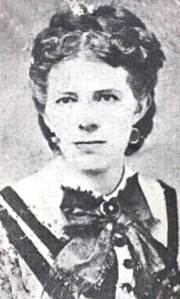
Stone was born in Mississippi Springs, Miss., on Jan. 8, 1841. She was educated at Nashville Female Academy in Tennessee. “I am tall,” she wrote in 1861, “Not quite five feet six, and thin, have an irregular face, a quantity of brown hair, a shy, quiet manner, and talk but little.” She was a rich girl, essentially, who generally enjoyed a life of leisure, and under normal circumstances she could expect much more of the same for the next several decades.

She spent her days playing chess and playing the piano, attending Sunday church and reading the Bible, picking berries, embroidering, entertaining visitors, and visiting friends and family. She loved riding her horse, Wonka. She was intelligent, well-educated and well-read. She loved literature, particularly the works of Victor Hugo, Alfred Tennyson, Edgar Allen Poe, Walter Scott, and William Shakespeare.

She was a romantic who admired her mother’s “great power of attracting love, the first and greatest gift that can be bestowed on anyone.”

Stone viewed her world with affection and optimism, and she strolled through it armed with a sharp wit, a smart self-deprecating sense of humor, and acidic sarcasm — qualities that glitter throughout her diary.

Stone never thought she was beautiful, even when her mother insisted she was. “I was the ugly duckling of the whole family,” she recalled. Her grim self-image, she wrote, “has been the shadow on my life.” In 1861, Stone’s mother explained why her father doted on her so often. Stone had always thought that her father praised her mind because he found so little to praise in her appearance. Her mother assured her that he had considered Stone wholly “perfect.”

Stone confessed to her diary that she was surprised but tremendously relieved: “The knowledge of this will change my life from this night.” She promised herself that would “try to put away the morbid thoughts … [including] … the fear that, being ugly and unattractive, no one could ever really care for me, and that I was doomed to a life of loneliness and despair.”

The trumpet of war

As the spring days of 1861 warmed, Stone and her family, at first, saw a bright future ahead. She recalled that the latest cotton crop had at last made a profit for the family, “and hereafter we would have nothing to do but enjoy ourselves.” She looked forward to long months of leisure through the rest of the year, and 1862 promised a family vacation in Europe.

But in the months after the 1860 presidential election, dark political clouds quickly building in the East cast long, chilling shadows over Brokenburn’s blossoming gardens. Spring 1861 brought a virulent war fever to the region, especially after the Confederate bombardment of Fort Sumter in April. Stone and her relatives regularly read Northern newspapers, and the publications’ “horrible stories” about the South infuriated her.

Stone felt herself swept away by the waves of aggressive emotion swirling through Southern society. “Throughout the length and breadth of the land,” she wrote in May 1861, “the trumpet of war is sounding … men are hurrying by thousands, eager to be led to battle against [President Abraham] Lincoln’s hordes … willing to meet death in defense of the South. … Never again can we join hands with the North, the people who hate us so.” A few days later she added, “We should make a stand for our rights — and a nation fighting for its own homes and liberty cannot be overwhelmed. Our Cause is just and must prevail.”

She was deeply offended whenever she encountered someone who failed to share her depth of passion for the Confederate cause. When a dinner companion, an immigrant from Hungary, regarded the South’s motivations as “a grand humbug … something to be mocked and sneered at,” she seethed with contempt. “I could shake him,” she wrote. Stone and her neighbors also kept a bitter eye on a handful of known Unionists living in a hamlet nearby. “[W]e think they should be sent North to a more congenial people,” she grumbled.

The prospect of glory and honor gained from a victorious struggle for independence electrified Southern imaginations, and Stone was no exception. John Q. Anderson, the editor of Stone’s journal, wrote in his introduction that “Kate shared the widespread belief of Southerners that the war would be an outing for dashing young officers in splendid uniforms, inspired to deeds of valor by patriotic maidens.”

Stone’s very first entry in her new journal focused on one such man hoping to be a dashing young officer: her brother William. On May 15, she wrote the journal’s first lines: “My Brother started at daybreak for New Orleans. He goes as far as Vicksburg on horseback. He is wild to be off to Virginia.”

Slaves

Kate Stone’s brother William, whose departure she mentioned in her first diary entry, arrived at the assembly area too late to join his preferred infantry company, so he returned to Brokenburn. By May 25 he was on the road again, this time with their Uncle Bo, intent on joining the Jeff Davis Guards. Mourning his departure for a second time, Stone admitted feeling more than a twinge of guilt. “They go to bear all hardships,” she wrote, “while we whom they go to protect are lapped safe in luxurious ease.” The Jeff Davis Guards were sent to fight in Virginia.

Stone’s mother sent the new soldiers on their journey with three well-supplied horses and Wesley, a slave. Stone said Wesley “was very proud of the honor of being selected” to accompany “Marse Will” into the war. Uncle Bo, Stone reported, expected to be a private in a unit named the Volunteer Southerns, and he elected not to take a “body servant” because he didn’t think an enlisted soldier should have one. “[B]ut if he changes his mind,” Stone added confidently, “a boy can be sent to him at any time.”

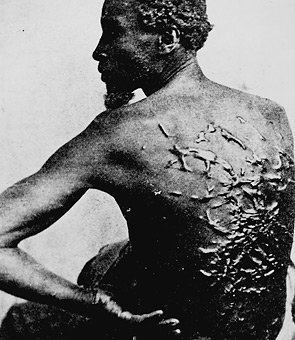
A few weeks later, on June 19, Stone reported seeing a fugitive slave run across the grounds. Men were sent to catch him, but he escaped. “I was glad he escaped,” she wrote. “I hate to think how he will be punished.” She imagined the slave, if caught, would be “whipped unmercifully.” On June 29, she complained that the “house servants have been giving a lot of trouble lately — lazy and disobedient.” She warned that they may have to be sent out to work in the fields. “I suppose the excitement in the air has infected them.”

Stone’s view of slavery, as reflected in her journal, was typical of her time and class. The slaves were described warily, from a distance, with amusement and with pity. From her perspective, the slaves were shadowy, abstract beings, occupying their natural, proper and deserved place in her Southern civilization, forming the foundation of the life she and her family enjoyed. But she also saw the slaves as a threat — a potential threat before the war, and a real, looming threat during the war.

Stone and her neighbors were tormented by rumors of a general slave uprising scheduled for sometime in July 1861. She added that the slaves were “well watched in every section where there are any suspects,” sounding like a prison guard who wondered if she was the real prisoner.

Brillancy and beauty

As spring turned to summer, domestic worries darkened the thoughts Stone poured into her journal. She reminded herself to save seeds from the family’s flourishing garden, “as we will get no more from the North.” Her mother ordered as much planted as possible because she anticipated the plantation would have to become as self-sufficient as possible. “Strict economy,” Stone sternly determined, “is to be the order of the day.” She anxiously looked forward to the arrival of mail and newspapers, improved her sewing, studied French, critiqued the books she read, and savored the ripening fruit on the trees, vines and bushes around the plantation.

It was as if, despite her attempts to lose herself in her pre-war hobbies, Stone felt the power of distant events and marching armies move the ground beneath her feet. “Oh! to see and be in it all,” she wrote with anxious frustration. “I hate weary days of inaction. Yet what can women do but wait and suffer?”

As she made the best of the imperfect serenity around her, Stone was pleasantly and briefly distracted by a celestial gem soaring across the summer sky. On the last day of June she wrote, “There is a comet visible tonight. … It is not very bright but has the appearance of a large star … with a long train of light seen dimly as through a mist.”

It was the Great Comet of 1861, officially named C/1861 J1. It passed closest to Earth on June 30, the day Stone first noted its appearance. By July 4, as more and more volunteers rushed to form new military units under consecrated flags, Stone reported that the “comet increases in brilliancy and beauty every night.” Astronomers around the world studied the object for months before it faded away in May 1862. They calculated that Earth would not see it again for more than 400 years.

Never to return

By the end of July, Stone calmly rejoiced when news arrived of a great battle at Manassas Junction in Virginia. “[O]ur side victorious, of course,” she wrote. Her optimism was eclipsed, however, by journal entries reporting severe fevers, chills, and coughs among her relatives, her neighbors and the slaves. Incessant rain drenched the region for weeks, and malarial fever spread. As summer gave way to fall, wave after wave of sickness swept through Brokenburn.

On Nov. 11, Stone reported that Ashburn, her young maternal uncle, was terribly ill. Her next entry came 16 days later, and the first few lines said it all: “How can I write the record of the last two weeks? … Ashburn, our darling, has gone, never to return.” Stone could write little more than that. Two days later, she officially reported that Ashburn died at 11 p.m. on Nov. 12; the cause was “swamp fever,” most likely malaria.

On Nov. 29, Stone recorded that “[h]ere at home all seems strangely dull and sad.” She wrote most beautifully during great tragedy, and Ashburn’s death inspired grievous words: “[O]ne of our dearest and best has bidden farewell to Earth and floated out on the dark river.”

Stone’s 1861 ended quietly, the household still mourning Ashburn’s death. “This is the first Christmastime in our recollection that was not a time of fun and feasting.”

******

Works cited or consulted for this essay series:
Faust, Drew Gilpin. Mothers of Invention: Women of the Slaveholding South in the American Civil War. Chapel Hill: North Carolina UP, 1996. Print.
. Southern Stories: Slaveholders in Peace and War. Columbia, Mo.: University of Missouri, 1992. Print.
Foote, Shelby. The Civil War: A Narrative. New York: Vintage, 1986. Print.
Johnson, Ludwell H. Red River Campaign: Politics and Cotton in the Civil War. Baltimore: Johns Hopkins, 1958. Print.
Kronk, Gary W. “C/1861 J1 (Great Comet of 1861).” Cometography.com. n.d. Web. 11 Sept. 2011.
Long, E.B. and Barbara Long. The Civil War: Day by Day. Garden City, N.Y.: Doubleday, 1971. Print.
McPherson, James M., ed. The Atlas of the Civil War. New York: Macmillan, 1994. Print.
. Battle Cry of Freedom. New York: Oxford UP. 1988. Print.
Parrish, T. Michael. Richard Taylor: Soldier Prince of Dixie. Chapel Hill: North Carolina UP. 1992. Print.
Stone, Kate. Brokenburn: The Journal of Kate Stone, 1861-1868. Ed. John Q. Anderson. Baton Rouge: Louisiana UP. 1995. Print.
Sullivan, Walter. The War the Women Lived: Female Voices from the Confederate South. Nashville: J.S. Sanders & Company. 1995. Print.
Wilson, Edmund. Patriotic Gore: Studies in the Literature of the American Civil War. New York: W.W. Norton, 1962. Print.
Wooster, Ralph A. Civil War Texas. Texas State Historical Association. 199. Print.

Rebecca Aguilar

#CallingAllJournalists Initiative | Reporter | Media Watchdog | Mentor | Latinas in Journalism

Anna Fonte's Paper Planes

Words, images & collages tossed from a window.

Postcards from Barton Springs

Gayle Brennan Spencer - sending random thoughts to and from South Austin

The Flask Half Full

Irreverent travelogues, good drinks, and the cultural stories they tell.

Government Book Talk

Talking about some of the best publications from the Federal Government, past and present.

Cadillac Society

Cadillac News, Forums, Rumors, Reviews

Ob360media

Real News That Matters

Mealtime Joy

bringing joy to family meals

Øl, Mad og Folk

Bloggen Øl, Mad og Folk

a joyous kitchen

fun, delicious food for everyone

A Perfect Feast

Modern Comfort Food

donnablackwrites

Art is a gift we give ourselves

Fridgelore

low waste living drawn from food lore through the ages

BeckiesKitchen.com

MUSINGS : CRITICISM : HISTORY : NEWS

North River Notes

Observations on the Hudson River as it passes through New York City. The section of the Hudson which passes through New York is historically known as the North River, called this by the Dutch to distinguish it from the Delaware River, which they knew as the South River. This stretch of the Hudson is still often referred to as the North River by local mariners today. All photos copyright Daniel Katzive unless otherwise attributed. For more frequent updates, please follow northriverblog on Facebook or Instagram.

Flavorite

Where your favorite flavors come together