As she faced a long, hard year ahead, on Jan. 8, 1862, Stone made a fresh promise to herself as an individual and as a citizen of the Confederacy.
From 2012 to 2015, Stillness of Heart will share interesting excerpts from the extraordinary diary of Kate Stone, the daughter of Louisiana cotton plantation owners who chronicled her turbulent life throughout the Civil War era.
Learn more about Stone’s amazing life in 1861, 1862, 1863, 1864, 1865 and beyond. Click on each year to read more about her experiences. You can read the entire journal online here.
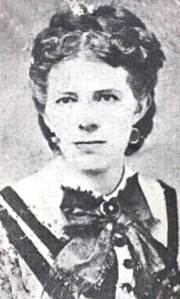
(Photo edited by Bob Rowen)
As she faced a long, hard year ahead, on Jan. 8, 1862, Stone made a fresh promise to herself as an individual and as a citizen of the Confederacy.
Jan. 8:
This is my twenty-first birthday, and I think this will be my motto for the year so uncertain are all our surroundings: “Live for today. Tomorrow’s night, tomorrow’s cares shall bring to light.” May I always be able to put my trust in God as I can tonight, satisfied that He will order our future as is best.
This has been a year of changes, of stirring and eventful life, the shortest ever in our calendar. God has been with our Nation during this year of trouble. He has given us wise rulers, brave and successful generals, valiant and patriotic men, and a united people, self-sacrificing and with their trust in God. …
Stone’s first entry for 1862 was a somber one. The shadow of her brother’s death darkened the holiday cheer.
From 2012 to 2015, Stillness of Heart will share interesting excerpts from the extraordinary diary of Kate Stone, the daughter of Louisiana cotton plantation owners who chronicled her turbulent life throughout the Civil War era.
Learn more about Stone’s amazing life in 1861, 1862, 1863, 1864, 1865 and beyond. Click on each year to read more about her experiences. You can read the entire journal online here.
(Photo edited by Bob Rowen)
Stone’s first entry for 1862 was a somber one. The shadow of her brother’s death darkened the holiday cheer.
Jan. 6:
Christmas passed very quietly with us. Greetings on all sides but no gifts and not many good things prepared beforehand. Had the customary eggnog before breakfast, but not a prize nog. It was made of borrowed whiskey with a strong flavor of turpentine. A lovely day, so warm that we sat on the gallery until bedtime.
Julia Reed came on the twenty-seventh and stayed until today. This is the first Christmas in our recollection that was not a time of fun and feasting. We missed Ashburn’s kiss and blithesome presence.
Mamma invited the two Mr. Valentines, father and son, to dinner, thinking it would be pleasant for Other Pa (Stone’s maternal grandfather) to meet the older man, and rather to our surprise they came and stayed until sundown. We never heard of Mr. Valentine, Sr., paying a social visit before. He is odd, just as we fancied he would be, but an excellent talker. He and his son are strikingly alike in looks, manners, and turn of mind, though they generally take opposite sides on every proposition. Mark, Jr., says they are forced to do so to have something to talk about the long winter evenings.
Mark, Jr., acquainted us with his fixed determination to pay us a New Year’s call. So Julia and I hurried back from our ride that misty, misty morning and looked for him all day. In the afternoon we begged Mamma to let us pay our expected visit to Mrs. Savage, but she would not allow it. So he ruined our plans for all day. It will be long before we let an engagement with him keep us in again.
The morning after Christmas Mamma gave all the house servants holiday … and they all went down to the quarters. She hired some of the field women, who were busy in the backyard drying out lard, making up sausages, cleaning feet and so on. …
As the war’s first Christmas approached, life went on at Brokenburn. Soft winter rain drenched the neighborhood. A strange relative got married. Sickness claimed yet another acquaintance. It’s a fascinating record of a quiet home front. Quiet for the moment.
From 2012 to 2015, Stillness of Heart will share interesting excerpts from the extraordinary diary of Kate Stone, the daughter of Louisiana cotton plantation owners who chronicled her turbulent life throughout the Civil War era.
Learn more about Stone’s amazing life in 1861, 1862, 1863, 1864, 1865 and beyond. Click on each year to read more about her experiences. You can read the entire journal online here.
(Photo edited by Bob Rowen)
As the war’s first Christmas approached, life went on at Brokenburn. Soft winter rain drenched the neighborhood. A strange relative got married. Sickness claimed yet another acquaintance. It’s a fascinating record of a quiet home front. Quiet for the moment.
Dec. 22:
I have been sleeping with Mamma and so I have not written for some time, as night is my time for scribbling.
Aunt Laura left us ten days ago after a two-week stay, and she seemed to enjoy so much being with us all, especially Mamma. Her visit was a pleasure to us. …
After two weeks of the lovliest warm spring weather with skies as blue and bright as bend over Italian plains, we wake to hear a soft, warm rain pattering down, and so no church for us today. And none of us went last Sunday. Sunday spent at home is a long, weary day. …
The greatest news of all Uncle Johnny is married. On the seventeenth of this month he gave his heart and hand to Miss Kate Boone, a girl from Charleston, S.C., who has been visiting her brother at Pine Bluff, Ark., for some months. She is quite a young girl, not more than seventeen, while Uncle Johnny is thirty-five. We wish them every happiness, and I wish he would bring her down to see us. I only hope he will not try to educate her according to his theories but will let her go on as Nature and her own antecedents and education would have her. But for years he has had the idea of marrying a very young girl and molding and educating her according to his pet theories. My mind misgives me that such is still his plan.
Other Pa (Stone’s maternal grandfather) left the day after the wedding, which was very quiet. He is not pleased with the marriage, though he does not say much against it. Uncle John is editing a paper in Pine Bluff. He is a most impracticable man with so many theories, and he has made ducks and drakes of all the money inherited from Other Ma (Stone’s maternal grandmother) and every other cent he could get. We hope marriage will be his salvation, an anchor to keep him from drifting with every tide, or feeling, or impulse. Johnny says he shall call his new Aunt “Aunt Boone.” He likes it better than “Kate.” I have pre-emption title on that name. …
Mrs. Virginia Cavalier, the oldest sister of the Morris girls, died a week ago of swamp fever. She was a widow with two young children and a very attractive woman. Her brother-in-law, Mr. Joe Cavalier, has been addressing her for the last year, so report says.
Stone was an insightful, often self-deprecating, and intelligent writer, but she never wrote more beautifully than when she endured tragedy.
From 2012 to 2015, Stillness of Heart will share interesting excerpts from the extraordinary diary of Kate Stone, the daughter of Louisiana cotton plantation owners who chronicled her turbulent life throughout the Civil War era.
Learn more about Stone’s amazing life in 1861, 1862, 1863, 1864, 1865 and beyond. Click on each year to read more about her experiences. You can read the entire journal online here.
(Photo edited by Bob Rowen)
Stone was an insightful, often self-deprecating, and intelligent writer, but she never wrote more beautifully than when she endured tragedy.
The sickness that ravaged the Stone family was too much for Stone’s brother Ashburn, who died soon after their older brother left to rejoin his Confederate unit. Their mother accompanied the soldier to his embarkation point at Vicksburg, Miss., and she was too far away to rejoin her dying son in his final moments. As Stone grieved, her journal sat silent for two weeks. In late November, she began to write again.
Amidst her sorrow she took a moment to reflect on her mother’s beauty and character. It’s a fascinating and affectionate celebration of the woman Stone admired above all others.
Nov. 27:
How can I write the record of the last two weeks? It seems that the trouble and grief of years has been pressed into that short space of time. Ashburn, our darling, has gone, never to return. Oh! how we miss him every hour in the day. The noble, gentle heart and the loving sensitive nature are stilled forever, passed from the world as though they had never been. What great thoughts, loving wishes, and proud hopes lie buried in his grave. So young, so bouyant, so full of life and happiness, brilliant with the very joy of living such a little while ago, and now dead. …
Nov. 28:
Ashburn died on Tuesday, November 12, at 11 o’clock at night of swamp fever. We sent for Mamma very early Tuesday morning, but she could not get here until Wednesday morning too late. She was so dreadfully distressed. As soon as he died, Brother Coley started at once to Vicksburg to meet Mamma and to make arrangements for the burial. He reached DeSoto just as she crossed the ferry, and as soon as she saw him she knew the worst.
Brother Walter had gone for her and brought her back. She so reproached herself for leaving him when he was sick, but we told her everybody on the place had been sick off and on all summer and she could not know this would be a serious illness. She loved him so. We always told her that she loved and indulged him more than any of us, and she always said, why, he was the best boy of them all and never gave any occasion to be scolded.
Nov. 29:
[Ashburn’s] was buried Thursday in a clump of woods just back of the house, the new family graveyard. Our Father and two little sisters were removed there from the old graveyard a year ago.
Here at home all seems strangely dull and sad. …
A warm lovely week, a wanderer from the April sisterhood. No frost and the flowers are still in fullest bloom roses and annuals, as gay as in May. “The Melancholy days have come” for our household but not for Dame Nature. The boys have been out hunting most of the day with poor success one duck but the woods are full of game and the lakes covered with ducks.
Brother Coley and Mr. Reading went to attend the drill at Willow Bayou and to bid adieu to Mr. Reading’s friends. They went from there to Omega. No mail. But Brother Coley brought back the paper containing the resolutions of sympathy passed by the Willow Bayou company on Ashburn’s death. How he loved all military matters.
Mamma was talking tonight of her early days. She was married before she was sixteen, before she had left school, but she had been out enough to reject ten lovers before she met papa. All of them are living still. She was and is a beautiful woman of most attractive manner and a brilliant conversationalist with a great power of attracting love, the first and greatest gift that can be bestowed on anyone. She has the most cheerful, brightest spirit and is a brave resourceful woman. None of the children bear a strong resemblance to either her or our Father. Brother Walter is most like her.
Nov. 30:
This is the last day of a month that brought us unmixed joy and hopeless sorrow. My Brother was with us at its commencement and now at the close he is in camp again, and one of our dearest and best has bidden farewell to Earth and floated out on the dark river.
As Stone celebrated one brother, she expressed deep discomfort with another.
From 2012 to 2015, Stillness of Heart will share interesting excerpts from the extraordinary diary of Kate Stone, the daughter of Louisiana cotton plantation owners who chronicled her turbulent life throughout the Civil War era.
Learn more about Stone’s amazing life in 1861, 1862, 1863, 1864, 1865 and beyond. Click on each year to read more about her experiences. You can read the entire journal online here.
(Photo edited by Bob Rowen)
In mid-October 1861, Stone’s brother, who served in the Confederate army in Virginia, returned to Brokenburn for a rest. Stone was elated to see him. His stories from the battlefields fascinated and horrified her. He rejoined a family wracked by seasonal sicknesses. As Stone celebrated one brother, she expressed deep discomfort with another.
Oct. 19:
What a joyous evening to us all. My Brother came a complete surprise to us all. Sent home on sick furlough. He has had typhoid fever for a month and as soon as convalescent the surgeon sent him home. He looks taller and has lost forty pounds. Home life and love will soon build him up. He came at dusk. We have kept him talking until eleven, and that was not wise, as of course he is tired. He told us many funny anecdotes of his experiences as assistant provost marshal. He likes the marshal exceedingly. How horrible is the idea of the visitors to the Manassas battlefield rifling the graves of Northern soldiers for mementoes. They should be put in the front ranks of the next battle. It is positively ghoulish. Johnny went out for the mail and brought My Brother instead. Mr. Bledsoe kindly sent him out in his buggy. Our heartfelt thanks go up to God for having returned to us our best beloved brother.
Oct. 22:
My Brother is a bright yellow, even the skin of his head, like an orange or a pumpkin, and Dr. Lily has prescribed sugar cane for him. He is to eat all of it he can. Dr. Carson sent him a wagonload of it by the wagon that carried out the cotton that Mamma and others subscribed to the sewing society.
Oct. 28:
Today is but a catalogue of chills. Ashburn and Brother Coley shivered through the morning and burned all the evening. Timely doses of quinine kept them off Sister and Johnny. Sister has been sick since Friday and Mamma had Dr. Lily for her. Charles and Sarah are up today and Lucy and Prank down.
My Brother went out this evening to see Dr. Carson. His appetite is better and he is gaining strength.
They are digging potatoes today. Promises to be a noble lot. Annie is helping Uncle Hoccles gather the goober peas [peanuts]. It looks like a month’s job for him. Jimmy and I made some pecan and pull candy this evening and I wish we had not.
Brother Walter teased and worried us, and we all got tired of it and appealed to Mamma when Brother Walter flew into one of his unreasoning rages (fortunately such attacks are rare) and behaved so badly that we have all been uncomfortable ever since. He is the only one of my brothers I ever thought really needed punishing and the only one I ever feel like quarreling with. I believe he is the brightest of all the boys, converses so well, has Mamma’s gift in that, and looks more like her than any of her children.
Nov. 10:
My Brother left us today to join his regiment at Evansport on Occoquan Creek in Virginia. His health is quite restored but Oh! how we hate to give him up. His visit home has been such a delight to us. When will he come to gladden our hearts again?
Families shattered. Love lost. Fears deepened. Tightly-held hopes slowly suffocating.
‘Capture of Ricketts’ Battery’ by Sidney E. King
From 2012 to 2015, Stillness of Heart will share interesting excerpts from the extraordinary diary of Kate Stone, the daughter of Louisiana cotton plantation owners who chronicled her turbulent life throughout the Civil War era.
Learn more about Stone’s amazing life in 1861, 1862, 1863, 1864, 1865 and beyond. Click on each year to read more about her experiences. You can read the entire journal online here.
(Photo edited by Bob Rowen)
In late July, Stone’s diary recorded news of the first major battle between Union and Confederate forces in Virginia, the Battle of Bull Run, or the Battle of Manassas, fought on July 21, 1861. The word “First” often accompanies historical mention of this battle because a second battle would be fought on or near the same ground 13 months later.
July 26
Received telegraphic accounts of our first pitched battle fought at Manassas Junction. Our side victorious, of course. A reported loss of 3,000 for us and 7,000 for the Yankees. The losses we hope are exaggerated. Reported that Gen. [Winfield] Scott and [Jefferson] Davis were in command. If Gen. Scott is defeated, it will make our victory more complete. My Brother and Uncle Bo may have been in the fight, but we hardly think so as on the thirteenth they were still in Richmond.
Stone received wrong information on who was in field command. Irvin McDowell commanded Union forces, and Joseph E. Johnston and P.G.T Beauregard commanded the Confederates. Winfield Scott was general-in-chief of all Union forces, and he had remained in Washington. Confederate President Jefferson Davis visited the battlefield near the end of the fighting.
The battlefield maps and accounts of combat are always tragically fascinating, but Stone’s diary instilled in me a genuine sensitivity and respect for the real cost of these engagements. Families shattered. Love lost. Fears deepened. Tightly-held hopes slowly suffocating. Manassas was only the beginning.
July 29
Mamma and Mr. Newton rode to Omega yesterday morning and learned some of the details of the Manassas battle. It was gallantly fought and won. Poor Col. Bartow fell, banner in hand, rushing on so bravely. Mr. Newton heard his brother George was in the fight but came through unharmed.
Tomorrow is a day of thanksgiving for victory. Mr. Newton leaves us for his home early Monday. He is busy tonight packing. How much we will all miss him.
July 30
We are all sorry for Dr. Lily. Sunday, he sent Mamma word that he was going on to Richmond to see his brother and would take any letter or message. Mamma had only time to write a short letter to My Brother, and Brother Coley started with it and met Dr. Lily at the gate, just starting on his way to Richmond. He had received a dispatch that his brother, a boy of seventeen, was dangerously wounded in the battle, and he was going on to be with him. All the gentlemen seem to be leaving for Richmond. Mr. Catlin sent us word that he would leave at once and we sent letters by him. …
Hard, historic days of decision, she knew, lay ahead.
From 2012 to 2015, Stillness of Heart will share interesting excerpts from the extraordinary diary of Kate Stone, the daughter of Louisiana cotton plantation owners who chronicled her turbulent life throughout the Civil War era.
Learn more about Stone’s amazing life in 1861, 1862, 1863, 1864, 1865 and beyond. Click on each year to read more about her experiences. You can read the entire journal online here.
(Photo edited by Bob Rowen)
Independence Day, 1861, inspired Stone to reflect on the remnants of the Union her generation inherited from the Founding Fathers. Hard, historic days of decision, she knew, lay ahead.
July 4
Mamma is still in bed but is better. The boys have holiday in honor of the Fourth but more I think to keep up old customs than for any feeling of respect for the day. This is the first Fourth in our memory to pass without a public merrymaking of some kind, but we do not hear of the day’s being celebrated in town or country. There are other and sterner duties before us. It would ill become us as a Nation to be celebrating a day of independence when we are fighting for our very existence.
This July sun has set on a Nation in arms against itself, host against host. Those who have clasped each other’s hands in kindest spirits less than one short year ago, as friends, as countrymen, as children of one common Mother, now stand opposing each other in deadliest hate, eager to water Old Mother Earth with the blood of her children. Our Cause is right and God will give us the victory. Will the next July sun rise on a Nation peaceful, prosperous, and happy, or on a land desolate and disgraced? He alone knows.
Congress meets today. The lives of thousands hang on its decision. Will it be for peace or war? We should know by Saturday.
July 5
The Fourth and today passed without any trouble with the Negroes. The general impression has been that the Negroes looked for a great upheaval of some kind on that day. In some way they have gotten a confused idea of Lincoln’s Congress meeting and of the war; they think it is all to help them, and they expected for “something to turn up.” I hope the house servants will settle to their work now.
July 17
Mamma and I went out Monday and took dinner with Mrs. Savage and went up in the afternoon to call on Mrs. Carson. I remained there until this evening. Mamma came out and spent the day. Had a delightful visit. It is a most hospitable home, complete in all its appointments lovely gardens and orchards, an old place well taken care of with perfect service because of so many servants.
We admire Dr. Carson greatly. He is such a humane master and good Christian. He has the minister to preach regularly to his Negroes, or if there is no minister, he or one of the boys reads a sermon, hymns, and the Bible to them every Sunday afternoon. And he has Sunday school for them. He raises plenty of fruit and vegetables for everybody on the place, and his quarter lot is the prettiest place, a great stretch of thick green turf dotted with great forest trees and a double row of two-room cabins shining with whitewash. It is the cleanest-looking place I ever saw. He is a good man. Mamma has the minister to preach to our Negroes when he can find time, but that is not as often as we wish.
She never thought she was attractive. She never thought she’d be loved. But on one rainy day, a conversation with her mother changed everything.
From 2012 to 2015, Stillness of Heart will share interesting excerpts from the extraordinary diary of Kate Stone, the daughter of Louisiana cotton plantation owners who chronicled her turbulent life throughout the Civil War era.
Learn more about Stone’s amazing life in 1861, 1862, 1863, 1864, 1865 and beyond. Click on each year to read more about her experiences. You can read the entire journal online here.
(Photo edited by Bob Rowen)
July 1861 at Brokenburn began amidst sickness, and Stone was restless. She had always known she was smart, witty, well-read, and insightful. Like many people today, she never believed she was attractive, and that insecurity was a black cloud that darkened every aspect of her emotional life. But on one rainy day, a conversation with her mother inspired her to completely reshape her self-image.
July 1
Mamma is sick again today from the medicine. I hope she will be relieved by tomorrow. It upsets everything for her to be sick. I cannot settle to any work or even read with any comprehension. … A wet disagreeable day, Mamma sleeping through most of it, but she waked up this evening and was telling me tales of my babyhood and early childhood.
It seems My Brother and I were quite noted little people in our circle of acquaintances. At eighteen months I learned my letters with My Brother, who was fifteen months older, and by the time I was two and a half could read very well. I knew “Mother Goose” by heart, could repeat pages of poetry and a number of little tales, and chatter of any and everything by the hour.
And yet I was a good little child and the delight of my Father, who thought me a wonderful little creature and would never let me be crossed. I was his only daughter for so long. I remember his pleasure when Sister was born after six sons had been ushered into the world. …
I do not remember the time when I could not read. My first recollection of books was trying to teach my little Aunt Serena, three years the older, her letters, sitting side by side on the steps. How strange it seemed to me that she could not read. I thought everybody read as everybody talked naturally.
Mamma’s talk was a great surprise to me as I had always thought I was the ugly duckling of the whole family. … I had always, since I could think, had the idea that my Father and all the family petted and encouraged me because they thought me so ugly and were sorry all the time that I was suffering from this idea, for it has been the shadow on my life. I was my Father’s favorite; he thought me perfect. I had the admiration of the rest of the family for what they were pleased to think my quick, bright mind.
The knowledge of this will, I think, change my life from this night. Finding that I have been much beloved all my life, I will try to put away the morbid thoughts that have so often harassed me the fear that, being ugly and unattractive, no one could ever really care for me, and that I was doomed to a life of loneliness and despair. Mamma by one long, sweet talk … exorcised this gloomy spirit; from this time forth I will try to make the best of the girl that Father loved so.
Mamma says I was the quaintest-looking little figure when three years old, being small with long yellow hair plaited down my back my Father would never allow it to be touched with the scissors. I had a short, stumpy, little body and the very tiniest feet and hands, like bird claws, so small and thin, and a grave dignified manner. But I was an incessant chatterbox with the funniest lisp when perched in a high chair in the chimney corner reciting poetry and telling tales to amuse the laughing grown folks.
The lisp I have kept to this day, try as I will to get rid of it. But not another feature is like the Kate of today. I am tall, not quite five feet six, and thin, have an irregular face, a quantity of brown hair, a shy, quiet manner, and talk but little.
What an egotistical page, but it has made me happy. No more morose dreamings, but a new outlook on life.
Kate Stone tries to relax as spring blossoms all around her, but war clouds building in the East darken everything.
From 2012 to 2015, Stillness of Heart will share interesting excerpts from the extraordinary diary of Kate Stone. The daughter of Louisiana cotton plantation owners chronicled her turbulent life throughout the Civil War era.
(Photo edited by Bob Rowen)
June began bright and warm. On June 5, 1861, Kate Stone wrote:
A lovely June day, and Mr. and Mrs. Curry with the three youngest children spent the day, their first visit in months. Annie, the baby, is a nice enough little tot, but what a time her mother has over her, washing, dressing, undressing, and fussing over her most of the day. One would never think it was about the eleventh child. I wonder if she worked so over all the others and why she has a nurse.
Late in the afternoon I went with Brother Coley and Ashburn to the blackberry patch, a glorious ride, a fresh breeze, splendid horse, and a sweeping pace, and the two frolicsome boys.
Mamma said the day had tired her out, but the berries refreshed her mind by supper and the merry chatter of the boys. After supper Mr. McRae, the overseer, came up for a long consultation with her. One by one the boys dropped off to bed, and when at last Mr. McRae took himself off and Mr. Newton, Mamma, and I had a most pleasant, non-sensical talking bee, while enjoying the nicest little meringues and custards.
I lost my comb riding. It just suited my heavy hair, and combs are combs these days. So Jimmy, the dear obliging fellow, has promised to go early in the morning and look for it. …
Stone tried to focus on the mundane details of life: sickness, her French lessons, visiting neighbors, and church services, but the war clouds building in the East could not be ignored.
On June 10, she vented her frustration with her life’s leisurely pace, far from the front lines.
When quietly our days are passing, when the whole planet is in such a state of feverish excitement and everywhere there is the stir and mob of angry life. Oh! to see and be in it all. I hate weary days of inaction. Yet what can women do but wait and suffer?
A week later, on June 17, Stone shared a sense of her intellectual curiosity as she explored the experiences of foreign-born visitors, She often yearned for different opinions and perspectives. But she was always sure when someone was wrong.
I had a long talk with Mr. Hornwasher on the subject of war and the battles he has been in. Both he and Mr. Kaiser are Hungarian refugees, political exiles. Mr. Hornwasher is a Count [or] something in his own land. He is now a teacher of music and languages, and his great friend, Mr. Kaiser, is tutor at Mrs. Savage’s. They are highly educated and refined men and are entertaining talkers, notwithstanding their odd pronunciation.
Robert had fever and Mrs. Savage was so unwell that both had to lie down. Dinner passed off most pleasantly, at least to me. I sat between Mr. Kaiser and Mr. Newton and they made themselves very entertaining. Mr. Valentine and Anna sat together and hardly spoke to each other a dozen times. They never hit it off somehow. I must not let them sit next to each other again.
War was the principal topic. Both Mr. Hornwasher and Mr. Kaiser speak of enlisting. I should think that they had had enough of war in their own country. Mr. Valentine treats the whole subject of the war in his usual sarcastic, cynical manner. To him, the whole affair is a grand humbug, the enthusiasm and patriotism of the South something to be mocked and sneered at. He cannot appreciate the earnestness and grandness of this great national upheaval, the throes of a Nation’s birth. I could shake him. …
Learn more about Stone’s amazing life in 1861, 1862, 1863, 1864, 1865 and beyond. Click on each year to read more about her experiences.
Not only had the Confederacy been defeated. Not only had Lee been defeated. Kate Stone had been defeated.
This five-part essay series on Kate Stone and her Civil War is modified from a paper I presented at the New York Military Affairs Symposium in October 2011.
Learn more about Stone’s amazing life in 1861, 1862, 1863, 1864, and beyond. Click on each year to read more about her experiences.
As the new year dawned, Kate Stone held out hope that Southern victory was inevitable, no matter how long the war went on, asserting that “the darkest hour is just before the dawning.” She despised anyone who failed to share her fiery determination to win the war.
The mesmerizing images of handsome young officers, gleaming scabbards, soaring songs and fluttering banners were long since scourged from her mind. What remained was bitter anger and a lust for revenge. For years, her faith had sustained her as she endured one emotional maelstrom after another. Her faith gave a meaning to the destruction, it explained why her family’s suffering had to happen, and it justified in some elemental way the deaths of her brothers, of Ashburn, and of so many young friends.
(Photo edited by Bob Rowen)
Her world was destroyed. Her faith explained why it had to be destroyed. Buried in those ashes were the seeds of a new future. Somehow, she must have repeated to herself, Lee would find a way to defeat the North. Somehow, the light would reach those seeds, and a strong new independent nation would grow and blossom.
It may be true
Kate Stone refused to listen to any dejected opinions. She clung to every rumor that proclaimed success, every prediction that meant one more day of Confederate survival. Rumors began to fly about a possible surrender to the North. Stone remembered how people tried to act normally, and yet “over every pleasure sweeps the shadow of the evil news. It may be true. It may be true.” By April 28, she received news she could easily believe: Lincoln was dead. “All honor to J. Wilkes Booth, who has rid the world of a tyrant and made himself famous for generations.”
By May, the brutal military reality could not be denied. Lee had surrendered to Grant at Appomattox Court House, Va., on April 9. Other Confederate units still limped through the smoldering landscape. Confederate warships still sailed the seas. President Davis and his officials were still unaccounted for. But for those who put their hopes in the Army of Northern Virginia, the war was over.
” ‘Conquered, submission, subjugation’ are words that burn into my heart,” she wrote in mid-May, “and yet I feel that we are doomed to know them in all their bitterness … [W]e will be slaves, yes slaves, of the Yankee Government. The degradation seems more than we can bear.” She may have asked herself what had been gained by the war? “The best and the bravest of the South sacrificed,” she wrote bitterly, “and for nothing.”
Not only had the Confederacy been defeated. Not only had Lee been defeated. Kate Stone had been defeated.
Out of time
Stone had struggled to build a life separate from the war. She was so successful, despite the losses and defeats, that she considered 1865 the “happiest year of my life.”
But her mother was anxious to return to Louisiana. By mid-June, her brother William rejoined the family in Texas. He then headed east to reclaim Brokenburn before the Federal government confiscated the estate.
Stone admitted both regret and dread over the prospect of leaving Texas. She had found a degree of serenity and happiness in Tyler. Perhaps, over time, she realized she had to leave the old Kate Stone behind, the defeated Kate Stone, and create a new woman in Texas. But now, it was time to go back to Brokenburn, and she could only imagine the ruins and memories that awaited her.
Also awaiting her was a new reality in which former slaves were now entitled to a fair wage for their labor. “Our future is appalling,” she wrote on Oct. 10. “[N]o money, no credit, heavily in debt, and an overflowed place.”
By Nov. 10, the Stone family had returned to Brokenburn. Stone was heartbroken over the neglected fields, the echo of empty rooms, the house stripped of furnishings. She admitted the estate was not as devastated as other plantations, and the towering trees and soft grass softened the starkness of a ravaged estate.
Nevertheless, she found herself looking back west with longing. “How I fear that the life at Tyler has spoiled us for plantation life. Everything seems sadly out of time.”
Beyond the war
Brokenburn ultimately failed as a plantation. Kate Stone married Henry Holmes on Dec. 8, 1869, a month before her 29th birthday, and they had four children. She died in 1907. Holmes died in 1912.
Stone’s daughter Amy lived long enough to see her mother’s journal admired as a gem of Southern literature. She was 77 when thousands gathered in Tallulah, La., on March 17, 1955, to celebrate “Kate Stone Day.”
In late 1900, a middle-aged Kate Stone revised her journal, and in November she wrote a sentimental introduction to the new edition. “Life seemed so easy and bright before us,” she mourned, before “the great events that swept away this joyous future and set our feet in new and rugged paths.” As Stone stood on the brink of a new century, she spoke for her generation when she wrote that “we are still walking the same rough path, laden with heavy burdens.”
The losses, tragedies and horrors she encountered and endured on those paths molded her into a strong woman who would withstand with silent defiance a life defined by Confederate defeat and the end of slavery.
Life goes on
John Q. Anderson, editor of Brokenburn, asserted that the journal “records the rosy optimism in the beginning; the dogged determination as war brought shortages, defeat and death; the hazardous flight of women and children before invading armies and their plight as refugees; the death struggle of the Confederacy; the bitter acknowledgement of defeat and the return to a devastated homeland; and finally the struggle against poverty after the war.”
Drew Gilpin Faust, Harvard professor and president who wrote her own introduction to Brokenburn, celebrated Stone’s journal as “an invaluable portrait of the Confederate home front, of the world of women war created, or war’s challenges to accustomed privileges of race and class as well as assumptions and delineations of gender … War forced Kate Stone to question much of what the first two decades of her life had led her to assume about who she was and what she might expect to become.” Faust added that the diary was Stone’s way of playing a role in the war, “to claim the experience as her own.”
Anderson pointed out the tremendous value of the journal as more than a war diary. It was a social history of the upper class Louisiana society, of the frontier life of Texas and its friction with war refugees from its neighbor states. It was a bittersweet illustration of the intricacies of plantation society and a snapshot of how slaves were managed before and after the war. It was a chronicle of an educated Southern woman’s literary history.
We gain from Stone’s book a better understanding of the lives of ordinary people in wartime, enduring war’s physical and psychological violence, tormented by hopeful rumors of military victories, or staring hard across dark frontiers of a looming, unimaginable future. And yet, somehow, life goes on.
Nosy matrons still try to match up single men and women. Tutors still try to teach boys and girls. Thunderstorms rage. Toothaches annoy. Crops are harvested. Fevers decimate families. Babies are born and babies die. Broken, sobbing, contented and loving people move on with the emotional remnants of their lives.



 Stillness of Heart
You must be logged in to post a comment.