Stone’s bitter sense of humor flashed for a moment as she dryly observed the effects of marriage on a young woman’s beauty.
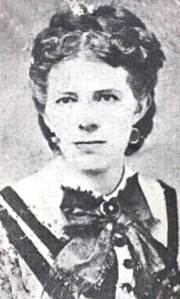
From 2012 to 2015, Stillness of Heart will share interesting excerpts from the extraordinary diary of Kate Stone, who chronicled her Louisiana family’s turbulent experiences throughout the Civil War era.
Learn more about Stone’s amazing life in 1861, 1862, 1863, 1864, 1865 and beyond. Click on each year to read more about her experiences. You can read the entire journal online here.
(Photo edited by Bob Rowen)
As Stone and her family regained their bearings in their temporary home before making the final push for Texas, Stone’s bitter sense of humor flashed for a moment as she dryly observed the effects of marriage on a young woman’s beauty.
May 3, 1863
Near Monroe, La.
We went to a real country church this morning, saw a country congregation, and heard a sermon to match. Loring Wadley made several trips with the buggy to get us all there, but two of the party rode back in Dr. Young’s $3,000 carriage. We had a pleasure today in a visit of several hours from Julia Street. She came down from Bastrop just for the day. She is more nearly depressed than I ever saw her.
Annie and Peggy got here from the salt works today, and we are glad to have somebody to wait on us again. I expect we will keep them busy. …
May 5
Near Monroe, La.
The gunboats are unable to pass Grand Gulf and are lying idle between Vicksburg and Grand Gulf, like baffled beasts of prey. There is a great scarcity of provisions all through Mississippi. It is difficult to provision Vicksburg for a long siege. …
We went yesterday to see Florence Pugh (now Mrs. Morrison), an old schoolmate. The family are near here now on their way to Texas. She is a dear, sweet girl but looks dreadful. How marrying does change a body for the worse. She was a pretty girl a year ago, fresh and dainty. Now she is married and almost ugly.
I am busy every day trying to make up the cloth Mamma bought, but it is slow, tiresome work for one person with no sewing machine. The only things Mamma could find to buy belonged to the Lowrys, and they sold them at awful prices: $60 for a pair of common blankets, $50 for a pair of linen sheets, and everything else in proportion. They have sold much of their own clothing. Mamma bought some of Olivia’s things for Sister. … It seems funny to be wearing other people’s half-worn clothing, but it is all we can get. Mamma bought some Turkey-red calico at $3 a yard for a dress for Sister.
May 10
Near Monroe, La.
Mamma returned from the salt works on Friday, riding the whole distance on horseback. It was dreadfully fatiguing for one who rides so little. She has gone this evening to Delhi to make another attempt to have the Negroes brought out, if she can get soldiers to go with Jimmy. Quite a number of Negroes have been brought out in that way recently, some from within the lines.
The news from the salt works is bad. Frank, my maid, and Dan both died of pneumonia and neglect, and three others are very ill. Poor Frank, I am sorry for her to go. She has been raised in the house with us. With so much sickness among the Negroes, Mr. Smith has been unable to start to Texas. …
Several thousand of our soldiers are now at Monroe under Maj. Gen. Walker. Two of the officers spent yesterday evening here and told us the whole command would get off this morning and that there were some splendid bands with the regiments. So this morning we rode out to the river opposite Monroe to see them off, starting before sunrise. We saw crowds of soldiers, talked to a number of them, and heard inspiring music. The ride all the way through the spring woods was delightful. I sat up until twelve the night before fixing a sort of riding habit. … The troops after embarking received counterorders and are again in Monroe, expecting to march at any minute. There is another panic in Monroe. The Yankees are looked for at any time. They could not make anything out of this poor family. We have been too thoroughly plucked by the river Feds. …
Aunt Laura is not very well. We would dread to see her get sick.
Youth, family, happiness, and hope all seemed to be mere memories of an antebellum existence lost forever.
From 2012 to 2015, Stillness of Heart will share interesting excerpts from the extraordinary diary of Kate Stone, who chronicled her Louisiana family’s turbulent experiences throughout the Civil War era.
Learn more about Stone’s amazing life in 1861, 1862, 1863, 1864, 1865 and beyond. Click on each year to read more about her experiences. You can read the entire journal online here.
(Photo edited by Bob Rowen)
Kate Stone’s rage over Northern victories burned bright over the general landscape of depression she inhabited. Youth, family, happiness, and hope all seemed to be mere memories of an antebellum existence lost forever.
May 2, 1863
Near Monroe, La.
We have been comfortably domiciled here since Tuesday. It is indeed a delightful change from Mr. Deane’s, that musty room and uneatable fare. This is a large roomy but unfurnished house, a kind, pleasant family, and excellent fare — an oasis in the desert. The mother, Mrs. Wadley, two grown daughters, a grown son, and two or three younger children make up the family at home. Col. Wadley is on the other side of the river. They are railroad people. Aunt Laura is boarding just across the road from us, and there is a young lady, Carrie Young, and a grown son in that house. Then, there are quite a number of young people in walking distance. There is no dearth of company, but I cannot enjoy it. I feel out of place with a party of gay young people. Their mirth jars my heart. Life seems too sad a thing to spend in talking nonsense. I feel fifty years old.
The two Miss Dawsons from Madison Parish seem to be the belles of the country. They refugeed out here some time ago and are enjoying themselves exceedingly. Their house is a favorite resort for the officers, and the girls are out riding and walking with some of them every day. Fannie Dawson is beautiful, accomplished, and fascinating, we hear.
Bad news from the Negroes at the salt works. Jeffrey is dead and several others are very sick. The three whose wives are on the river ran away but were caught. Mamma and Johnny with a new overseer and his wife started to the salt works yesterday. She will start all the Negroes who are able to travel at once to Texas. We will perhaps go to Homer [La.].
The news from Mississippi is bad. The Yankees are making raids through the state, cutting off supplies from Vicksburg. … The panic here has subsided though the authorities are still moving government stores from Monroe. …
I have been hard at work ever since coming here slewing on the goods Mamma bought from Mrs. Lowry. We need so many things that it is hard to decide what to make first. Mamma bought a lot of linen sheets from Mrs. Lowry, and I am making them into underclothes, thick and strong. They should last until the war is over. …
[New York Tribune editor] Horace Greeley’s son was out at Mr. Curry’s place on a stealing expedition last week. When reading the Tribune two years ago and abusing Greeley for his vile slanders of the South, we never thought any of his kith or kin would ever be that near Brokenburn. Such are the chances of war. We did not think any of Mr. Greeley’s relations would be in the war. “He doth protest too much,” though he does write of it as a Holy Crusade. Do you think it wicked to wish that one of our enemies may be killed as a punishment for his father’s sins?
Stone mourns what has been lost as she finishes her tale of escape. “So passes the glory of the family.”
From 2012 to 2015, Stillness of Heart will share interesting excerpts from the extraordinary diary of Kate Stone, who chronicled her Louisiana family’s turbulent experiences throughout the Civil War era.
Learn more about Stone’s amazing life in 1861, 1862, 1863, 1864, 1865 and beyond. Click on each year to read more about her experiences. You can read the entire journal online here.
(Photo edited by Bob Rowen)
Stone mourns what has been lost as she finishes her tale of escape. “So passes the glory of the family.”
April 27
Near Trenton, La.
Mamma and Johnny are out hunting up bed clothes and anything else buyable since we need everything, and Sister and I are left to ourselves this rainy day. So I may as well finish the recital of our woes.
We left our clothes in care of Uncle Bob who has been as faithful as any white man could be. He is Mamma’s driver on the plantation. And we piled ourselves and our scanty luggage into two rocking, leaky dugouts and pushed off, Jimmy paddling one and Coffee, one of Dr. Carson’s hands, the other. The sight of a body of horsemen in the distance coming our way lent strength to their arms, and as fast as they could ply the paddles we glided through the water. The men came on down the road, and we saw they were Yankee soldiers. But the water was so deep that they could not ride fast and we kept ahead. At last after nearly a mile of this race, the boats shot out into deep water, and we were safe from pursuit. Then what a shout rang out for Jeff Davis and the Confederacy. The men could see and hear us distinctly, and we half expected a volley to come whizzing over the waters. But the boys would not be restrained, and their “Farewell to the Feds!” “Hurrah for Jeff Davis!” and “Ho for Texas!” floated over the waters ’til we were out of sight. The Yankees followed us until their horses were nearly swimming.
After rowing a few miles, we joined Mr. Hardison and his family at the Jones place in the middle of Tensas swamp. They were in a skiff and had been waiting for us for some time. All his family and all his worldly possessions were in that skiff and it was not loaded, so quickly had he been reduced from affluence to poverty. We went on in company and were in the boats for seven hours in the beating rain and the sickening sun, sitting with our feet in the water. Not an inch of land was to be seen during the journey through the dense swamp and over the swift curling currents. The water was sometimes twenty feet deep, rushing and gurgling around the logs and trees. We all stood it very well except Aunt Laura. She was terrified nearly to death and was alternately laughing and crying. She insisted on giving the rower directions and, as he was a slow African, confused him so that he forgot how to pull and ran us into brush piles innumerable. At last he said, “Now, Mistress, you just tell me how to pull and I’ll do it.” So Aunt Laura and Mamma steered the boat viva voce, and he did the hard pulling. I thought they surely would make him turn us over, since a dugout goes over with such ease. At last we came to a clearing, and the boats had to be pulled over the land. We walked a path lined with brambles, and our dresses were nearly torn off. Johnny suffered with fever nearly all day.
As we were passing Mr. Anderson’s, heavy clouds rolled up, and it looked like a coming storm. Aunt Laura and Mrs. Hardison declared they would not go on but would stop right there, and so our boats were headed for the gallery.
They were all under water since it was a little bit of a house, but we carried it by storm without a remonstrance from the owners, who were as kind as could be. Mamma and I were wet nearly to our waists, and the floor looked like it had been scoured when we passed over it. But the dear little lady did not seem to mind it a bit. I had a great bag of Aunt Laura’s gold around my waist. It was very heavy, and just as I stepped on the gallery the belt gave way and it came down with a crash. A foot nearer and it would have fallen in the water, and I suppose we never would have found it. That evening Dr. Carson came to take us to his house but Aunt Laura felt too worn out to go. Mamma stayed with her, and Sister, the boys, and I went on with Dr. Carson. The next day the others joined us there. The whole family received us most kindly, and oh what a relief it was to get to a place of rest and to feel safe once more.
That night there was a most terrific storm which did not even waken me. I slept like the dead. I was completely exhausted by fatigue, excitement, and loss of sleep. … Aunt Laura and Mamma said they were worse frightened by the storm than they had been by anything else. They had not had a brutal Negro man standing on their dress and fingering a pistol a few inches from their heads. I can stand anything but Negro and Yankee raiders. They terrify me out of my wits. …
We spent nearly three weeks at Dr. Carson’s most delightfully. Books, music, rest, and pleasant company charmed the hours away until came news of our great bereavement.
The Negroes at Dr. Carson’s were almost as much demoralized as those on the river. The night after we reached there, a skiff load attempted to escape but were followed and captured after being fired on several times by Jimmy. Fortunately he did not hit any of them.
Now for a list of our losses. All the clothes left in the cart were taken by Mr. Catlin’s Negroes, Uncle Bob being unable to protect them. They comprised most of our underclothes and dresses, all my fine and pretty things, laces, etc., except one silk dress, all our likenesses, and all the little family treasures that we valued greatly. Little Sister did not get off with a change. Mrs. Carson kindly had a suit made for her. Mamma and I have barely a change and the boys have only what they have on. They lost theirs after getting them out here.
Aunt Laura has lost everything except barely enough to do with for a time. Beverly’s things were mostly saved. Aunt Laura’s trunk, packed with a quantity of beautiful clothes, laces, silks, velvets, and so on, was sent to Mr. Anthony’s in the vain hope that it would be safe. We hear, however, that the Yankees, informed by Webster, went there, demanded Mrs. Buckner’s trunk, took it to Grant’s headquarters, and that is the last of it. Some say they just broke it open and divided up the spoils. Both Mamma and Aunt Laura have lost all their bedding, table linen, etc. Our house is stripped of furniture, carpets, books, piano, and everything else, the carriage, buggy, harness, and everything of that kind. Also they have thirty Negroes still on the place we shall probably never see again.
Mamma regrets coming away as she did, but what else could she do? We could not stand more than anyone else, and nearly everyone left before we did. Our mistake was in not moving everything in the fall. Charles and Annie were the only two Negroes who would come with us, and they are only half-grown. So passes the glory of the family.
Kate Stone at last recounts why she and her family fled from Brokenburn.
From 2012 to 2015, Stillness of Heart will share interesting excerpts from the extraordinary diary of Kate Stone, who chronicled her Louisiana family’s turbulent experiences throughout the Civil War era.
Learn more about Stone’s amazing life in 1861, 1862, 1863, 1864, 1865 and beyond. Click on each year to read more about her experiences. You can read the entire journal online here.
(Photo edited by Bob Rowen)
Kate Stone at last recounts why she and her family fled from Brokenburn.
April 25
Near Trenton, La.
Affairs look dark for our Confederacy just now. … This country is filled with refugees. Nearly all our friends are back here or on their way to Texas, where we hope to be before long.
Out here the prices asked for everything are enormous. The people of Monroe seem determined to fleece the refugees. It cost us $3,000 to get a four-horse hack to bring us from Monroe here four miles.
Having no other way of amusing myself, I may as well write the account of our flight from home [Brokenburn] and our subsequent adventures.
On Thursday, March 26, hearing that Mr. Hardison had returned from Monroe, Sister and I walked up in the afternoon to hear what news he had brought. As we approached the house, it struck me that something was wrong. As we were going through the garden George Richards came out and told us a party of Yankees and armed Negroes had just left, carrying with them every Negro on the place, most of Mrs. Hardison’s and the children’s clothes, and all the provisions they could manage. They were led by Charles, Mr. Hardison’s most trusted servant, and they were all vowing vengeance against Mr. Hardison. They said they would shoot him on sight for moving two of his Negroes a few days before. Mr. Hardison had fortunately seen them coming and, knowing he would be arrested or perhaps killed as a conscript officer, had escaped to the woods.
We walked in and found Mrs. Hardison and the children all much excited and very angry, with flaming cheeks and flashing eyes. The Negroes had been very impertinent. The first armed Negroes they had ever seen. Just as we were seated someone called out the Yankees were coming again. It was too late to run. All we could do was to shut ourselves up together in one room, hoping they would not come in. George Richards was on the gallery. In a minute we heard the gate open and shut, rough hoarse voices, a volley of oaths, and then a cry, “Shoot him, curse him! Shoot him! Get out of the way so I can get him.” Looking out of the window, we saw three fiendish-looking, black Negroes standing around George Richards, two with their guns leveled and almost touching his breast. He was deathly pale but did not move. We thought he would be killed instantly, and I shut my eyes that I might not see it. But after a few words from George, which we could not hear, and another volley of curses, they lowered their guns and rushed into the house “to look for guns” they said, but only to rob and terrorize us. The Negroes were completely armed and there was no white man with them. We heard them ranging all through the house, cursing and laughing, and breaking things open.
Directly one came bursting into our room, a big black wretch, with the most insolent swagger, talking all the time in a most insulting manner. He went through all the drawers and wardrobe taking anything he fancied, all the time with a cocked pistol in his hand. Cursing and making the most awful threats against Mr. Hardison if they ever caught him, he [walked] up to the bed where the baby was sleeping. Raiding the bar, he started to take the child, saying as he waved the pistol, “I ought to kill him. He may grow up to be a [guerrilla]. Kill him.” Mrs. Hardison sprang to his side, snatched the baby up, and shrieked, “Don’t kill my baby. Don’t kill him.”
The Negro turned away with a laugh and came over where I was sitting with Little Sister crouched close to me holding my hand. He came right up to us, standing on the hem of my dress while he looked me slowly over, gesticulating and snapping his pistol. He stood there about a minute, I suppose. It seemed to me an age. I felt like I would die should he touch me. I did not look up or move, and Little Sister was as still as if petrified. In an instant more he turned away with a most diabolical laugh, gathered up his plunder, and went out. I was never so frightened in my life. Mrs. Hardison said we were both as white as marble, and she was sure I would faint. What a wave of thankfulness swept over us when he went out and slammed the door. In the meanwhile, the other Negroes were rummaging the house, ransacking it from top to bottom, destroying all the provisions they could not carry away, and sprinkling a white powder into the cisterns and over everything they left. We never knew whether it was poison or not.
The Negroes called and stormed and cursed through the house, calling each other “Captain” and “Lieutenant” until it nearly froze the blood in our veins, and every minute we expected them to break into our room again. I was completely unnerved. I did not think I could feel so frightened. …
After carrying on this way about two hours they lit matches, stuck them about the hall, and then leisurely took themselves off, loaded down with booty. We rushed around, put out all the matches, gathered up the few little articles left, and started at once for home. Since the Negroes declared as they moved off that they were coming back in a little while and burn every house on the place, I took the baby and Mrs. Hardison, Mrs. Alexander, and the children with George and Mr. McPherson gathered up everything of any value left, and we hurried home, reaching there spent with excitement. Mrs. Hardison was almost crazy. …
We made preparations that night to move at daybreak, but something deterred us. Mamma thought she would go out and get letters of protection but later abandoned the idea. It was then too late for us to get off, and we spent a night and day of terror. The next evening the Negroes from all the inhabited places around commenced flocking to Mr. Hardison’s, and they completely sacked the place in broad daylight, passing our gate loaded down with plunder until twelve at night. That more than anything else frightened Mamma and determined her to leave, though at the sacrifice of everything we owned.
We made arrangements to get Dr. Carson’s skiffs and sent Webster around collecting saddles and bridles. On account of the water we could go only on horseback to take the skiffs.
With much difficulty we got everything ready for the start at midnight. Aunt Laura was the only one who did not want to go. She begged Mamma to let her and Beverly stay, saying that she would get old Mr. Valentine to stay with her, but of course Mamma could not allow that. The boys brought in everything we had buried out, except Aunt Laura’s silver. That had to be left packed in a barrel and buried in the yard. The boys had done it one very dark night, when they hoped all the Negroes were in their cabins as it was raining. All the servants behaved well enough except Webster, but you could see it was only because they knew we would soon be gone. We were only on sufferance.
Two days longer and we think they would all have gone to the Yankees, most probably robbing and insulting us before they left. About eleven of the boys went off with their guns to have the horses saddled and brought up. After a good deal of trouble, they came. The boys carried their guns all the time. Without them I think we would never have gotten off. Webster tried every artifice to get hold of one of them, but the boys never relaxed their watch. The night was cloudy and dark with occasional claps of thunder, but we had to go then or never. We knew the news would be carried to camp, and the Yankees had forbidden citizens to leave their places. …
It was too dark to see the road but Johnny led off, and each one followed the shadow in front. … As we opened gates and rode through place after place in perfect silence, not a light was visible anywhere. After passing Out Post, the road was so bad and it was so dark that we were forced to wait for daylight. We dismounted in the middle of the road, and to Aunt Laura’s surprise and amazement Mamma lay her head down in Johnny’s lap and went sound asleep. Riding in the dark made her sick, and she was worn out with excitement and loss of sleep. …
When we reached within a mile of our place of debarkation, the road became impassable, and we struck off into the woods. The cart had to be left there and the baggage carried on by mules. After much trouble, getting lost and riding through water up to our saddle skirts I actually swam a bayou with Beverly in my arms we succeeded in getting all of our party and a little of our baggage to the landing place below Mrs. Stevens’. We sent Webster back to the cart for the baggage, and no sooner was he out of sight than he mounted a horse and set off for home. … Thus by his treachery we lost almost everything we brought away with us, for when we heard it, it was already too late to send back for the things. …
Nothing disgusted Kate Stone more than her family’s slaves taking control of Brokenburn, the family plantation.
From 2012 to 2015, Stillness of Heart will share interesting excerpts from the extraordinary diary of Kate Stone, who chronicled her Louisiana family’s turbulent experiences throughout the Civil War era.
Learn more about Stone’s amazing life in 1861, 1862, 1863, 1864, 1865 and beyond. Click on each year to read more about her experiences. You can read the entire journal online here.
(Photo edited by Bob Rowen)
By late April 1863, Kate Stone, still too weary to explain how or why her family evacuated their Louisiana plantation, grappled with the harsh realities of her new existence. She marveled at fellow Southern refugees’ desperate attempts to retain their small comforts of life in the midst of war. She viewed slaves — freed, armed, and empowered — as a far greater threat than the Union troops that swarmed over the flooded region. Nothing disgusted her more than her family’s slaves taking control of Brokenburn, the family plantation.
April 21
Near Monroe, La.
We have reached this place of refuge three weeks after deserting our home. We have come by short but not easy stages. Wednesday we left Dr. Carson’s Anchorage place at sunrise, going in skiffs to Mr. Templeton’s only a few miles and hoping to catch Mr. Gaddis’ boat. The boat had gone on, and Mr. and Mrs. Templeton begged us to stay with them until Friday, when the boat would make another trip. We were only too glad to do so. There was absolutely nothing else we could do. The whole country is a sheet of water from the levees being down in every direction. There is not a skiff to be borrowed or bought at any price.
The whole family, consisting of Col. and Mrs. Templeton and their two half-grown daughters, Mary and Emma, were as kind as possible to us. They did all they could to help us on. We were sorry to tell the Carsons good-bye. They were so kind, but we hope to meet them very soon. Col. Templeton’s is a pleasant home. It is a long, low house with a large yard, shaded with forest trees, cool, green and homelike. It is comfortable within but with no pretensions. They set an excellent table and have a well-filled larder. Most pleasant of all to storm-tossed wanderers was a warm welcome. The only thing I did not like: My bedfellow was a “Yankee school marm.” She professed to be a true Southerner in feeling, but when she knelt to pray I could not help speculating whether her petitions were for our success or the success of our enemies.
Emma Templeton is a little beauty, a dimpled blonde. Mary is a tall, pale, dark-eyed girl. Both of them are idolized by their parents. Mr. Hornwasher is their music and drawing teacher. He did not join the army. He had enough of war in his own country, no doubt.
Friday we came down to Delhi in an immense dugout, a trip of six hours. All seven of us — Mamma, Aunt Laura, Sister, Beverly, I, and the two boys — with an assorted cargo of corn, bacon, hams, Negroes, their baggage, dogs and cats, two or three men, and our scant baggage. It was a dreadful trip. We were very crowded, the hot sun beaming on us as we were creeping down the bayou, hungry and tired. There was a very strong reflection from the water, and one of our poor Negroes was sick, groaning most of the way, and could not be made comfortable. We were glad enough to get out at the railroad bridge and walk the mile to reach Delhi.
The scene there beggars description: such crowds of Negroes of all ages and sizes, wagons, mules, horses, dogs, baggage, and furniture of every description, very little of it packed. It was just thrown in promiscuous heaps, pianos, tables, chairs, rosewood sofas, wardrobes, parlor sets, with pots, kettles, stoves, beds and bedding, bowls and pitchers, and everything of the kind just thrown pell-mell here and there, with soldiers, drunk and sober, combing over it all, shouting and laughing. While thronging everywhere were refugees — men, women, and children, everybody and everything — trying to get on the cars, all fleeing from the Yankees or worse still, the Negroes.
All have lost heavily, some with princely estates and hundreds of Negroes, escaping with ten or twenty of their hands and only the clothes they have on. Others brought out clothes and household effects but no Negroes, and still others sacrificed everything to run their Negroes to a place of safety.
Everybody was animated and excited. All had their own tales to tell of the Yankee insolence and oppression and their hairbreadth escapes. All were eager to tell their own stories of hardship and contrivance, and everybody sympathized with everybody else. All were willing to lend a helping hand and to give advice to anybody on any subject. Nearly everybody took his trials cheerfully, making a joke of them, and nearly all are bound for Texas. Nobody “crying over spilled milk.” Not a tear all day, though one knows there were heavy hearts bravely borne.
We got off from Delhi about sunset and reached Monroe after twelve. Nearly all remained on the cars until daylight … it was impossible to get accommodations in town. It was amusing to watch the people wake up in the morning, wash their faces, smooth at their hair, and go to eating breakfast — leisurely and with as much sangfroid as though in their breakfast rooms at home. Everyone traveling on the cars now carries his own provisions, as you can get nothing if you do not, and no room if you get off. …
We drove through Monroe, which seems to be a beautiful little town, but I was suffering with fever too much to like anything. The road up the Ouachita was lovely. It is a clear bright stream with forest-shaded banks. The hard dry road was appreciated after the mud and water of the last months. The profusion of catalpa trees, all in full bloom, lining the streets of Monroe was indescribably fair in the early morning light. The deep green leaves seemed heaped with pyramids of snow. …
We crossed the river at Trenton on a flat and came out two miles in the hills to this place, Mr. Deane’s, but we hope to be here only a few days. The woods around here are beautiful with quantities of wild flowers and fruits. I have been sick in bed until today.
Yesterday Mamma and Jimmy went back to Delhi to get a party of soldiers to go back home with Jimmy and bring out the Negroes left there. All our and Aunt Laura’s house servants, the most valuable we own, were left. … We hear that the Negroes are still on the place, but the furniture and all movables have been carried out to camp by the Yankees. The Negroes quarreled over the division of our clothes. … Webster, our most trusted servant, claims the plantation as his own and is renowned as the greatest villain in the country. If we succeed in getting the Negroes we may say farewell to the buildings as no doubt they will be burned, but that may happen at any time.
Kate Stone and her family are afraid and adrift, now Confederate refugees from Northern soldiers tightening their grip on Vicksburg. But there is hope for safety … in Texas.
From 2012 to 2015, Stillness of Heart will share interesting excerpts from the extraordinary diary of Kate Stone, who chronicled her Louisiana family’s turbulent experiences throughout the Civil War era.
Learn more about Stone’s amazing life in 1861, 1862, 1863, 1864, 1865 and beyond. Click on each year to read more about her experiences. You can read the entire journal online here.
(Photo edited by Bob Rowen)
Something has happened. Stone refers to a “horrid flight from home” but the memory is still too raw for her to discuss. All she can admit to is shame and shock over where her family has found themselves: afraid, adrift, refugees in their own country, and reliant on the kindness of friends and strangers for clothing, shelter, and food.
Note Stone’s mention of “skiffs.” The region’s levees were breached or damaged, and floodwaters were everywhere.
April 15, 1863
Anchorage, La.
Tomorrow at daybreak we leave here on our way to Monroe [La.]. This has been but a resting place on our journey to the unknown. At Mr. Templeton’s on Bayou Macon, we will take a flat for Delhi where we will take the cars for Monroe. We hope to reach there sometime during the night. Jimmy has secured two rooms for us at a Mr. Deane’s in the hills four miles from Monroe, across the Ouachita. These are Mamma’s plans if she can carry them through, but everything is uncertain from the getting of the flat to the rent of the rooms. No plans are fixed in these troublesome times. “First come, first served” is the motto. Engagements stand for nothing.
But we must certainly leave here, as we have trespassed on these kind friends for two weeks. Now, they are preparing to move on themselves, and we would surely be in the way. They have been exceedingly kind. No relatives could have been kinder, and Dr. Carson even wants to send us down to Delhi in one of his skiffs, a trip of two days. He is in all the hurry and bustle of moving not only his own family but several hundred Negroes, his own and those belonging to the large Bailey estate, for which he is executor. The more I see of Dr. Carson the more I am impressed with the beauty and nobility of his character. He has a tremendous undertaking before him, so many women and children to be moved and sheltered, and he feels deeply the responsibility.
Mamma will not take advantage of his kindness about the skiff. We will get down the Macon from Col. Templeton’s someway. Mrs. Carson has given Sister a complete suit of Katie’s clothes, as Sister, in our escape from home, got off with only the clothes she had on. She and Katie are the same size, and the clothes fit nicely. She has also given me a pair of nice gaiters such as it would be impossible to buy in the Confederacy. As I have only a pair of old half-worn shoes and can get no more, they are most acceptable. Mamma will get mourning for Sister in Monroe, if possible. We feel that black should be our only wear.
Mrs. Carson and the children will follow us to Monroe in a few days, and we have all planned to go out to Texas together, camping out. “Times change and men change with them” — trite but true. A year ago would we have thought of receiving, or of a friend offering, clothes as a present? Now we are as pleased to receive a half-worn garment from a friend as the veriest beggar that goes from door to door. How else shall we cover our nakedness? We have lost all and as yet can buy nothing. A year ago would we have thought of going even to the house of a friend to spend some time without an invitation? And tomorrow we are all going seven of us with bag and baggage (very little of that, though) to stay an indefinite time with a lady we have seen only once, and without any invitation, trusting only that, as she is a lady, she will be kind to us in our distress. We are going to Col. Templeton’s to wait there until we can get transportation down the Macon. …
Before leaving here, we wrote to our two boys and Uncle Bo. My heart was too full for a careless letter. I could only think of Brother Walter. But we know how anxious they are about us all, and writing is all we can do for them. So we wrote as cheerfully as we could. We would not add to their hardships. Brother Coley wrote that they were doing as hard service as was possible for men. And my heart aches for the delicate young fellow, trying his strength to the utmost. He seems almost as far from us as Brother Walter, and I have almost as little hope of seeing him again. Not a word from My Brother since he left.
I have had no heart to write of our horrid flight from home but will someday when anchored somewhere.
The dark veil of sadness silenced Stone’s diary for more than two weeks. On April 10, 1863, she regained the strength to record what happened.
From 2012 to 2015, Stillness of Heart will share interesting excerpts from the extraordinary diary of Kate Stone, who chronicled her Louisiana family’s turbulent experiences throughout the Civil War era.
Learn more about Stone’s amazing life in 1861, 1862, 1863, 1864, 1865 and beyond. Click on each year to read more about her experiences. You can read the entire journal online here.
(Photo edited by Bob Rowen)
The dark veil of sadness silenced Stone’s diary for more than two weeks. On April 10, 1863, she regained the strength to record what happened.
April 10
Anchorage, La.
Brother Walter died Feb. 15, 1863, at Cotton Gin, Miss. Again has God smitten us, and this last trouble is almost more than we can bear. I can hardly believe that our bright, merry little Brother Walter has been dead for seven weeks. And we cannot realize that he is gone forevermore. Even peace will not restore him to us all. It is hard, hard that he should have to go, so full of life and happiness and with such promise of a noble manhood. We were always so proud of our six stalwart boys, and again one is snatched away and we cannot think of them without tears. …
For seven long weeks my dear little brother has been sleeping in his lonely grave, far from all who loved him, and we knew it not until a few days ago.
Even as I write, I feel his tears on my cheek and see him as I saw him last when I bade him good-bye in Vicksburg, reining his horse on the summit of the hill and turning with flushed cheeks and tearful eyes to wave me a last farewell. And by the side of this picture is another that has haunted me ever since reading that fatal letter: I see him lying cold and still, dressed in black, in his plain black coffin. His slender hands are worn and brown with the toil of the last four months and are crossed on his quiet breast. His handsome clear-cut features are glaring cold and white, and the white lids are drawn down over the splendid grey eyes, so easy to fill with tears or brighten with laughter. The smile we knew so well is resting on his lips. Happy boy, free from the toil and turmoil of life, safe in the morning of life in a glorious immortality.
It breaks our hearts to think of him sick and dying among strangers, a Negro’s face the only familiar one near him. I can hear him asking so eagerly, “Has Brother Coley come?” They say he longed so to see him, and he had been dead two weeks before Brother Coley knew it.
All we know of his death is from a letter of Brother Coley’s written on the sixteenth of March, the day Van Dorn’s cavalry left Arkalona for the raid into Tennessee. Brother Walter had fever but he rode all day. The next morning he still suffered with fever, and he and two other soldiers of his company were left at the house of Mrs. Owens near Cotton Gin, a little town in north Mississippi. Pompey, Joe Carson’s boy, was left to wait on him. The next morning the other two soldiers were well enough to follow on, and they carried a note from Mrs. Owens telling Brother Coley that his brother was very sick and that he had better return. He did not get the note for two weeks.
Brother Walter had developed a severe case of pneumonia, and on the fifth evening, Feb. 15 at 3 o’clock, he passed away with no friend but Pompey near him. It wrings my heart to think of him suffering and alone. I hope he did not realize that Death was so near and all he loved so far away. Poor little fellow, he was not used to strangers. He has been surrounded by loved and familiar faces all his short life. He was eighteen in December and died in February. He was but a boy and could not stand the hardships of a soldier’s life. Four months of it killed him.
We have no likeness of him. He has left only a memory and a name.
Relatives and friends dead. Home defense forces utterly impotent. Union soldiers taking what they wanted whenever they wanted it. Union gunboats defiling the Mississippi River. Slaves more a threat than ever before. Her mother came to a single solution.
From 2012 to 2015, Stillness of Heart will share interesting excerpts from the extraordinary diary of Kate Stone, who chronicled her Louisiana family’s turbulent experiences throughout the Civil War era.
Learn more about Stone’s amazing life in 1861, 1862, 1863, 1864, 1865 and beyond. Click on each year to read more about her experiences. You can read the entire journal online here.
(Photo edited by Bob Rowen)
“The life we are leading now,” Stone wrote dejectedly, “is a miserable, frightened one, living in constant dread of great danger, not knowing what form it may take, and utterly helpless to protect ourselves. …”
Stone’s mother agreed completely. Her cotton crop was destroyed. Damaged levees flooded the region. Life’s daily necessities were impossibly overpriced. New Orleans was gone, and Vicksburg would not hold out forever. Relatives and friends dead. Home defense forces utterly impotent. Union soldiers taking what they wanted whenever they wanted it. Union gunboats defiling the Mississippi River. Slaves more a threat than ever before. Her mother came to a single solution.
At long last, she decided, it was time to lead her family west.
But one more tragedy awaited them, one that would silence Stone’s diary for more than two weeks.
March 22
We have had an exciting time since the last date. Two Yankees came out Friday guided by John Graves and carried off my horse Wonka in spite of all we could do.
Wonka was racing around the yard, glad to be at liberty after being tied out so long, when two most villainous-looking Yankees rode up to the gallery where we three ladies and the two children were standing. They had pistols in their hands and proposed a “swap” but we all refused of course and begged them not to take the horse. Mamma even offered to pay the price for him, but the greatest villain of the two refused bluntly and worked himself into a towering rage while the other, the smooth villain, galloped off to catch the horse. I called to one of the Negroes to open the gate, thinking it would give Wonka a chance to escape, but as they seemed afraid I ran to do it myself. When the wretch called to me impudently to stop, I did not notice him but threw the gate open. He then dashed up with the pistol pointed at my head … and demanded in the most insolent tone how I dared to open a gate when he ordered it shut. I looked at him and ran on to open the other gate. Just then Mamma called to me that they had caught the horse, and as I turned to go in the house the man cursed and said, “I had just as soon kill you as a grasshopper.” I was not frightened but I was furiously angry and would have been glad to have seen him lying dead. And I never saw Mamma so angry. Aunt Laura took it more calmly, and the little girls were frightened. Johnny was sick with fever. In five minutes the man had changed saddles and was riding my prancing, beautiful pet gaily off, leaving in his place a pack of animated bones, covered with sorrel skin. …
I cried the rest of the day and half of the night. We had had the horse tied out in the cane for days, and not ten minutes before the men came, Webster brought him up and said that he would die if he was kept tied up where the mosquitoes could get to him any longer. So I told Webster to turn him in the yard and went out to see, and I never saw him look finer. At that moment the Negroes called from the kitchen that the Yankees were coming, and in a minute they were dashing up to the gallery and in ten minutes more were racing away on my horse.
I think I will never see lilac blooms again without recalling this sad incident. We had all just come in from the garden and had great sprays of the purple flowers in our hands and stuck in the children’s hats, and when the Yankees rode away and the excitement subsided we were still holding the tossing, fragrant plumes. …
The Negroes all behaved very well while the men were here. Most of them hid, and the others did not show the slightest disposition to go with them, though the Yankees asked them to go. They made William help catch the horse by cursing and holding a pistol to his head, and then invited him to go along with them to camp. He refused most positively, and they rode off without doing any further damage. These two returned by way of Mrs. Hardison’s, stopping to have a long talk with her Negroes, and took one of her mules, crossing just below the house. The effect of their talk with Mr. Hardison’s Negroes came out today when six of the men with their children and clothes walked off in broad daylight after a terrible row, using the most abusive language to Mrs. Hardison. Mr. Hardison expected to get home today and move them all to Monroe, but he has waited too long. The other Negroes declare they are free and will leave as soon as they get ready. Mrs. Hardison sent for Johnny and Mr. McPherson early this morning. Johnny went at once but they could do nothing. None of them have even a gun. A Negro has stolen Mr. Hardison’s. But guns are of no use to people in our dilemma. To use one would only be to invite complete destruction from the soldiers.
The river is rising rapidly, and the levee at Lake Providence has been cut. It looks like we are going to be overflowed, a misfortune that we will welcome if it drives the Yankees away. No effort is made to hold the levees; in fact, they spoke of cutting the one at Pecan Grove before the Yankees came up, and it is a pity they did not. A few feet more of water would be a protection as the Yankees would not be able to come out in boats.
This country is in a deplorable state. The outrages of the Yankees and Negroes are enough to frighten one to death. The sword of Damocles in a hundred forms is suspended over us, and there is no escape. The water hems us in. The Negroes on Mrs. Stevens’, Mr. Conley’s, Mr. Catlin’s, and Mr. Evans’ places ran off to camp and returned with squads of soldiers and wagons and moved off every portable thing furniture, provisions, etc., etc. A great many of the Negroes camped at Lake Providence have been armed by the officers, and they are a dreadful menace to the few remaining citizens. The country seems possessed by demons, black and white.
March 24
Storms and rain for two days. There has been almost constant rain since Christmas. The oldest inhabitants say they never saw such persistent rains. It might be the rainy season of the tropics. Some think the cannonading at Vicksburg brings on the rains. It is seldom we hear the cannon that it is not succeeded by showers or a downpour, and often it is difficult to distinguish between the burst of thunder and the roar of the guns.
The firing has been kept up, now fast then slow, for several days until today there is quiet. The sound comes over the water with such distinctness as to rattle the windows, and when the river is low we scarcely hear the guns.
Johnny brought us news Sunday (Sunday does not seem like Sunday nowadays. It’s always the time of the greatest excitement). He said that Mrs. Graves was going Monday to see the Yankee general and would try to get my horse returned. That we know is a hopeless job, but we wrote asking her to report the behavior of the two men, giving the names they gave us and telling of their frequent raids out this way. Mrs. Hardison also wrote asking her to represent to the commanding general that there are only women and children in these homes, and, if he will allow marauding parties to continue to harass us, at least to send an officer in charge. Mrs. Graves says that the pickets are very strict now and that it is hard to get through the lines. The Graves have lost twenty of their Negroes. The letters of protection do them no good. Mrs. Hardison’s servants have behaved worse than anyone’s. They have done everything but strike her and have used very abusive language. The leader is a boy or man, Charles, who ran to the Yankees among the first and soon returned to stay at home. He said he had enough of Yankees.
The life we are leading now is a miserable, frightened one, living in constant dread of great danger, not knowing what form it may take, and utterly helpless to protect ourselves. It is a painful present and a dark future with the wearing anxiety and suspense about our loved ones. We long for news from the outside world, and yet we shudder to think what evil tidings it may bring us. Could we hear that all our soldiers are well, the troubles here at home would seem but light ones.
We beguile the time sewing and reading well-thumbed books, starting at every sound, and in the evening play backgammon or chess. Aunt Laura has just learned backgammon and enjoys playing a game. Little Sister has third-day chills and looks thin and pale. It seems impossible to break them without quinine, and we can get none. Johnny is at last almost well. Beverly’s hair has been cut short and she looks like a pretty little boy and is delighted with her appearance.
So my and My Brother’s old friend, Joe Wicks, is dead. And he died, as a Southern boy should, leading his men in action. He was adjutant of a Tennessee regiment and was killed in a skirmish near Oxford months ago. What a host of pleasant memories his name awakens of the happy Clinton days when I was a little girl of twelve off at school for the first time, with My Brother as protector and comforter, and Joe my first little lover. What a gay, guileless time we all had together, boarding there with his sister, Mrs. Rhodes. …
Perhaps Stone, fighting what she saw as her part of the war, decided that she would never surrender her ground to the dark, silent, sinister enemy. But it took another enemy, one she’d feared longer than any Yankee, to change her mind.
From 2012 to 2015, Stillness of Heart will share interesting excerpts from the extraordinary diary of Kate Stone, who chronicled her Louisiana family’s turbulent experiences throughout the Civil War era.
Learn more about Stone’s amazing life in 1861, 1862, 1863, 1864, 1865 and beyond. Click on each year to read more about her experiences. You can read the entire journal online here.
(Photo edited by Bob Rowen)
On March 2, Kate Stone opened her journal and wrote in it for the first time since late January. She was disoriented. She didn’t know exactly what day of the week it was. She guessed it was Saturday. When Federal troops flooded the neighborhood in late January, Stone’s mother prepared to evacuate the family. But she changed her mind when she learned the roads west were already impossibly clogged with frightened refugees. When Stone learned they were not leaving Brokenburn after all, she was secretly relieved.
Whatever misery she endured, whatever property she lost, whatever horrors she witnessed, Stone seemed determined to stand her ground. Perhaps Brokenburn was her own line in the sand. Perhaps she had already seen too many retreats, too many defeats, too many surrenders. Perhaps Stone, fighting what she saw as her part of the war, decided that she would never surrender her ground to the dark, silent, sinister enemy. But it took another enemy, one she’d feared longer than any Yankee, to change her mind.
March 2
Saturday [Monday] I think. We have not had an almanac for more than a year, and so I can only guess at the time until someone better posted comes along. The Yankees have not visited us yet, and so after more than a month’s concealment I take my book out to write again.
The soldiers have been all around us but not on the place. At first we were frightened, expecting them all the time and preparing to start for the hills beyond the Macon, the Mecca for most of the refugeeing planters. Mamma had all the carpets taken up and the valuable clothes and everything but the furniture sent away or ready to send when My Brother came back from Delhi, where he left the Negroes until they could be shipped on the train. Such a crowd was there [that] it will be several days before they can get off.
He gave such a disheartening account of the roads — they are impassable for anything but a six-mule team — that he and Mamma concluded it was impossible to move at this time, and we would await further developments here. Mamma has had the house put in order, and we are again comfortable. I am so glad for I dreaded going into the back country, where we would never see or hear anything among total strangers, and to leave our pleasant home most probably to be destroyed by the Yankees, and we may be able to protect it if we are here.
Brother has been gone for more than a month. He has taken the Negro men to the salt works away beyond Monroe and put them to work. Jimmy returned from there two weeks ago, and Mamma sent out the overseer, Mr. Ellsworth. We have been looking for My Brother for ten days.
Mamma thought of sending Jimmy back to Virginia with My Brother to go to school at Lexington, but now that the conscription is being so rigidly enforced she thinks both Mr. Storey and Mr. Ellison may both be enrolled. She will have no one but Jimmy to depend on, and so she will keep him at home. I am begging her to send Johnny. One of the worst features of the war is that it deprives all the boys of an education. …
Jane, Aunt Laura’s cook, and Aunt Lucy had a terrible row Tuesday night. Jane cut a great gash in Lucy’s face with a blow from a chair and hurt her severely. Mamma had Jane called up to interview her on the subject, and she came with a big carving knife in her hand and fire in her eyes. She scared me. She is nearly six feet tall and powerful in proportion, as black as night and with a fearful temper. … Aunt Laura had a long, lingering illness lasting several months, and she always thought Jane kept her poisoned. Jane showed a very surly, aggressive temper while Mamma was talking to her, and so Mamma did not say much. Jane went to her room and that night took her two children, a girl and a boy about half-grown, and in company with one of Mr. Hardison’s men started for the camp at DeSoto. I think we are all glad she has gone. We felt her a constant menace. She must have had a bad trip. They were out in that blinding rain Wednesday and Wednesday night with only two blankets as protection and not much to eat. Mr. Graves saw them yesterday sitting on the levee at Mr. Utz’s in company with fifty others, waiting to be ferried across at the break there in a dugout. All the Negroes are running away now, and there are numbers of them. They have to stop at the break and wait to be ferried over by an old Negro in a dugout, and so there are crowds waiting all the time. Col. Graves went down there yesterday to try to reclaim three of his who had escaped. Three had just been drowned, trying to get over, and he thought from the description they were his.
Poor creatures, I am sorry for them. How horrible it all is. We had a scene of terror the night Jane left: The quarreling and screaming, the blood streaming down Lucy’s face, Jane’s fiery looks and speeches, Johnny and Uncle Bob’s pursuit of her as she rushed away, the discovery that the children were gone, and then just as we had all quieted down, the cry of fire. The loom room had caught from some hot ashes, but we at once thought Jane was wreaking vengeance on us all by trying to burn us out. We would not have been surprised to have her slip up and stick any of us in the back. Johnny was our only protector as Jimmy was away. I went around bravely in appearance with a five-shooter in my hand. Found out afterwards it was only dangerous to look at as it was not loaded.
Mamma spoke of sending next day for Jane, but Aunt Laura implored her not to. She was only too thankful to get rid of her. She had been a terror to her for years. I think everybody on the place was thankful to get rid of her. The Negroes dreaded her as much as the white folks. They thought her a hoodoo woman.
The place looks deserted now with its empty cabins and neglected fields, and the scene is the same wherever we go. … It has been a month of warm weather and constant rain and the roads are impassable. We have not been out of the house for three weeks. Already the fruit trees are a faint green and the grass is springing in the yard. Spring is early this year. Over the woods in front of the house hangs a faint green mist with the red of the maples shining through, and this morning Sister brought in a bunch of pale wild violets, sweet as a promise that winter is gone. The hardy garden violets and the quaint little heartsease have been perfuming the winter wind for weeks, and the garden is gay with jonquils and narcissus.
March 3
Last night it was reported that the Yankees were at Dr. Devine’s, and we looked for them here today. My Brother and Mr. Hardison, who is conscript agent, went out early this morning to stay in the woods until nightfall, as they do not want to be captured and ornament a Yankee prison. …
Johnny who has been out scouting reports the Yankees at Rescue, the adjoining place, yesterday hunting horses and Negroes, and today they are scattered all through the lower neighborhood on the same quest. This band is said to be Kansas Jayhawkers, the very offscourings of the Northern Army. They say they will take by force all Negroes, whether they wish to go or not. A great number of Negroes have gone to the Yankees from this section. Mr. Watson and his father-in-law, Mr. Scott … got up one morning and found every Negro gone, about seventy-five, only three little girls left. The ladies actually had to get up and get breakfast. They said it was funny to see their first attempt at milking. Mr. Matt Johnson has lost every Negro off one place and a number from the other places. Keene Richards has lost 160 from Transylvania and fifty of them are reported dead. The Negroes at work on the canal have what they call black measles, and it is very fatal to them.
March 4
When we heard from Brother Coley and Dr. Buckner nearly a month ago — they had furloughs and had reached Vicksburg on their way home when they heard that Gen. Van Dorn was to make a great cavalry raid into Kentucky. They at once turned back and rejoined their commands. Brother Coley wrote that he could not possibly miss such a chance for a good fight. Well, they could not come here with the slightest safety, now that there are wandering parties of soldiers all through the swamp. The Yankees are very daring, swimming the bayous, plunging through the mud of the unbroken swamp, often only two or three of them together. One company of good men could put a stop to all of this, but all our men are across the Macon with no desire to come this way. We hear they are panic-stricken at the name of a Yankee and run the other way. It is well that the honor of Louisiana does not depend on the troops on this side of the river.
We get no Southern papers but occasionally a Northern paper from the people who are still on the river. They are all said to have taken the oath and to have letters of protection from the general commanding. Dr. Taylor, Mr. Harris, Mr. Rucker, and Mrs. Nutt are some of the suspected parties. Gen. Grant is said to have been very rude to Mrs. Nutt when she applied for protection. What else could she have expected from a Yankee general? There are some troops still at Lake Providence. We cannot hear whether they are still working on their grand canal or not. We suppose they will harass this section until the river falls and they again attack Vicksburg.
March 5
Mr. Valentine came over last evening in very low spirits indeed. He says his Negroes will not even pretend to work and are very impudent, and he thinks they will all go off in a body the next time the Yankees come on his place. He brought the welcome news of the departure of that body of Jayhawkers that was on Mrs. Evans’ place. They have completely ruined Mr. Catlin’s, Mrs. Evans’, and Mrs. Stevens’ places, taking all the Negroes and all kinds of stock. The Negro women marched off in their mistresses’ dresses.
Jimmy has been for some time with the Negroes at the salt works. We are in a helpless situation, three ladies and two little girls and not a white man or even a gun on the place, not even a boy until Johnny gets back. And the scouts may take him. We can find rest only in the thought that we are in God’s hands.
March 8
There are only twenty Negroes left on Mrs. Tibbetts’ five places, and Dr. Tibbetts has only one left, a superannuated woman helpless to do anything. The ladies are cooking, washing, etc., while Hiram Tibbetts is wood chopper.
The Yankees have five thousand Negroes camped at Lake Providence, all they have taken from the places up the river. They had an army of 30,000 men camped there, but they find the canal through to the Macon not feasible. They have moved up to Ashton to try a new canal there, if they can close the break at that point.
March 9
Aunt Lucy’s little girl Linda died this morning from the effect of the measles. It is the first child she ever lost and she is much distressed. Little Dora is also very ill from the same cause. …
We have heard a good many guns today and a boat whistle at Omega. Must be landing troops there. There must be a large force at the Bend now, as they have been moving men up for some days. Young’s Point and DeSoto are said to be under water, and they are forced to leave. Mr. Joe Noland’s is to be headquarters we hear. We hear that Mr. Hans Harris is having trouble with the Yankees, notwithstanding his protection papers, and that it is not necessary to take the oath to be protected, and so I retract what I said about the traitors on the river. Am glad it was false except Dr. Taylor of Willow Bayou. We truly believe him to be false to the South. His wife has gone North with her children. She is from there and must have contaminated her husband. Mr. Montague’s last two sons, in company with two friends, have gone over to the Yankees. Now Mr. Montague has all five of his sons in the North. It is strange that he could raise five sons in the South to love the North better than their own native land. Let us hope he is satisfied with them, as no one else is. All have a hearty contempt for them. What a disgrace to belong to that family.
The fruit trees are in full bloom now and our young orchard makes quite a show. … Quite a variety of vegetables are up and growing nicely.
Stone’s new year of happiness ended abruptly, and as Union troops closed in on Brokenburn, her diary fell silent. She did not write again until March 1863.
From 2012 to 2015, Stillness of Heart will share interesting excerpts from the extraordinary diary of Kate Stone, who chronicled her Louisiana family’s turbulent experiences throughout the Civil War era.
Learn more about Stone’s amazing life in 1861, 1862, 1863, 1864, 1865 and beyond. Click on each year to read more about her experiences. You can read the entire journal online here.
(Photo edited by Bob Rowen)
Stone’s new year of happiness — her brother home to recover from minor wounds, a stream of good news from the battlefields — ended abruptly, and as Union troops closed in on Brokenburn, her diary fell silent.
She did not write again until March 1863.
Jan. 1, 1863
My dear Brother came home this morning and in perfect health. How overjoyed we are to have him with us, but oh the disappointment that he is still only a captain. It seems he and the other gentlemen mentioned at the same time were recommended by the officers of their regiment for the field offices and a petition sent up for their promotion, but by the rules of war promotion could not go that way. The senior officers must go up first, and so Tom Manlove is lieutenant colonel and the senior captain, major. Tom Manlove headed a petition signed by all the officers of the regiment asking that My Brother be made colonel, but My Brother would not let it be sent up. I am awfully sorry. I fear now he will never be promoted. He has no ambition and a low opinion of his capabilities. It is foolish for me to feel so bad about it when I should be perfectly happy that he has escaped the myriad dangers and is with us again. He was mentioned for gallant conduct in Gen. Featherston’s report of the battles before Richmond. He was highly complimented on the field of battle at Sharpsburg by Gen. D. H. Hill and again in his official report.
Dear fellow, if anybody deserves promotion he does. He may get the colonelcy of his old batallion, now the 48th Miss. Regt. He was slightly wounded in the foot at the Battle of Fredericksburg, and that is why he was allowed to come home. He is looking well and cheerful. A piece of shell made a slight scar on his face but his whiskers conceal it. To me his coming was no surprise. I have been looking for him for two months, but the others were not so confident. He came by way of Mrs. Amis, and she sent him on by horseback.
Uncle Bo, he reports, is in the finest health and spirits, and our other soldiers are still at Grenada and well.
He brings encouraging news of successes. We have repulsed the enemy twice between the Yazoo and Vicksburg. Gen. Van Dorn has retaken Holly Springs and is threatening Memphis. Our victory at Fredericksburg was complete but barren of result, only it has depressed and surprised the North. Altogether we are getting the better of our foes.
Most of the family are troubled with inflamed eyes and mine are paining me so, from long writing I suppose. This has truly been a Happy New Year to us all, white and black.
Jan. 22
Sunday. After three weeks of silence let me think of what has happened. The Yankees, after an absence of more than a week employed in taking Arkansas Post, have returned in large force, have invested Vicksburg, and are cutting another ditch across the point above DeSoto, or it may be deepening the first ditch. My Brother, Mr. Hardison, Dr. Waddell, and several other Louisiana gentlemen were in Vicksburg when the boats came in sight, and they had great trouble regaining their horses, just missing several encounters with scouting bands.
My Brother started off this morning with the best and strongest of the Negroes to look for a place west of the Ouachita. Only the old and sickly with the house servants are left here. He is sure we will all be forced to leave this place as the enemy intend going into camp at the Bend, and in the event of their defeat at Vicksburg which is certain, will lay this whole country waste, sending out bands of Negroes and soldiers to burn and destroy. My Brother thinks we had better leave at once, and we will commence packing tomorrow. The Negroes did so hate to go and so do we.
We have retaken Galveston under Gen. Magruder, and the Alabama and Florida are spreading death and destruction on the seas. We have fought another … battle at Murfreesboro, and the enemy have evacuated Island No. 10. Three days fighting at Vicksburg, and the enemy badly whipped.
Heard from the boys by Joe’s servant, who is home on a visit. All well. Their regiment is now under Van Dorn.
Jan. 26
Preparing to run from the Yankees, I commit my book to the bottom of a packing box with only a slight chance of seeing it again.










 Stillness of Heart
You must be logged in to post a comment.