The horror of the Overland Campaign hangs over the Stone household but she holds out hope Lee will outsmart Grant in the end.
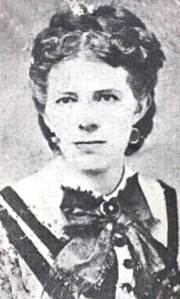
From 2012 to 2015, Stillness of Heart will share interesting excerpts from the extraordinary diary of Kate Stone, who chronicled her Louisiana family’s turbulent experiences throughout the Civil War era.
Learn more about Stone’s amazing life in 1861, 1862, 1863, 1864, 1865 and beyond. Click on each year to read more about her experiences. You can read the entire journal online here.
(Photo edited by Bob Rowen)
The horror of the Overland Campaign hangs over the Stone household but she holds out hope Lee will outsmart Grant in the end.
Again Stone impresses with her ability to illustrate everyday life and mores in so few detailed sentences. Note how the Stones and their friends are now regularly visiting Union prisoners at the nearby Confederate camp.
June 19, 1864
Tyler, Texas
A letter from My Brother but dated three months ago. He writes very sadly and thinks he will not see us again until the war is over. He was safe on the fourth of May, but it was on the fifth that those terrible battles commenced. We see from the papers that his corps was engaged every day. The fate of Richmond still trembles in the balance. Lee’s army has fallen back within the fortifications, and Grant is beginning to burrow as they did at Vicksburg. The most thrilling report is that Beauregard has captured Butler and 9,000 men. May it only be true. …
We have quite a trip in contemplation. Mamma is thinking of going to Monroe [La.] on business and taking me and one of the boys on for a pleasure jaunt. Which one of the boys depends on Mrs. Savage, who thinks of joining us with Emily. In that event Mamma will leave Jimmy at home as affairs are getting too interesting with Jimmy and Emily. He is too susceptible, and Mrs. Savage is too much of a matchmaker for Jimmy to be hourly exposed to such fascination for the next two weeks. Emily is a designing, forward girl, exceedingly so for her age. Jimmy is making every preparation to go with us and join the army at Monroe and will be horribly disappointed if Mamma refuses her consent.
Our usual refugee visitors. Yesterday evening returning from a ride, Jimmy and I were called in by Mrs. Carson, who begged us to stay to supper, at which we enjoyed delightful venison, killed by Jimmy Carson, and some of Mrs. Carson’s new style marmalade excellent. Read the papers to Mrs. Carson and rode home in the most glorious moonlight.
Mamma is very sad since receiving My Brother’s letter. She is very anxious about him. We have a nice set of real chessmen, made by one of the prisoners. We loaned them some days ago to the hospital in response to a polite note asking for them. The boys often go there. They have taken a great fancy to Mr. Griffin, a wounded boy. He must be a nice young fellow. Mamma and Mrs. Carson and some of the other ladies go quite frequently.
Stone mourns a family friend’s death. She also notes ominously the growing epidemic of deadly disease at a nearby Confederate camp filled with Northern prisoners of war.
From 2012 to 2015, Stillness of Heart will share interesting excerpts from the extraordinary diary of Kate Stone, who chronicled her Louisiana family’s turbulent experiences throughout the Civil War era.
Learn more about Stone’s amazing life in 1861, 1862, 1863, 1864, 1865 and beyond. Click on each year to read more about her experiences. You can read the entire journal online here.
(Photo edited by Bob Rowen)
As another oppressive Texas summer begins, Stone mourns a family friend’s death. She also notes ominously the growing epidemic of deadly disease at a nearby Confederate camp filled with Northern prisoners of war.
June 14, 1864
Tyler, Texas
Comfortably seated by an open window in our lone rocking chair, I am munching Confederate cakes all alone with nothing to do. … Johnny is lying on his stomach with his heels in the air … Johnny has taken great delight in Shakespeare and reads and re-reads his favorite plays. He is already a good Shakespearean scholar. Sister is amusing herself with Sally, and the others are off spending this day with Mrs. Prentice. If there is one thing I most detest, it is spending a long summer day away from home. …
Jimmy received a letter from Mr. Hardison telling of Mrs. Hardison’s death in February. We are truly grieved to hear it. She was a high-minded good woman and one of our best friends. She died in Red River County, where they have been living since fall. Her life was a scene of trial from the time they fled from home. He writes most sadly. They have no books, no papers, hear no news, and have made no new friends and are alone on the bleak prairie, strangers in a strange land. We pity them all but most, her poor mother, Mrs. Alexander.
Anna and Dr. Meagher returned a few days ago. He is stationed here now in charge of the Yankee prisoners. The prisoners are in a most pitiable condition, perfectly destitute. Some have only a blanket to wear and others only one garment. There is much sickness and death among them and the authorities are powerless to get clothes for them. No clothes or blankets to be bought. …
Stone’s seamstress slave returns, which Stone notes with sarcasm. Later, she and a friend spend a day lounging and criticizing Texas.
From 2012 to 2015, Stillness of Heart will share interesting excerpts from the extraordinary diary of Kate Stone, who chronicled her Louisiana family’s turbulent experiences throughout the Civil War era.
Learn more about Stone’s amazing life in 1861, 1862, 1863, 1864, 1865 and beyond. Click on each year to read more about her experiences. You can read the entire journal online here.
(Photo edited by Bob Rowen)
Stone’s seamstress slave returns, which Stone notes with sarcasm. Later, she and a friend spend a day lounging and criticizing Texas.
June 1, 1864
Tyler, Texas
Adeline got back today from her “rustication” so we turn the sewing over to her. …
Made Lela Lawrence a pretty fan today, but Jimmy has not the handle ready yet. Jimmy Carson and I have been having some charming rides over the steep hills and through the deep valleys, all fragrant with the breath of flowers.
June 6
Nearly a week of rain. … No visitors, no books, no letters, no anything. …
Emily and I spent Saturday alone at Judge Richardson’s and had a lovely time. The Judge and Mrs. Prentice went off on business, and Emily and I took possession of comfortable rocking chairs on a low shady gallery with plenty of books and a basket of green apples. Just as we were tiring of these luxuries, a gentleman, a refugee as we discovered, came to call on the Judge and made himself very entertaining for the rest of the morning. We compared notes on Texas, and I fear we rendered harsh judgment.
The Richardsons live in a secluded spot five miles from Henderson but have more comforts than anyone we know. With few neighbors, it must be awfully lonely with only her little girl and Judge Richardson. …
Martial optimism mixes with frustration as Stone sits down to sew, only because her seamstress slave has escaped.
From 2012 to 2015, Stillness of Heart will share interesting excerpts from the extraordinary diary of Kate Stone, who chronicled her Louisiana family’s turbulent experiences throughout the Civil War era.
Learn more about Stone’s amazing life in 1861, 1862, 1863, 1864, 1865 and beyond. Click on each year to read more about her experiences. You can read the entire journal online here.
(Photo edited by Bob Rowen)
Martial optimism mixes with frustration as Stone sits down to sew, only because her seamstress slave has escaped.
May 29, 1864
Tyler, Texas
The news this morning is enough to make one hurrah. Grant is repulsed with a loss of 45,000 and Johnston is victorious at Dalton with 10,000 prisoners captured. Providence is smiling on our arms this year. Not a defeat. Peace, glorious Peace, will gladden our hearts before the spring flowers bloom again.
It is the fairest of May days and Mamma has gone to church. I stayed with Johnny, who is feeling unwell and is in bed. Mamma will find it unpleasantly warm walking that mile from church. Oh, for a carriage! My ambition reaches out only for a carriage and a riding horse for Johnny, then I shall be satisfied for a little while. I doubt that I was ever intended for a poor girl. Deprivations go hard with me. Mamma has more strength of mind than to worry about it.
A wagon just arrived from the prairie loaded with eatables. … Not a cent of money in the house for a week and only hard fare. As the wagon has come, Jimmy’s trip was useless. All the Negroes are well and affairs are flourishing in that land of desolation. The last few days have been as dismal as a rainy Sunday. We miss Julia. No letters, no visitors, and even the boys have half-way deserted us. … Mrs. Savage grows ruder every day. She is so often rough and unkind in her speech that the boys all stand in terror of her tongue and will hardly venture to go there.
May 30
Our first busy day this spring, sewing on the cloth from the prairie. We are at last using homespun. Hemmed a dozen towels today, looking much like the dish towels of old. Little Sister is to have an outfit from the same piece, but she quite glories in the idea of wearing homespun and coming out a regular Texan. The house servants are charmed to see the cloth. They have been fit suspects for the ragman for weeks. Mamma is readying up Charles, who has been a regular ragamuffin.
We are sorry Adeline, the seamstress, selected this as a fit time to run away. It keeps our hands full. Mamma sent Felix back to Mr. Smith and has Thomas in his place. We think he will be an improvement. …
As 1863 came to a quiet close, Kate Stone — bathed in early evening firelight and unnerved by the brutal gales of a Texas winter — recorded some final thoughts on her grim situation.
From 2012 to 2015, Stillness of Heart will share interesting excerpts from the extraordinary diary of Kate Stone, who chronicled her Louisiana family’s turbulent experiences throughout the Civil War era.
Learn more about Stone’s amazing life in 1861, 1862, 1863, 1864, 1865 and beyond. Click on each year to read more about her experiences. You can read the entire journal online here.
(Photo edited by Bob Rowen)
As 1863 came to a quiet close, Kate Stone — bathed in early evening firelight and unnerved by the brutal gales of a Texas winter — recorded some final thoughts on her grim situation, made less uncomfortable by determined effort and endurance. The sense of loss weighed heavier than ever on her heart and mind. She missed her brothers, her friends, and her Brokenburn neighbors. Her community, she mourned, was “scattered to the four winds.”
Christmas Night
Tyler, Texas
The day has passed most quietly, not a cake, not a visitor. We did have an eggnog but only the servants enjoyed it. Made of mean whiskey, it smacked of Texas. We missed our regular Christmas visitor, Mr. Valentine. He has been with us for the last three years. I wonder where he is now. Only one present on the place, a fine turkey from Mrs. Lawrence. Last Christmas morning when dear little Beverly raised up in bed, and looking at her stockings saw only some homemade toys, bedstead and chairs made of white pine by the plantation carpenter, hid her head, sobbing that she “would not have the ugly common things.”
Aunt Laura told her how bad that was and that poor Santa Claus had done his best but he could not get through the Yankee lines. Presently the little, flushed face was raised and an apologetic little voice faltered out, “Table, I begs your pardon. Bedstead, I begs your pardon. I will keep you and play with you. You is nice.” What a dear little heart she is. …
A cold, moonshiny night, a warm room, and Mamma dozing at ease in our only rocking chair before a bright fire. The chair has accompanied us in all our journeyings since leaving Monroe and, though not a thing of beauty, it is a joy forever and seldom without an occupant. Sad to say, it is showing signs of wear, but it has acted the part of comforter in our weary pilgrimage. …
Mrs. Lawrence has been kind about lending us her books, but we have about finished her library. Have read history until I feel as dry as those old times. Have nearly memorized Tennyson and read and reread our favorite plays in Shakespeare. Fortunately he never grows old. We hope Mr. McGee will be able to get “Harper’s” to us. We wrote to him for it. That would keep us stirred up for awhile at least. The literature of the North is to us what the “flesh pots of Egypt” were to the wandering Israelites — we long for it.
Never a letter but brings news of death. Mr. Catlin is gone. And when we saw him last spring, what a picture of vigorous health he was. I wish we could hear from Lt. Valentine. Our old neighborhood is scattered to the four winds.
Stone’s visitors brought her gloomy confirmation that the Northern states hardly felt the effects of a war that brought so much devastation and deprivation to her once-luxurious life.
From 2012 to 2015, Stillness of Heart will share interesting excerpts from the extraordinary diary of Kate Stone, who chronicled her Louisiana family’s turbulent experiences throughout the Civil War era.
Learn more about Stone’s amazing life in 1861, 1862, 1863, 1864, 1865 and beyond. Click on each year to read more about her experiences. You can read the entire journal online here.
(Photo edited by Bob Rowen)
Stone’s visitors brought her gloomy confirmation that the Northern states hardly felt the effects of a war that brought so much devastation and deprivation to her once-luxurious life.
Dec. 19, 1863
Tyler, Texas
Mamma, Mrs. Carson, and the little girls are off looking for a house to rent for Mrs. Savage. They are now on their way to Tyler and wish to have a house rented by their arrival. They expect to reach here by Christmas, and we will all be overjoyed to have them again as neighbors. We have not seen them for just a year. If Julia could come too, we would be pleased. She keeps us in kind remembrance. She has just sent me “the Rebel headress” and some visiting cards. Texas will not seem so desolate with old friends around us.
It has been intensely cold for some days, but the norther has at last blown itself away. We went out this morning to see Mrs. Prentice, fearing she has been lonely. We found Mrs. Hull and Mrs. Clark with her. Mrs. Hull is just back from Shreveport, going there to meet some St. Louis friends lately banished from the state. They say there is no prospect of peace. The North is more prosperous than ever before. Traveling through the states, one would hardly know there was a war going on. How different from our own suffering country. Mrs. Hull is a charming little woman. I would like to know her well. Mrs. Levy and Mrs. Wells beg us to come out and stay some with them, but we have not the heart to visit now, only to see some refugee in trouble. Refugees must be good to each other. …
We are sewing and reading some dull, dry books. Mamma spent nearly a thousand dollars while in Shreveport buying clothes, five or six dresses. Everything is so enormously high … a velvet mantle or poplin dress cannot be bought for less than $1,500. She did not indulge in one of those.
To her credit, Stone was capable of seeing beyond the blinding pain of her own sorrow to comprehend the devastation the Civil War brought to other families.
From 2012 to 2015, Stillness of Heart will share interesting excerpts from the extraordinary diary of Kate Stone, who chronicled her Louisiana family’s turbulent experiences throughout the Civil War era.
Learn more about Stone’s amazing life in 1861, 1862, 1863, 1864, 1865 and beyond. Click on each year to read more about her experiences. You can read the entire journal online here.
(Photo edited by Bob Rowen)
To her credit, Stone was capable of seeing beyond the blinding pain of her own sorrow to comprehend the devastation the Civil War brought to other families. Widows were left impoverished. Children, friends, husbands, and fathers were all slaughtered in the war’s growing battles. There seemed no end to the deaths.
Dec. 12, 1863
Tyler, Texas
Not to us alone has God sent trouble and sorrow. Nearly every household mourns some loved one lost. Mamma and Mrs. Carson have gone out to see Mrs. Prentice. Her husband died last night, leaving her a childless widow alone in a strange land. He had been ill for a week with pneumonia, and both Johnny and Jimmy have been sitting up with him. A letter from Amelia Scott yesterday tells of the death of her brother Charley on the bloody field of Chickamauga. Allen Bridges, a bright little boy not more than sixteen, Robert Norris, and Mr. Claud Briscoe all fell in the same engagement. Of that band of boys who used to assemble at our house to hunt, play, and amuse themselves, only Joe Carson and Ben Clarkson remain. Mr. Newton, who went with them so much and always on Saturday, fell months ago in some battle. Charley Scott was such a frank, warmhearted young fellow, a heart overflowing with love and kindness, hospitable to the last degree. How his mother and sister will miss him. He was an idol with them both.
Mamma met several old friends in Shreveport and succeeded in getting Mr. Smith’s discharge. … Mamma met at the hotel an old friend, Mrs. Gibson, formerly Mrs. Lane, a very wealthy woman of Vicksburg. Aunt Laura waited on her at her first marriage. Her husband is in jail to be tried for murder, and she has lost five children in the last two years. Mamma says she was never so sorry for anyone. She was looking dreadful and so desolate and unfriended.
A letter from Sarah Wadley. They are back at home. They could not cross the river without great risk so returned to stand the worst the Yankees may do rather than attempt another runaway.
Dec. 13
We missed Joe Carson after he left on December 9. We had to exert ourselves to keep from saddening his homecoming. He had great trouble in getting a furlough, and it was only through Ben Clarkson’s kindness that he got it at last. Ben gave his furlough to Joe, the greatest kindness one soldier can show another. Brother Coley and Joe expected to come together, but it was not to be. Joe stayed a little over two weeks after a ride of ten days to get here. He is returning a shorter route. There is a strong probability of his being stopped in Shreveport and assigned to the army on this side as the authorities are allowing no soldiers to leave the Trans-Mississippi Department. Joe would be delighted as he is very anxious for a transfer to Louisiana, and if he reaches his command will try hard for a transfer. We hope, for his mother’s sake as well as his own, that he may get it. We sent numbers of letters by him.
We heard of My Brother. He has been unable to go into service since Gettysburg, His wound is still unhealed and his arm stiff. He is staying in Lynchburg with Aunt Laura and Mrs. Buckner, Dr. Buckner’s mother. Mamma is using every exertion to get a transfer or discharge for him. She has written to the Secretary of War on the subject. Brother Coley could have gotten a discharge at any time on account of ill-health, but he would not hear of it, and even when he knew that if he recovered his arm would be useless declared his intention of remaining in the army. A gallant spirit.
Uncle Bo is captain on some general’s staff. He makes a dashing officer and must be a favorite with his mess. He has such a gay, joyous nature and is always in a good humor. Wish we knew the general’s name.
It is sickening to hear Joe’s account of the labor and hardships his regiment, the 28th Miss., has undergone in the last year. Sometimes they rode for twenty-two hours without leaving their saddles. Often they had insufficient food, no salt and at the best only beef and cornbread, no tents, sleeping out in the rain and snow, and frequent skirmishes and engagements. No wonder our poor boy sank under it. Joe has never missed a fight. The regiment from being one of the strongest in point of number is reduced to about 400 fit for duty. …
In one of her longest and most beautiful passages, a heartbroken Kate Stone mourned the loss of yet another beloved brother.
From 2012 to 2015, Stillness of Heart will share interesting excerpts from the extraordinary diary of Kate Stone, who chronicled her Louisiana family’s turbulent experiences throughout the Civil War era.
Learn more about Stone’s amazing life in 1861, 1862, 1863, 1864, 1865 and beyond. Click on each year to read more about her experiences. You can read the entire journal online here.
(Photo edited by Bob Rowen)
Stone recalled with heartbreaking beauty the loss of yet another beloved brother.
Note how Bonham stressed Coleman’s dignity and comfort throughout his physical deterioration, his medical care, and his serene death and moonlit funeral. Her letter turned his decline into a graceful ceremonial journey from life to death. Bonham tried to reassure Coleman’s mother that all Christian values were fulfilled (the Bible under the pillow, the constant prayers read, his hopes for divine forgiveness). It promised that Coleman’s masculinity was preserved right to the end (adoring women always nearby to care for him and kiss him, his brave endurance of terrible pain, his resolve bringing grown men to tears). It illustrated his final moments as unforgettable and fitting for a Southern gentleman (no undignified or embarrassing “contortion,” the retention of “his senses,” his grim but religiously devoted bearing).
Dec. 10, 1863
Again we are called on to mourn one of our dearest and best. Brother Coley has crossed the Dark Valley, free from all pain and trouble. He lies at rest and we are desolate indeed. We had heard only the week before that he was well on October 10, when the letter came telling of his death at Clinton, Miss., on September 22. I can do no better than copy Mrs. Bonham’s letter to Mamma, telling how nobly and fearlessly a Christian soldier can die.
Clinton, Miss.
Sept. 25, 1863
My dear Friend:
It is with feelings of deep and heartfelt sorrow that I resume my pen to give you the particulars of the death of your noble son Coleman Stone. He breathed his last at a quarter before ten Tuesday morning, Sept. 22nd. I wrote you a week before his death giving you full particulars up to that time. Then fever set in which with his previous bad health and reduced state and wound combined soon brought him down. The injury, as I stated in my letter, was very serious from the first and never healed as it would have done on a strong, healthy person. Ten days or more before his death I had him moved from the hospital to an office in the yard next me so I could give him constant care. Mrs. Moore was on the other side so some female was with him all the time. I never saw so great a favorite. Everybody in town was interested in him. Someone was constantly calling to see if they could be of service. As for me, I loved him as a son and grieved for him as one. He was one of the most patient beings under suffering I ever saw.
I watched him three weeks and four days. Most of the time he was suffering the most excruciating pain, but he bore it with the most remarkable firmness, and to you, his mother, I bear the comforting assurance that he died a Christian. The first Sabbath after he came to the hospital I went in the evening to see him, fearing he would be lonely, and found him reading his Testament. I sat down by him and read aloud for some time. He kept his Bible lying always under his pillow. I used often to take my work and sit by him, and we had many conversations about you, his brothers, and sisters, and his last wish was that he could see you all once more, calling you all by name.
Two days before his death he told me he wished the doctor to tell him his exact condition. He was perfectly calm and composed. The doctor told him there was no chance of his recovery, and said to him, “Coley, you are a sensible thinking boy and must know the necessity of preparation for another world.” He replied that he did and asked me to send for a minister to converse and pray with him. I at once sent for Mr. Tom Markham, formerly of Vicksburg, who happened to be in this vicinity, and around the couch of that dying soldier boy I passed through some of the most impressive scenes of my life.
At sunrise on Tuesday morning, we all knelt around his bed and heard one of the most feeling and beautiful prayers I ever listened to. When I rose and stood by him my hand on his head, he looked in my face and said, “Mrs. Bonham, I don’t think I have ever been a very wicked boy, but since I have been in the army I have been striving to be a Christian, and I believe God has heard my prayers and has answered them. I believe He has forgiven my many sins, pardoned me, and will take me to my home in Heaven. Write to my dear Mother and tell her what I have said to you. I have longed, oh, so much, to see her and my Brothers and Sisters once more, but as I cannot on this earth I trust they will meet me in Heaven.”
He was perfectly calm and had his senses up to five minutes before his death. There was no struggle, no contortion. I stood on one side of him, Mrs. Moore on the other, Dr. Hunt, Mr. Markham, and several others around. I stooped and with sobs and tears pressed a kiss on his brow. He looked in my eyes and said audibly so that all could hear, “For my Mother.” Again I kissed him, and he said, “For my Sisters.” All were in tears.
The strong, stout man who waited on him turned to the window sobbing aloud. Of that good man, that kindhearted friend, I must speak. Mr. Galloway was sent at Coley’s request to wait on him. He watched by him day and night with the faithfulness and affection of a brother and the tenderness of a woman. He was never for a moment cross or impatient and always ready to gratify Coley’s slightest wish, and he grieved for him as for a brother. I shall always love the man for his devotion to Coley, who, on his death bed, told me he wanted Mr. Galloway to have his horse and other effects. He said his horse belonged to his brother, and Mr. Galloway would give it up if it was ever called for. He also has his pistol. …
I have his Testament and a few books. My Belle never let a morning pass without taking him a bouquet of flowers, which he always enjoyed.
Joe Carson came in the morning of his death. He grieved sorely to think he must give up forever his dearest friend. It made my heart ache to see his sorrow. … We dressed Coley in a nice suit of clothes furnished by a young friend of his, Tom Moore. When Coley was first brought in, Tom said to his mother, “Do all you can for Coley Stone as he is my best friend.” Everything of the best kind was prepared for his burial. I wish it was in my power to describe the funeral, but my pen is inadequate. It took place just after night. The moon was full and shone most beautifully. The burial service by Mr. Markham was long and most appropriate. Nearly all of his company were present and a large number of ladies. A stranger would have thought from the feeling shown that we were each seeing a loved brother or son to his last resting place. All were in tears. That burial was one we will all remember. You have my deepest sympathy in this, your great sorrow.
How many sad hearts and broken households has this terrible war caused.
Most sincerely your friend,
Mary T. Bonham
My heart bleeds for Mamma. Sorrow after sorrow rolls over her, almost more than she can bear, but she is a most brave woman and will not sink beneath the burden.
The moonlight falls clear and cold on the graves of three of those who made the mirth and happiness of our home only two short summers ago, three of the glad young voices are hushed, three of the bright young heads lie low. Now what remains of the high hopes, the stirring plans, and the great ambitions that burned in the hearts and filled the brain of these gallant boys — only a handful of dust. All have fallen in the dew and flower of their youth. Ashburn was the first to sink to his dreamless sleep. For two long years the grass has been springing fresh and green over his grave at Brokenburn. He died Nov. 12, 1861, aged eighteen years and three months. Brother Walter was the next to obey the dread summons. He crossed the black waters of the River of Death Feb. 15, 1863, aged eighteen years and two months, and now in the autumn of the same year Brother Coley has passed from Time to Eternity, his short life numbering twenty years and six months.
What charms can peace have for us when it does come bereft of our nearest and dearest?
We can never return to the bright and happy home of three years ago. These three graves darken the threshold.
Mamma was in Shreveport when we received the letter and did not get home for several days. She had heard all were well and came home cheerful and happy to be greeted by such news. It was an awful shock to her.
Brother Coley had such a brave and dauntless spirit in that frail, sensitive body, a love for all that was pure and noble, and a scathing contempt for all that was low and mean. Joe Carson has just left after a short furlough home, and from him we learned all that we can know of Brother Coley. He had not grown to strong manhood, as we fondly imagined, but was still a beardless boy, tall and slender, the same fragile form and unbending energy and spirit that we knew at home. He had been offered a position as 2nd lieutenant in Bragg’s army through Uncle Bo’s influence. He had accepted it and expected to join his new company in a few days, when he received the injury that caused his death.
He was out scouting near Clinton with several others when something scared his horse, a powerful black of Dr. Buckner’s. Brother Coley was sitting sideways on the horse, his leg thrown over the pommel. They had stopped to rest when the horse reared and Brother Coley’s spur caught in the bit as he threw his leg over, and the horse fell backward crushing Brother Coley’s shoulder and arm against a root — a most painful injury. He was a splendid rider, and to meet death that way. He had been in many skirmishes and engagements but never was wounded. In the desperate charge that the 28th Mississippi, made in the Franklin, Tenn., battle, he had his cartridge box shot off and fell from his horse but was unhurt. Once acting as regimental orderly he rode through a fire of shot and shell that none of the couriers would brave to carry orders to his squadron.
Brother Walter was only once under fire but acted with such coolness and courage that he was highly complimented by his officers. A small party were sleeping at a picket post on the bank of a little stream when they were surprised by the enemy, who opened artillery fire across the creek. The men rushed for their horses and galloped off, but Brother Walter after mounting rode to the banks of the stream and fired several shots at the gunners, saying afterwards, “Boys, I was just obliged to take a few shots at them.”
Well may we be proud of our brave boys, and we can never be grateful enough to the kind friends at Clinton who nursed Brother Coley so tenderly.
Stone’s family struggled to maintain their upper-class lifestyle. But as refugees from Union-dominated Louisiana, their actual affluence was gone, and food was in short supply.
From 2012 to 2015, Stillness of Heart will share interesting excerpts from the extraordinary diary of Kate Stone, who chronicled her Louisiana family’s turbulent experiences throughout the Civil War era.
Learn more about Stone’s amazing life in 1861, 1862, 1863, 1864, 1865 and beyond. Click on each year to read more about her experiences. You can read the entire journal online here.
(Photo edited by Bob Rowen)
Stone bemoaned the strange situation her slaveholding family now faced: plenty of slave servants but little food for them to prepare. Despite the deprivations her family endured, they determined to maintain their upper-class lifestyle, as she wrote before, with “two fine cooks and two dining-room servants.”
She didn’t mention what, if anything, the slaves managed to eat.
Nov. 15, 1863
Tyler, Texas
I have been promoted to Mamma’s post as listener-in-chief to Mrs. Carson. She cannot bear to be alone and must have someone to talk to. Mrs. Carson does not enjoy talking to me as much as she does Mamma, but I am better than nobody.
Col. Buckner took tea the other evening. He is a tall, handsome, blond man with engaging manners and does not seem heartbroken over the death of his wife and children. People live so fast now. We have no time to mourn.
We certainly have plenty of servants to do our bidding, most of Mamma’s house servants and all Mrs. Carson’s, and that is about all we do have. So little to eat: biscuit for we can get plenty of flour; syrup made of sugar, for we have a hogshead of sugar; and rusty, rancid bacon, absolutely all the meat we have been able to buy, no eggs, chickens, milk, butter, or fresh meat, and not a vegetable. Nothing more to be bought.
It seems absurd to have two fine cooks and two dining-room servants and such fare. The Negroes never had so little to do in their lives. We will surely do better in the spring if we can get seed, a cow, and some hens. No fruit but black haws. They are fine, much better than the red haw of the swamp.
The Union candidates at the North are elected — and peace, blessed peace, [is] as far away as ever.
Death, Yankee prisoners, pride grounded into nothing … Stone stared into a quiet Texas night with fear and sadness.
From 2012 to 2015, Stillness of Heart will share interesting excerpts from the extraordinary diary of Kate Stone, who chronicled her Louisiana family’s turbulent experiences throughout the Civil War era.
Learn more about Stone’s amazing life in 1861, 1862, 1863, 1864, 1865 and beyond. Click on each year to read more about her experiences. You can read the entire journal online here.
(Photo edited by Bob Rowen)
Death, Yankee prisoners, pride grounded into nothing … Stone stared into a quiet Texas night with fear and sadness.
Nov. 13, 1863
Tyler, Texas
This week Mrs. Carson, the little girls, and I are alone. Mamma has gone to Shreveport, taking Eddie Carson with her. Mr. Smith is again taken into the militia, thanks to Maj. Little’s dislike of refugees, and Mamma has gone to the headquarters of Gen. Kirby Smith to try to get a permanent discharge for Mr. Smith.
The turnout for the trip was essentially Texas: the high Jersey with white body and black curtains and two shaggy mules with shuck collars. It was anything but stylish. They say pride must have a fall, and ours has had many a tumble since we left home. How I hope Mamma will be able to buy a carriage this trip.
Jimmy has gone to the prairie to stay during Mr. Smith’s absence. He started off with a dreadful toothache, on a rough little mule. Hope he will return free of toothache and on a horse. We rode with him as far as the Yankee camp. Mamma had some business with the commanding officer, and we went out with her. A number of the prisoners escaped the other day, and the townspeople are very apprehensive of their burning the town. They put out guards every night, and they take turns in guarding the prisoners. One of the prisoners was shot yesterday for disobedience of orders. He died in a few hours. …
Death does not seem half so terrible as it did long ago. We have grown used to it. Never a letter but brings news of the death of someone we knew. Another girlhood friend off the list, but none do I regret like Kate Nailor, the first and best. …
Alone as we are tonight, I feel a little afraid of the escaped Yankees. So I will put out the light, pull the cover over my head, and go to sleep.
















 Stillness of Heart
You must be logged in to post a comment.