Stone lived in consistent dread of the violence of war.
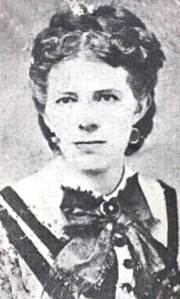
From 2012 to 2015, Stillness of Heart will share interesting excerpts from the extraordinary diary of Kate Stone, the daughter of Louisiana cotton plantation owners who chronicled her turbulent life throughout the Civil War era.
Learn more about Stone’s amazing life in 1861, 1862, 1863, 1864, 1865 and beyond. Click on each year to read more about her experiences. You can read the entire journal online here.
(Photo edited by Bob Rowen)
Stone lived in consistent dread of the violence of war. The demands of war were already very evident all around her. Her brother and uncle were away serving the armies. Her mother’s foresight called for austerity measures — a war garden, cutbacks on travel — to get the family through lean times ahead. Stone noticed the unavailability of certain fabrics critical to military uniforms, and as she sewed and repaired clothing, she made do with other materials. Stone carefully followed the news from the military and diplomatic fronts and hoped for the best. But bad news came in late September 1861.
Sept. 27
No mail this week, but a rumor that 12,000 Federalists have taken possession of Mississippi City. That is bringing the war near us. How we wish the authorities could carry the war into Washington City. What an awful responsibility rests on our statesmen and generals. May God give them wisdom.
Throughout late August 1861, Stone offered a glimpse at the seasonal dangers of rural life that were tragically normal for a 19th century family. The Stones and their neighbors probably suffered from malaria.
From 2012 to 2015, Stillness of Heart will share interesting excerpts from the extraordinary diary of Kate Stone, the daughter of Louisiana cotton plantation owners who chronicled her turbulent life throughout the Civil War era.
Learn more about Stone’s amazing life in 1861, 1862, 1863, 1864, 1865 and beyond. Click on each year to read more about her experiences. You can read the entire journal online here.
(Photo edited by Bob Rowen)
Throughout late August 1861, Stone offered a glimpse at the seasonal dangers of rural life that were tragically normal for a 19th century family. The Stones and their neighbors probably suffered from malaria.
Aug. 24
Did not reach home until nearly ten, much to the surprise of the family who had given us out. Ashburn was to have been with me but I left him sick at Vicksburg. Such an unhealthy season. Everybody in the house, but Brother Coley, has been sick since I left, and I was in bed nearly a week. It has been raining for three weeks and is cool enough for fall. Mr. McRae fears it will make the cotton crop light.
Chainey died of paralysis a few days ago. The place must indeed seem like a graveyard to the poor Negroes so many deaths since we moved here. Clearing land and digging ditches may make it worse now.
Aug. 25
Mrs. Hardison and the baby both have fever, and Josa and the rest of the family look as if there was not an ounce of red blood between them the whitest, weakest looking set of people. … Aunt Sarah complains so much of loneliness and is so afraid to be alone that I would have remained longer with her, but I was anxious about Mamma and the boys. There is so much sickness.
Aug. 28
I have slight chills and fevers and am being dosed on bitters and drugs of varied meanness. There is danger of
congestion or swamp fever at this season.
Aug. 30
Mamma and I, after knitting awhile, went to work on the boys’ uniform shirts. I did the machine stitching, but Mamma soon broke down and went to bed with a chill. Johnny was tossing with fever. …
Sept. 17
We fear Ashburn, Jimmy, and Johnny all have whooping cough. Ashburn must have taken it in Vicksburg, though he had it when a little fellow. There are seventeen little cribs of Negroes to have it in the quarters and Mamma dreads it getting among them. Thus the house is under strict quarantine.
Families shattered. Love lost. Fears deepened. Tightly-held hopes slowly suffocating.
‘Capture of Ricketts’ Battery’ by Sidney E. King
From 2012 to 2015, Stillness of Heart will share interesting excerpts from the extraordinary diary of Kate Stone, the daughter of Louisiana cotton plantation owners who chronicled her turbulent life throughout the Civil War era.
Learn more about Stone’s amazing life in 1861, 1862, 1863, 1864, 1865 and beyond. Click on each year to read more about her experiences. You can read the entire journal online here.
(Photo edited by Bob Rowen)
In late July, Stone’s diary recorded news of the first major battle between Union and Confederate forces in Virginia, the Battle of Bull Run, or the Battle of Manassas, fought on July 21, 1861. The word “First” often accompanies historical mention of this battle because a second battle would be fought on or near the same ground 13 months later.
July 26
Received telegraphic accounts of our first pitched battle fought at Manassas Junction. Our side victorious, of course. A reported loss of 3,000 for us and 7,000 for the Yankees. The losses we hope are exaggerated. Reported that Gen. [Winfield] Scott and [Jefferson] Davis were in command. If Gen. Scott is defeated, it will make our victory more complete. My Brother and Uncle Bo may have been in the fight, but we hardly think so as on the thirteenth they were still in Richmond.
Stone received wrong information on who was in field command. Irvin McDowell commanded Union forces, and Joseph E. Johnston and P.G.T Beauregard commanded the Confederates. Winfield Scott was general-in-chief of all Union forces, and he had remained in Washington. Confederate President Jefferson Davis visited the battlefield near the end of the fighting.
The battlefield maps and accounts of combat are always tragically fascinating, but Stone’s diary instilled in me a genuine sensitivity and respect for the real cost of these engagements. Families shattered. Love lost. Fears deepened. Tightly-held hopes slowly suffocating. Manassas was only the beginning.
July 29
Mamma and Mr. Newton rode to Omega yesterday morning and learned some of the details of the Manassas battle. It was gallantly fought and won. Poor Col. Bartow fell, banner in hand, rushing on so bravely. Mr. Newton heard his brother George was in the fight but came through unharmed.
Tomorrow is a day of thanksgiving for victory. Mr. Newton leaves us for his home early Monday. He is busy tonight packing. How much we will all miss him.
July 30
We are all sorry for Dr. Lily. Sunday, he sent Mamma word that he was going on to Richmond to see his brother and would take any letter or message. Mamma had only time to write a short letter to My Brother, and Brother Coley started with it and met Dr. Lily at the gate, just starting on his way to Richmond. He had received a dispatch that his brother, a boy of seventeen, was dangerously wounded in the battle, and he was going on to be with him. All the gentlemen seem to be leaving for Richmond. Mr. Catlin sent us word that he would leave at once and we sent letters by him. …
Hard, historic days of decision, she knew, lay ahead.
From 2012 to 2015, Stillness of Heart will share interesting excerpts from the extraordinary diary of Kate Stone, the daughter of Louisiana cotton plantation owners who chronicled her turbulent life throughout the Civil War era.
Learn more about Stone’s amazing life in 1861, 1862, 1863, 1864, 1865 and beyond. Click on each year to read more about her experiences. You can read the entire journal online here.
(Photo edited by Bob Rowen)
Independence Day, 1861, inspired Stone to reflect on the remnants of the Union her generation inherited from the Founding Fathers. Hard, historic days of decision, she knew, lay ahead.
July 4
Mamma is still in bed but is better. The boys have holiday in honor of the Fourth but more I think to keep up old customs than for any feeling of respect for the day. This is the first Fourth in our memory to pass without a public merrymaking of some kind, but we do not hear of the day’s being celebrated in town or country. There are other and sterner duties before us. It would ill become us as a Nation to be celebrating a day of independence when we are fighting for our very existence.
This July sun has set on a Nation in arms against itself, host against host. Those who have clasped each other’s hands in kindest spirits less than one short year ago, as friends, as countrymen, as children of one common Mother, now stand opposing each other in deadliest hate, eager to water Old Mother Earth with the blood of her children. Our Cause is right and God will give us the victory. Will the next July sun rise on a Nation peaceful, prosperous, and happy, or on a land desolate and disgraced? He alone knows.
Congress meets today. The lives of thousands hang on its decision. Will it be for peace or war? We should know by Saturday.
July 5
The Fourth and today passed without any trouble with the Negroes. The general impression has been that the Negroes looked for a great upheaval of some kind on that day. In some way they have gotten a confused idea of Lincoln’s Congress meeting and of the war; they think it is all to help them, and they expected for “something to turn up.” I hope the house servants will settle to their work now.
July 17
Mamma and I went out Monday and took dinner with Mrs. Savage and went up in the afternoon to call on Mrs. Carson. I remained there until this evening. Mamma came out and spent the day. Had a delightful visit. It is a most hospitable home, complete in all its appointments lovely gardens and orchards, an old place well taken care of with perfect service because of so many servants.
We admire Dr. Carson greatly. He is such a humane master and good Christian. He has the minister to preach regularly to his Negroes, or if there is no minister, he or one of the boys reads a sermon, hymns, and the Bible to them every Sunday afternoon. And he has Sunday school for them. He raises plenty of fruit and vegetables for everybody on the place, and his quarter lot is the prettiest place, a great stretch of thick green turf dotted with great forest trees and a double row of two-room cabins shining with whitewash. It is the cleanest-looking place I ever saw. He is a good man. Mamma has the minister to preach to our Negroes when he can find time, but that is not as often as we wish.
She never thought she was attractive. She never thought she’d be loved. But on one rainy day, a conversation with her mother changed everything.
From 2012 to 2015, Stillness of Heart will share interesting excerpts from the extraordinary diary of Kate Stone, the daughter of Louisiana cotton plantation owners who chronicled her turbulent life throughout the Civil War era.
Learn more about Stone’s amazing life in 1861, 1862, 1863, 1864, 1865 and beyond. Click on each year to read more about her experiences. You can read the entire journal online here.
(Photo edited by Bob Rowen)
July 1861 at Brokenburn began amidst sickness, and Stone was restless. She had always known she was smart, witty, well-read, and insightful. Like many people today, she never believed she was attractive, and that insecurity was a black cloud that darkened every aspect of her emotional life. But on one rainy day, a conversation with her mother inspired her to completely reshape her self-image.
July 1
Mamma is sick again today from the medicine. I hope she will be relieved by tomorrow. It upsets everything for her to be sick. I cannot settle to any work or even read with any comprehension. … A wet disagreeable day, Mamma sleeping through most of it, but she waked up this evening and was telling me tales of my babyhood and early childhood.
It seems My Brother and I were quite noted little people in our circle of acquaintances. At eighteen months I learned my letters with My Brother, who was fifteen months older, and by the time I was two and a half could read very well. I knew “Mother Goose” by heart, could repeat pages of poetry and a number of little tales, and chatter of any and everything by the hour.
And yet I was a good little child and the delight of my Father, who thought me a wonderful little creature and would never let me be crossed. I was his only daughter for so long. I remember his pleasure when Sister was born after six sons had been ushered into the world. …
I do not remember the time when I could not read. My first recollection of books was trying to teach my little Aunt Serena, three years the older, her letters, sitting side by side on the steps. How strange it seemed to me that she could not read. I thought everybody read as everybody talked naturally.
Mamma’s talk was a great surprise to me as I had always thought I was the ugly duckling of the whole family. … I had always, since I could think, had the idea that my Father and all the family petted and encouraged me because they thought me so ugly and were sorry all the time that I was suffering from this idea, for it has been the shadow on my life. I was my Father’s favorite; he thought me perfect. I had the admiration of the rest of the family for what they were pleased to think my quick, bright mind.
The knowledge of this will, I think, change my life from this night. Finding that I have been much beloved all my life, I will try to put away the morbid thoughts that have so often harassed me the fear that, being ugly and unattractive, no one could ever really care for me, and that I was doomed to a life of loneliness and despair. Mamma by one long, sweet talk … exorcised this gloomy spirit; from this time forth I will try to make the best of the girl that Father loved so.
Mamma says I was the quaintest-looking little figure when three years old, being small with long yellow hair plaited down my back my Father would never allow it to be touched with the scissors. I had a short, stumpy, little body and the very tiniest feet and hands, like bird claws, so small and thin, and a grave dignified manner. But I was an incessant chatterbox with the funniest lisp when perched in a high chair in the chimney corner reciting poetry and telling tales to amuse the laughing grown folks.
The lisp I have kept to this day, try as I will to get rid of it. But not another feature is like the Kate of today. I am tall, not quite five feet six, and thin, have an irregular face, a quantity of brown hair, a shy, quiet manner, and talk but little.
What an egotistical page, but it has made me happy. No more morose dreamings, but a new outlook on life.
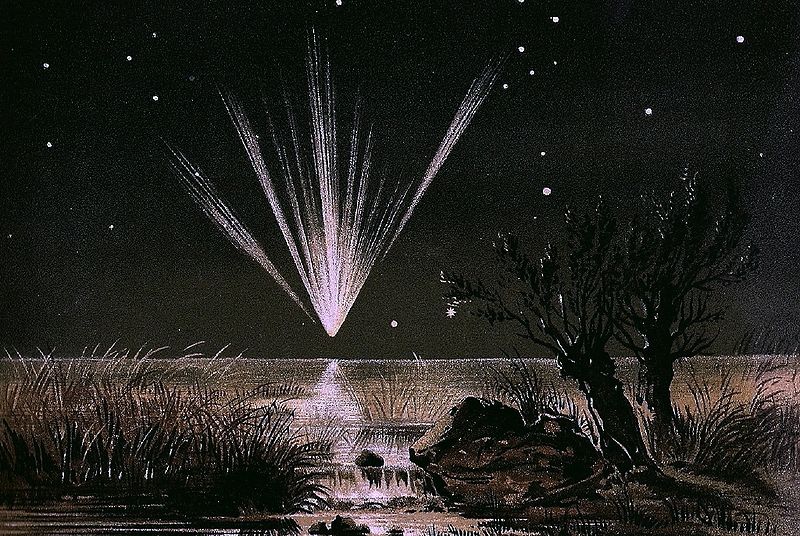
As the month closed, Stone’s natural defiance blossomed, she complained about the slaves, and a comet appeared in the sky.
From 2012 to 2015, Stillness of Heart will share interesting excerpts from the extraordinary diary of Kate Stone, the daughter of Louisiana cotton plantation owners who chronicled her turbulent life throughout the Civil War era.
Learn more about Stone’s amazing life in 1861, 1862, 1863, 1864, 1865 and beyond. Click on each year to read more about her experiences. You can read the entire journal online here.
(Photo edited by Bob Rowen)
On June 18, 1861, tragic news darkened the pages of Stone’s diary:
Aunt Laura is ill. She has just lost a young baby and I know is much distressed and disappointed. She is so devoted to her only child, Beverly, the loveliest little girl I ever saw. Dr. Buckner thinks her perfect and really I believe she is, bodily, mentally, and physically.
The little baby, we hear, was horribly deformed. God in mercy took it, but Aunt Laura knows nothing of its misfortune.
June 19 saw an interesting incident:
Great excitement! About nine in the evening we were sitting on the front gallery and a runaway Negro passed just in front of the house. The boys rushed out after him, but he soon distanced them, and I was glad he escaped. I hate to think how he will be punished, perhaps whipped unmercifully.
The runaways are numerous and bold. We live on a mine that the Negroes are suspected of an intention to spring on the fourth of next month. The information may be true or false, but they are being well watched in every section where there are any suspects. Our faith is with God.
Stone expressed anxiety for the fate of the “runaway Negro” should he be captured. Was it private sympathy for someone hunted by a slaveholding machinery whose brutality she knew all too well? She encapsulated the family’s general paranoia as they wondered about their own fate. How did that uncertainty mutate Southern perspectives on American society, their sense of how the future of their nation should unfold, and their interpretation of God’s plan for their society? Was it easier to simply focus on how many berries they picked for supper that afternoon, whose baby was lost, or who was joining them for dinner that night?
As the month closed, Stone’s natural defiance blossomed, she complained about the slaves, and a comet appeared in the sky:
A beautiful sunshiny day. Just enough rain has fallen to perfect the corn and help the cotton. Surely this year we have had “the early and the latter rains” and the promise of abundant crops. The North cannot starve us, try as they may, and God will aid us in our righteous cause. …
The house servants have been giving a lot of trouble lately — lazy and disobedient. Will have to send one or two to the field and replace them from the quarters if they do not settle down. I suppose the excitement in the air has infected them. The field hands go on without trouble. …
There is a comet visible tonight. We were surprised to see it, as we did not know it was expected. Have seen nothing of it in the papers. It is not very bright but has the appearance of a large star, Venus at her brightest, with a long train of light seen dimly as through a mist. Jimmy first discovered it. Two splendid meteors fell just above it, and the boys said it was a big star chased by little ones trying to regain its orbit.
Kate Stone tries to relax as spring blossoms all around her, but war clouds building in the East darken everything.
From 2012 to 2015, Stillness of Heart will share interesting excerpts from the extraordinary diary of Kate Stone. The daughter of Louisiana cotton plantation owners chronicled her turbulent life throughout the Civil War era.
(Photo edited by Bob Rowen)
June began bright and warm. On June 5, 1861, Kate Stone wrote:
A lovely June day, and Mr. and Mrs. Curry with the three youngest children spent the day, their first visit in months. Annie, the baby, is a nice enough little tot, but what a time her mother has over her, washing, dressing, undressing, and fussing over her most of the day. One would never think it was about the eleventh child. I wonder if she worked so over all the others and why she has a nurse.
Late in the afternoon I went with Brother Coley and Ashburn to the blackberry patch, a glorious ride, a fresh breeze, splendid horse, and a sweeping pace, and the two frolicsome boys.
Mamma said the day had tired her out, but the berries refreshed her mind by supper and the merry chatter of the boys. After supper Mr. McRae, the overseer, came up for a long consultation with her. One by one the boys dropped off to bed, and when at last Mr. McRae took himself off and Mr. Newton, Mamma, and I had a most pleasant, non-sensical talking bee, while enjoying the nicest little meringues and custards.
I lost my comb riding. It just suited my heavy hair, and combs are combs these days. So Jimmy, the dear obliging fellow, has promised to go early in the morning and look for it. …
Stone tried to focus on the mundane details of life: sickness, her French lessons, visiting neighbors, and church services, but the war clouds building in the East could not be ignored.
On June 10, she vented her frustration with her life’s leisurely pace, far from the front lines.
When quietly our days are passing, when the whole planet is in such a state of feverish excitement and everywhere there is the stir and mob of angry life. Oh! to see and be in it all. I hate weary days of inaction. Yet what can women do but wait and suffer?
A week later, on June 17, Stone shared a sense of her intellectual curiosity as she explored the experiences of foreign-born visitors, She often yearned for different opinions and perspectives. But she was always sure when someone was wrong.
I had a long talk with Mr. Hornwasher on the subject of war and the battles he has been in. Both he and Mr. Kaiser are Hungarian refugees, political exiles. Mr. Hornwasher is a Count [or] something in his own land. He is now a teacher of music and languages, and his great friend, Mr. Kaiser, is tutor at Mrs. Savage’s. They are highly educated and refined men and are entertaining talkers, notwithstanding their odd pronunciation.
Robert had fever and Mrs. Savage was so unwell that both had to lie down. Dinner passed off most pleasantly, at least to me. I sat between Mr. Kaiser and Mr. Newton and they made themselves very entertaining. Mr. Valentine and Anna sat together and hardly spoke to each other a dozen times. They never hit it off somehow. I must not let them sit next to each other again.
War was the principal topic. Both Mr. Hornwasher and Mr. Kaiser speak of enlisting. I should think that they had had enough of war in their own country. Mr. Valentine treats the whole subject of the war in his usual sarcastic, cynical manner. To him, the whole affair is a grand humbug, the enthusiasm and patriotism of the South something to be mocked and sneered at. He cannot appreciate the earnestness and grandness of this great national upheaval, the throes of a Nation’s birth. I could shake him. …
Learn more about Stone’s amazing life in 1861, 1862, 1863, 1864, 1865 and beyond. Click on each year to read more about her experiences.
Kate Stone’s first diary entry was on May 15, 1861. It captured the martial urgency in the air.
From 2012 to 2015, Stillness of Heart will share interesting excerpts from the extraordinary diary of Kate Stone. The daughter of Louisiana cotton plantation owners chronicled her turbulent life throughout the Civil War era.
Learn more about Stone’s amazing life in 1861, 1862, 1863, 1864, 1865 and beyond. Click on each year to read more about her experiences.
Kate Stone’s first diary entry was on May 15, 1861. It captured the martial urgency in the air:
“My Brother started at daybreak this morning for New Orleans. He goes as far as Vicksburg on horseback. He is wild to be off to Virginia. He so fears that the fighting will be over before he can get there that he has decided to give up the plan of raising a company and going out as Captain. He has about fifty men on his rolls and they and Uncle Bo have empowered him to sign their names as members of any company he may select. …”
(Photo edited by Bob Rowen)
With her brother gone, the house settled into its seasonal routines. On May 23, she recorded a lazy day as the house was prepared for warmer months.
“Mamma was busy all the morning having the carpets taken up and matting put down and summer curtains hung. Of course the house was dusty and disagreeable. … I retired to the fastness of my room with a new novel and a plate of candy and was oblivious to discomfort until [black servant] Frank came to say dinner was ready and ‘the house shorely do look sweet and cool. …’ “
Stone shared the self-confident determination that pulsated through many Confederate hearts as they faced a new era of civil war:
“Tonight a little fire was pleasant and we all gathered around it to hear Mr. Newton read the papers. Nothing but ‘War, War’ from the first to the last column. Throughout the length and breadth of the land the trumpet of war is sounding, and from every hamlet and village, from city and country, men are hurrying by thousands, eager to be led to battle against Lincoln’s hordes. Bravely, cheerily they go, willing to meet death in defense of the South, the land we love so well, the fairest land and the most gallant men the sun shines on. May God prosper us. Never again can we join hands with the North, the people who hate us so. …”
Despite her self-assurance of resistance and ultimate victory over “the people who hate us so,” Stone fretted about the possibility that the war would cut her off from the newspapers she and her family relished as their main intellectual tether to the rest of the world. She regularly read “Harper’s Weekly and Monthly, the New York Tribune, Journal of Commerce, Littel’s Living Age, the Whig and Picayune of New Orleans, and the Vicksburg and local sheets. … What shall we do when our mails are stopped and we are no longer in touch with the world?”
Part 4 of this series focuses on Paul Horgan, a middle-aged novelist who in the summer of 1968 shared Aspen, Colo., with hippies, rich tourists, and others from whom he felt wearily disconnected.
This special Stillness of Heart series explores the Morgan Library & Museum’s fascinating exhibit, “The Diary: Three Centuries of Private Lives.”
Part 4 focuses on Paul Horgan, a middle-aged novelist who in the summer of 1968 shared Aspen, Colo., with hippies, rich tourists, and others from whom he felt wearily disconnected. Nevertheless, he took comfort and inspiration from his perch as a keen observer of the details that define and enrich daily life.
“I remember once being sent to bed physically ill because I could not be a part of the off-hand dinner conversation of a couple — young, beautiful, articulate — at the next table, in a hotel restaurant in Corpus Christi, Texas. To be ready to die because a beautiful young man and a beautiful girl were not known to me, or did not want me with them!”
Examine images of Horgan’s fascinating diary and learn more about him here.





 Stillness of Heart
You must be logged in to post a comment.