Undiscovered countries: The books we need

Insightful celebrations of worthy works, considerations of upcoming titles, and general musings on great writing will all meet here on a regular basis.

image1

Stillness of Heart‘s range of popular and academic book criticism widened and deepened in recent years, and many more reviews are on the way. Insightful celebrations of worthy works, considerations of upcoming titles, and general musings on great writing will all meet here on a regular basis.

As always, the Stillness of Heart community of writers, readers, intellectuals, historians, journalists, and artists welcomes your ideas and recommendations. Tell us what we should be reading.

*****

Some of 2015’s best Civil War books … so far
Cold Harbor to the Crater: The End of the Overland Campaign, edited by Gary W. Gallagher and Caroline E. Janney
Defining Duty in the Civil War: Personal Choice, Popular Culture, and the Union Home Front, by J. Matthew Gallman
The Civil War and Reconstruction in Indian Territory, by Bradley R. Clampitt
The World the Civil War Made, edited by Gregory P. Downs and Kate Masur
Fortune’s Fool: The Life of John Wilkes Booth, by Terry Allford
The Smell of Battle, the Taste of Siege: A Sensory History of the Civil War, by Mark Smith
The War That Forged a Nation: Why the Civil War Still Matters, by James M. McPherson
Learning from the Wounded: The Civil War and the Rise of American Medical Science, by Shauna Devine
Originally published in July 2015
“Publishers in 2015 offer excellent work that both casual and serious readers of the Civil War should know about.”

The Silent Enemy
Polio: An American Story, by David M. Oshinsky
Originally published in December 2014

“The United States battled polio long before it ever faced the Soviet hegemonic threat, but only during the Cold War did the U.S. achieve significant victories in the battle against the virus.”

From a flame into a firestorm
A consideration of the French Revolution and its unexpected consequences.
Originally published in September 2014
“Why the French Revolution devoured its own people”

Dealing with the real America
Puerto Rican Citizen: History and Political Identity in Twentieth-Century New York City, by Lorrin Thomas
Originally published in August 2014
“Dealing with Puerto Rico means dealing with the key issues of the 21st century. Few in the U.S. government may have the stomach for that rollercoaster.”

The wars over the war
Hospital Sketches, by Louisa May Alcott
Apostles of Disunion: Southern Secession Commissioners and the Causes of the Civil War, by Charles B. Dew
The Revolution of 1861: The American Civil War in the Age of Nationalist Conflict, by Andre Fleche
The Union War, by Gary W. Gallagher
The Hard Hand of War: Union Military Policy Toward Southern Civilians 1861-1865, by Mark Grimsley
Incidents in the Life of a Slave Girl, by Harriet Jacobs
“The North American Crisis of the 1860s,” by Patrick J. Kelly, in The Journal of the Civil War Era
“Who Freed the Slaves?” by James M. McPherson, in Proceedings of the American Philosophical Society
“Who Freed the Slaves? Emancipation and Its Meaning,” by Ira Berlin, in Union & Emancipation: Essays on Politics and Race in the Civil War Era
Originally published in July 2014

“Nine key books and articles taken together can explain what led to the first sparks of civil violence and how those sparks ignited what evolved into the bloodiest and most important war in U.S. history.”

Endless Borderlands
Borderlands/La Frontera: The New Mestiza, by Gloria Anzaldua
Peace Came in the Form of a Woman: Indians and Spaniards in the Texas Borderlands, by Juliana Barr
Walled States, Waning Sovereignty, by Wendy Brown
Pacific Connections: The Making of the U.S.-Canada Borderlands, by Kornel Chang
The Comanche Empire, by Pekka Hämäläinen
A Tale of Two Cities: Santo Domingo and New York after 1950, by Jesse Hoffnung-Garskof
Bridging National Borders in North America: Transnational and Comparative Histories, edited by Benjamin H. Johnson and Andre R. Graybill
Migra!: A History of the U.S. Border Patrol, by Kelly Lytle-Hernandez
The Line Which Separates: Race, Gender, and the Making of the Alberta-Montana Borderlands, by Sheila McManus
Border Dilemmas: Racial and National Uncertainties in New Mexico, 1848-1912, by Anthony P. Mora
Stranger Intimacy: Contesting Race, Sexuality and the Law in the North American West, by Nayan Shah
Line in the Sand: A History of the Western U.S.-Mexico Border, by Rachel St. John
Bárbaros: Spaniards and their Savages in the Age of Enlightenment, by David Weber
“On Borderlands,” by Hämäläinen and Samuel Truett, in the Journal of American History
“From Borderlands to Borders: Empires, Nation-States, and the Peoples in Between in North American History,” by Jeremy Adelman and Stephen Aron, in American Historical Review
Originally published in June 2014
“Fifteen essays and books explore the borderlands field with passion and intelligence, daring their readers to leave behind their old worlds and follow them into new ones.”

The Battle for Boricua
Reproducing Empire: Race, Empire, and U.S. Imperialism in Puerto Rico, by Laura Briggs
Originally published in January 2014
“Is Puerto Rico the battleground for America’s intellectual future?”

Torn in the USA
Polio: An American Story, by David M. Oshinsky
Make Love, Not War: The Sexual Revolution: An Unfettered History, by David Allyn
Making a New Deal: Industrial Workers in Chicago, 1919-1939, by Lizabeth Cohen
Stayin’ Alive: The 1970s and the Last Days of the Working Class, by Jefferson Cowie
In Search of the Black Panther Party: New Perspectives on a Revolutionary Movement, edited by Jama Lazerow and Yohuru Williams
Quixote’s Soldiers: A Local History of the Chicano Movement, 1966-1981, by David Montejano
“Resistance in the Urban North: Trumbull Park, Chicago, 1953-1966,” by Arnold R. Hirsch, in the Journal of American History
“Crabgrass-Roots Politics: Race, Rights, and the Reaction against Liberalism in the Urban North, 1940-1964,” by Thomas J. Sugrue, in the Journal of American History
Originally published in September 2013
“Life, liberty, and the doomed pursuit of happiness.”

Nixon lurking in the shadows
Richard M. Nixon in books, in the news, on TV, and in my dreams
Originally published in December 2011

“Richard Nixon was in my dream last night. The post-presidency Nixon. The bitter, self-pitying, damned Nixon, coiled in the shadows of La Casa Pacifica in San Clemente, dark eyes glaring at the world as it spun on without him.”

Homo universalis
A reflection on my intellectual ambitions.
Originally published in July 2011
“I’ve always been blessed with a hunger for knowledge, a curiosity that often flares into full-blown passion for new arenas of experience, a curiosity perhaps sparked by a bittersweet frustration that I don’t know as much about literature, science, mathematics, history and culture as I think I should.”

A bow to the King

Elvis Presley was born this week on Jan. 8, 1935, and died on Aug. 16, 1977. What he gave us will live forever.

It’s a feeling that can’t be denied. Sometimes you just have to submit to his reign. The King, who was born on Jan. 8, 1935, and died on Aug. 16, 1977, can dominate your consciousness, infusing his spirit and vitality into your heart and soul, adding an extra sparkle to your days. He shines that spotlight in your eyes, slaps you right across the face, reminds you to wake the hell up, look around, forget the pettiness of everyday life, and savor the world around you.

You have no choice but to sit back with him, laugh at the stardom, laugh at any notion of legacy and fame, and listen to some great music from a true American original. Don’t the fight the urge to do some affectionate impersonations, or just watch Johnny Cash, Jim Carrey, Eddie Murphy, and Val Kilmer do their own.

Several years ago, the National Portrait Gallery recorded a short but very informative introduction to the fascinating and bizarre meeting between Elvis and Richard Nixon (above). Also, Legacy Recordings released a magnificent series of podcasts exploring the rise of Elvis, his gospel roots, his comeback performance in 1968, his 75th birthday, and his Vegas years. Links are included below, along with a few Elvis performances. Enjoy.

1. ELVIS: THE EARLY YEARS Part 1 | Part 2 | Part 3
2. ELVIS: ULTIMATE GOSPEL Part 1 | Part 2 | Part 3
3. RELIVING THE ELVIS ’68 COMEBACK SPECIAL Part 1 | Part 2 | Part 3
4. ELVIS 75 Parts 1 through 20
5. ELVIS AND VIVA LAS VEGAS Part 1 | Part 2 | Part 3

SONGS
1. LOVE ME TENDER (Live) Elvis Presley
2. BABY WHAT YOU WANT ME TO DO (Live) Elvis Presley
3. HEARTBREAK HOTEL Elvis Presley
4. MERRY CHRISTMAS, BABY Elvis Presley

2014 in review

Thank you for making 2014 the best year ever. Read the year-end WordPress graphical roundup.

Thank you so much for making 2014 Stillness of Heart‘s best year ever.

Here’s an excerpt:

The concert hall at the Sydney Opera House holds 2,700 people. This blog was viewed about 12,000 times in 2014. If it were a concert at Sydney Opera House, it would take about 4 sold-out performances for that many people to see it.

Click here to see the complete report.

Free Love Freefall

The revolutionaries were determined to make lasting changes to the various forms of sexual oppression they perceived. It remains to the current generation to ensure their still-blossoming accomplishments do not wither under cold conservative shadows.

IMG_1475

Allyn’s revolutionaries were determined to make lasting changes to the various forms of sexual oppression they perceived. It remains to the current generation to ensure their still-blossoming accomplishments do not wither under cold conservative shadows.
A review by Fernando Ortiz Jr.

*****

Discussed in the essay:

Make Love, Not War: The Sexual Revolution: An Unfettered History. By David Allyn. New York: Routledge, 2001. Pp. 381. $30.95

David Allyn’s Make Love, Not War intelligently and creatively tours a sexual renaissance that ebbed and flowed throughout the 1960s and 1970s, sparking changes of varying longevity throughout society. Latino and black Americans fought throughout this era for equal rights as citizens and for the freedom to pursue and fully embrace the American Dream. The general public’s gradual tolerance of public gay culture, the rise of swingers movements, the gaveling of obscenity trials, the publication of sex studies, and the embrace of the birth control pill all comprise for Allyn a sexual rights movement, a “revolution” that silenced some prudes, raised legal eyebrows, and brought America a few sultry steps closer to the fulfillment of “life, liberty, and the pursuit of happiness.”1

Allyn designates the early sixties to the late seventies as the era of the sexual revolution, and he links its progression to general economic health in the United States. They rise and fall together. He utilizes dozens of interviews with men and women — some identified and some under pseudonyms — thirty years after their revolution takes place. Sexual histories, sociological studies, essays, novels, and academic reports supplement his study of the birth control pill, lesbian empowerment, gay rights, fights over literary censorship, public excitement over sexually-charged theater and film works, nudist colonies, swinger parties, and the general struggle to strip shame away from anyone’s sexual life.

The revolution was a multi-pronged and disjointed effort that lurched toward sometimes unclear objectives. Critics may condemn Allyn’s book for its seemingly disorganized structure, but it actually properly reflects the messiness of a series of efforts to change social mores and personal prejudices. Allyn’s great strength as a writer is his ability to gracefully transition from one theme of the era to another.

If anyone wanted to read a new sex manual to improve their sex life, Allyn argues that the sexual revolution made that possible. If a gay man or woman wanted to add legal sexual escapades at a sex party into their urban lifestyle, the sexual revolution made that available. If upper and middle-class women wanted to control their fertility, swap their spouses with other couples, or find and buy a book filled with sexual imagery, the sexual revolution eased strictures, opened doors, and soothed public outrage. Americans could fully and freely explore their identities, fulfill their aspirations, find their limits, and live their lives. For almost everyone, Allyn explores, the sexual revolution provided the freedom from fear.2

Allyn is enamored with the term “revolution,” which is his theme as his historical tour widens its scope over American society. From the very beginning, Allyn credibly admits the duality of his terrain, of which some aspects “were not revolutionary at all but evolutionary.” The era’s development of the pill, the rise of the sexual book publishing industry, the debates over obscene literature, the stronger roles women secured for themselves in American society — all were inherited from earlier eras in American history, all far from original movements. He admits this duality and does nothing to compensate for its contradictory influence on his narrative structure except pair stories of triumph with stories of eventual defeat or threat.

The era’s legacy is a mixed success of progression and regression, like all revolutions in American history. American society generally accepts the use of birth control and the popularity of premarital sex, though religious leaders and worried parents still frown on the still-expensive pill. Uncensored pornography — from hard-core videos to the soft sensuality of Anais Nin — is ubiquitous in the online world and easily found in the most popular bookstores, though erotica still faces many “family-oriented” enemies. Celebrities, news organizations, the military, scientific organizations, national leaders, and students across the United States embrace homosexuality as a normal sexual orientation, gay rights for citizens and servicemen, gay adoptions, and gay unions. But legal recognition of gay marriages retains its legal and political polarizing effect.3

Not everything can change all at once. Not everyone is won over when new ideas, new bathing suits, new aspirations, and new freedoms dawn over the raucous American society. When it comes to sex, each citizen had to make his or her own personal journey. People change as they grow older. Love and desire bring their own contradictory and revolutionary effects on one’s understanding and acceptance of the world around them. Jealousy, lust, insecurity, and fear can easily disrupt carefully constructed arrangements among sexual partners.

His interviews with the revolution’s participants best capture these intimate journeys. However biased or self-conscious they may be three decades later, Allyn’s interviewees echo the bittersweet afterglow the revolution’s sunset left in their lives. One father remembered his son loudly declaring in an airport terminal that his mother took a shower with a male sexual friend. One humiliated teenager remembers when her sexually supportive father left condoms on every bed in case she wanted to have sex with her male guest. Allyn deserves credit for including the long, dark slopes of the era’s gleaming aspirations for sexual liberation. He mostly maintained his balance between giddy celebration of short-term sexual bliss and grim acknowledgement of the long-term emotional consequences.4

His book’s duality also demands answers to eternal historical questions: Do changes deserve to be considered revolutionary if they are not all long-lasting? Was the sexual blossoming in the sixties an aberration in social values, enough to be considered revolutionary, or was the real revolution comprised of religious attitudes and social frigidity that put in place decency laws, targeted erotic literature, oppressed gay communities, marginalized women, and put shame into the hearts and minds of millions of sexual beings? Perhaps Allyn’s era was simply a counter-revolution, an attempt to take further the romantic aspirations of early twentieth century struggles for gender equality, sexual freedom, a more-just democracy, and fulfilled personal desires. Perhaps Allyn’s era consisted of a series of moments when Americans again grappled with and consummated fundamental American ideals that the original revolutionary generation left their descendants in a different and better America to achieve.

The book’s focus is mostly on urban upper and middle-class Anglo citizens. Blacks, Latinos, and lower-class citizens are not part of this study, which leaves readers hungering for a greater variety of voices and experiences. However, his study is linked to the economic health of the U.S. When the economy worsened in the seventies, the sexual revolution sputtered, which suggests the sexual revolution belonged only to those who could afford its luxurious promise. Impoverished minorities had larger and more immediate problems to worry about — how to feed their children and themselves, where to find work, how to avoid or at least endure an oppressive and heartless society — that they could not be concerned about swinger parties, literary censorship, or lesbian rights.

Overall, Allyn’s conflicted book is a valuable contribution to the study of postwar America. He brings together a detailed examination of various aspects of a sexual renaissance that benefited and benefited from other struggles for other freedoms. The arguments from this era came down — and still do — to eternal American issues: How much equality is necessary to fulfill our founding principles? How much are Americans entitled to? Where does private control — over our bodies, our gender, our children’s education, our moral principles — end and a democratic society’s standards begin? Allyn’s revolutionaries were determined to make lasting changes to the various forms of sexual oppression they perceived. It remains to the current generation to ensure their still-blossoming accomplishments do not wither under cold conservative shadows.


1. David Allyn, Make Love, Not War: The Sexual Revolution: An Unfettered History (New York: Routledge, 2001), 3-4. Allyn asserts that the every aspect of the sexual revolution “had an impact on how we as a nation have come to think of life, liberty, and the pursuit of happiness.”
2. Allyn, 4-5.
3. Allyn, 8, 295-296.
4. Allyn, 217, 297-299.

Hurricane Beulah and Dr. Mario E. Ramirez

As some of you may already know, I’m a graduate student in UTSA’s history department. I’m writing a masters thesis on 1967 Hurricane Beulah and Dr. Mario E. Ramirez. Please write me if you’d like to share memories/stories of the hurricane or of the fascinating physician from the Rio Grande Valley. I’d love to hear them.

Fernando Ortiz Jr.

From a flame into a firestorm

Why the French Revolution devoured its own people.

IMG_1464

Why the French Revolution devoured its own people
An essay by Fernando Ortiz Jr.

Hope inspires nations to improve their societies, challenge their citizens’ capabilities, and face down seemingly invincible enemies. In revolutionary France, citizens and their leaders tasted the sweet fresh air of liberty, equality, and nationalist unity. They sensed their hopes for a brighter national and social future might be realized, and they determined that nothing would interfere with that grand realization. But how did those hopes lead France into the horrific era of the Terror? The tragic evolution from revolution to republic to Terror was not a linear nor an inevitable process. Challenges to the Revolution mounted, as did the Revolution’s responses to them. The key elements of the Revolution – the people who embraced that revolution, their political leadership, and the counterrevolutionary threats that haunted all of them – ground against each other, setting off sparks that ignited the rise of a new form of government and an era of bloodshed that still stains the shadowed passages of tormented human memory.

The French Revolution reordered the political mindsets of many eighteenth-century French people. The preceding era of the Enlightenment and the Republic of Letters nurtured not only an intellectual renaissance but also demanded and inspired challenges to the way the French regarded the Catholic Church, their places in a monarchy, and their social, economic, and creative potential as liberated people.1 That intimate revolution in self-image was furthered in 1763 and 1764 when the Parlement of Paris argued that “the king held his throne and legitimacy” from “fundamental” French laws, deflating the inherently supreme majesty of monarchy and subordinating it to the French polity’s larger legal authority.2

As economic crisis paralyzed France, the Old Regime’s political leadership failed to live up to the people’s “almost-millenarian hope” that those leaders could improve commoners’ impoverished lives, convincing many of those commoners that they had to take control of their own existence.3 The privileges the upper classes enjoyed angered the middle classes, already irritated with “paternalism of government” and dismissive of the Church as a “corporation which had ceased to perform its functions efficiently.”4 A new era was about to dawn over France.

The Revolution retained the king but stripped privileges from the Church and demanded from the clergy oaths of loyalty to the new Civil Constitution. The new national representatives asked the people to share their concerns and ideas. It was intimately revolutionary. The people were asked to review their lives and look at elements of their government and society that they themselves deemed could “be changed or improved or abolished.”5 The new Declaration of the Rights of Man and Citizens promised a better future for an “imagined community” of equal citizens. The new October constitution formalized ideals of liberty and equality under a representative government, spiritually freed from Catholic doctrine, and under the paternalistic gaze of a weak and devoted monarch. While the reforms seemed to favor oppressed and voiceless lower classes, the Revolution did not have “a natural constituency.”6 Each citizen had their own self-interested reason for support or opposing the new era of liberty and equality.

By the early 1790s, the empowered and self-confident French people, no longer “docile followers” of the Old Regime’s well-trod paths through life, stood on the threshold of an undiscovered country, determined to face down the empires and kingdoms that besieged them, the political and economic differences that divided them, and, most importantly, the internal forces that conspired to undermine their Revolution’s promise of a new and better world.7

Revolutionary changes did not unfold without resistance, particularly from French sectors directly diminished by progressive policies, and the manner with which some changes were enacted inspired counterrevolutionary sentiments, conspiracies, and actions. Other counterrevolutionary actors feared further social disorder, insolvency, and unemployment, disagreed over food distribution policies, or simply suffered from bruised egos.8 Economic equality for the lower classes meant nothing if standards of living steadily fell.9

The nobles saw their privileges, including light tax burdens or exemptions from an incomprehensible financial system, stripped away “by violence and chicanery,” inspiring even elites who disliked each other to temporarily unite, thereby “creating one of the strands of the counterrevolution.”10 Some elites found a promising alliance with the other major French sector the Revolution diminished: the Catholic Church. Revolution policies expropriated church property, determined that embrace of a “Supreme Being” instead of God “eliminated the Church’s monopoly of public worship as well as its claim to special status,” issued a Civil Constitution of the Clergy in July 1790, and required the clergy to swear their allegiance to that constitution or resign their posts.11 The oath was meant to assert the people’s sovereignty over the church just as the Revolution asserted popular sovereignty over the government, class hierarchies, and the monarchy. The revolutionary government expected the Church to “proselytize for it and to keep order for it” among the masses.12

But that oath also became a rallying point for the Revolution’s leading enemies, who used it to break off sections of popular sentiment bristling over the Revolution’s treatment of their sacred religious institutions or feeling discontent over a multitude of other consequences of revolutionary policies. Counterrevolutionary elites focused disruptive energies on Catholic-rich regions of France and manipulated Catholic-Protestant divisions. The oath provided the counterrevolution a group from which to draw support that might have otherwise embraced the new era. Resistance to the Civil Constitution “took on the characteristics of a mass movement.”13

The oath also stressed the fragile loyalties of clerical deputies participating in revolutionary government. The faith they shared with most other deputies in the unifying symbol of the King Louis XVI bolstered the Revolution’s fragile coalition. His attempt to escape the Revolution sent devastating shockwaves through the delicate political networks and contributed to the people’s eventual capacity to wage the Terror against the threats he represented.14

The king publicly swore loyalty and support for the new constitution. But he secretly despised everything it represented. The Civil Constitution of Clergy disgusted him. In letters he raged against his loss of traditional monarchical authority.15 His escape in June 1791, his capture, and his discovered letters – including one he left behind explaining his reasons for his flight — exposed to his subjects what he truly felt about their aspirations and ambitions.

Louis warped the monarchy’s moral authority and stained any politician subsequently willing to deal with it or defend it. Opinion and justification over his actions split the political accord in the Assembly.16 The flight shattered for provincial citizens and officials any belief in the revolutionary government’s credibility, effectiveness, and stability. Who would help them? A government that accomplished nothing? A divided church only half-heartedly embracing a new era of social justice? A king that lied to their faces? The king’s flight and his sentiments convinced “the urban masses and the national guards” that they had to deal with incidents of counterrevolutionary unrest with degrees of force that they themselves deemed appropriate — with “their own solutions” — and Paris could do little to stop them.17 Perhaps, a few thought, France did not need a king. It was a key moment “in the emergence of French nationalism.” Some letter-writers even referred to the deputies as the new fathers of a new country.18

The king’s actions sharpened in the politicians and citizens’ minds their suspicions and fears of looming counterrevolutionary forces conspiring to destroy the Revolution. Priests refused to take their oaths of loyalty. Provincials fought amongst themselves. Émigré armies massed in the borderlands. And the king confessed his disgust for his own subjects’ hopes and attempted to leave them to the mercy of what might have been a foreign invasion — that might still take place.19 Even the most paranoid revolutionaries eventually appeared prescient to commoners who had no idea what the next day might bring. That fear justified the new forms of justice, suspension of personal liberties, lethal brutality, and outright murder throughout France.

To deal with perceived threats, in August 1792, the Paris government authorized the disarming of any suspected counterrevolutionaries and searches of any suspected counterrevolutionary homes. Betraying the Revolution was something bad but taking oppositional action against it was even worse. Arresting people for throwing stones or shouting at guards, shutting down political clubs and newspapers, listening to private conversations, or simply looking for anything or anyone that seemed suspicious – these were the actions of a terrified government willing to fight imagined terrorism with repression of almost any degree.20 In September, rumors of prisoners planning to revolt when foreign armies invaded France inspired revolutionaries to massacre them, leaving up to 1,400 dead. On Sept. 21 “the [national] Convention abolished the monarchy and proclaimed the Republic.”21

Recent battlefield victories against foreign counterrevolutionary forces and the war’s expanded scope inspired the republic to call up 300,000 men, which sparked “an unprecedented wave of riots.” More importantly, the riots – and fresh battlefield defeats — sparked an official response: the centralization of national authority, new judicial tribunals to persecute suspected treason, and state-directed repression of domestic unrest and disloyalty with a “supreme police”22 The Revolution was threatened, and the government took the repressive torches from the people and transformed them into fireballs with which to incinerate the elites, the price-gougers, and traitors of any section of the endangered French Republic. Terror was not a new horror — what was new was that the Terror was systemic, “a deliberate policy of government,” so it was wide-reaching, simultaneous, and steady in its murderous hunger for victims.23

The war machine was a ravenous hurricane at the Terror’s core, hungry for materiel from churches, loyalty from the populace, and legions of soldiers to be thrown against foreign armies. Churches became “barracks, arsenals, or stables,” and anything of value was put to military use. But the mobilization campaign quickly became a dechristianization campaign, in which signs of any kind containing Christian references were torn down. The new man of the Republic would be spared the old superstitions of the failed Church. Church defenders were killed. Nothing better symbolized the Terror for many citizens than the dechristianization efforts.24

The campaign drew deep divisions between commoners who believed they commanded the government and the political leadership, some in power without popular mandates, which was prepared to brutally suppress any resistance or wavering acquiescence to their absolute wartime authority. These two elements, increasingly at odds with each other, intensified the Terror’s murderous chaos.25 Real and imagined fears inspired both the French people and their provisional government — particularly members of the Committee of Public Safety like Robespierre — to use fear to repress it. Fighting fire with fire simply intensified the fire.26

Robespierre’s campaign to purify the Revolution, first by invalidating any sense of guilt or culpability for the atrocities he felt were necessary, was aimed at the building the new society the Revolution’s earliest aspirations aspired to achieve. The Terror’s own monstrous judicial liberties were realized on local levels as committees expressed the persecutorial zealotry required to achieve the sanctioned purifications.27 The Terror was sustained by “a strange compound of reason, desperation, and fear,” and it redefined what was revolutionary – not ideology, not a new vision, not a new government. The Terror’s revolution was one of efficient execution of “effective measures” — slicing through opposition and bringing centralized order to counterrevolutionary chaos in order to ensure the Revolution’s permanence.28

The Revolution’s supporters at first marched proudly into a new era, their self-image evolving from royal subjects to free citizens and optimistic that they would find a balance between better lives and the embrace of a king’s paternalistic gaze. But the Revolution’s real and imagined enemies inspired powerful figures who cared less about revolutionary aspirations than the measures necessary to defeat those enemies. French leaders became the bloodstained dictatorial oppressors from which they desperately fought to save their countrymen. Step by step, revolutionaries and their leaders became the firestorm they tried to extinguish.


1. Dena Goodman, The Republic of Letters: A Cultural History of the French Enlightenment (Ithaca, N.Y.: Cornell University Press, 1994); D.M.G. Sutherland, France 1789-1815: Revolution and Counterrevolution (New York: Oxford University Press, 1986), 37.
2. Sutherland, France 1789-1815, 22.
3. Sutherland, France 1789-1815, 59.
4. R.R. Palmer, Twelve Who Ruled: The Year of Terror in the French Revolution (Princeton, N.J.: Princeton University Press, 1989), 18-19.
5. Timothy Tackett, When the King Took Flight (Cambridge, MA: Harvard University Press, 2013), 10.
6. Sutherland, France 1789-1815, 80, 114.
7. Sutherland, France 1789-1815, 49; Tackett, When the King Took Flight, 87.
8. Sutherland, France 1789-1815, 112.
9. Sutherland, France 1789-1815, 159-160.
10. Sutherland, France 1789-1815, 19-22.
11. Sutherland, France 1789-1815, 21, 80-81, 95, 97.
12. Sutherland, France 1789-1815, 99.
13. Sutherland, France 1789-1815, 97, 116; Tackett, When the King Took Flight, 13.
14. Sutherland, France 1789-1815, 122; Tackett, When the King Took Flight, 184.
15. Sutherland, France 1789-1815, 124; Tackett, When the King Took Flight, 183, 189.
16. Sutherland, France 1789-1815, 124.
17. Sutherland, France 1789-1815, 124-125; Tackett, When the King Took Flight, 168.
18. Tackett, When the King Took Flight, 157-158, 189-190.
19. Sutherland, France 1789-1815, 127; Tackett, When the King Took Flight, 166, 167.
20. Tackett, When the King Took Flight, 203.
21. Sutherland, France 1789-1815, 154-155.
22. Sutherland, France 1789-1815, 167, 170.
23. Palmer, Twelve Who Ruled, 56.
24. Sutherland, France 1789-1815, 208-210, 212, 217.
25. Sutherland, France 1789-1815, 192, 202, 208.
26. Palmer, Twelve Who Ruled, 39. 74-77.
27. Sutherland, France 1789-1815, 224, 226, 228.
28. Palmer, Twelve Who Ruled, 28, 39. 58.


BOOKS CONSULTED FOR THIS ESSAY

Goodman, Dena. The Republic of Letters: A Cultural History of the French Enlightenment. Ithaca, N.Y.: Cornell University Press, 1994.

Palmer, R.R. Twelve Who Ruled: The Year of the Terror in the French Revolution. Princeton, N.J.: Princeton University Press, 1989.

Sutherland, D.M.G. France 1789-1815: Revolution and Counterrevolution. New York: Oxford University Press, 1986.

Tackett, Timothy. When the King Took Flight. Cambridge, MA: Harvard University Press, 2003.

Endless borderlands

Fifteen essays and books explore the borderlands field with passion and intelligence, daring their readers to leave behind their old worlds and follow them into new ones.

IMG_2335


Fifteen essays and books explore the borderlands field with passion and intelligence, daring their readers to leave behind their old worlds and follow them into new ones. A review essay by Fernando Ortiz Jr.

*****

Works reviewed in this essay

Adelman, Jeremy, and Stephen Aron. “From Borderlands to Borders: Empires, Nation-States, and the Peoples in Between in North American History.” American Historical Review 104, no. 3 (June 1999): 814-841.

Anzaldua, Gloria. Borderlands/La Frontera: The New Mestiza. San Francisco: Aunt Lute, 1987.

Barr, Juliana. Peace Came in the Form of a Woman: Indians and Spaniards in the Texas Borderlands. Chapel Hill: University of North Carolina Press, 2007.

Brown, Wendy. Walled States, Waning Sovereignty. New York: Zone Books, 2010.

Chang, Kornel. Pacific Connections: The Making of the U.S.-Canada Borderlands. Berkeley, CA: University of California Press, 2012.

Hämäläinen, Pekka. The Comanche Empire. New Haven, CT: Yale University Press, 2009.

—. and Samuel Truett. “On Borderlands.” The Journal of American History 98, no. 2 (2011): 338-361.

Hoffnung-Garskof, Jesse. A Tale of Two Cities: Santo Domingo and New York after 1950. Princeton, N.J.: Princeton University Press, 2010.

Johnson, Benjamin H., and Andre R. Graybill, eds. Bridging National Borders in North America: Transnational and Comparative Histories. Durham: Duke University Press, 2010.

Lytle-Hernandez, Kelly. Migra!: A History of the U.S. Border Patrol. Berkeley, CA: University of California Press, 2010.

McManus, Sheila. The Line Which Separates: Race, Gender, and the Making of the Alberta-Montana Borderlands. Lincoln, NE: University of Nebraska Press, 2005.

Mora, Anthony P. Border Dilemmas: Racial and National Uncertainties in New Mexico, 1848-1912. Durham, N.C.: Duke University Press, 2011.

Shah, Nayan. Stranger Intimacy: Contesting Race, Sexuality and the Law in the North American West. Berkeley, CA: University of California Press, 2011.

St. John, Rachel. Line in the Sand: A History of the Western U.S.-Mexico Border. Princeton, N.J.: Princeton University Press. 2011.

Weber, David. Bárbaros: Spaniards and their Savages in the Age of Enlightenment. New Haven, CT: Yale University Press, 2006.

*****

I. Introductions

The borderlands mark divisions of land on maps. They mark divisions of races, communities, economies, and families. But borderlands are also more than dividers. Borderlands are where culture and history collide, dance, and coalesce. They are where nation’s futures are conceived, where risks are taken, and where ideas are born. Borderlands cradle both conflict and peace, friction and abrasion, the past and future. Borderlands are gateways through which to view national, cultural, racial, and imperial histories with fresh and sharper eyes. Fifteen essays and books explore the borderlands field with passion and intelligence, daring their readers to leave behind their old worlds and follow them into new ones.

For the uninitiated, borderlands are dark landscapes. But lighting the way are Jeremy Adelman, Stephen Anon, Benjamin Johnson, Andrew Graybill, Samuel Truett, and the wonderfully-named Pekka Hamalanien. By combining three essays from 1999, 2010, and 2011, their analyses form a grand introduction to the field.

Graybill and Johnson ask why historians take the borders for granted. They worry that that the lines on maps imply inevitability. They fret that the borders do not evoke or inspire historical curiosity into the regions they cut through. They hold up borderlands studies as the antidote to that narrow vision and lack of curiosity.

Adelman and Anon explain that the borderlands approach was meant to challenge Frederick Jackson Turner’s Frontier Thesis, which looked east to west, by turning the axis north to south. Rather than considering unilateral European conquest, the field considered how indigenous and European civilizations met and mixed, bilaterally conquering each other. It implied that nation-building did not end once the necessary territory was declared conquered. The borderlands approach, which inherently challenged historians’ traditional reliance on a nation-state perspective on the world, also embraced border zones once imperial lands became modern nation-states.

In 2011, Hamalanien and Truett critically noted that Adelman and Anon ignored other processes that affect borderlands — cultural shifts, warfare, malleable concepts of nation (like indigenous territories), and natural pressures on societies, like landscape changes and epidemics. They pointed out that borderlands inherently challenge master historical narratives anchored to centers of political and cultural power. Ascribing importance to borderlands questioned the supreme importance of those centers, and of nation-states as a whole. Borderlands historians were willing to consider that perhaps non-state actors made equally significant contributions to the overall political or social entity.

Perhaps historians, borderlands proponents argued, needed to listen with equal care to voices from both the centers and the margins. Power and national identity when viewed through that prism becomes ambiguous and historically revitalized. Borderlands become the alternative centers of nation and empire. The borderlands approach also acts as a spotlight to capture movements between political entities, societies, and cultures that were previously unknown or understudied. It spotlights the violence of that friction and abrasion that takes place between competing peoples desperate for food, water, legitimacy, or shelter. This array of introductory essays urged historians to challenge themselves to find these perspectives.

II. Imperial borderlands

Borderlands are born when two or more powers encounter each other. The Spanish New World burned with borderland dynamics. David J. Weber’s Barbaros explores the Indian-Spanish contact zones, details how Spain attempted to administer them, and concludes that even when the Bourbons reformed Spanish America, the region was never completely conquered. Reforms to the military and church networks were not fully implemented, control and structure never consolidated. Consequently, the borderlands region remained violent, dynamic, and, most importantly, influential to the entire bureaucracy. Indian action dictated imperial reaction.

Beyond the warmth of steady and strong Spanish control, colonists lived difficult lives. Dominant Indian powers manipulated colonial communities, turning them into supply depots or shelters, or forced them to pay tribute, while others simply ravaged poorly protected colonies. Reformers wanted the frontier turned into a borderlands region, where commerce, Christianity, and peace reigned, all on Bourbon Spanish terms, which were never achieved except on paper.

But Bourbons focused on building relationships with Indians, reforming them from barbarians into Christian men, thereby building cultural and economic bridges into stronger indigenous networks. As the Spanish elements grew stronger, enlightened attitudes reverted to racism, rejecting the gradual incorporation of Indians.

Pekka Hamalainen’s The Comanche Empire argues that the Comanches were “an indigenous empire.” They were an association of tribes, he claims, that gradually built themselves into a force that dominated what today is the Southwestern United States and northern Mexico, a force so powerful that it effectively obstructed the expansion of French, Spanish, Mexican, and U.S. power for almost two centuries.

The Comanche Empire, he explains, did not simply exist in an Adelman/Anon borderland of negated imperial power and enhanced indigenous influence — they created a new space where the indigenous Comanches dominated, embraced, and transformed the isolated colonialists.

Key to their steady growth and dominance was the willingness to open their culture to new ideas, languages, and religions, which provided them with new domestic strategies, intelligence on distant neighbors, and conduits into useful economic networks.

Acknowledging Comanche power and its crippling influence on Spanish and Mexican control, he asserts, explains how the young U.S. consumed half of Mexico in the late 1840s. The tragic irony is that the U.S. quickly turned its guns on the Comanches to consume their land and cleanse the landscape of non-whites and non-Christians. Comanche greatness required extreme measures to defeat it.

Juliana Barr examines in Peace Came in the Form of a Woman the gender and kinship expectations Europeans and indigenous faced when interacting with each other in colonial Texas dominated by Indian standards.

Women played central roles in virtually every equation. Spaniards scratching out communities in Indian-controlled territory initially refused to marry Indian women, losing out on the economic advantages Indians placed on kinship connections. Without kinship connections, Indians viewed Spaniards as outsiders. Only by marrying women from competitor French families did they finally tap into those economic networks. Spaniards captured Apache women when Apaches attacked them. When Apaches and Spaniards allied against common enemies, Apache women became the connections between both groups. Women from all indigenous groups symbolized peace offerings, peace emblems, and peace envoys.

Spaniards and Indians also communicated with displays of gender. Martial displays signaled masculinity. They shared masculine codes of honor. A military assembly signaled trouble, but when masculinity was paired with femininity, the assembly signaled peace.

III. Northern perspective

The Line Which Separates and Pacific Connections, respectively authored by Sheila McManus and Kornel Chang, highlight how the Canadian and U.S. power centers struggled to control their borderlands and underestimated the effect the borderlands had on those power centers. Both warn that in the historical search for the source of national character, the borderlands and the methods used to control those borderlands cannot be ignored.

Many excellent books in the historical borderlands field typically focus with a racial lens on the U.S. borders with Latin America. McManus and Chang make invaluable contributions to the U.S. borderlands field simply by focusing instead on the U.S-Canada border and the unique contests for its future. They construct their histories from opposite directions — McManus looking west from U.S. and Canadian capitals and Chang looking east from the Pacific region.

McManus argues that Canada and the U.S. post-structurally reimagined their respective western societies as proving grounds where potential national values were conceived, tested, and sharpened against unwelcome cultures and races, and held up for all citizens to adopt. Their border along the 49th parallel was key to those “nation-making efforts” because it politically delineated where one nation-state ended and the other began. It symbolized their capacity to control who crossed that border, who lived in those critical regions, and what values governed their lives.

Chang argues that the regions along the 49th parallel should not be seen as border zones but as transnational and transpacific crossroads. Chang expands the north south/east-axis of the McManus book to include multiple continents, empires, and commodity chains. Instead of Ottawa and Washington, D.C., or Alberta and Montana, Chang examines Seattle and Vancouver, recasting the Pacific Northwest and the Pacific coast as buzzing economic and imperial hubs. The nation-states’ challenge was to control that chaos to their advantage by employing institutions governing immigration, monitoring borders, and manipulating migration.

One of many rivers of migrants into Canada and the U.S. streamed from South Asia. An examination of cultural influences they brought with them would be fascinating enough. But Nayan Shah takes several steps beyond that in Stranger Intimacy to examine erotic, social, and economic relationships between the immigrants and a variety of other groups throughout Western communities of workers.

His South Asians brought with them into western U.S. and Canadian regions borderlands sensitivities as colonized members of the British Empire, as English speakers amid Mexican and Chinese workers, and as men who moved across racial boundaries put in place by the societies their labor was meant to expand. Using legal and police records produced by the clash of immigrant actions and their societies’ reactions — arrests for sexual activities, questions over immigration status, concerns over white public safety — Shah produces a network of racial and legal borderlands the immigrants overcame or failed to overcome.

Domestic racial attitudes against South Asians’ supposed demoralizing effects on white families tolerated white violence. That violence, coupled with legal surveillance and oppression drove immigrants’ contacts with each other into secret places, turning their stranger interactions into stranger intimacies with glances, movements, and other secret signals. The homosocial regions the legal system identified became border zones of state surveillance, racial oppression, and assumption of criminal activity between legitimate and illegitimate societies. The intensity of sexual oppression bolstered normative white identities and further emphasized the deviancy of foreign entities.

IV. Special cases

Euro-American control over the sections of former Mexico is a vital topic in borderlands studies. In Border Dilemmas, Anthony Mora focused on how Euro-Americans used literature and letters to steadily undermine their cultural, political, and economic control of New Mexico.

They portrayed New Mexican women as sensual beasts, businesswomen as prostitutes, and men as savages who could not control their society. Euro-American colonists, Mora explains, saw themselves as the ones to bring civilized order to this chaos. By sensualizing and dehumanizing the men and women, Euro-Americans justified their invasions of Mexican territory, their racist attitudes toward the Mexican inhabitants, and their attempts to dominate and transform the societies upon which they would build a virtuous American Eden.

By labeling Mexican businesswomen as prostitutes and ignoring the economic agency they enjoyed in Mexican society, Euro-Americans could strip from them any semblance of economic legitimacy or social value, permanently damage their community standing, and generally enhance the threatened patriarchy. By characterizing Mexican men as weak or corrupt, Euro-Americans could portray themselves as saviors of Mexican womanhood, now recast as victims of male Mexican vices. Charitable and heroic white men would save these women with marriage, absorb their Mexican blood (descended from quality European blood, surely) into their white bloodlines and families, thereby improving the overall New Mexican community while conveniently ignoring the insecurities in the white U.S. South over racial mixing with black slaves. Mora captures with subtle humor the ridiculous ironies and hypocrisies at work.

Euro-American attempts to enforce “gendered divisions of space,” Mora explains, were key to their control. Women belonged in the privacy and purity of the home. Mexican women also belonged in the home, but in the homes of white women, where they would learn under white tutelage how to become proper American housewives.

They would share the gendered space and occupy appropriate racial roles within domestic walls. Mora connects this racism to U.S. devotion to domestic power and, by extension, to civilizing power. As white women domesticated the home, they also domesticated (tamed) the white men taming the borderlands. They symbolized the white race reaching into the frontiers of their new empire, bringing domestic stability and the values of a proper white home to savages.

The values of white patriarchy only intensified the existing Mexican patriarchy. Mexican elites saw self-serving opportunities to play the Euro-American game over the New Mexican chessboard. New Mexican women were marginalized socially, sexually, and economically, with little or no role in society except as emblems and tools of the patriarchal nation-building enterprise their men purported to lead. Even the oppressed did their own heinous oppressing.

Gloria Anzaldua’s Borderlands/La Frontera sees the borderlands marking divisions in the hearts and minds of the people who populate them. The men and women who exist on the fringes of nation, religion, and race live with divisions within themselves. Anzaldua urges these borderland citizens to be proud: The Chicano borderlands are where national and racial futures are born. They are special places for homosexual men and women, Indians, the socially and intellectually liberated. It’s a place of many tongues, religions, and talents. Any minority will find a home there because they are borderlands themselves — they exist in multiple worlds simultaneously, always adjusting their gradients to blend in with the larger, more dominant colors. They are the future race of a better nation and society, without constructs, limitations, discriminations, or oppression.

Anzaldua holds herself as the example. She is a gay mestiza who speaks not just English and Spanish but variations of both. She refuses to adhere to expectations of how a mestiza should behave, think, or live. She erases the borderlands within her by embracing what they are expected to keep separate.

Perhaps securing political legitimacy for the borderlands citizens begins there. Borderlands citizens must connect themselves somehow with the political cores of their societies, through moderate allies, social upheavals, or war. Only then can they change their nation from within. Society eventually changes to accept gay men and women, and to view men and women and all races equally. Those who refuse to change are the ones marginalized, dismissed, and rejected. An equitable and just society – perhaps that is the ultimate goal for all borderlands citizens. Buried in the ashes of their anguish are the elements of eventual social greatness.

Jesse Hoffnung-Garskof’s A Tale of Two Cities follows Dominican people as they moved from the countryside to capital city Santo Domingo to the New York neighborhood of Washington Heights and back to Santo Domingo. Within these transnational currents he finds Dominicans navigating the fault-lines of culture, race, and economics in both the United States and the Dominican Republic. Dominicans in both cities were elements of the same transnational entity, confronting different manifestations of the same imperialist power, racially differentiating themselves from other minorities, and struggling to live up to their ideals of progress and culture.

Working-class Dominicans struggled to find and then improve their place in the Dominican Republic or the U.S. The book’s bottom-up approach is structured along two ideals: progress (certain actions would improve one’s life, social standing, and national well-being) and culture (perceived values and the standard that decided who belonged and who did not).

The author gives tremendous agency to Dominicans but also points out the irony in their outlooks. When modernization projects stripped economic opportunities from sugar plantations and ranches, rural people flooded Dominican cities to find new economic opportunities. They embraced the progreso/cultura ideals and demanded paved roads and sanitation in their barrios. Men condemned gangs and women condemned prostitution, but gangs were also seen as a potential defensive force against U.S. incursions and women asked prostitutes for sex advice.

In the U.S., Dominicans combined progreso/cultura virtues — improving their economic lives while also protecting their Dominican national values — by extending their sense of home northward to encompass New York. Dominicans saw little need to assimilate because in their minds they had never left the Dominican Republic. Dark-skinned Dominicans faced racial/ethnic discrimination from Puerto Ricans, African Americans, and Anglos as they made their own distinctions between themselves and Haitians. Dominicans embraced the U.S. consumerism as they blamed the U.S. for the materialism and delinquency they saw in Dominican society.

V. The meaning of borders

Borderlands don’t exist without borders. Rachel St. John’s Line in the Sand offers a multifaceted biography of the western U.S.-Mexico border, from El Paso to the Pacific Ocean. The line is a consequence of military conquest, local warfare, political and economic ambitions, and state-sanctioned policing, much more than the natural divider of the Rio Grande.

The line changed in significance over time. For criminals it was the doorway to freedom. For lovers of vice, it was the gateway to illegality. For U.S. politicians, it was a triumph of a superior society over its inferior neighbor. Indian raids necessitated borderland security forces. Borderland commerce and railroads created twin cities. Nation-state efforts to define and enforce it symbolized the inherent weakness of centered-power perspectives ignoring the significance of borderland entities.

As for the force deployed to regulate who moves across that line and who doesn’t, in Migra! Kelly Lytle Hernandez considers the U.S. Border Patrol as part of state-sanctioned violence against Mexican communities naturally flowing through the artificially imposed borderlands between the U.S. and Mexico. Bi-national economic and political demands coupled with the individual demands of its personnel guided the evolution of the Border Patrol as a predatory borderlands entity. Examining this aspect of borderlands existence further illuminates how borderlands and their inhabitants are perceived and rejected or accepted by their nation-states, and the role of violence in attempting to assert the nation-state’s sovereignty over its territory and society. It also highlights Mexico’s postwar partnership with a foreign security force in an effort to control their northward flow of its own people.

The Border Patrol historically worked with borderlands businesses to ensure a steady supply of cheap Mexican labor while enforcing white standards of behavior among races and genders. Officers shaped official U.S. immigration policies to suit local situations and their own interests, interweaving border control objectives with community and economic life. The focus on Mexican rather than Canadian criminality has more to do with the communities dark-skinned people entered than with the actual act of undocumented crossing.

Wendy Brown examines physical borders and the borderlands they mean to enforce in Walled States, Waning Sovereignty. Wall-building projects throughout the globalized, Internet-dominated world, she argues, is a symptom of a larger insecurity over the loss of nation-state control over territory, people, resources, and security. The concept of sovereignty — of control — and its separation from what it means to be a nation-state is what drives pathetic construction work on the U.S.-Mexico border, and throughout the U.S.

What is to be contained is held up as pure, and then the potential foreign threats are identified, and then the wall is promoted as the solution. Even within the beacon of Western democracy, the rich seal themselves off from the poor, businesses wrap themselves in porous digital security blankets, and religious sects build compounds — retreats — in which to properly indoctrinate their flocks. The psychological comfort of walls, borders, lines, and zones infers a stable order is in place. Control is recovered.

Hamalanien and Truett encourage borderlands historians to embrace the inherent chaos in borderlands. That instability had unintended consequences and created unexpected opportunities. Indigenous groups play roles in creating empires or use their own to control their regions. Marginal groups influence the core. Ignored voices participate in the national discussion. New historical roots are discovered. These fifteen works demonstrate the value borderlands studies bring to the historical field. What may appear to be chaos to outdated historical views is beautiful intellectual symphonies to the cutting-edge borderlands lovers.

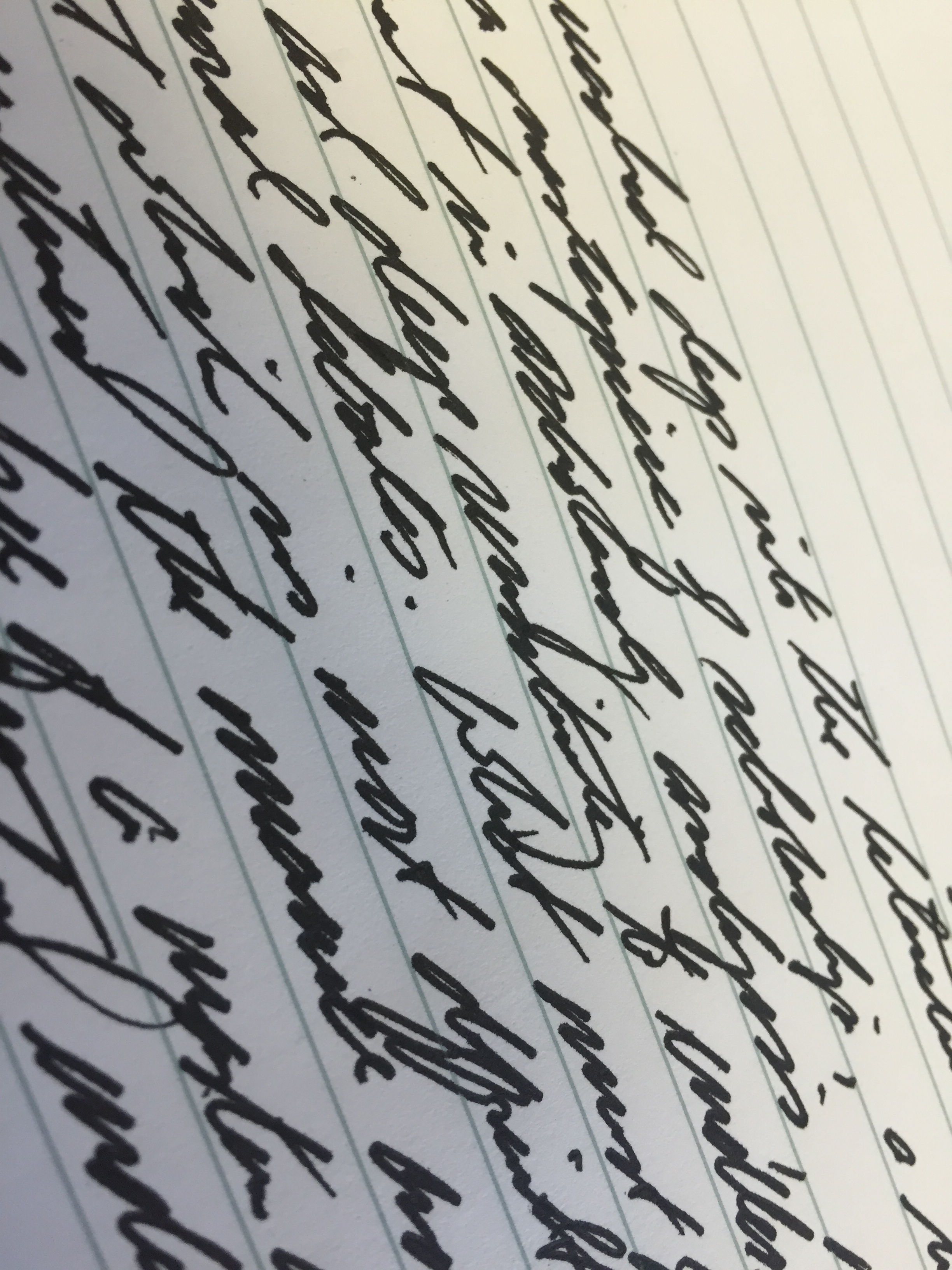
Kate Stone’s Civil War: To every young lady

Recent Confederate victories still warm Stone’s heart, and neighboring Louisiana refugees are optimistic they will be home soon. But Stone thinks otherwise even as she rides past a prison camp filled with thousands of Union prisoners.

KS57

From 2012 to 2015, Stillness of Heart will share interesting excerpts from the extraordinary diary of Kate Stone, who chronicled her Louisiana family’s turbulent experiences throughout the Civil War era.

Learn more about Stone’s amazing life in 1861, 1862, 1863, 1864, 1865 and beyond. Click on each year to read more about her experiences. You can read the entire journal online here.

(Photo edited by Bob Rowen)

Recent Confederate victories still warm Stone’s heart, and neighboring Louisiana refugees are optimistic they will be home soon. But Stone thinks otherwise even as she rides past a prison camp filled with thousands of Union prisoners.

May 7, 1864

Tyler, Texas

Uncle Johnny and family are living with us now. They are all in bad health, but Tyler will build them up. …

Jimmy and Eddie have just left. Both the Jimmies are in a high state of indignation and contempt at an order signed by Gen. [Edmund] Kirby Smith just received from Shreveport detailing them as overseers. So Mrs. Carson was successful and sent it on. The boys consider it a perfect outrage and say they will not submit to such a thing.

Jimmy and I went out to see Mrs. Levy and found them most sanguine as to the speedy close of the war. They think we will be traveling homeward by fall, but I think not before next spring. …

We have company nearly all the time now. It makes it seem something like the old home days, a crowded house. Mrs. Gen. Roane and Capts. Smith and Empy were out recently. She is very pleasant, though Julia has taken a prejudice against her. Julia has liked only one person she has met Capt. Empy. He is a great flatterer with a stock of ready-made compliments that he weighs out to every young lady as a grocer weighs out sugar. He is persuaded that he is irresistible. Capt. Smith has long hair and is a rollicking, jolly young fellow overflowing with fun.

Dr. McGregor says there is much sickness in town, and he is too busy for much calling. Jimmy Carson and I rode out beyond the Yankee camp yesterday. The blue-coated prisoners are swarming within the stockade, several thousand of them, and those captured in Arkansas are expected every day. I rode Gold Dust. He is so well-gaited. Joe begs me to keep him and to ride him to death if I wish, but to let no one else ride him.

Listen to This Chilling Audio as Crowd at Boston Symphony Learns President Kennedy Is Dead

I had heard this recording years ago, but I didn’t know the backstory until now.

Torn in the USA

Life, liberty, and the doomed pursuit of happiness. A review essay by Fernando Ortiz Jr.

IMG_1470

Life, liberty, and the doomed pursuit of happiness.
A review essay by Fernando Ortiz Jr.

******

Discussed in this essay:

Make Love, Not War: The Sexual Revolution: An Unfettered History. By David Allyn. (New York: Routledge, 2001. 400 pp. $26.96).

Making a New Deal: Industrial Workers in Chicago, 1919-1939. 2nd ed. By Lizabeth Cohen. (Cambridge, MA: Cambridge University Press, 2008. 568 pp. $25.99).

Stayin’ Alive: The 1970s and the Last Days of the Working Class. By Jefferson Cowie. (New York: The New Press, 2010. 488 pp. $15.98).

“Resistance in the Urban North: Trumbull Park, Chicago, 1953-1966.” By Arnold R. Hirsch. The Journal of American History. (82, no. 2 [September, 1995]: 522-550. JSTOR [accessed Feb. 1, 2013] ).

In Search of the Black Panther Party: New Perspectives on a Revolutionary Movement. Edited by Jama Lazerow and Yohuru Williams. (Durham, N.C.: Duke University Press, 2006. 408 pp. $24.01).

Quixote’s Soldiers: A Local History of the Chicano Movement, 1966-1981. By David Montejano. (Austin, TX: University of Texas Press, 2010. 360 pp. $23.70).

Polio: An American Story. By David M. Oshinsky. (New York: Oxford University Press, 2005. 368 pp. $16.95).

“Crabgrass-Roots Politics: Race, Rights, and the Reaction against Liberalism in the Urban North, 1940-1964.” By Thomas J. Sugrue. The Journal of American History. 82, no. 2 [September, 1995]: 551-578. JSTOR [accessed Feb. 1, 2013] ).

I.

The New Deal caressed with warm rays of hope the hearts and minds of millions of Americans grappling with the Great Depression. Shimmering ideals carved into the pillars of 1930s bureaucratic power re-invented the relationship between government and the people it represented. The New Deal also served for subsequent generations as a gateway opening onto a glowing era without racism, illness, or injustice. Citizens only needed to step towards the entrance to realize the core tenets – and challenges — of their American democracy: life, liberty, and the pursuit of happiness. Select academic and popular works from the past two decades beautifully illustrate how Americans dared to aspire for better lives, to reach out for democracy’s sweetest fruits, and to confront adversaries unwilling to share the treasures of freedom.

The aspiration for a better life often began with fair employment. Lizabeth Cohen’s Making a New Deal and Jefferson Cowie’s Stayin’ Alive both focus on the journey the working-class endured throughout six decades of economic turbulence and doomed political alliances. Cohen sets the stage by exploring Chicago’s ethnic working-class communities from about 1920 to 1940. Before the Great Depression, companies corralled their workers into paternalistic corporate societies. Workers enjoyed picnics, medical care, education, and other key aspects of a full life, yet all existed in the company’s shadow, without leverage to demand higher wages or a significant voice to improve worker conditions. Corporate authority framed workers’ identities. Cohen’s tapestry of Chicago communities gradually changed their understanding of who they were – from automatons governed by heartless corporate machinery to autonomous citizens who could no longer look to their employers for economic protection. Just as they changed their outlook, the liberal Democratic Roosevelt administration grew in political power and effectiveness. They reached out for each other. Energized unions offered workers a new avenue towards their goals of economic security, social legitimacy, and a viable political voice. The Democratic Party valued union support, listened to workers’ needs, and institutionalized the view that government could protect workers from corporate manipulation and financial unrest.

But the freedom from corporate autocracy, Cohen explains, added to workers’ lives a new vulnerability to “new tyrannies.” Chicago workers, along with workers throughout the U.S., became so closely bound to Democratic policy that when the Roosevelt administration, faced with entry into World War II, moved closer to companies needed to make war materiel, workers had no choice but to endure the consequences of corporate-friendly agreements. Alliances with political groups, Cohen also points out, meant workers swam in deeper political waters, filled with large allies but even larger enemies. Workers savored their new political value, but their leaders also did whatever was necessary to hold on to that influence on parties, administrations, and elections. Political enemies like Richard Nixon targeted that desire and the frustration workers felt over advantages the civil rights movements afforded to minorities.

Cowie’s Stayin’ Alive examines labor after the New Deal’s light faded beyond history’s horizons. He focuses on the years between 1968 and 1982. The working-class identity in the midst of that postwar political dusk was still proud and hopeful, hand-in-hand with liberal determination to transform the working-class into a new segment of the middle class. Three decades later, the working-class identity was a mutilated and incinerated political corpse quietly spat upon and dumped into Ronald Reagan’s ashbin of history.

The 1968 presidential election opened amid the cacophony of riots over the Vietnam War and years of unrest over the Great Society’s promised solutions to workplace, school, and social inequalities. Vice President Hubert Humphrey emerged from Democrats’ circular firefight as the presidential nominee, with only the labor machinery at his side, Cowie writes, making labor the “big boss in the Democratic Party.” Richard Nixon, leading a united Republican Party, raced into the gaps in the Democratic ranks, slicing off white working-class workers with manufactured sympathy over their growing hostility to effete Northern “elitists,” the anti-war movement, women who refused to recognize traditional patriarchal authority, and empowered minorities disrupting workplaces and intensifying corporate hostility to labor’s aspirations for better wages and improved worker rights. Workers in 1968 and 1972 slipped into a warm electoral spa with Nixon, a python sympathetically caressing their dreams as his coils squeezed them to death. Nixon, Cowie deftly points out, was the last president to view the working class in the context of their New Deal legacy of political empowerment. He invented a new chess board on which workers were neutralized as electoral threats and absorbed into the net Nixon cast over the landscape of American voters. He lured them into his New Majority by targeting the cultural-vs.-material dichotomy in the workers’ outlook, appealing to their sentimental ideal of New Deal America and blurring the financial danger his party posed to workers’ dreams for better lives.

The danger Nixon directly posed to labor’s aspirations ended with his 1974 resignation. But Ronald Reagan’s 1980 victory – secured in part with his own Nixonian seduction of working-class patriotic sentiments — worsened what Nixon began. His election followed four years of Democrat Jimmy Carter, who was never a stalwart labor ally and was hardly the mortar needed to rebuild the old alliances the civil rights and antiwar movements fractured. Economic problems sparked in the late 1960s intensified in the 1970s. Industries moved to regions that fought union organization and offered corporate-friendly employment laws. By 1980, Cowie wrote, “a unionized manufacturing job” was a precious drink of water for workers crawling across a blasted economic wasteland. The dire predicament worsened when the Reagan administration shattered the Professional Air Traffic Controllers (PATCO) strike in 1981, legitimating conservative disregard for labor as a viable element of the political calculus and exposing workers, stripped of government allies, to corporate manipulation. Cohen’s workers embarked on a journey to build new and better lives. Cowie’s workers continued the journey but failed to overcome the obstacles that moved into their path. The menagerie of groups gathered under the New Deal canopy may have simulated solidarity but they also stimulated real (if not lasting) determination among labor, even if bitter divisions negated their triumphs.

II.

One of the New Deal’s sparks ignited the civil rights movement in the 1960s and 1970s. As the working class pursued better economic lives, blacks and Latinos throughout the United States pursued liberty. David Montejano’s Quixote’s Soldiers and Jama Lazerow’s and Yohuru Williams’ In Search of the Black Panther Party both portray inspired individuals striving for the dignity of equal treatment, but the authors also refuse to portray equally inspirational coalitions that overcame every level of institutional opposition. Internal divisions, as Cohen and Cowie illustrate with their labor histories, threatened the civil rights movements at every turn.

Montejano’s three-part local history explores the multifaceted Chicano civil rights fight in San Antonio from 1966 to 1981. Chicanos targeted the “gringo supremacy” that governed the city and region. They saw Anglos dominating the social scenes and annual Fiesta events. They blamed Anglos for limiting Latino economic mobility and quality of education. The Latino movement descended from World War II and Korean War Latino veterans who returned home with legitimate expectations, particularly “first-class citizenship,” from the society they fought to defend. Social activists tried to ease the ravaging effects of gang violence and drug use on youth culture by encouraging Chicanismo or “carnalismo” — a sense of Chicano brotherhood that appreciated Latino history and aimed to improve a Latino identity unfairly associated with poverty, ignorance, and violence. Latinos demanded better schools and textbooks, and they conducted school walkouts to drive home their displeasure. They marched in the streets to protest police brutality and housing discrimination. They formed organizations like the Mexican American Youth Organization to coordinate messages, register voters, and gather participants.

Montejano considers much of San Antonio’s Chicano movement a success. But with progress came resistance. Montejano points to U.S. Rep. Henry B. Gonzalez, who saw the new fiery Chicano voices as a threat to his institutionalized power base. Like patriarchal labor leaders willing to deal with any political power that preserved their status, Gonzalez perceived Chicano protestors’ “aggressive nationalism” as disruptive to fragile local understandings and arrangements with the “gringo supremacy” and to his own ambitions. Chicanas demanded equality from the paternalistic community that expected them to remain subordinate to Chicano goals, tactics, and directions, and resistance to their demands also caused internal rifts. Women, Montejano writes, challenged male activists to extend the equality principle to their own households and “machismo” attitudes that oppressed Chicana expression and progress. The struggle echoes Cohen, who wrote that female members of the Congress of Industrial Organizations were not allowed in positions of union leadership because “the male breadwinner would represent the family’s interests in policy making.”

Lazerow and Williams take a dispersed approach to the Black Panther Party’s accomplishments and contributions. In Search of the Black Panther Party uses fourteen essays to connect their battles to a wide array of revolutionary movements within and beyond U.S. borders. Contributor Jeffrey Ogbar’s piece on Black Panther connections to Latino nationalists best illustrates their struggle in a larger racial context. The Black Panthers inspired the Chicano Brown Berets and the Puerto Rican Young Lords and Latin Kings. The aggressively vocal “black demand for equality,” embodied by Malcolm X and Stokely Carmichael, also energized Latino youths who realized their demands could be heard by institutions that could address them. Black nationalist themes of “multinational alliances and cooperation” resonated with Chicanos who saw paralyzing U.S. colonialism in Central America and with Puerto Ricans in the U.S. who saw pervasive Caribbean poverty. The Black Panthers also played a uniting factor among strivers for liberty. In 1970, Ogbar explains, the Party “became the first major black organization to align itself with a women’s liberation movement,” which was seen as an Anglo cause. They later embraced the gay rights movement. The Panthers linked Latinas to bolder visions of social equality their patriarchal Chicano partners could not stomach, and they injected Black Power’s pride and dignity into the Latino movements, enriching the struggles as well as the rewards.

Social divisions often crippled the civil rights struggles. Arnold R. Hirsch’s study of white resistance to community change in Chicago from 1953 to 1966 and Thomas J. Sugrue’s study of similar disdain in Detroit from 1940 to 1964 both brutally underline the tragic consequences of unresolved racial differences among the New Deal’s descendants. Hirsch’s microstudy of a plan to move black families into Chicago’s Trumbull Park Homes and Sugrue’s local history of Detroit’s white working class illustrate how some Americans reached their economic goals and left other similar groups behind. In Chicago, whites refused to live with blacks in the same neighborhood. In Detroit, whites worried that rights for minorities threatened their workplaces, wages, schools, and communities. Social, personal, and material concerns, Hirsch and Sugrue demonstrate, mattered more than the moral struggle for equality and justice.

Americans pursued better lives and secure liberties. They also pursued happiness – fuller lives, longer lives, and healthier lives. The New Deal’s defeat of poverty and the World War II defeat of fascism primed Americans for victory in an old war at home: the fight for freedom from disease and, decades later, the fight for freedom from sexual oppression.

III.

David Oshinsky’s Polio: An American Story explores the national endeavor to eradicate the polio virus with a safe vaccine. Millions of dollars were raised. Franklin Delano Roosevelt, also a polio victim, encouraged the multi-city celebration of his birthday to raise funds for the National Foundation for Infantile Paralysis. He inspired women canvassing their communities for donations. Citizens and politicians worked together for the common good. A vaccine would help young and poor, of any race or religion, and prove the benefits of a democratic society free to fulfill its potential. It also showcased U.S. scientific abilities as the postwar era darkened into the Cold War era. Experts like Jonas Salk became the public face of American ingenuity. The 1954 vaccination trials offered tangible hope and a sense of progress towards an ultimate cure.

The polio story touches on race, ethnicity, and class. Before the vaccine’s development, Americans blamed immigrants for bringing disease and viewed lower-class slums as cesspools of infection. But rich and poor were struck equally. Scientists thought black Americans were less susceptible to polio, so they received less attention during outbreaks. By the mid-1950s, polio ravaged the lower classes who could not afford the three-shot-plus-booster combination.

Freedom from oppression is just as important as freedom from disease. David Allyn’s Make Love, Not War tenderly explores a sexual renaissance that ebbed and flowed from the 1960s to the 1980s, opening new social spaces for expressions of gay sexuality, experiments with group sex, sophisticated sexual education, the birth control pill, and an open sexual life.

Allyn argues that the sexual revolution changed the most important element of any sex life: the mind. Every phase of the revolution, from acceptance of sexual literature at bookstores to a woman deciding to have an abortion or control her fertility, prepared for the ground for more changes in Americans’ outlook on their times. Swinger parties were incorporated into normal suburban lives. Couples consulted illustrated sex manuals to improve their nocturnal time together. Gay Americans celebrated their desires in clubs that were no longer hidden away in shameful corners of the urban landscape. The revolution introduced to Americans a new freedom from fear, and that freedom still flourishes — and must still be defended — today.

The pursuits of life, liberty, and happiness eventually end for some as others begin the journey anew. Superior forces obstructed the revolutions’ progress. Tragic internal weaknesses, inherent or introduced at a later point, ripped apart movements’ ideological cohesion and lasting power. These works offer larger lessons and warnings to future revolutionaries and idealists: know where you want to arrive before beginning the journey, and bind yourselves tightly to your most unlikely of allies. These works silently demand perseverance, patience, and belief that the American Dream belongs to everyone. One must only fight for it, even if it means fighting other marginalized Americans. There may never be enough of the Dream for everyone.

Rebecca Aguilar

#CallingAllJournalists Initiative | Reporter | Media Watchdog | Mentor | Latinas in Journalism

Anna Fonte's Paper Planes

Words, images & collages tossed from a window.

Postcards from Barton Springs

Gayle Brennan Spencer - sending random thoughts to and from South Austin

The Flask Half Full

Irreverent travelogues, good drinks, and the cultural stories they tell.

Government Book Talk

Talking about some of the best publications from the Federal Government, past and present.

Cadillac Society

Cadillac News, Forums, Rumors, Reviews

Ob360media

Real News That Matters

Mealtime Joy

bringing joy to family meals

Øl, Mad og Folk

Bloggen Øl, Mad og Folk

a joyous kitchen

fun, delicious food for everyone

A Perfect Feast

Modern Comfort Food

donnablackwrites

Art is a gift we give ourselves

Fridgelore

low waste living drawn from food lore through the ages

BeckiesKitchen.com

MUSINGS : CRITICISM : HISTORY : NEWS

North River Notes

Observations on the Hudson River as it passes through New York City. The section of the Hudson which passes through New York is historically known as the North River, called this by the Dutch to distinguish it from the Delaware River, which they knew as the South River. This stretch of the Hudson is still often referred to as the North River by local mariners today. All photos copyright Daniel Katzive unless otherwise attributed. For more frequent updates, please follow northriverblog on Facebook or Instagram.

Flavorite

Where your favorite flavors come together