Kate Stone’s Civil War: My escorts were disgusted

More food and supplies finally make it to Tyler, and Stone enjoys a crowded concert, if only to drown out the anguish of recent months.

KS14

From 2012 to 2015, Stillness of Heart will share interesting excerpts from the extraordinary diary of Kate Stone, who chronicled her Louisiana family’s turbulent experiences throughout the Civil War era.

Learn more about Stone’s amazing life in 1861, 1862, 1863, 1864, 1865 and beyond. Click on each year to read more about her experiences. You can read the entire journal online here.
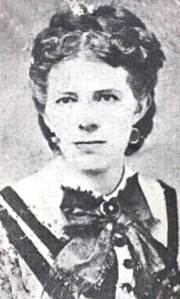
(Photo edited by Bob Rowen)

More food and supplies finally make it to Tyler, and Stone enjoys a crowded concert, if only to drown out the anguish of recent months.

Note her details on how the slaves make candles from Texas cactus.

Feb. 15, 1865

Tyler, Texas

Our garrison is reinforced and heavily provisioned. Warren reached here tonight after a six-day trip from the prairie with the long looked-for load of comestibles, and never could they have come in better time. The last flour had just been made up into biscuit in Capt. Birchett’s honor, and meat, sugar, candles, and everything else was waxing low. By the way, the servants make such pretty candles now. The candles look almost like wax. They boil a species of cactus in the tallow, and the candles are partly transparent and brittle and give an excellent clear light. Warren says the roads are nearly impassable. Mamma, when he left the carriage, was bogged down a few miles beyond Quitman, but Warren is satisfied that she will reach here today or tomorrow.

Capt. Birchett, after keeping me at home all day and depriving me of the pleasure of a ride with Dr. Weir, came up to tea and soon after bade us adieu for Shreveport and does not expect to be back for some weeks. We will miss him as he has been very sociable. Jolly Col. Hill and his demure, prim little wife called this morning and later Mrs. Benton and Mrs. St. Clair. No news except Mrs. Alexander, who lately lost her husband, will leave in a few days for San Antonio. And Johnny and I are eager to rent that house by the time Mamma arrives. Such a nice two-story affair with a pretty flower yard and in a nice part of town.

Dr. Weir spent yesterday afternoon here playing chess, and after tea I went with him and Capt. Birchett to a concert. Such a crowd. Not another person could have been crammed in and so many soldiers, but they were quiet and behaved well. The gentlemen all had to stand and my escorts were disgusted.

Kate Stone’s Civil War: The dirtiest people

Stone hated and pitied the people of Texas. She gagged at the sight of unshaven men sitting at her dinner table. The seeming normality of violence horrified her. But the natural beauty of Texas gradually entranced her.

KS25

From 2012 to 2015, Stillness of Heart will share interesting excerpts from the extraordinary diary of Kate Stone, who chronicled her Louisiana family’s turbulent experiences throughout the Civil War era.

Learn more about Stone’s amazing life in 1861, 1862, 1863, 1864, 1865 and beyond. Click on each year to read more about her experiences. You can read the entire journal online here.

(Photo edited by Bob Rowen)

Stone hated and pitied the people of Texas. Barefooted women, evidently ignorant of the latest Southern fashions, still wore outdated “hoops.” The roads all the looked the same. She gagged at the sight of unshaven men sitting at her dinner table. She lost her appetite when she witnessed dusty slaves washing dishes “in the duck pond” before dinner. The Texas heat was punishing. The seeming normality of violence horrified her.

But the natural beauty of Texas gradually entranced her.

July 12, 1863

Lamar County, Texas

We made our first visit in Texas yesterday. We went to a protracted meeting being carried on nine miles from here at an old schoolhouse called — it must be in mockery — “Paradise.” After the meeting we went by invitation to spend the evening and night with some real nice people, settlers from Virginia, the McGleasons. They are a pleasant family and exceedingly hospitable. We came back this morning after a ride of nearly eighteen miles, having missed our road three times. The prairie roads are so much alike it is impossible for strangers to distinguish the right from the wrong.

The congregation was much more presentable than the Gray Rock crowd. We saw several nice-looking families, but all were in the fashions of three years ago. If they would only leave off their tremendous hoops, but hoops seem in the very zenith of their popularity. Mamma and I were the only women folks without the awkward, ungraceful cages. No doubt the people thought us hopelessly out of date. We have not worn them for a long time. Nothing looks funnier than a woman walking around with an immense hoop barefooted.

Mamma and I went several days ago to Tarrant in Hopkins County. The road ran part of the way over a lovely rolling prairie, dotted with clumps of trees and covered with the brilliant, yellow coreopsis in full bloom and gemmed with countless little mounds of bright green, like emeralds set in gold. Tarrant is the hottest looking, new little town right out in the prairie not a tree.

We tried to eat dinner at the roughest house and with the dirtiest people we have met yet. The table was set on a low, sunny gallery and half a dozen dirty, unshaven men took their seats in their shirt sleeves at the dirtiest tablecloth and coarsest ware. We saw the Negro girl wash the dishes at the duck pond right out in the yard. That was too much for me, but Mamma and Mr. Smith managed to swallow down something. …

The prairie we are living on is called a thicket prairie. There are clumps of dwarf dogwood, spice trees, and plums, tangled together with wild grape and other vines and alive with snakes. The plums are just in season, a sour, red variety just like the swamp wild plums, and are nice for jelly. The prairie is a mass of flowers, one variety covering it at a time. Before you realize it, that color has faded away and another has taken its place, and this succession of flowers and colors goes on until frost comes and spreads a brown sheet over all. There are many familiar garden flowers: blue salvia, coreopsis, verbenas, larkspur, standing cypress, and now as far as the eye can reach the prairie is a mass of waving purple plumes, “French pinks,” the natives call them. …

We hear no news now but accounts of murders done and suffered by the natives. Nothing seems more common or less condemned than assassination. There have been four or five men shot or hanged within a few miles of us within a week. No one that we have seen seems surprised or shocked, but take it as a matter of course that an obnoxious person should be put to death by some offended neighbor. A few evenings ago a captain in the army had just reached home on a furlough three hours before when he was shot at through his window. He was killed and his wife dangerously wounded. The authorities are trying to find the men who did it. It is supposed to be one of his company who had vowed vengeance against him. The other miscreants go unwhipped of justice.

Rebecca Aguilar

#CallingAllJournalists Initiative | Reporter | Media Watchdog | Mentor | Latinas in Journalism

Anna Fonte's Paper Planes

Words, images & collages tossed from a window.

Postcards from Barton Springs

Gayle Brennan Spencer - sending random thoughts to and from South Austin

The Flask Half Full

Irreverent travelogues, good drinks, and the cultural stories they tell.

Government Book Talk

Talking about some of the best publications from the Federal Government, past and present.

Cadillac Society

Cadillac News, Forums, Rumors, Reviews

Ob360media

Real News That Matters

Mealtime Joy

bringing joy to family meals

Øl, Mad og Folk

Bloggen Øl, Mad og Folk

a joyous kitchen

fun, delicious food for everyone

A Perfect Feast

Modern Comfort Food

donnablackwrites

Art is a gift we give ourselves

Fridgelore

low waste living drawn from food lore through the ages

BeckiesKitchen.com

MUSINGS : CRITICISM : HISTORY : NEWS

North River Notes

Observations on the Hudson River as it passes through New York City. The section of the Hudson which passes through New York is historically known as the North River, called this by the Dutch to distinguish it from the Delaware River, which they knew as the South River. This stretch of the Hudson is still often referred to as the North River by local mariners today. All photos copyright Daniel Katzive unless otherwise attributed. For more frequent updates, please follow northriverblog on Facebook or Instagram.

Flavorite

Where your favorite flavors come together