After two weeks, Stone decided that Texas was home only to deadly snakes, fleas “by the millions,” ignorant children, and ugly women.
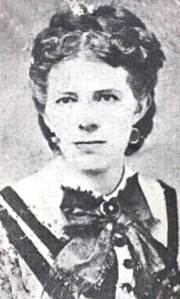
From 2012 to 2015, Stillness of Heart will share interesting excerpts from the extraordinary diary of Kate Stone, who chronicled her Louisiana family’s turbulent experiences throughout the Civil War era.
Learn more about Stone’s amazing life in 1861, 1862, 1863, 1864, 1865 and beyond. Click on each year to read more about her experiences. You can read the entire journal online here.
(Photo edited by Bob Rowen)
Kate Stone despised her new wartime home. After two weeks, she decided that Texas was home only to deadly snakes, fleas “by the millions,” ignorant children, and ugly women. “There must be something in the air of Texas,” she wrote, “fatal to beauty.”
July 7, 1863
Lamar County, Texas
While camping out we were generally too tired at our noonday rest to do anything but throw ourselves down on the cushions and sleep until dinner. And at night when we stopped, I had only spirit to lean lazily back in one of our two rocking chairs and watch Annie get supper or to look up at the stars and think of all the dear friends that the waves of Fate are sweeping farther and farther away from us every day. I had such a longing for home and the dear life of the past that my very soul would grow sick. I know Mamma felt it far more than I did, but she would not complain.
I will copy a letter I wrote to Anna Dobbs which tells all there is to tell of our late journeyings:
“Here we are safely hidden in a dark corner of the far off County of Lamar after a tiresome, monotonous trip of little less than three weeks, and I am already as disgusted as I expected to be.
“This part of the land abounds in white-headed children and buttermilk, my two pet aversions. It is a place where the people are just learning that there is a war going on, where Union feeling is rife, and where the principal amusement of loyal citizens is hanging suspected Jayhawkers. Hoops are just coming in with full fashion. This is indeed the place where hoops ‘most do flourish and abide. Have not seen a hoopless lady since entering the state. Shoes are considered rather luxuries than necessaries and are carefully kept for state occasions. … One tin pan or a frying pan answers every purpose. Wash tubs seem obsolete and not to be bought at any price.
“The only way of killing time and one never feels more like killing him than on this desolate wind-swept prairie is to attend some of the protracted meetings that are being carried on all around us. And oh, the swarms of ugly, rough people, different only in degrees of ugliness. There must be something in the air of Texas fatal to beauty. We have not seen a good-looking or educated person since we entered the state. We are in the dark corner. We could not stand it here for a permanent stay, but Mamma has only stopped here for a breathing spell and to see how the Negroes are getting on. She will start out soon in search of a home until the war is over.
“We camped out except when it rained, which it did most of the last week, thereby ruining most of the clothes we had so laboriously amassed after fleeing from the Yankees. We would be so tired by night we welcomed the rudest shelter. The longer we traveled the more wearisome it grew, and I never turned over at night without expecting to feel the sting of a tarantula or centipede. But we really saw very few and reached here without an accident. I wrote to Sarah Wadley never to come to Texas for pleasure, but if forced to come to cover herself with a thin coat of tar to protect herself from the myriads of insects along the road. And here, we have settled at their headquarters ticks, redbugs, fleas by the millions, and snakes gliding through the grass by hundreds. But we rarely hear of anyone being snake-bitten. Game, deer and turkeys are abundant about here but not eatable on account of the insects tormenting them until they are too tough to eat. …
“We are staying right out on the bare prairie in a rough two-room shanty with the overseer and his family. With only the bare necessaries of life, we think it will be at least two months before we can make any change, and so we must needs make the best of it.”
At last, the Stones moved for Texas. Along the way, Kate Stone enjoyed wild fruits, natural beauty, and the occasional generosity of strangers.
From 2012 to 2015, Stillness of Heart will share interesting excerpts from the extraordinary diary of Kate Stone, who chronicled her Louisiana family’s turbulent experiences throughout the Civil War era.
Learn more about Stone’s amazing life in 1861, 1862, 1863, 1864, 1865 and beyond. Click on each year to read more about her experiences. You can read the entire journal online here.
(Photo edited by Bob Rowen)
At last, the Stones moved for Texas. Along the way, Kate Stone enjoyed wild fruits, natural beauty, and the occasional generosity of strangers.
June 15, 1863
Near Monroe, La.
Visiting and visitors, blackberry parties, and long walks over the hills have occupied the time since Wednesday. Julia Barr and I took tea with Mrs. Dortch and were agreeably entertained. We have been since to see Mrs. Waddell, who is a charming pretty lady.
Mamma and Johnny are busy making arrangements for us to get off. Will start on Wednesday. All busy this afternoon making a tent of some carpeting, the only thing to be bought in Monroe and it was $4 a yard. From Jimmy’s letter, received today from Titus [Texas], think we will be on the road two weeks. He does not write encouragingly. The country is not more abundant than this, and Billy, another Negro man, is almost dead. But Mamma hopes to find it better than Jimmy paints it.
Our delightful sojourn at this place is nearly over, and it will be many a weary day before we are so comfortable again. They are the very kindest people we ever met, and Mr. Wadley, who returned a few days ago, is just as generous and kind as all the others. To crown all her good deeds Mrs. Wadley this morning refused to take a cent for our board all these seven weeks. Mamma insisted on it, but both Mr. and Mrs. Wadley declared they could not think of such a thing, saying Mamma would need every cent she had before she got settled again. Our own relations could not have been kinder, and we were total strangers to them when they took us in out of the goodness of their hearts. May God reward them, we never can.
Tomorrow is our last day here and we will go around and say good-bye to the neighbors. This lovely family and Julia Barr I shall be sorry to leave.
June 19
Between Monroe and Minden, La.
Half past twelve this sultry June 19 we are sitting under the shade of a spreading oak about halfway between Monroe and Minden eating rosy June apples. …
We are on the road for Texas at last, and I imagine no party of emigrants ever started with sadder hearts or less pleasure in anticipation. If we had gone on at once when coming to Monroe, we would have liked the idea, but we stayed just long enough at Mrs. Wadley’s to spoil us for a trip like this. We find it very lonely, only we four and the servants. If we could have joined another party, it would be so much more enjoyable. … A passing soldier tells us that a Federal force is advancing on Monroe. … We all left home without a tear, the dread of staying there was so great, but we and all the family were in tears when we told them good-bye at Mrs. Wadley’s. Shall we ever meet such kind friends again?
The first long hill halted us. We tried for an hour to get the mules on the wagon to pull up it, but they would not or could not. Mamma had part of the baggage unloaded and sent back to the Wadley’s, and at last we got underway. It was such a dark, rainy afternoon that we thought we would not commence camping that evening but would stay at some house on the road. So we went ahead of the wagon, and before sunset commenced enquiring for lodging. At house after house, dark and uninviting with a host of little towheads and a forelorn-looking woman, generally spinning, amid the barking of a pack of dogs, would come the response, “Naw, we don’t take in travelers,” in a tone of contempt, as though the very name of traveler was a disgrace. We kept this up, the poor tired mules dragging on from place to place, until 10 o’clock at night. Being refused at the last house, Mamma declared we could go no farther. … But [of] three swampers staying there … one of them heard our distressed voices, came to our relief, and induced the owner to allow us to stay. We were glad enough of the shelter, for that was about all it was. Chunks of fat meat and cold, white-looking cornbread with very good water were all the refreshments. This night’s experience satisfied us, and we have determined to camp out for the rest of the way.
The next day we went on as far as Mrs. Bedford’s, about twenty-five miles from Monroe. They gave us a nice dinner, and we had a pleasant little stay there. We went on in the afternoon with a supply of pretty June apples from their orchard, camped out that night for the first time, and found it far better than asking for shelter and getting nothing, nothing but snubs and coarse fare at exorbitant prices. It looked like it would rain every minute. It seemed nothing new to be lying out under the shadow of a tree with the stars looking dimly down through the branches, with the lightning flashing in the North, the sultry night breeze swaying the wildwoods grass in my face, and a nondescript bug attempting to creep into my ear. We have read so many stories of camping it seems like an old song. Shall we have any of the startling adventures that travelers usually have to relate?
June 22
Near Bellevue, La.
We are resting for dinner in a thicket of blackjack and towering pines after a wearisome ride over the worst roads. Now we find we branched off in the wrong direction and are only four miles farther on our way than when we left camp this morning.
We passed through Minden — such a pretty little town with the deepest white sand in the streets, about the size of Monroe. I wish we could have located there. It looked very inviting, but we must go on where [our] Negroes are. We camped near a nice-looking house, and the people were kind in sending us out milk and butter, the first time we have been able to get anything of the kind. We also bought some chickens, a relief after a steady diet of ham and bacon. We get a lot of fruit, apples, plums, and huckleberries, the large low-bush variety — also, the blackberries are ripening. We stop several times a day or whenever we see a tempting thicket and enjoy the fruit. We so often have to wait for the wagon. We need never hurry. No flour yet, but we hear it is plentiful farther on. Some tea bought in Monroe is evidently made of blackberry leaves. Dampened and untwisted they are identical, absolutely without flavor.
U.S. Grant’s stranglehold on Vicksburg overshadows Stone’s hopes for victory.
From 2012 to 2015, Stillness of Heart will share interesting excerpts from the extraordinary diary of Kate Stone, who chronicled her Louisiana family’s turbulent experiences throughout the Civil War era.
Learn more about Stone’s amazing life in 1861, 1862, 1863, 1864, 1865 and beyond. Click on each year to read more about her experiences. You can read the entire journal online here.
(Photo edited by Bob Rowen)
U.S. Grant’s stranglehold on Vicksburg overshadows Stone’s hopes for victory.
June 3, 1863
Near Monroe, La.
Lt. Valentine is back from his Northern prison and brings us blessed news of My Brother’s safety. He was wounded in the left arm above the elbow in the Battle at Chancellorsville but by this time has rejoined his regiment. … He could not tell us much that was interesting about the North. They were kept too close to see or hear anything. He represents prison life as most monotonous and wearisome, but they were not ill-treated.
He says My Brother is having a nice time in Richmond and regrets the hole in his coat more than the hole in his arm. The last Nature will heal, the first will take money. Lt. Valentine joined his regiment, which was under marching orders at once, and they are now somewhere in the swamp. We are massing quite a force there under Gen. Taylor. May we strike a telling blow.
The news from Vicksburg is very contradictory, but there seems to be constant fighting going on. We were repulsed in every engagement until the troops fell back behind our entrenchment, since then we have driven back every assault with heavy losses on their side. They have made desperate charges on the batteries only to fall back with great slaughter. Numbers of Negroes, placed by their friends in the forefront of the battles, have been slain. Poor things, I am sorry for them. Gen. Grant has surrounded Vicksburg with an immense army. The struggle has commenced, but the great battle is still to be fought. Our friends around Vicksburg must have lost everything before this.
June 5
Aunt Laura and Mrs. Young have had the long-expected falling out, and Aunt Laura has gone to board about three miles from here. We think that in a short time the fate of Vicksburg will be decided, and she will know whether to go on to Vicksburg or to Texas with us. Mamma is also waiting in the hope that our troops will drive the Yankees from the swamp and we can go back home until fall or at least get what is left of the furniture. …
I am trying to braid a pretty braid of rye straw, as I can get no palmetto here, and I have promised Lt. Valentine a hat. Plaited one for Johnny in less than a day. It is rough and ugly, but he likes it. It is so light. Hatmaking is as much the rage here now as it was last summer in the swamp. …
We had a charming ride the other evening. Went out huckleberrying but not a berry did we see. The ride part of the way was over high hills shaded by towering longleaf pines and carpeted with tall woods grass and wild flowers, and sloping in green waves from the hills lay deep ferny hollows. …
June 10
We have bidden Aunt Laura and Beverly a long adieu I fear. They started yesterday for Mississippi to join Dr. Buckner, if possible. They go to Harrisonburg on a boat and then through the country to the river, if possible. They are under the care of Mr. John Curry, and it is doubtful whether they can get on. But Aunt Laura, or rather Mamma, thought it better for her to attempt it than to go to Texas. Aunt Laura wished to go on with us, but Mamma feared she could not stand the hardships of the long trip camping out and the rough life with little hope of seeing or hearing from Dr. Buckner until the war is over. We hated so to see her go. We shall miss them for a long time. We went in to Monroe and saw them off. Sent numbers of letters by them.
The news of today is that our men were repulsed at Milliken’s Bend and are falling back to Delhi. A very different account from the first. It is hard to believe that Southern soldiers and Texans at that have been whipped by a mongrel crew of white and black Yankees. There must be some mistake. …
All of us were busy from 5 o’clock until dusk making mattresses for the wounded soldiers expected at Monroe from the fight at Milliken’s Bend. It is said the Negro regiments fought there like mad demons, but we cannot believe that. We know from long experience they are cowards. …
Aunt Laura spent Sunday with us, our last day together. She went off in fear and trembling but is determined to get through if possible. She is such a sensitive, nervous woman that it will be a great ordeal for her, but it could not be helped.
Julia Barr and I are quite friends. I like Miss Sarah very much, but she is so absorbed with Mrs. Morancy that we see little of her. We are staying so long I fear Mrs. Wadley will get tired of us, and so we are all reconciled to making an early start to Texas.
Stone mourned the loss of Stonewall Jackson at the May 1863 Battle of Chancellorsville, calling him a “peerless general and Christian soldier.”
From 2012 to 2015, Stillness of Heart will share interesting excerpts from the extraordinary diary of Kate Stone, who chronicled her Louisiana family’s turbulent experiences throughout the Civil War era.
Learn more about Stone’s amazing life in 1861, 1862, 1863, 1864, 1865 and beyond. Click on each year to read more about her experiences. You can read the entire journal online here.
(Photo edited by Bob Rowen)
Stone mourned the loss of Stonewall Jackson at the May 1863 Battle of Chancellorsville, calling him a “peerless general and Christian soldier.”
May 23, 1863
Near Monroe, La.
Aunt Laura was quite ill while Mamma was away, and I felt the responsibility of taking care of her. She is now much better. Mamma had two fevers, and we were very afraid it would go into a long low fever. She is quite prone to have that in the spring, but fortunately she has escaped a return of it. Sarah, Mary Wadley, and I went last afternoon to call on the Misses Compton and Stacey. We went in Mamma’s famous Jersey wagon, and it is a ramshackled affair with the seats and most of the bottom dropped down. We had a merry ride and concluded that a frame, a tongue, two mules, and a driver were the only essentials in a vehicle. … Walking through the pine woods, we saw wild flowers in such profusion. The air is so fragrant that it is a pleasure to breathe it. …
The news from Mississippi is bad. Gen. Grant with an army of 120,000 men is in the rear of Vicksburg. He has possession of Jackson, and much of the city has been burned. There has been a battle near Raymond in which we were said to have been routed because of Gen. [John C.] Pemberton’s disregard of orders. We drove them out of Jackson once, but we cannot hear whether they retook it after a battle or whether our forces withdrew. We will not be discouraged. …
In the death of Stonewall Jackson [at the Battle of Chancellorsville] we have lost more than many battles. We have lost the conqueror on a dozen fields, the greatest general on our side. His star has set in the meridian of its glory, and he is lost to his country at the time when she needs him most. As long as there is a Southern heart, it should thrill at the name of Stonewall Jackson, our peerless general and Christian soldier. His death has struck home to every heart. …
May 24
Mamma and I went over yesterday after tea to see Capt. and Mrs. Harper. They are also on their way to Texas. Capt. Harper was one of the party at home on Christmas Eve, and my last ride on Wonka was to invite the gentlemen in camp over to Brokenburn.
We were glad to meet his little daughter Sophie Harper, Mr. Valentine’s grandchild. Both of the Mr. Valentines talked so much about her. She is a bright, attractive child and bears a striking resemblance to her Uncle Mark in features, gesture, and expression. They say old Mr. Valentine is so overwrought by his losses … that it is feared he will lose his mind. He escaped from his place a few days after we left entirely alone in a boat with only a few clothes. The Negroes came and stripped the place of everything while he was on it and were exceedingly insolent to him, threatening all the time to kill him. He is quite an elderly man and cannot stand hardships like younger people. …
May 26
Mamma is staying tonight with Mrs. Young whose little girl Alice is sick unto death. Johnny, who by the way could not overtake Mr. Smith, and Mamma went into Monroe this morning trying to buy a wagon and carriage but failed to get either. So we must … wait here until we can get conveyances, and we could not ask for a more delightful stopping place or kinder hosts. Such a haven of rest after the trouble and anxiety of the last three months. We have put away troubles and distress for a time as a wayworn traveler lays down his burden when he stops to rest, enjoying the coolness and verdure, though he knows the burden must be lifted and he must journey on through toil and pain to the end.
How I dread being secluded on some remote farm in Texas, far away from all we know and love and unable to get news of any kind. It is a terrifying prospect.
I am busy sewing most of the time. We will soon be through all our clothes — just a white barege dress of Carrie’s to alter for myself and Mamma intends making a black velvet hat for me. Then, all our pressing needs will be gratified. …
Kate Stone’s brother led a group of men back to the Brokenburn estate to recapture the slaves the Stone family left behind as they fled Union troops.
From 2012 to 2015, Stillness of Heart will share interesting excerpts from the extraordinary diary of Kate Stone, who chronicled her Louisiana family’s turbulent experiences throughout the Civil War era.
Learn more about Stone’s amazing life in 1861, 1862, 1863, 1864, 1865 and beyond. Click on each year to read more about her experiences. You can read the entire journal online here.
(Photo edited by Bob Rowen)
Kate Stone’s brother led a group of men back to the Brokenburn estate to recapture the slaves the Stone family left behind as they fled Union troops. Stone recounts with chilling nonchalance what the men saw when they arrived at the springtime plantation. The slaves, exuberantly basking in seeming freedom, had tended the season’s load of vegetables, gathered fruit, stocked fresh meat, made cream and butter, and seemed to be on the verge of re-imagining their liberated community. Little did the slaves realize the fluidity of freedom of the home front.
May 22, 1863
Near Monroe, La.
In the last ten days I have been too busy to write. Mamma was away at Delhi waiting for Jimmy to return from his perilous trip to the river until last Monday, when they returned in triumph with all the Negroes except Webster, who had joined the Federal Army some time ago, and four old Negroes who were left on the place to protect it as far as possible.
Jimmy went in with a Capt. Smith and five other men, but it was owing entirely to Jimmy’s exertions that the Negroes were secured at last. They had captured the Negroes and were pushing on for the bayou when they were pursued by a body of forty Yankees. They came within hailing distance of Capt. Smith and his men and fired volley after volley at them, but fortunately none were struck. Capt. Smith ran as fast as possible to escape and to tell Jimmy to let the Negroes go and escape for his life, but when he came up with Jimmy at the Tensas Bayou, he found Jimmy swimming the stream and the Negroes and mules already across. Jimmy had heard the firing and rushed the Negroes over in dugouts, he swimming over with the mules. He swam over two or three times.
The Yankees, having no boats, did not attempt to follow any farther, and so Jimmy saved all of the Negroes at last. They are now on their way to Texas in Jimmy’s care, trying to overtake Mr. Smith’s train.
Jimmy and the men with him hid all day in the canebrake just back of the fence and in the fodder loft at Brokenburn and stole out at night to reconnoiter. They found what cabins the Negroes were in, and while hiding under Lucy’s house they saw her sitting there with Maria before a most comfortable fire drinking the most fragrant coffee. They were abusing Mamma, calling her “that Woman” and talking exultantly of capering around in her clothes and taking her place as mistress and heaping scorn on her. Capt. Smith says that he never heard a lady get such a tongue-lashing and that Lucy abused the whole family in round terms. At daylight they surrounded the cabins, calling the Negroes out and telling them it was useless to resist. They were captured. William made an effort to escape by jumping from a window, but at sight of a bowie knife he gave up. … As they passed Capt. Allen’s on Bear Lake, Capt. Smith and his men stopped to cook something to eat, and it was there that he came so near being caught. The penalty would have been hanging, and I suppose there would have been no mercy shown as this is his fourth trip into the swamp to bring out property left there. He is a marked man by the Federals.
Mamma heard only after Jimmy left that the penalty for removing anything from the property confiscated by the government was hanging, and she was utterly wretched until she welcomed Jimmy back, sunburnt and tired but triumphant.
Capt. Smith says Brokenburn is lovely, a place of abundance flowing with milk and honey. The tall oaks in their summer finery of deep green are throwing shadows on the soft deep grass creeping to their very trunks, the white house is set in a very bower of green, and the flower garden is shining off at one side, a mass of bloom. He said he did want to stay and take one good breakfast with the Negroes, since he never saw so many good things to eat: a barrel of milk, jars of delicious pinkish cream, roll after roll of creamy yellow butter, a yard alive with poultry, and hams and fresh meat just killed. The garden is stocked with vegetables, the strawberry bed red with fruit, and then a supply of coffee, tea, flour, and such things bought from the Yankees. He says they would have been foolish Negroes to run off from a place like that. William and his family were occupying Mamma’s room, completely furnished as we left it, and all our other possessions had been divided up among the Negroes.
Stone’s bitter sense of humor flashed for a moment as she dryly observed the effects of marriage on a young woman’s beauty.
From 2012 to 2015, Stillness of Heart will share interesting excerpts from the extraordinary diary of Kate Stone, who chronicled her Louisiana family’s turbulent experiences throughout the Civil War era.
Learn more about Stone’s amazing life in 1861, 1862, 1863, 1864, 1865 and beyond. Click on each year to read more about her experiences. You can read the entire journal online here.
(Photo edited by Bob Rowen)
As Stone and her family regained their bearings in their temporary home before making the final push for Texas, Stone’s bitter sense of humor flashed for a moment as she dryly observed the effects of marriage on a young woman’s beauty.
May 3, 1863
Near Monroe, La.
We went to a real country church this morning, saw a country congregation, and heard a sermon to match. Loring Wadley made several trips with the buggy to get us all there, but two of the party rode back in Dr. Young’s $3,000 carriage. We had a pleasure today in a visit of several hours from Julia Street. She came down from Bastrop just for the day. She is more nearly depressed than I ever saw her.
Annie and Peggy got here from the salt works today, and we are glad to have somebody to wait on us again. I expect we will keep them busy. …
May 5
Near Monroe, La.
The gunboats are unable to pass Grand Gulf and are lying idle between Vicksburg and Grand Gulf, like baffled beasts of prey. There is a great scarcity of provisions all through Mississippi. It is difficult to provision Vicksburg for a long siege. …
We went yesterday to see Florence Pugh (now Mrs. Morrison), an old schoolmate. The family are near here now on their way to Texas. She is a dear, sweet girl but looks dreadful. How marrying does change a body for the worse. She was a pretty girl a year ago, fresh and dainty. Now she is married and almost ugly.
I am busy every day trying to make up the cloth Mamma bought, but it is slow, tiresome work for one person with no sewing machine. The only things Mamma could find to buy belonged to the Lowrys, and they sold them at awful prices: $60 for a pair of common blankets, $50 for a pair of linen sheets, and everything else in proportion. They have sold much of their own clothing. Mamma bought some of Olivia’s things for Sister. … It seems funny to be wearing other people’s half-worn clothing, but it is all we can get. Mamma bought some Turkey-red calico at $3 a yard for a dress for Sister.
May 10
Near Monroe, La.
Mamma returned from the salt works on Friday, riding the whole distance on horseback. It was dreadfully fatiguing for one who rides so little. She has gone this evening to Delhi to make another attempt to have the Negroes brought out, if she can get soldiers to go with Jimmy. Quite a number of Negroes have been brought out in that way recently, some from within the lines.
The news from the salt works is bad. Frank, my maid, and Dan both died of pneumonia and neglect, and three others are very ill. Poor Frank, I am sorry for her to go. She has been raised in the house with us. With so much sickness among the Negroes, Mr. Smith has been unable to start to Texas. …
Several thousand of our soldiers are now at Monroe under Maj. Gen. Walker. Two of the officers spent yesterday evening here and told us the whole command would get off this morning and that there were some splendid bands with the regiments. So this morning we rode out to the river opposite Monroe to see them off, starting before sunrise. We saw crowds of soldiers, talked to a number of them, and heard inspiring music. The ride all the way through the spring woods was delightful. I sat up until twelve the night before fixing a sort of riding habit. … The troops after embarking received counterorders and are again in Monroe, expecting to march at any minute. There is another panic in Monroe. The Yankees are looked for at any time. They could not make anything out of this poor family. We have been too thoroughly plucked by the river Feds. …
Aunt Laura is not very well. We would dread to see her get sick.
Youth, family, happiness, and hope all seemed to be mere memories of an antebellum existence lost forever.
From 2012 to 2015, Stillness of Heart will share interesting excerpts from the extraordinary diary of Kate Stone, who chronicled her Louisiana family’s turbulent experiences throughout the Civil War era.
Learn more about Stone’s amazing life in 1861, 1862, 1863, 1864, 1865 and beyond. Click on each year to read more about her experiences. You can read the entire journal online here.
(Photo edited by Bob Rowen)
Kate Stone’s rage over Northern victories burned bright over the general landscape of depression she inhabited. Youth, family, happiness, and hope all seemed to be mere memories of an antebellum existence lost forever.
May 2, 1863
Near Monroe, La.
We have been comfortably domiciled here since Tuesday. It is indeed a delightful change from Mr. Deane’s, that musty room and uneatable fare. This is a large roomy but unfurnished house, a kind, pleasant family, and excellent fare — an oasis in the desert. The mother, Mrs. Wadley, two grown daughters, a grown son, and two or three younger children make up the family at home. Col. Wadley is on the other side of the river. They are railroad people. Aunt Laura is boarding just across the road from us, and there is a young lady, Carrie Young, and a grown son in that house. Then, there are quite a number of young people in walking distance. There is no dearth of company, but I cannot enjoy it. I feel out of place with a party of gay young people. Their mirth jars my heart. Life seems too sad a thing to spend in talking nonsense. I feel fifty years old.
The two Miss Dawsons from Madison Parish seem to be the belles of the country. They refugeed out here some time ago and are enjoying themselves exceedingly. Their house is a favorite resort for the officers, and the girls are out riding and walking with some of them every day. Fannie Dawson is beautiful, accomplished, and fascinating, we hear.
Bad news from the Negroes at the salt works. Jeffrey is dead and several others are very sick. The three whose wives are on the river ran away but were caught. Mamma and Johnny with a new overseer and his wife started to the salt works yesterday. She will start all the Negroes who are able to travel at once to Texas. We will perhaps go to Homer [La.].
The news from Mississippi is bad. The Yankees are making raids through the state, cutting off supplies from Vicksburg. … The panic here has subsided though the authorities are still moving government stores from Monroe. …
I have been hard at work ever since coming here slewing on the goods Mamma bought from Mrs. Lowry. We need so many things that it is hard to decide what to make first. Mamma bought a lot of linen sheets from Mrs. Lowry, and I am making them into underclothes, thick and strong. They should last until the war is over. …
[New York Tribune editor] Horace Greeley’s son was out at Mr. Curry’s place on a stealing expedition last week. When reading the Tribune two years ago and abusing Greeley for his vile slanders of the South, we never thought any of his kith or kin would ever be that near Brokenburn. Such are the chances of war. We did not think any of Mr. Greeley’s relations would be in the war. “He doth protest too much,” though he does write of it as a Holy Crusade. Do you think it wicked to wish that one of our enemies may be killed as a punishment for his father’s sins?
Stone mourns what has been lost as she finishes her tale of escape. “So passes the glory of the family.”
From 2012 to 2015, Stillness of Heart will share interesting excerpts from the extraordinary diary of Kate Stone, who chronicled her Louisiana family’s turbulent experiences throughout the Civil War era.
Learn more about Stone’s amazing life in 1861, 1862, 1863, 1864, 1865 and beyond. Click on each year to read more about her experiences. You can read the entire journal online here.
(Photo edited by Bob Rowen)
Stone mourns what has been lost as she finishes her tale of escape. “So passes the glory of the family.”
April 27
Near Trenton, La.
Mamma and Johnny are out hunting up bed clothes and anything else buyable since we need everything, and Sister and I are left to ourselves this rainy day. So I may as well finish the recital of our woes.
We left our clothes in care of Uncle Bob who has been as faithful as any white man could be. He is Mamma’s driver on the plantation. And we piled ourselves and our scanty luggage into two rocking, leaky dugouts and pushed off, Jimmy paddling one and Coffee, one of Dr. Carson’s hands, the other. The sight of a body of horsemen in the distance coming our way lent strength to their arms, and as fast as they could ply the paddles we glided through the water. The men came on down the road, and we saw they were Yankee soldiers. But the water was so deep that they could not ride fast and we kept ahead. At last after nearly a mile of this race, the boats shot out into deep water, and we were safe from pursuit. Then what a shout rang out for Jeff Davis and the Confederacy. The men could see and hear us distinctly, and we half expected a volley to come whizzing over the waters. But the boys would not be restrained, and their “Farewell to the Feds!” “Hurrah for Jeff Davis!” and “Ho for Texas!” floated over the waters ’til we were out of sight. The Yankees followed us until their horses were nearly swimming.
After rowing a few miles, we joined Mr. Hardison and his family at the Jones place in the middle of Tensas swamp. They were in a skiff and had been waiting for us for some time. All his family and all his worldly possessions were in that skiff and it was not loaded, so quickly had he been reduced from affluence to poverty. We went on in company and were in the boats for seven hours in the beating rain and the sickening sun, sitting with our feet in the water. Not an inch of land was to be seen during the journey through the dense swamp and over the swift curling currents. The water was sometimes twenty feet deep, rushing and gurgling around the logs and trees. We all stood it very well except Aunt Laura. She was terrified nearly to death and was alternately laughing and crying. She insisted on giving the rower directions and, as he was a slow African, confused him so that he forgot how to pull and ran us into brush piles innumerable. At last he said, “Now, Mistress, you just tell me how to pull and I’ll do it.” So Aunt Laura and Mamma steered the boat viva voce, and he did the hard pulling. I thought they surely would make him turn us over, since a dugout goes over with such ease. At last we came to a clearing, and the boats had to be pulled over the land. We walked a path lined with brambles, and our dresses were nearly torn off. Johnny suffered with fever nearly all day.
As we were passing Mr. Anderson’s, heavy clouds rolled up, and it looked like a coming storm. Aunt Laura and Mrs. Hardison declared they would not go on but would stop right there, and so our boats were headed for the gallery.
They were all under water since it was a little bit of a house, but we carried it by storm without a remonstrance from the owners, who were as kind as could be. Mamma and I were wet nearly to our waists, and the floor looked like it had been scoured when we passed over it. But the dear little lady did not seem to mind it a bit. I had a great bag of Aunt Laura’s gold around my waist. It was very heavy, and just as I stepped on the gallery the belt gave way and it came down with a crash. A foot nearer and it would have fallen in the water, and I suppose we never would have found it. That evening Dr. Carson came to take us to his house but Aunt Laura felt too worn out to go. Mamma stayed with her, and Sister, the boys, and I went on with Dr. Carson. The next day the others joined us there. The whole family received us most kindly, and oh what a relief it was to get to a place of rest and to feel safe once more.
That night there was a most terrific storm which did not even waken me. I slept like the dead. I was completely exhausted by fatigue, excitement, and loss of sleep. … Aunt Laura and Mamma said they were worse frightened by the storm than they had been by anything else. They had not had a brutal Negro man standing on their dress and fingering a pistol a few inches from their heads. I can stand anything but Negro and Yankee raiders. They terrify me out of my wits. …
We spent nearly three weeks at Dr. Carson’s most delightfully. Books, music, rest, and pleasant company charmed the hours away until came news of our great bereavement.
The Negroes at Dr. Carson’s were almost as much demoralized as those on the river. The night after we reached there, a skiff load attempted to escape but were followed and captured after being fired on several times by Jimmy. Fortunately he did not hit any of them.
Now for a list of our losses. All the clothes left in the cart were taken by Mr. Catlin’s Negroes, Uncle Bob being unable to protect them. They comprised most of our underclothes and dresses, all my fine and pretty things, laces, etc., except one silk dress, all our likenesses, and all the little family treasures that we valued greatly. Little Sister did not get off with a change. Mrs. Carson kindly had a suit made for her. Mamma and I have barely a change and the boys have only what they have on. They lost theirs after getting them out here.
Aunt Laura has lost everything except barely enough to do with for a time. Beverly’s things were mostly saved. Aunt Laura’s trunk, packed with a quantity of beautiful clothes, laces, silks, velvets, and so on, was sent to Mr. Anthony’s in the vain hope that it would be safe. We hear, however, that the Yankees, informed by Webster, went there, demanded Mrs. Buckner’s trunk, took it to Grant’s headquarters, and that is the last of it. Some say they just broke it open and divided up the spoils. Both Mamma and Aunt Laura have lost all their bedding, table linen, etc. Our house is stripped of furniture, carpets, books, piano, and everything else, the carriage, buggy, harness, and everything of that kind. Also they have thirty Negroes still on the place we shall probably never see again.
Mamma regrets coming away as she did, but what else could she do? We could not stand more than anyone else, and nearly everyone left before we did. Our mistake was in not moving everything in the fall. Charles and Annie were the only two Negroes who would come with us, and they are only half-grown. So passes the glory of the family.
Kate Stone at last recounts why she and her family fled from Brokenburn.
From 2012 to 2015, Stillness of Heart will share interesting excerpts from the extraordinary diary of Kate Stone, who chronicled her Louisiana family’s turbulent experiences throughout the Civil War era.
Learn more about Stone’s amazing life in 1861, 1862, 1863, 1864, 1865 and beyond. Click on each year to read more about her experiences. You can read the entire journal online here.
(Photo edited by Bob Rowen)
Kate Stone at last recounts why she and her family fled from Brokenburn.
April 25
Near Trenton, La.
Affairs look dark for our Confederacy just now. … This country is filled with refugees. Nearly all our friends are back here or on their way to Texas, where we hope to be before long.
Out here the prices asked for everything are enormous. The people of Monroe seem determined to fleece the refugees. It cost us $3,000 to get a four-horse hack to bring us from Monroe here four miles.
Having no other way of amusing myself, I may as well write the account of our flight from home [Brokenburn] and our subsequent adventures.
On Thursday, March 26, hearing that Mr. Hardison had returned from Monroe, Sister and I walked up in the afternoon to hear what news he had brought. As we approached the house, it struck me that something was wrong. As we were going through the garden George Richards came out and told us a party of Yankees and armed Negroes had just left, carrying with them every Negro on the place, most of Mrs. Hardison’s and the children’s clothes, and all the provisions they could manage. They were led by Charles, Mr. Hardison’s most trusted servant, and they were all vowing vengeance against Mr. Hardison. They said they would shoot him on sight for moving two of his Negroes a few days before. Mr. Hardison had fortunately seen them coming and, knowing he would be arrested or perhaps killed as a conscript officer, had escaped to the woods.
We walked in and found Mrs. Hardison and the children all much excited and very angry, with flaming cheeks and flashing eyes. The Negroes had been very impertinent. The first armed Negroes they had ever seen. Just as we were seated someone called out the Yankees were coming again. It was too late to run. All we could do was to shut ourselves up together in one room, hoping they would not come in. George Richards was on the gallery. In a minute we heard the gate open and shut, rough hoarse voices, a volley of oaths, and then a cry, “Shoot him, curse him! Shoot him! Get out of the way so I can get him.” Looking out of the window, we saw three fiendish-looking, black Negroes standing around George Richards, two with their guns leveled and almost touching his breast. He was deathly pale but did not move. We thought he would be killed instantly, and I shut my eyes that I might not see it. But after a few words from George, which we could not hear, and another volley of curses, they lowered their guns and rushed into the house “to look for guns” they said, but only to rob and terrorize us. The Negroes were completely armed and there was no white man with them. We heard them ranging all through the house, cursing and laughing, and breaking things open.
Directly one came bursting into our room, a big black wretch, with the most insolent swagger, talking all the time in a most insulting manner. He went through all the drawers and wardrobe taking anything he fancied, all the time with a cocked pistol in his hand. Cursing and making the most awful threats against Mr. Hardison if they ever caught him, he [walked] up to the bed where the baby was sleeping. Raiding the bar, he started to take the child, saying as he waved the pistol, “I ought to kill him. He may grow up to be a [guerrilla]. Kill him.” Mrs. Hardison sprang to his side, snatched the baby up, and shrieked, “Don’t kill my baby. Don’t kill him.”
The Negro turned away with a laugh and came over where I was sitting with Little Sister crouched close to me holding my hand. He came right up to us, standing on the hem of my dress while he looked me slowly over, gesticulating and snapping his pistol. He stood there about a minute, I suppose. It seemed to me an age. I felt like I would die should he touch me. I did not look up or move, and Little Sister was as still as if petrified. In an instant more he turned away with a most diabolical laugh, gathered up his plunder, and went out. I was never so frightened in my life. Mrs. Hardison said we were both as white as marble, and she was sure I would faint. What a wave of thankfulness swept over us when he went out and slammed the door. In the meanwhile, the other Negroes were rummaging the house, ransacking it from top to bottom, destroying all the provisions they could not carry away, and sprinkling a white powder into the cisterns and over everything they left. We never knew whether it was poison or not.
The Negroes called and stormed and cursed through the house, calling each other “Captain” and “Lieutenant” until it nearly froze the blood in our veins, and every minute we expected them to break into our room again. I was completely unnerved. I did not think I could feel so frightened. …
After carrying on this way about two hours they lit matches, stuck them about the hall, and then leisurely took themselves off, loaded down with booty. We rushed around, put out all the matches, gathered up the few little articles left, and started at once for home. Since the Negroes declared as they moved off that they were coming back in a little while and burn every house on the place, I took the baby and Mrs. Hardison, Mrs. Alexander, and the children with George and Mr. McPherson gathered up everything of any value left, and we hurried home, reaching there spent with excitement. Mrs. Hardison was almost crazy. …
We made preparations that night to move at daybreak, but something deterred us. Mamma thought she would go out and get letters of protection but later abandoned the idea. It was then too late for us to get off, and we spent a night and day of terror. The next evening the Negroes from all the inhabited places around commenced flocking to Mr. Hardison’s, and they completely sacked the place in broad daylight, passing our gate loaded down with plunder until twelve at night. That more than anything else frightened Mamma and determined her to leave, though at the sacrifice of everything we owned.
We made arrangements to get Dr. Carson’s skiffs and sent Webster around collecting saddles and bridles. On account of the water we could go only on horseback to take the skiffs.
With much difficulty we got everything ready for the start at midnight. Aunt Laura was the only one who did not want to go. She begged Mamma to let her and Beverly stay, saying that she would get old Mr. Valentine to stay with her, but of course Mamma could not allow that. The boys brought in everything we had buried out, except Aunt Laura’s silver. That had to be left packed in a barrel and buried in the yard. The boys had done it one very dark night, when they hoped all the Negroes were in their cabins as it was raining. All the servants behaved well enough except Webster, but you could see it was only because they knew we would soon be gone. We were only on sufferance.
Two days longer and we think they would all have gone to the Yankees, most probably robbing and insulting us before they left. About eleven of the boys went off with their guns to have the horses saddled and brought up. After a good deal of trouble, they came. The boys carried their guns all the time. Without them I think we would never have gotten off. Webster tried every artifice to get hold of one of them, but the boys never relaxed their watch. The night was cloudy and dark with occasional claps of thunder, but we had to go then or never. We knew the news would be carried to camp, and the Yankees had forbidden citizens to leave their places. …
It was too dark to see the road but Johnny led off, and each one followed the shadow in front. … As we opened gates and rode through place after place in perfect silence, not a light was visible anywhere. After passing Out Post, the road was so bad and it was so dark that we were forced to wait for daylight. We dismounted in the middle of the road, and to Aunt Laura’s surprise and amazement Mamma lay her head down in Johnny’s lap and went sound asleep. Riding in the dark made her sick, and she was worn out with excitement and loss of sleep. …
When we reached within a mile of our place of debarkation, the road became impassable, and we struck off into the woods. The cart had to be left there and the baggage carried on by mules. After much trouble, getting lost and riding through water up to our saddle skirts I actually swam a bayou with Beverly in my arms we succeeded in getting all of our party and a little of our baggage to the landing place below Mrs. Stevens’. We sent Webster back to the cart for the baggage, and no sooner was he out of sight than he mounted a horse and set off for home. … Thus by his treachery we lost almost everything we brought away with us, for when we heard it, it was already too late to send back for the things. …
Nothing disgusted Kate Stone more than her family’s slaves taking control of Brokenburn, the family plantation.
From 2012 to 2015, Stillness of Heart will share interesting excerpts from the extraordinary diary of Kate Stone, who chronicled her Louisiana family’s turbulent experiences throughout the Civil War era.
Learn more about Stone’s amazing life in 1861, 1862, 1863, 1864, 1865 and beyond. Click on each year to read more about her experiences. You can read the entire journal online here.
(Photo edited by Bob Rowen)
By late April 1863, Kate Stone, still too weary to explain how or why her family evacuated their Louisiana plantation, grappled with the harsh realities of her new existence. She marveled at fellow Southern refugees’ desperate attempts to retain their small comforts of life in the midst of war. She viewed slaves — freed, armed, and empowered — as a far greater threat than the Union troops that swarmed over the flooded region. Nothing disgusted her more than her family’s slaves taking control of Brokenburn, the family plantation.
April 21
Near Monroe, La.
We have reached this place of refuge three weeks after deserting our home. We have come by short but not easy stages. Wednesday we left Dr. Carson’s Anchorage place at sunrise, going in skiffs to Mr. Templeton’s only a few miles and hoping to catch Mr. Gaddis’ boat. The boat had gone on, and Mr. and Mrs. Templeton begged us to stay with them until Friday, when the boat would make another trip. We were only too glad to do so. There was absolutely nothing else we could do. The whole country is a sheet of water from the levees being down in every direction. There is not a skiff to be borrowed or bought at any price.
The whole family, consisting of Col. and Mrs. Templeton and their two half-grown daughters, Mary and Emma, were as kind as possible to us. They did all they could to help us on. We were sorry to tell the Carsons good-bye. They were so kind, but we hope to meet them very soon. Col. Templeton’s is a pleasant home. It is a long, low house with a large yard, shaded with forest trees, cool, green and homelike. It is comfortable within but with no pretensions. They set an excellent table and have a well-filled larder. Most pleasant of all to storm-tossed wanderers was a warm welcome. The only thing I did not like: My bedfellow was a “Yankee school marm.” She professed to be a true Southerner in feeling, but when she knelt to pray I could not help speculating whether her petitions were for our success or the success of our enemies.
Emma Templeton is a little beauty, a dimpled blonde. Mary is a tall, pale, dark-eyed girl. Both of them are idolized by their parents. Mr. Hornwasher is their music and drawing teacher. He did not join the army. He had enough of war in his own country, no doubt.
Friday we came down to Delhi in an immense dugout, a trip of six hours. All seven of us — Mamma, Aunt Laura, Sister, Beverly, I, and the two boys — with an assorted cargo of corn, bacon, hams, Negroes, their baggage, dogs and cats, two or three men, and our scant baggage. It was a dreadful trip. We were very crowded, the hot sun beaming on us as we were creeping down the bayou, hungry and tired. There was a very strong reflection from the water, and one of our poor Negroes was sick, groaning most of the way, and could not be made comfortable. We were glad enough to get out at the railroad bridge and walk the mile to reach Delhi.
The scene there beggars description: such crowds of Negroes of all ages and sizes, wagons, mules, horses, dogs, baggage, and furniture of every description, very little of it packed. It was just thrown in promiscuous heaps, pianos, tables, chairs, rosewood sofas, wardrobes, parlor sets, with pots, kettles, stoves, beds and bedding, bowls and pitchers, and everything of the kind just thrown pell-mell here and there, with soldiers, drunk and sober, combing over it all, shouting and laughing. While thronging everywhere were refugees — men, women, and children, everybody and everything — trying to get on the cars, all fleeing from the Yankees or worse still, the Negroes.
All have lost heavily, some with princely estates and hundreds of Negroes, escaping with ten or twenty of their hands and only the clothes they have on. Others brought out clothes and household effects but no Negroes, and still others sacrificed everything to run their Negroes to a place of safety.
Everybody was animated and excited. All had their own tales to tell of the Yankee insolence and oppression and their hairbreadth escapes. All were eager to tell their own stories of hardship and contrivance, and everybody sympathized with everybody else. All were willing to lend a helping hand and to give advice to anybody on any subject. Nearly everybody took his trials cheerfully, making a joke of them, and nearly all are bound for Texas. Nobody “crying over spilled milk.” Not a tear all day, though one knows there were heavy hearts bravely borne.
We got off from Delhi about sunset and reached Monroe after twelve. Nearly all remained on the cars until daylight … it was impossible to get accommodations in town. It was amusing to watch the people wake up in the morning, wash their faces, smooth at their hair, and go to eating breakfast — leisurely and with as much sangfroid as though in their breakfast rooms at home. Everyone traveling on the cars now carries his own provisions, as you can get nothing if you do not, and no room if you get off. …
We drove through Monroe, which seems to be a beautiful little town, but I was suffering with fever too much to like anything. The road up the Ouachita was lovely. It is a clear bright stream with forest-shaded banks. The hard dry road was appreciated after the mud and water of the last months. The profusion of catalpa trees, all in full bloom, lining the streets of Monroe was indescribably fair in the early morning light. The deep green leaves seemed heaped with pyramids of snow. …
We crossed the river at Trenton on a flat and came out two miles in the hills to this place, Mr. Deane’s, but we hope to be here only a few days. The woods around here are beautiful with quantities of wild flowers and fruits. I have been sick in bed until today.
Yesterday Mamma and Jimmy went back to Delhi to get a party of soldiers to go back home with Jimmy and bring out the Negroes left there. All our and Aunt Laura’s house servants, the most valuable we own, were left. … We hear that the Negroes are still on the place, but the furniture and all movables have been carried out to camp by the Yankees. The Negroes quarreled over the division of our clothes. … Webster, our most trusted servant, claims the plantation as his own and is renowned as the greatest villain in the country. If we succeed in getting the Negroes we may say farewell to the buildings as no doubt they will be burned, but that may happen at any time.










 Stillness of Heart
You must be logged in to post a comment.