
Kate Stone’s Civil War: One grand holocaust

A furious Stone employs amazing language to accuse the Federal government of using former slaves to wipe Southern civilization off the face of the earth.

KS62

From 2012 to 2015, Stillness of Heart will share interesting excerpts from the extraordinary diary of Kate Stone, who chronicled her Louisiana family’s turbulent experiences throughout the Civil War era.

Learn more about Stone’s amazing life in 1861, 1862, 1863, 1864, 1865 and beyond. Click on each year to read more about her experiences. You can read the entire journal online here.
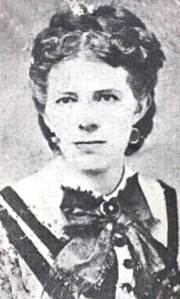
(Photo edited by Bob Rowen)

After false rumors of a Union raid, a furious Stone employs amazing language to accuse the Federal government of using former slaves to wipe Southern civilization off the face of the earth.

Sept. 5, 1864

Near Oak Ridge, La.

Intense excitement in the neighborhood. Yankees reported advancing in large force destroying, burning, and murdering as they come!! Capt. Lea with his small band of guerrillas contesting every mile of the way but being steadily forced back by superior numbers! Praying Col. Parsons, who has the only troops near, for reinforcements, but who refuses to send them as he is under stringent orders and making forced marches! Blank consternation among the citizens who hear that the Federals have vowed vengeance against this section on account of Capt. Lea and his guerrillas. Everyone is preparing to flee the wrath to come.

Such were the startling reports brought to Col. Templeton by terrified Mr. Philips this morning, frightening us nearly to death, for great is our horror of the vandal hordes since their ruthless destruction of Floyd and Pin Hook and their outrageous conduct at those doomed places. Mrs. Templeton soon had everything arranged for our rapid flight through the swamp across the Ouachita to the safe haven of Col. Wadley’s home, should the reports prove true, leaving Mrs. Templeton and Mrs. Savage here to brave the storm, Col. Templeton going with us. We were on the qui vive all day looking for a mounted messenger galloping up through the wooded lawn shouting, “Flee, Flee.” But about sunset the tension relaxed. We heard that the Yankees came out only as far as Floyd on a reconnaissance and are retiring to the river, and so we breathe freely once more.

The Yankee raids are no joke, though we laugh at each other for being frightened. Last week 200 of the Corps D’Afrique, officered by six big white men (wretches they are), came out and laid the two little villages of Floyd and Pin Hook in ashes, not allowing the people to remove any of their possessions from their houses and thus leaving them utterly destitute. They were very rough and insulting in their language to the ladies, tore the pockets from their dresses and the rings from their fingers, cursing and swearing, and frightening the helpless folks nearly into fits.

This was done in revenge for a guerrilla raid a few days before, in which a good many government stores were destroyed and eighty or ninety Negroes brought out. The Yankees know they make it ten times worse for us by sending Negroes to commit these atrocities. The Paternal Government at Washington has done all in its power to incite a general insurrection throughout the South, in the hopes of thus getting rid of the women and children in one grand holocaust. We would be practically helpless should the Negroes rise, since there are so few men left at home. It is only because the Negroes do not want to kill us that we are still alive. The Negroes have behaved well, far better than anyone anticipated. They have not shown themselves revengeful, have been most biddable, and in many cases have been the only mainstay of their owners.

Five or six citizens, unarmed, were murdered by the Yankees in that Floyd raid. How thankful I am we left home when we did. To lose everything is bad, but constant terror and insult are worse.

The guerrillas report that the cotton crop on the river is a complete failure, entirely eaten up by the worms. The fields are swept of every vestige of green and there is hardly a matured boll to a stalk. This news rejoices our very hearts. Those are true “Confederate worms,” working for the good of the Cause. …


Kate Stone’s Civil War: Lazy and languid

As Stone continues her brief stay with friends in Louisiana, she savors the old sights and sounds of her beloved home state.

KS57

From 2012 to 2015, Stillness of Heart will share interesting excerpts from the extraordinary diary of Kate Stone, who chronicled her Louisiana family’s turbulent experiences throughout the Civil War era.

Learn more about Stone’s amazing life in 1861, 1862, 1863, 1864, 1865 and beyond. Click on each year to read more about her experiences. You can read the entire journal online here.

(Photo edited by Bob Rowen)

As Stone continues her brief stay with friends in Louisiana, she savors the old sights and sounds of her beloved home state.

Sept. 2, 1864

Near Oak Ridge, La.

Mrs. and Col. Templeton are entertaining a Mr. Massengale, just from Texas with news of Capt. Jack Wylie. We may look for him any day now. He will bring three beautiful horses, which we three girls have already appropriated in imagination and expect to race over the whole countryside.

I am too used up by my ride, or rather run, of yesterday to do anything. We have been very busy for the last ten days, riding, sewing, singing, receiving visitors, and playing, but now that the Brigade has gone out to Tensas Parish, we will be quiet for a time. Even Walker’s division is passing through en route to Arkansas, and so for the present we are left defenseless. …

Unfortunately for my pleasure, the report is abroad that I am engaged. There is no truth in it, and it deprives me of much fun. …

I have finished all of Jimmy’s clothes and two dresses for myself, and I feel a real Louisianian once more in the very heart of the swamp, suffocating with the heat, fighting mosquitoes, lazy and languid, little appetite, but luxuriating on fruit for breakfast, dinner, and supper and enjoying curds and cream. The swamp is my own dear land most natural, most restful.

Mamma’s trip to Yankeeland did much good to all of us. The carriage, and such a delightful one, is a great triumph. The dry goods are the greatest comfort, relieving our present necessities, and the books and papers are great entertainment. …

Kate Stone’s Civil War: We enjoy our ease

As Stone loses another brother to the Confederate Army, she also records the hanging of two Missouri spies.

KS56

From 2012 to 2015, Stillness of Heart will share interesting excerpts from the extraordinary diary of Kate Stone, who chronicled her Louisiana family’s turbulent experiences throughout the Civil War era.

Learn more about Stone’s amazing life in 1861, 1862, 1863, 1864, 1865 and beyond. Click on each year to read more about her experiences. You can read the entire journal online here.

(Photo edited by Bob Rowen)

As Stone loses another brother to the Confederate Army, she also records the hanging of two Missouri spies.

Aug. 23, 1864

Near Oak Ridge, La.

Mamma and I came out to Monroe [La.] and Jimmy joined the army. Mamma and I stopped here at Col. Templeton’s, and then Mamma went on to the river and stayed with Mrs. Newman. She went in the old Jersey but came back in the pretty carriage that we have been wanting ever since we left home. She brought out a carriage load of dry goods that were most welcome.

After staying here a few days, she returned to Monroe for a little stay with Mrs. Wadley and then on home by way of Homer where so many of our friends are established. We stopped there coming out, and they greeted us most cordially. We could not make much of a visit as Jimmy and Mamma were anxious to get on. Mrs. Templeton’s family all insisted on my remaining with them until fall, and then I could go back to Texas with Col. Templeton, who will go out to where the Negroes are beyond Tyler.

Jimmy’s command was camped near here and I could see much of him. Mamma and I knew it would be a delightful visit, and as she unselfishly and I selfishly wanted to stay, I did so and am having a most lovely time. All the family are so kind. …

What a horrible tragedy, the death of Mrs. Hull’s two brothers, hanged as spies in Missouri where they had gone in disguise to recruit for Col. Hull’s regiment. They were with him but he escaped and had the hardihood to go and see them hanged with the faint hope that he might effect their escape. But of course that was hopeless. He made his way out of the state with some men and met a number who knew him but was not betrayed. The men hanged were two gallant young officers of excellent family. I cannot recall their names just now, but their father was the editor and proprietor of one of the leading St. Louis papers and left a large fortune. Poor Mrs. Hull is heartbroken.

It is very warm but we enjoy our ease with open doors and windows, undressed and lounging around. No gentlemen staying in the house to molest or make us afraid. Emmie is busy on a dress that she has had on hand for two weeks. Mary is practicing a delightful concord of sweet sounds, and I have been working on a flannel shirt for Jimmy. …

Kate Stone’s Civil War: Callous to suffering and death

Stone feels adrift throughout an era where the past is too painful to remember and the future is too horrific to imagine.

KS55

From 2012 to 2015, Stillness of Heart will share interesting excerpts from the extraordinary diary of Kate Stone, who chronicled her Louisiana family’s turbulent experiences throughout the Civil War era.

Learn more about Stone’s amazing life in 1861, 1862, 1863, 1864, 1865 and beyond. Click on each year to read more about her experiences. You can read the entire journal online here.

(Photo edited by Bob Rowen)

Hidden beneath her upper-class sneering at a Texas barbecue, Stone grimly illustrates the wartime reality of senseless death and the emotional and psychological numbing required to endure it from one day to the next. She feels adrift throughout an era where the past is too painful to remember and the future is too horrific to imagine.

June 26, 1864

Tyler, Texas

This has been a busy week, clouded by the thought of Jimmy’s departure. We are finishing off his clothes and renovating ours, for we will go with him as far as Monroe [La.]. …

We have had our own trials patching up our clothes. We had no idea we were so near being ragamuffins until we took an exhaustive survey of our underclothes. Oh, for bolts and bolts and more bolts of white domestic. If Mamma’s trip proves successful, we will be able to better our condition as regards habiliments. Mamma is having quite a store of Texas goodies made up … to solace the inner man while on the road. …

Friday there was a grand Masonic celebration that we, in common with all the town and county, turned out to see. Mr. Michele took possession of our party and Sally Grissman and established us in the most pleasant and also most conspicuous seats and then devoted himself to our entertainment. Lt. Alexander and Dr. McGregor took possession of a nearby window, and we all had a merry morning but did not profit by the speeches. A large crowd and barbecue dinner that Mr. Michele insisted was not clean enough for us to eat. “Why,” said he, “should we dine with plebians?” I hope no native heard him. We went out, as Mamma said, “to see the animals feed.” Then we (the select few) returned home to dinner …

That night there was a party given at the hotel by Col. Anderson. He is in command, I think, of the Ordnance Department here and is an old army officer. His wife is charming. Emily and I went, to our surprise, and spent a charming evening. It was a most mixed and odd-looking crowd. Neither Emily nor I possessed a party dress, but we did not bring discredit on the swamp and looked well enough.

I did not think two months ago I would ever dance or care to talk nonsense again. But one grows callous to suffering and death. We can live only in the present, only from day to day. We cannot bear to think of the past and so dread the future. The refugees remind me of the description of the life of the nobility of France lived during the days of the French Revolution thrusting all the cares and tragedies of life aside and drinking deep of life’s joys while it lasted. This was our debut in Tyler society, and without self-flattery I may say we were quite a success.

I took a buggy ride yesterday with Dr. McGregor, who has a fine span of horses, and we just flew up and down (especially down) the hills. Enjoyed it highly, though I did think we would capsize on every hill we rushed down. On our return all the boys met us at the gate and could scarcely contain themselves at such a splendid opportunity for teasing, but the dread of future punishment at my hands kept them fairly in bounds. …

Kate Stone’s Civil War: Those terrible battles

The horror of the Overland Campaign hangs over the Stone household but she holds out hope Lee will outsmart Grant in the end.

KS54

From 2012 to 2015, Stillness of Heart will share interesting excerpts from the extraordinary diary of Kate Stone, who chronicled her Louisiana family’s turbulent experiences throughout the Civil War era.

Learn more about Stone’s amazing life in 1861, 1862, 1863, 1864, 1865 and beyond. Click on each year to read more about her experiences. You can read the entire journal online here.

(Photo edited by Bob Rowen)

The horror of the Overland Campaign hangs over the Stone household but she holds out hope Lee will outsmart Grant in the end.

Again Stone impresses with her ability to illustrate everyday life and mores in so few detailed sentences. Note how the Stones and their friends are now regularly visiting Union prisoners at the nearby Confederate camp.

June 19, 1864

Tyler, Texas

A letter from My Brother but dated three months ago. He writes very sadly and thinks he will not see us again until the war is over. He was safe on the fourth of May, but it was on the fifth that those terrible battles commenced. We see from the papers that his corps was engaged every day. The fate of Richmond still trembles in the balance. Lee’s army has fallen back within the fortifications, and Grant is beginning to burrow as they did at Vicksburg. The most thrilling report is that Beauregard has captured Butler and 9,000 men. May it only be true. …

We have quite a trip in contemplation. Mamma is thinking of going to Monroe [La.] on business and taking me and one of the boys on for a pleasure jaunt. Which one of the boys depends on Mrs. Savage, who thinks of joining us with Emily. In that event Mamma will leave Jimmy at home as affairs are getting too interesting with Jimmy and Emily. He is too susceptible, and Mrs. Savage is too much of a matchmaker for Jimmy to be hourly exposed to such fascination for the next two weeks. Emily is a designing, forward girl, exceedingly so for her age. Jimmy is making every preparation to go with us and join the army at Monroe and will be horribly disappointed if Mamma refuses her consent.

Our usual refugee visitors. Yesterday evening returning from a ride, Jimmy and I were called in by Mrs. Carson, who begged us to stay to supper, at which we enjoyed delightful venison, killed by Jimmy Carson, and some of Mrs. Carson’s new style marmalade excellent. Read the papers to Mrs. Carson and rode home in the most glorious moonlight.

Mamma is very sad since receiving My Brother’s letter. She is very anxious about him. We have a nice set of real chessmen, made by one of the prisoners. We loaned them some days ago to the hospital in response to a polite note asking for them. The boys often go there. They have taken a great fancy to Mr. Griffin, a wounded boy. He must be a nice young fellow. Mamma and Mrs. Carson and some of the other ladies go quite frequently.

Kate Stone’s Civil War: Strangers in a strange land

Stone mourns a family friend’s death. She also notes ominously the growing epidemic of deadly disease at a nearby Confederate camp filled with Northern prisoners of war.

KS53

From 2012 to 2015, Stillness of Heart will share interesting excerpts from the extraordinary diary of Kate Stone, who chronicled her Louisiana family’s turbulent experiences throughout the Civil War era.

Learn more about Stone’s amazing life in 1861, 1862, 1863, 1864, 1865 and beyond. Click on each year to read more about her experiences. You can read the entire journal online here.

(Photo edited by Bob Rowen)

As another oppressive Texas summer begins, Stone mourns a family friend’s death. She also notes ominously the growing epidemic of deadly disease at a nearby Confederate camp filled with Northern prisoners of war.

June 14, 1864

Tyler, Texas

Comfortably seated by an open window in our lone rocking chair, I am munching Confederate cakes all alone with nothing to do. … Johnny is lying on his stomach with his heels in the air … Johnny has taken great delight in Shakespeare and reads and re-reads his favorite plays. He is already a good Shakespearean scholar. Sister is amusing herself with Sally, and the others are off spending this day with Mrs. Prentice. If there is one thing I most detest, it is spending a long summer day away from home. …

Jimmy received a letter from Mr. Hardison telling of Mrs. Hardison’s death in February. We are truly grieved to hear it. She was a high-minded good woman and one of our best friends. She died in Red River County, where they have been living since fall. Her life was a scene of trial from the time they fled from home. He writes most sadly. They have no books, no papers, hear no news, and have made no new friends and are alone on the bleak prairie, strangers in a strange land. We pity them all but most, her poor mother, Mrs. Alexander.

Anna and Dr. Meagher returned a few days ago. He is stationed here now in charge of the Yankee prisoners. The prisoners are in a most pitiable condition, perfectly destitute. Some have only a blanket to wear and others only one garment. There is much sickness and death among them and the authorities are powerless to get clothes for them. No clothes or blankets to be bought. …

Kate Stone’s Civil War: The breath of flowers

Stone’s seamstress slave returns, which Stone notes with sarcasm. Later, she and a friend spend a day lounging and criticizing Texas.

KS45

From 2012 to 2015, Stillness of Heart will share interesting excerpts from the extraordinary diary of Kate Stone, who chronicled her Louisiana family’s turbulent experiences throughout the Civil War era.

Learn more about Stone’s amazing life in 1861, 1862, 1863, 1864, 1865 and beyond. Click on each year to read more about her experiences. You can read the entire journal online here.

(Photo edited by Bob Rowen)

Stone’s seamstress slave returns, which Stone notes with sarcasm. Later, she and a friend spend a day lounging and criticizing Texas.

June 1, 1864

Tyler, Texas

Adeline got back today from her “rustication” so we turn the sewing over to her. …

Made Lela Lawrence a pretty fan today, but Jimmy has not the handle ready yet. Jimmy Carson and I have been having some charming rides over the steep hills and through the deep valleys, all fragrant with the breath of flowers.

June 6

Nearly a week of rain. … No visitors, no books, no letters, no anything. …

Emily and I spent Saturday alone at Judge Richardson’s and had a lovely time. The Judge and Mrs. Prentice went off on business, and Emily and I took possession of comfortable rocking chairs on a low shady gallery with plenty of books and a basket of green apples. Just as we were tiring of these luxuries, a gentleman, a refugee as we discovered, came to call on the Judge and made himself very entertaining for the rest of the morning. We compared notes on Texas, and I fear we rendered harsh judgment.

The Richardsons live in a secluded spot five miles from Henderson but have more comforts than anyone we know. With few neighbors, it must be awfully lonely with only her little girl and Judge Richardson. …

Kate Stone’s Civil War: That land of desolation

Martial optimism mixes with frustration as Stone sits down to sew, only because her seamstress slave has escaped.

KS52

From 2012 to 2015, Stillness of Heart will share interesting excerpts from the extraordinary diary of Kate Stone, who chronicled her Louisiana family’s turbulent experiences throughout the Civil War era.

Learn more about Stone’s amazing life in 1861, 1862, 1863, 1864, 1865 and beyond. Click on each year to read more about her experiences. You can read the entire journal online here.

(Photo edited by Bob Rowen)

Martial optimism mixes with frustration as Stone sits down to sew, only because her seamstress slave has escaped.

May 29, 1864

Tyler, Texas

The news this morning is enough to make one hurrah. Grant is repulsed with a loss of 45,000 and Johnston is victorious at Dalton with 10,000 prisoners captured. Providence is smiling on our arms this year. Not a defeat. Peace, glorious Peace, will gladden our hearts before the spring flowers bloom again.

It is the fairest of May days and Mamma has gone to church. I stayed with Johnny, who is feeling unwell and is in bed. Mamma will find it unpleasantly warm walking that mile from church. Oh, for a carriage! My ambition reaches out only for a carriage and a riding horse for Johnny, then I shall be satisfied for a little while. I doubt that I was ever intended for a poor girl. Deprivations go hard with me. Mamma has more strength of mind than to worry about it.

A wagon just arrived from the prairie loaded with eatables. … Not a cent of money in the house for a week and only hard fare. As the wagon has come, Jimmy’s trip was useless. All the Negroes are well and affairs are flourishing in that land of desolation. The last few days have been as dismal as a rainy Sunday. We miss Julia. No letters, no visitors, and even the boys have half-way deserted us. … Mrs. Savage grows ruder every day. She is so often rough and unkind in her speech that the boys all stand in terror of her tongue and will hardly venture to go there.

May 30

Our first busy day this spring, sewing on the cloth from the prairie. We are at last using homespun. Hemmed a dozen towels today, looking much like the dish towels of old. Little Sister is to have an outfit from the same piece, but she quite glories in the idea of wearing homespun and coming out a regular Texan. The house servants are charmed to see the cloth. They have been fit suspects for the ragman for weeks. Mamma is readying up Charles, who has been a regular ragamuffin.

We are sorry Adeline, the seamstress, selected this as a fit time to run away. It keeps our hands full. Mamma sent Felix back to Mr. Smith and has Thomas in his place. We think he will be an improvement. …

1864: Day to Day

Exiled in Texas, Kate Stone refused to dwell on death. ‘People do not mourn their dead as they used to,’ she wrote. ‘Everyone seems to live only in the present — just from day to day — otherwise I fancy many would go crazy.’

This is Part 4 of a five-part essay series on Kate Stone and her Civil War which was modified from a paper I presented at the New York Military Affairs Symposium in October 2011.

Learn more about Stone’s amazing life in 1861, 1862, 1863, 1865 and beyond. Click on each year to read more about her experiences.

As the war ground on into 1864, the men and women around Stone made the most of their lives of exile in East Texas. Dances were held. Men and women married. new boys studied for classes.

In Tyler, Texas, Stone cleaned the house, played chess, and read. The wall Stone built in her mind to hold back the crush of mounting tragedies in the Eastern Theater became a permanent fixture. Not even the drama of death breached the barrier anymore.

(Photo edited by Bob Rowen)

“People do not mourn their dead as they used to,” she wrote. “Everyone seems to live only in the present — just from day to day — otherwise I fancy many would go crazy.”

In 1864, Confederate victories brightened the situation in the Trans-Mississippi Theater. In the spring of 1864, Federal forces under Maj. Gen. Nathaniel Banks began the Red River Campaign, in which Federal forces from Vicksburg, New Orleans and Arkansas were supposed to meet near Shreveport, seize Louisiana once and for all, amputate Texas from the Confederacy, and then abort any nascent relationship between the Confederacy and the French-controlled Mexican government.

But the plan failed to consider Confederate audacity. In early April 1864, Maj. Gen. Taylor beat back the Federal invasion at the Battles of Mansfield and Pleasant Hill.

Stone practically leapt for joy in her journal. “It is our first great success on this side of the river. … We will never laugh at our soldiers on this side of the Mississippi again. …”

The Confederate conscription act lowered the age range for enlistment to seventeen, and in August, Kate Stone lost a third brother to the Confederate Army. James Stone joined a unit named Harrison’s Brigade at Monroe, La.

She and her mother accompanied him to Louisiana, and Federal raids through the area frightened her, especially when conducted by black soldiers.

“The Paternal Government at Washington,” she wrote, “has done all in its power to incite a general insurrection throughout the South, in the hopes of thus getting rid of the women and children in one grand holocaust. We would be practically helpless should the Negroes rise, since there are so few men left at home.”

******

Works cited or consulted for this essay series:
Faust, Drew Gilpin. Mothers of Invention: Women of the Slaveholding South in the American Civil War. Chapel Hill: North Carolina UP, 1996. Print.
. Southern Stories: Slaveholders in Peace and War. Columbia, Mo.: University of Missouri, 1992. Print.
Foote, Shelby. The Civil War: A Narrative. New York: Vintage, 1986. Print.
Johnson, Ludwell H. Red River Campaign: Politics and Cotton in the Civil War. Baltimore: Johns Hopkins, 1958. Print.
Kronk, Gary W. “C/1861 J1 (Great Comet of 1861).” Cometography.com. n.d. Web. 11 Sept. 2011.
Long, E.B. and Barbara Long. The Civil War: Day by Day. Garden City, N.Y.: Doubleday, 1971. Print.
McPherson, James M., ed. The Atlas of the Civil War. New York: Macmillan, 1994. Print.
. Battle Cry of Freedom. New York: Oxford UP. 1988. Print.
Parrish, T. Michael. Richard Taylor: Soldier Prince of Dixie. Chapel Hill: North Carolina UP. 1992. Print.
Stone, Kate. Brokenburn: The Journal of Kate Stone, 1861-1868. Ed. John Q. Anderson. Baton Rouge: Louisiana UP. 1995. Print.
Sullivan, Walter. The War the Women Lived: Female Voices from the Confederate South. Nashville: J.S. Sanders & Company. 1995. Print.
Wilson, Edmund. Patriotic Gore: Studies in the Literature of the American Civil War. New York: W.W. Norton, 1962. Print.
Wooster, Ralph A. Civil War Texas. Texas State Historical Association. 199. Print.

Kate Stone’s Civil War: A sad 1863 ends

As 1863 came to a quiet close, Kate Stone — bathed in early evening firelight and unnerved by the brutal gales of a Texas winter — recorded some final thoughts on her grim situation.

KS49

From 2012 to 2015, Stillness of Heart will share interesting excerpts from the extraordinary diary of Kate Stone, who chronicled her Louisiana family’s turbulent experiences throughout the Civil War era.

Learn more about Stone’s amazing life in 1861, 1862, 1863, 1864, 1865 and beyond. Click on each year to read more about her experiences. You can read the entire journal online here.

(Photo edited by Bob Rowen)

As 1863 came to a quiet close, Kate Stone — bathed in early evening firelight and unnerved by the brutal gales of a Texas winter — recorded some final thoughts on her grim situation, made less uncomfortable by determined effort and endurance. The sense of loss weighed heavier than ever on her heart and mind. She missed her brothers, her friends, and her Brokenburn neighbors. Her community, she mourned, was “scattered to the four winds.”

Christmas Night

Tyler, Texas

The day has passed most quietly, not a cake, not a visitor. We did have an eggnog but only the servants enjoyed it. Made of mean whiskey, it smacked of Texas. We missed our regular Christmas visitor, Mr. Valentine. He has been with us for the last three years. I wonder where he is now. Only one present on the place, a fine turkey from Mrs. Lawrence. Last Christmas morning when dear little Beverly raised up in bed, and looking at her stockings saw only some homemade toys, bedstead and chairs made of white pine by the plantation carpenter, hid her head, sobbing that she “would not have the ugly common things.”

Aunt Laura told her how bad that was and that poor Santa Claus had done his best but he could not get through the Yankee lines. Presently the little, flushed face was raised and an apologetic little voice faltered out, “Table, I begs your pardon. Bedstead, I begs your pardon. I will keep you and play with you. You is nice.” What a dear little heart she is. …

A cold, moonshiny night, a warm room, and Mamma dozing at ease in our only rocking chair before a bright fire. The chair has accompanied us in all our journeyings since leaving Monroe and, though not a thing of beauty, it is a joy forever and seldom without an occupant. Sad to say, it is showing signs of wear, but it has acted the part of comforter in our weary pilgrimage. …

Mrs. Lawrence has been kind about lending us her books, but we have about finished her library. Have read history until I feel as dry as those old times. Have nearly memorized Tennyson and read and reread our favorite plays in Shakespeare. Fortunately he never grows old. We hope Mr. McGee will be able to get “Harper’s” to us. We wrote to him for it. That would keep us stirred up for awhile at least. The literature of the North is to us what the “flesh pots of Egypt” were to the wandering Israelites — we long for it.

Never a letter but brings news of death. Mr. Catlin is gone. And when we saw him last spring, what a picture of vigorous health he was. I wish we could hear from Lt. Valentine. Our old neighborhood is scattered to the four winds.

Thinking As Leverage

Developing deep and critical thinking.

Behind The Wall

Tabletop Games

Rebecca Aguilar

#CallingAllJournalists Initiative | Reporter | Media Watchdog | Mentor | Latinas in Journalism

Anna Fonte's Paper Planes

Words, images & collages tossed from a window.

Postcards from Barton Springs

Gayle Brennan Spencer - sending random thoughts to and from South Austin

The Flask Half Full

Travel stories and culture, with a twist.

Government Book Talk

Talking about some of the best publications from the Federal Government, past and present.

Cadillac Society

Cadillac News, Forums, Rumors, Reviews

Ob360media

Real News That Matters

Mealtime Joy

bringing joy to family meals

Øl, Mad og Folk

Bloggen Øl, Mad og Folk

a joyous kitchen

fun, delicious food for everyone

A Perfect Feast

Modern Comfort Food

donnablackwrites

Art is a gift we give ourselves

Fridgelore

low waste living drawn from food lore through the ages

BeckiesKitchen.com

MUSINGS : CRITICISM : HISTORY : NEWS