
1861: The Dark River

In 1861, Kate Stone watched from Louisiana as the firestorm of civil war spread from state to state. She had no idea that the fire would soon consume her life. As she started her diary, she had no idea that nothing would ever be the same again.

This five-part essay series on Kate Stone and her Civil War is modified from a paper I presented at the New York Military Affairs Symposium in October 2011.

Learn more about Stone’s amazing life in 1862, 1863, 1864, 1865 and beyond. Click on each year to read more about her experiences.

It’s easy for a casual enthusiast of the Civil War to be seduced by the arrows and lines on battlefield maps and to forget the rich lives those engagements destroyed. It’s easy to skim past the details when armies ravage entire regions, easy to blink past sterile, blurred photos of the scorched buildings in Richmond, the rows of corpses at Atlanta, or the terrified refugees from all parts of the collapsing Confederacy.

But the Civil War can never be completely understood without a closer look at the men and women who endured this cataclysm, those who endured the brutal strangling of conquered cities, those who fought on the front lines, and those who littered the blasted landscapes.

For twenty-year-old Kate Stone, her story began in Brokenburn, the chronicle she began in 1861 to record the momentous era dawning over her life.

The diary was named after her family’s cotton plantation in northeastern Louisiana, near the Mississippi River, about 30 miles northwest of Vicksburg. Stone shared the mansion with her widowed 37-year-old mother, two uncles, five brothers and a younger sister. Her father died in 1855, and three other siblings died before 1861. About 150 slaves served in the house or tended the estate, which stretched over more than 1,200 acres of bayous, forests and cleared fields.
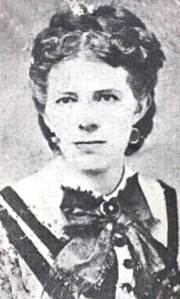
(Photo edited by Bob Rowen)

Stone was born in Mississippi Springs, Miss., on Jan. 8, 1841. She was educated at Nashville Female Academy in Tennessee. “I am tall,” she wrote in 1861, “Not quite five feet six, and thin, have an irregular face, a quantity of brown hair, a shy, quiet manner, and talk but little.” She was a rich girl, essentially, who generally enjoyed a life of leisure, and under normal circumstances she could expect much more of the same for the next several decades.

She spent her days playing chess and playing the piano, attending Sunday church and reading the Bible, picking berries, embroidering, entertaining visitors, and visiting friends and family. She loved riding her horse, Wonka. She was intelligent, well-educated and well-read. She loved literature, particularly the works of Victor Hugo, Alfred Tennyson, Edgar Allen Poe, Walter Scott, and William Shakespeare.

She was a romantic who admired her mother’s “great power of attracting love, the first and greatest gift that can be bestowed on anyone.”

Stone viewed her world with affection and optimism, and she strolled through it armed with a sharp wit, a smart self-deprecating sense of humor, and acidic sarcasm — qualities that glitter throughout her diary.

Stone never thought she was beautiful, even when her mother insisted she was. “I was the ugly duckling of the whole family,” she recalled. Her grim self-image, she wrote, “has been the shadow on my life.” In 1861, Stone’s mother explained why her father doted on her so often. Stone had always thought that her father praised her mind because he found so little to praise in her appearance. Her mother assured her that he had considered Stone wholly “perfect.”

Stone confessed to her diary that she was surprised but tremendously relieved: “The knowledge of this will change my life from this night.” She promised herself that would “try to put away the morbid thoughts … [including] … the fear that, being ugly and unattractive, no one could ever really care for me, and that I was doomed to a life of loneliness and despair.”

The trumpet of war

As the spring days of 1861 warmed, Stone and her family, at first, saw a bright future ahead. She recalled that the latest cotton crop had at last made a profit for the family, “and hereafter we would have nothing to do but enjoy ourselves.” She looked forward to long months of leisure through the rest of the year, and 1862 promised a family vacation in Europe.

But in the months after the 1860 presidential election, dark political clouds quickly building in the East cast long, chilling shadows over Brokenburn’s blossoming gardens. Spring 1861 brought a virulent war fever to the region, especially after the Confederate bombardment of Fort Sumter in April. Stone and her relatives regularly read Northern newspapers, and the publications’ “horrible stories” about the South infuriated her.

Stone felt herself swept away by the waves of aggressive emotion swirling through Southern society. “Throughout the length and breadth of the land,” she wrote in May 1861, “the trumpet of war is sounding … men are hurrying by thousands, eager to be led to battle against [President Abraham] Lincoln’s hordes … willing to meet death in defense of the South. … Never again can we join hands with the North, the people who hate us so.” A few days later she added, “We should make a stand for our rights — and a nation fighting for its own homes and liberty cannot be overwhelmed. Our Cause is just and must prevail.”

She was deeply offended whenever she encountered someone who failed to share her depth of passion for the Confederate cause. When a dinner companion, an immigrant from Hungary, regarded the South’s motivations as “a grand humbug … something to be mocked and sneered at,” she seethed with contempt. “I could shake him,” she wrote. Stone and her neighbors also kept a bitter eye on a handful of known Unionists living in a hamlet nearby. “[W]e think they should be sent North to a more congenial people,” she grumbled.

The prospect of glory and honor gained from a victorious struggle for independence electrified Southern imaginations, and Stone was no exception. John Q. Anderson, the editor of Stone’s journal, wrote in his introduction that “Kate shared the widespread belief of Southerners that the war would be an outing for dashing young officers in splendid uniforms, inspired to deeds of valor by patriotic maidens.”

Stone’s very first entry in her new journal focused on one such man hoping to be a dashing young officer: her brother William. On May 15, she wrote the journal’s first lines: “My Brother started at daybreak for New Orleans. He goes as far as Vicksburg on horseback. He is wild to be off to Virginia.”

Slaves

Kate Stone’s brother William, whose departure she mentioned in her first diary entry, arrived at the assembly area too late to join his preferred infantry company, so he returned to Brokenburn. By May 25 he was on the road again, this time with their Uncle Bo, intent on joining the Jeff Davis Guards. Mourning his departure for a second time, Stone admitted feeling more than a twinge of guilt. “They go to bear all hardships,” she wrote, “while we whom they go to protect are lapped safe in luxurious ease.” The Jeff Davis Guards were sent to fight in Virginia.

Stone’s mother sent the new soldiers on their journey with three well-supplied horses and Wesley, a slave. Stone said Wesley “was very proud of the honor of being selected” to accompany “Marse Will” into the war. Uncle Bo, Stone reported, expected to be a private in a unit named the Volunteer Southerns, and he elected not to take a “body servant” because he didn’t think an enlisted soldier should have one. “[B]ut if he changes his mind,” Stone added confidently, “a boy can be sent to him at any time.”
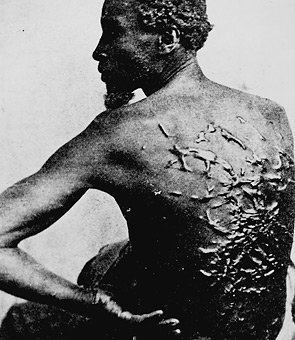
A few weeks later, on June 19, Stone reported seeing a fugitive slave run across the grounds. Men were sent to catch him, but he escaped. “I was glad he escaped,” she wrote. “I hate to think how he will be punished.” She imagined the slave, if caught, would be “whipped unmercifully.” On June 29, she complained that the “house servants have been giving a lot of trouble lately — lazy and disobedient.” She warned that they may have to be sent out to work in the fields. “I suppose the excitement in the air has infected them.”

Stone’s view of slavery, as reflected in her journal, was typical of her time and class. The slaves were described warily, from a distance, with amusement and with pity. From her perspective, the slaves were shadowy, abstract beings, occupying their natural, proper and deserved place in her Southern civilization, forming the foundation of the life she and her family enjoyed. But she also saw the slaves as a threat — a potential threat before the war, and a real, looming threat during the war.

Stone and her neighbors were tormented by rumors of a general slave uprising scheduled for sometime in July 1861. She added that the slaves were “well watched in every section where there are any suspects,” sounding like a prison guard who wondered if she was the real prisoner.

Brillancy and beauty

As spring turned to summer, domestic worries darkened the thoughts Stone poured into her journal. She reminded herself to save seeds from the family’s flourishing garden, “as we will get no more from the North.” Her mother ordered as much planted as possible because she anticipated the plantation would have to become as self-sufficient as possible. “Strict economy,” Stone sternly determined, “is to be the order of the day.” She anxiously looked forward to the arrival of mail and newspapers, improved her sewing, studied French, critiqued the books she read, and savored the ripening fruit on the trees, vines and bushes around the plantation.

It was as if, despite her attempts to lose herself in her pre-war hobbies, Stone felt the power of distant events and marching armies move the ground beneath her feet. “Oh! to see and be in it all,” she wrote with anxious frustration. “I hate weary days of inaction. Yet what can women do but wait and suffer?”

As she made the best of the imperfect serenity around her, Stone was pleasantly and briefly distracted by a celestial gem soaring across the summer sky. On the last day of June she wrote, “There is a comet visible tonight. … It is not very bright but has the appearance of a large star … with a long train of light seen dimly as through a mist.”

It was the Great Comet of 1861, officially named C/1861 J1. It passed closest to Earth on June 30, the day Stone first noted its appearance. By July 4, as more and more volunteers rushed to form new military units under consecrated flags, Stone reported that the “comet increases in brilliancy and beauty every night.” Astronomers around the world studied the object for months before it faded away in May 1862. They calculated that Earth would not see it again for more than 400 years.

Never to return

By the end of July, Stone calmly rejoiced when news arrived of a great battle at Manassas Junction in Virginia. “[O]ur side victorious, of course,” she wrote. Her optimism was eclipsed, however, by journal entries reporting severe fevers, chills, and coughs among her relatives, her neighbors and the slaves. Incessant rain drenched the region for weeks, and malarial fever spread. As summer gave way to fall, wave after wave of sickness swept through Brokenburn.

On Nov. 11, Stone reported that Ashburn, her young maternal uncle, was terribly ill. Her next entry came 16 days later, and the first few lines said it all: “How can I write the record of the last two weeks? … Ashburn, our darling, has gone, never to return.” Stone could write little more than that. Two days later, she officially reported that Ashburn died at 11 p.m. on Nov. 12; the cause was “swamp fever,” most likely malaria.

On Nov. 29, Stone recorded that “[h]ere at home all seems strangely dull and sad.” She wrote most beautifully during great tragedy, and Ashburn’s death inspired grievous words: “[O]ne of our dearest and best has bidden farewell to Earth and floated out on the dark river.”

Stone’s 1861 ended quietly, the household still mourning Ashburn’s death. “This is the first Christmastime in our recollection that was not a time of fun and feasting.”

******

Works cited or consulted for this essay series:
Faust, Drew Gilpin. Mothers of Invention: Women of the Slaveholding South in the American Civil War. Chapel Hill: North Carolina UP, 1996. Print.
. Southern Stories: Slaveholders in Peace and War. Columbia, Mo.: University of Missouri, 1992. Print.
Foote, Shelby. The Civil War: A Narrative. New York: Vintage, 1986. Print.
Johnson, Ludwell H. Red River Campaign: Politics and Cotton in the Civil War. Baltimore: Johns Hopkins, 1958. Print.
Kronk, Gary W. “C/1861 J1 (Great Comet of 1861).” Cometography.com. n.d. Web. 11 Sept. 2011.
Long, E.B. and Barbara Long. The Civil War: Day by Day. Garden City, N.Y.: Doubleday, 1971. Print.
McPherson, James M., ed. The Atlas of the Civil War. New York: Macmillan, 1994. Print.
. Battle Cry of Freedom. New York: Oxford UP. 1988. Print.
Parrish, T. Michael. Richard Taylor: Soldier Prince of Dixie. Chapel Hill: North Carolina UP. 1992. Print.
Stone, Kate. Brokenburn: The Journal of Kate Stone, 1861-1868. Ed. John Q. Anderson. Baton Rouge: Louisiana UP. 1995. Print.
Sullivan, Walter. The War the Women Lived: Female Voices from the Confederate South. Nashville: J.S. Sanders & Company. 1995. Print.
Wilson, Edmund. Patriotic Gore: Studies in the Literature of the American Civil War. New York: W.W. Norton, 1962. Print.
Wooster, Ralph A. Civil War Texas. Texas State Historical Association. 199. Print.

‘Arch of rosy clouds’

Part 10 of this special series focuses on John Ruskin, an English writer, academic and critic who, like so many others presented in the Morgan Library exhibit, turned to a diary to assuage the pain of depression and anxiety.

This special Stillness of Heart series explores the Morgan Library & Museum’s fascinating exhibit, “The Diary: Three Centuries of Private Lives.”

Part 10 focuses on John Ruskin, an English writer, academic, and critic who, like so many others presented in the Morgan Library exhibit, turned to a diary to assuage the pain of depression and anxiety. Ruskin, however, went a step further and used his diary as a primary resource in the study and analysis of his own disorder. As the introductory essay points out, Ruskin “was determined to study his own patterns and learn enough about himself to remain sane. … He re-read his earlier entries, searching for signs leading up to his breakdown, underlining key words and phrases, compiling an index of his experience, and putting down on paper all he could remember of his psychotic visions.”

“No getting things done in this house. Lost all yesterday calling on Marshalls in morning. Fine afternoon, throwing down stones in the wood with Diddie and Maggie. Exquisitest purple I ever saw on hills, in afternoon, and arch of rosy clouds all over old man [a nearby mountain] and opalescent green-blue and rose over blue Helvellyn, divine, but my evening spoiled by finding the poor chaffinch’s nest in ruins, and nestlings dying. A hawk, I fancy, pouncing on the mother;– not able to return for the brood. “

Examine images of his diary and listen to the museum’s audio guide here.

Entries in this series:
Part 1: Introduction to the exhibit and Charlotte Brontë
Part 2: Frances Eliza Grenfell
Part 3: Sophia and Nathaniel Hawthorne
Part 4: Paul Horgan
Part 5: John Newton
Part 6: Mary Ann and Septimus Palairet
Part 7: Walter Scott
Part 8: Bartholomew Sharpe
Part 9: Tennessee Williams
Part 10: John Ruskin

‘A child of love’

Part 9 of this special series focuses on Tennessee Williams, the famed playwright, who embraced his diary as shelter from the depressive snowstorms that ravaged his life

This special Stillness of Heart series explores the Morgan Library & Museum’s fascinating exhibit, “The Diary: Three Centuries of Private Lives.”

Part 9 focuses on Tennessee Williams, the famed playwright, who embraced his diary as shelter from the depressive snowstorms that ravaged his life. Success, drugs, sensual companionship, even public accolades like a Pulitzer Prize (for “Cat on a Hot Tin Roof”) all failed to calm his suffocating anxiety, loneliness, and despair.

“A child of love — dined on the terrace with the cathedral spires lit up and a mass choir singing Catalonian folks songs on the Square below. Then love — came twice, both ways, and divinely responsive as if a benign Providence, or shall we be frank and say God, had suddenly taken cognizance and pity of my long misery this summer and given me this night as a token of forgiveness.”

Examine images of his amazing diary and listen to the museum’s audio guide here.

Entries in this series:
Part 1: Introduction to the exhibit and Charlotte Brontë
Part 2: Frances Eliza Grenfell
Part 3: Sophia and Nathaniel Hawthorne
Part 4: Paul Horgan
Part 5: John Newton
Part 6: Mary Ann and Septimus Palairet
Part 7: Walter Scott
Part 8: Bartholomew Sharpe
Part 9: Tennessee Williams
Part 10: John Ruskin

‘A bold shore and no danger’

Part 8 of this series focuses on Bartholomew Sharpe, an incredibly daring English pirate and excellent navigator who preyed on Spanish sailors along the western coast of South America.

This special Stillness of Heart series explores the Morgan Library & Museum’s fascinating exhibit, “The Diary: Three Centuries of Private Lives.”

Part 8 focuses on Bartholomew Sharpe, an incredibly daring English pirate and excellent navigator who preyed on Spanish sailors along the western coast of South America. Sharpe was sent back to England to be tried for murder in 1682, but he carried a secret gift for the king that he knew guaranteed his acquittal.

Examine images of his amazing diary and listen to the museum’s audio guide here.

Entries in this series:
Part 1: Introduction to the exhibit and Charlotte Brontë
Part 2: Frances Eliza Grenfell
Part 3: Sophia and Nathaniel Hawthorne
Part 4: Paul Horgan
Part 5: John Newton
Part 6: Mary Ann and Septimus Palairet
Part 7: Walter Scott
Part 8: Bartholomew Sharpe
Part 9: Tennessee Williams
Part 10: John Ruskin

‘I have deprived my family’

Part 7 of this series focuses on Walter Scott, a 19th century British author who fought depression and debt late in life with the inspiration and energy gained from keeping a journal.

This special Stillness of Heart series explores the Morgan Library & Museum’s fascinating exhibit, “The Diary: Three Centuries of Private Lives.”

Part 7 focuses on Walter Scott, a 19th century British author who fought depression and debt late in life with the inspiration and energy gained from keeping a journal. Four six years, the book became the place for him to ponder the depths and causes of his lifelong sadness, celebrate and record the famous people that moved in and out of his life, and preserve a private life he hoped his family would appreciate long after he was gone.

“November 20th. I have all my life regretted that I did not keep a regular [diary]. I have myself lost recollection of much that was interesting and I have deprived my family and the public of some curious information by not carrying this resolution into effect.”

Examine images of his powerful diary and listen to the museum’s audio guide here.

Entries in this series:
Part 1: Introduction to the exhibit and Charlotte Brontë
Part 2: Frances Eliza Grenfell
Part 3: Sophia and Nathaniel Hawthorne
Part 4: Paul Horgan
Part 5: John Newton
Part 6: Mary Ann and Septimus Palairet
Part 7: Walter Scott
Part 8: Bartholomew Sharpe
Part 9: Tennessee Williams
Part 10: John Ruskin

‘He was nearly pulled apart’

Part 6 of this series focuses on Mary Ann and Septimus Palairet, a British couple who honeymooned in the United States and Canada in the 1840s.

This special Stillness of Heart series explores the Morgan Library & Museum’s fascinating exhibit, “The Diary: Three Centuries of Private Lives.”

Part 6 focuses on Mary Ann and Septimus Palairet, a British couple who honeymooned in the United States and Canada in the 1840s. They wrote and illustrated a travel diary, recording — and often haughtily (and hilariously) criticizing — daily life in American society.

“On the boat’s arrival at her destination, the passengers were assailed by a mob of cabmen, porters &c who though not allowed to come on board the steamer quarreled about their passengers, and if any one ventured ashore and presumed to scorn their offer he was nearly pulled to pieces for his temerity.”

Examine images of their wonderful diary and listen to the museum’s audio guide here.

Entries in this series:
Part 1: Introduction to the exhibit and Charlotte Brontë
Part 2: Frances Eliza Grenfell
Part 3: Sophia and Nathaniel Hawthorne
Part 4: Paul Horgan
Part 5: John Newton
Part 6: Mary Ann and Septimus Palairet
Part 7: Walter Scott
Part 8: Bartholomew Sharpe
Part 9: Tennessee Williams
Part 10: John Ruskin

‘A strange vanity’

Part 5 of this series focuses on John Newton, a British slave trafficker and later a minister who wrote ‘Amazing Grace.’

This special Stillness of Heart series explores the Morgan Library & Museum’s fascinating exhibit, “The Diary: Three Centuries of Private Lives.”

Part 5 focuses on John Newton, a British slave trafficker and later a minister who wrote “Amazing Grace.” Throughout his adult life, he struggled with his religious faith and with his views on slavery, and the diary captured in daily detail the long, tumultuous spiritual journey he made. In the end, as the exhibit essay explains, Newton simply hoped that someday he “would serve as inspiration to others.”

“I have been reading what I have recorded of my experience in the last year – a strange vanity. I find myself condemn’d in every page[.] But the Lord is good, O how gracious! How wonderfully has he born with my repeated backslidings! And yet the thought but faintly affects. What I can I will – Lord I am not able to praise thee, accept the desire, which I trust is thine own gift – deliver me from that pride, impurity & self seeking, which so fatally interrupt my progress.”

Examine images of the extraordinary diary and listen to the museum’s audio guide here.

Entries in this series:
Part 1: Introduction to the exhibit and Charlotte Brontë
Part 2: Frances Eliza Grenfell
Part 3: Sophia and Nathaniel Hawthorne
Part 4: Paul Horgan
Part 5: John Newton
Part 6: Mary Ann and Septimus Palairet
Part 7: Walter Scott
Part 8: Bartholomew Sharpe
Part 9: Tennessee Williams
Part 10: John Ruskin

‘Happiness has no succession of events’

Part 3 in this series focuses on Sophia and Nathaniel Hawthorne, newlyweds who co-authored a diary celebrating their new lives together.

This special Stillness of Heart series explores the Morgan Library & Museum’s fascinating exhibit, “The Diary: Three Centuries of Private Lives.”

Part 3 focuses on Sophia and Nathaniel Hawthorne, newlyweds who co-authored a diary celebrating their new lives together.

“Happiness has no succession of events; because it is a part of eternity, and we have been living in eternity, ever since we came to this old Manse. Like Enoch, we seem to have been translated to the other state of being, without having passed through death.”

Examine images of their heart-swelling diary and listen to the museum’s audio guide here.

Entries in this series:
Part 1: Introduction to the exhibit and Charlotte Brontë
Part 2: Frances Eliza Grenfell
Part 3: Sophia and Nathaniel Hawthorne
Part 4: Paul Horgan
Part 5: John Newton
Part 6: Mary Ann and Septimus Palairet
Part 7: Walter Scott
Part 8: Bartholomew Sharpe
Part 9: Tennessee Williams
Part 10: John Ruskin

‘I woke with a feeling of agony’

This special series explores the Morgan Library & Museum’s fascinating exhibit, “The Diary: Three Centuries of Private Lives.” Part 2 focuses on Frances Eliza Grenfell, whose parents forbid her to spend her life with the man she loved. So she secretly wrote him letters, spilling her broken heart and feverish longings, page after page after page.

This special Stillness of Heart series explores the Morgan Library & Museum’s fascinating exhibit, “The Diary: Three Centuries of Private Lives.”

Part 2 focuses on Frances Eliza Grenfell, whose parents forbid her to spend her life with the man she loved. So she secretly wrote him letters, spilling her broken heart and feverish longings, page after page after page.

“I dreamt a long letter came from you, & I opened it, Oh! how well I can see it now, & as I was eagerly beginning the first page, I woke with a feeling of agony, for to have read it in a dream w[oul]d have been a blessing. I slept again; & again a long long letter was brought to me in your hand – I opened it, I found it was my own writing inside – the Journal I had kept for you.”

Examine images of her beautiful diary and listen to the museum’s audio guide here.

Entries in this series:
Part 1: Introduction to the exhibit and Charlotte Brontë
Part 2: Frances Eliza Grenfell
Part 3: Sophia and Nathaniel Hawthorne
Part 4: Paul Horgan
Part 5: John Newton
Part 6: Mary Ann and Septimus Palairet
Part 7: Walter Scott
Part 8: Bartholomew Sharpe
Part 9: Tennessee Williams
Part 10: John Ruskin

Behind The Wall

Tabletop Games

Rebecca Aguilar

#CallingAllJournalists Initiative | Reporter | Media Watchdog | Mentor | Latinas in Journalism

Anna Fonte's Paper Planes

Words, images & collages tossed from a window.

Postcards from Barton Springs

Gayle Brennan Spencer - sending random thoughts to and from South Austin

The Flask Half Full

Irreverent travelogues, good drinks, and the cultural stories they tell.

Government Book Talk

Talking about some of the best publications from the Federal Government, past and present.

Cadillac Society

Cadillac News, Forums, Rumors, Reviews

Ob360media

Real News That Matters

Mealtime Joy

bringing joy to family meals

Øl, Mad og Folk

Bloggen Øl, Mad og Folk

a joyous kitchen

fun, delicious food for everyone

A Perfect Feast

Modern Comfort Food

donnablackwrites

Art is a gift we give ourselves

Fridgelore

low waste living drawn from food lore through the ages

BeckiesKitchen.com

MUSINGS : CRITICISM : HISTORY : NEWS

North River Notes

Observations on the Hudson River as it passes through New York City. The section of the Hudson which passes through New York is historically known as the North River, called this by the Dutch to distinguish it from the Delaware River, which they knew as the South River. This stretch of the Hudson is still often referred to as the North River by local mariners today. All photos copyright Daniel Katzive unless otherwise attributed. For more frequent updates, please follow northriverblog on Facebook or Instagram.