As Stone celebrated one brother, she expressed deep discomfort with another.
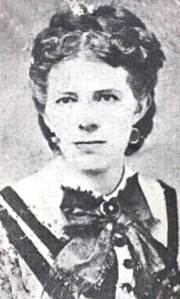
From 2012 to 2015, Stillness of Heart will share interesting excerpts from the extraordinary diary of Kate Stone, the daughter of Louisiana cotton plantation owners who chronicled her turbulent life throughout the Civil War era.
Learn more about Stone’s amazing life in 1861, 1862, 1863, 1864, 1865 and beyond. Click on each year to read more about her experiences. You can read the entire journal online here.
(Photo edited by Bob Rowen)
In mid-October 1861, Stone’s brother, who served in the Confederate army in Virginia, returned to Brokenburn for a rest. Stone was elated to see him. His stories from the battlefields fascinated and horrified her. He rejoined a family wracked by seasonal sicknesses. As Stone celebrated one brother, she expressed deep discomfort with another.
Oct. 19:
What a joyous evening to us all. My Brother came a complete surprise to us all. Sent home on sick furlough. He has had typhoid fever for a month and as soon as convalescent the surgeon sent him home. He looks taller and has lost forty pounds. Home life and love will soon build him up. He came at dusk. We have kept him talking until eleven, and that was not wise, as of course he is tired. He told us many funny anecdotes of his experiences as assistant provost marshal. He likes the marshal exceedingly. How horrible is the idea of the visitors to the Manassas battlefield rifling the graves of Northern soldiers for mementoes. They should be put in the front ranks of the next battle. It is positively ghoulish. Johnny went out for the mail and brought My Brother instead. Mr. Bledsoe kindly sent him out in his buggy. Our heartfelt thanks go up to God for having returned to us our best beloved brother.
Oct. 22:
My Brother is a bright yellow, even the skin of his head, like an orange or a pumpkin, and Dr. Lily has prescribed sugar cane for him. He is to eat all of it he can. Dr. Carson sent him a wagonload of it by the wagon that carried out the cotton that Mamma and others subscribed to the sewing society.
Oct. 28:
Today is but a catalogue of chills. Ashburn and Brother Coley shivered through the morning and burned all the evening. Timely doses of quinine kept them off Sister and Johnny. Sister has been sick since Friday and Mamma had Dr. Lily for her. Charles and Sarah are up today and Lucy and Prank down.
My Brother went out this evening to see Dr. Carson. His appetite is better and he is gaining strength.
They are digging potatoes today. Promises to be a noble lot. Annie is helping Uncle Hoccles gather the goober peas [peanuts]. It looks like a month’s job for him. Jimmy and I made some pecan and pull candy this evening and I wish we had not.
Brother Walter teased and worried us, and we all got tired of it and appealed to Mamma when Brother Walter flew into one of his unreasoning rages (fortunately such attacks are rare) and behaved so badly that we have all been uncomfortable ever since. He is the only one of my brothers I ever thought really needed punishing and the only one I ever feel like quarreling with. I believe he is the brightest of all the boys, converses so well, has Mamma’s gift in that, and looks more like her than any of her children.
Nov. 10:
My Brother left us today to join his regiment at Evansport on Occoquan Creek in Virginia. His health is quite restored but Oh! how we hate to give him up. His visit home has been such a delight to us. When will he come to gladden our hearts again?
Stone lived in consistent dread of the violence of war.
From 2012 to 2015, Stillness of Heart will share interesting excerpts from the extraordinary diary of Kate Stone, the daughter of Louisiana cotton plantation owners who chronicled her turbulent life throughout the Civil War era.
Learn more about Stone’s amazing life in 1861, 1862, 1863, 1864, 1865 and beyond. Click on each year to read more about her experiences. You can read the entire journal online here.
(Photo edited by Bob Rowen)
Stone lived in consistent dread of the violence of war. The demands of war were already very evident all around her. Her brother and uncle were away serving the armies. Her mother’s foresight called for austerity measures — a war garden, cutbacks on travel — to get the family through lean times ahead. Stone noticed the unavailability of certain fabrics critical to military uniforms, and as she sewed and repaired clothing, she made do with other materials. Stone carefully followed the news from the military and diplomatic fronts and hoped for the best. But bad news came in late September 1861.
Sept. 27
No mail this week, but a rumor that 12,000 Federalists have taken possession of Mississippi City. That is bringing the war near us. How we wish the authorities could carry the war into Washington City. What an awful responsibility rests on our statesmen and generals. May God give them wisdom.
Throughout late August 1861, Stone offered a glimpse at the seasonal dangers of rural life that were tragically normal for a 19th century family. The Stones and their neighbors probably suffered from malaria.
From 2012 to 2015, Stillness of Heart will share interesting excerpts from the extraordinary diary of Kate Stone, the daughter of Louisiana cotton plantation owners who chronicled her turbulent life throughout the Civil War era.
Learn more about Stone’s amazing life in 1861, 1862, 1863, 1864, 1865 and beyond. Click on each year to read more about her experiences. You can read the entire journal online here.
(Photo edited by Bob Rowen)
Throughout late August 1861, Stone offered a glimpse at the seasonal dangers of rural life that were tragically normal for a 19th century family. The Stones and their neighbors probably suffered from malaria.
Aug. 24
Did not reach home until nearly ten, much to the surprise of the family who had given us out. Ashburn was to have been with me but I left him sick at Vicksburg. Such an unhealthy season. Everybody in the house, but Brother Coley, has been sick since I left, and I was in bed nearly a week. It has been raining for three weeks and is cool enough for fall. Mr. McRae fears it will make the cotton crop light.
Chainey died of paralysis a few days ago. The place must indeed seem like a graveyard to the poor Negroes so many deaths since we moved here. Clearing land and digging ditches may make it worse now.
Aug. 25
Mrs. Hardison and the baby both have fever, and Josa and the rest of the family look as if there was not an ounce of red blood between them the whitest, weakest looking set of people. … Aunt Sarah complains so much of loneliness and is so afraid to be alone that I would have remained longer with her, but I was anxious about Mamma and the boys. There is so much sickness.
Aug. 28
I have slight chills and fevers and am being dosed on bitters and drugs of varied meanness. There is danger of
congestion or swamp fever at this season.
Aug. 30
Mamma and I, after knitting awhile, went to work on the boys’ uniform shirts. I did the machine stitching, but Mamma soon broke down and went to bed with a chill. Johnny was tossing with fever. …
Sept. 17
We fear Ashburn, Jimmy, and Johnny all have whooping cough. Ashburn must have taken it in Vicksburg, though he had it when a little fellow. There are seventeen little cribs of Negroes to have it in the quarters and Mamma dreads it getting among them. Thus the house is under strict quarantine.
Families shattered. Love lost. Fears deepened. Tightly-held hopes slowly suffocating.
‘Capture of Ricketts’ Battery’ by Sidney E. King
From 2012 to 2015, Stillness of Heart will share interesting excerpts from the extraordinary diary of Kate Stone, the daughter of Louisiana cotton plantation owners who chronicled her turbulent life throughout the Civil War era.
Learn more about Stone’s amazing life in 1861, 1862, 1863, 1864, 1865 and beyond. Click on each year to read more about her experiences. You can read the entire journal online here.
(Photo edited by Bob Rowen)
In late July, Stone’s diary recorded news of the first major battle between Union and Confederate forces in Virginia, the Battle of Bull Run, or the Battle of Manassas, fought on July 21, 1861. The word “First” often accompanies historical mention of this battle because a second battle would be fought on or near the same ground 13 months later.
July 26
Received telegraphic accounts of our first pitched battle fought at Manassas Junction. Our side victorious, of course. A reported loss of 3,000 for us and 7,000 for the Yankees. The losses we hope are exaggerated. Reported that Gen. [Winfield] Scott and [Jefferson] Davis were in command. If Gen. Scott is defeated, it will make our victory more complete. My Brother and Uncle Bo may have been in the fight, but we hardly think so as on the thirteenth they were still in Richmond.
Stone received wrong information on who was in field command. Irvin McDowell commanded Union forces, and Joseph E. Johnston and P.G.T Beauregard commanded the Confederates. Winfield Scott was general-in-chief of all Union forces, and he had remained in Washington. Confederate President Jefferson Davis visited the battlefield near the end of the fighting.
The battlefield maps and accounts of combat are always tragically fascinating, but Stone’s diary instilled in me a genuine sensitivity and respect for the real cost of these engagements. Families shattered. Love lost. Fears deepened. Tightly-held hopes slowly suffocating. Manassas was only the beginning.
July 29
Mamma and Mr. Newton rode to Omega yesterday morning and learned some of the details of the Manassas battle. It was gallantly fought and won. Poor Col. Bartow fell, banner in hand, rushing on so bravely. Mr. Newton heard his brother George was in the fight but came through unharmed.
Tomorrow is a day of thanksgiving for victory. Mr. Newton leaves us for his home early Monday. He is busy tonight packing. How much we will all miss him.
July 30
We are all sorry for Dr. Lily. Sunday, he sent Mamma word that he was going on to Richmond to see his brother and would take any letter or message. Mamma had only time to write a short letter to My Brother, and Brother Coley started with it and met Dr. Lily at the gate, just starting on his way to Richmond. He had received a dispatch that his brother, a boy of seventeen, was dangerously wounded in the battle, and he was going on to be with him. All the gentlemen seem to be leaving for Richmond. Mr. Catlin sent us word that he would leave at once and we sent letters by him. …
Hard, historic days of decision, she knew, lay ahead.
From 2012 to 2015, Stillness of Heart will share interesting excerpts from the extraordinary diary of Kate Stone, the daughter of Louisiana cotton plantation owners who chronicled her turbulent life throughout the Civil War era.
Learn more about Stone’s amazing life in 1861, 1862, 1863, 1864, 1865 and beyond. Click on each year to read more about her experiences. You can read the entire journal online here.
(Photo edited by Bob Rowen)
Independence Day, 1861, inspired Stone to reflect on the remnants of the Union her generation inherited from the Founding Fathers. Hard, historic days of decision, she knew, lay ahead.
July 4
Mamma is still in bed but is better. The boys have holiday in honor of the Fourth but more I think to keep up old customs than for any feeling of respect for the day. This is the first Fourth in our memory to pass without a public merrymaking of some kind, but we do not hear of the day’s being celebrated in town or country. There are other and sterner duties before us. It would ill become us as a Nation to be celebrating a day of independence when we are fighting for our very existence.
This July sun has set on a Nation in arms against itself, host against host. Those who have clasped each other’s hands in kindest spirits less than one short year ago, as friends, as countrymen, as children of one common Mother, now stand opposing each other in deadliest hate, eager to water Old Mother Earth with the blood of her children. Our Cause is right and God will give us the victory. Will the next July sun rise on a Nation peaceful, prosperous, and happy, or on a land desolate and disgraced? He alone knows.
Congress meets today. The lives of thousands hang on its decision. Will it be for peace or war? We should know by Saturday.
July 5
The Fourth and today passed without any trouble with the Negroes. The general impression has been that the Negroes looked for a great upheaval of some kind on that day. In some way they have gotten a confused idea of Lincoln’s Congress meeting and of the war; they think it is all to help them, and they expected for “something to turn up.” I hope the house servants will settle to their work now.
July 17
Mamma and I went out Monday and took dinner with Mrs. Savage and went up in the afternoon to call on Mrs. Carson. I remained there until this evening. Mamma came out and spent the day. Had a delightful visit. It is a most hospitable home, complete in all its appointments lovely gardens and orchards, an old place well taken care of with perfect service because of so many servants.
We admire Dr. Carson greatly. He is such a humane master and good Christian. He has the minister to preach regularly to his Negroes, or if there is no minister, he or one of the boys reads a sermon, hymns, and the Bible to them every Sunday afternoon. And he has Sunday school for them. He raises plenty of fruit and vegetables for everybody on the place, and his quarter lot is the prettiest place, a great stretch of thick green turf dotted with great forest trees and a double row of two-room cabins shining with whitewash. It is the cleanest-looking place I ever saw. He is a good man. Mamma has the minister to preach to our Negroes when he can find time, but that is not as often as we wish.
Kate Stone tries to relax as spring blossoms all around her, but war clouds building in the East darken everything.
From 2012 to 2015, Stillness of Heart will share interesting excerpts from the extraordinary diary of Kate Stone. The daughter of Louisiana cotton plantation owners chronicled her turbulent life throughout the Civil War era.
(Photo edited by Bob Rowen)
June began bright and warm. On June 5, 1861, Kate Stone wrote:
A lovely June day, and Mr. and Mrs. Curry with the three youngest children spent the day, their first visit in months. Annie, the baby, is a nice enough little tot, but what a time her mother has over her, washing, dressing, undressing, and fussing over her most of the day. One would never think it was about the eleventh child. I wonder if she worked so over all the others and why she has a nurse.
Late in the afternoon I went with Brother Coley and Ashburn to the blackberry patch, a glorious ride, a fresh breeze, splendid horse, and a sweeping pace, and the two frolicsome boys.
Mamma said the day had tired her out, but the berries refreshed her mind by supper and the merry chatter of the boys. After supper Mr. McRae, the overseer, came up for a long consultation with her. One by one the boys dropped off to bed, and when at last Mr. McRae took himself off and Mr. Newton, Mamma, and I had a most pleasant, non-sensical talking bee, while enjoying the nicest little meringues and custards.
I lost my comb riding. It just suited my heavy hair, and combs are combs these days. So Jimmy, the dear obliging fellow, has promised to go early in the morning and look for it. …
Stone tried to focus on the mundane details of life: sickness, her French lessons, visiting neighbors, and church services, but the war clouds building in the East could not be ignored.
On June 10, she vented her frustration with her life’s leisurely pace, far from the front lines.
When quietly our days are passing, when the whole planet is in such a state of feverish excitement and everywhere there is the stir and mob of angry life. Oh! to see and be in it all. I hate weary days of inaction. Yet what can women do but wait and suffer?
A week later, on June 17, Stone shared a sense of her intellectual curiosity as she explored the experiences of foreign-born visitors, She often yearned for different opinions and perspectives. But she was always sure when someone was wrong.
I had a long talk with Mr. Hornwasher on the subject of war and the battles he has been in. Both he and Mr. Kaiser are Hungarian refugees, political exiles. Mr. Hornwasher is a Count [or] something in his own land. He is now a teacher of music and languages, and his great friend, Mr. Kaiser, is tutor at Mrs. Savage’s. They are highly educated and refined men and are entertaining talkers, notwithstanding their odd pronunciation.
Robert had fever and Mrs. Savage was so unwell that both had to lie down. Dinner passed off most pleasantly, at least to me. I sat between Mr. Kaiser and Mr. Newton and they made themselves very entertaining. Mr. Valentine and Anna sat together and hardly spoke to each other a dozen times. They never hit it off somehow. I must not let them sit next to each other again.
War was the principal topic. Both Mr. Hornwasher and Mr. Kaiser speak of enlisting. I should think that they had had enough of war in their own country. Mr. Valentine treats the whole subject of the war in his usual sarcastic, cynical manner. To him, the whole affair is a grand humbug, the enthusiasm and patriotism of the South something to be mocked and sneered at. He cannot appreciate the earnestness and grandness of this great national upheaval, the throes of a Nation’s birth. I could shake him. …
Learn more about Stone’s amazing life in 1861, 1862, 1863, 1864, 1865 and beyond. Click on each year to read more about her experiences.
Kate Stone’s first diary entry was on May 15, 1861. It captured the martial urgency in the air.
From 2012 to 2015, Stillness of Heart will share interesting excerpts from the extraordinary diary of Kate Stone. The daughter of Louisiana cotton plantation owners chronicled her turbulent life throughout the Civil War era.
Learn more about Stone’s amazing life in 1861, 1862, 1863, 1864, 1865 and beyond. Click on each year to read more about her experiences.
Kate Stone’s first diary entry was on May 15, 1861. It captured the martial urgency in the air:
“My Brother started at daybreak this morning for New Orleans. He goes as far as Vicksburg on horseback. He is wild to be off to Virginia. He so fears that the fighting will be over before he can get there that he has decided to give up the plan of raising a company and going out as Captain. He has about fifty men on his rolls and they and Uncle Bo have empowered him to sign their names as members of any company he may select. …”
(Photo edited by Bob Rowen)
With her brother gone, the house settled into its seasonal routines. On May 23, she recorded a lazy day as the house was prepared for warmer months.
“Mamma was busy all the morning having the carpets taken up and matting put down and summer curtains hung. Of course the house was dusty and disagreeable. … I retired to the fastness of my room with a new novel and a plate of candy and was oblivious to discomfort until [black servant] Frank came to say dinner was ready and ‘the house shorely do look sweet and cool. …’ “
Stone shared the self-confident determination that pulsated through many Confederate hearts as they faced a new era of civil war:
“Tonight a little fire was pleasant and we all gathered around it to hear Mr. Newton read the papers. Nothing but ‘War, War’ from the first to the last column. Throughout the length and breadth of the land the trumpet of war is sounding, and from every hamlet and village, from city and country, men are hurrying by thousands, eager to be led to battle against Lincoln’s hordes. Bravely, cheerily they go, willing to meet death in defense of the South, the land we love so well, the fairest land and the most gallant men the sun shines on. May God prosper us. Never again can we join hands with the North, the people who hate us so. …”
Despite her self-assurance of resistance and ultimate victory over “the people who hate us so,” Stone fretted about the possibility that the war would cut her off from the newspapers she and her family relished as their main intellectual tether to the rest of the world. She regularly read “Harper’s Weekly and Monthly, the New York Tribune, Journal of Commerce, Littel’s Living Age, the Whig and Picayune of New Orleans, and the Vicksburg and local sheets. … What shall we do when our mails are stopped and we are no longer in touch with the world?”
Not only had the Confederacy been defeated. Not only had Lee been defeated. Kate Stone had been defeated.
This five-part essay series on Kate Stone and her Civil War is modified from a paper I presented at the New York Military Affairs Symposium in October 2011.
Learn more about Stone’s amazing life in 1861, 1862, 1863, 1864, and beyond. Click on each year to read more about her experiences.
As the new year dawned, Kate Stone held out hope that Southern victory was inevitable, no matter how long the war went on, asserting that “the darkest hour is just before the dawning.” She despised anyone who failed to share her fiery determination to win the war.
The mesmerizing images of handsome young officers, gleaming scabbards, soaring songs and fluttering banners were long since scourged from her mind. What remained was bitter anger and a lust for revenge. For years, her faith had sustained her as she endured one emotional maelstrom after another. Her faith gave a meaning to the destruction, it explained why her family’s suffering had to happen, and it justified in some elemental way the deaths of her brothers, of Ashburn, and of so many young friends.
(Photo edited by Bob Rowen)
Her world was destroyed. Her faith explained why it had to be destroyed. Buried in those ashes were the seeds of a new future. Somehow, she must have repeated to herself, Lee would find a way to defeat the North. Somehow, the light would reach those seeds, and a strong new independent nation would grow and blossom.
It may be true
Kate Stone refused to listen to any dejected opinions. She clung to every rumor that proclaimed success, every prediction that meant one more day of Confederate survival. Rumors began to fly about a possible surrender to the North. Stone remembered how people tried to act normally, and yet “over every pleasure sweeps the shadow of the evil news. It may be true. It may be true.” By April 28, she received news she could easily believe: Lincoln was dead. “All honor to J. Wilkes Booth, who has rid the world of a tyrant and made himself famous for generations.”
By May, the brutal military reality could not be denied. Lee had surrendered to Grant at Appomattox Court House, Va., on April 9. Other Confederate units still limped through the smoldering landscape. Confederate warships still sailed the seas. President Davis and his officials were still unaccounted for. But for those who put their hopes in the Army of Northern Virginia, the war was over.
” ‘Conquered, submission, subjugation’ are words that burn into my heart,” she wrote in mid-May, “and yet I feel that we are doomed to know them in all their bitterness … [W]e will be slaves, yes slaves, of the Yankee Government. The degradation seems more than we can bear.” She may have asked herself what had been gained by the war? “The best and the bravest of the South sacrificed,” she wrote bitterly, “and for nothing.”
Not only had the Confederacy been defeated. Not only had Lee been defeated. Kate Stone had been defeated.
Out of time
Stone had struggled to build a life separate from the war. She was so successful, despite the losses and defeats, that she considered 1865 the “happiest year of my life.”
But her mother was anxious to return to Louisiana. By mid-June, her brother William rejoined the family in Texas. He then headed east to reclaim Brokenburn before the Federal government confiscated the estate.
Stone admitted both regret and dread over the prospect of leaving Texas. She had found a degree of serenity and happiness in Tyler. Perhaps, over time, she realized she had to leave the old Kate Stone behind, the defeated Kate Stone, and create a new woman in Texas. But now, it was time to go back to Brokenburn, and she could only imagine the ruins and memories that awaited her.
Also awaiting her was a new reality in which former slaves were now entitled to a fair wage for their labor. “Our future is appalling,” she wrote on Oct. 10. “[N]o money, no credit, heavily in debt, and an overflowed place.”
By Nov. 10, the Stone family had returned to Brokenburn. Stone was heartbroken over the neglected fields, the echo of empty rooms, the house stripped of furnishings. She admitted the estate was not as devastated as other plantations, and the towering trees and soft grass softened the starkness of a ravaged estate.
Nevertheless, she found herself looking back west with longing. “How I fear that the life at Tyler has spoiled us for plantation life. Everything seems sadly out of time.”
Beyond the war
Brokenburn ultimately failed as a plantation. Kate Stone married Henry Holmes on Dec. 8, 1869, a month before her 29th birthday, and they had four children. She died in 1907. Holmes died in 1912.
Stone’s daughter Amy lived long enough to see her mother’s journal admired as a gem of Southern literature. She was 77 when thousands gathered in Tallulah, La., on March 17, 1955, to celebrate “Kate Stone Day.”
In late 1900, a middle-aged Kate Stone revised her journal, and in November she wrote a sentimental introduction to the new edition. “Life seemed so easy and bright before us,” she mourned, before “the great events that swept away this joyous future and set our feet in new and rugged paths.” As Stone stood on the brink of a new century, she spoke for her generation when she wrote that “we are still walking the same rough path, laden with heavy burdens.”
The losses, tragedies and horrors she encountered and endured on those paths molded her into a strong woman who would withstand with silent defiance a life defined by Confederate defeat and the end of slavery.
Life goes on
John Q. Anderson, editor of Brokenburn, asserted that the journal “records the rosy optimism in the beginning; the dogged determination as war brought shortages, defeat and death; the hazardous flight of women and children before invading armies and their plight as refugees; the death struggle of the Confederacy; the bitter acknowledgement of defeat and the return to a devastated homeland; and finally the struggle against poverty after the war.”
Drew Gilpin Faust, Harvard professor and president who wrote her own introduction to Brokenburn, celebrated Stone’s journal as “an invaluable portrait of the Confederate home front, of the world of women war created, or war’s challenges to accustomed privileges of race and class as well as assumptions and delineations of gender … War forced Kate Stone to question much of what the first two decades of her life had led her to assume about who she was and what she might expect to become.” Faust added that the diary was Stone’s way of playing a role in the war, “to claim the experience as her own.”
Anderson pointed out the tremendous value of the journal as more than a war diary. It was a social history of the upper class Louisiana society, of the frontier life of Texas and its friction with war refugees from its neighbor states. It was a bittersweet illustration of the intricacies of plantation society and a snapshot of how slaves were managed before and after the war. It was a chronicle of an educated Southern woman’s literary history.
We gain from Stone’s book a better understanding of the lives of ordinary people in wartime, enduring war’s physical and psychological violence, tormented by hopeful rumors of military victories, or staring hard across dark frontiers of a looming, unimaginable future. And yet, somehow, life goes on.
Nosy matrons still try to match up single men and women. Tutors still try to teach boys and girls. Thunderstorms rage. Toothaches annoy. Crops are harvested. Fevers decimate families. Babies are born and babies die. Broken, sobbing, contented and loving people move on with the emotional remnants of their lives.
Whatever misery she endured, whatever property she lost, whatever horrors she witnessed, Stone seemed determined to stand her ground. Perhaps she decided that she would never surrender to the dark, silent, sinister enemy.
This five-part essay series on Kate Stone and her Civil War is modified from a paper I presented at the New York Military Affairs Symposium in October 2011.
Learn more about Stone’s amazing life in 1861, 1862, 1864, 1865 and beyond. Click on each year to read more about her experiences.
Kate Stone began 1863 with optimism. Her brother William was sent home to recuperate from his wounds. Federal moves on Vicksburg were all repulsed, and Lee’s victory over Burnside at Fredericksburg still warmed her spirits.
“Altogether,” she concluded, “we are getting the better of our foes.” Perversely, her renewed confidence in an inevitable Federal defeat at Vicksburg mutated into a new fear of what that defeat would inspire in the Federal troops. She worried they would “lay this whole country [to] waste, send out bands of Negroes and soldiers to burn and destroy.”
(Photo edited by Bob Rowen)
And then, on Jan. 26, Stone wrote, “Preparing to run from the Yankees, I commit my book to the bottom of a packing box with only a slight chance of seeing it again.” She would not write again for six weeks.
On March 2, Stone opened her journal and wrote in it for the first time since late January. She was disoriented. She didn’t know exactly what day of the week it was. She guessed it was Saturday.
When Federal troops flooded the neighborhood in late January, Stone’s mother prepared to evacuate the family. But she changed her mind when she learned the roads west were already impossibly clogged with frightened refugees.
When Stone learned they were not leaving Brokenburn after all, she was secretly relieved. She dreaded moving into “the back country … to leave our pleasant home most probably to be destroyed by the Yankees. …”
Whatever misery she endured, whatever property she lost, whatever horrors she witnessed, Stone seemed determined to stand her ground. Perhaps Brokenburn was her own line in the sand. Perhaps she had already seen too many retreats, too many defeats, too many surrenders. Perhaps Stone, fighting what she saw as her part of the war, decided that she would never surrender her ground to the dark, silent, sinister enemy. But it took another enemy, one she’d feared longer than any Yankee, to change her mind.
Utterly helpless
The close proximity of Federal troops inspired the slaves to leave their plantations for good, and Stone reported dozens of them regularly gathered on the riverbank, hoping to be ferried over to a new camp closer to the Federal lines. “All the Negroes are running away now,” she wrote. [P]oor creatures, I am sorry for them. How horrible it all is.” At the nearby Hardison home, Stone wrote, the slaves “walked off in broad daylight … other Negroes declare they are free and will leave as soon as they get ready.”
Some slaves, however, returned to their estates, guiding Union soldiers ready to strip the properties of any valuables. Some slaves returned not just with soldiers but also with weapons, a horrific new reality to plantation owners. “The country,” Stone wrote, “seems possessed by demons, black and white.”
On March 21, Stone and her family picked lilacs in the garden. Webster, a slave, appeared with Wonka, Stone’s beloved horse. She had kept the horse hidden for weeks to protect it from the eye of Federal raiding parties. Webster said mosquitoes tormented the horse, and it needed some exercise. Stone agreed that Wonka needed some activity, and the horse was set loose to run around the yard near the house.
After ten minutes, two Union soldiers on horseback appeared without warning, demanding to trade one of their old horses for young Wonka. Stone refused. Her mother offered to give the men money instead. The soldiers insisted on the trade. The first soldier galloped toward Wonka to catch it, and Stone ordered a slave nearby to open the gate. When the slave hesitated, Stone ran to open it herself.
The second soldier yelled and pointed his gun at her head. Stone ignored him and ran to open a second gate. Her mother screamed. Wonka was caught. The soldiers changed saddles and rode off, leaving their “pack of animated bones” behind.
Stone, utterly devastated, watched them ride away. The scent of lilacs filled the air, she remembered. “I will never see lilac blooms again without recalling this sad incident.”
“The life we are leading now,” she wrote dejectedly, “is a miserable, frightened one, living in constant dread of great danger, not knowing what form it may take, and utterly helpless to protect ourselves.”
Stone’s mother agreed completely. Her cotton crop was destroyed. Damaged levees flooded the region. Life’s daily necessities were impossibly overpriced. New Orleans was gone, and Vicksburg would not hold out forever. Relatives and friends dead. Home defense forces utterly impotent. Union soldiers taking what they wanted whenever they wanted it. Union gunboats defiling the Mississippi River. Slaves more a threat than ever before. Her mother came to a single solution.
At long last, she decided, it was time to lead her family west.
Cold and white
In late March, Stone reported that a childhood friend, Joe Wicks, was killed during a skirmish with Union troops in Mississippi. She wrote that he died “as a Southern boy should, leading his men in action.” Stone’s journal then fell silent.
Two weeks later, on April 10, she began to write again, this time from Anchorage, La., mourning an even more terrible loss. Her brother Walter became sick and died on Feb. 15 in Cotton Gin, Miss.
“For seven long weeks,” she wrote, “my dear little brother has been sleeping his lonely grave, far from all who loved him, and we knew it not until a few days ago.” She remembered hugging him goodbye, his tears on her face, how he reined his horse on a hilltop and turned to wave at her one last time.
And now, a final image haunted her mind: his dead body in a black coffin, a once sweet and handsome young man now “cold and white.”
Her heart shattered, she concluded: “He was but a boy and could not stand the hardships of soldier’s life. Four months of it killed him.”
Not even the hope of victory, that great fire burning in her heart, escaped the shadow of her sorrow. “Even peace,” she wrote, “will not restore him to us all.”
As her grief eased, she explained what convinced the family to leave Brokenburn once and for all.
On March 26, as Stone and her mother visited a neighbor, an armed slave captured them and contained them in one room as other slaves ransacked the house. After fleeing the house, she saw more slaves descend on the home and walk off with all the possessions. The horror of this incident finally convinced Stone’s mother that it was time to move.
In the middle of the night, defying Federal orders that civilians could not leave their homes, the Stones left Brokenburn. They navigated flooded fields, endured broken roads and swam in the bayous when necessary. Slaves betrayed them at points, riding off with their clothes and other possessions.
Stone agreed with her mother, who “regrets coming away as she did, but what could she do? We could not stand more than anyone else, and nearly everyone left before we did. … So passes the glory of the family.”
From Anchorage, they moved on to a chaotic scene at the train station at Dehli and managed to secure some space on the westbound train to Monroe. From Monroe, they settled temporarily in Trenton. Stone’s mother and brother went back to Dehli, gathered some soldiers and returned to Brokenburn to gather the remaining slaves and bring them west. Stone spat with contempt at the reports of the house stripped of all valuables and of Webster, “our most trusted servant,” who proclaimed himself the new owner of Brokenburn. He is, she wrote, “the greatest villain in the country.”
The dark corner of the Confederacy
In July, they crossed into Texas, where it seemed they were met with one tragic blow after another. A starved, ravaged Vicksburg finally surrendered to Grant’s siege on July 4. In September, word arrived that Stone’s brother Coleman died from injuries sustained in fighting near Clinton, Miss. “Again we are called on to mourn one of our dearest and best,” she wrote.
The tragedy was no less painful, but her heart, she found, seemed stronger, more able to endure. “Death does not seem half so terrible as it did long ago,” she sighed with sad serenity. “We have grown used to it.”
When she heard of the death of Confederate Lt. Gen. Thomas “Stonewall” Jackson after the Battle of Chancellorsville, she mourned him deeply. “We have lost the conqueror on a dozen fields, the greatest general on our side. … As long as there is a Southern heart, it should thrill at the name of Stonewall Jackson. …”
Stone despised Texas, calling it “the dark corner of the Confederacy.” She concluded that “there must be something in the air of Texas fatal to beauty.”
As her family moved from one rented room to another, from town to town, the former plantation princess detested the people she encountered: “We have not seen a good looking or educated person since we entered the state.” She ridiculed their clothes: “Nothing looks funnier than a woman walking around with an immense hoop [skirt] — barefooted.” Their causal approach to hygiene sickened her. Before one meal “with the dirtiest people we have met yet,” she lost her appetite when she saw the servants washing the plates “at the duck pond right out in the yard.” She hated the fleas, the ticks, the huge snakes.
Texans hated her right back, her and people like her. They made no sympathetic effort to call people from Louisiana refugees. They called them renegades. Texan boys bullied her younger brothers. Sometimes their requests to spend the night in someone’s home were denied. The hostility left Stone mystified. “It is strange the prejudice that exists all through the state against refugees,” she sniffed, seemingly blind to her own condescending attitudes. “We think it is envy, just pure envy. The refugees are nicer and more refined people.”
The violence in the communities shocked her. “Nothing seems more common or less condemned than assassination,” she wrote
Despite all the complaining over fleas, hoop skirts, and duck ponds, Stone made the most of the journey through East Texas as her mother tried to find the family a quiet home. Louisianans had flooded the region since the Vicksburg campaign began, and as the weeks passed the Stones found friends more often, even people from the old Brokenburn neighborhood. Stone found herself admiring the wide open skies, the endless prairies, fields filled with wildflowers of every color. She munched on ripened berries and fruit. At night she watched fireflies dance around her, listened to the crickets sing, and stared into the huge, star-filled sky.
Love lost
Near the end of 1863, the family arrived in Tyler, Texas, to live with old friends already there, and there they tried to make a new, long-term home. Stone became less haughty and more sociable. A big step in her acceptance of her new home came when she finally came across a volume of Shakespeare. Her belief in final Confederate victory remained strong — “Our only hope is in Lee the Invincible” — but the war itself, once again, was far away.
Even letters reminding her of its terrible cost simply became part of normal life. “Nearly every household mourns some love lost.” Joe Wicks. William. Coleman. Perhaps Stone saw her pain reflected in the eyes of so many others. She saw how they endured despite losing as much she had, if not very much more. Perhaps her new life finally began once she sensed a shared sorrow binding her to her new Texas community.
She allowed herself to appreciate natural beauty in the Confederate’s dark corner, found old and new friends amid an air of hostility, and found a degree of peace as the war raged on.
Stone ended 1863 quietly, reviewing her family’s still-not-settled situation in Tyler, and writing at last, “Our old neighborhood is scattered to the four winds.” Facing an enormous opportunity to restart her life, perhaps she thought that wasn’t such a bad thing.
Despite her vow to be optimistic as 1862 began, Stone fretted that Louisiana ‘lies powerless at the feet of the enemy.’ And so does Brokenburn, she may have thought to herself. And so do I.
This five-part essay series on Kate Stone and her Civil War is modified from a paper I presented at the New York Military Affairs Symposium in October 2011.
Learn more about Stone’s amazing life in 1861, 1863, 1864, 1865 and beyond. Click on each year to read more about her experiences.
On her birthday, Jan. 8, 1862, Stone swore herself to a new motto: “Live for today. Tomorrow’s night, tomorrow’s cares shall bring to light.”
(Photo edited by Bob Rowen)
By the end of January, the newspapers confirmed a Confederate defeat in the Battle of Logan’s Cross Roads, in Kentucky, and Stone felt under siege. “The whole Northern Army is now on the move preparing to attack us at all points” she wrote. “The manner in which the North is moving her forces, now that she thinks us surrounded and can give us the annihilating blow, reminds me of a party of hunters crowded around the covert of a deer, and when the lines are drawn and there is no escape, they close in and kill.”
By early February, word came that Fort Henry, a Confederate installation on the Tennessee River, had surrendered to Union Brig. Gen. U.S. Grant. Stone despaired: “The war news is very bad, only defeats — Roanoke Island, the fall of Fort Henry … and shelling of Florence, Ala. We still hold Fort Donelson, though it has been under fire for two days.” But she had little sympathy for the Kentucky region falling under Union domination. “We do not care for those Kentucky towns; they deserve their fate. But Nashville, so true to the South, is a different matter.”
She was even gloomier a day later: “The general impression is that both Nashville and Memphis are doomed. …” But that discouragement was only temporary, and it only served to strengthen her resolve as she accepted the fact that the war would be longer and harder than she originally expected.
Irresistable
A key to Federal strategy was control of the Mississippi River. The struggle became one of the great sagas of the Civil War, and Kate Stone found herself in a front-row seat to that drama. On Feb. 22, 1862, Gen. P.G.T. Beauregard — deputy to Gen. Albert Sidney Johnston, the commander of the Department of Kentucky and Tennessee — asked the governors of Alabama, Louisiana, Mississippi and Tennessee to contribute 5,000 to 10,000 men to supplement the defense of the Mississippi River above Memphis. “There have been calls from the governors of all the river states for all the able-bodied men to come forward,” Stone reported.
“Every man is speaking of joining the army, and we fear within a week Brother Coley will away.” By March, Coleman Stone was serving with a cavalry company.
As she watched her brothers, relatives and friends don uniforms and voluntarily ride off to the front, Stone was deeply offended by men who refused to serve in the military. She saw military service as a solution to her own anxiety: “How can a man rest quietly at home when battles are being fought and fields lost and won every day? I would eat my heart away were I a man at home [during] these troubled times.” She saw service as a cornerstone of a man’s character: “I would not trust any man now who stays at home instead of going out to fight for his country.” She saw service in terms of fairness: “With all our relations going out to fight, I am not apt to think other men should sit comfortably at home.”
Stone found uniformed officers enchanting. She once encountered three Confederate officers at a Sunday church service, including “a perfect love of a lieutenant in blue uniform and brass buttons galore. Six feet of soldier with brass buttons is irresistible, and all the girls capitulated at once.” But war’s reality soon stripped the romance from her memory. Two months later, she reported the beautiful lieutenant was dead.
Powerless
Stone always tried to do her part to help the war effort. Emulating her mother, Stone learned how to sew gloves for the soldiers. She hemmed towels. She made hats from palmetto, grass and straw. She sewed pillow cases, underwear, and blankets, and she helped others make uniforms for local units. She never figured out how to make socks, though. “It is too complicated for my head.” Her younger brothers also tried to help with knitting.
Stone wrote that at first she sewed and knitted items that could be shipped to Confederate soldiers. As the war progressed, she limited her efforts to the needs of her relatives on the front. As the home front situation grew more desperate, the fruits of her labor went exclusively to her family. “No one’s dresses are ever considered worn out these days — as long as they can be held together.” In late 1862, she learned how to weave. “It is like going back to the days of the Revolution,” she joked. Later in the war, she resorted to buying linen sheets just to make fresh underwear. “Clothes have been a secondary consideration,” she concluded glumly. “Fashion is an obsolete word, and just to be decently clad is all we expect.”
Union naval blockades grew more effective as the war progressed, choking off or at least delaying vital Confederate imports and exports. Army movements left regional textile economies paralyzed. Prices for daily necessities skyrocketed. Flour grew scarce, and by 1862 Stone reported that it sold for $50 a barrel. She called cake “a most rare occurrence.” A pair of shoes cost $15 to make, and as Brokenburn editor John Q. Anderson noted in a footnote, civilians tried to make their own shoes “out of leather furniture, saddles, belts and trunks.” A pair of boots cost $50. A gallon of brandy cost $40 to $60. Later in the war a knife cost $25. A deck of playing cards cost $5.
Coffee was scarce. People tried to replicate it with parched potatoes, roasted acorns and okra seeds. Quinine, used to treat malaria, was no longer available. As 1863 neared, Stone ominously predicted that “there will soon be no dry goods in the Confederacy.”
Despite her vow to be optimistic as 1862 began, Stone was disgusted with the poor defense of New Orleans, which she called the “greatest City of the South,” and the subsequent collapse of any network to defend Louisiana. The state, she wrote, “lies powerless at the feet of the enemy.” And so does Brokenburn, she may have thought to herself. And so do I.
Dark, silent and sinister
And then the skies over Brokenburn darkened, literally.
As Federal forces closed in, in early May Gen. Beauregard urged Louisiana’s plantations to destroy their cotton to keep it out of Federal hands. Soon, Stone wrote, “as far as we can see are the ascending wreaths of smoke … we hear that all the cotton of the Mississippi Valley … is going up in smoke.” At Brokenburn, Stone’s mother ordered $20,000 worth of cotton to be incinerated. Stone reported that the bales burned for two days. “The planters look upon the burning of the cotton as almost ruin to their fortunes,” she wrote, “but all realize its stern necessity. …”
As a long summer loomed, Stone felt the coils of the Union anaconda tighten around her. Union victories at Fort Donelson and New Orleans brought her closer to the war than ever before. Her aloof observations of what were once far-off battles now turned into bitter rage and iron determination, compounded by the frustration that Union forces cut her off from regular contact with her relatives.
From the conquered Mississippi delta the Federal naval forces moved north. From Memphis, a Union army marched south. Their supreme objective was the conquest of Vicksburg, a target only 30 miles away from the pen with which she recorded her predicament, was their supreme objective. By mid-May, a new, horrifying sound echoed throughout Brokenburn’s tense, humid air: the booming of cannon fire focused on Vicksburg. By late June she saw the enemy for the first time with her own eyes. Union gunboats, “dark, silent and sinister,” sailed past as she watched from a friend’s riverside home.
As she imagined the sacrifices the future may demand, Stone radiated if not confidence then apocalyptic defiance. “How much better to burn one’s cities than to let them fall into the enemy’s hands.”
Capable of any horror
Once Federal commanders decided new canals were needed to bypass the strong Vicksburg batteries, soldiers swept the region’s plantations to find the black workers they needed to do the digging. Stone wrote that her mother instructed all the Brokenburn slaves to immediately hide if Union soldiers entered the property.
The slaves, however, had other intentions. Stone reported that some planters marched their slaves westward, and her mother planned to do the same. Stone worried what the consequences would be when Federal troops arrived, looked for slave workers and found none. “Our fear is when the Yankees come and find them gone they will burn the buildings in revenge. They are capable of any horror. We look forward to their raid with great dread.”
In April, Union Maj. Gen. George B. McClellan decided he would assault Richmond, Va., and he glacially moved his army up the peninsula between the York and James rivers. On May 31, after contesting the Union advance, Confederate commander Joseph E. Johnston was injured at the Battle of Seven Pines, and field command passed to Robert E. Lee. As McClellan timidly waited for almost a month, Lee, a former military adviser to Confederate President Jefferson Davis, reorganized his new army, strengthened the Richmond defenses, and gathered intelligence. Lee united with forces under Maj. Gen. Thomas “Stonewall” Jackson, and on June 26 he launched a massive, week-long, blood-soaked counterattack that hammered the Union army away from Richmond.
News of the Seven Days fighting reached Brokenburn in early July with a list of the units engaged in combat. Stone’s Uncle Bo survived the battles, but her brother’s unit had also been involved. She silently grew frantic as she awaited word of his survival and none came. “Oh, this long, cruel suspense. … Every day adds to my conviction that My Brother is desperately hurt.” In desperation, she studied the faces of any visitors to the house, searching for any shade of sadness a bearer of the worst news would express. By July 24, her anguish evaporated as word finally arrived that William had also survived the Seven Days.
The recent conscription law passed by the Confederate Congress called for all suitable men between ages 18 and 25 to sign up for military service, and Stone reported that Mr. Hazelitt, who taught her brothers, had to close his school and enroll in a military unit. “One of the worst features of the war,” she wrote, “is that is deprives all the boys of an education.”
A bloody death
Federal determination to conquer Vicksburg intensified, and more and more blue-coated troops poured down the Mississippi and raided the area around Brokenburn. By mid-August, Stone illustrated the first wave of refugees moving west. “The planters,” Stone wrote with frustration, “generally are moving back to the hills as fast as possible. There are two families refugeeing in our neighborhood.” As cold winter rain drenched Brokenburn, Stone, emotionally exhausted, wondered what lay ahead for her family and her plantation.
Depression and hopelessness consumed her, “Could I only be content to watch the Future as it unfolds instead of trying to pierce its mystery and mold it to my will, how much happier I would be.”
Adding to the grim feeling in the air was the departure of her brother Walter, who joined their brother Coleman in ranks of the 28th Mississippi.
After Lee’s victory over McClellan on the Peninsula and over John Pope at Manassas, he turned his armies north and invaded Maryland. McClellan, armed with a copy of Lee’s deployment orders, pursued him with uncharacteristic speed. Lee confronted him at Sharpsburg, and their armies fought the Battle of Antietam on Sept. 17. After a day of unprecedented bloodshed, Lee was the first to withdraw his stunned army from the area, and Lincoln took the Union non-defeat as an opportunity to announce the Preliminary Emancipation Proclamation on Sept. 22.
The executive action, theoretically freeing all slaves held in areas still controlled by Confederate forces, would become official on Jan. 1, 1863. By Oct. 1, word of the proclamation reached Brokenburn. Stone was outraged by what she called Lincoln’s “diabolical move. … How can he ever sleep with the shades of the thousands he has consigned to a bloody death darkening his soul?”
Lincoln replaced a recalcitrant McClellan with Maj. Gen. Ambrose Burnside, who foolishly attacked Lee’s impregnable defenses at Fredericksburg, Va., in mid-December. Union forces were massacred. On Christmas Day, an old neighbor came to Brokenburn to report that Stone’s brother William was killed in the battle. “Mamma was at once in despair,” Stone recalled, “and gave way to the wildest grief.”. But the neighbor’s information was wrong. Later the Stone family learned William was only injured. Nevertheless, Stone complained, “our Christmas was ruined.”
Adding to their misery, Union Maj. Gen. William T. Sherman landed 30,000 troops at Milliken’s Bend, just a few miles from Brokenburn, and a brigade was sent south to destroy the Vicksburg, Shreveport, and Texas Railroad on the eve of his attack on Chickasaw Bluffs, just north of Vicksburg. But brigade’s soldiers did not molest the Stone family, and Stone’s second year of war, later brightened by news of Sherman’s bloody defeat, ended quietly.





 Stillness of Heart
You must be logged in to post a comment.