This week: Deadly Africa / Celebrating ‘Dr. Strangelove’ / Our nation of secrets / Touring the 9/11 museum / Attacking Obama’s drone war
This week: Deadly Africa / Celebrating ‘Dr. Strangelove’ / Our nation of secrets / Touring the 9/11 museum / Attacking Obama’s drone war
Most of these great items come from my social media networks. Follow me on Twitter, Tumblr, LinkedIn, MySpace, and Facebook for more fascinating videos, photos, articles, essays, and criticism.
1.Between Life and Death Lifeline :: Al Jazeera English | May 15
“Why is Africa still the most dangerous place in the world for mothers and babies?”
2.Robert Capa’s Longest Day By Marie Brenner | Vanity Fair | June 2014
“Seventy years ago, the great war photographer joined the first slaughterhouse wave of D-Day, recording WWII’s pivotal battle in 11 historic images of blur and grit. But that is only a fraction compared with what he shot — and lost.”
3.The half-century anniversary of ‘Dr. Strangelove’ By David Denby | Culture Desk :: The New Yorker | May 14
“It may be hard to believe now, but Kubrick’s original intention was to do a straight, serious movie. In the late fifties, he became obsessed with the possibility of an accidental nuclear war. …”
4.‘So Jayson Blair Could Live, The Journalist Had to Die’ By Sridhar Pappu | New York Observer | May 2013
“Why had he done it? Why had a promising 27-year-old reporter with a career in high gear at the most respected news organization in the world thrown it all away in a pathological binge of dishonesty?”
5.A Grandson Traces His Grandfather’s Voyage to Auschwitz The Takeaway :: WNYC | May 13
“The ship was the MS St. Louis. It departed from Hamburg, Germany on May 13th, 1939, with 937 Jewish refugees seeking asylum abroad. But the ship’s passengers were denied refuge by the United States, Canada, and Cuba. The ship returned back to Europe on June 20, sealing a tragic fate for many aboard.”
6.The United States of Secrets Frontline | May 13
“How did the government come to spy on millions of Americans?”
7.9/11 Memorial Museum: an emotional underworld beneath Ground Zero By Oliver Wainwright | The Guardian | May 13
“Scorched car doors, salvaged firefighters’ uniforms, banners, toys and the hallowed ‘last column’ to be removed from the World Trade Center clearance … the relics of the twin towers have been elevated into art objects at the new museum. …”
8.Jeb 2016: The Bush battle within By Maggie Haberman | Politico | May 13
“Jeb Bush’s decision whether to run for president in 2016 is being driven by competing impulses within his own family.”
9.#BringBackYourDrones drive launched against FLOTUS Al Arabiya English | May 14
“A relatively small group of social media users said the first lady was overlooking the victims of the U.S.’s drone program which is operated mainly in Yemen and Afghanistan.”
10.This is the world’s oldest sperm By Jamie Condliffe | Gizmodo | May 14
“The samples found themselves in the hands of John Neil, a specialist ostracod — that’s fancy for shrimp — researcher at La Trobe University, who realized they may contain something a little more… ballsy.”
Stone glories over desperately-needed good news from the battlefield: the Confederate victory at Mansfield, La. But she also realizes that she doesn’t view death as she once did.
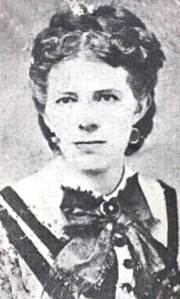
From 2012 to 2015, Stillness of Heart will share interesting excerpts from the extraordinary diary of Kate Stone, who chronicled her Louisiana family’s turbulent experiences throughout the Civil War era.
Learn more about Stone’s amazing life in 1861, 1862, 1863, 1864, 1865 and beyond. Click on each year to read more about her experiences. You can read the entire journal online here.
(Photo edited by Bob Rowen)
Stone glories over desperately-needed good news from the battlefield: the Confederate victory at Mansfield, La. But she also realizes that she doesn’t view death as she once did.
April 15, 1864
Tyler, Texas
Jimmy, Sister, and I are keeping house in lonely state. Mamma and Johnny are on a visit to the prairie. …
People do not mourn their dead as they used to. Everyone seems to live only in the present just from day to day otherwise I fancy many would go crazy.
Carrie Lowry was married last month to Col. Polk of Arkansas. Her family are all pleased at the match. It was a grand wedding, and Julia was first bridesmaid.
A letter from Aunt Sarah to Mamma enclosing one from My Brother. He was on the Rapidan when he wrote, on picket duty but was soon after detailed as brigade inspector and ordered to headquarters at Orange County Court House. He expected a nice time there, a tent, and little to do. He has lost hope of a transfer. They will not even give him a furlough. We still have strong hopes of his transfer through Gen. Kirby Smith’s application. As Mamma was away, I opened the letter with a sinking heart, sure that it contained bad news.
The papers are filled with news of our great victory at Mansfield, La., where the Yankees were so confident of success. They had boasted that in two weeks the last armed rebel would be driven from Louisiana, Shreveport would be taken without a struggle, and then they would sweep over Texas, a besom of destruction. Then they would leisurely march back, after establishing freedom, law, and order in this benighted country, to the river, going in time to join Grant in his “On to Richmond.”
But they find themselves mistaken. We did the gobbling act. We have taken over 5,000 soldiers and many stores. It is our first great success on this side of the river, and the effect will be magical, inspiring both citizens and soldiers. Our loss was heavy, especially in officers, Gens. Green and Mouton both killed and Gen. Polignac dangerously wounded. Our gallant Southern soldiers who can praise them enough? As much as they deserve? We will never laugh at our soldiers on this side of the Mississippi again. …
Capt. King has married recently a pretty little Creole refugee from New Orleans. It was a short acquaintance. We have exchanged calls and find her very pleasant, but I doubt she will have a happy life. We find Capt. King is quite a drinker.
Dr. McGregor from Arkansas in one of the Departments here is our most frequent visitor. Dr. Johnson, of laboratory fame/ has presented us with such a nice chessboard and backgammon box made by himself, and I have vanquished him in a game of chess much to my delight and his chagrin. It was his first game lost to a lady he says. He is something like Dr. Buckner in manner, and about his age. Dr. McGregor is a jolly, good-natured bachelor not overly refined. He is something like our New Orleans friend, Mr. McGregor. The same clan, I suppose.
Willy Carson is at home. He has not grown any but looks well. … He is awfully shy and ill at ease. As I succeeded in melting Jimmy Carson’s reserve, I do not despair of Willy. I am about the only young lady in the world that Jimmy is not afraid of. We are great chums. …
We have had several trashy novels, the best, The Dead Secret. The papers are most interesting and a great resource, particularly the Houston papers.
Stone endures some new Arkansas friends as she chokes back tears over the loss of one from Louisiana.
From 2012 to 2015, Stillness of Heart will share interesting excerpts from the extraordinary diary of Kate Stone, who chronicled her Louisiana family’s turbulent experiences throughout the Civil War era.
Learn more about Stone’s amazing life in 1861, 1862, 1863, 1864, 1865 and beyond. Click on each year to read more about her experiences. You can read the entire journal online here.
(Photo edited by Bob Rowen)
Stone endures some new Arkansas friends as she chokes back tears over the loss of one from Louisiana.
March 20, 1864
Tyler, Texas
I spent last week in the country, just the wildest most remote section of civilization, with the Goddards, who were complete strangers until then. They are from Arkansas and were recommended to us by Julia some time ago.
We had seen some nice-looking strangers at church in the morning. In the afternoon in the midst of our animated chat with Capts. Smithy and Empy, callers came. The young ladies were announced and introduced themselves. They were so cordial and said they had come the twenty miles to meet us and to carry me home with them and were so insistent that I could hardly refuse, particularly as Mamma urged me to go. So I accompanied them next morning just twenty miles from anywhere.
Mr. Goddard has a hat factory established there, and we spent the time as pleasantly as one could in a rough new house perched on a white sandbank in the midst of a limitless pine forest with rather silent strangers. No amusements except riding horseback on rough horses over roads of deep white sand studded with stumps. Only the necessaries, none of the luxuries of life. On the seventh day I was only too glad to come home, though I had to do what none of us had ever done before — drive home in a buggy driven by an old, old Negro man. Mr. Goddard had promised to bring me home at any time. He would not hear of Mamma’s sending for me, and so I was helpless to get away. I shall not forgive any of them for sending me back in that style, and I never want to see any of them again. I was scared all day long, coming so slowly through those lonely woods, few houses on the way. The old driver was as respectful as possible, but the idea of the trip was perfectly repugnant. Mamma did not like it one bit more than I.
Mamma returned Saturday. She succeeded in her mission and My Brother will be transferred to this department if he can get across the river, but that is very doubtful. …
Mamma heard that Kate Nailor is dead, leaving a little child. My darling girl, I can never love any other friend as I have loved her. She was all that was good and pure and most beautiful, and hers was a happy, lovely life but for My Brother whose hand alone had given her myrrh to drink. She was the petted darling of her entire household never refused any wish that could be gratified.
To her credit, Stone was capable of seeing beyond the blinding pain of her own sorrow to comprehend the devastation the Civil War brought to other families.
From 2012 to 2015, Stillness of Heart will share interesting excerpts from the extraordinary diary of Kate Stone, who chronicled her Louisiana family’s turbulent experiences throughout the Civil War era.
Learn more about Stone’s amazing life in 1861, 1862, 1863, 1864, 1865 and beyond. Click on each year to read more about her experiences. You can read the entire journal online here.
(Photo edited by Bob Rowen)
To her credit, Stone was capable of seeing beyond the blinding pain of her own sorrow to comprehend the devastation the Civil War brought to other families. Widows were left impoverished. Children, friends, husbands, and fathers were all slaughtered in the war’s growing battles. There seemed no end to the deaths.
Dec. 12, 1863
Tyler, Texas
Not to us alone has God sent trouble and sorrow. Nearly every household mourns some loved one lost. Mamma and Mrs. Carson have gone out to see Mrs. Prentice. Her husband died last night, leaving her a childless widow alone in a strange land. He had been ill for a week with pneumonia, and both Johnny and Jimmy have been sitting up with him. A letter from Amelia Scott yesterday tells of the death of her brother Charley on the bloody field of Chickamauga. Allen Bridges, a bright little boy not more than sixteen, Robert Norris, and Mr. Claud Briscoe all fell in the same engagement. Of that band of boys who used to assemble at our house to hunt, play, and amuse themselves, only Joe Carson and Ben Clarkson remain. Mr. Newton, who went with them so much and always on Saturday, fell months ago in some battle. Charley Scott was such a frank, warmhearted young fellow, a heart overflowing with love and kindness, hospitable to the last degree. How his mother and sister will miss him. He was an idol with them both.
Mamma met several old friends in Shreveport and succeeded in getting Mr. Smith’s discharge. … Mamma met at the hotel an old friend, Mrs. Gibson, formerly Mrs. Lane, a very wealthy woman of Vicksburg. Aunt Laura waited on her at her first marriage. Her husband is in jail to be tried for murder, and she has lost five children in the last two years. Mamma says she was never so sorry for anyone. She was looking dreadful and so desolate and unfriended.
A letter from Sarah Wadley. They are back at home. They could not cross the river without great risk so returned to stand the worst the Yankees may do rather than attempt another runaway.
Dec. 13
We missed Joe Carson after he left on December 9. We had to exert ourselves to keep from saddening his homecoming. He had great trouble in getting a furlough, and it was only through Ben Clarkson’s kindness that he got it at last. Ben gave his furlough to Joe, the greatest kindness one soldier can show another. Brother Coley and Joe expected to come together, but it was not to be. Joe stayed a little over two weeks after a ride of ten days to get here. He is returning a shorter route. There is a strong probability of his being stopped in Shreveport and assigned to the army on this side as the authorities are allowing no soldiers to leave the Trans-Mississippi Department. Joe would be delighted as he is very anxious for a transfer to Louisiana, and if he reaches his command will try hard for a transfer. We hope, for his mother’s sake as well as his own, that he may get it. We sent numbers of letters by him.
We heard of My Brother. He has been unable to go into service since Gettysburg, His wound is still unhealed and his arm stiff. He is staying in Lynchburg with Aunt Laura and Mrs. Buckner, Dr. Buckner’s mother. Mamma is using every exertion to get a transfer or discharge for him. She has written to the Secretary of War on the subject. Brother Coley could have gotten a discharge at any time on account of ill-health, but he would not hear of it, and even when he knew that if he recovered his arm would be useless declared his intention of remaining in the army. A gallant spirit.
Uncle Bo is captain on some general’s staff. He makes a dashing officer and must be a favorite with his mess. He has such a gay, joyous nature and is always in a good humor. Wish we knew the general’s name.
It is sickening to hear Joe’s account of the labor and hardships his regiment, the 28th Miss., has undergone in the last year. Sometimes they rode for twenty-two hours without leaving their saddles. Often they had insufficient food, no salt and at the best only beef and cornbread, no tents, sleeping out in the rain and snow, and frequent skirmishes and engagements. No wonder our poor boy sank under it. Joe has never missed a fight. The regiment from being one of the strongest in point of number is reduced to about 400 fit for duty. …
In one of her longest and most beautiful passages, a heartbroken Kate Stone mourned the loss of yet another beloved brother.
From 2012 to 2015, Stillness of Heart will share interesting excerpts from the extraordinary diary of Kate Stone, who chronicled her Louisiana family’s turbulent experiences throughout the Civil War era.
Learn more about Stone’s amazing life in 1861, 1862, 1863, 1864, 1865 and beyond. Click on each year to read more about her experiences. You can read the entire journal online here.
(Photo edited by Bob Rowen)
Stone recalled with heartbreaking beauty the loss of yet another beloved brother.
Note how Bonham stressed Coleman’s dignity and comfort throughout his physical deterioration, his medical care, and his serene death and moonlit funeral. Her letter turned his decline into a graceful ceremonial journey from life to death. Bonham tried to reassure Coleman’s mother that all Christian values were fulfilled (the Bible under the pillow, the constant prayers read, his hopes for divine forgiveness). It promised that Coleman’s masculinity was preserved right to the end (adoring women always nearby to care for him and kiss him, his brave endurance of terrible pain, his resolve bringing grown men to tears). It illustrated his final moments as unforgettable and fitting for a Southern gentleman (no undignified or embarrassing “contortion,” the retention of “his senses,” his grim but religiously devoted bearing).
Dec. 10, 1863
Again we are called on to mourn one of our dearest and best. Brother Coley has crossed the Dark Valley, free from all pain and trouble. He lies at rest and we are desolate indeed. We had heard only the week before that he was well on October 10, when the letter came telling of his death at Clinton, Miss., on September 22. I can do no better than copy Mrs. Bonham’s letter to Mamma, telling how nobly and fearlessly a Christian soldier can die.
Clinton, Miss.
Sept. 25, 1863
My dear Friend:
It is with feelings of deep and heartfelt sorrow that I resume my pen to give you the particulars of the death of your noble son Coleman Stone. He breathed his last at a quarter before ten Tuesday morning, Sept. 22nd. I wrote you a week before his death giving you full particulars up to that time. Then fever set in which with his previous bad health and reduced state and wound combined soon brought him down. The injury, as I stated in my letter, was very serious from the first and never healed as it would have done on a strong, healthy person. Ten days or more before his death I had him moved from the hospital to an office in the yard next me so I could give him constant care. Mrs. Moore was on the other side so some female was with him all the time. I never saw so great a favorite. Everybody in town was interested in him. Someone was constantly calling to see if they could be of service. As for me, I loved him as a son and grieved for him as one. He was one of the most patient beings under suffering I ever saw.
I watched him three weeks and four days. Most of the time he was suffering the most excruciating pain, but he bore it with the most remarkable firmness, and to you, his mother, I bear the comforting assurance that he died a Christian. The first Sabbath after he came to the hospital I went in the evening to see him, fearing he would be lonely, and found him reading his Testament. I sat down by him and read aloud for some time. He kept his Bible lying always under his pillow. I used often to take my work and sit by him, and we had many conversations about you, his brothers, and sisters, and his last wish was that he could see you all once more, calling you all by name.
Two days before his death he told me he wished the doctor to tell him his exact condition. He was perfectly calm and composed. The doctor told him there was no chance of his recovery, and said to him, “Coley, you are a sensible thinking boy and must know the necessity of preparation for another world.” He replied that he did and asked me to send for a minister to converse and pray with him. I at once sent for Mr. Tom Markham, formerly of Vicksburg, who happened to be in this vicinity, and around the couch of that dying soldier boy I passed through some of the most impressive scenes of my life.
At sunrise on Tuesday morning, we all knelt around his bed and heard one of the most feeling and beautiful prayers I ever listened to. When I rose and stood by him my hand on his head, he looked in my face and said, “Mrs. Bonham, I don’t think I have ever been a very wicked boy, but since I have been in the army I have been striving to be a Christian, and I believe God has heard my prayers and has answered them. I believe He has forgiven my many sins, pardoned me, and will take me to my home in Heaven. Write to my dear Mother and tell her what I have said to you. I have longed, oh, so much, to see her and my Brothers and Sisters once more, but as I cannot on this earth I trust they will meet me in Heaven.”
He was perfectly calm and had his senses up to five minutes before his death. There was no struggle, no contortion. I stood on one side of him, Mrs. Moore on the other, Dr. Hunt, Mr. Markham, and several others around. I stooped and with sobs and tears pressed a kiss on his brow. He looked in my eyes and said audibly so that all could hear, “For my Mother.” Again I kissed him, and he said, “For my Sisters.” All were in tears.
The strong, stout man who waited on him turned to the window sobbing aloud. Of that good man, that kindhearted friend, I must speak. Mr. Galloway was sent at Coley’s request to wait on him. He watched by him day and night with the faithfulness and affection of a brother and the tenderness of a woman. He was never for a moment cross or impatient and always ready to gratify Coley’s slightest wish, and he grieved for him as for a brother. I shall always love the man for his devotion to Coley, who, on his death bed, told me he wanted Mr. Galloway to have his horse and other effects. He said his horse belonged to his brother, and Mr. Galloway would give it up if it was ever called for. He also has his pistol. …
I have his Testament and a few books. My Belle never let a morning pass without taking him a bouquet of flowers, which he always enjoyed.
Joe Carson came in the morning of his death. He grieved sorely to think he must give up forever his dearest friend. It made my heart ache to see his sorrow. … We dressed Coley in a nice suit of clothes furnished by a young friend of his, Tom Moore. When Coley was first brought in, Tom said to his mother, “Do all you can for Coley Stone as he is my best friend.” Everything of the best kind was prepared for his burial. I wish it was in my power to describe the funeral, but my pen is inadequate. It took place just after night. The moon was full and shone most beautifully. The burial service by Mr. Markham was long and most appropriate. Nearly all of his company were present and a large number of ladies. A stranger would have thought from the feeling shown that we were each seeing a loved brother or son to his last resting place. All were in tears. That burial was one we will all remember. You have my deepest sympathy in this, your great sorrow.
How many sad hearts and broken households has this terrible war caused.
Most sincerely your friend,
Mary T. Bonham
My heart bleeds for Mamma. Sorrow after sorrow rolls over her, almost more than she can bear, but she is a most brave woman and will not sink beneath the burden.
The moonlight falls clear and cold on the graves of three of those who made the mirth and happiness of our home only two short summers ago, three of the glad young voices are hushed, three of the bright young heads lie low. Now what remains of the high hopes, the stirring plans, and the great ambitions that burned in the hearts and filled the brain of these gallant boys — only a handful of dust. All have fallen in the dew and flower of their youth. Ashburn was the first to sink to his dreamless sleep. For two long years the grass has been springing fresh and green over his grave at Brokenburn. He died Nov. 12, 1861, aged eighteen years and three months. Brother Walter was the next to obey the dread summons. He crossed the black waters of the River of Death Feb. 15, 1863, aged eighteen years and two months, and now in the autumn of the same year Brother Coley has passed from Time to Eternity, his short life numbering twenty years and six months.
What charms can peace have for us when it does come bereft of our nearest and dearest?
We can never return to the bright and happy home of three years ago. These three graves darken the threshold.
Mamma was in Shreveport when we received the letter and did not get home for several days. She had heard all were well and came home cheerful and happy to be greeted by such news. It was an awful shock to her.
Brother Coley had such a brave and dauntless spirit in that frail, sensitive body, a love for all that was pure and noble, and a scathing contempt for all that was low and mean. Joe Carson has just left after a short furlough home, and from him we learned all that we can know of Brother Coley. He had not grown to strong manhood, as we fondly imagined, but was still a beardless boy, tall and slender, the same fragile form and unbending energy and spirit that we knew at home. He had been offered a position as 2nd lieutenant in Bragg’s army through Uncle Bo’s influence. He had accepted it and expected to join his new company in a few days, when he received the injury that caused his death.
He was out scouting near Clinton with several others when something scared his horse, a powerful black of Dr. Buckner’s. Brother Coley was sitting sideways on the horse, his leg thrown over the pommel. They had stopped to rest when the horse reared and Brother Coley’s spur caught in the bit as he threw his leg over, and the horse fell backward crushing Brother Coley’s shoulder and arm against a root — a most painful injury. He was a splendid rider, and to meet death that way. He had been in many skirmishes and engagements but never was wounded. In the desperate charge that the 28th Mississippi, made in the Franklin, Tenn., battle, he had his cartridge box shot off and fell from his horse but was unhurt. Once acting as regimental orderly he rode through a fire of shot and shell that none of the couriers would brave to carry orders to his squadron.
Brother Walter was only once under fire but acted with such coolness and courage that he was highly complimented by his officers. A small party were sleeping at a picket post on the bank of a little stream when they were surprised by the enemy, who opened artillery fire across the creek. The men rushed for their horses and galloped off, but Brother Walter after mounting rode to the banks of the stream and fired several shots at the gunners, saying afterwards, “Boys, I was just obliged to take a few shots at them.”
Well may we be proud of our brave boys, and we can never be grateful enough to the kind friends at Clinton who nursed Brother Coley so tenderly.
Stone’s family struggled to maintain their upper-class lifestyle. But as refugees from Union-dominated Louisiana, their actual affluence was gone, and food was in short supply.
From 2012 to 2015, Stillness of Heart will share interesting excerpts from the extraordinary diary of Kate Stone, who chronicled her Louisiana family’s turbulent experiences throughout the Civil War era.
Learn more about Stone’s amazing life in 1861, 1862, 1863, 1864, 1865 and beyond. Click on each year to read more about her experiences. You can read the entire journal online here.
(Photo edited by Bob Rowen)
Stone bemoaned the strange situation her slaveholding family now faced: plenty of slave servants but little food for them to prepare. Despite the deprivations her family endured, they determined to maintain their upper-class lifestyle, as she wrote before, with “two fine cooks and two dining-room servants.”
She didn’t mention what, if anything, the slaves managed to eat.
Nov. 15, 1863
Tyler, Texas
I have been promoted to Mamma’s post as listener-in-chief to Mrs. Carson. She cannot bear to be alone and must have someone to talk to. Mrs. Carson does not enjoy talking to me as much as she does Mamma, but I am better than nobody.
Col. Buckner took tea the other evening. He is a tall, handsome, blond man with engaging manners and does not seem heartbroken over the death of his wife and children. People live so fast now. We have no time to mourn.
We certainly have plenty of servants to do our bidding, most of Mamma’s house servants and all Mrs. Carson’s, and that is about all we do have. So little to eat: biscuit for we can get plenty of flour; syrup made of sugar, for we have a hogshead of sugar; and rusty, rancid bacon, absolutely all the meat we have been able to buy, no eggs, chickens, milk, butter, or fresh meat, and not a vegetable. Nothing more to be bought.
It seems absurd to have two fine cooks and two dining-room servants and such fare. The Negroes never had so little to do in their lives. We will surely do better in the spring if we can get seed, a cow, and some hens. No fruit but black haws. They are fine, much better than the red haw of the swamp.
The Union candidates at the North are elected — and peace, blessed peace, [is] as far away as ever.
Death, Yankee prisoners, pride grounded into nothing … Stone stared into a quiet Texas night with fear and sadness.
From 2012 to 2015, Stillness of Heart will share interesting excerpts from the extraordinary diary of Kate Stone, who chronicled her Louisiana family’s turbulent experiences throughout the Civil War era.
Learn more about Stone’s amazing life in 1861, 1862, 1863, 1864, 1865 and beyond. Click on each year to read more about her experiences. You can read the entire journal online here.
(Photo edited by Bob Rowen)
Death, Yankee prisoners, pride grounded into nothing … Stone stared into a quiet Texas night with fear and sadness.
Nov. 13, 1863
Tyler, Texas
This week Mrs. Carson, the little girls, and I are alone. Mamma has gone to Shreveport, taking Eddie Carson with her. Mr. Smith is again taken into the militia, thanks to Maj. Little’s dislike of refugees, and Mamma has gone to the headquarters of Gen. Kirby Smith to try to get a permanent discharge for Mr. Smith.
The turnout for the trip was essentially Texas: the high Jersey with white body and black curtains and two shaggy mules with shuck collars. It was anything but stylish. They say pride must have a fall, and ours has had many a tumble since we left home. How I hope Mamma will be able to buy a carriage this trip.
Jimmy has gone to the prairie to stay during Mr. Smith’s absence. He started off with a dreadful toothache, on a rough little mule. Hope he will return free of toothache and on a horse. We rode with him as far as the Yankee camp. Mamma had some business with the commanding officer, and we went out with her. A number of the prisoners escaped the other day, and the townspeople are very apprehensive of their burning the town. They put out guards every night, and they take turns in guarding the prisoners. One of the prisoners was shot yesterday for disobedience of orders. He died in a few hours. …
Death does not seem half so terrible as it did long ago. We have grown used to it. Never a letter but brings news of the death of someone we knew. Another girlhood friend off the list, but none do I regret like Kate Nailor, the first and best. …
Alone as we are tonight, I feel a little afraid of the escaped Yankees. So I will put out the light, pull the cover over my head, and go to sleep.
Stone mourned the loss of Stonewall Jackson at the May 1863 Battle of Chancellorsville, calling him a “peerless general and Christian soldier.”
From 2012 to 2015, Stillness of Heart will share interesting excerpts from the extraordinary diary of Kate Stone, who chronicled her Louisiana family’s turbulent experiences throughout the Civil War era.
Learn more about Stone’s amazing life in 1861, 1862, 1863, 1864, 1865 and beyond. Click on each year to read more about her experiences. You can read the entire journal online here.
(Photo edited by Bob Rowen)
Stone mourned the loss of Stonewall Jackson at the May 1863 Battle of Chancellorsville, calling him a “peerless general and Christian soldier.”
May 23, 1863
Near Monroe, La.
Aunt Laura was quite ill while Mamma was away, and I felt the responsibility of taking care of her. She is now much better. Mamma had two fevers, and we were very afraid it would go into a long low fever. She is quite prone to have that in the spring, but fortunately she has escaped a return of it. Sarah, Mary Wadley, and I went last afternoon to call on the Misses Compton and Stacey. We went in Mamma’s famous Jersey wagon, and it is a ramshackled affair with the seats and most of the bottom dropped down. We had a merry ride and concluded that a frame, a tongue, two mules, and a driver were the only essentials in a vehicle. … Walking through the pine woods, we saw wild flowers in such profusion. The air is so fragrant that it is a pleasure to breathe it. …
The news from Mississippi is bad. Gen. Grant with an army of 120,000 men is in the rear of Vicksburg. He has possession of Jackson, and much of the city has been burned. There has been a battle near Raymond in which we were said to have been routed because of Gen. [John C.] Pemberton’s disregard of orders. We drove them out of Jackson once, but we cannot hear whether they retook it after a battle or whether our forces withdrew. We will not be discouraged. …
In the death of Stonewall Jackson [at the Battle of Chancellorsville] we have lost more than many battles. We have lost the conqueror on a dozen fields, the greatest general on our side. His star has set in the meridian of its glory, and he is lost to his country at the time when she needs him most. As long as there is a Southern heart, it should thrill at the name of Stonewall Jackson, our peerless general and Christian soldier. His death has struck home to every heart. …
May 24
Mamma and I went over yesterday after tea to see Capt. and Mrs. Harper. They are also on their way to Texas. Capt. Harper was one of the party at home on Christmas Eve, and my last ride on Wonka was to invite the gentlemen in camp over to Brokenburn.
We were glad to meet his little daughter Sophie Harper, Mr. Valentine’s grandchild. Both of the Mr. Valentines talked so much about her. She is a bright, attractive child and bears a striking resemblance to her Uncle Mark in features, gesture, and expression. They say old Mr. Valentine is so overwrought by his losses … that it is feared he will lose his mind. He escaped from his place a few days after we left entirely alone in a boat with only a few clothes. The Negroes came and stripped the place of everything while he was on it and were exceedingly insolent to him, threatening all the time to kill him. He is quite an elderly man and cannot stand hardships like younger people. …
May 26
Mamma is staying tonight with Mrs. Young whose little girl Alice is sick unto death. Johnny, who by the way could not overtake Mr. Smith, and Mamma went into Monroe this morning trying to buy a wagon and carriage but failed to get either. So we must … wait here until we can get conveyances, and we could not ask for a more delightful stopping place or kinder hosts. Such a haven of rest after the trouble and anxiety of the last three months. We have put away troubles and distress for a time as a wayworn traveler lays down his burden when he stops to rest, enjoying the coolness and verdure, though he knows the burden must be lifted and he must journey on through toil and pain to the end.
How I dread being secluded on some remote farm in Texas, far away from all we know and love and unable to get news of any kind. It is a terrifying prospect.
I am busy sewing most of the time. We will soon be through all our clothes — just a white barege dress of Carrie’s to alter for myself and Mamma intends making a black velvet hat for me. Then, all our pressing needs will be gratified. …












 Stillness of Heart
You must be logged in to post a comment.