In the absence of hard facts or updated news from the battlefields, rumors of all kinds were rampant.
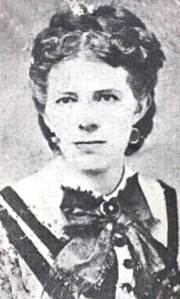
From 2012 to 2015, Stillness of Heart will share interesting excerpts from the extraordinary diary of Kate Stone, who chronicled her Louisiana family’s turbulent experiences throughout the Civil War era.
Learn more about Stone’s amazing life in 1861, 1862, 1863, 1864, 1865 and beyond. Click on each year to read more about her experiences. You can read the entire journal online here.
(Photo edited by Bob Rowen)
In the absence of hard facts or updated news from the battlefields, rumors of all kinds were rampant.
Sept. 1, 1863
“Elysian Fields,” Lamar County, Texas
A letter from Jimmy at Jefferson [Texas] on the thirty-first of July, just as he was leaving for Navasota. It is almost time for his return, and Mamma is anxious for him to get back. She wants the wagons to move the Negroes before they hear that the Yankees are coming in from the North, as it is rumored, and before they have a chance to make a break for the Federal lines again.
There are quite a number of Yankee prisoners at Tyler, captured while in command of black troops. It does seem like they ought to be hanged, and they are so impudent too. The detestable creatures!
There is a rumor that Louisiana, Missouri, Mississippi, and Tennessee have applied for admission into the Union again. Of course, we know it is a base fabrication, but many of the natives believe it firmly. They will believe anything against Louisiana. They seem to hate that state, and we would not give one Louisiana parish for half of Texas.
Our pet rumor is again in the air that France, Spain, and England have recognized the Confederacy. Oh, that it were true. …
We hear that Mrs. White, from whom we rented books and also bought one or two, has leprosy. It makes us shiver to think of it, and our handling her things and Patsy nursing her. We can only hope it is another big story, as it is too late to take precautions.
Sept. 11
Jimmy is back after an absence of seven weeks, and now as soon as we can collect up our scattered goods and chattels we will be off to fresh fields and pastures new. …
The Federals made only a short stay at Monroe, but were busy at the work of destruction. Would like to know how our friends have fared.
Our high hopes of recognition by the European powers are again dashed to the ground. If they just would not start such rumors, raising expectations only to be disappointed.
We paid a three-day visit to Mrs. Slaughter up in the famous Union neighborhood, Honey Grove, where they say there is only one Confederate family. There, everyone you talk to says of course we will be conquered. In Louisiana one rarely heard such an idea expressed.
We attended a large Baptist meeting in the vicinity several times. The interest and excitement were intense. There were often fifty mourners crowded around the altar and the church crowded to suffocation. Never saw so many men in church before, and we have not seen so many men at one time since the war commenced, unless they were soldiers in uniform. The scene at night was most striking: the anxious, excited faces, crowding and surging around the altar; the exalted, earnest mien of the minister; the groans and shrieks and wild prayers of the mourners, mingling with the shouts and hallelujahs of the newly professed; while high over all rises the thunder of a triumphant hymn, borne on many voices. In the background gleam the eager, curious faces of the lookers-on, row on row.
A scene to thrill and interest anyone, but I must take my religion more quietly. It was a country-looking congregation with a sprinkling of nice people. Short dresses, large hoops, and top-knotted sun-bonnets, the style.
Two carriage accidents, a large rattlesnake, and a dirty house all inspire Stone to call Texas “the dark corner of the Confederacy.”
From 2012 to 2015, Stillness of Heart will share interesting excerpts from the extraordinary diary of Kate Stone, who chronicled her Louisiana family’s turbulent experiences throughout the Civil War era.
Learn more about Stone’s amazing life in 1861, 1862, 1863, 1864, 1865 and beyond. Click on each year to read more about her experiences. You can read the entire journal online here.
(Photo edited by Bob Rowen)
Two carriage accidents, a large rattlesnake, and a dirty house all inspire Stone to call Texas “the dark corner of the Confederacy.”
Aug. 30, 1863
“Elysian Fields,” Lamar County, Texas
I must record the first instance of liberality that has come under our notice since entering the state. The first night after leaving Tyler we stayed at a Mr. Fowler’s, a very nice place, and they did not charge us a cent. But we were picked up the next night. We lost our way and traveled until 8 o’clock when we asked to stay at a pretty, large, white house, white only on the outside. I despair of giving any idea of the dirt. We tried to eat without seeing or tasting and to sleep without touching the bed. They gave us coffee, a horrid decoction of burnt wheat and milk without sugar, in saucers and water in the halves of broken bottles. The table was set in the dirtiest of kitchens with a dirt floor and half a dozen half-naked little Negroes and numberless cats and dogs scampering through the room and under the table. The rafters were festooned with old hoop skirts and worn-out, rough boots. It surpassed any place we have been in yet. We certainly had found the dark corner of the Confederacy.
We lost our way again one evening and traveled until way in the night, through a wild woods road dotted with stumps. But it was cool and bright moonlight and really more pleasant than a stuffy dirty room, but the mules and Hoccles did not enjoy it.
Our next adventure was not so pleasant. The mules were rushing down a long, rocky, red hill. Hoccles is a wretched driver and lets them do pretty much as they please when crash! over went the Jersey, and we rolled out on the ground, along with a confused medley of baskets, bundles, palmetto, corn, bonnets, and boxes. Fortunately no serious damage was done, and after a few repairs to the Jersey we journeyed on. Hoccles is a right good tinker for wagons.
But our troubles were not yet over. The mules were trotting briskly along through the white sand, Mamma was asleep sitting in the foot of the Jersey, and I was knitting away, when there was a sudden cluck and tearing sound. I looked up to see the whole top of our devoted Jersey folding back like a fan. While Hoccles was nodding in the sultry heat, we had run into a tree and broken the top nearly entirely off. Mamma gave a groan and exclaimed, “Now Hoccles, just run us over a stump and break the wheels and maybe you will be satisfied. You have broken the bottom racing down the hill. But that would not do you. You had to go and break the top. Now run over a rock and break the wheels and you will be fixed!”
I could not help laughing. It was funny in spite of our bad plight, and poor Hoccles looked so humble and apologetic. We thought he would be forced to take the entire top off, but he was equal to the emergency. With hammer, nail, and strings, he patched it up so it lasted until we reached home. But it is a most forlorn, lopsided affair. If we just had our own good carriage, but we hear it is a smallpox ambulance now.
Our last day we just missed driving over the largest rattlesnake, stretched across the road basking in the sun. It was larger than my arm and had twelve rattles. That frightened us most of all. It might have glided into the carriage as we drove over it. …
A long letter from Julia Street was awaiting me. … She says she hates Arkansas and wants to come to Texas. I am sure she will hate this state ten times more. If she is a wise girl, she will stay where she is as long as possible. The more we see of the people, the less we like them, and every refugee we have seen feels the same way. They call us all renegades in Tyler. It is strange the prejudice that exists all through the state against refugees. We think it is envy, just pure envy. The refugees are a nicer and more refined people than most of those they meet, and they see and resent the difference. That is the way we flatter ourselves. …
Stone had little respect for anyone who lacked her sense of style and bearing. She hardly sympathized with the people of East Texas.
From 2012 to 2015, Stillness of Heart will share interesting excerpts from the extraordinary diary of Kate Stone, who chronicled her Louisiana family’s turbulent experiences throughout the Civil War era.
Learn more about Stone’s amazing life in 1861, 1862, 1863, 1864, 1865 and beyond. Click on each year to read more about her experiences. You can read the entire journal online here.
(Photo edited by Bob Rowen)
Stone had little respect for anyone who lacked her sense of style and bearing. She hardly sympathized with the people of East Texas.
Aug. 16, 1863
“Elysian Fields,” Lamar County, Texas
We went to church this morning at a tumbledown schoolhouse called Liberty expecting to hear the funeral sermon of Mrs. Alexander, who was a near neighbor. The poor woman has been dead four months, and her husband married again six weeks after her death. But he says he is determined to pay proper respect to dear Mary and so will have her funeral preached, with the new wife sitting decorously near to hear it.
It was the oddest-looking crowd one could imagine, and the very funniest dressing we ever saw. My pen is powerless to describe it: one girl airy in pink tarleton and another sweltering in red woolen; high horn combs with long ribbon streamers waving from the top; immense hoops; and strand after strand of beads, all colors, wound around their necks.
Many of the men were barefooted, and nearly all of their slouched wool hats were decorated with ribbons or an artificial flower. There were few coats but many vests and a display of homemade knit galluses. It was a most unusual-looking crowd, all sitting on puncheons laid on supports, some of them constantly slipping down. …
As a Texas summer storm approaches, Stone angrily vows that the Confederacy will never surrender to the Union forces that shattered her family.
From 2012 to 2015, Stillness of Heart will share interesting excerpts from the extraordinary diary of Kate Stone, who chronicled her Louisiana family’s turbulent experiences throughout the Civil War era.
Learn more about Stone’s amazing life in 1861, 1862, 1863, 1864, 1865 and beyond. Click on each year to read more about her experiences. You can read the entire journal online here.
(Photo edited by Bob Rowen)
As a Texas summer storm approaches, Stone angrily vows that the Confederacy will never surrender to the Union forces that shattered her family.
Aug. 10, 1863
Lamar County, Texas
Nearly the close of summer and we are still in our first Texas retreat. We have dubbed it “Elysian Fields.” Mr. Smith has been away nearly a week looking for another location. No matter where we may go, we are almost sure to meet some of our old friends or acquaintances, for everybody about Monroe is moving out this way, we hear, scattering over Texas. How good the sight of a familiar face will be. I would feel like kissing nearly anybody I had ever seen before. …
Our list of victories last month were all a mistake. Gen. Lee has recrossed into Virginia, and our march into Pennsylvania seems to have been barren of results. We do not hold nor have we destroyed a single Northern city, as we so much hoped. A dark hour for the Confederacy. The loss of Vicksburg has stunned the whole country. It is a grievous blow, and there is great discouragement at least on this side of the Mississippi River. But the reaction will come. The people will rally to strike a more deadly blow, to fight till the last armed foe expires, to conquer or die.
Mamma, Sister, and Johnny are just in from their round of investigation. Instead of renting Mrs. White’s house they rented a book. The house was already taken, but she had quite a library of books that she would hire out for fifty cents a week. She would not think of lending them. The book Mamma brought was a most worthless thing, but the engravings in it are fine. Mrs. White is an educated woman, lives in a nice house, and is well to do, but a regular skinflint. She is living from day to day on the verge of the grave, suffering from some incurable complaint, and is still very eager to make money, extorting the last cent. She has one of our women hired to wait on her. She is a Yankee. That explains all. …
We look out tonight on a windy, stormy sky. Dark clouds go scudding by, and the wind whistles through our frail tenement. The boards have shrunken until daylight shines through. Lightning flashes continuously, thunder is rolling overhead, and the whole prairie is ablaze with the fireflies, weaving in and out like fairy shuttles.
Stone’s critical eye takes in a town’s beauty, overpriced luxuries, her brother’s love, and a gentleman’s proper language use.
From 2012 to 2015, Stillness of Heart will share interesting excerpts from the extraordinary diary of Kate Stone, who chronicled her Louisiana family’s turbulent experiences throughout the Civil War era.
Learn more about Stone’s amazing life in 1861, 1862, 1863, 1864, 1865 and beyond. Click on each year to read more about her experiences. You can read the entire journal online here.
(Photo edited by Bob Rowen)
Stone’s critical eye takes in a town’s beauty, overpriced luxuries, her brother’s love, and a gentleman’s proper language use.
Aug. 3, 1863
Lamar County, Texas
Paris is a clean, pretty place in the edge of Blossom Prairie — clumps of trees and deep white sand in the streets.
We went to church and saw a really nice-looking congregation of refined-looking people. We all liked the place so well that Mamma would rent a place there, but it is too near the borderline, the first point for an invasion and right next to the Indian Nation. We do not wish to lose our scalps in addition to everything else. We saw a large party of Indian men dashing through the town. They are nearly all Southern sympathizers, we hear.
We went shopping. There are several well-filled stores, but the prices are beyond anything. We saw a pretty light calico but Mamma could not afford it at $6 a yard. A penknife was very tempting, but who would give $25 for a little Yankee knife? Our nails will have to grow like eagle’s claws before we can afford an extravagance of that kind. We did get a few articles, absolute essentials, and Mamma indulged me in a piece of extravagance a deck of playing cards at $5. They are a different kind from those the girls use out here, but I fancy they will afford us more amusement than the finest pair of cotton cards.
A gentleman gave us a late Louisiana paper containing Mary Gustine’s marriage on July 21. I know she was a beautiful bride, and our best wishes go with her for her future happiness. I wonder how Brother Coley will stand the loss of his sweetheart, his first love affair. Like most boys, he lost his heart to a girl several years the older — fortunately a disease that never kills a boy of that age.
The Baptist meeting has been going on in Paris for seven weeks, and sixty have joined that church. It seems the strongest church of this section. Sunday morning we heard a splendid sermon, the best since hearing Dr. Marshall preach two years ago. I wish Jimmy could have heard it. It was the first real Baptist sermon I ever really listened to. Have heard the preacher, Mr. Buckner — knows what he believes and is not afraid to preach it from the pulpit.
We have made the acquaintance of another Texas gallant. Dr. Bywaters, introduced as a friend by Mr. McGleason, walked home with us from church. One thing in his favor: he does not say “mile” for “miles,” and he does not ignore the plural of “year.”
Stone at last confirms the Confederate defeat at Vicksburg, three weeks later. In her mind, Robert E. Lee is the only Confederate commander that still holds the torch of hope for final victory.
From 2012 to 2015, Stillness of Heart will share interesting excerpts from the extraordinary diary of Kate Stone, who chronicled her Louisiana family’s turbulent experiences throughout the Civil War era.
Learn more about Stone’s amazing life in 1861, 1862, 1863, 1864, 1865 and beyond. Click on each year to read more about her experiences. You can read the entire journal online here.
(Photo edited by Bob Rowen)
Stone at last confirms the Confederate defeat at Vicksburg, three weeks later. She and her mother worry about the vulnerability of Texas to Union forces. More immediately, they’re worried for their family. If Texas is invaded, how much farther west should they go to escape emancipating Union forces? In Stone’s mind, Robert E. Lee is the only Confederate commander that still holds the torch of hope for final victory.
As Stone bemoans the lack of decent shoes, she gets in one more dig at barefooted Texan women.
July 29, 1863
Lamar County, Texas
Vicksburg is taken without a doubt. If our men had held out only one day longer, they might have been relieved, as Gen. Johnston fought the enemy the following day, in ignorance of the fall of the city, taking 5,000 prisoners and winning a decided victory. But that is not an offset to the 20,000 of our men said to have been captured at Vicksburg. How has the mighty fallen, and to give up on the Fourth of July to make it even worse. We wish they could have held on at least one day longer, but we know nothing of the hardships our soldiers have endured there in the last eight months. We are satisfied, however, that the Confederate soldiers held on as long as possible. The fall of Vicksburg makes us tremble for Texas. She can be invaded from so many points that Mamma knows not where to look for a place of greater safety.
Our only hope is in Lee the Invincible. If he has only taken Washington or Philadelphia as we hear he has, we can stand the loss of our Gibraltar, but to lose it and gain nothing in return is insupportable. We will hope for the best. May God defend the right. …
July 31
Mamma has been sick since her return. … Tomorrow we are going up to Paris with Mr. Smith to see if Mamma can get him off from militia duty. He is drafted to go off on Wednesday for six month’s service. We do not see how Mamma can get on without him, and so she is anxious to get him detailed. Mrs. Smith is also anxious to get him off, but their eagerness is as nothing to Mr. Smith’s. I never saw a man with such a dread of the army.
The fruit that Mamma and Mr. Smith collected on their journey and they were most thoughtful is just out. We did so enjoy it. Our fare is not of the best. Mamma bought me a pair of $25 shoes, but unfortunately I cannot wear them. Not anything of a fit, and I must still cling to my calfskin chaussures, homeknit stockings, and brogans, something different from the lace-like clock stockings and French slippers of the olden times. I miss nice things for my feet now more than anything. I feel so slovenly with these horrors on exhibition. But a truce to complaints. I might be dight out in a large hoop and bare feet.
Stone is wary of “chicken-hearted” rumors of a defeat at Vicksburg. She also receives her first “Texas beau.”
From 2012 to 2015, Stillness of Heart will share interesting excerpts from the extraordinary diary of Kate Stone, who chronicled her Louisiana family’s turbulent experiences throughout the Civil War era.
Learn more about Stone’s amazing life in 1861, 1862, 1863, 1864, 1865 and beyond. Click on each year to read more about her experiences. You can read the entire journal online here.
(Photo edited by Bob Rowen)
Stone is wary of “chicken-hearted” rumors of a defeat at Vicksburg. She also receives her first “Texas beau.”
July 26, 1863
Lamar County, Texas
I had my first call from a Texas beau yesterday evening.
A smooth-faced, rosy-cheeked, young dandy, dressed in the height of Paris fashion and dotingly proud of his jet-black imperial. Several of the elite of Blue’s Prairie have called on us. I wonder, shall we look as old-fashioned as they after a year or two of prairie life? Even Blue’s Prairie is looking lovely now. It is covered with a flower, looking like feathery, white plumes laced and tangled together with a yellow love vine and purple maypop vines.
There are some most disquieting rumors believed by the despondent and chicken-hearted, but we do not give them credence. It is said both Vicksburg and Port Hudson have been taken, with a number of prisoners. We have heard it affirmed and contradicted half a dozen times. We will wait to see Gen. Johnston’s official report of such disaster before believing it.
Unionism is rampant about here. There was a company of Jayhawkers for the Federal side raised in this county. Half of the militia have been drafted for six months, and oh, the moaning and bewailing of the feminine population. But I cannot be sorry for the militia. My sympathies are all with the soldiers in the field.
As the winter of 1862 turned Brokenburn into a snowy, muddy landscape, Stone sensed the war was growing ever closer as the joys and comforts she had always enjoyed were slipping away.
From 2012 to 2015, Stillness of Heart will share interesting excerpts from the extraordinary diary of Kate Stone, the daughter of Louisiana cotton plantation owners who chronicled her turbulent life throughout the Civil War era.
Learn more about Stone’s amazing life in 1861, 1862, 1863, 1864, 1865 and beyond. Click on each year to read more about her experiences. You can read the entire journal online here.
(Photo edited by Bob Rowen)
Stone was in marginal command of Brokenburn as her mother and brothers attended to business in and around Vicksburg. As the winter of 1862 turned Brokenburn into a snowy, muddy landscape, she dutifully recorded the comings and goings of family friends, neighborhood gossip, and her brothers’ dreaded school lessons.
By the end of January, however, slaves and animals belonging to Ashburn, her late brother, were distributed to other owners, bringing Stone a degree of “distress,” and the demands and tragedies of a still far-off war were again felt in Louisiana. Stone sensed the war was growing ever closer as the joys and comforts she had always enjoyed were slipping away.
Jan. 16:
Real winter weather at last with sleet and snow whitening the ground a real winter landscape. We made some ice cream last night, ate it this morning, and pronounced it splendid. Today they are killing the last of the hogs, and all of the house servants with a contingent from the quarters are making lard, sausage, souse, etc., etc. ..
Jan. 17:
The snow is melting and running off the house in a continual rain and underfoot is too slushy for anything. It is too cold and wet for Sister to go to school, but the boys went and came in this evening covered with mud but in high good humor. Each one has an essay to write, their first attempt, and it seems to hang over them as a regular kill-joy. Brother Coley is studying at home for several hours a day. I have been sewing and reading “The Pilgrims of the Rhine,” a perfect prose poem. …
Jan. 20:
Sunday, though it was cloudy, windy, and so muddy, all of us went to church, leaving only Brother Walter at home. Mr. Holbury gave us an excellent sermon. We saw nearly everyone we know in that section and also met the new Presbyterian minister, Mr. McNeely, and Anna’s bright, particular star, Dr. Meagher from Franklin Parish. It looks like there might be serious intentions in that quarter, for Mrs. Savage permits no flirting on her premises and is a famous matchmaker. The Doctor is quite nice looking. …
Dr. Lily left last week, I suppose for the army, and did not come out to say farewell. And such a friend as he claimed to be to the Brokenburn household! I was sorry he left in a bad humor with us.
Mr. and Mrs. Goodrich were at church, his first attendance for years. The death of their little girl Sarah not long since was a dreadful blow to them. She was a bright, attractive child about thirteen who died of diphtheria. They have one little boy.
Jan. 22:
Gen. [Leonidas] Polk has called on the planters from Memphis to the lower part of Carroll Parish for hands to complete the fortifications at Fort Pillow, forty miles above Memphis. A great many Negroes have been sent from Arkansas, Tennessee, and North Mississippi, and now it comes Louisiana’s time to shoulder her part of the common burden. A man was here today with Gen. Polk’s appeal. He had been riding constantly since Monday from one plantation to another, and nearly everyone had promised to send some half of their force of men, some more, some less. As they get off tomorrow evening, Brother Coley had to go down to see Mamma about it.
Took a cozy dinner all to myself shut up in Mamma’s room, which I am occupying while she is away and which Frank keeps at summer heat. I find the piano a great resource as I am recalling some of my music. … We miss Mamma dreadfully.
The boys start to school immediately after breakfast and get home just at sunset, and directly after supper they commence on next day’s lessons. Brother Walter has just worried through his first essay. It is short and of course must be filled with mistakes, but he will not let us look at it. It is the first step that costs. Hereafter, hope he will not find it such a job. The other two boys are hammering away at their speeches. Sister has not attained to the dignity of either writing or speaking yet awhile.
Jan. 24:
Mamma and Other Pa (Stone’s maternal grandfather) got home late Thursday evening. We were not looking for them and no supper had been kept hot, as it was some time before then that hot supper was served. Other Pa only came on business and went back to Vicksburg carrying with him Ashburn’s Negroes, who are to be divided out among the heirs. Separating the old family Negroes who have lived and worked together for so many years is a great grief to them and a distress to us. I wish Mamma had been able to buy them all in and keep them here.
Stone reported the final distribution of her late brother’s slaves and animals on Jan. 30:
From Ashburn’s estate Mamma drew two Negroes, Mathilda and Abe. Patsy and John went to Cousins Jenny and Titia. They all came up on the boat this afternoon. Mat with Festus, the horse, goes to Uncle Johnny, Hill to Uncle Bo, Peggy and Jane to Aunt Laura, and Sydney and her two youngest children to Aunt Sarah. It is hard for Sydney and her older children to be separated. We are so sorry but cannot help it. Jan. 27:
We went to hear Mr. McNeely preach Sunday rather dry and humdrum. Dr. Carson took him all around the country to introduce him to his new field of work. Quite pleasant socially, and could not be called ceremonious.
But I forget. I must give the real neighborhood news. Rose and Dr. Lily are to be married very soon — my pet prejudice, Rose Norris and the “Tiger Lily.” She will be Mrs. “Rose Lily.” She slipped quietly off with Mrs. Savage to New Orleans and is selecting her trousseau. … I never would have picked Rose Norris out of all the world to spend my life with. For that matter, neither would I have selected Dr. Lily for that post. But oh! how tastes differ. I cannot believe he is in love with her. It has been too recently that he was criticizing her severely her looks, her walk, her manner. If it proves a happy marriage, I shall be surprised. She is quite young, about seventeen I think. …
Jan. 30:
A late mail this evening. A letter from My Brother complains that it is dreadfully dull. They are just wearing the time away winterbound in their tents. The papers confirm our defeat at Fishing Creek and the death of Gen. Zollicoffer. Two lamentable events. Mr. McNeely knew Gen. Zollicoffer intimately and grieves for his death. He admired him greatly and considers his death a great loss to the Southern Cause.
The whole Northern Army is now on the move preparing to attack us at all points. We expect to hear of great battles within the next few days. God grant us victory in our just war. The manner in which the North is moving her forces, now that she thinks us surrounded and can give us the annihilating blow, reminds me of a party of hunters crouched around the covert of the deer, and when the lines are drawn and there is no escape, they close in and kill. …
It looks like we may have difficulty in getting summer clothes. The merchants are selling only for cash and that cash is hard to get, unless we can do as they seem to be doing in the towns make it. Judging from the looks of the paper money and the many signatures on odd-looking paper and pasteboard, one would be convinced that many people are making their own money. We have spent less this year than ever before. Have bought only absolute necessaries — no frills and fur belows for us. Affairs are too grave to think of dress.
As she faced a long, hard year ahead, on Jan. 8, 1862, Stone made a fresh promise to herself as an individual and as a citizen of the Confederacy.
From 2012 to 2015, Stillness of Heart will share interesting excerpts from the extraordinary diary of Kate Stone, the daughter of Louisiana cotton plantation owners who chronicled her turbulent life throughout the Civil War era.
Learn more about Stone’s amazing life in 1861, 1862, 1863, 1864, 1865 and beyond. Click on each year to read more about her experiences. You can read the entire journal online here.
(Photo edited by Bob Rowen)
As she faced a long, hard year ahead, on Jan. 8, 1862, Stone made a fresh promise to herself as an individual and as a citizen of the Confederacy.
Jan. 8:
This is my twenty-first birthday, and I think this will be my motto for the year so uncertain are all our surroundings: “Live for today. Tomorrow’s night, tomorrow’s cares shall bring to light.” May I always be able to put my trust in God as I can tonight, satisfied that He will order our future as is best.
This has been a year of changes, of stirring and eventful life, the shortest ever in our calendar. God has been with our Nation during this year of trouble. He has given us wise rulers, brave and successful generals, valiant and patriotic men, and a united people, self-sacrificing and with their trust in God. …
Stone was an insightful, often self-deprecating, and intelligent writer, but she never wrote more beautifully than when she endured tragedy.
From 2012 to 2015, Stillness of Heart will share interesting excerpts from the extraordinary diary of Kate Stone, the daughter of Louisiana cotton plantation owners who chronicled her turbulent life throughout the Civil War era.
Learn more about Stone’s amazing life in 1861, 1862, 1863, 1864, 1865 and beyond. Click on each year to read more about her experiences. You can read the entire journal online here.
(Photo edited by Bob Rowen)
Stone was an insightful, often self-deprecating, and intelligent writer, but she never wrote more beautifully than when she endured tragedy.
The sickness that ravaged the Stone family was too much for Stone’s brother Ashburn, who died soon after their older brother left to rejoin his Confederate unit. Their mother accompanied the soldier to his embarkation point at Vicksburg, Miss., and she was too far away to rejoin her dying son in his final moments. As Stone grieved, her journal sat silent for two weeks. In late November, she began to write again.
Amidst her sorrow she took a moment to reflect on her mother’s beauty and character. It’s a fascinating and affectionate celebration of the woman Stone admired above all others.
Nov. 27:
How can I write the record of the last two weeks? It seems that the trouble and grief of years has been pressed into that short space of time. Ashburn, our darling, has gone, never to return. Oh! how we miss him every hour in the day. The noble, gentle heart and the loving sensitive nature are stilled forever, passed from the world as though they had never been. What great thoughts, loving wishes, and proud hopes lie buried in his grave. So young, so bouyant, so full of life and happiness, brilliant with the very joy of living such a little while ago, and now dead. …
Nov. 28:
Ashburn died on Tuesday, November 12, at 11 o’clock at night of swamp fever. We sent for Mamma very early Tuesday morning, but she could not get here until Wednesday morning too late. She was so dreadfully distressed. As soon as he died, Brother Coley started at once to Vicksburg to meet Mamma and to make arrangements for the burial. He reached DeSoto just as she crossed the ferry, and as soon as she saw him she knew the worst.
Brother Walter had gone for her and brought her back. She so reproached herself for leaving him when he was sick, but we told her everybody on the place had been sick off and on all summer and she could not know this would be a serious illness. She loved him so. We always told her that she loved and indulged him more than any of us, and she always said, why, he was the best boy of them all and never gave any occasion to be scolded.
Nov. 29:
[Ashburn’s] was buried Thursday in a clump of woods just back of the house, the new family graveyard. Our Father and two little sisters were removed there from the old graveyard a year ago.
Here at home all seems strangely dull and sad. …
A warm lovely week, a wanderer from the April sisterhood. No frost and the flowers are still in fullest bloom roses and annuals, as gay as in May. “The Melancholy days have come” for our household but not for Dame Nature. The boys have been out hunting most of the day with poor success one duck but the woods are full of game and the lakes covered with ducks.
Brother Coley and Mr. Reading went to attend the drill at Willow Bayou and to bid adieu to Mr. Reading’s friends. They went from there to Omega. No mail. But Brother Coley brought back the paper containing the resolutions of sympathy passed by the Willow Bayou company on Ashburn’s death. How he loved all military matters.
Mamma was talking tonight of her early days. She was married before she was sixteen, before she had left school, but she had been out enough to reject ten lovers before she met papa. All of them are living still. She was and is a beautiful woman of most attractive manner and a brilliant conversationalist with a great power of attracting love, the first and greatest gift that can be bestowed on anyone. She has the most cheerful, brightest spirit and is a brave resourceful woman. None of the children bear a strong resemblance to either her or our Father. Brother Walter is most like her.
Nov. 30:
This is the last day of a month that brought us unmixed joy and hopeless sorrow. My Brother was with us at its commencement and now at the close he is in camp again, and one of our dearest and best has bidden farewell to Earth and floated out on the dark river.










 Stillness of Heart
You must be logged in to post a comment.