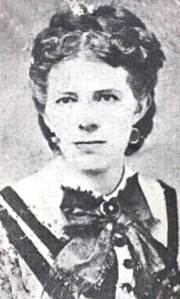
Loreta’s Civil War: The sensations of a soldier

Velazquez describes the Battle of Ball’s Bluff, condemns the instances of cowardice she witnessed, and recounts the horrors that stayed with her for the rest of her life.

KS24

Throughout 2016 and 2017, Stillness of Heart will share edited excerpts from the extraordinary memoir of Loreta Janeta Velazquez, who chronicled her adventures throughout the Civil War — either as herself, as a Confederate spy, or in disguise as Confederate Lt. Harry T. Buford. She fought and led men in terrible battles, fell in love, bore and lost children, and traveled throughout the U.S. and Europe, ultimately fulfilling her childhood dream of a rich and adventurous life.

You can read the entire 1876 memoir online here. Learn more about Velazquez (and the incredible documentary film Maria Agui Carter made about her) here.

Part 12: Velazquez describes the Battle of Ball’s Bluff, condemns the instances of cowardice she witnessed, and recounts the horrors that stayed with her for the rest of her life.

******

It might be supposed that one battle would have been enough for me, and that after having seen, as at Bull Run, the carnage incident to a desperate conflict between thousands of infuriated combatants, I should have been glad to have abandoned a soldier’s career, and to have devoted myself to the service of the Confederacy in some other capacity than that of a fighter. Indeed, it so turned out, that the most efficient services I did perform in behalf of the cause which I espoused, were other than those of a strictly military character, although quite as important as any rendered by the bravest fighters when standing face to face to the enemy. But it was, in a measure, due to necessity rather than to original choice, that I undertook work of a different kind from that which I had in my mind when first donning my uniform. We are all of us, more or less, the creatures of circumstances; and when I saw that the fact of my being a woman would enable me to play another role from that which I had at first intended, I did not hesitate, but readily accepted what Fate had to offer.

The Battle of Bull Run, however, only quickened my ardor to participate in another affair of a similar kind, and the months of enforced inaction, which succeeded that battle, had the effect of making me long, with exceeding eagerness, to experience again the excitement which thrilled me on the sultry July day, when the army of the Confederacy won its first great victory. The sensations which, on the battlefield, overcome a soldier who knows nothing of fear can only be compared to those of a gambler who is playing for enormous stakes. The more noble origin of the emotions experienced in the one case over those excited by the other does not prevent them from being essentially similar, although the gambler, who is staking his all on the turn of a card, can know little or nothing of the glorious excitement of the soldier engaged in a deadly conflict with an enemy, and feeling that its issue depends upon his putting forth his utmost exertions, and that determined valor can alone secure him the victory.

The sensations of a soldier in the thick of a fight baffle description; and, as his hopes rise or sink with the ebb and flow of the battle, as he sees comrades falling about him dead and wounded, hears the sharp hiss of the bullets, the shrieking of the shells, the yells of the soldiers on each side as they smite each other, there is a positive enjoyment in the deadly perils of the occasion that nothing can equal.

At Bull Run, it so happened that I was placed where the fight was hottest, where the enemy made his most determined attacks, where the soldiers of the South made their most desperate resistance, and where, for hours, the fate of the battle trembled in the balance. When at length victory crowned our banners, the enemy fled from the field, and we saw no more of them, and desperate as was the fight, it was, notwithstanding the great number of killed and wounded, unattended with the peculiar horrors, the mere thought of which is calculated to send a shudder through the strongest nerves.

The second battle in which I participated — that at Ball’s Bluff — was accompanied by every circumstance of horror; and although in the excitement of the moment, when every faculty of mind and body was at extreme tension, and I was only inspired with an intense eagerness to do my whole duty for my cause, I did not fully realize the enormities of such a slaughter as was involved in the defeat of the Federals at that place, I have never been able to think of it without a shudder, notwithstanding that I have fought on more than one bloody field since. Such scenes, however, are inseparable from warfare, and those who take up arms must steel themselves against them. …

[T]here was a tolerably open piece of ground, cut up somewhat by ridges and hollows, and surrounded by a thick growth of woods. This timber for a while concealed the combatants from each other, and it was impossible for us to tell what force we were contending with. The woods seemed to be alive with combatants, and it was thought that the enemy was strongly fortified. Notwithstanding the uncertainties with regard to the number of our opponents, we attacked with spirit, and for a time the fight was bravely carried on by both armies. The enemy certainly fought exceedingly well, especially considering the precariousness of their position, although, of course, we did not know at the time the attack was made that our foes were in such a desperate predicament. …

I thought the struggle at Bull Run a desperate one, but that battle at its fiercest did not begin to equal this; and when finally we did succeed in routing the enemy, I experienced a sense of satisfaction and relief that was overwhelming. For three weary hours the fighting continued without intermission; and although for a long while the result was dubious, at length, as the chilly October day was about closing, the enemy having lost a great number of men and officers … and being hemmed in on three sides, were driven in confusion into the river.

Shortly after the fight commenced, I took charge of a company which had lost all its officers, and I do not think that either my men or myself failed to do our full duty. Perhaps, if I had been compelled to maneuver my command in the open field, I might not have done it as skillfully as some others would, although I believe that I could have played the part of a captain quite as well as a good many of them who held regular commissions as commanders of companies, and a good deal better than some others who aspired to be officers before learning the first rudiments of their business, and without having the pluck to conduct themselves before the enemy in a manner at all correspondent to their braggart style of behavior when not smelling gunpowder under compulsion. In this battle, however, fighting as we were for the most part in the woods, there was little or no maneuvering to be done, and my main duties were to keep the men together, and to set them an example. This latter I certainly did.

After the battle was over, the first lieutenant of the company which I was commanding came in and relieved me, stating that he had been taken prisoner, but had succeeded in making his escape in the confusion incident to the Federal defeat. I did not say anything, but had my very serious doubts as to the story which he told being the exact truth. He had a very sheepish look, as if he was ashamed of himself for playing a sneaking, cowardly trick; and I shall always believe that when the firing commenced, he found an opportunity to slink away to the rear for the purpose of getting out of the reach of danger.

I have seen a good many officers like this one, who were brave enough when strutting about in the streets of cities and villages, showing themselves off in their uniforms to the women, or when airing their authority in camp, by bullying the soldiers under them, but who were the most arrant cowards under fire, and who ought to have been court-martialed and shot, instead of being permitted to disgrace their uniforms, and to demoralize their men, by their dastardly behavior when in the face of the enemy. My colored boy Bob was a better soldier than some of the white men who thought themselves immensely his superiors; and having possessed himself of a gun, he fought as well as he knew how, like the rest of us. When the enemy gave way, I could hear Bob yelling vociferously; and I confess that I was proud of the darkey’s pluck and enthusiasm. …

At the point where I stood the Potomac River was very wide, and it presented a sight such as I prayed that I might never behold again. The enemy were literally driven down the bluff and into the river, and crowds of them were floundering in the water and grappling with death. This horrible spectacle made me shudder; for, although they were my foes, they were human beings, and my heart must have been hard, indeed, could it not have felt for their sufferings. I was willing to fight them to death’s door in the open field, and to ask no favors, taking the same chances for life as they had; but I had no heart for their ruthless slaughter. The woman in me revolted at the fiendish delight which some of our soldiers displayed at the sight of the terrible agony endured by those who had, but a short time before, been contesting the field with them so valiantly, and I could scarcely refrain from making some decisive effort to put a stop to the carnage, and to relieve my suffering foes. For the first time since putting on my uniform I was thrown off my guard, and should certainly have done something to betray my secret had I not fortunately restrained myself in time. Such scenes as these, however, are inseparable from warfare, and they must be endured by those who adopt a soldier’s career. The pitiable spectacles which followed our brilliant victory at Ball’s Bluff, however, had the effect of satisfying my appetite for fighting for a time; and after it was all over, I was by no means as anxious for another battle, as I had been after the victory at Bull Run. …


Loreta’s Civil War: Hard-drinking and blaspheming patriots

Velazquez follows her husband into a bar to learn what men are like when civilizing women are absent. He hopes to dissuade her from life among Confederate soldiers. But the experience makes her more determined than ever to join him the army and share his dangers and triumphs.

KS2

Throughout 2016 and 2017, Stillness of Heart will share edited excerpts from the extraordinary memoir of Loreta Janeta Velazquez, who chronicled her adventures throughout the Civil War — either as herself, as a Confederate spy, or in disguise as Confederate Lt. Harry T. Buford. She fought and led men in terrible battles, fell in love, bore and lost children, and traveled throughout the U.S. and Europe, ultimately fulfilling her childhood dream of a rich and adventurous life.

You can read the entire 1876 memoir online here. Learn more about Velazquez (and the incredible documentary film Maria Agui Carter made about her) here.

Part 5: Velazquez follows her husband into a bar to learn what men are like when civilizing women are absent. He hopes to dissuade her from life among Confederate soldiers. But the experience makes her more determined than ever to join him the army and share his dangers and triumphs.

******

Braiding my hair very close, I put on a man’s wig and a false mustache, and by tucking my pantaloons in my boots, as I had seen men do frequently, and otherwise arranging the garments, which were somewhat large for me, I managed to transform myself into a very presentable man. As I surveyed myself in the mirror I was immensely pleased with the figure I cut, and fancied that I made quite as good looking a man as my husband. My toilet once completed, it was not long before we were in the street, I doing my best to walk with a masculine gait, and to behave as if I had been accustomed to wear pantaloons all my life. I confess, that when it actually came to the point of appearing in public in this sort of attire, my heart began to fail me a little; but I was bent on going through with the thing, and so, plucking up courage, I strode along by the side of my husband with as unconcerned an air as it was possible for me to put on.

Presently we crossed over to a bar-room, which we found nearly filled with men smoking and drinking, and doing some pretty tall talking about the war, and the style in which the Yankees were going to be wiped out. … I was too frightened and bewildered by the novelty of my situation to pay very close attention to all I saw and heard, but it flashed upon me that some of these loud-talking, hard-drinking, and blaspheming patriots were not so valiant, after all, as they professed to be. My after experiences fully confirmed my first impressions, that the biggest talkers are not always the best fighters, and that a good many men will say things over a glass of whiskey in a bar-room, who won’t do a tenth part of what they say if they are once placed within smelling distance of gunpowder.

I had scarcely time to take a good look at the room and its occupants, when my husband caught sight of a couple of men who had belonged to his regiment, and who were very particular friends of mine. I was dreadfully afraid they would recognize me, but there was no escaping from them, as they came up so soon as they saw us, and I was introduced as a young fellow who was on a visit to Memphis to see the sights and to pick up war news.

My husband treated, he and his two comrades taking something strong, while I, in accordance with the instructions given me before starting out, called for a glass of cider, only a part of which I imbibed. After a little conversation, my husband whispered to me to call for the next treat. I was getting to be somewhat disgusted with the whole business, but was bound not to break down; so, stepping up to the bar, I invited the party, with as masculine a manner as I could put on, to drink with me. This time I took a glass of sarsaparilla, and when all had their drinks poured out, raising my tumbler, I cried out, “Gentlemen, here’s to the success of our young Confederacy.”

As I said this, my heart was almost ready to jump out of my throat. The men, however, gave a rousing cheer, and one of them yelled out, “We drink that toast every time, young fellow.” He then put his hand into his pocket, as if about to get his money to pay for the drinks, but I prevented him, saying, “Excuse me, sir, this is my treat,” and laid a twenty dollar gold piece on the counter. Each of us then took a cigar, I watching to see how they managed theirs before daring to put mine in my mouth. After I had gotten a light, I was not able to take more than three or four whiffs, for my head began to swim, and I knew if I kept on I should soon be deathly sick. As it was, I did not feel at all comfortable, but thought I could bear up, and said nothing for fear of being laughed at.

I was very glad to get out of the bar-room, and into the fresh air again; so, bidding our friends good night, we started off, I throwing my cigar away at the first opportunity I had of doing so without being observed. Eager to hear my husband’s opinion, I asked him if he did not think I played my part pretty well. He replied, “Oh, yes,” but I could see that he was very much dissatisfied with the whole performance. Before returning to the hotel we made a general tour of the city, visiting all the principal gambling-houses and saloons, my husband evidently hoping I should be so shocked with what I saw and heard that I should be ready to give up my wild scheme without farther talk about it.

When we were once more in our room he locked the door, and, throwing himself on the lounge, said, “Well, don’t you feel pretty much disgusted?”

To please him I said, “Yes,” adding, however, “but then I can stand anything to be with you, and to serve the sunny South.”

“Now, Loreta,” said he, “I have done this tonight for the purpose of showing you what men are like, and how they behave themselves when they are out of the sight and hearing of decent women, whom they are forced to respect. What you have seen and heard, however, is nothing to what you will be compelled to see and hear in camp, where men are entirely deprived of female society, and are under the most demoralizing influences. The language that will constantly greet your ears, and the sights that will meet your eye in camp, where thousands of men are congregated, are simply indescribable; and it is out of all reason that you should even think of associating in the manner you propose with soldiers engaged in warfare. …”

I pretended to be satisfied with his arguments, but was, nevertheless, resolved more firmly than ever, so soon as he took his departure, to put my plans into execution. …

Loreta’s Civil War: The dream of my life

The war begins, and Velazquez is ready to disguise herself as a man and join the fight. Her husband objects, and he decides to give her a preview of ‘masculine life.’

KS56

Throughout 2016 and 2017, Stillness of Heart will share edited excerpts from the extraordinary memoir of Loreta Janeta Velazquez, who chronicled her adventures throughout the Civil War — either as herself, as a Confederate spy, or in disguise as Confederate Lt. Harry T. Buford. She fought and led men in terrible battles, fell in love, bore and lost children, and traveled throughout the U.S. and Europe, ultimately fulfilling her childhood dream of a rich and adventurous life.

You can read the entire 1876 memoir online here. Learn more about Velazquez (and the incredible documentary film Maria Agui Carter made about her) here.

Part 4: The war begins, and Velazquez is ready to disguise herself as a man and join the fight. Her husband objects, and he decides to give her a preview of ‘masculine life.’

******

In the spring of 1860 I returned to St. Louis, while my husband went to Fort Arbuckle. During his separation from me, our third babe was born and died. In October of the same year he returned, having received a summons from his father — a resident of Texas — to the effect that there was reason to believe a war was about to break out between the North and the South, and desiring him to resign.

About this time my two remaining children died of fever, and my grief at their loss probably had a great influence in reviving my old notions about military glory, and of exciting anew my desires to win fame on the battlefield. I was dreadfully afraid that there would be no war, and my spirits rose and sank as the prospects of a conflict brightened or faded. When my husband’s State determined to secede, I brought all my influence to bear to induce him to resign his commission in the United States army, and my persuasions, added to those of his father, finally induced him, very reluctantly, to yield. It was a great grief for him to forsake the uniform he had worn so long with honor, and to sever the bonds which existed between him and his comrades. He much doubted, too, the wisdom of the Southern States in taking the action they did, and wished most sincerely that the political difficulties which caused their secession could be settled in some other manner than by an armed conflict.

As for me, I was perfectly wild on the subject of war; and although I did not tell my husband so, I was resolved to forsake him if he raised his sword against the South. I felt that now the great opportunity of my life had arrived, and my mind was busy night and day in planning schemes for making my name famous above that of any of the great heroines of history, not even excepting my favorite, Joan of Arc. having decided to enter the Confederate service as a soldier, I desired, if possible, to obtain my husband’s consent, but he would not listen to anything I had to say on the subject; and all I could do was to wait his departure for the seat of war, in order to put my plans into execution without his knowledge, as I felt that it would be useless to argue with him, although I was obstinately bent upon realizing the dream of my life, whether he approved of my course or not. …

While preparing for his departure, on the anniversary of our wedding, we talked over the whole situation; and I cannot tell how proud and delighted I felt when he attired himself in his elegant new gray uniform. He never looked handsomer in his life, and I not only gave full vent to my admiration, but insisted upon broaching my favorite scheme again. … He used every possible argument to dissuade me from my purpose, representing the difficulties and dangers in the darkest colors, and contending that it would be impossible for him to permit his wife to follow an undisciplined army of volunteers. The situation, he told me, was entirely different from anything I had ever been accustomed to, and that the hordes of rude, coarse men collected together in a camp in an emergency like this, would have but little resemblance to the regular troops in garrison with whom I had been familiar; and that a delicately nurtured and refined woman would find camp life, during such a war as that just commencing, simply intolerable. He was not to be persuaded, while I turned a deaf ear to all his remonstrances, and persisted in arguing the point with him to the last.

Finally, my husband, finding that his words made no impression, thought he would be able to cure me of my erratic fancies by giving me an insight into some of the least pleasing features of masculine life. The night before his departure, therefore, he permitted me to dress myself in one of his suits, and said he would take me to the bar-rooms and other places of male resort, and show me something of what I would be compelled to go through with if I persisted in unsexing myself. …

Loreta’s Civil War: Lavish affection bestowed upon me

Velazquez realizes she is willing to pay any price to begin her new life with her beloved, even in the face of family rejection.

KS33

Throughout 2016 and 2017, Stillness of Heart will share edited excerpts from the extraordinary memoir of Loreta Janeta Velazquez, who chronicled her adventures throughout the Civil War — either as herself, as a Confederate spy, or in disguise as Confederate Lt. Harry T. Buford. She fought and led men in terrible battles, fell in love, bore and lost children, and traveled throughout the U.S. and Europe, ultimately fulfilling her childhood dream of a rich and adventurous life.

You can read the entire 1876 memoir online here. Learn more about Velazquez (and the incredible documentary film Maria Agui Carter made about her) here.

Part 3: Velazquez realizes she is willing to pay any price to begin her new life with her beloved, even in the face of family rejection.

******

When my lover began to appear at my aunt’s as a pretty constant visitor, Raphael was quick to suspect him as a rival, who was more highly appreciated than himself, and became furiously jealous. I cannot tell what torture I suffered in endeavoring to be amiable to a man whom I hated, in order that I might prevent an explosion which would deprive me of the society of the one I really loved with the most devoted fondness. Finally Raphael, unable to endure the sight of his rival constantly in attendance upon me, and evidently finding extreme favor in my eyes, prevailed upon my aunt to forbid him admittance to the house, on the plea that he was becoming altogether too intimate with the betrothed of another. This gratified Raphael’s malignity, and it was a severe blow to both of us. …

In spite of my aunt’s endeavors to keep us apart, and in spite of Raphael’s jealous vigilance, William — for that was my lover’s name — found means to carry on a correspondence with me, to meet me at the houses of mutual friends, and to speak to me on the street on my way to and from school. …

[O]ne evening, as I was sitting at my window, in company with a young French Creole girl, I saw William pass and look up. I waved my handkerchief in salutation, and he recognized the signal by raising his cap. I then asked the young lady if she would not do me the favor of taking a letter to him, and of permitting us to have an interview at her home. She readily consented; and carrying a hastily written note to William, soon returned with an answer, to the effect that he would meet me in an hour’s time. My aunt did not permit me to go out alone in the evening; but as she suspected nothing wrong in the proposed visit to my friend’s house, she consented, without hesitation, for me to go under the escort of one of the servants. As my escort, of course, on our arrival at the rendezvous, remained with the servants of the house, I was able to converse with William without fear of espial, or of being interrupted.

My lover informed me that he expected soon to be ordered to one of the frontier posts. He declared that he could not exist without me, and proposed that we should elope, and get married privately. As this was my own plan exactly, I gave my consent, without any hesitation, the moment the proposition was made. On a little reflection, however, my conscience began to trouble me, for I knew that I should not be doing right; so I told him I would prefer that he should make an open and straightforward proposition for my hand to my parents. I considered that it was a duty I owed them to ask their consent first, but promised, if they opposed the marriage, that I would not let their disapprobation interfere with the consummation of our wishes. William himself thought that this was the proper and honorable course to pursue, and he accordingly wrote to my father, and asked his permission to marry me. A reply to his request was not long forthcoming, in which he was reprimanded in very harsh terms for daring to make it, knowing me to be the betrothed of another. This settled the matter; and accordingly, on the 5th of April, 1856, we were clandestinely married. …

My aunt was extremely indignant; and finding me obdurate, threatened to put me in the convent at Baton Rouge. I was terribly frightened at this, and concluded that it was time for me to act with decision. I accordingly informed my husband of the situation, and he came immediately and claimed me as his wife, presenting the certificate of marriage to my horror-stricken relative.

This was a terrible blow to my aunt, but a greater one to my parents, especially to my father, who idolized me. My father’s indignation got the better of his affection, and he promptly informed me that I might consider myself as repudiated and disinherited. The pangs this cruel message caused me were intense, but I was consoled with the lavish affection bestowed upon me by my handsome young husband, and with the thought that, in course of time, my parents would relent, and be willing to again receive me as their daughter. …

Loreta’s Civil War: The woman in battle

Throughout 2016, “Stillness of Heart” will share edited excerpts from the extraordinary memoir of Loreta Janeta Velazquez, who chronicled her adventures throughout the U.S. Civil War — either as herself, as a Confederate spy, or in disguise as Confederate Lt. Harry T. Buford.

KS59

Throughout 2016, Stillness of Heart will share edited excerpts from the extraordinary memoir of Loreta Janeta Velazquez, who chronicled her adventures throughout the U.S. Civil War — either as herself, as a Confederate spy, or in disguise as Confederate Lt. Harry T. Buford. She fought and led men in terrible battles, fell in love, bore and lost children, and traveled throughout the U.S. and Europe, ultimately fulfilling her childhood dream of an adventurous life.

You can read the entire 1876 memoir online here. Learn more about Velazquez (and the incredible documentary film Maria Agui Carter made about her) here.

Part 1: Velazquez introduces us to her life, her heroes, and her aspirations. She is ambitious, confident, romantic, and determined to live life on her terms.

******

The woman in battle is an infrequent figure on the pages of history, and yet, what would not history lose were the glorious records of the heroines — the great-souled women, who have stood in the front rank where the battle was hottest and the fray most deadly — to be obliterated? When women have rushed to the battlefield they have invariably distinguished themselves; and their courage, their enthusiasm, and their devotion to the cause espoused, have excited the brave among the men around them to do and to dare to the utmost, and have shamed the cowards into believing that it was worthwhile to peril life itself in a noble cause, and that honor to a soldier ought to be more valuable than even life.

The records of the women who have taken up arms in the cause of home and country; who have braved the scandals of the camp; who have hazarded reputation — reputation dearer than life — and who have stood in the imminent deadly breach, defying the enemy … are glorious nevertheless; and if steadfast courage, true-hearted loyalty, and fiery enthusiasm go for anything, women have nothing to blush for in the martial deeds of those of their sex who have stood upon the battlefield. …

Catalina de Eranso, the Monja Alferez, or the nun-lieutenant, who was born in the city of Sebastian, Spain, in 1585, was one of the most remarkable of the heroines who have distinguished themselves by playing the masculine role, and venturing into positions of deadly peril. This woman, becoming disgusted with the monotony of convent life, made her escape, and in male garb joined one of the numerous expeditions then fitting out for the New World. Her intelligence and undaunted valor soon attracted the notice of her superior officers, and she was rapidly promoted. Participating in a number of hard-fought battles, she won the reputation of being an unusually skillful and daring soldier, and would have achieved both fame and fortune, were it not that her fiery temper embroiled her in frequent quarrels with her associates. …

After traversing a large portion of the New World, and encountering innumerable perils, she returned to Europe, where she found that the trumpet of fame was already heralding her name, and that there was the greatest curiosity to see her. Traveling through Spain and Italy, she had numerous exceedingly romantic adventures, and while in the last named country she managed to obtain an interview with Pope Urban VIII., who was so pleased with her appearance and her conversation that he granted her permission to wear male attire during the balance of her life. …

From my early childhood Joan of Arc was my favorite heroine; and many a time has my soul burned with an overwhelming desire to emulate her deeds of valor, and to make for myself a name which, like hers, would be enrolled in letters of gold among the women who had the courage to fight like men — ay, better than most men — for a great cause, for friends, and for fatherland.

At length an opportunity offered, in the breaking out of the conflict between the North and the South in 1861, for me to carry out my long-cherished ideas; and it was embraced with impetuous eagerness, combined with a calm determination to see the thing through, and to shrink from nothing that such a step would involve. …

So many persons have assured me that my story is full of romance, and that it cannot fail to interest readers both South and North. … they will find in these pages an unaffected and unpretending but truthful and I hope interesting narrative of what befell me while attached to the army of the Confederate States of America, and while performing services other than those of a strictly military character under the pseudonym of Lieutenant Harry T. Buford. …

[I]t is probable that a vast number of my late associates will now for the first time learn that the handsome young officer — I was accounted an uncommonly good-looking fellow, when dressed in my best uniform, in those days — was a woman, and a woman who was mentally making some very uncomplimentary notes with regard to much of their very naughty conversation. My experience is that the language used by the very best men in masculine society is too often not such as pure-minded women would like to listen to, while that of the worst is so utterly revolting, that it is a pity some men cannot always have decent women at their elbows to keep their tongues from being fouled with blasphemy and obscenity. …

“The depths of human turbulence”

Muster, the excellent blog for the Journal of the Civil War Era, recently interviewed the historical adviser to the new Civil War drama Mercy Street

IMG_1499

Muster, the excellent blog for the Journal of the Civil War Era, recently interviewed Dr. Jane E. Schultz, professor of English at Indiana University-Purdue University Indianapolis and historical adviser to Mercy Street, the PBS drama about women in Civil War hospitals. She perceptively argues that the series “is trying to show the depths of human turbulence that lay beneath the surface of military etiquette.”

Read the entire interview here. It offers intellectual depth and understanding to the process of shaping the drama’s narrative, location, characters, and era.

Book gems of 2016: Part 1

IMG_1977

As you plan your reading for 2016, consider these eight recently published or forthcoming titles. Watch for more recommendations and book reviews in the coming weeks.

ANTIQUITY
Mary Beard, classicist and author of the blog A Don’s Life, offers SPQR: A History of Ancient Rome (Liveright, 608 pp., $35), a perceptive tour of the birth of Rome, the political entity, from the shadows of obscurity and its circuitous evolution into the Roman Republic. Step by step, she interrogates the traditional academic assumptions of its leaders, origin myths, and governing structures and analyzes them, often through the prisms of recent archaeological and historical discoveries, and presents a fresh and comprehensive history of Rome before its imperial era.

Richard Alston’s Rome’s Revolution: Death of the Republic and Birth of the Empire (Oxford University Press, 408 pp., $29.95) examines the chaotic and blood-soaked transition of the Roman Republic to Roman Empire. Another civil war erupted in 44 BC following the senatorial assassination of Julius Caesar, and in the end three men were left standing — Octavian, Mark Antony, and Lepidus. They agreed to share power and administer separate parts of the Roman world. Octavian governed Rome and the west. Antony took the eastern territories (basing himself in Alexandria, where he met Cleopatra), and Lepidus took the rest of Africa west of Egypt. Ultimately, however, Roman rule could not be shared, and Octavian eventually eliminated his partners, terminated the 500-year-old republic, and assumed supreme power as emperor of a new Roman Empire. Alston’s story effortlessly swings back and forth between experiences of Romans on the street and Romans in the halls (and bedrooms) of power as they all experienced, whether they realized it or not, one of the most significant political revolutions in human history.

CIVIL WAR
Simon Cameron, Abraham Lincoln’s first secretary of war, is remembered for little more than his departure under the shadow of corruption, incompetence, or intransigence. Paul Kahan’s Amiable Scoundrel: Simon Cameron, Lincoln’s Scandalous Secretary of War (University of Nebraska Press, 408 pp. $36.95) confronts the fog of historical negativity swirling around Cameron and argues that not only was Cameron a product of his time, his time was partly a product of him. Before joining Lincoln’s Cabinet — an intelligent political move on Lincoln’s part — Cameron was a political powerhouse in Pennsylvania, chairman of the Senate Foreign Relations Committee, present at the birth of the Republican Party, a key voice in formulating Northern military strategy, and an early supporter for inclusion of black Americans in the ranks of the Union forces. He witnessed, was a part of, or a target of the most important political and military debates before and during the early months of the Civil War. Kahan’s portrait of Cameron and his times reminds us to not overlook Cameron’s crucial influence and historical importance and to remember the larger political forces Lincoln needed to succeed.

As powerful men influenced historical events, even more powerful women influenced the men. Candice Shy Hooper focuses on four of these women in Lincoln’s Generals’ Wives: Four Women Who Influenced the Civil War — for Better and for Worse (Kent State University Press, 440 pp., $39.95). Jessie Fremont (wife of John C. Fremont), Nelly McClellan (wife of George B. McClellan), Ellen Sherman (wife of William T. Sherman), and Julia Grant (wife of Ulysses S. Grant) watched their husbands rise up the ranks of Union command, worried for their safety as they fought the biggest and bloodiest battles in the history of the Western Hemisphere, traveled around the war-torn country, and offered their opinions and guidance as politics and war coalesced into the same battlefield over supreme power. Hooper deftly (and amusingly) explores how the wives’ personalities and outlooks resembled those of their spouses. They viewed Lincoln either with contempt or respect. They encouraged their husbands to either undermine or support him, ultimately intensifying either their husbands’ intransigence, and thereby dooming them to removal from command, or challenging them to do better, thereby securing their husbands’ places in the pantheon of U.S. military history.

Kelly D. Mezurek’s For Their Own Cause: The 27th United States Colored Troops (Kent State University Press, 344 pp., $37.95) promises to go beyond the traditional unit history to illustrate why black Americans volunteered to fight in the Union Army, how they endured racism and unfair treatment and assignments, and what they expected from the democratic republic they had bled for and died to save. The free Ohio men that comprised the 27th USCT fought in North Carolina and Virginia, serving from April 1864 to September 1865, months after the Confederacy collapsed. They returned to Ohio determined to build better and stronger communities for their children, linked to the promises of the the Thirteenth, Fourteenth and Fifteenth Amendments. Their story further brightens the scholarly illumination of black veterans’ excruciating struggle to secure equal rights for all Americans and ultimately realize the promise of American democracy.

Richard M. Reid’s African Canadians in Union Blue: Volunteering for the Cause in the Civil War (Kent State University Press, 308 pp., $28.95) offers an exciting and fresh perspective on black Union soldiers who joined their American counterparts in the fight for freedom in North America. The transnational perspective sparks new considerations of the nature of black Northern societies that stretched far beyond international borders and cultures. It also contributes to the larger conversation about why men and women fought on either side in the Civil War. Reid’s Canadian soldiers join the array of other foreign soldiers — including Latinos from Mexico, Cuba, and the Caribbean — who fought their own larger world war for freedom and democracy.

WORLD WAR II
The process of intellectual preparation for the wars of the future is a complicated landscape for any historian to analyze and illustrate. But John M. Lillard’s Playing War: Wargaming and U.S. Navy Preparations for World War II (University of Nebraska Press, 224 pp., $39.95) offers the ideal vantage point for both scholars, students, and enthusiasts of military history. While other studies might underestimate the Naval War College’s interwar contribution to the U.S. Navy’s eventual strategies and tactics, Lillard argues that the College’s multi-level war games, experiments with new technologies, and perceptive simulations of the future wars all lay at the heart of U.S. victory in 1945.

SPACE
Astronauts inspire us like none others. Their scientific, technological, and intellectual achievements are unrivaled, their bravery in the face of certain death is unforgettable, and their patriotism is unassailable. They are the first to admit that what they achieved was the result of their participation in efforts that involved thousands of men and women around the world. They are also the first to remind their admirers that not everyone survived the journeys into history. Colin Burgess, Kate Doolan and Bert Vis collected the stories of sixteen Americans and Russians who died during their nations’ efforts to reach the moon in a new edition of Fallen Astronauts: Heroes Who Died Reaching for the Moon (University of Nebraska Press, 448 pp., $36.95). Some died in training accidents, others on the launch pad, and one died in an automobile accident. Fallen Astronauts promises to deepen the reverence for those who lost their lives, for those who dared to move forward, and for those who made it to the summit, never forgetting those they lost. Heroism transcended nationality, ideology, or culture.

******

Book gems of 2016
An occasional series
Jan. 3: Antiquity, Civil War, World War II, and space
June 22: Presidents and the political world
June 29: Texas and Texas history
July 6: Latin America
July 13: Slavery and the Civil War era
July 20: World War I and II, science, culture, and literature

Kate Stone’s Civil War: The entire special series

Read Kate Stone’s amazing stories as she defiantly faces Union soldiers, escapes across a Louisiana swamp, falls in love with Texas, and watches the Civil War rip her country and her family apart.

1862

From May 2012 to November 2015, a special series from Stillness of Heart shared excerpts from the extraordinary diary of Kate Stone, who chronicled her Louisiana family’s turbulent experiences throughout the Civil War era.

She defiantly faced Union soldiers, escaped across a Louisiana swamp, fell in love with Texas, and watched the Civil War rip her country and her family apart.

The entire series of excerpts is collected here.

Learn more about Stone’s amazing life in 1861, 1862, 1863, 1864, 1865 and beyond. Click on each year to read more about her experiences. You can read the entire journal online here.

(Photo edited by Bob Rowen)

From 1861
May 15: Death in defense of the South
June 5: The stir and mob of angry life
June 18: Whipped unmercifully
July 1: They thought me so ugly
July 4: The blood of her children
July 26: Gallantly fought and won
Aug 24: The fevers
Sept. 27: The war inches closer
Oct. 19: Gladden our hearts
Nov. 27: The noble, gentle heart
Dec. 22: Rainy days

From 1862
Jan. 6: Sad Christmas
Jan. 8: Happy birthday
Jan. 16: They close in and kill
Feb. 1: The little creature
Feb. 20: Victory will be ours
March 1: A perfect love of a lieutenant
May 9: Burn our cities
May 22: Fashion is an obsolete word
May 23: The sleep that knows no waking
June 6: Trembling hearts
June 20-30: Capable of any horror
July 5: The fire of battle
Aug. 5: Beyond my strength
Sept. 23: Tragedy after tragedy
Oct. 1: His sins against the South
Nov. 7: A lady’s favors
Dec. 3: She was heartbroken

From 1863
Jan. 1: Preparing to run
March 2: Hoodoo woman
March 11: It made us tremble
March 22: The pistol pointed at my head
April 10: Tears on my cheek
April 15: A horrid flight
April 21: The greatest villian
April 26: Flaming cheeks and flashing eyes
April 27: The glory of the family
May 2: His father’s sins
May 3: Baffled beasts of prey
May 22: Useless to resist
May 23: Southern hearts
June 3: Like mad demons
June 15: On the road for Texas
July 7: The dark corner
July 12: The dirtiest people
July 16: Scowling, revengeful faces
July 26: Despondent and chicken-hearted
July 29: Makes us tremble for Texas
Aug. 3: Lose our scalps
Aug. 10: Conquer or die
Aug. 16: My pen is powerless
Aug. 30: They call us all renegades
Sept. 1: It makes us shiver
Sept. 14: Years of grinding toil
Sept. 20: Destroyed by the Yankees
Oct. 2: Two distressed damsels
Oct. 8: This is too disgraceful
Oct. 29: The heart of a boy
Nov. 1: Credulous mortals
Nov. 7: A fear of bad news
Nov. 13: Pride must have a fall
Nov. 15: So little to eat
Dec. 10: Nobly and fearlessly
Dec. 12: Alone in a strange land
Dec. 19: A charming little woman
Dec. 24: A sad 1863 ends

From 1864
Jan. 4: A noted flirt
Jan. 7: Trouble and distress
Jan. 13: The first desideratum
March 8: The mournful whistle
March 20: The petted darling
April 15: A besom of destruction
May 5: The easy conquest of Texas
May 7: To every young lady
May 18: To kill and destroy
May 25: Our best fancy yellow organdies
May 29: That land of desolation
June 1: The breath of flowers
June 14: Strangers in a strange land
June 19: Those terrible battles
June 26: Callous to suffering and death
Aug. 23: We enjoy our ease
Sept. 2: Lazy and languid
Sept. 5: One grand holocaust
Sept. 10: Too disgraceful if true
Sept. 27: The flower-wreathed scepter
Oct. 15: Fairy castles in the air

From 1865
Jan. 29: Kindly bestow them
Feb. 1: Our soldiers were powerless
Feb. 12: One of life’s greatest trials
Feb. 13: Peace blessed peace
Feb. 15: My escorts were disgusted
Feb. 21: Our only hope for peace
March 3: The most enjoyable life
March 9: Full of life and fun
March 24: Eager for a fight
March 30: Its spring decoration
April 1: Out of time
April 7: A blow on my heart
April 16: He would do anything
April 23: God spare us
May 7: Lounged and gossiped
May 9: We fear it cannot last
May 15: We will be slaves
May 17: Restless and wretched
May 20: A fever of apprehension
May 21: A piece of amusement
May 27: Only sadness and tears
May 31: The grand crash
June 12: Words are powerless
June 25: Civilization commences again
July 2: He deserves killing
July 13: It is unavoidable
July 18: A man-flirt is detestable
Aug. 14: No disorder
Aug. 26: Astonish the natives
Sept. 3: Our pleasant Tyler life
Sept. 11: The very poorest people
Sept. 21: A state of insubordination
Oct. 10: The bitterness of defeat
Nov. 16: At home again
Nov. 17: How many idle hours

Epilogue, from 1867 and 1868
I was young again

Undiscovered countries: The books we need

Insightful celebrations of worthy works, considerations of upcoming titles, and general musings on great writing will all meet here on a regular basis.

image1

Stillness of Heart‘s range of popular and academic book criticism widened and deepened in recent years, and many more reviews are on the way. Insightful celebrations of worthy works, considerations of upcoming titles, and general musings on great writing will all meet here on a regular basis.

As always, the Stillness of Heart community of writers, readers, intellectuals, historians, journalists, and artists welcomes your ideas and recommendations. Tell us what we should be reading.

*****

Some of 2015’s best Civil War books … so far
Cold Harbor to the Crater: The End of the Overland Campaign, edited by Gary W. Gallagher and Caroline E. Janney
Defining Duty in the Civil War: Personal Choice, Popular Culture, and the Union Home Front, by J. Matthew Gallman
The Civil War and Reconstruction in Indian Territory, by Bradley R. Clampitt
The World the Civil War Made, edited by Gregory P. Downs and Kate Masur
Fortune’s Fool: The Life of John Wilkes Booth, by Terry Allford
The Smell of Battle, the Taste of Siege: A Sensory History of the Civil War, by Mark Smith
The War That Forged a Nation: Why the Civil War Still Matters, by James M. McPherson
Learning from the Wounded: The Civil War and the Rise of American Medical Science, by Shauna Devine
Originally published in July 2015
“Publishers in 2015 offer excellent work that both casual and serious readers of the Civil War should know about.”

The Silent Enemy
Polio: An American Story, by David M. Oshinsky
Originally published in December 2014

“The United States battled polio long before it ever faced the Soviet hegemonic threat, but only during the Cold War did the U.S. achieve significant victories in the battle against the virus.”

From a flame into a firestorm
A consideration of the French Revolution and its unexpected consequences.
Originally published in September 2014
“Why the French Revolution devoured its own people”

Dealing with the real America
Puerto Rican Citizen: History and Political Identity in Twentieth-Century New York City, by Lorrin Thomas
Originally published in August 2014
“Dealing with Puerto Rico means dealing with the key issues of the 21st century. Few in the U.S. government may have the stomach for that rollercoaster.”

The wars over the war
Hospital Sketches, by Louisa May Alcott
Apostles of Disunion: Southern Secession Commissioners and the Causes of the Civil War, by Charles B. Dew
The Revolution of 1861: The American Civil War in the Age of Nationalist Conflict, by Andre Fleche
The Union War, by Gary W. Gallagher
The Hard Hand of War: Union Military Policy Toward Southern Civilians 1861-1865, by Mark Grimsley
Incidents in the Life of a Slave Girl, by Harriet Jacobs
“The North American Crisis of the 1860s,” by Patrick J. Kelly, in The Journal of the Civil War Era
“Who Freed the Slaves?” by James M. McPherson, in Proceedings of the American Philosophical Society
“Who Freed the Slaves? Emancipation and Its Meaning,” by Ira Berlin, in Union & Emancipation: Essays on Politics and Race in the Civil War Era
Originally published in July 2014

“Nine key books and articles taken together can explain what led to the first sparks of civil violence and how those sparks ignited what evolved into the bloodiest and most important war in U.S. history.”

Endless Borderlands
Borderlands/La Frontera: The New Mestiza, by Gloria Anzaldua
Peace Came in the Form of a Woman: Indians and Spaniards in the Texas Borderlands, by Juliana Barr
Walled States, Waning Sovereignty, by Wendy Brown
Pacific Connections: The Making of the U.S.-Canada Borderlands, by Kornel Chang
The Comanche Empire, by Pekka Hämäläinen
A Tale of Two Cities: Santo Domingo and New York after 1950, by Jesse Hoffnung-Garskof
Bridging National Borders in North America: Transnational and Comparative Histories, edited by Benjamin H. Johnson and Andre R. Graybill
Migra!: A History of the U.S. Border Patrol, by Kelly Lytle-Hernandez
The Line Which Separates: Race, Gender, and the Making of the Alberta-Montana Borderlands, by Sheila McManus
Border Dilemmas: Racial and National Uncertainties in New Mexico, 1848-1912, by Anthony P. Mora
Stranger Intimacy: Contesting Race, Sexuality and the Law in the North American West, by Nayan Shah
Line in the Sand: A History of the Western U.S.-Mexico Border, by Rachel St. John
Bárbaros: Spaniards and their Savages in the Age of Enlightenment, by David Weber
“On Borderlands,” by Hämäläinen and Samuel Truett, in the Journal of American History
“From Borderlands to Borders: Empires, Nation-States, and the Peoples in Between in North American History,” by Jeremy Adelman and Stephen Aron, in American Historical Review
Originally published in June 2014
“Fifteen essays and books explore the borderlands field with passion and intelligence, daring their readers to leave behind their old worlds and follow them into new ones.”

The Battle for Boricua
Reproducing Empire: Race, Empire, and U.S. Imperialism in Puerto Rico, by Laura Briggs
Originally published in January 2014
“Is Puerto Rico the battleground for America’s intellectual future?”

Torn in the USA
Polio: An American Story, by David M. Oshinsky
Make Love, Not War: The Sexual Revolution: An Unfettered History, by David Allyn
Making a New Deal: Industrial Workers in Chicago, 1919-1939, by Lizabeth Cohen
Stayin’ Alive: The 1970s and the Last Days of the Working Class, by Jefferson Cowie
In Search of the Black Panther Party: New Perspectives on a Revolutionary Movement, edited by Jama Lazerow and Yohuru Williams
Quixote’s Soldiers: A Local History of the Chicano Movement, 1966-1981, by David Montejano
“Resistance in the Urban North: Trumbull Park, Chicago, 1953-1966,” by Arnold R. Hirsch, in the Journal of American History
“Crabgrass-Roots Politics: Race, Rights, and the Reaction against Liberalism in the Urban North, 1940-1964,” by Thomas J. Sugrue, in the Journal of American History
Originally published in September 2013
“Life, liberty, and the doomed pursuit of happiness.”

Nixon lurking in the shadows
Richard M. Nixon in books, in the news, on TV, and in my dreams
Originally published in December 2011

“Richard Nixon was in my dream last night. The post-presidency Nixon. The bitter, self-pitying, damned Nixon, coiled in the shadows of La Casa Pacifica in San Clemente, dark eyes glaring at the world as it spun on without him.”

Homo universalis
A reflection on my intellectual ambitions.
Originally published in July 2011
“I’ve always been blessed with a hunger for knowledge, a curiosity that often flares into full-blown passion for new arenas of experience, a curiosity perhaps sparked by a bittersweet frustration that I don’t know as much about literature, science, mathematics, history and culture as I think I should.”

Recommended reading / viewing / listening

This week: A Civil War quiz / Google’s underwater Street View / The man who saved Paris from the Nazis / Slave ship discovered / Hepburn the fashion icon

img_0350

This week: A Civil War quiz / Google’s underwater Street View / The man who saved Paris from the Nazis / Slave ship discovered / Hepburn the fashion icon

Most of these great items come from my social media networks. Follow me on Twitter, Tumblr, LinkedIn, MySpace, and Facebook for more fascinating videos, photos, articles, essays, and criticism.

1. What Do You Know? A Civil War Pop Quiz.
By Megan Kate Nelson | Disunion :: The New York Times | June 4
“Where was the westernmost battle of the Civil War fought? Who issued the first Emancipation Proclamation? Who burned Atlanta?”

2. Three Steps on Perry’s Comeback Trail
By Ross Ramsey | The Texas Tribune | June 4
“The road ahead of Rick Perry is a difficult one, but it’s not that complicated. And the number of candidates running for the Republican presidential nomination helps him more than it hurts. If he can take care of three things, the former Texas governor will still be a presidential candidate at the start of 2016.”

3. Don’t Overthink It, Less Is More When It Comes to Creativity
By Jessica Schmerler | Scientific American | May 2015
“If the cerebellum plays a role in creativity, it could alter our understanding of how the brain functions.”

4. Google Street View goes underwater
Ny Nick Lavars | Gizmag | June 5
“In an effort to raise awareness ahead of World Oceans Day on June 8, Google has expanded its Street View service to let users explore a range of stunning coastal and underwater scenes.”

5. Paris Saved by a Bullitt
By Sam Roberts | Snapshot :: Foreign Affairs | June 2
“[O]n this 75th anniversary of the Fall of Paris, a close reading of [U.S. Ambassador William Bullitt’s] private papers, many of which have never been available to biographers before, and the personal accounts of several of his most intimate confidants, demonstrate conclusively that the characteristics that grated most on his critics — his cavalier cocksureness, his ambition, his relentless fraternizing with the French, and his unflagging faith in America’s global obligations — were exactly what the moment demanded.”

6. Grim History Traced in Sunken Slave Ship Found Off South Africa
By Helene Cooper | The New York Times | May 31
“The story of the São José, like the slave trade itself, spanned continents and oceans, from fishing villages in Africa to sheikhdoms where powerful chiefs plotted with European traders to traffic in human beings to work on plantations in the New World.”

7. Turkey’s Erdogan challenges opposition to find his golden toilet seat
By Humeyra Pamuk and Nick Tattersall | Oddly Enough :: Reuters | June 1
“Irritated by accusations of lavishness, Turkish President Tayyip Erdogan has vowed to resign if the leader of the main opposition can find a single golden toilet seat in his vast new palace.”

8. The Wife Bonus Is Imperfect, But It’s Not Prostitution
By Phoebe Maltz Bovy | New Republic | May 31
“It doesn’t suddenly become a form of prostitution if, temporarily or even permanently, the female partner in an opposite-sex relationship is the substantially lower earner, or is not working outside the home.”

9. How Katharine Hepburn Became a Fashion Icon
By Amy Henderson | Smithsonian.com | May 2015
“Hepburn was part of the post-suffrage generation of women, and her screen persona resonated with that generation’s modern spirit of independence. Despite RKO’s determination to brand her otherwise, Hepburn succeeded in inventing herself.”

10. For Incarcerated Japanese-Americans, Baseball Was ‘Wearing the American Flag’
By Michael Beschloss | HistorySource :: The New York Times | June 2014
“By 1943, when some of those in the relocation camps were allowed to volunteer for war service, some of the ballplayers joined the Army’s almost all-Japanese-American 442nd Regimental Combat Team, which suffered grievous casualties in Europe and came to be called the most decorated military unit in American history.”

Thinking As Leverage

Developing deep and critical thinking.

Behind The Wall

Tabletop Games

Rebecca Aguilar

#CallingAllJournalists Initiative | Reporter | Media Watchdog | Mentor | Latinas in Journalism

Anna Fonte's Paper Planes

Words, images & collages tossed from a window.

Postcards from Barton Springs

Gayle Brennan Spencer - sending random thoughts to and from South Austin

The Flask Half Full

Irreverent travelogues, good drinks, and the cultural stories they tell.

Government Book Talk

Talking about some of the best publications from the Federal Government, past and present.

Cadillac Society

Cadillac News, Forums, Rumors, Reviews

Ob360media

Real News That Matters

Mealtime Joy

bringing joy to family meals

Øl, Mad og Folk

Bloggen Øl, Mad og Folk

a joyous kitchen

fun, delicious food for everyone

A Perfect Feast

Modern Comfort Food

donnablackwrites

Art is a gift we give ourselves

Fridgelore

low waste living drawn from food lore through the ages

BeckiesKitchen.com

MUSINGS : CRITICISM : HISTORY : NEWS